Source: style.uk.msn.com
The numbers are in for the perfume industry’s sales in 2013 as a whole. In Part I, I covered the U.S. market, but this time, I’m going to look at the global perfume industry, from sales in various countries, any trends that may crop up, and the astonishing financial forecast for 2018. I’ll also talk about the degree of profits in 2013 for L’Oreal, LVMH, Givaudan, and IFF. Then, I’ll look at the international picture: from a perfume Fatwa from a Grand Mufti in the Middle East (yes, I’m being serious), to Valentine’s day in the U.K.; from best-selling fragrances in France and the companies which dominate that sector, to those in Germany. I’ll also briefly examine the perfume industry in Italy, the Netherlands, Spain, and India.
As always, I would like to emphasize that I am the furthest thing imaginable from a financial expert. Also, please note, that all of the articles focus on the more established and significantly larger commercial fragrance market, not the niche one.
THE GLOBAL PERFUME INDUSTRY & ITS FUTURE VALUE:

Source: psdgraphics.com
The global perfume industry is generally valued at around $28 billion (based on a 2012 report) per year, and Elizabeth Arden’s Wiki-Invest page states that the industry has a market cap at $36.6 billion dollars. I believe that means that most people cap the perfume industry’s future worth at around $36 billion. And, in fact, that is the usual number that I’ve read when people are calculating how much the industry will be worth in 2017 or 2018.
A more recent report says it’s going to be far, far bigger than that. Perfumer & Flavorist cites a 2013 study by Global Industry Analysts which says the industry will “reach about $45.6 BILLION dollars in 2018,” a mere 4 years time! Unfortunately, the P&F article is not written in a very readable, straight forward manner, and, more importantly, they bury the lede, so I’ll turn your attention to a more useful source which makes it clear that it is (alas) celebrity fragrances that are really expected to drive the overall surge to a $45.6 billion dollar a year business.
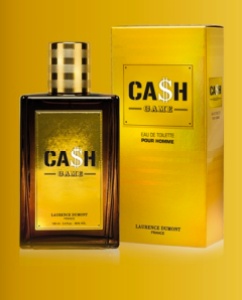
Laurent Dumont’s “Cash Game, Homme.” Source: mimifroufrou.com
Companies and Markets states it boldly in its headline: “Global perfume market driven by the demand for celebrity inspired scents“:
The global perfume market has been forecast to reach a value of approximately US$45.6 billion by 2018, driven primarily by growth expected in the underpenetrated emerging markets and innovative product launches. [¶]
The market is set to benefit from the growing trend towards consumer urbanisation, higher spending propensity and the heightened importance on personal appearance and grooming. In addition, increased demand for youth-oriented, floral and exotic fragrances and celebrity perfumes will set the pace for rapid market expansion.
Perfumes today have evolved into a mainstream business in the cosmetics, and personal care industry. From being non-essential and frivolous, perfumes have emerged as essentials, owing to the increasing trend of appearance and personal care becoming part of pride, self reliance, and confidence.
Source: bloggers.com.br
No longer considered as an extravagant grooming accessory, perfumes have metamorphosed into a “feel good” factor, which complements the consumer’s need for expressing individuality, and personal style. The wide range of themes and choices enable consumers to choose fragrances that complement respective personal and characteristic traits.
Dictated by the fickle trends of haute fashion, the world of perfumes is beginning to witness the entry of new apparel designers, and pop, music, and movie superstars making a dent on the market. The demand for celebrity inspired scents shows no signs of abating, thanks to the increasing number of celebrity fragrances hovering in the market.
The perfume industry is primarily consumer driven. Consumers have a unique cultural attitude to “fragrance” and an uncritical concept of possessing a certain kind of identity through wearing fragrance.

Source: 123rf.com
Currently on the global radar are low penetration markets such as China, and Japan, where huge untapped opportunities are the focus of large international players. Fine perfumes are increasingly looking at the teenage segment as a potential growth market. Women’s fragrances continue to dominate the market, with a maximum number of product launches and innovations aimed at the fairer sex.
The scenario is however set to change with men’s fragrance segment beginning to witness strong growth patterns, as the importance of grooming tops the list of men’s priorities. Typically, the men’s market was confined to the after-shave fragrances, but today the cards are being turned and men’s fragrances for specific occasions are witnessing huge growth, holding the promise of emerging into a mainstay market.
L’OREAL & LVMH:
L’Oreal reported its earnings on February 10th, but, try as I might, I cannot find the fragrance figures in the tsunami of information for the beauty industry leader. For once, even I was overwhelmed by the details! If I spent a few days on the shareholder reports, I know I could find it, but I lack the motivation. Suffice it to say that the company posted record earnings as a whole for 2013 in almost all its global markets. The exceptions seemed to be Japan, China, and India where sales were less substantial, while the South Korean market was depressed. Either way, I suspect that fragrances constitute only a microscopic portion of their revenues, even if they do own YSL fragrances and Armani perfumes.

LV’s Paris Headquarters in animated art by Studio Cyrille Thomas. http://www.cyrillethomas.com/
According to a New York Times report, LVMH did not do so well in 2013, but, again, it is impossible to find specific details on perfume sales or revenue. In addition, LVMH doesn’t seem to release revenue figures for its individual companies, so it may not be possible to know how Guerlain and Dior fared last year. What the newspaper does report is LVMH’s bottom line:
its profit was almost flat last year amid flagging demand for some of its core fashion brands in key markets like China and the impact of weaker currencies in its main overseas markets. [¶] LVMH … recorded a net profit of 3.4 billion euros, or $4.6 billion, for the year to Dec. 31, up just 0.4 percent from 2012.
While this post is supposed to talk about the perfume industry, I have to partially digress for a moment to talk about LVMH’s luxury sales in general. The article has an utterly fascinating reference to what seems like a backlash against Louis Vuitton’s gaudy, overly loud new bags. (Okay, it only says — quite diplomatically — that they aren’t “subtle,” but I find them to be gaudy, not to mention cheap-looking. They weren’t always that way.) The NY Times also talks about how LVMH is trying to deal with some of its problems by appealing to the super-rich, but it’s not having a lot of luck in China where sales are flagging. Given the role of LVMH in the perfume industry through its ownership of Guerlain and Dior, I thought you might find it interesting to know how they are faring in general.
Some excerpts from the NY Times report:
Revenue grew 4 percent, to €29.1 billion, a sharp decline from the double-digit increases seen in previous years [due to unfavorable exchange rates and currency conversion charges]. […][¶]
Both Kering — the French company formerly known as PPR, whose brands include Gucci, Bottega Veneta and Yves Saint Laurent — and Prada of Italy also cited unfavorable exchange rates as contributing to weaker sales in the third quarter. [¶]
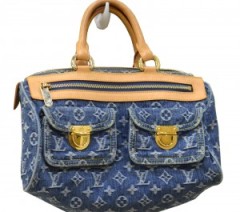
Limited Edition LV bag. Source: bocaratonpawn.com
Louis Vuitton, which accounts for more than two-thirds of [LVMH’s leather] division’s sales, has suffered recently as many high-end consumers have begun to shun its familiar logo-emblazoned handbags for subtler products. To compensate, LVMH has increased its investment in smaller brands like Fendi, Céline and Berluti.
Faced with a protracted economic downturn in Europe and slowing growth in important emerging markets like China, Louis Vuitton, like its rival, Gucci, has sought to jump-start sales by repositioning itself even further upmarket, pursuing superrich clients, rather than the merely rich. [¶]
Revenue at the perfumes and cosmetics business, which includes brands like Guerlain and Loewe, rose 3 percent to €3.7 billion. Watch and jewelry sales fell 2 percent to €2.8 billion, reflecting in a slowdown in China, where a government crackdown on giving lavish gifts has crimped sales.
Specialized retailing activities, including the Sephora cosmetics chain and Duty Free Shops, recorded strong growth, buoyed by a surge in tourism spending, particularly by Asian travelers. [Emphasis added by me.]
Source: perfumemaster.org
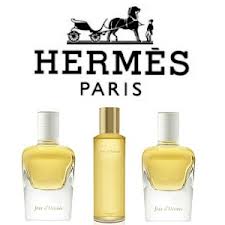
As a side note, I found nothing detailing Chanel‘s sales or revenues in 2013. The company is privately owned, so it has no need to release official figures. However, I did find Hermès 2013 annual report. The company’s core business of luxury goods is doing astonishingly well, particularly in Asia (in contrast to LVMH, it would seem). But Hermès also sells fragrances, and those were quite successful in 2013:
Perfumes (+15%) confirmed their momentum in 2013. The new fragrance for women Jour d’Hermès was warmly welcomed whilst Terre d’Hermès continued its growth and established its position as a classic male fragrance. [Emphasis to names added by me.]
GIVAUDAN:

Javanol via Givaudan.
While the EU moves slowly to restrict natural perfume ingredients to draconian levels, Givaudan — the maker of aromachemical synthetics and one of the big backers of IFRA — is raking it in.
For those of you unfamiliar with the name, Givaudan is a Swiss company founded in 1895. According to its Wikipedia page, it is reported to be the largest company in the world producing fragrance ingredients and flavours. It controls 25% of the market share, as “the company’s scents and flavors are developed most often for food and beverage makers, but they are also used frequently in household goods, as well as grooming and personal care products.” In 2011, Givaudan had sales of 3.9 billion Swiss Francs with an overall market share of 25%. “It is one of Switzerland’s 30 biggest listed companies in terms of market capitalization[.][…] The company has a leading presence in all major markets and operates through a network of more than 40 subsidiaries” in established and emerging markets.

Givaudan’s new 2013 Mumbai Flavour Innovation Centre. Source: article.wn.com/
And it had a great year in 2013. RTT News provides Givaudan’s full-year report, starting with the fact that its annual income climbed to “490 million Swiss francs ($546.6 million) from 410 francs in the prior year.” In addition:
- Gross margin increased to 44.7 percent from 42.4 percent.
- Fragrance Division sales rose 3 percent to 2.083 billion francs and increased 5.1 percent on a like-for-like basis. Fine Fragrance witnessed strong growth in Latin America, while Consumer Product saw strong performance in developing markets.
INTERNATIONAL FLAVORS & FRAGRANCES (IFF):

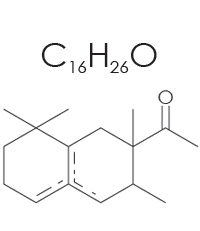
ISO E Super. Source: Fragrantica
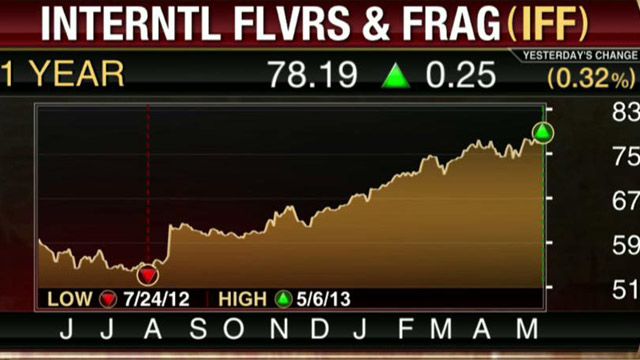
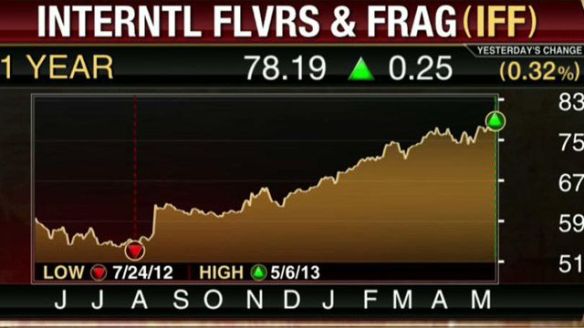
Givaudan may control 25% of the global fragrance and flavouring market, but IFF is definitely a powerful force in the field. And it, too, did well in 2013. According to Perfumer & Flavorist, IFF’s
- full-year 2013 local currency sales increased 5% to $3 billion, reflecting 10% growth in emerging markets and 2% growth in the developed markets. Reported net income for the full year totaled $353.5 million.
- Emerging markets grew 10% last year, accounting for 49% of sales.
- The fragrances business unit reported that revenue for the full year increased 6% to $1.5 billion. The fragrances segment contributed 52% of the company’s consolidated revenue in 2013, up from 51% in 2012. Local currency sales increased 6% for the full year, supported by double-digit growth in Greater Asia and Latin America and solid growth in EAME. [Me: I think “EAME” refers to the Middle East and East Asia.]
Source: FoxBusinessnews.com
For the 4th Quarter in specific, the article states that
- IFF fourth quarter 2013 revenue increased 7% to $725 million compared to the prior year. A full 50% of consolidated IFF sales were achieved in emerging markets, according to the company.
- The fragrance unit reported that revenue increased 8% to $382 million in the fourth quarter of 2013 compared with $354 million in the fourth quarter of 2012.
- Fine fragrance and beauty care achieved 9% local currency sales growth, due to strong growth in fine fragrance owing to strong new business wins in EAME.
- Fragrances gross margins improved over the prior year quarter primarily due to moderating input costs and other strategic initiatives including mix, innovation and cost reductions. Segment profit increased 16%, or $9 million, to $62 million in the fourth quarter of 2013 compared with $53 million in the fourth quarter of 2012.
In short, emerging markets and the Middle East are responsible for the surge in sales. I will jest, and say that IFF’s invention, ISO E Super, probably helped as well, judging by how many bloody fragrances contain the damn thing. (No, it’s not actually paranoia if they really are out to get you. 😉 But, in any event, I’m merely joking to alleviate any numbness you may feel at this point from all these details.)
THE U.K. FRAGRANCE MARKET:

Source: Maria Rogerson at ourtipsfor.com
Fragrance sales in the U.K. rose 9.3% in 2013, boosted by the fortnight before Valentine’s Day 2013 during which there were £32 million value sales and 1 million units sold. The numbers come from NPD, as quoted by Premium Beauty News. Apparently, the two weeks before Valentine’s Day are a huge deal in the UK, though not as much as in the U.S. where the day accounts for 4% of perfume sales. The article reports:
“Valentine’s fortnight remains a key focus for prestige beauty products, with fragrance representing 2.7% of annual fragrance value sales and 3% of total beauty sales in the UK – beating both Father’s Day and Mother’s Day sales,” says The NPD Group.
The market research firm notes there is an opportunity for growth in the UK fragrance market when comparing sales in other key markets. “In France and the United States, 2013 Valentine’s fragrance sales represented 4% of annual fragrance value sales, generating just over £67 million and £81 million, respectively.” [¶]
Trend data reveals that while fragrance sales peak around Valentine’s Day, at 42% of prestige beauty products sold based on 2013 figures, sales are less concentrated at this time of year compared to Christmas.
Men were spending away as well:
“Men look set to be the winners in the fragrance stakes this year if the 2013 trend continues, with men’s fragrances for Valentine’s 2013 representing 35% of all fragrance value sales – up from 33% in 2012,” points out The NPD Group.
However, it seems that everyone was after less expensive fragrances for the most part:
Data from Valentine’s 2013 reveals that consumers may become more price conscious with their fragrance purchases. On average, both women’s and men’s fragrance sales were down £1-2 on the annual average price at £33 and £31, respectively. Leftover Christmas gift sets were also popular for Valentine’s 2013 in the UK.

Davidoff Cool Water ad, October 2000. Source: coloribus.com
In terms of the best-selling perfumes in the U.K, I found a list dating back to 2009. It comes from the Daily Mail which makes me cautious as to its accuracy, but there really isn’t else that I found on the subject. The newspaper states that it “asked Britain’s top department stores which scents fly off their shelves the fastest – the results were unanimous…”
- Chanel No. 5
- Calvin Klein Eternity
- Prada Eau de Toilette
- Davidoff Cool Water
- Gucci Rush
- Ralph Lauren Romance
- Sarah Jessica Parker Lovely
- Issey Miyake L’Eau d’Issey
- Estée Lauder Beautiful
- Tom Ford Black Orchid
THE FRENCH PERFUME MARKET:
Source: hdwallpapers.in
According to the Perfumer & Flavorist, “France’s fragrance market [is] the second most important sector in the country’s health and beauty industry.” The Euromonitor research group calls it is an extremely competitive market, and provides a fascinating breakdown of the market share of the three market leaders, Chanel, Dior, and Guerlain (in that order):
Source: entertainment.desktopnexus.com
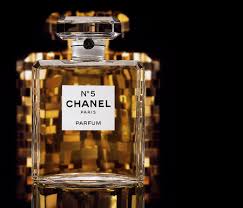
Fragrances is fragmented, with more than 40 different players operating in the category. Amongst them, the leading companies are Chanel, Parfums Christian Dior and Guerlain, with 12%, 11% and 8% value shares respectively in 2012. These three operators offer several well-recognised premium fragrances for women and men, which are well-positioned in the market. Chanel N° 5 from Chanel and J’adore from Parfums Christian Dior, for example, were the leading brands in premium women’s fragrances in 2012. These two popular fragrances are constantly promoted on television. Over the years, these three players have been able to maintain their leading positions thanks to important investment in advertising, but also due to some product and packaging innovation. [Emphasis to names added by me.]
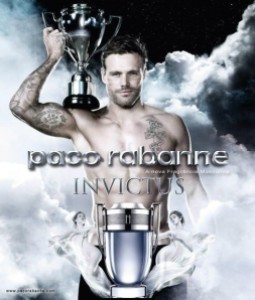
Paco Rabanne 2013 Invictus Ad.
Even if the Big Three control the greatest portion of the market, they don’t necessarily have the best-selling perfumes in France. In fact, Chanel No. 5 isn’t even on French Sephora’s 2014 list of top sellers, a list which obviously has to be based in large part on prior sales in 2013. That list, as provided by the French-based blog The Scented Salamander, is as follows:
Sephora
1 – Invictus by Paco Rabanne
2 – La Petite Robe Noire EDP by Guerlain
3 – La Vie est Belle EDP by Lancôme
4 – J’Adore EDP by Dior
5 – Shalimar by Guerlain – (boosted by sales price)
6 – 1 Million EDT for men by Paco Rabanne
7 – Flowerbomb EDP by Viktor & Rolf
8 – Si by Giorgio Armani
9 – Le Mâle EDT by Jean Paul Gaultier
10 – Boss Bottled EDT by Hugo Boss
Invictus for men and Si for women, a fruity chypre, are two 2013 entries and have already reached the top.
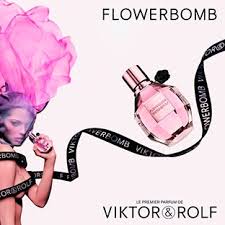
Source: LOreal.com
For the beauty chain, Marionnaud, which features a more “mature” clientele and an “atypical” dated lineup, their list of best sellers for 2014 is even more different. The Scented Salamander reports:
Marionnaud
1 – Boucheron Femme EDP by Boucheron
2 – Flowerbomb EDP by Viktor & Rolf
3 – Alien EDT by Thierry Mugler
4 – Féminité du Bois by Serge Lutens
5 – Eau Sauvage EDT by Dior
6 – Magie Noire EDT by Lancôme
7 – Chloé EDP by Chloé
8 – 1 Million EDT for men by Paco Rabanne
9 – Only the Brave EDT by Diesel
10 – 0 de Lancôme EDT by Lancôme
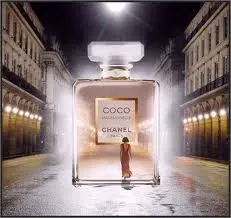
Coco Mademoiselle.
The lists are interesting, especially when you compare to what was selling back in prior years. Surrender to Chance lists what it says were the best-sellers in France for 2011:
- Chanel No. 5 EDP – “iconic decades-old perfume that has topped the best-seller list for most of those decades.”
- Dior J’Adore – “now overtaking Chanel no. 5 worldwide[.]”
- Thierry Mugler Angel
- Chanel Coco Mademoiselle
- Kenzo Flower
- Guerlain Shalimar EDP
- Lolita Lempicka
- Christian Dior Miss Dior Cherie
- Nina Ricci Nina
- Yves Saint Laurent Paris
- Yves Saint Laurent Opium
- Jean Paul Gaultier Classique
- Lancome Tresor EDP
- Nina Ricci L’air du Temps
- Clinique Aromatics Elixir
- Lancome Cuir de Lancome.

Naomi Watts in Thierry Mugler’s Angel campaign ad. Source: Basenotes.com
Going back further, Marie-Claire magazine has a listing of the most successful fragrances in 2008 in France, as compared to the U.S. and China at roughly the same time:
FRANCE
1. Chanel No. 5
2. Thierry Mugler Angel
3. Dior J’adore
4. Kenzo Flower
5. Lolita Lempicka 1er Parfum
UNITED STATES (2006)
1. Estee Lauder Beautiful
2. Chanel No. 5
3. Donna Karan Cashmere Mist
4. Estee Lauder Pleasures
5. Calvin Klein Euphoria
CHINA (FIRST HALF OF 2007)
1. Chanel No. 5
2. Dior J’adore
3. Lancôme Miracle
4. Chanel Chance
5. Dior Addict 2
I don’t think you can look at the 2014 Sephora and Marionnaud lists as being completely representative of French sales as a whole. There are a variety of reasons. First, Sephora’s clientele generally skews younger and towards a certain financial bracket, while Marionnaud’s doesn’t seem representative for other reasons. (I’ve been in their stores, and The Scented Salamander is correct in saying that they skew extremely old and their merchandise really is dated.) Plus, how can you take figures from 2 chains to be representative of the country as a whole? At best, their lists may demonstrate a gradual shift amongst certain groups away from the classics and the market leaders. Moreover, I find it difficult to believe that Chanel No. 5 and Dior’s J’Adore would lose their many years-long death grip if you looked at numbers from all vendors and across all segments of the population.

Regardless of what fragrances are the most popular, French consumers are buying less of them and reducing their spending in an effort to save more money. The Perfumer & Flavorist has the details of market research by a company called Canadean, but there is a lot of gobbledygook about Compound Annual Growth Rate (CAGR) which hurt my head, so I’ll just give you the summation as I understood it:
- France’s perfume market showed only the seventh fastest growth rate out of the nine health and beauty markets that Canadean follows. The reason is the very high personal saving levels in France at 15.5%, as compared to the average 2.5% rate in the United States.
- French fragrance is forecasted to show much slower growth until 2017. Women’s perfumes dominate the sector with a value share of 62.8% and volume share of 65%. It is expected to show the strongest growth in the upcoming years, especially as compared to men’s fragrances.
- “Men’s fragrances made up less than half the volume of the market in 2012, at 31.7% volume and a slightly higher value of 33.8%. In growth terms, 2012–2017 is projected to see volume and value for men’s fragrances significantly lower than both sector levels and female fragrances[.]”
- The third category, unisex fragrances, recorded just over 3% of the sector for both value and volume of sales in 2012, and its growth is projected to be even lower than that of men’s fragrances at 0.2% in the upcoming years.
In other words, the main buyers of perfume in France now and for the next 4 years are women. Yet, even they are buying less these days, and they’re certainly not buying unisex fragrances in large quantities or buying enough to drag France’s perfume industry out of 7th place from the 9 big markets that the research group follows.
ITALY & THE NETHERLANDS:
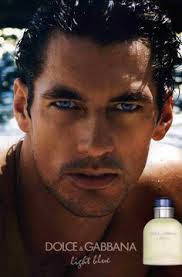
Supermodel David Gandy for D&G Light Blue. Source: Pinterest.
Italy doesn’t have a booming perfume market right now, and won’t for the ostensible future. According to Canadean as reported by Perfumer & Flavorist, the sharp drop in Italy’s GDP since 2007 means their perfume sector won’t see growth rates above 2% growth until 2017. Women’s fragrances take up 60% of the market in terms of sales, but they are forecasted to have the slowest growth. Men’s fragrances are expected to perform slightly better but the real surprise pertains to unisex fragrances. They are expected to do the best in the upcoming years, even though they have a much lower market share, with 1.5% for both value and volume in 2012.
The Netherlands may be a small country, but they have a great economy on average. According to Digital Journal, back in 2008, the Netherlands had the 16th largest economy in the world, and ranked 10th in GDP per capita. It reported that fragrance sales were booming in the “600-million Dutch perfume market” which was dominated first by the Douglas chain of shops, then by those of Ici Paris XL perfumeries. If you fast forward to 2013, a report by the Euromonitor states that Dutch perfume sales continued to increase, despite a difficult economy, but the research group saw only modest growth lying ahead. It adds:
L’Oréal (NBO: Prestige & Collections Nederland) is the leader in fragrances with a 12% value share in 2012, with some of its popular brands including Trésor, Acqua di Giò, Ralph Lauren and Emporio Armani. In 2012 the company registered a very small decline in terms of value sales, but overall it had a stable market share. [Emphasis in bolding added by me.]
Source: myfdb.com
As noted above, one of the top beauty chains in the Netherlands is Ici Paris XL, and they have a list of their Top 10 Bestsellers amongst female fragrances. The same caveats that I raised for the French Sephora list applies here, too, but it’s still interesting to see what is selling in each country. So, here are their top-sellers:
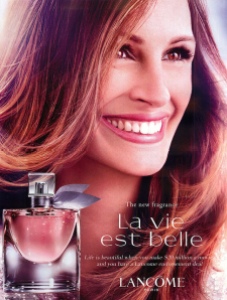
- Lancome La Vie est Belle
- Chanel Coco Mademoiselle
- Dior J’Adore
- Paco Rabanne Lady Million
- Chanel No. 5
- Thierry Mugler Alien
- YSL Manifesto
- Jil Sander Sun
- D&G The One
- Cacharel Noa
 Their list of Top 10 Men’s Fragrance Bestsellers is:
- Paco Rabanne One Million EDT
- Chanel Allure Sport EDT
- Jean-Paul Gaultier Le Male
- Chanel Bleu de Chanel
- Giorgio Armani Acqua di Gio
- Hugo Boss’ Boss
- Dior’s Dior Homme EDT
- YSL l’Homme
- D&G The One
- Davidoff Cool Water
GERMANY & SPAIN:
Germany has a large fragrance market, and it did well in 2012. According to a September 2013 report by the Euromonitor,
- Fragrances in Germany experienced a positive performance in 2012, with retail current value growth of 2%, reaching €2.0 billion. Volume growth of fragrances in Germany only increased by 1%, which was lower compared with 2011. This was due to the poor volume performance of unisex fragrances in both the mass and premium segments.
- Procter & Gamble Prestige Beauté was the leading player in fragrances in 2012, with a 17% value share. The company is strong in both mass and premium fragrances. In the mass segment Procter & Gamble Prestige Beauté markets a broad range of established brands, such as Mexx Woman. In premium fragrances it has a significant presence with popular brands such as Gucci Guilty Pour Homme and Boss Woman. The company managed to maintain its strong position thanks to well-supported new product launches in 2012.
- Fragrances in Germany is expected to see a rather negligible growth to reach €2.1 billion in 2017. It is expected that the living standards of German consumers will start to slowly decrease in response to the economic crisis, which will limit the growth rate of fragrances to a certain extent in constant value terms. [Emphasis added by me.]
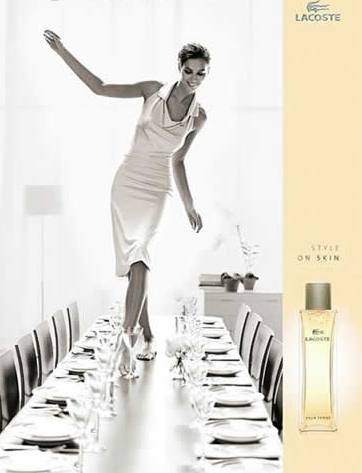
Lacoste Pour Femme. Source: shop-cosmetice.ro
One of the biggest perfume chains in Germany is Parfumerie Douglas or Douglas. According to a Basenotes discussion, in 2004, Douglas announced that its top-selling women’s fragrances were:
1. D&G Light Blue
2. Pure by Jil Sander
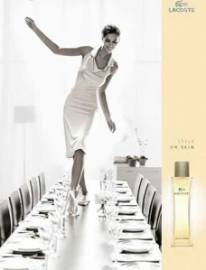
3. Lacoste pour Femme by Lacoste
4. Chance by Chanel
5. Touch of Pink by Lacoste
6. Jean Paul Gaultier by Jean Paul Gaultier
7. Pure Poison by Dior
8. Chanel No 5 by Chanel
9. Hugo Deep Red by Hugo Boss
10. L’Eau d’Issey by Issey Miyake
Exactly 10 years later, now, in 2014, only two of those scents remain on Douglas’ new list of its top-selling women’s fragrances. They are Lacoste and Chanel No. 5:
- Thierry Mugler Alien
- Chanel Coco Mademoiselle
- Lancome La Vie est Belle
- Chanel No. 5
- Paco Rabanne Lady Million
- Toni Gard Honey
- Lacoste Lacoste Pour Femme
- Escada Born in Paradise
- Giorgio Armani Si
- Dior J’adore

Alien ad, via sandiinthecity.onsugar.com
Douglas’ list of its current best-sellers for men is:
- Hugo Boss’ Boss
- Paco Rabanne One Million
- Jean-Paul Gaultier Le Male
- Davidoff Cool Water
- Paco Rabanne Invictus
- Chanel Allure Homme Sport
- Giorgio Armani Code Homme
- Hermès Terre d’Hermès
- Chanel Bleu de Chanel
- Hugo Boss Hugo
Finally, a brief look at Spain. It may be one of the countries most affected by the Eurozone crisis, but the Perfumer & Flavorist reports that Spanish consumers, particularly men, like to treat themselves to fragrance. The market is “set to be one of the five fastest growing health and beauty sectors in Spain to 2017.” Men’s fragrances will display the highest volume growth through 2017. “As the women’s fragrances category matures, women’s fragrance is predicted to become the slowest growing category of the sector over the next five years[.]” Unisex perfumes, in contrast, will do the best over the next five years, even though they have the smallest market share at this moment.
THE MIDDLE EASTERN MARKET:

The Grand Mufti of Dubai. Source: emirates247.com.
A Fatwa was issued by a Grand Mufti in the Middle East on the issue of perfumery, and no, I’m not being facetious. It was actually a positive edict, according to the Euromonitor. Its October 2013 summary report states that:
A Fatwa was issued in June 2012 by Dr Ali Ahmed Mashael, Grand Mufti at the Department of Islamic Affairs and Charitable Activities in Dubai. This stated that Muslims can use alcohol-based fragrances, due to the proportion of alcohol in fragrances being low. While the Fatwa stated that cautious Muslims could use oil-based fragrances that are alcohol-free, it also stated that the use of alcohol-based fragrances would not affect the purity of a Muslim’s prayers. This Fatwa thus encouraged many Saudi consumers to expand their purchase of fragrances to include alcohol-based fragrances from prestigious global brands such as Estée Lauder’s Tom Ford or DKNY. [Emphasis to names added by me.]
I really hope the Euromonitor is the one providing those brand examples, and that the Grand Mufti did not personally mention DKNY! I can’t read the full report unless I pay $725 — which I most certainly do not want to do — so we shall just have to rely on the Euromonitor’s synopsis.
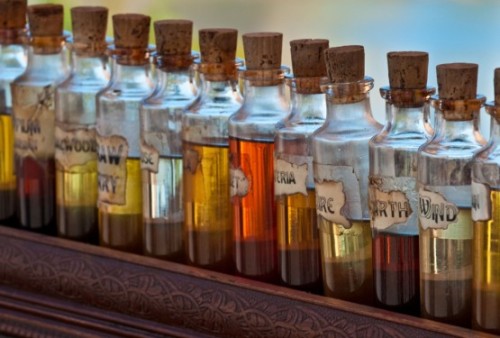
They also mention Arabian Oud, writing “Arabian Oud defines traditional Saudi fragrances for many consumers and was the clear leader in fragrances throughout the review period. The company accounted for 34% share in 2012. This company benefits from its history and its strong premium image.”
Arabian Oud via their website.
Arabian Oud also comes up in the Euromonitor’s report on the fragrance market in the United Arab Emirates, and I found the mention of private agarwood plantations to be fascinating:
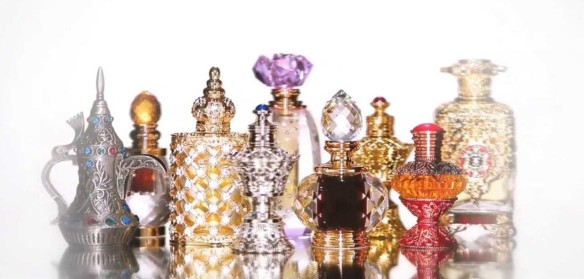
- There is a strong tradition for fragrances in the United Arab Emirates, with local men and women using perfumes on a daily basis. The country is particularly known for its oud-based fragrances and benefits from the strong presence of premium oud specialists such as Arabian Oud Co and Ajmal International Trading Co LLC. While oud is expensive and rare, being more expensive than gold, these players have their own agar plantations, enabling them to offer premium quality products at a profit. […]
COMPETITIVE LANDSCAPE

Source: unperfume.es
- The leading players in fragrances perfectly represent the dual nature of this category. Traditional oud specialist Arabian Oud Co remained the leading player, accounting for a 14% value share thanks to a wide range of both oriental and Western-style fragrances and opulent outlets in Dubai. Global giant Estée Lauder Cos Inc ranked second with a 13% value share, benefiting from a fashionable global image for brands such as Estée Lauder, DKNY, Clinique Happy and tommy. Both players maintained their value share from the previous year. [Emphasis to names added by me.]
The fragrance brands mentioned as market leaders in that October 2013 report seem to have changed from a 2011 Euromonitor PDF report that I sampled. It states:
Fragrances remain largely fragmented amidst continuous launches, with fragrances leader L’Oreal Middle East holding a retail value share of only 6% in 2010[.][…] Emporio Armani continued to be the best-selling premium brand for both men and women with over 5% of value sales of premium fragrances overall.
The report makes, clear, however, that the only thing which really sells in the UAE is premium. Premium anything. None of this celebrity stuff is going to pass muster with the largely unimpressed population soaking in Petrodollars. Furthermore, the UAE citizens regard perfume as an essential part of every part of their life and culture. A few other tidbits gleaned from the PDF:
- The UAE posted one of the highest per capita expenditures on perfumery in 2010, and despite some small economic slowdown that year very few people “traded down” to cheaper, mass fragrances.
- Premium fragrances accounted for 73% of perfume sales in the UAE in 2010.
- “Beauty specialist retailers” like the niche-selling Paris Gallery account for 42% of sales, while (very high-end) department stores like Harvey Nicks and Debenhams only account for 19%. Clearly, niche and uber-luxury fragrances sell! And the main category or genre of perfume that sells is… well, obviously, Orientals.
- All socio-economic groups in the UAE buy perfume which they see as “essential.” They are “part of the basic attire and are consumed throughout the day and during any occasion or outing.”
- The “global trend towards attaching celebrity names to fragrances works less well in the Emirates due to the diverse population – many celebrities are simply not known by Western, Emirati and Asian parts of the population.”
One of the most fascinating parts of the PDF sample file was something buried far at the end and in the back. The leading UAE perfume manufacturer, the Adjmal International Group mentioned earlier, buys some of its stuff from Givaudan, IFF, Firmenich, Symrise and the rest of the big Western ingredient and aromachemical companies. The PDF sample report states:
In addition to the company’s own agarwood plantations in Assam, India, which account for around 40% of the required raw materials, Ajmal sources the balance from the Far East[.] Raw materials are sourced from world-renowned suppliers like Symrise, IFF, Firmenich, Givaudan, Drom and V. Mane Fils.
Apparently, there is no getting around Givaudan and its brethren’s tentacles. So, the next time you smell something very synthetic in your supposedly purely Middle Eastern, “local,” oud fragrance, you may want to blame the big guys in Switzerland and Europe.
Asghar Ali Perfume Company, Bahrain. Source: YouTube.com
As a small side note, the UAE is not the only part of the region that is experiencing a healthy perfume market. In the Gulf coast kingdom of Bahrain, the fragrance and beauty industry is on the verge of a massive shift upwards. An article in Gulf News Daily discusses the findings of the Euromonitor research group which found that, sales “are expected to hit $29.9 million by the end of the current year amidst positive growth trends in other parts of the GCC.” One Middle Eastern perfume executive is quoted as saying that the amount of money spent in the Gulf as a whole is “relatively higher… than in other parts of the world as fragrances and perfumes are an important part of the Gulf lifestyle coupled with a high disposable income[.]”
INDIA:

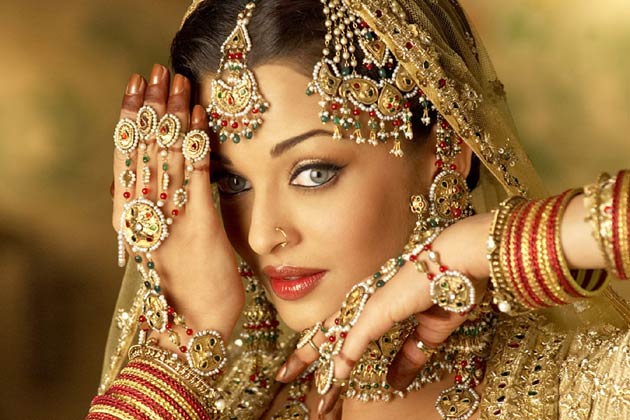
Aishwarya Rai. Source: ibnlive.in.com
I was surprised to find details on the Indian perfume market. I actually tried once before for an earlier article, but gave up in frustration. This time around, I’ve had better luck. I’ll start with the brief synopsis from April 2013 from Market Research. In a nutshell, it states that the current Indian perfume market had revenues of $227 million in 2012, and that the figure is expected to go up to $510 million by the end of 2017:
- The Indian fragrances market had total revenues of $227.4 million in 2012, representing a CAGR of 19.4% between 2008 and 2012.
- Market consumption volumes increased with a CAGR of 14.9% between 2008-2012, to reach a total of 18.7 million units in 2012.
- The performance of the market is forecast to decelerate, with an anticipated CAGR of 17.6% for the five-year period 2012 – 2017, which is expected to drive the market to a value of $510.6 million by the end of 2017.

Source: National Geographic
A report by Canadean (which costs over $1,300 to read in full) states that young people (up to the age of 30) are driving demand, and that age dynamics are key to the market. It also adds:
In 2012, 20.7% of Fragrance use among Indian consumers was motivated by the desire to seek better quality products. Apart from the attraction of the newness factor, quality is also being sought after, from the product ingredients to packaging.
India saw minimal impact from the global economic slowdown and the market displayed a positive trend during 2007–2012, growing at a CAGR of 16.0% during this period in local currency terms. The upbeat mood of the economy and its increasing integration with globalized lifestyles and consumption patterns will drive the growth.
Analysis of India’s Fragrances sector between 2007 and 2017 highlights a number of clear winners and losers. Large categories posting moderate growth such as Female and Male Fragrances will gain a larger market share than smaller categories such as Unisex Fragrance, indicating consumers’ preference for gender specific Fragrances.

Source: Askmen.com
The Economic Times of India has an interesting article from 2012 which talks about consumer tastes. It spends a large amount of time talking about deodorants, which it classifies as part of the “fragrance industry,” so please keep that fact in mind when you read the quotes:
Nearly 60 per cent of the whole fragrance market is dominated by the men’s category which is also highly fragmented and keeps evolving with change in attitudes and lifestyle. Besides, high-end perfumes in the male category are also doing a brisk business courtesy the growing urge among urbane Indian males to stay well-groomed.
Though there are limited options for women but the segment is likely to see an upsurge with various existing brands and new entrants resorting to sustained media campaigns to cash in on the untapped category with enormous growth potential.

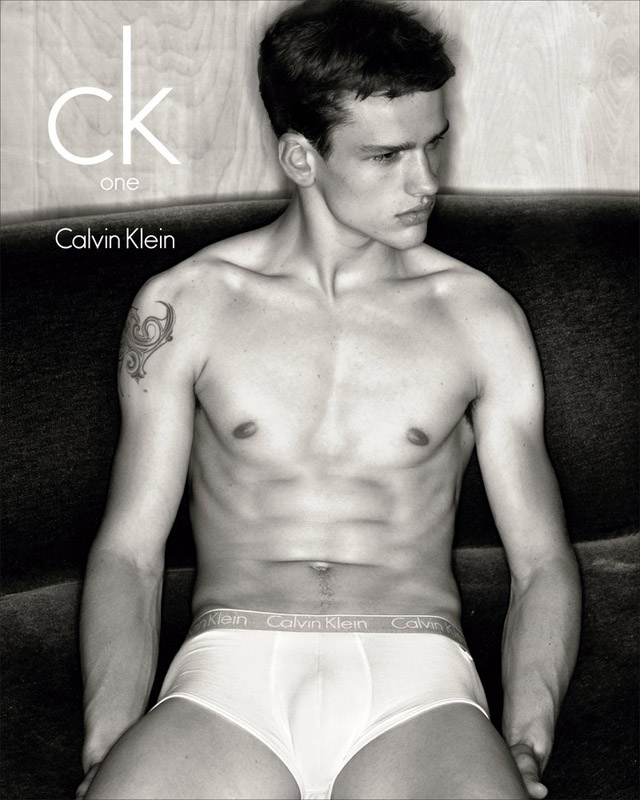
Model Simon Nessman for CK One, Winter 2010-2011. Source: MaleModelSceneNet
Teenagers are a significant segment in both male and female categories as an average teenager at an urban centre tends to spend anywhere between Rs 500 and Rs 2,000 only on fragrance including – deodorants, roll-ons and perfumes. [¶]
Armani, Azzaro, Burberry, Chanel, CK 1, Dior, Escada, Estee Lauder, Ferrari, Hugo Boss, Lacoste, Nina Ricci, Polo, Shiseido etc. are certain most sold leading perfume brands in India. Amid the deodorant category Axe, Park Avenue, Nivea, Set Wet, Wild Stone, Garnier, Yardley etc. are leading. [Emphasis to names added by me.]
ALL IN ALL:
It is clear that the fragrance industry is booming. Sales may be soft in the U.S., but they aren’t overseas. And there is so much money involved! An estimated $46 BILLION a year by 2017 or 2018, which isn’t all that far off.

Source: timeoutbahrain.com
Companies are trying to tap into this lucrative market by issuing more and more new fragrances each year. Just 21 years ago, there were only 132 new perfume releases. Now, there are a thousand more. Jordan River of The Fragrant Man, has a post on Michael Edwards‘ new book, Fragrances of the World, which details the rise in the number of perfumes released each year. Jordan writes:
In 1993 there were 132 new perfume releases, by 2003 the number had grown to 581. As noted above, 2012 saw 1330 releases and in 2013 retail shelves made room for a further 1492 new perfumes.
If you’re exhausted from all these numbers, I don’t blame you. What you should take away from all this is the same thing that I repeat in all my posts on the perfume industry’s growth and sales: the future lies in new emerging markets.

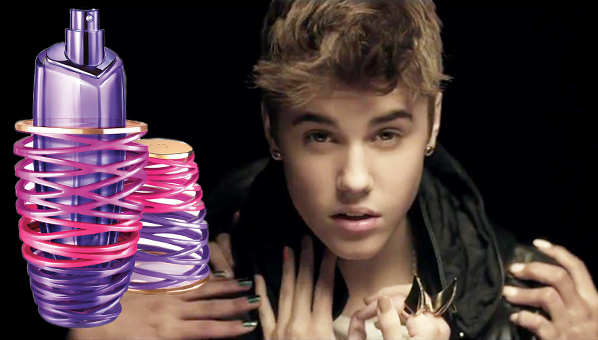
Justin Bieber’s Girlfriend perfume. Source: getitwrighthere.com
I think the Western markets are starting to be over-saturated, something that is certainly true of the Celebrity Perfume Industry which drove a lot of U.S. sales for a while. My post on that issue covers the astronomical, utterly mind-blowing numbers, especially from Britney Spears! Whether it’s a billion bottles or over a billion dollars, she’s raked it in for Elizabeth Arden, while Justin Bieber drove the entire U.S. market in terms of sales for 2012. Yet, as the 2013 sales figures for Elizabeth Arden discussed in Part I demonstrate, things may have changed a little in the short-term. The market has probably over-flooded — One Direction‘s massive success in the U.K. notwithstanding. Companies like Elizabeth Arden who are so centered and focused on the American sector are going to have problems in the future, I think.
The companies that will succeed are the ones who are targeting the markets of the future. Europe seems dead, with the unique exception of Russia and its oligarchs. However, the future is bright in India, not to mention Latin America (Brazil is frequently mentioned), and it’s raining down gold in the Middle East with their long tradition of perfumery and enormous disposable income.
Asia is less certain for the near future, in my opinion and for the reasons outlined in my earlier post on the 2013 Global Perfume Industry. I can’t see a dramatic change by 2017, the date selected by many of these research reports for their analysis of the growth curve. However, companies like Estée Lauder, LVMH, Kilian, Tom Ford and others are clearly trying to lay the foundation for future growth there. I have no doubt they will succeed to a small extent in capitalizing on social aspirations and the hunger for luxury products with their Asian exclusives and targeted marketing. However, I personally believe it will be years and years before cultural issues in perfume usage will be overcome to the point that Asia will join North America and Europe as market leaders.

Source: Hongkiat Lim at hongkiat.com
In the more immediate future, I see a small silver lining in all this news, even if it is a rather philosophical one: the love of perfume is slowly turning both global and wider in scope. Not only is perfume interest spreading out to new parts of the world, but even those who already loved perfumery are broadening their horizons. Things are changing to become more universalist: women seeking out woody orientals; Middle Eastern ouds have filtered out to the West, while, over there, Grand Muftis are issuing Fatwas to wear alcohol-based perfumes; unisex fragrances on the rise in various European markets; and men are poised to compete with women in terms of perfume addiction. (I think any perfume blogger or member of a perfume group could have told NPD that last fact!)
Unfortunately, the cynic in me is whispering that none of this really matters, because the Golden Age of Perfumery is at an end. There are a lot of reasons why I’m dubious of the quality of what may lie ahead of us: the EU restrictions on rich natural ingredients; the impact that draconian regulations on everything from testing to packaging will have on small, truly niche, independent perfumers; the growing conglomerization of the industry through takeovers by wealthy multi-national corporations like Estée Lauder or L’Oreal; the way many of these entities are in bed with the corporate ingredient (and aromachemical) giants who provide both their materials and their stable of “noses”; the important role of cheap celebrity perfumes in driving sales; and the increasingly generic profile of fragrances put out under increasingly tight schedules to meet the publicly held companies’ quarterly-earnings report and shareholder expectations. (That explains Tom Ford’s numerous releases each year, with each collection having at least three fragrances in it. And, based on what I’ve tested thus far, they are almost invariably created by a Givaudan perfumer with Givaudan ingredients.)
Still, notwithstanding my personal pessimism, it’s good news to know that our love of perfumery is spreading out to more parts of the world than ever before. And I think we can all agree that an industry whose future may be valued at almost $46 billion in annual sales is an industry that matters.