Perfume Review – Hermès Ambre Narguilé

I may have narrowed the search for my perfect amber. I need to say that at the onset because it’s quite an unexpected, unlikely thing. Certainly, I didn’t expect to like — let alone adore — a scent described as “cinnamon apple pie” by most commentators. I am not a fan of foody or gourmand perfumes. And I am most definitely not a fan of paying high prices to smell like cloying dessert. But there is something intoxicating, sensuous, comforting and unexpected about HermèsAmbre Narguilé. Of course, the incredibly intense ambre-narguil_fumes of rum that emanated from my arm for a few hours may have intoxicated my normal sensibilities, but this really is a boozy amber and tobacco scent par excellence.
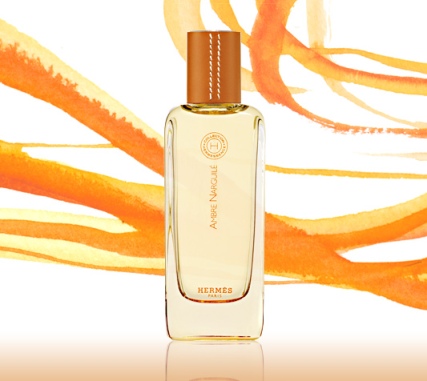
Ambre Narguilé was released in 2004 as part of Hermès’ exclusive, in-store Hermessence line of fragrances. It was created by Hermès’ in-house perfumer, Jean-Claude Ellena, a legendary perfumer who was recently called by Der Spiegel “the best ‘nose’ in the world.” Ellena is known for his minimalistic approach to ingredients, and for perfumes that always have depth and complexity, despite seeming sheer and transparent. That sheerness is rather a signature of his and, as I will explain later, a significant aspect of Ambre Narguilé.

Jean-Claude Ellena. Source:CaFleureBon

Jean-Claude Ellena. Source:CaFleureBon

On the Hermès website, Jean-Claude Ellena describes Ambre Narguilé as “[a]mber honey with swirls of smoke from the East. Savory, sensual, enveloping.” (Narguilé means a tobacco water pipe, or hookah, in French.) His goal in creating the perfume was as follows:

Amber, the Western expression of Eastern fragrances, has a warm, enveloping, almost carnal smell. I wanted to imbue this idea of amber with the memory of the East I love where tobacco – blended with the smells of fruit, honey and spices – is smoked in narguilés, or water pipes, and where swirls of smoke diffuse a sweet sense of intoxication.

The Fragrantica classifies Ambre Narguilé as a spicy oriental, but it doesn’t list the full notes. From what I’ve read in a few comments, the complete list seems to be:

benzoin, labdanum, musk, vanilla, caramel, honey, sugared tonka bean, grilled sesame seeds, cinnamon, rum, coumarin, and white orchid.

The opening burst of Ambre Narguilé was a huge surprise to me. From all the comments, I had expected a massive dose of cinnamon apple pie. I was fully intent on hating the perfume and, actually, I wondered why I was even bothering at all. After all, no good thing can come of a scent described as gourmand, right? Well, wrong. I clearly need to remind myself not to prejudge a whole category of perfumes. (Except soapy-clean laundry detergent scents. There, I plan to continue to prejudge as much as ever.)
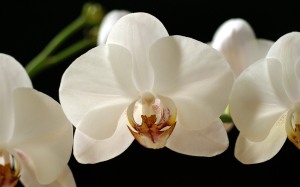
Source: Fabio Visentin

Source: Fabio Visentin

Instead of a cloying dessert, Ambre Narguile opened as a spicy, sweet white floral. I blinked. White orchid? I never expected to smell white orchid with that list of potent, warm ingredients. But I did now. The perfume was a rich, floral vanilla with toasted, warm tonka bean, white rum and a hint of tobacco. I didn’t get any of the heavy powder that often goes with tonka bean, especially in Guerlain fragrances where the tonka bean’s powdery notes are responsible in large part for the signature Guerlinade.  I wonder if perhaps toasting the bean made a difference and warmed up the notes instead of bringing out its more powdery side? Whatever the reason, the vanilla from the tonka bean was sheer, not cloying.
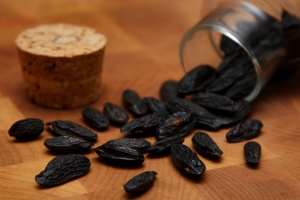
Tonka Beans.

Tonka Beans.

Two minutes in, suddenly, the cinnamon apple pie hits me. It’s incredibly concentrated, particularly for a scent that does not, in fact, have any apples in it! It’s odd; Ambre Narguilé is still a spicy floral scent, but now, it is also slightly gourmand. A few minutes later, the apple becomes a bit less predominant and I get a strong burst of rum, raisin, rum raisin, rum, rum and more rum. It’s not the light white rum of the start, but dark, black rum. The sort you see in pirate movies. There is so much rum, I feel a bit light-headed and drunk from it, but in the best way possible. I also suddenly feel as though I’ve had rum raisin pie that has a strong dash of saffron in it. Good lord, that’s good! I ponder whether to put on Johnny Depp in Pirates of the Caribbean.

About fifteen minutes in, I smell the faintly smoky aspects of the labdanum wrapping itself around the boozy resins. There is such a rich, nutty, smoky feel to the amber that it feels as though there is Siam Resin in there. And the apple suddenly seems a lot more like cooked plums than the apple of a strudel. I’m surprised that such a sweet, rich scent isn’t actually all that sweet. There is a dryness that I think comes from the labdanum which prevents this from being cloying or too dessert-y. The dryness makes me agree a lot more with Fragrantica’s description of this as a “spicy oriental” and not as a gourmand fragrance. It also adds to the impression that Jean-Claude Ellena had intended: shimmering, swirling whispers of smoke. He was right: the smoke helps to “diffuse” the sweetness, as does the hay-like aspects of coumarin.

After twenty more minutes of alternatively contemplating rum-drinking pirates and wanting to eat my arm, Ambre Narguilé starts to change. There is the lovely opening hints of tobacco but not just any tobacco. I smell my late uncle’s pipe: sweet, floral, almost rose-like, with fruity and apple overtones to its spiced tobacco. It’s such a strongly evocative scent that I suddenly miss him very much. The rose and apple
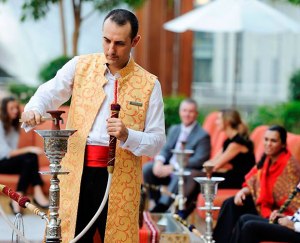
A Middle Eastern hookah water pipe or narguilé.

A Middle Eastern hookah water pipe or narguilé.

overtones also call to mind memories of using a hookah, or water pipe, a few years ago when that trend was very “in” and popular. The tobacco there — as in Ambre Narguilé — was never acrid, bitter, burning or strong like that of cigarettes, but lighter, softer, warmer, sweeter, and aromatically fruity. I’m amazed by just how well Ellena has nailed the hookah or narguilé aspect of things in this perfume. Clearly, it’s a result (in some part) of the labdanum, coumarin, and tonka bean, but that doesn’t really explain how he managed fruity, rosy, floral pipe tobacco in a perfume that has neither fruit nor any significant florals! I can’t understand it.

Another thing I can’t understand is just how sheer this scent is, while simultaneously being rich, narcotic and heady. So many of the reviews of Ambre Narguilé reference its “sheerness” and “transparency,” references which had made absolutely no sense toHookah me when I’d read them a few days ago. How could those two adjectives be used to describe a perfume as rich and sensuously deep as this one was supposed to be? I was baffled. Now, however, I can completely understand it. For such a seemingly gourmand scent, it is neither cloying nor diabetes in a bottle. It’s somehow light and airy, while simultaneously being almost narcotic-like in its headiness. It’s hard to explain, but imagine a light breeze. It gently wafts passed you, but it carries a maximum burst of concentrated smell.

I think only someone like Jean-Claude Ellena could manage such a seeming contradiction in spirit, and manage it quite so deftly. Perhaps he really is a “luminist” as he was recently described on Ca Fleure Bon, the haute perfume site of experts. They called him a “luminist” in terms of both his approach to ingredients and the final result. What I think they’re talking about is that he is a rare perfumer who manages to use a small range of ingredients in a way that illuminates them with both lightness and the most concentrated aspect of their essence. (At least, that’s how I interpreted their comments.)

Here, Ellena blends together a range of rich, ambery, spice ingredients in a way that amplifies their essence, while simultaneously creating an airy feel.  Ambre Narguilé has huge sillage, but you can also smell the concentrated nature of the ingredients. Yet, none of them are cloying or excessively sugary. More importantly, none of them are synthetic or artificial. There is no sharp screech of synthetic compounds, no clanging or burning in your nose, and no vaguely plastic-y tones.

Instead, it’s an incredibly well-blended, heady, cozy scent that has subtle transitions. The changes from stage to stage are not abrupt; the perfume moves seamlessly from that opening burst of white floral vanilla and white rum, to the cinnamon apple pie stage, to the rum raisin and rum, then to the tobacco, before ending in its final stage. Almost 6 hours later, Ambre Narguilé turns into a tobacco and wood scent with a leather undertone. The woody notes almost smell like cedar, but it is the leathery undertone to the pipe tobacco that suddenly explains why I like this scent so much: it reminds me of my beloved Karl Lagerfeld for Men (vintage) that is one of my favorite old fragrances to wear. Ambre Narguilé has the rich tobacco with the amberous, incense and leather feel of the Lagerfeld, but without the latter’s powder notes and with a hell of a lot more rum.

Which brings me to popular dessert smells from brands like Philosophy, Bath & Body Works, Britney Spears (for example, Fantasy which evokes floral supermarket cupcakes), Jessica Simpson (for example, Fancy, which evokes caramel and vanilla), and the like. I like Philosophy and BBW for what they are, and I have owned a number of things from each. (I have never owned Britney Spears or Jessica Simpson, and I never shall.) But, let’s admit it, the fragrances they create are completely artificial. To be as polite as I can possible be, they don’t smell particularly expensive, mature or natural. They are huge money-makers and extremely popular, but they are not expensive in scent or in cost. One reason for their profitability is the use of artificial, synthetic compounds which are significantly cheaper to use. The drawback to these artificial compounds is that they can be extremely sharp, cloying, excessively sugary and one-dimensional.

There is nothing artificial or cheap about the smell of Ambre Narguilé. It doesn’t smell of synthetics. It smells extremely expensive. And I don’t think you could get a comparable scent among the commercial, mass-produced, gourmand fragrances out there. According to a commentator on Basenotes, the famous NY Times perfume critic, Chandler Burr, said Ambre Narguilé:

is not merely the best; there is simply nothing like it on the market, period. And no one will ever do it as well again.

While I love the scent, I think Mr. Burr is pushing it and waxing a little too rhapsodic. But I do agree with him to an extent because I am convinced that there is no-one who could do it better amongst the plethora of dessert scents littering the aisles of Macy’s, Dillard’s, Sephora or the like.

But what about higher-end perfume houses? There, Ambre Narguilé would seem to have serious competition in terms of quality, as well as some overlap with existing amber scents. I’ve read a lot of comparisons on Basenotes to Frederic Malle‘s Musc Ravageur, though there seems to be no consistency in the comments as to how they differ or are alike. Some say that Ambre Narguilé is like Musc Ravageur’s dry-down, only sweeter and less musky. Others say the exact opposite. Interestingly, a Basenotes poll asking for people’s preference between the two resulted in a complete 50/50 tie. Other potentially similar scents that have been mentioned: L’Artisan Parfumeur‘s Ambre Extreme (said to be less spicy than the Hermès); Parfum d’Empire‘s Ambre Russe (said to be significantly richer, spicier and deeper than the Hermès); and Frapin 1270. I hear the last one mentioned a lot on MakeupAlley as an almost complete dupe for Ambre Narguilé (which has a 4.3 out of 5 score there). Unfortunately, I haven’t smelled any of those fragrances, so I cannot judge, but if you own one of them, you may not need Ambre Narguilé.

Do you, in fact, need Ambre Narguilé? That’s hard to say. For all its loveliness, I will be the first to say that it is really quite a simple, linear scent. Yes, it has transitions but, as a whole, it isn’t a complex, heavily nuanced, perfume that constantly transforms and morphs. The notes are essentially the same, though they vary as to degree or to the ingredient being emphasized, with more fruity notes at the beginning and strongly tobacco notes accompanying faintly leathery, woody accords at the end. But amber and tobacco are constant threads running from top to bottom in some form or another. As I frequently say, there is nothing wrong with linearity if you love the notes in question. And I think comfort scents are, in particular, more suited to being linear.

In terms of sillage and longevity, Ambre Narguile does well in both categories. The perfume projects for the first 2 hours quite forcefully before becoming slightly softer and more subtle. It became close to the skin about 4 hours in. And it lasted, all in all, about 7 hours on me. (Again, I have skin that ravages perfume.) On others, however, the average length of time seems to be between 12-15 hours! That is remarkable for a scent that is a mere eau de toilette. The famous perfume critic, Chandler Burr of the New York Times, told Oprah:

The rule is: Pretty is fleeting; heavy sticks around. Take the utterly genius Hermès Ambre Narguilé. Here’s a perfume of such luscious perfection, you want to melt into it as if it were an expert beurre caramel. Ambre Narguilé will not only dance all evening with the one that brung it, it’ll take you all the way home, too.

Perhaps the dispositive issue with Ambre Narguilé is its cost. It costs $235 and is sold only in the large 100ml/3.4 oz bottles directly from Hermès itself (whether online or via its boutiques). It doesn’t come in any other size and, again, it only comes in the eau de toilette concentration. However, and this part is key, Hermès sells a travel or gift set of
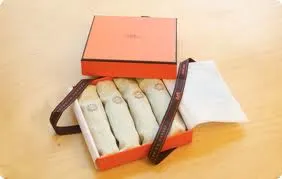
The Hermès travel or gift set.

The Hermès travel or gift set.

four 15 ml/0.5 oz bottles for $145. You can get 4 bottles of any perfumes in the Hermessence line, or all 4 can be the same perfume, such as Ambre Narguilé. In short, for $145, you would be getting 60 ml or about 2.0 oz of perfume, which is more than the standard 1.7 oz bottles for perfumes. As such, it is a much more manageable price. However, even then, it is still more expensive than Ambre Narguilé’s amber counterparts: Lucky Scents sells Frapin 1270 in a 100 ml bottle for $155, while Parfum d’Empire’s Ambre Russe is $75 for 50 ml and $110 for 100 ml. Despite their more affordable cost, however, more than enough people (including a number who seem to own one of the other amber scents) can’t seem to live without Ambre Narguilé and shell out $145 for the gift set. It all depends on how much you love boozy, smoky amber and if you consider Ambre Narguilé to be “utterly genius,” or just merely adequately cozy.

I started this review by saying that I had narrowed my search for my perfect amber. If Ambre Narguilé cost less, that search might be over. I really like it that much, and it makes me feel happy. (My German shepherd also adored it and jumped up to repeatedly lick my arm — which he doesn’t usually do when I’m wearing perfume.) I can’t get over how intoxicating that rum was, or how elegantly beautiful that swirling mist of tobacco. But it is simple. And should simple cost that much?

As in most things in life, price is a very subjective, personal thing, and what is worth it for one person may be too much for someone else. For me, the problem is that I’m extremely picky, am constantly inundated with scents I love or am tempted by, could not possibly buy all the things I’d like to buy in one calender year, and have definite cheapskate tendencies. So, I’m not sure that I would spend $145 for Ambre Narguilé. (I certainly wouldn’t spend $235!)

But I am considering it….
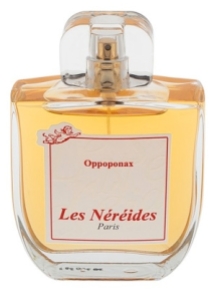
DETAILS:
Ambre Narguilé is available on Hermès’ website at the link provided above. Samples are available at a number of sample sites, as well as on eBay. The site I use, Surrender to Chance, sells it starting at $3.99 for the smallest size. As always, I think they have the best shipping prices, so I would start  there if you’re interested in testing out the perfume.

Perfume Review – Les Néréides Imperial Oppoponax: Evoking the Guerlain Classics

Imagine a pool of molten amber, covered with the sheen of fresh citrus oil. It’s like a thin film covering the thick, unctuous depths below. At the very bottom of the pool is a thin layer of white. Not sand, but powdered vanilla. That is the image evoked by Les Néréides Les NImperial Oppoponax, a unisex fragrance that is all sweet myrrh, amber, sandalwood and powdered vanilla.

Les Néréides is a French perfume house that initially started in the world of expensive, high-end costume jewelry before branding out into perfume. Their fragrances represent their overall ethos of the most basic, pure and simple ingredients but at the most luxurious level. They eschew expensive or fancy bottling, preferring to opt for a minimalistic aesthetic, both to appearance and, to some degree, the perfume itself.

Imperial Oppoponax embodies that aesthetic very well. It also embodies something else: vintage Shalimar by Guerlain. It’s incredibly similar, to the point that I’m in a Shalimarslight state of disbelief. (And joy.) Those who mourned the loss of their beloved legend to the horrors of IFRA restrictions and reformulations should rejoice. Because I could swear I’m wearing Shalimar, particularly in its dry-down stage! Imperial Opoponax (which has now been renamed simply “Opoponax”) is a mere eau de toilette, but it truly conjures up the glories of Shalimar at its best — both in the stronger parfum concentration and in its vintage state, before Shalimar was destroyed in a haze of synthetics and IFRA-mandated changes. (“IFRA” is the international perfume federation whose 2010 rules on the amount, type and concentration of certain key ingredients has forever altered the nature of the perfume world for the worse.)
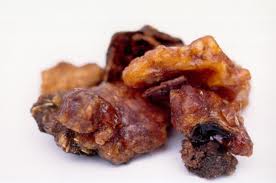
Imperial Oppoponax is classified as a “Oriental Woody” on Fragrantica and its notes are not complicated:

citrus, opoponax (sweet myrrh), amber, vanilla, sandalwood, and benzoin (resin).

For point of comparison, Shalimar has a few more: citrus; lemon and bergamot, jasmine, may rose, opoponax, Tonka bean, vanilla, iris, Peru balsam and gray amber. (And, yet, on me, Imperial Oppoponax has a slightly similar citrus opening and an identical dry-down.)

Imperial Oppoponax opens with a sharp, almost masculine burst of citrus. There is a definite feeling of classic men’s colognes in its sharpness; impressions of Guerlain‘s Habit Rouge cologne for men float through my mind along with Guerlain’s Shalimar. It’s definitely the opening of a very intense citrus-y, woody, aromatic oriental. I put on some vintage Shalimar parfum on my other arm and compared the scents. Shalimar is richer in its citrus start, more nuanced and complex, with florals and greater warmth. Imperial Opoponax is much closer to Habit Rouge with its crisp, fresh, faintly herbal twist on a citrus start.

Ten minutes into the opening, hints of the sweet myrrh and resins begin to tiptoe into the picture. You can find more details on benzoin and sweet myrrh in my Glossary, but,

Benzoin

Benzoin

in a nutshell, benzoin is a type of resin that has a light, sweet, often powdery vanilla scent, while sweet myrrh can range from slightly nutty and amberous, to faintly herbal and balsam-like.

According to NST, opoponax “has a sweet,

Opoponax

Opoponax

balsam-like, lavender-like fragrance when used as incense. King Solomon supposedly regarded opoponax as one of the ‘noblest’ of all incense gums.” Here, the balsam element to opoponax adds a woody, almost smoky note to the perfume, while the lavender is an aromatic.

The two notes together, along with that citric start, solidify my impressions of old Habit Rouge. I happen to adore Habit Rouge with a passion, so I can’t stop sniffing my arm. Some find the opening of Imperial Opoponax too masculine and too strongly evocative of an old time barber shop. To me, Imperial Oppoponax is a happy trip down memory lane! Lemon and lime! Subtle lavender (but in a good way) with traces of powdered vanilla! Wood that almost smells faintly cedar-ish! God, this is lovely!

It may sound odd to think of balsam trees and lavender mixed with a very boozy, sweet,  almost nutty, ambery scent and vanilla powder, but it works. Like Habit Rouge, the sharp, almost excessively zesty citric start is balanced by an immediate impression of greater depth and warmth. There is a strong hint of smokiness and incense that are emerging, but the real star is a definitely boozy amber with its undertones of powder.

The citric notes fade about 30 minutes in, leaving the rest of the perfume as one very well-blended resin booze fest. There is real intensity to the sweet myrrh and benzoin, and it’s almost narcotically heady. There is a faint sharpness or accridness to the smell, though I don’t know if it’s from the smoke — which makes me think of a weak form of frankincense –or if it’s the combination of the ingredients together.

Imperial Oppoponax is a very well-blended perfume but it might easily be called linear. From reading comments about Les Néréides style, I get the definite impression that they seek to essentially bottle the essence of an ingredient in its most concentrated, pure form. Here, it’s oppoponax and while there are other players on the stage, they are all supporting cast members to support the star and to make it shine even more brightly. I also get the crazy feeling that Les Néréides’s goal with Imperial Oppoponax was essentially to bottle the basenotes of the classics. Did you ever smell something whose basenotes or dry-down was so enchanting that you thought to yourself, “why can’t they just bottle THAT?! I would buy a full bottle of that!”

Well, I think that’s what Les Néréides tried to do here. If they didn’t seek to do so intentionally, it is the final result nonetheless. Imperial Oppoponax evokes the Guerlain classics extremely well but what it really epitomises is the dry-down on Shalimar. It starts off as Habit Rouge, and then develops into Shalimar. With every passing hour, as the Imperial Oppoponax opens further, softens and unfurls its warm heart, it evokes the sweet myrrh, ambergris, tonka bean, and vanilla base notes of Shalimar. The tonka bean and vanilla that form the Guerlinade or signature to almost all Guerlain scents is evident here, even though the sweet vanilla and powder comes from benzoin instead. And the peru balsam in Shalimar is paralleled by the balsam notes to the opoponax that both perfumes share.

Tea fireplace

A cat who clearly shares my appreciation for fireplaces and cozy atmospheres.

The middle to final stages of Imperial Oppoponax are all cozy, snuggly and warm. I felt imperious, slightly haughty and very Parisienne when I went out earlier this afternoon with Imperial Oppoponax enveloping me. But tonight, once home, the warmth and coziness made me reach for my flannel pajamas and a soft pashmina wrap, as I suddenly wished I lived someplace where a real fireplace wouldn’t be laughable. It’s a scent of great femininity but also great softness; it makes you want to cuddle and snuggle, even if it’s just with a soft blanket and your German shepherd.

Imperial Oppoponax has impressive sillage for the first two to three hours. If you spray too much, you may smell the sweet myrrh almost at the back of your nose. It has definite forcefulness, this perfume. And it does “not go gently into that good night” either, to quote the poet Dylan Thomas. No, Imperial Oppoponax stays and stays — even on me. It projected its scent solidly for the first three hours but only became close to the skin about five hours in! However, I could still smell it on my wrist for hours after that. All told, Imperial Oppoponax lasted just over 8 hours on me. Eight. Me! It’s positively shocking, especially when you consider that this is a mere eau de toilette!

It’s also an incredibly affordable eau de toilette, if not a flat out steal. Imperial Oppoponax — or just plain “Oppoponax” as it is now called — costs $70 for a large bottle (100 ml or 3.3/3.4 fl. oz.). In contrast, a 1.7 oz bottle of Shalimar eau de toilette costs $73 at Sephora. And, if I may point out once again, that would be for a reformulated version of Shalimar which smells nothing like the real, original scent, and which is full of synthetics that smell artificial and sharp. If you ever loved the middle to final notes of (original) Shalimar, then Imperial Oppoponax is a scent you may want to strongly consider. It’s almost a bargain in some ways. If, however, you never were all that fond of the powdered vanilla Guerlinade base to begin with, or if you don’t like a powdery accord to your boozy resins, then Imperial Oppoponax may not be for you.

Personally, I’m thrilled to finally have a way to smell both my beloved Habit Rouge and Shalimar, all in original vintage form and all in one bottle. I consider Imperial Oppoponax to be some sort of karmic finger in the face of the IFRA olfactory atrocities. It’s almost as though Les Néréides said, “You think you’re going to change the face of perfume history? Well, we’ll see about that!”

I don’t know how they did it, but bravo!

DETAILS:
Cost & Availability: Imperial Oppoponax is sold (under the fragrance’s new name, “Oppoponax”) on Luckyscent for $70 for 100 ml/3.4 fl oz. You can also find it on the company’s website, Les Néréides, for 50,00 € tax incl. It only comes in Eau de Toilette version.

Perfume Review – YSL M7 For Men (Reformulated): The Lion is a Pussycat

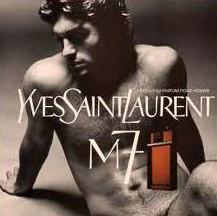
YSL‘s M7 For Men ushered in the new dawn of oud fragrances, whether or not anyone wanted it. And, judging by the market bomb, no-one did want it. M7 was not just a trail-blazer and the first of its kind; it was also too original, unique, bold and, it seems, shocking for a world dominated by the freshness of Acqua di Gio. As I’ve discussed previously in my post on oud as the latest, new, incredibly popular trend in perfume, M7 was ahead of its time and its brash arrival on the scene was not helped by print ads featuring a beautiful, hairy, male model in full frontal nudity.

The abbreviated version of M7 ad that was run in most magazines. For the full, uncensored version see the review at One Thousand Scents, linked to below.

The abbreviated version of M7 ad that was run in most magazines. For the full, uncensored version see the review at One Thousand Scents, linked to above.

M7 was released by YSL in 2002 under the direction of Tom Ford. It was created by Jacques Cavalier and Alberto Morillas and featured the following notes:

Top: Bergamot, mandarin, rosemary.
Middle: Vetiver, agarwood.
Base: Amber, musk, mandrake root. 

M7 was a huge failure for YSL, and was sneakily reformulated in 2008 — undoubtedly at the order of YSL Beauté’s new overlord, L’Oreal. The reformulated version lasted two years until 2010 when the whole perfume was quietly taken off the market. In 2011, YSL launched M7 Oud Absolu, a de-fanged version of the original monster. (And, somewhere in between all these changes, they found the time to release M7 Fresh, too! Clearly, they were at a loss with what to do with M7 and were trying every possible avenue to fix the problem and their loss in anticipated revenue.)

M7 is still available on eBay, but it’s hard to know which version you’re buying unless you check the bottles and boxes.

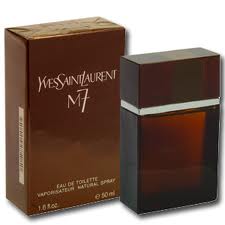
M7 Original in the solidly dark bottle.

M7 Original in the solidly dark bottle.

The original M7 is packaged in a deep brown bottle that is solidly brown all around and has a silver band at the top. Its box lists four ingredients.

In contrast, the reformulated version of M7

M7 reformulated bottle.

M7 reformulated bottle.

comes in a box that is really essentially clear with just a big solid sticker of brown on the front and back; you can tell it’s the reformulated version because the sides and bottom of the bottle are completely clear.

M7 boxes compared with the vintage original on the left and the reformulated version with its increased ingredient list on the right.  Source: Basenotes.

The different boxes for M7 with the vintage original on the left and the reformulated version with its increased ingredient list on the right. Source: Basenotes.

Its box is also different; it now lists 14 ingredients. Despite the increase in ingredients, however, the reformulated version is supposed to be substantially weaker than the original, emphasizes amber over faint oud, and lasts a fraction of the time. That said, both versions are said to have the same dry down.

I have often said that curiosity will be the death of me. (It definitely will be the death of my wallet one of these days.) All the Sturm und Drang around M7 were too much to resist. So, I ordered a sample of M7 from Surrender to Chance, and tried it with great trepidation.

I absolutely LOVED it, and that made me deeply suspicious. As I sometimes tell my friends, I’m a bit of a wuss when it comes to oud fragrances. (You would be too if you’d had my experiences with Montale! Worst thing ever!)

So, I went about investigating, and I think it’s pretty clear that Surrender to Chance carries the 2007/2008-2010 reformulated version of M7, as do the other sample sites no doubt. It’s extremely disappointing. I’m determined to somehow get my hands on the original but, for now, let’s explore this version of the hairy, naked beast. (Sorry, that ad tends to stick in my head….)

A less censored version of the ad but this is still not the full, original one!

A less censored version of the ad but this is still not the full, original one!

M7 (reformulated) opens with an absolutely stunning burst of citrus, sweetness, smoke verging almost on the side of incense, and rich wood. I love it and note, “I think I may have found my oud!” There is a soft, subtle touch of the medicinal, but far less than what I had expected. It certainly doesn’t seem to have the forceful medicinal nature that one of my best friends who has the original version of M7 had described to me. He had noted the smell of bandaids and he was absolutely right. But in my diluted version of M7, it is very subtle. The slightly rubbery, plastic quality to the outside part of a pink bandaid strip is noticeable but it is far outweighed by the smell of sweet ambered spices. It’s almost as if there is a touch of cinnamon and a whisper of honey amidst that  crisp, fresh citrus and the oud wood.

The latter has an almost vegetal element to it that calls to mind moss-covered trees in the heart of a British wood. The notes definitely evoke the feeling of a walk through the woods surrounded by faint tendrils of smoke — perhaps from a pile of burning leaves in the distance. I feel very Downton Abbey-ish when I think of those notes, but the amber dominates too much for it to be more than a fleeting feeling. The oud wood is too warmed by the amber and the sandalwood to be a true oud scent like that of By Kilian’s Pur Oud which I have reviewed previously. M7 actually feels a bit closer to By Kilian’s Amber Oud, probably because there seems to be a substantially reduced amount of oud in the reformulated version of M7 (and seemingly little to none in the Kilian).

My version of M7 also calls to mind something unexpected: my beloved Opium in a shadowy form. I feel as though I’m going mad but, no, the opening definitely evokes Opium to me. I check Fragrantica and it suddenly clicks: Opium’s top notes are bergamot and mandarin, and amber is at its base. M7’s crisp, almost zesty opening burst of orange citrus and bergamot in an ambered cloak definitely shadows the magnificence of Opium’s opening (though nothing can or will ever – ever – really compare to vintage Opium, my Holy Grail bar none). Since Opium is perhaps YSL’s greatest success, it’s not completely surprising that the company would hearken back to its roots a little when creating M7. Perhaps that’s one reason why I keep writing “love” in my notes — complete with capital letters and exclamation points.

Unlike others, I never had the “cherry cough syrup” opening in M7. No doubt that is another casualty of the reformulation. I also don’t have much duration. I’m utterly appalled at how briefly M7 lasts on me. No more than 20 minutes later, it’s already starting to fade. An hour in, it’s a virtual ghost. I feel cheated and, truth be told, a little like sobbing. I have far too little to do what I’d like, which is to pour it on me by the handful. I’m crushed and desperately cling onto the remnants of citrus, sandalwood and amber. (The oud left the building long ago.) I’m slightly comforted by the fact that someone on Basenotes stated the reformulated version lasted only an hour on him. Clearly, it’s not all me and my wonky, perfume-consuming chemistry.

In slight despair, and fighting the urge to pour the remainder of my vial all over me, I go to Fragrantica to read about other people’s experiences with the scent. And, good God,  this thing (in original form) is a definite lady killer! One of my best friends had told me her boyfriend wears M7 and… well, I’ll spare you the blushes. But I thought her reaction was simply because he’s a bit of a hunk. Apparently, M7 turns everyone into a bit of a hunk! A small sampling of the comments:

  •  I received the best compliment ever from a sexy girl after she buried her face in my neck, ‘f**k me now, and again tomorrow, just so I can smell that again.’ nuff said.
  •  A woman at work commented the other day “You smell amazing you’re affecting my pheromones”
  • This is Hardcore Sex in a bottle!!! Its Sweaty, Its Dirty, Its Intoxicating…. Its so damn nasty…..I wouldn’t be surprised to know that this one has pheromones on it.
  • It smells like sex, just in a bottle. That’s all. Yes, there is so much more, but that’s all that you, dear reader, need to understand here. There’s nothing else quite like vintage M7, and it lasts for DAYS.
  • 1. Put a man in a blender. 2. squeeze. 3. add alcohol. M7 formula.
  • i like to wear even though i’m a girl. smells very dark, erotic, strong,wild …… it makes me think: “Take me!”
  • YOWZA! YOWZA! YOWZA!  [..] “M7” is unashamed of its sexy, primal, and animalistic bed-scent persona. Any man entering a room with a bunch of ladies better proceed with caution while donning this fragrance…..They won’t be able to keep their hands to themselves. I know I wouldn’t.

The comments make me sigh, deeply and sadly. What I’m wearing is nothing like the descriptions of the ferocious opening and the almost feral roar of a wild animal seeking its mate. My reformulated version is excellent, no doubt, but it’s clearly a pale substitute. I can’t even begin to imagine what the de-fanged M7 Oud Absolu must smell like given that people say that is a tamed kitten as compared to the savage beast of the original.

M7 is a scent that I urge all men and women to hunt down and try. Those fearful of oud may want to try the reformulated version that I have, though numerous women seem to love wearing the original too. It’s a little piece of perfume history and a whole lot of glory.

[UPDATE: I finally tried M7 in the original 2002 version and you can read my review of it here.]

Reviews En Bref – Boucheron, Montale, Caron, & Annick Goutal: From Average to Terrible

In case you hadn’t noticed, I’m verbose. 😉 I can’t seem to help it and, frankly, it often exhausts me as much as it probably overwhelms (terrifies?) you. So, from time to time, I thought I would offer brief thoughts and conclusions on a wide range of colognes or perfumes. Sometimes, they will include fragrances that I plan full reviews for down the line. Other times, like now, it’s for perfumes that I don’t like and find it difficult to sum up the enthusiasm to write a full review.

BOUCHERON:
Boucheron For Men Eau de Parfum is a scent I should like, in theory. It’s a powerhouse citrus aromatic that is most definitely unisex, regardless of what’s written on the bottle. I didn’t like it. It opened with too much soapy citrus and was utterly overwhelming. I’m not easily overwhelmed and usually like powerhouse perfumes. This one is justifiably considered by some to be utterly unbearable. (For the sake of balance, others adore it. It’s definitely a very split opinion.) Boucheron became much better as it developed but not enough for me to like it. Bottom line: nothing special and somewhat nondescript in the end.


MONTALE:

I’m glad I tried Montale’s Oriental Flowers if only to prove to myself that my intense dislike for Montale scents thus far has nothing to do with oud. The two Montale oud fragrances that I’ve tried (and reviewed here) were nothing short of Chernobyl on my arm and made me desperate for a Silkwood shower. A close friend recently tried Montale’s Amber Aoud and commented: “Montale clobbers you over the head and drags you back to a cave to roast you on a rack.” So, clearly, it’s not just me. Oriental Flowers is better — but that’s not saying much. It’s sharp, screechy, and very synthetic (to me, at least). For a floriental, there is a note that suspiciously calls to mind the oud in Montale’s other fragrances.

Perhaps it’s the very synthetic lime note that keeps appearing in the Montale perfumes, even though there shouldn’t be lime in any of those that I’ve tried thus far. I think “sharp, hostile lime” is how my nose processes the extremely synthetic florals and ouds in the Montales. Regardless, I find the rose scent in Oriental Flowers to be synthetic and screechy too. Over all, the perfume gave me a headache and I wanted it off me. It wasn’t the unrelenting horror and nuclear explosion of the Montale ouds, but it was damn unpleasant. And, even worse, it simply won’t go away. There is just no escape from Montale scents, no matter how microscopic the amount.

CARON:

Perfumistas and bloggers rave about Nuit de Noel, a favorite particularly around Christmas time and a fragrance that Karl Lagerfeld allegedly sprays around his house to get him in the holiday mood. Huh. Maybe I need to try the vintage version, because I’m in the clear (and tiny) minority on this one. Consider me utterly unimpressed, though so, so desperately eager to like this one. Dammit, why don’t I?! It’s a floriental whose spice is supposed to evoke marron glacés, old-fashioned Christmases with gingerbread men, sugar and spice, baking cookies, and cozy fireplaces. Even Goth Christmases and the 1920s. The superb blog, Perfume Shrine, had an absolutely delicious review (which convinced me to buy it)  and which reads, in part, as follows:

Caron’s Nuit de Noël (1922) is a soft oriental built on an accord of rose absolu and Mousse de Saxe perfumer’s base (i.e. a ready-made accordof ingredients producing a specific effect), with the addition of 25% sandalwood, jasmine, ylang ylang, lily of the valley, vetiver, amber and iris. It’s prismatically constructed around 6-isobutylquinoline, a leathery molecule.

The fragrance emits a cozy, inviting scent poised between the starch of marrons and the bitterness of the iodine/leathery note(hence my Fernet Branca evocation) fading into musky woods. Indeed the famous “Mousse de Saxe accord” is comprised of geranium, licorice (created with anise), isobutyl quinoline (leather notes), iodine and vanillin (synthesized vanilla). If older Carons, especially in their superior vintage form, are characterised by a signature “Caronade”, a common thread that runs through them, Nuit de Noël is a good place to start this escapade into one of the most chic and historical French perfume houses.

Less incensey than similarly oriental Parfum Sacré, less abrasive or bold than straightforward leathery En Avion or Tabac BlondNuit de Noël has a sheen that starts and ends on an unwavering tawny pitch. The spiced rum-licorice notes aplified by musk (a musk comparable to that in Chanel’sNo.5 and Bois des Iles) take on a rich saturation; the fragrance dries down to a powdery warmth redolent of the bourgeois scents of a festive evening spent outdoors.

Every single one of the reviews mentions things that are right up my alley, and make me wonder about my own judgment. (Did I mention that I’m desperate to like Nuit de Noel?) Unfortunately, as I wrote to an inquiring friend yesterday, I actually regret having bought a full bottle. A small sample would have sufficed. I only get fleeting notes of a few of the things mentioned by others, if at all. Plus, there is a very surprising bit of an underlying coldness and dryness to it. Someone called it “melancholy” but in a good way; I’m not sure I would go that far. Now, again, the vintage may be very different, but the bottom line is that my version is nothing particularly special. It’s perfectly nice, nondescript and pleasant, but I don’t want “pleasant.” There are too many perfumes in the world for unenthused “pleasant.”

Montaigne by Caron is one I’m on the fence about. It’s not a perfume I reach for often and, when I do, I think to myself, “I should wear this more.” It makes me think of Cannes, mimosa flowers under a brilliant blue sky, and Van Gogh paintings. It’s a floriental and the notes are described as follows: Top notes are jasmine, coriander, bitter orange, mimose and tangerine; middle notes are narcissus and black currant; base notes are sandalwood, amber and vanille. It’s sunny, elegant, and incredibly powerful both in terms of sillage and longevity. I have no clue why I don’t like this more. Perhaps it’s going to take a lot more tries, though that didn’t work for Nuit de Noel.

ANNICK GOUTAL:

Grand Amour is a perfume I should adore, and not solely because of the incredibly romantic story behind it. It’s a perfume that Annick Goutal created in 1996 for herself as an ode to love and her husband. Lucky Scent says: “Grand Amour is the perfume that encapsulates the serene passion Annick experienced with her husband, the cellist Alain Meunier, who would bring her a bouquet of white flowers every week. A dense perfume with flowery chords, amber, and musk that speaks of love, because “love is everything.” It’s another floriental (can you see a theme in my tastes?), and according to Fragrantica: “[t]he composition is based on three accords: floral, amber, and musk. In the floral bouquet, lily, honeysuckle, and hyacinth lead the way to Turkish rose, French jasmine, and Indian mimosa, with a touch of fruity notes. Oriental accord (amber) is represented by the notes of amber, vanilla and myrrh. In the base the sensual musk united with precious rare balsams create a very long trace.”

Hmmph. If they say so. To me, Grand Amour has a painfully green opening. It is the filthy, fetid, murky green remnants of a week-old vase of flowers whose water has not been changed and started to stink. At the same time, it’s a bit powdery and soapy. After a queasy hour or two, it turns softer. But now it’s musky soap and powder, but with leather and balsam. There’s something about it that I find unpleasant. I bought it because I love hyacinth, amber and myrrh; because the rest of the notes sounded completely up my alley; and because it was reported to be one of the rare Goutals that has good longevity. Well, the longevity isn’t bad, but it’s an utter ordeal and chore to wear it. It’s hardly akin to the sheer horror that is Montale (nothing is), but it’s one of the few perfumes I own that I want to sell. Not only do I not want to have anything to do with it, but I need to have that full bottle stop staring at me so hauntingly and reproachfully.