Perfume Review – Chanel Les Exclusifs Cuir de Russie: The Legend & The Myth

Some legends are perhaps better left untouched. Or unsniffed, as the case may be. Because, sometimes, the legend is closer to a myth. That was, unfortunately, my experience with Cuir de Russie, the legendary Chanel fragrance that is now part of its Les Exclusif line of perfumes. Cuir de R

Cuir de Russie (or “Russian leather”) is one of those scents that perfume junkies would talk about in hushed tones of reverence and awe. The vintage, original Cuir de Russie always seemed to me to be some sort of mythical animal, the perfume equivalent of a unicorn. Its name would shine in haloed light above distant snowy mountain tops and I almost expected a choir of angels to burst into rhapsodic song at its very mention.

Coco Chanel & her imperial Grand Duke.

Coco Chanel & her imperial Grand Duke.

Cuir de Russie was inspired by Coco Chanel’s passionate affair with a Russian Grand Duke, His Imperial Highness Dimitri Pavlovich Romanov, a cousin to the last Tsar. According to Wikipedia, Chanel’s biographer considered Cuir de Russie to be the “bottled … essence of her romance with the Grand Duke.” It was created by Ernst Beaux, Chanel’s then perfumer, sometime in the 1920s when Paris was flooded with Russian emigrés, both royal and common, who had escaped the Bolshevik revolution. (Chanel’s website gives the date of the perfume’s release as 1927, but I’ve always read it was in 1924.)

The Chanel website majestically declares Cuir de Russie to be an “imperial fragrance” and a “leather oriental” before adding:

The Grand Duke in his uniform.

The Grand Duke in his uniform.

The Russian influence at the heart of Mademoiselle’s creations was born from her encounter with the Grand Duke Dimitri, cousin of Tsar Nicholas II. Cuir de Russie, launched in 1927, is the fragrance of wild cavalcades, wafts of blond tobacco and the smell of boots tanned by birch bark, which the Russian soldiers would wear.
This sensual fragrance reveals the dark and musky scents of balms, Frankincense and Juniper Wood. Fruity zests of Mandarin Orange and Bergamot add a touch of insolence before giving way to the grace and fragility of eternal flowers: Rose, Jasmine and Ylang-Ylang. A ‘thoroughbred’ fragrance with a strong character, it holds within it the ambiguous secrets of femininity…

Somewhere in the decades following its release, Cuir de Russie seems to have faded into the mists of legend. I can’t determine when it was discontinued or why, but it just became that mythical perfume unicorn. Then, in 1983, Chanel brought it back. Trumpets blared, perfumistas fainted, and all wept with joy as the heavens burst forth in song. Chanel’s in-house perfumer, Jacques Polge, re-worked it slightly, toning down its legendary leather notes and increasing the iris for a more powdery note, but it was back and that is all anyone cared about.

The return of Cuir de Russie was hailed as a massive triumph by even that most ascerbic and disdainful of critics, Luca Turin. In his book, Perfumes The A-Z Guide, his five-star review states:

There have been many other fragrances called Cuir de Russie, every one either too sweet or too smoky. This one is the real deal, an undamaged monument of classical perfumery, and the purest emanation of luxury ever captured in a bottle.

[All] sumptuous leather, light and balsamic, forgoing any sugary compromise, Cuir de Russie regains its place at the top of this [Leather] category, right next to the rather more jovial Tabac Blond. […]Cuir de Russie is a striking hologram of luxury bygone: its scent like running the hand over the pearl grey banquette of an Isotta Frashini while forests of birch silently pass by”.

(First quote taken from Perfume Niche, and the second from the Perfume Shrine.)

Luca Turin is not alone in genuflecting before the shrine to the most holy of leather perfume holies. If I were to provide mere snippets of the adoring praise for Cuir de Russie — even a minute fraction of them! — I suspect I would writing this review until sometime in the year 2018. There are reviews on Fragrantica which expound for paragraph after paragraph about:
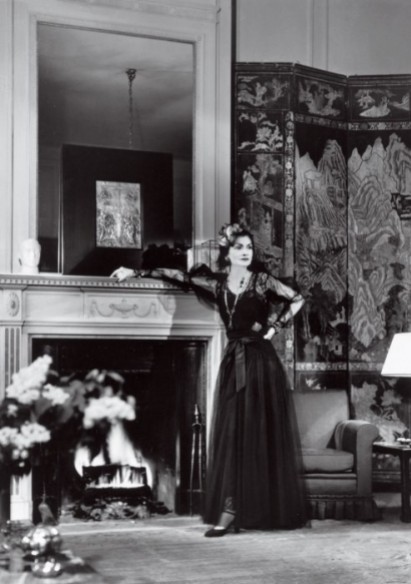
Coco at her Ritz apartment.

Coco at her Ritz apartment.

Cossacks on horseback on the steppes of Russia; semi-erotic imaginings involving the seduction of a languid Coco by her sweaty, horse-riding royal lover amidst the plush decadence of her Paris apartment at the Ritz; and about olfactory masterpieces involving the very scent of Coco Chanel’s sex and sweat-infused bedsheets. There was one from a fellow perfume blogger whom I deeply respect and admire which made me want to go take a cold shower, or find some ermine and jewels in which to roll around naked.

All of which makes me feel completely insane for not loving it. But I don’t. On me, it is none of the things described above, and I am crushingly disappointed by a scent that is, at best, average and occasionally pleasant. At worst, it is a barnyard filled with horse manure under a layer of soap. In short, I am one of the very few freaks in this world who   finds the legend of Cuir de Russie to be a mere myth.

The notes listed in Chanel’s description up above are the same ones listed on Fragrantica. Elsewhere, however, I’ve read a significantly larger and fuller list. I assume that the notes are essentially the same in both vintage and modern versions, with only the amount of certain ingredients differing. If so, then the full notes for Cuir de Russie are:

aldehydes, orange blossom, bergamot, mandarin, clary sage, iris, jasmine, rose, ylang-ylang, cedarwood, balsams, vetiver, styrax, incense, cade, leather, amber and vanilla.

Cuir de Russie opens on me with an explosion of aldehydes. (You can read more about aldehydes in the Glossary.) On me, it is a waxy, lemony, floral impression that is first and foremost soapy, and without any of the fizzy aspects that I often read about with aldehydes. As many of you know, I loathe soapy scents. And I suspect my dislike of the soap accord in aldehydes is why I dislike Chanel No. 5, and one of the reasons why I’m far from enraptured by Cuir de Russie. (Christ, I’m admitting that I don’t like the two most legendary Chanel perfumes ever. I may need to hide in witness protection. Mea Culpa.)

Initially, the burst of soap is like a thick lens, clouding and obscuring the citrus notes, but about five minutes later, I suddenly smell soapy leather. Specifically, I get a strong impression of a riding saddle and stirrups lathered with sweat. There is a strong smell of sour, sweaty horse. I shudder faintly, and wonder momentarily if the heinous soap smell was better. I should have enjoyed the sweaty saddle fragrance while it lasted because, suddenly, waves of horse manure (cow dung?) and soap are emanating off my arm.  I…. I… am stunned, and have no idea what to do. I quickly turn to Google and, there, on both Makeupalley and Basenotes, amidst the legions of gushing, cooing, almost delerious praise, I find a few rare nuggets of comfort. I am not completely alone or totally crazy.

Snippets of those rare (very rare!) criticisms of Cuir de Russie are as follows:

  • It was an overwhelming animalistic scent, like the smell of entering a barn and having the smells of animals and their droppings mixing with straw and leather.
  • This leather is more of the fecal farmhouse animal stench variety and is somewhat difficult to tolerate. […] Luckily, the barnyard aspects of the scent recede in the base notes. […] The opening of Cuir de Russie edt was difficult from the get-go and did not portend to good things to come. I tend to be quite sensitive to fecal aspects in scents (like my problem with Jicky, for example), and as such the heart notes with their fecal smelling leather and powdery iris were really not to my taste at all. If things stopped there this would be a definite thumbs down for me. What saves Cuir de Russie edt somewhat is it has a very nice dry-down that easily is the best part of the scent.

And, that’s basically it — because even those who can smell the fecal aspect of Cuir de Russie love it. As it is, that last quote came from someone who ended up giving Cuir de Russie a neutral rating due to the “nice” dry-down that she mentioned. Other than a few negative criticisms involving dirty ashtrays (not a frequent impression), almost no-one who smelled the barnyard scent or “cow patties” hated it. Seriously, they didn’t!

  • Cuir de Russie, however, was love at first sniff. It opens with a dirty animalic note that’s borderline fecal, but the soft, creamy, spicy florals seep in and smooth out this animal’s shaggy fur until Cuir de Russie becomes this heart-achingly beautiful blend with an undercurrent of barely-bridled danger; a lady in leather and lace, a sleek panther at repose in a meadow.
  • I really love the opening, when a true leather unfolds, bitter, dry, almost harsh, even a briefly passing “faecal” note, all in all, it smells like the inside of a fairly new, precious leather bag, that’s containing some scented cosmetics in its depths. But all too soon, this stage is fading away, moving over into a softer, creamier leather, which is still fine and very likeable.
  • All I can say is — poop. This stuff smells like poop. But in a really kind of good, fascinating way. Seriously, that’s the genius of Chanel. It’s like the poop of some delicate animal who’s only grazed upon a field of violets. I’m not sure I want to wear it, but I simply could not stop smelling the crook of my arm all day after my spritz! Pretty awesome.

There was even a review on MakeupAlley upbraiding Chanel’s perfumer, Jacques Polge, for toning down the original scent and demanding that they bring back more of the leather and barnyard!

Clearly, I am alone in disliking “the poop of some delicate animal who’s only grazed upon a field of violets.” (It is not a “delicate” animal, by the way, and I could only wish it had eaten bloody violets!) I certainly don’t want even more of this opening that so many adore and wish were as intense as it used to be.

As I try to figure out how I landed in a pile of horse manure, I come across a really interesting explanation on Perfume Niche. Apparently, it’s the birch wood that helps creates that leather tannery and barnyard scent:

Rectified birch tar is the smoky resinous note which makes Cuir de Russie, and most leather scents, smell like leather. It is, in fact, the dry-cooked resin from the bark of the birch tree and has been used for centuries to cure leather, and to “dress” it, as in polishes for military leather boots. […]  [Then] after the florals subside, Cuir de Russie conjures the uber-male, becoming a sexy masculine scent. That raw edge – the funky animalics, civet and castoreum – mix with the smoky leather, balsam and woods , giving Cuir de Russie an erotic, brutish quality.

I’m afraid I don’t see any “erotic, brutish” quality in Cuir de Russie. I would undoubtedly like it a lot more if it were half as interesting as all these descriptions would seem to convey. I keep wondering what the legendary vintage version must have been like if the current eau de toilette toned down the leather. Perhaps I should try to hunt down the concentrated extrait de parfum version which is supposed to be more intense, more “brutal,” heavier and thicker? I consider the downsides of a heavier version of soapy horse feces, and quickly change my mind.

About 30 minutes in, Cuir de Russie is already incredibly close to the skin. Apparently, it’s supposed to be. However, with the way my skin consumes perfume, it makes it difficult to assess its full range and development properly, so I start from scratch. I follow the advice of a Basenoter and put on triple the previous amount (on some clean skin). I have the same experience as the first time round, but this time, the perfume’s sillage is much better. (Apparently, I need to empty just over half the vial on me if I want to smell the dry-down properly.)

Unfortunately, I don’t get much of the lovely middle or bottom notes that others do. On me, it goes from: citric soap; to horse manure, sweaty saddles and soap; to a middle stage that is essentially a basic floral scent of strong jasmine, with bergamot, rose, powdery iris, and leather turned into soft suede. (The soap is still there too, though it’s a shadow of its former strength.) The jasmine part is lovely, and the rest of it is pleasant, but I shrug. Soon, the dry down begins: the suede impression is joined by a light touch of cedar, an even heavier dose of dusty powder from the iris, some definite musky notes, and a soft smoke and incense touch that is, I admit, lovely. There is also a note that strongly evokes hairspray. And, every CamillaPBnow and then, flitting back and forth, I smell something faintly horsey — though it is more leather saddles now than feces.
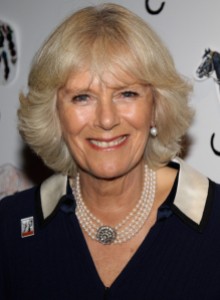
I feel like Camilla Parker-Bowles, Prince Charles’ horse-mad second wife, and recall the oft-repeated stories of her younger days. Rumour has it that, after a long day at the hunt, she would make a mad dash straight off her sweaty horse and into the house where she would tumble into a dress for a cocktail party, with nary a shower in-between.

I realise that my views are “sacrilegious,” to borrow the word of one fearful commentator on Basenotes who barely dared whisper the words “fecal” before rushing off to join in all the praise. If I could smell what Mick Jagger smells when he wears this (and he does); if I could see “The Ballet Russes, polished samovars and dangerous Cossacks with leather riding boots;” if I could conjure up Imperial Grand Dukes leaping off their black stallions to lasciviously and forcefully seduce me; if I could feel like a “virago” femme fatale or ultra-posh bombshell with hidden bondage tendencies– then I would probably genuflect at the alter of Cuir de Russie, too.

Until the time when all that magically occurs, I shall continue to think that Cuir de Russie is a perfectly pleasant, completely average floral musk with some suede notes under a strong head of horse manure. Literally.
DETAILS:
Target group: Unisex. Men love this as much as women.
Sillage & Longevity: As a rule, this is meant to be close to the skin, so the sillage is far from enormous. With regard to longevity, there seems to be a complete and total split in views, with some saying it lasts 10-12 hours, while others say it never surpasses the 4 hour mark. On me, it took 30 minutes or less before the perfume faded to the point where I had to forcefully inhale my arm to smell the notes. The whole thing lasted no more than 2.5 with my regular amount, but 4 hours with the triple dosage. Again, as always, my longevity issues are far from the norm as my skin rapidly consumes perfume.
Cost & Availability: Cuir de Russie is available exclusively in Chanel boutiques or on the Chanel website. The standard, basic Eau de Toilette in available in two sizes: the 2.5 oz./75 ml bottle is $110, while the 6.8 oz/200 ml. bottle is $220. It is also available in Extrait de Parfum form for $175 for 0.5 oz.

Perfume Review – Hermès Ambre Narguilé

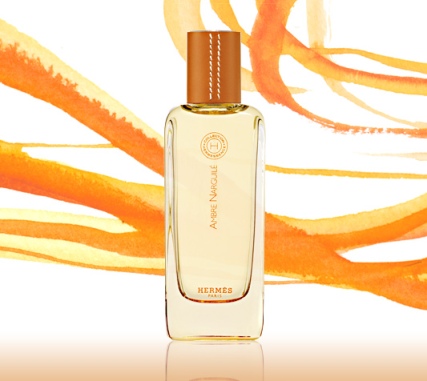
I may have narrowed the search for my perfect amber. I need to say that at the onset because it’s quite an unexpected, unlikely thing. Certainly, I didn’t expect to like — let alone adore — a scent described as “cinnamon apple pie” by most commentators. I am not a fan of foody or gourmand perfumes. And I am most definitely not a fan of paying high prices to smell like cloying dessert. But there is something intoxicating, sensuous, comforting and unexpected about HermèsAmbre Narguilé. Of course, the incredibly intense ambre-narguil_fumes of rum that emanated from my arm for a few hours may have intoxicated my normal sensibilities, but this really is a boozy amber and tobacco scent par excellence.

Ambre Narguilé was released in 2004 as part of Hermès’ exclusive, in-store Hermessence line of fragrances. It was created by Hermès’ in-house perfumer, Jean-Claude Ellena, a legendary perfumer who was recently called by Der Spiegel “the best ‘nose’ in the world.” Ellena is known for his minimalistic approach to ingredients, and for perfumes that always have depth and complexity, despite seeming sheer and transparent. That sheerness is rather a signature of his and, as I will explain later, a significant aspect of Ambre Narguilé.

Jean-Claude Ellena. Source:CaFleureBon

Jean-Claude Ellena. Source:CaFleureBon

On the Hermès website, Jean-Claude Ellena describes Ambre Narguilé as “[a]mber honey with swirls of smoke from the East. Savory, sensual, enveloping.” (Narguilé means a tobacco water pipe, or hookah, in French.) His goal in creating the perfume was as follows:

Amber, the Western expression of Eastern fragrances, has a warm, enveloping, almost carnal smell. I wanted to imbue this idea of amber with the memory of the East I love where tobacco – blended with the smells of fruit, honey and spices – is smoked in narguilés, or water pipes, and where swirls of smoke diffuse a sweet sense of intoxication.

The Fragrantica classifies Ambre Narguilé as a spicy oriental, but it doesn’t list the full notes. From what I’ve read in a few comments, the complete list seems to be:

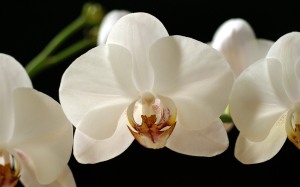
benzoin, labdanum, musk, vanilla, caramel, honey, sugared tonka bean, grilled sesame seeds, cinnamon, rum, coumarin, and white orchid.

The opening burst of Ambre Narguilé was a huge surprise to me. From all the comments, I had expected a massive dose of cinnamon apple pie. I was fully intent on hating the perfume and, actually, I wondered why I was even bothering at all. After all, no good thing can come of a scent described as gourmand, right? Well, wrong. I clearly need to remind myself not to prejudge a whole category of perfumes. (Except soapy-clean laundry detergent scents. There, I plan to continue to prejudge as much as ever.)

Source: Fabio Visentin

Source: Fabio Visentin

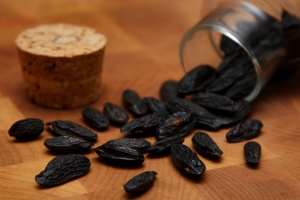
Instead of a cloying dessert, Ambre Narguile opened as a spicy, sweet white floral. I blinked. White orchid? I never expected to smell white orchid with that list of potent, warm ingredients. But I did now. The perfume was a rich, floral vanilla with toasted, warm tonka bean, white rum and a hint of tobacco. I didn’t get any of the heavy powder that often goes with tonka bean, especially in Guerlain fragrances where the tonka bean’s powdery notes are responsible in large part for the signature Guerlinade.  I wonder if perhaps toasting the bean made a difference and warmed up the notes instead of bringing out its more powdery side? Whatever the reason, the vanilla from the tonka bean was sheer, not cloying.

Tonka Beans.

Tonka Beans.

Two minutes in, suddenly, the cinnamon apple pie hits me. It’s incredibly concentrated, particularly for a scent that does not, in fact, have any apples in it! It’s odd; Ambre Narguilé is still a spicy floral scent, but now, it is also slightly gourmand. A few minutes later, the apple becomes a bit less predominant and I get a strong burst of rum, raisin, rum raisin, rum, rum and more rum. It’s not the light white rum of the start, but dark, black rum. The sort you see in pirate movies. There is so much rum, I feel a bit light-headed and drunk from it, but in the best way possible. I also suddenly feel as though I’ve had rum raisin pie that has a strong dash of saffron in it. Good lord, that’s good! I ponder whether to put on Johnny Depp in Pirates of the Caribbean.

About fifteen minutes in, I smell the faintly smoky aspects of the labdanum wrapping itself around the boozy resins. There is such a rich, nutty, smoky feel to the amber that it feels as though there is Siam Resin in there. And the apple suddenly seems a lot more like cooked plums than the apple of a strudel. I’m surprised that such a sweet, rich scent isn’t actually all that sweet. There is a dryness that I think comes from the labdanum which prevents this from being cloying or too dessert-y. The dryness makes me agree a lot more with Fragrantica’s description of this as a “spicy oriental” and not as a gourmand fragrance. It also adds to the impression that Jean-Claude Ellena had intended: shimmering, swirling whispers of smoke. He was right: the smoke helps to “diffuse” the sweetness, as does the hay-like aspects of coumarin.

After twenty more minutes of alternatively contemplating rum-drinking pirates and wanting to eat my arm, Ambre Narguilé starts to change. There is the lovely opening hints of tobacco but not just any tobacco. I smell my late uncle’s pipe: sweet, floral, almost rose-like, with fruity and apple overtones to its spiced tobacco. It’s such a strongly evocative scent that I suddenly miss him very much. The rose and apple

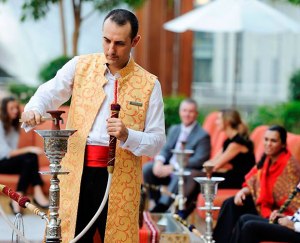
A Middle Eastern hookah water pipe or narguilé.

A Middle Eastern hookah water pipe or narguilé.

overtones also call to mind memories of using a hookah, or water pipe, a few years ago when that trend was very “in” and popular. The tobacco there — as in Ambre Narguilé — was never acrid, bitter, burning or strong like that of cigarettes, but lighter, softer, warmer, sweeter, and aromatically fruity. I’m amazed by just how well Ellena has nailed the hookah or narguilé aspect of things in this perfume. Clearly, it’s a result (in some part) of the labdanum, coumarin, and tonka bean, but that doesn’t really explain how he managed fruity, rosy, floral pipe tobacco in a perfume that has neither fruit nor any significant florals! I can’t understand it.

Another thing I can’t understand is just how sheer this scent is, while simultaneously being rich, narcotic and heady. So many of the reviews of Ambre Narguilé reference its “sheerness” and “transparency,” references which had made absolutely no sense toHookah me when I’d read them a few days ago. How could those two adjectives be used to describe a perfume as rich and sensuously deep as this one was supposed to be? I was baffled. Now, however, I can completely understand it. For such a seemingly gourmand scent, it is neither cloying nor diabetes in a bottle. It’s somehow light and airy, while simultaneously being almost narcotic-like in its headiness. It’s hard to explain, but imagine a light breeze. It gently wafts passed you, but it carries a maximum burst of concentrated smell.
I think only someone like Jean-Claude Ellena could manage such a seeming contradiction in spirit, and manage it quite so deftly. Perhaps he really is a “luminist” as he was recently described on Ca Fleure Bon, the haute perfume site of experts. They called him a “luminist” in terms of both his approach to ingredients and the final result. What I think they’re talking about is that he is a rare perfumer who manages to use a small range of ingredients in a way that illuminates them with both lightness and the most concentrated aspect of their essence. (At least, that’s how I interpreted their comments.)

Here, Ellena blends together a range of rich, ambery, spice ingredients in a way that amplifies their essence, while simultaneously creating an airy feel.  Ambre Narguilé has huge sillage, but you can also smell the concentrated nature of the ingredients. Yet, none of them are cloying or excessively sugary. More importantly, none of them are synthetic or artificial. There is no sharp screech of synthetic compounds, no clanging or burning in your nose, and no vaguely plastic-y tones.

Instead, it’s an incredibly well-blended, heady, cozy scent that has subtle transitions. The changes from stage to stage are not abrupt; the perfume moves seamlessly from that opening burst of white floral vanilla and white rum, to the cinnamon apple pie stage, to the rum raisin and rum, then to the tobacco, before ending in its final stage. Almost 6 hours later, Ambre Narguilé turns into a tobacco and wood scent with a leather undertone. The woody notes almost smell like cedar, but it is the leathery undertone to the pipe tobacco that suddenly explains why I like this scent so much: it reminds me of my beloved Karl Lagerfeld for Men (vintage) that is one of my favorite old fragrances to wear. Ambre Narguilé has the rich tobacco with the amberous, incense and leather feel of the Lagerfeld, but without the latter’s powder notes and with a hell of a lot more rum.

Which brings me to popular dessert smells from brands like Philosophy, Bath & Body Works, Britney Spears (for example, Fantasy which evokes floral supermarket cupcakes), Jessica Simpson (for example, Fancy, which evokes caramel and vanilla), and the like. I like Philosophy and BBW for what they are, and I have owned a number of things from each. (I have never owned Britney Spears or Jessica Simpson, and I never shall.) But, let’s admit it, the fragrances they create are completely artificial. To be as polite as I can possible be, they don’t smell particularly expensive, mature or natural. They are huge money-makers and extremely popular, but they are not expensive in scent or in cost. One reason for their profitability is the use of artificial, synthetic compounds which are significantly cheaper to use. The drawback to these artificial compounds is that they can be extremely sharp, cloying, excessively sugary and one-dimensional.

There is nothing artificial or cheap about the smell of Ambre Narguilé. It doesn’t smell of synthetics. It smells extremely expensive. And I don’t think you could get a comparable scent among the commercial, mass-produced, gourmand fragrances out there. According to a commentator on Basenotes, the famous NY Times perfume critic, Chandler Burr, said Ambre Narguilé:

is not merely the best; there is simply nothing like it on the market, period. And no one will ever do it as well again.

While I love the scent, I think Mr. Burr is pushing it and waxing a little too rhapsodic. But I do agree with him to an extent because I am convinced that there is no-one who could do it better amongst the plethora of dessert scents littering the aisles of Macy’s, Dillard’s, Sephora or the like.

But what about higher-end perfume houses? There, Ambre Narguilé would seem to have serious competition in terms of quality, as well as some overlap with existing amber scents. I’ve read a lot of comparisons on Basenotes to Frederic Malle‘s Musc Ravageur, though there seems to be no consistency in the comments as to how they differ or are alike. Some say that Ambre Narguilé is like Musc Ravageur’s dry-down, only sweeter and less musky. Others say the exact opposite. Interestingly, a Basenotes poll asking for people’s preference between the two resulted in a complete 50/50 tie. Other potentially similar scents that have been mentioned: L’Artisan Parfumeur‘s Ambre Extreme (said to be less spicy than the Hermès); Parfum d’Empire‘s Ambre Russe (said to be significantly richer, spicier and deeper than the Hermès); and Frapin 1270. I hear the last one mentioned a lot on MakeupAlley as an almost complete dupe for Ambre Narguilé (which has a 4.3 out of 5 score there). Unfortunately, I haven’t smelled any of those fragrances, so I cannot judge, but if you own one of them, you may not need Ambre Narguilé.

Do you, in fact, need Ambre Narguilé? That’s hard to say. For all its loveliness, I will be the first to say that it is really quite a simple, linear scent. Yes, it has transitions but, as a whole, it isn’t a complex, heavily nuanced, perfume that constantly transforms and morphs. The notes are essentially the same, though they vary as to degree or to the ingredient being emphasized, with more fruity notes at the beginning and strongly tobacco notes accompanying faintly leathery, woody accords at the end. But amber and tobacco are constant threads running from top to bottom in some form or another. As I frequently say, there is nothing wrong with linearity if you love the notes in question. And I think comfort scents are, in particular, more suited to being linear.

In terms of sillage and longevity, Ambre Narguile does well in both categories. The perfume projects for the first 2 hours quite forcefully before becoming slightly softer and more subtle. It became close to the skin about 4 hours in. And it lasted, all in all, about 7 hours on me. (Again, I have skin that ravages perfume.) On others, however, the average length of time seems to be between 12-15 hours! That is remarkable for a scent that is a mere eau de toilette. The famous perfume critic, Chandler Burr of the New York Times, told Oprah:

The rule is: Pretty is fleeting; heavy sticks around. Take the utterly genius Hermès Ambre Narguilé. Here’s a perfume of such luscious perfection, you want to melt into it as if it were an expert beurre caramel. Ambre Narguilé will not only dance all evening with the one that brung it, it’ll take you all the way home, too.

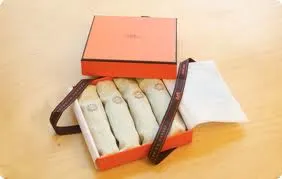
Perhaps the dispositive issue with Ambre Narguilé is its cost. It costs $235 and is sold only in the large 100ml/3.4 oz bottles directly from Hermès itself (whether online or via its boutiques). It doesn’t come in any other size and, again, it only comes in the eau de toilette concentration. However, and this part is key, Hermès sells a travel or gift set of

The Hermès travel or gift set.

The Hermès travel or gift set.

four 15 ml/0.5 oz bottles for $145. You can get 4 bottles of any perfumes in the Hermessence line, or all 4 can be the same perfume, such as Ambre Narguilé. In short, for $145, you would be getting 60 ml or about 2.0 oz of perfume, which is more than the standard 1.7 oz bottles for perfumes. As such, it is a much more manageable price. However, even then, it is still more expensive than Ambre Narguilé’s amber counterparts: Lucky Scents sells Frapin 1270 in a 100 ml bottle for $155, while Parfum d’Empire’s Ambre Russe is $75 for 50 ml and $110 for 100 ml. Despite their more affordable cost, however, more than enough people (including a number who seem to own one of the other amber scents) can’t seem to live without Ambre Narguilé and shell out $145 for the gift set. It all depends on how much you love boozy, smoky amber and if you consider Ambre Narguilé to be “utterly genius,” or just merely adequately cozy.

I started this review by saying that I had narrowed my search for my perfect amber. If Ambre Narguilé cost less, that search might be over. I really like it that much, and it makes me feel happy. (My German shepherd also adored it and jumped up to repeatedly lick my arm — which he doesn’t usually do when I’m wearing perfume.) I can’t get over how intoxicating that rum was, or how elegantly beautiful that swirling mist of tobacco. But it is simple. And should simple cost that much?

As in most things in life, price is a very subjective, personal thing, and what is worth it for one person may be too much for someone else. For me, the problem is that I’m extremely picky, am constantly inundated with scents I love or am tempted by, could not possibly buy all the things I’d like to buy in one calender year, and have definite cheapskate tendencies. So, I’m not sure that I would spend $145 for Ambre Narguilé. (I certainly wouldn’t spend $235!)

But I am considering it….

DETAILS:
Ambre Narguilé is available on Hermès’ website at the link provided above. Samples are available at a number of sample sites, as well as on eBay. The site I use, Surrender to Chance, sells it starting at $3.99 for the smallest size. As always, I think they have the best shipping prices, so I would start  there if you’re interested in testing out the perfume.

Perfume Review: Tom Ford Private Blend Amber Absolute

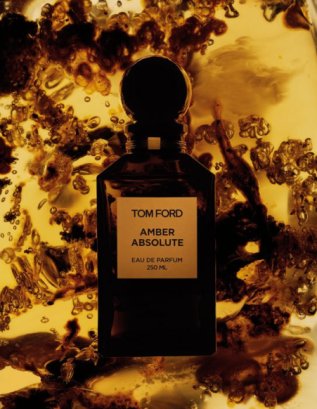
Some perfumes just announce their presence. Tom Ford’s Private Blend Amber tom-ford-amber-absoluteAbsolute is one of those perfumes. While his entire line of fragrances — Private Blend or not — seems to have a very brash, forceful attitude, I think Amber Absolute takes it to new levels. It is known to be the most concentrated and the strongest amber perfume on the market, but it’s far more than just that: it’s also a frankincense monster. To be honest, it reminds me of one of the aggressive, giant gorillas in Planet of the Apes — complete with chest-thumping machoism. I am not a fan.
Amber Absolute is categorized as a unisex oriental eau de parfum. On his website, Tom Ford describes it as follows:

AMBER ABSOLUTE is a honey-colored scent infused with the purest form of Amber, joined by a tenacious refrain of African Incense, Labdanum, Rich Woods and a touch of Vanilla Bean.

There are no further details about the ingredients and no further elaboration of what kind of “rich woods.” Amber Absolute is intended to be a simple scent; it is meant to be little more than pure, concentrated amber with a “tenacious” hint of those other things. To that extent, you could argue that Tom Ford succeeded in his goal. It really depends on how you interpret the “tenacious refrain” part, and the extent to which the amber was meant to dominate.

Bois de Jasmin has an extremely useful discussion of amber in perfume, and I think it would be helpful to share it here:

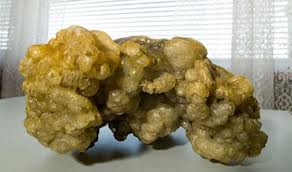
While amber commonly tends to refer to the semi-precious fossilized resin, in perfumery, the word refers to an abstraction of the complex odors of ambergris. Rich, animalic, warm and salty, this substance regurgitated by the sperm whale, has been sought after since antiquity for its unique scent. Given its scarcity and high price, amber

accords have been devised using materials like labdanum, which approximate the fragrance of ambergris, particularly since purified labdanum contains ambrein, one of the materials that gives ambergris its scent. The classical amber accord in perfumery tends to be sweet and vanillic. The best examples I can offer include Serge Lutens Ambre Sultan, L’Artisan Parfumeur L’Eau d’Ambre and Annick Goutal Ambre candle .

Ambergris

Ambergris

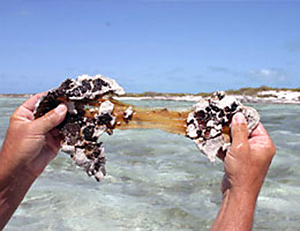
I find it unlikely that Tom Ford used pure ambergris in his perfume, so I’m guessing the infusion of “the purest form of Amber” must be synthetic ambergris (or ambroxan) with a healthy, if not enormous, chunk of labdanum. In my Glossary,

Pure, fresh ambergris found on the beach.

Pure, fresh ambergris found on the beach.

I elaborate on labdanum which is the distillation of the cistus plant and which imparts a dry, resinous, faintly woody smell. To me, labdanum is generally similar to ambergris (or to its synthetic form, Ambroxan) and to ambery resins. However, I think it has more of a masculine toughness as compared to amber’s sweetness, a touch more edge and a bit of a dirty, animalic spice.

Labdanum

Labdanum

Tom Ford doesn’t explain if his “African incense” is frankincense or what comprises his “Rich Woods.” The former must be Olbanum, and I’ve read some guesses that the latter consists of Guaiac Wood. I suspect that’s true. Descriptions of guaiac wood’s smell range from burning leaves and pepper, to rubbery rosy-sweet honey, to smoky, rubbery, tar-like asphalt. (See Glossary for more details.) All the descriptions apply here.

The reason why I’m spending perhaps a little more time than usual going over the notes is because I don’t find Amber Absolute to be a predominantly amber scent. To me, it’s smoky, peppery, almost asphalt-like frankincense fragrance first and foremost, and only then amber. Amber is merely the context and cocooning wrap, frankincense is the head and heart. And there is way too damn much frankincense!

Amber Absolute opens with a lovely note of spiced rum. It’s all Chinese Five Spice, headed by star anise. I cook with star anise, and was surprised by just how redolent the smell is here. The amber is rich and so boozy, I immediately thought of Captain Jack Sparrow in the “Pirates of the Caribbean” series and his love of rum. Here, the rum note is so concentrated, a mere whiff might make the mighty pirate drunk.

The frankincense is visible too and, initially, it isn’t quite the star player, though it is jostling for the center stage. It’s strong, smoky and has the sharp bite of black pepper. It’s faintly acrid; I can smell it at the back of my nose. There is also a definite burnt asphalt smell which can stem from either the possible Guaiac wood element or from the incense alone. Whatever the cause, the incense or frankincense notes become stronger and stronger. And stronger. It ends up becoming the olfactory equivalent to assault and battery, a most intentional tort.

It is such an aggressive assault that I should point out the need to be extremely careful in how much Amber Absolute you apply. Be careful for your own sake, never mind others. I thought I had been careful, but apparently, not enough. As I repeatedly state, my body consumes perfume. Consequently, for any sort of accurate test, I always use about 3-4 dabs from the small sample vial, smeared up and down each arm. That is the baseline. However, with Amber Absolute, I used far less. I know from prior experience the strength of Tom Ford scents — especially in their opening salvo — but I had also read enough about how Amber Absolute was the strongest amber on the market to know I had to be careful. So, I only put on 1-2 dabs on each arm. Oh boy!

It was absolutely tolerable — nay, lovely — in the opening 15 minutes or so. There, it was a mix of boozy amber (verging on seriously concentrated rum), star anise and spices with an element of frankincense. But the frankincense muscled the supporting players off the stage, took over, and then set up a chest-thumping rhythm of increasing shrillness. What happened to a mere “refrain of African incense”? Oh, right. “Tenacious.” Mr. Ford, I think you’ve confused “tenacious” with obnoxious.

As my prior reviews show, I’m a huge fan of frankincense, so it should tell you something that I found it really too much here. Isn’t this supposed to be an amber scent first and foremost? Frankincense and amber are a lovely combination but, here, there is nothing to really dilute, soften and tame the hard, extremely smoky, almost acrid (and verging on painfully sharp) edges.

Which brings me to my real problem with Amber Absolute: it is not well-rounded for a large portion of its lifespan. It’s too top-heavy on one key note. It’s unbalanced and, unbalanced to such an extent, it clearly must be intentional. I can’t fault Amber Absolute for being a simple, even linear scent; that was what they wanted it to be. But I can absolutely fault it for being painfully unbalanced.

Speaking of linearity, it’s not always a bad thing. I certainly don’t use “linear” as a constant negative. Nor do I need for my scents to always morph and transform like Cinderella. In fact, comfort scents like rich, warm, cozy ambers are one category where I can very much enjoy linearity. It’s akin to having the lovely basenotes (sometimes, the best part of a perfume!) there from the onset but just in different degrees of concentration. But I don’t like this linear perfume.

After three hours of being assaulted and beaten up by frankincense, the charging gorilla decides he’s got better things to do and goes to sit in the corner. The dry-down starts, and it’s a relief. There is salty caramel, vanilla and more of what I consider to be real amber. Soft, nutty, sweet and delicious. The salt of the caramel is balanced by the sweetness, and the whole thing has a lovely touch of smoke. The frankincense is still there, but it’s glowering from the corner and shackled. It’s been tamed enough to almost smell a bit like dirty patchouli, but not quite. The combination is lovely but it’s faint. Like most Tom Ford scents on me, the opening salvo is loud and intense, but when it fades into softness, it’s almost too soft.

Which brings me to something that I often wonder about when it comes to Tom Ford fragrances: olfactory fatigue. I don’t think I experience it with other lines, but I often suspect it is a factor with Tom Ford scents. Most of them open with such an enormous (if not overwhelming) blast that I wouldn’t be shocked if my nose tuned things out after a few hours. I’ve read mentions of olfactory fatigue when it comes to Amber Absolute in particular, so I suspect my assessment of the length or power of the dry-down phase may be strongly influenced by fatigue. Don’t get me wrong, it’s a linear scent even then, and there really isn’t a hell of a lot to write about how it unfurls at this stage. I simply am not sure of how strong it is at this point because my nose has been barraged in the preceeding hours.

All in all, Amber Absolute lasted about 8 hours on me with the projection being very good for the first 3 hours, then closer to the skin for the remainder of the time. Given how quickly my body consumes perfume, 8 hours is a long time. On others, however, I have read reports of Tom Ford scents lasting 12-18 hours, and I suspect that Amber Absolute would push things to the higher or highest end of that range.

All in all, I didn’t hate Amber Absolute, but I certainly didn’t love it. I had really expected that I would. In fact, from all that I had read about it and from a friend’s experience with it, I had expected it might be “The One” as far as amber scents go. I have thought long and hard about whether disappointment and very high expectations have contributed to my negative impressions of the scent. I don’t think they have. I’m not judging this as an amber perfume because, on me, it wasn’t one. At least, not a real amber. I’m judging this as a predominantly frankincense perfume in the cocoon of amber. And, even as a frankincense monster, it is not a thing of beauty. For a large portion of its run, it’s not even a thing of comfort. It feels slightly insolent in its extremely aggressive, chest-thumping swagger as it announces: “I’m here! I’m the strongest amber around. And I am absolute!”

So, my hunt for the perfect amber goes on. Maybe it will be Hermès’ Ambre Narguilé from its Hermessence collection, or maybe you can suggest something that I should try. Have you found your perfect amber? If so, what is it? I’d love to hear your thoughts on either Amber Absolute or the best amber that you’ve encountered thus far.


DETAILS:
Cost & Availability: $205 for a 50 ml/1.7 oz bottle or $495 for a 200 ml/8.45 oz bottle. In doing a search today for all sites selling Amber Absolute, I came across a claim that it was just discontinued two months ago, in October 2012. I can’t seem to ascertain the accuracy of that comment. Certainly, Tom Ford’s website has the perfume listed as part of his Private Blend collection. However, I can no longer find it listed on the Nordstrom, Bergdorf Goodman or Neiman Marcus websites. Neiman Marcus has it listed, but the category is empty and without a picture of the bottle. Barney’s does not appear to carry any of the Private Blend line, so that’s no help. I’m extremely surprised given the enormous popularity of Amber Absolute, but I’m starting to suspect that chap was right and maybe the scent has been discontinued. If you’re eager to try it, though, there is always eBay where Amber Absolute is plentiful. And, of course, Tom Ford’s website, for now at least. If you like amber, I suggest trying out a sample which can be found for $3 on Surrender to Chance, or on other decant/sample sites like The Perfumed Court.

Perfume Review – Amouage Jubilation 25: Scheherazade & Seduction

In The Thousand and One Nights (also known as The Arabian Nights), Scheherazade Scheherazadetricks her new husband into saving her life by enchanting him with a different tale each night. The powerful Persian king had become bitter and enraged by the infidelity of his former wife, so each day he would marry a virgin, only to behead them the next morning before they could betray him. Eventually, the kingdom ran out of virgins and the Vizier (or Prime Minister) was at a loss to know how to placate his bloodthirsty, vengeful king. The Vizier’s daughter, Scheherazade, offered herself as a volunteer; she had a plan to tame the king and stop the bloodshed destroying the land.
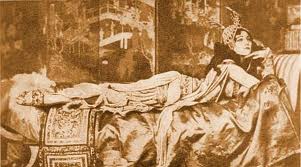
Scheherazade spent her wedding night by telling the king a story but, cleverly, she Sch2never finished it and stopped at the most exciting part right before dawn, the time of her impending execution. The king, determined to know how the story ended, was forced to delay her sentence. That next night, she finished the tale but began an even more exciting story. Once again, she stopped exactly midway shortly before dawn, and the curious king spared her life so that he might hear the conclusion. This continued for a thousand and one nights, as Scheherazade weaved her magic through stories of Aladdin and the Genie, Ali Baba, Sinbad and many more. By the end, the king had fallen in love with the clever Scheherazade and made her his queen.
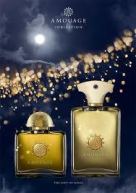
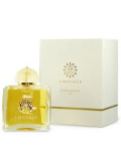
If the bewitching, enigmatic, intensely feminine, aristocratic Scheherazade were alive today, she might very well make Amouage’s Jubilation 25 her signature scent. As I wrote in my review for the sibling fragrance, Jubilation XXV for Men, the royal perfume house of Amouage would be perfect for a fairy tale or Greek myth. (Or for The Arabian Nights itself.) Amouage is the official royal perfume house for the Sultanate of Oman, and created at the order of the Sultan himself. It seeks to evoke the magic of the Middle East at the hands of master perfumers, who are given all the riches in the land — nay, the richest ingredients in all the world — with a no-expense spared budget.

Amouage 2 Jubiliations

Amouage Jubilation 25 (left) and Jubilation XXV (right).

On its 25th anniversary, in 2007, Amouage launched two celebratory eau de parfums under the guidance of its artistic director, Christopher Chong. The men’s version was called Jubilation XXV and was created by Bernard Duchaufour; the women’s version was named Jubilation 25, and was made by Lucas Sieuzac. Both versions are eau de parfum concentration.

Amouage J25

Jubilation 25

On its website, Amouage describes Jubilation 25 as follows:

Jubilation 25 captures the magic of timeless eternity with rich top notes of rose and ylang-ylang in which myth and reality are expressed using the finest frankincense from Oman.

This fragrance will appeal to the elegant, enigmatic and sophisticated woman who lives her life as an art form – evoking the time, place and cultures she inhabits with the mystical allure of amber, musk, vetiver, myrrh, frankincense and patchouli.

Jubilation XXV is classified on Fragrantica as an “oriental floral,” but it would be much more accurate to call it a fruity chypre. “Chypre” is one of the main perfume families. As a basic rule of thumb, a chypre perfume starts out with citrus-y top notes, has labdanum as part of its middle notes, and has a base that includes oakmoss. The oakmoss is traditionally the main key, but the base also often includes patchouli, musk or some sort of animalic note. (See the Glossary for a full explanation of the chypre family of fragrances, its general composition, and the range of its sub-families.)

Jubilation 25’s notes are listed as follows:

Top notes are ylang-ylang, rose, tarragon and lemon;

middle notes are labdanum, rose, artemisia and incense;

base notes are amber, patchouli, musk, vetiver and myrrh.

The perfume opens and I think to myself, “So Parisienne!” It’s a definite fruity chypre and a very heavy, mature scent. The opening notes are citrus and oakmoss, with a strong touch of tarragon and cumin. Unlike others, I don’t smell any significant amount of ylang-ylang from the start. Instead, what I get is a cumin-infested rose and peach note that is uncomfortably intimate. The peach comes from the davana flower which helps create the slightly fruity nature of the opening. It also evokes Guerlain’s Mitsouko, the standard bearer for fruity chypres, and a perfume which similarly calls to mind female intimacy and cumin. There is also a definite element of sweat which adds yet another type of intimacy to the scent. I can’t help but think of a woman in a slight state of arousal. There is a soft kind of blossoming and earthy fecundity which bring to mind a woman’s panties and… well, “intimate” is the only way I can describe it politely.

The cumin note is subtle at first. It’s not like the cumin in Serge Lutens Serge Noire but the earthiness is such that I have to wonder how the perfume would smell on me if worn at noon during the height of summer. The thought worries me a little. (Okay, a lot!) I can’t begin to imagine how this would smell in 110 degree heat!

A few more minutes in, the tarragon fades away as does a portion of the citrus-y note, leaving a very dry but pungent oakmoss scent. Officially, there is no oakmoss in Jubilation 25. None of the notes listed on the Amouage website (or, indeed, anywhere) list it. But it is there. Read any review of Jubilation 25, and you’ll see a plethora of references to oakmoss and chypres. The ingredients may not list it — just as they don’t list cumin — but dammit, it’s there!

Oakmoss is a tricky scent to describe or convey. It looks and smells similar to the lump of dried litchen that is often stuck at the top of flower pots or in floral arrangements. And, calling it “mossy, herbal and woody” doesn’t really seem adequate. To me, oakmoss has a dry, musty, dark green-grey smell that is dusty and almost mineral-y as well. It is often astringently pungent and a lot like a very damp, earthy forest. But a damp forest that is definitely musty and a bit dusty as well.

Twenty minutes in, the cumin (or whatever skank-ladened note is replicating cumin’s smell) is flitting in and out, making me feel, at times, that it’s actually quite delightful in its uncommon juxtaposition with rose and lemon. At other times, however, I have to resist the urge to sniff under my arms in alarm. It’s a bit of intellectual genius to combine the natural earthiness of cumin with the inherent earthiness of oakmoss, but it’s also rather disturbing.

There is a funky ripeness that makes me fear I am not brave enough for this scent. And, suddenly, I understand Luca Turin’s comparison of Jubilation 25 (which he very much liked, by the way) to Dior’s outré Diorella.  Diorella was created by the legendary nose, Edmond Roudnitska, who also created the other monster of funk that Jubilation 25 is often compared to: Rochas’ Femme. (Jubilation 25 is compared to the reformulated, post-1989 version of Femme that had actual cumin added in.)

Femme

Femme

Femme is repeatedly described as far more than just merely animalic but, rather, flat out “intimate.” And a good chunk of the ingredients in Femme are also in Jubilation 25, even if the latter doesn’t officially list cumin. (It really should!) The same story applies to Guerlain’s equally “intimate” or “skanky” Mitsouko, which is the third fragrance to which Jubilation 25 is often compared. Mitsouko’s peach, rose, ylang-ylang, oakmoss, vetiver, amber and musky notes are the same ones in Jubilation.

In slight contrast to those “intimate” female scents, Diorella has been described as “fruit on the  verge of going bad” by Luca Turin. The perfume blog Yesterday’s Perfume, elaborates on that Turin metaphor saying that Diorella “at its heart, … smells like garbage on the verge of going bad that someone has thrown a pile of flowers onto” but swears that it “shows you how to find beauty in the intersection of garbage and flowers. I know this doesn’t sound like an endorsement, but it is!”

Jubilation 25 combines aspects of all the aforementioned perfumes into one. I think that the last part of Yesterday’s Perfume’s quote about Diorella could really apply to Jubilation 25 if slightly altered: it “shows you to how find beauty in the intersection of [bodily funk] and flowers.” It just takes a little time to become enchanting (or, perhaps, a little less alarming).

But it is, unquestionably, a fascinating scent. It gets in your head with its juxtaposition of soft, feminine florals, earthy dampness and mossiness, and bodily funk. It’s got a little bit danger, and a whole lot of enigma. I can’t decide if I like it, or if I am repelled by it. As time goes on, I am less repelled than I was at the onset, but I’m still completely at a loss on how to assess this scent. It’s that bodily funk aspect that is all woman; it is both the fascination and lure, and the source of my continuing alarm. True, it’s less blunt, forceful, and sexually ripe as compared to Femme where, if memory serves me correctly, it clobbered you on the head. Here, there is just a sheer hint of it. Sheer, like Salomé’s seventh and final veil which was closest to her damp, slightly sweaty, naked

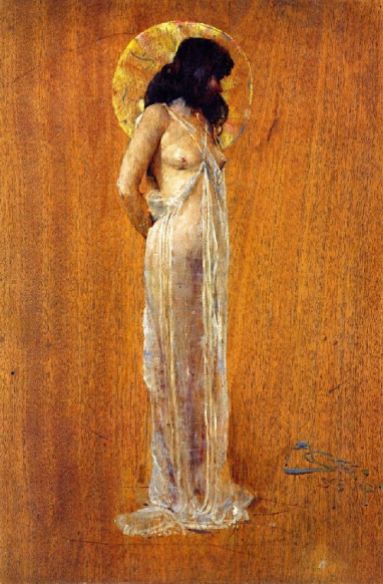
Sir Arthur Streeton's "Scheherazade."

Sir Arthur Streeton’s “Scheherazade.”

body as she danced before the king she wanted to seduce and manipulate into committing murder.

I feel a little trapped and paralyzed by my polarized reactions to Jubilation 25. In fact, I feel just like a fly quivering on a spider’s web, as competing thoughts run through my head. From utter revulsion at the scent, I slowly feel some grudging fascination, then back to alarm as a particularly strong whiff of armpits flashes by before receding again. I scrawl, “Oh no. This is too much!” in my notes, followed a few minutes later by, “I think I like this???” Jubilation 25 is like Scheherazade luring into her mystery, her web, her tales, before trapping you with her enigma, and making you want more.

The soft dry-down doesn’t help free me. It’s all musky rose with a touch of sweetness from the myrrh and amber. For some odd reason, the ylang-ylang is stronger now on me, as is the peach from the davana and the patchouli. Perhaps they were just hidden by that huge burst of overwhelmingly skanky funk? The latter is still there but it is just a faint shimmer now, almost imperceptible. (Well, most of the time. It tends to come and go at this point, almost like a ghost.) I really like the dry-down, though it’s nowhere as fascinating as that opening which lasted a good two hours on me.

Unlike the king in A Thousand and One Nights, however, I do finally manage to break free of the enchantment. I don’t think I would buy Jubilation 25, even if I could afford it (which we will get to shortly). It’s just too mature, heavy and intimate a scent for me. I don’t mind heaviness if it’s resinous ambers or spice, but heavy oakmoss is a bit harder for me to handle as a frequent choice of scents. But it’s the intimacy issue which is more dispositive. I have faint images of slightly ripe panties and earthy underarms that continue to plague me a little. Yes, I don’t think I would wear it. No, on further thought, I think I would. Yes, I would. I can’t get it out of my head and I’m utterly fascinated by its dangerous, alarming elements. I don’t think it is just intellectual fascination, either. There are a lot of scents that fascinate me intellectually and theoretically — such as Serge Lutens Tubereuse Criminelle — but which I’m not interested enough at the end of the day to actually want to wear them.

Jubilation 25 is different because it really has gotten inside my head. I can’t stop sniffing my arms, though I always do so with a healthy dose of trepidation. I could see this as the scent of a dangerous woman, a black widow, or a diva. I think of Angelina Jolie’s character in any number of her films but, especially, in Gia (one of my all-time favorite movies). I also think of Angelina Jolie herself in Alexander, where she met and bewitched Brad Pitt. I think of such diverse people as: the legendary icon, Ava Gardner; the racy, imperious, very sexual but haughty Princess Margaret of England; or the steely, hard, but manipulatively charming Margaret Thatcher, Britain’s former Iron Lady.

What finally breaks me free of the spell and the madness is the price of Jubilation 25. I am simply too much of a cheapskate to spend $300 (or approximately $330 with tax) on one single perfume. I just can’t do it, even if I could afford it. The most commonly available size of Jubiliation 25 is 3.4 fl.oz/100 ml and costs $300, £190.00 or around €220. There is a smaller 1.7 oz/50 ml version that costs $265 or £160.00, but a cursory review of a few US websites shows it is not available on any of the usual or big perfume sites. I found the smaller size only at Beauty Encounter, but it’s really not a good deal given that double the quantity (or 3.4 oz) costs only $35 more.

No, Jubilation 25 is just too expensive for me but, oh, how it tempts me. This is not an ordinary, cheap or generic scent. It smells haughty, regal, luxurious, feminine, and infinitely intimate. It’s dangerous and enigmatic. It’s Mata Hari, Salome and Scheherazade all wrapped into one. And it probably would have brought Scheherazade’s king to his knees far sooner than a thousand and one nights…..

DETAILS:
Sillage & Longevity: Heavy sillage for the first 2 hours before becoming slightly closer to the skin. It becomes fully close to the skin about 3 hours in. All in all, it lasted about 5 hours on me. On others, it is reported to have great or, even, huge longevity.
Availability & Stores: In the US, Jubilation 25 can be purchased online at AedesFour SeasonsLuckyscent or Parfums Raffy. (Google and Parfums Raffy state that it is the authorized retailer for Amouage and that it provides free shipping.) If you want the smaller 1.7 oz version, you can go to Beauty Encounter. Samples of Jubilation can be purchased from all those places, as well as from Surrender to Chance (the decant site I always use) where the smallest vial costs $3.99. In London, I’ve read that Jubilation 25 is available at Harrods, Fortnum & Mason, Les Senteurs or the Amouage boutique. In Canada, I’ve read that it’s available at The Perfume Shoppe. In Germany, at First in Fragrance. And, of course, it is available world-wide on Amouage’s own website. The website also has a “Store Locator” for about 20 countries which should, hopefully, help you find Jubilation somewhere close to you.