Books: Patrick Suskind’s “Perfume” & Its Impact on Actual Perfume Creation

One of my favorite books that I’ve read in the last decade is the international best-seller, Perfume: The Story of a Murderer, by Patrick Suskind. Also known as Das Perfum or Le Parfum, the 1985 German novel is also one of the most beautifully written books I’ve read, a lyrical ode that explores the sense of smell in the most evocative, powerful way imaginable. As any perfume blogger can tell you, aroma is not an easy thing to convey. And, yet, Suskind manages brilliantly, re-creating the world of 18th-century France in all its horrors and fetid stink.

Suskind PerfumeThe book crosses and mixes several literary genres, from gothic to horror and the supernatural in the vein of Edgar Allen Poe. I find it difficult to adequately summarize the book (and we all know that brevity isn’t my forte!), so I’ll rely on Google books for a description that doesn’t give too much away:

An acclaimed bestseller and international sensation, Patrick Suskind’s classic novel provokes a terrifying examination of what happens when one man’s indulgence in his greatest passion—his sense of smell—leads to murder.

In the slums of eighteenth-century France, the infant Jean-Baptiste Grenouille is born with one sublime gift-an absolute sense of smell. As a boy, he lives to decipher the odors of Paris, and apprentices himself to a prominent perfumer who teaches him the ancient art of mixing precious oils and herbs. But Grenouille’s genius is such that he is not satisfied to stop there, and he becomes obsessed with capturing the smells of objects such as brass doorknobs and frest-cut wood. Then one day he catches a hint of a scent that will drive him on an ever-more-terrifying quest to create the “ultimate perfume”—the scent of a beautiful young virgin. Told with dazzling narrative brillance, Perfume is a hauntingly powerful tale of murder and sensual depravity.

It has garnered huge international praise from many, while others find it creepy, perfume bookdisturbing and truly revolting. Most of my friends who’ve read the book, even those who aren’t into perfume, adored it. In contrast, the good Christian, conservative, elderly Texan ladies in my book club were horrified by it. Horrified! Aghast! (I blame that mostly on the ending which I won’t discuss lest I spoil it for you.)
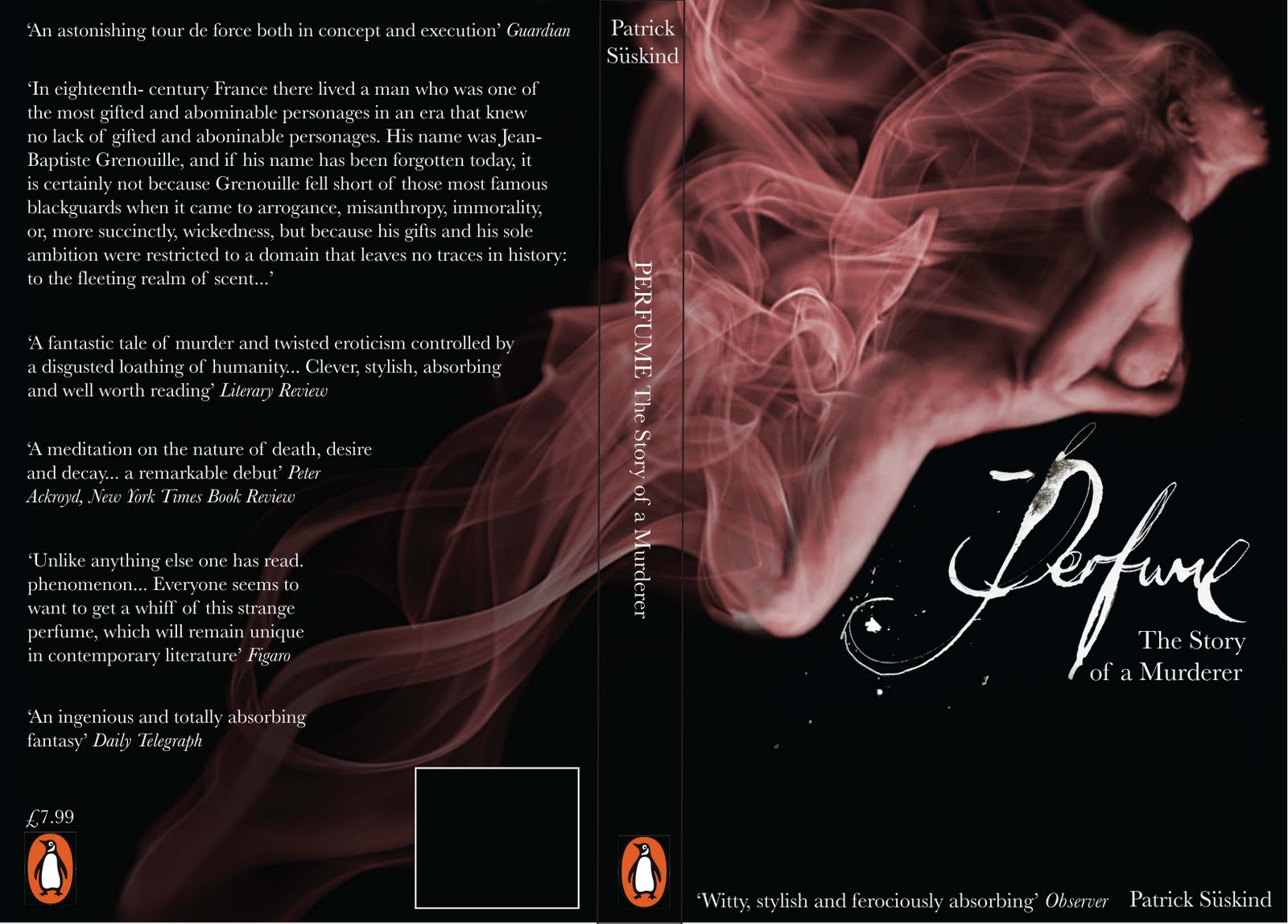
Amazon has an excerpt of the book’s opening paragraphs which illustrate the exquisite writing (as translated from Suskind’s original German) and his ability to evoke powerful imagery in such a way that you are transported back to Paris in the mid-1700s:

In eighteenth-century France there lived a man who was one of the most gifted and abominable personages in an era that knew no lack of gifted and abominable personages. His story will be told here. His name was Jean-Baptiste Grenouille, and if his name-in contrast to the names of other gifted abominations, de Sade’s, for instance, or Saint-Just’s, Fouché’s, Bonaparte’s, etc.-has been forgotten today, it is certainly not because Grenouille fell short of those more famous blackguards when it came to arrogance, misanthropy, immorality, or, more succinctly, to wickedness, but because his gifts and his sole ambition were restricted to a domain that leaves no traces in history: to the fleeting realm of scent.

Scene from the movie, "Perfume." Source: BarcelonaMovie.com

Scene from the movie, “Perfume.” Source: BarcelonaMovie.com

In the period of which we speak, there reigned in the cities a stench barely conceivable to us modern men and women. The streets stank of manure, the courtyards of urine, the stairwells stank of moldering wood and rat droppings, the kitchens of spoiled cabbage and mutton fat; the unaired parlors stank of stale dust, the bedrooms of greasy sheets, damp featherbeds, and the pungently sweet aroma of chamber pots. The stench of sulfur rose from the chimneys, the stench of caustic lyes from the tanneries, and from the slaughterhouses came the stench of congealed blood. People stank of sweat and unwashed clothes; from their mouths came the stench of rotting teeth, from their bellies that of onions, and from their bodies, if they were no longer very young, came the stench of rancid cheese and sour milk and tumorous disease. The rivers stank, the marketplaces stank, the churches stank, it stank beneath the bridges and in the palaces. The peasant stank as did the priest, the apprentice as did his master’s wife, the whole of the aristocracy stank, even the king himself stank, stank like a rank lion, and the queen like an old goat, summer and winter. For in the eighteenth century there was nothing to hinder bacteria busy at decomposition, and so there was no human activity, either constructive or destructive, no manifestation of germinating or decaying life that was not accompanied by stench.

And of course the stench was foulest in Paris, for Paris was the largest city of France. And in turn there was a spot in Paris under the sway of a particularly fiendish stench: between the rue aux Fers and the rue de la Ferronnerie, the Cimetiere des Innocents to be exact. For eight hundred years the dead had been brought here from the Hotel-Dieu and from the surrounding parish churches, for eight hundred years, day in, day out, corpses by the dozens had been carted here and tossed into long ditches, stacked bone upon bone for eight hundred years in the tombs and charnel houses. Only later-on the eve of the Revolution, after several of the grave pits had caved in and the stench had driven the swollen graveyard’s neighbors to more than mere protest and to actual insurrection-was it finally closed and abandoned. Millions of bones and skulls were shoveled into the catacombs of Montmartre and in its place a food market was erected.

Here, then, on the most putrid spot in the whole kingdom, Jean-Baptiste Grenouille was born on July 17, 1738. It was one of the hottest days of the year. The heat lay leaden upon the graveyard, squeezing its putrefying vapor, a blend of rotting melon and the fetid odor of burnt animal horn, out into the nearby alleys. When the labor pains began, Grenouille’s mother was standing at a fish stall in the rue aux Fers, scaling whiting that she had just gutted. The fish, ostensibly taken that very morning from the Seine, already stank so vilely that the smell masked the odor of corpses. Grenouille’s mother, however, perceived the odor neither of the fish nor of the corpses, for her sense of smell had been utterly dulled, besides which her belly hurt, and the pain deadened all susceptibility to sensate impressions. She only wanted the pain to stop, she wanted to put this revolting birth behind her as quickly as possible. It was her fifth. She had effected all the others here at the fish booth, and all had been stillbirths or semi-stillbirths, for the bloody meat that emerged had not differed greatly from the fish guts that lay there already, nor had lived much longer, and by evening the whole mess had been shoveled away and carted off to the graveyard or down to the river. It would be much the same this day, and Grenouille’s mother, who was still a young woman, barely in her mid-twenties, and who still was quite pretty and had almost all her teeth in her mouth and some hair on her head and – except for gout and syphilis and a touch of consumption – suffered from no serious disease, who still hoped to live a while yet, perhaps a good five or ten years, and perhaps even to marry one day and as the honorable wife of a widower with a trade or some such to bear real children . . . Grenouille’s mother wished that it were already over. And when the final contractions began, she squatted down under the gutting table and there gave birth, as she had done four times before, and cut the newborn thing’s umbilical cord with her butcher knife. But then, on account of the heat and the stench, which she did not perceive as such but only as an unbearable, numbing something-like a field of lilies or a small room filled with too many daffodils-she grew faint, toppled to one side, fell out from under the table into the street, and lay there, knife in hand.

Born in blood to a woman who tried to murder him, and then later rejected by society, Grenouille’s life was not an easy one. It was rendered even more difficult by the fact that he had a supernatural sense of smell but no personal scent of his own. The latter made people shy away from him, finding him something unnatural and unnerving. From an orphanage to a poor house, to a brutal apprenticeship as a tanner’s assistant and more, Grenouille — the book’s hero, anti-hero or monster, depending on your view — led a life of constant hardship, isolation and social rejection.

There was no joy in his world except his ability to detect the very olfactory essence of every object around him: from rocks to brass knobs, from the smell of the water to the very essence of the wind. Yet, even that supernatural ability never gave him much purpose in life until, one day, he stumbled upon a red-haired virgin. And it changed everything. He fell in love with her aroma — the scent of pure love and infinite beauty — and was determined to replicate it in a bottle at any cost. Including murder. As the back of my copy of Perfume states:

It was after that first crime that he knew he was a genius – that he understood his destiny. He, Jean-Baptiste Grenouille, the fishmonger’s bastard, was to be the greatest perfumer of all time. For he possessed the power not just to create beautiful scents, but to distil the very essence of love itself.

And as the obsession began, so would it end….

His ensuing path, and the trail of bodies he left in his wake, is one you must discover for yourself, as I shan’t give away the tale.

Christophe LaudamielSource: NYT SmellBound

Christophe Laudamiel
Source: NYT SmellBound

It is hardly surprising that Perfume had an enormous impact on actual “noses” and perfumers in the industry. Take, for example, the obsession of Christophe Laudamiel. As Chandler Burr explains in a New York Times article entitled “Smellbound,” Laudamiel was transfixed by the book from the moment he read it in perfumery school. When he began work for the giant fragrance corporation I.F.F. (International Flavors and Fragrances) in 2000, he set out to systematically recreate the pivotal scenes of this murderer’s story in scents, one by one:

Laudamiel would work on the novel’s scents alone, on his own time, evenings, weekends. No one knew he was doing it. He spent nights in the lab, mixing and remixing to find, say, the exact smell of freshly tanned leather, and would go home at 6 a.m. The first scent he created was Ermite (Hermit), the smell of the cave: damp stone, moss, pine, mountain wind, cold. He created Amour and Psyche, the best-selling perfume that Grenouille copies perfectly from scratch in the novel. Strangest of all, however, was Virgin No. 1, the scent of the girl who sold those yellow plums in the Paris streets. Years ago, an I.F.F. scientist recruited two young female virgins and, with their parents’ permission, recorded their aroma using a polymer needle. Laudamiel found this scent on I.F.F.’s shelves, then added christophe_laudamiel_2the scents Süskind describes as clinging to the virgin’s skin: apricot, nuts, sea breeze.

[There was also] Human Existence. It was the scent the scentless Grenouille creates for himself. “You must remember,” Laudamiel says, “this character’s being born without a scent has made him terribly lonely, lost, ignored. Having his own scent makes him whole. It makes him human.” [Emphasis added.]

Perfume PosterThat was just the start. In 2006, the movie version of Perfume came out, with small roles for Alan Rickman and Dustin Hoffmann. (It’s not a particularly good film. Really, it’s not! And I say that as someone who adores Alan Rickman. So, even though the film is easily available via NetFlix, read the book instead!) Perfume_Poster1_9407

Laudamiel met with the film’s German producer, Thomas Friedl, and with Vera Strubi, the head of Thierry Mugler perfumes. Laudamiel presented them with some of his Grenouille scents, and

[t]hey were mesmerized. They found themselves experiencing the book, its details and its characters. Strubi loved Laudamiel’s smells, the good as well as the bad.

It was agreed that Mugler would perfect 14 scents and package them in a special coffret — Paris 1738, Atelier Grimal and Orgie among them. But Strubi also wanted him to create a 15th scent for Thierry Mugler, a perfume that captured the essence of Süskind’s book. The obvious choice would be to try to create the perfume Grenouille makes from the scent of the murdered virgins. But that was impossible (by definition it didn’t exist), and not to mention, Strubi said, too pretentious.

Mugler Coffret set for "Perfume". Source: Fragrantica

Mugler Coffret set for “Perfume”. Source: Fragrantica

In 2006, the perfume blog, The Scented Salamander, posted a description of the final result, along with some of the Mugler press release:

In this boxed set of 15 fragrances, Thierry Mugler dares to present the novel’s 15 olfactory themes. ‘Disturbing, arousing, divine, sensual, icy… none of the fifteen compositions will leave you indifferent’…

The boxed set contains fourteen olfactory compositions bearing the names Baby, Paris 1738, Atelier Grimal, Virgin Number One, Boutique Baldini, Amor & Psyche, Nuit Napolitaine, Ermite, Salon Rouge, Human Existence, Absolu Jasmin, Sea, Noblesse, Orgie. Uncompromising fragrances evoking human warmth, love, sexuality, wealth, virginity and more… The fifteenth fragrance, ‘Aura’ is a creative interpretation of the bewitching magic spell cast by the ‘virtuoso, terrifying scent of Grenouille’, the murderous hero of Perfume. 84 ingredients compose its top-secret formula, by fragrance designers Christophe Laudamiel and Christophe Hornetz.

She later posted some preliminary impressions of the 15 perfumes. In a nutshell, she found the scents “strangely beautiful” for the most part, though I personally thought she seemed less than enchanted by “Virgin #1.”

Victoria of Bois de Jasmin posted a comprehensive review of the Mugler/Laudamiel scents. She has fabulous descriptions of each perfume, so I encourage you to read her review in full, but here is her assessment of the critical Virgin #1 scent:

No. 1 Part I, Chapter 8 of “Perfume: The Story of A Murderer”

“A girl was sitting at the table cleaning yellow plums… A hundred thousand odors seemed worthless in the presence of this scent. It was pure beauty.”

In one of the interviews with Laudamiel, I read that the IFF team worked to capture the scent of a young girl’s navel via headspace (a technology designed for capturing and analyzing the aroma molecules in the air around the source of scent.) This novel accord was used in Virgin No. 1. While I was intrigued by the idea, nothing prepared me for the sheer beauty of the fragrance. The base of the composition is the most exquisite musky accord, milky like fresh cream, smooth like peach skin and warm like delicate cashmere. An intoxicatingly luscious plum is woven though the musky tapestry, lightening it and lending it an irresistibly playful facet. Although it is amazing on the blotter, on the skin, the fragrance reveals all of its beautiful facets in a panoramic manner. It is innocent, and yet it possesses a beguiling and sensual edge. It is subtle, yet its sillage is magnificent. It is breathtakingly beautiful.

On Fragrantica, those who have smelled Virgin #1 seem to have found it equally stunning. But, alas, we shall have to live vicariously through their experiences, since the perfumes are now akin to the Holy Grail and a unicorn, combined into one.

It’s not merely the obvious fact that they are no longer available; it seems they were always elusive. I read on Fragrantica that only 300 coffrets were produced, that they sold out in Europe in a week, and, at the time, cost $600 each. According to another poster on the site, one of those sets was valued at over $1,000 as of December 2011 when it was offered for sale. I’ve never seen a single one on eBay, though I’ve heard they do appear from time to time.

The point of all this is not to create an exercise in frustration — though, clearly, it may do that as well. The point is to demonstrate the incredible power of Suskind’s olfactory imagery and the extent to which his book can compel an obsession all of its own. It’s also intended to demonstrate the extent to which the book has influenced actual perfumers in the industry and how they have attempted to turn that most abstract of things — the literary image of something as evanescent as scent — into something concrete. In fact, I would bet anything that Etat Libre d’Orange’s infamous Sécrétions Magnifiques was influenced, at least in some part, by Suskind’s book. And, lastly, it shows just how far perfumery has come in modern times: harnessing the scent molecules of virgins. (With no actual bloodshed involved!)

If you are a perfumista and haven’t read Suskind’s brilliant book, I strongly urge you to do so. It will blow your mind! Even if you’re not particularly into perfume, you may still want to pick it up. Whether you find it brilliant or creepily disturbing beyond words, I can guarantee you one thing: it’s like nothing else you will ever read.
DETAILS:
On Amazon US, “Perfume” currently costs $8.15. On Amazon Canada, it costs CDN $12.27. On Amazon UK, it costs £6.29. On Amazon France, “Le Parfum” costs EUR 5,32. It should be available on all the other Amazon sites as well, in addition to your local bookstores. 

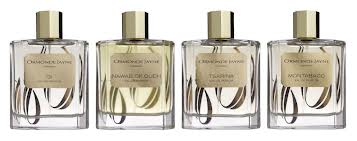
New Perfume Releases: Ormonde Jayne “The Four Corners of The Earth”

Ormonde Jayne has a new collection of fragrances out on the market. I thought I’d share the press release as they sound fascinating. They are not yet listed on the company’s website, though I believe they will be soon. (By the way, all funky errors in formatting and in transferring the format of the original document are my own.)

OJ Four Corners

‘THE FOUR CORNERS OF THE EARTH’


Linda Pilkington, founder and creative director of Ormonde Jayne, has relentlessly scoured the globe, obsessed with her quest to source the world’s most rarest and exotic oils to complete her exquisite perfume library.

The Four Corners of the Earth is a collection of four perfumes which pays homage to the different parts of the world that have inspired her and acknowledge the rich diversity of her hometown, London.

This extraordinary, cosmopolitan and ever-changing city is her epicentre – a crossroads from where she views the world and a unique location where diversity can be experienced on every corner. From this global village, Ormonde Jayne celebrates ‘The Four Corners of the Earth’.

‘At last I have fulfilled my lifetime’s dream – I have brought together some of the world’s rarest and most elusive scents:  from the deserts of The East, the jungles of Latin America, the ancient walled cities of China and from Russia of the Romanov Tsars’.

The Editions:
Montabaco: Latin America
Tsarina: Russia
Nawab of Oudh: India and the Gulf
Qi: China

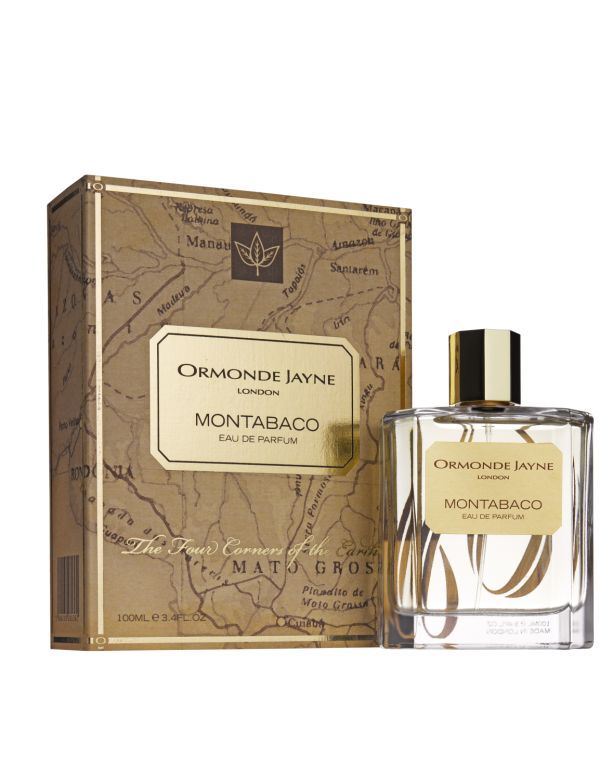
 MONTABACO

OJ Montabaco

‘Montabaco is a perfume to capture the essence of Latin America: leather, suede, wood and tobacco leaf repeated over and over again creating a suggestive sensuality and Latino temperament. It sits above the rich floral presence of magnolia, jasmine and rose. It is all unashamedly seductive yet profoundly simpatico. 

top: air note, orange absolute, bergamot, juniper, clary sage, cardamom.
heart: magnolia, hedione, rose, violet, tea notes.
base: tobacco leaf, iso e, suede, sandalwood, moss, tonka, ambergris.
MONTABACO
Size      100ml eau de parfum
Price    £260.00

NAWAB OF OUDH

OJ Nawab

‘Nawab (Ruler) of Oudh is a province of central India. The perfume is inspired by the Nawabs who once ruled over it.  It is a potent blend of amber and rose with a soft oudh edge. Yet surprisingly not one ingredient stands out from the others. It achieves a perfume synergy that defies traditional analysis, releasing a pulsating pungency, brooding and hauntingly beautiful, a rich tapestry of fascinating depths, a jewelled veil to conceal its emotional complexity and extravagance. 

top : green notes, bergamot, orange abs, cardamom, aldehyde. 
heart : rose, magnolia, orchid, pimento, bay, cinnamon, hedione. 
base : ambergris, musk, vetiver, labdanum, oudh.
NAWAB OF OUDH
Size   100ml eau de parfum
Price    £332.00

TSARINA

OJ Tsarina

‘Tsarina captures opulence and passion. It demands fur, leather, brocade, heavy silks in sweeping dresses and fabulous jewels to go with her haughty heritage. To call it a floral oriental is to misunderstand its rich complexity, it is more baroque. The perfume is profound, blending leather notes, rich Madagascan vanilla, amber and orris butter.’ This is a powerhouse perfume, ravishing and regal, distinctive and synonymous with the glamorous world of luxe.

top: mandarine, bergamot, coriander, cassis.
heart: hedione, freesia, jasmine, sambac, iris, suede. 
base: sandalwood, cedar, vanilla bean base, labdanum, musk.
TSARINA
Size      100ml eau de parfum
Price    £280.00

QI

 OJ Qi‘Qi (pronounced “key” or “chi”) means Breath of Life. It’s an ancient word that permeates the Chinese language and everyday life. This perfume is inspired by the Chinese people’s love for the lightest and most delicate scents. Qi is constructed to make no great statement thus offending no-one, it does not tear down any great walls but is rather something more spectacular, like an amazing dawn, a softly-scented fragile breeze, Qi is an honest, open and natural perfume, it makes its mark for those who don’t want to be too obvious but may feel unfinished without it.

top: green lemon blossom, neroli, freesia.
heart: tea notes, osmanthus, violet, hedione, rose.
base: mate, benzoin, musk, moss, myrrh.
QI
Size      100ml eau de parfum
Price    £260.00


ORMONDE JAYNE

‘THE FOUR CORNERS OF THE EARTH’ COLLECTION AVAILABLE FROM 

Ormonde Jayne Perfumery        Ormonde Jayne Perfumery        Ormonde Jayne Counter
12 The Royal Arcade                192 Pavilion Road                     Harrods, Black Hall

28 Old Bond St. London            Sloane Square, London              Knightsbridge, London
W1S 4SL                                  SW3 2BF                                 SW1X 7XL

T. 0207 499 1100                      T. 0207 730 1381                      T. 0207 730 1234

www.ormondejayne.com

Perfume Review – Hermès Paprika Brasil: Chilies & Woods

Shakespeare was right when he said that a rose, by any other name, still smells as sweet. However, a name can be bloody important! In perfumery, a name can convey either a wealth of details about the type of scent a perfumer has made, or the sort of impression that a perfume seeks to evoke. A name can also lead to great expectations (to bring up Dickens this time), followed by a great, whacking THUMP of disappointment as the consumer falls down the cliff to a different reality. Exhibit No. 1 for that would be Chanel‘s Coco Noir which is neither Coco nor Noir, and as such was met with howls of disappointment from many perfumistas.

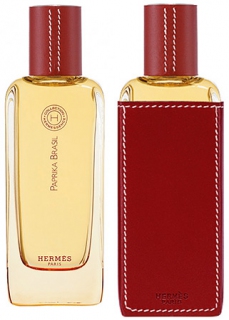
Paprika BrasilExhibit No. 2 would be Paprika Brasil from Hermès. It was released in 2006 as part of Hermès’ exclusive, in-store Hermessence line of fragrances and created by Hermès’ in-house perfumer, Jean-Claude Ellena, a legendary perfumer who was recently called by Der Spiegel “the best ‘nose’ in the world.” Ellena is known for his minimalistic approach to ingredients, and for perfumes that always have depth and complexity, despite seeming sheer and transparent. That sheerness is rather a signature of his and, for some, was taken to unfortunate extremes with Paprika Brasil.

An even greater problem was the name itself which led to certain perceptions of what the perfume would entail. A number of the negative reviews explicitly mention that the reviewer thought the perfume would be something very different than what it was and, as such, was a disappointment. Victoria at Bois de Jasmin felt that way, saying “I feel particularly disappointed with this latest creation. Perhaps, it is due to my high expectations.” However, no-one was quite as blunt about it as Robin at Now Smell This who wrote:

My initial trials of Paprika Brasil cannot be described in any way other than disappointing, and the experience points to the dangers of building up expectations based on the fragrance name, back story and notes. I suppose what I was expecting was a deep woods scent with exotic spices, something that would evoke the jungles of Brazil before the impact of globalization, where Lévi-Strauss was said to have found “a human society reduced to its most basic expression”.

Jean-Claude Ellena. Source:CaFleureBon

Jean-Claude Ellena. Source:CaFleureBon

On the Hermès website, Jean-Claude Ellena describes Paprika Brasil as “[t]he ravaging power of paprika and brasil wood, tempered by iris. Seductive, passionate, unexpected.” He adds:

A tinctorial wood to colour fabrics red, ‘brasil wood’ gave its name to the country. With its power of suggestion, “bois de braise” sparked my imagination and I chose paprika to illustrate it. By mixing and matching, I recreated its scent, which is more secretive and discreet than its taste.

The Fragrantica classifies Paprika Brasil as “Woody Spicy”, but it doesn’t list the full notes. NST states that they include:

pimento, clove, paprika, iris, green leaves, reseda, ember wood (aka Brazilwood or Pernambuco) and woody notes.

I had read the reviews of Paprika Brasil before trying it and — since I have a tendency to root for the under-dog — I was initially quite huffily indignant on the poor perfume’s behalf! It was quite fascinatingly original at the start, and I was baffled by the degree of contempt and animosity which Paprika Brasil has engendered in some.

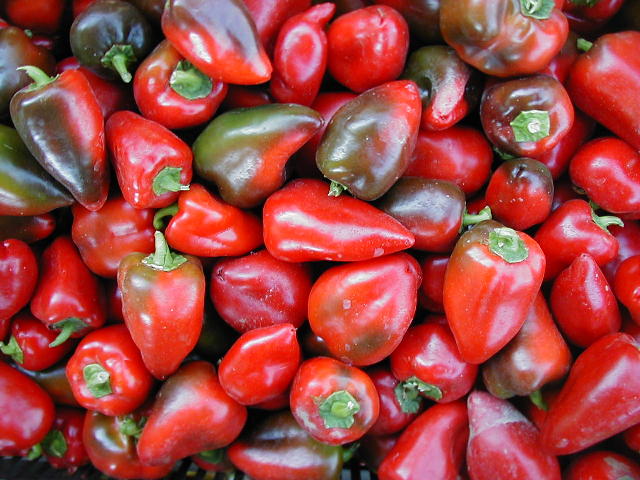
Pimento chilies.

Pimento chilies.

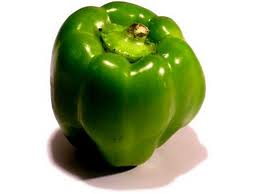
My immediate reaction to the opening seconds was, “Oh my God, I smell like a chili pepper!” There was an astonishingly powerful, sharp burst of red pimento chilies, followed by green bell peppers, cloves and a touch of paprika. (I wrote in my notes: “Add lettuce, ranch salad sauce, and I’m lunch?”) The paprika is never particularly strong on me, Bell Pepperthough others have reported a different experience, but the green bell pepper is very prominent. It is tamed about ten minutes in, countered by the advent of wood notes that are faintly smoky, peppery and spicy.

Brazilwood or the Pernambuco tree.

Brazilwood or the Pernambuco tree.

Twenty minutes in, a soft green note unfurls, like leaves opening in the sun, and there is the start of the iris note. The perfume has quickly progressed from a chili-vegetable scent into something entirely different and, frankly, it’s rather astonishing. It’s turned into a very airy rendition of spicy, peppery woods with a touch of green and the softening note of floral iris. I found it very original and quite fascinating. I sniffed my arm constantly and with a smile, always wondering about those incredibly dismissive and often caustically sneering reviews.

The scent is translucent in a way and, yet, also strong. It doesn’t project outwardly with vast trails, but what you do smell is quite noticeable. Or, perhaps, I’m merely surprised by the strength given that a commentator on Basenotes disdainfully dismissed Paprika Brasil as “one of Ellena’s more anemic and evanescent efforts.” This is not my definition of “anemic.”

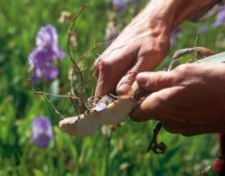
Harvesting the iris root. Source: Weleda UK

Harvesting the iris root.
Source: Weleda UK

As time progresses, 2.5 hours in, the wood notes start to dominate. They are both smoky (black) and spicy (red chili). I wonder if some of the Brazilian reseda or ember woods used have an aroma similar to guaiac because I smell the same sort of black peppery notes here.  The iris has also emerged to great extent. It is oddly both floral and earthy at the same time, as though Ellena used both the orris root and the flowers. It’s never powdery, though there is a faint, subtle, almost microscopic element of powder hovering around the edges. As several commentators on Basenotes also found, the contrasting floral and earthy notes counter the dryness of the wood and spices.

It’s at this time that my feelings start to change about Paprika Brasil. It started to wear me down a little. By the end, about 4.5 hours all in all, I had completely reversed my position and had enough. I don’t know if it was the linearity or the constant pepper accord but something had become too much. There were so many conflicted thoughts darting through my mind.

For one thing, where on earth would I wear this scent??! The supermarket produce aisle would seem to be the most logical choice, since I certainly would not wear this out on a date or to a party! As we’ll discuss shortly, it’s not cheap, so it’s far too expensive for the dog park. And, frankly, that may be the only place where I wouldn’t be embarrassed to smell like chili peppers. I live in Texas. There is a Mexican food place every few blocks. (I cannot stand Mexican food, if I might add.) Paprika Brasil’s green bell pepper may have been apparent mostly in the opening, but the red chilies are constant and, due to where I live, the mental associations are inevitable. (Salsa, anyone?)

The Hairy German

The Hairy German

I spent an inordinate amount of time attempting to determine what might have been a better, more accurate, potentially less disappointing name for the perfume — and concluded that the task is a lot harder than it seems. Neither “Chili Woods” or “Peppered Woods” has much élan. Nor does “Airy Pimento” or “Peppered Iris.” Frankly, I’m at a bit of a loss with regard to all aspects of this scent, and it must have shown because I suddenly noticed The Hairy German watching my face with great concern.

One thing that bewilders me is how different my experience was from many others. Victoria on Bois de Jasmin found this a cold, “watery and limpid” fragrance:

In comparison to the other fragrances from Hermessence collection, I find Paprika Brasil to have the least presence and impact. Theoretically, the weightlessness and the airy quality of spices and woods is interesting, but as a whole, the composition appears watery and limpid, a sketch that never seems to attain the form one wishes it to possess. Being an admirer of Jean-Claude Ellena’s work and Hermessence Collection, I feel particularly disappointed with this latest creation. Perhaps, it is due to my high expectations. Perhaps, it is because I already have encountered two fragrances this year that explore the same theme of cool rocks and damp earth via iris and green notes with much more interesting results– Eau d’Italie Sienne L’Hiver and L’Artisan Parfumeur Dzongkha. Paprika Brasil appears to me like a modern art piece, without a key to understanding its concept.

NST also found it wan, though it classifies Paprika Brasil as a predominantly iris fragrance:

It is first and foremost an iris fragrance, and a sheer one at that. The top notes have the same feel of rooty carrot that you find in Hermès Hiris, but without the sharp metallic twang. There is a slight whisper of green, and a dusting of dry paprika, and yes, there are woods, but the whole is extraordinarily muted, and easily has the least presence of any of the Hermessences so far.

As a rule, I like sheer and muted. It is one of the reasons I admire Jean Claude Ellena: he can work magic without shouting, and while using a very limited palette. But Paprika Brasil feels almost wan, and so entirely fails to live up to its name that it is hard, quite honestly, to find a way to approach it with an open mind. Last night and again this morning, I tried it next to a group of my favorite iris scents, and it failed to make much of a showing.

I’ve only tried Ambre Narguilé thus far from the Hermessence collection, so I can’t compare how Paprika Brasil measures up to the line as a whole. Taking just Ambre Narguilé as a point of comparison, yes, it is far more robust, but Paprika Brasil is hardly a weak, wan, cold scent on my skin. It’s all hot chilies and peppered woods. It’s monotonous, exhausting and, ultimately, the furthest thing from versatile, but it’s not cold and reminiscent of “cool rocks”! None of the commentators on Basenotes found such coldness either, but, rather, dryness, paprika, iris and woods. To the extent that it doesn’t have much depth, body or complexity, then perhaps, yes, Paprika Brasil is “watery” in that sense — but only in that sense.

My experience seems tiny bit closer to that of Marina from Perfume-Smellin’ Things who noted the predominance of  the chili note, but who ultimately found Paprika Brasil to be a huge disappointment:

The spicy notes bear a promise of a scent that is red-hot, fiery, supremely piquant, but Paprika Brasil is much more tame then what the presence of pimento, paprika and clove might suggest. It starts green and dry, making me think of twigs and indeed green leaves. A delicate spicy accord is woven into that greenness, it grows stronger as the scent develops but is always kept in check by the leaves and the wood and the cool earthiness of iris (which is very apparent on my skin). The spice that I smell here is mostly pimento and it is a beautiful note, crimson, dry and appealingly sharp; it saddens me that this attractive piquancy was not allowed to be more prominent. No, I don’t want a scent where other notes are overwhelmed by the spices, but neither do I like the idea of a scent where the spices are beaten into submission by the rather pale and unexciting rest of the ingredients. Dusty-green, too dry, too delicate, dull and fleeting, Paprika Brasil was a bitter disappointment for this fan of the other five scents in the Hermessence series.

I didn’t find Paprika Brasil to be so green, delicate or pale, and the spices were always there, permeating the iris and wood notes. However, at the end of the day, it was simply just too exhausting to wear.

The opportunity to smell like a bell pepper, then iris and chili-ed woods, does not come cheaply. Paprika Brasil costs $235 and is sold only in the large 100ml/3.4 oz bottles directly from Hermès itself (whether online or via its boutiques). It doesn’t come in any other size and only comes in the eau de toilette concentration.

The Hermès travel or gift set.

The Hermès travel or gift set.

However, and this part is key, Hermès sells a travel or gift set of four 15 ml/0.5 oz bottles for $145. You can get 4 bottles of any perfumes in the Hermessence line, or all 4 can be the same perfume. In short, for $145, you would be getting 60 ml or about 2.0 oz of perfume, which is more than the standard 1.7 oz bottles for perfumes. As such, it is a much more manageable price. If you want to smell like iris and pimento-ed wood, that is.

I don’t.

DETAILS:
Paprika Brasil is available on Hermès’ website at the link provided above. Samples are available at a number of sites, as well as on eBay (which is where I obtained my 4 ml vial). Surrender to Chance sells samples starting at $3.99 for the smallest size. As always, I think they have the best shipping prices, so I would start  there if you’re interested in testing out the perfume.

New Perfume Releases: Volume 3 – January 26th, 2013

I’ve decided to make “New Perfume Releases” a regular feature of the blog. As always, I will try to cover both men and women’s fragrances, niche and mass-market. So, yes, it will be long, but feel free to scroll through to whatever interests you. (Plus, there are some pretty pictures!) All posts are taken via Now Smell This (NST) or Fragrantica. Each site has some discussion of the fragrance in question so, if you’re interested in further details, be sure to check out the original listing.

Today’s entry will cover everything from the re-invention of a Laura Ashley classic to a new Guerlain lingerie spray, a new M. Micallef fragrance inspired by vintage cars, and the first entirely new perfume from Kerosene in seven years. There will be a return to the oldies with a special Youth Dew limited-edition issue, the clothing house of H&M‘s first “luxury” perfume (in conjunction with the Byredo perfumer), and even a brief foray into the Kardashian world with a fragrance from Khloe Kardashian Odom. (Mea Culpa. I couldn’t really resist.) With a few exceptions, it doesn’t seem as though there are a huge number of new niche scents that will be released in the next few weeks or month.

SONOMA SCENT STUDIO:

The much-loved Indie line, Sonoma Scent Studio (SSS), is releasing a new line of natural fragrances. Now Smell This provides the following information:

Indie line Sonoma Scent Studio has launched Cocoa Sandalwood, the first in a new range of all natural fragrances. Upcoming natural fragrances include Spiced Citrus Vetiver and Amber Incense. Also new from the brand is Rose Volupté, which replaces Vintage Rose.

Cocoa Sandalwood ~This all-natural perfume is a gourmand for lovers of natural sandalwood. A luscious cocoa absolute melds with New Caledonia sandalwood absolute, spices, and a lactonic natural peach note. Vanilla and a subtle hint of coffee make the chocolate richer, while woodsy cedar and musky ambrette seed reinforce and complement the sandalwood. For women and men. Additional notes include ginger, cinnamon, clove and rose.

Rose Volupté ~ Rose Volupté is a luxurious plumy rose with a rich base of woods, amber, spices, and labdanum. A warm and long lasting ambery rose. Additional notes include sandalwood, cedar, vetiver, heliotrope, clove, cinnamon, oakmoss and aldehydes.

Sonoma Scent Studio Cocoa Sandalwood and Rose Volupté are available in 5, 17  and 34 ml. (via sonomascentstudio)

RAMON MONEGAL:

According to Fragrantica, one of the most talked-about niche houses in 2012 was the Spanish perfume brand Ramon Monegal. The brand recently announced an exclusive fragrance for Neiman Marcus called Pure Mariposa. The perfume will be released in February 2013, and Fragrantica has the following information:

Pure Mariposa will offer a floral-nectar accord with a festive tone in a dew-covered green forest, surrounded by a breeze of ozonic air, on a rich bottom accord of amber and musk.

PURE MARIPOSA

Top notes: Orange, Grapefruit Bergamot, Yuzu, Black currant, Plum.
Heart: Oakmoss, Grass accord, Fig, Osmanthus, Jasmine, Lily of the Valley, Rose wardia, Tuberose.
Base: Sandalwood, Cashmeran, Iris, Anchouli, Peach, Tonka, Amber

Pure Mariposa will be available exclusively at Neiman Marcus stores beginning in February 2013. The fragrance is an Eau De Parfum, available in a 50 ml/1.7 oz size and priced at $200.

H&M:

The Scandanavian clothing brand, H&M, will present its new luxury line called & Other Stories in 2013. Fragrantica states: “The line offers high-quality clothing, fine lingerie, footwear, fashion accessories and a cosmetics line. The first collection of this brand comes out in Spring/Summer 2013. […] As part of this brand, H&M will launch a perfume called Rose Revival, whose creation is signed by Ben Gorham, the man behind niche house Byredo.” There is no information on the notes (besides the obvious rose one) thus far. However, there is a rather cool video if any of you are interested:

GUERLAIN:

Guerlain Eau de LingerieNot a new perfume, but a fabric spray. You see, Guerlain is temporarily going to release a limited-edition lingerie line. (Yes, really. That wasn’t a typo.) And this is the scent that goes with it. NST has the details:

Guerlain will launch Eau de Lingerie, a new scented fabric spray, in February. The spray is being released in conjunction with a limited edition Guerlain lingerie line from Absolutely Pôm.

The powdery floral fragrance will include notes of iris, rose, vanilla, sandalwood, ambrette and white musk.

Guerlain Eau de Lingerie will be available in 125 ml, €65, at Guerlain boutiques.

If you’re interested, NST has a small discussion on what it’s supposed to smell like, as well as links to articles about it in French Marie-Claire and French Vogue. Just click on “details” up above.

PACO RABANNE:

Following on the heels of his successful 1 Million fragrance, Paco Rabanne is launching 1 Million Intense. Fragrantica has the following information:

Masculine fragrance 1 Million from the designer house Paco Rabanne has experienced tremendous popularity since it was launched in 2008. The only previous reissue of this perfume is 1 Million Gold Absolutely, a pure perfume version presented in 2012. In 2013, there is also a new version launched – 1 Million Intense. The new perfume is announced as the embodiment of extravagance. 

The spicy – woody – oriental compositions of this intensified and deeper version begins with fresh and spicy notes of blood mandarin, cardamom, black pepper and saffron. Rose absolute, neroli and cinnamon form the perfume’s heart, situated at the base of white leather, orris root, patchouli and sandalwood.

Top notes: blood mandarin, cardamom, pepper, saffron
Heart: rose absolute, neroli, cinnamon
Base: leather, patchouli, sandalwood, orris root

The fragrance is available as 50 and 100 ml Eau de Toilette Intense.

LAURA ASHLEY:

Laura Ashley has re-invented and re-launched their original 1981 fragrance, Laura Ashley No. 1. NST has the following information from the press release:

Exclusively designed for Laura Ashley in 1981, to complement the charming floral prints and delicate geometric designs of that era, the original No.1 fragrance has been reinvented for 2012. Laura Ashley No 1 perfume, 2012 version

Today’s modern interpretation, designed by renowned perfumer, Azzi Glasser, uses the finest ingredients to create an evocative fragrance with top notes of cassis, Victorian plum, violet leaves, marshmallow and green water stem. Heart notes of wild bluebell, purple rose, white gardenia and chamomile provide a beautiful floral scent, whilst base notes of sandalwood, patchouli oil and creamy musk, complement the blend perfectly.

Retaining all the charm of a very floral, fragrant and famous history, the perfume captures the heart of Laura Ashley’s style. The floral bottle replicates perfectly the brand’s identity of bold, beautiful stand-out print, which has defined their place in home decor and fashion as innovative experts, blending old and new to keep their charm.

Laura Ashley No. 1 is available in 30 ($52) and 60 ($68) ml Eau de Parfum, and can be found now at the Laura Ashley US website.

There is a lively discussion on the NST site about the “modern interpretation,” so if you’re interested, have fond memories of the ’80s, or liked Laura Ashley, don’t hesitate to check it out.

In The “I Don’t Have Any Words” Category:

I truly don’t know what to say about this next one and its supposed “vortex,” so I’ll just quote verbatim from Fragrantica:

Married couple Khloe Kardashian Odom and Lamar Odom launched their first joint fragrance Unbreakable (now renamed Unbreakable Bond) in 2011. The fragrance has experienced rapid success, and so did its festive limited edition Unbreakable Joy from 2012.  In February the 2013, the couple will delight their fans with a new fragrance called Unbreakable Love.The new creation is described as a lively and sensual fragrance vortex for women and men. Its top notes include delicate exotic neroli and the citrus freshness of bergamot, associated with a floral heart and deep notes of cedar and musk.

Unbreakable Love is available as 100 ml Eau de Toilette.

This may be the time to bring up, once again, how celebrity perfumes are made, and how marketing, branding, use of the cheapest or most synthetic ingredients, and the financial bottom line are the driving forces — not the desire to make great, original perfume. A fellow blogger, Scent Bound, has a really great discussion of those things in an article entitled: “The Making of a Celebrity Fragrance.”

GIVENCHY:

Yet another flanker. This time for the Dahlia Noir line. It will be called Dahlia Noir L’Eau and will be released sometime in Spring 2013. Fragrantica has the details:

Dahlia Noir L’Eau is more vivid, livelier and a fresher scent than the original, but it is still elegant and sensual. With this composition Francois Demachy wants to show the delicate side of the dangerous black dahlia flower. The top sparkles with cool crystal citruses and neroli, which lead to the floral heart of rose petals. The base is made of patchouli, cedar and musk, giving a chypre character to the perfume.

Top notes: citrus, neroli
Heart: rose Base: patchouli, cedar, musk

The fragrance will be available as 50, 95 and 125 ml Eau de Toilette.

KEROSENE:

Kerosene Fragrances has a new perfume called Unknown Pleasures. Fragrantica provides the following information:

Kerosene Fragrances Unknown Pleasures is a new fragrance presented in 2013, after seven years. The first fragrance presented by Kerosene Fragrances to the market was R’Oud Elements, and it was followed by seven more editions during 2012.

About the fragrance: “You’re walking down a cold street in Manchester, listening to Joy Division, sipping on a warm cup of London Fog. This fragrance opens up with the smooth sweetness of honey with Earl Grey tea, with a zing of lemon. It dries down to a cozy vanilla, soft tonka bean and waffle cone base, sure to make any gourmand lover smile.” The perfumer of the edition is John Pegg.

Official notes: Earl Grey tea, lemon, honey, bergamot, tonka, caramel, vanilla and waffle cone.

Fragrance Unknown Pleaures has been available in a gold colored flacon 100 ml EDP since 2013.

ESTEE LAUDER:

Estée Lauder’s Youth Dew turns 60! In celebration, the company is releasing a limited-edition anniversary edition in March 2013. You can read all about the history of the famous original in a detailed article on Fragrantica. The site also provides the following information on the special, limited-edition release:

Youth-Dew Limited Edition Estée Lauder for womenThis year, in honor of the jubilee 60th birthday of Youth Dew by Estee Lauder, a limited edition with an unchanged composition has been introduced, in a glass bottle with a ribbon embellished with tiny crystals. The body of the bottle in this case is “tightened with a lovely gold-colored bow that highlights the’waist’ and emphasizes the silhouette.” Small crystals accentuate the festive mood. Youth-Dew Limited Edition 2013 arrives as 67 ml EDP and will be available from March 2013.

Youth-Dew is one of those fragrances that you must try if you really like perfumery. It is one of those that you either love with all your heart or you can never grow fond of it. A fragrance that belongs to history and ancient times, but is also so close and dear to us because it was worn by our grandmothers and mothers. Unique and characteristic. The fragrance that I remember from my early childhood. The fragrance that is respected because of its history and involvement in the development of modern perfumery.

Official notes of the fragrance
YOUTH DEW LIMITED EDITION 2013

(60th birthday of original edition)
top notes: rose, daffodil, lavender
heart: jasmin, ginger, spices
base: moss, vetiver, patchouli

Estée Lauder is also releasing a limited-edition flanker to its Bronze Goddess series called Bronze Goddess Eau Fraiche SkinScentFragrantica provides the following information:

Bronze Goddess Eau Fraiche SkinScent is a new, limited edition of the Bronze Goddess collection which will be launched in March 2013. According to Moodiereport, the new fragrance will be available in duty-free stores in Europe, Middle East, Asia and America.

After golden-turquoise and sunny orange bottles sprinkled with golden glitter, here comes the golden edition—a bottle colored in gold evoking warm summer, hot and soft sand, a luxurious vacation full of excitement spiced with exotic and glamour. The fragrance contains notes of amber warming citrusy zests of mandarin and lemon, with a heart blooming with milky white petals.

Bronze Goddess Eau Fraiche SkinScent 2013
mandarin, lemon, milky floral notes, amber

Bronze Goddess Eau Fraiche SkinScent arrives as limited edition, 100 ml eau fraiche.

L’ARTISAN PARFUMEUR:

The niche house, L’Artisan Parfumeur, will release a new woody-aromatic fragrance called Caligna.  Now Smell This has more details via the company’s press release: “French niche line L’Artisan Parfumeur will launch Caligna, a new woody aromatic fragrance. Caligna will be fronted by dancer Gudrun Ghesquière.” L'Artisan Parfumeur Caligna

Addictive and aromatic. Take a stroll through the Grasse countryside, where mountains and the Mediterranean meet…

L’Artisan Parfumeur, together with perfumer Dora Baghriche-Arnaud, honours an emblematic but less well-known ingredient of the Grasse region: the clary sage. Fresh and sensual, green and woody, fruity and ambery, the highly-facetted clary sage was the starting point for this perfume, and is married to, and enhanced with notes of fig and a jasmine marmalade accord, with all the natural richness of this iconic flower, resulting in an incomparable freshness and luminosity. The warm woody effect of the perfume’s base comes from the resinous depth of lentisk, a native plant of the maquis, and from pine needles, redolent of Mediterranean hillsides.

L’Artisan Parfumeur Caligna will be available in 100 ml Eau de Parfum, £95.

M. MICALLEF:

The French luxury niche house of M. Micallef is launching a new fragrance called Royal Vintage in February 2013 that is inspired by beautiful vintage cars. Fragrantica provides information from the company’s press release:

M.Micallef is launching a new fragrance for men named ROYAL VINTAGE at the beginning of February 2013. The new fragrance is dedicated to men with timeless sophisticated elegance, and it gives intensive leather nuances harmoniously blended with strong woody notes and juicy fruits.

In the top notes Royal Vintage offers fruity notes of pink berries and bergamot, followed by leather and cypress in the heart of the composition. Strong masculine notes are warmed with a patchouli accord in the base surrounded with a sensual musky aura.

ROYAL VINTAGE
pink berries, bergamot
cypress, leather
musk, patchouli

“… For this atypical fragrance in our collection, I wanted to reinterpret the EXCLUSIVE bottle using the design codes of these beautiful vintage cars… ” says Martine Micallef. The new bottle of the Royal VIntage fragrance is colored with gray nuances and it comes in very elegant black packaging.

STELLA McCARTNEY:

NST has details on a new Stella McCartney fragrance that was just released in the UK. No word on when it will hit the US, though Sephora carries most of the line due to its great popularity, so it’s bound to hit these shores soon. The new fragrance is a flanker to her original L.I.L.Y fragrance but is a stronger version called L.I.L.Y Absolute:

Stella McCartney L.I.L.Y Absolute

Stella McCartney introduces L.I.L.Y ABSOLUTE, her latest, very personal fragrance. Intensely sensual, the affirmation of a fulfilled and confident, modern woman. Mysterious and refined, it fully expresses the woods and lightens the floral notes to create a new, deeper fragrance. It begins with black truffle, spiced with black pepper. The heart is luminous, more illusive, layering lily of the valley, pink pepper and ambrette seeds over a signature of cool oak moss, dry white woods, patchouli and carnal notes of amber. Framed in gold, L.I.L.Y ABSOLUTE evokes a balanced sophistication.

Stella McCartney L.I.L.Y Absolute is available in 50 ml Eau de Parfum, and can be found now at Selfridges in the UK, £65.

THIERRY MUGLER:

Thierry Mugler seems to have developed some sort of refill fountain for his most popular fragrances. It’s called Source, and Fragrantica has more details:

Besides the 20th anniversary of the iconic Angel fragrance (Article: Thierry Mugler Angel Precious Star 20th Birthday Edition, A*Men Gold Edition), Mugler celebrates 20 years of the refill bottles he offers to fans of his fragrances. In that honor he presents Source, a fragrant cell (fragrant fountain) for refills which will “pour” the four most popular editions at the same time: AngelAlienWomanity and Angel Eau de Toilette.

The idea to refill a Mugler flacon will decrease the need for new ones and owners of empty packaging will be delighted with the refills and the somewhat lower price for their favorite perfumes. It is stated that it could save $30 or more on each fragrance if the service is utilized. The latest project of Thierry Mugler Source can be seen in over 2000 stores in France so far, where Thierry Mugler perfumes can be purchased.