Perfume Review – Chanel Les Exclusifs Sycomore: Mighty Vetiver

Close your eyes and imagine you are in the heart of a forest at Yosemite National Park.
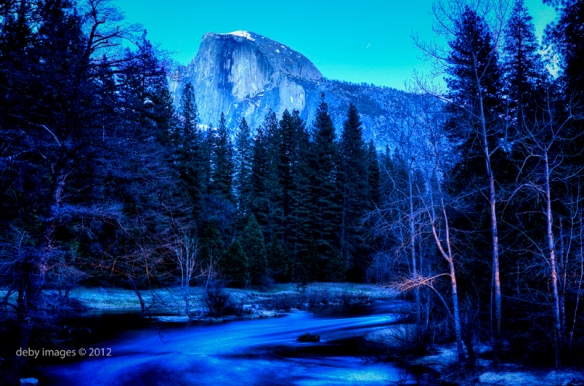
Source: Deby Dixon Photography

Source: Deby Dixon Photography

Cypress trees and evergreens intermingle and stretch far before you. The dark, dry earth is sprinkled with pine needles, and a wild boar is rooting at the tall grasses at the base of a tree, his endeavors lifting the smell of the earthy, chocolate-y roots into the air. Icicles hang from the branches where, nestled deep within, are purple juniper berries. In the heart of the forest, campfires burn thick logs of pine and cypress, and there is a smell of peppery smoke intermingling with the burning woods. Someone is cooking caramel, and burning it. You huddle deeper into your coat as the hint of frost brings a chill, but you can’t help but take a deeper breath of the vetiver surrounding you.

SycomoreGreen and brown, smoky and earthy, with a heart of cypress and wood — that is Chanel‘s Sycomore. It is an incredibly elegant smell, luxurious and leaving a smooth, trail of pure class oozing in its green-brown trail. It is richly masculine, with not a hint of florals, but this is silken masculinity in the most sophisticated, elegant of packages.

Sycomore was first introduced to the world in 1930, the creation of Chanel’s very famous, original perfumer, Ernst Beaux. From what I’ve read, it was all violet and tobacco with some support from soft aldehydes and balsamic wood. The original Sycomore vanished in the perfume mists, but it was re-envisioned and re-introduced in 2008 as an eau de toilette and as part of Chanel’s prestige collection called “Les Exclusifs.” It lesExclusifswas created by Chanel’s house perfumer, Jacques Polge, along with an equally famous “nose” in the industry, Christopher Sheldrake.
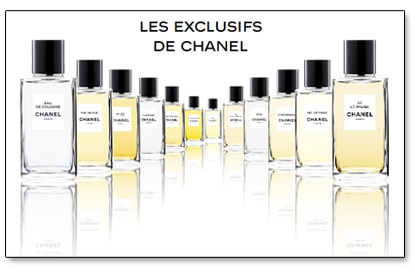
On its website, Chanel describes the new Sycomore as follows:

A rich-wood fragrance with a noble character — like the Sycomore tree that inspired it — created by CHANEL Master Perfumer Jacques Polge in 2008. At the heart of the scent: Vetiver, with an elegant Sandalwood note and dashes of Cypress, Juniper and Pink Pepper, for an earthy, warm and enveloping, yet subtle presence.

I think Chanel’s description nails it, unlike the Fragrantica‘s entry for Sycomore which seems completely incorrect in my opinion. Fragrantica puts Sycomore in the “Woody Floral Musk” category, and lists its notes as “vetiver, sandalwood, aldehydes, tobacco and violet.” I suspect both the categorization and the notes apply only to the 1930s version of Sycomore.

No, Chanel’s notes for Sycomore are the ones to follow and they are clearly listed by the Perfume Shrine as follows:

Vetiver, cypress, juniper, pink pepper, smoke, burning woods.

To get a true understanding of Sycomore, I think it’s important to elaborate a bit on the notes. For example, vetiver which not everyone is familiar with as an ingredient or as a smell, and which is the main part of Sycomore.  Chandler Burr, the former New York Times perfume critic, gave this extremely useful explanation to GQ:

vetiver-roots

Vetiver Roots.
Source: Herbariasoap.com

In the most basic sense, [vetiver is] a grass native to India that grows in bushes up to 4’x4′. It’s also related to lemon grass, as you can tell when you smell it. The stuff—it’s the grass’s long, thin roots that they distill—is infinitely more interesting though: deep, shadowed, astringent, earthy like newly tilled soil, and balsam-woody. It can be warm like tobacco leaves, it can have a crushed-green leaves freshness, or it can be cool like lemon verbena.

Haiti produces about 80% of the vetiver oil in the world, although sometimes you’ll be putting a bit of Indonesia or Brazil on your arm as well (Haiti’s is more floral, Java’s is smokier). There are folks producing it responsibly, too. When you buy a bottle of Terre d’Hermès, which is loaded with the stuff, you’re supporting around 2,000 Haitian farmers and distillers. […]

Like wine, the scent of vetiver oil improves as it ages: the best of it is made with roots that have been aged somewhere between 18-24 months; the oil costs around $200/kg when it hits the market. American scent maker IFF makes it three ways: with steam (resulting in vetiver essence, which is dryer and lighter), solvent (which produces an absolute and is darker, with the scent of rich dirt), and a new technology called “Molecular Distillation” that uses carbon dioxide to yield a scent that’s extraordinary—strongly grapefruit, fresher, zestier.

The Perfume Shrine says that the vetiver in Sycomore is said to be of the Haitian variety so, under Mr. Burr’s explanation, the more floral kind. I’m not an expert on any of the varieties, so I will take their word for it. All I know is that this vetiver smells exactly as Mr. Burr described: “deep, shadowed, astringent, earthy like newly tilled soil, and balsam-woody.”

Do you know how perfume can sometimes take on a colour aura before your eyes? WeaveSycomore opens on me all brown and green. Not khaki but some interwoven panel of dark green and green-brown. It calls to mind green roots and brown earth. Sycomore starts exactly like that, alongside pink peppercorns and an unexpected but definite note of chocolate. It’s almost like chocolate patchouli with vetiver. It’s so confusing that I go over the notes again and, still, I’m at a loss. So, I look up cypress wood which I’m not very familiar with, and that must be the explanation.

From my reading, it seems that cypress wood has a pungent, woody, spicy aroma that can also be sometimes resinous, coniferous, or cedar-like. Here, the combination of the cypress wood with the earthiness of the vetiver seems to have transformed the sum total into chocolate patchouli. You can smell each individual note, but you also have that strong overall impression.

It’s so striking that I looked to see if others had felt the same way. On Basenotes, one commentator also thought there was patchouli in Sycomore, though she concludes the cause was the combination of juniper and cypress. The Scent Critic blog and some on MakeupAlley also picked up on the chocolate edge. And finally, Victoria from Bois de Jasmin summed it up in her usual elegant succinctness: “The chocolate richness of the root is accented by the peppery and smoky notes. The composition possesses an alluring dark character, which in sensation alternates between the tannic dryness of red wine and the softly worn polish of aged woods.”

The chocolate and patchouli impression in Sycomore is so strong for the first hour that it evokes Serge LutensBorneo 1834 in its opening stages. So much so that I’m utterly bewildered by why people compare Chanel’s Coromandel (also from Les Exclusifs) with Borneo 1834, instead of Sycomore. Adding to the similarities between Borneo 1834 and Sycomore is the latter’s strong opening notes of tobacco and smoke. The tobacco note here is faintly bitter, and it is accompanied by a peppery, biting smoky note that is definitely woody.

I wonder about the “burning woods” note listed on many perfume reviews as an element (though not on Chanel’s website), and I keep thinking of guaiac wood. You can read the Glossary for more details but, in a nutshell, guaiac wood has an aroma that is earthy, smoky, tarry, peppery and similar to burning leaves. Tom Ford’s Amber Absolute is also said to have guaiac wood in it, though its official notes are equally vague and merely reference “rich woods” instead of “burning woods.” Both perfumes share a similarly woody, peppery, smoke note, so I have to wonder.

I do smell some sandalwood in Sycomore but, on me, it’s not strong at any point in the perfume’s development. Others have found it, but it’s just a whisper on me. I have to say, I doubt it is real Mysore sandalwood anyway. Anyone who has read Luca Turin and Tania Sanchez’s book, Perfumes: The A-Z Guide, will be struck by their repeated, insistent comments on just how few sandalwood fragrances actually have sandalwood in them at all these days. According to them, true sandalwood from Mysore, India is so scarce and so prohibitively expensive that most perfumers use Australian sandalwood which is an entirely different species of plant and with an entirely different scent. To the extent that Sycomore has sandalwood in it (of any kind), I think it is completely overshadowed and overpowered in the initial stages by the patchouli impression from the cypress and vetiver.

As Sycomore continues to unfurl, there is an impression of burnt caramel, black cocoa powder, incense and dry earth. This is like the black version of Coromandel, without the latter’s vanilla, benzoin and powder heart. The increasingly peppery and smoky nature of the perfume makes me wonder again if they used guaiac wood to fortify any “smoke” accord, not to mention the weak sandalwood. There are also flickering hints of evergreen from the juniper which add a coolness or chill that counters the smoky earthiness. It’s an incredibly sexy, darkly mysterious perfume.

There is a dryness to the rich, earthy smell that really calls to mind dirt — not rich, dank or loamy, but sweetly dry. I realise that non-perfumistas will recoil at the thought of smelling faintly like dirt, but there is really no other way to truly describe the undertones to the very smoked, rich, woody notes. The comparison to dirt also explains Luca Turin’s comments in his five-star review of Sycomore in Perfumes: The A-Z Guide. There, he wrote:

The dream team at Chanel seem to delight in applying superior skills to existing ideas they deem worthy of perfecting: Coromandel was a reorchestration of Lutens’s Borneo 1834…. Sycomore is, in my view, a magisterial gloss on Bertrand Duchaufour’s Timbuktu [for L’Artisan Parfumeur]. The later introduced an Altoids-like idea to perfumery, consisting of a minty-licorice coolness combined with a radiant crackling-wood-fire note. […] Vetiver has both an anisic aspect and a smoky one. Cleverly flank it with Timbuktu’s two companions, add a big slug of sandalwood, and vetiver finds itself in worthy company at last. […] Sycomore [is] … the freshest, most salubrious, yet most satisfyingly rich masculine in years. If putting it on does not make you shiver with pleasure, see a doctor.

I’m surprised that Mr. Turin deems Sycomore one of the few sandalwood fragrance reviews not to warrant his usual comments about how perfumes don’t have real sandalwood in them any more, and I certainly don’t find the same “big slug” as he does, but I agree with the rest of his review. (Minus, his choice of which Chanel perfume to compare to Borneo 1834). I particularly understand his reference to Timbuktu which has often been described as having a dry dirt foundation. Sycomore has both the dirt aspects of Timbuktu and that slightly chilled licorice note underlying the earthiness of the dark patchouli…. er.. vetiver and cypress.

Mogambo 2

Mogambo

Perhaps it’s all that dry dirt and rich green which make me constantly imagine those old movies that explored the heart of an African forest — everything is slightly dark and smoky, mysterious and Tshadowy, all amidst lush greenness and dry red-brown dirt. I keep thinking of Clark Gable with Grace Kelly and Ava Gardner in Mogambo, or Humphrey Bogart and Katherine Hepburn in African Queen. I could see either man wearing Sycomore, and Katherine Hepburn too (though never ever Grace Kelly or Ava Gardner).

As time passes, there is even greater depth to the impressions of burnt umber, burnt caramel, resins, saltiness, and earthiness — all under the forest’s canopy of green-brown vetiver and wood. The patchouli impression ceased being dominant a while ago; now it is the turn of the juniper. In general, juniper has an aroma that is fresh, sweet, and like pine trees, with a slightly balsam-like, resinous undertone. Here, they make I feel as though I’m walking through an icy forest at wintertime, my feet crunching on evergreen needles, the chilled smoke of winter in the air, as I walk towards campfires of burning pine logs where someone is cooking with dark chocolate and another person is accidentally burning the caramel. There is still the chocolate note, you see, though it is overshadowed by a more resinous, caramel element. There is also an undertone of anise and licorice.

In its drydown and final hours, all those things vanish, leaving mostly sweet, faintly lemony, grass. It is vaguely reminiscent of the lemongrass that Chandler Burr referenced. The sweetness of the grass may be one reason why a number of people smell marijuana or cannabis a few hours into Sycomore. I do not, but the occasional “ganja” comment is something worth noting if you’re tempted to try Sycomore. What I do smell, in addition to the sweet grass, is a sort of creaminess that I think comes from the sandalwood. As always, however, it is faint; even more of a shadow now than before.

There are two things which confused me about Sycomore. One, which I’ve already mentioned, is that it is Coromandel which is compared to Borneo 1834, when I think it should be this Polge and Sheldrake collaboration instead. (At least, for the opening hour. I don’t think Coromandel is remotely like Borneo 1834.) The second is a far more important issue: Chanel’s gender classification for this scent. Chanel has labeled Sycomore as a woman’s perfume and, to me, that is akin to saying M&Ms are only for women. It makes absolutely no sense at all.

Not only is Sycomore unisex, not only is it the furthest thing possible from “girly,” and not only do men adore this, but it is — I would argue — actually a masculine scent first and foremost. It may be a somewhat feminine masculine fragrance, but it is a masculine fragrance at its heart. In fact, women who have not explored niche scents and who are used to the more traditional, conventional or mass-market feminine fragrances — whether of the floral, “girly,” clean, sugary or gourmand variety — may find Sycomore to be overwhelmingly masculine and an utter shock if purchased blind. This is no Marc Jacob Lola, Guerlain Shalimar or Dior J’adore.

No, Sycomore has consistently been compared to men’s colognes. In fact, commentators on both Basenotes and Fragrantica find it to be an exact duplicate of Lalique‘s L’Encre Noire for Men (2006). A few people even bring up Hermès‘ men’s cologne, Terre d’Hermès — though most people on Basenotes find that much more citrus based and without anything close to the same degree of vetiver in it (no matter what Chandler Burr may think). I agree with that. I’ve got Terre d’Hermès and like it. But, like many on Basenotes, I find them to be very different perfumes and don’t think Terre d’Hermès is a predominantly vetiver scent. As a point of interest, in a Basenotes thread asking for people’s preference as between Sycomore and Terre d’Hermes, a monumental majority chose Sycomore as the better, more elegant, and truer vetiver fragrance.

All in all, Sycomore is an incredibly lovely fragrance and as smooth as silk. It is magnificently blended, such that everything folds into one rich layer upon another. There is a paradoxical coolness to its warmth, but it is never a chilly or aloof scent. It has too much earthiness in its beating heart, radiating its fire with every thump, thump, thump. It is never cloying, and there is not a single, synthetic, cheap note anywhere to be seen. It is truly as masterful and brilliant as so many thing. It is also a very approachable fragrance; it is not one of those edgy, discordant scents that can be worn only infrequently and are to be admired mostly on an intellectual basis as works of olfactory art. I can see men wearing this almost daily and some women frequently.

And, yet, it is not a fragrance for me. For the longest time, I could not pinpoint why. I like vetiver, I wear men’s cologne, and I like smoke and resinous scents. I find it an extremely elegant perfume and, really, it should push all my buttons. In fact, its opening led me to say “Wow” and I couldn’t stop sniffing my wrists for the first ten minutes. But, at the end of the day, it was simply too much vetiver and its dryness could well be described as bone-dry. Sahara dry. For my personal tastes, Sycomore simply veers too much into the masculine without any real sweetness to accompany it.

Nonetheless, if you are a fan of vetiver, woody and/or dry scents, I highly encourage you to test out Sycomore. If you’re not a fan of either of those three categories, then you may like the sweeter, softer Coromandel. (It is my favorite of the 3 Exclusifs that I’ve tried thus far). But if you’re not a fan of patchouli, benzoin or frankincense, then I fear you should skip that one too.

Have you tried Sycomore? If so, was it love at first sniff or simply not your cup of tea?

Details:
Sillage & Longevity: The sillage and longevity of Sycomore is impressive, particularly given that most of the Exclusifs line (with the exception of Coromandel) are said to be thin, sheer, and of short duration. On me, Sycomore had good projection for the first 3 hours, and only became close to the skin after 5 hours. As for longevity, it was above-average for my perfume-consuming skin. I could still smell faint traces of it after 9 hours. On others, I’ve read reports of it lasting almost an entire day.
Cost & Availability: Sycomore only comes in Eau de Toilette concentration and costs $130 for a 2.5 oz/75 ml bottle or $230 for a 6.8 oz/200 ml bottle.  The Exclusifs line is available only in Chanel stores or on their website. I have read numerous comments from people who have tried it at Selfridges in the UK, but did I not see a single Les Exclusifs fragrance on the Selfridges website. Nor have I found it on any U.S. department store websites. It’s not on Lucky Scent either. It is, however, available on Surrender to Chance which is where I obtained my sample. Prices for the smallest vial (1 ml) start at $3.

Perfume Review: Tauer Perfumes L’Air du Desert Marocain

Desert Night SkyThe desert is vast and still. Silence reigns under the thousand stars. Dawn is around the corner, and the Bedouins have just started to awake. Soon, they will feed the camels and put out their wares for trading. Soon, the sun will shine intensely upon the sandy dunes and the dry desert wind will pick up traces of the spices, mixing it with the dust and the scent of Morocco, filling the air with the riches of the ancient spice route and the mysteries of the desert.

That is the promise of L’Air du Desert Morocain Eau de Toilette Intense, a unisex fragrance by Tauer Perfumes. And it is a promise that it delivers upon, lock, stock and ten roaring barrels. It is an incredibly impressive perfume, created by a Swiss scientist who has absolutely zero formal training in perfume making, and it explains why both L’Air du Desert Marocain and the Tauer line of perfumes itself have become such a massive hit.

Tauer Perfumes was founded by Andy Tauer, a molecular biologist with a PhD who left the world of science in 2005 to become a perfumer. L’Air du Desert Marocain was his second creation, made to be a lighter version of his hit, Le Maroc pour Elle. And it has become not only adored, but, also, critically acclaimed. L’Air du Desert Marocain received a 5-star rating as a masterpiece from Luca Turin’s co-critic, Tania Sanchez, in Perfumes: The A-Z Guide.

Moroccan archwayIt is the smell of Morocco and is immensely evocative, but, for all that I think this is one absolutely marvelous scent and for all that I couldn’t stop sniffing my wrists in the beginning, I don’t think this is a scent for me. It is too dry, and one of those rare perfumes that I think actually leans a little too masculine (despite being unisex) and it is also something that would be hard to wear every day. But, on the right man, though, I think that it would be rhapsody and heaven — the sort of scent that would make another woman or man want to sniff him for days on end and to dream of his scent. On a man, this is a fragrance that could make his spouse or significant other find it impossible to keep his or her hands to themselves.

L'Air du Desert Marocain via Luckyscent.

L’Air du Desert Marocain via Luckyscent.

Fragrantica classifies L’Air du Desert Marocain as an “Oriental Spicy.” The Tauer website provides the following notes:

Head: Coriander and cumin, carefully blended with petitgrain.

Heart: A warm heart note with rock rose and a hint of jasmine.

Body:Dry cedar woods and vetiver, brilliantly joined on a fine ambergris background.

However, I have seen a fuller listing of notes elsewhere. For example, Bois de Jasmin gives what seems a much more comprehensive account, and that is what I’m going to work with:

coriander, petitgrain, bitter orange, lemon, bergamot, jasmine, labdanum, geranium, cedarwood, vetiver, vanilla, patchouli and ambergris.

L’Air du Desert Marocain opens with such forcefulness that my head spins. It is a good forcefulness, and I absolutely love it, but I recall Fragrantica‘s statement that this was made as a “lighter” version of Le Maroc Pour Elle and blink. Quite frankly, it is almost a little overwhelming in its spiciness, and I rarely say that. Yet, it explodes with such a marvelous opening that I find myself testing it out three different times on different places. And each opening was different.

Spice Market MoroccoThe very first time, I got a very strong scent of orange petitgrain with spices. You can read more about petitgrain and all the various notes in the Glossary, but, in a nutshell, petitgrain is the distillation of the bitter twigs of a citrus tree, usually orange blossom. It is a woody, bitter, but highly aromatic scent. Here, the strongly woody, faintly bitter notes recall a wooded version of orange blossom. To my nose, there are also lovely saffron notes, mixed with spices. They are not easily identifiable, individually, but create an overall impression of a Middle Eastern spice market. The notes are sweet, but dry and far from cloying. There is, in fact, almost a smell of dust or dusty sand which suddenly explains one commentator on Fragrantica who disdainfully asked: “tell me, is one willing to smell like the baked, parched sediment that is sand?”

Tribal nomad smoking a hookah in the desert.

Tribal nomad smoking a hookah in the desert.

I happen to think that dry note is essential to cut through the extremely heady, powerful spice notes that are apparent from the very start. There are notes of woody, sweet incense and amber from the labdanum (also known as rockrose or cistus, and similar to ambergris). The incense in L’Air du Desert Marocain is some of the sweetest incense I’ve smelled in a while, perhaps because it is laden with the patchouli which is very rich, black, dirty, 70s kind of patchouli. The whole thing is very strong, and it never goes away, though it does fade to an underlying sweetness after about five hours. (Yes, this thing is a sillage and longevity monster!)

Source: 1stdibs.com

Source: 1stdibs.com

With the dust and wood undertones, I keep remembering an artsy, funky antique shop here which sells hundred-year old wooden Chinese apothecary cabinets; they smell faintly dusty, woody, and carry the lingering traces of old spices. I go to my own spice cabinet and drawers, hoping to pinpoint exactly what spices I’m smelling here. I find nothing. My coriander does not smell exactly like the coriander in L’Air du Desert Marocain, and neither does my cumin. But those are mere powders and, from interviews that I’ve read with Andy Tauer, he seems to use the most expensive oils and distillations. It certainly smells like it. You can smell the incredible quality of the perfume.

My second try with L’Air du Desert Marocain yielded a totally different, but equally fascinating, opening burst. This time, I smell lemoned coriander and tea. Amazing Earl Grey tea with notes of bergamot, an ingredient which falls between orange and lemon in scent. There is Earl Grey but there is also something else, something smokier, darker and almost tarred. It evokes Lapsang Souchang, a black tea which Wikipedia says “is distinct from all other types of tea because lapsang leaves are traditionally smoke-dried over pinewood fires, taking on a distinctive smoky flavour.” The black, bitter, smoky tea is tinged with pine notes but also the lightness of the bergamot and the piney aspect of cedar. I feel triumphant at finally pinning down one of the more elusive notes in the perfume, but I’m astounded at how different this opening is from my first go-round.

My third try yielded a mix of my prior two attempts. This time, the opening was of cedar, lemon, vetiver and pine needles with a strong element of dust. Actual dust! The wood and dust notes are complimented by the earthy sweetness and amber notes of the vetiver, but cedar is the predominant star here.

This undulating wave of shifting notes is, in my opinion, a characteristic of a “prismatic” scent. The Perfume Shrine has a very thorough explanation of scents which may appear linear but which, in reality, have prisms and shifting weights amongst several key components.

A variation on the linear scent is the “prism”/prismatic fragrance, whereupon you smell a humongous consistent effect all right, but when you squint this or that way, throughout the long duration, you seem to pick up some random note coming to the fore or regressing, then repeating again and again; a sort of “lather, rinse, repeat” to infinity. A good example of this sort of meticulously engineered effect is Chanel’s Allure Eau de Toilette (and not the thicker and less nuanced Eau de Parfum) where the evolution of fragrance notes defies any classical pyramidal structure scheme. There are six facets shimmering and overlapping with no one note predominating.

Here, with L’Air du Desert Marocain, sometimes the opening gave me notes like the petitgrain, orange and labdanum, sometimes bergamot, coriander and cedar, and sometimes a combination of all three, including the base or bottom notes (the heavier molecular compounds which last longer on the skin).

Regardless of which version I start out with, two hours in, the heart of L’Air du Desert Marocain starts to unfurl. It is labdanum, patchouli, and sweet incense with cedar and faint touches of cumin that, at this point, in no way smells like body odor or sweat. The overall impression is of spiced amber and perfumed wood. The sillage is slightly less overwhelming at this point, but there is still significant projection.

Three hours later, the cumin starts to turn and shift a little. There is a faint, tiny element of sweat that creeps in. If you’ve read any of my reviews for perfumes with cumin, you will know that I’m highly sensitive to the scent of cumin and its inevitable turn to a sweat note. It happens on me each and every time, whether it’s Serge Lutens’ Serge Noire or Amouage’s Jubiliation 25. And, each time, I struggle with it. Here, it is fainter than it was in Serge Noire but, still, 6.5 hours, I have to give a faintly worried sniff under my arms. It’s my own issue and my own neurosis because, again, my nose is extremely sensitive to cumin (it’s why I can rarely cook with it). Here, it’s very subtle, but the faint trace of body odor is definitely apparent at this point.

The cumin note doesn’t impede my enjoyment of the perfume’s dry-down which is rich and almost narcotically boozy in its smoky amber and patchouli. It’s not a cozy, “let’s snuggle under the blanket” sort of amber. This is far too incense-heavy for that. It’s more masculine and rugged — and much sexier. On a man, I can imagine his partner or spouse thinking, “let me nuzzle you, sniff you and run my hands over you.”

fehr4I can’t think of the person whom I think embodies the L’Air du Desert Marocain man. This is not for Brad Pitt or Tom Cruise, nor for the Marlboro Man or John Wayne. The character which consistently comes to mind is the Bedouin chief, Ardeth Bay, played by Oded Fehr in The Mummy (1999). Or Omar Sharif’s character in Lawrence of Arabia.

Women can certainly wear L’Air du Desert Marocain and, again, it is officially a unisex scent “for women and men,” but I don’t think it’s the most versatile scent or the sort of thing that one could wear daily. In fact, some men on a Basenotes thread I read found that it was perhaps a little too much for them, too. That said, I think it’s a fantastic scent and well worth a sample for those who like their scents spicy and heady. It will take you to the deserts of Morocco and, if you’re lucky, make you feel like a Bedouin king.

DETAILS:

Sillage & Longevity: This thing lasts and lasts! My skin consumes perfume voraciously and, yet, L’Air du Desert Marocain had serious projection or sillage for the first 2.5 hours, then slightly less for the next hour, and only becoming close to the skin a little under 5 hours in. Nonetheless, it was still easily detectable at that point any time I brought my nose to my wrist. In terms of longevity, it lasted just under 10 hours on me, which is pretty remarkable. On others, the fragrance is reported to last eons with only a few sprays, so I wouldn’t be surprised if it lasted a good 16 hours on someone, if not far more if you used a lot.

Cost & Availability in General: In the US, you can buy a 1.7 oz/50 ml bottle for $125 from Luckyscent and The Perfume Shoppe, as well as directly from Tauer Perfumes from February 2013 onwards. (See further details below in the Tauer section.) If you want to order now from Lucky Scent, please be aware that they are backlogged until the end of January 2013 on all orders for the perfume. They also sell a sample vial for $4. Samples are available from Surrender to Chance as well, starting at $5.99. In Europe, First in Fragrance sells the perfume for €95.00 for a 1.7 oz/50 ml, or for €190.00 for a 3.4/100 ml bottle from. It too carries samples. In the UK, Les Senteurs carries the Tauer line but the online website only seems to carry samples, not the full bottles. It may be different in the actual stores, but you will have to check. I don’t know about the shipping rates for any of those sites. The Tauer website’s store locator also provides locations in over 10 countries — ranging from France and the Netherlands to Russia, Singapore, the UK, Poland, Romania, Spain and more — where its products are available. You can find that list of stores here.

Cost & Availability from the Tauer Website: The Tauer Perfumes website lists the cost of the 50 ml/1.7 oz bottle as as: Fr. 96.00 / USD 103.70 / EUR 79.70. Tauer Perfumes also sells a sample 1.5 ml/ 0.05 oz glass vial of L’Air du Desert Marocain for: Fr. 6.00 / USD 6.50 / EUR 5.00. Though they used to ship to most places in the world, you need to know that they can’t ship to a number of places in Europe right now and that they will only be able to ship to the U.S. from February 2013 onwards. For various reasons due to a sudden problem with their shipping supplier, as of this post in January 2013, they say that they can only ship to customers in Switzerland, France, Germany and Austria. They also state they they hope to remedy this situation soon.

As a side note, the Tauer website also sells a sample Discovery Set of 5 different Tauer perfumes (for free shipping to most places in the world) which you can choose at will for: Fr. 31.00 / USD 33.50 / EUR 25.70. The website provides the following information:

Free selection: It is your choice to pick a set of 5 DISCOVERY SIZE perfume samples in glass spray vials. 1.5 ml each (0.75 ml of 0.75 ml of UNE ROSE CHYPRÉE or UNE ROSE VERMEILLE or CARILLON POUR UN ANGE) are at your disposal. Pick any scents from the Tauer perfumes range. The amounts of 1.5 (0.75 ml) are minimal amounts. Usually , we will ship around 2 ml (1ml). The DISCOVERY size vials are spray vials and will allow you to enjoy our fragrances for several days.

Packaging: The DISCOVERY SET comes in a glide-cover metal box for optimal protection.

Shipment: This product ships for free within 24 hours after we received your order world wide. Exceptions: Italy, United Kingdom, Russia, Belgium, Czech Republic.

Perfume Review – The Enchanted Forest by The Vagabond Prince & Bertrand Duchaufour

EF light

Source: J. Chanders at DeviantArt

Imagine a sea of pine and evergreens. There is a small hole in the thick blanket of trees through which the sun hits a golden light tunneling down to the dark, damp, forest floor. The ray of light hits turns some plants bright, incandescent green. Peeking out from behind the leaves are lush, ripe black currants. A few lie crushed — spilling out a crimson hue that contrasts brightly again the pine cones and the dark, grey-green mosses. All around, hidden outside the beacon of light, are the woods. Looming dark and majestic, they are silent, mysterious, unknown, and beckoning. That is The Enchanted Forest, Enchanted F bottlea newly released perfume for men and women created by Bertrand Duchaufour for the new niche perfume house, The Vagabond Prince.

nd.17172

Source: Fragrantica

Bertrand Duchaufour has been called “the new pope of niche fragrances.” The legendary nose behind many L’Artisan Parfumeur scents — including Timbuktu and Dzongha — he has also created perfumes for Penhaligon, Créations Aromatiques, Comme de Garçon Kyoto, Acqua di Parma, Eau d’Italie, and, now, The Different Company.

BDuchaufour

Source: Fragrantica

Recently, however, he collaborated with The Vagabond Prince (a new niche perfume house out of California and owned by the founders of Fragrantica) on their first perfume, The Enchanted Forrest.

His thoughts and intentions behind the scent are quite instructive. In an article he wrote for Fragrantica, he states:

Enchanted Forest is a unique fragrance for several reasons. It is the only perfume I know of that is built around blackcurrant as the sole raw material, to such an extent that one can say it is a CASSIS. Another reason why we can speak of its uniqueness is the topic, this pagan festival that is the Kupala—a Slavic tradition that continues, more festive than other things at present, as a kind of homage to nature and the mysteries of the forest.

o.18238

Source: Fragrantica

At the same time, he wanted to evoke the dark, mysterious nature of a forest. So, he “chose the balsam fir, because it symbolizes the quintessential Russian forest,” seeking to link the “earthy notes” in the fragrance with “pine and the dried pine needles covering the floor of an endless pine and fir land.” (Id.)

But his goal was far more than just black currant, earth notes and slavic forests. Duchaufour explicitly sought to bring in a pagan element: joyful abandon, but with softness and femininity.

[N]either have I forgotten the joyful pagan side of the festival, by giving—mainly in the top notes—sparkling effects of citrus and alcohol (wine, coriander seed, pink pepper and just a trace of orange) that mingle with discrete floral notes but feminize the heart of the fragrance, such as hawthorn, rose, a touch of jasmine, carnation … just to offset everything else that could have made it a little too masculine. The whole composition oscillates between the dark masculine strength of the forest, the smooth, juicy and delicious blackcurrant and some soft flowers. The seduction which emanates from the bottom of the fragrance develops power with amber notes and very sophisticated musk.

Enchanted Forest is classified as a “woody aromatic” and its notes on the sample I received are as follows:

Top notes: pink pepper, aldehydes, sweet orange (traces), flower cassis, blackcurrant leaf, hawthorn, effects of rum and wine, rosemary, davana.
Heart notes: blackcurrant buds absolute (by LMR from Grasse), CO2 blackcurrant (by Floral Concept from Grasse), Russian coriander seed, honeysuckle, rose, carnation, vetiver
Base notes: opoponax resinoid, Siam benzoin, amber, oakmoss, fir balsam absolute, Patchouli Purecoeur®, castoreum absolute, cedar notes, vanilla, musk.

Source: Fragrantica.

Source: Fragrantica.

I was quite pleasantly shocked and pleased to receive a sample from the company, but I vowed I would always give you my blunt opinion regardless of how I obtained the perfume. And the bottom line is: I don’t think I’m the target audience for this very evocative, very well-made scent, but I’m sure it will be a hit.

prairie fruit

Source: Kayben Farms

The Enchanted Forest opens with a burst of cassis (which is the French name for black currants and what I’m used to using) and citrus. It’s the bright, zesty zing of a freshly grated lemon rind, and it’s a lovely pairing with the tart, sweet, fresh burst of cassis. Cassis doesn’t have the slightly over-ripe opulence of a purple (let alone a purple patchouli) fruit as used in perfume; it’s all tangy tartness with a touch of sweetness that is more aromatic and fragrant than actual, cloying sugariness. Cassis is often a note tasted in red wine, so it should be no surprise that the added “wine” notes simply underscore that aspect here. There are definite impressions of hot, mulled, spiced wine. In his Fragrantica article, Duchaufour attributed his “alcohol” smell to “wine, coriander seed, pink pepper and just a trace of orange.” I have to say, I don’t get any of those individual components, but I definitely get the sum total.

Seconds after opening, the heady scent of crushed pine needles and pine cones joins the party. Fir balsam absolute (natural pine fragrance in a concentrated form) is listed in the base notes of the fragrance, but it feels as though it starts at the top and runs all the way through the scent. Cassis and fir balsam are the heart and driving force behind The Enchanted Forest, and there is no way to ever forget that. In contrast, the oakmoss — a foundational element for chypre fragrances — stays at the base, as do some of the other notes like the cedar, the resins and the castoreum, to arise only later during the dry-down stage.

blackcurrant buds fruits with leaves

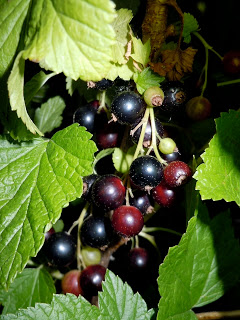
The black currant plant with buds, fruits and leaves. Photo Source: The Perfume Shrine

For the first 60 to 90 minutes, it’s predominantly cassis and fir that lead the show but, at the 30 minute mark, other guests start to appear. I smell the black currant leaf and some geranium, though they are fleeting. So, too, is the black currant bud absolute. The latter is an interesting ingredient and, given its greater role later on, I thought I would link to the explanation provided by the Perfume Shrine:

Black currant bud absolute is known as bourgeons de cassis in French …[and is different] from the synthetic “cassis” bases that can be cloying and which were so very popular in the 1980s and early 1990s perfumery, notably in Tiffany for Tiffany (by Jacques Polge) in 1987 and Poeme for Lancome (by Jacques Cavallier) in 1995. Compared to the artificial berry bases defined as “cassis,” the natural black currant bud absolute comes off as greener and lighter with a characteristic touch of cat. Specifically the ammoniac feel of a feline’s urinary tract, controversial though that may seem.

Black currant absolute comes from the bud… but also from the distilled leaves of the plant … and is extracted into a yellowish green to dark green paste that projects as a spicy-fruity-woody note retaining a fresh, yet tangy nuance, slightly phenolic.

I want to say up front that I do NOT smell ammoniac cat pee! Nor has anyone who has tried the scent thus far. However, in general, enough people seem to smell “cat piss” from black currant or black currant buds to warrant a surprising number of bewildered questions, articles or threads on the subject on the internet. Despite that, black currant buds are featured in a number of extremely popular, famous fragrances. A few examples are: Black Orchid by Tom Ford, Chamade and Champs Elysees by Guerlain, Gucci Rush II by Gucci, Escape by Clavin Klein, First by Van Cleef & Arpel, Beautiful by E.Lauder, In Love Again by YSL, Fan di Fendi by Fendi, and
Rock & Rose by Valentino. (Source: Fragrantica.)

o.18240

Source: Fragrantica

An hour and half in, Enchanted Forest has become a very forest green scent. The cassis is still there but this is a dappled mix of greens, from the pine and evergreen, to the fresh, almost herbal leaf of the cassis plant, to more cedar-y pine cones. I don’t smell the rosemary, vetiver, honeysuckle or a few other of the notes listed, but I get a definite hint of some sweet, nutty, amber-y resin and smoke. However, the perfume is so well blended, I can’t tell which of the resins may be the cause. It could be the Siam resin, the opoponax (sweet myrrh) resin, the amber, or, even, the patchouli.

All of this brings me to the issue of linearity. Some perfumes are called “linear” because they are essentially one flat trajectory. Others, however, don’t really deserve that slightly disparaging term because they are so well-blended that they are a harmonious whole. The Perfume Shrine has a very thorough explanation of and defense for the “deceptive simplicity” of what some may dismiss as a “linear” scent. As she explains, some scents are really not akin to a flat-line on a medical device but, rather, have prisms and shifting weights amongst several key components.

A variation on the linear scent is the “prism”/prismatic fragrance, whereupon you smell a humongous consistent effect all right, but when you squint this or that way, throughout the long duration, you seem to pick up some random note coming to the fore or regressing, then repeating again and again; a sort of “lather, rinse, repeat” to infinity. A good example of this sort of meticulously engineered effect is Chanel’s Allure Eau de Toilette (and not the thicker and less nuanced Eau de Parfum) where the evolution of fragrance notes defies any classical pyramidal structure scheme. There are six facets shimmering and overlapping with no one note predominating.
In short, the engineering of a perfume is sometimes much more technically and intelligently labored than appears at first sniff. Linear scents are never “simple”, so to speak. Preferring a perfume that takes you into a wave of highs peaks & low valleys of differing “notes” is not in itself the mark of connoisseurship that it is touted to be.

I can’t decide if I think the Enchanted Forest is a “prismatic” scent or not. At times, especially during the first two hours, it seems flat-out linear. All cassis and fir trees. But at other times, especially at differing times from hours two to four, it definitely seems to be a shifting prism, highlighting some aspects, then others — sometimes in as little as a few minutes time!

Which brings me to an odd thing I noticed. Two hours in, the perfume’s notes changed depending on where I had put it on my arm and when I smelled it. You see, I often place perfumes that I’m testing in various places up my arm (or arms). Usually, the scent remains the same no matter where it’s placed — pulse points or not. That was not the case here. On one wrist, I smelled ambery resin: warm, nutty, sweet. ambery and with what seemed to be the opoponax resin (a relation to myrrh) leading the way. On the inner crook of my elbow on my other arm, I smelled all pine cones, green cassis leaf, smoky incense and a dash of oakmoss. On my other wrist and the outside of my hand, it was pine, cassis and what seemed to be a dash of the rose! And, every few moments, the scents seemed to shift or alter in small degree. One minute, my wrist smelled of amber resin, a few minutes later, it smelled of pine cones, then it shifted back moments later to honey and amber. I honestly can’t understand it. I put them all on at the same time!

I think the flickering nature of the scents underscores that this is an extremely well-blended prismatic perfume, and not a purely linear one. There really is deceptive simplicity; you merely have to wait for the opening notes to subside before you realise it.

The development of Enchanted Forest went roughly as follows: the opening of cassis and pine balsam lasted a bit over an hour; the middle notes really began at hour 1.5 and lasted for about another two hours; and about four hours from when I first dabbed on the perfume, the dry-down began. It’s a resin party! All amber, smoke, incense and honeyed sweetness. It’s warm and it’s cozy.

The whole progression of the scent is extremely evocative. It’s as though you were outside in a dark forest at night, sipping mulled wine by the light of the fire. You are surrounded by crushed pine needles and cones and there is a touch of damp greenness in the air. Then, you stomp out the fire and come in from the cold, inside to the cozy warmth of a cottage with trails of smoke and cedar still lingering on your clothes. You sip some vanilla tea with honey; the fire crackles; amber is in the air. The perfume truly does evoke such a feeling.

Unfortunately, lovely as parts of this fragrance are, I fear it’s not for me. I wanted to like this smell, but I would never wear it. And it truly is me, and not the perfume. I simply am not a fruit girl. Granted, it’s not a sugary, cloying fruit by any means! It’s tart and fresh, and there are a plethora of green notes — the zing of a citrus rind; the bright, effervescent green of leaves; the dark black of a forest floor littered with pine cones and crushed needles; and the grey-green of mossy oakmoss. But, to my surprise, it’s still not for me. Despite the warm honeyed amber from the resins (I love Siam resin!), despite my love for myrrh and musk, cassis is at the heart of this fragrance. Its opening is a bit overwhelming for one who isn’t into fruit and, on me, its threads linger faintly even in the dry-down. And the thing which initially drew me to ask for a sample — the resins, myrrh and patchouli — have too subtle a character for my tastes. I have also suddenly realised that not a huge devotee of pine and fir. At least, not enough to warrant a scent with so much of it.

I know I am in a definite minority, especially judging by the comments on Fragrantica. There, the perfume was greeted with great praise by all those who received a sample. (And most actually wanted the cassis top note to last much, much longer!) I should note, however, that the perfume is made by the founders of Fragrantica itself. The Vagabond Prince is their company. I am not implying that the comments are biased, but I thought it was something I should note. That said, there is no doubt that this scent will be a crowd-pleaser, and not solely because of how well it brings to mind Christmas. It’s a charming, evocative, well-blended perfume with obviously high-quality, rich ingredients, no cloyingly over-sweet fruit, and clearly made with love. But it seems that I prefer my cassis in champagne, not on my skin.

DETAILS:
-Sillage: Very good for the first 2 hours, then there was less projection. It became close to the skin around 3.5 hours and very close to the skin from 4.5 hours onwards.
-Longevity: Very good. It lasted well over 6 hours and, as I say repeatedly, my skin consumes perfume. I think that this would last quite a while on others and initial reports on Fragrantica would seem to support that impression. However, the perfume is too new to have more detailed assessments of longevity. I will update this post when more information becomes available.
– Cost, Availability and Location: [UPDATE: This perfume has now been released in the US. You can find it on Min NewYork where it costs $180 for a 3.4 oz/100 ml bottle. ]
The perfume is now available in Paris. It’s release date was today, December 22, 2012. It costs 140 Euros for 100ml/3.4 oz. and is available at the luxe fragrance store, Jovoy Paris. The link to the Jovoy company website is: http://www.jovoyparis.com/. Full contact information is:
Parfums Rares Jovoy
4 Rue de Castiglione,
+33(0)140200619
contact@jovoyparis.com
In the US, the fragrance will be available to buy online on The Vagabond Prince website, as well as on Lucky Scent and in its retail boutique called Scent Bar (in Beverly Hills, CA). I will update this post as I get further information.