Parfums MDCI Chypre Palatin: Baroque Grandeur

Blenheim Palace. Photo: WilowbrookParkBlogspot.com (Website link embedded within.)

One small part of Blenheim Palace, England. Photo: WillowbrookPark.Blogspot.com (Website link embedded within.)

Somewhere in an alternate universe, there must surely be a European palace that smells of Chypre Palatin. The massive, stony Neo-Classical structure opens onto a vast entrance hall decorated with mossy, emerald velvet and gold in an opulently ornate Baroque and Rococo style. An enormous chandelier hangs from the vaulted ceilings painted in citrus yellow, ambered gold, delicately pastel florals, and more mossy greens. Light sparkles off the prisms, bouncing into ambered air filled with just a trace of incense.

Photo: Andrew Yee for How To Spend It Magazine via FashionGoneRogue.com

Photo: Andrew Yee for How To Spend It Magazine via FashionGoneRogue.com

The vast hall gives way to a long, mirrored passage way filled with dancing ghosts called Shalimar, Bal à Versailles, Sacrebleu Intense, Coromandel, Habit Rouge. and Yvresse/Champagne. They blow you scented kisses, and the aroma melts into the citrus and mosses that waft off the velvet covering the walls, mixing with the vanilla that seeps up from the floors. The Bal à Versailles ghost is particularly naughty, flashing you her knickers and a glimpse of her musky, naked breasts. It seems as though you’re in that ornate passageway forever, but after a few hours you enter the heart of the house. The royal bedchambers are decorated with more velvet, this time in shades of resinous black, vanilla custard cream, golden amber, and refined patchouli brown. There, you curl up to sleep, covered in aromas like the finest, sheerest, but richest, silks that glide over you in a whisper of softened, ambered sweetness. That is the palace of Chypre Palatin.

Drottningholm Palace, Sweden. Photo: CubeFarmEscape at http://cubefarmescape.com/2011/06/pick-a-palace-or-two/

Drottningholm Palace, Sweden. Photo: CubeFarmEscape at http://cubefarmescape.com/2011/06/pick-a-palace-or-two/

Chypre Palatin is an eau de parfum created by the famous Bertrand Duchaufour for Parfums MDCI. The French niche house was founded in 2003 by Claude Marchal with a specific philosophy: that perfumes “should be an art more than an industry, a source of pleasure, pride and beauty more than a commodity.” Mr. Marchal was inspired by the luxurious opulence of the Renaissance, and the masterpieces that came out of it: the palaces of Catherine de Medici; the lush gardens of the Luxembourg; Greek and Roman antiquities; gold and rock-crystal vases; the vast treasures of Louis XIV, the Sun King, or those found in Florence’s Uffizi museum and Vienna’s Treasure Room.

Parfums MDCI decided to ask the world’s most famous perfumers to make a small number of fragrances with almost total freedom, and a no-holds-barred, unlimited budget. There were only two caveats: use the most expensive, richest ingredients possible; and don’t create scents that copy trends or caters to the crowd. The cost didn’t matter, but excellence did, no matter how long it took. Parfums MDCI is not one of those houses that puts out several fragrances at year, let alone several collections every few months. (Tom Ford, I’m glaring straight at you.) In fact, Parfums MDCI had only 5 fragrances in their line at first, but the number has slowly risen over the years to include 8 more scents. Chypre Palatin was released in 2012 and, as noted earlier, was made by Bertrand Duchaufour.
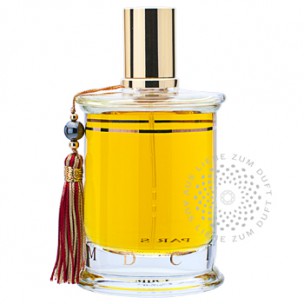
Chypre Palatin, regular Tassel Bottle. Source: First in Fragrance.

Chypre Palatin, regular Tassel Bottle. Source: First in Fragrance.

First in Fragrance has what looks like the official press release description for Chypre Palatin, as well as the most complete set of notes that I’ve found. I think the description is accurate to large degree, so I’ll quote it in full, even though it is quite long:

The opening is green, a warm, woody and strong green, peppered with a few hyacinths, garnished with the fragrant ripe flesh of clementines, spiced with a sprig of lavender and a hint of thyme. All this creates cozy, warm frissons, intrigues and generates a great appetite for more.

The skilled use of aldehydes lets Chypre Palatin shine, but without getting into too-familiar waters. We can already imagine the soft growl of a wild cat. She lolls pleasurably, full of devotion and delight on the sun-warmed forest floor, crushing the dark velvety roses, iris, gardenia and jasmine. It is so mysterious that our senses are in turmoil. Here and there, dried fruit and peppery Oriental spices join this lascivious game of the lioness as her birth-giving becomes more enticing and the fire blazes.

Here is masculine animality and feminine lust perfectly united and masterfully enacted. It is an indulgence and a stroll in brocade and velvet, courted by the most beautiful leather and the delicate touch of Immortelle. Balsam of Tolu and vanilla show themselves along with the extreme complexity of benzoin and storax that perfectly harmonize with typical chypre oak moss.

Chypre Palatine seems to have fallen directly through time where nostalgic, magnificent ball-nights combine with wild cat-like grace and flirt with the melting of feminine and masculine fragrant notes on the skin.

Top Note: Hyacinth, Clementine, Aldehydes, Labdanum (Rockrose), Galbanum, Thyme, Lavender
Heart Note: Rose, Jasmine, Iris, Prune, Gardenia
Base Note: Benzoin, Storax, Leather, Vanilla, Balsam of Tolu, Castoreum, Costus, Oakmoss, Everlasting Flower [Immortelle].
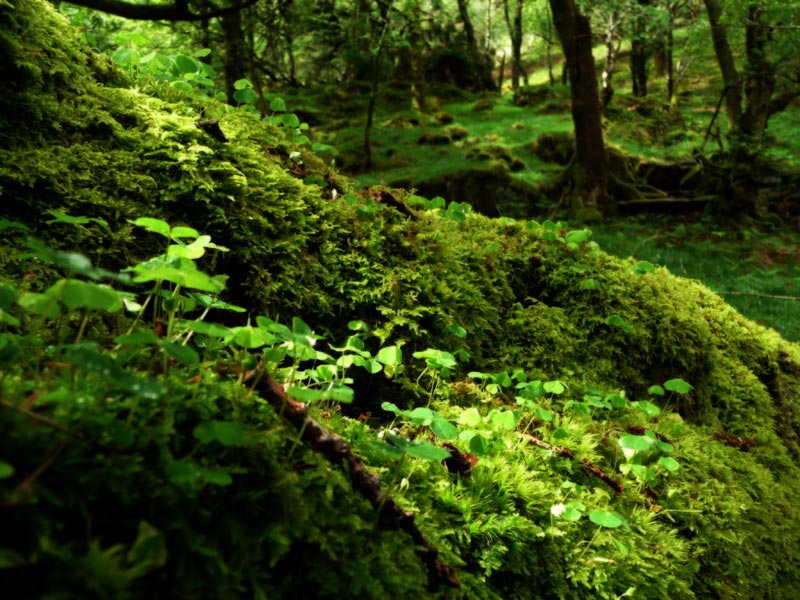
Photo: Jimpix.co.uk

Photo: Jimpix.co.uk

Chypre Palatin opens on my skin with mossy sharpness infused with bright, sun-sweetened tangerines, zesty lemon, and tons of smoky sweetness from the styrax resin, along with a hint of its leathered underpinnings. In the base, there is a rich plumminess mixed with incense and leather. A quiet floracy weaves through the top notes, though it’s impossible at this point to tease them out. Seconds later, the castoreum and animalic costus root arrive. Costus root is something that gave vintage Kouros is urinous growl, but here, it add a civet-like muskiness that is perfectly balanced. Sharp and definitely a bit skanky, but never urinous. It’s damn sexy. My God, is this a sexy perfume.

Galbanum

Galbanum

Completing the picture are sparkling aldehydes, and the dark, green pungency of galbanum. Now, I normally struggle with both notes, as galbanum can be painfully sharp in its green-blackness, while aldehydes often turn to pure soap on my skin. Not here. Not with Chypre Palatin. They are so perfectly calibrated, I can’t get over it.

Source: 123rf.com

Source: 123rf.com

The aldehydes combine with the utterly spectacular, velvety, rich oakmoss (how can this perfume be IFRA compliant???!) to conjure up the fizzy, sparkling elegance of YSL’s gorgeous fruity chypre, Champagne or Yvresse. The galbanum somehow manages to evoke the famous Bandit from Robert Piguet, only in approachable, less dangerous or brutal form. There is something of Bandit’s green leathered feel lurking about that normally difficult note, but it’s just the faintest suggestion and somehow serves to amplify the overall depth of the oakmoss. The latter never feels fusty, dusty, or like grey mineralized lichen, but it’s not the bright, fresh, springy moss note generated by patchouli, either. On my skin, it smells like really expensive oakmoss — and a lot of it. I really have no idea how this perfume passed IFRA/EU compliance tests. Whatever combination of elements or tricks Bertrand Duchaufour used to create this vision of endless, forest-green velvet, it really feels genuine.

Bal à Versailles.

Bal à Versailles.

The overall effect of the avalanche of notes that falls over me is not just the impression of incredibly baroque grandeur, but a flashback to the past. Chypre Palatin feels like a greatest hits remix of: Bandit, Shalimar, Habit RougeChampagne/Yvresse, Coromandel, and vintage Bal à Versailles. I’m not complaining. Not one bit. In fact, I gulped at the opening, said “Oh my God,” promptly dabbed on some more, and then felt like one of those possessed figures you see in horror movies whose head spins around and around. Only here, I was joyously possessed by such incredibly opulence, such intense deepness, and sensual headiness in such a seamless, luxurious blend that I didn’t know what to take in first.

The Green Velvet Room at Hardwick Castle, England. Photo: NTPL/Nadia Mackenzie.

The Green Velvet Room at Hardwick Castle, England. Photo: NTPL/Nadia Mackenzie.

Yet, Chypre Palatin is more than various parts of its ghostly, perfume predecessors, and is quite its own thing. Yes, it is retro and classique; the fougère elements, the aldehydes, galbanum, oakmoss, and skanky touches all harken to the past. However, it also feels modern with the definite oriental foundation. This isn’t a Chypre to me, not even at first, but a Chypre-Oriental hybrid done with a lightness that belies the heaviness of its super-rich notes. Perhaps the most modern aspect of Chypre Palatin for me is that careful calibration that I talked about earlier. There is none of the excess of the past, whether it is vintage Bal à Versailles’ hardcore, dirty, skank, Bandit’s brutal bite, or the tidal waves of aldehydes in any number of classics from the 1920s Chanel No. 5 to the 1970s Van Cleef & ArpelsFirst. Everything here is measured, to the point of being super refined, even muffled to an extent. Perhaps that is why I keep envisioning extremely thick, forest green, velvet curtains around a four-poster bed, drowning out the sound.

Source: beauty-places.com

Source: beauty-places.com

Yet, there are dainty touches that subtly waft around the baroque splendour. Delicate hyacinth adds a floral pastel colour to the opulent decor, while the iris brings in a touch of sweet, powdered suede. Initially, I don’t detect the lavender in any concrete, individual way, but after ten minutes, a definite strain of something herbal creeps in. It’s not the revolting, pungent, almost abrasive dried sort that evokes barber shops or something medicinal. Instead, it’s creamy, slowly turning into lavender-vanilla icecream. Tiny pops of bright colour come from the yellow citruses, while the orange tangerine brings in a dash of sweetness.

Chypre Palatin sometimes feels more like a seamless movement of notes, a piece of richly elaborate music, or a mood than a set of distinct notes. It rolls over you like a plush, seamless mix that is simultaneously mossy, fresh, dark, bright, animalic, fruity, leathered, smoky, resinous, vanillic, skanky, and sparkling. It overwhelms my senses, in the best way possible. Coincidentally, around the time that I sat down to do a full, proper test of Chypre Palatin, I put in a DVD of Carmen, the opera from Bizet. (No, I swear, contrary to what it may seem like these days, I don’t listen only to opera! My favorite groups are actually Rammstein and Depeche Mode, and I also tend to listen to a lot of ’80s music.) In any event, Carmen’s overture is pretty famous, one of those things that many people will recognise once they hear it, and I’ll be damned if the movement of the music didn’t feel exactly like the movement of Chypre Palatin in the first hour.

So, the best way I can convey to you how Chypre Palatin’s opening feels like to me is to share with you this short, 2 minute clip of Carmen’s overture. Take note of the rapidity of the musicians’ movements, their enormous precision, the music’s moments of daintiness, the occasional bursts of something darker from the drums, and how seamlessly everything fits together. They manage to create a mix that has sparkling vibrancy, symphonic complexity and opulent intensity. For me, it’s not only catchy but representative of Chypre Palatin’s initial deluge of notes:


It’s hard to decide what is my favorite part of the scent’s opening phase. At first, my favorite part of Chypre Palatin is the skank naughtiness that lurks in the base. It strongly evokes Bal à Versailles, but MDCI’s version lacks the powderiness and extreme dirtiness of the famous legend. Ten minutes later, like the most fickle person imaginable, I decide the real beauty is not the faintly raunchy take on oakmoss, but the way the fruits are so beautifully nestled into the dark styrax. Out of all the resins, that is the one which is the least sweet, the most smoky and leathered. Then again, the growing flickers of labdanum is gorgeous, as is the subtle patchouli. They show up after 20 minutes, with the labdanum giving a quiet touch of nutty toffee in the base.
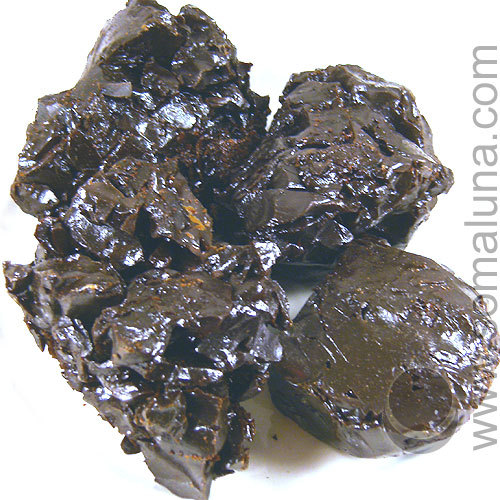
Tolu Balsam. Source: somaluna.com

Tolu Balsam. Source: somaluna.com

On the other hand, Tolu Balsam is my second favorite resin (after Peru Balsam), and it adds a rich, opulent, treacly layer to the base. It is faintly spiced with what feels like cinnamon, but it is also infused with a growing sense of vanilla. Something about the overall combination of the citrus-flecked oakmoss on top, with the smoky, leathered, animalic, resinous and vanillic accords at the bottom, keeps bringing vintage Shalimar to mind, as well as Shalimar’s cologne counterpart, Habit Rouge, and Shalimar’s descendant, Parfums de Nicolai‘s Sacrebleu Intense. Shalimar has Peru Balsam (a brother to the Tolu kind in Chypre Palatin), along with citruses, vanilla, civet, rose, jasmine, orris, and leathered, smoky touches. Those notes are either the same as, or one tiny degree apart from, the notes in Chypre Palatin. It’s the same story with Habit Rouge, though I think that has Chypre Palatin’s styrax instead of either Tolu or Peru Balsam. In contrast, Sacrebleu Intense is more overtly floral but also shares fruits, vanilla, cinnamon, smoke, patchouli and the same tolu balsam base. 

There are obvious differences, however, primarily the heady and hefty amounts of greenness in Chypre Palatin. For the first few hours, that is the dominant colour of the scent, mostly from the oakmoss but also from small strains of the galbanum and patchouli. The oakmoss is thoroughly lemony and slightly fruity, though the latter is never strongly sweet. The herbal and lavender accord fades away extremely quickly on my skin, thereby ensuring that Chypre Palatin never ventures into cologne or barbershop territory.

Chandelier reflections

Source: pbs.org

It’s very hard to deconstruct Chypre Palatin because it is a prismatic scent. By that, I mean that the perfume throw off different notes like light hitting crystals on a chandelier, with each wearing revealing different facets at different times. Part of it, again, is how beautifully Bertrand Duchaufour has blended the fragrance, as well as the obviously expensive, high-quality of the ingredients. Chypre Palatin doesn’t change dramatically in its core essence for the next few hours, but different notes feel highlighted at different times. Sometimes, it is the vanilla; at other times, the skank, the leather, citruses or resins take turns. At all times for the first 4 hours, those notes radiate out from the green-velvet oakmoss core. The weakest elements on my skin are the hyacinth, lavender, orange, iris and jasmine. In fact, the overall floral accord is the hardest to tease out into individual notes. The jasmine might be the most noticeable one, but, as a whole, you merely have the sense of a truly lush, velvety, oakmoss-infused “floral bouquet.”

The more obvious change to Chypre Palatin over time is not the development of a particular note, but the perfume’s sillage and weight. At first, it wafted out about 3 inches from the skin. The overall bouquet feels much thicker and heavier than it actually is, since the perfume itself is quite airy in weight. Chypre Palatin is so potent up close, that it feels opaque, concentrated and ornate. That is deceptive and fools you into not realising how the projection is slowly dropping, but it’s hard to miss after 45 minutes. Chypre Palatin turns thinner, lighter, and less rich in weight. It also becomes very soft and discreet in projection, wafting an inch above the skin by the end of the first hour.

90 minutes in, Chypre Palatin is a blur of vanilla, citruses and oakmoss, trailed by incense, dark resins, and a subtle, muted touch of very abstract florals. Unfortunately, you have to sniff hard to detect all the layers and details because, from afar, Chypre Palatin seems primarily like a vanilla-oakmoss scent with some citruses. The vanilla is lovely, though. Smooth, deep, air-whipped, and with only a dash of sweetness. It’s too gauzy to feel like custard, but there is a wonderful eggy richness to it.

Still, everything else seems to have collapsed on each other like a house of cards blowing over. It’s partially the fault of how well-blended and seamless the fragrance is; all the secondary notes have melted into each other. Only the prism’s core — that triptych of oakmoss, vanilla, and vaguely citrusy fruits — really stands out easily. I just wish it hadn’t happened so soon, especially as Chypre Palatin feels as though it’s about to turn into a skin scent any moment now. It doesn’t, but it’s a frustrating feeling that continuously plagues me. In reality, Chypre Palatin tenaciously hovers just above the skin for several more hours, and doesn’t turn into actual skin scent until the 5.5 hour mark. I’m constantly taken aback by how rich it is up close. The weak sillage is very misleading.

The more immediate change is that the scent turns more and more vanillic. By the start of the 3rd hour, when I smell Chypre Palatin from afar, I primarily get a blur of sweet, rich vanilla that sits atop a layer of vaguely spicy, smoky, dark resin. The fruited-oakmoss duo occasionally joins the vanilla, but, more and more, it lurks in the background.

Source: Wallpaperscraft.com

Source: Wallpaperscraft.com

With every passing hour, the resins move closer and closer to the surface. By the start of the 5th hour, Chypre Palatin is halfway transformed into an amber scent dominated by toffee’d, caramel labdanum. There are strong veins of smoke, Tolu balsam, vanilla, and lightly spiced, brown-red, woody patchouli, all blended within the amber’s golden-brown folds. But every time I think the oakmoss-citrus accord has finally vanished, it somehow pops back up. On two occasions, I briefly thought that Chypre Palatin had reverted back to being a vanilla-oakmoss fragrance, only for the amber to push the duo back and take the lead again. The overall effect is a beautiful, concentrated richness that belies Chypre Palatin’s sheerness.

New elements arrive to weave their way through the amber. There is a really subtle, muted hint of booziness that lurks about Chypre Palatin’s edges, no doubt thanks to the patchouli in combination with the labdanum. There is also a lovely cinnamon that is sprinkled over the vanilla. Much of this is due to the Tolu balsam. According to Fragrantica and other sites, Tolu balsam has a deeply velvety richness with a vanilla aroma that is much darker than that of benzoins. To my nose, however, it is always a very spiced, slightly smoky, rather treacly, dark note with a subtle leathered nuance; it doesn’t feel like a truly vanillic element. To give you an idea of what I’m talking about, here are a some of the perfumes listed by Fragrantica as scents that feature Tolu balsam (or its close sibling, Peru balsam, in some cases): Bal à Versailles, Opium Ormonde Jayne’s Tolu, Estee Lauder‘s Youth Dew and Cinnabar, MPG’s Ambre Precieux, Mona di Orio‘s Ambre, Guerlain‘s Chamade, Rance‘s Laeticia, Memo‘s Italian Leather, Reminiscence‘s Patchouli Elixir, and many others.

Source: footage.shutterstock.com

Source: footage.shutterstock.com

If I’m spending more time talking about all these ambered or dark elements than the florals that technically make up a “chypre” fragrance, it’s simply because Chypre Palatin isn’t really a floral scent on my skin. It was muted and largely abstract at the start, and it soon becomes the last horse in the race. By the start of the 3rd hour, I’m not sure it’s even there any more. It certainly isn’t by the time Chypre Palatin enters into its heart phase which is dominated by the aforementioned tolu balsam, then labdanum, vanilla and refined patchouli.

And what patchouli it is too! Beautifully red-brown, slightly spicy, and wafting tendrils of incense-like smokiness. Like the Tolu balsam, it has a subtle nuance of something leathered, but there is nothing earthy, green, minty or “head-shop”-like about this note. Actually, the overall combination strongly — strongly — conjures up Chanel’s glorious Coromandel for me. It has to be the way the patchouli is simultaneously vanillic and smoky. The only difference here is that Chypre Palatin feels significantly darker. There is white chocolate or visuals of chai lattes. Also, there remains the faintest hint of skankiness that occasionally waves its musky arm at you from the edges.
Source:  dianafabrics.com

Source: dianafabrics.com

For hour after beautiful hour, Chypre Palatin radiates a plethora of brown, golden, umbered, and ambered hues. The notes are perfectly balanced between dryness, sweetness, and darkness. Somehow, to my utter confusion, Chypre Palatin almost seems to have increased in projection, or perhaps the resinous balsams are simply so rich that they’re throwing out little tendrils in the air. I could have sworn it had turned into a skin scent but, when the wind blew as I took the Hairy German out for a walk around the 10th hour, I could feel the flickers of Chypre Palatin’s incense-patchouli-balsam notes lightly swirling around me. Chypre Palatin remains that way until its very end when it fades away in a blur of abstract, dry sweetness. All in all, 3 medium-ish dabs gave me 14.75 hours in duration. I’m astonished, especially given my wonky skin. It really is a testament to the richness of the notes in question. No expense spared, indeed!

In case it wasn’t obvious by now, I’m rather in love with Chypre Palatin. If the perfume were the imperial official that the “Palatin” part of its name references, I would ask him to… well, never mind. Just trust me when I say that… No, on second thought, really, never mind. All I’ll say is that I wasn’t alone in having an intensely strong reaction to the fragrance. I made The Perfume Snob #1 try it, primarily because my sophisticated, haughty mother has loved and wore every opulent, over-the-top, oriental, chypre and/or skanky classic ever made, from vintage Bal à Versailles to Joy, Opium, Femme, Jolie Madame, and many others.

However, she’s extremely hard to please with modern scents, unless it’s an Amouage. Otherwise, whenever I’ve approached her lately at the weekend dinners, wafting some new scent that I’ve been testing, she’s given me a definite “don’t even think about it” look. (One scent that I shan’t name resulted in an ultimatum that I leave the house if I didn’t scrub it off immediately.) Many of my favorites from Fille en Aiguilles to Fourreau Noir, De Profundis, and Ambra Aurea trigger a dismissive Gallic shrug, while the glorious Mitzah resulted in a violent shudder. Perfume Snob #1 is often impossible to please, but she took one sniff of Chypre Palatin, clutched her wrist, and went glassy-eyed. She then spent the rest of the time until I left sniffing her wrist compulsively and, by her reserved standards, raving about it. I’m still blinking thinking about the intensity of her reaction.

Source: 1ms.net

Source: 1ms.net

For The Scented Hound, Chypre Palatin also “struck a nerve upon first sniff[.]” My sample was a gift from him, and he clearly has phenomenal taste. However, his experience was very different from mine, and shows another side to this very prismatic scent. In his review, he writes, in part:

Chypre Palatin’s first offered up a rush of citrus and cedar and then quickly a warm amberish lavender and what seemed to be eucalyptus (but I’m not seeing eucalyptus in the notes?? hmmm).  The fragrance goes on very warm without being heavy and it’s very comforting.  In a little while the scent then moves to an even warmer almost floral setting.  It’s very peaceful and serene.  The kind of scent where you want to close your eyes and breath in its aromatherapeutic qualities.

As Chypre Palatin continues it’s drydown it moves into a very familiar what I would call barbershop phase.  It’s traditional and old world and masculine at this point.  But stop, don’t let me confuse you by thinking this fragrance is old-fashioned and masculine.  It’s not.  The opening and the dry down make it much more universal and modern.  In the end, Chypre Palatin quiets down to a nice oak moss and vanilla scent with just a touch of powder.  However, depending on what you’re doing, those middle warm aromatic notes will still come to surface as the day wears on.

Longevity is average as is the sillage.  Chypre Palatin is a lovely surprise that feels old and new world at the same time and I think would be perfect for men and women alike.

Alexandre III bridge, Paris. Source: wallpaperscraft.com

Alexandre III bridge, Paris. Source: wallpaperscraft.com

For Suzanne of Eiderdown Press, Chypre Palatin wasn’t masculine but more akin to Amouage’s Jubilation 25 (Women), and a scent that swept her off her feet by bottling the majestic grandeur of Paris. She writes, in part:

This is one of the richest smelling chypres I’ve ever worn; to the degree that I’m not sure I would have identified it either as a chypre or as something created by perfumer Bertrand Duchaufour if I had smelled it blind without knowing its name or maker. […] Chypre Palatin smells stately, grand and what I think of as classically French in terms of its construction … and maybe because it is a Duchaufour creation, it doesn’t go overboard in this direction. It’s got just enough heft and richness to suggest opulence without crossing over into ostentation.

Before I describe it further, let me say that while it’s marketed as a masculine, I wouldn’t characterize it that way at all (for maybe all of thirty seconds it is masculine-smelling on my skin) and would go so far as to suggest that Chypre Palatin would appeal to women who love scents like Amouage Jubilation 25, which it reminds me of, except that Chypre Palatin is more refined and less challenging, not having the cumin and animalic emphasis that Jubilation 25 possesses, while still smelling every bit as expensive.

The rest of the review is too long for proper etiquette to let me quote it in full, but, for Suzanne, Chypre Palatin basically has a gentle touch of fruitiness in its floral heart, “hypnotic custard-creaminess,” “golden richness, seamless blending” and cashmere-like oakmoss. You can read her review for the full details.

Remember how I described Chypre Palatin as prismatic, throwing off different notes each time you wear it? Well, for Angela at Now Smell This, a full week of Chypre Palatin seemed to reveal several different olfactory profiles. Her review describes each day; how Chypre Palatin seemed like Seville à L’Aube‘s big brother on one occasion, to a fragrance that seemed to reference fougères with its “floral-lavender aspects” on another. Sometimes it conjured up an entirely different impression with its “spicy-mossy amber” and “complex tapestry.” She was fascinated by “how Chypre Palatin could be so intricate, but yet so robust.” As she writes:

The result is a fragrance with the structure and delicacy of an 18th century French table. I’ve been wearing Chypre Palatin all week, and every day the fragrance reveals something new.  […][¶]

Ultimately, Chypre Palatin seduced me with its beauty and craftsmanship, but like a Versailles-era oil painting, it isn’t quite “me.” If my budget didn’t limit me, I’d order a bottle in a second to sniff when I wanted reminding of the skill and imagination of a gifted perfumer. This is the sort of fragrance that rewards the nose you’ve developed through all the years you’ve sniffed through piles of samples. It also rewards a mind open to beauty that melds tradition and modern sensibility.

Blenheim Palace. Source: Liveinternet.ru

Blenheim Palace. Source: Liveinternet.ru

On Fragrantica, reviews are split, primarily because a number of women think the scent is too masculine for them. One person put it best: it’s really going to come down to skin chemistry. I would also add personal tastes and experience with the classics into that equation as well. If you are the sort who finds Shalimar to be too heavy or “old lady-ish,” don’t bother with Chypre Palatin. If you dislike any bits of lavender with citruses in the opening of your fragrance, or your skin amplifies herbal notes, then you may find Chypre Palatin to skew too masculine. If you’re not a fan of even a tiny bit of naughty skank in your scents, or fragrances with a leathered, dark undertone, this won’t be for you, either. But if you love the legendary classics or deeply opulent scents like the modern Amouages, then I think Chypre Palatin is a must sniff for you.

On Basenotes, there are several discussion threads raving about the scent, but the official entry page only has 6 reviews, 5 of which are positive. The lone negative rating seems to be from a woman who finds Chypre Palatin to be too expensive, too masculine, and a bit old-fashioned, though classically elegant. For almost everyone else, Chypre Palatin is a “luxurious chypre,” or “Proudly classicist and grand in scale” like Habit Rouge or the Amouage Jubilation.

One repeated theme in the discussion pertains to Chypre Palatin being “old-fashioned” in feel. Most posters approve of that fact, but one positive review actually disagrees on the retro issue, finding that the perfume isn’t vintage enough in feel. “DrSeid” experienced a rather powdery scent for the majority of Chypre Palatin’s lifetime, not the super-rich oakmoss fest that I had, which probably explains part of his review:

Chypre Palatin is billed as a “throwback” vintage chypre, but I have to respectfully disagree. I find it quite modern, and that is my biggest problem with it. The powdery nature of the scent just does not remind me of the best chypres of old, instead Duchaufour plows new ground in having Chypre Palatin remain classy and elegant in its mild powdery nature throughout but it just does not mesh with my tastes. I personally like my chypres heavier on the oakmoss and lower on the powder showing a bit less polish and a bit more “spunk.” While I won’t be buying a bottle, I can see why many folks who have tried this have really fallen in love with it as it is top quality. If you like powdery modern scents Chypre Palatin is absolutely worth a sniff and maybe even a purchase if you can afford its relatively lofty price tag. I give Chypre Palatin a solid “good” rating and 3 to 3.5 out of 5 stars.

The two different 60 ml bottles of Chypre Palatin. Source: Luckyscent.

The two different 60 ml bottles of Chypre Palatin. Source: Luckyscent.

As you may have noticed, the issue of price comes up a lot. Chypre Palatin does indeed have a “lofty price tag.” A 60 ml bottle called the “tasselled version” costs $250. And that’s the “cheap” version! Apparently, Parfums MDCI really takes its whole philosophy about art very, very seriously. Their regular bottles are famous for having a Roman or Renaissance-like bust statue on the top. The price: $375 for 60 ml. (There is the additional option to have your statue in exclusive Limoges china if you should so wish for the princely sum of €1200!) 

Frankly, the “discount” version sends me rather into a tizzy as it is, given the measly 60 ml/ 2 oz size and, more importantly, Chypre Palatin’s weak sillage on my wonky skin. Others had way more luck in that last regard, but I’m still frustrated by the situation. Nonetheless, if I had endless spare cash lying around, I would have ordered not only a bottle of the scent already, but a back-up as well. Low sillage, be damned! Instead, it’s going straight to the top of my Wish List.  [UPDATE: one of my readers, The Smelly Vagabond, informed me in the comments that the bottle is actually closer to 75 ml but MDCI’s owner decided to list it as 60 ml due to bottle variations. They’re all hand-blown, so he wanted to err on the side of caution. Also, there is a special deal exclusive to the MDCI website where the cost of a sample set will be credited to the cost of buying a full bottle. In short, things are looking much better than I had thought, in terms of price-per-ounce value, decants, and accessability. See the DETAILS section at the end for more.]
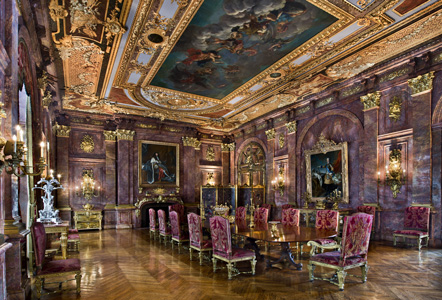
The Marble House, Vanderbilt "cottage," Newport. Photo: Gavin Ashworth. Source: http://blog.newportmansions.org

The Marble House, a Vanderbilt “cottage,” Newport, RI. Photo: Gavin Ashworth. Source: http://blog.newportmansions.org

Bottom line, I think Chypre Palatin is grandeur and sensuality on a scale that would have made Leonardo, half the Medicis, and all the bloody Borgias wet their pantalones. It’s been a months and months since I had such an immediate, intense reaction to a scent, such awed amazement, and a lemming turned into Moby Dick. (The last time was for Hard Leather, lest you’re curious.) I’m all in a tizzy, discombobulated, and hot under the collar. In fact, I better end this now before I spend a few thousand more words raving about Chypre Palatin and its baroque glory.

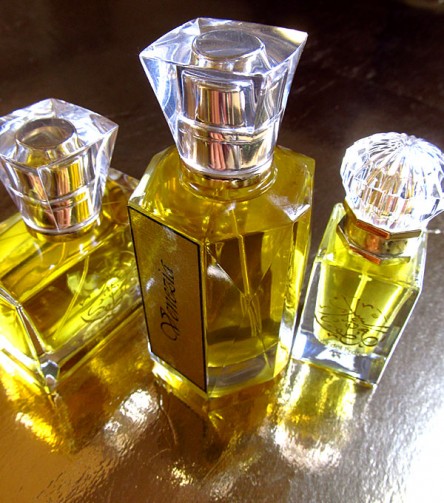
DETAILS:
Cost & Availability: Chypre Palatin is an eau de parfum that comes in two different sorts of a bottles. There is a regular 60 ml bottle called a “tasselled” bottle which costs $250 or €215, and a fancier bottle with a bust statue on it in the same 60 ml size for $375. {UPDATE: One reader let me know that the bottles are much bigger than 60 ml and closer to 75 ml, or 2.5 oz. Various readers as a whole have also kindly shared that Parfums MDCI has a deal exclusive to their website involving their discovery sets. Apparently, if you order either of 2 discovery set (set of 5 or set of 8), that amount is credited towards the purchase of a full bottle. The sets are, respectively, €90 or €140 with shipping. At today’s rate of exchange, that comes to roughly $123 for the small set, or $191 for the larger one. One reader informed me that you can get all of the bottles in the same fragrance, i.e., all Chypre Palatin. To buy the sets or a bottle, you apparently send the company an email with the catalog # of the item you wish to purchase. The catalog numbers are listed on the page in the link. Afterwards, you pay MDCI directly via Paypal.} In the U.S.: Luckyscent has both bottles of Chypre Palatin, along with a Discovery Set of 8 different Parfums MDCI fragrances in a 12 ml size for $210. Regular sized samples are also available for purchase. Osswald also has both versions, but sells the basic bottle for $263, not $250. Outside the U.S.: Parfums MCDI has a website which shows pricing on its bottles, but no e-store for direct purchase. (You have to follow the procedures outlined above.) In Canada, the Perfume Shoppe carries the full line and sells the regular Chypre Palatin for $230, as well as a travel size of your choice of Parfums MDCI fragrance for $50. I’m not sure those are Canadian prices, even if that seems to be a Canadian link, but then I find the company quite confusing. It is US-based, so Canadian readers may want to email them to be sure. In the UK, Parfums MDCI is available at Roja Dove’s Haute Parfumerie at Harrod’s. In Paris, Chypre Palatin is available from Jovoy for €215 in the regular bottle. The perfume is also carried at Sens Unique, but they don’t have an e-store. In Italy, Sacro Cuore Parfumi sells the bust version for €325, but doesn’t have the cheaper bottle. Germany’s First in Fragrance sells the regular bottle for €215. The Netherland’s Lianne Tio sells Chypre Palatin for €229. You can also find the perfume at Hungary’s Neroli Parfum and Russia’s Lenoma. For all other European countries, you can use the MDCI’s Retailers List to find a vendor near you. However, there are no sellers listed in Australia, Asia, or the Middle East. Samples: Surrender to Chance sells Chypre Palatin starting at $5.99 for a 1/2 ml vial.

La Via Del Profumo Venezia Giardini Segreti

Source: trulyveniceapartments.com

Source: trulyveniceapartments.com

Venice, the city of canals, Casanova, and romance is also a city with a secret. Gardens and green courtyards abound in secret nooks and crannies unknown to the anyone but the city’s residents. Did you know? I certainly didn’t, and I’ve been to Venice.

Venezia Giardini Segreti via the Profumo website.

Venezia Giardini Segreti via the Profumo website.

La Via del Profumo wants to open up this private world to you with Venezia Giardini Segreti, or “Venice’s Secret Gardens.” Venezia Giardini Segreti (which I’ll just call “Giardini Segreti” for the sake of brevity) is an all-natural eau de parfum from Dominique Dubrana (now known as “Abdes Salaam Attar“), the second in his new “Italian Series,” and a 2013 release.

Abdes Salaam Attar explains the inspiration for the fragrance:

Venezia, Giardini segreti” is inspired by the “corti” – the courts of Venice that contain its secret gardens, hidden within the maze of the city – and particularly to the imaginary “Corte Sconta detta Arcana” of the “Favola di Venezia” di Corto Maltese, first discovered in the recesses of Hugo Pratt’s mind, and illustrated by his hand. [¶] “When the Venetians grow tired of the established authorities,” he writes, “they walk to these 3 secret places and, opening the doors that are in the bottom of these courts, they go away forever into beautiful places and other stories.”

Source: La Via del Profumo.

Source: La Via del Profumo.

The essences that recount these hidden courts, where the feel and smell of the sea are never far away, are of Jasmine and Rose, of Italian aromatic herbs and of Myrrh, the sweet resin which evokes the city’s ancient connection with the East.

Ambergris is the ingredient of this perfume that celebrates Venice’s foundation on seafaring; it’s the key that opens the door to other worlds and other stories. It is the magical ingredient that renders the fragrance three-dimensional, the noble pheromone with a scent of leather, of sea and of mother’s milk. This smell, so rare and precious that it is no longer used in modern perfumes, confers to the “Venezia Giardini Segreti” a unique and inimitable magic.

Visit with me the secret gardens of Venice. Photo gallery.

Based on that description, the official notes in Venezia Giardini Segreti include:

jasmine, rose, herbs, myrrh, and ambergris.

Source: elstika.com

Source: elstika.com

Giardini Segreti opens on my skin with a powerful but delicate burst of green, dewy jasmine, infused with mint and dark, smoky indoles. The flower’s aroma feels as crisp and clear as a bell rung in the Alpine mountains, but there is a black, smoldering heart which is magnificent. The jasmine is not as heavily sweetened, fleshy, ripe or heavy in feel as the one in Abdes Salaam’s Tawaf; this is much fresher, greener and watery, at least at first. Yet, it inexplicably feels stronger, and its heart has a certain dark rubberiness. The wintergreen note which is laced throughout the jasmine is powerful at first, but it softens within minutes.

Source: krishnaaromatics.com

Source: krishnaaromatics.com

Giardini Segreti starts to slowly turn deeper and richer, losing some of its chilled dewiness and crispness. There is the tiniest flicker of something like light olive oil poking its head up in the distance. It’s hard to explain, but there is an oily richness which gradually starts to seep into the jasmine. It’s not greasy and it certainly doesn’t smell of olives, but it’s more than mere oil. It’s also lightly herbal in nature, though I find it impossible to distinguish the precise aroma. Basil? Tarragon? Myrrh can have an anise-like undertone on rare occasion, as it does in Serge LutensLa Myrrhe, but Giardini Segreti’s accord doesn’t smell like anise. Whatever the elusive herb, it’s an intangible, muted presence, but a pretty one.

10 minutes in, Giardini Segreti is a jasmine scent whose primary characteristics veer between minty green and oiled smoothness. The whole thing is flecked with black from the smoky indoles, while a tiny animalic tinge of leather stirs for the first time in the depths below. The fragrance continues to grow warmed and more oiled, but I smell no roses at all. In fact, I didn’t on any of the occasions when I tested Giardini Segreti.

Pure, fresh ambergris found on the beach.

Pure, fresh ambergris found on the beach.

I also don’t smell ambergris in the way that I’m used to or have previously encountered. There is none of the note’s salty, marshy or wet characteristics, though there is an increasing touch of muskiness circling around the animalic accord in the base. All there is instead is a richness and warmth. I would bet it’s the ambergris which is responsible for the oily feel which I talked about earlier. With every passing quarter-hour, it feels as though a soft wave of smooth, lightly scented, vaguely herbal oil is flooding over the jasmine. It turns the petals unctuous and slightly slick, though I have to repeat that the jasmine here is not voluptuously rich, narcotic, or heavy. The greenness remains at this point, thereby ensuring that the floral aroma is still somewhat fresh and bright. Nevertheless, the ambergris helps to muffle and mute some of that minty tonality.

At the end of the first hour, Giardini Segreti has turned into a baby-soft, smooth jasmine oil, with emphasis on the oil part of that sentence. The sillage has changed accordingly. From its originally forceful, strong opening, Giardini Segreti now lies less than an inch above the skin. The velvety jasmine petals are lightly infused with ambergris, herbs, and a lingering trace of smokiness. The more interesting thing, however, is the growing presence of an animalic, almost civet-like edge in the base. It’s the tiniest bit feral, but also very subtle.

Sketch: Walter Logeman at ThousandSketches.com

Sketch: Walter Logeman at ThousandSketches.com

Slowly, Giardini Segreti starts to shift into something darker, less green. At the 90 minute mark, the perfume is a softly smoky gardenia with only a trace of a green undertone but increasingly animalic, leather facets. The petals feel soft, but the sense of an oil has vanished. There is instead the first appearance of something peppered and woody in feel in the background. Giardini Segreti lies right on the skin like a discreet, intimate silken sheath. For my personal tastes, the sillage is too soft too soon, but, then, I prefer my florals to be sonic booms worthy of one of Wagner’s Valkyries. Giardini Segreti feels better suited to one of the dainty damsels who Casanova turned into a quiet sensualist.

Giardini Segreti continues to change by slow degrees. 2.5 hours in, it is a skin scent of half-sweet, half-dry jasmine with an undertone of animalic leather and a dash of peppered woodiness. An hour later, a subtle honeyed creaminess appears on the scene, leading me to wonder if Giardini Segreti has opoponax or sweet myrrh in addition to the ambergris listed in the notes. After 4.25 hours, Giardini Segreti is a blur of jasmine and lightly honeyed beeswax, and then just eventually just sweetened creaminess. All in all, it lasted just short of 6.5 hours on my skin.

On Fragrantica, there is only one review for Giardini Segreti. “Spookie” writes:

my first impression is that there is something very familiar about this perfume. Not in the sense that it reminds me of another scent but that it’s like turning a corner and experiencing deja vu. But this time I’ve turned a corner and I’m in a sunlit courtyard, the light dappled by a green canopy, small flowers peeking out of cracks in the cobbles and a brambly rose climbing a wall. It’s like this place has been waiting for me, patiently, to find it again. This is the scent of that place: quiet, private, and otherworldly. That was my first impression. [¶]

Over time this scent becomes more human, even sensual. There’s salty skin under the florals and an almost spicy green lifting it up. Projection is moderate but I have only dabbed from a small sample- not that there’s anything wrong with having someone lean in to smell this. I compared this to Tawaf, because I was curious about how the jasmine might appear in both, and unlike Tawaf’s almost sticky density, VGS’s jasmine is higher and brighter without losing its intensity. I like this perfume a lot, but then I’m frequently impressed by La Via del Profumo.

Source: For The Love of Venice Facebook page.

Source: For The Love of Venice Facebook page.

Denyse Beaulieu of Grain de Musc loved Giardini Segreti, put it on her Top 10 List of Summer Scents (in 2013) that she had fallen for and described it as: “a haunting blend of jasmine, rose, herbs and ambergris that is just a joy to behold.” In her full review, she talks of how it evokes an alternate universe, writing in part:

AbdesSalaam Attar hails from that alternate universe. A Frenchman by birth and a traveler, he has undertaken the journey of fragrance backward, eastward, toward the origin and the Orient, via Italy. His Venezia Giardini Segreti does not attempt the dazzling technical feats of contemporary, French-trained perfumers but – I’ve written this before about his work – it nevertheless springs from an age-old culture of scent. […]

Here, rose and jasmine are both seductive and mystical. The herbs that tinge them with green and aromatic notes hint at an even richer bouquet – there is a tuberose effect – the petals vivid against sap-filled leaves and sprigs.[…]  the secret ingredient of his Venezia Giardini Segreti is ambergris, which he describes as “a scent of leather, of sea and of mother’s milk.” I’ve only smelled ambergris tincture twice, and couldn’t truly pretend to recognize it: perhaps the “sea” and “mother’s milk” are what give Venezia Giardini Segreti the eerie, “I’ve been there before” sensation I experienced when I applied it. Like Venice, perfume is nothing if not a labyrinth.

On Perfume Smellin’ Things, Giardini Segreti conjured up “garden of dreams and reverie” inhabited by “poet or noblewoman dressed in Renaissance garb.” Donna’s review talks about Giardini Segreti’s “magical effect,” and says:

The luscious jasmine Sambac in this fragrance is particularly sublime, and since my skin tends to amplify white florals, it is quite dominant at first, but that’s fine with me, since I love jasmine, and the languid dreaminess of the composition speaks to my own personality as a lover of gardens, history, beautiful vintage objects, and good stories. The rose is the handmaiden to the jasmine here, adding a ripe fullness and plush comfort to the centerpiece of jasmine. I don’t know what pure ambergris smells like, but its inclusion in this perfume seems to give in an overall patina of nostalgia and wistfulness, like the ineffable pull of memory experienced when looking at faded photographs of places you have never been, but to which you feel a deep connection, and you wish you could somehow become a part of that long ago scene, where all the rough edges have been erased by time, leaving only the watercolor beauty of happy memories and idyllic living. Wearing Giardini Segreti is like stepping into that fantasy world, and I never want to leave it.

Casanova's Garden. Source: For The Love of Venice Facebook page.

Casanova’s Garden. Source: For The Love of Venice Facebook page.

My experience was obviously very different from either of those accounts. I didn’t have any of the lush richness, roses, or saltiness that they encountered. Then again, I experienced animalic leather and smokiness which I far prefer to roses. Whatever the specific notes, I have to confess that I didn’t find Venezia Giardini Segreti to evoke either romantic fantasy worlds or a sense of “I’ve been there before” that both the Fragrantica commentator and Denyse Beaulieu mentioned. I liked Venezia Giardini Segreti, and agree that it has a very languid feel as a whole, but I far preferred the decadent, hedonistic excesses of the jasmine in Tawaf. Plus, as I’ve noted a few times in the past, I like my white flowers to sing operatically and at Wagnerian levels. Others, however, prefer their perfume to be more discreet and approachable, so it’s all a matter of personal tastes.

At the end of the day, though, there is no doubt that Venezia Giardini Segreti is lovely. Its gorgeous, fresh, bright opening is a head-turner. At the same time, the unusual leathered touch and the animalic whiff of the later stages make the perfume stand out from many jasmine scents on the market. If you’re looking for a languid jasmine with a twist and with a touch of darkness, then you should definitely give Giardini Segreti a sniff.

Disclosure: My sample was courtesy of Abdes Salaam Attar. That did not impact this review. I do not do paid reviews, my views are my own, and my first obligation is honesty to my readers.

DETAILS:
Cost & Availability: Venezia Giardini Segreti is an eau de parfum that comes in a variety of sizes. It is available exclusively from the Profumo.it website, which ships its scents world-wide. All the following prices for Giardini Segreti are in Euros without VAT: €57,52 for 15.5 ml, €114,06 for 32 ml,  and €178,52 for 53 ml/1.79 oz. At today’s rate of exchange, the USD prices roughly comes to: $78 for the 15.5 ml, $155 for the 32 ml, and $243 for the 50 ml bottle. The site says: “Prices are without VAT and are valid for USA and all non EEC countries[;] for shipments in the EEC 22% VAT will be ADDED to the amount in the shopping cart.” There is also a Mignon Discovery Coffret which is available for any 5 fragrances, each in a glass 5.5 ml bottle. The price depends on which perfumes you pick, as the choice is up to you. The 5.5 ml bottle of Venezia Giardini Segreti is €20,83. On a side note, I received my samples from Mr. Dubrana incredibly quickly, less than 4 days after he sent it. Also, I have the impression that, with all purchases, Profumo provides free 2 ml samples, especially of any new fragrances that he is developing, since AbdesSalaam is very interested in feedback. In short, if you’re ordering fragrance, you may want to ask for a tiny sample of something that strikes your eye. Samples: Surrender to Chance sells Venezia Giardini Segreti starting at $5.99 for a 1/2 ml vial.

La Via Del Profumo Don Corleone

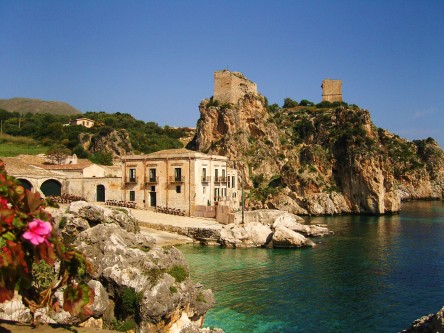
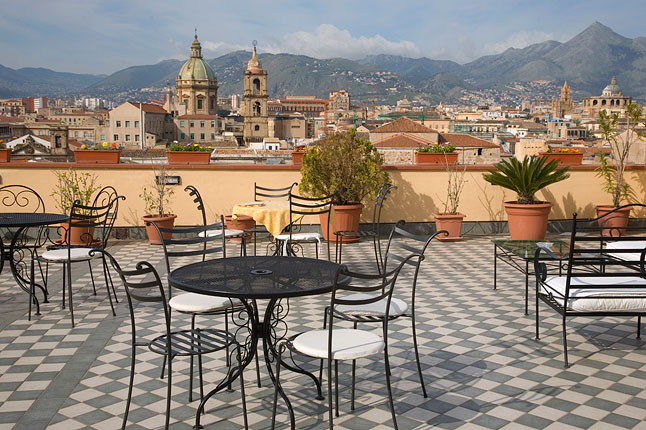
Palermo, Sicily. Source: Von Ikarus tours. fernweh.ikarus.com

Palermo, Sicily. Source: Von Ikarus tours. fernweh.ikarus.com

The sun-bleached, craggy island of Sicily holds a charm and beauty that is far more rugged than many of its Mediterranean compatriots, but it’s lovely. The capital, Palermo, is nestled in a bay at the foot of Mount Pellegrino, and retains faint traces of its old grandeur at the height of the Arabic domination of the 9th and 11th centuries. Cafés line the Via Principe di Belmonte, filled with Italians enjoying their particularly relaxed form of Mediterranean joie de vivre. On a hill overlooking the city, there is the majesty and grandeur of the Norman cathedral, the Duomo di Monreale, with its towering ceiling, opulent decor, and famous Byzantine-era mosaics.

Palermo. Source: skyscraperlife.com

Palermo. Source: skyscraperlife.com

It’s all very far away from Don Corleone, “capo di tutti capo,” or the Godfather of the famous films. Yet, what else does one think when one comes across a perfume called Palermo Don Corleone (hereinafter just “Don Corleone“)? For someone like myself, a film and television addict, the mental association was instantly and automatically to Godfather III, Michael Corleone’s trip to Palermo, and Don Tommasino’s Sicilian villa. (Not to mention the unfortunate issue of Sofia Coppola ruining a perfectly good film.) I absolutely love the Godfather films (minus that last one that we really should forget about), but I wasn’t sure what to expect from a fragrance actually called by that name — never mind one that involved tuberose and vanilla. Talk about a contradiction! But, honestly, for someone like myself who loves both the Godfather and tuberose, how could I possibly resist?

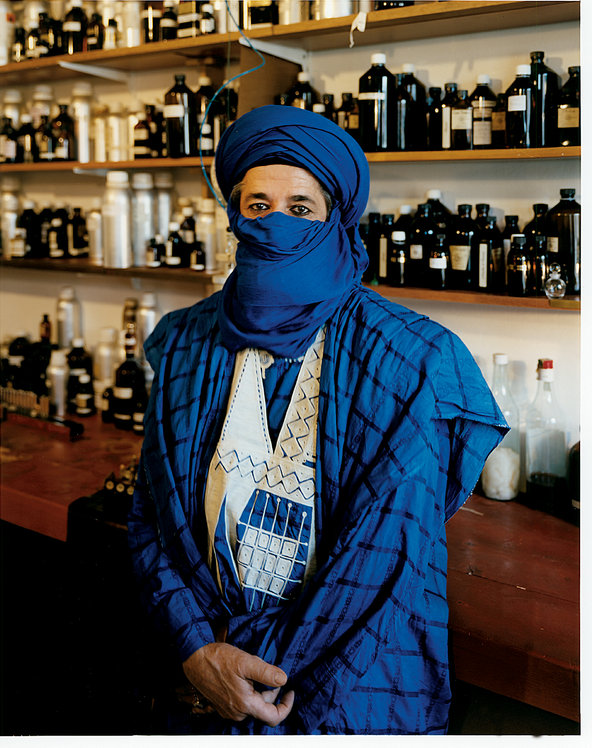
Dominque Dubrana via the NYT. Photo by Domingo Milella.

Dominique Dubrana via the NYT. Photo by Domingo Milella.

I should have known better than to expect a straight-forward tuberose floral scent from someone like Dominique Dubrana, a wizard with all-natural essences who never follows the conventional, generic path in anything. Now going by the name Abdes Salaam Attar, he is a Frenchman turned Sufi with an Italian perfume house called La Via del Profumo. I’ve covered 6 of his creations thus far, and they have all been unique, smelling like nothing else on the market. And Don Corleone is no exception. In fact, if you’re expecting anything resembling a simple white floral, you’d be quite mistaken.

Don Corleone. Source: Basenotes directory.
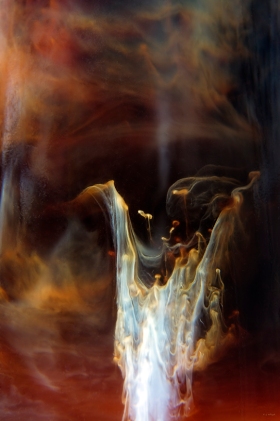
Don Corleone. Source: Basenotes directory.

Mr. Dubrana explains that the inspiration for Don Corleone stemmed from a surprising scent that he noticed was characteristic of many Sicilian men and women:

Palermo Don Corleone” was composed during a Sicilian summer holiday. The predilection that Sicilians have for the Vanilla note reveals a psychology very different from what we imagine about them.

I smelled so many Vanilla accords in the wake of Sicilians men and women  that I felt challenged to compose a Vanilla theme perfume, which I never attempted before. [¶] Their love for this aroma is of course in line with their passion for pastries, sweets and chocolates, but it also denotes a very strong sentimental attachment to the mother, the need to be comforted and of tenderness.

I imagined a fragrance that would represents the Sicilian people, a perfume in which everything is exaggerated, starting with an exageration of Vanilla. I wanted a fragrance that would be extralarge also in sensuality, but having in it the hidden dark dangerous side of Sicily. To obtain this result I played Vanilla in an accord with Tuberose and Tobacco.

The result is a strong masculine perfume that paradoxically many women will like and easily wear, deeply sensual but at the same time serious.

Dried tobacco leaves. Source: colourbox.com

Dried tobacco leaves. Source: colourbox.com

The succinct list of notes would appear to be:

Vanilla, tuberose, and tobacco.

I’ve noticed that Abdes Salaam Attar tends to skip over the fine-print details when providing the general description for his fragrances, and Don Corleone certainly smelled of far more than those three things on my skin. Going solely by aroma, what I detected was roughly more akin to this:

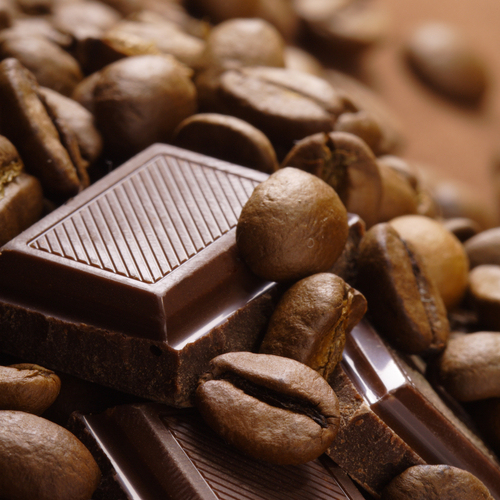
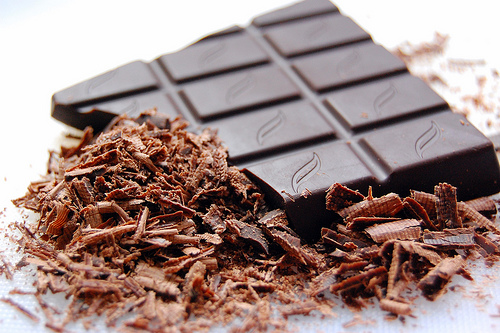
Haitian vetiver, cedar, Ouzo, tobacco, leather, coffee, vanilla, chocolate, styrax resin, and tuberose.

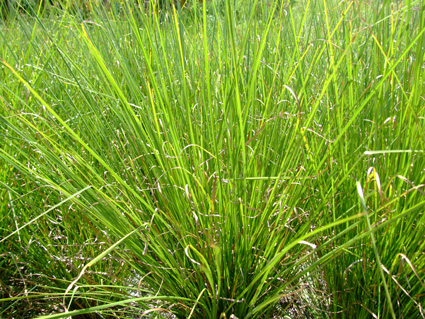
Haitiian vetiver grass. Source: astierdemarest.com

Haitiian vetiver grass. Source: astierdemarest.com

I know full well that most of those are merely the result of impressions, one’s nose, and skin chemistry. A good chunk can be explained by the various nuances of the Tobacco Absolute that Mr. Dubrana likes to use in some of his fragrances. However, I would bet one of my bottles of my holy grail, vintage Opium that there is vetiver, along with some other woody notes, in Don Corleone. Not only does Don Corleone have the exact same note that wafts about Milano Caffé (another fragrance where there is unlisted vetiver), but Mr. Dubrana recently sent me a small vial of the essential oil to show me how fresh, minty, and smoky it can be — and that is exactly what I smell in Don Corleone as well. My bewilderment led me to write to Abdes Salaam Attar, and he clarified that the complete olfactory list in Don Corleone is as follows:

Tuberose, Tobacco, Vanilla, Vetiver, Cypress, and Fire Wood.

[Fire wood is apparently something that Australian Bush Men use, and Mr. Dubrana has a bit about it on his blog. He says: “It has a fruity top note sweet and strong, kind of apricot and myrtle, which continues in the heart of the smell to leave a woody fruity, very discreet.]

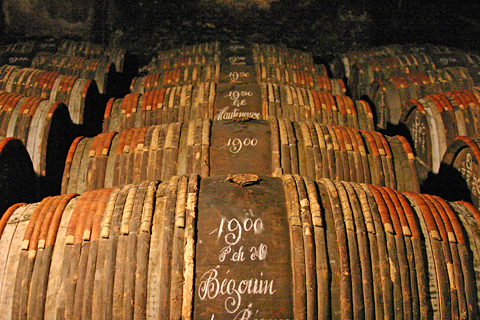
Hennessy's aged cognac barrels. Source: graperadio.com

Hennessy’s aged cognac barrels. Source: graperadio.com

Don Corleone opens on my skin with booze, smelling of rum, cognac, and brandy all in one, followed by rich vanilla custard, tobacco, and a hint of white flowers. The initial explosion of a cedar-soaked vat of vanilla and cognac retreats after less than a minute, but it is still exceedingly strong. The vanilla custard suddenly loses its richness, perhaps because it is quickly overshadowed by black, minty, rubbered and mentholated tonalities. It definitely stems from the tuberose, as it feels similar to the deconstructed flower in such scents as Tubereuse Criminelle by Serge Lutens. Yet, even that quickly vanishes.

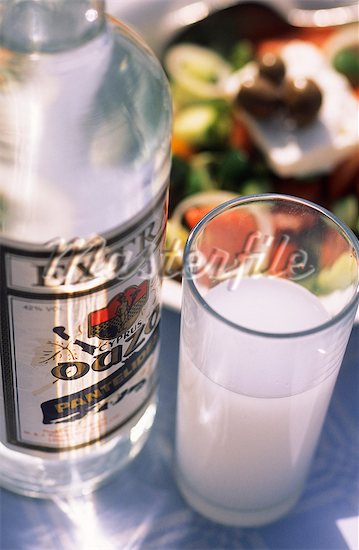
Greek Ouzo. Source: Photocuisine.

Greek Ouzo. Source: Photocuisine.

What takes its place is Ouzo (or Pastis), the milky anise-based Mediterranean liqueur, only this one is flavoured with a dash of almonds to go with it. Swirling all around is a minty note that I initially thought was from the tuberose, but I soon realise that it’s Haitian vetiver. I truly can’t smell tuberose in its conventional and traditional way. Not at all. Instead, what I detect is coffee.

For whatever crazy reason, each of the three times that I’ve worn Don Corleone, my initial impression (after that momentary boozy rum/brandy blast) is of ouzo and coffee, followed by a cedar-flecked, dry vanilla, and a hint of mintiness. I realise it’s just my skin and mind playing tricks on me, but I was thrilled. I love Ouzo, never mind ouzo coffee, so to toss vanilla with a dash of almonds in there as well? I couldn’t stop sniffing my wrists. Things become even prettier when, at the perfume’s edges, the tobacco pops up. It is dry, unsweetened, and verges on the Virginia leaf and Cuban cigar accord that I loved so much in La Via del Profumo’s Tabac. Here, however, it’s woodier, more influenced by the vanilla and cedar. (I know the perfume has cypress, but my nose keeps smelling the drier, smokier cedar wood, and not the green, coniferous cypress.)

10 minutes in, Don Corleone starts to shift. I could swear that I smelled a note of chocolate wafting about, and it’s strong enough to make me double-check my sample to ensure that I wasn’t somehow accidentally sent Milano Caffé instead. No, it definitely says “Don Corleone,” and this is not a patchouli scent. I’m telling you, though, I smelled dark, bitter chocolate, no matter how subtle it was at first. Much more distinct is the definite note of vetiver which arrives on the scene. It is bright and redolent of peppermint, though that changes down the road.

As the vetiver slowly pushes its way onto center stage, the vanilla retreats. Originally as strong as Bourbon vanilla and as rich as a custard, it is now merely dry, gauzy, and light. The vanilla truly isn’t the star player on my skin, no matter what the description may have stated. Instead, it weaves its way through the overall fragrance, subtly infusing each and every individual note with its touch. Don Corleone’s dominant bouquet at this stage is cedar, vetiver and coffee, followed by anisic ouzo, peppermint, and a hint of tobacco, all softly kissed by the dry vanilla.

Palermo, Sicily. Photo: CNN via istock photos.

Cafe in Palermo, Sicily. Photo: CNN via istock photos.

The image which comes to mind is an elderly Sicilian man and his young granddaughter sitting at a café in Palermo. His woody, vetiver-vanilla cologne mixes with his Ouzo and cigar; her sweeter vanilla perfume intertwines with the bitter scent of her coffee. A small plate of almonds, black chocolate, and mint lies between them, while the dry, golden, afternoon light covers them both. In the distant horizon, so far away as to be blurred to the naked eye, are fields of some undefined white flowers that soon fade away almost entirely. Taking their place is the smell of something dark, leathery, and smoky. Like a dark cloud, it starts to drift closer, slowly blocking out the sun.

30 minutes in, the vetiver follows the path that it has taken before with La Via del Profumo scents, particularly Milano Caffé, and takes over my skin. This seems to be something that my skin does to vetiver, and I really wish it didn’t, especially as its peppermint characteristic is far from my favorite. Unfortunately for me, the vetiver soon overshadows the lovely vanilla, tobacco, chocolate and ouzo. I think on other people the woody, vanillic and tobacco notes would continue to remain in the foreground.

Source: 123rf.com

Source: 123rf.com

For a short while, I thought Don Corleone had turned primarily into a vanilla-infused vetiver fragrance on my skin, with the other notes playing a more muted role. The impression of “ouzo” and almonds has vanished, the cedar/cypress has turned into amorphous woods, and the chocolate has taken a backseat along with the tobacco on the sidelines.

However, 90 minutes in, that dark cloud that I mentioned earlier comes to pass. There is definitely something resinous and bitter lurking in Don Corleone’s base. At first, it is merely a tiny vein of something balsamic and smoky, verging on the leathered. For me, and on my skin, the “vanilla” in Don Corleone smells like it was derived, in small part, from styrax. That is a benzoin resin with a very dark, smoky, leathered characteristic, and it is the least sweet of all the balsamic resins. Whatever the actual source, Don Corleone turns increasingly leathered and dark. The vanilla has lost all lingering traces of its sweetness, turning completely dry, and a little bit smoky.

Photo:  "Whistle and Run" on Flickr. (Website link embedded within.)

Photo: “Whistle and Run” on Flickr. (Website link embedded within.)

At the end of the 3rd hour, the vetiver-woody-leathered-vanilla bouquet in Don Corleone has a definite undertone of something tarry, rubbered, and singed. It probably stems from the tobacco absolute, though there is a faint chance that it’s the tuberose in its deconstructed form. I’m doubtful, though, because, on my skin, the flower truly never appears beyond that tiny whisper in the opening minute; it’s not visible in either its typical way or in the more mentholated, indolic version. By the end of the 5th hour, Don Corleone is a skin scent playing between sweetness and darkness, with leathered tobacco, vetiver and woody notes, all lying atop a thin layer of something leathered, burnt, and tarred.

Source: 123rf.com

Source: 123rf.com

For the next few hours, the vanilla appears to have vanished from my skin, muted as it was to begin with. From afar, Don Corleone smells merely like a woody tobacco fragrance. Up close, you can detect the leathered undertone to the tobacco, along with an abstract, dry sweetness and a lingering touch of freshness from the vetiver. The tiniest flickers of smokiness and coffee dance in the shadows, but they are very subtle, and you have to sniff hard to detect them. Yet, to my surprise, the vanilla makes a return in the very final hours. At the start of the 8th hour, Don Corleone turns into a simple, sheer smear of woody vanilla, partially sweet, partially dry. And there it ends, fading away after 11 hours with 5 really big smears, but after 8.75 with 2 moderately big ones.

That brings me to another point: sillage. All-natural fragrances don’t have massive projection, but Don Corleone felt a little softer in its start than one or two of the other La Via del Profumo scents that I’ve tried. The key for this one is really going to be quantity. With 2 big dabs, the sillage hovered right above the skin from the very start. However, 5 huge smears changed things substantially; Don Corleone bloomed, wafting about 2-3 inches at first, before turning into a skin scent in the middle of the 4th hour. Even then, it was very easy to detect if you brought your arm to your nose. It only became much harder around the middle of the 6th hour. Obviously, spraying will enhance both the perfume’s longevity and projection, and Mr. Dubrana often recommends applying some of the scent on your hair, beard or clothing to amplify its smell. My suggestion for anyone who tries Don Corleone in a small, dab, “Mignon” bottle is to be very generous with application.

The all-natural aspect also has implications for how Don Corleone may manifest itself on your skin. The use of such concentrated absolutes, unleavened by synthetics, means that you may experience a wide variety of undertones to things like the tobacco or woody notes. As Mr. Dubrana wrote to me, “Essential oils are very complex compounds of sometimes hundreds of molecules.” And “We smell with our brain more than with our nose.” So, I highly doubt any of you will get chocolate, let alone anise-based Ouzo, though the only blogger to review Don Corleone thus far did mention herbal nuances.

What those of you without my weird vetiver-amplifying skin are bound to get is a fragrance with the full spectrum of tobacco and vanilla facets, followed by some woody, smoky and dry undertones. Honestly, I’d be shocked if you experienced a heavily floral perfume dominated by tuberose. Don Corleone seems intended to be a masculine vanilla, with the tuberose as the most tangential of players. And that is not merely my perception of things, either.

On Fragrantica, the lone comment on Don Corleone’s entry is from “Henri345que,” who experienced a predominantly tobacco-vanilla fragrance with very little tuberose:

I don’t know how much my impression is influenced by the name and the idea itself, but i picture this scent on my skin as the perfect aroma for an italian mafia boss. It exudes class, power, intensity, from the beginning until the end. I don’t know if it is strange to me, i have already smelled and sample so many things through my journey that this is hard to classify, but i see it as very powerful. [¶]

It’s for me a scent of as much of vanilla as tobacco. They are the stars, where the tuberose is more of a second player on me, just providing a round, sensual touch to bind those two essences. It makes me think that vanilla is much more deep and dimensional that we might think at first. I guess that this is because we are so used with the sugary, creamy vanillas that we forgot that it can also smell flowery, a little bit animalic, erotic, but also smoky, leathery too. This vanilla is edible, but more smoky, spicy, it merges completely into the tobacco nuances. It’s different, for instance, from the vanilla used in Frutti Paradisi, that is close to skin and smell exactly like the vanilla pods after you have extracted the seeds. As i expected, i love this scent and i’m impressed that a natural scent can be this way, intense just the way i like. Amazing.

Histoires de Parfums Tubereuse 3 Animale. Source: Luckyscent.

Histoires de Parfums Tubereuse 3 Animale. Source: Luckyscent.

On Basenotes, there are a handful of reviews for Don Corleone. None of them had anything close to my experience, which emphasizes once again how much of an anomaly it is. One chap compared Don Corleone to Histoires de Parfums Tubereuse 3 Animale, writing:

This is my favourite masculine floral, and I would never have guessed that it would be tuberose!

Don Corleone plays off of Abdes Salaam’s masterful hand with tobacco, and features a fantastic, fleshy, rich (but not too sweet) tuberose absolute. The closest comparison I can come up with is with HdP Tubereuse 3, but the Don is drier, simpler and more tobacco oriented. It is much more wearable in my opinion. The drydown features an equally rich and subtle vanilla.

For a woman commentator, “iivanita,” Don Corleone started off being very masculine before quickly transforming to a very sweet, feminine scent that was almost gourmand:

… at the first sniff from the vial it hit me as i expected from a perfume of such name:-) the macho man, very strong , rich, a touch unpleasant maybe, masculine fragrance , smoky like smoked ham:-) ,very gourmand, i was sniffing my oily vial, cause its dense sweet smoky scent to recognize what kind of a meet it reminds me of , what dish?:-)  [¶] And i thought i wont be able to pull this off:-)

But when i tried it on the skin,in just 5 minutes it transformed into very feminine sweet scent,to my big surprise!! [¶] This perfume seems like very wearable scent, it projects , has good longevity, and is unisex, but men who want to wear something vanilla like but some may find it too [sweet] although its not!

The third most important player in this composition, tuberose, is so well hidden behind tobacco smoke, it was there but i could not identify it!! [¶] The combination of vanilla, tuberose and tobacco make this scent very gourmand, oriental, warm but not cloying, its nothing like typical vanilla scent,

As the reviewer before said, its simple yet delicate composition, it dances between beeing too gourmand, too feminine, too vanilla, too tobacco, and in the end its one very unique scent for people who are temperament in nature! Like Sicilians are !

The only blog review I could find for Don Corleone comes from The Scentuary where “Diamondflamewrote, in part:

Created entirely of naturally derived components by talented perfumer composer Dominique Dubrana or Salaam as he is known now, Don Corleone is an understated yet no less arresting composition involving aromatic herbs, tuberose, tobacco and vanilla. On my skin I get an unmistakable aromatic smokiness from tobacco ablsolue blending into the softly subdued vanilla and floral-herbal elements. But Tobacco Vanille this is not for it wears lightly, nowhere near as sweet given the lighter approach and herbal nuances, with a complexity that only all-natural perfumery can portray.

Sillage may not be its strong suit but the quiet aura it radiates is not without authority. There is an indefinable quality about it that speaks of respect, family tradition, strength and fortitude. Add ‘Sicilian flair’ to the mix and it seems Don Corleone has just made me an offer I cannot refuse.

At the end of the day, and taking the scent as a whole, Don Corleone wasn’t for me, personally, and I blame my skin fully for that. I found the opening entrancing and addictive, but I simply am not fond that fond of the vetiver or the peppermint characteristic that took over my skin. It frustrated me, but it’s hardly Don Corleone’s fault. I would have loved the version that the Fragrantica chap got, which I suspect is the version that most of you will experience as well.

In short, if you’re looking for a much drier version of Tom Ford‘s Tobacco Vanille, one with far greater woody tonalities but without the syrup or plum pudding foundation, then you might want to consider giving Don Corleone a sniff. The same thing applies to anyone who would like a more vanillic version of Mr. Dubrana’s fantastic Tabac. (I loved Tabac!) That said, I personally don’t think Don Corleone is unisex. It feels strongly masculine in nature, due to its dryness and the darkness of the tobacco absolute. However, it’s all going to depend on skin chemistry as that one woman on Basenotes thought Don Corleone was very sweet, vanillic, and almost gourmand!

Much more obviously feminine in nature is the next Profumo scent that I will be reviewing. It is the remaining installment in Mr. Dubrana’s “Italian Series,” and is called Venezia Giardini Segreti. Inspired by Venice’s secret gardens and courtyards, it is a jasmine scent with rose, herbs, myrrh, green nuances, and ambergris. In the upcoming weeks, I will cover Amber ChocolateFrutti Paradisi (animalic, leathered osmanthus, jasmine, vanilla, and black currant); Acqua Santa (or “Holy Water”); and Cuba Express. Hopefully, either Don Corleone or one of these other scents will make you an offer you can’t refuse…. (Sorry, I couldn’t resist and finally gave in to temptation.)

Disclosure: My sample was courtesy of AbdesSalaam Attar. That did not impact this review. I do not do paid reviews, my views are my own, and my first obligation is honesty to my readers.

DETAILS:
Cost & Availability: Palermo Don Corleone is an eau de parfum that comes in a variety of sizes. It is available exclusively from the Profumo.it website, which ships its scents world-wide. All the following prices for Don Corleone are in Euros without VAT: €36,70 for 15.5 ml, €78,69 for 33 ml (a little over 1 oz) and €112,13 for 50 ml/1.7 oz. At today’s rate of exchange, the USD prices roughly comes to: $50 for the 15.5 ml, $107 for the 32 ml, and $152 for the 50 ml bottle. The site says: “Prices are without VAT and are valid for USA and all non EEC countries[;] for shipments in the EEC 22% VAT will be ADDED to the amount in the shopping cart.” There is also a Mignon Discovery Coffret which is available for any 5 fragrances, each in a glass 5.5 ml bottle. The price depends on which perfumes you pick, as the choice is up to you. The 5.5 ml bottle of Don Corleone is €15,57. On a side note, I received my samples from Mr. Dubrana incredibly quickly, less than 4 days after he sent it. Also, I have the impression that, with all purchases, Profumo provides free 2 ml samples, especially of any new fragrances that he is developing, since AbdesSalaam is very interested in feedback. In short, if you’re ordering fragrance, you may want to ask for a tiny sample of something that strikes your eye. Samples: Surrender to Chance sells Don Corleone starting at $8.99 for a 1 ml vial.

Parfumerie Générale Coze (PG02): Cozy, Spiced Warmth

Source: wallpaperscraft.ru

Source: wallpaperscraft.ru

Close your eyes, and imagine that you’re lying in a field on a hot summer’s day. All around you are tall blades of fresh, green grass, but this is a very different sort of field. Your head rests on large bales of hemp, large pods of cocoa sprout up around your body next to black stalks of Madagascar vanilla, and the patchouli earth is a mix of sweetness and dryness. The sun shines on your face, but brown-red clouds shower cloves and nutmeg down on you, while a dry wind blows a soft smokiness from the ebony trees circling the field. Dotting the landscape all around are picnic tables covered by tobacco leaves that have been lightly drizzled by honey. As you doze in the warmth and golden sweetness, the scenery changes and you’re carried off in a cloud of cloves, nutmeg and chocolate, threaded through with patchouli and dry woods, and a dash of vanilla. Welcome to the special world of Coze.

Pierre Guillaume. Source: CaFleureBon

Pierre Guillaume. Source: CaFleureBon

Coze is a gorgeous, cozy eau de toilette from Parfumerie Générale that I simply loved, a fragrance that straddles the line between an oriental and a gourmand in a perfectly calibrated mix of spices, warmth, dryness, and sweetness. I’d heard a lot about Coze from a friend who strongly encouraged me to try it, raving about its patchouli aspects and its coziness, but I had held off for fear of the ISO E Super that Pierre Guillaume seemed so fond of in his other fragrances. He was right, I was unnecessarily leery, and I wish I had followed his advice sooner. Coze has neither ISO E Supercrappy nor any of the excessive, cloying, diabetic sweetness that is the hallmark of Pierre Guillaume’s Phaedon line. Instead, Coze is beautifully balanced, and the perfect sort of “Cozy Scent,” my second favorite category of fragrance. True, there are a few flaws which prevent it from being perfect, but, in the overall scheme of things and for the price, I think Coze is fantastic. It is definitely going on my “Must Buy” list.

Coze. Source: Fragrantica.

Coze. Source: Fragrantica.

Coze is the second in Pierre Guillaume’s numbered line of fragrances (02) and is an eau de toilette that was released in 2002. Parfumerie Generale describes the scent as follows:

Woody Oriental Tobacco – Spicy and Vibrant

A shortened olfactory pyramid for this first scent based on essential Canapa Sativa Seed Oil. [¶] The olfactory complexity of this new extraction, which Parfumerie Générale has the exclusive rights to, deserved a bold and original construction capable of bringing out all the facets of this rare and precious ingredient. In place of the head note, the disconcerting, captivating Canapa Sativa heralds, a rich, warm juice.

Its heart is vibrant with spices and precious wood : pepper, pimento and coffee fuse and flame to announce the sensuality of ebony, the rich, bewitching sweetness of chocolate and the infusion of Bourbon vanilla pods.

Indian Hemp, Patchouli, Spices, Blond Tobacco.

Hemp, dried out and with seeds, via Wikipedia.

Hemp, dried out and with seeds, via Wikipedia.

The succinct and complete list of notes, as compiled from that description, seems to be:

canapa sativa seed oil [Indian hemp], pepper, pimento [chili], coffee, ebony wood, chocolate, bourbon vanilla pods, Patchouli, Spices, Blond Tobacco.

Fragrantica, however, adds in cedar and sandalwood, something that I have not seen on any other sites. Luckyscent, however, omits both the patchouli and tobacco. Meanwhile, OsswaldNYC mentions both, but also brings up nutmeg as well. Whatever the specific details may be, one thing I can tell you is that Coze is reported to have been reformulated. It is something mentioned by quite a number of people, from those commenting on Luckyscent to my friend who loves Coze passionately but who mourns its change in potency and richness. (He says it is “25%” less dense.) Finally, I should add that I have no clue what “hemp” may smell like beyond its dried grass characteristics. I’ve come across hemp rope, but all I took away from it was the dried aspect.

Photo: MedioImages Photodisc, on Fine Art America. http://fineartamerica.com/featured/extreme-close-up-of-wheat-growing-in-field-medioimagesphotodisc.html

Photo: MedioImages Photodisc, on Fine Art America. http://fineartamerica.com/featured/extreme-close-up-of-wheat-growing-in-field-medioimagesphotodisc.html

Coze‘s opening takes me to a field of sunshine and warmth. The perfume opens on my skin with a fierce, concentrated explosion of nutmeg and cloves, then black pepper, chili flakes, and patchouli. In their trail is the sweet aroma of dried tobacco that smells like tobacco leaves drizzled with honey after being soaked in rich vanilla extract. The whole thing is lovely, but becomes even better when the cocoa arrives. It resembles rich slabs of semi-sweet chocolate, as well as dusty cocoa powder. As the Madagascar vanilla and chocolate infuse the top notes, the spicy patchouli turns earthier. It smells like sweet, slightly wet, loamy soil, but also something dustier and drier. Tying the whole thing together like a bundle are sweet grassy notes, presumably from the hemp.

Bakhoor incense. Source: darulkutub.co.uk

Bakhoor incense. Source: darulkutub.co.uk

Coze is sweet, but it’s also too dry to be a true gourmand fragrance. Nothing about it resembles dessert, despite the chocolate and vanilla elements. The fragrance is much more like an Oriental at the start with gourmand touches that have been carefully calibrated to be on the drier side, rather than the heavily sweet. There is a subtle smokiness to the notes, perhaps from the ebony wood. Tendrils of a Bakhoor-type of incense weave around the cloves, nutmeg, patchouli and chocolate, leaving me quite mesmerized by the overall effect.

Source: caffiendsvictoria.com

Source: caffiendsvictoria.com

I don’t know what is the better final touch: the honey drizzled on the blond tobacco, or the subtle traces of expresso coffee that join the festivities after 10 minutes. The whole thing is luscious, rich, smooth, and deep, a combination of notes that is utterly like catnip to me. In fact, I rather feel like a cat who — dazed and drugged — wants to stretch out in the warmth of the fiery spices, dryness, sweetness and darkness. Coze is neither light nor dark in its shadings, but a mix of both with the light tobacco and ebony woods. Yet, the predominant colours are earth tones led by the fiery, red-brown cloves. Somewhere in Tuscany, there is a painter trying to capture these exact shades of umber, burnt umber, sienna, terracotta, expresso, sun-bleached grass, and golden sunshine.

Cloves, close up. Source: www.toothachesremedies.net

Cloves, close up. Source: www.toothachesremedies.net

I grant you, I’m both a patch head and a lover of cloves, but neither is the sole reason why I find Coze to be glorious. The more I wear it, the more time passes, the less I can decide what appeals to me most. Like a spoilt child indulged in a candy store, I’m dazzled by the array of choices, notes that feel tailor-made for me. I’ve changed my mind on the tobacco being the coup de gras, as the note is far too subtle and minor in the overall scheme of things. I settle on the chocolate for a brief moment, but, being fickle, I change my mind again. No, I think it really may be the cloves. God, they’re fantastic. Coze’s opening is like a richer, more concentrated version of Caron‘s legendary Poivre Pure Parfum which in its modern form is much weaker on the chili pepper, cloves, and fire. Coze has all that, minus Poivre’s powderiness.

The cherry on the cake is the smooth cocoa powder and the dry vanilla, mixed with the patchouli’s earthiness and the hemp’s grassy notes. They are supplemented by a touch of coffee which, unfortunately, is extremely weak, muted and muffled. Most of the time, it feels like a mere by-product of the other elements, the result of the patchouli and chocolate combined, more than actual coffee, per se. Coze would be far better with more of the note, but perhaps this is the result of reformulation. Still, the fleeting suggestion is a wonderful touch when it briefly pops up in the opening 30 minutes.

Source: hqwallpapers4free.com

Source: hqwallpapers4free.com

Everything about the darker, woodier or spice elements seems intentionally designed to ensure that Coze never becomes cloying. I generally struggle with really syrupy fragrances, and I find Pierre Guillaume’s Phaedon line (especially Rouge Avignon, but also Tabac Rouge and Pure Azure) to be well-nigh unbearable in overdoing the sugariness. Thankfully, Coze is nothing like that. Your first thought when you smell it is not about the sweetness, but cloves, spices and patchouli before you register the chocolate and vanilla. Yes, there is a gourmand, sweet base, but all the other notes beat it up, stuff it into a suitcase, then sit on it, and tell it to shut up.

Photo: Willma. Source: photocase.com

Photo: Willma. Source: photocase.com

Coze starts to slowly shift after 30 minutes. The fragrance turns drier, woodier, and softer. The patchouli moves up to the foreground, as do the chocolate and earthy elements. For all the patchouli’s strength, it feels gossamer light, almost akin to a translucent veil of heavily spiced sweetness and warmth. The earthy and hemp accords are more distinct, though the hemp is merely just dry now and no longer freshly grassy. Meanwhile, the cocoa has turned into milk chocolate. The tobacco has retreated, along with the coffee, and both vanish completely after another 15 minutes. Taking their place is a hint of cedar that dances about; perhaps Fragrantica was right in their assessment when they included it. As a whole, Coze is an equal measure of well-blended cloves, nutmeg, chocolate, patchouli, and earthiness, followed by dry, woody touches and a lesser amount of vanilla and smoke. The whole thing is cocooned in a soft warmth that feels ambered, though is an abstract amber and impression more than an actual note.

45 minutes in, the sillage drops and Coze turns much thinner. As an Eau de Toilette, there are inherent limitations in how much richness a perfume can have. After all, a far lesser quantity of essential perfume oils is used than in an eau de parfum. Still, Coze feels like a light cloud, no matter how strong its notes may be. The richness is a bit like a will o’ the wisp that starts to dart out of reach. The cloves and spices may be potent when sniffed up close, the actual perfume now is wafting only 2 inches above the skin. Coze began by projecting a good 5-6 inches with 3 moderate dabs on the skin, but the more moderate sillage isn’t the real issue.

Photo: Mikewheels. Source: burst-burst.blogspot.com/

Photo: Mikewheels. Source: burst-burst.blogspot.com/ (Direct website link embedded within.)

The problem is that the red-brown notes have turned blurry, a little too blurry for my liking. Apart from the cloves and nutmeg, and to a lesser extent the chocolate, some of the elements feel very muffled, muted and indistinct in an individual way. In fact, if you smell Coze from a distance at the end of the first 90 minutes, there doesn’t seem to be much more to the scent than those 3 elements. You have to come in closer to really detect the patchouli (which is slowly and increasingly turning into simple spiced sweetness), along with the slight smokiness, and the lingering touches of earthiness. The dry woods are wholly amorphous now as well, while the vanilla seems to have melted into the rest of the fragrance.

Source: backgrounds.mysitemyway.com

Source: backgrounds.mysitemyway.com

As time passes, Coze doesn’t change very much except to become blurrier and softer. The most significant difference is that the dry chocolate powder moves to the foreground, while the patchouli slips to the background. Coze is now primarily cloves and cocoa powder, followed by patchouli sweetness and an amorphous woodiness. Traces of vanilla and a subtle smoke linger at the edges, but they eventually fade away. About 2.75 hours into Coze’s development, it is a skin scent. After four hours, it is a soft, sheer, sweet blur of spiced, woody sweetness with muted veins of chocolate and patchouli. It’s still very pretty and wonderfully cozy, but I miss the nuances, body, and richness of the opening. In its final moments, Coze is a sheer, translucent smear of warm, sweet woodiness. All in all, it lasted just short of 9 hours which is excellent for an eau de toilette, particularly given my wonky skin.

Despite the sillage and sheerness, I loved Coze, but it is not a scent that I would recommend to everyone. You must — MUST — love cloves! You also have to appreciate the true, original sort of patchouli with all its chocolate, woody, spiced, earthy nuances. This is not the modern sort of patchouli (or fruitchouli) with its purple, fruited syrup, but it’s also not the black head-shop patchouli of the 1970s. This is a much more refined, brown-red, spicy patchouli than its hippie predecessor, but it is still patchouli nonetheless. I think the cloves may actually be a greater problem for most people, along with the dryness and fieriness of the opening moments.

Those issues explain the mixed reactions to Coze on Luckyscent. The cloves made one person think of a dentist analgesic or numbing solution for when you have pain on your gums. For another person, the problem was actually the hemp which they thought was too weird of a note, evoking something “wet and heavy.” A handful of people found Coze to give off an “ashtray” vibe, perhaps from the tobacco or the incense. For some other commentators, the problem was that Coze was not unisex, but masculine in its dryness and woodiness. Clearly, it’s going to depend on your standards, and whether something very spicy or dry seems to lack feminine softness.

Black chocolate via bioshieldinc.com

Black chocolate via bioshieldinc.com

Those commentators are in the minority though, as the majority of Luckyscent reviewers love Coze:

  • Choclate glazed donuts, mmm…..
  • Mmmmmmm–darkly sexy! Loving the hemp, and it’s loving me! Smells slilghtly like a soft amber. Luscious and very come-hither. Lacy lingerie a must!
  • This really does it for me! Heady,hypnotic,and enticing. EVERYBODY loves this one on me! It’s kinda odd when other guys comment on my frag, but it’s just that good.I’d wear it even if I didn’t like it just for the social aspect.
  • The topnotes were off-putting. I think it was too much pimento? But the middle and base are exquisite. This is not a sweet chocolate. It is dark and mysterious.
  • This fragrance has a stunning combination of notes. It gives an impression of fine grain texture, with dark spices and woods, with a touch of gourmand dark chocolate, coffee and vanilla pods. Rich but in a dry way. Outstanding.
  • warm, spicy and deep topnotes from the pimento, chocolate and vanilla. The warmth has a woody resonance about it that gives it mystery and some complexity – probably from the sativa oil. Coze has a caribbean spice Island vibe but with sort of a woody incense drydown note. Nice if you like spice! […][¶] underestimated how nice the drydown is. Exceptional! The sweetness recedes and the pepper comes out with the resin wood notes for a smoky but ethereai very dry wood + spice. Kind of magical. 

For two people, the problem was reformulation and longevity, respectively:

  • I bought my second bottle last month and I’m sad to say that it is no longer my favorite. I don’t know what the did with the formulation but it lacks the depth and punch from 2 years ago. I love the initial blast but it fades VERY quickly on me now and is gone within 4 hours. No more strong punch of pimento. Damn – this has been reduced from 5 stars to 3.
  • Love this for a summer scent — it’s woody but sunny, sweet (chocolate notes), both dry and light. It has a kind of rich European hippy vibe that seems sexy and festive to me, and not particularly masculine as some have objected. I would adopt it in an instant but on me it is terribly fleeting — I get 75 minutes at most. Heartbreaker.

Yes, Coze has definite flaws in terms of its sillage and weight, while, in a few rare cases, some people have also experienced poor longevity. However, on Fragrantica,  the vast majority of people voted by a landslide for “moderate” in both categories.  I personally was surprised at Coze’s longevity on my skin, especially given that it is an eau de toilette, though I did have to smell it up close after 4 or 5 hours to notice it fully. I suppose that makes it suitable for work, if you go easy on the amount you apply, because I have to emphasize that the opening 30-40 minutes are very strong indeed.

The more significant issue is whether Coze is unisex, since some women seem to think Coze is firmly masculine. There are some female bloggers who would firmly disagree. Back in 2006, before the perfume was reformulated to become even softer and less spicy, Marina of Perfume-Smellin’ Things wrote:

there is nothing overly masculine about this fragrance. It is my favorite of the line; with notes of Canapa Sativa seed oil, pepper, pimento, coffee, ebony, chocolate, and bourbon vanilla, this is a rich, sumptuous composition, with luxurious accords smoothly blended into a dark, spicy harmony. This is a “pitch black” perfume with woody and (very black) coffee notes being most prominent on my skin. Those, who, like me, are wary of chocolate in perfume, should not worry, the accord is very subtle and elegant here. This was without a doubt “full bottle worthy” for me.

For Angela at Now Smell This who tried the fragrance in 2013, Coze was wafer dry, but also autumnal and “firmly unisex.” Her review reads, in part, as follows:

If [Coze’s] list of notes brings to mind a Montale Patchouli Leaves café mocha, think again. Coze is as dry as a brown Necco wafer. [¶] In fact, to get a sense of Coze, imagine that Necco wafer, but crafted by Pierre Hermé. The chef has mixed a pinch of lavender with the cocoa powder, and he’s stored the wafers in an old wooden box with coffee dust in its corners. The mixture approximates tobacco, but is more minty-woody. I can’t pick out any pimento. For such a potentially dessert-like fragrance, Coze is austere.

It’s also fairly linear. What you smell after a few minutes on skin is what you get throughout the life of the fragrance. That seems to work for Coze, though. Instead of being a big, symphonic perfume … it’s an easy-to-hum folk melody you can’t believe you haven’t heard before. I find Coze firmly unisex.

Sometimes I want something interesting but not serious to wear. I can imagine spritzing on Coze in the fall for long walks. Coze would blend well with the scent of books, coffee shops, and fires, too. I could see … [it on] those days I want to smell earthy, warm, and easy, without smelling cliched or overwhelming. Coze’s biggest drawback for me is that it only lasts a few hours before I have to press my nose directly on skin to smell it.

And let me say it one more time: it doesn’t smell anything like hippies.

"Javascapes" by Photographer Daniel G. Walczyk. Source: http://devidsketchbook.com (Website link embedded within.)

“Javascapes” by Photographer Daniel G. Walczyk. Source: http://devidsketchbook.com (Website link embedded within.)

I think men who love sweet-dry fragrances with strong spices, some darkness, light gourmand touches, a hint of tobacco and incense, all wrapped up in cozy warmth will go nuts for Coze. Women who don’t like syrupy fragrances but who love spicy orientals will thoroughly enjoy it as well. As for those who don’t like dark fragrances, I truly don’t think Coze qualifies. The expresso is really the tiniest touch, the incense is subtle, and the chocolate is more like powdered cocoa for the majority of Coze’s development. More importantly, the reformulation seems to have toned down Coze’s fiery bite from the pimento in the opening, so it would be easier now for those who don’t like a strong spice mix. That said, everyone needs to be aware of the cloves and patchouli. If you can’t bear either note, you should skip Coze. 

For everyone else, I definitely think you should consider giving Coze a test sniff. It is really lovely as a cozy winter fragrance, though the light weight and airiness means you can wear it in summer, too. Even better, Coze is not hugely expensive. The smallest size (30 ml or 1 oz) costs $85 or €65, while the 50 ml bottle is $100, €92, or £81.50. The relatively moderate cost means that it’s not impractical to reapply Coze after 5 hours if you’re one of the people whose skin seems to eat up the scent. I loved it from the first sniff, and definitely plan to get a full bottle for myself. The sunny, golden warmth mixed with the rich spices and patchouli, the dusky chocolate and sweet vanilla, the light threads of honey drizzled blond tobacco and incense… fantastic!

DETAILS:
Cost & Availability: Coze is an eau de toilette that comes in a 3 different sizes on the Parfumerie General website: 1 oz/30 ml for €62, 1.7 oz/50 ml for €92, and 3.4 oz/100 ml for €130. The U.S. pricing seems to be: $85, $100, and $179, respectively. In the U.S.: Coze is available in the 1.7 oz/50 ml size from Luckyscent for $100, along with a sample. NYC’s Osswald offers Coze in all 3 sizes, including the 1 oz/30 ml bottle for $85, and in the 3.4 oz/100 ml bottle for $179. Outside the U.S.: In Canada, the Vancouver branch of The Perfume Shoppe sells Coze for $150 for the large 100 ml size. You may want to email them for the Canadian price. In the UK, Coze is available at London’s Bloom Parfumery and Les Senteurs. Both stores offer Coze in two sizes: the 1.7 oz/50 ml costs £81.50, while the large 100 ml goes for £117.50. Samples are also available for purchase. In Paris, the niche boutique store Sens Unique carries the full PG line, but they don’t seem to have an e-store on their website. Germany’s First in Fragrance only has the small size of Coze which it sells for €94, along with a sample. In the Netherland’s, the PG line is carried at Annindriya’s Perfume Lounge, while one of the many Italian retailers is Vittoria Profumi. For all other locations from Russia and Kuwait to the Sweden, Spain, Poland and the rest of Europe, you can turn to Parfumerie Generale’s website here for a list of retailers. Samples: I obtained my sample from Surrender to Chance which sells Coze starting at $4.99 for a 1 ml vial. There is also a 5 Sampler Set of your choice of PG fragrance starting at $22.99 for a 1 ml vial. (I recommend trying PG’s Indochine as well, if you go this route.)