Stéphane Humbert Lucas 777 Khôl de Bahreïn: Ambered Iris

Photo: My own.

Photo: My own.

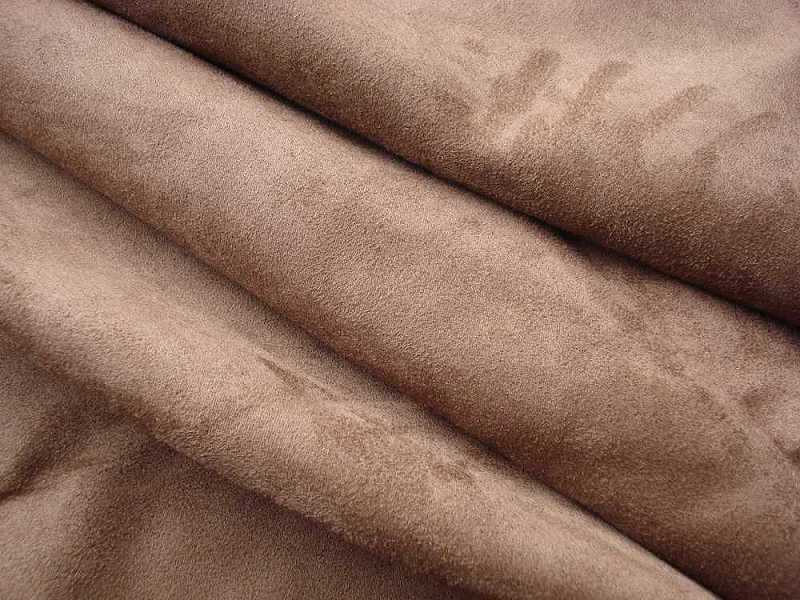
A golden, ambered sun peeks out from the clouds at the edge of a grey sea. Thickened, buttered waves of iris unfold like the most expensive suede, undulating under skies shot through with sweetened smoke. An iris flower floats on the surface, making a voyage from its cool, damp, earthy cellar towards the sun which warms it, turning it sweeter and sprinkling it with sweetened heliotrope. At times, the sun peaks out like golden eyes from behind the sheer veil of cool suede and warmed powdered sweetness. A giant orb of goldenness, speckled with ambergris, red resins, and candied delights. It shines upon the iris as it makes its journey and finally arrives at a distant shore of sweetness that cocoons it like the softest whisper of pink and white cashmere silk. These are the voyages of the Starship Iris, better known as Khôl de Bahreïn.

Stephane Humbert Lucas via CaFleureBon and Marieclaire.it.

Stephane Humbert Lucas via CaFleureBon and Marieclaire.it.

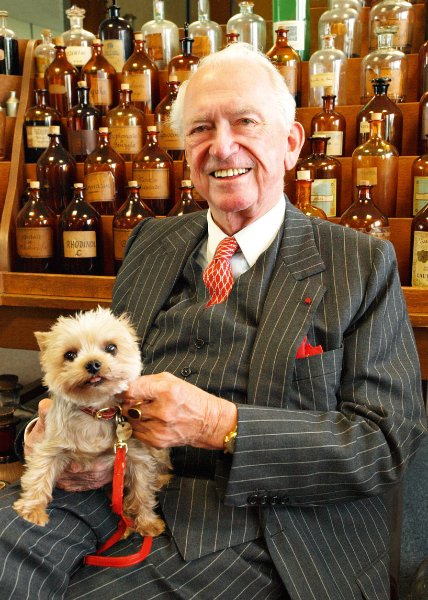
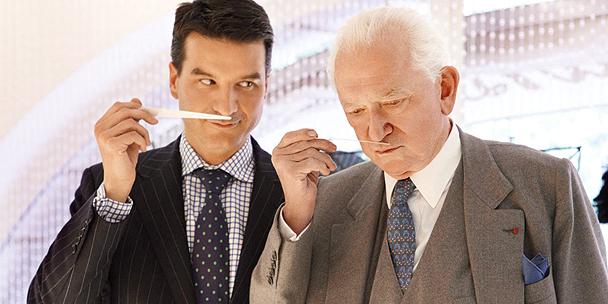
Khôl de Bahreïn is a fragrance from a new niche perfume house, founded by a man who has been making perfumes for quite a long time. Stéphane Humbert Lucas 777 is the new venture of Stéphane Humbert Lucas who was the in-house perfumer for Nez a Nez and SoOud. Mr. Lucas launched his new brand in 2013, along with 7 fragrances, all of which are inspired by the Middle East and their style of perfumery. Khôl de Bahreïn (which I’m going to henceforth write without all the accentuation and carets) was one of those scents.

There isn’t a ton of information out there about the perfume. Stéphane Humbert Lucas’s website is under construction, but his Middle Eastern distributor, Sagma, describes the scent as:

Source: Fragrantica

Source: Fragrantica

Blend of amber benzene.
Unguent with an intense trail.

Heavy perfume, unctuous, amber, reference to kohl and to the zenjar used in the region of Bahreïn.

First in Fragrance has more details, along with Khol de Bahrein’s notes:

Khôl de Bahreïn offers a blend of ambergris and resinous notes which create a balsamic-woody fragrance with an intense and lasting wake.

Top Note: Violet, Gourmand Notes, Resins
Heart Note: Iris, Sandalwood, Ambergris
Base Note: Musk, Balsamic Notes

Source: Soundcloud.com

Source: Soundcloud.com

Khol de Bahrein opens on my skin with a burst of sticky, dark resins that have a caramel, nutty aroma. Almost immediately, the iris appears on their heels. It feels like the most expensive, thick, orris butter imaginable, and has a smell that is simultaneously: slightly cool, earthy, buttery, deep, and warm, all at once. Something about it evokes the feeling of velvety petals — grey and black — along with thick, grey suede. The minute it arrives, the amber and resins take a step back to let the iris shine in the spotlight. Yet, subtle hints of benzoin sweetness lurk around the flower’s edges, as if candies are about to rain on earthy iris fields any moment now. A tiny wisp of smoke adds yet another paradoxical layer in this extremely unusual combination.

Five minutes in, the sweet elements seem to tire of their brief wait on the sidelines and flood center stage to crowd around the dark floral. I can’t really place the notes, as they are definitely not the “nougat” that I saw on one site’s ingredient list. “Caramel” doesn’t really fit exactly either, though it is closer. Perhaps, the best way to describe it is as vaguely sticky ambergris and toffee’d balsamic resins.

toffee caramal nougat close up wallpaper

Yet, for all the sweetness of the accord, Khol de Bahrein doesn’t verge on the gourmand for me. First, the competing elements are very carefully balanced, but, second, and more importantly, the iris counteracts the candied resins with its earthy coolness. It is a very refined note that conjures up images of a single flower growing in the slightly damp earth of a darkened cellar. Yet, it’s neither icy nor crypt-like. There is nothing fusty, carrot-y, or dank about it, either. Just plenty of cool notes with heavy suede and creamy butter.

Something about the combination of iris with sticky resins feels very unique to me, though I grant you that I don’t have extensive knowledge of the iris category. In fact, I wholly lack the iris appreciation gene, but I spend the next few hours being utterly amazed by the note in Khol de Bahrein. It really feels like an actual “butter” version of the flower with a heavily creamed richness that I haven’t encountered in other iris scents. Not even in Nuances, the limited-edition, ridiculously expensive Armani Privé Les Editions Couture iris soliflore that supposedly had the richest, most expensive, concentrated iris as its focus.

Photo: ticklemeimsexy.deviantart.com  http://ticklemeimsexy.deviantart.com/art/Purple-and-Yellow-Iris-195229153

Photo: ticklemeimsexy.deviantart.com http://ticklemeimsexy.deviantart.com/art/Purple-and-Yellow-Iris-195229153

On my skin, in the opening period, the iris butter pretty much trumps everything. Violets are listed Khol de Bahrein’s notes, but I generally didn’t detect them. However, they did appear briefly the very first time I wore the perfume when I only applied a few dabs of Khol de Bahrein. It was a dewy, earthy, pastel, delicate note, but it was short-lived. When I applied a greater quantity of Khol de Bahrein, it certainly couldn’t seem to stand up to the strength of the other accords.

What was interesting about that first test was something else that happened. From the first instant, there was an utterly addictive, sweet, powdered amber. I’m not a particular fan of iris, and I’m also not enthused by powderiness either, but, I tell you, I simply could not stop sniffing my wrists. I felt almost crazed at times by the draw of Khol de Bahrein, and I’ve finally figured out what was the lure: it smelled like an ambered form of heliotrope.

Photo: Crystal Venters via Dreamtime.com

Photo: Crystal Venters via Dreamtime.com

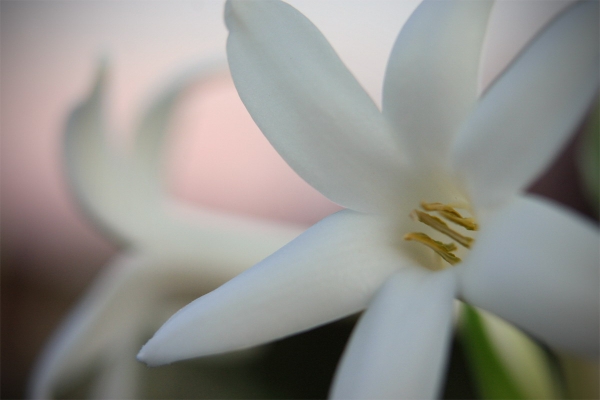
Now, heliotrope is not listed on Khol de Bahrein’s notes, but something in one of those resins (undoubtedly a benzoin-based one) really recreates the smell of heliotrope to a T. And I’m a sucker for the note. Wholly addicted. I love its vaguely floral, powdered sweetness which always visually translates in my mind as a comforting pink and white cocoon. In fact, Fragrantica‘s great explanation of the note brings up its “characteristic, comforting scent.” Heliotrope has an powdery odor profile which can range from a vanilla meringue, to almond marzipan, tonka vanilla, and more. As Fragrantica put it,

The characteristic comforting scent of heliotrope has been proven to induce feelings of relaxation and comfort, a pampering atmosphere that finds itself very suited to languorous oriental fragrances and delicious “gourmands”.

I’m spending so much time on this because, in my opinion, that aroma is one of the secret keys to Khol de Bahrein’s beauty. In my first test, using very little of the perfume, Khol de Bahrein immediately wafted the most delicious, tasty, heliotrope amber confectionary aroma with just the perfect balance of sweetness and powder. It reminded me of a tonka-covered amber orb that glowed like candlelight in a cozy, warm, vanilla cocoon.

Source: nature.desktopnexus.com/

Source: nature.desktopnexus.com/

Khol de Bahrein gets to the exact same point eventually with the larger dosage, but there is a lengthy iris butter period that you have to get through first. Since, as noted above, I’m not a particular fan of iris scents, I don’t find it deeply compelling, but it’s very hard to deny the quality of the note. I’m actually quite riveted by the sheer opulence and richness of the flower. I repeatedly thought to myself that it felt like the sort of thing that Roja Dove would do, and I mean that as a compliment.

Thirty minutes in, that golden amber tantalizes me with its nearness and elusiveness. It lingers just out of reach on the horizon, like a gauzy veil of caramel that has been thinly lacquered onto a glowing orb of musky, vaguely salty, deep ambergris which is then lightly dusted with vanillic benzoin powder. Slowly, slowly, the amber sun starts to warm up the cool iris waters, softening their damp, aloof, earthiness. The flower turns more powdered, as if it were shaking off white pollen in the sunlight, but the predominant feel is of thick orris butter.

The amber’s promise lies hidden not only behind that note but also behind a new arrival on the scene: smokiness. It’s very subtle at first, but it’s definitely there. To my nose, it doesn’t smell like black frankincense but, rather, like sweet myrrh (opoponax). It’s a surprisingly sharp note, but also sweetened and vaguely nutty in undertone.
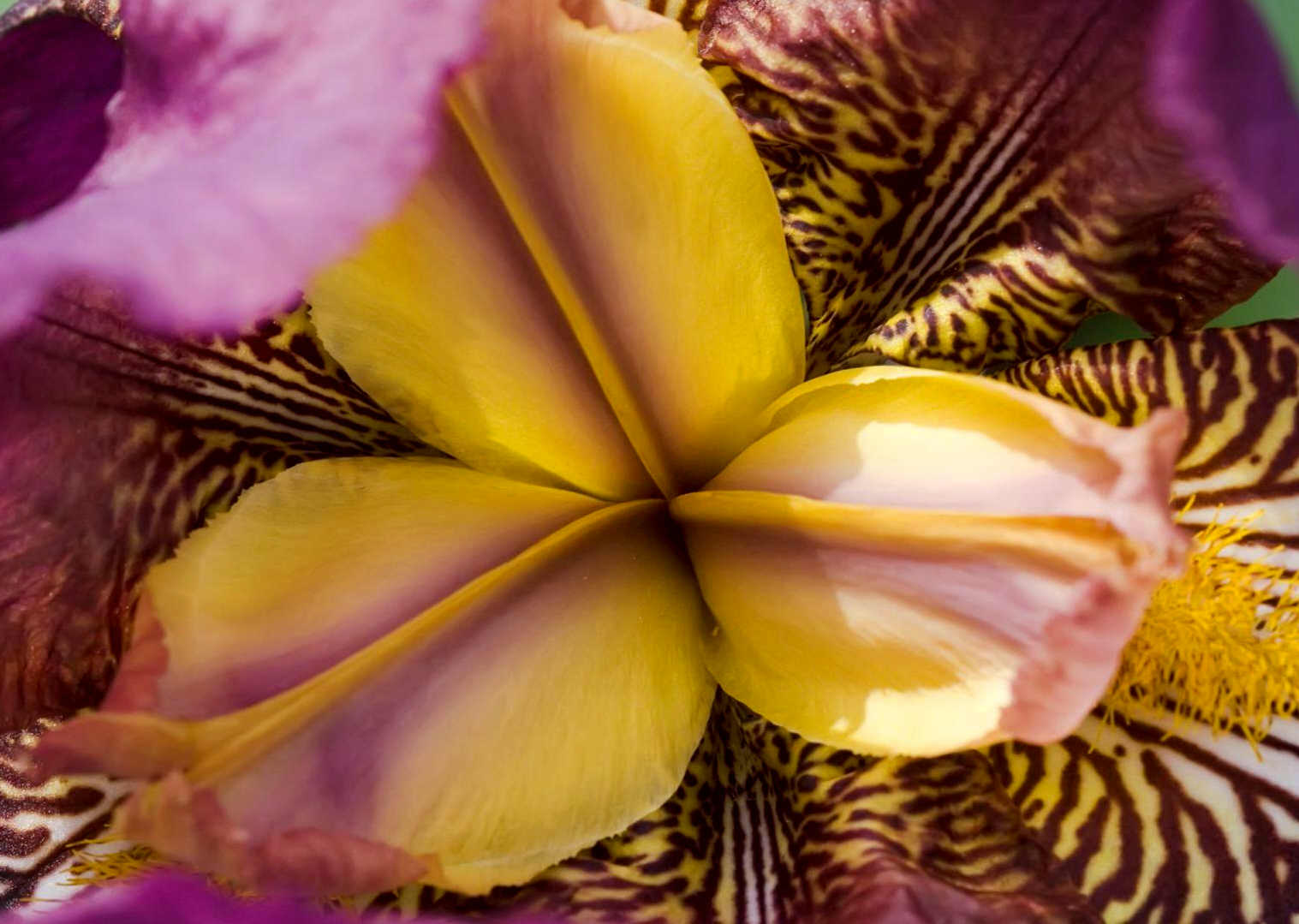
Photo via free-desktop-backgrounds.net, then edited by me.

Photo via free-desktop-backgrounds.net, then edited by me.

As a whole, Khol de Bahrein smells from afar like heavily sweetened iris, warm powder, sweet and incense lightly flecked by caramel resins and goldenness. The perfume is really potent up close, and very heavy in feel, with initially good sillage that wafts about 2-3 inches above the skin. By the end of the first hour, the sillage drops further, and Khol de Bahrein turns into a beautiful, seamless blend of ambered iris with subtle traces of sweetened iris powder and sweetened smoke. Yet, none of it feels gourmand. The perfume screams refinement and luxuriousness to me, not dessert or candy.

Photo: Grover Schrayer on Flicker. (Website link embedded within.)

Photo: Grover Schrayer on Flicker. (Website link embedded within.)

Khol de Bahrein is largely linear in nature with the main changes over time being the order and concentration of the notes, along with the perfume’s overall warmth and texture. The iris continues to lose its cool edge and that feeling of thick orris butter. It turns more and more into pure suede, at first thickly plush and heavy, then lighter as it sinks into the base. Khol de Bahrein’s sillage drops to just above the skin at the 90 minute mark. Around the same time, the amber sun finally comes out from behind the grey clouds, and the perfume now feels like vaguely irisy, powdered amber, instead of iris that is merely tangentially ambered. Something about Khol de Bahrein’s new golden aura strongly brought to mind Histoires de Parfums‘ billowy Ambre 114. I think anyone who enjoys the latter’s ambered softness, while also loving rich iris butter, would definitely love the combination of the two notes in Khol de Bahrein.

As the perfume continues to realign itself, that addictive part that I talked about earlier creeps closer and closer. About 2.5 hours in, the heliotrope impression finally arrives on the scene. Again, the perfume list does not mention heliotrope at all, but something in the benzoin resin alluded to by the Sagma distributor definitely recreates that smell. Khol de Bahrein is now sweetened, almost vanillic powdered amber with touches of sweetened suede that is lightly flecked by an equally sweet incense. It’s a bit like Ambre 114 with incense, but with every passing moment, a much stronger comparison would be to Guerlain‘s Cuir Beluga.

Source: qcorrell.com

Source: qcorrell.com

By the end of the 3rd hour, Khol de Bahrein is a dead ringer for Cuir Beluga on my skin, only with a touch of nebulous, abstract, incensey smoke. It has lost its ambered focus, and turned into pure “heliotrope” with sweetened suede. Khol de Bahrein doesn’t have heliotrope’s almond or marzipan nuances, but reflects instead its cozy, comforting, vanilla meringue facets. The amber now manifests itself largely as a sort of warmth which works really well with the textural softness of the “heliotrope” (or whatever resin is mimicking it). As a whole, the perfume feels like the cuddliest, cashmere blanket. Since heliotrope always visually translates in my mind to pink and white hues, the perfume now does the same.

I find it all utterly addictive, but I wish it weren’t so soft and discreet. The same problem that I had with Cuir Beluga is manifesting itself here, with a scent that lies right on the skin. That said, Khol de Bahrein is much stronger and more intense in its notes when sniffed up close. In fact, whenever I thought it had turned into a skin scent, I was surprised to detect little tendrils in the air about me. In particular, whenever I moved my arm or walked about, I could smell that vanilla meringue suede as an elusive whisper trailing in the air. It’s not my favorite way to smell a perfume, but Khol de Bahrein’s sheer weight and soft sillage turn out to be quite misleading in terms of the perfume’s strength.

Khol de Bahrein feels like undulating waves in more than one way. First, there was the iris butter that lapped about the shores. Then, as the iris retreated from its cool earthiness, the grey suede moved in. Later, the amber, and then, the “heliotrope”-like, benzoin meringue powder. Shortly after the start of the 6th hour, the waves change again, and the perfume turns drier. There are fluctuating levels of smokiness. Or, rather, the smokiness reappears again in a much stronger way, now that the heliotrope-like powdered sweetness has ebbed. Khol de Bahrein suddenly feels like a much drier, darker, somewhat smoky version of Cuir Beluga.  It is also a true skin at this point, and its subtleties are much harder to detect.

Source: hdwallpapers4desktop.com

Source: hdwallpapers4desktop.com

The subtle smokiness and incense don’t last long, however. Perhaps an hour at most. Then, Khol de Bahrein returns to its main core of powdered sweetness. The impression of iris suede as an underlying base vanishes completely. The perfume lingers as the silkiest, thinnest, gauziest breath of sweet benzoin on the skin for several more hours, until it finally dies away entirely about 12.5 hours from the start.

Frankly, I was amazed that it lasted so long, because it really is such a discreet, intimate scent for a good portion of its lifespan on my skin. Khol de Bahrein feels like the sort of fragrance that many people would think had only good longevity, not an excellent one, because they wouldn’t be walking around with their nose on their arm. However, I’m sure that spraying and the use of a large amount would help matters, as the perfume really is quite concentrated when smelled up close.
Source: hdwallpapers4desktop.com

Source: hdwallpapers4desktop.com

I think Khol de Bahrein is a really lovely, luxurious, very expensive-smelling fragrance, and I say that as someone with little personal appreciation for iris. I do think, however, that it skews feminine. My reasoning is that I don’t see the vast majority of men really being into powdered iris as the dominant focus for their fragrance. I admit, it’s a wholly subjective, personal interpretation, and I certainly know some men who adore Cuir Beluga, as well as many iris-centered fragrances. I’m sure a few would thoroughly enjoy a more iris-y, oriental, less gourmand, and, at times, more smoky take on Cuir Beluga. For the vast majority of men, though, I think Khol de Bahrein might feel a little feminine. It’s really going to come down to your feelings on both iris and powdery notes, not to mention skin chemistry.

One man who absolutely loves Khol de Bahrein is Mark Behnke who wrote about the perfume while he was the Managing Editor of CaFleureBon. Mr. Behnke first smelled the new Stéphane Humbert Lucas 777 line at the Milan Esxence show in 2013, and Khol de Bahrein was the one which really piqued his interest. He liked it right from the start, but once he managed to test it fully and properly, he seems to have fallen quite in love. He actually called Khol de Bahrein one of the best perfumes of 2013:

after having worn it quite a bit I know it to be one of the best perfumes of this year and the best perfume of M. Lucas’ career, so far.

The name Khol de Bahrein refers to the dark eye makeup often seen in the Middle East and North Africa. Elizabeth Taylor sported kohl rimmed eyes for her portrayal of Cleopatra. Also they are often the only part of a Muslim woman you can see when she is out and about. The darkness around the eyes causing them to feel like they almost float within the hijab. M. Lucas has created a fragrance framed in darkness with the depth of a human eye in the middle. Khol de Bahrein is as mesmerizing as a hypnotist’s stare; you will find yourself lost in its spell.

The photo Mr. Behnke used to illustrate Khol de Bahrein. Source: derbund.ch

The photo Mr. Behnke used to illustrate Khol de Bahrein. Source: derbund.ch

The metaphorical eyes of Khol de Bahrein are as lavender as Liz Taylor’s were. The opening uses violet at the core but is surrounded with a resinous frame of dark incense. The one thing I appreciate about all of the Stephane Humbert Lucas 777 fragrances is there is no gentle step down to intensity. No flare of citrus or bergamot; instead it as bracing as stepping into a cold shower, it catches your attention. I love violet and the interplay of resins and violet are wonderfully woven. Then the purple of the iris deepened by the note of orris. Lush and opulent it is made buoyant with the addition of a creamy sandalwood and briny ambergris. This really feels like the real stuff on the ambergris, no ambrox here. The final touch of blackness comes from amber, balasamic notes, and musk. There is a feel of humanity in the last accord. The eyes may be all you see but they are worth getting lost within.

Khol de Bahrein has ridiculous almost 24-hour longevity and above average sillage. The sillage is surprising for something at extrait strength.

I hope this piques the interest of those of you who have never heard of M. Lucas. If you’re looking for a new perfumer to explore I can recommend nobody any higher. As one who has come to enjoy his style let me reiterate; Khol de Bahrein is the best perfume of M. Lucas’ career and one of the best new perfumes of 2013.

Mr. Behnke’s review is the only one I could find for Khol de Bahrein. The perfume has no comments on its Fragrantica page. There are also no reviews posted on Khol de Bahrein’s entry at Parfumo (a European sort of Fragrantica). However, there are a lot of votes for the perfume at Parfumo that I think you might find interesting, as they pertain to perceptions of overall quality, sillage, and longevity:

  • Scent: 80% (12 Ratings)
  • Longevity: 88% (12 Ratings)
  • Sillage: 67% (13 Ratings)

An overall 80% favorability rating is really quite good, though I’m apparently not alone in my feelings about the sillage.

Khol de Bahrein comes with some drawbacks, primarily in terms of accessibility. This is a perfume that is a European and Middle Eastern exclusive, though American readers can test it easily by ordering a sample from Surrender to Chance. It’s not even widely available within Europe itself, with only a handful of distributors for the line. First in Fragrance is your best bet, and, thankfully, they ship worldwide.

The other issue is the price, though I think that can easily be justified when put into context. Khol de Bahrein costs €148 for a small 50 ml bottle. At the current rate of exchange, that comes to roughly $203, which is a teensy bit high for the size. However, Khol de Bahrein is a fragrance that its Middle Eastern distributor, the Sagma corporation, states is pure parfum extrait with 24% concentration.

Source: Sagma Corp.

Source: Sagma Corp.

Plus, there is that bottle. Judging by the photos, it looks gorgeous and I must say, I rather lust for it. Pure gold lettering and a gold metal cap with a Swarovski crystal. First in Fragrance has the full details on the very elaborate packaging:

Khôl de Bahreïn is presented in a transparent flacon with genuine gold lettering, gold cap and a small-faceted peach-coloured Swarovski crystal set on the stylized crown.

The 777 Metal cap 
A raised honeycomb pressed against a dome reminiscent of two architectures (Ottoman and Russian) where the sharp point brings to mind the summit, the sacred. The triple 7 is continued on the ring of the cap, it signifies: Spirituality, protection, luck. The figure 7 is the author’s fetish. The 777 logo is also engraved within the heart of the honeycomb. The raised facets represent work, determination and well-being. The significant weight of the cap imparts respect and strength. The cap is hand-milled, anodised and varnished.

777 Coffret by Stéphane Humbert Lucas
The box has been created using a double-coated black leather effect paper decorated with hot-stamped letters and logo. The 777 theme is taken up on the interior of the flap, followed by a short poem written by the author.

Source: Fragrantica

Source: Fragrantica

So, to some extent, a small chunk of that €148/$203 price tag must stem from the packaging, but you shouldn’t forget about the Extrait concentration. Or the opulence of that iris butter which, frankly, probably costs more than any Swarovski crystal. When you consider that Tom Ford’s flimsy, anemic Atelier d’Orient eau de parfums are priced at $210 for the same size (but much simpler looking) bottle, Khol de Bahrein almost seems like a steal. And I won’t even bring up Armani’s suffocating, claustrophobic, painfully dull iris soliflore, Nuances, in its Privé Couture line. (It’s £500, if you’re interested.)

Is Khol de Bahrein a complicated, revolutionary, edgy scent? No. It’s not trying to be. It wants to be a refined, luxurious statement that reflects a Middle Eastern sensibility. As someone who has actually lived in the region, I found Khol de Bahrein to be as Middle Eastern as Guerlain — which is to say, not at all. However, it definitely reflects a French sensibility and the feel of French haute perfumerie. A highly refined scent with very expensive, pure ingredients that are blended seamlessly to create the feel of pampered luxuriousness. Plus, it happens to have cozily delicious parts on top of it all. If I were ever to wear an iris scent, it would probably be Khol de Bahrein. Really lovely!

[UPDATE 4/14/14 — Samples of the entire collection, including the new 2014 releases, were sent to me, and I’m going through them, one by one. If you’re interested in learning more about the line, you can read about the spectacular O Hira and the new 2014 releases, Qom Chilom (Morello cherries, latex, oud, cedar, heliotrope), Oud 777 (a total smoke monster with Cambodian Oud and leather), and the immortelle gourmand, Une Nuit à Doha. The rest of the original 2013 releases will be reviewed as well. All the fragrances are expected to be released in the U.S. in a few weeks. They will be carried by Luckyscent and Osswald NYC.]

DETAILS:
Cost & Availability: Khol de Bahrein is an Extrait or pure parfum that comes only in a stunning 50 ml bottle that costs €148. I haven’t found any U.S. distributors for the scent. Stéphane Humbert Lucas’ website is under construction, and doesn’t have an e-store. Outside the U.S.: you can order Khol de Bahrein from First in Fragrance, though shipping will be delayed until after March 7th. They also offer a sample, and global shipping. Zurich’s Osswald also carries the line and lists Khol de Bahrein on its website, but I don’t think they have an e-store any more. The Swiss perfumery, Theodora, also has the perfume, but no e-store. In the Middle East, there is a UAE distributor called Sagma Corp that carries the full line, but they don’t have an e-store. However, you can buy Khol de Bahrein from Souq.com for AED 1,500. In Russia, Khol de Bahrein is available at Lenoma. It is also listed on the ry7 website, but I’m unclear as to its availability. Ukraine’s Sana Hunt Luxury store also carries it, but they don’t have an e-store. Samples: I obtained my sample from Surrender to Chance which sells Khol de Bahrein starting at $4.75 for a 1/2 ml vial.

Perris Monte Carlo Bois d’Oud

Honeyed oud, plummy fruits, the smoky smell of burnt leaves and singed wood interwoven with delicate florals, vanilla, and white creaminess, all combined in a mix that resembles some other well-known fragrances on the market before turning into its own creature — that’s the essence of Bois d’Oud, a fragrance from Perris Monte Carlo.

Source: Fragrantica.

Source: Fragrantica.

Perris Monte Carlo is a relatively new house that emerged in 2012. I’ve been curious about it for a while as it is based in my old home, so I obtained two samples of the line. The majority of the fragrances, including Bois d’Oud, were launched in 2012 in Europe, before later being released in the U.S. in 2013. I can’t find a company website to see how Perris would describe Bois d’Oud, only a lot of PR babble about how the company’s signature involves luxury, gold, and prestigiousness. It all sounds terribly nouveau riche and obnoxious, so let’s get directly to the perfume’s notes.

According to First in Fragrance, Bois d’Oud’s ingredients are:

Top Note: Bergamot
Heart Note: Peach, Plum, Jasmine, Iris, Rose, Orange Blossom
Base Note: Cedarwood, Agarwood (Oud), Patchouly, Vanilla, Ambergris, Labdanum (Rockrose), Musk

Honey and plums. Photo: Alice Carrier at Bread and Honey blogspot. (Website link embedded within photo.)

Honey and plums. Photo: Alice Carrier at Bread and Honey blogspot. (Website link embedded within photo.)

Bois d’Oud opens on my skin with the richness of honey-drenched oud, followed by plums, a patchouli rose, smokiness, and a toffee’d, dirty, labdanum amber. There are subtle strains of orange blossom, and, indeed, a light flicker of orange itself. The overall effect is of a multi-faceted, dark sweetness that is dominated by plummy fruit, oud, and honey.

Bois d’Oud’s opening immediately and instantly calls to mind Arabian Oud‘s Kalemat. The Perris fragrance is slightly different with more plums, a stronger oud presence, and the inclusion of orange blossoms in lieu of blueberries. It is also thinner, sheerer, and less opaque in feel than Kalemat’s opening. For a brief moment, Bois d’Oud also reminds me of an oud version of Serge LutensFille en Aiguilles, though there are even more differences with this one. Bois d’Oud is less plummy than that one, lacks the heavy frankincense element, has honey instead of brown sugar sap, includes a very noticeable strain of jammy rose, and its smokiness seems to stem from different sources. Throughout Bois d’Oud’s development, I kept feeling like I was smelling something akin to guaiac wood, with its aroma of burning leaves in a fall bonfire, as well as its occasional facet of stale dustiness. That’s all very different than Fille en Aiguilles. Ultimately, perhaps the combination of honeyed sweetness, slightly dirty ambered labdanum, oud and darkly plummy fruits is closer to a third fragrance that came to mind during Bois d’Oud’s development: Nasomatto‘s Black Afgano. Bois d’Oud opens like a mix of Kalemat and Black Afgano, before eventually moving closer to the latter.

Source: picsfab.com

Source: picsfab.com

10 minutes into its development, the notes in Bois d’Oud realign themselves. The plum takes a small step back, while the peach, orange blossom, and jammy patchouli rose step more to the foreground. The orange blossom adds a subtle (very subtle) soapy undertone to the fragrance, though it’s fleeting. The peach adds a different sort of fruitness, but it is the patchouli which is most prominent. It’s a purple fruitchouli that is thoroughly intertwined with the rose, but it doesn’t feel like dark molasses so much as syrup. Very sweet syrup that underscores the strong impression of honey. The oud, fruit and floral accords are quite drenched with both elements, creating the impression of stickiness, though the perfume is very airy in weight.

Source: ghulmil.com

Source: ghulmil.com

The whole bouquet is nestled in a cocoon of abstract woods and a subtle tinge of smokiness. As noted above, I keep feeling as though there should be guaiac wood listed in the notes, because something in Bois d’Oud replicates its particular form of singed dryness. It goes beyond the smell of mere cedar, though both woods can have a dusty, stale undertone like the one that appears later on in Bois d’Oud. In truth, I really don’t smell cedar in the way that I’m used to, and all the wood notes beyond the oud feel really indistinct in an individual manner. As for the oud, it is not medicinal, fecal, raw, or butch. It is merely honeyed, and a little bit musky.

Photo: TheCozyApron.com. (For a recipe for grilled cinnamon plums with honey and marscapone vanilla, click on the photo. Website link is embedded within.)

Photo: TheCozyApron.com. (For a recipe for grilled cinnamon plums with honey and mascarpone vanilla, click on the photo. Website link is embedded within.)

Bois d’Oud continues to shift. About 20 minutes in, the vanilla emerges in the base, along with what I can only describe as a white creaminess. It’s doesn’t feel like it comes wholly from the vanilla, though that does seep over into it. I can only describe it as something that is almost like white, honeyed beeswax, but not quite. It doesn’t smell waxy or even particularly honeyed, so perhaps it’s not an offshoot of labdanum (which can often take on those nuances), either. Whatever the source, it goes beyond a mere textural thing and is one of my favorite parts of Bois d’Oud, especially when it has that lightly vanillic flavour to it. Interestingly, as the vanilla creaminess grows stronger, the honey note that burst out of the gates grows weaker and thinner.

At the same time, the first glimmer of a dry, woody aromachemical appears. It emphasizes my early impression that the oud note is synthetic, not real. As Andy Tauer once noted in his blog, most purported “oud” fragrances on the market today use hardly any of the increasingly expensive, real ingredient, relying instead on chemical substitutes put into a cypriol base. It smells like that here with Bois d’Oud. At first, it is quite a subtle chemical twinge, thanks to the growing creaminess and soft vanilla that help to cushion the note. Later, though, it becomes a slightly different matter.

"Coffee and cream" Art Print by Shalisa Photography/ Sharon Lisa Clarke on FineartAmerica.com

“Coffee and cream” Art Print by Shalisa Photography/ Sharon Lisa Clarke on FineartAmerica.com

As a whole, Bois d’Oud at the end of 30 minutes is a well-blended bouquet of oud, patchouli rose, slightly vanillic creaminess, plum, and labdanum amber with flickers of orange blossoms, smokiness, and an abstract woodiness. Bois d’Oud still feels syrupy, but now it is from the purple fruitchouli more than from the honey. The peach lingers in the sidelines, but it is quite muted. It’s the same story with the cedar, and that subtle smokiness.

Bois d’Oud doesn’t change substantially for the next few hours. It drops in sillage at the start of the 2nd hour, hovering just 2 inches above the skin at best, and its weight feels as though it were cut by 60%. I keep having images of translucent cream tulle, splattered by plummy, purple fruitchouli and roses, then sprayed with a synthetic oud. Something in the base is taking on a faintly medicinal vibe, though it’s not the “pink rubber band-aid” smell that oud can sometimes have. Whatever it is, I’m not a fan. Equally disappointing is how that lovely vanilla and white, cream beeswax note is being increasingly overshadowed by a woody, stale dustiness that probably stems from the cedar.

Bois d’Oud turns into a skin scent about 2.5 hours in, though it easy to detect up close, thanks to the plummy, syrupy patchouli in particular. The honey, peach and orange blossoms have vanished, though the jammy rose lingers. The vanilla seems very muffled, while the aromachemical aspect is not. The focus of the scent is increasingly on oud and dry woods, infused with that creamy note and the subtle touch of abstract, stale dustiness. Bois d’Oud feels now like a Montale fragrance. You can take that how you will.

I’m obviously not enthused about this stage, but I have to say that Bois d’Oud recovers very well, changes again, and has an extremely nice drydown. Near the end of the 4th hour, Bois d’Oud takes on more ambered and earthy nuances. There is suddenly a lot of gritty, dark, golden amber lurking about the edges, creeping closer to the main stage. At the same time, there are undertones of something that smells like dry tobacco. Much more noticeable is a definite animalic muskiness that wafts about as well, adding a dirty earthiness and the tiniest, subtle touch of skankiness.

Source: samsunggalaxy.co

Source: samsunggalaxy.co

For the most part, Bois d’Oud is now a soft blend of creamy woods, oud, dirty labdanum amber, dryness, earthiness, and a tinge of animalic muskiness. The bouquet is still infused with roses and a syrupy sweetness, but both are much lighter touches that have been diffused or countered by the new elements. Unfortunately, Bois d’Oud has become very gauzy and thin, and you have to sniff really hard to detect its nuances.

The earthiness and skanky musk slowly fade away, and their place is taken by other elements. There is the faintest trace of soft, sweetened powder that briefly pops up in the base for about 40 minutes. Up to top, there is a subtle stale smokiness that flitters about. It’s not quite the smell of campfire ashes, nor the smell of burning leaves, but subtle parts of both, amidst the stronger smell of singed wood. It’s that guaiac wood impression that I talked about earlier As a whole, Bois d’Oud feels much drier at the end of the 5th hour and the start of the 6th, much more purely focused on its wood notes, though that quiet creaminess still remains.

Source: top.besthdwallpapers.info

Source: top.besthdwallpapers.info

Bois d’Oud’s notes slowly shift in terms of their prominence and order. For a few hours, the perfume consists of sweet oud, creaminess, amber, and dry woods, upon a base consisting of an aromachemical tinge and plumminess, all lightly flecked by that whisper of singed woods and dustiness. Slowly, though, the creaminess fades away and the amber takes over.

By the end of the 9th hour, Bois d’Oud is a gauzy blur of amber, followed by abstract woodiness and a lingering touch of sweetness. It’s very nice, and has almost a caramel undertone to it, thanks to the labdanum. At times, the syrupy jamminess of the patchouli rears its head, but generally the fragrance is centered on ambered woods in a mix of dryness with sweetness. That is how the perfume remains until its very end, almost 11.5 hours from the start.

Source: pugetsoundbites.wordpress.com

Source: pugetsoundbites.wordpress.com

On Fragrantica, people seem to really like Bois d’Oud. I was interested to see that the notes the people found most dominant were, in order: oud (22 votes), plum (18), vanilla (16), and patchouli (14). Several people picked up on the creaminess, which they found to be vanillic in nature. Others talk about the plums, sweetness, and, in one case, the peach. One woman compared Bois d’Oud to a Montale fragrance, a brand she says she loves, and wrote, in part:

the scent is quite a stunner. It is very similar to Velvet Aoud from Montale, only richer, sweeter and woodier. There is a plastic kind of aura which reminds me of Iris Ganache from Guerlain.

I cannot smell the bergamote they describe for the top notes. It’s had a syrupy feel, without being too sugary. The sweetness must come from the plum and the peach. I do not smell any flowers of any kind. There is a strong woody, forest-like smell, which isn’t fresh at all… Aoud is the most dominant note, along with dried fruits. Like dried plums and apricots, which have a lot of sweetness and a little saltiness in them. Lots of them! The roses and jasmine, if there, are totally hidden to my nose. Maybe the smallest amount of neroli and iris…. Cedar is listed, but cedar for me is always a “fresh” kind of wood, a little green…. I don’t smell that either… The woods in here are deep and dark. There is also a lot of ambregris which has a vanillary tone, but no distinctive vanilla. I cannot smell much musk or patchouli. No freshness here.

Overall, I would call this a fruity woody, if such a category existed…
Case and point: dried fruits + aoud + dark woods + ambregris. Great silage and longevity, fairly linear, becomes a tad fresher in the base, surprisingly. [Emphasis with bolding added by me.]

Source: spicewallpaper.blogspot.com

Source: spicewallpaper.blogspot.com

Other impressions of Bois d’Oud are:

  • one of the best Ouds on the market surpasses all Montale creations IMO, this could be a vintage M7 flanker, enough said!
  • The beginning, to me was all about the oud, not very sweet – quite earthy and musk-laden. It reminded me very much of M Micallef’s Oud Gourmet – and I didn’t find it at all fruity. About 5 hours later now, the vanilla has really come out and it feels more creamy. I’m really loving this dry down, but am sorry to not have experienced the plum notes and creaminess earlier on.
  • very special frag in a perfume world lately dominated by oud in all his forms ,this a sirupy quite sweet oud maybe one of the most feminine around ,it reminds me a lot of the first original not reformulated poison by dior ..anyway a definitely worth buying frag  7/10   [Emphasis to names with bolding added by me.]
Source: souq.com

Source: souq.com

On Basenotes, the very first review at the top of the page almost made snort with its amusing conclusion:

Perris is based in Monaco, the juice made in Italy, and the thrift store bling of the bottles is aimed straight at the Middle Eastern market.

Yes, I think the bottle’s bling definitely approaches the tacky level, and is not representative of Monaco. (I promise you, Monaco is not a vulgar place, at least it wasn’t when I lived there. This newcomer, Perris, seems to be quite a different kettle of fish, though.) The rest of the review from “Gimme Green” is interesting, and seems to reflect my perception of a stale dustiness underlying Bois d’Oud:

Dry, dark, dusty wood with touches of sweetish suede and hints of dry fruit. Faded rose petals crumble about it. Lived in and somewhat musty.
Has a shut in feel, so claustrophobics beware.
The oud is of a recognizable sort (something similar is in Dueto’s City Love) and I imagine this is one synthetic we’ll come across more and more.
It’s modest, un-fresh and a satisfying wear, if not exactly breaking new ground. An oud one can don and not be distracted by. Plumps out and opens up surprisingly in the deep drydown.

Suede. Source: seasonalcolor.yuku.com

Suede. Source: seasonalcolor.yuku.com

One commentator, “Darvant,” also detected a suede tonality, along with an incense-y rubberiness and a strong floral element that included the jasmine. He writes, in part:

So luxurious, stormy, spicy/fruity and intoxicating in its first explosion but in a while so silky, slightly powdery, delicately rubbery (almost as a golden musky/resinous suede). […] a tornado of diverse elements by soon interacting each other in an armonic olfactory orchestra as luxurious hesperides, mellow plummy/orangy fruits, sambac jasmine, exotic sweet spices and powdery iris (the latter in its heady and mastering role). By soon the spicy/fruity drama is encompassed and comforted by a soothing accord of mossy galbanum, smooth balsams, animalic resins and probably rubbery/incensey suede. The influencing iris provides hints of floral powder perfectly integrated with musks, star anise and suede. A touch of olibanum or just powdery iris, woodsy resins and velvety suede? Probably it’s the note of agarwood (as linked with iris and star anise) which provides a sort of suede/rubber (vaguely boots polish type of) boise vibe around. The sambac jasmine affords an incredibly glamour “icy” spark in the air, as well as combined with musky amber, anise, talky iris and may be aldehydes. Actually in conclusion a velvety rubbery suede type of vibe emerges from the storm with all its exotic silkiness. A dark patchouli provides structure and stableness for all the general oriental mélange.

PS. In the dry down the vanilla emerges and tames a bit the agarwood spicy “gassiness”. The agarwood resin smells slightly synthetic and some people can demur it but i add that this element does not understate the extreme sophistication of the olfactory performance and can’t veil in any way the beauty of its glamour modernity.

In sharp contrast to all those layers, a third Basenotes poster wrote that he or she detected nothing more than “dry woods… [b]ut it’s such a nice smell, that it’s more than enough. Not groundbreaking though.”

I agree with that last statement. Bois d’Oud is not a revolutionary or unusual scent, as all the perfume comparisons from me and various forum commentators should make clear, but it’s not identical like the others either. It is not as dark, dry or smoky as Black Afgano; it seems smoother, plummier, more gourmand at times, and sheerer. Despite the initial resemblance to Kalemat or to an oud version of Fille en Aiguilles, Bois d’Oud later turns into something quite different from either one. I haven’t tried Montale’s Velvet Aoud to know how it might compare, or the Micallef scent mentioned on Fragrantica, but I can say that I think Bois d’Oud differs from vintage M7. There are a few token similarities in terms of how oud is mixed with plummy, resinous, labdanum notes, but as a whole, the two fragrances are very different, in my opinion.

Perhaps the ultimate reason why Bois d’Oud stands slightly apart from similar takes on the plummy-oud genre is the inclusion of the vanilla, creaminess and dustiness. Half-gourmand, half-not. Is that enough for perfume lovers who own similar scents in the same style? I don’t know. It’s going to be an individual decision.

All in all, if you like very plummy oud fragrances with sweetness, amber and vanilla, you may want to give Bois d’Oud a sniff. It is firmly unisex, in my opinion, and has good longevity with decent sillage. The perfume is not hugely expensive per ounce at $150 or €125 for 100 ml of eau de parfum, especially as you can find it priced for less than retail. Will it blow your socks off? I highly doubt it, but Bois d’Oud has some very enjoyable parts, along with a useful, versatile easiness about it.

DETAILS:
Cost & Availability: Bois d’Oud is an eau de parfum that is available only in a 100 ml size. It costs €125 and £125. In the U.S., I think it costs $150, but I can’t find a ton of retailers to confirm that. The company has no website that I could find, either. In the U.S.: the Perris Monte Carlo line appears to be sold at Henri Bendel in New York, but their website only shows the Imperial Oud Black bottle. That seems to be a different fragrance entirely, but, oddly, subtext on the page also mentions Bois d’Oud. I have no explanation for that. Like Bendel, Neiman Marcus only carries the Imperial Oud and the new Rose de Taif. Elsewhere, I’ve noticed Amazon sellers offering Bois d’Oud. One sells a 10 ml decant for $35, while another has a 100 ml tester bottle for $100. Outside the U.S.: in the U.K., you can find Bois d’Oud at 10 Corso Como for £125, along with the rest of the Perris line. The perfume is also available at First in Fragrance for €125. I noticed Bois d’Oud on sale for €105 at the Parfum Center in the Netherlands, while it’s at regular price at Celeste. In Spain, you can buy it from Novento Grados, in Italy at Etos Profumeria, in Greece at Rosina Perfumery, and in Munich at Bruckner. In the Middle East, I found Bois d’Oud at Souq.com for AED 596. Kuwait’s Universal Fragrances has most of the line discounted for $99. Samples: Surrender to Chance doesn’t have Bois d’Oud in an individual form, but it has a Perris Monte Carlo Sample Set of 5 fragrances from the line in 2 ml atomizers for $38.99. You can order Bois d’Oud in an individual vial from The Perfumed Court where prices start at $4.96 for a 1 ml vial.

Parfums de Nicolaï Sacrebleu Intense

Some perfumes have a quiet prettiness that weave their way around you over time, or that touch you with a feeling of comforting familiarity. Sometimes, they are also about a study in contrasts, contradictions that work together seamlessly in a way that becomes more important than the individual notes. Sacrebleu Intense from the Guerlain descendent, Patricia de Nicolaï, and her company, Parfums de Nicolaï, is one of those perfumes.

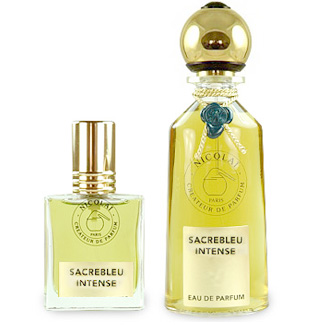
The 30 ml and 100 ml bottles of Sacrebleu Intense. Source: Luckyscent

The 30 ml and 100 ml bottles of Sacrebleu Intense. Source: Luckyscent

It is an eau de parfum that appealed to me the first time I smelled it, but it didn’t bowl me over and throw me into a state of maddened lust. It still doesn’t, if truth be told, but Sacrebleu Intense quietly squirreled its way into my thoughts, and I ended up succumbing to a relatively blind buy months after the fact. It has a quiet solidity and classical appeal with just enough of a nod to the past to be comforting at times.

What I like is the feeling of contrasts that have been superbly blended into a seamless whole. There is sticky, chewy darkness, but also, airy, white sweetness. Bitter green leafiness lies side-by-side with boldly fiery, red cloves, brown cinnamon, smoky blacks, and twiggy, petitgrain, neroli orange-browns. Sometimes, the contrasts are just about the stark black and whites: black licorice and smoke, against white Church incense and spicy red carnation. Sometimes, they are about gender, as femininity collides with touches of masculinity. Often, they are about boldness and strength mixed with refined quietness; or the contradictions of weightless heaviness.

Photographer: Carl Bengtsson. Source:  fashionproduction.blogspot.com

Photographer: Carl Bengtsson. Source: fashionproduction.blogspot.com

Sacrebleu Intense is about all those things. It is fierce and potent, but understated and quietly elegant. It is a nod to the past that is also very modern. It has a simple beauty whose appeal grows stronger with time, and it manages to stay in your head, long after you’ve smelled it. At least, that was the case for me. I first encountered the perfume in Paris where I was trying the full Parfums de Nicolaï‘s line at one of her shops. (From this point out, I hope you will forgive me if I spell Nicolaï as just “Nicolai” for reasons of speed and convenience, as it takes a while to put on the dots, or Trema.)

Sacrebleu Intense stood out immediately amidst the Nicolai offerings. A few of the other scents were pretty, but too subdued or restrained. A good number felt too damn thin by half, but Sacrebleu Intense made me do a wee, tiny double-take, and I sniffed my wrists appreciatively. However, I almost never trust first impressions and needed a sample to test to see how it would develop over time, especially on my wonky skin. Unfortunately, the Parfums de Nicolai line doesn’t seem to believe in that practice, and I was always told, “I’m sorry, we don’t have any vials.” So, I skipped it. Upon my return to America, though, the memory of Sacrebleu Intense nagged away at me for months. I finally said, “to hell with it,” and ordered a bottle.

Guerlain's L'Heure Bleue via radiobresil.com.

Guerlain’s L’Heure Bleue via radiobresil.com.

I did so for one reason, and one reason only. Every time I had tested Sacrebleu Intense, the same thought rang in my head: “L’Heure Bleue. This is a definite nod to L’Heure Bleue, only it’s more modern, fruitier, with different spices, and possibly a more unisex feel.” Now, vintage L’Heure Bleue is one of my two, absolute favorite Guerlain scents. In fact, it is only fickleness and a slightly fiercer love for vintage Shalimar that prevents L’Heure Bleue from ranking as my favorite Guerlain of all. Plus, vintage L’Heure Bleue can be a wee bit powdery for my tastes, though none of it matters in the face of the reformulated modern version. Sacrebleu Intense reminds me of vintage L’Heure Bleu, though with enough differences for it to be its own scent. It feels more modern, and not as wistful in nature.

Patricia de Nicolaï, via her own website.

Patricia de Nicolaï, via her own website.

The strong connection to one of Guerlain’s masterpieces should come as no surprise to anyone who knows about Patricia de Nicolai‘s background. I’ve written about how she is part of the Guerlain family, a grand-daughter of the house’s founder, Pierre Guerlain, a niece to Jean-Jacques Guerlain, and a relative of the famed nose and current Guerlain family patriarch, Jean-Paul Guerlain. Madame de Nicolai is also on record as saying that she absolutely loves L’Heure Bleue, though she stopped just short of saying that it is the Guerlain scent that has had the most impact on her own perfumery. Still, her love of L’Heure Bleue shines through in Sacrebleu Intense, though I have to emphasize that I think they are very different scents at their heart.

Sacrebleu Intense is an eau de parfum that was released in 2008. It seems to have been intended as a bolder version of the original Sacrebleu which has now been discontinued, though I’ve also read in one place that the Intense was meant to highlight the floral notes more than the original. According to Fragrantica and Luckyscent, Sacrebleu Intense has:

Top notes: mandarin orange, red berries and fruity notes; Middle notes: carnation, tuberose, cinnamon and jasmine; Base notes: peru balsam, sandalwood, tonka bean, patchouli, olibanum [myrrh], woody notes and vanilla..

Source: CaFleureBon

Source: CaFleureBon

Sacrebleu Intense opens on my skin with massive amounts of carnation cloves, followed by cinnamon, dark resins, and green notes. There is a strong spiciness to  the scent beyond just the cloves, a sort of piquancy that makes me think of peppery, fuzzy geranium leaves, as well as of bitter neroli and petitgrain. Petitgrain is a citrus tree’s twigs, distilled down into the bitter, pungent woody, masculine notes, while neroli is a different method of distilling the trees’ orange blossoms. Honestly, on my skin, I don’t smell mandarin oranges in their traditional, sweet, sun-ripened juiciness. There is the strong bitterness of neroli, and the woodiness of petitgrain instead.

FrankincenseThere are other elements as well. Lurking in the base is a black, leathery smokiness from the styrax, the least sweet of all the resins or benzoin-like notes. There is also a heavy presence of olibanum or myrrh. It is nothing like the High Church, soapy, chilly, dusty character that it usually manifests, at least not yet. Instead, it smells like chewy black licorice with a hint of anise. There is a definite sense of smokiness, though. A sweet incense note that feels like sweet myrrh, rather than pure, dry, black frankincense.

Clove Studded Orange. Source: DwellWellNW blog at DowntoEarthNW.com

Clove Studded Orange. Source: DwellWellNW blog at DowntoEarthNW.com

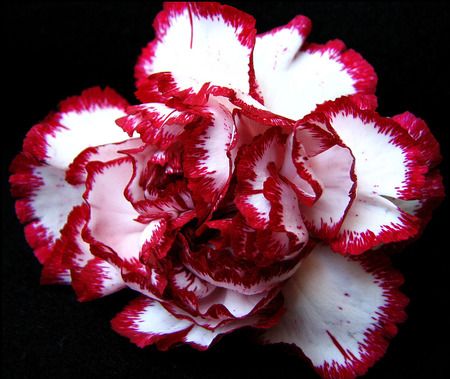
The odd thing is the nature of the floral notes. I’ve worn Sacrebleu Intense a few times, and only once did I ever really detect tuberose. It was brief, very muted, and had a slightly rubbery, black undertone to it. However, the tuberose was so thoroughly blended into the other elements, it was extremely hard to pick out and I don’t think it lasted for more than perhaps 10 minutes at best. The main flower on my skin instead is always the carnation, though it is barely floral at all. Carnations can take on a peppered rose aroma or a clove-like one, and it is the latter which shows up on my skin. In fact, Sacrebleu Intense is heavy cloves from start almost to finish, with only a touch of actual carnation.

Geranium pratense leaf, close-up. Source: Wikicommons

Geranium pratense leaf, close-up. Source: Wikicommons

I keep imagining a clove flower with a spicy neroli heart, bitter petitgrain twigs and peppery, pungent, green geranium leaves, all dusted with cinnamon. The “flower” grows out of soil made from black licorice and the stickiest, chewiest, balsamic resin around. It’s a base that is faintly leathered and smoky, but the main impression is of bitter fruits heavily dusted with cinnamon and cloves.

For the most part, Sacrebleu remains that way for the majority of its long life on my skin. This is a fragrance that is beautifully blended, and each time I wear it, different parts seem to be emphasized alongside the clove carnation. Never the tuberose, but the green bits and the smokiness seem to fluctuate in degree. On one occasion, all that came to mind was black, chewy, resinous smokiness on a white, airy background that felt only vaguely fruited and was heavily dusted with spices instead. As a whole, Sacrebleu Intense is a scent that is very hard to pull apart. The notes move into each other seamlessly, and, as indicated, that makes the perfume a bit linear in nature. For that reason, this review will be a little different than most of mine, and will focus mainly on the perfume’s overall development and feel.

Pez. Source: Wikipedia.

Pez. Source: Wikipedia.

The one thing that does change (and is quite constant each time I wear Sacrebleu Intense) is the touch of powderiness that creeps in after a while. When it precisely occurs seems to vary, and I’ve noticed that one arm (my right, which is not my usual testing arm) reflects very little of it as compared to the other, but there is always some degree of powder. At first, it’s only a subtle touch that is almost iris-like at times. It’s definitely sweetened powder, and its combination with the bitter neroli and petitgrain-like accord creates a distinct impression of Pez candy. A sort of Sweet-Tarts or Pez powderiness, if that makes sense.

I have to admit, I’m not very keen on it, and I become less keen as time passes because it turns into quite a distinct myrrh incense note that I always struggle with. It’s a spiced, slightly dusty powderiness, though much more sweetened than most High Church incense fragrances. As regular readers know, I’m not particularly enthused by High Church or Catholic Mass tonalities, let alone powder, so I must admit, I struggle a little with Sacrebleu after about 5 or 6 hours. Still, as noted earlier, the perfume is well-blended and there are enough spicy clove, carnation, and resinous elements to make up for it.

 Source: darulkutub.co.uk

Source: darulkutub.co.uk

In its final stage, Sacrebleu Intense is a blend of myrrh incense, spiciness, and sweetened Pez powder, lightly flecked with bitterness and a hint of something vaguely fruity. In its last moments, it’s powdered sweetness and myrrh. I like it… from afar and as long as I don’t smell it up close too much.

All in all, Sacrebleu Intense consistently lasts 12 hours or more on my wonky skin, depending on how much I apply. It generally becomes a skin scent about 4-5 hours into its development, though it requires absolutely no effort whatsoever to detect the perfume if you bring your nose near your arm. Furthermore, you can push both time frames if you spray on a lot. With 3 big sprays, I once experienced a 14 hour duration, even though I had to put my nose on my skin and sniff extremely hard to detect the faint traces after the 12th hour.

I’m glad I bought Sacrebleu Intense, though I have mixed feelings about the drydown stage. In fact, if some of my discussion sounds a little like blind buyer’s remorse, there is that on occasion, but only because I really don’t like Churchy myrrh incense or powder. That said, there is something about the opening moments of Sacrebleu Intense that really compensates for it all.

I can’t really explain in any logical way except to say that there is a mood and feeling which overcomes a lot of the sticky details down the road. Something about Sacrebleu Intense feels like elegant familiarity, perhaps because of that distant, tiny kinship to L’Heure Bleue. It’s such a classic, refined scent that it makes me feel as though I should sit up straighter, put on my best clothes, and get ready for a garden party. It feels like something suited for High Tea at the Plaza Athenée, or a walk through the Jardins de Luxembourg near the Louvre. It lacks the va-va-voom luxuriousness of vintage Shalimar, or the emotional power of vintage L’Heure Bleue‘s haunting melancholy, but Sacrebleu Intense has a definite, quiet charm.

Photographer: Carl Bengtsson. Source:  fashionproduction.blogspot.com

Photographer: Carl Bengtsson. Source: fashionproduction.blogspot.com

Sacrebleu Intense doesn’t take me back in time or feel dated. I don’t feel as though I belonged in the 1920s or 1950s. Perhaps because there is an airiness to the scent that seems to belie the strength and potency of its spicy, piquant notes. It doesn’t feel opulently heavy at all, to the point that I don’t think of luxuriousness when I think of Sacrebleu Intense. Rather, I think of spiciness — intense spiciness and resins. Peppered, resinous, smoky, chewy blackness and white daintiness, speckled with every shade of red, brown and green.

In some ways, Sacrebleu Intense feels a little like an attractive girl whose appeal grows stronger over time. She may not blow you away at first, and, in fact, she may not even sweep you off your feet after you’ve known her for years, either. But you’d definitely miss her if she weren’t around, and, whenever you’re with her, you enjoy the experience. Something about her stays with you — her good humoured spiciness, perhaps — and you can’t forget how comfortable she makes you feel.

Almost all the blog reviews out there are for Sacrebleu, the original, and not for Sacrebleu Intense. There is said to be a difference. It’s not only that Sacrebleu was an eau de toilette, while the Intense is an eau de parfum, but the notes seem to be different. The original is said to have included: black currant bud, peach blossom, jasmine, tuberose, vanilla, tonka bean and incense. I also vaguely remember one Parfums de Nicolai sales lady telling me that the focus of the two scents is different, though for the life of me, I cannot now recall how.

Cellists. Source: Nathan Branch

Cellists. Source: Nathan Branch

The one blog review for Sacrebleu Intense comes from Nathan Branch who writes:

For a couple of hours, Sacrebleu Intense is mesmerizingly beautiful — rich, full, deep . . . like a roomful of cellists all playing the same sad, sweet song, but then everything starts to sound (or, in this case, smell) a little off — too much noise, too many notes crammed up close together and discordantly overlapping.

It’s a shame, too, because when the stuff is pulling together it really shines, but the last half of the scent’s lifespan is a sloppy mess — well, until you hit the patchouli/balsam drydown, which deserves some praise.

Maybe the original, less pumped-up Sacrebleu is better, less messy, than this Intense version?

Source: nature.desktopnexus.com

Source: nature.desktopnexus.com

On Basenotes, one person has the following thoughts on the two versions:

Sweet but not fruity once the initial orange has departed. Close to, the jasmin is not wholly evident, but floats a nose- distance away until displaced by carnation (not cloves). The cinnamon is a mere hint (according to the assistant in PdN in Paris the ‘intense’ version has vanilla instead of cinnamon, but it’s still there to me). Overall less spicy than sacrebleu and therefore easier to wear. Intense is an edp rather than the original sacrebleu which is an edt. However the difference is not just in the concentration, they smell noticeably different, so worth trying both

As a whole, forum and website reviews for Sacrebleu Intense are mixed, with the vast majority being very positive in nature. I also think the reason for the split is that Sacrebleu Intense is a perfume best suited to those with specific tastes, starting with an appreciation for L’Heure Bleue. After that, ideally, you’d love a heaping amount of cinnamon, myrrh incense, and the bitter petitgrain and neroli aspects of orange. It might also help if you like Pez powder or Smarties, the latter being a comparison that was raised in two Fragrantica reviews.

One Fragrantica commentator, “vitabhaya,” has what I think is a good summation of Sacrebleu Intense:

Call me nuts, but the topnotes on this smell like a blend of Guerlain’s L’Heure Bleue and Smarties–you know, those colored, super-sweet candies that come in a roll. It is melancholy but energizing, sweet yet with a great mellow depth, really a mezmerizing fragrance.

After an hour or two, the tonka bean, patchouli, sandalwood and olibanum lilt along the edge of a vanilla that is neither quite sweet nor spicy. It feels rich, sensual and downright sexy. It reminds me of late afternoon sun drifting through the curtains after a lover’s rendevous. There is something hypnotic about this blend, and I find myself lingering with my arm up to my nose long enough to wonder how long I’ve held this pose. Suddenly I feel as if I enjoy the longing for past lovers for pure memories’ sake. I cannot at this point decide if it is slightly melancholy (L’Heure Bleue?) or if it is rather dusky and languid. Oooooh, how I love it!

This goes on the “must have” list.

Source: Fragrantica.ru

Source: Fragrantica.ru

Other Fragrantica commentators seem equally enamoured, with one saying that Sacrebleu Intense had replaced L’Heure Bleu in her heart:

  • For a very long time, since we first met in a candy-box perfumery in Salzburg decades ago, L’Heure Bleue was my absolute favourite scent of all. With all due respect and nostalgia, the Pefume Queen’s Throne in my heart is now occupied by another sovereigh: Sacrebleu. (Especially that L’Heure Bleue’s new formula does not have the perfection of its predecessor.) It is the softest, most embracing, soothing, calming scent about, and I absolutely enjoy its elegant velvety dark character. Mind you, Sacrebleu’s darkness is not menacing, it’s mistery is not dangerous. It is a peaceful night, when you know you are safe, loved and can relax without a hint of worry and care. It is related to L’Heure Bleue, but more modern, less melancholy and much more life-affirming. [¶] To my nose and mind this scent is so perfect, that while wearing it I never once try to isolate it’s notes…it is a perfect harmony, and I don’t care the least what single notes make up this wonderful olfactory symphony. Truly wonderful!
  • I think Sacrebleu Intense is one of the sophisticated and finest scents I have sniffed. Very feminine [….]  I do not get candies from Sacre Bleu, but sacred feel yess. I have also L´heure Bleue and this might be kinda sister, but they are standing quite far from each others. Sacrebleu is more sensitive…. but eaven if she is sensitive do not take her to be not strong!
  • Prepare yourself to be granted a sweet redemption, to gain a second or third youth, to leave the ground and premises in bliss… [¶] Concentrate on happiness! […][¶] Olibanum and Peru Balsam control the -harsh- tubereuse. Carnation and Tonka Bean rule over the omnipresent cinnamon. Mandarin, Jasmin and Sandal turn your face to the light! [¶] Sacrebleu Intense has lifted me with joy.
  • I got this sample from the lovely Carnation. I smell hot spice! This is warm and intense and perfect for me. There is a sweetness to it that could be vanilla but its not cloying. This is a perfect combination of the things I love, Sandalwood, Patchouli, Vanilla and Spice (must be the cinnamon) I love it!
Photo: mypham.us

Photo: mypham.us

One male commentator loved Sacrebleu as well, writing:

A fruit and floral aroma that embraces you with power, quality and exuberance.
The heart is beautifully made of jasmine and tuberose, going to a soft side of the fragrance, surrounded by peru balm, olibanum (frankincense), woods and a delightful vanilla.
It starts completely feminine and then, goes to a more unisex scent during its evolution on the skin. Fierce yet delicate, strong yet romantic…nice work!

Smarties. Source: imgarcade.com

Smarties. Source: imgarcade.com

However, not everyone was quite as thrilled, whether from the fruit or the spices. In fact, I think the following comments underscore the importance of a love for cinnamon, not to mention skin chemistry, of course:

  •  very fruity and sweet. vitabhaya mentions Smarties and L’heure Bleue. I agree about the Smarties, but feel it’s only got a nod in passing from L’Heure Bleue. I purchased a sample because I love cinnamon and hoped for more cinnamon/carnation effect – but fruit tends to overwhelm my nose. Should have checked more carefully, because the top notes are all fruity, and they tend to hang around. Altogether not bad, won’t be one of my favourits, though.
  • Sweet,juicy fruity opening,but I could not detect any spices throughout this at all. […] It’s probably one of the worst I have smelled-cloying and rubbery would describe this perfectly.
  • I get cinnamon, but the horrid thing is that on my skin it smells like a cheap cinnamon candle. [¶] You ever been to a candle store, and then felt a bit yuck after smelling a tonne of candles? That’s this scent on my skin, unfortunately.
  • Hmmm, no. Opening is sweet orange, then comes cinnamon that has a very synthetic feel to me. A whisper of flowers, then some Tonka in the dry down. Average longevity and projection. L’huere bleu made me realize that I have a strong desire to smell like carnations and I was hoping this would be an interesting, well rounded composition with a clear carnation note, but it seems to have been hidden by the cinnamon. So disappointed.

On my skin, as noted, the clove-like smell of the carnations was far more dominant, but Sacrebleu Intense has a few resins or benzoins that can manifest a cinnamon side. Given that the perfume contains actual cinnamon as well, then you bloody well better like the spice if you’re going to try the perfume!

You should also like strong perfumes. On Surrender to Chance, one person commented that they liked the juicy, fruity opening but that Sacrebleu Intense was “too strong.” Well, it is, but that’s why I gravitated towards it, instead of the thinner scents in the line. Sacrebleu Intense is definitely a scent for those who like their fragrances to be bold and full-bodied.

The 30 ml bottle. Source: randewoo.ru

The 30 ml bottle. Source: randewoo.ru

One of the big positives about Sacrebleu Intense, and the Parfums de Nicolai line in general, is affordability. There is always a small 30 ml size which is very reasonably priced. For Sacrebleu Intense, the 1 oz size costs $65 or €51. It may be too tiny for some, but it’s great if you have a vast number of scents in your collection, or if you just don’t want to spend a fortune on perfume. Plus, as noted earlier, a little Sacrebleu Intense goes a long, long way.

Lastly, I think Sacrebleu Intense skews a little feminine, but not overly so and really only at the start. The incense, resins, spices and piquant neroli certainly make it very unisex in nature. My only hesitancy is the slight powderiness of the scent. It’s not at Guerlainade levels, and is much more myrrh-based in nature, but it’s something to keep in mind.

All in all, if you’re looking for a more spicy, modern version of L’Heure Bleue that is strongly centered on carnations with orange and neroli, dark smokiness that turns to white myrrh incense, and very piquant green leafiness, you may want to give Sacrebleu Intense a sniff.

DETAILS:
Cost & Availability: Sacrebleu Intense is an eau de parfum that comes in two sizes. There is a tiny 30 ml/1 oz bottle that costs $65 or €51, and there is a large 100 ml/3.3 oz bottle that costs $165 or €153. As a side note, I think that there might have been a recent price increase for the Nicolai line, as I see a number of sites selling the large bottle for $185 now.  In the U.S.: Luckyscent sells both sizes of the perfume, with the large one at the old price of $165, and also offers samples. Beautyhabit sells the small and large sizes of Sacrebleu Intense at the same price. In New York, the New London Pharmacy is selling the 100 ml bottle for $150 on its website. OsswaldNY lists the 100 ml bottle as retailing for $190, which is way above retail, but is currently discounting the large bottle for $150. Parfum1 sells the large 100 ml bottle for the new price of $185. Outside the U.S.: For Canadian readers, the US-based Perfume Shoppe sells the small 30 ml size for US$65, and you can email them to ask about Canadian pricing. Their Canadian website offers Sacrebleu Intense in a 4ml travel spray for CAD$30. In the U.K., Parfums de Nicolaï has a shop in London on Fulham Road. You can check the Store Link below for the exact address. For all European readers, you can order directly from Parfums de Nicolaï which sells Sacrebleu Intense in both sizes for €51 and €153, respectively. In France, the company has numerous boutiques, especially in Paris. First in Fragrance sells the large 100 ml bottle for €152. In the Netherlands, ParfuMaria carries both sizes of Sacrebleu Intense, as does Annindriya’s Perfume Lounge. In Spain, I found the perfume listed in the 30 ml size at Ruiz de Ocenda for €52. In Hungary, you can find the perfume at Neroli, and in Russia, there are a lot of retailers but one of them is Eleven7. For other locations in France and the one store in London, you can turn to the Nicolai Store Listing. It doesn’t show any vendors outside France or the UK. I found nothing in Asia, the Middle East, or Australia. Samples: Surrender to Chance sells Sacrebleu Intense starting at $3.99 for a 1 ml vial. You can also order from Luckyscent.

Profile: Patricia de Nicolaï & The Guerlain DNA

Patricia de Nicolaï, via her own website.

Patricia de Nicolaï, via her own website.

I thought it might be nice to take a look at a very talented perfumer whom I deeply respect, but whose scents frequently seem to fly under the radar. It is a little surprising to me, given who she is. Patricia de Nicolaï of Parfums de Nicolaï comes from the Guerlain family, is a grand-daughter of the house’s founder, Pierre Guerlain, a niece of Jean-Jacques Guerlain, and a niece or cousin to the famed nose, Jean-Paul Guerlain. She is a pioneer amongst female perfumers, and has won prestigious honours from both her perfume peers and from the French government itself. Yet, even die-hard Guerlain lovers aren’t always intimately familiar with her works. I hope to remedy that in the upcoming weeks, but I thought I would first start with a look at the woman herself. 

Jean-Paul Guerlain. Source: manager-magazin.de

Jean-Paul Guerlain. Source: manager-magazin.de

Patricia de Nicolaï fascinates me not only because she is a trail-blazer in some ways, but because she seems authentic, down-to-earth, passionate, warm, and wholly unpretentious. Though she has the Guerlain genes in more ways than just mere chromosomes, let’s start with Madame de Nicolaï’s genealogy. She is closely related to Jean-Paul Guerlain who is both the current family patriarch and the last Guerlain who creates fragrances for the house.(Several sites call her his niece, but Patricia de Nicolaï says her mother was his cousin, so wouldn’t that make her Jean-Paul Guerlain’s second cousin?) Jean-Paul Guerlain is legendary for his creations. According to Guerlain’s Wikipedia page, he made such legends as: Vétiver (1959); Habit Rouge (1965); Chant d’Arômes (1962), Chamade (1969), Nahéma (1979), Jardins de Bagatelle (1983), and Samsara (1989), along with Héritage and Coriolan in the 1990s.

Madame de Nicolaï grew up surrounded by the Guerlain culture. As her website explains, she “spent her childhood in the Guerlain family home in Paris. A home in which she has been in contact with 4 generations of Guerlain.” She elaborated a little further to the The Daily Mail newspaper:

“I grew up surrounded by people who were fascinated by smell. My parents had a beautiful 18th century manor house in Burgundy with a lovely garden where the rooms were scented with Pot Pourri de Guerlain. Neither of my parents were noses but they had a vineyard and my mother was a famous wine taster. I think my love of fragrance was unconscious – I grew up with it.”

Vintage Shalimar ad. Sourc: caviardujour.com

Vintage Shalimar ad. Sourc: caviardujour.com

CaFleureBon has a superb, detailed interview with Madame de Nicolaï where her warmth, charm, and wit shine through in great abundance. I recommend reading in full if you’re interested, but I’ll quote my favorite part involving her memories of her childhood, her mother, and Shalimar. The quote not only creates the image of one, big family filled with strong characters who were all completely crazy about perfume, but also really underscores the powerful impact that one’s parents (and their fragrance) can have on a person’s olfactory development. As Madame de Nicolaï explained:

I lived within the Guerlain Parisian ‘Hôtel Particulier’ for the first 20 years of my life. We had – and we still have – a very big family and we all had our corner in this wonderful spot. I could tell loads of little stories about my childhood but if I had to take one moment, it would be when I was waken up every morning by the powerful and spellbinding Shalimar that my mother used to wear. I did not need an alarm clock in that time! The Shalimar scent was my morning wakeup call! And I loved it! My mother’s room was situated underneath mine and the scent came through my window which was always open, because sleeping with an opened window is in fact very healthy. You can trust my grandmother on that!

My mother loved Shalimar , it is true, but she really liked to be the first one to ‘test’ all the perfumes created by Jean-Paul Guerlain. She was the tender ‘guinea pig’ of her beloved cousin.

Source: .beauty-mekka.de

Source: .beauty-mekka.de

As an adult, Madame de Nicolaï attended the perfume school, ISIPCA, at Versailles, and then was employed at Quest, which later turned into Givaudan. During the late 1980s, she spent a few years working alongside some famous “noses,” like Maurice Roucel. There is also Sophia Grosjman whom she assisted on Lancome‘s very popular Tresor.

Madame de Nicolaï always forged her own path, in part because she was not allowed to work at the family business and, in part, because 30 years ago, perfumed doors were closed to women. In fact, there is an interesting article in the Edmonton Journal which talks about the glass ceiling faced by women perfumers:

When she graduated from ISIPCA, the perfumery school in Versailles, de Nicolai initially sought a job as a junior perfumer but doors were closed. “Because I was a woman. Even if the manager said yes, the chief perfumer didn’t ever want to have a woman on his team.”

She was never allowed to work at the family business. (To be fair, the family sold it to luxury goods behemoth LVMH in 1994, but still.)

“A lot of people ask me that,” de Nicolai shrugged, diplomatically, before adding: “You should ask that to the Guerlain family!” A couple years ago in Paris, when Jean-Paul Guerlain handed in the reigns of house master perfumer and LVMH brought in the first non-family member Thierry Wasseur, I had done just that. [¶]

Did he not believe that women could be good perfumers? I asked. Monsieur Guerlain, then 71, waved his hand dismissively and muttered something about de Nicolai being a woman who made scented salts and candles.

Jean-Paul Guerlain via The Telegraph.

Jean-Paul Guerlain via The Telegraph.

To put it as politely as I can, Jean-Paul Guerlain seems to have … er… issues… with a number of social groups, beyond just women, as evidenced by his attitude towards minorities and immigrants. I am doing my utmost to refrain from commenting further.

Patricia de Nicolai in 1989 with the prize for best international perfumer. Source: CaFleureBon

Patricia de Nicolai in 1989 with the prize for best international perfumer. Source: CaFleureBon

Still, Madame de Nicolaï had talent that other people couldn’t deny or so easily dismiss. In fact, she seems to have had the last laugh. In 1988, she became the very first woman to ever win the “Prix International du Meilleur Parfumeur“, an award given to the best international perfumer from the French Society of Perfumers (SFP). According to Madame de Nicolaï’s Wikipedia entry, Luca Turin reportedly called her  “…one of the unsung greats of the fragrance world.”

In 1989, Madame de Nicolaï founded her own company, alongside her husband, Jean-Louis Michau. I suspect she did so in part because there were not a lot of other options open to her. As she stated in the CaFleureBon interview, her uncle (Jean-Paul Guerlain presumably) had told her that she had “to improve [her] skills and then ‘we’ll see’. This ‘we’ll see’ never happened.”

The Parfums de Nicolai website merely states that she

started ‘NICOLAI, parfumeur-créateur’ … to continue the prestigious family tradition of perfume creation. The concept was to emphasise the role of the perfumer. A perfumer free in his creative choices and free to use the best quality ingredients available.

With an impressive number of creations, Patricia de Nicolai has succeeded in building one of the largest collections of fragrances in the contemporary perfume business.

She is in charge of the creation of the fragrances as well as the purchase of the raw materials and the making of the concentrates.

In all these creations her personal style appears, giving a real signature imprint. Patricia de Nicolaï’s creations are identifiable, original and elegant reflecting the high Parisian ‘parfumerie’ and ‘Le luxe à la française.’ […][¶]

She is also the only independent woman perfumer to have her own fragrance company. [Emphasis in the original, not from me.]

In 2002, Jean-Paul Guerlain retired from the family business as Guerlain’s official nose. Many assumed the mantle would pass to Patricia de Nicolaï. Well, apparently, that glass ceiling is alive and well at Guerlain, even under LVMH ownership. Madame de Nicolaï was passed over entirely for the role of in-house perfumer, a position that eventually went to Thierry Wasser in 2008.

Thierry Wasser and Jean-Paul Guerlain. Source: ellecanada.com

Thierry Wasser and Jean-Paul Guerlain. Source: ellecanada.com

I find it utterly astonishing that a talented, much admired and respected nose who is an actual member of the Guerlain family was brushed aside. I simply can’t wrap my head around it. Guerlain’s Wikipedia page states: “With no heir from within the Guerlain family to take over, the role of master perfumer is no longer tied to family succession.” But there was an heir! An heir who was an actual nose, and who had received international recognition from her peers at an extremely young age! A 100+year family tradition was broken simply because Madame de Nicolaï was a woman??! It’s bloody outrageous.

Today, Patricia de Nicolaï runs her personal company, but is also the president of L’Osmothèque, the famed perfume museum at Versailles. It has become the main guardian of what is left of many of the legendary perfumes of the past, perfumes from Houbigant, Coty, and the like, perfumes that have now vanished from existence except for the tiny quantities that Osmothèque keeps in a Fort Knox-like vault. (You can read all about the fascinating place in a Fragrantica article, if you’re interested.) Osmothèque’s importance is just one of the reasons why France awarded Madame de Nicolaï its greatest honour when it made her a Chevalier de la Légion d’Honneur in 2008.

Madame de Nicolai at Osmothèque.

Madame de Nicolai at Osmothèque.

Madame de Nicolaï is passionate about the cultural importance of perfumery. As the Edmonton Journal article makes clear, she believes perfume

it is part of the French cultural heritage, as important a cultural and economic export as fashion (which, in the aftermath of the Second World War, saved the country’s economy thanks almost entirely to Christian Dior’s New Look). “It’s a notion of art, and when in the middle of the 19th century synthetic molecules appeared and perfumers were not only chemists or apothecaries, they became really creators,” de Nicolai said.

“Perfume is probably the most sophisticated creation to make,” she added; “it’s very intellectual. It’s the most valuable product of our spirit.” More important than gender, she said, is that each creator has what in fine art is called la patte d’un peintre — the hand of the artist. “You recognize Beethoven, Mozart immediately,” de Nicolai said, and so too the signature of a perfumer.

Her own olfactory signature admits to certain genetic tendencies. “I am influenced by my family!” she admitted with rueful laugh. “Growing up Guerlain was always only nice perfumes, something you could recognize from afar, the sillage, and you would know it was Guerlain. I wanted to have the same approach.”

Source: Now Smell This.

Source: Now Smell This.

I respect Madame de Nicolaï for her character more than for anything to do with Guerlain. It’s not only her passionate commitment to the art of perfumery, but what seems to be to be something that I can only describe as integrity. She puts her head down, and quietly creates what she thinks is beautiful. Fads or popular trends be damned; it’s beauty and elegance which matter.

In fact, as she told CaFleureBon, one reason why she left Quest (Givaudan) was because she was fed up “by the practice of creating fragrances based on focus groups and marketing questions. I was very frustrated and I wanted to be free!” Her desire to be true to her own beliefs helps explain why it has taken Madame de Nicolaï years to put out a fragrance with oud. She did so finally in late 2013, only after intensely studing the character of the wood. As she said in her CaFleureBon interview, “I did not want to be trapped by trends. I am a free woman, free to create my own perfumes the moment I want to, regardless of any marketing concepts.”

I can’t tell you how much I respect all that. I’m a sucker for quiet intellectuals who also seem to be very down-to-earth, funny, humble, self-deprecating, warm and kind — traits which all the interviews demonstrate that Madame de Nicolaï has in abundance. Really, CaFleureBon did a stupendous job with their interview, and it is a stellar read from start to finish. It’s also quite funny in parts. I laughed like mad at Madame de Nicolai’s confession that she would have loved to make a perfume for Margaret Thatcher… because of how challenging it would be.

Source: rd.hu/A_parfüm_titkai

Source: rd.hu/A_parfüm_titkai

Apart from the three interviews linked up above, The Smelly Vagabond also has an account of an evening which a London perfume group spent with Madame de Nicolaï last year. It has lovely personal anecdotes, like how Madame de Nicolaï’s daughter suddenly “gets the flu” whenever she’s required to smell perfume. Or the key role played by her very supportive husband who urged her to begin her own perfume house:

At that time I had to take care of my children. My husband told me that if I stopped working in the perfume industry I would never be able to come back to it. Working for other companies was not an option because there is not enough freedom for the perfumer, who is under the whims of the marketing team. There is competition not just within the company but outside as well. So my husband told me that if I made the perfumes, he would settle the rest of the business.

As for her perfumes, well, there is one that I instantly liked, and liked so much that its memory stayed with me for months after I tried it in Paris and I ended up buying it. That will be the subject of the next review. The rest of her line isn’t always very “me,” however, as I find that many lack the sort of bold, opulent heaviness that I enjoy. However, I respect them a lot, appreciate their very classique feel, and can see the technical skill behind them.

"New York" via Luckyscent.

“New York” via Luckyscent.

I get the sense that there often seems to be one single Nicolai perfume that wrap its tentacles around you and becomes “yours.” Take, for example, Luca Turin who loved Madame de Nicolaï’s New York cologne so much that he wore it for a whole decade. In Perfumes: the A-Z Guide, he gives New York his highest 5-Star rating, and writes :

If Guerlain had any sense they would buy Parfums de Nicolaï, add her range to theirs, trash fifteen or so of their own laggard fragrances, a couple of de Nicolaï’s, and install owner-creator Patricia in Orphin as in-house perfumer. She is, after all, a granddaughter of Pierre Guerlain and genetic analysis might usefully reveal the genes associated with her perfumery talent. As a control where the genes are known to be absent, use the DNA of whoever did Creed’s Love in White. Smelling New York as I write this, eighteen years after its release, is like meeting an old high-school teacher that had a decisive influence on my life: I may have moved on, but everything it taught me is still there, still precious, and wonderful to revisit. New York’s exquisite balance between resinous orange, powdery vanilla and salubrious woods shimmers from moment to moment, always comfortable but never slack, always present but never loud. It is one of the greatest masculines ever, and probably the one I would save if the house burned down. Reader, I wore it for a decade.

Amber Oud. Source: CaFleureBon

Amber Oud. Source: CaFleureBon

I have samples of a few Nicolaï scents to test in the upcoming weeks or months, including Luca Turin’s beloved New York. It’s a nice, masculine fragrance which contains some of the Guerlain DNA, as it opens with a very superficial similarity to Habit Rouge before turning into something very different and wholly chypre-like in nature. I also have the oriental Maharanih (which I may skip reviewing as it has been discontinued in favour of the new Intense version), and the new Amber Oud whose notes include everything from lavender and thyme, to cinnamon, saffron, cedar, styrax, musk, castoreum and amber.

First up, though, will be the scent which I fell for and bought for myself, Sacrebleu Intense, a fragrance which I find to be a darker, non-powdery and possibly more unisex, modern take on Guerlain’s legendary masterpiece, L’Heure Bleue.

The Guerlain DNA, indeed. Better still, it’s from a really lovely person.