Perfume Review – Roberto Cavalli Eau de Parfum: My Guilty Pleasure

When you’re constantly writing about perfume, when you’re always testing something and have to concentrate on every nuance, every flickering whisper, every change over hours and hours, the end result is that you often turn to something uncomplicated, happy and comforting as your own personal choice. Mine happens to be a bit of a guilty pleasure, a scent that a perfume snob would probably recoil from in horror and disdain. RCI simply don’t care. I’m coming out of the perfume closet with my absolute favorite embarrassing love: Roberto Cavalli Eau de Parfum, the signature scent of the Italian fashion designer, Roberto Cavalli.

Roberto Cavalli Eau de Parfum (hereinafter “Roberto Cavalli”) came out in February 2012. Some months later, I stumbled upon it while browsing in Sephora. I sprayed it, blinked, sprayed more, and deeply inhaled with a faint moan. I went home and couldn’t stop sniffing my arm. A few days later, I went to Ulta and, there it was again, beckoning to me like some orange-blossom siren in a Roberto Cavalli silk dress. I resisted. (Just barely.) I went home, read a number of snotty reviews on it, but couldn’t stop thinking about the scent. A week later, I caved. That night, I positively doused myself in the perfume and announced on Facebook that I smelled so good, I …. Well, never mind what I said. Suffice it to say, it made me feel like a siren and a slithering panther, all in one. And that was before I watched the video!

Roberto Cavalli is classified as floral oriental on Fragrantica, but I think it would be more accurate to call it a fruity-floral Oriental. The Cavalli website describes it as follows:

“A luminous and sexy print” – Roberto Cavalli.

The Roberto Cavalli perfume belongs to the ambery floral family. It is an exuberant and sunny fragrance whose top notes, lit by pink peppers, exude a genuine strength of character. Vibrant and sensual, it exhilarates and mesmerises from the very first contact.

At the heart of the Roberto Cavalli perfume one finds all the majesty of the absolute of orange blossom. It is a colour as much as a scent that reveals an ultra-feminine trail and leaves no-one indifferent.Roberto Cavalli

This sensuality finally wraps itself into the captivating base notes of the tonka beans that leaves an appetizing imprint on the skin… essentially addictive.

Louise Turner, perfumer at Givaudan, created the Roberto Cavalli signature fragrance.

I’ve read some differing notes for the perfume. Fragrantica adds benzoin to the base and says the tonka bean is toasted. Macy’s, for some reason, adds Mirabelle plum in the base. So, the notes — to put it in a clearer form and as compiled — seem to be:

Top: Pink Peppercorn.
Middle: Orange Blossom Absolute
Bottom: Toasted Tonka Bean, Benzoin & Mirabelle Plum.

The only review I could find for Roberto Cavalli from a (primarily) perfume blog came from Angela at Now Smell This. She most definitely did not share my passion for the perfume which she calls Roberto Cavalli “For Her.” (A number of people and websites do call the perfume “For Her,” and I realise it can be quite confusing, but the name on Cavalli’s own website is simply “Roberto Cavalli.”) In a scathing review, she found the opening to be unoriginal but, still, it was okay: it was “juicy, fresh, and warm. This is the first impression that sells a thousand bottles.” And she loved the bottle — which is probably just as well for Roberto Cavalli since he spent a lot of money making a whole video to show it off.

But then came the bad part of her review:

After fifteen minutes comes the deal breaker: a wave of the nauseating, bug-spray woody musk that dominates way too many new releases often positioned as neo-chypres. It’s the one smell in perfume that gives me a headache. The woody musk is hard to describe, but if you’ve smelled it, you’ll know what I mean. It smells synthetic and stifling, like a mohair sweater sprayed with Raid and swathed in hot Saran wrap.

The comments to her post are almost entirely from people who haven’t smelled the perfume and who went on to have fun imagining a thousand different ways that this could have been a better fragrance. That’s perfectly fine. We all do it when reading a negative review. (And, honestly, who wouldn’t with a review like that quoted up above?!!) The thing is, months later, when people had actually smelled the perfume, a number of people wrote about how much they loved it.

And that love is shared on Fragrantica too, where the comments are overwhelmingly positive. (All the talk about it being “heavenly” and “falling in love” may explain why the perfume is frequently sold out on a number of different sites, as the details at the end of my post will show). On MakeupAlley, the 6 reviews are more mixed. Some find the scent to be very ’80s and dated, while others say that it is a lovely romantic scent that is reminiscent of Amarige but without the latter’s harshness. And a number detect something akin to tuberose, frangipani, sandalwood and/or amber.

I think all those comments are quite astute and correct to an extent — minus the NST bug spray comparison — but I would love Roberto Cavalli no matter what people said. It opens with a huge burst of African orange blossom. It’s massive, immediate, undeniable — and I adore it, especially in conjunction with the pink peppercorn that trails behind it like a handmaiden. There are strong undertones of peach, honeysuckle, tonka bean, musk, and something that smells like fake sandalwood. More subtle is the hint of plum that dances in the background. The orange blossom has, on different occasions, a light soapy aspect that always surprises me whenever it pops up. I shouldn’t like it, or even the occasionally synthetic note, but I do. (Probably because I don’t smell anything that Angela at NST did!)

Plus, the “synthetic” notes aren’t of the variety that I’m used to and normally recoil from. There is none of that extreme burning sensation or tightness in the bridge of my nose which is always a dead giveaway (to me) of synthetics and the precursor to an inevitable headache. This isn’t the same sort of sharply synthetic note that utterly felled me in Frederic Malle‘s Lipstick Rose and made me scrub it off less than two hours in, perfume review be damned. It’s not  even the synthetic note which drove me to whimpering agony in Illuminum‘s White Gardenia Petals, in Montale‘s Aouds, or in my two extremely painful forays into the L’Artisan Parfumeur line. (If nothing else, those examples should show you that synthetics are not limited to mass-market brands!) No, in Roberto Cavalli, it’s something else which I can’t quite pinpoint, but which doesn’t seem very real.

And, yet, I don’t care one whit! There is a cocooning, enveloping warmth to the perfume that takes me to an orchid in a warm Mediterranean climate, like Sicily perhaps, where the air is heavy with the narcotically heady orange blossoms that I adore so much. The orchid is filled with peach trees that lie low to the ground, heavy and overburdened with ripened fruit that beg to be eaten. I take a bite and, as the juice dribbles down my chin, the sweetness is almost as thick as the honey I smell. It’s a swirl of intense orange blossom, peach and honey with spiced amber and musk. Up ahead, I see plums and honeysuckle trees, beckoning. I’m transported there on a wave of ambered sweetness, emanating from warmly toasted, roasted tonka beans, and sensuous musk. Yes, there may be a bug or two hovering amidst the musk, but it is only a microscopic gnat, barely visible in the shimmer of sensuality that hovers above my skin. Plus, it may be just my imagination after having read the NST review.

As time progresses there is a buttery feel to the flowers which envelop me. They are indolic and heady but, on me, never verging on sour, plastic-y, or rotting fruit. (See the Glossary for an explanation of indoles and how indolic scents can turn on some skin.) I can see how some may wonder if there is tuberose or amber in the fragrance; it certainly feels like it sometimes. There is also an exuberant, bouncy, sunny feel to the scent that explains the comparisons to the poor, much maligned, notorious Amarige, a floral powerhouse fragrance which has been pilloried in the court of public opinion. But Roberto Cavalli is much spicier, much warmer and much more ambered, especially in its dry-down. And it’s actually not as heady, powerful or rich as Amarige. I’m not quite sure how Angela at NST found this to be a twist on a modern chypre, as I think it’s pure floral oriental.

My perfume cocoon is huge at first, pulsating its way about two to three feet ahead of me, but its intensity lasts only for the first 30 minutes, before becoming more moderate for another three hours. (On Fragrantica, the sillage is categorized as “moderate,” too.) Around the third hour, Roberto Cavalli becomes much closer to the skin, but the perfume lasts like a silken sheath over my skin. Hours and hours later, my orchid walk is at an end. It was a very long walk — perhaps 9 hours all in all– with the remaining three hours being very simple ones. A quiet path of peach, orange, amber and vanilla benzoin.

Few perfumes are so consistently easy, uncomplicated, comforting and “happy” for me to wear. It requires little thought or effort. When I’m worn out by deducing notes in intellectually challenging works of art (like many Serge Lutens fragrances), when I’m tired of thinking about perfume and just want to wear the bloody thing, Roberto Cavalli is often what I reach for. I wouldn’t say that Roberto Cavalli is a scent that demonstrates the highest-quality pure oils or ingredients, but I simply don’t care. It is exuberant, energizing, happy, and lush. I particularly love to wear it at night, after a long day and a hot bath, when I’m comfy in my pajamas and about to vegetate before some television show that I’m too tired to really watch with any focus. And, yet, despite the coziness of such a scenario, Roberto Cavalli always makes me feel deeply sexy. It’s a scent that calls out for the sheerest of silks and satins, and seduction in the boudoir.

It is not, however, a scent for everyone. Those who prefer light, airy, clean or fresh scents should stay far, far away. This is far too rich, indolic and heady for them. For those who love complicated, more nuanced, more high-end luxury scents, this isn’t for you, either. In fact, ideally, you would ALL stay away from Roberto Cavalli, so that I can be the only woman in the world to smell like this. My guilty pleasure. All mine.

Do you have a secret, guilty pleasure perfume? If so, what do you love about it?

DETAILS:
Cost: The perfume is available in a variety of different sizes and prices. Roberto Cavalli comes in a 1.0 oz/30 ml bottle that costs $48 or £35.00, but which I’ve only seen available on the Robert Cavalli website, not in stores. It is also available in a 1.7 oz/50 ml bottle that costs $65 or £48.00. Finally, it comes in a 2.5 oz/75 ml bottle that costs $85, but that size may be limited only to the US website and US stores. There is also an accompanying body lotion and shower gel, if you’re interested. The Roberto Cavalli website is a bit tricky to navigate, so I’ve broken it down. The perfume section of the US website for Roberto Cavalli can be found here. The UK version is here. There are also about 40 different countries for which Roberto Cavalli has product information and pricing, and you can find that section of the website here.

Availability & Locations: In the US, the 1.7 oz size is available at Sephora, but it is currently (and very often) sold out on the website! Also sold out is the $22 roller-ball in a 0.2 oz size. It is available on the Saks Fifth AvenueNordstrom, Bloomingdale’s and Macy’s websites in both larger sizes (1.7 oz and 2.5 oz), along with some special gift box deal at the latter. I don’t know if it is available in all the actual stores, though. A reader just informed me that Nordstrom no longer carries the line in its brick-and-mortar sites, though it is listed on the website. The perfume is also no longer carried by Ulta or, at least, it’s not on its website. However, if all else fails, it seems to be carried on AmazonIn the UK, Roberto Cavalli is available at Debenhams and Harrods. In France, I found Roberto Cavalli listed on the Printemps website, but no indication as to whether that included the perfume along with the clothes. I couldn’t find it on Gallerie Lafayette, but Roberto Cavalli has his own stores in Paris and France which should carry it. In Australia, I found it listed on Adore Beauty where the prices start at AUD$80 for the smallest size (1.0z/30 ml), but all sizes and all accompanying products are completely sold out! For all other countries, you can turn to the Cavalli website.

Perfume Review – Tom Ford Private Blend Tobacco Vanille

I’ve tried a number of tobacco fragrances lately and, to my surprise, my favorite has TF Tobacco Vanillebeen Tom Ford’s Private Blend Tobacco Vanille! It was quite unexpected, since I haven’t had a ton of luck in my prior experiences with the line and since Tom Ford fragrances can be a bit too potent even for my liking. (I usually adore powerhouse fragrances, so that says something!) Unintentionally, I seem to have started on the light end of the tobacco spectrum with Hermès‘ airy, ambered, rum and tobacco Ambre Narguilé, before working my way to the heavier, denser, more vanilla-y tobacco and rum Spiritueuse Double Vanille from Guerlain, and ending up with the richest of them all – a chocolate, tobacco and rum scent which I thought was wonderful!

Continue reading

A Beginner’s Guide To Perfume: How to Train Your Nose, Learn Your Perfume Profile, & More

Source: goodfon.com

Source: goodfon.com

Most of you who post regularly on my site are hard-core perfume addicts already, but a large number of readers are not “fume heads” and just lurk, feeling out of their depth. Perfume is a world that you or they are intrigued by, but it’s a little alien to them, and they are unsure of where to begin or how. It all seems very complicated and somewhat overwhelming! I’m sure they wonder how on earth people can even smell half the things that perfume bloggers detect or write about. And I’m even more certain that the perfume world seems far, far too expensive to get addicted to in the way that one can get obsessed with nail varnish, makeup, or books. So, this post is for all you quiet lurkers and perfume newbies — a way to reassure that you can not only learn easily, not only train your nose, but also, enter the world of perfume without going (totally) broke.

Continue reading

Books: Patrick Suskind’s “Perfume” & Its Impact on Actual Perfume Creation

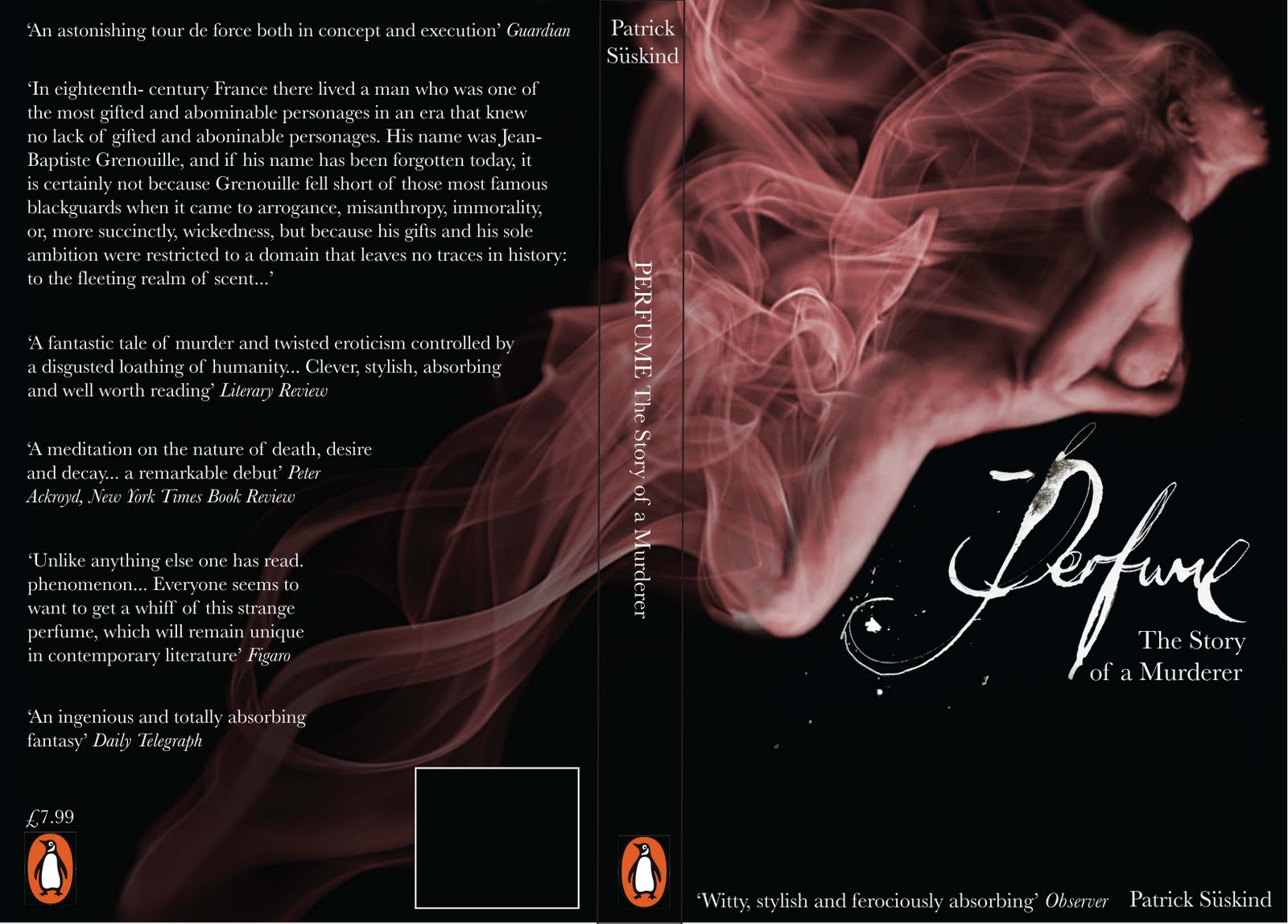
One of my favorite books that I’ve read in the last decade is the international best-seller, Perfume: The Story of a Murderer, by Patrick Suskind. Also known as Das Perfum or Le Parfum, the 1985 German novel is also one of the most beautifully written books I’ve read, a lyrical ode that explores the sense of smell in the most evocative, powerful way imaginable. As any perfume blogger can tell you, aroma is not an easy thing to convey. And, yet, Suskind manages brilliantly, re-creating the world of 18th-century France in all its horrors and fetid stink.

Suskind PerfumeThe book crosses and mixes several literary genres, from gothic to horror and the supernatural in the vein of Edgar Allen Poe. I find it difficult to adequately summarize the book (and we all know that brevity isn’t my forte!), so I’ll rely on Google books for a description that doesn’t give too much away:

An acclaimed bestseller and international sensation, Patrick Suskind’s classic novel provokes a terrifying examination of what happens when one man’s indulgence in his greatest passion—his sense of smell—leads to murder.

In the slums of eighteenth-century France, the infant Jean-Baptiste Grenouille is born with one sublime gift-an absolute sense of smell. As a boy, he lives to decipher the odors of Paris, and apprentices himself to a prominent perfumer who teaches him the ancient art of mixing precious oils and herbs. But Grenouille’s genius is such that he is not satisfied to stop there, and he becomes obsessed with capturing the smells of objects such as brass doorknobs and frest-cut wood. Then one day he catches a hint of a scent that will drive him on an ever-more-terrifying quest to create the “ultimate perfume”—the scent of a beautiful young virgin. Told with dazzling narrative brillance, Perfume is a hauntingly powerful tale of murder and sensual depravity.

It has garnered huge international praise from many, while others find it creepy, perfume bookdisturbing and truly revolting. Most of my friends who’ve read the book, even those who aren’t into perfume, adored it. In contrast, the good Christian, conservative, elderly Texan ladies in my book club were horrified by it. Horrified! Aghast! (I blame that mostly on the ending which I won’t discuss lest I spoil it for you.)

Amazon has an excerpt of the book’s opening paragraphs which illustrate the exquisite writing (as translated from Suskind’s original German) and his ability to evoke powerful imagery in such a way that you are transported back to Paris in the mid-1700s:

In eighteenth-century France there lived a man who was one of the most gifted and abominable personages in an era that knew no lack of gifted and abominable personages. His story will be told here. His name was Jean-Baptiste Grenouille, and if his name-in contrast to the names of other gifted abominations, de Sade’s, for instance, or Saint-Just’s, Fouché’s, Bonaparte’s, etc.-has been forgotten today, it is certainly not because Grenouille fell short of those more famous blackguards when it came to arrogance, misanthropy, immorality, or, more succinctly, to wickedness, but because his gifts and his sole ambition were restricted to a domain that leaves no traces in history: to the fleeting realm of scent.

Scene from the movie, "Perfume." Source: BarcelonaMovie.com

Scene from the movie, “Perfume.” Source: BarcelonaMovie.com

In the period of which we speak, there reigned in the cities a stench barely conceivable to us modern men and women. The streets stank of manure, the courtyards of urine, the stairwells stank of moldering wood and rat droppings, the kitchens of spoiled cabbage and mutton fat; the unaired parlors stank of stale dust, the bedrooms of greasy sheets, damp featherbeds, and the pungently sweet aroma of chamber pots. The stench of sulfur rose from the chimneys, the stench of caustic lyes from the tanneries, and from the slaughterhouses came the stench of congealed blood. People stank of sweat and unwashed clothes; from their mouths came the stench of rotting teeth, from their bellies that of onions, and from their bodies, if they were no longer very young, came the stench of rancid cheese and sour milk and tumorous disease. The rivers stank, the marketplaces stank, the churches stank, it stank beneath the bridges and in the palaces. The peasant stank as did the priest, the apprentice as did his master’s wife, the whole of the aristocracy stank, even the king himself stank, stank like a rank lion, and the queen like an old goat, summer and winter. For in the eighteenth century there was nothing to hinder bacteria busy at decomposition, and so there was no human activity, either constructive or destructive, no manifestation of germinating or decaying life that was not accompanied by stench.

And of course the stench was foulest in Paris, for Paris was the largest city of France. And in turn there was a spot in Paris under the sway of a particularly fiendish stench: between the rue aux Fers and the rue de la Ferronnerie, the Cimetiere des Innocents to be exact. For eight hundred years the dead had been brought here from the Hotel-Dieu and from the surrounding parish churches, for eight hundred years, day in, day out, corpses by the dozens had been carted here and tossed into long ditches, stacked bone upon bone for eight hundred years in the tombs and charnel houses. Only later-on the eve of the Revolution, after several of the grave pits had caved in and the stench had driven the swollen graveyard’s neighbors to more than mere protest and to actual insurrection-was it finally closed and abandoned. Millions of bones and skulls were shoveled into the catacombs of Montmartre and in its place a food market was erected.

Here, then, on the most putrid spot in the whole kingdom, Jean-Baptiste Grenouille was born on July 17, 1738. It was one of the hottest days of the year. The heat lay leaden upon the graveyard, squeezing its putrefying vapor, a blend of rotting melon and the fetid odor of burnt animal horn, out into the nearby alleys. When the labor pains began, Grenouille’s mother was standing at a fish stall in the rue aux Fers, scaling whiting that she had just gutted. The fish, ostensibly taken that very morning from the Seine, already stank so vilely that the smell masked the odor of corpses. Grenouille’s mother, however, perceived the odor neither of the fish nor of the corpses, for her sense of smell had been utterly dulled, besides which her belly hurt, and the pain deadened all susceptibility to sensate impressions. She only wanted the pain to stop, she wanted to put this revolting birth behind her as quickly as possible. It was her fifth. She had effected all the others here at the fish booth, and all had been stillbirths or semi-stillbirths, for the bloody meat that emerged had not differed greatly from the fish guts that lay there already, nor had lived much longer, and by evening the whole mess had been shoveled away and carted off to the graveyard or down to the river. It would be much the same this day, and Grenouille’s mother, who was still a young woman, barely in her mid-twenties, and who still was quite pretty and had almost all her teeth in her mouth and some hair on her head and – except for gout and syphilis and a touch of consumption – suffered from no serious disease, who still hoped to live a while yet, perhaps a good five or ten years, and perhaps even to marry one day and as the honorable wife of a widower with a trade or some such to bear real children . . . Grenouille’s mother wished that it were already over. And when the final contractions began, she squatted down under the gutting table and there gave birth, as she had done four times before, and cut the newborn thing’s umbilical cord with her butcher knife. But then, on account of the heat and the stench, which she did not perceive as such but only as an unbearable, numbing something-like a field of lilies or a small room filled with too many daffodils-she grew faint, toppled to one side, fell out from under the table into the street, and lay there, knife in hand.

Born in blood to a woman who tried to murder him, and then later rejected by society, Grenouille’s life was not an easy one. It was rendered even more difficult by the fact that he had a supernatural sense of smell but no personal scent of his own. The latter made people shy away from him, finding him something unnatural and unnerving. From an orphanage to a poor house, to a brutal apprenticeship as a tanner’s assistant and more, Grenouille — the book’s hero, anti-hero or monster, depending on your view — led a life of constant hardship, isolation and social rejection.

There was no joy in his world except his ability to detect the very olfactory essence of every object around him: from rocks to brass knobs, from the smell of the water to the very essence of the wind. Yet, even that supernatural ability never gave him much purpose in life until, one day, he stumbled upon a red-haired virgin. And it changed everything. He fell in love with her aroma — the scent of pure love and infinite beauty — and was determined to replicate it in a bottle at any cost. Including murder. As the back of my copy of Perfume states:

It was after that first crime that he knew he was a genius – that he understood his destiny. He, Jean-Baptiste Grenouille, the fishmonger’s bastard, was to be the greatest perfumer of all time. For he possessed the power not just to create beautiful scents, but to distil the very essence of love itself.

And as the obsession began, so would it end….

His ensuing path, and the trail of bodies he left in his wake, is one you must discover for yourself, as I shan’t give away the tale.

Christophe LaudamielSource: NYT SmellBound

Christophe Laudamiel
Source: NYT SmellBound

It is hardly surprising that Perfume had an enormous impact on actual “noses” and perfumers in the industry. Take, for example, the obsession of Christophe Laudamiel. As Chandler Burr explains in a New York Times article entitled “Smellbound,” Laudamiel was transfixed by the book from the moment he read it in perfumery school. When he began work for the giant fragrance corporation I.F.F. (International Flavors and Fragrances) in 2000, he set out to systematically recreate the pivotal scenes of this murderer’s story in scents, one by one:

Laudamiel would work on the novel’s scents alone, on his own time, evenings, weekends. No one knew he was doing it. He spent nights in the lab, mixing and remixing to find, say, the exact smell of freshly tanned leather, and would go home at 6 a.m. The first scent he created was Ermite (Hermit), the smell of the cave: damp stone, moss, pine, mountain wind, cold. He created Amour and Psyche, the best-selling perfume that Grenouille copies perfectly from scratch in the novel. Strangest of all, however, was Virgin No. 1, the scent of the girl who sold those yellow plums in the Paris streets. Years ago, an I.F.F. scientist recruited two young female virgins and, with their parents’ permission, recorded their aroma using a polymer needle. Laudamiel found this scent on I.F.F.’s shelves, then added christophe_laudamiel_2the scents Süskind describes as clinging to the virgin’s skin: apricot, nuts, sea breeze.

[There was also] Human Existence. It was the scent the scentless Grenouille creates for himself. “You must remember,” Laudamiel says, “this character’s being born without a scent has made him terribly lonely, lost, ignored. Having his own scent makes him whole. It makes him human.” [Emphasis added.]

Perfume PosterThat was just the start. In 2006, the movie version of Perfume came out, with small roles for Alan Rickman and Dustin Hoffmann. (It’s not a particularly good film. Really, it’s not! And I say that as someone who adores Alan Rickman. So, even though the film is easily available via NetFlix, read the book instead!) Perfume_Poster1_9407

Laudamiel met with the film’s German producer, Thomas Friedl, and with Vera Strubi, the head of Thierry Mugler perfumes. Laudamiel presented them with some of his Grenouille scents, and

[t]hey were mesmerized. They found themselves experiencing the book, its details and its characters. Strubi loved Laudamiel’s smells, the good as well as the bad.

It was agreed that Mugler would perfect 14 scents and package them in a special coffret — Paris 1738, Atelier Grimal and Orgie among them. But Strubi also wanted him to create a 15th scent for Thierry Mugler, a perfume that captured the essence of Süskind’s book. The obvious choice would be to try to create the perfume Grenouille makes from the scent of the murdered virgins. But that was impossible (by definition it didn’t exist), and not to mention, Strubi said, too pretentious.

Mugler Coffret set for "Perfume". Source: Fragrantica

Mugler Coffret set for “Perfume”. Source: Fragrantica

In 2006, the perfume blog, The Scented Salamander, posted a description of the final result, along with some of the Mugler press release:

In this boxed set of 15 fragrances, Thierry Mugler dares to present the novel’s 15 olfactory themes. ‘Disturbing, arousing, divine, sensual, icy… none of the fifteen compositions will leave you indifferent’…

The boxed set contains fourteen olfactory compositions bearing the names Baby, Paris 1738, Atelier Grimal, Virgin Number One, Boutique Baldini, Amor & Psyche, Nuit Napolitaine, Ermite, Salon Rouge, Human Existence, Absolu Jasmin, Sea, Noblesse, Orgie. Uncompromising fragrances evoking human warmth, love, sexuality, wealth, virginity and more… The fifteenth fragrance, ‘Aura’ is a creative interpretation of the bewitching magic spell cast by the ‘virtuoso, terrifying scent of Grenouille’, the murderous hero of Perfume. 84 ingredients compose its top-secret formula, by fragrance designers Christophe Laudamiel and Christophe Hornetz.

She later posted some preliminary impressions of the 15 perfumes. In a nutshell, she found the scents “strangely beautiful” for the most part, though I personally thought she seemed less than enchanted by “Virgin #1.”

Victoria of Bois de Jasmin posted a comprehensive review of the Mugler/Laudamiel scents. She has fabulous descriptions of each perfume, so I encourage you to read her review in full, but here is her assessment of the critical Virgin #1 scent:

No. 1 Part I, Chapter 8 of “Perfume: The Story of A Murderer”

“A girl was sitting at the table cleaning yellow plums… A hundred thousand odors seemed worthless in the presence of this scent. It was pure beauty.”

In one of the interviews with Laudamiel, I read that the IFF team worked to capture the scent of a young girl’s navel via headspace (a technology designed for capturing and analyzing the aroma molecules in the air around the source of scent.) This novel accord was used in Virgin No. 1. While I was intrigued by the idea, nothing prepared me for the sheer beauty of the fragrance. The base of the composition is the most exquisite musky accord, milky like fresh cream, smooth like peach skin and warm like delicate cashmere. An intoxicatingly luscious plum is woven though the musky tapestry, lightening it and lending it an irresistibly playful facet. Although it is amazing on the blotter, on the skin, the fragrance reveals all of its beautiful facets in a panoramic manner. It is innocent, and yet it possesses a beguiling and sensual edge. It is subtle, yet its sillage is magnificent. It is breathtakingly beautiful.

On Fragrantica, those who have smelled Virgin #1 seem to have found it equally stunning. But, alas, we shall have to live vicariously through their experiences, since the perfumes are now akin to the Holy Grail and a unicorn, combined into one.

It’s not merely the obvious fact that they are no longer available; it seems they were always elusive. I read on Fragrantica that only 300 coffrets were produced, that they sold out in Europe in a week, and, at the time, cost $600 each. According to another poster on the site, one of those sets was valued at over $1,000 as of December 2011 when it was offered for sale. I’ve never seen a single one on eBay, though I’ve heard they do appear from time to time.

The point of all this is not to create an exercise in frustration — though, clearly, it may do that as well. The point is to demonstrate the incredible power of Suskind’s olfactory imagery and the extent to which his book can compel an obsession all of its own. It’s also intended to demonstrate the extent to which the book has influenced actual perfumers in the industry and how they have attempted to turn that most abstract of things — the literary image of something as evanescent as scent — into something concrete. In fact, I would bet anything that Etat Libre d’Orange’s infamous Sécrétions Magnifiques was influenced, at least in some part, by Suskind’s book. And, lastly, it shows just how far perfumery has come in modern times: harnessing the scent molecules of virgins. (With no actual bloodshed involved!)

If you are a perfumista and haven’t read Suskind’s brilliant book, I strongly urge you to do so. It will blow your mind! Even if you’re not particularly into perfume, you may still want to pick it up. Whether you find it brilliant or creepily disturbing beyond words, I can guarantee you one thing: it’s like nothing else you will ever read.

DETAILS:
On Amazon US, “Perfume” currently costs $8.15. On Amazon Canada, it costs CDN $12.27. On Amazon UK, it costs £6.29. On Amazon France, “Le Parfum” costs EUR 5,32. It should be available on all the other Amazon sites as well, in addition to your local bookstores.