Source: Pinterest.
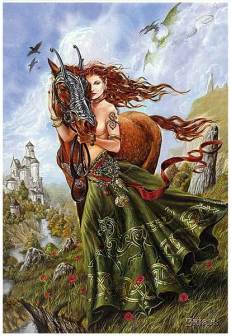
From her great height atop the cliffs, she could gaze at her realm and the fields of yellow, green and gold below her. The Celtic princess was astride a large white stallion, garbed in a softly burnished, slightly musky, brown leather cuirass, and draped with white lilies. Her skirt was made of hay, wheat and grass; her skin was coated in ambered oil; and her long hair braided with daffodils that matched the flowers in her horse’s mane. Behind her were her clansmen, giant warriors silent in leather and white flowers. As they rode down to pay homage to the shrine of Epona, the scent of their horses, leather, and lilies mingled in the air, floating like tendrils over the fields of daffodils, grass, wheat, and dry hay. It is the fragrance of Lys Epona.
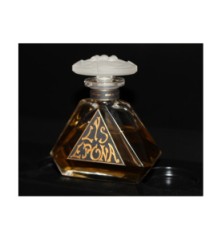
Lys Epona via the Jovoy website.
Lys Epona is a new 2013 eau de parfum that is available exclusively at Jovoy Paris. I stumbled upon it while browsing the store and, as you can read in my profile on Jovoy, it blew me away. I had been utterly overwhelmed by all the treasures in the store, and had experienced olfactory fatigue up to that point, but Lys Epona made me sit up and take notice. Jovoy was kind enough to give me a sample to test its duration on my perfume-eating skin, and I still love it as much as I did initially, though its intimate sillage is a great problem for me personally.
While most reports credit Lys Epona and its creation to François Hénin, Jovoy’s owner, in collaboration with the perfume nose, Amelie Bourgeois of Flair, there is actually a third person involved who is much more significant to the tale. A very passionate Parisian perfumista — who prefers to be known only as Annabelle — is responsible for the very idea behind the fragrance. In fact, the perfume is really part of her new brand, Lys Epona, and not a part of Jovoy’s personal line of fragrances at all.

Source: Le Figaro.
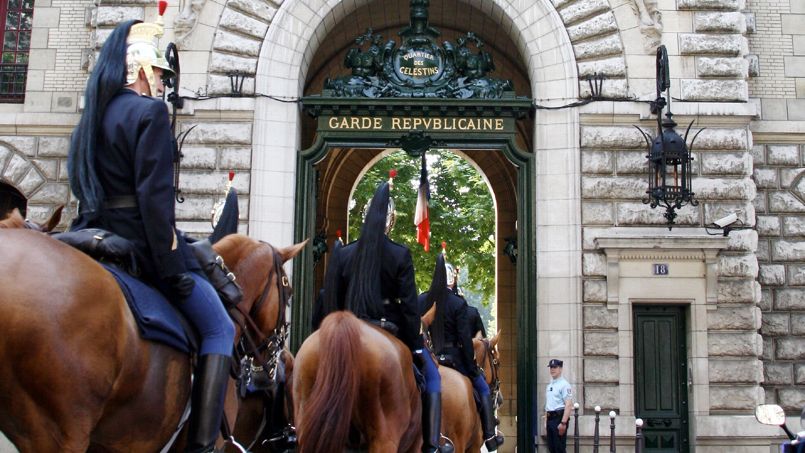
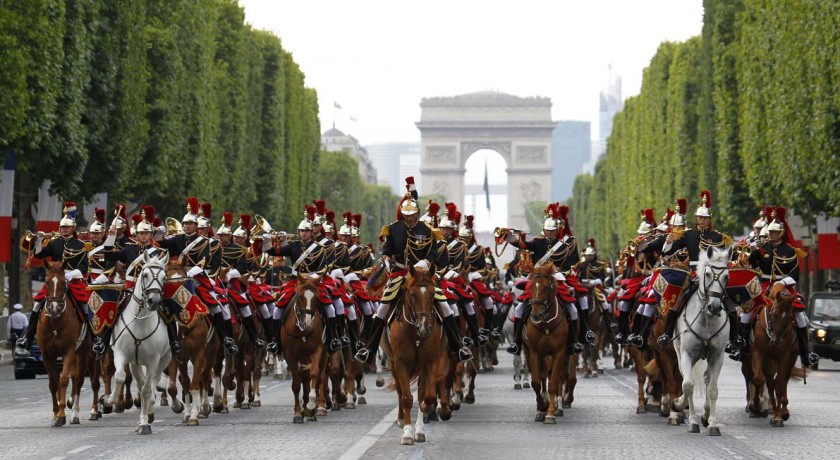
The source of Annabelle’s inspiration explains a lot about the fragrance. As she told me in an email and also recounts on her site, Lys Epona, the whole thing began one day in Paris when she was walking near the stables of Le Garde Républicaine, or the Republican Guard, France’s elite mounted cavalry and honour unit. As the smells of horses, leather, hay, and a touch of urine hit her nose, a lady passed by her carrying an enormous bouquet of lilies. The aromas blended together into a magnificent whole which took away her breath. As Annabelle later wrote to me, it was “[l]ike a dance between an Hussar and a Courtisan!”

France’s Republican Guard. Source: ambafrance-kz.org

Garde Républicaine. Photo: souvenir-francais-asie.com
The unusual combination stayed in her head. Annabelle loves perfume, particularly vintage ones, but also niche fragrances, and had been a frequent visitor to Jovoy Paris from its very inception back in 2010. So, one day, she told its owner, François Hénin, about the incident, and he asked her if she wanted to try turning her idea into an actual perfume. He put her in touch with Amelie Bourgeois, a “nose” at Flair, and the two worked on perfecting her vision of the dance between leather, horses and lilies.
The result, Lys Epona, was originally meant to be a personal, one-time perfume for its creator, but a twist of fate involving some vintage bottles eventually led to a 100-bottle distribution released under Jovoy’s sponsorship or patronage. (More on those vintage bottles later.) Annabelle later began her blog site, Lys Epona, as a means of talking about the fragrance without stealing from its thunder by coming out as its official creator, but the sponsorship ties that began the collaboration have accidentally ended up giving Jovoy the credit in some people’s eyes. I made the same mistake myself until Annabelle clarified the situation for me in an email, so I wanted to set the record straight.
So, you may ask, what precisely is in it? Jovoy’s French-language page for Lys Epona has many more details than the English version which I had looked at originally, but it still doesn’t include the perfume’s full list of notes. Thanks to Fragrantica (which also accidentally credits the perfume to Jovoy), it seems Lys Epona has:
top notes of bergamot, lily and ravensara; middle notes of narcissus [daffodils], jasmine, ylang-ylang, wheat, hay and lily; and base notes of musk, labdanum, tobacco and cedar.

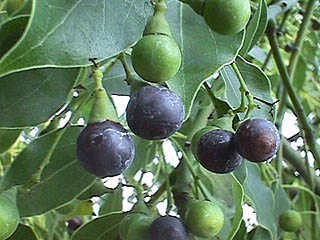
Ravensara. Source: bellamiraessentialoils.com
Ravensara is not something that I’m at all familiar with, but its aroma turns out to be a significant part of Lys Epona’s beginning. According to my research, it is a member of the Laurel family and its seeds are what we consider to be nutmeg. Ravensara’s aroma, however, is a somewhat medicinal, camphorous one with definite fruity overtones.
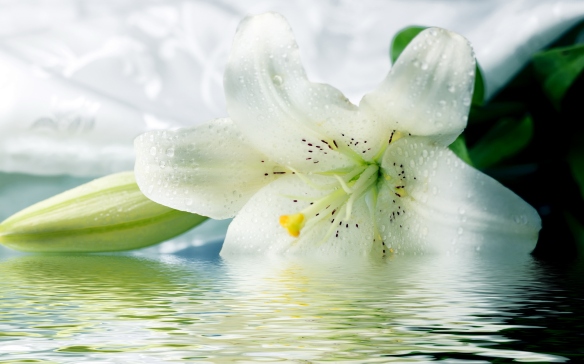
Lys Epona always opens on my skin in the same way, but its subsequent development was never precisely the same on each of the four occasions that I tested it. The first time I tested the fragrance, it opened with a burst of freshly crisp citruses, followed by dry hay, leather, and green notes that almost seem like oakmoss at times. There is a plush greenness to the notes that is far more than mere grassiness and really verges on a slightly dry, mossy feel. A few minutes later, the white lilies burst on the scene. While their almost dewy sweetness is potent, it never overwhelms the citric, chypre-like leather start. All around you, the leather swirls in a soft cloud of burnished, aged richness. There is a definite animalic edge in the opening minutes that makes me wonder if Lys Epona has a good dose of civet in it.
Source: Jwallpapers.com
Three minutes later, a slightly mentholated note appears, followed by what I would swear were orange blossoms. In two of my four tests, the orange blossoms seemed quite noticeable to me, taking on a Serge Lutens-like mentholated aspect from its indoles. I realise now that it has to be the combination of the ravensara (with its supposed camphoraceous notes that have a fruity edge) with the white floral blast from the lilies. That “mentholated orange blossom” cocktail ended up being the primary floral note in Lys Epona’s start for the first hour but, oddly enough, my other two tests of Lys Epona never created that impression. Instead, what was much more noticeable was the hay which appeared right alongside the leather and lily.
Epona by “Brian.” Original source or site unknown.
All my tests, however, led to one overall impression of Lys Epona in its opening phase: the Celtic warriors of spring. Each and every time, Lys Epona evoked the image of a countryside filled with dry haystacks, and lightly imbued with the green of rolling, grassy hills and forest moss. There was always the jangle of a horse’s leather reins and its slightly musky smell as you rode through the verdant fields of daffodils to a garden of lush, heady, white flowers. And, on all occasions, the fresh citric start that felt almost chypre and fougère-like with the green and hay overtones dissipated rapidly. What was left behind as the primary essence of the scent was an almost masculine, outdoorsy and leather-influenced take on indolic white florals, that was also sweetly feminine at the same time.

Clip from “Wrath of the Titans.” Source: buzzinefilm.com
Lys Epona is lush, sexy, strong, but also somewhat rugged. This isn’t a lusty courtesan’s white florals that she would wear while languidly reclining on a chaise lounge, nor the delicate flowers of an ethereal, weeping maiden. No sexpot bombshells, or prissily powdered old ladies would fit the scent either. No, this is more a strong Amazonian’s white florals, a beautiful warrior whose well-worn leather armour is covered by wreaths of lilies, and who lives in an outdoors world surrounded by the very essence of nature. It is most definitely the scent of Epona, the protector of horses who was also revered by pagan Celtic tribes as the goddess of fertility, strength and abundance, and whose two symbols are usually horses and wheat.
For the first half of its life, Lys Epona is primarily a perfectly modulated, beautifully blended swirl of lilies and leather that come together in bouquet beribboned with hay, grass, daffodils, and the most infinitesimal touch of animalic horsiness. At its heart and deepest depths, however, Lys Epona has labdanum amber which stirs from its waking sleep as early as thirty minutes into the perfume’s development. Just a hint, just a whisper, but its warmth is enough to consistently diffuse the chilled, mentholated, almost pepperminty undertones to the ravensara. In most of my trials, as the amber slowly, fractionally, made its way to the surface, the leather retreated in equal measure to the sidelines. At the same time, there are undercurrents of green that have the sweetness of freshly mowed grass in summer, and which swirl alongside the amber and the dry hay that lie just below the surface.
Source: hdwallpapers.lt
On top are the white lilies, shining like beacons of purity and freshness in all their glory. Their scent is never heavily indolic, never cloyingly sweet. This is not the lily of Serge Lutens‘ Un Lys, nor the lily of some recent creations like Le Labo‘s Lys 41 or Tom Ford‘s Shanghai Lily. It’s a flower that is simultaneously sweet, dewy, watery, almost a little fruity (thanks to the ravensara) but also a little dry (thanks to the hay).
What’s interesting to me is how the lily can change its role in the perfume’s development from one day to the next and, more importantly, in its accompanying nuances. In my first test, as well as when I blindly sprayed it in Jovoy, Lys Epona seemed a scent that was dominated initially by orange blossoms with the lilies taking a back seat until the start of the second hour. In my second test, the lily was much more dominant from the start, then later joined by jasmine around the middle of the third hour. In my third and fourth tests, the lily was present again from the start, but its strength waxed and waned like a wave hitting the beach. It was also primarily backed by daffodils, instead of the other floral notes.
The leather is very much the same way. In my second and fourth tests, it was very pronounced through much of Lys Epona’s first three hours, and even occasionally dominated the lily. At other times, however, it receded to the sidelines after the first forty minutes, remaining as a constant second layer but never dominating. In all instances, its animalic opening was quickly tamed, and it felt like a very smooth, rounded note.
All of this should make one thing very clear: Lys Epona is what I call a very “prismatic scent.” It throws off different notes at different times like rays of light bouncing off crystals hit by the sun. I suspect different elements would dominate at different stages and upon different wearings. It’s the sign of a beautifully crafted perfume that is blended perfectly and whose great depths are in perfect harmony. Nonetheless, it would probably be more useful to you if I gave you a traditional rundown of its development, even if the analysis covers how it appeared on only one occasion. So, let’s take my third test of Lys Epona and go from there.
Lys Epona opened with its usual burst of fresh, crisp but juicy bergamot. Soon thereafter, there was the animalic leather with its slightly urinous, civet-like undertones, musk, and a hint of sweet florals. At first, the latter is a haze in which daffodils (or narcissus) is only vaguely distinguishable. Minutes later, there are the slow stirrings of lily, which are soon overtaken by a slightly camphorous, mentholated note heralding the arrival of the ravensara. There is an underlying fruitiness which, when combine with the citruses and white florals, again gives off the impression of orange blossoms. This time, however, it’s incredibly fleeting, and the hint of Tiger’s Balm medicated, mentholated salve is much more apparent. It swirls with the jangle of a leather saddle, the musk, the daffodil and lilies, creating a truly unique take on indolic flowers.

Source: Cepolina.com
Fifteen minutes in, the hay, wheat, and grass elements arrive. When combined with the daffodils, they create a freshness that really feels like spring. At the same time, something about the combination of the ravensara and the grass once again evokes soft, plush oakmoss for me. However, the lilies now bloom in full force, as if they’d been awakened by the sun, and their almost watery, dewy sweetness counteracts that passing impression of a chypre. The hay also starts to shine, pushing aside the bergamot and citric notes to the side. At the same time, the civet-like urinous undertone fades away, as the leather takes on an almost burnished, rounded feel.
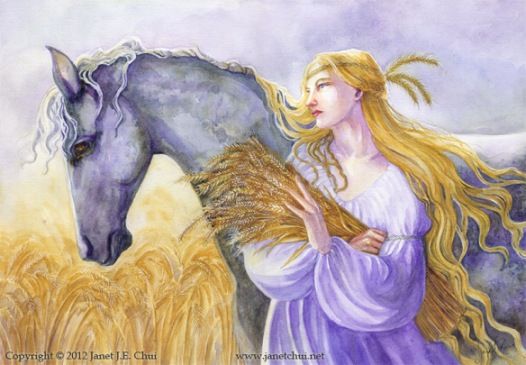
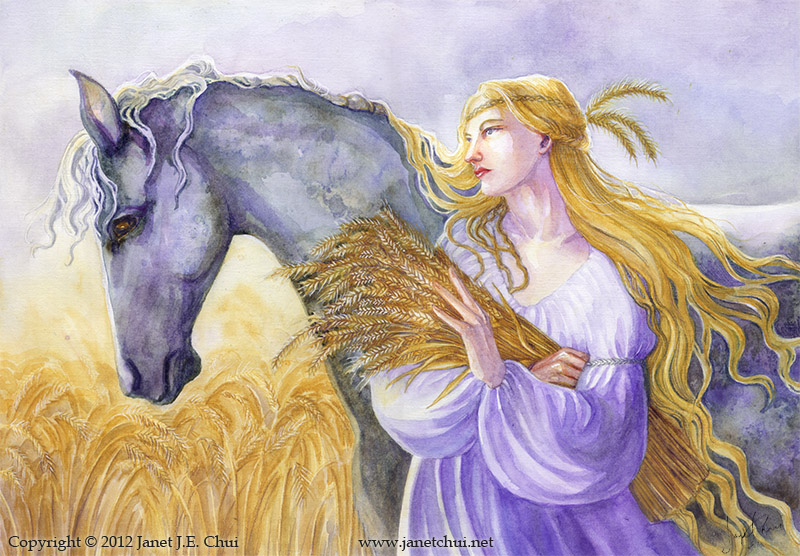
Epona, with her horse and her wheat. Created by Janet Chui. Source: janetchui.net
By the end of the first hour, the leather and the lily are dancing a tango, sensuously interwoven together, while the hay, grass, ravensara and daffodils clap from the sidelines. Far away, at the periphery, in the shadows, the labdanum amber wakes up at the noise and raises its head. Moment by moment, it draws closer to the stage, until it fully pushes aside the ravensara with its mentholated edge, and shines the light of its warmth onto the other players.
Things change further at the middle of the second hour. Lys Epona’s lily focus is now infused with jasmine, amber, hay, and the slow rumblings of tobacco in the base. From time to time, a juicy, citric sweetness pops back up, but the sweet spring-like aroma of daffodils is much more constant. The leather is now completely off center-stage, hidden behind the flowers, and the daffodil/narcissus in particular. Yet, it is subtly complemented by the somewhat nutty, leathery characteristics of labdanum. This is a leather that is now no longer animalic and musky, but rather just a suggestion. The labdanum is the same way for it lacks its slightly dirty, almost masculine essence at this stage. Instead, its aroma is more of regular, slightly sweetened, soft amber.
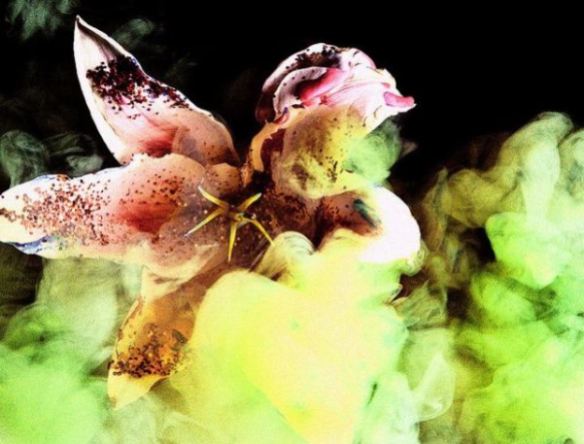
Photo: Henry Hargreaves Photography. “Smoke and Lily” series. Source: Trendland.com http://trendland.com/henry-hargreavess-smoke-and-lily-photography/
It takes a while for the labdanum to appear in all its beautiful glory. (Labdanum is my absolute favorite kind of amber precisely because of its unique aroma.) At the end of the third hour, Lys Epona turns into a scent that is primarily golden amber in focus, where the labdanum has turned the lily’s whiteness into a burnished bronze. The fragrance is a gorgeous glow of molten nuttiness and amber, infused with touches of lily, labdanum’s honeyed nuance, and musk. Flickers of leather, hay, grass, tobacco and an abstract woodiness dance all around. Lys Epona remains that way largely until its very final stage when it’s merely a blur of amber with minute traces of tobacco and hay. The lily has mostly faded away, as has the leather. At the very end, only the golden amber is left, like a sunset fading on the Celts.
Lys Epona is wonderfully original and extremely beautiful, but it also has some problems for me on a personal level. I repeatedly struggled with the sillage and longevity. Now, I have perfume-eating skin, but I rarely have a problem with sillage. And Lys Epona has very soft sillage! Obviously, projection is a very personal matter, but I can give you only my personal reaction, which is that Lys Epona becomes too soft too quickly. Each and every time, on all four tests, Lys Epona became an intimate scent after a mere one hour. One hour! It’s far, far too soon, in my opinion. Soft sillage that hovers only an inch or so above your skin is acceptable after a few hours and, in my ideal world, would be best after about 6-8 hours, but one hour?!
Spraying versus dabbing is not the answer, either. In general, aerosolisation adds to a perfume’s strength and longevity, but all my tests involved sprays from the small atomizer that Jovoy kindly made for me. So, while the perfume itself comes in a dab bottle (if memory serves me correctly), I was using the method that best amplifies a perfume’s projection. And that method gave me a mere hour or 75 minutes of a moderate perfume cloud! For people like myself who prefer a little more of a power to their fragrances, I think Lys Epona’s rapidly dropping sillage might be a little disappointing.
I should also add that increased quantity did not make much of a difference. I applied an average of 4 squirts from my 2 ml spray vial each time. During my fourth test, it almost felt as though the perfume were evaporating from my skin, as it became less potent and noticeable within a mere 15 minutes. Was the air conditioning too high, and the temperature too cold for Lys Epona to really bloom? To counter the possibility, I added two additional sprays, for a total of 6 sampler sprays (or what might be 3 big sprays from an actual bottle, depending on the size of its hole). No difference. Lys Epona was a lovely, albeit very soft, cloud for just 60 minutes, and then dropped in force. At all times, it was airy in weight and feel, never thick or opaque, and its final stages coated the skin like a gauzy whisper. Personally, I wish it had been a little less airy and sheer, but Lys Epona is not meant to be a baroque, molten, heavy scent.
In addition to the sillage issue, the longevity wasn’t great on my skin either, but that is obviously much more of a personal outcome due to my wonky skin chemistry. On average, Lys Epona lasted between 6.5 hours and 7.75 hours, depending on the quantity that I used. I may have perfume-consuming skin, but I’ve certainly found a number of brands and fragrances that have lasted 12+ hours on me, even up to 16 hours in small, lingering spots, and often with a significantly smaller quantity of liquid than I used here. The fact that Lys Epona is not exactly cheap (€225), is only 65 ml (just over 2.1 oz), and would require a lot of sprays for the perfume to really last on me means that I would go through that bottle quite quickly. For me, it’s a concern, and the primary reason why I won’t consider buying Lys Epona for myself.
In my exchanges with the absolutely lovely, incredibly sweet, outgoing and very vibrant Annabelle, I mentioned the sillage and longevity issues. She was surprised to hear that I thought Lys Epona was very soft. Apparently, her friend tells her that she can’t spray Lys Epona when they’re going to be in the small confines of a car because it’s too strong. But sillage is a very subjective, personal matter, so it really depends on how one defines “strong” and the yardsticks used therein. Annabelle mentioned that she was not fond of the ’80s powerhouse scents, after one too many bad experiences being cloistered at 7 a.m. in the elevator with a neighbor who sprayed on too much. Now, me, in comparison, I hope to die being covered and drenched in vintage ’70s Opium, and I love Amouage scents, so obviously I have a very different interpretation of the perfect sillage.
What was interesting to me is something else that Annabelle mentioned as a specific goal for the perfume’s structure. She wanted a very strong, powerful opening, almost like a sort of Lutens-like “Lys Criminelle.” Yet, she intentionally sought to make that opening later turn into something soft and intimate for symbolic reasons, as if the “lily and horse, after a race, finally tamed each other.” I admire that intellectually, and think it’s rather a brilliant piece of olfactory meaning. I also think she fully accomplished her goal, because the two notes did tame each other in each of my tests.

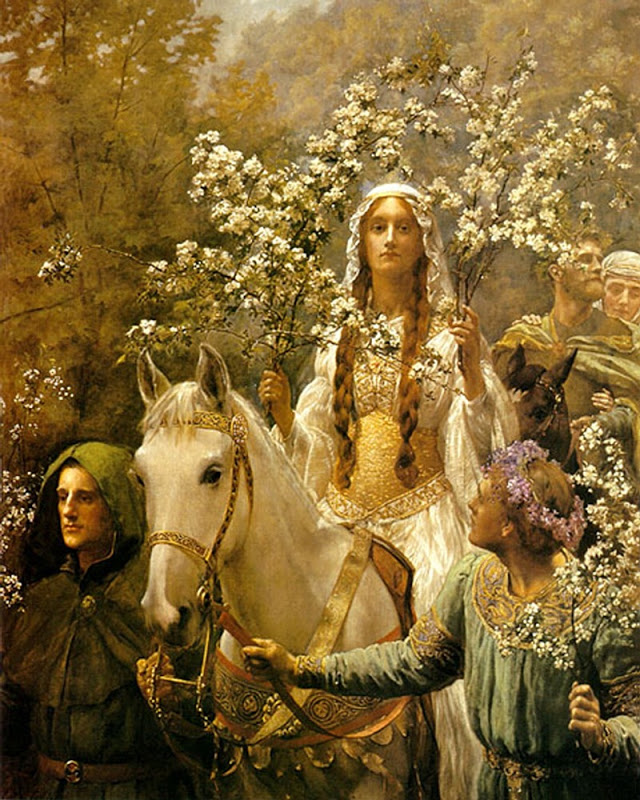
John Collier, “Queen Guinevere’s Maying” (1900). Source: Wikipedia.
At the end of the day, issues of sillage and longevity are all a matter of personal preference. Some people absolutely hate perfumes that are too strong, with Amouage-like intensity and forcefulness. They specifically seek more unobtrusive fragrances that are like a suggestive, personal whisper, or that might be something they could wear to work without bothering colleagues. Lys Epona would definitely qualify. I also think that it would work perfectly on both a man and a woman. It is rugged and outdoorsy with its spring-like touches and leather, but it is also beautifully feminine and elegant.
In short, nothing I’ve said here about the sillage or airiness should change the main bottom line: Lys Epona is a gorgeous scent that is incredibly original, creative, different, and elegant. The radiating prisms of its notes, its beautifully evocative nature, its depths, and its very classique, old-school sophistication are a stunning achievement for a first time perfume creator, and Annabelle’s passionate love for perfumery shows in every drop. Amelie Bourgeois’ talents (and supposed love for horses) also show, so both of them deserve much praise in my opinion. If you end up buying Lys Epona, I think you will have a truly original creation on your hands which will stand out in your collection. I haven’t quite come across anything like it.
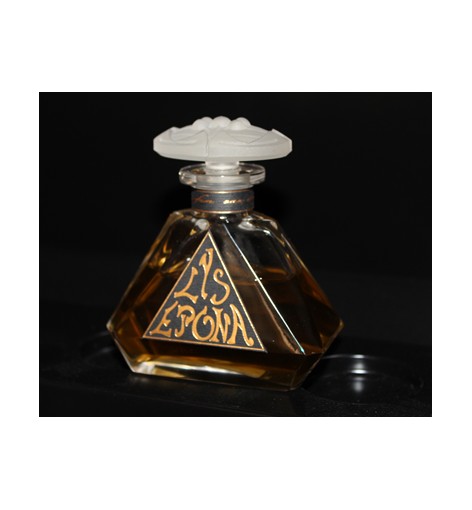
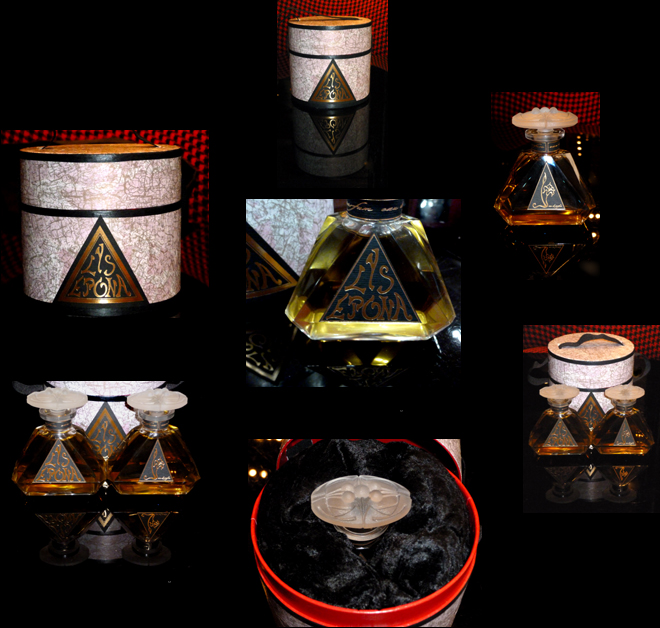
Lys Epona also happens to be a very lovely looking perfume in terms of its packaging. From the moment I held the bottle in my hands, I felt as though I had a rare, vintage treasure of great character. From the black-and-gold, scrolled letters on the label, to the Lalique-like, clouded crystal stopper, Lys Epona is beautiful. For me, its look not only conjures up images of the golden age of perfumery, but also serves as a wonderful parallel to the scent itself whose sophisticated, complex, very nuanced structure give it a very classique feel.
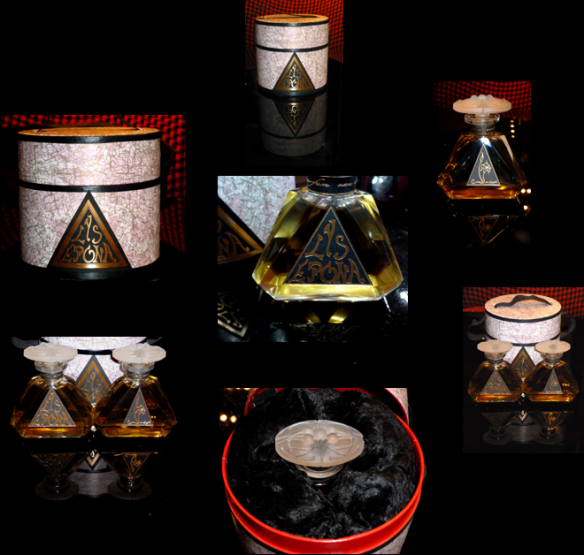
Lys Epona. Photo courtesy of Annabelle.
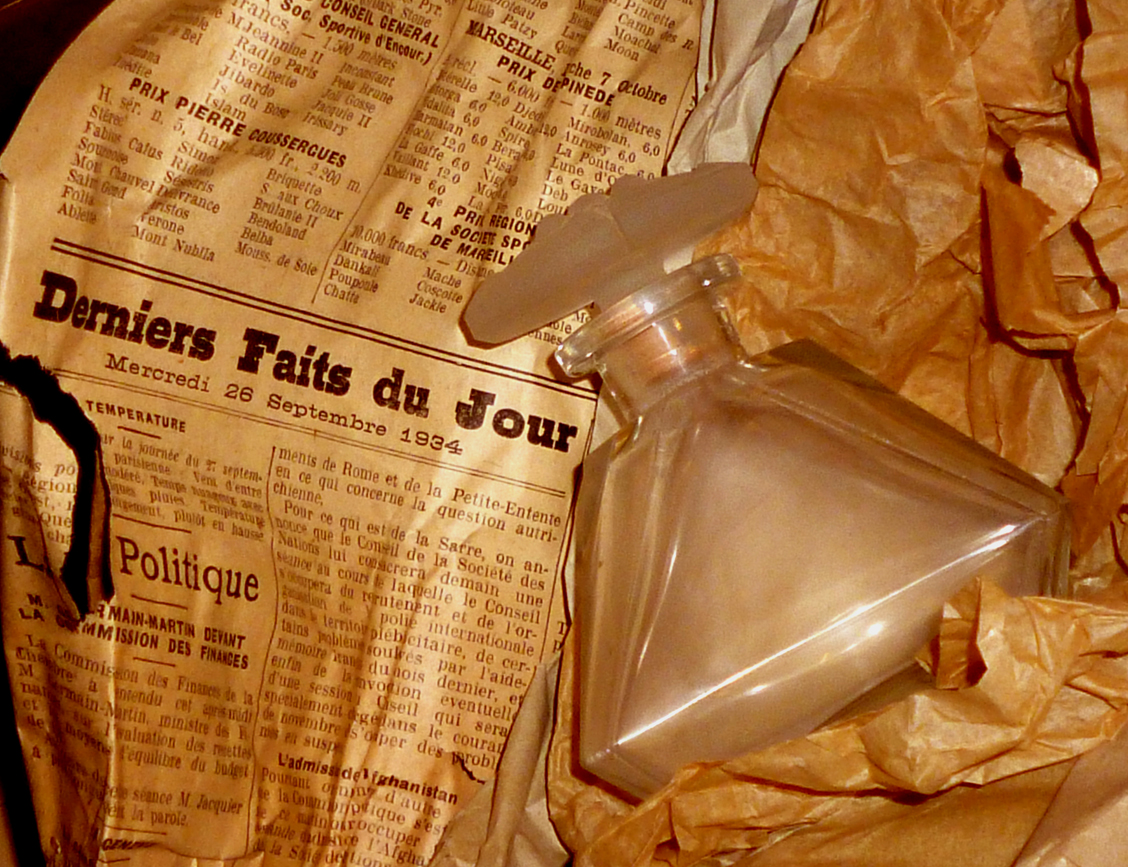
There is another story behind the Lys Epona bottles, and I think the tale is significant because it explains the limited nature of the perfume’s production. As noted up above, Lys Epona was originally intended to be a one-time thing made only for Annabelle in a labour of love. As Annabelle explained to me in an email, things changed one day when François Hénin called her and asked her to come to Jovoy, as he had a little surprise for her. There, he gave her something in a very yellowed, dirty newspaper. It was an old bottle. But there was more.
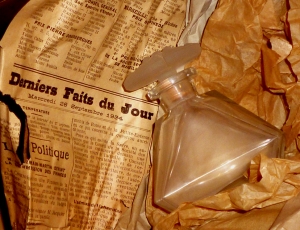
That very first, original bottle wrapped in paper. Source: lysepona.blogspot.com
A friend of Mr. Henin’s could sell them a whole box of real vintage bottles from the Brosse glass factory and dating back to the 1930s! There were only 108 of them, and due to their age, some were not in a state that could be offered to customers, but there were at least 100 good, genuinely antique bottles. (You can see the original, untouched bottles in a post on that subject on Annabelle’s site.) As a final coincidence and sign, the newspaper that the first bottle was put in was a page from 1934 that talked about a horse race. It was all too perfect, especially for Annabelle who loves vintage perfumes. So, they decided to make a limited, one-time distribution with those 100 antique bottles.
The very aged nature of the bottles means that there is a tiny, remote chance that they won’t all be completely, utterly perfect. I have a blog friend who ordered Lys Epona blindly, and who was disappointed to see two red dots or marks on the crystal stopper. Jovoy dealt with the situation in a professional manner and replaced the bottle, but I think my friend might have been a little less disappointed if he had known the origins and backstory for those bottles. They certainly have a unique touch and character, much like any antique, and their potential flaw simply adds to their charm in my opinion. So, if you get one that is less than perfect, remember that it is one of a very rare set that is over 80 years old!
All in all, I definitely recommend giving Lys Epona a sniff if you love lilies and/or leather. Those of you in the States can actually order a sample from Surrender to Chance to test it out, but buying it won’t be quite as easy since Jovoy does not ship outside the E.U. However, they are very fond of any “EU cousins” that you may have, so perhaps you can see if a friend will help out in terms of lending their shipping address. There is also a personal shopper option that I explain further in the Details section below. I should add that I don’t know how many bottles of Lys Epona remain, especially as it was released a few months ago, but I’ve seen enough internet interest in the scent for me to urge you to hurry if you’re serious about it. I think it’s more than just a lily scent, more than a leather, or the fraction of its parts. I think it’s an evocative journey back in time. It’s up to you whether you’re taken to a world of Celtic warriors surrounded by nature, or to that of Napoleonic cavalry officers wooing languid courtesans draped with lilies.
Note: my sample of Lys Epona was provided to me by Jovoy Paris, but they didn’t know I was going to do a review of the fragrance. I do not do paid reviews, and my opinions are my own.
DETAILS:
Cost & Availability: Lys Epona is an eau de parfum that is exclusive to Jovoy Paris. It comes in a 65 ml/ 2.1 oz size, is limited in quantity, and costs €225. Jovoy does not ship to the U.S. unfortunately, but are happy to mail to any “EU cousins” (as they amusingly put it, right down to the quotes) that you may have.
Samples: In the U.S., samples are available from Surrender to Chance which sells Lys Epona starting at $9.99 for a 1/2 ml vial.
Personal Shopper Options: One option for you to consider if you’re a U.S. resident who is interested in buying Lys Epona is to use a personal shopper who goes to France every month. Shop France Inc is run by Suzan, a very reputable, extremely professional, personal shopper who has been used by a number of perfumistas. She will go to France, and buy you fragrances (or other luxury items like Hermès scarves, etc.) that are otherwise hard to find at a reasonable price. Shop France Inc. normally charges a 10% commission on top of the item’s price with 50% being required as a down payment. If you have specific questions, you can contact her at shopfranceinc@yahoo.com. As a side note, I have no affiliation with her, and receive nothing as a result of mentioning her.