Perfume Review: Tom Ford Black Orchid Voile de Fleur

Tom Ford Black Orchid Voile de Fleur For Women (VdF) appears to be nothing like Black Orchid. The original Black Orchid was apparently one of those “love it or hate it” scent that was intended to evoke carnal sensuality. Tom Ford actually said explicitly that Black Orchid was intended to evoke a “man’s crotch,” though it’s unclear whether it was washed or unwashed. I have not smelled it, but I am constantly seeing references to sweaty or unwashed testicles (a more polite word than that which is usually used) in comments TFabout Black Orchid. Its fans — and they are many — seem to adore it, though a large number confess they wear it only to bed for romantic purposes and would never dare wear it outside the house. In contrast, VdF is a light, safe, very floral fragrance. It is also boring as hell, but more on that later.

Tom Ford’s press release describes VdF as follows: “[t]he alluring potion of Black Orchid is given a warm effervescent modernity with this new entry.” Both fragrances are classified as floral orientals and both include black truffle, though to different degrees. (Honestly, I wonder if there is any in VdF! But I’m getting ahead of myself.) VdF seems to be a softer, more floral take on the dark, dense original, and not only because it is an eau de toilette while the original is eau de parfum. Fragrantica summed it up as: Black Orchid is “fatal and sexy, while Black Orchid Voile de Fleur is romantic, light and bubbly.”

The Perfumed Court has the fullest list of the notes that I have seen thus far:

black truffle, ylang ylang, bergamot, blackcurrant, honeysuckle, gardenia, spicy lily, black orchid, black plum, black pepper, lotus wood, succulent fruit, warm milk, cinnamon, vanilla tears, patchouli, balsam and sandalwood.

I should state at the outset that VdF was quietly discontinued around 2010 but I’m reviewing, in part, because it is easily available on Amazon and other e-retailers. On eBay, it ranges in price from around $30 to $90, depending on size and seller. It’s a scent that may be worth a shot for those of you who fear Black Orchid (original) may be too much, especially for places like the office. However, those of you who have issues with indolent white flower scents, especially gardenia, should stay far, far away.

VdF opens with a burst of bergamot, a scent that falls between orange and lemon, and gardenia. There is hint of honeysuckle and ylang-ylang, though it’s most definitely not the ylang-ylang in Téo Cabanel’s Alahine. This ylang-ylang is softer, creamier and lighter but, to be honest, it’s hard to detect at times under the onslaught of gardenia. Gardenia is a flower that often imparts an indolic nature to scents. It’s a frequent cohort of tuberose or jasmine, and has a very narcotic, heady scent that some people find similar to cat urine, a litter box, or moth balls. Not everyone, but some people definitely have a bad reaction to more indolic scents. (For more on the precise meaning and nature of “indolic,” please see the Glossary.)

The top notes for VdF also include black currant and, unfortunately, it creates a very sour, unpleasant note on me. The Perfume Shrine has a good explanation of the scent as well as the occasional tendency for some people to smell sour, almost urine-like ammoniac notes: “[c]ompared to the artificial berry bases defined as ‘cassis,’ the natural black currant bud absolute comes off as greener and lighter with a characteristic touch of cat. Specifically the ammoniac feel of a feline’s urinary tract, controversial though that may seem.” I’m really surprised that I actually smell that here. There are numerous scents which people occasionally feel resembles a “cat’s litter box” (usually feces, more than urine) and which makes them queasy. Fracas – that famous indolic tuberose powerhouse – is perhaps the best and most frequent example. I’ve never had that problem; in fact, Fracas is one of my old favorites and a scent that I truly think deserves its legendary status.

With VdF, for the first time in my life, I smell something sour that verges almost on cat urine. It must be the black currant. It doesn’t last and it does recede after about 20 minutes, but 20 minutes is too long given the huge sillage of the scent in its opening hour. The sour, almost ammonia-like, scent surprises me and I scour my brain to see if I saw any other comments to that effect. If I did, I don’t remember them now. So, perhaps, we should just chalk this one up to skin chemistry. Nonetheless, I must confess, the sourness leaves me unfortunately biased against the perfume. In fact, I’m not sure I can get past it.

But we must soldier on, so onward and upwards. Once that incredibly unfortunate note recedes, VdF is all soft ylang-ylang and gardenia, with jasmine following closely behind.  And, that’s about it. On me, there are no hints of leather that I’ve read about elsewhere, absolutely no earthiness (even in mild form) from the black truffle, no… nothing. One perfume blog, Perfume-Smellin’ Things, described VdF as a “femme fatale” scent:

[O]nly a tiny bit less robust than the sinfully opulent original Black Orchid, Voile de Fleur replaces the pungently earthy accord of black truffles with a leathery undertone, thus transforming from some (most probably evil) mythical creature of the night into somebody slightly less outlandish and more “urban”…a femme fatale.

Good lord. Really? I wish it smelled that way on me. I might have liked it if it did. Alas, on me, VdF is just a linear blast of gardenia and ylang-ylang. One big flat-line. And the patient dies shortly thereafter….

I wish I had more to say, but I don’t. I’m too underwhelmed and bored to even be verbose. (And you know how verbose I usually am!) This is not a scent I can recommend. White flower lovers may have issues with the linearity or the longevity of the scent. Non-white flower lovers who are sensitive to gardenia may recede gagging from the indoles or the sourness of the black currant notes. Everyone else will just be bored beyond belief. Spare yourself the money; take a nap instead.

Details:
-The sillage or projection is — like most Tom Ford scents — big in its opening before receding about an hour in to a softer, calmer level. VdF starts becoming close to the skin about 2.5 hours in and fades away completely after 3.5 hours in total. Once again, I need to emphasize that my body consumes perfume, but this is one of the shorter Tom Ford scents that I’ve tried.
– Availability: eBay and Amazon, as well as other e-retail sellers. Cost varies but I’ve seen bottles go for $29.95 on eBay. I don’t recommend that you waste your money.

Perfume Review – Serge Lutens Serge Noire: Janus & The Cloven Beast

Serge Lutens describes Serge Noire as a phoenix rising from the ashes. Phoenix Rising 2Perhaps. I see it more as a cloven beast, with “cloven” referring not only to the cloves that make up such a large part of its character but also to the traditional definition of the word: split in two. To me, Serge Noire is Janus, that ancient Roman god with two faces and the god of beginnings and ends. In common, modern parlance, you might say that Serge Noire is slightly bi-polar.

A good starting point in discussing Serge Noire is the Lutens’ press release. As provided by BoisdeJasmin, it states:

The ether of ashes… A phoenix, the mythical bird of legend burns at the height of its splendour before emerging triumphant, reborn from the ashes in a choreography of flame, conjuring the shapes of yesterday in a dance of ashes. The swirls of oriental grey enrich the twilight with depth and intensity while windswept memories hint at the beauty of transformation. An ode to everlasting beauty under cover of night’s rich plumage.

The Lutens website omits the poetry, and simply says:

nothing can capture this scent’s spirit better than subtle “snapshots” from the past, like a forgotten glove lying on an antique chair.

Incense stirred by the smell of burnt wood.

The full, complete notes for Serge Noire are hard to pinpoint with any uniform, agreed-upon accuracy. The consensus on the basic elements seems to be: cloves, cinnamon, patchouli, incense and “dark woods.” However, Perfume Shrine also referenced “elemi,” a spicy, peppery and citrusy resin. Fragrantica gives the notes as: “patchouli, cinnamon, amber, woody notes, incense, clove, spices and ebony wood.” And, yet, most think that there must be some cumin in there too. I also see repeated references to grey ash, labdanum/cistus, benzoin and castoreum. (Castoreum essentially comes a beaver’s anal sacs and has been used in such famous fragrances as Shalimar, Jicky, Cuir de Russie, Antaeus, Amouage Epic and more. See, the Glossary for a full definition and more details.) I’ve even read a few comments that mention gunpowder too!

I was a bit terrified to try out Serge Noire because of the sheer forcefulness of the negative reviews. This is a fragrance that seems to engender extremely intense reviews, but the positive ones on places like Basenotes are nowhere as vehemently extreme as the negative ones. (If you’re ever bored, I suggest reading some of the comments. At the very least, they’re really amusing.) To give you an idea of some of the Basenotes comments:

  • “Sacré bleu, Serge! Why did you market this horror?”
  • “[W]hy did I buy this? just like chewing tin foil”
  • “It starts out like a punch in the face and a savage cauterizing of the ol’factory with several murderous spices. Then ATTACK OF THE CLOVES and suddenly your feet are raised high above your head as you are hoisted in the dental chair preparing for root canal treatment. This surely must be somebody’s idea of a practical joke.”
  • “Absolutely, incredibly and horribly foul. One of the most disgusting things I have ever smelled in my life.”
  • “Pure evil!”

An even more alarming review came from NST where the perfume was compared to a potpourri of ingredients whose recipe included, just in small part, the following:

  • 50 pieces of charred cassia bark (the bark should be blackened and retain only the most rancid traces of oil and odor);
  • Ten 1/8-inch slices of Swiss cheese;
  • Chain-gang T-shirt bits (with scissors, cut out and save the stained, armpit areas (bits) of 25 sweaty T-shirts that have been worn at least 10 hours on a 90-100 degree day;
  • One large box of moth balls, roasted (roast on a grill in the open air while wearing a HEPA-filter mask); and
  • 10 handfuls of singed hair (… for pre-singed locks, visit the worstsalon in your area and obtain fall-out from recently botched dye jobs, hair-straightening sessions, permanents, etc.).

Finally, pour the contents of three bottles of Angostura bitters and two bottles of grenadine into the bucket, top off with more salt, and let the mixture ‘rest’ in the (covered) bucket — in a dark and dank place — under lock and key — for at least two weeks.

To be fair, there are a lot of extremely passionate, gushing, postive reviews for Serge Noire, with its fans calling it the best Lutens fragance “in years” and with others applauding the genius of the “nose” behind its creation, the very famous Christopher Sheldrake. Some of those — like Perfume Shrine‘s review — wax so poetically, they are almost other-worldly. In fact, the latter review seemed much more like existentialist tract on philosophy and poetry than an assessment of mere perfume.

Nonetheless, I’ve found the horror outweights the poetry when it comes to reactions. There are also constant references to “BO” (body odor) and sweat which I found alarminng. But when Smelly Thoughts — a blogger who adores niche fragrances that are somewhat avant-garde or extreme — called it “hideous” just a few days ago, I really paled a little. So, it’s not surprising that I put it on with great trepidation. And I must say, I hardly find it to be “pure evil.”

I loved the opening spray of Serge Noire, but I wonder how much of my reaction stemmed from enormous relief rather than actual love. My initial notes actually read like this: “CLOVES! No sweat, thank god! Ooops… sweat.” As someone who cooks extensively, I have issues with cumin and, to me, it often evokes an impression of dirty, sweaty socks with the rancid, fetid body odor of someone who has never understood the joys of soap and water. Serge Noire definitely evoked “BO.” But, to my surprise, there was just a fleeting note of sweat in the opening salvo. Instead, I was strongly reminded of the smell of a leather saddle, slightly damp and with a touch of the horse or rider’s sweat. There was also a fascinating mix of camphor to counter the sweetness of the clove and what almost seemed like star anise. There is a faint touch of something medicinal that vaguely brings to mind Tiger’s Balm muscle rub, but it’s a sweet note as compared to the sharply metallic, cold, screechy medicinal accord in some oud fragrances. The camphor is not a surprise;Sheldrake has used it before in fragrances for Serge Lutens. Tubereuse Criminelle is perhaps the most well-known for that accord but there, the camphor mixes with a green floral scent, not with something as sweet as cloves and cinnamon.

I was so enchanted by the warmth of the cloves that I actually added another two sprays (though small in size) to my other arm. The cloves are a bit surprising in their expression on my skin; they’re not sharp but deeper, warmer and more well-rounded than I had expected. Some of the Lutens fragrances can be a bit cacophonous in their opening but Serge Lutens surprises me by being much tamer than the ferocious, hideous beast of the reviews.

I was really enjoying the fragrance thus far and it made me feel rather Christmas-y in some ways. Yet, the strongest and most constant memory that it evoked was Estée Lauder’s legendary Cinnabar, that famous 70s cousin to YSL’s Opium. The cloves in Serge Noire are, on my skin, much sharper than the more cinnamon-predominant Cinnabar, but they definitely share similarities to my mind and not solely because they are powerhouse scents centered around cinnamon and cloves. No, there is definitely a slightly retro feel to Serge Noire, though it’s a modern take on retro with the cinnamon.

On MakeupAlley, one commentator said they smelled “deadly hot pepper” but I don’t see it. Another said that she had a very strong impressed of ketchup mixed with a spicy BO scent. I definitely agree on the ketchup, but it’s a very vague, tenuous and fleeting impression, and it’s really due to the cloves and patchouli. Others reference the frankincense but to me, in the first two hours, it’s more patchouli. If it is frankincense that creates that peppery, smoky, dirty black scent, then it’s a very different type of frankincense than the one in Chanel’s Coromandel. (Reviewed here.) No, I think it’s more patchouli than frankincense, though Perfume Shrine (linked up above) seems to ascribe the peppery, spicy notes to a resin called “elemi.”

Either way, the linear nature of the fragrance in the early hours is a slight disappointment. The heart of cloves, cinnamon and camphor is just too strong of a constant thread. Yes, there is incense and patchouli, but it’s hard to separate them at times. Serge Noire is an extremely well-blended fragrance — so much so that the patchouli, cloves, cinnamon, and incense blend together in an extremely harmonious whole. I would have preferred something that morphed much more. And it does, later, change a little but not by much.

I thought Serge Noire was a very warm fragrance which is why reviews referencing its cold, “austere” nature were a little confusing at first glance. Austere? Is it the incense? Perfume Shrine’s review noted a definite and almost overwhelming impression of old, slightly dusky, byzantine Orthodox churches. That was my feeling for Chanel’s Coromandel, but not for Serge Noire. Others have said it’s the holiest of all holy incense fragrances, but I don’t agree with that either because it would seem to imply that Serge Noire is primarily an incense fragrance. I think it’s primarily a clove one. Which brings me to another point: cinnamon. There is definitely cinnamon here but it’s true presence comes later. To me, cinnamon is a much milder, softer, gentler and more feminine scent than cloves which is hot, not merely warm. It’s sharper, dirtier, sometimes slightly more acrid or astringent, but always more forceful.

Starting on the second hour, another note starts to rear its head. It’s the smell I had dreaded upon initially reading reviews for the perfume. It’s the smell of sweat and body odor. If this were a horse race, the clove chestnut that had led the pack, followed closely by the cinnamon sorrel, have now faded from the leader spot. They’re being edged out by a faint nose by the black patchouli stallion and its incense twin. However, coming up from the rear, is the sweaty horse whose saddle is slick with its earthy nature. And the dark woods all around the racetrack are starting to gently sway in the breeze, as if to participate in the events before it.

The award-winning, incredibly brilliant expert, Elena Vosnaki, at Perfume Shrine has a polar opposite impression:

Initially dry and spartan with the flinty, camphoreous aspect of gun powder comparable to Essence of John Galliano for Diptyque, ashes to ashes and snuffed out candles, Serge Noire by Lutens assaults the senses with the intense austerity of real frankincense and elemi. The impression is beautifully ascetic, hermetic, like an anchorite who has dwelled in a cave up in the rough mountains with only the stars as his companion in the darkest pitch of the night: the “noire” part is meditatively devoid of any ornamentation, eclipsing any pretence of frivolous prettification. The surprising transparency is evocative of the Japanese Kodo ritual rather than the denser cloud of Avignon. Those who are unitiated to the wonders of Lutens might coil away with trepidation and apprehension at this point, but much like the alarming mentholated overture of Tubéreuse Criminelle, this subsides eventually, although never quiting the scene completely.

And yet behind the caustic and mineral masculinity, a hopeful ascent of a feminine trail of lightly vanillic, ambery benzoin and sweet spice is slowly, imperceptibly rising after half an hour; like a subtly heaving bosom draped with Japanese garments or the curvaceous calligraphy of thick black ink on gaufre paper of ivory or creamy skin. It is then when cistus labdanum provides an erotic hint of sophisticated elegance in Serge Noire while the emergence of sweet spice, a touch of cinnamon, gives a burnished quality of black that is slowly bleeding into grey.

The ashen ballet in the flames, the swirls of oriental grey sing an ode to everlasting beauty, beauty under the cover of night’s rich plumage.

Perfume may be subjective, but there are few more respected experts in the perfume world than Elena Vosnaki, so her impressions of Serge Noire make me wonder why I’m getting such a different vibe. To my huge relief, Perfume Posse resolved my dilemma and made me realise that we’re BOTH right: “it just has a lot of facets that go in and out – dust, warmth, cool incense, woods.” It is coldly austere, but also red hot. (Actually, “red hots,” the cinnamon candies, are a big note in the perfume’s dry down.) It’s all incense (or, for Grain de musc, “a sizzling succession of resins”), or it’s dental chairs of camphor and stale body sweat.

In short, Serge Noire is a bit schizophrenic. It is simultaneously exactly like my review, and like that of the Perfume Shrine. Hot and dusty, or austere, cold and full of the greyJanus ashes of a dying fire — it is both things at once. Or, to go back to Janus, it wears two faces. Remember all that Lutens PR and the seemingly over-the-top, marketing flights of fancy? Well, I actually get it now. The phoenix rises from the dusty, cold ashes of death, reborn as a fiery, powerful, red-hot swirl of light and warmth, before Phoenix Risingflying off above the woods and into the cold night. It not only true, but it’s actually is pretty genius how the marketing so captured what seems to be a very intentional and deliberate ethos behind this perfume. So intentional that it reportedly took ten long years to create this scent’s contradictory nature, a scent that is Serge Lutens’ own personal favorite.

For all of Serge Noir’s vociferous opening, it definitely quietens down after about two hours. And four hours in, it’s very close to the skin and almost…. well, I wouldn’t say “subtle” but it’s definitely been tamed. It’s quiet amber and spice with the frankincense or patchouli just barely shimmering in the light. It’s cinnamon and resin. And sweat.

I did mention the rise of the sweat factor, didn’t I? Well, it becomes quite prominent in the dry-down, though I should emphasize again that the perfume is extremely close to the skin at this point. Still, after about five or six hours, I would catch a faint but definite smell of body odor. I’d been doing other things, forgotten about the perfume (yes, that actually is possible at this point) and, for a fleeting moment, thought to myself, “God, is that me?”

I like Serge Noire a lot more than I had expected to and, indeed, found the opening quite enchanting. But, after some reflection, that body odor element combines with a few other things to make this a bottle I wouldn’t buy. (If given to me, however, I’d certainly wear it on occasion. I think….)  It’s a fascinating fragrance and, on me, certainly wasn’t as “hideous,” “evil,” “horrific” and venomous as the critical reviews had led me to expect. If you’re a perfume junkie with a curious streak, I would definitely recommend buying a small vial for $3.99 at Surrender to Chance just to see what all the fuss is about. If you’re a fan of cinnamon and clove, I’d advise the same. And, honestly, you may really like it; there are certainly plenty of people who do. For everyone else, however — particularly those of a less inquisitive, bold or fool-hardy nature, or those who like the “fresh, clean” scents — I would recommend staying far, far away.

Details:
Cost: The perfume comes only in one formula, Parfum Haute Concentration, and can be purchased on the Serge Lutens website for $140 for a 50 ml/1.7 oz bottle. It’s also available at other retailers, like Barney’s or Luckyscent.
Sillage: Enormous at first, before fading in the second hour and then becoming close to the skin around the fourth. But, as always, this is on me and my body consumes perfume.
Longevity: Very long lasting for a Serge Lutens fragrance, in my opinion. My prior experiences have been extremely short in duration. On me, all in all, this lasted about 5.5 hours. On others, the reports are for much longer.
Reviews En Bref – Boucheron, Montale, Caron, & Annick Goutal: From Average to Terrible

In case you hadn’t noticed, I’m verbose. 😉 I can’t seem to help it and, frankly, it often exhausts me as much as it probably overwhelms (terrifies?) you. So, from time to time, I thought I would offer brief thoughts and conclusions on a wide range of colognes or perfumes. Sometimes, they will include fragrances that I plan full reviews for down the line. Other times, like now, it’s for perfumes that I don’t like and find it difficult to sum up the enthusiasm to write a full review.

BOUCHERON:
Boucheron For Men Eau de Parfum is a scent I should like, in theory. It’s a powerhouse citrus aromatic that is most definitely unisex, regardless of what’s written on the bottle. I didn’t like it. It opened with too much soapy citrus and was utterly overwhelming. I’m not easily overwhelmed and usually like powerhouse perfumes. This one is justifiably considered by some to be utterly unbearable. (For the sake of balance, others adore it. It’s definitely a very split opinion.) Boucheron became much better as it developed but not enough for me to like it. Bottom line: nothing special and somewhat nondescript in the end.


MONTALE:

I’m glad I tried Montale’s Oriental Flowers if only to prove to myself that my intense dislike for Montale scents thus far has nothing to do with oud. The two Montale oud fragrances that I’ve tried (and reviewed here) were nothing short of Chernobyl on my arm and made me desperate for a Silkwood shower. A close friend recently tried Montale’s Amber Aoud and commented: “Montale clobbers you over the head and drags you back to a cave to roast you on a rack.” So, clearly, it’s not just me. Oriental Flowers is better — but that’s not saying much. It’s sharp, screechy, and very synthetic (to me, at least). For a floriental, there is a note that suspiciously calls to mind the oud in Montale’s other fragrances.

Perhaps it’s the very synthetic lime note that keeps appearing in the Montale perfumes, even though there shouldn’t be lime in any of those that I’ve tried thus far. I think “sharp, hostile lime” is how my nose processes the extremely synthetic florals and ouds in the Montales. Regardless, I find the rose scent in Oriental Flowers to be synthetic and screechy too. Over all, the perfume gave me a headache and I wanted it off me. It wasn’t the unrelenting horror and nuclear explosion of the Montale ouds, but it was damn unpleasant. And, even worse, it simply won’t go away. There is just no escape from Montale scents, no matter how microscopic the amount.

CARON:

Perfumistas and bloggers rave about Nuit de Noel, a favorite particularly around Christmas time and a fragrance that Karl Lagerfeld allegedly sprays around his house to get him in the holiday mood. Huh. Maybe I need to try the vintage version, because I’m in the clear (and tiny) minority on this one. Consider me utterly unimpressed, though so, so desperately eager to like this one. Dammit, why don’t I?! It’s a floriental whose spice is supposed to evoke marron glacés, old-fashioned Christmases with gingerbread men, sugar and spice, baking cookies, and cozy fireplaces. Even Goth Christmases and the 1920s. The superb blog, Perfume Shrine, had an absolutely delicious review (which convinced me to buy it)  and which reads, in part, as follows:

Caron’s Nuit de Noël (1922) is a soft oriental built on an accord of rose absolu and Mousse de Saxe perfumer’s base (i.e. a ready-made accordof ingredients producing a specific effect), with the addition of 25% sandalwood, jasmine, ylang ylang, lily of the valley, vetiver, amber and iris. It’s prismatically constructed around 6-isobutylquinoline, a leathery molecule.

The fragrance emits a cozy, inviting scent poised between the starch of marrons and the bitterness of the iodine/leathery note(hence my Fernet Branca evocation) fading into musky woods. Indeed the famous “Mousse de Saxe accord” is comprised of geranium, licorice (created with anise), isobutyl quinoline (leather notes), iodine and vanillin (synthesized vanilla). If older Carons, especially in their superior vintage form, are characterised by a signature “Caronade”, a common thread that runs through them, Nuit de Noël is a good place to start this escapade into one of the most chic and historical French perfume houses.

Less incensey than similarly oriental Parfum Sacré, less abrasive or bold than straightforward leathery En Avion or Tabac BlondNuit de Noël has a sheen that starts and ends on an unwavering tawny pitch. The spiced rum-licorice notes aplified by musk (a musk comparable to that in Chanel’sNo.5 and Bois des Iles) take on a rich saturation; the fragrance dries down to a powdery warmth redolent of the bourgeois scents of a festive evening spent outdoors.

Every single one of the reviews mentions things that are right up my alley, and make me wonder about my own judgment. (Did I mention that I’m desperate to like Nuit de Noel?) Unfortunately, as I wrote to an inquiring friend yesterday, I actually regret having bought a full bottle. A small sample would have sufficed. I only get fleeting notes of a few of the things mentioned by others, if at all. Plus, there is a very surprising bit of an underlying coldness and dryness to it. Someone called it “melancholy” but in a good way; I’m not sure I would go that far. Now, again, the vintage may be very different, but the bottom line is that my version is nothing particularly special. It’s perfectly nice, nondescript and pleasant, but I don’t want “pleasant.” There are too many perfumes in the world for unenthused “pleasant.”

Montaigne by Caron is one I’m on the fence about. It’s not a perfume I reach for often and, when I do, I think to myself, “I should wear this more.” It makes me think of Cannes, mimosa flowers under a brilliant blue sky, and Van Gogh paintings. It’s a floriental and the notes are described as follows: Top notes are jasmine, coriander, bitter orange, mimose and tangerine; middle notes are narcissus and black currant; base notes are sandalwood, amber and vanille. It’s sunny, elegant, and incredibly powerful both in terms of sillage and longevity. I have no clue why I don’t like this more. Perhaps it’s going to take a lot more tries, though that didn’t work for Nuit de Noel.

ANNICK GOUTAL:

Grand Amour is a perfume I should adore, and not solely because of the incredibly romantic story behind it. It’s a perfume that Annick Goutal created in 1996 for herself as an ode to love and her husband. Lucky Scent says: “Grand Amour is the perfume that encapsulates the serene passion Annick experienced with her husband, the cellist Alain Meunier, who would bring her a bouquet of white flowers every week. A dense perfume with flowery chords, amber, and musk that speaks of love, because “love is everything.” It’s another floriental (can you see a theme in my tastes?), and according to Fragrantica: “[t]he composition is based on three accords: floral, amber, and musk. In the floral bouquet, lily, honeysuckle, and hyacinth lead the way to Turkish rose, French jasmine, and Indian mimosa, with a touch of fruity notes. Oriental accord (amber) is represented by the notes of amber, vanilla and myrrh. In the base the sensual musk united with precious rare balsams create a very long trace.”

Hmmph. If they say so. To me, Grand Amour has a painfully green opening. It is the filthy, fetid, murky green remnants of a week-old vase of flowers whose water has not been changed and started to stink. At the same time, it’s a bit powdery and soapy. After a queasy hour or two, it turns softer. But now it’s musky soap and powder, but with leather and balsam. There’s something about it that I find unpleasant. I bought it because I love hyacinth, amber and myrrh; because the rest of the notes sounded completely up my alley; and because it was reported to be one of the rare Goutals that has good longevity. Well, the longevity isn’t bad, but it’s an utter ordeal and chore to wear it. It’s hardly akin to the sheer horror that is Montale (nothing is), but it’s one of the few perfumes I own that I want to sell. Not only do I not want to have anything to do with it, but I need to have that full bottle stop staring at me so hauntingly and reproachfully.

Perfume Review: Guerlain’s notorious Mahora (and Mayotte)

normal_guerlain_mahora3-300x225

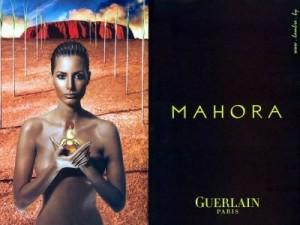
Elsa Benitez and Ayers Rock in Australia

I have a perpetual tendency to root for the under-dog. And I’m also naturally inquisitive, especially about things that are notorious. Which brings to me to Mahora, the beleaguered, endlessly trashed, and notorious last fragrance of Jean-Paul Guerlain for the House that bears his name.

images

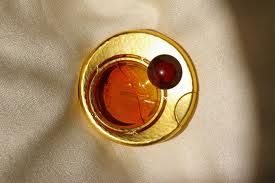
Mahora – the bottle for the Extrait version

Common reactions to Mahora range from “Worst. Perfume. EVER!” to comments about mosquito repellents or suntan lotions. Luca Turin — that endlessly acerbic perfume critic (with whom I often disagree, by the way) — apparently compared this to a $200 plug-in air freshner and called it Guerlain’s worst fragrance. It’s a fragrance sometimes nicknamed “My Whore,” due not only to its pronunciation in certain accents but also, undoubtedly, due to its over-ripe nature. And, yet, there are also numerous raves about its lushness and its heady, fearless, almost comfortingly exotic character. How could I possibly resist seeing what all the fuss was about?!

Mahora

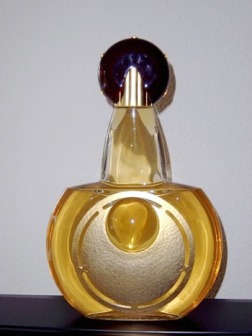
Mahora in the Eau de Parfum bottle

Mahora was released in 2000 in Eau de Parfum form as an homage to the island of Mahore (or Mayotte) where Guerlain has plantations of jasmine and ylang-ylang. It is a tropical, slightly fruity, super floral with an oriental dry-down. It is also the least Guerlain-like fragrance imaginable!

That difference probably explains, in part, why it was a complete and an utter bomb in the marketplace; Guerlain buyers used to things like Jicky, Shalimar or even, Jardins de Bagatelles, were undoubtedly bewildered by such a Hawaiian island fragrance.

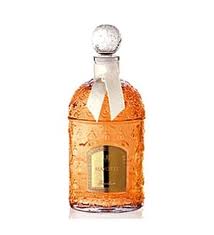
Quietly discontinued just two years or so after its debut, Mahora was later re-released in 2006 with a name change. It was now called Mayotte and was included in Guerlain’s images (1)Les Parisiennes collection (supposedly with a significant price increase as a result). You can still find Mahora easily and relatively inexpensively on eBay (where I bought my bottle) for between $15 and $60, depending on size and seller. Mayotte, in contrast, is reportedly available only at the Guerlain store in Paris and at Bergdorf Goodman in New York where it retails for $270. We’ll get to the comparisons between the two fragrances shortly and whether either one is worth a shot.

According to Aromascope and other sites, Mahora’s notes are as follows: orange, almond tree blossoms, ylang-ylang, neroli, tuberose, jasmine, sandalwood, vetiver, and vanilla. What almost none of these official notes include — but which almost everyone can detect — is frangipani. Frangipani is also known as plumeria, a flower common to Frangipanitropical climates like Mexico or South America but also to such exotic islands as Fiji, Tahiti and Hawaii. It has a very heavy, heady, lushly ripe, extremely sweet scent similar to magnolia, gardenia and tuberose. It can also bring to mind coconuts. (All of which make the Australian desert landscape of the Mahora commercial rather odd, in my mind.)

Frangipani is best described as an “indolic” scent, meaning over-ripe, almost to the point of decay. Tuberose is another very indolic flower which is why extremely creamy, ripe tuberose scents can — on some people — bring to mind feces or a cat’s litter box. (You have no idea how many people shy away from anything involving tuberose. If there is any scent that seems to strike fear in the heart of many women, it seems to be tuberose. I should confess that I adore tuberose and it’s my favorite flower in general.)  Indolic scents are not easy one, and combining frangipani with tuberose and jasmine was a brave, brave move. (One which apparently fell flat on its nose, judging by some of the extremely harsh reviews.) I have absolutely no idea why frangipani is not included on the official perfume notes, but there is zero doubt in my mind (and that of many others) that it’s included. In fact, I would go so far as to say that extremely indolic frangipani is the foundation to Mahora.

When I first sprayed Mahora, I did so carefully and gingerly. This is a perfume known to be a powerhouse. It’s been compared to such notoriously heady 80s blockbusters as Poison and Giorgio, or other infamously strong scents like Amarige and Opium. So I gently lowered the rather awkward blue top and gave a few squirts. And what I got was not  the expected orange notes I’d read about but, rather, green notes. Ripe, not crisply fresh, but most definitely green notes. A burst of the vetiver, perhaps? If so, this was like no vetiver I’d ever smelled because the overall result was like dirty water in a vase of rotting flowers that hadn’t been changed in a week. (Perhaps vetiver shouldn’t be mixed with tuberose by anyone but the Piguet perfumers who make Fracas. I love Fracas. This is no Fracas.)

The smell of filthy, murky, green, vase water was soon joined by coconut, sandalwood and what seemed to be almond tree. Not almond tree blossoms, but rather, the woody notes of a slightly moist, aged, possibly decaying tree bark. This too was…. unexpected and off-kilter. And it lasted a good 10 minutes or so, until it turned to a coconut sunscreen effect (mixed with the slightly brackish, rotten vegetal water scent) over a smell of buttered white flowers. Yes, buttered. As in buttered popcorn mixed with very heady tuberose and white flowers. I feel as though I’m wearing a dose of AMC Cinema’s popcorn butter mixed with white flowers and coconut. And, yet, it’s not Hawaiian Tropic suntan lotion, it’s not even Bain de Soleil (which I used to love) because of those blasted almond tree, wood, vetiver and green notes!

It’s perplexing. This is nothing like what I expected — which was a giant white floral with tropical elements. The initial scent is off-putting, unconventional and disorienting in the way of niche houses, like Serge Lutens. Just as his Tubéreuse Criminelle turns things upside down and on their head with a camphorous green note to the tuberose, the Mahora is very far from a mainstream, white tuberose scent in its initial opening bouts. It’s even further from most Guerlain fragrances, though I’ve seen some understandable comparisons to Guerlain’s Samsara. I think Jean-Paul Guerlain sought, perhaps, to make a tropical, exotic version of Samsara here. I simply don’t think he succeeded. (That said, I should confess that Samsara is not one of my favorite Guerlains either.)

An hour in, and Mahora is all big white flowers. It’s too exotic and tropical to be compared to Fracas or to some Estée Lauder variation. It’s got too much frangipani to really compare. It’s also starting to fade on me. I speak often of how my body consumes perfume but really, I expected this one to last! All the endless comments about migraines, monster sillage and longevity and I get maybe two hours of full scent before it starts to become closer to the skin. I think that, as the frangipani/coconut recedes and the other, softer white flowers come more to the foreground, Mahora starts to become less brash and heady. It’s calmer now, though I still smell the coconut.

Three hours in, the coconut has finally left the building and the Guerlain signature has entered. Mahora has unfurled into a creamy, vanilla with sandalwood and only a hint of the white flowers. It’s also started to develop of touch of that famous Guerlinade. “Guerlinade” refers to that Guerlain note which is a signature on most of their perfumes at the foundational element and which wafts through the dry-down with a very powdery (sometimes slightly vanilla-tinged) accord. I smell a wisp, possibly just in my imagination, of the jasmine but it’s faint. One thing is clear, however: Mahora has turned into a Guerlain oriental. All in all, Mahora lasted about 5 hours on me, which was considerably less than the enormous amount of time reported for the fragrance by most commentators.

While most commentators say that Mahora and its successor, Mayotte, are identical, there are some who disagree. The experts at CaFleureBon certainly see a difference in an article entitled “Sexy Sadie Thompson of M. Somerset Maugham’s Rain.” Another site, Aromascope (linked up above) compares the two fragrances as follows:

While Mayotte is an ode to ylang-ylang, Mahora dignifies tuberose. […]  I find Mayotte much more Guerlain-like: it possesses the same peachy heft of Mitsouko. Mahora, on the other hand, strikes me as rather aggressive and mutinous. Its sugared, almost oily tuberose seems to defy all things Guerlain, and perhaps that’s the reason the fragrance didn’t do so well. In spite of being much more refined and polished, Mayotte can hardly be called a tame and acquiescent version of Mahora – it bears but faint sibling resemblance and respectfully begs to differ. While Mahora is heady and persistent, Mayotte is soft and enveloping and has won my heart as the best ylang-ylang scent ever created.

Others sharply disagree and say that there is absolutely no difference between the two scents. Still others say that Mayotte is simply a weaker eau de toilette concentration of Mahora, though the fact that both are officially listed as “eau de parfum” seems to counter that theory.

So, is it worth trying? I’ve seen one reviewer argue that, if Mahora had been released now and under the Serge Lutens label, “as a hoity-toity luxury perfume, it would be resounding [sic] a success among sophisticated perfumistas.” I can see the point and rationale. I think I may even agree, particularly when remembering Mahora’s unexpected opening and when thinking about Serge Lutens Datura Noir. I found the latter significantly underwhelming, though it’s been long enough since I last tried it that I can’t recall all the details of why. It certainly shares a similar coconut and tuberose trait, though!

In the end, it’s a fragrance that only a white-flower lover may like and, even then, it’s not breath-taking or particularly special, outside of its history and notoriety. (For purposes of balance, my memories of the famous Serge Lutens Datura Noir, and indeed a number of his fragrances, also rank in the “not particularly special” category.) Do I regret buying a full bottle? No, not really. I rarely regret buying perfume, especially not one that is hard to find, discontinued, and controversial to boot. It’s worth it for me just to have it for my collection and for being able to know it. I also like being able to make up my own mind about super polarising scents. And, lastly, I can always find a use for some perfume or another. (With the exception of Montale’s Lime Aoud which is truly THE worst thing I have ever smelled!)

However, I would not feel that way if Mahora were not so cheap on eBay. There is absolutely NO way on God’s green earth that I would pay $270 (not including tax) for the Mayotte version. None. I bought my 1.7 oz bottle of eau de parfum for $23 or so! For that cost, Mahora is a fun, exotic, tropical white flowers oriental perfume that I can wear in winter before going to bed and when I want to mentally escape to Fiji. For $23, I get to see what all the fuss is about.

And that fuss is definitely not worth $270.