DSH Perfumes Le Smoking (YSL Retrospective Collection)

Yves St. Laurent. Photo via Pinterest.

Yves St. Laurent. Photo via Pinterest.

One of my greatest icons and heroes in the artistic world was Yves St. Laurent. As a child, long before I knew the extent of all his accomplishments, he was an indirect part of my world through my fashionista mother, and I worshipped him. Thank to her, I spent hours at his Avenue Montaigne boutique, admiring the sleek clothes and the even sleeker women who bought them. I would marvel at the beauty of the African and Ethiopian models he used on the runways (he was the first fashion designer to really break the colour ceiling), and at how they loped with exquisite grace in highly structured clothes that often plunged down to their navels or that were slit up to their hips. There were the famous Helmut Newton photo shoots, the aesthetic focus on Morocco and Africa, the stunning power of Opium perfume, the creation of the safari jacket, and Le Smoking.

Photo: Helmut Newton, 1975. YSL Smoking.

Photo: Helmut Newton, 1975. YSL Smoking.

Above all else, and far before Opium became my personal holy grail, it was all about Le Smoking, Yves St. Laurent’s reinvention of the tuxedo jacket for women that oozed sexuality, sleek minimalism, and power. From Catherine Deneuve (Saint Laurent’s longtime muse) to Bianca Jagger, Jerry Hall, and many others, all the most iconic, famous women of the day clamoured for Le Smoking, often wearing it with nothing underneath. Today, when you see fashion mavens like Gwyneth Paltrow, Rihanna and others wearing a sleek tuxedo jacket and little else, it’s a direct nod to Yves Saint Laurent.

Source: DailyMail.com

Source: DailyMail.com

One reason why Le Smoking became as significant as it did is because the jacket exuded a powerful androgynous attitude, mixed with women asserting their sexuality in more traditionally masculine ways. What Caron‘s Tabac Blond sought to do for perfumery in the early 1920s, the Saint Laurent smoking jacket sought to do for fashion, amped up times a thousand with more overt sexualization. It was a fashion re-engineering of gender in a way that was completely revolutionary after the lingering impact of Dior’s New Look with its focus on hyper-femininity, and the hyper obviousness of the Courreges miniskirt. (As a side note, YSL was actually the head designer at Dior for a few years. He reached that lofty level at the mere age of 21; a mere two years later, he designed the wedding dress for Farah Diba, future Empress, for her marriage to the Shah of Iran. You can read more about his fascinating, complicated life on Wikipedia, if you are interested.)

Source: Denver Art Museum.

Source: Denver Art Museum.

Given my feelings about Saint Laurent, I was keenly interested when I heard that there was a perfume that paid tribute to Le Smoking. Nay, a whole collection of fragrances that were created in homage to Yves St. Laurent, from Le Smoking to my beloved Opium itself. It was the YSL Retrospective Collection from DSH Perfumes, an indie, artisanal American line out of Colorado.

Dawn Spencer Hurwitz. Source: The Perfume Magazine.

Dawn Spencer Hurwitz. Source: The Perfume Magazine.

DSH Perfumes was founded by Dawn Spencer Hurwitz, and all its fragrances are her personal creation. In 2012, she collaborated with the Denver Art Museum which was holding an exhibit on Yves Saint Laurent’s long, storied career “as one of the greatest influencers in the world of fashion, culture and perfume.” Those are not my words, or hyperbole. Those are CaFleureBon‘s words, and they’re accurate because Saint Laurent really was that important. (To learn more about YSL and his “Gender Revolution,” you can watch a PBS video on the Denver Exhibit, or click on a photo gallery from the Denver Museum that is available at the bottom of the linked page.)

To that end, Ms. Hurwitz created 6 fragrances, each of which was an olfactory interpretation of some aspect of Yves Saint Laurent’s life. By a wonderful twist of fate, Ms. Hurwitz contacted me mere days after I was looking (for the umpteenth time) at her website. At the time, I had been too overwhelmed by all the tempting choices to make a selection, so I was grateful when Ms. Hurwitz offered to send me a number of her fragrances to test. I suspect that some of you might feel similarly at a loss to know what to choose, so I’m going to cover a number of her fragrances in a row.

Le Smoking in the 5 ml antique bottle. Source: DSH perfumes

Le Smoking in the 5 ml antique bottle. Source: DSH perfumes

Today’s focus is the very unisex, green chypre-tobacco eau de parfum called Le Smoking. Other planned reviews include her patchouli scent, Bodhi Sativa. And there is obviously no way this Opium fanatic would miss Ms. Hurwitz’s nod to, and reinvention of Opium, with her Euphorisme d’Opium. For the rest, I’m trying to decide between fragrances from her Egyptian collection and her Persian one, as well as her botanical Vanilla and some of the spice scents.

As a side note, I have to say that Ms. Hurwitz is one of the sweetest people I’ve encountered in a while. The overwhelming impression is of gentleness, mixed with a lovely warmth. She is down-to-earth, open, understanding, gracious, and a lady to her very fingertips. None of that will impact my objectivity in reviewing the actual fragrances, but I did want to thank her. She never once blinked at my numerous requests for the specific notes in each fragrance (the full list is not provided on the website), and she seemed to actually appreciate my obsession with details. (That last one alone is rather remarkable.)

Le Smoking. 10 ml mini bottle of EDP. Source: DSH Perfumes website.

Le Smoking. 10 ml mini bottle of EDP. Source: DSH Perfumes website.

Speaking of notes, Ms. Hurwitz says some of the many ingredients in Le Smoking include:

Top: galbanum, bergamot, clary sage, hyacinth, blackberry;
Heart: grandiflorum jasmine, damascena rose absolute, orris co2 extract, carnation, geranium, marijuana accord, honey;
Base: blond tobacco absolute, incense notes, styrax, leather, peru balsam, green oakmoss absolute, ambergris, castoreum.

Source: 10wallpaper.com

Source: 10wallpaper.com

Le Smoking opens on my skin with a small blast of bitter greenness from galbanum and oakmoss. Both notes are infused with a lovely, dark, smoky incense, that is followed by a touch of marijuana. Now, I’ve never smoked marijuana, but I have occasionally been around people who do, so I’m somewhat familiar with the general aroma. To my untutored nose, the note in Le Smoking doesn’t smell exactly like smoked pot, because it lacks a certain pungency that I’ve detected (skunks!), but it’s not exactly like the unsmoked grassy version either. It’s a little bit sweet, earthy, green but also brown, and, later on, quite a bit like patchouli mixed with marijuana.

Source: rgbstock.com

Source: rgbstock.com

Mere seconds later, one of my favorite parts of Le Smoking arrives on scene. It’s tobacco drizzled with honey, intertwined with leather, all nestled in the plush, rich oakmoss. The greenness of Le Smoking softens quite quickly on my skin, leaving a fragrance that is increasingly dark and smoky. It’s flecked with sweetness, and has almost a chewy feel to it at times. On other occasions, the river of dark leather seems more dominant, especially once the styrax arrives. It also adds in a different form of smokiness that works beautifully with the deep oakmoss and that sometimes pungent galbanum that flitters about.

As a whole, Le Smoking doesn’t feel particularly green on my skin. Rather, it feels like a darkly balsamic fragrance centered around honeyed tobacco and incense that merely happens to have some galbanum and to be centered on an oakmoss base. Its darkness sometimes feels like a balsam resin that has been set on fire. On other occasions, however, the sweetness of the honey swirled into the tobacco dominates much more. Lurking in the background is that ganja accord which is sweet, woody, chewy, and green, all at once. It is subtle now, after its initial pop in the opening minutes, but it is increasingly taken on a patchouli like aroma.

Source: colourbox.com

Source: colourbox.com

It’s all terribly sexy, but it’s also quite masculine in feel. In fact, Le Smoking evokes so many “masculine” fragrances with their dark elements that I blinked the first time I tried it. I had had the vague impression that the perfume was a chypre for women. But, then, I remembered YSL’s gender-bending goal, and the actual Le Smoking of the past. Feminine as masculine, masculine as feminine, but always boldness and sexiness throughout. Well, mission accomplished, Ms. Hurwitz. And to think that I had initially dreaded this fragrance as some sort of potential galbanum green bomb! Not one bit.

Other elements start to stir. Initially, the bergamot and clary sage were nonexistent on my skin, but they slowly start to raise their heads after ten minutes to add a quiet whisper. The clary safe is more noticeable out of the two, adding a herbal touch that is just faintly like lavender with a touch of soap. It’s all very muted, however, unlike the carnation and geranium which are the next to arrive on scene. They add a peppered, spicy, and piquant edge, but the carnation has a clove-like undertone that works particularly well with the honeyed tobacco, leather, incense, and marijuana accords. Apart from the carnation, the other florals are very hard to detect on my skin, and the blackberry is nonexistent.

After 15 minutes, Le Smoking turns into a lovely bouquet of chewy, dark notes. The sweetness is perfectly balanced, and cuts through the smoky incense to ensure that the scent is never austere, stark, or brooding. The ganja’s earthiness melts beautifully into the clove-y note from the carnation, while the leather is now met by a slight muskiness that betrays the castoreum in the base. Galbanum and oakmoss provide a little green sharpness, while the minuscule flickers of clary sage add a tinge of herbal freshness in the background. Throughout it all, honeyed tobacco continues to radiate a dark sweetness that is intoxicating. Call me suggestive, but one of Yves St. Laurent’s plunging jackets really would be the perfect accompaniment to this scent.

Photo: Terry Richardson. Source: stylesaint.com

Photo: Terry Richardson. Source: stylesaint.com

I keep thinking about Tabac Blond, Caron’s gender-bending foray into leather and tobacco. It is such an enormously different perfume than Le Smoking, particularly in Tabac Blond’s current version. For one thing, the leather note smells fundamentally different in the Caron scent, as it stems from birch tar. Le Smoking’s leather does not. If anything, it is more of a subtle suggestion that is amplified by the castoreum in the base. Tabac Blond’s tobacco also smells extremely different than the version here, and is just a minor touch. In fact, Tabac Blond’s dominant focus on my skin seems to be the feminine traits of lipstick powder and florals, traits that only tangentially happen to have a masculine undertone on occasion. (The reformulated, modern Extrait is really a disappointment.)

With Le Smoking, the focus is almost entirely masculine, and all florals are subsumed so deep that they’re impossible to pull out. The carnation is the only one, and even then, it smells primarily of cloves instead of anything floral on my skin. The hyacinth, jasmine, and rose… they barely exist. At most, they are swirled into a very nebulous sense of something vaguely “floral” that lingers in the background in the most muted and muffled form. (And even that only lasts 15 minutes or so.) On me, Le Smoking is a thick layer of darkness dominated by tobacco, incense, sweetness, spice, earthiness and slightly animalic musk. The perfume feels more like something that would come out from Nasomatto (albeit, a non-aromachemical Nasomatto) than Caron, if that makes any sense. Tabac Blond, this is not.

Source: wallpoper.com

Source: wallpoper.com

The differences become even more stark after 30 minutes, as Le Smoking turns into a very different fragrance than what originally debuted. The patchouli-ganja element becomes more and more dominant, as does the castoreum. The latter is fantastic, feeling simultaneously musky, leathered, velvety, oily, dense, and a bit skanky. The two notes join the honeyed tobacco and the incense as the main players on Le Smoking’s catwalk.

In contrast, the suggestion of leather softens, the galbanum retreats completely to the sidelines, and the brief blip of clary sage dies away entirely. The oakmoss feels as though it has melted into the base where it adds an indirect touch to the top elements. For the next two hours, I thought on a number of occasions that it had actually died away, but the oakmoss waxes and wanes, sometimes popping up to add a wonderful green touch to the increasingly brown-and-black landscape.

The overall effect after 35 minutes is a scent that feels wonderfully dense, earthy, musky, spicy, smoky, and sweet, with light touches of oily skank, upon a plush, mossy base. Le Smoking lies right above the skin at this point with a graceful airiness that belies the concentrated richness of its notes. More and more, the ganja note pirouettes like patchouli in a mix of sweet, smoky earthiness, with spiciness from the “cloves” and a pinch of cinnamon (presumably from the styrax). There is even a vague sense of something chocolate-like lurking deep underneath its chewy facade. I have to say, I love all of it.

Source: wallpaperswa.com

Source: wallpaperswa.com

Other changes are afoot around the same time. At the end of the first hour, the tobacco turns darker and more concentrated in feel, while the honey starts to fade away. The leather and oakmoss feel even more like mere undercurrents, but the castoreum blooms. Unfortunately, the fragrance becomes harder to dissect at this point. One of the reasons why is that every element melts seamlessly into the next.

The other reason is the sillage. Ms. Hurwitz told me that her aesthetic preference is for soft, intimate fragrances, as she hates to “taste” perfume. As a result, she avoids creating anything with big projection. The problem is, on my skin, the lack of big sillage has resulted in several fragrances that have virtually NO sillage. I have problems with longevity, not projection, so it was quite a shock when a good number of the DSH line turned into skin scents on me after a mere 20 minutes. A few took even less time. Le Smoking was the best and strongest out of the ones that I’ve tried thus far, but it required me using over 1/3 of a 1 ml vial to experience even decent projection. Tests with a smaller quantity were rather hopeless, I’m afraid.

With the larger amount, Le Smoking initially wafted 1-2 inches in a very concentrated cloud. However, it took less than 12 minutes for the perfume to lie a mere inch above my skin. It dropped at the end of an hour to lie right on the skin, though it was always dense and rich in feel when smelled up close. Le Smoking turned into a skin scent after just 2 hours with the increased dose, but using anything less than 3-4 enormous smears gave me anywhere from 30 minutes to an hour. Le Smoking has decent longevity on my skin if I apply a lot, but the perpetual intimacy of its scent is not my personal cup of tea. In fact, I find it to be a huge problem.

It was even more of a problem for my Yves St. Laurent-adoring, Smoking-wearing, chypre-loving mother who was a natural target for my testing. After a mere 5 minutes with 2 big smears of Le Smoking, she said bluntly, “I can barely smell it.” So, I applied 2 more. It didn’t change things much, and my mother kept frowning at me as she sniffed. In fact, she later said that Le Smoking didn’t last more than 2 hours on her, which is unfortunately similar to some other reports of the perfume’s longevity. One reason for such a brief period of time is that Le Smoking is almost all natural (or possibly, entirely natural, I forget which now). However, having a skin scent sillage doesn’t help in letting people know the perfume might still be clinging on tenaciously.

The bottom line is that Le Smoking’s projection will be a massive problem for anyone who wants to smell their fragrance without having to actually put their nose on their skin and inhale forcefully. The longevity may be another big issue as well. On the other hand, the entire DSH line would be perfect for even the most conservative office environment.

Source: sharefaith.com

Source: sharefaith.com

Le Smoking is a largely linear fragrance on my skin, and loses a lot of its multi-faceted complexity after a while. As regular readers know, I think there is absolutely nothing wrong with linearity if you enjoy the notes in question. In this case, I love the early bouquet of tobacco, incense, earthy ganja-patchouli, and musky castoreum, with its chewy, honeyed, cloved, leathered, mossy and occasionally skanky inflections. Alas, at the end of the 2nd hour, Le Smoking turns primarily into a tobacco and marijuana fragrance with more abstract, indistinct elements ranging from earthiness, to spices, sweetness, and muskiness. It’s still lovely, but I have to admit, it isn’t as interesting or as enchanting as it was at the start.

An hour later, Le Smoking becomes an increasingly simple scent of earthy, sweet, musky tobacco. It remains that way until the end when Le Smoking dies away as a blur of sweet earthiness. All in all, Le Smoking lasted just under 8 hours on my skin with the massive dose. With more regular amounts, I had about 3-4 hours of duration. Yes, the difference was that dramatic, and my only explanation is that perhaps I simply couldn’t smell any lingering traces of the perfume.

Bianca Jagger in Yves St. Laurent. Source: lifestylemirror.com

Bianca Jagger in Yves St. Laurent. Source: lifestylemirror.com

I loved Le Smoking’s opening hour, absolutely loved it. It’s sexy as hell, beautifully done, very elegant, and incredibly sophisticated. The remainder was lovely, until the end of the third hour basically, at which point my frustration with the sillage started to impact my feelings about the scent as a whole. That’s not fair, and I know it, but it’s hard when you really like something and can barely detect it. I’m clearly the wrong target demographic for DSH Perfumes, but it doesn’t change how smoldering or sexy Le Smoking can be at first, or how brilliantly it conveys Yves St. Laurent’s whole message behind his jackets.

The reviews for Le Smoking are very positive, though rarely detailed. (As a side note, there are no comments posted on Fragrantica about  the scent.) At Bois de Jasmin, guest-writer Suzanna had a tiny paragraph which was mostly about Le Smoking’s notes. The one sentence about the smell of the actual perfume itself was: “The brilliant touch is that this fragrance, which might sound like a heavyweight, dries down to a light, erotic skin scent.” Mark Behnke wrote more for CaFleureBon:

For Le Smoking Ms. Hurwitz embraces the masculine origins of the tuxedo with the herbal quality of clary sage and green galbanum making a provocative start. Geranium carries the green theme into the heart and then a sweet jasmine leads to a honey and cannabis accord that truly smokes. Tobacco signals the transition to the base and this is a sweeter tobacco for arising from the cannabis. It is complemented by incense, balsam, and leather.

Over at Now Smell This, Angela loved Le Smoking, calling it one of her two favorites from the YSL Retrospective Collection

On my skin, Le Smoking is a trip to a spring pasture while wearing a classy formulation of Dana Tabu. Le Smoking is a sweet-dirty medley of tobacco, benzoin, incense and dry leather with a chiffon-like veil of tart green overlaying it for the five minutes the green takes to burn off. All those flowers listed in its making? I’m sure they do something important, but they collapse to a sultry, unisex potion fit for double agents who lounge in private clubs.

Neither of these fragrances lasts much longer than three hours before retreating to skin level, but it’s an enjoyable ride while it lasts.

Dried tobacco leaves. Source: colourbox.com

Dried tobacco leaves. Source: colourbox.com

Le Smoking lasted a similarly brief period of time on Marlen over at The Perfume Critic, but he also loved the scent and thought it a throwback to the men’s classics of the ’70s. His detailed review reads, in part, as follows:

Le Smoking is a stunning, unisex chypre built on leather, tobacco/marijuana and Moroccan incense. […]

You’ll like this if you like: Tobacco, chypres, leather fragrances, Fresh Cannabis Santal.

Pros: So incredibly different from most chypres thanks to Dawn’s light hand with the oakmoss – no grassy, soapy drydown here; absolutely no “natural perfume” vibe.

Cons: I wish the longevity was a bit better. [¶][…]

Reminds me of: Le Smoking is a throwback to men’s fragrances of the mid-80′s – think Tuscany Uomo and Santos de Cartier…or even further back to the classic chypres of the late 60′s and early 70′s such as Rabanne Nuit, Ivoire de Balmain, etc. It’s tone, however, is a bit lighter than all of these. [¶][…]

Le Smoking is seamlessly blended and though it moves from a bright neroli & citrus opening to warm, ambery basenotes, the core of the composition never really shifts – tobacco, marijuana and leather are always at the heart. […][¶] Lasted about 2-3 hrs on my skin; I wish it packed a bit more punch for a longer period of time. […]

Le Smoking was my hands down favorite of Dawn’s collection created for the Denver Art […] [A]s chypres and I never really get along, likely due to the dry and bitter soapiness of the oakmoss (and I also have problems with tobacco scents for the same reason), I was a bit surprised to fall so deeply in love with Dawn’s creation. Despite the complexity of the composition, Le Smoking has a singular character, not unlike the aroma that greets the nose at the opening of a filled humidor. But what really gets me going is the vanillic sweetness at the drydown that lingers and lingers, so unlike many of the scents it reminds me of who become far too dry for my tastes.

Truly, Le Smoking as a natural perfume feels as if it could have come from an equivalent niche house like L’Artisan or Caron.

I agree, Le Smoking doesn’t smell like the typical natural perfume, and would work well on someone who loves tobacco, leather, or cannabis scents. I would add patchouli and smoky fragrances to that list as well, but not necessarily chypres. I think anyone who expects a typical or truly green chypre perfume may be in for a little bit of a surprise.

All in all, I think the Maestro would have thoroughly enjoyed Le Smoking and its dark, sultry character. I know he would have smiled approvingly at how elegantly the perfume crosses gender lines. Le Smoking is absolutely lovely, and I would wear it in a heartbeat if … well, you know.

Disclosure: Perfume sample courtesy of DSH Perfumes. That did not impact this review, I do not do paid reviews, and my opinions are my own.
DETAILS:
Cost & Availability: Le Smoking is an Eau de Parfum that is offered in a variety of different sizes, as well as in a pure parfum concentration. All versions are sold exclusively on DSH Perfumes’ website. Le Smoking is offered in: a 10 ml decant size of EDP for $55; a 5 ml EDP in an antique bottle for $98; a 1 oz/30 ml EDP size for $125; and an Extrait Pure Parfum version in an antique bottle in a 0.5 oz size for $198. Samples are available at $5 for a 1/2 ml vial of EDP. There is also a special YSL Retrospective Collection Coffret, where all 6 fragrances in the line are offered in 5 ml bottles for $98. All orders over $10 will receive free samples of fragrances, with the number depending on the price of your order. If you are outside the U.S., international shipping is available if you contact DSH Fragrances. Samples: a number of DSH fragrances are available on Surrender to Chance under the name of “Dawn Spencer Hurwitz,” but the YSL Retrospective collection is not offered. The Perfumed Court does not have any fragrances from DSH Perfumes. Your best bet is to order directly from the company itself.

Parfums de Nicolaï Sacrebleu Intense

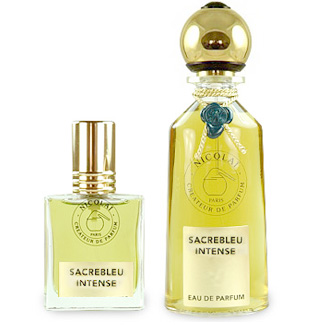
Some perfumes have a quiet prettiness that weave their way around you over time, or that touch you with a feeling of comforting familiarity. Sometimes, they are also about a study in contrasts, contradictions that work together seamlessly in a way that becomes more important than the individual notes. Sacrebleu Intense from the Guerlain descendent, Patricia de Nicolaï, and her company, Parfums de Nicolaï, is one of those perfumes.

The 30 ml and 100 ml bottles of Sacrebleu Intense. Source: Luckyscent

The 30 ml and 100 ml bottles of Sacrebleu Intense. Source: Luckyscent

It is an eau de parfum that appealed to me the first time I smelled it, but it didn’t bowl me over and throw me into a state of maddened lust. It still doesn’t, if truth be told, but Sacrebleu Intense quietly squirreled its way into my thoughts, and I ended up succumbing to a relatively blind buy months after the fact. It has a quiet solidity and classical appeal with just enough of a nod to the past to be comforting at times.

What I like is the feeling of contrasts that have been superbly blended into a seamless whole. There is sticky, chewy darkness, but also, airy, white sweetness. Bitter green leafiness lies side-by-side with boldly fiery, red cloves, brown cinnamon, smoky blacks, and twiggy, petitgrain, neroli orange-browns. Sometimes, the contrasts are just about the stark black and whites: black licorice and smoke, against white Church incense and spicy red carnation. Sometimes, they are about gender, as femininity collides with touches of masculinity. Often, they are about boldness and strength mixed with refined quietness; or the contradictions of weightless heaviness.

Photographer: Carl Bengtsson. Source:  fashionproduction.blogspot.com

Photographer: Carl Bengtsson. Source: fashionproduction.blogspot.com

Sacrebleu Intense is about all those things. It is fierce and potent, but understated and quietly elegant. It is a nod to the past that is also very modern. It has a simple beauty whose appeal grows stronger with time, and it manages to stay in your head, long after you’ve smelled it. At least, that was the case for me. I first encountered the perfume in Paris where I was trying the full Parfums de Nicolaï‘s line at one of her shops. (From this point out, I hope you will forgive me if I spell Nicolaï as just “Nicolai” for reasons of speed and convenience, as it takes a while to put on the dots, or Trema.)

Sacrebleu Intense stood out immediately amidst the Nicolai offerings. A few of the other scents were pretty, but too subdued or restrained. A good number felt too damn thin by half, but Sacrebleu Intense made me do a wee, tiny double-take, and I sniffed my wrists appreciatively. However, I almost never trust first impressions and needed a sample to test to see how it would develop over time, especially on my wonky skin. Unfortunately, the Parfums de Nicolai line doesn’t seem to believe in that practice, and I was always told, “I’m sorry, we don’t have any vials.” So, I skipped it. Upon my return to America, though, the memory of Sacrebleu Intense nagged away at me for months. I finally said, “to hell with it,” and ordered a bottle.

Guerlain's L'Heure Bleue via radiobresil.com.

Guerlain’s L’Heure Bleue via radiobresil.com.

I did so for one reason, and one reason only. Every time I had tested Sacrebleu Intense, the same thought rang in my head: “L’Heure Bleue. This is a definite nod to L’Heure Bleue, only it’s more modern, fruitier, with different spices, and possibly a more unisex feel.” Now, vintage L’Heure Bleue is one of my two, absolute favorite Guerlain scents. In fact, it is only fickleness and a slightly fiercer love for vintage Shalimar that prevents L’Heure Bleue from ranking as my favorite Guerlain of all. Plus, vintage L’Heure Bleue can be a wee bit powdery for my tastes, though none of it matters in the face of the reformulated modern version. Sacrebleu Intense reminds me of vintage L’Heure Bleu, though with enough differences for it to be its own scent. It feels more modern, and not as wistful in nature.

Patricia de Nicolaï, via her own website.

Patricia de Nicolaï, via her own website.

The strong connection to one of Guerlain’s masterpieces should come as no surprise to anyone who knows about Patricia de Nicolai‘s background. I’ve written about how she is part of the Guerlain family, a grand-daughter of the house’s founder, Pierre Guerlain, a niece to Jean-Jacques Guerlain, and a relative of the famed nose and current Guerlain family patriarch, Jean-Paul Guerlain. Madame de Nicolai is also on record as saying that she absolutely loves L’Heure Bleue, though she stopped just short of saying that it is the Guerlain scent that has had the most impact on her own perfumery. Still, her love of L’Heure Bleue shines through in Sacrebleu Intense, though I have to emphasize that I think they are very different scents at their heart.

Sacrebleu Intense is an eau de parfum that was released in 2008. It seems to have been intended as a bolder version of the original Sacrebleu which has now been discontinued, though I’ve also read in one place that the Intense was meant to highlight the floral notes more than the original. According to Fragrantica and Luckyscent, Sacrebleu Intense has:

Top notes: mandarin orange, red berries and fruity notes; Middle notes: carnation, tuberose, cinnamon and jasmine; Base notes: peru balsam, sandalwood, tonka bean, patchouli, olibanum [myrrh], woody notes and vanilla..

Source: CaFleureBon

Source: CaFleureBon

Sacrebleu Intense opens on my skin with massive amounts of carnation cloves, followed by cinnamon, dark resins, and green notes. There is a strong spiciness to  the scent beyond just the cloves, a sort of piquancy that makes me think of peppery, fuzzy geranium leaves, as well as of bitter neroli and petitgrain. Petitgrain is a citrus tree’s twigs, distilled down into the bitter, pungent woody, masculine notes, while neroli is a different method of distilling the trees’ orange blossoms. Honestly, on my skin, I don’t smell mandarin oranges in their traditional, sweet, sun-ripened juiciness. There is the strong bitterness of neroli, and the woodiness of petitgrain instead.

FrankincenseThere are other elements as well. Lurking in the base is a black, leathery smokiness from the styrax, the least sweet of all the resins or benzoin-like notes. There is also a heavy presence of olibanum or myrrh. It is nothing like the High Church, soapy, chilly, dusty character that it usually manifests, at least not yet. Instead, it smells like chewy black licorice with a hint of anise. There is a definite sense of smokiness, though. A sweet incense note that feels like sweet myrrh, rather than pure, dry, black frankincense.

Clove Studded Orange. Source: DwellWellNW blog at DowntoEarthNW.com

Clove Studded Orange. Source: DwellWellNW blog at DowntoEarthNW.com

The odd thing is the nature of the floral notes. I’ve worn Sacrebleu Intense a few times, and only once did I ever really detect tuberose. It was brief, very muted, and had a slightly rubbery, black undertone to it. However, the tuberose was so thoroughly blended into the other elements, it was extremely hard to pick out and I don’t think it lasted for more than perhaps 10 minutes at best. The main flower on my skin instead is always the carnation, though it is barely floral at all. Carnations can take on a peppered rose aroma or a clove-like one, and it is the latter which shows up on my skin. In fact, Sacrebleu Intense is heavy cloves from start almost to finish, with only a touch of actual carnation.

Geranium pratense leaf, close-up. Source: Wikicommons

Geranium pratense leaf, close-up. Source: Wikicommons

I keep imagining a clove flower with a spicy neroli heart, bitter petitgrain twigs and peppery, pungent, green geranium leaves, all dusted with cinnamon. The “flower” grows out of soil made from black licorice and the stickiest, chewiest, balsamic resin around. It’s a base that is faintly leathered and smoky, but the main impression is of bitter fruits heavily dusted with cinnamon and cloves.

For the most part, Sacrebleu remains that way for the majority of its long life on my skin. This is a fragrance that is beautifully blended, and each time I wear it, different parts seem to be emphasized alongside the clove carnation. Never the tuberose, but the green bits and the smokiness seem to fluctuate in degree. On one occasion, all that came to mind was black, chewy, resinous smokiness on a white, airy background that felt only vaguely fruited and was heavily dusted with spices instead. As a whole, Sacrebleu Intense is a scent that is very hard to pull apart. The notes move into each other seamlessly, and, as indicated, that makes the perfume a bit linear in nature. For that reason, this review will be a little different than most of mine, and will focus mainly on the perfume’s overall development and feel.

Pez. Source: Wikipedia.

Pez. Source: Wikipedia.

The one thing that does change (and is quite constant each time I wear Sacrebleu Intense) is the touch of powderiness that creeps in after a while. When it precisely occurs seems to vary, and I’ve noticed that one arm (my right, which is not my usual testing arm) reflects very little of it as compared to the other, but there is always some degree of powder. At first, it’s only a subtle touch that is almost iris-like at times. It’s definitely sweetened powder, and its combination with the bitter neroli and petitgrain-like accord creates a distinct impression of Pez candy. A sort of Sweet-Tarts or Pez powderiness, if that makes sense.

I have to admit, I’m not very keen on it, and I become less keen as time passes because it turns into quite a distinct myrrh incense note that I always struggle with. It’s a spiced, slightly dusty powderiness, though much more sweetened than most High Church incense fragrances. As regular readers know, I’m not particularly enthused by High Church or Catholic Mass tonalities, let alone powder, so I must admit, I struggle a little with Sacrebleu after about 5 or 6 hours. Still, as noted earlier, the perfume is well-blended and there are enough spicy clove, carnation, and resinous elements to make up for it.

 Source: darulkutub.co.uk

Source: darulkutub.co.uk

In its final stage, Sacrebleu Intense is a blend of myrrh incense, spiciness, and sweetened Pez powder, lightly flecked with bitterness and a hint of something vaguely fruity. In its last moments, it’s powdered sweetness and myrrh. I like it… from afar and as long as I don’t smell it up close too much.

All in all, Sacrebleu Intense consistently lasts 12 hours or more on my wonky skin, depending on how much I apply. It generally becomes a skin scent about 4-5 hours into its development, though it requires absolutely no effort whatsoever to detect the perfume if you bring your nose near your arm. Furthermore, you can push both time frames if you spray on a lot. With 3 big sprays, I once experienced a 14 hour duration, even though I had to put my nose on my skin and sniff extremely hard to detect the faint traces after the 12th hour.

I’m glad I bought Sacrebleu Intense, though I have mixed feelings about the drydown stage. In fact, if some of my discussion sounds a little like blind buyer’s remorse, there is that on occasion, but only because I really don’t like Churchy myrrh incense or powder. That said, there is something about the opening moments of Sacrebleu Intense that really compensates for it all.

I can’t really explain in any logical way except to say that there is a mood and feeling which overcomes a lot of the sticky details down the road. Something about Sacrebleu Intense feels like elegant familiarity, perhaps because of that distant, tiny kinship to L’Heure Bleue. It’s such a classic, refined scent that it makes me feel as though I should sit up straighter, put on my best clothes, and get ready for a garden party. It feels like something suited for High Tea at the Plaza Athenée, or a walk through the Jardins de Luxembourg near the Louvre. It lacks the va-va-voom luxuriousness of vintage Shalimar, or the emotional power of vintage L’Heure Bleue‘s haunting melancholy, but Sacrebleu Intense has a definite, quiet charm.

Photographer: Carl Bengtsson. Source:  fashionproduction.blogspot.com

Photographer: Carl Bengtsson. Source: fashionproduction.blogspot.com

Sacrebleu Intense doesn’t take me back in time or feel dated. I don’t feel as though I belonged in the 1920s or 1950s. Perhaps because there is an airiness to the scent that seems to belie the strength and potency of its spicy, piquant notes. It doesn’t feel opulently heavy at all, to the point that I don’t think of luxuriousness when I think of Sacrebleu Intense. Rather, I think of spiciness — intense spiciness and resins. Peppered, resinous, smoky, chewy blackness and white daintiness, speckled with every shade of red, brown and green.

In some ways, Sacrebleu Intense feels a little like an attractive girl whose appeal grows stronger over time. She may not blow you away at first, and, in fact, she may not even sweep you off your feet after you’ve known her for years, either. But you’d definitely miss her if she weren’t around, and, whenever you’re with her, you enjoy the experience. Something about her stays with you — her good humoured spiciness, perhaps — and you can’t forget how comfortable she makes you feel.

Almost all the blog reviews out there are for Sacrebleu, the original, and not for Sacrebleu Intense. There is said to be a difference. It’s not only that Sacrebleu was an eau de toilette, while the Intense is an eau de parfum, but the notes seem to be different. The original is said to have included: black currant bud, peach blossom, jasmine, tuberose, vanilla, tonka bean and incense. I also vaguely remember one Parfums de Nicolai sales lady telling me that the focus of the two scents is different, though for the life of me, I cannot now recall how.

Cellists. Source: Nathan Branch

Cellists. Source: Nathan Branch

The one blog review for Sacrebleu Intense comes from Nathan Branch who writes:

For a couple of hours, Sacrebleu Intense is mesmerizingly beautiful — rich, full, deep . . . like a roomful of cellists all playing the same sad, sweet song, but then everything starts to sound (or, in this case, smell) a little off — too much noise, too many notes crammed up close together and discordantly overlapping.

It’s a shame, too, because when the stuff is pulling together it really shines, but the last half of the scent’s lifespan is a sloppy mess — well, until you hit the patchouli/balsam drydown, which deserves some praise.

Maybe the original, less pumped-up Sacrebleu is better, less messy, than this Intense version?

Source: nature.desktopnexus.com

Source: nature.desktopnexus.com

On Basenotes, one person has the following thoughts on the two versions:

Sweet but not fruity once the initial orange has departed. Close to, the jasmin is not wholly evident, but floats a nose- distance away until displaced by carnation (not cloves). The cinnamon is a mere hint (according to the assistant in PdN in Paris the ‘intense’ version has vanilla instead of cinnamon, but it’s still there to me). Overall less spicy than sacrebleu and therefore easier to wear. Intense is an edp rather than the original sacrebleu which is an edt. However the difference is not just in the concentration, they smell noticeably different, so worth trying both

As a whole, forum and website reviews for Sacrebleu Intense are mixed, with the vast majority being very positive in nature. I also think the reason for the split is that Sacrebleu Intense is a perfume best suited to those with specific tastes, starting with an appreciation for L’Heure Bleue. After that, ideally, you’d love a heaping amount of cinnamon, myrrh incense, and the bitter petitgrain and neroli aspects of orange. It might also help if you like Pez powder or Smarties, the latter being a comparison that was raised in two Fragrantica reviews.

One Fragrantica commentator, “vitabhaya,” has what I think is a good summation of Sacrebleu Intense:

Call me nuts, but the topnotes on this smell like a blend of Guerlain’s L’Heure Bleue and Smarties–you know, those colored, super-sweet candies that come in a roll. It is melancholy but energizing, sweet yet with a great mellow depth, really a mezmerizing fragrance.

After an hour or two, the tonka bean, patchouli, sandalwood and olibanum lilt along the edge of a vanilla that is neither quite sweet nor spicy. It feels rich, sensual and downright sexy. It reminds me of late afternoon sun drifting through the curtains after a lover’s rendevous. There is something hypnotic about this blend, and I find myself lingering with my arm up to my nose long enough to wonder how long I’ve held this pose. Suddenly I feel as if I enjoy the longing for past lovers for pure memories’ sake. I cannot at this point decide if it is slightly melancholy (L’Heure Bleue?) or if it is rather dusky and languid. Oooooh, how I love it!

This goes on the “must have” list.

Source: Fragrantica.ru

Source: Fragrantica.ru

Other Fragrantica commentators seem equally enamoured, with one saying that Sacrebleu Intense had replaced L’Heure Bleu in her heart:

  • For a very long time, since we first met in a candy-box perfumery in Salzburg decades ago, L’Heure Bleue was my absolute favourite scent of all. With all due respect and nostalgia, the Pefume Queen’s Throne in my heart is now occupied by another sovereigh: Sacrebleu. (Especially that L’Heure Bleue’s new formula does not have the perfection of its predecessor.) It is the softest, most embracing, soothing, calming scent about, and I absolutely enjoy its elegant velvety dark character. Mind you, Sacrebleu’s darkness is not menacing, it’s mistery is not dangerous. It is a peaceful night, when you know you are safe, loved and can relax without a hint of worry and care. It is related to L’Heure Bleue, but more modern, less melancholy and much more life-affirming. [¶] To my nose and mind this scent is so perfect, that while wearing it I never once try to isolate it’s notes…it is a perfect harmony, and I don’t care the least what single notes make up this wonderful olfactory symphony. Truly wonderful!
  • I think Sacrebleu Intense is one of the sophisticated and finest scents I have sniffed. Very feminine [….]  I do not get candies from Sacre Bleu, but sacred feel yess. I have also L´heure Bleue and this might be kinda sister, but they are standing quite far from each others. Sacrebleu is more sensitive…. but eaven if she is sensitive do not take her to be not strong!
  • Prepare yourself to be granted a sweet redemption, to gain a second or third youth, to leave the ground and premises in bliss… [¶] Concentrate on happiness! […][¶] Olibanum and Peru Balsam control the -harsh- tubereuse. Carnation and Tonka Bean rule over the omnipresent cinnamon. Mandarin, Jasmin and Sandal turn your face to the light! [¶] Sacrebleu Intense has lifted me with joy.
  • I got this sample from the lovely Carnation. I smell hot spice! This is warm and intense and perfect for me. There is a sweetness to it that could be vanilla but its not cloying. This is a perfect combination of the things I love, Sandalwood, Patchouli, Vanilla and Spice (must be the cinnamon) I love it!
Photo: mypham.us

Photo: mypham.us

One male commentator loved Sacrebleu as well, writing:

A fruit and floral aroma that embraces you with power, quality and exuberance.
The heart is beautifully made of jasmine and tuberose, going to a soft side of the fragrance, surrounded by peru balm, olibanum (frankincense), woods and a delightful vanilla.
It starts completely feminine and then, goes to a more unisex scent during its evolution on the skin. Fierce yet delicate, strong yet romantic…nice work!

Smarties. Source: imgarcade.com

Smarties. Source: imgarcade.com

However, not everyone was quite as thrilled, whether from the fruit or the spices. In fact, I think the following comments underscore the importance of a love for cinnamon, not to mention skin chemistry, of course:

  •  very fruity and sweet. vitabhaya mentions Smarties and L’heure Bleue. I agree about the Smarties, but feel it’s only got a nod in passing from L’Heure Bleue. I purchased a sample because I love cinnamon and hoped for more cinnamon/carnation effect – but fruit tends to overwhelm my nose. Should have checked more carefully, because the top notes are all fruity, and they tend to hang around. Altogether not bad, won’t be one of my favourits, though.
  • Sweet,juicy fruity opening,but I could not detect any spices throughout this at all. […] It’s probably one of the worst I have smelled-cloying and rubbery would describe this perfectly.
  • I get cinnamon, but the horrid thing is that on my skin it smells like a cheap cinnamon candle. [¶] You ever been to a candle store, and then felt a bit yuck after smelling a tonne of candles? That’s this scent on my skin, unfortunately.
  • Hmmm, no. Opening is sweet orange, then comes cinnamon that has a very synthetic feel to me. A whisper of flowers, then some Tonka in the dry down. Average longevity and projection. L’huere bleu made me realize that I have a strong desire to smell like carnations and I was hoping this would be an interesting, well rounded composition with a clear carnation note, but it seems to have been hidden by the cinnamon. So disappointed.
On my skin, as noted, the clove-like smell of the carnations was far more dominant, but Sacrebleu Intense has a few resins or benzoins that can manifest a cinnamon side. Given that the perfume contains actual cinnamon as well, then you bloody well better like the spice if you’re going to try the perfume!

You should also like strong perfumes. On Surrender to Chance, one person commented that they liked the juicy, fruity opening but that Sacrebleu Intense was “too strong.” Well, it is, but that’s why I gravitated towards it, instead of the thinner scents in the line. Sacrebleu Intense is definitely a scent for those who like their fragrances to be bold and full-bodied.

The 30 ml bottle. Source: randewoo.ru

The 30 ml bottle. Source: randewoo.ru

One of the big positives about Sacrebleu Intense, and the Parfums de Nicolai line in general, is affordability. There is always a small 30 ml size which is very reasonably priced. For Sacrebleu Intense, the 1 oz size costs $65 or €51. It may be too tiny for some, but it’s great if you have a vast number of scents in your collection, or if you just don’t want to spend a fortune on perfume. Plus, as noted earlier, a little Sacrebleu Intense goes a long, long way.

Lastly, I think Sacrebleu Intense skews a little feminine, but not overly so and really only at the start. The incense, resins, spices and piquant neroli certainly make it very unisex in nature. My only hesitancy is the slight powderiness of the scent. It’s not at Guerlainade levels, and is much more myrrh-based in nature, but it’s something to keep in mind.

All in all, if you’re looking for a more spicy, modern version of L’Heure Bleue that is strongly centered on carnations with orange and neroli, dark smokiness that turns to white myrrh incense, and very piquant green leafiness, you may want to give Sacrebleu Intense a sniff.

DETAILS:
Cost & Availability: Sacrebleu Intense is an eau de parfum that comes in two sizes. There is a tiny 30 ml/1 oz bottle that costs $65 or €51, and there is a large 100 ml/3.3 oz bottle that costs $165 or €153. As a side note, I think that there might have been a recent price increase for the Nicolai line, as I see a number of sites selling the large bottle for $185 now.  In the U.S.: Luckyscent sells both sizes of the perfume, with the large one at the old price of $165, and also offers samples. Beautyhabit sells the small and large sizes of Sacrebleu Intense at the same price. In New York, the New London Pharmacy is selling the 100 ml bottle for $150 on its website. OsswaldNY lists the 100 ml bottle as retailing for $190, which is way above retail, but is currently discounting the large bottle for $150. Parfum1 sells the large 100 ml bottle for the new price of $185. Outside the U.S.: For Canadian readers, the US-based Perfume Shoppe sells the small 30 ml size for US$65, and you can email them to ask about Canadian pricing. Their Canadian website offers Sacrebleu Intense in a 4ml travel spray for CAD$30. In the U.K., Parfums de Nicolaï has a shop in London on Fulham Road. You can check the Store Link below for the exact address. For all European readers, you can order directly from Parfums de Nicolaï which sells Sacrebleu Intense in both sizes for €51 and €153, respectively. In France, the company has numerous boutiques, especially in Paris. First in Fragrance sells the large 100 ml bottle for €152. In the Netherlands, ParfuMaria carries both sizes of Sacrebleu Intense, as does Annindriya’s Perfume Lounge. In Spain, I found the perfume listed in the 30 ml size at Ruiz de Ocenda for €52. In Hungary, you can find the perfume at Neroli, and in Russia, there are a lot of retailers but one of them is Eleven7. For other locations in France and the one store in London, you can turn to the Nicolai Store Listing. It doesn’t show any vendors outside France or the UK. I found nothing in Asia, the Middle East, or Australia. Samples: Surrender to Chance sells Sacrebleu Intense starting at $3.99 for a 1 ml vial. You can also order from Luckyscent.

Arte Profumi Fumoir: Campfire Smoke & Promises

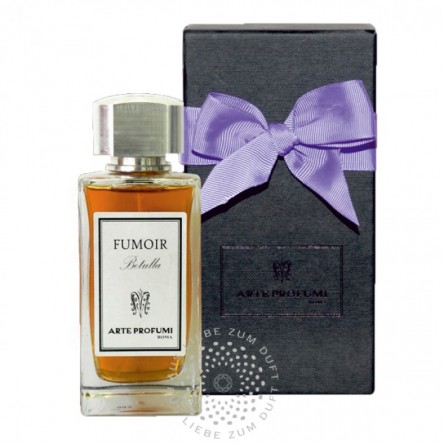
The promise of Russian leather, birch tar, smoke, ambergris, and velvet-covered, opulent smoking rooms in gentlemen’s clubs lies at the heart of Fumoir, a new and expensive eau de parfum from the Italian perfume house, Arte Profumi. From the company’s elegant description right down to Fumoir’s notes (which also include pepper, cumin, and rose), the perfume sounds glorious on paper. 

Fumoir, via First in Fragrance.

Fumoir, via First in Fragrance.

Arte Profumi, whose name translates to The Art of Perfume, is based in Rome and seems to have been founded around 2013, the year when it launched all its fragrances. Fumoir is classified as a leather scent, but its name refers to smoking rooms at a gentleman’s club, as well as to a smoke house. Arte Profumi‘s website has little by way of description for the scent, and absolutely no notes: 

FUMOIR
Birch
… conversations among men,
in reserved rooms,
covered by wood, leather and velvet
surrounded by smoke.

Source: Wingtip.com

Source: Wingtip.com

First in Fragrance has much more information, and describes Fumoir as follows:

“Fumoir” by Arte Profumi is dedicated to a very special world – the world of gentlemen’s clubs and the pleasures of tobacco.

The quite, intense and distinctive fragrance takes no prisoners. Pepper and cumin are the strong vanguard. The fragrance bites wonderfully with smoky and leather notes, the rose in the heart is known only by hearsay and ambergris stays firmly in the background. The rest is pure and driven to extreme masculinity.

“Fumoir” doesn’t rely on hints. Whoever enjoys assertive smoky notes and old, creaking leather, or prefers a statement to diplomacy, will love “Fumoir”. The name in French not only means gentlemen’s room or smoking room but also smoke house. 

The notes, as compiled from First in Fragrance and Fragrantica, are:

 pepper, cumin, birch tar, tobacco, russian leather, rose and ambergris.

Talisker, an Islay single malt. Photo: Savuista at the Savuista blog.http://savuista.blogspot.com/2013_10_01_archive.html

Talisker, an Islay single malt. Photo: Savuista at the Savuista blog.http://savuista.blogspot.com/2013_10_01_archive.html

Fumoir opens on my skin with beautiful birch, manifesting itself as campfire smokiness infused with a peaty, somewhat salty, single malt, Islay Scotch. I’m quite serious when I say that I actually murmured out loud, “Laphroaig on steroids!” which is a huge compliment, as I love Laphroaig the most out of the all the Islay malts. Here, the Scotch is amplified with that gloriously burnt wood, campfire smokiness that is such a core component of birch.

Birch Tar pitch via Wikicommons.

Birch Tar pitch via Wikicommons.

Birch tar is more than just smoky, though. It is often a key element in creating the impression of leather, especially Russian leather. Back in the old days, Russian tanners cured hides with the tar, and something in the popular imagination (or perhaps just in my imagination) tends to associate the leather aroma with dashing, fierce, or untamed Cossacks. (As a side note, Chanel‘s Cuir de Russie probably helped in creating this association.)

Here, in Fumoir, the campfire aroma of scorched birch wood is soon followed by a definite note of blackened, tar-encrusted leather. At this point in the perfume’s evolution, the leather very much feels like its own distinct, individual element. Unfortunately, it later ends up being subsumed into the birch tar, which drives Fumoir from its very first moment until its end.

Source: lamag.com

Source: lamag.com

The leather is really lovely at this point. It is so black and sultry in its smoky, rugged heft. Yet, there is an odd meatiness about it that continuously reminds me of a mesquite-smoked barbecue. Fiery black pepper thoroughly covers it and the overall effect is… well, you may call me crazy, but I keep thinking of Steak au Poivre. Perhaps it’s the result of the cumin with the pepper and birch, creating a combination which my mind is translating into a big, fat, meaty steak, covered with walloping amounts of pepper, and thoroughly infused with smoke from a campfire that is burning mesquite wood. The cumin really isn’t visible in its usual way, apart from that odd impression, and I detect no rose at all at this point.

Four members of the Tsar's Imperial Russian Cossack bodyguard. Source: Pinterest.

Four members of the Tsar’s Imperial Russian Cossack bodyguard. Source: Pinterest.

Instead, Fumoir is a bonfire of darkness, singed woodiness, tar, peaty whiskey, and leather. The latter slowly takes on a slightly animalic touch, a raw, butch quality. For the first time in a long time when smelling a birch leather fragrance, I’m really transported to the steppes of Imperial Russia with its Cossacks. It never really happened with Cuir de Russie, but then, Fumoir is not as refined as that scent and it lacks the avalanche of soapy aldehydes that dominated the Chanel scent on my skin. In short, the Italian perfume has a very untamed, fierce element that the Chanel never did. At the same time, both the campfire smoke and the leather are stripped of the forest or chilly pine aroma that other fragrances with birch often carry.

My favorite part of the scent, though, is definitely the Laphroaig single malt aspect that I noted earlier. As the opening minutes pass, the note grows stronger, and its peaty smokiness works incredibly well with the meatiness of the leather, the pepper, and the birch. Scotch and a campfire steak, how perfect is that?!

Photo: Savuista at the Savuista blog. http://savuista.blogspot.com/2013_10_01_archive.html

Photo: Savuista at the Savuista blog. http://savuista.blogspot.com/2013_10_01_archive.html

Alas, my overall enthusiasm is suddenly tempered exactly 15 minutes into Fumoir’s development when a synthetic note stirs in the base. It smells of very dry tobacco but, also, of an ISO E-like aromachemical. It is wrapped up in an extremely arid woodiness, as well as with a touch of very, amorphous golden… something. I can’t pinpoint what it may be. My first thought was Givaudan’s tobacco synthetic, Kephalis, that is often used for its leathered undertones. Later, though, I wonder if it’s Givaudan’s Ambermax with its peppered, ISO E Super-like notes? The dry, ambergris substitute, Ambroxan? A combination of Kephalis and one of the ambers seems most likely. Whatever the real cause(s) may be, there is definitely something that is not right and very fake in Fumoir’s base.

As a whole, the perfume’s overall bouquet in the opening stage is of tarry birch wood charred in a campfire and infused with mesquite, pepper, Laphroaig whiskey, and meaty Cossack leather, all lightly flecked by a dry tobacco whisper and a good dose of aromachemicals.

Source: speckyboy.com

Source: speckyboy.com

Then, Fumoir slowly, very slowly, starts to shift. 40 minutes in, the perfume starts to gradually turn warmer and fractionally sweeter. The peaty whiskey fades away, while a kernel of “amber” in the base begins to bloom, seeping over the tarred leather and birch smoke. It creates a small dot of goldenness in the pitch black, but it is an abstract amber, an impression more than a clearly delineated, crisp note.

And it most certainly is not actual, very expensive ambergris, no matter what is listed in the notes. This is nothing like the scent that dominates a fragrance like Profumum‘s Amber Aurea. This is a wholly abstract construct that is nebulous, dry, and, increasingly, subject to a chemical taint, just like the equally nebulous tobacco note. The “amber” is actually why I mentioned those particular aromachemicals up above. Neither its ISO E-like jangly sharpness nor its excessive dryness is a joy.

The problem is that far too much of both synthetics have been used for them to blend well into Fumoir, though they certainly seem to help with the perfume’s projection. The perfume is very potent in the opening hour, and with good sillage that wafts out about 3-4 inches above the skin before eventually dropping at the end of the first hour. Despite the forcefulness of the birch smoke, Fumoir is quite airy in feel, and it grows thinner with time. Actually, it feels rather like an eau de toilette in nature, one which has a powerful start, but little actual body or depth.

"Gold smoke" by etafaz on deviantART.

“Gold smoke” by etafaz on deviantART.

At the end of the first hour, Fumoir is largely a two-note symphony centered on the main aspects of birch: burnt campfire smoke and leather. The pepper, whiskey, and vaguely abstract cumin element have faded away. However, the “tobacco” is finally starting to emerge in its own right, along with the “amber” in base. I don’t mind synthetics in fragrances if they are well-blended, in balanced proportions, and don’t render the scent into something that is heavily chemical in nature, but I have enormous issues when the quantity is high, especially at Arte Profumi’s prices. (More on that later.) Plus, Fumoir gives me a faint headache whenever I smell it too deeply for too long up close. That is a telltale sign that the aromachemicals are in a large quantity, as I don’t have such a reaction otherwise. Needless to say, I’m feeling rather grumpy at this point, and it only gets worse.

At the end of the 3rd hour, Fumoir smells of aromachemical amber, burnt wood in a campfire, and birch tar that is vaguely leathered, all in a warm blend infused with abstract, peppered, tobacco tonalities. It feels richer than it actually is, and it also reminds me of a very synthetic version of Naomi Goodsir‘s Bois d’Ascese, though not as interesting. Fumoir’s sillage has dropped to about an inch above the skin, but the notes aren’t hard to detect up close.

Source: Theatlantic.com

Source: Theatlantic.com

Fumoir is largely linear in nature, which is fine if you like the notes in question. Obviously, I don’t, but it doesn’t help that the simplicity of Fumoir’s bouquet is becoming increasingly boring. From afar, it really is nothing more than the birch tar’s burnt woods and some extremely arid relative of ISO E Supercrappy. For a brief period about 6.25 hours in, the rose appeared, turning Fumoir into a dry, woody rose and birch tar scent on an abstract amber base. It feels like a very distant cousin to Le Labo‘s Rose 31, only the nebulous rose is massively dominated by campfire smoke and an amber synthetic, instead of cedar woods and actual ISO E Super.

Campfire ashes. Source: dansdepot.com

Campfire ashes. Source: dansdepot.com

The resemblance doesn’t last long, and Fumoir returns to its core scent of birch tar smoked woods with aromachemical amber and aromachemical tobacco. By the middle of the 8th hour, the notes veer between acrid, smoked, and ashtray-like in their nuances. There is a subtle vein of dirtiness that lurks underneath, like really old, stale cumin, mixed with mesquite. The whole thing makes me feel incredibly dirty — in an unclean way, and not in the good, sexy, skanky way.

I’d suppressed the urge for a very soapy shower for hours, but, finally, towards the end of the 10th hour, I gave in and washed off Fumoir. It was exactly 9.75 hours into the perfume’s development, and Fumoir would probably have endured even longer as my skin holds onto synthetics like mad. In all honesty, I think it was the monotony which got to me even more than the acrid, burnt, stale, fetidness of the final hours. Fumoir is all about the birch tar first and foremost, then the two other aromachemicals. The remainder of the notes are hardly key players, and the lovely Cossack Russian leather subsumes itself into the overall scorched woods aroma in a way that renders it a mere undertone in the perfume’s overall scent.

I tested Fumoir twice, increasing the amount of fragrance that I applied, and the overall result was largely the same in both instance. The only difference is that I didn’t detect any rose note with larger quantity of Fumoir. It was just more linear, aromachemical laden, and boring. And I washed it off even sooner.

I couldn’t find any blog reviews for Fumoir, and the fragrance has no comments listed on its Fragrantica page. There isn’t even a Basenotes entry for it. However, Parfumo (which is like a European Fragrantica) has some votes for the quality, sillage and longevity of the scent. So, even if there are no actual comments posted, perhaps you may find 3 people’s numerical assessment of the fragrance useful:

  • 3 votes each for Longevity and Sillage, each coming in at an 83% ranking;
  • 3 votes for the scent as a whole, which puts it at 2.5 stars or a 50% ranking.

I think the 2.5 out of 5 rating for the fragrance is generally fair, though perhaps a bit high for me personal. Still, it’s telling that 3 people who may not be as annoyed as I am by massive amounts of aromachemicals don’t think highly of the scent either.

It doesn’t help that Fumoir is neither cheap nor easily accessible. It is exclusive to Europe at this point, though you can easily find samples at Surrender to Chance. Even if you were to order it from First in Fragrance in Europe (or Jovoy for EU-based customers), Fumoir costs €225 for the 100 ml bottle. At today’s exchange rate, that comes to roughly $308. This is not a scent worth $308 or €225! It simply is not, even if you don’t share my disdain for aromachemicals. There is none of the rich body, nuanced complexity, or interesting development that would warrant such a price. I generally liked Arte Profumi’s Ecclesiae incense fragrance, though I thought the price for that one was too high as well, but Fumoir lacks its sibling’s quality.

Photo: Narinder Nanu via washingtonpost.com

Photo: Narinder Nanu via washingtonpost.com

More to the point, if you’re an ardent fan of campfire birch scents, there are much better alternatives out there at a much better price. There is the richer, deeper, piney Arso from Profumum Roma; there is the drier, more austere, interesting Bois d’Ascese from Naomi Goodsir (which is hardcore birch, campfire smoke!); and there is also Jovoy‘s Private Label with its heavy vetiver focus amidst the peaty birch campfire smoke and Mad Max leather. They’re all significantly better fragrances.

In short, Fumoir fails to live up to its promises, and I would skip it.

DETAILS:
Cost & Availability: Fumoir is an eau de parfum that comes in a 100 ml/3.4 oz size and costs €225. There are no American distributors for the Arte Profumi line that I could find. Arte Profumi has a website, but not an e-shop or a Stockist/Retailers list, so your best bet in obtaining the scent is from two big European perfume sites. Paris’ Jovoy and Germany’s First in Fragrance both carry the scent. The latter also sells samples and ships internationally. I couldn’t find any retailers in the UK, the Netherlands, or outside of Europe. If you’re in Italy, however, the company has two boutiques in Rome. Samples: Surrender to Chance now sells Fumoir starting at $4.50 for a 1/2 ml vial. There is also an Arte Profumi Sample Set starting at $12.99 for 3 of its fragrance (including Fumoir and Ecclesiae which I previously reviewed) in a 1/2 ml size.

Profumum Olibanum

Concentrated simplicity is the hallmark of Profumum Roma, an Italian perfume house that takes a few olfactory notes, and then ramps them up with the richest amount of perfume oils on the market. In the case of Olibanum, the focus is incense, infused with citruses and piney resins in a play between light and dark.

Source: Luckyscent.

Source: Luckyscent.

Olibanum is an eau de parfum that was released in 2006. The name may refer to myrrh, a cool, white, dusty sort of incense used in church rituals, but the fragrance also celebrates the black smokiness of frankincense, while simultaneously playing a little shell-game with citruses. Profumum‘s website describes the perfume very simply:

Sacred and profane, mistery and shade
Wax guttering, someone praying
Steps, echoing through the gothic and ancient archways
to the cathedral of Saint Michel.

[Notes:] Incense, Myrrh, Orange flowers, Sandalwood

"Abstract Pines" by Chris Shepherd at Shepherdpics.com

“Abstract Pines” by Chris Shepherd at Shepherdpics.com

I’ve noticed that Profumum tends to brush over the details or specifics in their perfume lists, and Olibanum is no exception. I’d bet that there are a number of ingredients missing from that cursory summary. Olibanum opens on my skin with lemon and herbs, then a powerful blast of a resinous, aged, green pine note. On its heels is myrrh and something distinctly medicinal, infused with a breath of orange sweetness. There is also a soapy element, along with dry woods, and they both feel very oily in nature. Something about the overall effect reminds me of face cream or a tonic with herbal elements, countered by that lemoned oil.

I really disliked Olibanum upon my first wearing some months ago, but it’s easier the second time around, even if it my description thus far may lead you to think otherwise. It’s still hard, however, to summon up wild enthusiasm for an opening that really starts off as lemon oil with green, resinous, herbal notes, along with amorphous woods and cold, soapy incense. It’s not Nivea or lemon furniture polish, nor green, piney medicine either, but it is some combination of things in all three of those genres, put together. And, yes, I repeat, this is a much kinder take on Olibanum’s start than I had initially when it seemed merely like extremely acrid, dusty soapiness. (I think applying a larger quantity helps.) Bottom line: Olibanum’s opening moments are not a joy, though the bouquet is thankfully light and sheer in weight.

Abstract Green Fantasy by Bruno Paolo Benedetti. Source: imagesinactions.photoshelter.com (Website link embedded within.)

Abstract Green Fantasy by Bruno Paolo Benedetti. Source: imagesinactions.photoshelter.com (Website link embedded within.)

Things soon change, however, and for the better. About 5 minutes later, a fruity element arrives on the scene, though it’s abstract and indistinct at first. At best, it conjures up the image of a green, unripened orange. Lurking in the base is something very leathered, like a dark resin from a juniper tree. Slowly, the medicinal overtones start to fade, and the frankincense rises to the top. Olibanum turns into a fresh, but deep, lemon, pine, incense fragrance with unsweetened fruitiness. It smells nothing like Pine-Sol, if that is your fear, and it is thanks to the sharp bite of the smoke. If anything, the forest, green notes make Olibanum feel more like a herbal take on a traditional myrrh fragrance. There is hardly any of the cold, ancient dustiness that such scents usually carry. Instead, Olibanum feels increasingly rich and warm. The initial gauzy thinness changes, the perfume solidifies with some heft, and the notes grow in strength.

Photo: David Gunter Source: Flickr (website link embedded within photo.)

Photo: David Gunter Source: Flickr (website link embedded within photo.)

Olibanum continues to morph by small degrees. 15 minutes in, a black and somewhat peppered sort of smokiness weaves its way through the top notes, while a surprising creaminess grow in the base. The primary bouquet is now of frankincense as much as the myrrh, both infused with lemons, a slightly leathered pine resin, amorphous woodiness, and some creaminess in texture. The tiniest whisper of oranges flits about, growing more distinct and sweetened with time. The thing that strikes me more, however, is that peppered woodiness. I really wouldn’t be surprised if Olibanum contained a good dose of cedar to go along with the juniper-pine elements.

Olibanum has an unexpected trajectory in its development for a few reasons. The most noticeable is how Olibanum seems to grow in concentration at the end of the first hour. It is very far in terms of both feel and smell from how it was in the opening minutes. It suddenly has the signature Profumum heft and body, and it is growing smokier by the minute as well. The piney resin becomes stronger too, evoking the scent of freshly crushed needles and woody cones on a forest floor. Olibanum doesn’t have a super-complex bouquet, but it stands out for its richness, as well as for the lemony creaminess underlying it all.

Pine tree sap. Source: howtocleanstuff.net

Pine tree sap. Source: howtocleanstuff.net

The second really strange thing is the interplay of the secondary notes. Profumum fragrances are really well-blended, but Olibanum has an unusual peekaboo situation going on with the lemon and pine. Every single time over the next four hours that I think the pine has replaced the lemons, that the lemons have superseded the resins, or that the oranges have disappeared, the situation somehow reverses itself.

About 90 minutes in, the pine seemed to retreat, but then 40 minutes later, Olibanum suddenly took on a Pine Sap Absolute sort of aroma. It actually felt like a less-sweetened, drier version of Profumum‘s Arso, only with a very different sort of smokiness centered on frankincense instead of campfire aromas. By the same token, just when I was certain that the lemon was a mere hint and fading away, it suddenly returned and seemed to overtake the pine. Back and forth we go, for at least four more hours. The sillage continues to drop, but the perfume’s smokiness seems to grow.

Source: hdwallpapers.lt

Source: hdwallpapers.lt

At the end of 5 hours, Olibanum changes again. It now hovers right on the skin, though it is still extremely potent and powerful when smelled up close. The more interesting thing, though, is the undercurrent of darkness. There are definite traces of something both leathered and burnt underlying Olibanum’s interplay on frankincense and myrrh. At times, it smells almost like raw tobacco juice, along with a burnt sweetness. At other times, it smells like singed leather, singed woods, or tarry resins. Either way, the darkness takes over, the creaminess fades away, and Olibanum turns very dry.

What I don’t detect — now or ever — are orange blossoms in the floral, sweet way to which we are all accustomed. There is, however, a definite touch of mentholated rubberiness in the base that I suspect comes from the flowers.

Art by: LordmOth on Deviant Art. (Click on photo for website link embedded within.)

Art by: LordmOth on Deviant Art. (Click on photo for website link embedded within.)

As a whole, Olibanum is now just various forms of smokiness, infused with abstract, dry woodiness, a subtle sweetness, and teasing, fluctuating levels of pine and lemons. Speaking of lemons, the note suddenly makes a big comeback in the 9th hour (literally), and Olibanum becomes a lemon-incense-smoke fragrance all of a sudden. (I told you those notes played peekaboo!) It fades after 40 minutes, leaving Olibanum as an abstract blur of dry smokiness and frankincense, which is how the perfume remains until its very end. All in all, Olibanum lasted a hair over 13.75 hours on my perfume-consuming skin with 3 small dabs.

I’m not the only one who noticed the odd relay race involving the citrus notes, as someone made a very similar comment on Luckyscent:

Opens with a strong, sharp, clean green citrus. Drys down to a smokey refined incense. But on the way the citrus and incense seem to trade places a few times creating a very non linear and interesting dry down.

The other comments on the side are generally positive, though there are a number who are distinctly unenthused, whether by Olibanum’s difficult opening or the intensity of the incense. A random sampling of responses:

  • I didn’t care for the first sniff. But when I put it on. Magic. Lemongrass, Incense, and Oud accented perfectly. An unusual combination that keeps surprising me.
  • it took me a little while to warm up to this strange perfume, but now it’s my go-to citrus! I get frankincense and nonspecific citrus-rind. it’s not one of those seductive niche scents on first application… but it grows on you as one of those scents that is just right for skin!
  • Frankincense, frankincense, frankincense…no thanks
  • It’s the hint of orange blossom that makes the scent a year-round one for me. Plus, it has none of the cumin or curry notes that ruin many other incense scents. It feels perfect on me – it smells like nothing else I’ve tried (and I’ve tried MANY scents!). While LuckyScent rates this as a masculine scent I think it’s strongly a unisex scent. The Olibanum is prominent but not powdery like some other scents. How I wish I could afford a full bottle. Thankfully a little goes a long way with this scent as I have been living off decants and samples for several years. I’ll wear it at work and I find patients and coworkers are not bothered by it as it tends to meld with my skin if I keep the amount to a small spray. Large sprays = a large silliage monster. It is much better to keep this to one or two sprays at a time. It lasts a long while (at least 6 hours or more). It’s my favorite incense ever[.]

An interesting point is how Olibanum stacks up to some other incense fragrances, as there are a few posters who mention Olivier Durbano‘s Rock Crystal and Avignon. I haven’t tried either fragrance to be able to compare, so perhaps you’ll find the comments to be useful:

  • A lovely, dry, woody incense with none of the (cloying, in my opinion) sweetness of scents like Avignon and Red Palisander. A little too strong and bitter on first application, but it quickly mellows into long-lasting goodness.
  • Too strong for my taste. It gave off this rich incense-resinous scent which nauseated me. I’ll stick to Comme de Garcone’s: Avignon.
  • Dry, dry, dry. After two hours on my wrist, I am still waiting for those white flowers to bloom. I was hoping that the orange blossom would round out Olibanum’s edges, much like the lily does to L’Artisan Passage d’Enfer, but it just isn’t happening for me. It’s a nice enough scent, but not for everyday. And it smells almost exactly like Olivier Durbano Rock Crystal… though Rock Crystal is a little more complex with its coriander and cumin. Given that Olibanum is twice the price, buy Rock Crystal instead and spend that extra $100 in your wallet on another bottle of perfume.
  • This is a fantastic scent! Similar to Rock Crystal, but without the (for me) unpleasant “sticky”, musty notes from cumin and coriander in the drydown after a few hours. Olibanum is “cleaner”. The incense note appeared not instantly, but only after half an hour. [Emphasis and bolding to other perfume names added by me.]

On Basenotes, the perfume is generally very well-liked with 8 positive reviews, 2 neutrals, and 1 negative one. The latter merely says, “Incense shouldn’t smell like sandy tobacco.” Everyone else seems to love Olibanum, with one calling it a “masterpiece.” The poster, “Dollar & Scents,” provides a wonderfully detailed description of Olibanum’s many, unusual nuances:

Upon application, one is treated to a medicinally resinous myrrh, at once cooling and green, but sharply sour, with a slightly moist, mushroom-like mustiness. And, a somewhat dark, orange blossom infuses its sweet fruity, earthy and indolic aspects. This dank, green melange meanders to the middle, where a pure olibanum, reminiscent of an infusing frankincense during the celebration of a High Mass, envelops the bitter greenness with its alluring splendor. A faint, rustic tabacco undercurrent, like a freshly-opened pack of cigarettes, drifts in and out. Transitioning to the comforting base, a smooth and creamy sandalwood lifts the frankincense, while a slightly terpene, conifer nuance presents. A sublime drydown ensues. An exalted scent to be sure, this masculine composition is an all-season fragrance, with average projection and good longevity.

For “Alfarom,” Olibanum is a worthy and real alternative to Avignon, the leader in the incense category. He writes:

This is a real alternative to seminal scents like Avignon or Incense Extreme. Olibanum is great if you like smoky incense based fragrances but it’s quite different form the well known antagonist scents of the same family. Together with the usual liturgic vibe Profumum introduced a sealing wax effect that make Olibanum irresistible. While the opening is still quite severe and chilling, the drydown turns dry-and-warm, meditative and comfortable. A terrific woody-green option. Highly recommended!

Source: journeytoorthodoxy.com

Source: journeytoorthodoxy.com

Personally, I think Olibanum differs from those liturgical scents that I’ve tried. It never once evoked the dustiness of an old church with stony steps and cold chilliness. There are no dustbeams in the air, no waxy pews or piercing myrrh chilliness. And, thankfully, the soapy touches of the start fade away. For me, Olibanum is about citruses and smoke with darkly leathered, pine resins, not church rituals or the alienating dust of ages. Then again, as I said, I’m not really an aficionado of the High Church, liturgical style of incense fragrances, so I hope the view of experts quoted above helps you a little. 

One thing I can tell you clearly, however, is that Profumum’s fragrances seem to consistently reflect a very Italian signature. Their approach is very similar to that of luxury fashion designers, like Giorgio Armani or Valentino, who intentionally opt for fluid, minimalistic, clean lines, but always put together with great refinement and the most opulent fabrics. Profumum’s perfumes are very much the same: they have just a handful of notes done in a simple, generally linear manner, but with great richness and at the most concentrated levels. 

The downside to that is that the fragrances are easily, and with some justification, accused of being… well, too simple and linear. They are. No question about that at all. None of them are edgy, revolutionary, or complicated. If anything, they really verge on comfort scents, for whatever notes they decide to highlight. All of that makes Profumum’s  prices far too high for some people. Again, I won’t argue, though price can be a very subjective issue.

Right now, Profumum’s fragrances are generally priced at $240 or €179 for 100 ml of what is really a super-concentrated perfume. Given the reported 43%-46% fragrance oils that the company uses in each scent, their fragrances really amount to an Extrait or Pure Parfum. Is it worth it? Well, it depends on whether you love the notes in question. Incense lovers seem to adore Olibanum! While I think the perfume becomes much better after its difficult start, I’m not so enthused simply because I’m not one for this category or type of incense fragrance as a whole. However, I love Profumum’s Ambra Aurea and Patchouly, and think those are very worth it. I also enjoy their Acqua di Sale salty-beach fragrance, and think their gourmand vanilla, Dulcis in Fundo, is nicely done. In short, it’s all subjective and dependent on your personal tastes. The quality is unquestionably and definitely there throughout, which is why Profumum is one of my favorite lines.

I must add that I’ve heard Profumum will be increasing its prices in February or March 2014. I think $260 was the number being bandied about. So, if you’ve longed to buy a Profumum fragrance — whether Olibanum or another one — now might be the time. 

DETAILS:
Cost & Availability: Olibanum is an Eau de Parfum that only comes in a large 3.4 oz/100 ml bottle which costs $240 or €179. (There is also an accompanying, concentrated body oil, and a shower gel.) Profumum unfortunately doesn’t have an e-shop from which you can buy their fragrances directly. In the U.S.: Olibanum is available at Luckyscent, but it is back-ordered until March. If you buy it now, you would probably save on the upcoming price increase for the Profumum line. Olibanum is also sold at OsswaldNYC. In addition, they have a special phone deal for samples if you’re in the U.S.: any 10 fragrances in 1 ml vials for $10 with free domestic shipping. You have to call, though, to order the samples, and there may be brand exceptions. Their number is (212) 625-3111. Outside the U.S.: In the UK, Profumum perfumes are sold at Roja Dove’s Haute Parfumerie in Harrods. Elsewhere, you can find the line at Paris’ Printemps store, Switzerland’s OsswaldPremiere Avenue in France (which also ships worldwide, I believe), France’s Soleil d’Or, the Netherlands’ Celeste (which sells it for €180, along with the shower gel), Hungary’s Neroli, and Russia’s Lenoma boutiques. According to the Profumum website, their fragrances are carried in a large number of small stores from Copenhagen to the Netherlands, Poland, France, the rest of Europe, and, of course, Italy. You can use the Profumum Store Locator located on the left of the page linked to above. Samples: Surrender to Chance carries samples of Olibanum starting at $4.99 for a 1/2 ml vial. You can also order from Luckyscent.