Perfume Review – The People of the Labyrinths A*Maze: Sulphurous Rose

The Dutch fashion house, The People of the Labyrinths, are best known in the perfume world for their 1998 hit, Luctor et Emergo. According to Now Smell This, the fragrance became “a cult classic, having first been nominated for cult status by Style Magazine in 2002.” Nine years later, in 2007, The People of the Labyrinths released their second — and, thus far, only other — fragrance called A*Maze (or, sometimes, alternatively, “A.Maze”). I like the clever pun on the name of the house, but I don’t like the perfume. In fact, I find it far from amazing. (Sorry, I couldn’t resist.)

A*Maze Eau de Parfum.

A*Maze Eau de Parfum.

A*Maze comes in both eau de toilette and eau de parfum concentration. This review is only for the Eau de Parfum which is centered around a highly liqueured rose, in conjunction with oud and saffron. It is something we’ve seen time and time again, now, in 2013, but it was a lot less common back in 2007. Fragrantica says A*Maze was “composed as the first fragrance [for the brand] with 100% natural ingredients,” a claim that no doubt stems from People of the Labyrinths’ themselves and one which I highly doubt. For one thing, the perfume has musk — which is unlikely to be all-natural these days due to the animal ethics issue. For another, I smell ISO E Super in the fragrance. But I’m getting ahead of myself.

According to Luckyscent, the notes in A*Maze include:

Henna, Saffron, Taif Rose, Orange Blossom, Wardia Rose, Agarwood, Sandalwood, Musk, Civet.

Red Rose wallpapers from Zedge.net.

Red Rose wallpapers from Zedge.net.

A*Maze opens on my skin as a rose jam. It is a beefy, meaty, dark rose much like that in Tom Ford‘s lovely Noir de Noir. The potent, dense, almost fruited rose is really the only thing that the two fragrances have in common, as A*Maze has quite a significant amount of agarwood in it. Theoretically, so does the Noir de Noir, but it is really negligible and I highly doubt anyone would really classify the scent as an agarwood one. A*Maze, in contrast, is most definitely an oud fragrance and one which has closer similarities with something from Montale.
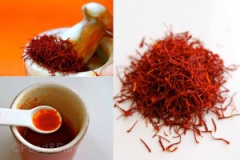
Saffron.  Source: FoodandFarsi.com

Saffron.
Source: FoodandFarsi.com

Accompanying that black-red, jammy rose are two other key notes: saffron and henna. The former is sweet and nutty, but with a strongly spicy kick to it. It’s red, fiery, and very far from the dessert-like saffron that you might expect. Lurking right behind it is the henna which adds a dusty, quiet earthiness to the fragrance, though it’s extremely subtle. The same description applies to the oud at this stage which is quite light in nature and swirled into the rose. Less than five minutes into the perfume’s development, the saffron-rose combination takes on a sharp, almost fiery tone that is quite biting. It isn’t metallic at this point, per se, but it goes far beyond the merely spicy. Underneath, there is something that really smells quite waxy and, simultaneously, quite citrusy. Katie Puckrik compared it to “lemon floor wax” which I think is both genius and incredibly accurate.

YSL's Paris.

YSL’s Paris.

At the thirty minute mark, A*Maze is an incredibly concentrated rose fragrance with a kick. Elements of citrusy wax and fiery saffron are joined by a note that resembles violets. When mixed with the jammy, fruited, dark rose accord, A*Maze turns into something that feels a little like a liqueured, syrupy version of YSL‘s classic Paris. There is no powder, but that violet-rose accord feels quite similar.

Unfortunately, there is also something else: a sulphurous, metallic, almost tin-like element to the perfume. It almost feels like potent honey concentrate, but it’s probably just the highly liqueured, gooey edge to the roses. It’s painfully sharp and burns my nose — more and more with every passing minute — before it triggers a mild throbbing behind my eye. I’m not generally one to fall to my knees with worshipful love for a rose fragrance, but headache-inducing, sulphurous, burning roses definitely won’t do it.

Things don’t improve at the end of the first hour. As the oud gets stronger and more potent, A*Maze takes on a tell-tale peppered, medicinal, antiseptic accord that is a dead giveaway for ISO E Super. I’m not a fan. In conjunction with that sulphurous rose, I’m wondering if the skin inside my poor nose has been burnt to a shred. I ponder whether to wash the whole thing off, but I persevere and, to my relief, the whole nasty shebang starts to eventually go away. Exactly three hours into A*Maze’s development, it is just a saffron-rose (without sulphur) along with dry, earthy henna atop peppered oud and light musk. It’s not fantastic, but it’s not pure misery any more, either. Perhaps it would have been helped by a touch of animalic musk or civet to make it more interesting and less linear, but neither accord showed up on my skin in any noticeable manner. At the start of the fifth hour, A*Maze is a simple rose scent with some dusty accords and a touch of oud. An hour later, it vanished entirely.

A*Maze has incredible potency in the forty minutes. This is not a perfume to spray with abandon, especially if you’re wearing it to a conservative office environment. The projection matched, at first, before dropping off sharply and becoming quite moderate after an hour. Thereafter, the sillage dropped even further and A*Maze remained quite close to the skin. As for longevity, it lasted just over 6 hours on my perfume consuming skin.

All in all, I wasn’t a huge fan of A*Maze. Parts of it at in the opening moments were interesting — even bordering on lovely (perhaps) with that beefy, dense, liqueured rose — but then it became extremely unpleasant, before ending as something rather commonplace and banal. Maybe in 2007, I would have been more wow‘d by the notes, but not now, in 2013, overwhelmed by the plethora of perfumes with some combination of rose, saffron, and oud. And did I mention the sulphurous aspect to the rose? Bah.

Tania Sanchez in Perfumes: The A-Z Guide was a little bit more impressed — but not by much. In her 3-star review, she wrote:

A*Maze delivers an excellent, bright, powerful, liqueur-like spiced rose as its top note, but as time goes on, the clove aspects of rose dominate and the woody amber gets ever louder. It feels like a halfway point between the intense, truffled woody rose of Edouard Fléchier’s Une Rose and the resinous-spicy rose of Michel Roudnitska’s Noir Epices (both Frédéric Malle), but not quite as good as either. [Emphasis added to the names.]

Frédéric Malle‘s Une Rose also came up in a considerably more positive, enthusiastic review by Katie Puckrik who not only adored A*Maze, but who also went out and bought a full bottle. In an interesting “pen-pal” exchange with someone on the issue back in 2010, she described the perfume as follows:

A*Maze has the thick rose density of Frédéric Malle Une Rose, with something of Amouage Homage Attar in its fruity-oudy-citrus richness. And all my other old friends are on board: saffron, sandalwood, musk, civet. [¶] It’s certainly different to a Montale rose — more fruity, less dry. […]

I’m mesmerized by A*Maze’s conflicting sensory triggers: its jammy rose starts to make my mouth water, and then the lemon floor wax dries up the drool. And then the drool-to-dry cycle repeats. I’m a regular Möbius strip of saliva. […]

A*Maze has an odd, herbal side, and I’m wondering if that’s to do with henna, one of the listed notes. […] There’s also a honey cast to A*Maze, an animalic floral niff that marries the saffron/rose/floor wax to the skin in a salty, sensual way. I’ve got the parfum version of A*Maze, and though it comes out swinging, it suddenly quiets down dramatically after about a half hour.

I’m in thrall to A*Maze’s oddness.

Meh. I’m far from mesmerized or in thrall to A*Maze. In fact, I’m not impressed in the slightest.

DETAILS:
Cost & Availability: A*Maze is available as either Eau de Toilette or Eau de Parfum. This review is for the latter. Both concentrations come in a 100 ml/3.4 oz bottle. On the POTL website, the price is €125 for the Eau de Toilette and €170 for the Eau de Parfum. In the U.S., you can find A*Maze at Luckyscent which sells the Eau de Parfum for $215, along with samples for $5. Both concentrations of A*Maze are available at Beautyhabit. In the Netherlands, POTL has shops in Amsterdam and Arhem, with the locations listed here. You can also check to see if some of the stores which carry POTL clothing world-wide have the fragrance as well. Those stores are listed here. Samples are not available at Surrender to Chance.

Reviews En Bref – Maison Francis Kurkdjian Oud Mood Collection: Velvet, Silk & Cashmere

The following will be a brief assessment of the trio of new Oud fragrances from Maison Francis Kurkdjian (“MFK”) called the OUD Mood Collection. As always, my Reviews En Bref are for perfumes that — for whatever reason — didn’t seem to warrant one of my full, exhaustive, detailed reviews. In this case, it is because I think these perfumes are best suited to men who are hardcore, passionate, obsessed Oud aficionados who worship the very purest, most concentrated essence of the note. After some recent experiences, I’ve realised that I most definitely do not fall into that category.

THE OUD MOOD COLLECTION:

francis-kurkdjian-oud-mood-fragrances

In early 2013, Francis Kurkdjian released three new interpretations of Oud. All featured Laotian oud, the rarest of all agarwood ingredients, and all were the most concentrated type of fragrance: pure parfum (or extrait de parfum). On the MFK website, Mr. Kurkdjian explains as follows:

The OUD mood collection

Francis Kurkdjian imagined the OUD mood collection as feelings, sensations, rather like those one would have when wrapped in a fragrant stole. The play on shimmer, comfort and warmth. They are precious, intense and concentrated.

OUD VELVET MOOD:

velvet-mood-masion-francis-kurkdjianMFK describes Oud Velvet as follows:

Cinamon from Ceylan – Saffron- Oud du Laos – Copahu balm [a resin] from Brazil

A majestic, enveloping fragrance that gives the sensation of density and fluidity.

Oud Velvet opened on my skin with heavily buttered saffron, sharply medicinal oud, and leathery, animalic, black resin. The saffron-leather smelled goaty, almost rancid and raw, and was tinged by an unpleasant burnt note as if singed by smoke. The combination turns the oud note almost fecal. The whole thing is underpinned by an oddly buttered note, almost like dirty buttered caramel, but there is also the feel of bitter, wet, black coffee grinds. It was a terribly rough, difficult opening.

Thankfully, about fifteen minutes in, the extremely unpleasant concoction softens into something smoother and gentler. And it continues to do so with every passing moment. Oud Velvet actually does feel like a darkly velvety take on oud with rich saffron, sweet cinnamon and dark resins. The latter is no longer so raw and animalic; all hints of anything goaty, rancid or fecal have vanished. Instead, it’s been replaced by a strongly stony, steely, cold note that replicates a little the oud in By Kilian‘s Pure Oud. The Candy Perfume Boy called the note “industrial,” and that is actually genius. Oud Velvet really does evoke the feel and scent of a large, empty, echoing, stony, industrial warehouse. And, yet, underneath, there lurks something that feels like meaty chocolate, adding some warmth to the scent. As time passes, Oud Velvet turns into a chocolate-cinnamon oud with flickers of nutty saffron, stony-cold industrial elements, and thick, darkly ambered resin. By the end, 9 hours later, it was simply oud with some lightly ambered tones.

OUD CASHMERE MOOD:

MFK Cashmere OudMFK describes Oud Cashmere as follows:

Labdanum from Morocco – Benzoin – Oud from Laos – Vanilla

This oriental fragrance is woven with all the gentleness of a ‘‘second skin’’, soft and balmy.

Like Oud Velvet, Oud Cashmere also has a difficult opening. On my skin, it began with blasts of rancid, sharp, medicinal, metallic notes underpinned by the feel of rubbing alcohol. There is a definite smell of cheese. To be specific, a creamy chèvre-blue cheese hybrid that is infused with vanillic elements. This is not like the purely Gorgonzola blue cheese in Xerjoff’s Zafar (which also has extremely aged, rare Laotian agarwood), but something slightly different. Here, the note is creamier, less pungent, more artificial, and sweetened by a sort of candy-floss vanilla.The overall combination almost seems worse, especially when you consider the medicinal undertones with its notes of pink, rubber bandages. 

Pink candy floss or cotton candy. Source: Favim.com.

Pink candy floss or cotton candy. Source: Favim.com.

Oud Cashmere does not improve with time. With each passing moment, the goat-Gorgonzola starts to fade, and the perfume becomes more and more medicinal, antiseptic, vanilla. It smells sweet and unnatural: pink candy floss and pink, rubber bandages underlying astringent. Clearly, I am not one to handle the pure essence of oud, especially when it is from this sort of aged, Laotian agarwood. Perhaps a man with edgier tastes and a fanatical love for true, potent oud would love it. I tried Oud Cashmere three times and, all three times, I ended up scrubbing it off after a few hours. There is only so much a person can take for the sake of a review.

OUD SILK MOOD:

MFK Silk OudMFK describes Oud Silk as follows:

Bulgarian rose – Camomille from Marocco- Oud from Laos – Papyrus

A light, airy fragrance reminiscent of the rustle of silk or the soft touch of a rose petal.

Oud Silk is not a particularly inventive, original take on the conventional rose-oud combination, but it is the best of the trio in the Oud Mood Collection. It opens on my skin with the loveliest of super concentrated, rich, heady rose notes. It’s opulent, ripe and highly sweetened. The oud lingers in the back, soft and subtle, with absolutely no medicinal, astringent, antiseptic or fecal notes. Subtle chamomile wafts in and out, adding to the floral nature of the perfume. Underneath, quiet whispers of dry papyrus grass rustle. I think a commentator on Basenotes, “Buzzlepuff“, put it well when he said that the papyrus note acts like a bridge between the floral elements and the more woody oud. In fact, his assessment of the perfume mirrored much of my own:

This is a big floral rose with a very strong oud backdrop. If you have ever wondered why rose makes such a great partner with animalic medicinally zingy rotting vegetation sap – oud – specifically Laotian Oud, then you must smell this fragrance. The papyrus note enhances and magnifies the cool dry wood side of the oud in here. Bulgarian Rose is that very big red perfume rose scent and here is amplified by blue chamomile bridges to the slight floral aspect of Laotian Oud. There is a seamless flowing aspect to this. Nothing is left hanging out there from beginning to end – smooth as silk. I have tried to match this up with anything else similar in my history of sniffing things and I am at a loss. It is a little like Rose Oud By Killian but bolder and rosier and there is no saffron in this mix. […] It does read feminine to me but I could see a man wearing it too.

On my skin, the agarwood was not such a bold, strong backdrop as it was on him, but something far more subtle. Frankly, it was an enormous relief, since I may be too plebeian for true Laotian agarwood. The subtlety of it in Oud Silk is probably the reason why I liked the fragrance the most out of the trio. It was the least brutal, the least masculine, and the least traumatic manifestation of agarwood. I suspect, however, that hardcore oud fanatics may find it to be too much of a boring, conventional take on the note.

All in all, I wasn’t a fan of the Oud Mood collection. Silk Oud was very nice, but not particularly interesting. The others were definitely…. er… interesting — in the worst way possible. I honestly can’t decide what was more of an ordeal: the abrasive opening of Velvet Oud with that rancid, animalic, raw leather note singed by smoke and almost fecal undertones; or the goat-blue cheese and vanilla, pink candy floss with pink rubber, medicinal bandages of Cashmere Oud. Given the significantly improved nature of Velvet Oud, the Cashmere has the dubious honour of winning.

The odd thing is that I love the aged Laotian oud in Neela Vermeire‘s Trayee, but these more medicinal, abrasive and, frankly, painful versions are just too much for me. For a narrow, limited (and very masculine) segment of the population, some of them may be fabulous. But even men who postulate themselves at the altar of super-powerful agarwood may hesitate at spending $375 for a 2.4 oz/70 ml bottle. Yes, the Oud Mood Collection is the most potent concentration of fragrance around — pure parfum — and the bottles are especially large in light of that fact, but…

Well, to put it charitably, better you than me, my friend, better you than me.


DETAILS:
Cost & Availability: All three Oud Mood fragrances are Pure Parfum/Extrait de Parfum concentration and come in a 2.4 oz/70 ml bottle that costs $375, €275 or £275. You can find them on the Maison Francis Kurkdjian website which also sells samples of the perfume. In the US, you can purchase all three fragrances from Luckyscent or Neiman Marcus. I don’t see either collection listed on the Saks Fifth Avenue or Bergdorf Goodman websites. In the UK, I’ve read that you can find the collection at Selfridges, Liberty, Harvey Nichols and Les Senteurs priced at £275 each. However, I couldn’t find the collection listed on any of those store’s websites thus far except for Les Senteurs. For the rest of Europe, you can buy from First in Fragrance which has all three perfumes in the collection for €285 (which is €10 more than on the MFK website). Elsewhere, you can turn to MFK’s Points of Sale for a retailer near you, whether you are in Asia, Australia, or the Middle East. In terms of samples, the collection is available at The Perfumed Court starting at $14.00 for three 1/4 ml vials. You can buy samples of each individual fragrance starting at $4.95 for a 1/4 ml vial. The OUD Mood Collection is not yet available at Surrender to Chance (which I personally think is cheaper and better than The Perfumed Court), but will be by the first of May, I think.

Perfume Review: “The People v. Xerjoff Zafar” – Prosecution & Defense

The People v. Xerjoff Zafar– Case # 13-276891XZ

[The Bailiff]: “All rise! The Court is now in session, The Honorable Charles Highblossom presiding. On the docket, The People v. Xerjoff Zafar, Case # 13-276891XZ. The charge is olfactory assault and battery. State your name and business before the Court.”

[A small, goat-like, balding man rises]: “I am the District Attorney, Luke Sneering.”

[A tiny, dark woman wearing a custom-made Chanel suit rises]: “I am Loverly Limburger from the firm of Wealthy Lawyers, Screw Them, & Howe representing the Defendant, Sheikh Zafar of Xerjoff.”

Continue reading

Perfume Review: Nawab of Oudh by Ormonde Jayne (Four Corners of the Earth Collection)

The Nawab of Oudh is a nonpareil, an oriental perfume of such magnificent richness and beauty that it left my jaw agape. There is no chance that I shall be — as the famous writer, William Safire, once famously penned — a nattering nabob of negativity. No, Ormonde Jayne‘s latest creation is simply spectacular.

The Raja of Mysore. Source: Victoria & Albert Museum.

The Raja of Mysore. Source: Victoria & Albert Museum.

OJ NawabNawab of Oudh is one of the new Four Corners of the Earth collection which was released in late 2012 and which pays homage to the different parts of the world that have inspired Ormonde Jayne’s founder, Linda Pilkington. The collection is the result of collaboration between Ms. Pilkington and the perfumer, Geza Schoen, and consists of four fragrances: Tsarina, Qi, Montabaco and Nawab of Oudh. (I have samples of all four fragrances, provided courtesy of Ormonde Jayne, and am working my way through the collection. You can find my review for Tsarina here.)

A nawab (sometimes also spelled as “nabob”) can mean, alternatively, a ruler of an Indian province, or a European person who made a vast fortune in India or overseas. Ormonde Jayne was inspired by the first meaning for the term, describing the fragrance as follows :

Source: Shanti Barmecha blogspot

Source: Shanti Barmecha blogspot

Nawab (Ruler) of Oudh is a province of central India. The perfume is inspired by the Nawabs who once ruled over it.  It is a potent blend of amber and rose with a soft oudh edge. Yet surprisingly not one ingredient stands out from the others. It achieves a perfume synergy that defies traditional analysis, releasing a pulsating pungency, brooding and hauntingly beautiful, a rich tapestry of fascinating depths, a jewelled veil to conceal its emotional complexity and extravagance.

Every single part of that description applies to the magnificent richness of this stunning perfume. It is no doubt helped by the perfume’s long list of notes, seventeen in all:

top: green notes, bergamot, orange absolute, cardamom, aldehyde. 
heart: rose, magnolia, orchid, pimento, bay, cinnamon, hedione. 
base: ambergris, musk, vetiver, labdanum, oudh.

The Nawab of Oudh opens on my skin with a burst of bright, juicy, sweet green notes that have a distinctly tropical, fruited underpinning. There is something that feels very much like green mangoes, alongside the bright, fresh, plump, sun-sweetened lemons and oranges. There is also a heady rose note — sweet, fragrant, dark as the reddest damask, and almost beefy in its richness. Following closely in its footsteps is a spectacular element of velvety magnolia. The whole combination is beautiful beyond words, and I actually said “Wow” out loud as the symphony of notes wafted up to my nose.

The bright, fresh, sweetly floral and fruited tonalities quickly give way to something earthier and spicier. The bay leaf starts to appear, adding an unusual herbaceous and earthy aspect to the sweetness. Dark, rooty vetiver also helps undercut some of the richness, but it is the surprisingly fiery note of red chili peppers that really adds the perfect counterbalance. Together, they work to transform the scent into something much more than a mere floral with zesty citrus notes.

Further depth and complexity are added with the advent of ambergris, and I’m convinced this has to be the real stuff. It smells much richer, almost dirtier, and definitely slightly muskier than the usual amber accords, though the labdanum undoubtedly plays a role in that impression, too. Whatever the particulars, the ambery note has enormous depth but it’s never heavy, molten or gooey. Rather, it’s sheer and light. At the same time, the perfume itself is very strong and heady, encompassing me in a lovely cloud of scent that projects about two feet in distance in these opening moments.

Ten minutes later, the orange absolute is much more noticeable, as is the orchid flower. Both accords mix with the magnolia and rose to create a floral juxtaposition to the various herbaceous, woody, citrus, ambered and slightly musky notes. The final result is a beautifully balanced opening that is never singular nor too sweet. The sweetness is further undercut when the woody notes start to appear. Speaking of appearing, on my second test of the perfume, the bay leaf gained in intensity in opening moments of the scent; during the first test, however, to my surprise, it disappeared after ten minutes. So, too, did the fiery red chili pepper and the earthy vetiver. I point this out because I know some of you struggle with those notes, respectively, and I want to reassure you that (to my nose) they are not an enormous presence or particularly sharp.

Purple rose at Warwick Castle, England. Photo provided with permission by CC from "Slightly Out of Sync" blog.

Purple rose at Warwick Castle, England. Photo provided with permission by CC from “Slightly Out of Sync” blog.

In fact, nothing in this beautifully crafted, smooth as a well-buffed piece of amber, perfume is sharp or unmodulated. That applies to the agarwood (or oud) as well. It is simply perfect: never medicinal, astringently sharp, pungent or antiseptic. No camphorous elements or images of pink rubber bandages. Instead, you have a very smooth, incredibly rich, and highly sweetened oud note. It waxes and wanes in prominence in that first hour, never dominating but floating just under the flowers. The oud is perfectly interwoven with that rich, dark rose, but neither are the primary focus of the scent at this time.

Instead, Nawab of Oudh is in harmonious balance; this is a superbly well-blended perfume that throws off notes the way a chandelier throws off prisms in the light. I am strongly tempted to add the phrase “it’s beautiful” to the end of every paragraph, but I fear I will sound like a broken record before I’m halfway finished. Nonetheless, my God, is this perfume beautiful!

Magnolia. Source: Kathy Clark via FineArtAmerica.com

Magnolia. Source: Kathy Clark via FineArtAmerica.com

If any single note were perhaps to dominate in the first ninety minutes, it would be the magnolia. There are many global varieties of this velvety, opulent flower, but it is an incredibly popular and symbolic part of America’s Deep South, in particular. In fact, there is a Texas town called Magnolia that is just outside Houston. In addition, the flower has been the symbol of the state of Louisiana since 1900. (I won’t even get into the famous movie, Steel Magnolias, involving the state of Georgia.) Magnolias have a creamy, rich aroma with a slightly citrus-y nuance and a floral scent that is somewhat similar to gardenia at times and, at other times, closer to jasmine. Here, however, there is a definitely tropical feel to the flower’s velvety lushness and creaminess. It’s heady and strong, but never indolic or sour. Its combination with the orange absolute — and with what I am convinced must be green mangoes — adds a beautiful tropical aspect to the scent. And, yet, its citrus-y aspects also provide some freshness and lightness. The whole thing is simply an incredibly creamy, velvety floral composition of great complexity.

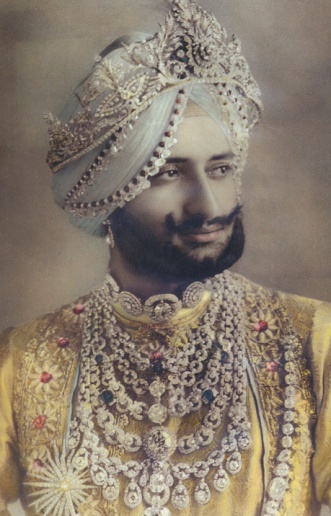
Sir Digvijaysinhji, Maharaja Jam Saheb of Nawanagar in 1935 wearing the emerald and diamond necklace created by Cartier London in 1926 for his uncle, Maharaja Jam Saheb Ranjitsinhji Vibhaji. Source: TheCultureConcept.com

Sir Digvijaysinhji, Maharaja Jam Saheb of Nawanagar in 1935 wearing the emerald and diamond necklace created by Cartier London in 1926 for his uncle, Maharaja Jam Saheb Ranjitsinhji Vibhaji. Source: TheCultureConcept.com

Two hours in, Nawab of Oudh changes. Now, it is oud with cardamom, what feels like cloves, red chili peppers, and the very first hint of labdanum. The magnolia is still present, but it has now receded much more to the background. For the next two hours, the perfume reflects different facets — much like jewels gleaming around a maharajah’s neck. There is: agarwood sweetened by sweet damask rose; dusty, dry spices (cardamom in particular); a touch of muskiness; a hint of jasmine; and rich ambergris. The red chilies pop up now and then, but the perfume is not fiery. It’s a perfectly modulated rosy, spiced, woody amber perfume that is endlessly luxurious, and made with what are, clearly, very expensive, top-quality ingredients.

From the fifth hour until the perfume’s end around 8.5 hour mark, Nawab of Oudh is labdanum heaven. Now, as some of you know, labdanum is one of my all-time favorite notes; I simply adore the more nutty, slightly leathery, dirty and masculine twist on a resin. Here, it’s treated beautifully — intertwined in a lover’s kiss with the heady red rose. It’s a bit too light for my personal, utterly biased tastes — and I would have preferred a more molten, opaque treatment — but nothing about this airy, lightweight (though strong) perfume is about molten heaviness. Instead, labdanum’s ambery note is light, warm, sweet, and infused by a subtle undertone of spices. Its interplay with the heady rose was so beautiful that I will make an embarassing confession: I spent a good chunk of 30 minutes simply lying on my sofa with my nose glued to my arm and inhaling the nutty, rose-strewn amber in ecstasy. It was, quite simply, the perfume equivalent of a food coma.

Nawab of Oudh has good sillage and longevity. The opening phase of the perfume had about 2 feet in projection for the first hour, before dropping considerably. However, it only became really close to the skin around the 4th hour. To be honest, for some of the remaining hours, I had to forcefully inhale at my arm to detect it — though, clearly, I found that no hardship whatsoever! As for longevity, as noted above, it lasted around 8.5 hours on my perfume-consuming skin. I should note, however, that the sillage and longevity drop even further if you don’t put on a lot; on my second test, the sillage became close to the skin at around 2.5 hours and the scent lasted only seven hours. As a whole, Nawab of Oudh a wee bit too airy for my personal liking, but not everyone shares my passion for the most opulently heavy, powerful scents. For those who prefer a less forceful, and more modulated, tempered fragrance, Nawab of Oudh will be ideal.

The only real problem with Nawab of Oudh is its cost. I winced and grimaced when converting the British pound sterling price of £335.00 to U.S. dollars; at the current exchange rate, that comes to approximately $506! The perfume only comes in Eau de Parfum concentration and in a large 100 ml/3.4 oz bottle, so there aren’t cheaper alternatives in a smaller size. If, however, it were more affordable, I would buy Nawab of Oudh in a heartbeat; without a doubt, it has shot up to replace Tolu as my favorite Ormonde Jayne fragrance.   

It is probably, therefore, a mixed blessing that Nawab of Oudh is not widely available at the moment. The perfume is not even listed yet on the company’s website (though it probably will be soon). It doesn’t seem available at other European retailers and, as always, Ormonde Jayne fragrances are not sold anywhere in America. However, Nawab of Oudh is available at Ormonde Jayne’s two boutiques in London and is also available online at Harrods. [UPDATE: My apologies but, reading the fine print, it seems that Harrods does not export this item. I assume it has something to do with the UK’s postal regulations on the shipment of perfume. I’m afraid that I have no other purchasing alternatives for you at this time if you live outside London or the UK.]

If you love spicy, rich, complex Orientals (as I do), then Nawab of Oudh will be your personal heaven. It makes me think of Klimt’s The Kiss with its initial start of green, turned into creamy, lush, almost tropical florals, then to sweet, spicy roses and woody, nutty, oriental ambered richness. Frankly, I can give no higher praise than The Kiss.

Klimt The Kiss

Disclosure: My sample of Nawab of Oudh was provided courtesy of Ormonde Jayne. However, that did not impact this review. My primary commitment is, and always will be, to be as honest as possible for my readers.

DETAILS:
Price & Availability: As noted, above, Nawab of Oudh is an Eau de Parfum which comes only in a large 100 ml/3.4 oz size and which costs £335.00 or, with today’s present exchange rate, $506. Although Nawab of Oudh and the Four Corner Collection are not presently up on the Ormonde Jayne website, you can find the entire collection in the Ormonde Jayne stores, as well as at Harrods which ships out internationally. Ormonde Jayne’s two London boutiques are at Old Bond Street and Sloane Square with the precise addresses listed on the website here. As for samples, none of the perfume decant sites in the US currently offer any of the Four Corners of the Earth collection. When places like Surrender to Chance start selling the collection, I will update this post accordingly.