Aftelier Perfumes Cuir de Gardenia

Source: Mostbeautifulflower.com

Source: Mostbeautifulflower.com

The beauty of a gardenia, with all its multi-faceted richness and inherent contradictions, captured in a perfume that is sometimes much more about a mood than a particular set of notes. That is Cuir de Gardenia, a feat of technical skill, innovation, and perfume mastery by the acclaimed doyenne of all-natural perfumery, Mandy Aftel of Aftelier Perfumes

On her website, Ms. Aftel has a wonderfully detailed explanation of why Cuir de Gardenia is different from many “gardenia” scents, along with discussion of its character and structure:

Cuir de Gardenia retains the unique beauty of the tiare [Tahitian gardenia] flower, not allowing it to morph into the hundreds of petals of a floral bouquet. I had been incredibly fortunate to find an artisanal grower and distiller of the ultra-rare, costly, precious gardenia. In Cuir de Gardenia, I wanted to retain the pure loveliness of the creamy sweet and singular gardenia fragrance, and knew that the rounded warmth of an oil-based perfume (solid and extrait) would be the perfect format.

Tiare or Tahitian gardenia. Source: Kootation.com

Tiare or Tahitian gardenia. Source: Kootation.com

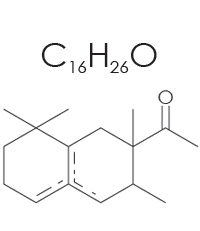
Cuir de Gardenia is unusual in that it has no top notes; I created it in such a way that the gardenia appears immediately, unimpeded from the opening of the perfume onward, merging seamlessly with the leather. The natural isolates ethyl phenyl acetate (reminiscent of a bunch of sweet peas) and the candy-like maltol contribute sweet and floral notes to the animalic base of the perfume.

Source: Fragrantica

Source: Fragrantica

Cuir de Gardenia comes in two concentrations: an extrait de parfum oil and a solid perfume. This review is for the former, the extrait de parfum. The perfume is classified on Fragrantica as a “floral woody musk,” while Ms. Aftel categorizes it as “dry woods.” According to Ms. Aftel, the notes are:

Middle: tiare (gardenia) absolute, jasmine grandiflorum absolute, benzyl acetate.
Base: castoreum, ethyl phenyl acetate, maltol.

It was interesting to smell Cuir de Gardenia merely in the vial. You are struck by an intense burst of heady, rich gardenia with hints of jasmine and a strongly animalic whiff.

Source: Chris Maher or "Artonline" at Deviantart.com. (Website link embedded within.)

Source: Chris Maher or “Artonline” at Deviantart.com. (Website link embedded within.)

The latter evoked two very different images in my mind. First, the smooth flanks of an animal covered in leather that has been burnished in lush perfumed oils. Second, the flanks of the human body, with the curve over the hips and slightly musky, satiny smoothness. There is something to both visuals, as Cuir de Gardenia is more than a mere floral scent. Still, there is no doubt that the main note is unquestionably gardenia. In the vial, it smells like a full-throttled gardenia or, more accurately, the essence of thousands of flowers distilled into a few, concentrated, precious drops. As a whole, Cuir de Gardenia is almost more of a mood and feeling than a mere scent.

It’s a different matter on the skin, at least at first. Cuir de Gardenia is an oil, and the first thing I was struck by when I applied it was the glistening, golden sheen it leaves on the skin. For me, smell of the oil initially acted as a barrier between the headiness of the flower that was so apparent from sniffing the vial. You have to give it a few minutes for the oiliness to dissipate and melt. Once the heat of your skin breaks it down, Cuir de Gardenia starts to show itself in all its multi-faceted richness.

North American Beaver via Wikipedia.

North American Beaver via Wikipedia.

Cuir de Gardenia opens on my skin with a fierce blast of strong castoreum musk, infused with the fresh gardenia flower, greenness, and a tinge of sourness. Depending on how much of the perfume you apply, the castoreum either leads the charge or comes in second place. When I applied a lot (about 3 big dabs of the oil), the muskiness was both intense and very animalic, verging almost on the feral. (You can read more about castoreum on Fragrantica, if you’re interested.) It made me think of how Ms. Aftel was reported to buy a very ancient, vintage stock of the beaver secretion from the estate of a former perfumer and how that ingredient is said to be such a part of her Secret Garden fragrance. I suspect the same stock was used for Cuir de Gardenia.

Source: freerangedairy.org

Source: freerangedairy.org

When I applied a smaller amount of the oil, the dominant impression for me was something else. I was struck by how Cuir de Gardenia felt more like a texture. Yes, there is the gardenia that is more moderately indolic and encased in a subtle warmth tinged with the castoreum’s musky, plush, velvety undertones. However, my main impression was rich, Devon clotted cream and butter. Cuir de Gardenia opens like floral butter, touched by a hint of sourness and green. The latter is an unexpected freshness that feels quite contradictory given how rich and ripe the flower can be.

Source: 123rf.com

Source: 123rf.com

I’m struck by the polarity and juxtapositions. Velvety petals that feel like buttered cream, next to dewy moisture and greenness. You have the gardenia on the stem in the early morning hours, but also the headiness of that same flower after it’s been plucked and its aroma has concentrated over time. None of it feels blowsy or decayed; there are initially no mushroomy undertones nor earthiness the way gardenia can sometimes manifest. Depending on quantity, it is either quietly lusty in its muskiness, or a little bit feral.

Ten minutes in, Cuir de Gardenia smells like buttermilk with its green, sour cream undertones. Deep in the base, there is a subtle whiff of something rubbery, but it’s more textural than anything black or leathered. It’s as if there were so much gardenia richness that it has coagulated and solidified into a hardened oil. I know I’m not doing a good job of explaining all of this, but that is because I’ve never quite encountered a gardenia like this one. For a perfume centered around one main note, there are a lot of unexpected, almost contradictory, complex facets in the opening hour.
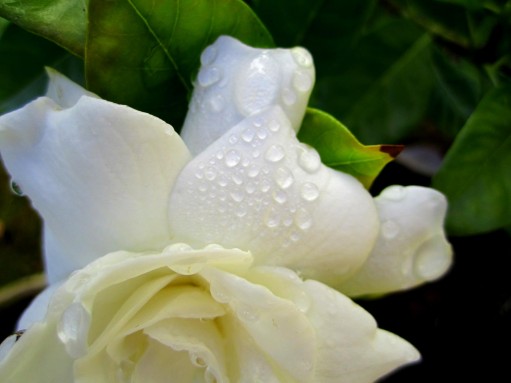
Photo: onewomanshands.blogspot.com

Photo: onewomanshands.blogspot.com

I think that’s a testament to Ms. Aftel’s deft handling of the flower. It would have been all to easy for Cuir de Gardenia to be a simple, indolic, voluptuous gardenia. With all that richness, you’d almost expect a single-minded, typical gardenia. Instead, Cuir de Gardenia is one of those rare scents that somehow captures all the tiny, often disparate, layers to the flower actually growing in nature. What it isn’t is raunchy or dirty. This is a very different sort of “indolic” theme than what one usually encounters, one that is more musky than voluptuously narcotic on my skin.

And, in truth, Cuir de Gardenia’s headiness is a very quiet one. I’m not surrounded by an avalanche of gardenia; there is no nuclear-tipped cloud wafting around me, emanating a lavishly thick, voluptuous fleshiness. Cuir de Gardenia is much more restrained. I have to admit, I personally prefer my white flowers on the Wagnerian side, but there is no denying Cuir de Gardenia’s refinement. It is more akin to Vivaldi’s Four Seasons than to the Ride of the Valkyries, more Mozart’s Eine Kleine Nachtmusik Allegro than Beethoven’s Ninth or his Ode to Joy. None of that is meant as an insult. I love all those pieces, deeply, and I listen to Mozart more than I do to Wagner’s powerful “Apocalypse Now“- style piece, but there is no denying that there are distinct differences in style, tone, and mood.

At the end of 30 minutes, the perfume hovers an inch above the skin in a mix that is at once delicate, restrained, and rich. When you apply a larger quantity of Cuir de Gardenia, it adds another hour to the time frame before the sillage drops. In both cases, when smelled up close, the perfume is a massively concentrated hit of lush, buttery smooth gardenia infused with greenness and a tinge of buttermilk sourness. The gardenia is carefully placed upon a soft castoreum base that is very quietly musky, plush, velvety, and dark. Yet, there is very little of the animalic whiff that I detected when I smelled Cuir de Gardenia in the vial or that the perfume opened with when I applied a lot. The castoreum seems to have melted into the petals, having an indirect effect on the notes in a much more discreet manner. The whole thing is lovely, and I’m very impressed by the carefully calibrated balance.

"Dressage Black and White" by Diana Rose Greenhut or DianaExperiment on Flickr. (Website link embedded within.)

“Dressage Black and White” by Diana Rose Greenhut or DianaExperiment on Flickr. (Website link embedded within.)

You may have noticed that I’ve barely mentioned leather at this point. Well, initially, it didn’t show up on my skin in any discernible fashion. Then, suddenly, right at the 30 minute mark, things start to change. There is a muted impression of an ultra-expensive, high-end Hermès saddle which carries the tiniest lingering traces of the horse it had been on many hours before. There is something almost akin to civet in the animalic muskiness that is starting to stir on my skin. Lurking in the distance and at the edges are tiny flickers of notes that are simultaneously mushroom-y, earthy, vaguely chocolate-y, and nutty. It is undoubtedly due to the gardenia’s mushroom side combined with the castoreum. Whatever the cause, it adds dimension to what was previously and primarily a fresh-ripe, green-creamy floral bouquet.

The issue of the leather is perhaps the best evidence for how beautifully Cuir de Gardenia has been blended and the technical mastery involved. For the first hour, the leather never stays in one place on my skin, but moves throughout the notes like a very friendly ghost. Sometimes, he stops to say hello, and remains to chat for 4 or 5 minutes. Then, he drifts away to other worlds for a brief span, before popping back in. Every time I think he’s finally vanished, he waves a dark, friendly, leathered arm at you from the horizon. Then, suddenly, 90 minutes in, he decides to move in permanently. And he’s brought luggage with him! Suitcases filled with black smoke whose tiny tendrils wind their way up from their depths to slowly wrap their threads around the creamy gardenia. The leather ghost gives you a cheeky grin, puts his feet up, and is there to stay.

Yet, I want to emphasize that this is a very subtle, muted “leather” as a whole. It’s not the sort of leather that you have in fragrances like Etat Libre‘s hardcore, black Rien, the deeper, burnished brown leather of Puredistance M, the distinct leather of Parfums Retro‘s Grand Cuir, or the animalic leather of LM ParfumsHard Leather. The note here is more about an impression of leather. It is strongly infused with an animalic edge that sometimes feels a bit civet-like in nature, and it creates a subtle kinship to horsey leather. To be clear, though, the note is never fecal but is primarily just musky. Still, if you’re expecting a true, hardcore leather fragrance, you need to put those thoughts aside. Cuir de Gardenia is a spotlight on gardenia first and foremost. The flower merely happens to have a animalic leather undertone that distinguishes it from the traditional take on the note.

"Gardenia sketch" by Angel H. Juarbe on Fine Art America. http://fineartamerica.com/featured/gardenia-sketch-angel-h-juarbe.html

“Gardenia sketch” by Angel H. Juarbe on Fine Art America. http://fineartamerica.com/featured/gardenia-sketch-angel-h-juarbe.html

From the start of the third hour until its end, Cuir de Gardenia is a seamless blend of gardenia with animalic “leather” and musky touches. The smokiness lingers, but it becomes increasingly overshadowed by the warmth in the base that makes the gardenia more golden in feel. It is a skin scent on me at the 2.5 hour mark, but Cuir de Gardenia’s longevity is excellent. As an extrait or pure parfum, that is to be expected, but Cuir de Gardenia is also an all-natural perfume, so I was surprised when I noted Cuir de Gardenia lingering well after the 7th hour. All in all, with 3 big dabs, the perfume lasted just short of 11 hours on my perfume-eating skin. It was a mere whisper after the 6th hour that you could detect only if you put your nose right on your skin, but it was most definitely there. With a smaller quantity, Cuir de Gardenia lasted just under 9 hours.

As many of you know by now, Cuir de Gardenia has been a massive hit. Over 12 different bloggers have placed it on their Best of 2013 list, from The Perfume Shrine and The Non-Blonde to The Fragrant Man, Angela at Now Smell This, and many others. Out of the full reviews, I think that of The Non-Blonde is worth noting. On her skin, Cuir de Gardenia was more overtly sensual (or sexual?) than it seemed to be on me. Furthermore, her review includes a useful comparison between the extrait parfum and the solid:

Cuir de Gardenia, the new perfume from Aftelier tells the story of luxury, eccentricity, and sensuality. […][¶] This gardenia smells warm: warm from the tropical sun and sands as well as warm skin. The creamy aspect is also there, musky and sensual. This flower is unmasked by top notes. There’s nothing there to lighten the mood or make it go down easily. Instead, you get a journey from flora to fauna, as the creamy gardenia becomes fattier and more animalic and the perfume embraces the skin and wraps it an unmistakable buttery leather. […]

Cuir de Gardenia is offered as an extrait and a solid perfume, to keep the warmth and sensuality on skin-level. This perfume is pure decadence– you don’t want to send it into the stratosphere on a cloud of volatile alcohol molecules. I suspect that beyond the preciousness of the raw materials, a big sillage would have been just too much for polite company: this thing requires intimacy, which this format allows. Applied where it truly counts, Cuir de Gardenia is sweet and intense. I find it incredibly sexy in a very femme way, but then again, I’m all woman. Men who feel comfortable in dirty gardenia fragrances (from JAR Jardenia to Lutens Une Voix Noire) shouldn’t hesitate to try this Aftelier perfume in either form. The solid smells more animalic upon application but becomes smoother and almost honeyed after an hour or so. The extrait works for me in an opposite way– its true leather and castoreum nature becomes more pronounced with time. They layer beautifully, obviously, and last for at least six hours even when dabbed extremely sparingly.

Cuir de Gardenia was originally meant to be a limited-edition release, but the degree of the positive response has led Ms. Aftel to make the perfume a permanent part of her line, and to also offer it in a new 1/4 oz (about 7.4 ml) extrait bottle. It’s not cheap at $195 (or $240 for the solid), but you really need to keep in mind just what we’re talking about here: real gardenia, not a synthetic recreation through other notes. As I’ve mentioned a few times, gardenia is one of those flowers whose aroma cannot be easily captured through distillation of its petals. When you smell “gardenia” in a perfume, you’re usually smelling some combination of tuberose, jasmine, or synthetics. A fragrance made purely from actual, genuine gardenia is incredibly rare.

Tiare. Source: wahinewednesdays.com

Tiare. Source: wahinewednesdays.com

The Fragrant Man offers insight on yet another difficult aspect of using gardenia, especially when it’s the Tahitian kind called tiaré:

[Ms. Aftel’s Cuir de Gardenia] is a breakthrough moment for gardenia ‘fume lovers. The issue with gardenia oil is that when it leaves its heated homeland the scent changes to ‘off’ or more precisely, indolic at the unpleasant end of the spectrum. It is unstable when taken out of its natural tropical environment. We are talking about Tiare here, the gardenia that is native to Polynesia so my guess is that Tahiti or New Caledonia is probably the source. In these islands the local people make manoi oils. Tourists are often charmed by the scent of these oils until they arrive back home. This has happened to me. […] Manoi oil is coconut oil usually blended with the Tahitian gardenia known as Tiare but also with frangipani, ylang ylang and vanilla, in an enfleurage type process. Coconut oil is the carrier fat for the scent.

Ms. Aftel has found a way around all that, while also avoiding synthetics and gardenia substitutes. The result is a fragrance that seems to drive many men and women wild. (You can read The Fragrant Man‘s proper review of the scent, subtitled “Olfactory Orgasm,” which not only includes links to all the other reviews out there, but also has a discussion on the role of antique castoreum in recreating the leather note.)

There are a few other male bloggers who also fell hard for Cuir de Gardenia. In the case of The Black Narcissus, his immediate, instant reaction to Cuir de Gardenia was so extreme that the usually elegant writer could barely get the words out:

STOP THE PRESS! AFTELIER PERFUMES’ CUIR DE GARDENIA EXTRAIT IS GORGEOUS

the perfume, just deliciously arrived in my postbox: immediately, for me, knee weakening. not gardenia, as in gardenia,… tiare:a tropical, moist, neptunian, sultry white witch emerging, hair slicked to shoulders, from the sea. sweet Italian bubble bath honey. cuir: but fresh.tango’s eminently wearable younger sister, unencumbered
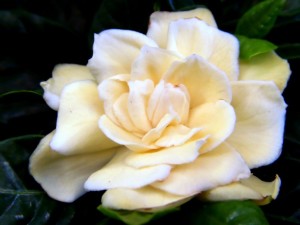
Photo: Chris or "Rapt in Roses" on Flickr. (Website link embedded within photo.)

Photo: Chris or “Rapt in Roses” on Flickr. (Website link embedded within photo.)

I liked Cuir de Gardenia a lot, but it was more quiet and restrained on my skin than I had expected. It is infinitely creamy, but I think I like my white flowers to show more skin, to ooze ripened sexuality like a heaving bosom on a courtesan. In other words, I like my big white flowers to be narcotically BIG WHITE FLOWERS, Wagner and Valkyrie style.

Yet, it’s hard not to be impressed and a little bit seduced by a more tasteful, refined take when it is as rich, buttery and multi-faceted as Cuir de Gardenia is. The perfume is a study of paradoxes — paradoxes which are perhaps the best and truest manifestation of the flower in nature that I have ever encountered — but done with an ingenuous animal twist. The whole thing is intellectually fascinating, but Cuir de Gardenia is also a testament to pure skill. You can’t be a niche perfumista today without hearing about Ms. Aftel’s role as the professor, alchemical wizard, and pioneer of all-natural perfumery. You hear it, but you may not really understand it fully until you try something like Cuir de Gardenia.

Or, in my particular case, her Chef Essences which I have to say here and now blew my foodie mind in such a way that my eyes rolled back in my head, and I was considering engaging in lewd acts with the bottle. (Well, not quite, but… close. I was certainly molesting the bottle of Ginger Essence in full disregard of the instructions on the stated quantity, and I was pretty much drooling on both myself and my food. The degree of my reaction, amazement and disbelief over those genius fragrant oils cannot be stated enough, and they will be the subject of a review sometime in the next 2 weeks, once I finish my cooking tests. Those Chef Essences…. Good God!) If Cuir de Gardenia didn’t arouse quite such an intense reaction in me, it is only because I care about food much more than I do about perfume. Gastronomy is my first love, while perfume is perhaps my fifth, so don’t misinterpret my tone. I think Cuir de Gardenia is very pretty, even if it isn’t really very “me.” It is also, without a doubt, masterfully done.

I think that anyone who passionately adores their lush, big white flowers should give Cuir de Gardenia a sniff. Those who normally fear white flower bombs would probably enjoy it as well, given the perfume’s intimate restraint and refinement. At the same time, the animalic side and suggestion of leather make Cuir de Gardenia a fragrance that men can pull off. The perfume’s low sillage also means that it is something you can wear to work, though I personally think Cuir de Gardenia feels far too special for such mundane, daily events. My only note of caution is for those who are accustomed to more commercial, traditionally sweet, or conventional florals. If you’re not used to castoreum, I don’t know how you will respond to Cuir de Gardenia’s very animalic muskiness. 

All in all, I think Cuir de Gardenia would be perfect for a date night, or an evening when you want to discreetly tantalize. It is delicate sensuality done with great refinement. 

Disclosure: My sample was courtesy of Aftelier Perfumes. That did not impact this review. I do not do paid reviews, my opinions are my own, and my first obligation is honesty to my readers.

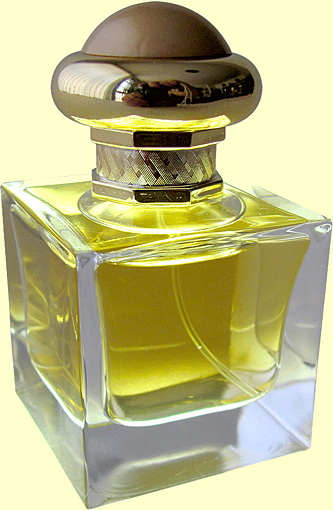
DETAILS:
Cost & Availability: Cuir de Gardenia is exclusive to the Aftelier website, and is available in 3 different sizes. There is a 2 ml mini of Pure Parfum extrait for $55; a new 1/4 oz bottle (about 7.4 ml) of the Extrait for $195; or a 0.25 oz of solid perfume in a handmade, sterling silver compact for $240. Samples are available for $6 for a 1/4 ml vial. Ms. Aftel ships worldwide, and you can find further information on her FAQ page. 

La Via del Profumo Sharif: The Bedouin Desert

Source: Friendfeed.com

Source: Friendfeed.com

Leather, civet, dry woods, almonds and amber in a scented creation meant to represent the “noble man” of Arabia. It is a list that made me sit up when I saw it, and not only because I’ve seen Lawrence of Arabia a few times too many. It all sounded very Lutensesque, but the fragrance comes from Dominique Dubrana, the French Sufi mystic and poetic perfumer who goes by the name, “Abdes Salaam Attar.”

Photo: Profumo.

Photo: Profumo.

Sharif is a 2011 all-natural eau de parfum from Mr. Dubrana’s Italian perfume house, La Via del Profumo. Sharif is one of his “Arabian Series” of fragrances, and is meant to be embody the “fierce people of the desert.” As Abdes Salaam Attar explains on his Profumo website, the name “Sharif” means “noble man” in Arabic and is a description of character, not of lineage or descent:

Nobility, for the fierce people of the desert, is a quality of the soul. […] Sharif is the fragrance of a noble sheikh of Arabia who has chosen supreme elegance over flamboyance, gentleness over arrogance and seduction over haughtiness.

In the pure middle Eastern tradition Sharif blends intense leathery notes with aromatic woods and the delicious oriental aroma of amber, sweet and almondy.

The scent of Civet, far in the background, confers to the fragrance a sensual touch of desert wilderness, like the sillage left by a caravan of camels crossing the Bedouin lands at the sunset.

Source: amyglaze.com

Source: amyglaze.com

The following seems to be the succinct list of notes:

Almonds, aromatic woods, leather, civet, amber.

Sharif opens on my skin with intense, bitter almonds, followed by a darkened leather infused by smoke and dry sweetness. It’s a fantastic, wholly original combination, one that Serge Lutens would probably have loved to invent. The bitterness of the almonds feels concentrated and raw, but the brilliant touch is that their whiteness is lightly infused with blackness. The smoke is tinged with a tarry, almost licorice-like chewiness. None of it is remotely gourmand; there are no impressions of marzipan, or French confectionary pastries here at all.

Source: reinsofthenight.com

Source: reinsofthenight.com

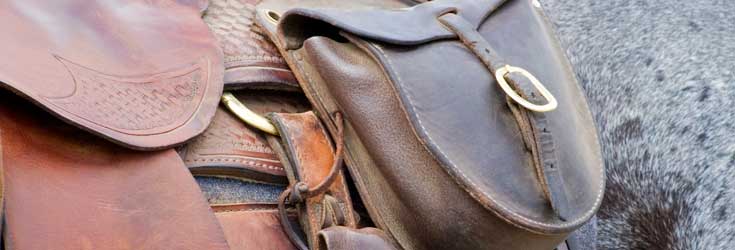
The leather is a very subtle undercurrent, but I’m fascinated by it. It’s not birch-tar leather; there are no fecal or horsey qualities, and it’s far from rubbery or raw. Yet, it’s not wholly refined, either. It doesn’t feel like aged, burnished, oiled leather. The tiniest touch of civet gives it a rough-hewn, musky feel. Honestly, I keep imagining the saddle-bags that you would see on horses in Middle Eastern or cowboy movies of old. I myself never rode with them, but I’ve seen and touched that rough leather, and it is what comes to mind here. Perhaps the most accurate way to describe the note here is that it often feels like an impression of dark, smoky leather, more than the actual thing.

Source: pathauldren.com and YouTube.

Source: pathauldren.com and YouTube.

Something about the scent consistently makes me think about the desert, and it’s not due solely to the Profumo description. No, there is definitely grainy, warm, sandy textural quality to the scent that is really hard to explain. It makes me imagine a Bedouin tent in North Africa with raw almond treats inside, the golden dryness of sand all about, and the faintest touch of leather from the horses outside. The sandy quality underlying the notes calls to mind Pierre Guillaume‘s descriptions of Parfumerie Generale‘s Djhenné, a fragrance meant to evoke the African desert, as well as the warm, Northern, cool, woody sands that Serge Lutens used to describe Fille en Aiguilles. Sharif couldn’t be further from those two fragrances if it tried, but this is the one perfume out of the lot that successfully manages to convey a dry, woody, golden, sandy texture.

Civet. Source: focusingonwildlife.com

Civet. Source: focusingonwildlife.com

The almonds grow stronger and stronger, and their bitterness dominates Sharif, but something else starts to rise to the surface. It’s the civet which Mr. Dubrana implies that it is the real stuff with a “non vegan” label on Sharif’s page. Some of you may know that genuine civet is no longer used in modern perfumery. The synthetic type of musk that you may encounter is often quite animalic, if not urinous and aggressively feral as well. Sharif’s civet is not. It is a surprisingly well-rounded, rich, and deep, adding a modulated, carefully calibrated level of muskiness that is never perianal on my skin. In one test, it was virtually nonexistent for the first 40 minutes; in another, it was noticeable from the start, adding a subtle sharpness and depth to that abstract, smoked leather accord.

15 minutes in, Sharif slowly shifts. There is a floral herbaceousness deep in the base that I can’t pinpoint. Clary sage? It lacks the latter’s lavender or soapy qualities, but there is a distinct herbal, leathered element that is fragrant, aromatic, a touch floral, and a bit green. A more important change is that the almond note which dominates Sharif starts to soften. If you’re not an almond fan, I imagine that you’d find this version of the note to be “nose-searing” as one person described it. Yet, it does start to smooth itself out. It is still infused with incense-like smokiness and dry woods, still has a gravelly, pebble-y quality, but it is less forceful.

Source: Micks Images. (Website link embedded within.)

Source: Micks Images. (Website link embedded within.)

From afar, Sharif’s main bouquet after 30 minutes is of bitter almonds that are thoroughly infused with a dark, abstractly leathered smokiness, followed by dry sweetness and musk. The perfume remains the same for the next few hours; the only real change is in the fluctuating strength of the notes and in the sillage. Sharif becomes a skin scent at the end of the 2nd hour, the civet becomes much more noticeable on me about 3.5 hours in, and the bitter almond finally starts to weaken as the primary note around the end of the 4th hour.

Once it finally pipes down, the leathery base becomes much more noticeable and, to a lesser extent, the civet as well. At the top of the 5th hour, the abstract, incense-y “leathery” darkness vies with the almonds for center stage. The whole thing is extremely muted and blended seamlessly on my skin, so it takes some hard sniffing to single out the specific layers. The incense-like note, the sandy dryness, and the leather gradually fade away entirely. In its final moments, Sharif is nothing but creamy sweetness, vaguely reminiscent of fresh almonds. All in all, Sharif lasted 9.75 hours on my skin, with extremely soft sillage after the second hour.

I tested Sharif twice, including once with the fragrance on both my arms, and it was largely the same thing each time. On my right, non-testing arm, the almonds in Sharif were significantly smokier, darker, and more leathered — not only from the start, but throughout the perfume’s lifespan. The civet was strong in the opening minutes too, making Sharif a much dirtier, darker, animalic scent. The dry, grainy sandiness was also more noticeable. As time passed, the Sharif turned more into a leathered almond scent on that arm, while the dark accords were more muted and muffled on my main, (left) testing arm. However, all these differences were tiny, fractional ones of degree, not of kind; the scent was identical in its core essence in both cases. Instead of Lawrence of Arabia, you have leathered-incense Almonds of Arabia.

Source: gypsyriver.com.au

A Bedouin tent. Source: gypsyriver.com.au

The desert is also what came to mind when The Non-Blonde (and her husband) tested Sharif. They experienced primarily a civet-woody-leather fragrance, though the Non-Blonde’s ingredients list does put almonds at the top. Her review reads, in part:

Sharif, a 2011 release, is an incredibly complex wood/animalic fragrance. The aromatic opening is a bit deceiving– you almost think that you’re getting an old school balsamic camphoric men’s cologne when it captures you and pulls you into its world: leather, amber, and the unmistakable touch of civet. Sharif, like other  La Via del Profumo fragrances aims to take you away from the world of perfume as you know it. This time the journey is to an imaginary desert. The landscape is stark and the sandstorm blurs reality. There are tall figures approaching, their silhouettes appear in the dusty air. Are they friends or foes? There’s a smell of danger in the air.

Sharif’s desert scene is stark and only marginally sweet. It’s as far from what we call an “oriental” perfume as the artwork above is different from the opulence and decadence of Orientalist art. […][¶] I do think that it’s quite gender neutral and women who find the notes and ideas expressed in this fragrance should give it a try (must love civet). The sillage of Sharif is polite, but it’s incredibly long-lasting on mys skin as well as on the husband (10 hours easily); it also clings to fabric until after a second washing. Sharif is an all-natural perfume, meaning no synthetic ingredients, but it’s decidedly not vegan. The civet you smell here is the real thing, and I’m pretty sure I don’t want to know where and how AbdesSalaam Attar acquired it.

For Kevin at Now Smell This, the civet dominated to such an extent that he had to wear the fragrance outside of the house to test it, lest his “infuriated” cat attack him in an attempt “to obliterate Sharif from his environment.” I find that hysterically funny, but the non-feline parts of Kevin’s review focuses on the tarry nuttiness that he too experienced in a significant way:

Sharif smells wonderful. It starts off with a nose-searing note that smells like tonka beans in turpentine (with a nutty background aroma, almost dessert-like, but not too sweet). A beautiful, almost smoky, leather scent appears next, blending well with tonka and spice (a clear, pungent cinnamon-clove note). Sharif remains in tonka-leather-cinnamon territory for a long time before turning a tad powdery with musky (civet) amber in the dry-down. There is a hint of smooth “incense ash” in the base notes also. The entire composition is fine-tuned and high-quality (what a relief it is to smell Sharif after sampling too many cheap perfumes from other houses recently).

Now, to my “relationship” with Sharif. First, its arrival on a chilly day was auspicious; this is a cool-weather perfume. Though it is not overpowering and dense, it has more tenacity than you’d expect from a natural perfume (it lasts at least six hours on my skin, with minimal sillage).

For Grain de Musc and Octavian Coifan of 1000 Fragrances, Sharif’s main qualities were a honeyed almond, saffron-tinged spiciness, and civet leather. Grain de Musc writes:

… [L]ike a noble character, [Sharif] doesn’t let itself be approached or tamed easily: you’ve got to go through the fire of its camphoraceous top notes before feeling its softness. It is almost surprising to find Sharif so liquid in its bottle, because its smell conjures the fatty, tactile, ductile quality of a paste. It feels like something you could lick or chew: a smooth, resinous preparation similar to majoun, a type of cannabis jam where the resin is blended with honey and almond. There’s no cannabis note in Sharif, but it does have honey and almond notes, saffron providing a medicinal note and a leather effect. Though the latter is the core of the scent, it is also, to my nose, an expansion of the properties of civet. Old civet tinctures do display the smoothly dark honeyed facets of Sharif.
Desert Caravan. Photo: "Artemis." Via Tripwiremagazine.com

Desert Caravan. Photo: “Artemis.” Via Tripwiremagazine.com

Octavian Coifan‘s review also has a detailed elaboration of the notes, ranging from camels representing leathered Peau d’Espagne to the “precious ambery-balsamic” foundation that he thinks Sharif shares with Profumo’s Mecca Balsam. He writes, in part:

A small saffron-like note is the golden sprinkle above the peppery spiciness transforming the majestic combination of the 4 ancient spices into the golden precious “honey”, deep, highly aromatic with herbal undertones and melting on the skin. The almond-vanilla quality of the drydown, with subtle animalic notes suggesting the leather-skin facet of Musk Tonkin and the herbal-silex dimension of Hyraceum, transforms the darkness found in Balsamo Della Mecca into something serene and elegant. It evokes the ancient opopanax perfumes, different from modern opopanax resin. The sweetness is crystallized not in “sugar”, as in a Tonka bean, but in camphor, like the combination between laurel leaf/cinnamon leaf/clove and a balsamic base.

The perfume evokes the rich quality of dry tobacco preserved in an ancient leather pouch, blended with unknown powerful herbs and pepper. Its evolution on the skin is surprising and with Balsamo Della Mecca, Sharif is one of the most elegant natural perfumes. […] The creations from Abdes Salaam Attar are based on the true essence of an antique craft. They are the most profound and refined expression of that lost world. [Emphasis in the original.]

I’m afraid I didn’t experience anything quite as interesting, complex, or spiced. My version was fractionally closer to that described by one Basenotes commentator in Sharif’s entry on the site:

This is a sexy fragrance that I would love to smell on a man. It is the aroma of scented tobacco and suede, of being held by a man who smells manly. Yet, it is a beautiful scent on a woman, too. On me, it opens with a hint of smoke and leather, like an outdoor fragrance. Right away, a cherry-almond sweetness comes forward, inviting me inside where it is warm, and sweets are being served to guests. This one glows like a fire and simmers nicely on the skin. A must-try.

Source: gypsyriver.com.au

Source: gypsyriver.com.au

The two other reviews on Basenotes are equally positive, talking about how Sharif is an easier, more accessible version of Mecca Balsam. The description by one chap, “A Good Life,” is very evocative:

 In the pure tradition of the Middle East, Sharif consists of intense notes of leather and aromatic woods with the delicious aroma of amber scents of the East, and sweet almond,” the perfumer tells us. It is, first of all, a wonderfully pleasant perfume and an ideal entry into the world of natural perfumery, as it is much more accessible than the starkly meditative, distantly elegant Mecca Balsam. The latter requires study before you can deeply appreciate it, while Sharif provides pure pleasure even before you begin investigating its complexity. There is a perfect harmony of spice and sweetness, dryness and deftness, of clarity and density, the slender elegance of a minarett and the opulence of a plate of Arabian sweets. The dry craggy resins of Mecca Balsam’s pilgrimage are here enveloped in smooth delicious amber. Imagine yourself being entertained in the golden tent of an Arab nobleman, the scent of fine resins rising from incense burners, eating honey and almond cakes while a pipe rests by your side and a distant smell of leather saddle and noble horses wafts over from the stables. You are at peace, but you feel energy brimming inside you. New deeds of your own choosing await, but for now, you enjoy the tranquil flow of life and its pleasures.

I don’t see any similarities to Mecca Balsam at all, but then my skin rendered that one very anomalous indeed. Regardless, I join him in being transported me to a Bedouin tent filled with almond treats and smoky darkness. I was happy to see that he too envisioned “the distant smell of leather saddle,” even if he wasn’t talking about small saddle bags. I hadn’t read any of these reviews when I was testing the perfume and writing my notes, so I’m glad it’s not just my imagination.

Bedouin Oasis Ras Al Khaimah. Source: ras-al-khaimah.eu

Bedouin Oasis Ras Al Khaimah. Source: ras-al-khaimah.eu

Unfortunately, what appeared on my skin simply wasn’t as interesting as what everyone else experienced. The almonds dominated to an enormous degree, and far overshadowed both the smoky darkness and the leather. The latter was also an impression more than the smell of actual leather. The civet was a rich, warm, very smooth touch that I enjoyed, but I wish all the notes would have replaced the almonds as the perfume’s central characteristic. I particularly wanted more leather!

Clearly, skin chemistry makes a difference, and enough people got a hardcore civet, leather, woody, ambered scent for it to be worth your while to test Sharif if you’re interested in those notes. I think it is definitely unisex in nature, but, given two of the accounts quoted here, it may be wisest if you like civet musk. (And almonds!) As for the sillage, Mr. Dubrana told me that “you should use the perfumes on your clothes and hair in order to enjoy them fully and longer.” He also perfumes his beard with them as well.

Even if the vagaries of skin means that Sharif doesn’t work for me personally, I think it’s a fascinating, very different, original take on both leather and orientals. If you love almonds or leather, you should give it a sniff. 

Disclosure: My sample was courtesy of AbdesSalaam Attar. That did not impact this review. I do not do paid reviews, my views are my own, and my first obligation is honesty to my readers.
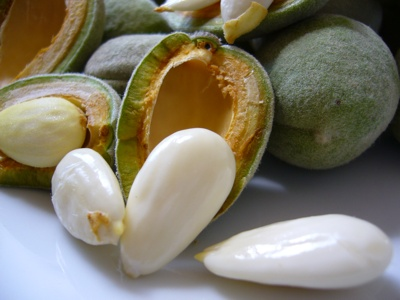
DETAILS:
Cost & Availability: Sharif is an eau de parfum that comes in a variety of sizes. It is available exclusively from the Profumo.it website, which ships its scents world-wide. All the following prices for Sharif are in Euros without VAT: €44,63 for 15.5 ml, €97,20 for 32 ml (a little over 1 oz), and €143,81 for 50 ml/1.7 oz. At today’s rate of exchange, the USD prices roughly comes to: $60 for the 15.5 ml, $132 for the 32 ml, and $195 for the 50 ml bottle. The site says: “Prices are without VAT and are valid for USA and all non EEC countries[;] for shipments in the EEC 22% VAT will be ADDED to the amount in the shopping cart.” There is also a Mignon Discovery Coffret which is available for any 5 fragrances, each in a glass 5.5 ml bottle. The price depends on which perfumes you pick, as the choice is up to you. The 5.5 ml bottle of Sharif is €17,70. On a side note, I received my samples from Mr. Dubrana incredibly quickly, less than 4 days after he sent it. Additionally, I have the impression that Profumo provides free 2 ml samples with all purchases, especially of any new fragrances that he is developing, since Abdes Salaam is very interested in feedback. In short, if you’re ordering fragrance, you may want to ask for a sample of something that strikes your eye. Samples: you can order a sample of Sharif from Surrender to Chance which sells the perfume starting at $10.99 for a 1 ml vial. It would seem more cost-effective to order the 5.5 ml mini from Profumo itself.

Caron Tabac Blond Parfum – Modern Extrait Version

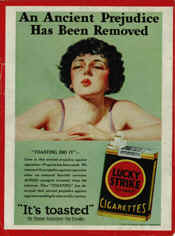
1920s or 1930s ad, via angryharry.com

1920s or 1930s ad, via angryharry.com

Androgyny, the dawn of the modern age, and the desire to blend masculinity with femininity are some of the inspirations behind Tabac Blond. It is one of the legendary leather and tobacco perfumes of the early 20th-century from the famous house of Caron.

Tabac Blond was released in 1919, the same year of another perfume giant, Guerlain’s Mitsouko. Tabac Blond was the creation of Caron’s founder and “nose,” Ernest Daltroff, who sought to create a scent for the new, modern woman. As Fragrantica puts it, it was a fragrance “for women who smoke cigarettes, since a cigarette was, at that time, the perfect symbol of freedom and chic of a Parisian woman.” Caron has a more evocative and vivid description:

To mark the dawn of feminine liberation, CARON made the bold move in 1919 of dedicating a deliberately provocative perfume to the beautiful androgynous women of the era, with their long ivory and mother-of-pearl cigarette-holders poised nonchalantly between their lips.

Tabac Blond: a subtly ambiguous fragrance that borrows the leathery head notes from the world of masculine fragrance, and combines them with Caron’s inimitable floral bouquet…

Source: topwalls.net

Source: topwalls.net

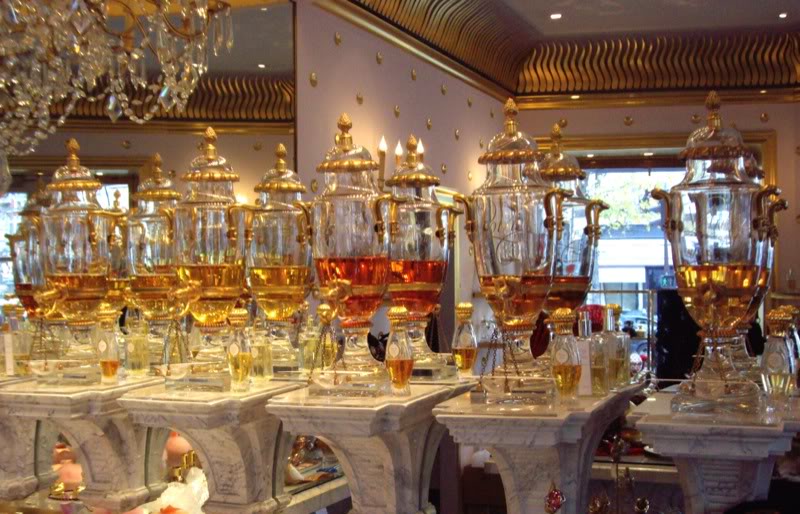
Tabac Blond is one of Caron’s Haute Parfumerie “Urn Scents” which originated as extracts or pure parfums. While Tabac Blond is now also available in eau de parfum concentration, what most people rave about is the vintage pure parfum. Now, I tried the parfum extrait version, but not the vintage version. I would like to, but, frankly, it’s not what most people have access to. So, modern Tabac Blond extrait is the focus of this review. You can find it at a handful of niche perfume sites, like Luckyscent, though I doubt anything would compare to the experience of buying it at a Caron boutique where the sales assistants will fill your bottle from their exquisite, famed Baccarat crystal urns into something a little more practical, portable, and pedestrian.

Caron Boutique and the famous urns. Photo via bloggang.com and Examiner.com

Caron Boutique and the famous urns. Photo via bloggang.com and Examiner.com

The Caron website lists only three things for Tabac Blond’s notes: Leather, iris, and cedar. Fragrantica has a much more complete list:

leather, carnation, lime blossom, iris, vetiver, ylang-ylang, cedar, patchouli, vanilla, ambergris, musk.

Tabac Blond Extrait via Luckyscent.

Tabac Blond Extrait via Luckyscent.

You will notice that tobacco is not mentioned anywhere. Yes, this perfume known for being the original tobacco, smoking scent does not actually include a single drop of the note. (Neither, for that matter, does Habanita which followed it two years later in 1921 from Molinard.)

I need to say something at the outset. I’m not really one for powdery scents, let alone powdery florals. My tastes run towards deep Orientals, heavily spiced ambers, smoky woody fragrances, or mossy Chypres, but I always appreciate something which is well-done and refined in nature. Tabac Blond certainly qualifies, even in its modern form.

Source: nature.desktopnexus.com

Source: nature.desktopnexus.com

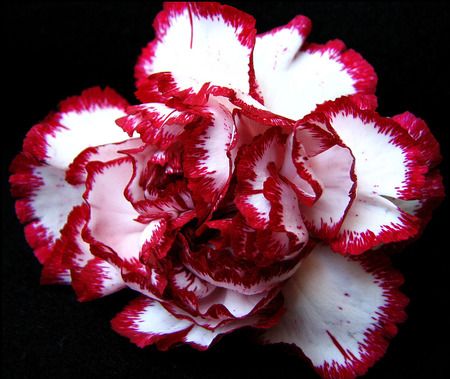
The parfum opens on my skin with a flood of carnation that is primarily spicy, peppered, and almost a bit clove-like in its aroma. There is a hint of something akin to rose in its sweetness, but the carnation’s piquant, spicy nature really dominates. It is followed by powder, then leather which has a definite animalic undertone, as if it had been lightly coated with castoreum. Flickers of lime and vanilla quietly trail behind, but the main bouquet is of powdered carnation, lightly infused with animalic leather. There is a sweetness to the powder, which definitely comes from iris, but it is not heavily vanillic.

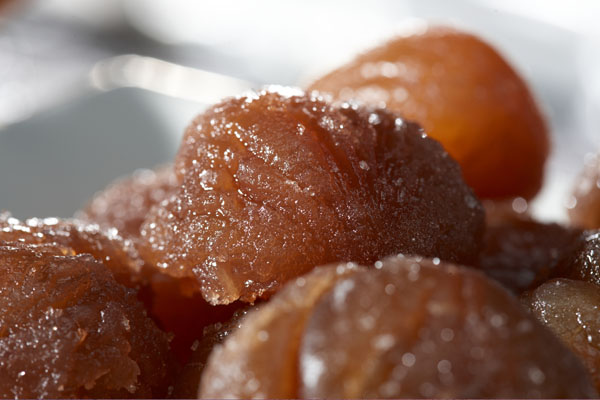
Marrons Glacés.

Marrons Glacés.

The Caron base which I’ve detected in a few of its other fragrances, like Nuit de Noel, is very evident here. “Caronade,” as it’s called, is very hard to describe if you haven’t smelled it, but it essentially consists of a bouquet that always makes me think of marrons glacée or glazed, iced chestnuts. It’s visually very brown, with a dark richness that is simultaneously dry, sweet, powdered, nutty, and a little bit vetiver-like in its dark, somewhat earthy woodiness. I realise that all sounds very odd, but marrons glacée or iced chestnuts are often mentioned by people when it comes to describing the Caronade, so try to imagine a slightly leathered, dry, faintly powdered, vetiver-ish, spicy, vanillic version of that, and you’ll be close.

Tabac Blond slowly starts to shift. About 5 minutes in, the iris becomes more prominent in its own right. It’s chilly, cool, and very much like scented, sweetened, makeup powder. The Caronade signature also becomes more visible, but the leather is surprisingly subtle on my skin. It drifts through the top notes as a dark spectre with an animalic undertone, but I would never sniff Tabac Blond and think, “ah, leather!” Carnation and powder, definitely, but the leather takes a distinct back-seat to the other two elements. Still, it’s really nice as it has both a warm richness and a refined smoothness that evokes kid-skin.

Habanita EDT bottle and box.

Habanita EDT bottle and box.

It’s hard for me to review Tabac Blond without bringing up Habanita, its younger sister. The two perfumes have a similar profile, share a number of notes in common, and are quite alike on my skin. For example, a subtle tinge of sourness. I don’t know if it is my skin or something about the lime blossom, but Tabac Blond has the faintest trace of sourness. It also popped up with Habanita which has bergamot instead of lime to go with all the florals, powder, and leather, but it was significantly stronger there. With Tabac Blond, it is much more subtle and fades away after about 30 minutes. Another difference is that Tabac Blond is much more leathered, dark, spicy, and smooth than Habanita on me. The latter was fruity, more synthetic in feel, and sweeter. Tabac Blond’s leather is much smoother, lacking Habanita’s rubbery or sharp edges. The Habanita is dominated primarily by rose, while Tabac Blond is all spicy carnation with a subtext of cloves. Finally, the Habanita lacks the very key Caronade signature, and is about ten times more powerful in terms of projection.

Source: Walltor.com

Source: Walltor.com

Yet, for all the subtle differences, the two fragrances are definitely related. Powdered florals, lightly flecked by leather, and carrying a trace of some vaguely abstract “tobacco.” The latter is much softer and more subtle in Tabac Blond than it is in Habanita, but the note is pretty much identical. It smells just like the powdered, scented paper in an empty pack of cigarettes. It’s never tobacco in the way of modern fragrances that have that note; this is not the tobacco of Tom Ford‘s Tobacco Vanille, or Serge LutensChergui. This is scented, powdered paper in something that once contained tobacco and whose lingering traces have merely carried over.

Source: Allposters.com

Source: Allposters.com

Tabac Blond continues to change as time goes by. The sillage was initially moderate, but starts to drop after 40 minutes. At the end of the 2nd hour, Tabac Blond is almost a skin scent, though it is very easy to detect up close. It coats the skin as a discrete, silken layer of carnation and powdered, lipstick-y iris, with a faint trace of leather and tobacco paper, all nestled within the warm embrace of the chestnut-y, dark Caronade. The lime is no longer there, and faded away about 30 minutes in; the animalic undertones soon followed. The tobacco paper impression is now almost imperceptible, requiring a lot of hard sniffs to detect it lurking in the lower layers. The vanilla is also quite muted, adding an indirect touch of sweetness to the carnation which is now much less spicy and clove-like. There is a faint touch of warmth growing in the base, though it is wholly abstract and can’t be singled out as amber in any distinct way.

Source: thevintagemoth.blogspot.com

Source: thevintagemoth.blogspot.com

Tabac Blond remains largely unchanged until its very end, with only subtle differences in the strength of certain notes. The one new thing to appear is the cedar which becomes a tiny bit prominent in the drydown, as does the vanilla, while the carnation becomes increasingly abstract. By the start of the sixth hour, Tabac Blond is a true skin scent that is primarily an abstract, powdered floral with cedar and vanilla. There is a trace of something dark lurking underneath that sometimes feels like very soft, muted leather, but, at other times, merely seems like the Caronade.

In its final moments, Tabac Blond is just a blur of something powdered, vaguely sweet, and with the faintest trace of Caronade. A small quantity lasted for quite a while on my skin: about 1/4 of a ml, gave me just under 11 hours in duration. A slightly larger amount increased the time-frame to about 13 hours. The longevity is just as well, because Tabac Blond in the extrait version isn’t cheap. It’s $265 for 15 ml, though Luckyscent offers a 7.5 ml bottle for $100. Unfortunately, they are sold out of it, with no indication of when they might get it in. Somehow, the fragrance is cheaper in Europe where the 15 ml bottle retails for €120 or about $153. (See the Details section at the end for more information.)

I have mixed feelings about Tabac Blond. As noted earlier, powdered florals are not really my thing, but there is something appealing about the Caron’s version in the opening hours. It’s definitely very pretty at times, especially with the spicy clove undertone, and I’m sure the vintage was even better, with added darkness, smokiness, and bundles of animalic leather. The current parfum version is sophisticated, powdered femininity, but it’s a lot less complicated or interesting than I thought it would be. To be fair, this is not the version everyone talks about, and I rarely find powder puff scents to be interesting in general. Very few of them appeal to me, but I certainly think Tabac Blond is more nuanced than the current Knize Ten, another powdery leather thanks to reformulation. I definitely prefer it to Habanita, which isn’t as luxurious, high-quality, rich or smooth.

I think Tabac Blond skews quite feminine by today’s standards, as I suspect it’s too powdered and makeup-like for most men. Yet, a ton of men love Knize Ten which has been also reformulated into a very powdery scent these days, so who knows. Tabac Blond is much richer, and sweeter than the original Knize Ten, and not as oriental as Knize Gold. Plus, its leather is extremely different, as there is not an iota of birch tar in the Tabac Blond parfum that I tried. The note is much smoother and more refined than the leather in the Knize fragrance; perhaps more akin to the drydown leather of Chanel‘s Cuir de Russie. It’s also sweeter than the leather in both those fragrances, thanks to the Caronade with its mix of dryness, sweetness, vanilla and chestnuts.

Tabac Blond extrait is generally a much adored fragrance in its vintage form. You can read any number of rave, positive reviews for it on the blogosphere, as it may be one of the most discussed fragrances out there, and everyone gets around to covering it eventually. Take, for example, Angela at Now Smell This who wrote, in part:

Although I can imagine a man wearing Tabac Blond well, on me the perfume feels luxuriously womanly. It’s top notes are leather, carnation, and linden, with heart notes of iris, vetiver, ylang ylang, and lime-tree leaf. Its base is cedar, patchouli, vanilla, amber, and musk, although a smoky, spicy vanilla is mostly what lingers on my skin.

Tabac Blond’s range isn’t huge. I don’t get the piquant top notes that many fragrances provide, but instead tobacco leaf, gently supported by spicy florals, starts right off the bat. Then the scent of raw leather appears for a while, and the effect is that of a buttery leather ashtray full of cigarette butts and snickerdoodles, or maybe a leather-vanilla soufflé in a smoky brasserie, if anything like that were ever cooked up. Imagine lipstick-stained wine glasses on marble-topped tables, a smeared golden haze on the mirror over the bar, and worn, red leather banquettes, and you start to get the idea. Tabac Blond has good staying power, and a dab on each wrist and behind the ears will last all day.

Marlene Dietrich via Pinterest.

Marlene Dietrich via Pinterest.

It sounds lovely but, if you look at the date of that review, it’s 2007 and I suspect she may have tested the older, vintage version. I’ve tried to stay away from the issue of vintage Tabac Blond because, frankly, the majority of us will never get the chance to try it. It is simply too expensive, and hard to obtain.

It’s also not easy to find reviews of the modern, current Tabac Blond, as everyone focuses on the reportedly glorious original which was Marlene Dietrich’s favorite scent. A lot of times, talk of the modern version usually comes in the form of a comment posted to a review about the vintage version, with people lamenting the changes, the loss of the leather, and the dominance of powdered florals. Well, they aren’t wrong about that last part, and it makes me feel a lot better for my ambivalence towards the scent.

One person who has written, albeit briefly, about the current version is Bois de Jasmin who did a comparative assessment of both. She loves the vintage parfum which she rates at 5-stars, but gave the modern fragrance a rare one-star. Her review of the 2011 Tabac Blond is wholly disapproving:

It is telling that every time I try to write “Tabac Blond,” I invariably end up with “Tabac Bland.” Indeed, the new version is just that, a bland carnation. The original Tabac Blond has a dark smoky leather note that in combination with rich tobacco and sandalwood create a haunting, smoldering effect. None of those elements are present in what passes for Tabac Blond today. There is a hint of clove and sheer moss, a whisper of something green, but overall, Tabac Blond in its current form is not even worth smelling.

Others have noted definite changes in the scent as well, but my friend, Suzanne, of Eiderdown Press didn’t think they were enormous back in 2009. Perhaps things have gone further down hill since then, but you may be interested in her comparative view of two bottles of the Extrait which she purchased at different times back around the reformulation date:

the big question circulating the blogs last year was, Has this fragrance been “watered down” during the course of its reformulations?  To which I can only say, I purchased two decants of the extrait de parfum back in 2007, and there were noticeable differences between them: the one purchased later in the year was distinctly less dense and full-bodied  than the first decant. Yes, it was a little disturbing; but that said, the Tabac Blonde extrait from either one of those decant bottles still smells as provocatively unique and unto-itself as any scent in my collection. The fragrance’s smoky, spicy, burnt-rubber-and- carnations opening reminds me of the first delicious drags of cigarette—the first one you’ve had in ages—and as it dries down, the tar-like quality dissolves into warm leather, with an amber-and-vanilla finish that does not diminish the smokiness of this scent, but makes for a smooth, fat-bottomed ride that seems to go on forever. Put it all together, and everything about Tabac Blond—from its invitation to enjoy a private, leisurely smoke to its leather panels to its cushiony amber seat—says, Get into my car, babe. Let’s drive.

Suzanne’s version sounds significantly more leathered, tobacco’ed, and ambered than the sample I ordered in 2013, which makes me wonder if the fragrance has been watered down even more since she bought her decant in 2007.

Still, on Fragrantica, the current version of Tabac Blond seems to be much appreciated, though primarily by women. Something that struck me as very odd is that 15 people have voted for a similarity between Tabac Blond and Karl Lagerfeld‘s cologne. Now, I love and own the vintage version, but not the new, reformulated fragrance which appears under the name “Karl Lagerfeld Classic.” I haven’t smelled the latter in a long, long time, but, to my memory, it’s not at all similar to Tabac Blond. It certainly lacks the Caronade signature, as well as the richness and the smoothness of Tabac Blond. I also remember the new, reformulated Lagerfeld “Classic” as being significantly sweeter, more synthetic, and with more actual tobacco, but without any of the carnation spice.

Clearly, vintage Tabac Blond Extrait was a masterpiece of leather, but the current version isn’t terrible. It’s definitely something more suited to those who love powdery carnation or floral scents, but it does have pretty aspects. The Caronade adds a very lovely, rich vein of dark sweetness, and the leather (when it appears) is wonderfully smooth. It may not last very long, but I enjoyed its subtle flickers in the earlier stages. Tabac Blond definitely skews feminine in my view, and I think most men would struggle with the powder aspect. Still, a lot of men adore Knize Ten which, in its modern formulation, is also very powdery, so there is a slim chance that Tabac Blond might appeal. However, don’t expect a ton of leather with modern Tabac Blond, and the same goes for the tobacco.

The main conclusion to draw from all this seems to be this: perhaps we should all scour eBay for the vintage version. Modern Tabac Blond is a great interpretation of a carnation powder puff, with the added benefit of some other subtle elements, brief as they might be, but it’s not really a leather scent any more.

DETAILS:
Cost & Availability: The version of Tabac Blond that I tested was the Extrait or Parfum which costs $100 for a 7.5 ml bottle, $265 for a 15 ml bottle, and up depending on size. There is also an Eau de Parfum that comes in two sizes. A 50 ml bottle that retails for $130, or a 100 ml bottle that costs $170. Caron has a website, but no e-store from which you can buy the perfumes. In the U.S.: Tabac Blond Extrait is carried at Seattle’s Parfumerie Nasreen which sells the Extrait for $265, but it doesn’t state the size of the bottle (which looks larger than 7.5 ml to me). The $100, small Parfum size is offered by Luckyscent, which also sells the EDP version, but all three are sold out. You can have them email you when they receive it. Tabac Blond Pure Parfum is offered by The Perfume House in Portland which sells the 15 ml bottle for $265, and a 50 ml bottle for $330. It also offers the EDP versions. In New York, you can find it at Caron’s boutique at 715 Lexington Avenue or can perhaps call to order (Ph: (212) 308-0270). There seems to be no other retail options. Nordstrom’s once carried the EDP, but no more. Outside the U.S.: In Paris, you can purchase the fragrance from the 3 Caron boutiques. In France, you can order Tabac Blond Extrait from Atelier Parfumé in a variety of sizes, ranging from the 7.5 ml for €90, going up to €120 for 15 ml, €150 for 20 ml, and €250 for the 50 ml size. You can contact them to see where they ship. One place that says it ships worldwide is the Soleil d’Or Parfumerie which sells Tabac Blond Extrait in the 50 ml bottle for €226. They are sold out of the 15 ml bottle. In the UK, I couldn’t find the Extrait version anywhere. I only found Tabac Blond EDP at Escentual which is briefly discounting the fragrances at £84 for the 50 ml instead of £105, while the 100 ml bottle of EDP is reduced to £134 instead of £167.50. The EDP is available for full price at London’s Les Senteurs, along with a sample for purchase. Samples: I obtained my sample from Surrender to Chance which sells the Extrait starting at $5.99 for a 1/2 ml vial. What I did instead was to order the Smaller Caron Gateway Pack which gives you Tabac Blond Pure Parfum, along with Poivre Parfum, and Parfum Sacré in EDP version in a set that starts at $9.99 for three 1/2 ml vials. The site also offers Vintage Tabac Blond Extrait starting at $19.99 for a 1/4 ml vial.

Imaginary Authors Cape Heartache and The Cobra & The Canary

I was intrigued by the concept of scent intertwined with literature, so I recently tried out some fragrances from Imaginary Authors, an American indie line begun in 2012 by perfumer, Josh Meyers. Today, the focus will be the new 2013 scent, Cape Heartache, followed by The Cobra & The Canary. In a follow-up post, I’ll briefly cover Memoirs of a Trespasser, and Soft Lawn.

According to its website, the Imaginary Authors line was “born from the concept of scent as art and art as provocation.” Each fragrance is entitled with the name of a book, penned by an imaginary author who does not actually exist. All the fragrances are eau de parfum in concentration, and the vast majority were released in 2012.

CAPE HEARTACHE:

Cape Heartache.

Cape Heartache.

Imaginary Authors describes Cape Heartache, in the context of an imaginary novel set in a homestead in the forests of the Pacific Northwest in 1881. The fragrance was released this year, and its notes are as follows:

NOTES: Douglas Fir, Pine Resin, Western Hemlock, Vanilla Leaf, Strawberry, Old Growth, Mountain Fog.

I have absolutely no idea what “Old Growth” and “Mountain Fog” are supposed to entail as specific ingredients, but I can tell you what is missing from that list: ISO E Super or, as one of my readers accurately calls the cheap aromachemical, “ISO E Supercrappy” (™ SultanPasha). It’s there — and there is a lot of it!

ISO E Super. Source: Fragrantica

ISO E Super. Source: Fragrantica

I tried Cape Heartache a number of time, and the first time, I scrubbed it off after 10 minutes. Three sprays gave me so much ISO E Supercrappy that I had the most enormous migraine imaginable, complete with red-hot shooting pains through my eye and drilling in the back of my skull. As regular readers will know, I am sensitive to certain synthetics, but they don’t affect me physically unless a huge amount is used in the fragrance. Cape Heartache, like all of its siblings, is painfully synthetic, and filled with cheap aroma-chemicals. Sadly, it is not even the worst of the lot.

The fourth time I tried Cape Heartache, I carefully applied less, and I had an easier time of it so long as I never actually smelled my arm up close for any significant amount of time. Obviously, that makes writing a detailed review well nigh-impossible. Even apart from the ISO E, however, I disliked the scent so much, I still scrubbed it off after a couple of hours. However, I’m nothing if not determined, so I finally took two Tylenols ahead of time, avoided excessive application, and forced myself to get down to it. Thanks to the paracetamol, instead of being torturous, I merely find Cape Heartache to be a nauseating, cloying, linear, discordant scent.

Source: Cakechooser.com

Source: Cakechooser.com

Cape Heartache opens on my skin as strawberry shortcake and pine. There are the crisp needles on the forest floor, sweetened pine resin with brown sugar, and buttery, slightly floured, strawberry shortcake biscuits. Seconds later, ISO E Supercrappy follows, smelling like antiseptic toner, typewriter cartridge fluid, and chilled, metallic, peppered chemicals. It grows increasingly strong, adding an industrial bent to the cloying, sweet, top notes. I assume that the ISO E is intended to evoke the “mountain fog” mentioned in the notes, and it certainly does add a note of icy, thin chilliness. It also gives me a painful tightening in my nose at best, and a ferocious, almost crippling migraine at worst.

Strawberry Shortcake doll. Source: cakechooser.com

Strawberry Shortcake doll. Source: cakechooser.com

Cape Heartache’s dominant bouquet is a massive, walloping, thick spread of strawberry jam infused with pine resin. The fruited element has an undertone of floured, buttered bread, and it makes me think of the children’s cartoon, Strawberry Shortbread, as well as the Cabbage Patch dolls of the 1980s.

I refuse to think of Serge LutensFille en Aiguilles, a glorious scent to which a number of people find similarities. It would be a travesty to compare the bizarre Imaginary Authors version with Christopher Sheldrake’s masterpiece. Plus, there are differences between the two scents: Cape Heartache has very little smokiness as compared to the Lutens, and its heart is not darkness but strawberry jam, flour, and butter. There is no cheap ISO E Super in the Lutens, the fruited element is different, and the sweetness stems from different things. I can’t wrap my head around Cape Heartache, and it doesn’t help when a touch of vanilla joins the wholly discordant hodge-podge. 

Source: hdwallpapers.mi9.com

Source: hdwallpapers.mi9.com

Cape Heartache turns softer, sweeter, and less heavily piney after ten minutes, though the typewriter toner fluid of ISO E Super continues to thrum away. During one test, its peppered, prickly, spiky tones completely overwhelmed the strawberry pine, while on another occasion, the synthetic stood more to the sidelines. The quantity that you apply clearly makes a difference. After an hour, Cape Heartache is a blur of strawberry and pine resin, with fluctuating levels of vanilla and floured, buttered bread nuances. The scent never changes from its core essence, remaining in one linear line until its end almost 11.5 hours from the start. The sillage was soft after the second hour, though the fragrance was strong when smelled up close for quite a number of hours afterwards.

I could not bear Cape Heartache, but I’m in a distinct minority on that point. The blogosphere is filled with joyous raves about the scent, and how it’s perfect for winter. Perhaps if you have a fondness for strawberries, pine, and very sweet scents, along with total anosmia to ISO E Super, you may enjoy it. I would never recommend it, though.

THE COBRA & THE CANARY:

Imaginary-Authors-Canary-and-Cobra-CaFleureBonThe Cobra & The Canary is a leather and iris scent which Imaginary Authors describes as follows:

When a tip from a clairvoyant leads 23-year old Neal Orris to a rural Connecticut barn housing his deceased father’s secret obsession, a pristine 1964 Shelby Cobra Roadster, it is the getaway ticket he was desperately searching for. After liberating his best friend Ike from his dead-end job on the family farm, the two hit the open highway. Aiming for the Palm Springs race tracks, their journey is a blur of seedy motels, cool swimming pools, hot debutantes, cocktails, and cigarette smoke. Each stop finds the friends inventing new pseudonyms and personas for themselves, their innocent game hurtling into the depths of decadence and desolation.

NOTES: Lemon, Orris, Tobacco Flowers, Leather, Hay Fields & Asphalt.

It’s a lovely story, but The Cobra & The Canary was hell on earth for me. I mean it. The fragrance is laden with a cheap aromachemical that made me feel as though I’d been punched in the nose, had a scalpel scrape off the skin inside, and had a bloody nose. I have never had that reaction to a fragrance before, and it’s been a while since I experienced genuine physical pain in sniffing a fragrance. Each and every time.

Norlimbanol. Source: leffingwell.com

Norlimbanol. Source: leffingwell.com

The degree of the painful rawness that The Cobra & The Canary triggered in my nose makes me wonder if the fragrance has Norlimbanol, an ISO E-like cousin from Givaudan’s stable of aromachemicals that has an incredibly dry feel, and is used to recreate a leather nuance. The note in The Cobra & The Canary doesn’t smell identical to the Norlimbanol that I’ve encountered it previously, but the scent has dryness to a massive, sharp degree and there are also moments a few hours into its development where there was a definite ISO E-like tonality.

It’s undoubtedly something related to Norlimbanol, but whatever the actual synthetic may be, I felt actual, genuine physical pain every time I sniffed the scent — and I’ve tried it a few times. The first time, I had such a sharp pain in my nose and behind my eye, I had to scrub it off almost immediately. The next few times, I lasted a bit longer, but not by much. I finally gave it a full test, but my nose had to recuperate for two days afterwards from the metaphoric skin scraping.

Broken asphalt via good-wallpapers.com.

Broken asphalt via good-wallpapers.com.

The Cobra & The Canary opens on my skin with sun-sweetened lemon and dry, chemical synthetics. There is a floral element that vaguely resembles iris, but more frequently smells like a combination of lemony linden blossoms with a touch of narcissus. There is a subtle whiff of blackened leather and hay lurking underneath in these early moments, but it was hard to detect under the tsunami of synthetics. Initially, the latter merely smelled dry, but it soon transformed into a stronger tarry, rubbery note like the dry blackness of an asphalt road on a scorching day. The Cobra & The Canary’s olfactory list mentions asphalt, along with leather, and they’re definitely both there. As a whole though, the fragrance’s overall bouquet in the first minutes is of lemony florals with sweetness, a touch of hay, a subtle whiff of tarry leather, and an arid aromachemical.

Black latex rubber via bodysolid.com

Black latex rubber via bodysolid.com

The Cobra & The Canary starts to shift after 15 minutes. The lemon note begins to fade, and is replaced by a more prominent orris butter aroma. Something about the iris’ undertone in combination with the other notes evokes an industrial cleaner, along with carpeting in a sterile office. The leather element grows increasingly strong at the same time. It’s blackened and dark, with rubbery undertones akin to birch tar, though it lacks the diesel or smoky undertones of a truly birch-based creosote. Instead, it smells more like rubber latex, and is infused with the scratchy, sharp, synthetic aridness. By the start of the second hour, the synthetic leather has taken over much of The Cobra & The Canary, followed by the iris butter and the smell of industrial cleaner. Trailing behind in last place is the first suggestion of a soft suede with the tiniest hint of something powdery.

Source: artid.com

Source: artid.com

Over the next few hours, the leather and the Norlimbanol-related synthetic slowly give way to the iris butter. The Cobra & The Canary turns into an iris butter scent, with a touch of powder and a tarry, rubber latex edge by the middle of the 4th hour. The industrial cleanness replaces the dry arid, asphalt note as the dominant chemical, but both are much more muted than they were initially. Still, they hover under the top notes, giving me the feel of a nose bleed each time I smelled the fragrance up close.

Eventually, The Cobra & The Canary turns into a dry, powdered iris suede scent with greyish, industrial-smelling cleanness and general dryness. By the end, it’s a vague blur of something iris-y with that industrial signature. It lasted well over 12.5 hours on my skin, by which point, I’d had enough of the bloody thing and washed off the final traces.

ALL IN ALL:

I realise that I am more sensitive than most to certain synthetics like clean white musk, ISO E Super, Kephalis, and Norlimbanol. Aromachemicals usually have much larger molecules than other olfactory ingredients, which explains some of my reaction. This degree of pain, however, is pretty rare for me. It’s been more than 24 hours since that last test of The Cobra & The Canary, and the inside of my nose still feels a touch raw and bruised.

Experiencing actual, physical pain from perfumery never puts me in a good mood, which is why I’m going to eschew my usual approach to reviews. I normally try to include other people’s experiences, both positive and negative, to give a full, comprehensive picture of a scent. I don’t care enough to do so this time. Suffice it to say that Imaginary Authors has its fair share of admirers, and I seem to be in the minority. I also seem to be far from the target audience, as I don’t enjoy the chemical signature that I detected in all the Imaginary Author scents. Unlike some, I don’t consider the heavy use of intense synthetics to be appealing, revolutionary, or creative perfumery. 

Perfume tastes and reviewing are inherently subjective, personal matters. For me, all the Imaginary Authors fragrances that I ordered and have tried (which is half of the line at this point) are terribly cheap in smell, synthetic, simplistic, unpleasant, and largely linear. The perfumes cost $85, so they can hardly be filled with expensive oils and luxurious essences, but I am not judging them by the standards of an Amouage scent or something three times the IA price. (Plus, I’ve certainly given plenty of bad reviews to Amouage, Puredistance, Kilian, Armani, Serge Lutens, and other expensive lines for using cheap aromachemicals.) I’m judging Imaginary Authors in a vacuum, with each as an individual creation. And none of the scents is my personal cup of tea.

There are plenty of people who like The Cobra & The Canary, and I know for a fact there are tons who absolutely worship Cape Heartache. I’m glad it works for them.

DETAILS:
Cost & Availability: Each of the fragrances is an eau de parfum that comes in a 60 ml bottle that costs $85. You can purchase them directly from Imaginary Authors, with the following direct link for Cape Heartache. The company also offers a sample service, where each fragrance costs $6 per vial with the full set of 8 priced at $35. Imaginary Authors’ full line is carried by several Portland retailers, along with Parfums1, which ships overseas, though at a high price. The line is also carried at Brooklyn’s Twisted Lily. You can find other US vendors, along with some Canadian ones, at Imaginary Authors’ Stockist site. There are no European retailers listed. Samples: you can find samples of Cape Heartache at Parfums1, and Canada’s Italian Barber which sells a 2 ml plastic vial for $4.50.  Surrender to Chance sells Cape Heartache for $4.25 for a 1 ml vial, along with several other scents from line, including Soft Lawn, The Cobra & The Canary, and Memoirs of a Trespasser.