Montale Patchouli Leaves: Caramel Praline Patchouli

A perfume house known for its extensive line up of intense, potent ouds seems to be doing some lovely things with gourmands as well. Some months back, I covered Montale‘s two treatments of a lovely chocolate-rose with Intense Café and Chocolate Greedy, but it still wasn’t enough to sway me or to tempt to actually buy a Montale fragrance. Montale’s Patchouli Leaves may be the first, a perfume I’m considering getting for its indulgently gourmand, caramel-praline treatment of the controversial note.

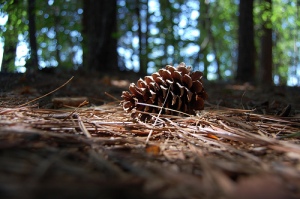
"Autumn Abstract." Photo: Tim Noonan via Flickr. (Website link embedded within photo.)

“Autumn Abstract.” Photo: Tim Noonan via Flickr. (Website link embedded within photo.)

As I’ve tried to explain with this whole patchouli series, true patchouli is very different from the note so many people are exposed to in modern perfumery. It’s not the vile, purple, molasses syrup reeking of fruits and berries that accompanies so many florals or quasi-“chypres” in the aisles of Sephora. The original, real, true patchouli is smoky, spicy, very brown-red in hue, with hints of aged cognac or brandy, toffee, dark chocolate, milk cocoa powder, tobacco, leather, toasted nuts, dry woods, and incense. It’s a woody smell that can take on green, mentholated aromas, ranging from peppermint to medicinal camphor. It can also reflect earthy notes, whether dusty or like damp, black loamy soil. Whatever its many characteristics, the true, brown patchouli often has a negative reputation lingering from its days as a favorite of “dirty hippies” in the 1970s who doused themselves in it to cover the strong smell of pot (or a lack of hygiene).

Source: biofarmacia.ro

Source: biofarmacia.ro

The niche houses have tried to rehabilitate poor, maligned patchouli, refining it for the modern era with its modern tastes. Montale‘s version seeks to turn patchouli into something gourmand and indulgent, seeping the leaves for two years in Bourbon vanilla. The result is something that uses vanilla’s richness to soften and tame patchouli’s wilder side, creating a soft, affordable, cozy caramel (or caramel-praline) combination that feels wholly in tune with today’s love of gourmand fragrances.   

Source: Dezire.org

Source: Dezire.org

Montale puts Patchouli Leaves into the Woody or Bois category, and describes the perfume as follows:

Beautiful Patchouli Leaves macerated for two years in the trunk of the Oak tree combined with Vanilla, Amber and White musk on a base of Cystus Ladaniferus from Tibet.

Fragrantica classifies the scent as an Oriental Woody. It lists its notes as follows, excluding the mention of any oak:

patchouli, vanilla, amber, musk and labdanum.

Patchouli Leaves opens on my skin with a spicy, slightly smoky, mellow rich warmth that floods over me like the deepest, smoothest wave of brown-gold-red lava. It’s quickly infused by rich Bourbon vanilla, boozy aged cognac, and a distinctly toffee’d nuttiness. It smells like pralines, vanilla, and toffee’d woods, flecked lightly by a smoky incense. Deep down in its depths lurks a balsamic, ambered resin with a faintly leathered element. The labdanum amber isn’t detectable in its own right, and you never think, “oh, amber,” but the dark, chewy note runs like a deep vein through the base, giving off a toffee, nutty aroma that amplifies the same characteristics in the patchouli. 

"Black Widow v1" by *smokin-nucleus. Source: DeviantArt. (Website link embedded within photo.)

“Black Widow v1”
by *smokin-nucleus. Source: DeviantArt. (Website link embedded within photo.)

There is great warmth and a golden haze circling around me like a plush cloud. Patchouli Leaves is sweet, but never excessively so on my skin; there is too much dryness, woodiness, and smoky incense for it to be cloying and syrupy in any way. The cognac and brandy aroma softens surprisingly quickly, retreating to the sidelines and leaving mostly a subtle nuttiness. Another surprise is Patchouli Leaves’ weight. For a fragrance with such richness, body, and potency, it is quite airy. It never feels opaque, dense, or heavy, perhaps as a way of countering the richness of the vanilla that is slowly rising to the surface. The initial bouquet is very strong and intense, projecting easily 6 inches in range, depending on the quantity you use, but the actual fragrance itself feels like a pillowy, praline-coloured cloud of patchouli.

Source: Mama Quail at mammaquail.blogspot.com

Source: Mama Quail at mammaquail.blogspot.com

Ten minutes in, subtle changes occur. Patchouli’s greener, “dirtier” side emerges with subtle hints of earthy soil, mentholated peppermint, and dark chocolate. The latter is like bitter-sweet chocolate, though it eventually turns into a dusky cocoa powder. The earthy note is simultaneously musky, dusty, and like sweet, damp potting soil that you find in a garden. It’s subtle, and much more muted than the chocolate and peppermint accord. And the medicinal touch smells like eucalyptus camphor, though it’s much milder here than in other patchouli fragrances that I have recently tested. As Nathan Branch wrote in his brief review of the scent, “Montale Patchouli Leaves has an earthy, leafy tone that reins in the sharp bite of actual patchouli so that you’re smelling what might be patchouli plants growing in a deep forest.” 

Source: wallpapersus.com

Source: wallpapersus.com

All the notes are infused with a dry woodiness that, to my nose, smells more like aged, slightly smoky cedar than the lighter, milder oak. The notes blend together seamlessly, creating a beautiful spicy, sweet bouquet of: dark, smoky woods; toffee’d balsamic, amber resin; toasted nuts; damp, earthy soil; dark chocolate; chilly peppermint menthol; incense; Bourbon vanilla; and smoky cedar.

Source: 123rf.com

Source: 123rf.com

It takes about 20 minutes for the vanilla to rise fully to the surface. At first, it takes on an oddly musty dryness as it merges with the woods and the patchouli’s earthier side. As its sweet richness washes over the darkness, Patchouli Leaves loses more and more of its boozy, cognac, leathery nuances, its spiciness, and its dark, balsamic feel. A friend of mine recently compared patchouli’s rich, sweet, spiciness to a deep, fat, sub-woofer bass, and I think that’s a perfect way to describe the note’s most beautiful characteristics. Here, the sub-woofer is increasingly pumping out a deep, fat vanilla “thump, thump, thump” — both of the sweet Bourbon variety, and the drier, woody, occasionally dusty kind. The patchouli is on top, but its truly dark, balsamic, spiced smokiness has been tamed from a deep operatic bass to a mid-level tenor.       

Forty-five minutes in, Patchouli Leaves turns softer, creamier, and more blurred. The notes fold seamlessly into each other, though I wish they had a little more separation and distinct shape at this point. The woody elements seem less smoked and dry, the fragrance’s hint of dusty earthiness is more muted, and the dark, bitter-sweet chocolate is turning increasingly into milk chocolate powder. The faint traces of mentholated camphor are replaced almost entirely by peppermint, but they’re not very significant as a whole on my skin.
Source: pixabay.com

Source: pixabay.com

More and more, the focus of Patchouli Leaves is turning almost entirely into a caramel praline bouquet, with all the other notes standing on the sidelines. The prominence of the patchouli’s smoky, woody, or earthy characteristics varies over the next few hours, but they are increasingly inconsequential, appearing in only the subtlest way if you really sniff hard at your arm. Around the middle of the second hour, Patchouli Leaves’ powerful sillage finally drops, hovering now only 3 inches or so above the skin. However, it takes about 5.75 hours for the fragrance to turn into a true skin scent. After that, it just lasts and lasts.

Source: wallpapers.free-review.net

Source: wallpapers.free-review.net

Ten hours have passed, and I’m still wafting toffee’d caramel, praline, vanilla patchouli. A few more hours after that, the perfume fades in large part, but remains very noticeable on small patches of my arm. All in all, Patchouli Leaves lasted an astonishing 14.75 hours with a small application (2 big smears amounting to a single spray) on my voracious, perfume-consuming skin. With a larger amount (approximating 2 sprays), Patchouli Leaves lasted 17 hours on tiny parts of my arm. Montale fragrances are known for their longevity, but still!

What makes it so surprising in the case of Patchouli Leaves is that I don’t smell anything strongly synthetic in the base — and synthetics are what usually give a fragrance enormous longevity on my skin. Even more astonishing is the fact that there is no ISO E Super in Patchouli Leaves. None at all. That is a first for any Montale that I have tested. How Pierre Montale managed to survive without imbuing the perfume with his usual gallons of ISO E Super, I have no idea, but he did it. (Bravo, and please continue!)

To like Patchouli Leaves, you have to love both original, true patchouli in all its manifestations and gourmand sweetness. If you don’t like both, you’re in trouble. The reactions to Patchouli Leaves on Fragrantica are highly mixed, with some posters having issues with the patchouli’s “hippie” element, while others can’t handle the sweetness. Those who love patchouli with all its earthy, spicy, or occasionally medicinal sides have much less trouble, and love it. Some examples of the range of opinions:

  • My new OBSESSION! It’s drop-dead gorgeous. The amber is not synthetic like most ambers. This is a warm, mellow, slightly sweet amber perfume. Patchouli is intense–rich and nutritious like a peat bog. I smell plenty of dark, damp soil, full of partially decayed mosses and leaves. [¶] It reminds me of Prada’s Amber, but Prada is spicy, and I don’t get that spicy quality in Patchouli Leaves. [¶] So earthy, yet so heavenly.
  • Patchouli patchouli patchouli, a floral note drifting by.
    A tidal wave of sweet sweet patchouli, if you like pot brownies then this’ll probably tickle you in your bad spot. […] OH!, a moist dampness is present as well. [¶] A hippies wet dream.
  • Very sweet and creamy patchouli. After 1 hour smells like some eatable sweety made of patchouli and vanilla. Reaaly too sweet.
  • Patchouli Leaves smells like a cheap head shop perfume. The vanilla is awful sweet and unnatural, the Patchouli is sweet and unearthy, the amber is sweet and cloying. Allover it smells cheap-oily. For the goths out there: You don’t want this patchouli, you’d smell like your hippie grandma, who has lost her sense of smell by using too much acid.
  • This is definitely a hippie patchouli. It begins smelling intensely of mud and tilled soil, then it transforms into a bodily, sweaty patchouli within about a half hour. If you are a hippie, this is you in liquid form. It’s genius, but it’s not something I’d wear.
  • In the nutshell: remove cocoa note and you get l’instant pour homme extreme from guerlain. This is classy, deep, dark evening scent.
  • This is completely stunning. It creates a certain warmth that really puts me at ease. […] I can definitely smell patchouli (duh!), but it’s not what I have always known patchouli to smell like. Two people at my work wear some kind of patchouli scent, but on them it smells like dirt. It is obviously NOT Montale! Instead of smelling like a hippy, I smell angelic: fresh patchouli leaves mixed with a gourmand vanilla. Top shelf stuff!

Basenotes, however, has a very different, positive take on the scent. Out of 30 reviews, 24 are positive and only 6 are negative. Their perception of things:

  • Best patchouli ever made. Sorry Borneo and Coromandel, but you’re a step below of Patchouli Leaves. Opening is raw and earthy, then join the vanilla and make it creamy and sexy. Projection is huge, same with lasting power (over 12hs).
  • Or. Gasmic. [¶] My girlfriend suggested I use “smellgasm” or something similar but I just felt, in my bones, that it wouldn’t do this superlative scent justice. […] My goodness this stuff is dangerously divine.
  • I’ll tell you what I got with wearing this- old book pages in a library vanilla and I loved it. I’m going to own this some day (I hope). I sit down on the sofa and wear this as I read a book and it’s so comforting to me.
  •  it’s like a big scoop of Mint Chocolate Patchouli ice cream on me for the first 5 minutes. It develops quickly and warms into a loamy patchouli within 15 to 30 minutes on my skin, but it starts out as patchouli wearing a winter coat of bracing green (mint and/or lime and/or lavendar) and dark chocolate-oak boots. Granted, this feeling of coolness is very fleeting. It begins morphing almost immediately into a warmer patchouli and amber brew with a touch of vanilla.
  • Holy Smokes! This patchouli is no joke. This is not a classy, refined patchouli like Chanel’s Coromandel. This is not a dry, chocolaty patchouli like Borneo 1834. This is a sting-your-nose, transport-you-to-the-Grateful Dead-lot-circa-1989 kind of patchouli. […] This patchouli is very earthy and very rich. The juice itself is dark and seemingly thick. […] After about an hour the ferocity subsides considerably, leaving an amber/vanilla/patchouli that is indeed more akin to Coromandel, albeit more earthy.
  • This smells like the woods. Sweet, dry, powerful, earthy, serene. And it has the most beautiful deep brown colour. However, there is a lot of amber here. A LOT. A very beautiful fragrance that works amazing is the autumn.
  • Like eating dark chocolate with your lover under a tree after it has rained.

The people at Basenotes seem to have a better understanding and appreciation for real patchouli than those at Fragrantica, which probably explains why 24 out of 30 people gave Patchouli Leaves a positive rating. For me, I don’t think the fragrance is as “hippie” or “dirty” as they do, but my skin amplifies base notes and obviously brought out more of the vanilla from the start. On other people, the fragrance may be indeed have more of an earthy funk like damp soil or a medicinal touch for the first hour until the vanilla rises to the surface.

With regard to other patchouli scents, I agree with only some of their comparisons. Patchouli Leaves definitely isn’t as refined, nuanced, or gorgeous as Chanel‘s incense, white cocoa, and light patchouli amber fragrance, Coromandel, which is one of my favorite perfumes. Someone at Fragrantica wrote Les NereidesPatchouli Antique was a better interpretation of note, but for me the two scents are extremely different as Patchouli Leaves is very gourmand and vanillic, while Patchouli Antique is very musty, dusty, woody, and minty. They also preferred Reminiscence‘s Elixir de Patchouli which many people on Fragrantica repeatedly find is similar to the Montale. I don’t agree with that either. To me, the Elixir is significantly more woody, and smoked, with a mildew-y swamp quality from the strong vetiver. It is also more ambered and less vanillic, in my view, but it may be a question of skin chemistry. As a whole, the strongly gourmand touch in the Montale separates it out from all the patchouli scents that I’ve tried thus far, which is why I think Serge LutensBorneo 1834, David Jourquin‘s Cuir Tabac, or Profumum‘s Patchouly also don’t compare.

Source: vanillesdesiles.com

Source: vanillesdesiles.com

To be honest, I like Patchouli Leaves, but I’m not in love with it and something holds me back from committing fully. It’s not as chic as Coromandel, or as beautifully spiced as Profumum’s more ambered Patchouly. My main problem is that I’m not really into gourmand scents, and that is the essence of Patchouli Leaves on my skin. Deeply vanillic scents always leave me a little cold, even when they turn into caramel praline. I would prefer more spice and incense, and for the patchouli to really shine through as the main star, instead of being tamed by the equally significant vanilla.

On the other hand, Patchouli Leaves has some definite positives that I find hard to ignore. It’s a cozy scent that beats out all the others in terms of its projection and astounding longevity. It’s also extremely affordable, with one discount retailer selling the large 100 ml bottle for $104 instead of $160. Given the strength and richness of the fragrance, that 100 ml bottle may last you until the end of days. Those unwilling to commit to eternity can also go with a 50 ml bottle that costs roughly the same amount at retail.

At the end of the day, Patchouli Leaves will only work for you if you know and love patchouli in all its true, original manifestations. If that is you, and if you adore sweet fragrances centered around vanilla, then you should definitely give the Montale a sniff. It is an incredibly warm, rich, smooth and indulgent take on the note, and a perfect scent for a cold winter’s night curled up before the fireplace.  

DETAILS:
Cost & Availability: Patchouli Leaves is an eau de parfum and is most commonly available in a 3.4 oz/100 ml for $160 or €80, but some sites also sell a 50 ml bottle for $110. It is available on the Montale website only in the large 3.4 oz size for €80. Montale also offers a free 20 ml mini-bottle of the fragrance at the time of purchase. Discount Prices: I found Patchouli Leaves discounted at LilyDirect in the large 3.4 oz/100 ml bottle for $104.71, instead of $160. I’ve known a few people to buy from the site without problem, and they are a reputable vendor. In the U.S.: Patchouli Leaves is available in both sizes from Luckyscent and MinNewYork, at $110 for the small and $160 for the large. Parfums Raffy offers both sizes for a fraction less: the 50 ml size for $105, as well as the 3.4 oz/100 ml size for $155. All the sites sell samples. Outside the U.S.: In Canada, Patchouli Leaves is available at The Perfume Shoppe‘s Vancouver site which sells the 1.7 oz/50 ml size for US $110. Since the site is originally a U.S. vendor, you may want to contact them about Canadian pricing. In the UK, I couldn’t find any sellers. Germany’s First in Fragrance sells the 100 ml Patchouli Leaves for higher than retail or the Montale website at €94, but ships all over the world. In the Netherlands, the perfume is sold by ParfuMaria for €95, while Italy’s AllaVioletta offers it for €80. In the Middle East, I found Patchouli Leaves at PerfumeUAE, while in Russia, it is offered on Montale’s Russian website. In Japan, Montale is sold at a few stores, like Tokyo’s La Beauté One. For all other locations from Osaka to Spain, Austria, Italy, Bahrain, Lithuania, Kuwait, even Uruguay, and elsewhere, please check the Montale Distributor page. There are even more stores all over the world from Japan to Africa shown on Montale’s Store PageSamples: I obtained my sample of Patchouli Leaves from Surrender to Chance which sells 1ml vials starts at $3.99.

Profumum Dulcis in Fundo and Arso

Simplicity done in the richest, most concentrated way possible seems to be the signature of Profumum Roma. It is an Italian niche perfume house founded in 1996, and commonly called Profumum by most. The fragrances are often soliflores, or centered around one main note, but Profumum takes that note and concentrates it with 43% to 46% perfume oils to create the height of luxurious richness. Today, I thought I’d look at Dulcis in Fundo and Arso, two pure parfums which focus, respectively, on vanilla and on piney incense.

DULCIS IN FUNDO:

Source: stuffpoint.com

Source: stuffpoint.com

Have you ever gone into an ice cream or frozen yoghurt shop, sniffed the air, and felt almost uplifted at the aroma of freshly baked waffle cones sprinkled with sugar? Have you ever ordered a creme caramel, and thought its aroma of caramelized vanilla was utterly delicious? If you have ever wanted to put those scents into a bottle, then you may want to try Dulcis in Fundo.

Dulcis in Fundo is an eau de parfum that was released in 2001. Profumum‘s website describes the fragrance and its notes very simply:

Sin of gluttony… sin of heart:
In essence, don’t both passion and seduction
evolve through a flare of vanilla?

Sicilian citrus fruits, Vanilla

Source: Profumum

Source: Profumum Roma.

The description from Luckyscent nails the essence of the fragrance, and pretty much negates the need for much more extensive elaboration from me:

This opens with a very fresh, very sweet orange, like a clementine being peeled, complete with the tangy sharpness of citrus oil on your fingers. Then the sweetness intensifies and becomes richer, as if drizzled with Grand Marnier, and a billowy dollop of luscious, creamy, unadulterated vanilla tops it all off. Warm and brazenly sweet, this ambrosial blend is for the woman who wants to smell delicious. This is dessert at its irresistible best: whipped cream being licked off fingers, fits of giggles fueled by liqueur, suggestive whispers over shared spoonfuls. We suspect that more is going on here than citrus and vanilla (some say a saucy little apricot was involved) but perhaps it is just a citrus and a vanilla that get along exceedingly well. Delectable.

Blood Orange. Source: Twitter.

Blood Orange. Source: Twitter.

Dulcis in Fundo opens on my skin with a burst of juicy oranges that is not sweet but more like the tangy aroma of dark, ruby-red blood oranges. The note is concentrated, deep, tart and a little bit bitter. It is quickly infused with warm, rich, heavy vanilla that is quite custardy in its depth. I smell like an orange creamsicle with hints of freshly baked, warm-from-the-oven, waffle cones. There is almost something creamily woody deep, deep down, because there is a subtle impression of gingerbread to the waffle base.

The vanilla soon turns richer, making Dulcis in Fundo smell very much like a creme caramel with a slightly singed top. Less than 15 minutes into the perfume’s development, the orange top note abates, leaving an aroma that is primarily that of waffle cones and creme brulée dusted with tablespoons of sugar. I loved the tart citric element, so it’s a bit of a shame that it vanished so quickly and that it contents itself with popping up from the sidelines only once in a blue moon in the first two hours. Dulcis in Fundo is sweet and intensely strong, but without massive sillage and with surprising airiness. In its opening ten minutes, it hovers perhaps 1-2 inches, at best, above my skin, but is profoundly concentrated when smelled up close. 

Crème Brûlée. Source: eugeniekitchen.com. For an easy recipe, go to: http://eugeniekitchen.com/creme-brulee-recipe-burnt-cream-french-custard/

Crème Brûlée. Source: eugeniekitchen.com. For an easy recipe, go to: http://eugeniekitchen.com/creme-brulee-recipe-burnt-cream-french-custard/

Dulcis in Fundo is a largely linear, simple, uncomplicated gourmand that smells of nothing more than sugared vanillic pastries. Funnel cake, waffle cones, creme caramel, Italian baked goods — you take your pick. Dulcis in Fundo is a cozy, cuddly, sweet delight, but there is sufficient dryness that (on my skin at least), it never felt like diabetes in a bottle. I’ve tried gourmand fragrances and vanilla scents that made my tooth ache from their sweetness, but Dulcis in Fundo is not one of them. It is never unctuously heavy, either, no matter how rich the fragrance may initially appear or the subtle sheen of oils that it initially left on my skin.

Actually, for all its concentrated feel, Dulcis in Fundo is rather light in weight. In fact, to my surprise, it became a discreet skin scent on me after an hour. Perhaps Profumum felt that so much rich vanilla needed a very light hand and unobtrusiveness in order to prevent a cloying, nauseating feel. All in all, Dulcis in Fundo lasted a good solid 8.75 hours on my skin, though there were lingering traces of it well over the 12-hour mark. I’m going to put the longevity at the lower figure, solely because Dulcis in Fundo really seemed like it was about to disappear at the start of the 8th hour, even if little patches lasted for another four.

Funnel cake cupcakes. Source: confessionsofacookbookqueen.com (Website link embedded within photo.)

Funnel cake cupcakes. Source: confessionsofacookbookqueen.com (Website link embedded within photo.)

Dulcis in Fundo is the furthest thing from edgy, revolutionary, or complex, but it may be the most decadent of sinfully rich vanillas. That is probably one reason why it seems to be many gourmand lovers’ idea of heaven. The perfume is not exactly cheap at $240 or €179, but it is 100 ml of something that is essentially pure perfume extrait with its 43%-46% concentrated oils. Profumum always has the richest fragrances on the market, with generally exceptional longevity, so the price makes their perfumes a good deal for what you’re getting, if you love the scent in question. I personally am not such a fanatic about vanilla or gourmand fragrances, but enough people are for Dulcis in Fundo to be completely sold out at this time at on the Luckyscent site.

Whether it’s people I observe on fragrance groups or those commenting on Fragrantica, gourmand lovers of both genders seem to adore Dulcis in Fundo. Some of the Fragrantica reviews:

  • If I had money to burn, I’d burn it on this perfume. For me, it’s one of those “eyes roll back in your head” perfumes. The citrus and vanilla are perfectly blended to create a tart, sweet, tangy, candy-like scent Willy Wonka would be proud of. My first thought – Smarties! If you’re looking for sultry, smoky, grown-up vanilla – keep shopping. If you want a truly sweet, delicious, unique perfume with the punch of a Jolly Rancher that’s not watery or shadowy (like most mainstream / celebrity fruity vanillas), this is it.
  • Seriously the best thing I have ever smelled. Warm, deep, sweet, bourbon-y. [¶] I don’t get any orange other than *maybe* a passing hint right at application. Sillage is great – dabs on my wrists keep this floating to my nose all day. It’s actually distracting. In a good way.
  • I don’t’ get any citrus at all in this, but it’s an incredible vanilla, very true to bourbon vanilla to the point of almost smelling at times like extract. There are smoky notes, faint incense feeling, and just that rich, thick vanilla, but it’s not cloying, sweet or overpowering. Lovely lovely scent. I want more.
  • Top notes: lemon cake
    Middle notes: vanilla cake and a hint of cinnamon
    Dry down: vanilla cake and marshmallow filling  [¶] Not particularly complex. Probably too sweet for me to wear very often but positively delicious nonetheless. The vanilla in this is more candy like and than floral. The most pleasant gourmand I’ve come across.

One of the women who purchased Dulcis in Fundo did so despite the cost and after extensively testing a wide variety of other gourmands. She wrote, “at $240 (which could also be a nice pair of boots!)– it had better be IT if I’m paying money for it,” but, for her, Dulcis in Fundo did turn out to be “It.” She even says it seemed to have a huge impact on a younger, male co-worker on whom she had a crush. More to the point, the perfume didn’t smell like cheap vanilla:

I’m a fan of vanilla in theory, but some as you know can smell tawdry or cheap. Some are overrun by other things –smoke, flowers, musk or what have you–which is fine if that’s what you’re looking for. […] This is vanilla with a touch of citrus–heaven sent vanilla. I keep smelling my arm, with the overwhelming urge to rub my face in it.

For others, however, with less of a passion for sweet perfumes, Dulcis in Fundo was too much. Too sweet, too expensive, and too much like food. A few experienced some bitterness, with the tiniest bit of “skank” from what they found to be a cistus, amber-like note in the base. The vast majority, however, loved the fragrance, including some men.

I’m not a gourmand lover, but I think anyone who adores dessert fragrances centered on vanilla should try Dulcis in Fundo. It’s very well-done, and very cozy.

ARSO:

Arso: Source Luckyscent.

Arso: Source Luckyscent.

Arso means burnt in Italian, but strong smoke is only part of the fragrance by that name from Profumum. Arso was released in 2010, and is classified as an Eau de Parfum but, like all its Profumum siblings, it is actually an Extrait or Pure Parfum in concentration. Profumum‘s beautifully evocative description for the scent reads:

Outside the first snow was falling and
the wind was caressing the leaves of the pine trees.
Inside the chalet of a good red wine
mingled with the notes of a beautiful jazz music.
You and I hugging on an old sofa
and around us the smell of a crackling fireplace,
the white smoke of a precious incense
and the warm scent of pine resin.

Luckyscent has a similar, mood-based description for Arso:

The sharp, evocative scent of wood smoke – triggering childhood memories of bonfires and burning leaves – is at the heart of this eloquent scent. Arso means “burned” and the masterfully rendered smokiness works with the crisp cool scent of pine to conjure up a cabin in winter, with a crackling fire on the hearth. You … also get the warm indoor scents of well-worn leather and glowing incense, as well as the fire. The mood is calm and comfortable and safe [….] This is perfectly suited for the strong, silent type – the sort of man who could build a house single-handedly and maybe even chop down the trees to build all by himself. Quiet, reassuring and powerful.

Profumum Roma rarely seems to give a complete list of notes for its fragrances, and I suspect a lot is often left out. The company says Arso contains, at a minimum:

Leather, incense, pine resin, cedar leaves

Pine tree sap. Source: howtocleanstuff.net

Pine tree sap. Source: howtocleanstuff.net

Arso opens on my skin with pine sap, smoky cedar, and sticky caramel amber. There is a hint of muskiness to the golden, sweetened base where there is plainly ambergris at hand, not amber. The note is a common signature to many Profumum scents, and it is always beautiful. As usual, it’s salty, a little bit wet and gooey, musky and sweet. The marshy saltiness works stunningly well with the woody, wintergreen, pine sap with its slightly chilly, tarry briskness. The latter feels sometimes like resin pouring out of a pine tree, then boiled down to concentrate with brown sugar until it is simultaneously sweet, tarry, and wintery wood in one. My word, what an intoxicating start. Small tendrils of black smoke curl all around, adding to the richness of the notes and preventing any cloying sweetness. In a nutshell, Arso is smoky, piney, woody, dry, sweet, salty, and golden, all at once.

The black smoke grows stronger with the passing minutes, as do the dark, green coniferous elements. Arso evokes a campfire, complete with burnt leaves and singed, smoking wood, but this campfire is drizzled lightly in sweetness. Underneath, there is a touch of leather, but it’s never harsh, black, brutally raw or animalic. Instead, it’s aged leather, sweetened by the ambergris and piney resinous tree sap into burnished richness. Still, it’s not a predominant part of Arso at this point by any means, and it certainly doesn’t alter the perfume’s woody, piney, smoky essence.

Photo: David Gunter Source: Flickr (website link embedded within photo.)

Photo: David Gunter Source: Flickr (website link embedded within photo.)

Some people have compared Arso to Serge LutensFille en Aiguilles, but I think the two fragrances share only surface similarities. The Lutens has a fruited component with its dark, plum molasses. There are strong spices up top, while the base is dark, purple-black and green in visual hue, as compared to Arso’s base of salty caramel-gold with black. The pine notes are another big difference. Arso feels as though pine needles have been crushed in your hands, but, for me at least, the fragrance never evokes the chill of a winter forest or Christmas time. It’s not because the pine is much more significant and potent in Arso, but more because it has been sweetened in a very different way. The ambergris lends it a salty quality, turning Arso much warmer, less brisk, and almost more honeyed than Fille en Aiguilles.

Source: Theatlantic.com

Source: Theatlantic.com

Perhaps more important, there is a substantial difference to the quality and feel of the smoke in Arso. It smells like juniper or cade, with a phenolic, almost camphorous tarriness that evokes leather and bonfire smoke. It’s sharper, more intense, blacker, and subsumed with the forest smells, instead of feeling more like temple incense infused with plums and spices. Lastly, on my skin, the smoky cedar is as dominant a part of Arso as is the pine. In contrast, Fille en Aiguilles is primarily fir and plummy fir resin. In short, Arso is much more purely woody, salty, musky, and leathery than Fille en Aiguilles which is much more centered on heavy frankincense with gingered sugar plums, spiced molasses, and brown sugar. I love Fille en Aiguilles passionately (and own it), but Arso is a fabulous scent in its own right and for very different reasons.

Source: wallibs.com

Source: wallibs.com

Both scents, however, evoke the very best of a forest. With Arso, it’s a landscape speckled with the warmth of summer’s golden light. The pine needles crunch under your feet, releasing their oils, and melting into an air filled with the aroma of a thick, rich, salty caramel. You know the smell of ice-cream shops that make waffle cones? Well, the note that is such a profound part of Dulcis in Fundo also lurks about Arso’s opening, though it is much more fleeting and minor. It is deep in the base, not the center of the fragrance, but there is a whiff of that same delicious sweetness in the ambergris’ rich undertones.

Josh Holloway who plays "Sawyer" on Lost. Source: momdot.com

Josh Holloway who plays “Sawyer” on Lost. Source: momdot.com

Here, it mixes with the aroma of the great outdoors, a bouquet that conjures up images of Colorado’s vast vistas of dark pine forests, complete with a trickle of smoke spiraling out a small log cabin’s chimney. It is summertime, and everything is a blur of gold, green, and black. The man who appears is handsome but rugged, with a faint scruff of beard on his face. In my mind’s eye, I see “Sawyer” from the television show, Lost, the sexy, tough con man with an inner softness and golden heart. Arso fits him perfectly, with its rugged piney profile, saltiness, smoldering dark depths, leatheriness, and sweetened smokiness.

It takes about 4 hours for Arso to change. The first stage is all sharp, tarry, piney smoke with salty, golden, caramel ambergris, cedar, pine resin, forest greenness, and sweetness. The second stage is much drier, and more about the bonfire smoke and the leather. In fact, the latter occasionally dominates on my skin, though it feels like the result of the other notes swirling about than actual, hardcore leather in its own right. There is an animalic undertone to the note, as well as a sour edge that feels almost civet-like on occasion.

The leather vies with the tarry, black campfire smoke for supremacy, with both notes overshadowing the amber. The woody elements have retreated, especially the pine, though the cedar is still noticeable. I’m not a huge fan of the sour edge to the leather, and I’m substantially less enthused by Arso’s later stages than its opening, but I suspect that it is my skin which is responsible. It doesn’t help that the gorgeous, salty amber-caramel largely vanishes around the start of the 5th hour, turning Arso much darker and smokier. In its very final moments, the fragrance is merely a blur of abstract woodiness with a touch of dark leather and the merest whisper of bonfire smoke.

As with all of Profumum’s scents, Arso is not a very complicated scent, though it is much less linear than some of the line. The Italian perfume house seeks to highlight a handful of notes in the most luxurious, plush, opaque manner possible, and Arso is no generally different. However, I was surprised by how quickly the perfume felt thin and airy; it lost much of its concentrated, heavy richness around the 2.5 hour mark which is also when Arso turns into a skin scent on me. It is not a powerhouse of projection, either. I’ve worn Arso three or four times, and no matter the quantity, its sillage in the first hour hovers, at best, about 2 inches above the skin. The sharpness of the juniper-cade’s black smoke and leatheriness remains forceful for ages though, and the perfume as a whole is still easily detectable for the first four hours when sniffed up close. All in all, Arso’s lasts between 9 and 10.25 hours on my perfume consuming skin, depending on the amount applied. As always with Profumum scents, there are minuscule patches where the aroma seems to linger for about 12 hours, all in all. 

I think Arso skews more masculine in nature, though women who love bonfire aromas, smoky pine, tarry cade, and leather fragrances will also enjoy it. I know a few who are big fans of Arso, but, generally, it is men who gush about it obsessively, falling head over heels for the tarry, woody smoke. Still, one woman on Fragrantica, wrote the following review:

Wow. I am so surprised. Arso is totally different from what i expected from the notes listed. I thought this was going to be a kinda brisk woodsy fresh forest scent; but instead its a thick dark caramel and tar. Tree sap being melted over a fire with cedar and pine logs. The beginning reminds me a lot of Mamluk (which came a year later). It settles into a cool dry *almost bitter* smooth leather scent

Im a girl and dont happen to find this too masculine smelling at all!!

Source: freeirishphotos.com

Source: freeirishphotos.com

A male commentator, “raw umber,” had a very good description for the scent, writing:

Arso is a dry pine that is encrusted with sticky, highly flammable sap. It starts out Christmas tree, and ends up blackened fire pit. [¶] On the exhale, I get the faintest trace of something that has burned, like the smoldering remains of a campsite cookout.

The almost undetectable leather and incense provide a faint saltiness, which enhances the dimension of the burned smell as Arso dries down, but it never plainly spells LEATHER, or INCENSE. It’s projection and longevity are both very good.

The slightly charred pine is the feature here from start to finish. It is 100 percent unisex, and it can be worn whenever you wish to smell like you’ve been camping.

A few people hated Arso at the start, then suddenly fell in love. Take, for example, the assessment by “alfarom” who wrote”

Arso is possibly one of my biggest 180 so far. I always found it unbalanced, sort of too smoky but I was wrong! It smells so darn good.

Strongly resinous, incensey with a tad of sweetness during the opening and with leather hints throughout. A shy boozy note discreetely remakrs its presence druing the initial phase to slowly disappear leaving space to a slighlt sweet amber note while the fragrance dries down. Smells exactly like an estinguished campfire where they burned resinous pine, cedar and tones of dry leaves, smells of velvety white smoke, smells incredibly salubrious. Initally I thought about a mash-up between Fille En Aiguilles and Black Torumaline but overall Arso is less balmy, less sweet and as much as I love the Lutens and the Durbano, this one is much more wearable.

Surely among the best deliveries from Porfumum. Terrific!

There are a few others who initially hated Arso, too, like one chap who first thought it was a “no no” of masculine pine and harsh incense at the start, before suddenly finding, after 3 hours, that it was utterly addictive. The time made a difference, turning Arso smoother, softer, and “delicious.” He found himself “blown away” and, though he still preferred Serge Lutens’ Fille en Aiguilles, he found Arso much more wearable.

I am the opposite. I find my beloved Fille en Aiguilles to be much more approachable, perhaps because the smoke isn’t like extinguished campfires and there is no cade-like, tarry leather that feels sharp or a bit animalic at times. I’m not passionate about Arso’s dry final stage, whereas I love the Lutens from start to finish. It is simply a matter of personal preferences and skin chemistry, so I’ll stick with my bottle of Fille en Aiguilles, while admiring Arso for being a wonderful smoky, woody fragrance of a different kind. That said, I think Arso would be a great Christmas gift for a man (or woman) who loves intensely smoky, woody fragrances, or scents with a incense-leather profile. It’s wonderfully evocative, and very sexy.

DETAILS:
DULCIS IN FUNDO Cost & Availability: Dulcis in Fundo is an Eau de Parfum that only comes in a large 3.4 oz/100 ml bottle which costs $240 or €179. Profumum unfortunately doesn’t have an e-shop from which you can buy their fragrances directly. In the U.S.: the perfume is available at Luckyscent, which is currently sold out, but it is taking back orders for December delivery. Dulcis in Fundo is also carried at OsswaldNYC. Outside the U.S.: In the UK, Profumum perfumes are sold at Roja Dove’s Haute Parfumerie in Harrods. Elsewhere, you can find Dulcis in Fundo at Premiere Avenue in France (which also ships worldwide, I believe) and which also has Dulcis’ matching shower gel and body oil as well. The fragrance is also carried at Switzerland’s Osswald, France’s Le Parfum et Le Chic (which sells it for €185), Paris’ Printemps department store, the Netherlands’ Celeste (which sells it for €180), and Russia’s Lenoma (which sells it for RU16,950). According to the Profumum website, their fragrances are carried in a large number of small stores from Copenhagen to the Netherlands, Poland, France, the rest of Europe, and, of course, Italy. You can use the Profumum Store Locator located on the left of the page linked to above. Samples: Surrender to Chance carries samples of Dulcis in Fundo starting at $6.99 for a 1 ml vial. You can also order from Luckyscent.
ARSO Cost & Availability: Arso is an Eau de Parfum that also comes in a large 3.4 oz/100 ml bottle which costs $240 or €179. Again, Profumum unfortunately doesn’t have an e-shop from which you can buy their fragrances directly. In the U.S.: Arso is available at Luckyscent, and OsswaldNYCOutside the U.S.: In the UK, the full line of Profumum fragrances is at Roja Dove’s Haute Parfumerie in Harrods. Elsewhere, you can find Arso at Premiere Avenue in France, Paris’ Printemps store, the Netherlands’ Celeste (which sells it for €180), Zurich’s Osswald, and Russia’s Lenoma (which sells it for RU16,950). For all other locations from Copenhagen to the Netherlands, Poland, France, the rest of Europe, and, of course, Italy, you can use the Profumum Store Locator to find a vendor near you. Samples: Surrender to Chance doesn’t carry Arso, but you can order from Luckyscent at the link listed above.

Guerlain Tonka Imperiale

There is a house in the suburbs, virtually indistinguishable from its neighbors, and merely one more in a line of perfectly square, pretty boxes with perfectly trimmed lawns on a perfectly pleasant, quiet street. It’s not large enough to be a true McMansion, but it certainly bears all the characteristics of that generic sameness. If you look closely, you can see that it’s made of the very finest building blocks, the very best that money can buy. Inside and out, however, it’s a sea of bland beigeness with interiors that are awash with taupe, egg-shell, and cream as far as the eye can see. There is nary a whiff of anything strong in contrast; no pops of colour, no thick veins of black. The lack of edge or individual character carries through even to the house’s carpeting: thick, plush shag rugs in which you can sink your bare feet. It’s easy comfort without particular style, and always in unremarkable, unrelieved, suburban taupe.

Source: loan-help.org

Source: loan-help.org

Tonka Imperiale from Guerlain is a beige house in the suburbs for me. It’s well-appointed and well-made, but a sea of bland, characterless, generic taupe as far as the eye can see. And I despise taupe with a violent passion. I’m sure it’s a colour that can be elegant in some interior decorating, and there are probably people on whom the colour looks good in clothing, but, personally, I would like to stab taupe in the eye with a large chef’s knife. And, for me, when I wear Tonka Imperiale, all I see is that bland colour. I know a lot of my friends will undoubtedly be upset with this review as they love the fragrance. To them, I can only apologise. I know Tonka Imperiale is a luxuriously made creation that probably encapsulates elegant comfort. I’m sure it’s wonderful on all of you. Unfortunately, it’s not something that I think is particularly special for its high price.   

Guerlain Tonka ImperialeTonka Imperiale is part of Guerlain’s exclusive L’Art et La Matière collection which was launched in 2005 to celebrate the opening of Guerlain’s renovated headquarters in Paris. The collection’s name means Art and (raw) Materials, and represents Guerlain’s goal of creating olfactory Art through the use of the finest raw materials in perfumery. As Fragrantica further explains, “L’Art et la Matière” is also “a pun after the French expression L’Art et la Manière – the art and manners.”

Tonka Imperiale is the seventh fragrance in the collection, and was released in 2010. Like all its siblings, it was created by Guerlain’s in-house perfumery, Thierry Wasser. On its website, Guerlain describes the scent as a “woody oriental” and write:

AN ASTONISHING CONSTRUCTION THAT BLOWS HOT AND COLD

With Tonka Impériale, Thierry Wasser has created a woody oriental composed around one of Guerlain’s star ingredients,the tonka bean. It has to be said that this precious seed, one of the cult components of the Guerlinade, is particularly dear to the House.

Tonka Impériale is well-named: a subtle blend of balmy scents, rich in contrasting facets, with accents of honey, gingerbread, almond, hay and tobacco. The fragrance comes in a spray bottle with sleek, contemporary lines. One side is ornamented with a gold plate like a talisman.

Tonka Beans

Tonka Beans

The notes for the perfume, as compiled from Guerlain and Fragrantica, are:

Top notes: bergamot, butter almond, white honey, and rosemary.

Heart notes: jasmine, tonka beans and light tobacco. Bottom notes: incense, cedar wood, pine.

Depending on treatment, tonka beans can smell of vanilla, hay (coumarin), or even bittersweet almonds. And it is the latter which dominates the opening of Tonka Imperiale on my skin, thanks to the supplemental effects of the almond butter. The perfume begins with a burst of the white nuts, first bitter and raw, then quickly infused with sweetness. There is a honeyed quality underlying the note, but it’s light, not thick, yellow, or molten. It suits the description of “white honey” given by Fragrantica, because this feels quite translucent. Quickly, a subtle herbal element breezes through, followed by an amorphous woody note that isn’t immediately distinguishable. Tobacco lurks underneath, feeling pale, blonde and sweet, like leaves sitting in the sun. Traces of sweetened hay and the faintest speck of bergamot are the final touches that dot the landscape.

Source: donnamarie113 on Deviantart.com

Source: donnamarie113 on Deviantart.com

The primary bouquet, however, is of almonds and vanilla. The almond note is so concentrated, it’s more akin to the distilled essence that one uses in baking. The vanilla is rich and sweet, but it’s airy instead of custardy, more pale and white in visual hue. It’s also subtly backed by sweetened vanillic powder. It’s the famous Guerlainade, Guerlain’s signature note, which is placed front and center, right at the top, rather than appearing, as it traditionally does, at the very end in the perfume’s drydown. Tonka Imperiale is a very simple fragrance at its core: bitter, honeyed, sweet almonds with vanilla. It feels a lot like crème anglaise, only this one includes almond concentrate.    

Eventually, other notes appear to dance at the edges. In the first hour, there are minute, minuscule traces of woodiness. It’s generic, beige and abstract in large part, though if you really, really focus, you can perhaps persuade yourself that you can detect the hazy, faint edges of cedar. The real dryness in the scent comes from the tobacco which has quietly filled the base, seeping up to subtly impact the vanilla-almond combination at the top. Slowly, the bergamot becomes a little more noticeable, but like a number of things in this scent, it is restrained, and muted. By the end of the second hour, jasmine and incense suddenly pop up on the periphery. Both are flickers that are barely imperceptible initially. In fact, on my skin, it takes almost six hours for the incense to be noticeable in any substantial way.

Until that point, Tonka Imperiale is primarily an almond-vanilla scent atop an abstract, amorphous woody base that is lightly infused with tobacco and smoke. The Guerlainade powder, the jasmine and the other notes register in pale, light, subtle hues. It’s all effortless, easy, extremely well-blended, and swirls around you like a very expensive, soft, airy cloud. It’s not earth-shattering, but it’s perfectly pleasant. To me, it seems simplistic and dull, but I can see how it might be a comfortable, easy, cozy scent for some, especially those who love a gourmand sweetnes in their fragrances.

Source: news.com.au

Source: news.com.au

Still, I can’t help but visual a house in the suburbs, though not one excessive or large enough to be a true McMansion. Tonka Imperiale is not chic, cool, or hip enough to be an apartment in the city; it’s certainly not a loft in Soho or a penthouse decorated in sleek black, silver, and modern edges. It’s also not large, opulent, or over-the-top enough like an Amouage Ubar to be a massive estate with a palatial mansion out in the country. It’s merely a comfortable, unremarkable, pretty, well-built house in the suburbs awash in taupe and beige.

The unrelieved blandness never changes. At the 4.5 hour mark, the sillage drops, and Tonka Imperiale is now a skin scent. The almond has now fallen behind the honey, jasmine and vanilla, though it still precedes the woody notes that are in the base. It’s the same story with the tobacco. As a whole, and if I’m being charitable, Tonka Imperiale is an interesting mix of sweetness with dryness, I suppose. By the start of the seventh hour, the fragrance is Guerlainade vanillic powder with a faint whisper of almonds and honey, and sits atop with some smoky incense, though the latter is so sheer, gauzy, and thin, it’s hardly a robust foundation. In its final hours, Tonka Imperiale is merely Guerlainade with some dryness. All in all, the fragrance lasted just short of 11 hours, with moderate to soft sillage throughout.

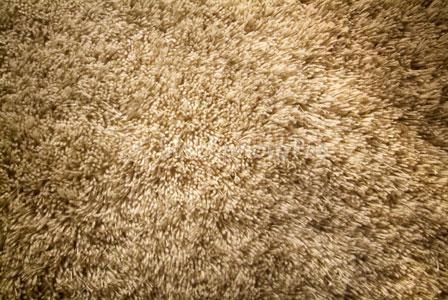
Taupe shag carpeting. Source: stockphotopro.com

Taupe shag carpeting. Source: stockphotopro.com

Tonka Imperiale is intentionally meant to pay homage to a particular note, so I can’t fault it for focusing so heavily on the tonka, right down to its occasional almond-like facets. The fragrance does what it sets out to do, and does so in the typical Guerlain way. I’m not blaming it for that. I do blame it, however, for being such unrelieved blandness for $250. For that amount, it would be nice to have some character, some contrasting edge to counter the dull monotony of a sea of taupe and beige. Supposedly, the incense is meant to be that edge. If they say so. Perhaps I’m merely unlucky with my skin.

Or, perhaps, Tonka Imperiale is exactly the way it’s supposed to be: a plush, simple, comforting, gourmand scent dominated by vanillic tonka, almonds and Guerlainade, with an incredibly restrained dose of tobacco and incense. So restrained, in fact, that neither of those minor supporting players can possibly counter the two main, gourmand players on center stage. Fine. But Guerlain’s headlong descent into simplistic and/or gourmand scents at an extremely high price tag continues to alienate me. Tonka Imperiale would be a great comfort scent at about $100, though I personally still wouldn’t go near it due to all that taupe beigeness. But $250? For a plush, beige shag rug? No, thank you. Not for me.

Others, however, don’t share my issues. As noted earlier, I have a number of friends who love Tonka Imperiale so much, they’ve bought full bottles of it. On Fragrantica, there are raves about how wonderful the fragrance is, and how it is a luxurious “masterpiece.” To wit, one comment calling it “[F]rench romantic ART,” and saying: “Oh my god …..what is this scent…luxury…elegant…charismatic…sweet…sensual…very sexy for me.” Others, however, think Tonka Imperiale is vastly over-priced, with a number finding the fragrance’s opening to be extremely similar to Mugler‘s Pure Havane. One person had an issue with Tonka Imperiale’s drydown, comparing it to Calvin Klein‘s Obsession, her “worst nightmare.” On my skin, Tonka Imperiale’s drydown wasn’t similar to Obsession at all, and I can’t compare it to Pure Havane’s opening, as I’ve never tried it. All I can say is that those of you who have problems with Guerlainade, and who continuously have it turn into sour baby powder on your skin may want to stay away from a fragrance that showcases the brand’s tonka signature.

The bottom line is this: if you love modern Guerlain fragrances — with all that that entails, for good or for bad — and if you adore cozy gourmands, then you may want to give Tonka Imperiale a sniff. You will have plenty of company in Tonka Imperiale’s vast fan club. If, however, you’re looking for a fragrance with some edge, character, or distinctive flair for your $250, you may want to look elsewhere. It’s an unrelieved sea of beige and taupe in the suburbs. 

DETAILS:
Cost & Availability: Tonka Imperiale is an eau de parfum that costs $250 for 2.5 fl. oz/75 ml. It is available at Guerlain boutiques, and is listed on its website, but Guerlain doesn’t seem to sell the fragrance via an e-shop of sorts. (There is no shopping cart, for example, in which to put the fragrance for purchase.)In the U.S.: Tonka Imperiale is available on the NordstromSaks Fifth AvenueNeiman Marcus, and Bergdorf Goodman websites. (With the exception of Bergdorf Goodman which definitely carries the more exclusive line of Guerlain fragrances in-store, I don’t know if it is available within the other shops themselves.) Outside the U.S.: In the U.K, you can find Tonka Imperiale at Harrods and, apparently, London’s Selfridges, but neither store offers the fragrance online. As for price, I read that, back in 2011, Tonka Imperiale retailed for £175. I don’t know how much it is now. In France, the fragrance is obviously available at Guerlain stores. For all other countries, you can use Guerlain’s Store Locator on its website. Samples: If you’d like to give Tonka Imperiale a test sniff, you can get a sample from Surrender to Chance where prices start at $4.99 for half of a 1/2 ml vial.

Dior Eau Noire (La Collection Privée): Licorice Immortelle

Source: fr.123rf.com

Source: fr.123rf.com

Chilled iciness and warmth, silvered light and black darkness, thickness and airiness, herbal crispness with gourmand chewiness, all swirled together in one. That is Eau Noire, a surprisingly gourmand fragrance from Dior with almost a fractal juxtaposition of textures, notes, and sensations.

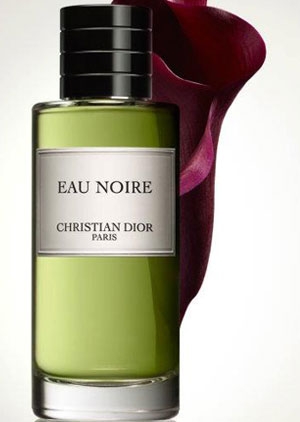
Eau Noir is part of Dior’s prestige line of fragrances called La Collection Privée. (The line is sometimes called La Collection Couturier on places like Fragrantica and Surrender to Chance, but I will go with the name used by Dior itself on its website.) The eau de parfum was one of the very first Dior Privée perfumes, and was released in 2004. Unlike most of its siblings, it was not the creation of François Demarchy, the artistic director and nose for Parfums Dior. Instead, it was created by the then-young perfume prodigy, Francis Kurkdjian, who went on to found his own perfume house, Maison Francis Kurkdjian, to great acclaim. 

Source: Fragrantica.

Source: Fragrantica.

Dior categorizes Eau Noire as an “oriental aromatic,” and provides the following description:

An elegant gala spirit in an intense evening fragrance, swathed in mystery. This interpretation of Lavender in chiaroscuro reflects the atmosphere of the Château de la Colle Noire, an estate owned by the Designer, which is located in the Provence region.

Dior’s very limited — and I would argue, very incomplete — list of notes include:

White Thyme, Lavender, Liquorice, Vanilla Bourbon, and Virginia Cedar.

Fragrantica adds coffee, leather, spiced sage, and violets as well. And everyone includes immortelle, that tricky note that can smell of maple syrup, curry, and several other things as well. I definitely agree with a lot of those additions. So, in my opinion, the full note list looks more like this:

White Thyme, Lavender, Liquorice, Coffee, Immortelle, Vanilla Bourbon, Leather, and Virginia Cedar.

Source: Dylanscandybar.com

Source: Dylanscandybar.com

Eau Noire opens on my skin with the blackness of its name. It is a potent blast of licorice that is chewy and thick, almost resinously meaty in its depths, and, surprisingly, very chilled in feel. It’s followed by hints of thyme, coffee, vanilla, and a brief, transient pop of thick, yellow, spiced curry. It’s such an odd combination of iced, herbal, spiced and sweet notes that you have to blink. To be honest, the forcefulness of the licorice — so concentrated and thick that it feels like the distillation of every black anisic candy on the planet — is a bit alarming for someone like myself. Until just ten years ago, the mere smell of licorice would make my stomach heave and, though I now enjoy eating fennel/anise, I still won’t go near black licorice. 

Source: blog.diginn.com

Source: blog.diginn.com

Nonethelesss, Eau Noire is oddly mesmerizing. I feel almost paralyzed and transfixed by the scent which becomes increasingly more nuanced and complicated. An unexpected floral note darts about, though it’s not immediately identifiable, at this point, as anything in specific. Then comes the immortelle, coffee, and caramel. The coffee is lovely, potent, and black, just like a freshly brewed cup combined with the scent of freshly ground expresso beans, and it works beautifully with the licorice. 

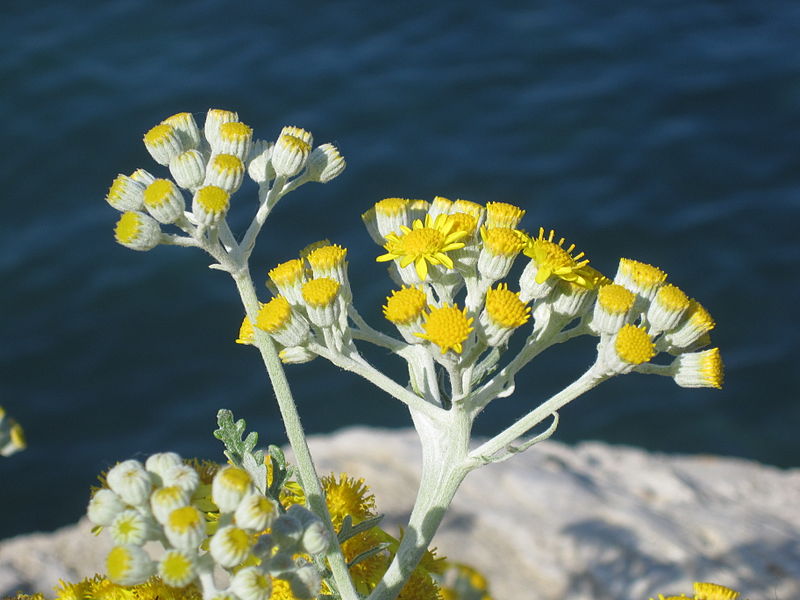
Immortelle, or Helichrysum in Corsica. Source: Wikicommons.

Immortelle, or Helichrysum in Corsica. Source: Wikicommons.

The real key to Eau Noire, however, is the Immortelle (or Helichrysum) which must be in Eau Noire by the bucketfuls. Francis Kurkdjian has created a multi-faceted note, because the fragrance reflects almost all of immortelle’s various characteristics: dryly herbal floralacy; maple syrup; dry woodiness; and the curry that popped up that for a brief moment at the beginning. (No fenugreek, thank God.) I think that Eau Noire’s strong caramel note must stem from the combination of the immortelle’s maple syrup aspect with the Vanilla Bourbon. By the same token, if the coffee is not an actual, separate note, then I suppose it may be the result of the licorice mixed with the vanilla. Either way, Eau Noire is a fascinating blend of chewy, dense black licorice, sweet caramel, maple syrup, strong coffee, with flickers of herbs and a subtle undercurrent of rich vanilla. 

Source: 1ms.net

Source: 1ms.net

Ten minutes in, Eau Noire feels warmer, sweeter, and more gourmand. The lavender keeps trying to brush his way onto the stage, only to get elbowed back to the sidelines by the other notes. Still, he tries valiantly, his little purple head darting up and down every five minutes above the big, blokey shapes of the licorice and maple syrup. The name “Eau Noire” feels almost misleading for a scent that is so much like a rich, unctuous, almost cloying dessert. It certainly wasn’t what I had expected.

By the end of the first hour, Eau Noire changes. The lavender is very prominent now, and there are hints of something woody in the base. The fragrance, as a whole, is a more modulated, balanced, and smoother blend that is equal parts licorice, coffee, and lavender. The dominant trio is trailed lightly by caramel, vanilla, occasional hints of maple syrup, and the lingering, muted traces of an intangible, abstract floral. The licorice fascinates me in its dense potency. Sometimes, it has a distinctly icy feel. At other times, there is a very subtle but unmistakable leatheriness to the note. At all times, however, it is chewy and almost resinous in feel, conjuring up images of something like a thick, black brownie, only made of pure licorice.

For the next few hours, Eau Noire remains largely unaltered in its core essence. The only differences are one of degree, not of kind, as there are subtle changes in the order, priority and strength of the various notes. The lavender waxes and wanes in strength, as does the power of the licorice, coffee, and caramel. Each one takes its turn leading the brigade, and sometimes, they all share equal time on stage in a well-blended swirl.

Source: free-3d-textures.com

Source: free-3d-textures.com

Dior’s description for the fragrance references the term “chiaroscuro,” an interplay of contrasts, and Francis Kurkdjian certainly succeeded here. For the first six hours, Eau Noire is a constant play on opposites: chilly iciness; silvery lightness; warm blackness; airiness and dense chewiness. The texture or depth of Eau Noire follows suit, because the visual feel of black, unctuous denseness is juxtaposed with the fragrance’s surprisingly airy weight. Don’t mistake me, Eau Noire is not weak in sillage — quite the opposite, actually — but the fragrance doesn’t feel opaque or heavy. Instead, it billows around you like a very forceful cloud with at least half a foot in projection from just 2 large smears. This is not a fragrance to overspray with reckless abandon if you work in a conservative office environment.

One thing I found interesting was how Eau Noire appeared from afar. Around the third hour, as the fragrance wafted all around me, I would catch little trails of it in the air. I’ll be honest, my mouth watered a little at the aroma, despite not generally being a fan of gourmand fragrances. There is something about Eau Noire that is utterly entrancing from a distance where it smells almost like a chocolate-coffee-caramel mix, and I found it much prettier than up close where you can separate out the notes into chewy, black licorice with lavender, coffee, and vanilla.

Another point is the impact of different temperatures on the scent. I tested Eau Noire this summer, and found it both cloyingly sweet and largely dominated from the start by the maple syrup aspect of immortelle. Though my tests always take place indoors under extremely cool air-conditioning, as well as outdoors, it was hot enough this summer that even short periods outside made Eau Noire’s sweetness really explode. I don’t generally believe in seasonality when it comes to wearing fragrances, but I think Eau Noire is much prettier in cooler conditions where its various accords blend in better harmony and it’s not quite so sweet.

Maple Syrup. Source: iccoin.com

Maple Syrup. Source: iccoin.com

Around the start of the fourth hour, Eau Noire starts to change again. At first, it’s merely a subtle difference in the base where flickers of a smoky woodiness start to stir, as the cedar attempts to make itself heard. More importantly, however, the immortelle reverts back to its maple syrup character instead of the primarily caramel facet it had shown up to now. It also starts to become increasingly more prominent in the fragrance’s composition. At the same time, the lavender starts to weaken, and the licorice loses some of its shape. The latter feels as though it has infused or melted into every other element in the fragrance. It also starts to feel extremely leathery in undertone, instead of just plain licorice.

Increasingly, Eau Noire becomes primarily an immortelle fragrance in nature. Maple syrup dominates, followed by leathery licorice. The lavender pops up and down like a Jack in the Box, but it’s no longer an equal partner with the other notes. The coffee has vanished, along with the vanilla bourbon. The cedar is barely noticeable, even in the background. At times, Eau Noire feels mostly like maple syrup with caramel, though it’s somewhat drier than those terms would suggest. Actually, I’m surprised that the fragrance has as much dryness as it does. On my skin, Eau Noire isn’t a fragrance that is oozing sugary syrup, though it is sweet. I suspect the cedar may be working indirectly from the base, along with the leathery undertones of the licorice, to keep some of the sweetness in check.

Source: 123rf.com

Source: 123rf.com

Eau Noire’s sillage also starts to change. At the start of the sixth hour, the fragrance loses some of its powerful projection, and hovers only an inch or two above the skin. It is still quite potent when smelled up close, but it no longer sends little trails out into the air around you. At the end of the eighth hour (!), Eau Noire finally becomes a skin scent, radiating primarily maple syrup with a faint hint of black licorice. In its final hours, the fragrance is merely a blur of sweetness. All in all, Eau Noire lasted an astounding 14.5 hours on my perfume consuming skin. Most of Dior’s Privée line has exceptional longevity, but Eau Noire exceeded all the ones that I’ve tried thus far.

I think Eau Noire is a very well-made, intriguing, and rather mesmerizing scent on some levels, but I have mixed feelings about it personally. As a whole, its dark sweetness was much more attractive than I had expected from its opening moments, especially once I got over the shock of that much licorice. Yet, despite how entrancing Eau Noire can smell from afar, I’m not hugely tempted to get a bottle. For one thing, I struggle with gourmands. In light of that fact, even if I had a bottle, I’m not sure how often I could wear such a fragrance. Eau Noire is lovely as a “once in a blue moon” sort of fragrance, but, with Dior’s increased prices and out-sized bottles, do I really want to spend $170 for the “small” 4.5 oz bottle just for occasional wear? For me, it doesn’t seem worth it, but I’m sure that a gourmand lover would find Eau Noire to be worth every penny.

Of course, that assumes that the notes wouldn’t go terribly south on your skin. Eau Noire doesn’t seem to be the easiest fragrance for some people, due to the immortelle. In fact, Fragrantica is littered with comments about some of Eau Noire’s odder manifestations: curried lavender; “curried creme brulée” mixed with cedar; “curry meets caramel;” a “sinister affair of spices and herbs… that reminds me of cough syrup;” and more. One woman thinks Eau Noire is best on a man, while a male commentator thinks it’s a woman’s fragrance.

On the other side are those who are ardent admirers. One commentator thinks it’s the most “sublime” lavender fragrance ever, with spices and a touch of leather, calling it a “real masterpiece of subtlety and spice.” A number of people had the same experience I did with the interplay of contrasting notes. To give you just one out of many similar accounts:

EN is an olfactory maze of ying-yang scents. It is warm and cold, sweet/spicy and woody/leathery, bright and obscure, simple and complex. Indeed, its name says it all: black water. You don’t know what you might get or what to make of it when you wade in it. The key here is to relax and take it in. Just breath in every punch that is thrown at you with your eyes closed and take in each aroma and you may start valuing the grand bal of scents that dance together here. It is a mary-go-round composition where each note underneath the core licorice and lavender combo decides to jump in randomly, show up for a moment, and then suddenly be replaced by another. You will not get bored with this polytonal composition.

Ultimately, I think that you will like Eau Noire only if you adore immortelle in all of its various characteristics (including the potential curry note), along with gourmand scents in general. If so, then Eau Noire will probably be true love for you. Take, for example, the Candy Perfume Boy, a blogger known for enjoying a number of gourmand perfumes, and who has said flat-out that, for him, Eau Noire is “a holy grail fragrance.” In his review, entitled “Eau My God!“, he writes, in part:

The first blast of Eau Noire is somewhat of a baptism of fire […] I find it to be a totally joyful experience, and unlike anything else that has come into contact with my nostrils.

Things fall into place pretty quickly and the top notes are very much about lavender and liquorice, two aromas that are very much intertwined. Each brings out the dark anisic, herbal, and sugary qualities of the other and the overall vibe is neither floral nor gourmand, it sits somewhere comfortably between.

Possibly the most striking aspect of Eau Noire is the HUGE amount of imortelle within the heart. […] Personally I love imortelle, it is perhaps one of the most complex and pleasing smells around, it smells like sweet maple syrup, burned sugar and curry. Much to my pleasure, Eau Noire seems to showcase each and every one of the imortelle flower’s wonderful facets in perfect proportion. […][¶]

I keep trying to think whether I have smelled a fragrance as damn good as this recently, and I really don’t think I have! Eau Noire is everything that a good fragrance should be; distinct, unusual, well proportioned and exceptionally blended, beautiful and of obscenely high quality. Bravo Dior!

It is the ultimate accolade from a man who knows (and loves) his gourmands. And he’s not alone in his passion for Eau Noire. A number of its fans talk about its beauty in this Basenotes thread discussing a possible Eau Noire clone, J’S Extè Man, from an Italian company. On the official Basenotes review post for Eau Noire, the fragrance has a total of Four Stars, with 67% of the 57 reviews giving it a full five stars and making such comments as: “Pure perfection. Completely flawless creation.”

On the other hand, 23% or 13 commentators give Eau Noire just one star, and the main reason almost each time can be summed up as “maple syrup and curry.” I cannot emphasize enough that you have to love immortelle in ALL its potential aspects to love Eau Noire. There may have been just a single, momentary pop of curry on me, but then, my skin has almost never brought out that side of immortelle. (Thank God!) Clearly, I’m one of the lucky ones, but you may not fare so well.

Source: atyabtabkha.3a2ilati.com

Source: atyabtabkha.3a2ilati.com

As a side note, a number of people have compared Eau Noire to Annick Goutal‘s Sables, perhaps the ultimate benchmark for immortelle fragrances. I haven’t tried it to know how it measures up, but one commentator in that Basenotes thread, “alfarom,” has a useful comparison. He states that Sables “pushes to the very limit the boldness of Helichrysum by introducing a massive dose of amber, [while] Eau Noir focuses on its gourmandic/syrupy aspect adding a liqorice effect and a strong vanilla base[.]”

As you can see, again and again, the issue comes back to immortelle and gourmands. If you share the gourmand sensibilities of The Candy Perfume Boy, and if you love both immortelle and licorice, then I strongly encourage you to give Eau Noire a sniff. If you love gourmands but immortelle doesn’t always work on your skin, then you should hesitate and perhaps consider a test. But if you loathe immortelle, licorice and/or gourmands, then run very, very far away. Eau Noire may make you utterly miserable.


DETAILS:
Cost & Availability: Eau Noire is an eau de parfum that is available exclusively at Dior boutiques, at Dior online, and a few select, high-end department stores. Dior Privé perfumes come in two sizes: the 4.25 fl oz/125 ml costs $170 with the new Dior price increase, while the 8.5 fl oz/250 ml costs $250. (There is a third option which is so enormous, I can’t imagine anyone buying it.)
In the U.S.: Ambre Nuit found at Dior’s NYC boutique, and at the main Las Vegas store [call (702) 369-6072]. If you’re really interested, however, what I would do is to call this number instead — (702) 734-1102 — and ask for Karina Lake, the Dior Beauty Stylist at the Las Vegas store. She is an amazingly sweet lady who will also give you a free 5 ml mini bottle of the Dior perfume of your choice, along with 3-4 small 1 ml dab vial sample bottles, to go with your purchase. Even better, you will get free shipping and pay no tax! Tell her Kafka sent you. (I get nothing for the recommendation, by the way.) U.S. Department Stores: New York’s Bergdorf Goodman, San Francisco’s Neiman Marcus, and the Saks Fifth Avenue in Chevy Chase, Maryland also carry the Dior Privée line collection of perfumes.
Outside of the US: The Dior International page offers all their Privée fragrances for you to order online. This is the listing for Eau Noire. In addition, you can use the Points of Sale page on the Dior website to find a location for a Dior store near you. You can also navigate the Dior website’s International section to buy the perfume online. The problem is that the site is not very straight-forward. If you go to this page, look at the very far right to the bottom where it will say, in black, “International Version” and click on that. You should see options for Europe, Asia-Oceana, and South America. Within Europe, there are different sub-sites divided by country. The one closest to you should have the perfume available for sale.
Samples: If you want to give Eau Noire a sniff, samples are available at Surrender to Chance where prices start at $3.00 for a 1 ml vial. If you’re interested in trying the whole Privée line (minus the new Gris Montaigne), Surrender to Chance sells all 13 fragrances in a sampler set for $35.99.