Perfume Review – Chanel Les Exclusifs Sycomore: Mighty Vetiver

Close your eyes and imagine you are in the heart of a forest at Yosemite National Park.

Source: Deby Dixon Photography

Source: Deby Dixon Photography

Cypress trees and evergreens intermingle and stretch far before you. The dark, dry earth is sprinkled with pine needles, and a wild boar is rooting at the tall grasses at the base of a tree, his endeavors lifting the smell of the earthy, chocolate-y roots into the air. Icicles hang from the branches where, nestled deep within, are purple juniper berries. In the heart of the forest, campfires burn thick logs of pine and cypress, and there is a smell of peppery smoke intermingling with the burning woods. Someone is cooking caramel, and burning it. You huddle deeper into your coat as the hint of frost brings a chill, but you can’t help but take a deeper breath of the vetiver surrounding you.

SycomoreGreen and brown, smoky and earthy, with a heart of cypress and wood — that is Chanel‘s Sycomore. It is an incredibly elegant smell, luxurious and leaving a smooth, trail of pure class oozing in its green-brown trail. It is richly masculine, with not a hint of florals, but this is silken masculinity in the most sophisticated, elegant of packages.

Sycomore was first introduced to the world in 1930, the creation of Chanel’s very famous, original perfumer, Ernst Beaux. From what I’ve read, it was all violet and tobacco with some support from soft aldehydes and balsamic wood. The original Sycomore vanished in the perfume mists, but it was re-envisioned and re-introduced in 2008 as an eau de toilette and as part of Chanel’s prestige collection called “Les Exclusifs.” It lesExclusifswas created by Chanel’s house perfumer, Jacques Polge, along with an equally famous “nose” in the industry, Christopher Sheldrake.
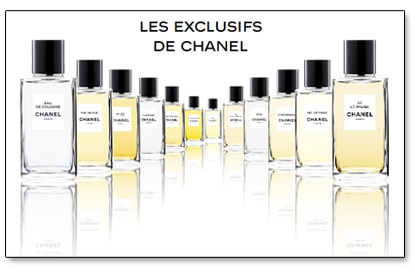
On its website, Chanel describes the new Sycomore as follows:

A rich-wood fragrance with a noble character — like the Sycomore tree that inspired it — created by CHANEL Master Perfumer Jacques Polge in 2008. At the heart of the scent: Vetiver, with an elegant Sandalwood note and dashes of Cypress, Juniper and Pink Pepper, for an earthy, warm and enveloping, yet subtle presence.

I think Chanel’s description nails it, unlike the Fragrantica‘s entry for Sycomore which seems completely incorrect in my opinion. Fragrantica puts Sycomore in the “Woody Floral Musk” category, and lists its notes as “vetiver, sandalwood, aldehydes, tobacco and violet.” I suspect both the categorization and the notes apply only to the 1930s version of Sycomore.

No, Chanel’s notes for Sycomore are the ones to follow and they are clearly listed by the Perfume Shrine as follows:

Vetiver, cypress, juniper, pink pepper, smoke, burning woods.

To get a true understanding of Sycomore, I think it’s important to elaborate a bit on the notes. For example, vetiver which not everyone is familiar with as an ingredient or as a smell, and which is the main part of Sycomore.  Chandler Burr, the former New York Times perfume critic, gave this extremely useful explanation to GQ:

vetiver-roots

Vetiver Roots.
Source: Herbariasoap.com

In the most basic sense, [vetiver is] a grass native to India that grows in bushes up to 4’x4′. It’s also related to lemon grass, as you can tell when you smell it. The stuff—it’s the grass’s long, thin roots that they distill—is infinitely more interesting though: deep, shadowed, astringent, earthy like newly tilled soil, and balsam-woody. It can be warm like tobacco leaves, it can have a crushed-green leaves freshness, or it can be cool like lemon verbena.

Haiti produces about 80% of the vetiver oil in the world, although sometimes you’ll be putting a bit of Indonesia or Brazil on your arm as well (Haiti’s is more floral, Java’s is smokier). There are folks producing it responsibly, too. When you buy a bottle of Terre d’Hermès, which is loaded with the stuff, you’re supporting around 2,000 Haitian farmers and distillers. […]

Like wine, the scent of vetiver oil improves as it ages: the best of it is made with roots that have been aged somewhere between 18-24 months; the oil costs around $200/kg when it hits the market. American scent maker IFF makes it three ways: with steam (resulting in vetiver essence, which is dryer and lighter), solvent (which produces an absolute and is darker, with the scent of rich dirt), and a new technology called “Molecular Distillation” that uses carbon dioxide to yield a scent that’s extraordinary—strongly grapefruit, fresher, zestier.

The Perfume Shrine says that the vetiver in Sycomore is said to be of the Haitian variety so, under Mr. Burr’s explanation, the more floral kind. I’m not an expert on any of the varieties, so I will take their word for it. All I know is that this vetiver smells exactly as Mr. Burr described: “deep, shadowed, astringent, earthy like newly tilled soil, and balsam-woody.”

Do you know how perfume can sometimes take on a colour aura before your eyes? WeaveSycomore opens on me all brown and green. Not khaki but some interwoven panel of dark green and green-brown. It calls to mind green roots and brown earth. Sycomore starts exactly like that, alongside pink peppercorns and an unexpected but definite note of chocolate. It’s almost like chocolate patchouli with vetiver. It’s so confusing that I go over the notes again and, still, I’m at a loss. So, I look up cypress wood which I’m not very familiar with, and that must be the explanation.

From my reading, it seems that cypress wood has a pungent, woody, spicy aroma that can also be sometimes resinous, coniferous, or cedar-like. Here, the combination of the cypress wood with the earthiness of the vetiver seems to have transformed the sum total into chocolate patchouli. You can smell each individual note, but you also have that strong overall impression.

It’s so striking that I looked to see if others had felt the same way. On Basenotes, one commentator also thought there was patchouli in Sycomore, though she concludes the cause was the combination of juniper and cypress. The Scent Critic blog and some on MakeupAlley also picked up on the chocolate edge. And finally, Victoria from Bois de Jasmin summed it up in her usual elegant succinctness: “The chocolate richness of the root is accented by the peppery and smoky notes. The composition possesses an alluring dark character, which in sensation alternates between the tannic dryness of red wine and the softly worn polish of aged woods.”

The chocolate and patchouli impression in Sycomore is so strong for the first hour that it evokes Serge LutensBorneo 1834 in its opening stages. So much so that I’m utterly bewildered by why people compare Chanel’s Coromandel (also from Les Exclusifs) with Borneo 1834, instead of Sycomore. Adding to the similarities between Borneo 1834 and Sycomore is the latter’s strong opening notes of tobacco and smoke. The tobacco note here is faintly bitter, and it is accompanied by a peppery, biting smoky note that is definitely woody.

I wonder about the “burning woods” note listed on many perfume reviews as an element (though not on Chanel’s website), and I keep thinking of guaiac wood. You can read the Glossary for more details but, in a nutshell, guaiac wood has an aroma that is earthy, smoky, tarry, peppery and similar to burning leaves. Tom Ford’s Amber Absolute is also said to have guaiac wood in it, though its official notes are equally vague and merely reference “rich woods” instead of “burning woods.” Both perfumes share a similarly woody, peppery, smoke note, so I have to wonder.

I do smell some sandalwood in Sycomore but, on me, it’s not strong at any point in the perfume’s development. Others have found it, but it’s just a whisper on me. I have to say, I doubt it is real Mysore sandalwood anyway. Anyone who has read Luca Turin and Tania Sanchez’s book, Perfumes: The A-Z Guide, will be struck by their repeated, insistent comments on just how few sandalwood fragrances actually have sandalwood in them at all these days. According to them, true sandalwood from Mysore, India is so scarce and so prohibitively expensive that most perfumers use Australian sandalwood which is an entirely different species of plant and with an entirely different scent. To the extent that Sycomore has sandalwood in it (of any kind), I think it is completely overshadowed and overpowered in the initial stages by the patchouli impression from the cypress and vetiver.

As Sycomore continues to unfurl, there is an impression of burnt caramel, black cocoa powder, incense and dry earth. This is like the black version of Coromandel, without the latter’s vanilla, benzoin and powder heart. The increasingly peppery and smoky nature of the perfume makes me wonder again if they used guaiac wood to fortify any “smoke” accord, not to mention the weak sandalwood. There are also flickering hints of evergreen from the juniper which add a coolness or chill that counters the smoky earthiness. It’s an incredibly sexy, darkly mysterious perfume.

There is a dryness to the rich, earthy smell that really calls to mind dirt — not rich, dank or loamy, but sweetly dry. I realise that non-perfumistas will recoil at the thought of smelling faintly like dirt, but there is really no other way to truly describe the undertones to the very smoked, rich, woody notes. The comparison to dirt also explains Luca Turin’s comments in his five-star review of Sycomore in Perfumes: The A-Z Guide. There, he wrote:

The dream team at Chanel seem to delight in applying superior skills to existing ideas they deem worthy of perfecting: Coromandel was a reorchestration of Lutens’s Borneo 1834…. Sycomore is, in my view, a magisterial gloss on Bertrand Duchaufour’s Timbuktu [for L’Artisan Parfumeur]. The later introduced an Altoids-like idea to perfumery, consisting of a minty-licorice coolness combined with a radiant crackling-wood-fire note. […] Vetiver has both an anisic aspect and a smoky one. Cleverly flank it with Timbuktu’s two companions, add a big slug of sandalwood, and vetiver finds itself in worthy company at last. […] Sycomore [is] … the freshest, most salubrious, yet most satisfyingly rich masculine in years. If putting it on does not make you shiver with pleasure, see a doctor.

I’m surprised that Mr. Turin deems Sycomore one of the few sandalwood fragrance reviews not to warrant his usual comments about how perfumes don’t have real sandalwood in them any more, and I certainly don’t find the same “big slug” as he does, but I agree with the rest of his review. (Minus, his choice of which Chanel perfume to compare to Borneo 1834). I particularly understand his reference to Timbuktu which has often been described as having a dry dirt foundation. Sycomore has both the dirt aspects of Timbuktu and that slightly chilled licorice note underlying the earthiness of the dark patchouli…. er.. vetiver and cypress.

Mogambo 2

Mogambo

Perhaps it’s all that dry dirt and rich green which make me constantly imagine those old movies that explored the heart of an African forest — everything is slightly dark and smoky, mysterious and Tshadowy, all amidst lush greenness and dry red-brown dirt. I keep thinking of Clark Gable with Grace Kelly and Ava Gardner in Mogambo, or Humphrey Bogart and Katherine Hepburn in African Queen. I could see either man wearing Sycomore, and Katherine Hepburn too (though never ever Grace Kelly or Ava Gardner).

As time passes, there is even greater depth to the impressions of burnt umber, burnt caramel, resins, saltiness, and earthiness — all under the forest’s canopy of green-brown vetiver and wood. The patchouli impression ceased being dominant a while ago; now it is the turn of the juniper. In general, juniper has an aroma that is fresh, sweet, and like pine trees, with a slightly balsam-like, resinous undertone. Here, they make I feel as though I’m walking through an icy forest at wintertime, my feet crunching on evergreen needles, the chilled smoke of winter in the air, as I walk towards campfires of burning pine logs where someone is cooking with dark chocolate and another person is accidentally burning the caramel. There is still the chocolate note, you see, though it is overshadowed by a more resinous, caramel element. There is also an undertone of anise and licorice.

In its drydown and final hours, all those things vanish, leaving mostly sweet, faintly lemony, grass. It is vaguely reminiscent of the lemongrass that Chandler Burr referenced. The sweetness of the grass may be one reason why a number of people smell marijuana or cannabis a few hours into Sycomore. I do not, but the occasional “ganja” comment is something worth noting if you’re tempted to try Sycomore. What I do smell, in addition to the sweet grass, is a sort of creaminess that I think comes from the sandalwood. As always, however, it is faint; even more of a shadow now than before.

There are two things which confused me about Sycomore. One, which I’ve already mentioned, is that it is Coromandel which is compared to Borneo 1834, when I think it should be this Polge and Sheldrake collaboration instead. (At least, for the opening hour. I don’t think Coromandel is remotely like Borneo 1834.) The second is a far more important issue: Chanel’s gender classification for this scent. Chanel has labeled Sycomore as a woman’s perfume and, to me, that is akin to saying M&Ms are only for women. It makes absolutely no sense at all.

Not only is Sycomore unisex, not only is it the furthest thing possible from “girly,” and not only do men adore this, but it is — I would argue — actually a masculine scent first and foremost. It may be a somewhat feminine masculine fragrance, but it is a masculine fragrance at its heart. In fact, women who have not explored niche scents and who are used to the more traditional, conventional or mass-market feminine fragrances — whether of the floral, “girly,” clean, sugary or gourmand variety — may find Sycomore to be overwhelmingly masculine and an utter shock if purchased blind. This is no Marc Jacob Lola, Guerlain Shalimar or Dior J’adore.

No, Sycomore has consistently been compared to men’s colognes. In fact, commentators on both Basenotes and Fragrantica find it to be an exact duplicate of Lalique‘s L’Encre Noire for Men (2006). A few people even bring up Hermès‘ men’s cologne, Terre d’Hermès — though most people on Basenotes find that much more citrus based and without anything close to the same degree of vetiver in it (no matter what Chandler Burr may think). I agree with that. I’ve got Terre d’Hermès and like it. But, like many on Basenotes, I find them to be very different perfumes and don’t think Terre d’Hermès is a predominantly vetiver scent. As a point of interest, in a Basenotes thread asking for people’s preference as between Sycomore and Terre d’Hermes, a monumental majority chose Sycomore as the better, more elegant, and truer vetiver fragrance.

All in all, Sycomore is an incredibly lovely fragrance and as smooth as silk. It is magnificently blended, such that everything folds into one rich layer upon another. There is a paradoxical coolness to its warmth, but it is never a chilly or aloof scent. It has too much earthiness in its beating heart, radiating its fire with every thump, thump, thump. It is never cloying, and there is not a single, synthetic, cheap note anywhere to be seen. It is truly as masterful and brilliant as so many thing. It is also a very approachable fragrance; it is not one of those edgy, discordant scents that can be worn only infrequently and are to be admired mostly on an intellectual basis as works of olfactory art. I can see men wearing this almost daily and some women frequently.

And, yet, it is not a fragrance for me. For the longest time, I could not pinpoint why. I like vetiver, I wear men’s cologne, and I like smoke and resinous scents. I find it an extremely elegant perfume and, really, it should push all my buttons. In fact, its opening led me to say “Wow” and I couldn’t stop sniffing my wrists for the first ten minutes. But, at the end of the day, it was simply too much vetiver and its dryness could well be described as bone-dry. Sahara dry. For my personal tastes, Sycomore simply veers too much into the masculine without any real sweetness to accompany it.

Nonetheless, if you are a fan of vetiver, woody and/or dry scents, I highly encourage you to test out Sycomore. If you’re not a fan of either of those three categories, then you may like the sweeter, softer Coromandel. (It is my favorite of the 3 Exclusifs that I’ve tried thus far). But if you’re not a fan of patchouli, benzoin or frankincense, then I fear you should skip that one too.

Have you tried Sycomore? If so, was it love at first sniff or simply not your cup of tea?
Details:
Sillage & Longevity: The sillage and longevity of Sycomore is impressive, particularly given that most of the Exclusifs line (with the exception of Coromandel) are said to be thin, sheer, and of short duration. On me, Sycomore had good projection for the first 3 hours, and only became close to the skin after 5 hours. As for longevity, it was above-average for my perfume-consuming skin. I could still smell faint traces of it after 9 hours. On others, I’ve read reports of it lasting almost an entire day.
Cost & Availability: Sycomore only comes in Eau de Toilette concentration and costs $130 for a 2.5 oz/75 ml bottle or $230 for a 6.8 oz/200 ml bottle.  The Exclusifs line is available only in Chanel stores or on their website. I have read numerous comments from people who have tried it at Selfridges in the UK, but did I not see a single Les Exclusifs fragrance on the Selfridges website. Nor have I found it on any U.S. department store websites. It’s not on Lucky Scent either. It is, however, available on Surrender to Chance which is where I obtained my sample. Prices for the smallest vial (1 ml) start at $3.

Perfume Review – Illuminum White Gardenia Petals: Kate Middleton’s Wedding Choice

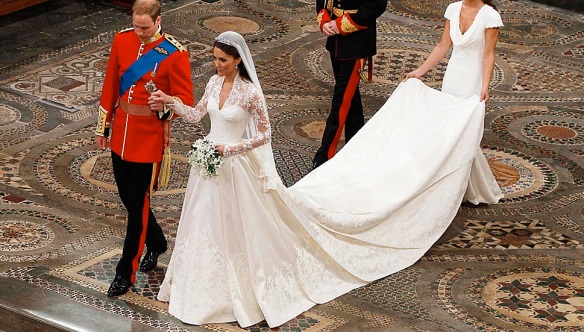
What perfume does a bride chose to wear on her special day? It’s often a difficult decision because you want something that makes you feel really special. But when a bride is going to marry the future King of England before approximately 3 billion people, it may be an even harder decision. In Kate Middleton’s case, she chose White Gardenia Petals (henceforth “WGP“) by the British boutique house, Illuminum.

Kate Middleton

Illuminum is a relatively new perfume house launched in 2011.  Its founder is Michael Boadi who also created the line’s sixteen perfumes, each of which falls into four main olfactory groups (citrus, floral, oud and musk). There are four perfumes within each of those four over-arching categories and, supposedly, none of the perfumes contains more than “eight carefully selected ingredients.” According to an interview he gave to Fragrantica, “[t]he Illuminum collection is for those days when you are in the mood for something exquisitely simple and stylish.” He answered some of Fragrantica’s questions about the scent and also explained his vision:

Creating a fragrance from merely eight ingredients was a real challenge, especially if we know that some fragrances include more than 500 ingredients. Finding the right eight ingredients that fit together perfectly, can even take a couple of years of careful planning. […]

Illuminum is the future of Fragrance due to its pared-down nature. If you are looking for minimalism at its purest, then look no further. If you want to smell ginger and pear, that is exactly what you will discover when you explore the Ginger Pear from Illuminum.

Kate Middleton’s decision to wear White Gardenia Petals on her wedding day was a huge coup for Illuminum. According to the Daily Mail, the perfume sold out within minutes of the news of her choice! To get a small idea of the scent (and the massive global obsession with the royal bride), yet another gushing Fragrantica article simpers:

White Gardenia Petals is a perfect choice that really suits the charming and feminine Kate, her beautiful wedding dress and her grace. The notes of this fragrance highlight the refined and very fresh breeze of gardenia, which is a guiding scent of the composition. Unpretentious gardenia is embellished in the heart with a fine trace of coconutylang-ylang, jasmine and lily of the valley, laid on the base of amber wood. The fragrance is available as 50 ml and 100 ml EDP.

Michael Boadi announces that White Gardenia Petals at the moment isn’t available anywhere in the world and that the waiting list for the purchase of this fragrance is three months!!!

The Illuminum website describes the perfume as follows:

White Gardenia Petals is as fragrant as a vase of white flowers, quivering in the breeze by an open window. This is a delicate and refined scent – the top note of lily evokes a summer ambiance, whilst heart notes of gardenia, ylang ylang, lily of the valley and jasmine breeze are sumptuous and feminine. Amber wood underscores this light bouquet.

Top notes: Bergamot, Cassis,

Heart: Jasmine, White Gardenia, Ylang Ylang,

Base notes: Precious Woods.

White Gardenia Petals

Fragrantica gives very different top notes — namely just coconut and nothing else — but it matters not one jot to the final impression which is: synthetic, floral, air freshener; soap; hair spray; and cheap shampoo. Given that Michael Boadi began as a hairdresser before making it big, I find it sadly coincidental that a man who left that world to create perfumes ended up making something that is a full-circle return to hair salons. And I’m far from alone in that sentiment. In fact, I’m being much kinder than some commentators. On the Fragrantica entry for White Gardenia Petals, one poster compared it to a “toilet cleaning product.”

I’m not sure I would go that far, but I found White Gardenia Petals to be utterly revolting. It’s not anywhere close to being as bad as Montale‘s Lime Aoud (honestly, I doubt anything ever will be) or the stomach-churning nausea induced by L’Artisan Parfumeur‘s Passage d’Enfer, but it was pretty godawful. As many of you know by now, the note that I abhor above all others is soapy and clean, particularly if the fragrance evokes laundry detergent or fabric softener and is expensive to boot. I simply cannot handle it. And, yet, a predominantly soapy scent may be (just barely) more tolerable than Illuminum’s WGP. (I shall have to ponder their relative ghastliness.)

The opening seconds of White Gardenia Petals on my skin was a sharp note of pure rubbing alcohol, only rendered floral. Then, there is an explosion of a thin, artificially airy — but simultaneously heady — shampoo note, with a heavy backdrop of Dove soap. The rubbing alcohol impression is tinged with a faint lemon note, making me wonder if we’re going from bathroom products to dish-washing liquid next. But no. It stays as a sharp burst of white flowers with shampoo and soap. I think Suave makes a white shampoo like this, and I know Dove’s soap is quite close for the soap notes here. The two things are separate “clean” scents in my mind, and they combine most unpleasantly with the very indolic, cheap gardenia and muguet (or lily-of-the-valley) notes. I think Bath & Body Works makes better versions of airy white florals which lack White Gardenia Petals’ strong similarity to hairspray. (It’s almost amusing to read the endless litany of “hair spray” comparisons in the comments on Lucky Scent.)

To be honest, it’s a bit hard to dissect some of the notes for the first hour because I’m overwhelmed by a screeeeeeeeeechingly loud, persistently plastic-y note that is often a dead give-away of something synthetic in a perfume. An even bigger give-away for me personally is the sensation I consistently get from very cheap additives: a feeling of tightness high up in the bridge of my nose, making me feel as though I have sinusitis, along with a faint burning sensation. I suddenly feel as though a headache is around the corner — and it’s been a while since a perfume made me feel that way.

The perfume continues its olfactory equivalent of assault and battery. I don’t smell ylang-ylang at this point, but I do get a strong impression of iris and/or violet. Perhaps my brain associates those notes with powdery fragrances, and White Gardenia Petals has got a definite powdery vibe. The powdery vibe is a bit different from the soap and shampoo/hairspray aspects. It stems more from the musk element which starts to make its presence known about 10 minutes in. It is cloying, and calls to mind Narcisco RodriguezFor Her — only on steroids and amplified by a thousand. For Her is one of the few “clean” perfumes that I would wear if I had a gun pointed to my head, but there is something distinctly unpleasant about White Gardenia Petals’ twist on musky clean. Perhaps because it is all just one cacophonous mishmash of white florals, rubbing alcohol, indoles, powder, musk, synthetics, soap, shampoo, and cotton.

Oh, did I not mention cotton? Because I also get a very strong note of fresh, clean cotton. It sharply calls to mind the Clean line of perfumes (no, I’m not joking) and of their Cotton T-Shirt fragrance in particular. (How I wish I were making all that up.) It is at this point that I write in my notes, “please God, kill me now,” and I go to find some aspirin.

I would have felt like a character in Jean-Paul Sarte’s No Exit if it were not for one thing: this discordant cocktail lessens the volume of its assault, sooner rather than later. After an hour, the sillage is very low, such that I have to sniff my arm (sometimes forcefully) to assess how the fragrance is transforming, if at all. And it does. Many of the clashing notes fade away as White Gardenia Petals turns into simple gardenia scent with a faint undertone of creamy, custard-y, banana-like ylang-ylang. Alas, the soap still remains, as do the hinting wafts of cheap hairspray.

Though its sillage may have become demure, White Gardenia Petals’ persistence is a source of deep misery. Ten hours in, I can still smell some form of cheap, floral soap on my wrist. They say perfumers love synthetic additives because they multiply the longevity of a perfume (I think it may be because of the shape of the molecules), in addition to being a cheap shortcut. It must be true since all the synthetic soapy smells last on me for an extraordinary amount of time.

White Gardenia Petals is meant to be “a vase of white flowers, quivering in the breeze by an open window,” and clearly meant to suit someone like a bride who doesn’t want to be overshadowed by her fragrance. All that is fine and dandy. If people want to wear light florals with a fresh, clean note and demure sillage, all the more power to them. But I find it rather outrageous to charge £70.00 or $125 (on Lucky Scent) for a small 1.7 oz/50 ml bottle of revoltingly synthetic notes combined with florals that Bath & Body Works, The Body Shop, and some others can do as well — if not better. And that’s totally ignoring the fact that you can smell like Dove soap for about $1.25!

As one Fragrantica commentator noted, “Illuminum feature themselves in the media as a brand of the royals, like Creed does.” I’m happy for them. But if Kate Middleton had not chosen to wear this scent on the day she turned into the Duchess of Cambridge, I highly doubt that anyone would queue to spend the kind of money that Illuminum is charging to smell like cheap hairspray. If you want something light, fresh, airy, floral and bridal, try Issey Miyake‘s L’Eau d’Issey Miyake. Try anything, but I wouldn’t recommend this.  

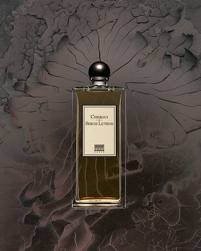
Perfume Review- Serge Lutens Chergui: The Desert Wind

africanduststorm

A fire fanned by the wind, a desert in flames.

As if bursting from the earth, Chergui, a desert wind, creates an effect that involves suction more than blowing, carrying plants, insects and twigs along in an inescapable ascent. Its full, persistent gusts crystallize shrubs, bushes and berries, which proceed to scorch, shrivel up and pay a final ransom in saps, resins and juices. Night falls on a still-smoldering memory, making way for the fragrant, ambery and candied aromas by the alchemist that is Chergui.

That is how Serge Lutens describes Chergui, a perfume for men and women created Cherguiwith Lutens’ favorite perfumer, Christopher Sheldrake. It was released in 2001 as a fragrance exclusive to Lutens’ Paris Palais Royal salon and was not available for export. In 2005, however, it was made available worldwide and became a monster hit.

In fact, in 2007, MakeupAlley apparently voted Chergui its #1 favorite perfume. It took that place above: Frederic Malle’s Musc Ravageur (#2), Hermès’ Ambre Narguilé (#3), Guerlain‘s Mitsouko (#8), Andy Tauer‘s L’Air du Desert Marocain (#10), Chanel No. 19 (#11), Chanel Bois de Iles (#12), Guerlain‘s Shalimar (#14), Chanel‘s Coco (#15), Guerlain‘s L’Heure Bleue (#19) and many other, much-loved fragrances. I don’t think I would vote Chergui my favorite scent, let alone of all time (vintage Opium will always have that spot), but I adore Chergui. It is absolutely lovely, and my favorite out of the seven Lutens perfumes that I’ve tried thus far. Until Chergui, I found myself admiring a Lutens fragrance more on an intellectual or theoretical basis, rather than an emotional one. I couldn’t find one that I would actually want to wear. Until now.

Fragrantica classifies Chergui as an “oriental spicy” and lists its notes as:

tobacco leaf, honey, iris, sandalwood, amber, musk, incense, rose and hay.

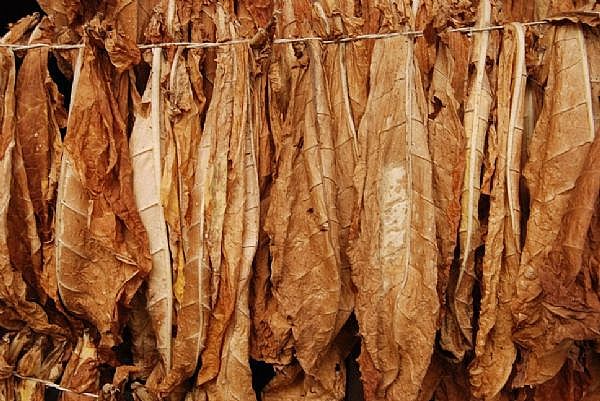
Dried tobacco leaves

Tobacco leaves drying in Virginia.

Chergui opens on me slightly differently than on others. There is an initial citric and lemon note that I haven’t read of others experiencing. The citrus accompanies a strong rose note along with smoky tobacco leaves over a leather base. The combination of notes reminds me a tiny bit of my much-loved vintage Montana by Claude Montana (now renamed Montana Parfum de Peau) as well as the opening of some chypre fragrances — so much so that, for a minute or two, I wonder if perhaps I received a different sample as part of my Lutens set. But, no, this is definitely Chergui. The tobacco leaves are unmistakable. This is not the tobacco of a cigarette or dirty ashtray, nor is it the fruity tobacco of a pipe. These leaves recall images I’ve seen of tobacco drying under the hot sun of the American South. They have a rich amberous, almost nutty element to them with smoke that goes far beyond the sort in mere incense; it verges into the more extreme, black, tarry aspects of frankincense.

Source: etshoneysupliers.

Source: etshoneysupliers.

At the same time, the opening exudes honey. It is not as strong on me, at this time, as it seems to be on others. In fact, I seem to have the reverse experience of a number of commentators who start out with honey, hay and tobacco, only to find a heart of spicy rose later on. On me, the pyramid triangle is reversed. The rose is upfront and on top, with smoke and woody notes following on its heels.

There is also a note of camphor which intertwines itself with the smoke. It’s almost a medicinal note which leads me to wonder if camphor is Christopher Sheldrake’s favorite ingredient for perfumes. The slightly chilled, cold, cool note it provides is interesting, particularly when combined with the rose notes, because it creates a strong similarity to the many rose oud fragrances currently on the market. In fact, I can definitely smell a woody, medicinal, floral oud note in Chergui, though no oud or agarwood is listed. (Then again, I continuously read that Serge Lutens doesn’t list all the ingredients in his perfumes, so who knows.) The note is subtle and not very strong, but it dances around the rose and honey opening, adding dryness and wood to the perfume’s richness.

The camphorous smoke accords strongly call to mind campfires, except you’re not in a forest as you are with oud perfumes. Here, the campfire is in a field of roses sandwiched between a Turkish tobacco bazaar and an ancient Greek Orthodox churchGreek Orthodox Censer that is billowing out incense and frankincense. Unlike so many others, I don’t get impressions of Morocco or the desert from Chergui. I definitely did from Andy Tauer’s L’Air du Desert Marocain, but not from this. On me, it was not spiced enough for Morocco. Instead, for some strange reason, I get persistent images of Istanbul. But all that is mere quibbling because, frankly, I cannot stop sniffing my arm!

As time passes in the opening hour, the leather starts to bloom, alongside subtle hints of sandalwood. This is not the cold, black leather of scents like Robert Piguet’s Bandit or Montale’s Aoud Cuir d’Arabie; nor is it the pale suede of Chanel’s Cuir de Russie or Etat Libre d’Orange’s Tom of Finland. This is warm, soft leather that is caramel, nutty and smooth. The accompanying sandalwood is faint, but never synthetic. And the whole thing is cocooned in a backdrop of rich honey. There is great sweetness, but it is never cloying or like the sugar bomb perfumes that are currently saturating the commercial market. This is not diabetes in a bottle; there are no cupcake or dessert similarities here.

Thirty minutes in, the camphorous notes have receded a little, as have the woody oud-like notes. The sandalwood increases its presence, as does the element of sweet hay from what is said to be a healthy dollop of coumarin. (See the Glossary for further details on coumarin and its notes.) To be honest, I really don’t get a hell of a lot of sweet hay at this point but, then again, my perfume triangle seems to be reversed. The strong coumarin accord comes later, about four hours into the fragrance, and its straw-like sweetness is a perfect counterbalance to the different, richer kind of sweetness coming from the honey.

The smoke, sandalwood and florals call to mind several different perfumes. Again, L’Air du Desert Marocain is not one of them. There is, however, a surprising and peculiar impression of YSL‘s Opium made light — a comparison also noted by the blog, That Smell. To some extent, that’s not surprising as Opium is the ultimate benchmark for all spicy orientals with incense and frankincense. But Chergui is much lighter and sweeter than (vintage) Opium with its powerful eugenol cloves, its opening blast of citrus and orange, and its muscular sandalwood, opoponax and balsams. I haven’t tried (yet) Tom Ford’s Tobacco Vanille which some say is similar to Chergui, but what I think it sometimes resembles is Molinard‘s Habanitaamazing Habanita, one of the original sweet tobacco and leather fragrances which dates back to 1921. Chergui lacks its very strong citric opening and its constant, very powdered vanilla character, but there are similarities especially with the rose, leather and sweet tobacco accords of the opening hours. Chergui is more honeyed tobacco leaves, while Habanita is more powdered tobacco paper, but there are similarities.

As time passes, Chergui continues to develop. At the two hour note, the tobacco has become softer, the incense milder, the sandalwood smoother and the whole thing takes on a creamy aura. I have a definite impression of creamy tea due to a milky note that is lovely and cozy. And the honey accord is getting stronger now that the powerful incense and wood accords have retreated. The leather is very faint, if it’s there at all. Interestingly, I’ve read a surprisingly large number of comments that say the leather seems stronger on men than on women, with these reports coming from women whose husbands or boyfriends also wear Chergui.

Source: Visual Photos

Source: Visual Photos

After 4.5 hours, Chergui is all honey with some soft tobacco and loads of sweet, dry coumarin. It really smells like bales of hay in a barn, only coated with honey! Those notes constitute the essence of the dry-down phase for me and they remained for several more hours to come.

In terms of sillage and longevity, Chergui became close to the skin after about four hours, but its longevity is impressive. I could smell faint, minute traces of it on my skin after 8 hours and, again, my body consumes perfume voraciously. On others, I’ve read it lasts forever and ever. Also, as a side note, I’ve read a lot of people say that this is a perfume that can actually improve in the heat and in summer, so it should not be considered solely as a winter perfume.

Chergui has many admirers, but some detractors as well. On Basenotes, it has 102 positive reviews, 13 negative ones and 28 neutrals. The 13 negative comments focus on how it is either cloyingly sweet or uninteresting. On Fragrantica, the negative reviews are greater in number with the primary complaints being: 1) it smells too powdery; 2) it’s too sweet or too “old man”-ish; and 3) it opens like “bug spray.” I don’t smell any powder in Chergui and, given how I’m not a huge fan of the note, I would mention it if I did. I can see, however, why some may get the impression of “bug spray.” I think it’s the camphorous element in the opening. According to Luca Turin, in the old days, camphor notes (like that in patchouli) were used as bug repellent. The more common criticism of Chergui — that of its sweetness — is something I don’t personally agree with given the extent of the very dry smoke, incense and coumarin, but I can see how this would be far too much for someone who isn’t into honey perfumes or who generally prefers light, floral, or less heady scents. This is definitely not the scent for them!

Among the many rave reviews for Chergui, a few stood out to me. One was the absolutely beautiful review by Victoria from Bois de Jasmin who wrote:

it is an Arabian Nights vignette in a liquid form.

The candied quality melts in the smoke whispers that fill the arrangement, like incense smoke seeping through the carved screens. The floral accord folded into the smoky layers of Chergui lightens density and sweetness, lending a voluptuous silky quality. The fine cured Virginia tobacco notes overlaid on the smoky leathery base give the composition a slightly masculine character, counterbalancing the sweet notes….

If Chergui is an oasis, it encompasses not only the romantic elements of such a vision—dark black tea served with sugar cubes on the side, narghileh smoked inside leather tents, heavy silks carried by the caravans. The camels resting in the shade are suggested by the animalic sweetness underpinning the honeyed base. Like in an intricate Persian miniature, Chergui is a tale that spills from one story into another.

It maintains the suspense despite the fact that the development of the composition from the top accord to the bottom is not particularly dramatic. Instead, the hints of what is to come—whiff of tobacco, curl of rose petal, creaminess of sandalwood—are suggested in the preceding stages, resulting in the harmony of the narrative. At the same time, the intrinsic romanticism of Chergui fits with the philosophy of Serge Lutens’s work. Like Delacroix, a French painter, was fascinated with the Moroccan scenes, Serge Lutens’s fragrances allow a glimpse into another world through the eyes of an outsider.

I think that may be one of the most beautiful reviews I’ve read for any fragrance! But an equally noteworthy one — albeit less romantic and much more amusing — came from a commentator on MakeupAlley. There, “ThreeJane” gave a wonderful, very down-to-earth review of how Chergui can make one average, harried, stressed-out woman feel:

Chergui is a WOMAN’S scent. You’d better be a mature woman…all curves, breasts, buttocks, and satiny toffee-colored skin to wear this. You can pin a man from across the room with your smoky eyes, beckon him with a narcotic-laced toss of your hair, bend his will to your whim, and break his heart with an indifferent glance. Your clothes meld to your curves, and men can’t say why you are so intoxicating… […]. Women want to be you, men want to possess you.

That’s how this scent makes me feel, anyway. Not like a harried housewife with four homechooled kids and a messy (not dirty! Just cluttered!) house that has dogs bouncing off the walls and a perennial dish or three in the sink. Some days I just drag around in yoga pants and a t-shirt (it’s really a pajama tee from Target, don’t tell) with my hair haphazardly twisted up in a bun. I’m 41, with some wrinkles and sagging skin, standard mom issue.

But when I wear Chergui, I magically transform into Catherine Zeta-Jones in “The Legend of Zorro”, Angelina Jolie in “Original Sin”. Lush, luscious, sensual, unforgettable. After you get past the first almost acrid, medicinal blast of herby incense (about 10 minutes)…almost eyewatering, really…the scent melds into a spicy, honeyed, slightly sugary amber that’s saved from cloying-ness by a fresh bite of tobacco, iris, and I guess it’s hay. There’s supposed to be rose notes in this, which unfortunately, rose never shows up on me. But it’s not needed or missed.

Hours, and I mean HOURS, later, the drydown maintains the amber and slowly includes a woody edge…I guess that’s the sandalwood. I can see the guy from “The Most Interesting Man in the World” beer commercials wearing this. But it’s not manly, oh no. If my florid, overblown prose didn’t spell it out above, it’s verrrry feminine (all dependent on chemistry…always).

[…] There aren’t a lot of things that can elevate me from my rather humdrum hausfrau existence, so when I find something that lifts me up, I’ll take it and exploit it every chance I get. Just lovely.

The two reviews could not be more different and, yet, I think they both manage to capture the gist of Chergui. Try it for yourself, and see where the red desert wind takes you….

Details:
Cost & Availability: Chergui is currently on sale as the “Deal of the Week” at Beauty Encounter where the 1.7 oz/50 ml bottle is priced at $85.65 and free shipping is available. I don’t know how long that special will last. At all other times, you can find Chergui on the Serge Lutens Chergui Bell Jarwebsite. In the famous bell-jar shape, it costs $280 for 2.5 fl oz/75 ml. However, in the smaller size and regular bottle, it costs $120 for 1.7 fl oz/50 ml. Serge Lutens is sometimes available at fine retailers like Barney’s, but I don’t see Chergui listed on a number of department store sites. Chergui is also available on Penny Lane and Lucky Scent for $140 for the 1.7 oz/50 ml bottle — which is $20 more than it costs on the Lutens website. In the UK, you can find Chergui at Harrods where it costs £69.00 for a 1.7 oz/50 ml bottle. You can also find it at Les Senteurs (or perhaps just at their Elizabeth Street shop) where that same bottle costs £79.00. The site sells samples of Chergui for £3.50. In Australia, I found it on the Grays website where the 1.7 oz/50 ml bottle retails for AUD $124.50. For other countries, you can use the Store Locator on the Lutens website. Sample vials to test it out can be bought at Surrender to Chance (but not Lucky Scent) starting at $3.99. Surrender to Chance also has a special Lutens sample pack of 3 non-export perfumes which includes Chergui (and Borneo 1834) and which starts at $11.50 for the smallest sized vials. Surrender to Chance has the best shipping rates, in my opinion: $2.95 for orders of any size within the U.S., and $5.95 for all international orders under $75 (otherwise, it’s just a tiny bit more).

Perfume Review- Serge Lutens Borneo 1834

Source: Fragrantica

Borneo 1834.
Source: Fragrantica

Serge Lutens wants to take you on journey to the heart of 19th century Borneo, an island on the equator, north of Java, and which now consists of Indonesia, Malaysia and Brunei. He wants to take you on the Dutch trading ships with their bales of raw silks and cocoa as they traversed the exotic seas on their way to the shops of Europe. And he does it via Borneo 1834, a perfume created with Lutens’ usual cohort in olfactory adventures, the famous nose Christopher Sheldrake. It was released in 2005 and, until 2010, was exclusive to Lutens’ Paris salon as part of the “non-export” line. At the moment, however, it is available worldwide via the Lutens website.

Fragrantica classifies Borneo 1834 as an “oriental woody” and lists its notes as:

patchouli, white flowers, cardamom, galbanum, french labdanum and cacao.

Bois de Jasmin, however, also adds in camphor and cannabis resin. The latter led me to some Google searches, with extremely amusing results, on what constitutes the exact smell of cannabis when in resin form. (My conclusion is that some people lead very… interesting… lives.) Borneo Traders

On his website. Lutens explains his choice of name and the theory behind the scent:

Why did I pick 1834? That was the year Parisians discovered patchouli. In those days, it came wrapped in silk.

Imagine a woman of that time wearing a patchouli fragrance: she awaits her carriage, draped in her sable stole.

Children of BorneoThe famous perfume expert and critic, Luca Turin, provides even more explanation in his book, Perfumes: The A-Z Guide. In his four-star review of the fragrance, he says:

Patchouli Leaves

Patchouli Leaves

Apparently Lutens has determined that the first olfactory point of contact between Europe and the Far East took place there and then, in the form of the patchouli leaves used to wrap bales of silk. The patchouli was intended to keep moths away from the precious fabric (insects hate camphoraceous smells), but when the silk reached Western shores, elegant ladies wanted more of the smell. In other words, patchouli’s career in perfumery is a rise from bug repellent to luxury goods, a trajectory meteorically traced in the opposite direction by many contemporary fragrances. As often happens with Lutens-Sheldrake creations, the first sniff comes as a complete shock: the overwhelming impression is one of dark brown powder. Seconds later one realizes that this nameless dust is made of two components, patchouli and chocolate, skillfully juxtaposed (how?) so that neither the earthiness of patchouli nor the familiarity of chocolate prevails. Borneo 1834 is like Angel in reverse: instead of jumping out at you, it sucks you into its shadowy space. All the materials used are firmly rooted in the “orientalist” (aka hippie) style, yet the size, grace, and complexity of the overall structure make it the direct descendant of orientals proper like Emeraude and Shalimar.  [Emphasis added for the names.]

Borneo Bell Jar

Borneo 1834 in one of Lutens’ famous bell-jar bottles.

The opening blast of Borneo 1834 on my skin is glorious. I absolutely love it. There is wonderfully resinous, boozy, sweet patchouli with bitter chocolate. The latter is more like the small, dark, cocoa nibs that you find in baking. There is a faint hint of camphor, but it’s light and plays off well with the smokiness of the patchouli and labdanum. It’s not the sort of smoke that you find in incense but, rather, a sweeter, much nuttier smoke accord. It makes me think of siam sesin, only amplified and combined with patchouli and cocoa. (You can read more about siam resin, along with labdanum, galbanum and some of the other notes in Borneo 1834 in my Glossary.) The patchouli has a great earthiness, almost like rich, black earth — moist, loamy and heavy. There is a faint hint of a musky, animalic note, too, almost like the sort of body funk that you would get from civet.

I don’t smell cardamom or the white flowers to any noteworthy extent. There is a floral note there, faintly peeking its head over the mighty patchouli, but I don’t think “white flowers” would really come to mind. If there is a floral note, I’d think of a pale rose more than white flowers, but it doesn’t really matter as the note is so faint as to be barely noticeable.

As for the notes given by Bois de Jasmin, I have never smelled a fresh, growing cannabis plant, let alone cannabis resin, so I set off to do some research. Google informs me that the former smells like slightly herbal, sweet, cut grass, while the latter can supposedly smell of anything from skunks to motor oil. I don’t smell fresh, sweet grass in Borneo 1834, and definitely nothing even remotely resembling skunks. I suppose one could say that there is a faint scent of car oil, but I think that  the tarry, black note is more typical of a dirty, black patchouli or labdanum. Overall, the scent is dry in its sweetness, not cloying or synthetically sharp.

Cocoa Nibs. Source: A Man of Chocolate.

Cocoa Nibs. Source: A Man of Chocolate.

Thirty minutes in, the dark cocoa is on equal footing with the patchouli, and the light camphor note has vanished. There are times when the final result almost smells a bit like mocha coffee. It is too rich a smell to be considered “cozy,” especially as that is a word which I associate with softer scents that wrap themselves around you like cashmere or that make you want to snuggle under a blanket. Borneo 1834 is too dark for that. It is also too dry to be an edible gourmand scent, but it has some mystery and layers, especially in its opening. I truly adore those opening notes of patchouli which make me think, “this is what patchouli should smell like more often!”

I’m much less thrilled with the middle stages and the dry-down. Two hours in, the musk and animalic notes start to become much more pronounced. It is at this stage that the sillage lessens a little, though it is still somewhat noticeable. (Three hours in, the perfume becomes close to the skin, though there is still great longevity.) The animalic notes become more and more prominent with every hour, and the final dry-down stage is almost entirely earthy, slightly intimate body funk.

It’s hard to explain the scent here. It’s not intimate like someone’s private parts, it’s also not exactly musky, and it’s most definitely not like ripe, extreme, unwashed body odor. It’s sort of a mild variation of the two, a “skank” note like that from a very warm, faintly sweaty, slightly sweet, almost musky body after a long session at the gym. Perhaps, musk and sweet “dried sweat” may encapsulate some of it, but only a portion of it. Either way, there is a linearity and earthy singularity in the middle and final stages which is fine, if you like animalic notes. I don’t. Which is why I much preferred that absolutely lovely opening with its boozy notes evocative of siam resin, its luscious patchouli and its dry cocoa.

That dark, black, and faintly bitter, cocoa accord is just one of the things that separates Borneo 1834 from Christopher Sheldrake’s other patchouli creation: Coromandel (for Chanel‘s Les Exclusif line). Created with Jacques Polge, both perfumes share chocolate and patchouli notes, which is probably why they are so frequently discussed in the same breath. To me, however, Coromandel is an extremely different scent. In fact, I’d consider them to be like night and day. I found Coromandel to be all burning smoke, white cocoa and powdery vanilla, resembling a chai latte at times. The strong incense and frankincense notes dominated the sweet patchouli; it was a frankincense and incense perfume first and foremost. At its heart though, Coromandel is a cozy scent with powdered vanilla and tonka; it is light and somewhat multi-faceted. Borneo 1834, in contrast, is a dark powerhouse of patchouli, bitter cocoa dust and earthiness, and it’s not extremely complex. In fact, I’d say that it only has two stages, each of which is quite direct: patchouli chocolate with some camphor, resin and smoke; and earthy, animalic notes.

Freddie from Smelly Thoughts, a great perfume blog, loved the perfume throughout all its stages and didn’t seem to note any animalic body funk. His review is useful, especially as it compares Borneo 1834 to Thierry Mugler‘s infamous Angel:

So patchouli + chocolate = Angel? Not quite. The patchouli here is lavishly sleek, whilst being familiar in its dank, deep scent – it remains tame and completely in control. The sweetness in Borneo, unlike the Mugler, is also in complete control, richer – more exotic, with a delicate camphor laying over the top – adding an almost medicinal astringency to the patchouli and cocoa. The camphor is far from the intensity of Tuberuese Criminelle (for example), and instead has the sheer, sharp aspect that some great ouds have. It adds an age and a chilling subtlety to the foggy atmosphere.

I get a very subtle tobacco, as well as a liquorice note – in the same, but more toned down, style of Parfumerie Generale’s Aomassai. All intermingled with the cocoa and bitter patchouli, Borneo 1834 is dark and perplexing whilst being light and delicate on the skin.
The fragrance remains relatively linear, with a wonderful resinous base acting like a dark, sticky veil. The resins give off that breathy/slightly sweaty feel that they sometimes do (I normally get this with myrrh), I’d almost have thought there was the tiniest bit of cumin in here, but the fragrance isn’t spicy at all.

I think Freddie’s reference to cumin indicates that he may have smelled some animalic funk too, but obviously, it was in no way as extreme on him as it was on me during those final hours. All in all, Borneo 1834 lasted about 9 hours on me, with the animalic funk being a large part of the last (low sillage) 6.5 hours (and all of the final 3 hours). It is the main reason why I didn’t love the fragrance, though it’s an absolutely gorgeous scent in its opening notes.

Borneo 1934 is a scent that is definitely well-suited to winter and, if you love patchouli, well worth a sample sniff. If you try it, let me know what you think. I’m particularly curious to know if you have a similar experience as I did during the final hours.

Details:
Cost & Availability: You can find Borneo 1834 on the Serge Lutens website. In the famous bell-jar shape, it costs $290 for 2.5 fl oz/75 ml. However, in the smaller size and Borneo regular bottleregular bottle, it costs $140 for 1.7 fl oz/50 ml. In general, Serge Lutens is usually available at fine retailers like Barney’s, Lucky Scent and a few other online sites. Lucky Scent carries the 1.7 oz/50 ml bottle for $140 but, oddly enough, I’ve seen it sold on Amazon for $125 via Beauty Encounter. You can only do a search online to see if it is available at a discount from discount perfume retailers. Sample vials to test it out can be bought at Surrender to Chance (but not Lucky Scent) starting at $3.99. Surrender to Chance also has a special Lutens sample pack of 3 non-export perfumes which includes Borneo 1834 and which starts at $11.50 for the smallest sized vials.