Arabian Oud Kalemat: Rivers of Gold & Affordable Luxury

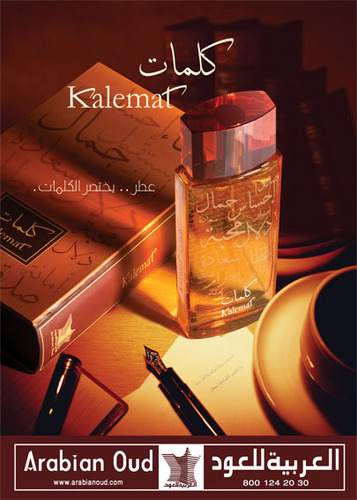
You have to buy this! I don’t usually start my reviews with that blunt, bottom line, but stylistic rules be damned. Kalemat from the company Arabian Oud is a gorgeous amber in a rich, heady, potent, incredibly long-lasting brew that is both affordable and utterly addictive. From its start as a molten river of caramelized amber creme brulée, Kalemat turns into a heady cloud that encompasses every nuance and range on the amber spectrum: a floral amber, a slightly fruity one, a woody one, a herbal one, a musky one, a sweetly honeyed one, and a lightly pipe tobacco and oud one. It’s beautiful, I bought it for myself, and the mere scent of it on my skin led a family member to purchase a bottle moments later! There are a few practical draw-backs to the Arabian Oud system, and you basically have to order blindly, but we’ll get to those issues at the very end of this review. The thing you need to know is that Kalemat is absolutely gorgeous, and if you love opulent amber Orientals, you really should consider it.

Source: rockgem-at-deviantart http://stock7000.deviantart.com/art/Stock-Texture-Molten-Lava-165584521

Source: rockgem-at-deviantart http://stock7000.deviantart.com/art/Stock-Texture-Molten-Lava-165584521

Having started with the end of the story first, let’s go back to the beginning. Kalemat (sometimes written as Kalamet and a few other linguistic variations) is an eau de parfum from the Saudi perfume house of Arabian Oud. I’d heard a lot about the fragrance from such perfume sites as Basenotes where it is a small cult favorite, so I couldn’t resist popping into Arabian Oud‘s Paris Champs-Elysées store upon my recent trip. I’ll talk more about that store and their bewildering array of options at the end, but all you need to know now is that Kalemat was actually the third or fourth on my list of favorites. I think that tells you something about the other three, as well as the quality of this perfume house as a whole.

One downside to the brand is that it is an organisational nightmare in terms of all practical considerations as an uninformed shopper or curious, prospective perfumista. There really is no other way to put it but the phrase “hot mess” — and even that doesn’t give you the full picture. Take the issue of perfume notes, for example. It’s not exactly easy to find out what is in each of the perfumes, as the accounts vary depending on site and source. In fact, the main Arabian Oud site has no description for Kalemat at all. Luckily, I stumbled upon the UK version thanks to the company’s (totally unused) Twitter account. It’s slightly easier to navigate and substantially more informative.
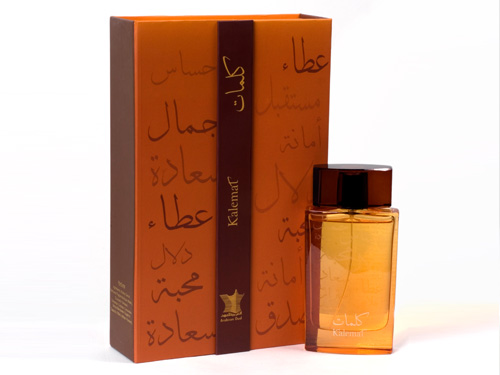
Kalemat with its box that opens like a book.

Kalemat with its box that opens like a book.

According to the London Arabian Oud website, the notes in Kalemat include:

Bilberry, anise, rosemary, Kashmir wood, musk, sweet amber, honey leaves.

Fragrantica gives a slightly different list:

Top notes are blueberry and anise; middle notes are rosemary, cashmere wood and floral notes; base notes are musk, amber and honey.

Kalemat opens on my skin with an enormous burst of richness and opulence. Two small squirts from my sample vial led to a heady, billowing cloud of amber infused with a fruity berry note. I’m not generally one for fruity fragrances — and Kalemat isn’t one at its core — but the berry element works wonderfully. If I didn’t know it was “blueberry” or “bilberry” (whatever that is), I would never have guessed it. To me, it smells more like a tangy, tart, juicy touch of black currant, mixed with a hint of blackberry. It’s never cloying or syrupy, though it initially feels as dense as the rest of the perfume.

Source: fr.123rf.com

Source: fr.123rf.com

Kalemat’s opening symphony is deepened almost instantly by a touch of honey and musk, resulting in an aroma of a creme caramel whose top has been lightly singed with a cooking torch to create a delicate shell of darkened, caramelized sugar. There is a touch of some fresh, aromatic green herbs, but it’s just a light touch that is soon overtaken by a rich Ta’if-like, ruby rose. Ta’if roses are a type of Damask rose but with 30 petals, and, according to Fragrantica, have an aroma that is significantly richer and deeper than most Damascena varieties. It is very common to Arab perfumery, and to attars in specific. Within a few minutes, the rose note has turned Kalemat into the loveliest, attar-like, opaque, boozy, floral amber with just the lightest hint of honey. Its richness feels like a running river of molten lava and gold. In fact, my skin actually has a light gleam and sheen from the concentrated oils that make up the fragrance. This is serious stuff.

Ta'if rose: perfumemaster.org

Ta’if rose: perfumemaster.org

Yet, for all of Kalemat’s richness, I really don’t think it’s ultimately a heavy perfume in terms of its weight. The potent, heady, concentrated, and very narcotic cloud that billows out around one is not unctuous, gooey, or dense in mass. As an analogy, I would say that Kalemat feels less chewy or opaque than some Profumum Roma fragrances, but significantly more powerful in sillage, especially in the first two hours. At the same time, Kalemat is substantially heavier in weight to the LM Parfums line and, once again, stronger in initial projection. In short, it is very typical and representative of traditional Middle Eastern perfumes, and yet airier in feel than something like Amouage‘s concentrated attars.

Dried tobacco leaves. Source: colourbox.com

Dried tobacco leaves. Source: colourbox.com

There is a subtle undertone to Kalemat that repeatedly reminds me of Serge Lutens‘ much adored, cult favorite, Chergui, only concentrated by a thousand. Something in Kalemat feels very much like sweet pipe tobacco, even if it’s just a subtle vein running below the perfume’s surface. Tobacco is not listed in Kalemat’s notes, but the reference to “honey leaves” (honey has leaves?) makes me wonder. Chergui’s aroma is, in part, of sweetened tobacco leaves set out to dry in the sun. Perhaps that is what Arabian oud means by its term? All I know for certain is that I was walking around Paris one evening, wafting Kalemat, and repeatedly wondering why the fragrance felt so familiar when I suddenly realised: concentrated Chergui! There is much more to Kalemat — and I was reminded of many other fragrances as well, as you will soon see — but I wouldn’t be shocked if there was a bit of some tobacco in Kalemat as well.

Kalemat isn’t a twisting, morphing creature with many stages, but it’s not completely linear either. The fragrance does subtly change, but over time and without fanfare. It is such a superbly blended fragrance that it slides almost seamlessly from one stage to another, rippling as smooth as water. In its very first opening hour, Kalemat is an opulently rich, custardy smooth, silky amber that is perfectly blended with fluid swirls of ruby Tai’if rose, dry woodiness, musk, honey, and hints of tobacco, herbs, and berries. There is almost a gourmand feel to the richness of the sweet brew, but it is not an actual gourmand fragrance as a whole. Perhaps a more helpful description would be to say that Kalemat’s opening phase comes close to straddling the Oriental and Gourmand genres, but never fully tips over into the latter.

The sweet, opulently over-the-top richness of Kalemat’s first stage explains why some people think the fragrance bears a resemblance to Tom Ford‘s Tobacco Vanille. Judging by what appeared on my skin, I think the two fragrances are different. On me, Tobacco Vanille has a plum pudding feel that is heavily accented with tobacco, and an almost potpourri-like blend of spices. Kalemat lacks those elements, along with the vanilla heart underlying the Tom Ford fragrance. To me, Kalemat seems much closer to Serge Lutens’ Chergui, only without the latter’s touch of powder and, as stated, a substantially more concentrated feel. It’s also much sweeter, deeper, and creamier than the Lutens.

To me, in the opening stage, Kalemat bears a closer resemblance to another famous amber fragrance — HermèsAmbre Narguilé — than to the more heavily spiced Tobacco Vanille. If you took certain aspects of Ambre Narguilé, changed the type of fruit to a blueberry, combined it with Chergui, and reduced the overall mix down to a thicker, more dense, almost vicous-like attar, then you’d have Kalemat. I think fans of Guerlain‘s much loved Spiritueuse Double Vanille would adore Kalemat, as it shares some similarities in terms of richness, but with honeyed amber and woodiness as the focus instead of ambered vanilla.

Source: fr.123rf.com

Source: fr.123rf.com

Slowly, slowly, almost before you realise it, Kalemat turns softer, woodier and bit darker in visual hue. At the start of the third hour, the fragrance is gentler, more rounded, and a bit blurry around the edges. There is something like the most restrained touch of oud flickering just below the surface, along with a gentle, slightly fresh, green herbaceousness. Kalemat has lost more than half of its rose floral undertone, and is less sweet, less honeyed. Now, it slowly begins its second phase where it is primarily a woody amber infused with a whiff of oud, tobacco, musk, and herbs. Only the lightest fruity and floral elements remain, but they’re minor, light, and blended seamlessly into the larger whole.

Near the end of the third hour, Kalemat also feels softer in weight and projection, though that is only relative to the powerhouse opening of the first hour. Now, it hovers 2-3 inches above the skin, and is noticeable when you bring your arm near to your nose. It doesn’t announce its presence with quite as much fanfare in the space around you. Honestly, I find Kalemat to be so addictive that this lowered sillage phase always leaves me wanting to spray on more. More, more, more, until I have surrounded myself with a nuclear mushroom cloud. Luckily for me, Kalemat comes in a 100 ml/3.4 oz bottle because I have plans to lock myself in my house on the night that it arrives, insulate all windows and doors, and apply at least 10 sprays. The Mars Rover may be able to smell me in outer space, but I don’t care.

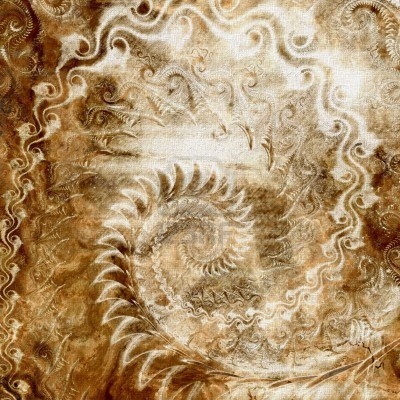
"Abstract streams of gold." Photo: Jason Tockey. Site: jstimages.wordpress.com

“Abstract streams of gold.” Photo: Jason Tockey. Site: jstimages.wordpress.com

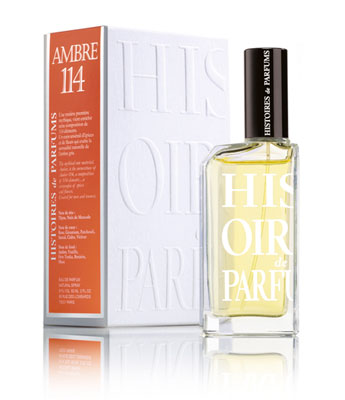
Kalemat’s sillage continues to drop, though the perfume gives absolutely no signs of dying anytime soon. Around the 4.5 hour mark, Kalemat hovers just an inch above the skin as a woody, sweet amber. It’s as golden as a cloud, but still much richer than that comparison would imply. Oddly, I’m somewhat reminded of a honeyed, unpowdered, more opulent version of Ambre 114 from Histoires de Parfums. Kalemat has the same sort of golden aura that made Ambre 114 conjure up James Bond’s Goldfinger for me.

Yet, for all that visual similarity, Kalemat is now primarily a woody sort of amber. The oud element waxes and wanes in how noticeable it is at the very top layer of the fragrance, but it is always there. Around the 5.5 hour mark, Kalemat is an amber with slightly musky oud, vaguely herbal dryness, an occasional flicker of rose, and a lingering whisper of tobacco. At the 7.5 hour point, Kalemat turns into a complete skin scent. The notes are almost wholly abstract: amber, a blur of sweetened wood that is barely decipherable as something oud-y, and other indistinct, dry elements. In its very final moments, Kalemat is nothing more than lightly sweetened dryness.

Kalemat’s longevity is fantastic. With two tiny squirts from the atomizer, Kalemat lasted just a fraction over 12 hours on my perfume-consuming skin, though the sillage was moderate to low for about 7.5 of them. In the past, when I’ve worn Kalemat, I’ve applied a far greater amount, and both the longevity and projection were even higher. On one occasion, I applied 5 sprays (from an atomizer that yields much less than a normal bottle would, due to a small hole), and Kalemat lasted over 16 hours on me. As regular readers to the blog know, my skin is absolutely voracious when it comes to perfume and I struggle constantly to find things that will last. If Kalemat gives me these sorts of hours, I think normal people would get astounding results.

Source: wallsave.com

Source: wallsave.com

I think Kalemat is something that people should try for a number of reasons. First, it is a completely versatile, extremely easy to wear, very cozy, comforting fragrance. It is far too powerful to wear to a really conservative, perfume-phobic office environment, but it works almost everywhere else. Second, I think Kalemat would work wonderfully on both a man and a woman. While men seem to be the ones who talk about it the most on sites like Basenotes, it was a female family member who took one whiff of Kalemat on me, and purchased it ten minutes later. If you’re a woman who likes Tobacco Vanille, Chergui, or Guerlain’s Spiritueuse Double Vanille (and there are vast numbers of you who do), then you can absolutely wear Kalemat.  

Third, Kalemat has the quality and richness of some incredibly expensive, very high-end perfumes. Kalemat is not comparable just to the prestige lines of such brands as Hermès, Guerlain, or Tom Ford, but also to such luxury perfume houses as AmouageIn fact, I’ve heard that some people think that Kalemat is very similar to Amouage’s Interlude Man, due to I think its second stage as a woody, slightly oud-y fragrance. I’m not sure I’m really qualified to speak to that, because, on my skin, Interlude Man was such a shape-shifter that it manifested itself differently on each of the 3 occasions that I tested it. It is such a complex chameleon that I could probably wear it 10 times, and experience 10 different versions.

However, judging by the three types I encountered, I think Amouage’s Interlude is different. Its herbal start can be enormously dominant, and sometimes aggressively pungent. Kalemat is hardly a herbal fragrance during any of its stages, and has only a little green touch in the background. With Interlude, its sharp greenness is then followed by a significant incense, smoky period, before ending in a stunning sandalwood drydown. Kalemat is substantially less complex. In addition, whatever smokiness it has is extremely subtle and seems merely to be the effect of other notes, instead of actual frankincense, let alone a lot of it!
Source: paradiseperfumesandgems.co.uk

Source: paradiseperfumesandgems.co.uk

There are other differences, too. Kalemat is more floral and fruited at the start; the oud is extremely mild; it has no sandalwood; but it does include some honey. I would say that all the individual elements are toned down more, and that the overall effect is substantially smoother. The elements also blend into each other more seamlessly. Yet, it does share the luxurious feel and richness of an Amouage fragrance. When you consider that you can buy 100 ml of Kalemat on Amazon at a discounted price of $59.99 (without shipping), versus the $290 retail price of Interlude Man, I honestly don’t know how you can beat this amount of richness, depth, body, and addictive opulence for the price.

The only drawback I can see to Kalemat is that the company simply does not make it easy for consumers new to the brand. I’m going to spend a bit of time on this issue because I think it’s important to understand what your retail options are, some of the practical difficulties in learning more about the line, and the reason why Arabian Oud may be a brand you’ve rarely heard discussed. I truly think that Western perfumistas are missing out in not trying some of the company’s amazing fragrances, and that easier, more straightforward access would make them a name on everyone’s lips. As it is, however, it’s an extremely frustrating situation.

In addition to Arabian Oud’s aforementioned disorganisational chaos on its website, there is no place where you can test it or sniff the perfumes outside of London, Paris, or Arabian Oud’s several hundred stores in the Middle East. The decant/sample site, Surrender to Chance, does not carry Arabian Oud. The Perfume Court offers a few of its fragrances, but not Kalemat. And Arabian Oud does not sell samples on its website.

In fact, trying to navigate Arabian Oud’s websites consistently makes me want to throw something at the monitor. The main Saudi version is in English, but it’s a hodge-podge of categories, it doesn’t list perfume notes in a particular perfume entry, and the similarity between some perfume names is confusing. The fact that “Mukallet” seems to be the term for an attar or perfume oil that is stuck on half the perfumes doesn’t help.

The real problem, however, is sheer, overwhelming quantity of selection. According to Fragrantica’s page for Arabian Oud, Kalemat is one of 160 fragrances (!!!!!) offered by the house. The fact that that long Fragrantica listing does not include three of my favorite Arabian Oud fragrances should tell you just how many fragrances we’re talking about. Fragrantica also says that the 160 perfumes were “all launched in 2012” — something which is not only highly unlikely, but also inaccurate. The 2012 mistake (along with Fragrantica’s description of the company as a “new” one) is undoubtedly yet another victim of Arabian Oud’s utterly disorganized state of affairs. While the Saudi site provides no details, the London version says the company’s history actually goes back to 1982 when it was founded by Sheikh Abdul-Aziz Al Jasser who opened his first store in the old Alzal souk of Riyadh, Saudi Arabia.

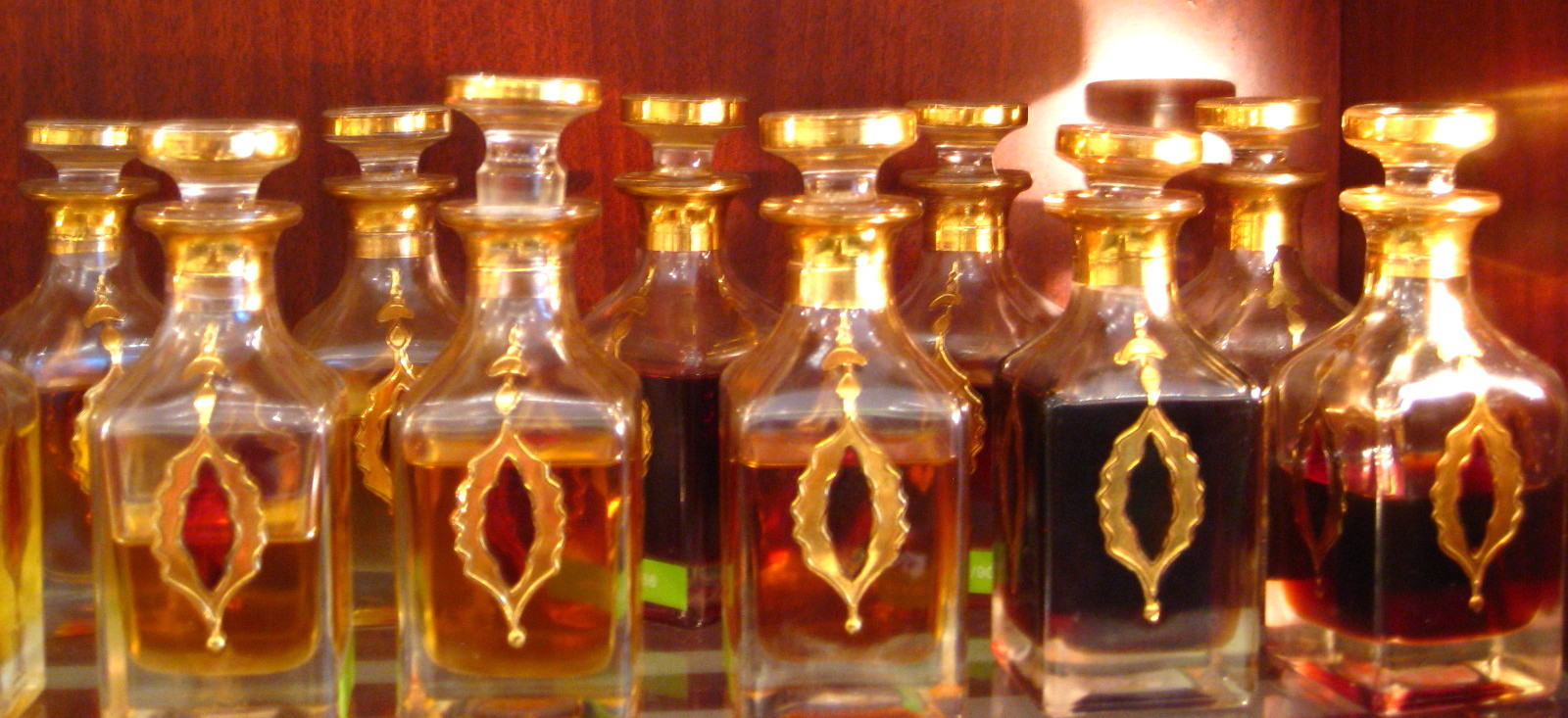
If you’re lucky enough to be in London or Paris, with easy access to one of the Arabian Oud stores, and want to just pop in for a sniff, you’re likely to be overwhelmed just as much as if you merely checked out the company’s website. When you go in, you’re confronted by shelves of elaborately ornate, fancy, decorated, Middle Eastern bottles which rarely seem to have an actual name on them. To give you an idea, I’ll share with you some photos I took in the store, though I need to repeat my frequent caveat that they won’t be great. As I’ve said elsewhere, my camera seems to have chosen this holiday to decide that it absolutely hates perfumery, so 6 out of every 10 perfume shots were wholly unusable. In the case of Arabian Oud, only two are decent (and a third is blurry), but a least it will give you an idea of things. Photos of just one small portion of the Paris store:
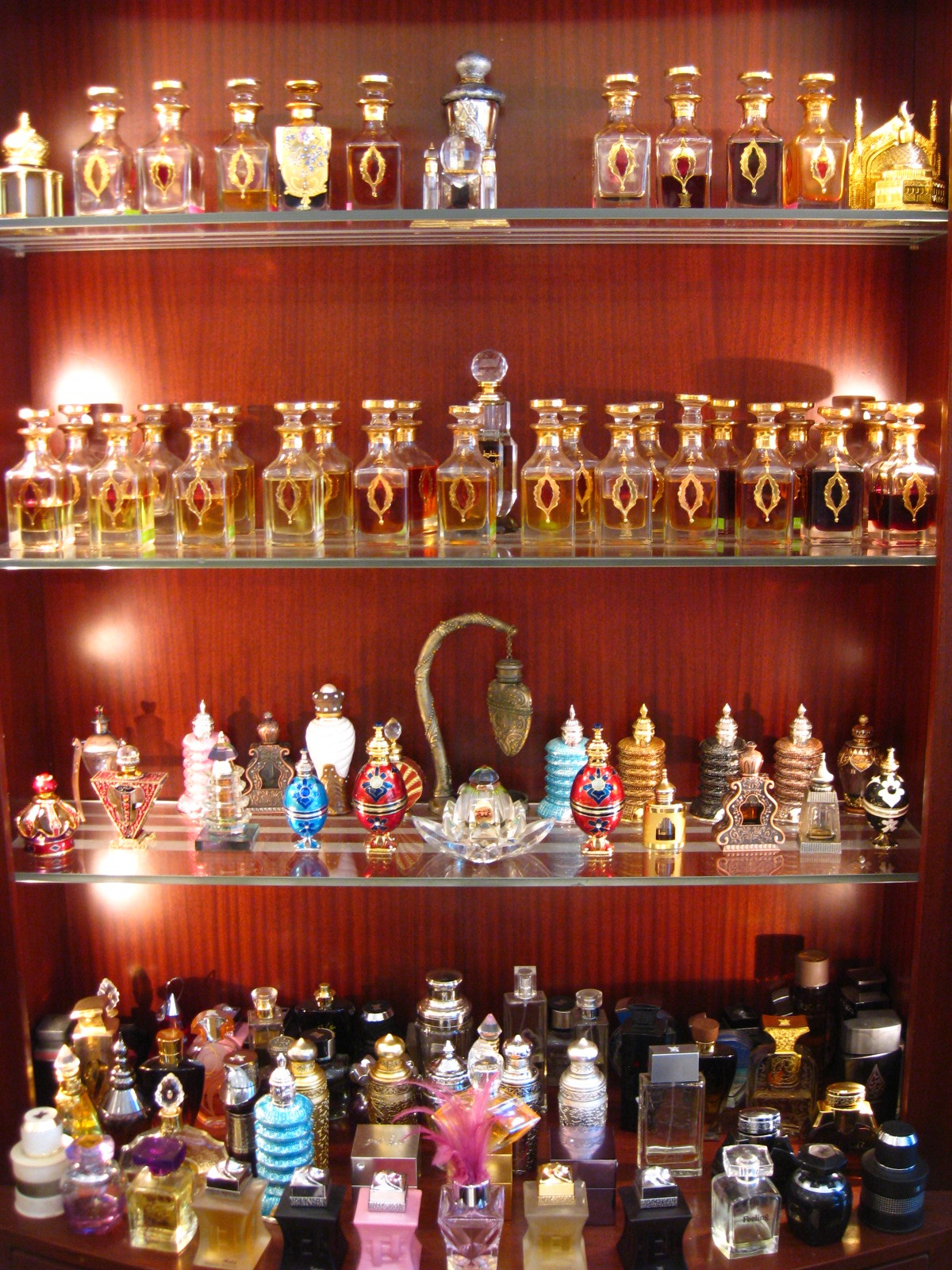

Arabian Oud2 Arabian Oud

So sorry it's blurry!

So sorry it’s blurry!

It is a testament to the quality of Arabian Oud’s products that Kalemat was actually not my favorite of the things that I tried. One of them, a perfume attar called Taj Mahal blew me out of the water. It is one of the most spectacular florientals I’ve tried in years, surpassing any and all Amouages (including Fate Woman) in its lush, deep, opulent beauty. Based on my memory of it, it was an orange blossom, jasmine, rose, sandalwood oriental oil that almost glowed in its rich sheen on my skin, and which cost (at its lowest, most affordable price) about €60 or $80 for a few drops. (Something like 4 ml. Its price on Zahras, the American-based website for Middle Eastern perfumes, is inflated to a ridiculous $371 for a tiny 6 ml bottle!) If I’d encountered Taj Mahal at the start of my trip, and had time to test it out properly on my skin, I would have bought that small vial without a qualm. As it was, I went to Arabian Oud on the last day of my holiday, after having purchased many other fragrances, and while wearing too many scents for a proper test, so the situation didn’t quite work out. The high price also made a mere sample impossible to obtain. 

It is a true sign of Arabian Oud’s disorganized chaos that Taj Mahal is not even listed on the company’s own websites. (Neither is another one of my other favorites, Dinon or Dinan, whose name the salesman wrote down for me in a scrawl to ensure that I had the correct spelling!) Happily, interested parties can always call the Paris store directly to order it, and one day, I shall have my Taj Mahal. The third one on my list of favorites was Ghroob, a concentrated perfume attar which is listed on the original Arabian Oud site without any notes, but which isn’t listed on the London version no matter what sort of spelling variation I tried. (Are you getting an idea yet of just how complicated it is to try to order a perfume from these people without pre-existing, advance knowledge?!) [UPDATE: In the comments below, you can read more about Ghroob, its floral-oriental-sandalwood notes, and its supposed resemblance to Amouage‘s $350 Homage attar. I have reviewed Ghroob here, and don’t see an similarity to Homage. Arabian Oud has discounted it on Amazon at around $44, and offers a lower price of shipping if you purchase more than one item. Also, as a side note, if you are relying on the Zahras site that I linked up above for information, please be careful. The notes that they list are not always accurate or the same as what Arabian Oud lists for their fragrances.]

Thankfully for my fourth favorite, and the subject of this review, Kalamet is easily available not only on all the Arabian Oud company websites, but also on Amazon (U.S.). Arabian Oud is the actual vendor and seems to have discounted the listed retail price of $99.99 by 40%, selling the 100 ml bottle of eau de parfum (really more like pure parfum extrait, if you ask me!) for an incredibly low price of $59.99. There is a shipping cost of $16.48 for a total of $76.47, but I paid no tax, and the final price is still substantially lower per ml for any analogous pure parfum extrait of that quality. You’re essentially paying about .76 cents per ml, when Amouage’s stunning Tribute attar is available from decanting sites for $14.99 for a 1/4 ml! Granted, the two fragrances have substantial differences in notes, smell, ingredients and concentration, but still!

Helping matters further, Arabian Oud’s Amazon shipping (from Saudi Arabia?) seems to be both fast and extremely professional. The company’s Amazon rating is 4.8 stars out of 5 with 48 votes, and consistently positive praise from buyers. A friend of mine purchased Kalemat blindly on the basis of my passing raves about it, and he was extremely pleased with the speed of the delivery, the packaging of his bottle, and Arabian Oud’s polite service. Another reader of this blog, “Laird Angus,” bought Kalemat blindly and his gushing review on Amazon talks about both the perfume’s original packaging, and the beauty of its smell. It’s an extremely accurate assessment and the best one I’ve seen on the scent, so I’d like to quote a large part of it.

Calling Kalemat a “reference amber,” he writes:

In ancient times, books were rare and precious objects. The learned elite treasured them. Scholars and holy men spent countless hours transcribing and illustrating them. Calligraphy held a place at the high table of the arts.

Kalemat, which means “words” in Arabic, pays tribute to this lost era in its exquisite packaging. It arrives in a beautiful oversized box designed to look like an antique arabic book. When opened, the box reveals a smaller, ribbon-bound tome which contains the bottle of perfume itself. And so even before the first spray, you know that this an oriental perfume in its full glory–dramatic, confident, mysterious, exotic, precious beyond compare.

Inside Kalemat's "book." Photo via eBay.

Inside Kalemat’s “book.” Photo via eBay.

The juice itself does not disappoint. Kalemat opens with a lush jammy berry accord, balanced perfectly by incense and a hint of dry woods. The berry note is apparently bilberry, which was new to me. It is sweet and perhaps slightly tart. Wonderful. Novel. 

After 20 minutes or so, the berry notes recede, leaving behind a sumptuous base of incense, woods, and lightly jammy rose. This is the heart of Kalemat, and it is apparently inspired by the Middle Eastern hospitality traditions around bakhoor, a household incense of dried wood and rose. It reminded me somewhat of Jubilation XXV by Amouage, but Kalemat is somehow deeper and rounder. There are no jagged edges here. Although it is not listed in the ingredients or the notes, I am convinced that there is a trace of high quality synthetic oud in this as well. It is used here not as an individual note, but as a fixative and an amplifier of the other notes. Perfect!

Over the next 8-10 hours, the rose fades out, then the incense, leaving only the driest cedar-like scent, like the inside of an ancient chest found in an old Cairo apartment.

Kalemat is everything I had hoped it would be. I’ve been searching for an authentic and wearable Arabian scent. It is no easy thing! I’ve sampled virtually every offering from Amouage, a number of rare attars, low cost oils from al Rehab, and various western “interpretations” of middle eastern fragrances. None has come close to Kalemat. It is a deeply relaxing scent, perfect for stressful days at the office. It speaks something of eternal truths, of timeless values, of the cycle of life-death-rebirth that renders all of our transient worldly concerns puny by comparison.  [Emphasis to the names added by me.]

I would hardly go so far as to say Kalemat speaks to eternal truths, but, yes, it is an absolutely gorgeous amber that is opulent, heady, full-bodied, and deeply comforting. That is why I will go to so far as to say that you should definitely consider a blind buy of Kalemat if (but only if) you’re a huge fan of any of the perfumes that I’ve mentioned in this review. If you love wispy, gauzy, sheer, light, fresh, clean scents, Kalemat is not for you. This is a fragrance for a die-hard lover of amber, oriental or oriental-gourmand fragrances, and I don’t think you will be disappointed.

You should consider a blind buy even more if some of those other fragrances I’ve mentioned have been out of your reach due to their high cost. I can’t recall if I have ever recommended that people buy a perfume blindly and untested, but Kalemat’s price is low enough that I’m breaking my usual rule. If you absolutely hate it or if your skin chemistry inexplicably makes things go wonky, I don’t think you’d have much difficulty in selling your bottle on eBay, where Kalemat is usually listed for almost double the Amazon price and rarely offered by US sellers.

If you’re located outside of the United States, I don’t know if you can purchase Kalemat at the discounted Amazon price and have Arabian Oud simply ship it to you elsewhere. I couldn’t find Kalemat on the Canadian, German or Brazilian Amazon sites, so I suspect that price is limited to U.S. buyers. Even without Amazon, though, it’s still not hugely expensive to buy Kalemat as it retails for $99, and you have several other vendor options. You can find the fragrance on the Arabian Oud site for 300 SAR which seems to come to a little over €58 at the current currency conversion rates, and I believe they ship internationally. On the UK Arabian Oud site, the perfume is offered for £52, discounted from £87. The site’s flash options don’t seem to let me use a direct, saved link to Kalemat’s specific page, but you can find it easily with a word search. (You may want to immediately mute the volume on the site as it plays annoyingly repetitive music incredibly loudly.)

For all other countries, you may can use the Universal Perfumes retailer in Kuwait that I introduced to you months ago, and which is very reliable. It sells Kalemat for $99, with a flat-rate, international shipping price of $6.99 for the first item. I’ve heard it takes about two weeks for its packages to come from Kuwait to the States, so I assume it will be around the same for other destinations. Lastly, you can always try eBay which has a number of British and Middle Eastern sellers who offer the fragrance.

At the end of the day, Kalemat is not a revolutionary, complicated, complex scent, but it is such an utterly addictive, luxurious, rich, comforting, soothing one, that I find it utterly irresistible. If you hear a bellow of joy on or around November 8th, you will know that my perfume package has arrived, that irrational amounts of spraying will follow, and that a golden mushroom cloud of amber will explode shortly thereafter from this part of the Western hemisphere. I cannot wait.

[UPDATE 3/23/2015 — I’ve just reviewed Kalemat Amber concentrated oil, and it’s even better. Simply outstanding! Kalemat Floral is equally lovely. There are also Wood, Musk, and Oud versions of Kalemat. Right now, Arabian Oud London is willing to help readers of the blog to buy the Kalemat oils (in any version) and to ship them world-wide. The details of the special deal are in my review for Kalemat Amber. The company no longer sells on Amazon, but some third-party vendors do have Kalemat eau de parfum. However, the oils are not available there from anyone. Kalemat Wood or Kalemat Musk are sometimes sold on eBay. However, the best of the lot from the ones I’ve tried are Kalemat Amber and Kalemat Floral.]
Puredistance Black: Shades of Purple & Pink

The night is dark, and full of terrors.”

Source: Puredistance.

Source: Puredistance.

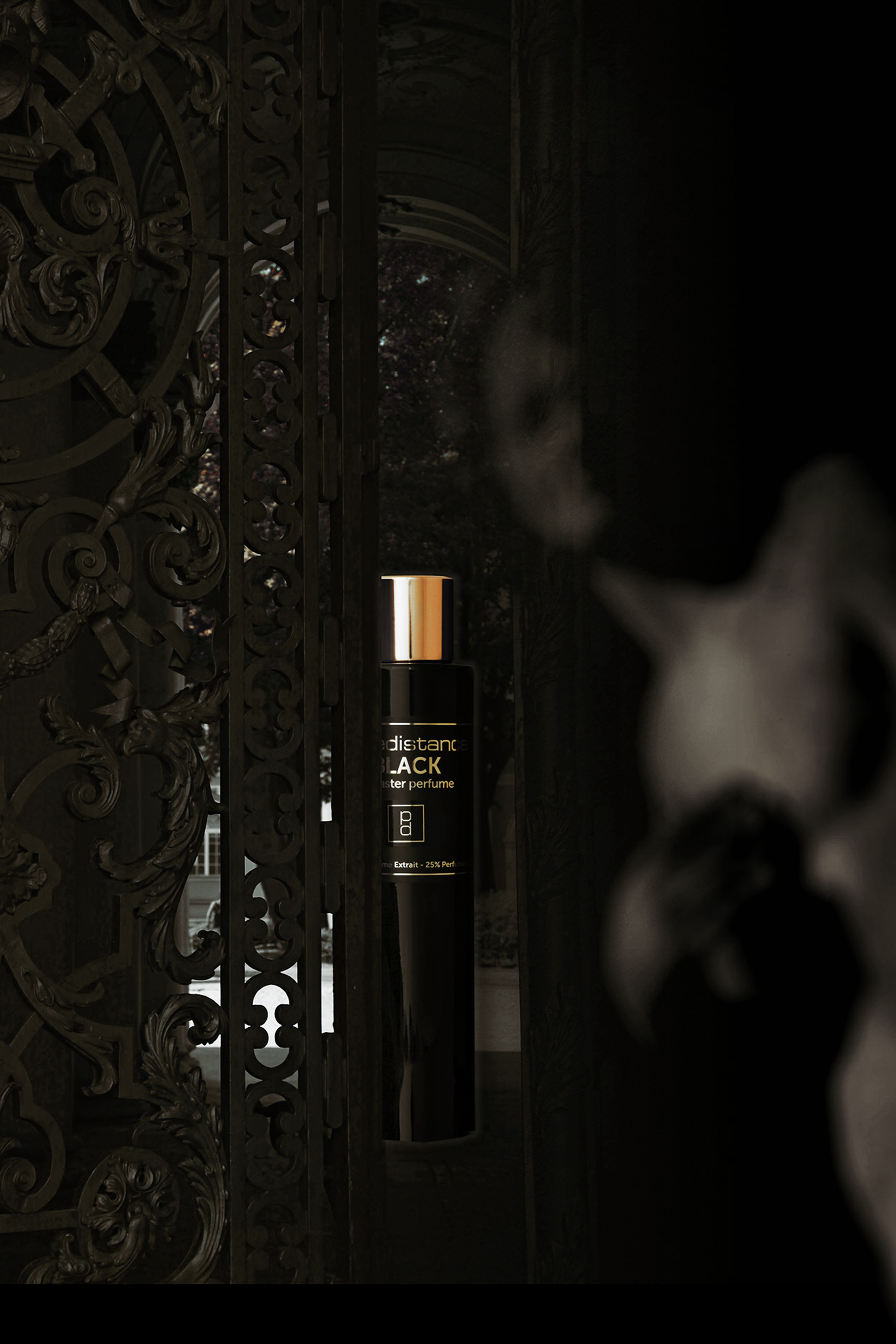
That is one my favorite quotes from the television series, Game of Thrones, and I often come up with fun variations for different occasions. It’s a line which sticks in my head, so I wasn’t surprised when it popped back up just before I began testing Black, the new, about-to-be-released fragrance from one of my favorite perfume houses, Puredistance. The luxury brand talks about how the scent was inspired by “the concept of black,” and about how it is a “mysterious fragrance that stays in the shadow, giving away – only every now and then – part of its nature.”

Upon reading that part of the press release, and seeing the image sent by the company, all I could think of was, “the night is dark (black), and full of luxury.” Well, not quite. As it turns out, Black is indeed an extremely luxurious fragrance that smells very expensive, but I found it to be as purple and pink as humanly possible. At one point, it evoked fluffy pink clouds, and I almost expected a chubby cherub to be sitting on one and offering me turkish delight. For me, “Black” is the absolute furthest thing from its name, and is not my personal cup of tea. It’s not a bad fragrance by any means — in fact, it’s well done and clearly emanates luxury — but we all have subjective tastes or things that we struggle with, and I struggled quite a bit with Black.  

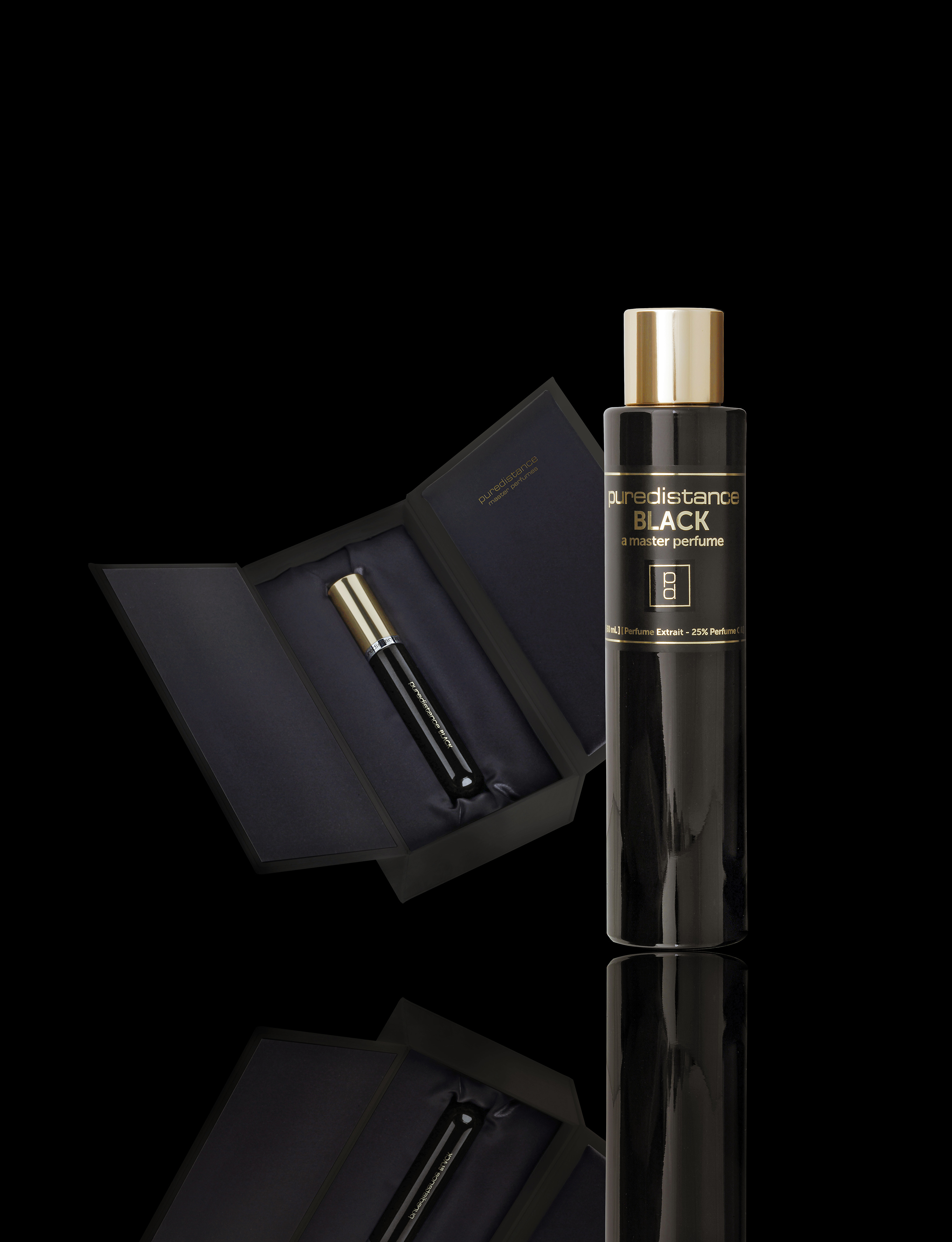
Black in the 17.5 travel flacon. Source: Puredistance.

Black in the 17.5 travel flacon. Source: Puredistance.

Like all of Puredistance’s fragrances, Black was created by a master perfumer, in this case, Antoine Lie, and is the very highest perfume concentration, an extrait de parfum. Black clocks in at 25% perfume oil, a figure that is surpassed only by Puredistance’s exquisite floral, Opardu (which has 32%). Black will be released at the start of December, and is described as follows:

Puredistance Black is an understated elegant and mysteriously charming perfume inspired by the concept of BLACK; a concept that for centuries has been associated with secrets, mystery and style.

Puredistance BLACK is created in Paris by the famous French Perfumer Antoine Lie based on a concept of Puredistance founder Jan Ewoud Vos. The essence of the concept was to create a perfume that is close to the wearer and releases sensual and elegant scent layers in a whispering way – without shouting. A mysterious fragrance that stays in the shadow, giving away – only every now and then – part of its nature.

Black in bottle, non-travel form.

Black in the regular, non-travel, bottle form.

As part of the whole concept of mysterious shadows, Puredistance wants you to treasure the “beauty of the unknown,” and merely describes the scent as one that is more “masculine and oriental” than Puredistance “I.” The company is keeping secret Black’s perfume notes, saying only that you should “Envision, Smell, Feel. Don’t analyse.” If you’re a regular reader, you all know how well I manage not to analyse things…. It’s hopeless. I was incapable of just smelling, feeling, letting go and not analysing with the uber-luxury brand, JAR, and it’s not possible here, either. It simply is not my personality or forte in life, given my obsessiveness with both facts and details. 

So, based on what I smelled, let me give you my guess of the notes in Puredistance Black:

Ginger, cardamom, absinthe wood (wormwood), saffron, rose, patchouli, myrrh, opoponax (sweet myrrh), amber, sandalwood (not from Mysore), and benzoin.

What I’m less absolutely certain of is the possible inclusion of oud, a tiny touch of elemi wood or guaiac as an additional source of woody smoke, and a drop of vanilla. It’s extremely possible, but I wouldn’t bet my life on it.

Cardamom. Source: www.kitchenheadquarters.org

Cardamom. Source: www.kitchenheadquarters.org

Puredistance Black opens on my skin with a blast of cardamom, immediately followed by ginger, amber, absinthe wood, incense, saffron, patchouli, and a whisper of rose. There is a balanced sweetness, a suggestion of sandalwood, and a saffron that is neither buttery nor hot, but wonderfully spicy. The ginger adds a lovely, fresh, piquant bite that works beautifully with the sweeter notes and the woodsy notes.

Speaking of the latter, I guessed absinthe (or wormwood) for a few reasons. First, even before I tested the perfume and simply upon taking the vial out of its white, satin pouch, I was hit by an extremely strong blast of oud-like woodiness that was herbal, spicy, and green — too much so to be real agarwood. It was also extremely similar in smell to the wood note in Amouage‘s Fate Man, a fragrance that officially includes wormwood. On the skin, the woodsy notes was surprisingly less dominant and forceful than what was wafting out of the vial, but it felt even less than complete, total agarwood in nature. Absinthe shares a few cursory, initial similarities with oud, so that’s what I’m going on.

purple smokeThe initial opening of Black in the first two minutes is lovely, but then, my nemesis takes over: purple, fruited patchouli. For all that I love black/brown patchouli, I despise the purple kind that is ubiquitous and everywhere in modern perfumery. A friend asked me the difference the other day, and I think my explanation may help some other people too.

For me, traditional (and rather 1980s) patchouli is brown/black in hue, with chewy undertones of sweet amber, spice, leather, wood, and incense smoke. The current, modern version of patchouli is purple in hue because it’s fruity, syrupy, jammy, incredibly sweet, and with grape and berry undertones. The very original type of patchouli is the 1970s, hippie kind that is really, really black, dirty patchouli and that people describe as a “head shop” scent. Some examples of fragrances with a strong purple patchouli note would be: almost every commercial, department store perfume containing “patchouli,” Marc JacobsLola, Chanel‘s Coco Noir, Le Labo‘s Ylang 49, Frederic Malle‘s Portrait of a Lady, and, now, alas, Puredistance Black. An example of black/brown, more traditional patchouli would be something like Profumum Roma‘s Patchouly, Serge LutensBorneo 1834, Chanel‘s Coromandel, or Reminiscence‘s Patchouli. It’s not a long list at all because that sort of patchouli is incredibly uncommon nowadays.

Source: Tasty Yummies blog. (Link to website embedded within photo. For recipe for Concord grape jam, click on photo.)

Source: Tasty Yummies blog. (Link to website embedded within photo. For recipe for Concord grape jam, click on photo.)

I spent all this time outlining the specific smell and nature of purple, “fruit-chouli” because it is the heart of soul of how Puredistance Black manifests itself on my skin. No less than three minutes into the perfume’s development, the saffron-oud blast takes on an almost grape-y, berry, jammy overtone that is incredibly sweet. Five minutes in, I feel as though I’ve been covered by fruit syrup. Twenty minutes in, I feel as though I’ve been transformed into a berry tart with unctuous, cloyingly sweet, fruited, purple Smucker’s jam, then sprinkled with rose petals and a dusting of saffron. I have to be honest, I lost my appetite — and I hadn’t eaten in over 12 hours.

I wish there were a substantial counter-balance to the deluge of fruit-chouli in the opening hour. There is a herbal, woody note that flitters about like a tiny hummingbird, but it’s far, far underneath, and wholly unable to compete with the grape-y, berry onslaught that is stomping over my arm like a Panzer unit in full fury. I know my skin tends to amplify base notes, but this is a bit ridiculous. I think sadly back to that absolutely lovely opening with its spicy, gingered, slightly herbal, ambered woodiness, but it’s gone, smothered by unctuous, purple, saffron-rose-infused molasses. Even the absinthe gasps for air, then retreats to the corner to hide its head.

"Purple Velvet Gold Flakes" by *Will3style at Deviantart.com. http://will3style.deviantart.com/art/Purple-Velvet-Gold-Flakes-258099755

“Purple Velvet Gold Flakes” by *Will3style at Deviantart.com. http://will3style.deviantart.com/art/Purple-Velvet-Gold-Flakes-258099755

There is no salvation in low sillage, either. That promised description of a wispy perfume that “stays in the shadow”? Ha! Black’s opening is strong and potent, with significant sillage, wafting in a purple cloud almost a foot around me. I normally would be thrilled, but the fruit-chouli is starting to crush my spirit. For a whole hour, I’m drenched by jammy, grape-berry molasses, that is just lightly infused by particles of saffron-infused rose, incense, absinthe wood, and honeyed amber. The ginger is no longer noticeable, and neither is the cardamom.

Source: hdwallpaperplace.com

Source: hdwallpaperplace.com

It was with enormous relief that things start to slowly — very slowly — improve at the end of the first hour. The Smucker’s patchouli jam lessens fractionally, allowing the rose to finally come out properly from its gooey purple shadow. The rose is sweet, just slightly dewy, and pink in visuals. With each passing moment during the second hour, it takes on a weight of its own, and starts to diffuse the fruitedness of the perfume. The woody notes and light incense are also more noticeable, though they’re largely blended into the greater whole.

Rose-flavoured Turkish Delight.

Rose-flavoured Turkish Delight.

By the start of the third hour, Puredistance Black’s purple hues have turned into a gorgeous shade of pink. The perfume wafts about 2 inches above the skin, and has a soft, creamy texture like a fluffy cloud of saffron-rose. In fact, Black takes on a Turkish Delight, or loukhoum quality, though without any of the sugared powderiness often associated with that confection. The patchouli remains, but it is quite mild as compared to its original, completely nuclear blast. Instead, it merely adds to the loukhoum association with a soft touch of grape. It actually works perfectly and brilliantly now. The absinthe wormwood and touch of incense lurk in the shadows, leaving an image that is primarily that of a pink, fluffy, creamy cloud. I almost expect to see a pink-cheeked cherub sitting on one of them.

I mean it quite sincerely when I saw that I enjoyed this phase of Black. I really did. It reminded me of a significantly richer, creamier, more luxurious version of the drydown phase of Tom Ford‘s Noir de Noir. There, the syrupy, very baroque rose with saffron, truffle earthiness, and the merest, speckled touch of oud also turned into a loukhoum confection in its final stage, but there are big difference. Noir de Noir was much thinner at that point than Black, had an almost violet-y touch, and, more to the point, was extremely powdered in nature. I wasn’t particularly fond of the violet, vanillic powder of the drydown, and I’m relieved that Puredistance Black has none of it at this stage.

Source: 8tracks.com

Source: 8tracks.com

Even better, Black is infinitely deeper, smoother, richer, creamier, and more opulent. The perfume is fluffy, but rich; sweet but not excessive; and an utterly beautiful, creamy, deep, pink rose with just the right amount of fruited patchouli. There is also the very necessary touch of woodiness which Noir de Noir lacked in its drydown, adding a balance to the floral sweetness. Here, the woody element has the faintest flicker of herbaceousness, but, more importantly, a creamy smoothness that makes me wonder if there is generic, Australian sandalwood or cashmeran underneath.

Black remains as this lovely mix for a few hours with only minor alterations. For example, at the start of the fifth hour, the perfume drops to lie just barely above the skin. The herbal absinthe wood that continues to hide behind the floral loukhoum changes in strength, fluctuating from mild to weak on the overall scale of things. And there is a growing hint of something anisic that is rising to the surface.

At the 6.5 hour mark, however, Black begins to transform. It takes on a licorice undertone and slight whiteness which makes me think that it must have myrrh. It is a note which is known to display an anisic, herbal facet, in addition to a slightly churchy, cold, white, incense note. The latter is extremely subtle in Black, but it’s there as well. At the same time, there also is a flickering shade of something honeyed which resembles very much sweet myrrh or opoponax. In addition, Black is starting to show a slightly vanillic powderiness that makes me suspect the presence of benzoin. In its final change, the perfume has turned into a gauzy veil that sits right on the skin, though it is still easily noticeable and potent when sniffed up close.

"Pink abstract" by Montserrat Lopez Ortiz via fineartamerica.com

“Pink abstract,” painting by Montserrat Lopez Ortiz via fineartamerica.com

Black still smells of a floral confection first and foremost, but the newcomers become increasingly noticeable. And, in all honesty, I’m not completely thrilled by the overall effect. There is a cloying undertone to the rose Turkish delight when combined with the anisic, slightly cold, white incense-y myrrh, the sweet myrrh, and the vanillic powder. It’s not helped by a new spiciness that faintly resembles All-Spice powder and/or star anise. In small doses and for a short period of time, the sum total is perfectly fine, but Black stays this way for hours on end. I found it a little fatiguing, if truth be told.

In its very final stage, starting at the 9th hour, Black turns into a whisper of sweet vanillic powder with rose, a vague blur of myrrh, a flicker of abstract woodiness, and an odd underlying tinge of sourness. It’s all a shadow of its former self, coating the skin like the sheerest, thinnest glaze. Black finally fades away about 14 hours from the start with four squirts from the small sample, and 15.25 hours with 5 medium sprays. (Note: My sample atomizer didn’t release the same amount as would be available from a regular bottle as it had a very small hole and a wonky release, so the quantity applied was not as large as those numbers may suggest. It would really be the equivalent of 3 small-to-medium smears from a dab vial, and 4 large ones.)

I tested Black twice, and I’m afraid I wasn’t very enamoured on either occasion. I don’t mind the middle phase, but I wasn’t crazy about the last one. And there aren’t words whatsoever to describe my reaction to the opening hour. As I said, I thought Black significantly and substantially improved at the start of the second hour, but the first one was rough.

Yet, it’s important to put my comments into context: I absolutely loathe purple, fruited patchouli. I try to grit my teeth and get over it when the note is minor, but when it is significant, substantial, and potent, then I simply can’t bear it. I don’t think others have quite the intensity of my reaction to fruit-chouli, which isn’t helped by having a skin chemistry that amplifies the note. In short, my reaction is very subjective and personal to me.

It’s also a reaction that is not even remotely common to others who have tested perfume. Black has generally been greeted with uniform admiration and liking, even by those who usually share my perfume tastes and skin chemistry. Take, for example, The Non-Blonde who writes, in part:

Puredistance is stepping into unexpected new territory with Black, a dark and romantic fragrance created by perfumer Antoine Lei[.] … Black [is] an oriental with an edge that could have come straight out of the labs at Amouage.  […]

Puredistance Black holds my interest from the very first second. A medicinal camphoric note there that lets you know that the raw materials here are real and uncompromising. Soon it becomes honeyed and steeped in booze, making the maybe-oud go down easily and deliciously. Perfumes of this kind, from Amouage to By Kilian often use their sillage to assert themselves as luxury. Not here, though, and as the press materials stress– this is a feature, not a bug. And I have to say that I love it. Black is not exactly a skin scent but it lives and thrives on skin level;  the emotional storm is very much there, manifesting itself for one’s own personal pleasure for a full day and night, just without broadcasting it to the world.

My reaction was also different from those who did detect the patchouli, but had a completely different perception of its nature. In a gushing rave, The Perfume Shrine described Black as follows:

a quasi-brutal opening with a tangy citric fruitiness allied to the darkest, earthiest patchouli possible, like snails coming out of the bush in the dusk, but the cloak of the night soon mollifies it with a woody cluster of honeyed plummy-cedar notes reminiscent of the Lutens canon and a “suede” orientalism. The sweet melange is also reminiscent of pipe tobacco, laced with a boozy aftertaste that lingers. (I hypothesize smoky cypriol/cyperus and vetiver should be featured too). Chewy, a meat course for non vegetarians. […]

Puredistance Black reminds me of the darkness and weirdness factor of Goutal’s Un Parfum Cheri, par Camille, fueled by an intense Indonesian patchouli grade replete with all its earthy chocolate and darkness “dirty” facets. […] Black would be also liked by those who appreciate Borneo 1834 and Bois de Violette or by oudh and tobacco fragrances fans, as the bittersweet oriental feel would appeal.

I’ve tested both the Lutens fragrances that she mentions, and I see absolutely no similarity between the patchouli in Borneo 1834 and Black. Not even remotely. As for Bois de Violette, I don’t think mere fruited sweetness with wood is enough to make the perfumes comparable in style. Clearly, we have very different skin and skin chemistry.

Patchouli — of any kind — isn’t mentioned at all by two bloggers with whom I generally have very similar perfume opinions, as well as perfume tastes. Take the lovely Caro of Te de Violetas who writes:

The initial impression is one of chaos: its fiery opening smolders with notes of chili pepper, cinnamon, and green cardamom, soon overlapped by the bitterness of saffron and absinthe. A smoky touch of oud dominates the blend for a while and brands its character. I am not especially devout of oud but the effect here is restrained and it suffices to cast a veil of mystery. The whole effect is opaque but lightweight and refined. As I near my nose to my wrist, I can’t shake from my head images of Bogart and Bacall. The progression is as smooth as velvet. As it turns softer, well into the drydown, vanillatobacco and tonka ensure a plushy sweetness but the darkness never completely fades away.

As a woman, I can wear Black more comfortably than the rugged M, but I still prefer to smell this on a beloved man or on a handsome stranger.

The Scented Hound also never mentions patchouli, though parts of his experience sound to me as though they involved both absinthe wood and myrrh:

WHAT I SMELL:  Black opens with a sweet and deep incense and smoky accord.  I want to say there’s some bergamot and what seems to be a bit of floraled honey mixed with the smokiness.  That initial smokiness breaks away somewhat to reveal this almost butter like creamy light almond.  But as soon as I notice that, the incense starts to waft up from the bottom again, this time with what seems to be a bit of sueded leather. There’s a bit of sour that makes an appearance that doesn’t detract, but like the smoke and incense, seems to pop in and out.  After around 15 minutes it seems like there is a bit of peppered metallic that makes an appearance.  Again, it comes and goes like all of the other notes which seem to intermix seamlessly without one note dominating.  In the end you’re left with a very light, close to the skin, smooth and elegant slightly woody incensed perfume.

As all of this should make clear, Puredistance Black is different things to different people. All these reviews are dissimilar, though mine seems to veer furthest outside any common thread.

So, the bottom line is that you should try Black for yourself, and make up your mind. If, by chance you generally share similarities with my type of skin and perfume taste, don’t be put off by my review. For example, if you love Tom Ford’s Noir de Noir, or if you would like an even richer version of its drydown, you absolutely should consider Puredistance Black. I will only caution you on one thing: if you’re expecting another, darker, woodier version of Puredistance’s absolutely spectacular “M,” then you will be disappointed. They are nothing alike — and every reviewer who mentions “M” is absolutely consistent on that point.

Perhaps that is small part of why I struggled with Black. M happens to be one of my all-time favorite (modern) fragrances, an absolutely magnificent marvel that is in my Top Ten, and which I would bathe in, if it were possible. The chypre-oriental-leather-amber mix is also the perfect representation of my perfume tastes. I don’t do well with sweetness, and Black turned into a very extreme, very pink example of that. If I had experienced something actually black in hue, with smoky, woody, dark Orientalism, then I suspect M might have had some stiff competition. As it is, I’m afraid it doesn’t.

DISCLOSURE: My small vial of Black was provided courtesy of Puredistance. That did not impact this review. I do not do paid reviews, my opinions are my own, and my first obligation is to my readers.

DETAILS:
Cost & Availability: Black is an extrait de parfum concentration (the highest), will officially debut in December 2013, and will be available in a variety of different sizes on the Puredistance website. Its European retail price will be as follows: €165 for the 17.5 ml travel spray, €275 euro for 60 ml (about 2.1 oz), and €490 euro for the 100 ml/3.4 oz bottle. The American prices are, respectively: $198, $330, and $590. Until its official release, samples of Black are being temporarily offered as part of a promotional special from Puredistance (at the website linked up above). The promotion involves: 2 x 2ml vials of the Extrait for $39 or €29, with free shipping. Retailers: Upon its release, Black will be offered at the usual Puredistance retailers which include: Luckyscent and MinNY in the US; Jovoy in Paris; and London’s Roja Dove’s Haute Parfumerie division on the 5th floor of Harrods. You can already pre-order at Luckyscent. For all other countries, you can use Puredistance’s Store Locator which lists retailers from Australia and New Zealand to Austria and Russia. I will try to remember to update this post later with more direct links, as well as links to sample sites like Surrender to Chance which normally offers Puredistance fragrances in vials that you can buy for testing.

Lys Epona: Celtic Warriors of Spring

Source: Pinterest.

Source: Pinterest.

From her great height atop the cliffs, she could gaze at her realm and the fields of yellow, green and gold below her. The Celtic princess was astride a large white stallion, garbed in a softly burnished, slightly musky, brown leather cuirass, and draped with white lilies. Her skirt was made of hay, wheat and grass; her skin was coated in ambered oil; and her long hair braided with daffodils that matched the flowers in her horse’s mane. Behind her were her clansmen, giant warriors silent in leather and white flowers. As they rode down to pay homage to the shrine of Epona, the scent of their horses, leather, and lilies mingled in the air, floating like tendrils over the fields of daffodils, grass, wheat, and dry hay. It is the fragrance of Lys Epona.

Lys Epona via the Jovoy website.

Lys Epona via the Jovoy website.

Lys Epona is a new 2013 eau de parfum that is available exclusively at Jovoy Paris. I stumbled upon it while browsing the store and, as you can read in my profile on Jovoy, it blew me away. I had been utterly overwhelmed by all the treasures in the store, and had experienced olfactory fatigue up to that point, but Lys Epona made me sit up and take notice. Jovoy was kind enough to give me a sample to test its duration on my perfume-eating skin, and I still love it as much as I did initially, though its intimate sillage is a great problem for me personally.

While most reports credit Lys Epona and its creation to François Hénin, Jovoy’s owner, in collaboration with the perfume nose, Amelie Bourgeois of Flair, there is actually a third person involved who is much more significant to the tale. A very passionate Parisian perfumista — who prefers to be known only as Annabelle — is responsible for the very idea behind the fragrance. In fact, the perfume is really part of her new brand, Lys Epona, and not a part of Jovoy’s personal line of fragrances at all.

Source: Le Figaro.

Source: Le Figaro.

The source of Annabelle’s inspiration explains a lot about the fragrance. As she told me in an email and also recounts on her site, Lys Epona, the whole thing began one day in Paris when she was walking near the stables of Le Garde Républicaine, or the Republican Guard, France’s elite mounted cavalry and honour unit. As the smells of horses, leather, hay, and a touch of urine hit her nose, a lady passed by her carrying an enormous bouquet of lilies. The aromas blended together into a magnificent whole which took away her breath. As Annabelle later wrote to me, it was “[l]ike a dance between an Hussar and a Courtisan!”

Source: ambafrance-kz.org

France’s Republican Guard. Source: ambafrance-kz.org

Garde Republicaine. Photo: souvenir-francais-asie.com

Garde Républicaine. Photo: souvenir-francais-asie.com

The unusual combination stayed in her head. Annabelle loves perfume, particularly vintage ones, but also niche fragrances, and had been a frequent visitor to Jovoy Paris from its very inception back in 2010. So, one day, she told its owner, François Hénin, about the incident, and he asked her if she wanted to try turning her idea into an actual perfume. He put her in touch with Amelie Bourgeois, a “nose” at Flair, and the two worked on perfecting her vision of the dance between leather, horses and lilies.

The result, Lys Epona, was originally meant to be a personal, one-time perfume for its creator, but a twist of fate involving some vintage bottles eventually led to a 100-bottle distribution released under Jovoy’s sponsorship or patronage. (More on those vintage bottles later.) Annabelle later began her blog site, Lys Epona, as a means of talking about the fragrance without stealing from its thunder by coming out as its official creator, but the sponsorship ties that began the collaboration have accidentally ended up giving Jovoy the credit in some people’s eyes. I made the same mistake myself until Annabelle clarified the situation for me in an email, so I wanted to set the record straight.

So, you may ask, what precisely is in it? Jovoy’s French-language page for Lys Epona has many more details than the English version which I had looked at originally, but it still doesn’t include the perfume’s full list of notes. Thanks to Fragrantica (which also accidentally credits the perfume to Jovoy), it seems Lys Epona has:

top notes of bergamot, lily and ravensara; middle notes of narcissus [daffodils], jasmine, ylang-ylang, wheat, hay and lily; and base notes of musk, labdanum, tobacco and cedar.

Ravensara. Source: bellamiraessentialoils.com

Ravensara. Source: bellamiraessentialoils.com

Ravensara is not something that I’m at all familiar with, but its aroma turns out to be a significant part of Lys Epona’s beginning. According to my research, it is a member of the Laurel family and its seeds are what we consider to be nutmeg. Ravensara’s aroma, however, is a somewhat medicinal, camphorous one with definite fruity overtones.

Lys Epona always opens on my skin in the same way, but its subsequent development was never precisely the same on each of the four occasions that I tested it. The first time I tested the fragrance, it opened with a burst of freshly crisp citruses, followed by dry hay, leather, and green notes that almost seem like oakmoss at times. There is a plush greenness to the notes that is far more than mere grassiness and really verges on a slightly dry, mossy feel. A few minutes later, the white lilies burst on the scene. While their almost dewy sweetness is potent, it never overwhelms the citric, chypre-like leather start. All around you, the leather swirls in a soft cloud of burnished, aged richness. There is a definite animalic edge in the opening minutes that makes me wonder if Lys Epona has a good dose of civet in it.

Source: Jwallpapers.com

Source: Jwallpapers.com

Three minutes later, a slightly mentholated note appears, followed by what I would swear were orange blossoms. In two of my four tests, the orange blossoms seemed quite noticeable to me, taking on a Serge Lutens-like mentholated aspect from its indoles. I realise now that it has to be the combination of the ravensara (with its supposed camphoraceous notes that have a fruity edge) with the white floral blast from the lilies. That “mentholated orange blossom” cocktail ended up being the primary floral note in Lys Epona’s start for the first hour but, oddly enough, my other two tests of Lys Epona never created that impression. Instead, what was much more noticeable was the hay which appeared right alongside the leather and lily.

Epona by "Brian." Original source or site unknown.

Epona by “Brian.” Original source or site unknown.

All my tests, however, led to one overall impression of Lys Epona in its opening phase: the Celtic warriors of spring. Each and every time, Lys Epona evoked the image of a countryside filled with dry haystacks, and lightly imbued with the green of rolling, grassy hills and forest moss. There was always the jangle of a horse’s leather reins and its slightly musky smell as you rode through the verdant fields of daffodils to a garden of lush, heady, white flowers. And, on all occasions, the fresh citric start that felt almost chypre and fougère-like with the green and hay overtones dissipated rapidly. What was left behind as the primary essence of the scent was an almost masculine, outdoorsy and leather-influenced take on indolic white florals, that was also sweetly feminine at the same time.

Clip from "Wrath of the Titans." Source: buzzinefilm.com

Clip from “Wrath of the Titans.” Source: buzzinefilm.com

Lys Epona is lush, sexy, strong, but also somewhat rugged. This isn’t a lusty courtesan’s white florals that she would wear while languidly reclining on a chaise lounge, nor the delicate flowers of an ethereal, weeping maiden. No sexpot bombshells, or prissily powdered old ladies would fit the scent either. No, this is more a strong Amazonian’s white florals, a beautiful warrior whose well-worn leather armour is covered by wreaths of lilies, and who lives in an outdoors world surrounded by the very essence of nature. It is most definitely the scent of Epona, the protector of horses who was also revered by pagan Celtic tribes as the goddess of fertility, strength and abundance, and whose two symbols are usually horses and wheat.

For the first half of its life, Lys Epona is primarily a perfectly modulated, beautifully blended swirl of lilies and leather that come together in bouquet beribboned with hay, grass, daffodils, and the most infinitesimal touch of animalic horsiness. At its heart and deepest depths, however, Lys Epona has labdanum amber which stirs from its waking sleep as early as thirty minutes into the perfume’s development. Just a hint, just a whisper, but its warmth is enough to consistently diffuse the chilled, mentholated, almost pepperminty undertones to the ravensara. In most of my trials, as the amber slowly, fractionally, made its way to the surface, the leather retreated in equal measure to the sidelines. At the same time, there are undercurrents of green that have the sweetness of freshly mowed grass in summer, and which swirl alongside the amber and the dry hay that lie just below the surface.

Source: hdwallpapers.lt

Source: hdwallpapers.lt

On top are the white lilies, shining like beacons of purity and freshness in all their glory. Their scent is never heavily indolic, never cloyingly sweet. This is not the lily of Serge LutensUn Lys, nor the lily of some recent creations like Le Labo‘s Lys 41 or Tom Ford‘s Shanghai Lily. It’s a flower that is simultaneously sweet, dewy, watery, almost a little fruity (thanks to the ravensara) but also a little dry (thanks to the hay).

What’s interesting to me is how the lily can change its role in the perfume’s development from one day to the next and, more importantly, in its accompanying nuances. In my first test, as well as when I blindly sprayed it in Jovoy, Lys Epona seemed a scent that was dominated initially by orange blossoms with the lilies taking a back seat until the start of the second hour. In my second test, the lily was much more dominant from the start, then later joined by jasmine around the middle of the third hour. In my third and fourth tests, the lily was present again from the start, but its strength waxed and waned like a wave hitting the beach. It was also primarily backed by daffodils, instead of the other floral notes.

The leather is very much the same way. In my second and fourth tests, it was very pronounced through much of Lys Epona’s first three hours, and even occasionally dominated the lily. At other times, however, it receded to the sidelines after the first forty minutes, remaining as a constant second layer but never dominating. In all instances, its animalic opening was quickly tamed, and it felt like a very smooth, rounded note.

All of this should make one thing very clear: Lys Epona is what I call a very “prismatic scent.” It throws off different notes at different times like rays of light bouncing off crystals hit by the sun. I suspect different elements would dominate at different stages and upon different wearings. It’s the sign of a beautifully crafted perfume that is blended perfectly and whose great depths are in perfect harmony. Nonetheless, it would probably be more useful to you if I gave you a traditional rundown of its development, even if the analysis covers how it appeared on only one occasion. So, let’s take my third test of Lys Epona and go from there.

Lys Epona opened with its usual burst of fresh, crisp but juicy bergamot. Soon thereafter, there was the animalic leather with its slightly urinous, civet-like undertones, musk, and a hint of sweet florals. At first, the latter is a haze in which daffodils (or narcissus) is only vaguely distinguishable. Minutes later, there are the slow stirrings of lily, which are soon overtaken by a slightly camphorous, mentholated note heralding the arrival of the ravensara. There is an underlying fruitiness which, when combine with the citruses and white florals, again gives off the impression of orange blossoms. This time, however, it’s incredibly fleeting, and the hint of Tiger’s Balm medicated, mentholated salve is much more apparent. It swirls with the jangle of a leather saddle, the musk, the daffodil and lilies, creating a truly unique take on indolic flowers.

Source: Cepolina.com

Source: Cepolina.com

Fifteen minutes in, the hay, wheat, and grass elements arrive. When combined with the daffodils, they create a freshness that really feels like spring. At the same time, something about the combination of the ravensara and the grass once again evokes soft, plush oakmoss for me. However, the lilies now bloom in full force, as if they’d been awakened by the sun, and their almost watery, dewy sweetness counteracts that passing impression of a chypre. The hay also starts to shine, pushing aside the bergamot and citric notes to the side. At the same time, the civet-like urinous undertone fades away, as the leather takes on an almost burnished, rounded feel.

Epona, with her horse and her wheat. Created by Janet Chui. Source: janetchui.net

Epona, with her horse and her wheat. Created by Janet Chui. Source: janetchui.net

By the end of the first hour, the leather and the lily are dancing a tango, sensuously interwoven together, while the hay, grass, ravensara and daffodils clap from the sidelines. Far away, at the periphery, in the shadows, the labdanum amber wakes up at the noise and raises its head. Moment by moment, it draws closer to the stage, until it fully pushes aside the ravensara with its mentholated edge, and shines the light of its warmth onto the other players.

Things change further at the middle of the second hour. Lys Epona’s lily focus is now infused with jasmine, amber, hay, and the slow rumblings of tobacco in the base. From time to time, a juicy, citric sweetness pops back up, but the sweet spring-like aroma of daffodils is much more constant. The leather is now completely off center-stage, hidden behind the flowers, and the daffodil/narcissus in particular. Yet, it is subtly complemented by the somewhat nutty, leathery characteristics of labdanum. This is a leather that is now no longer animalic and musky, but rather just a suggestion. The labdanum is the same way for it lacks its slightly dirty, almost masculine essence at this stage. Instead, its aroma is more of regular, slightly sweetened, soft amber.

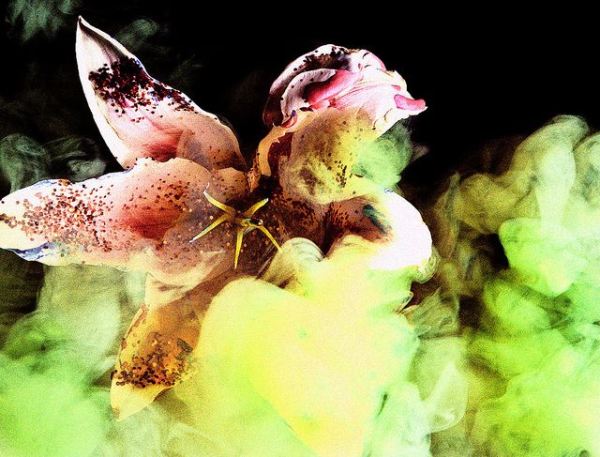
Photo: Henry Hargreaves Photography. "Smoke and Lily" series. Source: Trendland.com http://trendland.com/henry-hargreavess-smoke-and-lily-photography/

Photo: Henry Hargreaves Photography. “Smoke and Lily” series. Source: Trendland.com http://trendland.com/henry-hargreavess-smoke-and-lily-photography/

It takes a while for the labdanum to appear in all its beautiful glory. (Labdanum is my absolute favorite kind of amber precisely because of its unique aroma.) At the end of the third hour, Lys Epona turns into a scent that is primarily golden amber in focus, where the labdanum has turned the lily’s whiteness into a burnished bronze. The fragrance is a gorgeous glow of molten nuttiness and amber, infused with touches of lily, labdanum’s honeyed nuance, and musk. Flickers of leather, hay, grass, tobacco and an abstract woodiness dance all around. Lys Epona remains that way largely until its very final stage when it’s merely a blur of amber with minute traces of tobacco and hay. The lily has mostly faded away, as has the leather. At the very end, only the golden amber is left, like a sunset fading on the Celts.

Lys Epona is wonderfully original and extremely beautiful, but it also has some problems for me on a personal level. I repeatedly struggled with the sillage and longevity. Now, I have perfume-eating skin, but I rarely have a problem with sillage. And Lys Epona has very soft sillage! Obviously, projection is a very personal matter, but I can give you only my personal reaction, which is that Lys Epona becomes too soft too quickly. Each and every time, on all four tests, Lys Epona became an intimate scent after a mere one hour. One hour! It’s far, far too soon, in my opinion. Soft sillage that hovers only an inch or so above your skin is acceptable after a few hours and, in my ideal world, would be best after about 6-8 hours, but one hour?!

Spraying versus dabbing is not the answer, either. In general, aerosolisation adds to a perfume’s strength and longevity, but all my tests involved sprays from the small atomizer that Jovoy kindly made for me. So, while the perfume itself comes in a dab bottle (if memory serves me correctly), I was using the method that best amplifies a perfume’s projection. And that method gave me a mere hour or 75 minutes of a moderate perfume cloud! For people like myself who prefer a little more of a power to their fragrances, I think Lys Epona’s rapidly dropping sillage might be a little disappointing.

I should also add that increased quantity did not make much of a difference. I applied an average of 4 squirts from my 2 ml spray vial each time. During my fourth test, it almost felt as though the perfume were evaporating from my skin, as it became less potent and noticeable within a mere 15 minutes. Was the air conditioning too high, and the temperature too cold for Lys Epona to really bloom? To counter the possibility, I added two additional sprays, for a total of 6 sampler sprays (or what might be 3 big sprays from an actual bottle, depending on the size of its hole). No difference. Lys Epona was a lovely, albeit very soft, cloud for just 60 minutes, and then dropped in force. At all times, it was airy in weight and feel, never thick or opaque, and its final stages coated the skin like a gauzy whisper. Personally, I wish it had been a little less airy and sheer, but Lys Epona is not meant to be a baroque, molten, heavy scent.

In addition to the sillage issue, the longevity wasn’t great on my skin either, but that is obviously much more of a personal outcome due to my wonky skin chemistry. On average, Lys Epona lasted between 6.5 hours and 7.75 hours, depending on the quantity that I used. I may have perfume-consuming skin, but I’ve certainly found a number of brands and fragrances that have lasted 12+ hours on me, even up to 16 hours in small, lingering spots, and often with a significantly smaller quantity of liquid than I used here. The fact that Lys Epona is not exactly cheap (€225), is only 65 ml (just over 2.1 oz), and would require a lot of sprays for the perfume to really last on me means that I would go through that bottle quite quickly. For me, it’s a concern, and the primary reason why I won’t consider buying Lys Epona for myself.

In my exchanges with the absolutely lovely, incredibly sweet, outgoing and very vibrant Annabelle, I mentioned the sillage and longevity issues. She was surprised to hear that I thought Lys Epona was very soft. Apparently, her friend tells her that she can’t spray Lys Epona when they’re going to be in the small confines of a car because it’s too strong. But sillage is a very subjective, personal matter, so it really depends on how one defines “strong” and the yardsticks used therein. Annabelle mentioned that she was not fond of the ’80s powerhouse scents, after one too many bad experiences being cloistered at 7 a.m. in the elevator with a neighbor who sprayed on too much. Now, me, in comparison, I hope to die being covered and drenched in vintage ’70s Opium, and I love Amouage scents, so obviously I have a very different interpretation of the perfect sillage.

What was interesting to me is something else that Annabelle mentioned as a specific goal for the perfume’s structure. She wanted a very strong, powerful opening, almost like a sort of Lutens-like “Lys Criminelle.” Yet, she intentionally sought to make that opening later turn into something soft and intimate for symbolic reasons, as if the “lily and horse, after a race, finally tamed each other.” I admire that intellectually, and think it’s rather a brilliant piece of olfactory meaning. I also think she fully accomplished her goal, because the two notes did tame each other in each of my tests.

John Collier, "Queen Guinevere's Maying" (1900). Source: Wikipedia.

John Collier, “Queen Guinevere’s Maying” (1900). Source: Wikipedia.

At the end of the day, issues of sillage and longevity are all a matter of personal preference. Some people absolutely hate perfumes that are too strong, with Amouage-like intensity and forcefulness. They specifically seek more unobtrusive fragrances that are like a suggestive, personal whisper, or that might be something they could wear to work without bothering colleagues. Lys Epona would definitely qualify. I also think that it would work perfectly on both a man and a woman. It is rugged and outdoorsy with its spring-like touches and leather, but it is also beautifully feminine and elegant.

In short, nothing I’ve said here about the sillage or airiness should change the main bottom line: Lys Epona is a gorgeous scent that is incredibly original, creative, different, and elegant. The radiating prisms of its notes, its beautifully evocative nature, its depths, and its very classique, old-school sophistication are a stunning achievement for a first time perfume creator, and Annabelle’s passionate love for perfumery shows in every drop. Amelie Bourgeois’ talents (and supposed love for horses) also show, so both of them deserve much praise in my opinion. If you end up buying Lys Epona, I think you will have a truly original creation on your hands which will stand out in your collection. I haven’t quite come across anything like it.

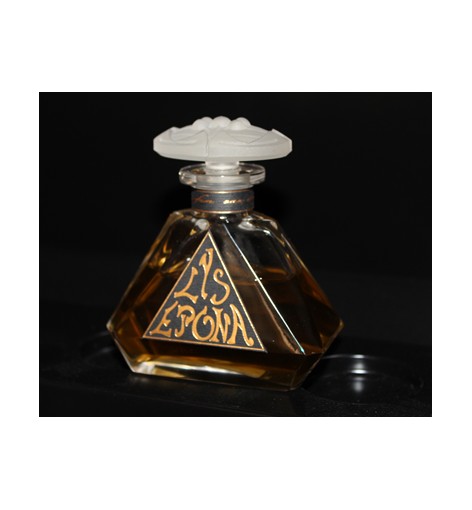
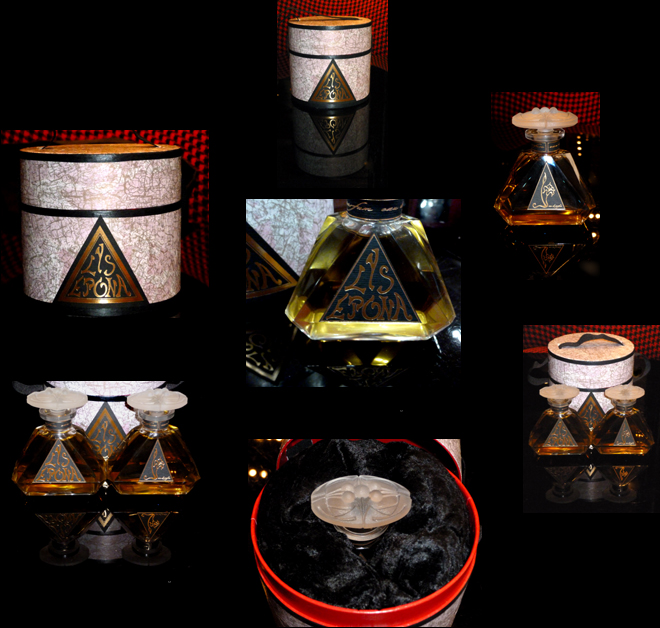
Lys Epona also happens to be a very lovely looking perfume in terms of its packaging. From the moment I held the bottle in my hands, I felt as though I had a rare, vintage treasure of great character. From the black-and-gold, scrolled letters on the label, to the Lalique-like, clouded crystal stopper, Lys Epona is beautiful. For me, its look not only conjures up images of the golden age of perfumery, but also serves as a wonderful parallel to the scent itself whose sophisticated, complex, very nuanced structure give it a very classique feel.

Lys Epona. Photo courtesy of Annabelle.

Lys Epona. Photo courtesy of Annabelle.

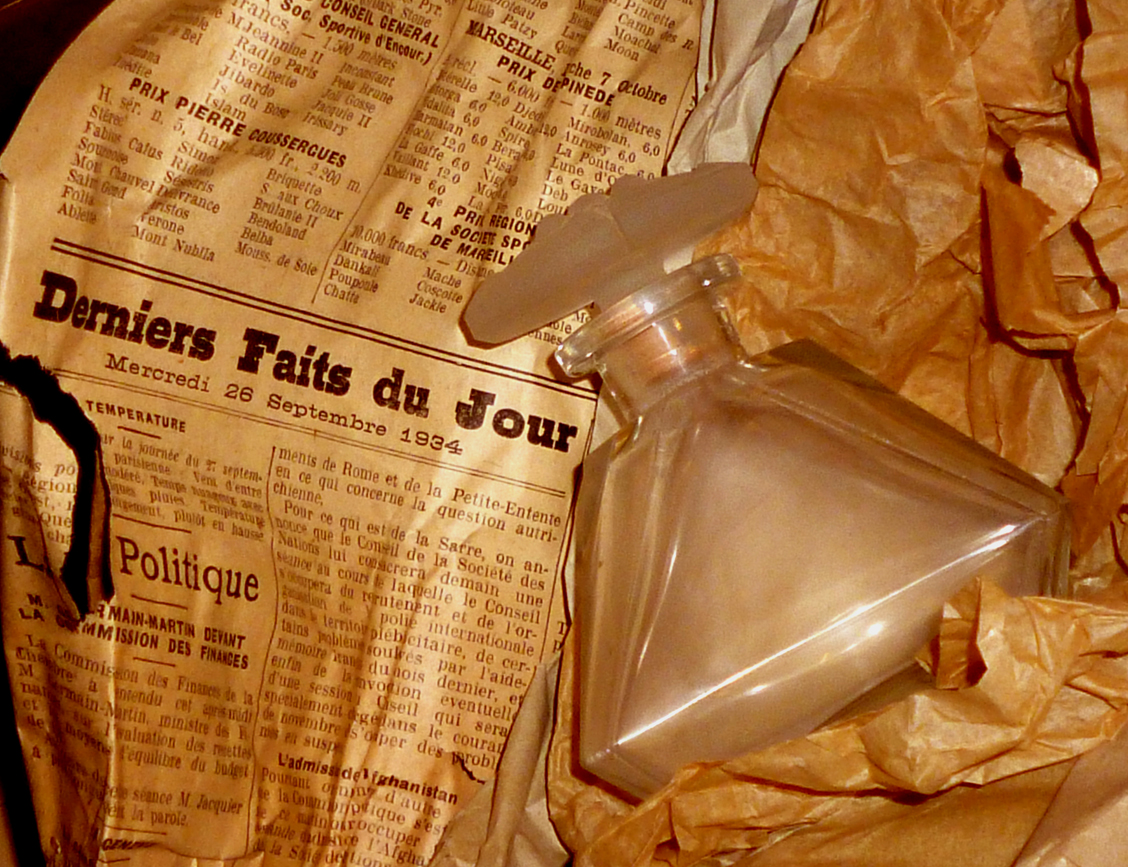
There is another story behind the Lys Epona bottles, and I think the tale is significant because it explains the limited nature of the perfume’s production. As noted up above, Lys Epona was originally intended to be a one-time thing made only for Annabelle in a labour of love. As Annabelle explained to me in an email, things changed one day when François Hénin called her and asked her to come to Jovoy, as he had a little surprise for her. There, he gave her something in a very yellowed, dirty newspaper. It was an old bottle. But there was more.

That very first, original bottle wrapped in paper. Source: lysepona.blogspot.com

That very first, original bottle wrapped in paper. Source: lysepona.blogspot.com

A friend of Mr. Henin’s could sell them a whole box of real vintage bottles from the Brosse glass factory and dating back to the 1930s! There were only 108 of them, and due to their age, some were not in a state that could be offered to customers, but there were at least 100 good, genuinely antique bottles. (You can see the original, untouched bottles in a post on that subject on Annabelle’s site.) As a final coincidence and sign, the newspaper that the first bottle was put in was a page from 1934 that talked about a horse race. It was all too perfect, especially for Annabelle who loves vintage perfumes. So, they decided to make a limited, one-time distribution with those 100 antique bottles.

The very aged nature of the bottles means that there is a tiny, remote chance that they won’t all be completely, utterly perfect. I have a blog friend who ordered Lys Epona blindly, and who was disappointed to see two red dots or marks on the crystal stopper. Jovoy dealt with the situation in a professional manner and replaced the bottle, but I think my friend might have been a little less disappointed if he had known the origins and backstory for those bottles. They certainly have a unique touch and character, much like any antique, and their potential flaw simply adds to their charm in my opinion. So, if you get one that is less than perfect, remember that it is one of a very rare set that is over 80 years old!

All in all, I definitely recommend giving Lys Epona a sniff if you love lilies and/or leather. Those of you in the States can actually order a sample from Surrender to Chance to test it out, but buying it won’t be quite as easy since Jovoy does not ship outside the E.U. However, they are very fond of any “EU cousins” that you may have, so perhaps you can see if a friend will help out in terms of lending their shipping address. There is also a personal shopper option that I explain further in the Details section below. I should add that I don’t know how many bottles of Lys Epona remain, especially as it was released a few months ago, but I’ve seen enough internet interest in the scent for me to urge you to hurry if you’re serious about it. I think it’s more than just a lily scent, more than a leather, or the fraction of its parts. I think it’s an evocative journey back in time. It’s up to you whether you’re taken to a world of Celtic warriors surrounded by nature, or to that of Napoleonic cavalry officers wooing languid courtesans draped with lilies. 

Note: my sample of Lys Epona was provided to me by Jovoy Paris, but they didn’t know I was going to do a review of the fragrance. I do not do paid reviews, and my opinions are my own.

DETAILS:
Cost & Availability: Lys Epona is an eau de parfum that is exclusive to Jovoy Paris. It comes in a 65 ml/ 2.1 oz size, is limited in quantity, and costs €225. Jovoy does not ship to the U.S. unfortunately, but are happy to mail to any “EU cousins” (as they amusingly put it, right down to the quotes) that you may have.
Samples: In the U.S., samples are available from Surrender to Chance which sells Lys Epona starting at $9.99 for a 1/2 ml vial.
Personal Shopper Options: One option for you to consider if you’re a U.S. resident who is interested in buying Lys Epona is to use a personal shopper who goes to France every month. Shop France Inc is run by Suzan, a very reputable, extremely professional, personal shopper who has been used by a number of perfumistas. She will go to France, and buy you fragrances (or other luxury items like Hermès scarves, etc.) that are otherwise hard to find at a reasonable price. Shop France Inc. normally charges a 10% commission on top of the item’s price with 50% being required as a down payment. If you have specific questions, you can contact her at shopfranceinc@yahoo.com. As a side note, I have no affiliation with her, and receive nothing as a result of mentioning her.

Histoires de Parfums Ambre 114: The Golden Touch

"Goldfinger" movie still. Source: businessinsider.com

The woman in gold from “Goldfinger.” Source: businessinsider.com

Imagine diving into a pool. You fall head long into rich, heady, salty, sweet, slightly smoky, dense but smooth, creamy, caramel waters. Fifteen minutes later, when you get out, your skin is coated with an almost translucent, airy haze of gold. That shimmering touch made me think of James Bond’s villain, Goldfinger, who would undoubtedly approve of the golden Ambre 114, a fragrance from the extremely talented (and sadly under-appreciated) French niche perfume house, Histoires de Parfums.

Ambre 114 in the large 4 oz size.

Ambre 114 in the large 4 oz size.

In fact, if Goldfinger had been an actual person, he would have been the perfect inspiration for a perfume house that seeks to capture the essence of famous characters and mythical years in a bottle. Histoires de Parfums was founded in 2000 by Gérald Ghislain who seems to be on a mission to create lyrical perfumed tributes to history. As the Histoires de Parfums website explains, each of the early fragrances was entitled just with a date in history, the year in which a legendary figure was born, with attention being paid to everyone from the Marquis de Sade and Casanova, to Mata Hari and Ernest Hemingway. One of the few exceptions to the rule, however, is Histoires de Parfums’ Cult Books Collection which is intended to be a timeless interpretation of the issue of sensuality from the East to the West. In the case of Ambre 114, it is the East who is speaking, giving “an oriental vision of voluptuousness” that is centered around sweetened amber done in the airiest of manners.

The "half" bottle of Ambre 114 in the 2 oz/60 ml size.

The “half” bottle of Ambre 114 in the 2 oz/60 ml size.

The company’s description for Ambre 114, along with its notes, is as follows:

This mythical raw material improves a 114-element composition. A caravanserai of scents for this hot oriental intensifying the natural sensuality of grey amber, sweet perfume and tinted with exoticism.

In the Orient, women used to burn incenses, myrrh and amber. It is an oriental vision of voluptuousness.

Top Note: Thyme, Nutmeg
Heart Note: Rose, Geranium, Patchouli, Sandalwood, Cedar, Vetiver
Base Note: Amber, Vanilla, Tonka Bean, Benzoin, Musk.

Source: e-boolean.org

Source: e-boolean.org

Ambre 114 opens on my skin with a powerful burst of ambergris. For those who haven’t experienced it, ambergris is a very different kettle of fish from the usual “amber” found in most fragrances. Extremely rare and unbelievably expensive, genuine ambergris has a salty, sweet, musky quality that is almost (just barely) sweaty and marshy in feel. It’s hard to explain, but the aroma is intensely rich, smooth, buttery and deep. On my skin, it almost invariably smells of salted caramel, and Ambre 114 is no exception. The fragrance shows off all of ambergris’ beautiful features in a bouquet that is strongly infused with patchouli. The latter is dark, dense, almost dirty, with a chewiness like the thickest brownie. The patchouli is just lightly smoky and spicy, creating a visual swirl of black with red and gold. When mixed with the ambergris, the result is Ambre 114’s primary bouquet on my skin: salty-sweet, musky, caramelized amber with chewy, smoky, spicy, black patchouli.

Ambre 114’s main duo is lightly sprinkled with green notes in the opening 20 minutes. There is a definite herbal component to the scent, though it never smells of thyme to me. Instead, it feels more generalized, abstract, and indistinct in nature. For a brief moment, though, there was something almost minty lurking about the golden ambered bouquet. Whatever the herbs may be, they occasionally have a slightly medicinal undertone, though it’s extremely light and muted. It’s almost like you’ve entered an old Chinese holistic shop filled with dried herbs, instead of a medical one, if that makes any sense.

Source: footage.shutterstock.com

Source: footage.shutterstock.com

The herbs aren’t the only green elements in Ambre 114. There is vetiver as well, though there is something odd about it in the opening moments. I can only describe the aroma as an earthy “meatiness.” I think the earthy, rooty vetiver must have combined with the salty, slightly mushy, musky aspects of the ambergris to create an aroma that is almost truffle-like in its undertones. Whatever its source, the aroma is just a brief flicker that dies away after about five minutes. A much stronger note is the geranium, though it’s not the flower so much as the fuzzy green leaves. They add a wonderfully peppered, slightly spicy piquancy to the scent, ensuring that the scent’s sweetness never turns cloying or excessive.

In the background, there are flickers of other things, too. There is nutmeg, adding a slightly bitter edge that, again, helps counter the sweetness from the ambergris. Faint touches of vanilla lurk in the base, while far, far below is the merest suggestion of a floral note. It’s peppered, but it’s not geranium, and it definitely doesn’t smell like a rose, either.

Source: wallsave.com

Source: wallsave.com

All these elements are really just supporting players on a stage dominated by the waltzing ambergris and patchouli. Ambre 114’s primary and dominant bouquet on my skin is salty-caramel sweetness mixed with smoky patchouli. It’s rich, plush, warm and sweet, but never truly gourmand or dessert-like in nature. Ambre 114’s core essence remains largely unchanged on my skin, though the degree and strength of some of its notes — especially the secondary notes — vary in significance. After about 20 minutes, the vanillic resin (benzoin) slowly starts to rise to the surface. It dilutes some of the ambergris’ musky, salty qualities, and adds further sweetness. There is a touch of light powder underlying it, too, but it’s never like makeup powder and certainly not very heavy.

In fact, nothing about the scent is heavy at all. Though the fragrance is very potent for the first forty minutes, it’s astonishingly light in feel. Ambre 114 is effortlessly refined, smooth, creamy, heady, cozy, comforting and sexy — all in a billowing, soft cloud that coats your skin like a gold sheath. It’s not an easy trick to take such heavy ingredients and turn them into air, while still keeping the scent very strong. I’ll be honest, it’s actually too airy for my personal tastes; yet, there is also something quite appealing about how effortlessly Ambre 114 surrounds you like the thinnest but softest cashmere sweater. You can only admire the talented touch who created it.

Source: de.123rf.com

Source: de.123rf.com

Ambre 114 slowly changes. Forty minutes in, many of the notes have melted into the amber. The geranium, herbs, nutmeg, and earthy, green vetiver have vanished. The ghostly impression of something floral faded away long ago. Even the patchouli seems to have taken a back seat to the ambergris. Much more noticeable, however, is the vanilla resin, along with its light touch of sweetened powder. The whole thing becomes a beautifully blended swirl of notes, dominated by the ambergris. By the middle of the third hour, however, Ambre 114 has lost its caramel aroma, and is now primarily a sweet, slightly musky amber with vanilla. There are bursts of patchouli that pop up every now and then, if you sniff really hard, along with a sprinkling of sandalwood. The fragrance remains that way for a number of hours until the end of the fifth hour when it turns into an abstract, vague, generalized blur of sweet amber with some vanilla powder and perhaps the faintest suggestion of sandalwood.

All in all, Ambre 114 lasted 7.5 hours on my perfume-consuming skin. The sillage was never enormous to begin with, but it drops even further after 90-minutes. At the end of the third hour, Ambre 114 hovers right above the skin, though you can easily smell its golden notes if you bring your nose to your arm. By the start of the fifth hour, Ambre 114 intimately coats the skin like the sheerest, thinnest gauze, and is increasingly hard to detect. This is not a powerful projection monster, by any means.

Ambre 114 shares a few similarities to some other amber fragrances. Parts of the opening evoked Serge Lutens‘ pioneering Ambre Sultan, but Ambre 114 is a faint, ghostly whisper of that fragrance’s famously potent, intense herbal blast. Plus, Ambre Sultan is really an ode to labdanum, not ambergris, and there is a substantial difference in the two resins’ amber smell. Ambre 114 also reminded me of my favorite amber of them all: Profumum Roma‘s Ambra Aurea. The primary reason is that salty-sweet, marshy, musky, caramel aroma from the ambergris which dominates both scents. That’s where the similarities end, however, as Ambra Aurea lacks Ambre 114’s vanilla and powdery elements, and also has a significantly different weight. Ambra Aurea is like the richest, heaviest fur coat you can buy, while Ambre 114 is the softest, thin cashmere sweater.

Another perfume repeatedly comes up as a point of comparison: Maître Parfumeur et Gantier’s Ambre Precieux. It’s an extremely well-known, much beloved amber that reportedly has a strong vanilla (and vanilla powder) component. I haven’t tried it, but thankfully, a friend has. The Scented Hound‘s review for Histoires de Parfums’ Ambre 114 amusingly states: “If Serge Luten’s Ambre Sultan and Maître Parfumeur et Gantier’s Ambre Precieux had a baby, this is what it would smell like.” He had a different experience with Ambre 114 than I did, so his description may be useful:

WHAT I SMELL:  Almost icy/hot to the touch, Ambre 114 goes on medicinal; the thyme is very evident.  Then as quickly as that leaves you, out comes the geranium note.  I can tell that there’s a bit of amber in there, but I am getting more vetiver at the beginning than amber.  Slowly, the spiciness then wafts up through the other notes.  It starts to warm and then begins to open to that lovely rounded amber that any amber lover craves.  What you are left with is a lovely vanilla’d creamed amber that wraps you in a wonderfully warmed blanket perfect for the long winter nights.

He really enjoyed Ambre 114, concluding that it was “lovely and if I didn’t own so many ambers at present, I probably would be buying a bottle. This is easily a comfort scent.” The Scented Hound is not alone in his opinion; almost every other blogger who has covered Ambre 114 either likes it or raves about it.

Even really picky perfume critics give it a thumbs up. Ambre 114 gets a Four Star mention in the famous perfume bible, Perfumes: The A-Z Guide, by Luca Turin and Tania Sanchez. The latter had a third type of experience with Ambre 114, one in which the rose note was quite prominent, judging by the perfume’s description as “benzoin rose.” The very brief review states:

A beautiful, durable amber accord built of benzoin, patchouli, vetiver and rose. Its transparent smoky sweetness feels weightless, as if hollowed out in the middle to make it float.

On Basenotes, Ambre 114 has a 100% positive rating. Out of 18 reviews, 78% give it Five Stars, 11% give it Four, and 11% give it Three. The main issues leading to some hesitation were that the fragrance was “too simple,” and “weak on longevity.” One positive review, from “alfarom,” reads:

Amber is a dangerous territory where sweetness can easily become overwhelming turning a fragrance into an unbrearable heaviness. The big point of strength of Amber 114 is its extremely balanced blend of spices/herbs and resionus notes (mainly benzoin) joined by woods and rose that make of this composition quite an easy wear in which sweetness is carefully tamed and dosed to become a side aspect. Overall I’d say that while Ambre 114 can be considered as one of the most complex and deep ambers around, at the same time it is outstanding for its incredible wearability and “lightness”. These things don’t happen by accident. Amazing Stuff!

I think he’s right about the lightness, but I experienced a much simpler, more linear scent that he did. It certainly wasn’t “complex” by any means.

What’s interesting to me about reading other people’s accounts of the scent is how extreme the different experiences or perspectives can be. Some think Ambre 114 is a deliciously gourmand, sweet scent. Others — including one chap who explicitly states that he “abhor[s] super-sweet amber scents” — don’t think the fragrance is sweet at all. Some commentators detect the rose, while others join the Scented Hound and me in not smelling any, or in experiencing a lot of nutmeg instead. Half the commentators, including those who give the fragrance five stars, think Ambre 114 has below average projection and so-so longevity, while others have the opposite opinion. One commentator says “You can get a clear 15+ hours out of this” — which really makes me wonder just how much he sprayed!

On one of the many, many Basenotes threads discussing Ambre 114, I came across something else I found interesting. People who don’t generally like amber fragrances like Ambre 114. I’m guessing the cozy vanilla is partially responsible, because Ambre 114 isn’t really a hardcore, spicy oriental fragrance in my opinion. It’s definitely more of a comfort scent that straddles the line between Oriental and Gourmand. The other factors in swaying amber-haters may be just how light, airy, and discreet the scent is. People who don’t like amber fragrances generally seem to struggle with the weight, or find the note to be too much. It’s either too sweet, too spicy, too rich, or some combination of the above. Ambre 114 avoids all that, as it is a very uncomplicated, safe, gauzy, approachable scent. Plus, its extremely soft sillage makes it a scent that a number of people have said they feel comfortable wearing to the office.

Another positive is that Ambre 114 is quite affordable for such a high-quality scent, at least relative to most niche fragrances. The smallest size is 2 oz/60 ml and retails for $125, whereas most niche perfumes start with 1.7 oz /50 ml and often cost quite a bit more. Plus, it’s not hard to find retailers who carry a practical, travel-size 14 ml decant of the perfume that you can buy for $36. (See below in the Details section.) The decant is an affordable way to enjoy the perfume a good number of times while you decide if it’s worth buying a full bottle.

All in all, I like Ambre 114 quite a bit, though it will never be my favorite amber. For me, personally, it’s too translucent and light, the sillage is too low, the longevity on my wonky skin isn’t great, and I don’t think it is distinctive enough. The extremely long-lasting Ambra Aurea suits my style and tastes much more, especially as it’s centered almost completely around salty-sweet, musky caramel and the ambergris isn’t diluted by vanilla. However, I think if I’d experienced some of the rose or woods that people talk about, my views on Ambre 411 might well be different. It might have the edge that would make it stand out and feel a little more interesting. Regardless, I think Ambre 114 is a beautifully blended, well-balanced, extremely cozy fragrance that feels very effortless and is very easy to wear. As ambers go, it’s a refined, elegant take on the note, and I thoroughly enjoyed wearing it.

In short, I definitely recommend Ambre 114 for those of you who are looking for a light amber fragrance that doesn’t overwhelm you, is soft spoken, appropriate for the office, and very cozy in nature. Its warm sweetness and feathery softness feel very much like that favorite sweater that you wear when you want to curl up, relax, and be absolutely comfortable.

On that note, I will leave you with the song that has been in my head since the start of this review: Dame Shirley Bassey singing “Goldfinger.” It’s not the best audio version, but you’ll see the famous woman in gold, along with a young Sean Connery as 007. Ambre 114 has the golden touch, as well.

DETAILS:
Cost, Availability, Decant Sets & Samples: Ambre 114 is an Eau de Parfum that comes in two sizes: 2.0 oz/60 ml for $125 or €145; or 4 oz/120 ml for $205. (Further decant or mini-sized options are below). Both full bottle sizes are available on the Histoires de Parfums website, which also has a fantastic sample program (6 samples of your choice) whose $20 price goes towards the purchase of a large 4 oz. bottle. Further details are available here as to how the process works. Shipping is free for all orders anywhere in the world for purchases over $130; below that, there is a $10 shipping fee. In the U.S.: Ambre 114 is available from Luckyscent in both sizes, along with samples. BeautyHabit has not only the 2 bottles, but also a 14 ml decant for $36. Parfum1 sells the 2 oz size bottle, along with samples and the 14 ml decant. They ship world-wide. Ambre 114 is also found at MinNewYork in the smaller $125 size. The Perfume Shoppe (which has a Canadian division) sells 14 ml decants of Ambre 114 for $36. Outside the U.S.: In the UK, you can find Ambre 114 at the Grooming Clinic for £74 for the smaller 2 oz/60 ml bottle. Roullier White carries some Histoires de Parfums fragrances, but Ambre 114 is not listed on their website. In Paris, the boutique, Nose, carries Ambre 114, as does Jovoy. For the rest of Europe, you can find it at Italy’s Alla Violetta or Germany’s First in Fragrance for €145 for the 2 oz bottle. In Russia, Ambre 114 is sold at Orental. In Australia, you can find it on sale at City Perfume for AUD$180 for 2.0/60 ml oz or at the full AUD$190 price at Peony Melbourne. For all other countries, Histoires de Parfums vast Store Locator lists retailers from South Africa to the Netherlands, Sweden and Kuwait. Samples: You can find samples at a number of the retailers linked to above. I got my test vial from Surrender to Chance has a variety of different options and sizes for Ambre 114, from samples to decants. Samples begin at $4.99 for a 1 ml vial.