Santa Maria Novella Nostalgia: Drive, Baby, Drive

One of perfume’s many joys is its transformative power, its ability to take you to other worlds and points in time, or to turn you into someone else. The rather aptly named Nostalgia briefly made me feel like the racing legend, Mario Andretti, in a 1970s Alfa-Romeo Spider convertible or like the ultra-cool Steve McQueen in his Jaguar XKSS.

Steve McQueen in his Jaquar. Source: mtblabel.com

Steve McQueen in his Jaquar. Source: mtblabel.com

Close your eyes and imagine a powerful old car on a racing track set in a birch wood forest. The smell of diesel fuel is in the air, along with the cracked leather seats of the ancient vehicle, and the smell of campfire smoke from a fire in the trees beyond. Bergamot swirls its sweet juices into the mix, along with vanilla, amber and earthy patchouli. As you rev your engines, and press your foot on the pedal, you speed away so fast that you leave the diesel fuel far behind, and enter into a vanilla, amber cocoon nestled amidst the birch trees. There, you take shelter in a haze of creamy, warm, lightly powdered vanillic sweetness infused with campfire smoke. It’s a simple smell, but then, Nostalgia is a return to a simpler, more nostalgic time.

Nostalgia is a fragrance from Santa Maria Novella, an Italian niche house based in Florence and one of the oldest actual pharmacies in the world. By many accounts, Santa Maria Novella is also the real, true source for the birth of cologne as a type of fragrance. You can read the full details of their fascinating, storied history going back to the 1200s and to Dominican friars in Florence in my earlier piece on the Farmacia (and its Ambra cologne). The house has been connected to everything from Catherine de Medici on her wedding day, to a marchioness burnt at the stake as the last “witch” in France, and marauding thieves who fought off the Black Plague. It’s completely fascinating stuff, if you are a history junkie as I am.

Santa Maria Novella. Pharmacy salesroom today. Source: MuseumsinFlorence.com

Santa Maria Novella. Pharmacy salesroom today. Source: MuseumsinFlorence.com

Even cooler is the fact that many of the current fragrances in Santa Maria Novella line continue to have the exact same olfactory profile as they did several centuries ago. In fact, they are said to follow a completely unchanged recipe, thanks to Santa Maria Novella’s heavy focus on all-natural ingredients (with no animal testing).

Source: Santa Maria Novella website.

Source: Santa Maria Novella website.

Nostalgia, however, is brand new fragrance, relatively speaking. It is an eau de cologne that was released in 2002, which is a far cry from the 1600s or 1800s date of some of their other creations. By those standards, it was practically delivered yesterday.

Nostalgia is a leather scent which Santa Maria Novella describes as follows:

Santa Maria Novella’s most original fragrance for men, Nostalgia is the scent of a vintage racing car. Using mixes of rare South American woods, vegetable musk, patchouli, citrus wood, tobacco, amber and vanilla, it brings to mind the smell of benzene, tires and vintage leather for a truly unique and individual eau de cologne.

According to Fragrantica, Nostalgia’s perfume pyramid is:

Top notes: bergamot, rubber and styrax. Heart: cedar and patchouli. Base: leather, amber, vanilla and birch tar.

Nostalgia opens on my skin with diesel fuel. Yes, the smell of actual gasoline, but an extremely refined, high-class gasoline, if you can believe it. It smells like filtered, perfumed gasoline that is scented with fresh, sweetened, but somewhat zesty bergamot, and with a hint of vanilla. Something very herbal and fresh lingers in the rubbery corners, along with traces of general sweetness and the tiniest suggestion of a warm element in the base. The vanilla quickly recedes to the sidelines, and its place is immediately taken by birch tar on fire. There is smoke, more smoke, black rubber, and then, bubbling black tar, all enveloped in that refined, bergamot-scented racing fuel.

Ferrari Formula 1 rubber tire, post race, via reddit.com

Ferrari Formula 1 rubber tire, post race, via reddit.com

I find the whole thing fascinating, and, I swear to you, it’s not like an olfactory assault at NASCAR. Instead, it’s oddly and shockingly smooth. I repeat, something about the overall combination feels almost refined, or as refined as such an accord could be. One reason why is because nothing is out of balance. The racing fuel is not a barrage of anything really sharp, extreme, or chemical; I never feel as though I’m filling my car at the gas station, though the vehicle may have a tiny leak somewhere. The strong element of crisp, chilled, but sweetened bergamot definitely helps, as do the subtle hints of vanilla and amber lurking at the edges.

Source: Theatlantic.com

Source: Theatlantic.com

Thanks to the singed birch trees, there is an outdoors feel to this Grand Prix race track. At the same time, there is also an undertone of black pepper and cracked leather. The latter is not the butch, latex, fetishistic bondage leather of some fragrances, like Etat Libre‘s difficult Rien. However, it’s definitely not the well-oiled, polished leather of Puredistance M, either. Despite the birch tar commonality, this leather also has nothing in common with Caron‘s Tabac Blonde, Knize, or Cuir de Russie, at least in their current, non-vintage manifestations.

Source: blog.hemmings.com

Source: blog.hemmings.com

Nostalgia’s note is a tiny, fractional bit closer to Andy Tauer‘s Lonestar Memories, but it’s not really that either. It lacks the feeling of soldering mechanics, the sticky sweetness, the sharpness, and even the forcefulness of the birch tar in Lonestar Memories. This is much smoother, softer, and more refined. As a whole, both the birch tar smoke and its leather undertone in Nostalgia feel like a completely different take on the note for me. This is the leather of an old car with some goaty, diesel, smoky aspects. It’s rough in the untamed way of birch campfire smoke, but it is also darkly resinous with styrax, and a little bit fresh and cologne-like with bergamot.

Paul Newman in his racing days. Photo: rolexblog.blogspot.com

Paul Newman in his racing days. Photo: rolexblog.blogspot.com

Less than 10 minutes in, Nostalgia shifts and starts to move away from the racing fuel. Earthy patchouli arrives, complete with both its faintly camphorous side and its sweeter, softer tonalities. The amber becomes more noticeable, too, while the bergamot takes a step back. The golden sweetness infuses the tarry, smoked woods and the old leather, softening that initial, utterly cool smell of racing fuel turned sophisticated. It’s a bit of a shame, as the opening minutes were Cool with a capital “C.” We’re talking Steve McQueen and Paul Newman cool in a Mario Andretti racing world. Instead, Nostalgia is now all about campfire smoke, tar and patchouli, lightly flecked with smoother, more refined leather, all upon a warmed, sweetened vanilla and amber base. It’s warm, smoky, masculine and sexy, but not as unique as that debut.

Source: hqwide.com

Source: hqwide.com

Something about Nostalgia mesmerizes me, for reasons that I cannot fully explain. Upon reading about it initially, I thought, “racing fuel sounds cool, but who wants to actually smell of it??!” And if you phrase it as “gasoline,” it sounds even worse. All of the descriptions seemed to entail a scent that would be too raw, tough, dry, beastly, and masculine, even by my expansive standards. Yet, somehow, Nostalgia hits that perfect sweet spot for me. It’s hardly as smoky as Profumum‘s birch tar bonanza, Fumidus, or as austerely dry as Naomi Goodsir‘s Bois d’Ascece; and it’s definitely not as rubbery or leathered as numerous scents that I’ve tried recently. It also lacks the difficult, black, mentholated, “car oil” gasoline of Patchouly Indonesiano from Farmacia SS. Annunziata, another old, Italian, “pharmacy” fragrance house.

Source: saab92x.com

Source: saab92x.com

Yet, on my skin, Nostalgia is not predominantly about diesel fuel after the first 10 minutes, and it’s not even really a birch tar leather fragrance as a whole. Both aspects are there — though the “leather” is much weaker than the singed campfire wood — but they are seamlessly blended into a bouquet that is primarily about smoky warmth. After 20 minutes, Nostalgia is so smooth, refined, ambered, and golden that I find it absolutely beautiful. (And quite addictive, too, judging by my eagerness to smear on more Nostalgia wherever I could.) I love the touches of sweet, warm, slightly spiced patchouli, with vanilla, sweet bergamot, and the balsamic resins in the base. They complement the subtle touch of leather beautifully, removing its goaty, cracked, aged facets. From the seats of an old convertible, the leather has now turned into something more akin to a well-worn leather jacket worn by a guy who spends his time around a campfire.

The accompanying notes are interesting. Tiny touches of something herbal and vaguely medicinal lurk at the edges, but they are light and seamlessly blended within the larger whole. On occasion, the patchouli even offers up a touch of fresh, green peppermint that, oddly enough, works well with the bergamot. In the base, the styrax resin offers up a smoky, dark, resinous touch with the faintest hint of leather. It’s the same resinous note that lies at the heart of vintage Habit Rouge (which had a lot of styrax in its drydown in the old days), and in Shalimar.

Source: 123rf.com

Source: 123rf.com

At the end of 30 minutes, Nostalgia is a warm, graceful, vaguely leathered scent infused with birch tar and its campfire smoke, patchouli amber, and styrax, all lightly threaded with veins of sweet bergamot and vanilla. Initially, the perfume’s sillage was very forceful, wafting about 4-5 inches above the skin, but Nostalgia never felt opaque, dense, or chewy. Now, 30 minutes in, the projection has dropped, in keeping with Nostalgia’s generally softer nature. The perfume wafts in any airy cloud about 2 inches above the skin, and feels even thinner. Up close, all the notes are potent and visible in their individual state. From afar, however, the most noticeable element is the birch with its smoked, burnt woods aroma, only this one feels sweetened, almost honeyed in nature.

Nostalgia continues to soften, turning more abstract and warm as time passes. By the end of the first hour, the perfume is a soft haze of browns and gold, dominated by birch tar amber with patchouli and bergamot, with a base that just barely nods to sweetened vanilla. It’s lovely, but very sheer and light in weight. To my disappointment, it hovers just above the skin. In fact, my voracious skin seems to be eating it up with every passing moment, no doubt because it is an eau de cologne. Still, the notes continue to be very strong when smelled up close, particularly the ambered, sweetened birch. I just wish I didn’t have to put my nose right on my arm to detect the rest of the elements.

Vanilla powder. Source: food.ninemsn.com.au

Vanilla powder. Source: food.ninemsn.com.au

The vanilla starts to rise to the surface, increasingly taking over Nostalgia’s focus to share center stage with the birch and amber. Midway during the 2nd hour, the birch’s smoke is fully subsumed within the other notes, and the impression of leather fades away. Oddly, and for reasons that I don’t understand, the bergamot briefly seems to grow stronger again, and it occurred during both my tests of the perfume. Even odder still, on one of my arms, Nostalgia remained much smokier and less citric than it did on my main (left) testing arm. Perfume doesn’t usually vary on me, from one arm to the next, but when it does, my right one always reflects a much drier, darker, or smokier version of the scent. That seems to be the case with Nostalgia, though it’s a short-lived, very minor difference as a whole.
Source: de.123rf.com

Source: de.123rf.com

At the end of the 3rd hour, Nostalgia is a skin scent centered on vanilla amber thoroughly infused with black smoke and a touch of singed woods. The patchouli and amber have melted into the base, where they add a general, indirect warmth but they no longer feel distinct or clear in an individual way. The most striking aspect of Nostalgia at this point is how creamy that vanilla is. It feels like a sweet crème anglaise sauce: thin but rich, and almost silky in the mouth.

The vanilla increasingly becomes the focus of Nostalgia’s drydown on my skin, with slowly fading levels of birch smokiness. There is a tiny touch of powderiness, in the way that tonka can generally impart, but it is not substantial on my skin. Nostalgia is a gauzy, thin blur, and it feels as though it’s about to fade away any moment now after the start of the 6th hour. To my surprise, the perfume hangs on tenaciously a little bit longer. In its final moments, Nostalgia is a simple smear of something vaguely sweet and dry, conveying the subtle sense of a note that might once have been vanillic in nature. All in all, Nostalgia lasted just short of 7.5 hours on my skin with low sillage after 90 minutes.

On Fragrantica, Nostalgia seems to be a massive hit with the vast majority of posters, with guy after guy writing how they have to buy a bottle. Or, in the case of one commentator, a second bottle:

Cigars gasoline sweet powder rubber and a bit of sweat. What could be sexier? Take that first sexual experience in a car with a bearded guy who is way too old for you, guilty, uncomfortable and exciting, wanting to run away from it and wishing it would last forever at the same time, and put it in a bottle. Nostalgia is a perfect name for this fragrance. […] Oh man I totally need another bottle of this.

"Rush" movie still, via developersaccomplice.co.uk

“Rush” movie still, via developersaccomplice.co.uk

Another commentator amusingly began his positive review by describing Nostalgia as “FERRARI AUTO REPAIR,” writing:

FERRARI AUTO REPAIR

I could also called this ‘Elegant Benzoin’. [¶] The gasoline opening is challenging yet intriguing. [¶] The other notes are present and accounted for, even if they can’t be specifically named (at least, by me). [¶] After time, the complex notes sparkle more than the Benzoin – and this fragrance keeps pulling me into it’s unique, luxurious heart.

I just may need to own this.

1967 Fiat Spider. Source: bringatrailer.com

1967 Fiat Spider. Source: bringatrailer.com

Some other impressions:

  • Rubber and leather that smell exacactly like the interiors of my grandad’s old FIAT 500 during the summertime, when odors are emphasized by the high temperatures of the season. A great fragrance if you like challenging smoky rubber/leather scents a-la Knize Ten / CDG’s Garage / Lisa Kirk’s Revolution. I do. [¶] Downside: the drydown is quite conventional if compared to the opening, but still pleasant..
  •  this juice is damn amazing and dramatic…Reason being, right out of the gate it smells really strong like racing fuel and literally 15 seconds later it begins changing..into this gorgeous blend of rubber and leather and several minutes later upon dry down remains the alluring vanilla-leatherish-Bvlgari Black blend. [¶] 10 out of 10 for uniqueness, quality, shock factor, longevity, sillage, and originality.  [Emphasis to perfume names added by me.]

For one person, it took time and repeated tries to appreciate Nostalgia. His first attempt was not positive, but then he fell in love with the opening. He writes, “I just wish this stunning opening lasted longer” — and I share his feelings. He’s going to buy a bottle, and I would too if my skin did not eat up Nostalgia.

Women have written about Nostalgia too. One lamented that she only detected “sweet, prickly green tea,” which seems to be quite a unique experience and definitely not the norm. Another female Fragrantica poster, however, had a more typical encounter, and loved it:

I love love love this perfume. Not for the fainthearted nor the heavyhanded. Best worn on autumn as it can get too heavy for summer yet it lacks that certaint ‘warmth’ necessary for winter. Very avant-garde, surprisingly sexy. The funny thing is that my husband loves it on me but not on him.

One thing I found very interesting is that the current version of Nostalgia may have been reformulated to lose a lot of its leather heart. Almost three years ago, in July 2011, a poster called “Roan” wrote:

The re-edition doesn’t have the scent of leather.
In few words, this perfume during the opening is very very unusual…the first sniff will make you cry 🙂
It smells on tyres, pit stop, road, gas, rubber, cars, colors, like the store which has everything for the house – ‘do it yourself’. The smell is fantastic hehe, after a while it settles down and becomes powdery and sweet, very conventional, it has a lot of similarities as Le Dandy D’Orsay in the drydown. This is a must try for everyone who love perfumes and the art of perfumery!
P.S. Sillage and logivity are good enough, regarding the smell, I expected that will last for days. [Emphasis to name added by me.]

Ferrari Formula 1 Pit, practice session. Photo: Reuters via Emirates247.com

Ferrari Formula 1 Pit, practice session. Photo: Reuters via Emirates247.com

On my skin, the “pit stop” aroma was very short-lived indeed, as it seemed to have been on those who posted more recent reviews of the scent. I get the impression that the fuel note (like the leather one) may have been tamed down or reduced even further since 2011, judging by a few, more recent, comments that I’ve read on its duration. It’s rather a shame, because it’s truly lovely in its uniqueness and in its incredibly refined nature. It’s not NASCAR, but the Ferrari Auto Repair that one of the comments mentions, but it doesn’t last for very long.

There are several blog reviews for Nostalgia out there. On CaFleureBon, Ida Meister raved about the scent in a 2011 article that compared it with Lisa Kirk‘s Revolution.

Nostalgia revs you up with all the aromas of an imported vintage automobile – it reeks of luxurious leather interior, exotic woods, and benzene; what’s not to like?

I’m not a driver, and I’m mad for it.

The photo used by Ida Meister to convey Nostalgia. Inspector Morse with his famous Jaguar.

The photo used by Ida Meister to convey Nostalgia. Inspector Morse with his famous Jaguar.

Both begin with that unholy blast that sears your nostrils, it’s NOT a gentle come-hither, I’ll grant you that.

Where they differ is in the drydown.

Nostalgia is an original Sillage Monster.

It may soften a bit, but it remains fairly potent and outspoken to the last, it just won’t give up the ghost.

I’m incredibly appreciative of this bizarre quality, and keep spraying myself over and over again.

But I’ve yet to purchase a bottle; where the hell would I wear this?

She does have a point. It may not be the most versatile scent, but I would wear it at home happily as a cozy scent (yes, I know, I’m odd) if it actually were a sillage monster on my skin. I’m sure that spraying from an actual bottle would improve things a bit, but only at the start. My skin simply doesn’t do all that well in the long-term with fragrances that are colognes in strength.

I think the most interesting and useful review for Nostalgia comes from the blog, Cocktails and Cologne, which analyzes in-depth just how much the fragrance does or does not replicate the “vintage race car concept”:

I love the smell of exhaust and unburned fuel from a hot rod without a catalytic converter—I even like the way my clothes smell after I’m around it. But would I bottle it? Fortunately, Santa Maria Novella’s vintage race car concept fragrance doesn’t take it too literally.

Nostalgia’s inspiration was the metal, rubber, wood, and leather of hand-built Italian race cars. It’s a great concept for a perfectly masculine fragrance, very elemental, and very sentimental too. […][¶]

NostalgiaThat Nostalgia doesn’t have more fans may be a result of its polarizing top notes and its lackluster packaging (More on that later). I’m guessing many people never get beyond the top notes to the smooth, Bulgari Black-like vanilla and rubber stage.

The top notes are bright and utterly artificial smelling. I worked in a garage for a couple years and I’ve been around vintage cars my whole life but none of Nostalgia’s top notes quite conjure up the feeling of vintage racing to me. It’s closer to the smell of the plastic glue I used to use to build 1:24 scale models of cars as a teenager.

About an hour in, it smells a little more like Bulgari Black’s top notes: smooth and rubbery with a hint of leather and vanilla. It’s much milder than you’d expect for something that comes on with such a chemical assault. Unlike Black though, Nostalgia’s vanilla isn’t sweet; it’s more leathery with a hint of smoke. I love Black but I may prefer Nostalgia. [snip.]

The whole review is very well-done, astutely noting how the Nostalgia is suited to a specific audience, and discussing the issue of the old-fashioned packaging. (It puts some people off.) The article is definitely worth a complete read for anyone interested in the fragrance.

Source: worldfragrances.com

Source: worldfragrances.com

As you may have noticed, the subject of Bvlgari Black comes up a lot in the discussion of Nostalgia. I haven’t tried it, but the perfume is mentioned so often in other, very similar fragrances that I’ve covered that I really need to rectify that soon. At this point, though, I suspect I pretty much know how it smells, and yes, Nostalgia’s drydown is probably quite close.

I bring up Bvlgari Black for another reason. I know a number of women who love the fragrance, and have no problems wearing it. Those same women should also love Nostalgia. Yes, this is a fragrance that initially skews somewhat masculine, but that “racing fuel” opening is incredibly short-lived on me and on others, and the rest of the fragrance is much more approachable. Nostalgia should work for anyone who can handle the smoky birch tar aspects of Lonestar Memories, Profumum’s Arso and Bvlgari Black, along with the leather in Rien or Tabac Blond (both of which are significantly and substantially more leathered than Nostalgia), and smoky scents which contain touches of earthy patchouli. Those people should have absolutely no problem with all those various elements coming together in one fragrance that smooths out their rougher edges into a refined blend.

For everyone else, I’m not sure I would recommend Nostalgia. If you don’t like leather or birch tar, I don’t think you’d enjoy the scent. That said, I would like to emphasize again that all of the potentially difficult elements appear only in the opening phase of Nostalgia, since the majority of the fragrance’s life is centered on a very simple amber-vanilla with birch smoke that eventually turns to mere vanilla and smoke.

In short, if you’re even slightly tempted, then don’t let the sound of Nostalgia’s opening scare you off. It is a scent that both men and women who love birch leather, smoky fragrances, vanillic leather, and Bvlgari Black should try. Nostalgia is very affordable, utterly fascinating, and extremely well done.

DETAILS
Cost & Availability: Nostalgia is an Eau de Cologne that comes in a 100 ml/ 3.3 oz splash bottle and which costs $125 or €95. In the U.S.: Nostalgia is available directly from Santa Maria Novella’s US website which offers free shipping for orders over $150. (You may need to buy an atomizer spray that they offer to go with the bottle, as I believe it might be a dab bottle, like some of their other fragrances.) Santa Maria Novella also has numerous other sections worth checking out. All items are cruelty-free and have not been tested on animals. The Pet Section includes everything from Lemongrass Anti-Mosquito repellant in lotion form to No Rinse Cleansing Foams, and more. Santa Maria Novella also has stores in 5 U.S. cities from L.A., to New York, Chevy Chase, Dallas and Bal Harbour, Fl, and you can find those addresses on the website. Also, LAFCO, on Hudson St. in NYC, is said to carry the entire SMN line. I checked the LAFCO website, and I don’t see any Santa Maria Novella’s products on it, but I believe they carry them in-store. Other U.S. vendors: Brooklyn’s Dry Goods NY sells Nostalgia below retail for the old SMN price of $110, while NY’s Carson Street Clothiers sells it way above retail at $165. Aedes in New York seems to carry a good selection of some Santa Maria Novella products, from candles to soaps, along with Nostalgia for $125. You can order Nostalgia by phone from Luckyscent, but it is not one of the fragrances that you can order from the website. Frankly, there seems to be an odd situation with a few vendors being unable to sell SMN fragrances on their website, with one NL site explicitly saying that they received a directive from the company not to do so, but only to offer their fragrances in store. I don’t understand it.
Outside the U.S.: In Canada, a retail chain called Gravity Pope carries an extensive number of Santa Maria Novella products, from fragrances to shampoos, lotions and soaps. They show Nostalgia on their website, but for the reasons listed above, cannot sell it online but only in store. In Europe, you can turn to the Italian Santa Maria Novella website to buy Nostalgia, but I’m having a little trouble navigating the site. There is also no pricing that I can find. The SMN Farmacia has a number of European off-shoots: stores in London and in Paris. I can’t find an address for the Paris store, but the official distributor for the company’s products is Amin Kader Paris which has two stores in the Paris. Again, I can’t find Euro pricing information for the fragrance. On a side note, on a Fodor’s site, I read that Santa Maria Novella has shops in the following cities: Roma, Venice, Lucca, Forte dei Marmi, Bologna, Castiglione della Pescaia, London, Paris, and Livorno. In the Netherlands, Lianne Tio sells Nostalgia in her Rotterdam store for €95, but not on her website due to the SMN directive. Switzerland’s Osswald also carries the full SMN line, but doesn’t seem to have an e-store. In Poland, I found Nostalgia at Galilu, while in Auckland, New Zealand, it is available at Passion for Paper, though you can’t seem to buy it directly from the website. In Russia, the full SMN line, along with Nostalgia, can be ordered by phone from Ebaumer.
Samples: I obtained my sample from Surrender to Chance which carries Nostalgia starting at $3.99 for a 1 ml vial.

LM Parfums Patchouly Bohème

Photo: "Fiery Mesquite Sunset" by Delusionist on Deviant Art. http://delusionist.deviantart.com/art/Fiery-Mesquite-Sunset-13859523

Photo: “Fiery Mesquite Sunset” by Delusionist on Deviant Art. http://delusionist.deviantart.com/art/Fiery-Mesquite-Sunset-13859523

The smoky sweetness of singed woods and a mesquite barbecue are the beginning of a woody perfume that later transforms into an absolutely lovely, cozy cloud of caramel amber, darkened resins, balsams, and dry vanilla. It is the most unusual “patchouli” fragrance that I’ve ever encountered: Patchouly Boheme from LM Parfums.

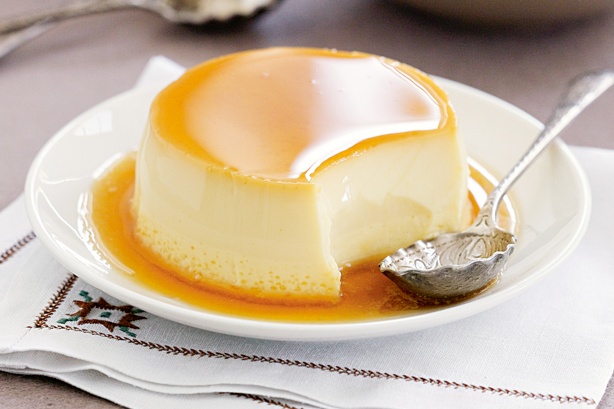
Patchouly Boheme is an eau de parfum released in 2011. It is frequently spelled as “Patchouli Boheme” on various sites, including Fragrantica and many retailers, but I will go with the company’s own spelling of the fragrance. The perfume was created by the late Mona di Orio, a very close, personal friend of Laurent Mazzone, LM Parfums’ founder. Her touch definitely shows, especially in the strong vein of cozy caramel flan that appears at one point in Patchouly Boheme and which is the centerpiece of her other creation for LM Parfums, Ambre Muscadin.  

Source: emporium.az

Source: emporium.az

LM Parfums describes Patchouly Boheme and its notes as follows:

The Pathouly Bohème, sensual and insolent dressed in precious woods, spices intoxicating …
It sows confusion, mystery, we hugged its wake profound and haunting, like a play of shadows and light with hints of leather, tobacco, resin tolu and tonka bean …

Top notes: geranium leaves Egypt, precious wood
Heart Notes: patchouli indonesia, virginia tobacco, leather
Base notes: musk, tolu balm, tonka bean.

Patchouly Boheme opens on my skin with smoky woods that are exactly like mesquite and a mesquite barbecue on my skin. It is immediately followed by an amber-vanilla accord that is the precise same one that lies at the heart (and drydown) of Ambre Muscadin and which I found to smell like a delicious caramel flan. Just as in Ambre Muscadin, the smell here in Patchouly Boheme is also infused with cedar, but it is not nearly as dominant. It also lacks the musk aspects of Ambre Muscadin.

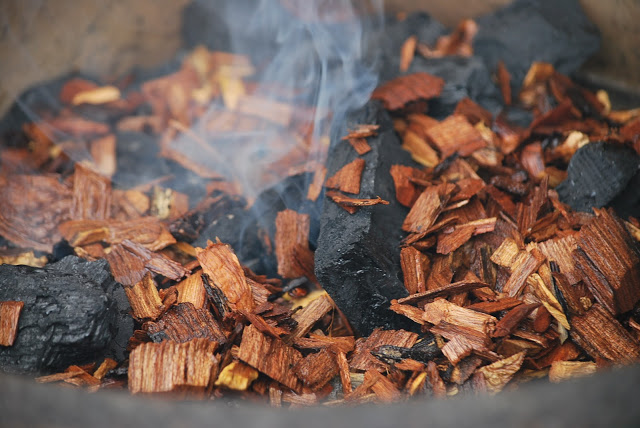
Mesquite wood chips on coal. Source:  My Story in Recipes blogspot. http://mystoryinrecipes.blogspot.com/2012/08/grill-smoked-chicken.html

Mesquite wood chips on coal. Source: My Story in Recipes blogspot. http://mystoryinrecipes.blogspot.com/2012/08/grill-smoked-chicken.html

The main chord in Patchouly Boheme’s opening, however, is that mesquite wood. As Wikipedia explains, Mesquite is a type of wood common to the American Southwest, northern Mexico, Texas, and parts of South America. I live in an area where mesquite barbecues are extremely common, if not the characteristic type of barbecue for the region. Mesquite is such a big deal here that even deli foods like ham, turkey, cheese, and potato salads come with smoky mesquite flavouring. I highly doubt the same is true in London, Paris, or New York, so you have to put my issues into that context to understand why the note in Patchouly Boheme is difficult for me. I absolutely adore patchouli in all its true, original, brown facets, but nothing in the perfume’s first few hours translates as that sort of patchouli to me. No, it’s primarily mesquite wood that is singed and sweetened.

If I’m to be honest, I actually recoiled the first time I smelled Patchouli Boheme’s opening. And the second time, too. In both instances, I clung on primarily because of how much I love the caramel flan note that lies behind it, as if coyly veiled by a thin curtain of smoking woods. Plus, I was fascinated (and completely bewildered) by smelling Texas mesquite in a French perfume so clearly done by Mona di Orio. Had she been to the American Southwest? How did she decide that the unnamed “precious woods” in her perfume should be mesquite of all crazy things??!

Source: taste.com.au

Source: taste.com.au

The third time I tried Patchouly Boheme, I still didn’t like it very much, but I’d become rather addicted to the cozy comfort of the caramel amber flan, not to mention the stellar drydown. (It really is stellar!) So, I basically decided to ignore the difficult 40 minutes or first hour in order to get to the delicious rest. In truth, it’s taken me a good 7 wearings to smoothly move past that beginning and to almost like it. I’m not sure I will ever actually love the smoked mesquite, but then I’m strongly impacted by the fact that I live in an area where that precise smell is associated with barbecue and food. I think those who are new to mesquite will be free of my mental associations, and will probably find it to be quite a fascinating woody note. Mesquite really is extremely different, bordering on the unusual. 

The other thing I puzzle over each and every time that I wear Patchouly Boheme is the eponymous “patchouli” note. This is like nothing I’ve ever encountered before, and I’m a “patch head,” as they say. There is a subtle earthiness to the fragrance, yes, and the merest suggestion of something leathered, but none of it translates as “patchouli” to my nose. The core of Patchouly Boheme lies fully in the smoky woods sweetened with a dry, caramel-vanilla, amber note.

Photo: "Mesquite Tree Sunset" by Delusionist on Deviant Art. http://delusionist.deviantart.com/art/Mesquite-Tree-Sunset-13878618

Photo: “Mesquite Tree Sunset” by Delusionist on Deviant Art. http://delusionist.deviantart.com/art/Mesquite-Tree-Sunset-13878618

Patchouly Boheme remains that way for the entire first hour, with the “caramel flan” note growing stronger behind the wooden veil with every passing quarter-hour. The perfume is very rich and deep, billowing about in an airy, light cloud that belies the forcefulness of some of its notes. At first, Patchouly Boheme wafts about 3 inches above the skin with 2 good sprays, but the projection starts to drop after 40 minutes.

Each and every time I smell Patchouly Boheme’s opening stage, I spend the whole time trying to dissect the puzzling aroma that I am smelling. There are things in that unspecified “precious woods” accord that go beyond the powerful mesquite element. Cedar, most definitely, in my opinion, but perhaps some vetiver as well? A lot of the times, I think, yes. I also drive myself a little crazy wondering why I detect something vaguely similar to a bitter expresso note underlying all the woods, but no chocolate, spices, greenness, or real earthiness the way patchouli usually manifests.

Photo:  Patricia Bieszk. Source: theadventourist.com

Photo: Patricia Bieszk. Source: theadventourist.com

Instead, on occasion, Patchouly Boheme will manifest a slightly medicinal aspect in its opening hour. It’s not the full-on, camphorated muscle-rub or peppermint aroma of true patchouli, but there is definitely something green or herbal lurking deep, deep in the base. Once in a blue moon, if I really spray on a lot of Patchouly Boheme and focus, it almost seems like a dry, smoked peppermint, but, yet, not quite. Actually, I’m pretty certain that I’m grasping at straws in the desperate attempt to smell a more usual, traditional form of patchouli, but that never appears for a good portion of Patchouly Boheme’s lifespan on my skin. It most definitely is not there at the start.

In my opinion, the real cause of that subtle green undertone is Haitian vetiver. I would bet money on it. For one thing, vetiver (along with cedar) is a very traditional complement to patchouli fragrances. That seems especially true in Europe, judging by all the patchouli fragrances that I grew up with, as well as the ones I smelled on my recent trip back. For another, the earth, woody, and green sides to vetiver are a good way to underscore those same facets in patchouli. And, lastly, something about the nuances to the base notes in Patchouly Boheme calls to mind La Via del Profumo‘s Milano Caffé. That is a fragrance where the patchouli is also dominated by and supplemented with Haitian vetiver (and cedar). It’s a very different scent than Patchouly Boheme all in all, but there is a very distant, very faint resemblance in both fragrances’ foundation. I suspect the “bitter expresso” nuance that I detect deep in Patchouly Boheme’s base is the result of some similar combination of woody tonalities, including vetiver.

Source: foodgawker.com

Source: foodgawker.com

My favorite part of Patchouly Boheme’s opening is always that tantalizing, dry, rich, incredibly smooth “caramel flan” accord. It finally emerges in full at the end of the first hour, as though the dry, smoked veil of wood has parted to welcome the ambered vanilla onto center stage. Both accords now stand side-by-side, each infusing the other in a seamless blend. For all that I use the term “caramel flan,” the note is never cloying, overly sweet, or dessert-like; it’s far too airy and dry to be gourmand in nature. Instead, it’s a cozy, dry richness that feels soothing and comforting, which is one of the reasons why I like wearing Patchouly Boheme to bed. And that cozy feel merely grows stronger with time, as the notes in the base start to stir.

About 1.75 hours into its development, Patchouly Boheme turns into a lovely, golden-brown woody scent infused with a rich sweetness. The mesquite wood resemblance has faded away by 65%, leaving an earthier scent with more abstract wood tonalities. I still don’t smell patchouli in the way that I’m used to, however. Instead, there are other notes. There continues to be quite a bit of cedar lurking in the background, adding dryness and a touch of smoke. There is also the tiniest suggestion of dry tobacco leaves, but it’s extremely muffled and nebulous. Much more noticeable, though, is the tonka in the base which is taking on the first whisper of a lightly powdered sweetness. The whole thing is a visual tableau of soft browns, caramels, camel brown, amber, mahogany, and cream in a soft, cozy cloud.

Patchouly Boheme continues to shift in small degrees. At the start of the 3rd hour, the perfume has turned into a smooth tonka-and-vanilla scent that is thoroughly immersed in that odd, unconventional “patchouli” note, dry woods, and a touch of sweetened powder. The fragrance lies just above the skin, perhaps an inch at best. As the dry vanilla and tonka grow more prominent, so too does the tolu balsam. It is my second favorite resin, and it’s incredibly smooth here. Fragrantica and other sites describe Tolu balsam as having a deeply velvety richness with a vanilla aroma that is much darker than that of benzoins. To my nose, however, it is always a very spiced, slightly smoky, rather treacly, dark note with a subtle leathered nuance; it doesn’t feel like a truly vanillic element. To give you an idea of what I’m talking about, here are a some of the perfumes listed by Fragrantica as scents that feature Tolu balsam (or its close sibling, Peru balsam, in some cases): Bal à Versailles, Mona di Orio‘s Ambre, Opium, Ormonde Jayne’s ToluEstée Lauder‘s Youth Dew and Cinnabar, MPG’s Ambre Precieux, Guerlain‘s Chamade, Reminiscence‘s Patchouli Elixir, and many others.

Source: freehdw.com

Source: freehdw.com

In Patchouly Boheme, the Tolu is too smooth to be sticky, very smoky, or hugely dark, but it’s definitely like a balsamic, golden richness with carefully calibrated levels of sweetness, and smokiness. It has a much stronger cinnamon nuance than I’ve encountered before, almost as if the more intense, leathered, and dark elements were refined out of it. It’s a note that works perfectly with the tonka, caramel vanilla, and that strange “patchouli.” I keep thinking about a camel-coloured suede jacket that I once owned; Patchouli Boheme’s drydown has the same sort of soft smoothness and visual colour in my mind.

The perfume continues to realign itself, changing the order and prominence of its notes. The tonka and vanilla slowly make way for the deeply resinous tolu as the dominant note. All traces of mesquite wood have finally vanished, and Patchouly Boheme is now a balsamic amber that is sweet, dry, vanillic, slightly smoky, and lightly dusted with a bit of cinnamon. The scent continues to hover just above the skin, but finally turns into a skin scent around the 5.5 hour mark. To my surprise, an hour later, the patchouli that I’m used to finally emerges. It is still fully swathed in tolu amber resin and tonka, but its red-gold spicy nature is much more apparent. A lingering touch of cedar seems to remain at the perfume’s edges, but it soon fades away entirely.

Source: colourbox.com

Source: colourbox.com

Patchouly Boheme’s drydown is a seamless blend of soft patchouli, amber, and vanillic tonka, and it remains that way largely until its end. In its final moments, the perfume is an abstract blur of soft sweetness. On average, Patchouly Boheme lasts between 9.75 and 10.75 hours on me, depending on whether I use 2 sprays or 3. The sillage is always soft after the start of the 3rd hour, but the dry, golden woodiness is easy to detect until the start of the 6th hour which is when the resinous, amber, and tonka phase kicks in. At no time does Patchouly Boheme ever seem like a patchouli soliflore to me, but one centered either on smoke woods or golden, sweet accords.

On the surface, I think it would be easy to consider Patchouly Boheme as linear, but it definitely has at least 3 distinct phases. The perfume — like all the LM Parfums that I’ve tried — is marked by a smoothness and seamlessness to its notes that masks the slow transition from one stage to another. Patchouly Boheme realigns itself by fractions, so unless you’re sniffing constantly and with focus, you will only see the larger brush strokes. One minute, you’re wafting mesquite barbecue woods, and the next, it seems that the perfume has turned into a cuddly, cozy, tolu resin, amber, and tonka fragrance. However, there are two bridges in-between them: first, that “caramel flan” accord from Ambre Muscadin, and, then, later, the transitional woody-tonka phase.

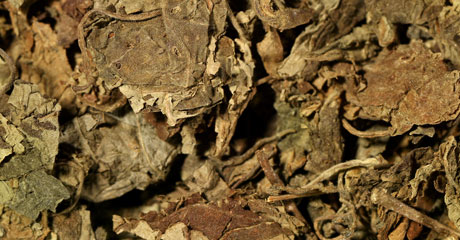
Dried Indonesian patchouli leaves via Dior.com.

Dried Indonesian patchouli leaves via Dior.com.

All the reviews for Patchouly Boheme on Fragrantica are highly complementary. Two people call it a “masterpiece,” one of whom says flat-out that the perfume’s beginning was very difficult for him (or her). In fact, “Cereza” doesn’t seem fond of patchouli fragrances as a whole, but the LM Parfums creation appears to be an exception:

A very high quality patchouli that should be tried by each and every lover of patchouli dominated fragrances. Fantastic silage and stays strong all trough the day.

It opened harsh and medical, almost too much for me as I am not a huge fan of patchouli, but as it settled and calmed down a bit it turned to a fantastic patchouli. It’s earthy, it’s dirty, it’s wild, yet sugary sweet and even mouthwatering (yes patchouli can be that sometimes). It changes all the time, sometimes leather which also is very noticeable in this plays a lead role, so it gets a bit rough, when tobacco and tolu shows themselves it gets sweeter and more feminine.

Really a masterpiece even I who does not wear patchouli frags can appreciate. Give this a go, you won’t be dissapointed.

Another commentator writes:

To me, this is a MASTERPIECE.
Very original, complex and well blended patchouli frag. with notes of tobacco, tonka, leather (light leather) and too sweet in the dry down. Mixed with very good quality in the ingredients.

The best from this house.

Longevity is more than 12 hours and sillage is strong.

scent: 9/10
longevity: 10/10
sillage: 9/10.

Photo by Jianwei Yang, I think. Source: http://www.bhwords.com/2014-02-27/rainy-day/###

Photo by Jianwei Yang, I think. Source: http://www.bhwords.com/2014-02-27/rainy-day/###

The only blog review I could find for Patchouly Boheme came from BL’eauOG who raves about the fragrance. It actually seems to be his favorite from the line. His long review is primarily about LM Parfums and Laurent Mazzone in general, but the portions pertaining to Patchouly Boheme read, in part, as follows:

Patchouly Boheme is very special perfume with great story. For me, it is temptation from the first moment. I consider it as masterpiece of perfume making because it is one of the most opulent perfumes I’ve ever tried. It is so strong and special that you can almost feel the emotions inside. Laurent practically uses perfumers as an instrument because he already has idea, emotion or picture in his head, and through the perfume, he expresses what’s inside of him. Laurent is playing with materials, alpacas are more elegant, silk gets more voluptuous, mohair gets more caressing, gabardines gets more hot. […] That’s why I am captured by Patchouly Boheme. You should try Mona di Orio Musc and compare it with PB and then you’ll see what I am talking about. […][¶]

Patchouly Boheme is very special perfume[….] I like it a lot because you can feel the passion from it, that’s the reason why it is my favorite. […] It is so opulent and “heavy” that the one is instantly drunk of intoxicating notes. Opening is very herbal with the distinctive geranium note but only few minutes later, opulent balsamic notes are most dominant. On my skin it’s like the most reputable resin bathed in precious patchouli, tobacco and tolu balm. Strangely, I don’t get lots of leather. It is herbal patchouli in general with lots of balms. Dry down is soft and delicate. Creamy notes of balms and resins will stay on your skin for hours and hours giving the same boemic feeling. Beautiful and magnificient, that’s the story of LM Parfums you shouldn’t miss because each perfume has significance and it’s little masterpiece!

I obviously experienced a very different scent at the start, but we both seem to have had the same balsamic, resinous, cozy drydown. It’s as beautiful as he says it is, though the “caramel flan” aspect of the middle is just as nice.

Source: pixabay.com

Source: pixabay.com

I realise that not everyone shares my passion for the glories of patchouli, at least the real kind, as opposed to the revolting, purple, fruit-chouli modern variety in so many rose fragrances today. True, spicy, smoky, brown-red patchouli is magnificent and wholly addictive, in my highly biased, personal opinion. LM Parfums’ Patchouly Boheme is a very different creature, however, with a completely original focus that centers on smoked, singed, sweetened woods and balsam resins. I can’t decide if that unique twist on “patchouli” will make the fragrance easier or harder for those who are phobic about the note.

If it’s of any use, I’ve heard that Le Labo‘s Patchouli 24 also has a strong barbecue note. I’ve never tried it, but a brief Google search seems to indicate that people have experienced elements ranging from rubber and cooked meat, to smoked birch notes and fecal tonalities as well. Patchouly Boheme is nothing like that. Not even remotely. However, those of you who are familiar with the smell or taste of smoked mesquite wood should be aware that it is a definite part of the fragrance’s first hour.

As noted above, I found it difficult at first, but I think the rest of Patchouly Boheme makes it a scent that definitely merits some patience. I’ve said quite bluntly that one of my absolute favorite scents, Alahine by Téo Cabanel, requires a bit of Stockholm Syndrome and at least 4 repeated tries, and Patchouly Boheme is in the same category for me. Yet, even in my early tests when I was struggling with the oddness of the mesquite puzzle, the lure of that absolutely delicious caramel-vanilla flan and the subsequent cozy, resinous drydown was hard to resist. In short, you may want to persevere with Patchouly Boheme, and keep in mind that the difficult part only lasts an hour or so.

Of course, if you’re a die-hard patch head, you definitely need to try Patchouly Boheme. It feels really unique to me out of the other options out there in the same genre. Plus, it bears the Mona di Orio signature merged with Laurent Mazzone/LM Parfums’ refined smoothness. I suspect you won’t have encountered anything quite like it.

In all cases, though, I think Patchouly Boheme will take a few tries, and will be one of those “love it or hate it” fragrances.

Disclosure: Perfume provided courtesy of LM Parfums. That did not impact this review. I do not do paid reviews, my opinions are my own, and my first obligation is honesty to my readers. 

DETAILS:
Cost & Availability: Patchouly Boheme is an eau de parfum that is available only in a 100 ml/3.4 oz bottle which costs $175, €135, or £135. In the U.S.: LM Parfums is exclusive to Osswald NYC. They currently have Patchouly Boheme in stock but, if, at some point in the future, the link doesn’t work, it’s because Osswald takes down a perfume’s page when they’re temporarily out, then puts it back up later. Outside the U.S.: you can buy Patchouly Boheme directly from LM Parfums. In addition, they offer large decant samples of all LM Parfums eau de parfums which are priced at €14 for 5 ml size. LM Parfums also owns Premiere Avenue which sells both Patchouly Boheme and the 5 ml decant. It ships worldwide. In the UK, the LM Parfums line is exclusive to Harvey Nichols. They sell Patchouly Boheme for £135. In Paris, LM Parfums are sold at Jovoy. In the Netherlands, you can find Patchouly Boheme at ParfuMaria, while in Italy, it is sold at Vittoria Profumi. The LM Parfums line is also available at the NL’s Silks Cosmetics. In Germany, First in Fragrance has Patchouly Boheme along with the full LM Parfums line, and sells samples as well. You can also find LM Parfums at Essenza Nobile, and Italy’s Alla Violetta. In the Middle East, I found most of the LM Parfums line at the UAE’s Souq perfume site. For all other countries, you can find a vendor near you from Switzerland to Belgium, Lithuania, Russia, Romania, Croatia, Azerbaijan, and more, by using the LM Parfums Partner listing. Laurent Mazzone or LM Parfums fragrances are widely available throughout Europe, and many of those sites sell samples as well. Samples: A number of the sites listed above offer vials for sale. In the U.S., none of the decanting sites carry LM Parfums, but Surrender to Chance has a European Exclusives section that is tucked away. There, they list two (and ONLY two) vials of Patchouli Boheme. Each is 1 ml for $3.99. Other than that, you can call Osswald NYC at (212) 625-3111 to order samples. They have a special phone deal for U.S. customers where 10 samples of any 10 fragrances in 1 ml vials is $10 with free shipping. However, they are currently out of vials until mid-March.

Tom Ford Violet Blonde

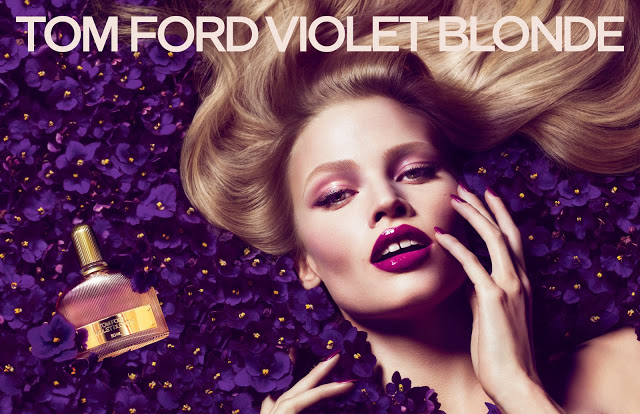
When Tom Ford announced the release of his Signature Collection of perfumes in the fall of 2011, his first creation seemed to complement his new make-up line. It was Violet Blonde, a fragrance that ostensibly celebrated the delicate world of the flower that it was named after. Even the print ads seemed to support that point. Appearances can be deceiving.

Lara Stone photographed by Mert & Marcus. Source: Styleitup.com

Lara Stone photographed by Mert & Marcus. Source: Styleitup.com

According to the Tom Ford press release quoted by Nordstrom, Violet Blonde is an eau de parfum meant to represent “a new era of feminine glamour.” The description goes on to read:

Tom Ford Violet Blonde is an opulent fragrance that reveals a stunning new facet of violet: ravishing, intriguing elegance. Made with some of the most precious ingredients in the world, it is crafted according to the finest traditions of European perfumery.

Top notes: violet leaf absolute, Italian mandarin and baie rose.
Middle Notes: Tuscan orris [iris] absolute, Tuscan orris butter and jasmin sambac sampaquita.
Bottom Notes: benzoin, cedarwood, vetiver absolute, silkolide and soft suede.

Photo: gardenersblog.jerseyplantsdirect.com

Photo: gardenersblog.jerseyplantsdirect.com

Violet Blonde opens on my skin with a potent burst of green, crunchy, leafy, and peppery notes. You can almost feel the fuzzy, soft leaves of a bunch of violets or pansies, except they are covered with pepper. The scent of the actual violets themselves, however, feels hidden and muffled, as though they were shielded behind the leafy green notes. On my skin, they are a whisper of a suggestion at best, feeling dewy and faintly earthy. The violets and their powerful green leaves are all nestled at the base of a dry tree, though the note doesn’t feel very much like cedar to me but more akin to an abstract woodiness. Seconds later, sweetness seeps through like a creeping puddle approaching the flowers, covering them with a delicate, thin syrup. It’s not ridiculously sweet or gourmand; it’s more like clear corn syrup than heavy, gooey honey.

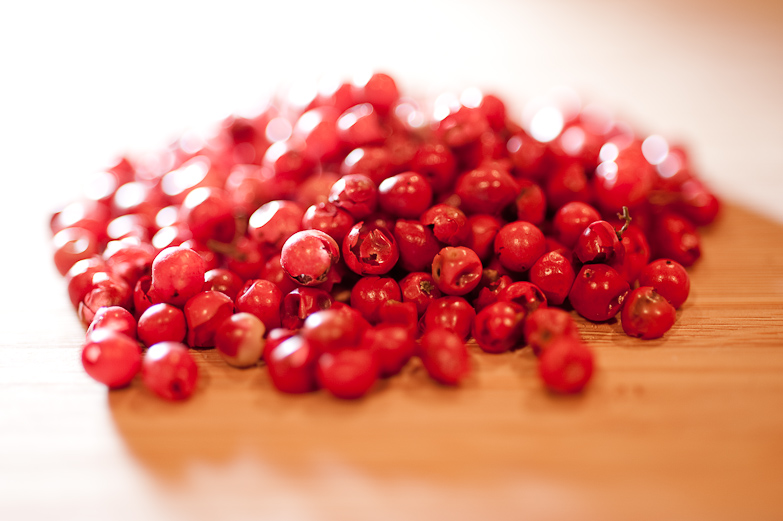
Pink peppercorns. Source: spicestationsilverlake.com

Pink peppercorns. Source: spicestationsilverlake.com

The purple, green, and brown canvas is quickly splattered with splotches of pink from the pink peppercorns, and with cream from a slightly sharp musk. It’s not the clean or white variety, but it has the subtlest touch of freshness about it, serving to lift up the other notes to make them seem lighter than they actually are. As regular readers know, I’m not at all a fan of synthetic musks, and my nose is very sensitive to their strength, so I’m not a fan of this part of Violet Blonde. Thankfully, the note is relatively minor at this point, though that ends up changing later.

Deep in the base, there lurks an extremely subtle vein of fruitiness. It is indistinct and abstract, but it certainly doesn’t smell like mandarin to me. What’s interesting is how the combination of the pink pepper berries and the musk have created the feel of a general pink fruitiness that is lightly spiced. There is a subtle jamminess to the fruit, too, almost as if purple, fruited patchouli had been used.

Violet Leaf via gaertner-und-florist.at

Violet Leaf via gaertner-und-florist.at

All those notes lurk behind the peppery green leaves which are the dominant focus of the scent in the early minutes. The violet flower itself is very elusive, and it becomes even more so 8 minutes into the perfume’s development when the jasmine arrives. It is syrupy, sweet, and very heady. I love big white flowers, so I’m rather thrilled by all this, but the strength of the jasmine basically dooms the violet from every having a chance at a solo act on center stage. In fact, the violet slinks off to the sidelines with a whimper and basically sits out much of the rest of the fragrance like some sort of very embarrassed wallflower. It’s rather disappointing, but perhaps it’s a function of skin chemistry.

Trailing behind the jasmine is the first suggestion of something powdered. Orris is often used in makeup as a fixative and has a powdered aroma, as does iris. Here, there is the tiniest whisper of a rose-iris makeup powder undertone, though it is extremely subtle. Honestly, almost every note in this perfume is subtle and muted on my skin except for the crunchy, peppered leaves in the beginning, and then the jasmine and the musk.

Violet Blonde is quite potent in its opening moments. I used 3 decent sprays from a tiny atomizer, an amount which equals 2 small squirts from an actual bottle. Violet Blonde wafts about me in a billowy, potent cloud that feels as light as a feather, though it is extremely strong in smell. The airy weight of the fragrance is definitely misleading. Violet Blonde’s projection is initially good, wafting about 4 inches above the skin, though that starts to change extremely quickly. As you will see, the opening forcefulness is not characteristic of the scent as a whole.

Source: Hdwallpaperes.com

Source: Hdwallpaperes.com

The jasmine soon becomes Violet Blonde’s driving force. Within 20 minutes, its sweetness cuts through a good portion of the perfume’s greenness. Oddly, I can smell more of the actual violet flower now — as opposed to its leaves — than I did at the start, though it keeps playing a peekaboo game with me from the sidelines. On a scale of 1 to 10 with 10 being the strongest, I would put the violet note at a 3.5 now, perhaps a 4 for a brief moment. It had begun as a 1.5, so it is an improvement, but it’s all very relative. At the same time, the powder and cedar elements also grow stronger. As a whole, Violet Blonde smells of sweet florals dominated by jasmine and thoroughly infused with leafy, peppered, violet leaves. The main bouquet is lightly flecked by powder, cedar, the violet flower itself, pink peppered berries, and a touch of fresh musk.

Jasmine Rouge.

Jasmine Rouge.

Violet Blonde feels like a juxtaposition of contrasts: heavy but light; headily floral but crisply fresh; sweetly dewy but peppered green; a touch earthy but also a touch powdered; understated and, yet, bold as well. It has that signature Tom Ford opulence, but it is ratcheted down from the levels of many of his Private Blend fragrances. Violet Blonde is not demure, but it is also not particularly flashy or va-va-voom either. Those last two words are what I’d use to describe Violet Blonde’s sibling in the Signature Collection line, Jasmine Rouge, which was released shortly afterwards and which is spectacularly heady in its intensity and punch. Violet Blonde is not. Yet, it feels much less subdued than Tom Ford’s recently discontinued Private Blend Black Violet. On my skin, the latter was quite anemic, muted, and quiet indeed. It also had extremely disappointing projection that didn’t feel like a Tom Ford fragrance at all, never mind one of his Private Blend ones.

Violet Blonde seems to fall midway on the Tom Ford spectrum of power, heaviness, and projection, especially after 40 minutes when it turns much softer. The sillage slowly drops to about 1-2 inches above the skin. The perfume’s weight feels as though it has been cut by 30%, perhaps because the jasmine has now blended into the overall fragrance and has lost a lot of its syrupy sweetness. The powder notes are now much stronger, too.

Sketch: Walter Logeman at ThousandSketches.com

Sketch: Walter Logeman at ThousandSketches.com

At the end of the first hour, Violet Blonde turns more abstract, and the notes all blur into each other. The sillage drops even further. The overall bouquet is of a woody, slightly powdered jasmine with musk. It is only lightly flecked by green, leafy, peppered notes, and they grow increasingly weak. The powder isn’t enormous; we’re not talking Guerlainade levels by any means. It feels more like a light dusting over the jasmine than a strong, core element. One thing is for certain, the iris is not showing its strong, cold, carroty, or dank facets at all. As for the rose, it’s really a no-show on my skin, though there is sometimes a suggestion of it lurking about the powder. I suspect that is merely my mind making a mental association with the sort of powdery rose smell that some makeup or lipsticks can have.

Violet Blonde is very pretty, but I’m really not keen on the growing forcefulness of the musk which pushes aside the green leafiness, the powder, and everything else it sees. Everything but the jasmine. The musk smells sharp to my nose, and is definitely synthetic. Thankfully, it’s not the fresh, white, laundry, “clean” type, or I’d go out of my mind. Still, it grows stronger and stronger as time passes. All too soon, Violet Blonde devolves to a simple jasmine musk on my skin with some abstract woody notes.

Violet Blonde is a very linear scent whose core essence doesn’t change during the rest of its evolution. All that happens is that the jasmine and musk fluctuate in terms of their strength. At times, Violet Blonde feels as though it has turned wholly abstract, and the notes (other than that musk) have lost all individual shape or identity. To be precise, it starts to smell like nothing more than a generic “floral, woody musk” on my skin. At other times, however, the jasmine appears as a distinct element, before it sinks back down into the general cloud. At the start of the 2nd hour, Violet Blonde’s sillage hovers just an inch above the skin. 60 minutes later, the perfume turns into a complete skin scent. It’s quite a surprise to have a Tom Ford fragrance turn so discreet after 120 minutes.

Catherine Jeltes Painting, "Modern Brown Abstract Painting WinterScape." Etsy Store, GalleryZooArt, linked within. (Click on photo.)

Catherine Jeltes Painting, “Modern Brown Abstract Painting WinterScape.” Etsy Store, GalleryZooArt, linked within. (Click on photo.)

For hours, Violet Blonde continues its trajectory as a simple, sweet, powdered jasmine scent with abstract woodiness and sharp musk. By the end of the 5th hour, there are a two small changes in the base. First, a creamy undertone appears which is lovely. It’s like sweetened woods with a distinct vanillic edge. The latter clearly stems from the benzoin listed in the notes. Second, there is a subtle vein of jammy sweetness that reappears deep down. I can’t pinpoint the source, but, again, it almost feels like a touch of fruit-chouli or purple patchouli. As a whole, Violet Blonde is now an abstract floral scent on a base of creamy woods that are lightly flecked by a vanillic benzoin and strongly infused with fresh musk. The jasmine is just barely distinguishable; all the rest of the notes have faded away or turned wholly indistinct.

The musk starts to finally mellow out and pipe down by the middle of the 7th hour. To my surprise, the violet flower makes a brief, 30-minute reappearance on the sidelines. I guess it was waiting for the musk to shut up in order to make a visit, but it’s still a very shy, quiet, and muted affair. As a whole, Violet Blonde remains on its simple course: a sweet floral musk with creamy woods. The powder fades away by the middle of the 9th hour, as does a lot of the musk, leaving only creamy floral sweetness as the perfume’s dominant characteristic. Violet Blonde remains that way until the end when it dies in a blur of something vaguely floral. All in all, it lasted just over 11.25 hours with very soft, discreet sillage after the end of the 2nd hour.

Photo: Temptalia, with grateful thanks.

Photo: Temptalia, with grateful thanks.

Violet Blonde has generally received very good reviews. I’ll start with my friend, Temptalia, who isn’t even particularly into floral scents but who found Violet Blonde to be “elegant, polished, and subtly feminine–ultimately, a sophisticated, layered scent that’s not as heavy or as daunting as Tom Ford’s Private Blend Collection, but in some ways, more refined.” Her review reads, in part:

It opened with strong burst of floral notes with a sweetened, fruit-laced edge over a backdrop of peppery greens. There was an inkling of the greenness from the violet leaf when it opened, but it quickly transitioned to fragrant, floral jasmine, which was the prevailing note on my skin for some time. The jasmine blended with the rooty qualities of the orris (iris root), so it was cool and just softer than crisp; like the first few days of fall, where the air coolly caresses and you realize the seasons have just changed.

I appreciated the damp, mustiness the orris notes imparted–they enhanced the depth and added another layer of nuance.  It made it distinctly autumnal for me [….]  It’s fresh and green and lovely.

Violet Blonde encapsulates some of those qualities–the freshness and green crispness of autumn–but it is more floral than anything else.  It never turned achingly sweet, which is a direction that tends to remind me of youthfulness, and instead, it evolved to an earthy jasmine with soft, creamy woods that took away some of the edginess of the opening of the scent but made it more wearable.

We had an extremely similar experience, right down to the lovely creamy touch that arrives in Violet Blonde’s drydown. I agree fully with her sentiment that Violet Blonde feels elegant, while not being as heavy or intense as many of the Private Blend line. Where we differ is in the feeling of autumn, as I felt Violet Blonde felt more like Spring, but that’s all an emotional, subjective response. (Plus, I’m writing this at the arrival of Spring, so I’m definitely being influenced by that factor. The perfume was released in Autumn 2011, so that might have played a role in the early reviews.)

Source: shamshyan.com

Source: shamshyan.com

Autumn was also on the mind of Bois de Jasmin who gave Violet Blonde a positive review as well:

Although the perfume is called Violet Blonde, the violet in this composition figures more as a green, crunchy leaf, rather than the raspberry redolent flower. As the fragrance settles into the skin, there is a flash of soft, tender violet petals. The delicate sweetness is a very appealing counterpoint to the peppery-green layers that follow. Soon, a strong jasmine note gives its rich hue to the floral and green notes. The cool iris lends Violet Blonde its austere, earthy quality, and when contrasted with the plush jasmine, the effect is memorable and surprising.

The wet, green woody notes underpin the radiant floral core of Violet Blonde, giving it an autumnal feeling of chrysanthemum petals clinging to damp earth. While the leafy and peppery sparkle persists throughout the perfume’s development, there is a musky softness to the drydown that makes Violet Blonde less edgy than it might have appeared initially. It is both a plus and a minus, because while the softness makes the fragrance more wearable, it also reduces its character. Like Balenciaga Paris, Violet Blonde feels too timid to truly make a statement. On the other hand, even if it does not strike me as a bombshell perfume, Violet Blonde is a well-crafted composition. Elegant and polished, it would make a great daytime perfume, a comfortable silk slip of a fragrance.

Source: swirlydoos.com

Source: swirlydoos.com

For Now Smell This, Violet Blonde was “polished chic,” and their review reads, in part, as follows:

Violet Blonde is soft and cushy-powdery, as is the current fashion, but it’s loudly so, in keeping with Tom Ford’s aesthetic. […] The opening is a heady mix of citrus, sweet fruit, violet leaf and violet (violet fans take note: it does smell like violet in the early stages). It’s green early on, and peppery throughout. The fruit notes soften as the top notes dissipate, and the violet fades into a jasmine-heavy floral mixed with a dry, peppery iris. The jasmine is clean, with fruity undertones, and it’s strong rather than rich: the ad copy repeatedly uses the word opulence, but it’s a decidedly modern sort of opulence. The base is pale earthy woods, smooth and creamy, and mostly clean — as was the case with White Patchouli, the earthy notes are there, but they’ve been worked over with a fine-toothed comb; there’s no must or skank whatsoever. […][¶]

Violet Blonde in particular has that same feel of “polished chic” that verges on formal (formal, polished and chic also feature in the ad copy). I likened Black Orchid to a ball gown, and White Patchouli to the upscale New York all-in-black look (trousers, a black turtleneck and boots, big sunglasses, sleek hair, one big piece of jewelry). Violet Blonde, the purple-tinged advertising notwithstanding, I’d put in shades of beige and tan, something rather like the perfectly tailored ladies-who-lunch [wear.][…]

Source: Fabfitfun.com

Source: Fabfitfun.com

I very much agree with her sentiment of a polished chic that is rather in-between things. It relates back to my point on how Violet Blonde feels as though it is midway on the spectrum between something like Jasmine Rouge (or the bold Private Blends), and the more understated fragrances in the line. For whatever reason, the image which repeatedly came to my mind was that of Sharon Stone from the Oscars long ago in 1998, when she made news by pairing her husband’s simple, white, crisp GAP shirt with an opulent Vera Wang ball gown in violet.    

Lest all this sound like Violet Blonde is filled with nothing but fabulousness, let me make clear that the perfume isn’t for everyone. Obviously, you must like both jasmine and powder, and you should not expect a ton of the actual violet flower. Some people seem to struggle with the peppered, green leaves, as witnessed by a few comments on Fragrantica, while others have problems with other aspects of the scent, including its weak sillage. Some of the negative reviews: 

  • The first hour is a torture for me – can’t put up with e cold top notes? However, it becomes more and more unique as it warms up on the skin and blends into the chemistry of the skin. a dry down seems to me very similar to Chanel Allure.. Overall, very interesting and intriguing fragrance. Love it on someone else, rather than on me.
  • Its nice enough but I am slightly disappointed by this ‘mousy’ perfume – I expected Violet Blonde to smell sharp, fresh and more blueish… But its very subtle – it opens with diffuse powder and hints of muted violet. The dry down on my skin is very sweet and musky – like condensed milk. Its much better on clothing – then the violet is more detectable and it has a nice smoky quality.
  • I really really like this perfume but it is so weak… It wears like an eau de cologne on me, I must be anosmic to a fragrance for the first time in my life? [¶] Contrary to several reviewers here I adore the sharp opening. It’s a sexy car screeching to a halt, a dyed, blonde wearing something inappropriate opening the door mid-breaking. It’s awesome and exciting. [¶] After the promising beginning it stays and pleasantly tingles my senses for about 2 hours with suede and iris and a few aldehydic background notes but unfortunately fizzles out shortly after. The bodylicious Blonde becomes a shrinking violet….
  • Bananas, honey, spices, old makeup…the opening on this scent is so awful that I can’t even justify the drydown.
  • My nose does not translate this opening well at all. It just smells like nondescript perfume to me. Nothing stands out for a solid 15 minutes, it is just kind of a mish-mosh of different notes that do not really compliment or play upon each other. They all seem to be competing for first place and nothing is really winning. But if a winner must be chosen I guess it would be the pink pepper. [¶] It finally settles into a soft powdery violet/iris/jasmine that smells nice and rather polite and feminine. But it is nothing exciting or distinct. It just kinda smells like “perfume”.
  • 1972 beauty parlor top note. [¶] As an obsessed gardener, I cannot pick out a violet note at any point and the overall feeling is perfectly fine for downtown big city USA. And it’s not that I despise it, really, if I worked in an urban sophisticated environment and wanted to project the image of a confidant, don’t-mess-with-me woman, this would be perfect. As it is, it’s too mature for me at age fifty.
For every one of those negative reviews (or, in some cases, quasi-negative, mixed reviews), I can show you two more positive ones from other people on Fragrantica. Even the ones that start negatively soon turn positive. Then, there are the many who write long, gushing, rave reviews, calling Violet Blonde “classy,” or a “masterpiece.” My gut feeling about the negative reactions is that the peppered, powdered leafy notes are a stumbling block for some people, coming across as either harsh, too strong, or “beauty parlor”-like, before the jasmine’s sweetness cuts through it.

I’m also going to add that the musk (yes, that bloody musk!) creates a foundational element that feels similar to so many other fragrances out there, especially in conjunction to the creamy woods. I think that would explain the handful of comments comparing Violet Blonde’s drydown with Chanel‘s Allure. Honestly, when you’re getting into the “floral, woody musk” genre, when the florals turn abstract and indistinct, but sit upon a creamy wood base infused with that musk… well, they all end up smelling somewhat similar and generic. It’s not a positive thing in my eyes, and is one of the main reasons why I have such problems with the over-use of the musk in commercial scents.

I may not be as keen for Violet Blonde as some people out there, but I did thoroughly enjoy parts of it. While it doesn’t fit my tastes, I think people who enjoy very feminine, soft, powdered florals may want to give Violet Blonde a sniff. Those of you who love jasmine, in particular, may want to seek it out at one of the many department stores which carries the fragrance. Violet Blonde is a generally elegant, uncomplicated, feminine fragrance which is very well-priced for Tom Ford. It feels as refined as his Private Blend line, but for half the price, particularly as you can find it highly discounted at such places as Amazon or FragranceNet. As you can see in the Details section below, a 1.7 oz/50 ml bottle retails for around $110 but can be found for as low as $67. In contrast, Tom Ford’s Private Blend fragrances in that same size retail for $210, and usually can’t be found discounted at all.

 All in all, it’s a pretty scent that should suit some people very well. 

DETAILS:
Cost & Availability: Violet Blonde is an eau de parfum which generally comes 3 sizes: 1 oz/30 ml, 1.7 oz/50 ml, and 3.4 oz/100 ml. In the U.S.: you can find Violet Blonde at Sephora where it costs $72, $110, or $155, depending on size. Violet Blonde is also sold at Nordstrom in the larger $110 and $155 bottles. Other regular retailers include SaksNeiman Marcus, Macy’s, Barneys, and Bergdorf Goodman. Discount PricesAmazon discounts the $110 bottle for around $67 and it is supposedly sold by “Tom Ford.” Amazon also sells the tiny 1 oz/30 ml bottle for $56 through a 3rd party vendor. Another discount site is FragranceNet which sells Violet Blonde for roughly $69 and $101 in the larger sizes, with a coupon. FragranceNet has numerous different subsites by country, from Canada to Australia, the UK, EU, South Africa, and Scandinavian countries. To find the discounted price for your country, go to the little flag icon at the very, very top of the page on the far right, click it, choose your nation’s flag, and you’ll be taken to the site appropriate for you with its huge discounted rates. Outside the U.S.: You can find Violet Blonde discounted at various FragranceNet country sites. (See above.) For regular retailers: In Canada, you can find Violet Blonde at Sephora which sells it for CAD$68, CAD$120, or CAD$163, depending on size. I believe Tom Ford is also carried at Holt Renfrew. In the UK, Violet Blonde is priced at £50, £70, or £100, depending on the size of the bottle. You can buy it at House of Fraser for £70 for the 50 ml size. Violet Blonde is sold at Harrods or Selfridges in all 3 sizes. In France, you can find the entire Tom Ford line at Sephora, including Violet Blonde. Premiere Avenue sells the large size of Violet Blonde. Tom Ford is carried throughout the Middle East and Asia, but his website is currently undergoing a change, so I can’t give you his store locator guide for a location near you. SamplesSurrender to Chance sells Violet Blonde for $3.99 for a 1 ml vial. You can also go to any of the department stores listed above to give it a test sniff.

Stéphane Humbert Lucas 777 Khôl de Bahreïn: Ambered Iris

Photo: My own.

Photo: My own.

A golden, ambered sun peeks out from the clouds at the edge of a grey sea. Thickened, buttered waves of iris unfold like the most expensive suede, undulating under skies shot through with sweetened smoke. An iris flower floats on the surface, making a voyage from its cool, damp, earthy cellar towards the sun which warms it, turning it sweeter and sprinkling it with sweetened heliotrope. At times, the sun peaks out like golden eyes from behind the sheer veil of cool suede and warmed powdered sweetness. A giant orb of goldenness, speckled with ambergris, red resins, and candied delights. It shines upon the iris as it makes its journey and finally arrives at a distant shore of sweetness that cocoons it like the softest whisper of pink and white cashmere silk. These are the voyages of the Starship Iris, better known as Khôl de Bahreïn.

Stephane Humbert Lucas via CaFleureBon and Marieclaire.it.

Stephane Humbert Lucas via CaFleureBon and Marieclaire.it.

Khôl de Bahreïn is a fragrance from a new niche perfume house, founded by a man who has been making perfumes for quite a long time. Stéphane Humbert Lucas 777 is the new venture of Stéphane Humbert Lucas who was the in-house perfumer for Nez a Nez and SoOud. Mr. Lucas launched his new brand in 2013, along with 7 fragrances, all of which are inspired by the Middle East and their style of perfumery. Khôl de Bahreïn (which I’m going to henceforth write without all the accentuation and carets) was one of those scents.

There isn’t a ton of information out there about the perfume. Stéphane Humbert Lucas’s website is under construction, but his Middle Eastern distributor, Sagma, describes the scent as:

Source: Fragrantica

Source: Fragrantica

Blend of amber benzene.
Unguent with an intense trail.

Heavy perfume, unctuous, amber, reference to kohl and to the zenjar used in the region of Bahreïn.

First in Fragrance has more details, along with Khol de Bahrein’s notes:

Khôl de Bahreïn offers a blend of ambergris and resinous notes which create a balsamic-woody fragrance with an intense and lasting wake.

Top Note: Violet, Gourmand Notes, Resins
Heart Note: Iris, Sandalwood, Ambergris
Base Note: Musk, Balsamic Notes

Source: Soundcloud.com

Source: Soundcloud.com

Khol de Bahrein opens on my skin with a burst of sticky, dark resins that have a caramel, nutty aroma. Almost immediately, the iris appears on their heels. It feels like the most expensive, thick, orris butter imaginable, and has a smell that is simultaneously: slightly cool, earthy, buttery, deep, and warm, all at once. Something about it evokes the feeling of velvety petals — grey and black — along with thick, grey suede. The minute it arrives, the amber and resins take a step back to let the iris shine in the spotlight. Yet, subtle hints of benzoin sweetness lurk around the flower’s edges, as if candies are about to rain on earthy iris fields any moment now. A tiny wisp of smoke adds yet another paradoxical layer in this extremely unusual combination.

Five minutes in, the sweet elements seem to tire of their brief wait on the sidelines and flood center stage to crowd around the dark floral. I can’t really place the notes, as they are definitely not the “nougat” that I saw on one site’s ingredient list. “Caramel” doesn’t really fit exactly either, though it is closer. Perhaps, the best way to describe it is as vaguely sticky ambergris and toffee’d balsamic resins.

toffee caramal nougat close up wallpaper

Yet, for all the sweetness of the accord, Khol de Bahrein doesn’t verge on the gourmand for me. First, the competing elements are very carefully balanced, but, second, and more importantly, the iris counteracts the candied resins with its earthy coolness. It is a very refined note that conjures up images of a single flower growing in the slightly damp earth of a darkened cellar. Yet, it’s neither icy nor crypt-like. There is nothing fusty, carrot-y, or dank about it, either. Just plenty of cool notes with heavy suede and creamy butter.

Something about the combination of iris with sticky resins feels very unique to me, though I grant you that I don’t have extensive knowledge of the iris category. In fact, I wholly lack the iris appreciation gene, but I spend the next few hours being utterly amazed by the note in Khol de Bahrein. It really feels like an actual “butter” version of the flower with a heavily creamed richness that I haven’t encountered in other iris scents. Not even in Nuances, the limited-edition, ridiculously expensive Armani Privé Les Editions Couture iris soliflore that supposedly had the richest, most expensive, concentrated iris as its focus.

Photo: ticklemeimsexy.deviantart.com  http://ticklemeimsexy.deviantart.com/art/Purple-and-Yellow-Iris-195229153

Photo: ticklemeimsexy.deviantart.com http://ticklemeimsexy.deviantart.com/art/Purple-and-Yellow-Iris-195229153

On my skin, in the opening period, the iris butter pretty much trumps everything. Violets are listed Khol de Bahrein’s notes, but I generally didn’t detect them. However, they did appear briefly the very first time I wore the perfume when I only applied a few dabs of Khol de Bahrein. It was a dewy, earthy, pastel, delicate note, but it was short-lived. When I applied a greater quantity of Khol de Bahrein, it certainly couldn’t seem to stand up to the strength of the other accords.

What was interesting about that first test was something else that happened. From the first instant, there was an utterly addictive, sweet, powdered amber. I’m not a particular fan of iris, and I’m also not enthused by powderiness either, but, I tell you, I simply could not stop sniffing my wrists. I felt almost crazed at times by the draw of Khol de Bahrein, and I’ve finally figured out what was the lure: it smelled like an ambered form of heliotrope.

Photo: Crystal Venters via Dreamtime.com

Photo: Crystal Venters via Dreamtime.com

Now, heliotrope is not listed on Khol de Bahrein’s notes, but something in one of those resins (undoubtedly a benzoin-based one) really recreates the smell of heliotrope to a T. And I’m a sucker for the note. Wholly addicted. I love its vaguely floral, powdered sweetness which always visually translates in my mind as a comforting pink and white cocoon. In fact, Fragrantica‘s great explanation of the note brings up its “characteristic, comforting scent.” Heliotrope has an powdery odor profile which can range from a vanilla meringue, to almond marzipan, tonka vanilla, and more. As Fragrantica put it,

The characteristic comforting scent of heliotrope has been proven to induce feelings of relaxation and comfort, a pampering atmosphere that finds itself very suited to languorous oriental fragrances and delicious “gourmands”.

I’m spending so much time on this because, in my opinion, that aroma is one of the secret keys to Khol de Bahrein’s beauty. In my first test, using very little of the perfume, Khol de Bahrein immediately wafted the most delicious, tasty, heliotrope amber confectionary aroma with just the perfect balance of sweetness and powder. It reminded me of a tonka-covered amber orb that glowed like candlelight in a cozy, warm, vanilla cocoon.

Source: nature.desktopnexus.com/

Source: nature.desktopnexus.com/

Khol de Bahrein gets to the exact same point eventually with the larger dosage, but there is a lengthy iris butter period that you have to get through first. Since, as noted above, I’m not a particular fan of iris scents, I don’t find it deeply compelling, but it’s very hard to deny the quality of the note. I’m actually quite riveted by the sheer opulence and richness of the flower. I repeatedly thought to myself that it felt like the sort of thing that Roja Dove would do, and I mean that as a compliment.

Thirty minutes in, that golden amber tantalizes me with its nearness and elusiveness. It lingers just out of reach on the horizon, like a gauzy veil of caramel that has been thinly lacquered onto a glowing orb of musky, vaguely salty, deep ambergris which is then lightly dusted with vanillic benzoin powder. Slowly, slowly, the amber sun starts to warm up the cool iris waters, softening their damp, aloof, earthiness. The flower turns more powdered, as if it were shaking off white pollen in the sunlight, but the predominant feel is of thick orris butter.

The amber’s promise lies hidden not only behind that note but also behind a new arrival on the scene: smokiness. It’s very subtle at first, but it’s definitely there. To my nose, it doesn’t smell like black frankincense but, rather, like sweet myrrh (opoponax). It’s a surprisingly sharp note, but also sweetened and vaguely nutty in undertone.

Photo via free-desktop-backgrounds.net, then edited by me.

Photo via free-desktop-backgrounds.net, then edited by me.

As a whole, Khol de Bahrein smells from afar like heavily sweetened iris, warm powder, sweet and incense lightly flecked by caramel resins and goldenness. The perfume is really potent up close, and very heavy in feel, with initially good sillage that wafts about 2-3 inches above the skin. By the end of the first hour, the sillage drops further, and Khol de Bahrein turns into a beautiful, seamless blend of ambered iris with subtle traces of sweetened iris powder and sweetened smoke. Yet, none of it feels gourmand. The perfume screams refinement and luxuriousness to me, not dessert or candy.

Photo: Grover Schrayer on Flicker. (Website link embedded within.)

Photo: Grover Schrayer on Flicker. (Website link embedded within.)

Khol de Bahrein is largely linear in nature with the main changes over time being the order and concentration of the notes, along with the perfume’s overall warmth and texture. The iris continues to lose its cool edge and that feeling of thick orris butter. It turns more and more into pure suede, at first thickly plush and heavy, then lighter as it sinks into the base. Khol de Bahrein’s sillage drops to just above the skin at the 90 minute mark. Around the same time, the amber sun finally comes out from behind the grey clouds, and the perfume now feels like vaguely irisy, powdered amber, instead of iris that is merely tangentially ambered. Something about Khol de Bahrein’s new golden aura strongly brought to mind Histoires de Parfums‘ billowy Ambre 114. I think anyone who enjoys the latter’s ambered softness, while also loving rich iris butter, would definitely love the combination of the two notes in Khol de Bahrein.

As the perfume continues to realign itself, that addictive part that I talked about earlier creeps closer and closer. About 2.5 hours in, the heliotrope impression finally arrives on the scene. Again, the perfume list does not mention heliotrope at all, but something in the benzoin resin alluded to by the Sagma distributor definitely recreates that smell. Khol de Bahrein is now sweetened, almost vanillic powdered amber with touches of sweetened suede that is lightly flecked by an equally sweet incense. It’s a bit like Ambre 114 with incense, but with every passing moment, a much stronger comparison would be to Guerlain‘s Cuir Beluga.

Source: qcorrell.com

Source: qcorrell.com

By the end of the 3rd hour, Khol de Bahrein is a dead ringer for Cuir Beluga on my skin, only with a touch of nebulous, abstract, incensey smoke. It has lost its ambered focus, and turned into pure “heliotrope” with sweetened suede. Khol de Bahrein doesn’t have heliotrope’s almond or marzipan nuances, but reflects instead its cozy, comforting, vanilla meringue facets. The amber now manifests itself largely as a sort of warmth which works really well with the textural softness of the “heliotrope” (or whatever resin is mimicking it). As a whole, the perfume feels like the cuddliest, cashmere blanket. Since heliotrope always visually translates in my mind to pink and white hues, the perfume now does the same.

I find it all utterly addictive, but I wish it weren’t so soft and discreet. The same problem that I had with Cuir Beluga is manifesting itself here, with a scent that lies right on the skin. That said, Khol de Bahrein is much stronger and more intense in its notes when sniffed up close. In fact, whenever I thought it had turned into a skin scent, I was surprised to detect little tendrils in the air about me. In particular, whenever I moved my arm or walked about, I could smell that vanilla meringue suede as an elusive whisper trailing in the air. It’s not my favorite way to smell a perfume, but Khol de Bahrein’s sheer weight and soft sillage turn out to be quite misleading in terms of the perfume’s strength.

Khol de Bahrein feels like undulating waves in more than one way. First, there was the iris butter that lapped about the shores. Then, as the iris retreated from its cool earthiness, the grey suede moved in. Later, the amber, and then, the “heliotrope”-like, benzoin meringue powder. Shortly after the start of the 6th hour, the waves change again, and the perfume turns drier. There are fluctuating levels of smokiness. Or, rather, the smokiness reappears again in a much stronger way, now that the heliotrope-like powdered sweetness has ebbed. Khol de Bahrein suddenly feels like a much drier, darker, somewhat smoky version of Cuir Beluga.  It is also a true skin at this point, and its subtleties are much harder to detect.

Source: hdwallpapers4desktop.com

Source: hdwallpapers4desktop.com

The subtle smokiness and incense don’t last long, however. Perhaps an hour at most. Then, Khol de Bahrein returns to its main core of powdered sweetness. The impression of iris suede as an underlying base vanishes completely. The perfume lingers as the silkiest, thinnest, gauziest breath of sweet benzoin on the skin for several more hours, until it finally dies away entirely about 12.5 hours from the start.

Frankly, I was amazed that it lasted so long, because it really is such a discreet, intimate scent for a good portion of its lifespan on my skin. Khol de Bahrein feels like the sort of fragrance that many people would think had only good longevity, not an excellent one, because they wouldn’t be walking around with their nose on their arm. However, I’m sure that spraying and the use of a large amount would help matters, as the perfume really is quite concentrated when smelled up close.

Source: hdwallpapers4desktop.com

Source: hdwallpapers4desktop.com

I think Khol de Bahrein is a really lovely, luxurious, very expensive-smelling fragrance, and I say that as someone with little personal appreciation for iris. I do think, however, that it skews feminine. My reasoning is that I don’t see the vast majority of men really being into powdered iris as the dominant focus for their fragrance. I admit, it’s a wholly subjective, personal interpretation, and I certainly know some men who adore Cuir Beluga, as well as many iris-centered fragrances. I’m sure a few would thoroughly enjoy a more iris-y, oriental, less gourmand, and, at times, more smoky take on Cuir Beluga. For the vast majority of men, though, I think Khol de Bahrein might feel a little feminine. It’s really going to come down to your feelings on both iris and powdery notes, not to mention skin chemistry.

One man who absolutely loves Khol de Bahrein is Mark Behnke who wrote about the perfume while he was the Managing Editor of CaFleureBon. Mr. Behnke first smelled the new Stéphane Humbert Lucas 777 line at the Milan Esxence show in 2013, and Khol de Bahrein was the one which really piqued his interest. He liked it right from the start, but once he managed to test it fully and properly, he seems to have fallen quite in love. He actually called Khol de Bahrein one of the best perfumes of 2013:

after having worn it quite a bit I know it to be one of the best perfumes of this year and the best perfume of M. Lucas’ career, so far.

The name Khol de Bahrein refers to the dark eye makeup often seen in the Middle East and North Africa. Elizabeth Taylor sported kohl rimmed eyes for her portrayal of Cleopatra. Also they are often the only part of a Muslim woman you can see when she is out and about. The darkness around the eyes causing them to feel like they almost float within the hijab. M. Lucas has created a fragrance framed in darkness with the depth of a human eye in the middle. Khol de Bahrein is as mesmerizing as a hypnotist’s stare; you will find yourself lost in its spell.

The photo Mr. Behnke used to illustrate Khol de Bahrein. Source: derbund.ch

The photo Mr. Behnke used to illustrate Khol de Bahrein. Source: derbund.ch

The metaphorical eyes of Khol de Bahrein are as lavender as Liz Taylor’s were. The opening uses violet at the core but is surrounded with a resinous frame of dark incense. The one thing I appreciate about all of the Stephane Humbert Lucas 777 fragrances is there is no gentle step down to intensity. No flare of citrus or bergamot; instead it as bracing as stepping into a cold shower, it catches your attention. I love violet and the interplay of resins and violet are wonderfully woven. Then the purple of the iris deepened by the note of orris. Lush and opulent it is made buoyant with the addition of a creamy sandalwood and briny ambergris. This really feels like the real stuff on the ambergris, no ambrox here. The final touch of blackness comes from amber, balasamic notes, and musk. There is a feel of humanity in the last accord. The eyes may be all you see but they are worth getting lost within.

Khol de Bahrein has ridiculous almost 24-hour longevity and above average sillage. The sillage is surprising for something at extrait strength.

I hope this piques the interest of those of you who have never heard of M. Lucas. If you’re looking for a new perfumer to explore I can recommend nobody any higher. As one who has come to enjoy his style let me reiterate; Khol de Bahrein is the best perfume of M. Lucas’ career and one of the best new perfumes of 2013.

Mr. Behnke’s review is the only one I could find for Khol de Bahrein. The perfume has no comments on its Fragrantica page. There are also no reviews posted on Khol de Bahrein’s entry at Parfumo (a European sort of Fragrantica). However, there are a lot of votes for the perfume at Parfumo that I think you might find interesting, as they pertain to perceptions of overall quality, sillage, and longevity:

  • Scent: 80% (12 Ratings)
  • Longevity: 88% (12 Ratings)
  • Sillage: 67% (13 Ratings)

An overall 80% favorability rating is really quite good, though I’m apparently not alone in my feelings about the sillage.

Khol de Bahrein comes with some drawbacks, primarily in terms of accessibility. This is a perfume that is a European and Middle Eastern exclusive, though American readers can test it easily by ordering a sample from Surrender to Chance. It’s not even widely available within Europe itself, with only a handful of distributors for the line. First in Fragrance is your best bet, and, thankfully, they ship worldwide.

The other issue is the price, though I think that can easily be justified when put into context. Khol de Bahrein costs €148 for a small 50 ml bottle. At the current rate of exchange, that comes to roughly $203, which is a teensy bit high for the size. However, Khol de Bahrein is a fragrance that its Middle Eastern distributor, the Sagma corporation, states is pure parfum extrait with 24% concentration.

Source: Sagma Corp.

Source: Sagma Corp.

Plus, there is that bottle. Judging by the photos, it looks gorgeous and I must say, I rather lust for it. Pure gold lettering and a gold metal cap with a Swarovski crystal. First in Fragrance has the full details on the very elaborate packaging:

Khôl de Bahreïn is presented in a transparent flacon with genuine gold lettering, gold cap and a small-faceted peach-coloured Swarovski crystal set on the stylized crown.

The 777 Metal cap 
A raised honeycomb pressed against a dome reminiscent of two architectures (Ottoman and Russian) where the sharp point brings to mind the summit, the sacred. The triple 7 is continued on the ring of the cap, it signifies: Spirituality, protection, luck. The figure 7 is the author’s fetish. The 777 logo is also engraved within the heart of the honeycomb. The raised facets represent work, determination and well-being. The significant weight of the cap imparts respect and strength. The cap is hand-milled, anodised and varnished.

777 Coffret by Stéphane Humbert Lucas
The box has been created using a double-coated black leather effect paper decorated with hot-stamped letters and logo. The 777 theme is taken up on the interior of the flap, followed by a short poem written by the author.

Source: Fragrantica

Source: Fragrantica

So, to some extent, a small chunk of that €148/$203 price tag must stem from the packaging, but you shouldn’t forget about the Extrait concentration. Or the opulence of that iris butter which, frankly, probably costs more than any Swarovski crystal. When you consider that Tom Ford’s flimsy, anemic Atelier d’Orient eau de parfums are priced at $210 for the same size (but much simpler looking) bottle, Khol de Bahrein almost seems like a steal. And I won’t even bring up Armani’s suffocating, claustrophobic, painfully dull iris soliflore, Nuances, in its Privé Couture line. (It’s £500, if you’re interested.)

Is Khol de Bahrein a complicated, revolutionary, edgy scent? No. It’s not trying to be. It wants to be a refined, luxurious statement that reflects a Middle Eastern sensibility. As someone who has actually lived in the region, I found Khol de Bahrein to be as Middle Eastern as Guerlain — which is to say, not at all. However, it definitely reflects a French sensibility and the feel of French haute perfumerie. A highly refined scent with very expensive, pure ingredients that are blended seamlessly to create the feel of pampered luxuriousness. Plus, it happens to have cozily delicious parts on top of it all. If I were ever to wear an iris scent, it would probably be Khol de Bahrein. Really lovely!

[UPDATE 4/14/14 — Samples of the entire collection, including the new 2014 releases, were sent to me, and I’m going through them, one by one. If you’re interested in learning more about the line, you can read about the spectacular O Hira and the new 2014 releases, Qom Chilom (Morello cherries, latex, oud, cedar, heliotrope), Oud 777 (a total smoke monster with Cambodian Oud and leather), and the immortelle gourmand, Une Nuit à Doha. The rest of the original 2013 releases will be reviewed as well. All the fragrances are expected to be released in the U.S. in a few weeks. They will be carried by Luckyscent and Osswald NYC.]

DETAILS:
Cost & Availability: Khol de Bahrein is an Extrait or pure parfum that comes only in a stunning 50 ml bottle that costs €148. I haven’t found any U.S. distributors for the scent. Stéphane Humbert Lucas’ website is under construction, and doesn’t have an e-store. Outside the U.S.: you can order Khol de Bahrein from First in Fragrance, though shipping will be delayed until after March 7th. They also offer a sample, and global shipping. Zurich’s Osswald also carries the line and lists Khol de Bahrein on its website, but I don’t think they have an e-store any more. The Swiss perfumery, Theodora, also has the perfume, but no e-store. In the Middle East, there is a UAE distributor called Sagma Corp that carries the full line, but they don’t have an e-store. However, you can buy Khol de Bahrein from Souq.com for AED 1,500. In Russia, Khol de Bahrein is available at Lenoma. It is also listed on the ry7 website, but I’m unclear as to its availability. Ukraine’s Sana Hunt Luxury store also carries it, but they don’t have an e-store. Samples: I obtained my sample from Surrender to Chance which sells Khol de Bahrein starting at $4.75 for a 1/2 ml vial.