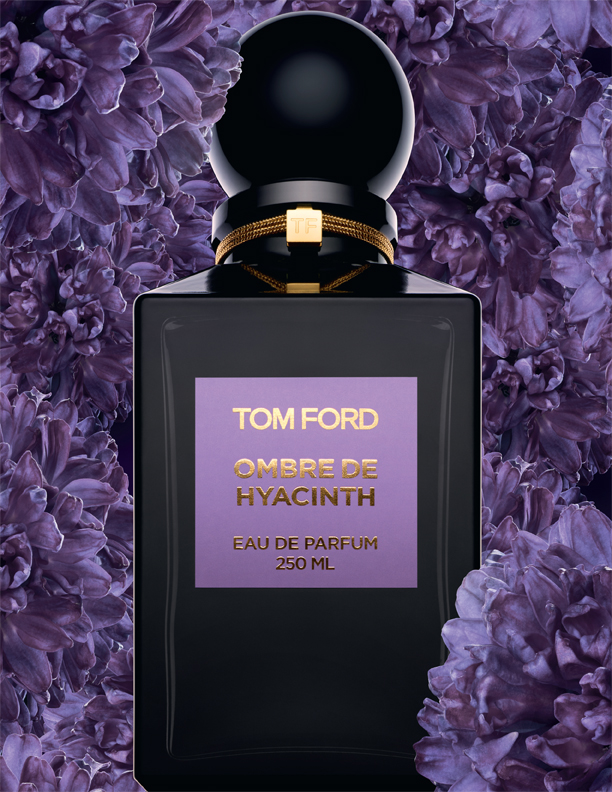
Perfume Review – Tom Ford Private Blend Ombre de Hyacinth (The Jardin Noir Collection)

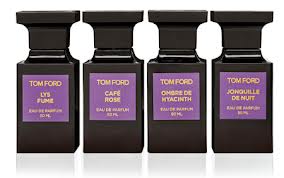
Jardin Noir CollectionIn 2012, Tom Ford released his Jardin Noir collection for his Private Blend line of fragrances. The collection consisted of four supposedly dark, twisted, “bewitching” takes on traditionally sweet, innocent flowers: narcissus, hyacinth, rose and lily. The fragrances are: Café Rose, Jonquille de Nuit, Ombre de Hyacinth and Lys Fume. I have three of the fragrances (Café Rose, Lys Fumé and Ombre de Hyacinth) and have tested two of them but, for reasons of length, this review is solely for Ombre de Hyacinth.

According to Now Smell This, Tom Ford had the following perspective and goal for the line:

When you showcase their darker and less innocent aspects, flowers can become so thrilling and beautiful, they could almost ruin you. That was the sensation I was after.

Bergdorf Goodman appears to have the full press release description for the Jardin Noir collection:

Jardin Noir explores the forbidden sides of four of perfumery’s most treasured blooms: narcissus, hyancinth [sic], rose, and lily.

Convention is abandoned and unexpected ingredients converge with bewitching and intoxicating results. Iconic flowers fall open, dropping their innocent facades to reveal the subversive beauty and fierce elegance they normally keep hidden.

OMBRE DE HYACINTHI had extremely high hopes for Ombre de Hyacinth as an ideal Spring fragrance with a slight edge. For one thing, I adore the scent of the flower which I always associate with March and certain cultural festivities in my family. For another, the description of the scent was beautiful:

Sophisticated. Voluptuous. Passionate. Ombre de Hyacinth creates bewitching tension as hyacinth cloaks its voluptuous beauty behind cool, aristocratic finery.

Ombre de Hyacinth was created by Calice Becker and, according to Fragrantica, the notes are:

Top notes are galbanum, violet leaf, magnolia petals and olibanum [frankincense]; middle notes are hyacinth, pink pepper and jasmine; base notes are galbanum, benzoin and musk.

The very first impression I had of Ombre de Hyacinth was soap. Light, airy, aldehydic, floral soap bubbles with an underlying note of powder. Mere seconds later, there was a strong note of zesty, fresh lemon and lime. The zesty lemon soap image was replaced after ten minutes by galbanum’s bitter greenness atop a woody element.

Galbanum is the bracingly bitter, distilled oil from a Persian shrub and it has a definite greenness; sometimes, it also has an earthy or slightly resinous undertone. Here, it was mostly just sharp, mossy,bitter, and fresh. On occasion, it faintly resembled the dark soil of a freshly tilled garden, but I had a much less earthy experience than some. There was also some sharp black pepper which added an even greater bite to the fragrance.

The peppered wood notes continued to increase in prominence, though the scent was still very green and dark. Thirty minutes in, there was a hint of musky jasmine. For those who struggle with jasmine, you might be relieved to know that it only lasted about twenty minutes on my skin before vanishing, and that it was always very sheer and light. All that was left was that impression of black pepper and wood with some amorphous “floral” notes, soap, and a hint of powder. There was the mere suggestion of hyacinth but, at this point, it was far from strong. It most certainly feels nothing like the actual flower to my nose and it’s a definite disappointment.

There was an odd aspect to the florals that I couldn’t pinpoint, so I looked up one of the ingredients that I was not familiar with — “Violet leaf” — on Fragrantica, and bingo! According to their description, violet leaf is a

metallic smelling, green and aqueous note that is common in modern masculine and unisex fragrances, providing a fresher and non-retro note compared to traditional sweet violet.

Yes, metallic, green and simultaneously aqueous was exactly what the florals smelled like. That mélange of notes, when combined with the bitter greenness of the galbanum and the soapy aspect of the aldehydes, was quite an odd twist on the typical fresh, Spring-like floral fragrance. And I can’t say I was crazy about it. 

Hyacinth from PicsToPin ComAfter about ninety minutes, the scent softened further becoming just some vaguely amorphous impression of freshness: lightly powdered, lightly soapy, lightly woody, lightly aquatic, fresh florals with a hint of greenness. Ombre de Hyacinth remains that way until shortly before the fifth hour when — finally — the hyacinth arrives on the scene. On par with the rest of the perfume, it is extremely light, airy, tinged by soap (again), endlessly fresh, and very redolent of Spring. I feel as though I’m repeating myself ad nauseam, but I can’t help it. This is not a complicated scent. And it’s about as “dark” and twisted as a poodle.

Personally, I would have much preferred a more concentrated essence of hyacinth instead of something that is really akin to a generic, fresh floral which just merely happens to have some quiet hyacinth touches. I would also have preferred something far less soapy and aquatic. However, for those who like fresh, clean florals that are sheer (bordering on translucent), Ombre de Hyacinth may be perfect.

This is not a strong floral or even a strong hyacinth fragrance. Everything about the scent is light — right down to its sillage. In the opening hour, the perfume’s projection is moderate and, thereafter, it drops to become very close to the skin. Its gauziness makes it extremely office-friendly. Yet, it has surprising tenacity for something so airy and translucent. All in all, Ombre de Hyacinth lasted just under ten hours on my perfume-consuming skin.

Nonetheless, I think it’s hugely overpriced for what it is. $205 at the low end of the scale seems very high for a light, fresh, soapy floral scent. It’s not exactly an uncommon category of fragrances, after all.

The Non-Blonde reached the exact same conclusion. She had a slightly similar experience to mine which she boiled down to four words: “nice French hyacinth soap.” But at least she was lucky enough to have a heavy hyacinth start at all! I quite envy her, especially as she initially felt as though she were in a Monet painting. (Lucky devil.)

After about fifteen minutes of walking around inside a Monet painting, the fantasy starts to fray at the hem and disintegrate. The abstract floral heart becomes very soapy and loses its best characteristics. There’s nothing narcotic or illicit in a rental vacation cottage out in the country, as clean and quaint as it might be. It smells good, but the composition flattens in front of my eyes (or nose) and loses any depth, shadows, and “decadence” that Ford aspired to have there. [¶] The dry-down remains bathroomy.

I experienced a lot more woody, peppery notes than she seems to have done — not to mention that disconcerting violet leaf metallic, aquatic accord — but, yes, it does really evoke a cottage out in the British countryside, especially once the more peppery notes subside. A less charitable person might just say it epitomizes expensive hotel soap. Or, as one poor sod on Fragrantica wrote, “This on me smells just like Carpet Fresh and Irish Spring soap – for hours”….

Nonetheless, I would be tempted to recommend it to those who like extremely fresh, clean, soapy scents. Except for one thing. To quote the Non-Blonde: “this Tom Ford fragrance is grossly overpriced for what it is.”

DETAILS:
Cost & Availability: For some odd reason, none of the Jardin Noir fragrances are listed anywhere on Tom Ford’s website. They are, however, available at numerous high-end department stores where its price is like that of other Tom Ford fragrances: $205 for a 50 ml/1.7 oz bottle, or $495 for a 200 ml/8.45 oz bottle. In UK pricing, they sell for £135.00 or £195.00, depending on size. In the US, you can find the fragrance at: Bergdorf GoodmanNeiman Marcus, NordstromSaks Fifth Avenue, and many others. In the UK, you can find it at Harrods or Selfridges. Elsewhere, Tom Ford fragrances are carried in numerous different countries; hopefully, you can find one near you using the store locator on the Tom Ford website.
Samples: If you are intrigued, but are also sane enough not to want to spend such a large amount without testing it out first, I suggest stopping by one of the stores listed above for a free sniff. However, you can also find samples of Ombre de Hyacinth starting at $3 on Surrender to Chance, or on other decant/sample sites like The Perfumed Court. I think Surrender to Chance has the best shipping: $2.95 for any order, no matter the size, within the U.S., and $12.95 for most orders going overseas. (It’s a wee bit higher if your order is over $150.) International shipping has leaped up in price (from $5.95) due to the U.S. Postal Service’s recently increased prices.

Review En Bref: Montale Aoud Safran

If you’re a regular reader of this blog, you’ll know that my personal nemesis is Montale, the French niche perfume house known primarily for their panoply of agarwood fragrances. Whenever I wear one, I feel like Sisyphus crashing down the mountain after a Herculean struggle. In fact, Aoud Lime will forever remain my kryptonite, a scent of Chernobyl proportions that astronauts in space could detect from a mere drop and which riot police really should consider using for crowd control.

Today, however, I felt that hope may not be lost and that Montale may, eventually, perhaps, win me over. It’s all thanks to Aoud Safran which took me much further up that Sisyphean mountain, though its simple linearity failed to create true love.

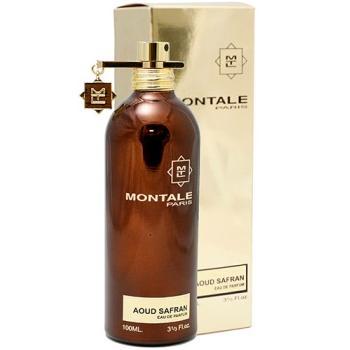
montale_aoud_safranMontale describes the perfume as follows:

An exceptional combination of three materials with powerful spiritual impact: the Red Gold – the Saffron – the mystical Aoud and the Roses from Arabia for a highly sensual fragrance.

The notes are as simple as that: saffron, Arabian rose and agarwood/oud. Now, saffron is one of my absolute favorite ingredients, but that is no guarantee that I’ll like a fragrance, especially if it involves Montale’s typical take on agarwood. So, I fearfully put on a few drops — far below what I usually apply — and waited to be blown to outer space by Montale’s usual, ferocious, and feral potency.

Instead, I was overwhelmed by a stunningly beautiful, warm, buttery, red saffron. It was so good that I overcame my fear, and put some on the other arm as well. (I know, it’s truly quite shocking!) The saffron was followed by a brief instance of sharp alcohol of the rubbing variety, but it vanished in few seconds. On its heels was sweet, red rose upon a backdrop of subtle oud. The rose note was rich, beefy and as fleshily red as a hunk of rare sirloin. It helped to really sweeten the agarwood which was surprisingly mild — both by the standards of an oud fragrance and for a Montale oud in particular. Even more surprising, the agarwood was not even remotely medicinal, camphorous, bitter or plastic-y like pink bandaids.

There is a great warmth to the fragrance, unlike some of the colder, stonier or screeching treatments of oud in the Montale fragrances that I’ve tried thus far. I don’t even think it’s because of how the other ingredients sweeten the agarwood; I think it’s because the oud is a completely different beast than it was in Aoud Lime and Aoud Blossom. It seems almost more like a regular woody note than actual agarwood. In fact, I wondered if it was really agarwood at all; that’s how shockingly different it is. As time progresses, the oud takes on a distinctly peppery note, as if slathered under heaps of crushed black pepper, but that fades away after twenty minutes, too. All that’s left as time progresses is a very faint impression of some amorphous “wood” note.

The agarwood is never the star of this show. At first, it is the saffron which is simply stunning and very heady, singing its aria of warm nutty sweetness. The rose note is there, but it shyly waits outside the limelight. After an hour, however, it joins center stage and joins with the saffron in a lovely duet.  Eventually, about three hours in, all that is left is the rose who stays to sing a solo for another three hours. And that’s about it. The perfume never progresses in any way beyond that simple duality and linearity.

With the exception of the linearity, Aoud Safran does not seem like any of the other Montale perfumes that I’ve tried thus far. It’s not only the peculiarly muted, emasculated and de-fanged nature of the agarwood (though that is pretty striking as compared to the way it manifested itself in Aoud Lime and Aoud Blossom). No, it’s also the fact that Aoud Safran is both quiet and somewhat rich smelling. There is nothing remotely synthetic, chemical, astringent, abrasive or antiseptic about the scent; and it smells as though expensive ingredients were used.

Furthermore, the potency and sillage are almost demure by the standards of the feral Montales I’ve tried thus far. Aoud Safran had good-to-moderate projection for the first forty minutes; you could smell it maybe from a foot and a half away. After that, however, it dropped dramatically. By the end of the second hour, the scent barely hovered over the skin. By the end of the third, you actually had to put your nose on your arm to smell it. After six hours, all lingering traces were gone entirely. Again, relative to the Montales I’ve tried, that is quite a volte-face.

All in all, Aoud Safran was a pretty, uncomplicated, simple saffron and rose scent. However, those seeking a real agarwood or agarwood-heavy perfume may be disappointed. On the other hand, those who have some problems with agarwood but who love saffron and rose may find Aoud Safran to be ideal.

Unfortunately, there are a plethora of fragrances on the market with saffron, rose, oud, or some combination thereof. Many of those perfumes have a lot greater depth or complexity to them than Aoud Safran. Personally, I would recommend the stunning, spectacular Trayee by Neela Vermeire Créations if you wanted a mesmerizing scent whose notes include hefty doses of all three ingredients (but with many others as well). Its range, kaleidoscopic nature and richness render it far more than a mere, simple saffron, rose and oud scent. Plus, it lasts for an astonishingly long period of time.

Nonetheless, Aoud Safran is a very approachable fragrance. And it helped Sisyphus climb just a little bit higher up the Montale mountain…

DETAILS:
Cost & Availability: Aoud Safran is an eau de parfum and is available on the Montale website where a 3.3 oz/100 ml bottle retails for €110. (They don’t offer the cost in other currency units.) There is no smaller size than 100 ml. Montale offers a 20 ml mini-bottle of Aoud Safran for free at the time of purchase. The fragrance is also available at Parfum1 for $160 and at The Perfume Shoppe for $150. If you want to try a sample of Aoud Safran, Surrender to Chance sells vials starts at $3.99.

Perfume Review – Puredistance M: “M” for Molten Marvel

Molten lava, gold and red, coursing richly over dark rocks. An aristocratic cavalry officer’s perfectly oiled, brown leather boots, gleaming with scented oils of honey and rose. The richest amber and the darkest honey, intertwined in a kiss.

Source: Warren Photographic at WarrenPhotographic.co.uk

Source: Warren Photographic at WarrenPhotographic.co.uk

Those are the images which come to mind when I try “M” from Puredistance, a niche luxury house whose exclusive (and very costly) perfumes are made by Master Perfumers in London and New York. Puredistance M, as it is known, has an added cache: it’s made by the great Roja Dove himself.

Roja Dove. Source: The Glass Magazine.

Roja Dove. Source: The Glass Magazine.

Roja Dove is the only man in the world who bears the title, Professeur du Parfum. His legendary nose is said to be able to detect over 800 perfumes from a mere sniff. After working for almost twenty years for Guerlain, he left to pursue his own ventures which include the speciality boutique within a boutique at Harrod’s called Roja Dove Haute Parfumerie.
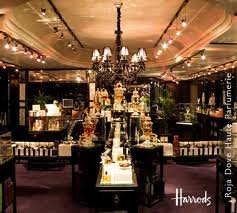
Roja Dove Haute Parfumerie.

Roja Dove Haute Parfumerie.

He also creates his own perfumes — some of the most highly acclaimed and admired in the world. A few years ago, he collaborated with Puredistance , a company whose perfumes typify the luxury and richness associated with his own fragrances. Each Puredistance perfume is an extrait de parfum blended at a whopping 25-32% concentration and filled with the finest perfume oils. Puredistance M for Men and Women (sometimes written as PuredistanceM) is no exception.

Puredistance-Packshot-M-01-HRReleased in 2010, Puredistance M is technically categorized on Fragrantica and elsewhere as a unisex leather perfume. All the talk about leather led me to expect a hardcore leather scent — which I’m very wary of —  so I was surprised to find “M” to be a glorious lovechild of an oakmoss chypre and an oriental that merely happened to have leather undertones. I was also relieved to see Puredistance’s own description for the perfume state pretty much the same thing:

M is inspired by the stylish comforts of the interior of a grey Aston Martin. M is a leather
chypre of classic proportions… with an unexpected oriental twist, which lends the perfume an original and modern feel.Puredistance-Metal-Perfume-Spray-Cap-01-HR

The warm smoothness of the blend is incomparable. The composition purrs softly along, weaving the leather accord into the road-map of spices, woods and resins. The chic, sensual and comforting trip takes the wearer from the leathery start to the softly-smoldering woody, balsamic base via the delicately earthy heart.

Enveloping and comforting as it is, M, with its elegantly smoky leather, has a hint of excitement and danger, which is just how it should be, in a fragrance inspired by Bond’s car.

Ingredients: Bergamot, Lemon, Rose, Jasmine, Cinnamon, Patchouli, Mosses, Cistus [Labdanum], Vetiver, Vanilla, Leather, Musk.

Puredistance M opens on my skin with a rich, unctuous, baroque mix of dark rose, labdanum, leather, jasmine, musk and a subtle dash of citrus. There is the swirling aura of leather all around, but it’s almost ephemeral at this point and nothing distinct. And, yet, there is also the faint impression of a barnyard that pops up, only to flit away after two minutes.

Rose Petal Honey. Source: Gardenista.com. (Click on photo for the website which has a DIY recipe for rose-infused honey.)

Rose Petal Honey. Source: Gardenista.com. (Click on photo for the website which has a DIY recipe for rose-infused honey.)

The rose is rich, dark, beefy and meaty; it is also slathered with the darkest honey you can imagine. The sweetness tames any zestiness of the citrus note, rendering it sweet, not sharp. There is a noticeable backdrop of oakmoss but, unlike many chypres, it is never fusty, musty or dusty. Instead of being pungently dry, the mosses are sweetened by the honey notes from the labdanum resin — it’s absolutely glorious.

Interestingly, the second time I tested Puredistance M, the oakmoss was even less noticeable in the start. Same with the citrus notes. Instead, the predominant impression was a panoply of honeyed beeswax, rich roses, dark honey and cinnamon. In fact, honeyed beeswax is such a persistent part of this perfume on both occasions that I wore it that I am convinced it is one of the hidden ingredients, along with cloves and a smidgen of cumin. I am also convinced that Puredistance is one of those perfectly blended perfumes which will reveal different facets each time you wear it.

Source: FilterForge.com

Molten Lava. Source: FilterForge.com

The combination of notes — on both occasions — lead to an overwhelming impression of molten lava: a fiery river of honeyed labdanum turned burnished red from spices and roses. The labdanum is so rich that, at times, it has a faintly burnt quality to it. In fact, during my first test, there was an impression almost of burnt wax. The predominant note, however, is of a very balsam-like resin that is as dark as possible; it’s unctuous, opaque and thick. It’s hard to describe what labdanum smells like to someone who has never smelled it but, at its core, it is far more than just an amber-y smell. It takes honey to a depth that is almost unimaginably medieval in its complex, burnished richness. At the same time, it has a subtle, almost dirty, nutty, slightly leathered edge that is never animalic but which definitely turns the whole thing into something more masculine and musky than actual honey. I love labdanum and it is the fiercely beating heart to Puredistance M, evident from start to finish, in the richest way possible.

About fifteen minutes in, the leather starts to appear. It has the feel of darkly brown, softly caramelized aged leather. There is a subtle, earthy feel to it that I suspect comes from the underpinnings of the vetiver which is never a really detectable note, in and of itself, but which is a quiet thread in the overall tapestry. I know the perfume is meant to evoke the leather seats of a luxury car and, for most people, Puredistance M does exactly that. For me, however, I imagine an aristocratic cavalry officer’s well-worn riding boots, tended to lovingly with a mix of beeswax and oils tinged with rose, honey and jasmine.

Royal Household Cavalry - HouseandCountry dot tv

This is really the smell that I expected from Chanel‘s legendary Cuir de Russie which was inspired by Tsarist imperial officers and the Russian treatment of birch leather. Instead, on my skin, Cuir de Russie was all horse feces under a heavy pile of soap. I’m in a very distinct minority on that point, but the disappointment remains the same. No Cossacks, no Imperial Grand Dukes, no passionate sensuality evoking Coco Chanel’s love affair and, most of all, no smooth, aristocratic leather.

Young Winston Churchill in uniform. Source: Imgur.com

Young Winston Churchill in uniform. Source: Imgur.com

With Puredistance M, however, the leather is pure elegance. It feels screamingly rich, covered with cognac, warmed by honey, and reddened by quiet spices. The latter start to become more evident  about thirty minutes in. Cinnamon is the most obvious note, but there is also the merest touch of cumin. It’s not the sort of sweaty-smelling cumin; it’s simply dry and a little bit earthy. I’m convinced there are also big dollops of cloves in Puredistance M, adding a little bit of fiery heat to the sweet honey and resinous labdanum.

The floral and musk accord also become more noticeable around this time. The musk is not skanky, sour, or redolent of personal intimacies. Nor is it even remotely animalic. Instead, it is quietly intertwined with the rose and the increasingly evident jasmine notes for a combination that is narcotically heady and extremely rich.

An hour in, to my surprise, Puredistance M changes quite drastically. First, it becomes significantly less opaque and thick, though it is still very strong and heady. Second, it turns from a floral oakmoss chypre with oriental elements into something that, to me, is purely orientalist in nature. The oakmoss was always a subtly blended accord in the opening, intertwined perfectly with the other notes but never dominating. Now, however, it is completely overshadowed by the growing impression of honeyed beeswax with spices and cinnamon-tinged vanilla. The floral notes are still there, however, including the increasingly noticeable jasmine note mixed with a slightly sweet dose of patchouli. Lastly, the sillage has dropped quite substantially. Where Puredistance M was evident from a few feet away in the first hour (at least, when you put on a decent-sized amount), it is now hovering just a foot above the skin.

Vintage bottle and box of Bel Ami.

Vintage bottle and box of Bel Ami.

In this first ninety minutes and during the opening stage, Puredistance M strongly reminded me of Hermès‘ classic Bel Ami in its vintage form. Bel Ami is a scent I grew up with and loved, so while I haven’t smelled it in years, it was the first thing on my mind in the opening hour of Puredistance M. In fact, I’ve read that Bel Ami is one of Roja Dove’s favorite fragrances.

Unsurprisingly, therefore, vintage Bel Ami is the scent to which most people compare Puredistance M, suggesting that you save your money on the latter and buy the Hermès instead. I don’t necessarily agree. Even if we consider the much stronger, more potent vintage version of Bel Ami (as compared to its current reformulated self), Puredistance M is still significantly richer, darker and denser, with much more labdanum and far less citrus influences. Plus, based on my memories of Bel Ami, it only explains the first ninety minutes of Puredistance and certainly doesn’t fit with its remaining development. Because, you see, at the start of the second hour, the perfume changes again and now, it is almost a dead ringer for Serge LutensCuir Mauresque!

I recently reviewed and loved Cuir Mauresque, so I was quite stunned to find its middle notes replicated here in Puredistance’s similar stage. There are differences in the notes in each perfume and Puredistance significantly lacks the animalic civet of the Lutens but, on my skin, the middle stages for both perfumes was musky jasmine, honey, and resined amber. The burnt styrax in the Lutens is mimicked here by the occasionally burnt aspect to the different sort of resinous amber, the labdanum, and both scents share a subtle, sometimes imperceptible hint of cumin and cloves — all supported on the subtle base of leather. It helps that the Lutens was never very animalic or dirty on my skin because the civet was never strong. Here, however, the real link between the two fragrances is the jasmine, musk and dark amber combination. With the oakmoss having vanished in the second hour, Puredistance has turned into a seductive floral oriental.

Bees on beeswax. Source: McDanielHoneyFarm.com

Bees on beeswax. Source: McDanielHoneyFarm.com

The final stage of Puredistance M is very simple and is no longer anything close to Cuir Mauresque. The dry-down consists almost entirely of dark, dirty labdanum amber; rich honey and beeswax; and a hint of musky vanilla hovering underneath. The amber accord is tinged by the merest breath of something earthy, but it’s as light as a feather. In its very final hour, Puredistance M evoked pure honey and nothing more. At no time in its development were some of Puredistance’s more earthy notes dominant players; both the vetiver and patchouli added some underlying support but they were barely noticeable in their own right. There was no dirtiness or rooty darkness to the scent, and never anything animalic to the leather.

Interestingly, for a perfume with such strong notes, the sillage on Puredistance was not enormous. It was evident from a few feet away for the first hour, then dropped dramatically. By the second hour, the scent hovered half a foot away from the skin. Thereafter, it became very close and you’d have to be nuzzling someone’s neck to detect it.

The sweetness and spices make Puredistance the least “butch” leather that I have ever encountered. When you throw in the prominant florals, it also becomes one of the most unisex leathers. This is nothing like the stony, cold, black leather that I experienced with Montale‘s Aoud Cuir d’Arabie or the barnyard leather of Chanel‘s Cuir de Russie. It’s also far from the bitter, green, harshness of the butch legend, Bandit by Robert Piguet, which I admired and found most intriguing but which, in hindsight, is simply too brutal for me. It certainly is not remotely close to Tom of Finland by Etat Libre d’Orange which wasn’t even leather on my skin but, rather, powdered, vanilla suede.

Puredistance M is an absolutely marvelous scent, but its steep price is enough to give one the vapors. A miniscule 17.5 ml/ 0.59 fl. oz sized spray (essentially, a travel-sized mini) is a whopping $198. The full 100 ml/ 3.4 fl oz. bottle? A stunning $590! On Luckyscent (where, to my astonishment, that $600 bottle is sold out), one reviewer makes this observation about the scent and the price:

When people say that M makes everything else obsolete, I am afraid that is very close to the truth. From the very first whiff till it fades away (up to 24 hours later), this is an experience of constant astonishment. And just as much – constant, giddy delight. Of course, I will still wear other favorites. But M inhabits that rarified air of very few others – Gobin Daude Nuit Desert and Guerlain Derby come to mind (in terms of quality, not scent). The price is initially off-putting, but the 18ml bottle is easily the equivalent of many 100ml edp’s. The very tiniest little drop last all day, into the night, and into the next morning. Like I said, constant astonishment. This is the real deal.

I don’t agree. I used far more than the tiniest little drop to test the perfume the first time around. When, on the second test, I used the smallest possible amount, the perfume faded away in sillage quite quickly, demonstrated far less complexity, and also lasted far time. On neither occasion did Puredistance M last 24 hours. That said, when I used the equivalent of one large spray, the scent lasted about 11 hours — and I should bloody well hope so for something that is concentrated extrait de parfum! But, again, it was hardly a drop, so I hardly think that the 17.5 ml bottle is “the equivalent” of many 100 ml full bottles of eau de parfum. Nonetheless, on skin which is less voracious than mine, I think the $198 travel mini might be a good compromise if you really love the scent.

[UPDATE – 3/26/13: The perfume, along with all the other fragrances in the Puredistance line is now available in a much more affordable pricing scheme. All four scents now come in a 60 ml bottle of pure parfum extract that costs $330 or €275. For the concentration and size, that is a much, much more accessible deal. You can find the new bottles on the company’s website at the link listed below in the “Details.”]

On Fragrantica, one commentator says simply to buy Bel Ami and to save your money, but I don’t fully agree with that either. Even if you buy vintage Bel Ami on eBay (where I recently saw a bottle starting at around $65), Puredistance M is a much richer affair. Though I can’t remember Bel Ami’s dry-down after all these years, what I do remember is a much more citrus-aromatic chypre which turns into leather that is nothing as sweetly resinous or honeyed as Puredistance M. A review of Bel Ami’s notes on Fragrantica supports that impression: there is no labdanum, not a lot of resin, and those amber notes which are present do not seem to be the driving heart of the perfume according to people’s votes of the main notes. Still, if that is the only financially practical alternative, then Bel Ami may be worth pursuing. (So long as you avoid the current reformulation and stick with vintage.)

My belief is that price is a very subjective thing and, if the quality is there, an outrageous price may well be worth it to a particular individual. For me, a full bottle of Puredistance M is well outside my means. To my cheapskate mind, it translates to five full bottles of Serge Lutens or Chanel. And the 0.5 oz/ 17.5 ml mini is similarly too expensive, given the microscopic size and what else I could buy. If, however, price were no object, I would absolutely buy Puredistance M. The “M” really stands for magnificent, molten masterpiece.

DETAILS:

Sample or Gift Set of four Puredistance parfums.

Sample or Gift Set of four Puredistance parfums.

Cost & Availability: Puredistance M is available in a variety of different sizes and forms on the Puredistance website. You can buy a 17.5 ml travel size spray for $198 or €168. The full bottle is 3.4 oz/ 100 ml and costs $590. [UPDATE: The perfume is now also available in a 60 ml bottle for $330 or €275.] However, you can also buy Puredistance M as part of a sample Gift Set of four Puredistance perfumes (I, Antonia, M and Opardu) with each sample being 2 ml. The whole set costs $59 and includes free shipping. Puredistance M is also available at Luckyscent in both the $198 travel size and the $590 full size, though the latter is sold out until the end of March (2013). Luckyscent also sells a 0.7 ml sample vial for $6. I obtained my sample from Surrender to Chance, where prices start at $3.99 for a miniscule 1/4 of ml vial, $7.98 for a 1/2 vial and $15.96 for 1 ml.

Perfume Review: Chanel 31 Rue Cambon (Les Exclusifs)

Chanel headquarters

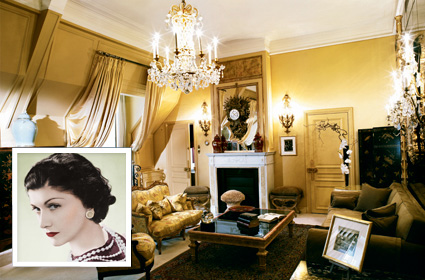
31 Rue Cambon is named after Coco Chanel’s apartment above Chanel’s long-time headquarters at the same address, and was introduced to the world in 2007 as part of Chanel’s six-line prestige collection called “Les Exclusifs.”

Chanel's apartment at 31 Rue Cambon. Source: GirlsGuidetoParis.com

Chanel’s apartment at 31 Rue Cambon. Source: GirlsGuidetoParis.com

The fragrance was created by Chanel’s house perfumer, Jacques Polge, and is supposed to reflect Chanel’s personal taste for the classically simple but, also, the baroque. According to Chanel’s own description, 31 Rue Cambon was

[t]he epicenter of the world of Gabrielle Chanel, a place that harmoniously combined her need for simplicity with her taste for the baroque. It took the complex form of a beautiful Chypre fragrance to capture these contrasting passions, also present in Haute Couture, in a scent. This exceptional fragrance combines the mysteries of both sensuality and elegance.

The categorization of the perfume as a “chypre” raised a lot of debate and discussion when this perfume was first released back in 2007. A chypre is almost invariably something that has oakmoss as its core foundational element; and there is absolutely none here. In fact, the century-plus era of the famous “chypre” family of perfumes being one of the most significant and influential is now over, thanks to the EU and IFRA. (I will spare you one of my rants on that subject but, if you want to read more about what a chypre is supposed to be, feel free to use the Glossary linked at the very top of the page.)

Though Chanel’s description references chypres, Now Smell This states that Jacques Polge himself describes the perfume as an “oakmoss-free chypre.” Whatever the oakmoss issue, in an interesting turn of events, Chanel itself does not classify the scent as a “chypre” at all. Instead, on its page listing all the Exclusifs, it categorizes 31 Rue Cambon as a “Smooth Woody Floral.” That’s just as well, because the description sums up 31 Rue Cambon perfectly, in my opinion.

31-rue-cambonChanel offers no notes for the fragrance on its website but, Now Smell This says that the notes are said to include “bergamot, iris, jasmine, patchouli and labdanum.” Personally, I am tempted to agree with  the commentator, cylob“, on Fragrantica, who believes that the full list of notes are as follows:

pepper, bergamot, orris, narcissus, jasmine, patchouli, ambrette, vetiver, labdanum.

31 Rue Cambon opens on my skin with bergamot and aldehydes. The bergamot reads here as a citrusy lemon and not like Earl Grey tea (as it sometimes does). The aldehydes, to my huge relief, are not waxy and extremely soapy but, rather, light and incredibly fizzy. Moments later, there is the subtle breath of jasmine, light and airy, never indolic, heady or narcotic. When combined with the aldehydes, they really fizz in a way that reminds me, with a smile, of YSL‘s Champane/Yvresse. Here, there is a definite feeling of sparkling champagne, only it’s lemon and jasmine in an effervescent accord. There is a subtly powdery note of iris from the orris and, then, vetiver.

The vetiver is very interesting in this opening stage. It’s fresh, green and more akin to lemon grass than to anything dark, earthy or rooty. Its freshness undercuts any chance that the jasmine could be indolic and adds to that overall impression of bright, green Spring colours, flecked with dollops of bright yellow and white.

Field of NarcissusThe colour image of yellow is enhanced by a sense of narcissus hiding behind the other notes, combined with something that very much feels like the bright cheeriness of daffodil (which is often another name for daffodils). The whole thing is very light and sheer, a gauzy veil of floral notes dominated primarily by lemon and fizzy aldehydes, but the feeling of both the yellow colour and of narcissus is there.

Chandelier reflectionsThirty minutes in, the perfume has subtly changed, almost like light shining on a different part of a crystal chandelier and reflecting different facets. The aldehydes and lemony bergamot are joined by a much stronger note of iris, a touch of a pepper, and a suddenly earthier, woodier vetiver whose rootier characteristic has started to emerge. The iris adds some soft powder, but it’s light and far from the sort of powder you find in Guerlain’s signature Guerlainade. Any fear of powderiness is undercut by the dryness of the quiet pepper note. Like the iris, the jasmine is also much stronger now, though still light in texture and still far from indolic. Also emerging for the first time is the ambrette; it’s a flowering shrub that is sometimes called Musk Mallow and whose parts are often used to replicate the scent of (animal) musk. Here, like the rest of the perfume, its musky touch is light, soft and gauzy.

An hour in, the oddest thing happens. The perfume seems to vanish entirely. I was in disbelief, sniffing my arm like a hyena attacking the first food he’s seen in days. Nothing. Gone. 31 Rue Cambon is often bemoaned for its longevity issues, and it’s certainly not the most enduring in the line, but this seemed to be taking things a step too far. Then, suddenly, there was a hint of fragrance: musky, faintly woody floral notes that were too soft and mild to be more than just a vague hint of something. Then, it vanished again.

At the second hour mark, lo’ and behold, like a Jack in the Box, it popped back up! And not only did it suddenly re-appear but it seemed stronger than it had been before. Strong jasmine and sweetness, accompanied by light powder, green notes and vetiver. I can’t account for it. There are ghostly notes, but an entirely ghostly perfume?! It was the strangest thing, but there is no denying that 31 Rue Cambon decided to leave, return, leave and then reappear to stay quite a few times during the time I tested it. I have to wonder if its mercurial nature is why so many people think the perfume has incredibly short longevity. Maybe they’re not sniffing their arm at the right time when it decides to join the party, so they missed its prima donna return?

Whatever the reason, I have to say that I liked 31 Rue Cambon a lot more than I had expected to. All the oft-told stories about how it barely shows up, the low sillage, and the extremely brief longevity issues — not to mention the whole muddy mess involving chypres/non-chypres/modern-take-on-chypres — had left me frowning a little and anticipating a scent that would be problematic. To my surprise, 31 Rue Cambon was very good. And I attribute most of that to the dry-down because it’s absolutely lovely.

In its middle to final stages, the perfume becomes a soft veil of sweetness and green notes. At first, about four hours in, it is soft patchouli, musk, earthy (but light) vetiver, and an amorphous, generalized “floral” accord. The patchouli note is far from the 1970s dark, dirty, hippie patchouli (which I actually quite adore); it’s just a faint whisper that adds a touch of sweetness to the vetiver. The latter is also just the merest breath of depth and earthiness. Actually, sometimes, the perfume just evokes some sort of “green” note without even seeming like vetiver.

Later, about eight hours in, the perfume simply becomes light amber with just a dab of labdanum. It’s a sweet, almost honeyed scent that is not opaque, thick or resinous. I adore labdanum and the depth it adds to ambery elements. Here, it’s too light to have serious body of its own, but it adds a perfect amount of depth to the amber to stop it from being totally translucent and faint. The whole thing feels a little like being in candlelight or in the soft warmth of afternoon sunlight.

Those final hours are quite a sharp juxtaposition to the fizzy, bright opening notes filled with citrus, aldehydes, iris and jasmine. I wouldn’t say the perfume has turned “baroque” — to use one of the descriptive adjectives applied by Chanel to 31 Rue Cambon — because it’s far too gauzy in texture. No, I think 31 Rue Cambon is best described as a mercurial woman who is lightheartedly playful and teasing in the sharp brightness of the morning, and slightly more weighty, sensuous and serious in the warmer, golden light of the late afternoon.

31 Rue Cambon is not to my personal taste and style, and I would never wear it, but it surprised me. In a good way. I think that, if people go into it without any expectation of a “chypre” and just approach it with an open mind, they too may be surprised. It’s a very Chanel scent and oozes that house’s classique, elegant signature. It’s neither revolutionary nor earth-shatteringly unique — but it wasn’t trying to be. That’s simply not Chanel. But it’s very, very good. 

The only significant problem with 31 Rue Cambon seems to be its longevity issues. On average, it seems to last most people around four hours. Some have said significantly less, with one commentator on Fragrantica saying it lasted a mere 30 minutes! If I hadn’t persisted and kept on smelling my arm, I would have given it an hour. Yet, to my disbelief, I could smell lingering traces of the labdanum at the 9 hour mark! And you know how my body consumes perfume! So, I have to wonder if a miniscule fraction of those people simply didn’t realise that the perfume was still on them, except it was like a teasing ghost that completely vanishes only to flit back on the scene, then to repeat  that annoying act a few more times? Not all, but perhaps for a handful?

Either way, longevity is a definite issue, even if you’re not continually sniffing your arm to detect all of 31 Rue Cambon. The problem might be solved if the fragrance came in the stronger eau de parfum concentration; alas, it is available only in the significantly lighter eau de toilette formulation.

Nonetheless, it’s still a scent worth trying. At the very least, it will let you know what all the swooning is about, because this is one very hyped, much adored fragrance. In Perfumes: The A-Z Guide by the perfume critics, Luca Turin and Tania Sanchez, Ms. Sanchez writes a veritable ode to 31 Rue Cambon, awarding it 5 stars and raving orgasmically that “I cannot remember the last time, if ever, a perfume gave me such an instantaneous impression of ravishing beauty at first sniff.” In fact, she states, point-blank, that it is “one of the ten greats of all time, and precious proof that perfumery is not dead.”

I think all that goes too, too far. 31 Rue Cambon is good, but it’s not that good! It’s a beautiful scent which floral, aldehydes lovers will love in the opening, and which Orientalists will love in the closing, but it’s really not a particularly breath-taking perfume of ravishing beauty. It’s just a very typical Chanel that exudes elegance.

By the same token, I also don’t agree with Robin at Now Smell This who thinks this is “the best” of the Exclusifs. Out of those that I’ve smelled thus far, I would grant that title to Coromandel. (My review for that is here.) Perhaps that’s because I’m more of an Orientalist than she seems to be. If I weren’t, then maybe I would prefer 31 Rue Cambon.

Since I’m being contrary, I’ll go to the opposite side of things and add that I absolutely disagree with those few Fragrantica commentators who think that 31 Rue Cambon is a scent suited only to a very old, rich woman. To quote one assessment, written by “shabbus”:

This smells of wealth, but also of age. If you were sitting in the lobby of the Breakers Hotel in Palm Beach and a wealthy dowager entered and sat down next to you while her driver checked her in and made sure her bags were handled by the bellman, her Hermes scarf would smell of 31 Rue Cambon. And so would the Pomeranian on her lap.

No. Absolutely not, in my opinion. For some reason, the 31 Rue Cambon woman reminds me of Holly Golightly in Breakfast at Tiffany’s. Insouciant, breezy, mercurial, unreliable, fizzy, ditzy, but always elegant and feminine, and with the capacity to be slightly more warm, stable and serious at the end. Or perhaps it would be more like this playful side of a retro-looking Jennifer Garner in Chanel in a photo shoot taken in 2009:

Photo: W Magazine, 2009. Via The Daily Mail.

If I were to agree with anyone, it would be with the assessment at I Smell Therefore I Am whose review really encapsulated the overall feel and visuals of the scent:

For me, 31 Rue Cambon sits somewhere between the floral vanilla of Allure and the deep golden hues of Mitsouko.  It’s a bright fragrance, so shimmering at first, and really for a while, that it was hard for me to classify in any useful way.  Where Mitsouko is somewhat like sunshine through a pane of amber glass, 31 Rue Cambon is like sunlight hitting the beige upholstery of a sublimely cosy couch.  It’s well blended, and more than anything it simply smells like “Chanel” to me.

I think 31 Rue Cambon is the perfect scent for a woman wanting an elegant, discreet, soft woody floral with a slightly opulent edge of sensuality. Its soft elegance makes it never out-of-place — whether you’re at the office or on a date. In fact, its low sillage also makes it an ideal perfume for the office.

In a way, the development of 31 Rue Cambon actually feels a bit like a day at the office. Its restrained elegance and fizzy, bright opening evoke the feel of a bright Spring morning, as you go to work wearing a feminine but perfectly tailored and structured Chanel suit with a crisp white shirt underneath. Its surprising ambered warmth and softly seductive edge during its lovely final period is really akin to what happens, hours later, when a woman prepares to leave the office to join friends for drinks by letting down her hair and opening a few buttons of her shirt to reveal just the faintest suggestion of cleavage.

It’s very elegant, it’s very discreet, it’s very Chanel and, for some women, it may be “ravishing beauty at first sniff.”

Details
Cost & Availability: 31 Rue Cambon comes in two different sizes: $130 for a 2.5/75 ml oz bottle or $230 for a massive 6.8 oz/200 ml. You can find it exclusively at Chanel boutiques or on the Chanel website. You won’t find it at Nordstrom, Barney’s, Saks Fifth Avenue or the like, though I believe it used to be available in-store at Bergdorf Goodman. However, t’s not listed on their site, so your best bet is to go through Chanel itself. As for samples, you can find them at Surrender to Chance where prices start at $3.00 for the smallest vial (1 full ml).