Ormonde Jayne Orris Noir

Source: Fragrantica.

Source: Fragrantica.

On occasion, I’ll come across a perfume whose most striking characteristic for me is a textural one. Instead of specific notes or a movement of change throughout the stages, the perfume merely evokes a lovely creaminess that is almost devoid of an actual olfactory smell. That is the case for me with Orris Noir, a fragrance from Ormonde Jayne that is meant to be so “haunting” that it “defies description.” I’m afraid it fell far short of such a description in my eyes, but, then, in all fairness, what fragrance could positively live up to that line?

Ormonde Jayne is a high-end, niche London perfume house founded by Linda Pilkington in 2002. All her perfumes are created in conjunction with Geza Schoen, and Orris Noir is no exception. The fragrance was released in 2006, and is available in two concentrations: pure parfum (with 30% fragrance oils) and eau de parfum (25%). This review is for the eau de parfum.

Black Iris via Soundcloud.com

Black Iris via Soundcloud.com

Ormonde Jayne’s website describes Orris Noir as follows:

Orris Noir – so haunting, it almost defies description.

The Iris flower is named after the Greek Goddess of the rainbow, the messenger of the Gods and the Black Iris of Amman is the Royal symbol of the Kings of Jordan. Thriving in a landscape of ample sun, it is a rich, purple black flower of smouldering beauty.

This dark, spicy Oriental scent is for those who want to leave their mark.

A spellbinding perfume, Orris Noir is a rich, seductive aria of unmistakable individuality, not for shrinking violets.

Top Notes: Davana, pink pepper, coriander seed, bergamot
Heart Notes: Iris, [jasmine] sambac absolute, pimento berries, bay
Base Notes: Incense, myrrh, patchouli, chinese cedar, gaiac.

Source: Dailymail.com

Source: Dailymail.com

Orris Noir opens on my skin with black peppered lemon and cream, followed by a touch of pink peppercorn berries and a whisper of fruit. A spectral hint of rooty iris pops up at the edges, but it is very subtle. It carries the tiniest undertone of sweet carrots, I think, but the iris note as a whole is so muffled that it may well be my imagination. Certainly, when I’ve tested Orris Noir in the past using only a small quantity, none of it showed up. Instead, the main bouquet smells to me of a very milky, creamy tea with lemon, a vague and nebulous floralacy, pink peppercorns, and a touch of something fruity.

Source: artid.com

Source: artid.com

The issue of quantity impacting notes is interesting when it comes to Orris Noir because I noted differences based on that amount of scent that I apply. When I applied only a small quantity (perhaps 1/3 of a 1 ml vial), there was a brief suggestion of something fiery or biting from the pimento chili peppers, but it was so fleeting that it too may have just been imagined. At the same time, there was a more distinct puff of black incense in the background, but you had to sniff extremely hard and long to really detect it. Both elements, however, were minor and barely lasted.

In contrast, I could definitely detect the iris when I applied a greater amount of Orris Noir. (I used about 2/3rds of a 1 ml vial.) Regardless of quantity, however, and taken as a whole, the iris feels like a tertiary, very quiet, very muted player on the sidelines. For a fragrance that is intended to be a dark homage to iris, I’m afraid that Orris Noir was really everything but that for the majority of its development on my skin.

Davana. Source: hermitageoils.com/davana-essential-oil

Davana. Source: hermitageoils.com/davana-essential-oil

Instead, the primary bouquet of Orris Noir in its opening hour on my skin is extremely creamy Earl Grey tea. Not milky, for the textural quality of the fragrance goes beyond a merely lactonic quality, but rich, smooth cream. It’s infused with lemon, pepper, and, after 20 minutes, by the Davana. I happen to really like the last note, and I think Davana is an element that should be used more often in perfumery. It is an Indian flower with a very lush, velvety, floral smell and a fruity undertone, most specifically of apricots. Here, with Orris Noir, the apricot tonality is extremely subtle at first and the main aroma is of a petal-soft, vaguely tropical flower with endless creaminess.

Orris Noir remains that way for the next few hours, largely unchanged except for the sillage and subtle variations in the notes. It’s all lemon-pepper cream with davana florals, and an increasingly strong sense of fruitiness. The iris lingers like a ghost in the back, as does the cedar. In fact, the two together generally impart a wholly abstract, nebulous undertone of a woody, floral musk, but neither note stands out on my skin with any individual character. I would never sniff Orris Noir and think, “Ah, Iris,” because the flower is practically a nonentity on me after the first hour.

At the start of the second hour, the sillage drops to an inch or two above the skin, though the perfume is easily detectable if sniffed up close. The only major change occurs about 2.5 hours in, when there is the first, very muffled suggestion of jasmine. Orris Noir’s main characteristic continues to be a very smooth, textural creaminess, though it is becoming increasingly difficult to pull it apart into a specific, actual olfactory note. It also now feels more nebulously woody than purely floral in nature.

Source: de.123rf.com

Source: de.123rf.com

About 3.5 hours in, Orris Noir is a creamy, lemony, floral skin scent with light touches of jasmine, soft abstract woodiness, and a slightly fruited nuance. It remains that way until the end of the 6th hour when the jasmine finally steps out of the shadows, and takes over. There are lingering traces of the davana, but Orris Noir is primarily a very sheer, blurry wisp of sweet jasmine woody musk. The perfume remains that way until its very end. It lasted 8.75 hours with a large quantity, and just over 7.75 hours with a smaller amount.

Orris Noir is very pretty, easy-going, approachable, and smooth, but it is also a bit underwhelming, if I’m to be honest. Its creaminess was its most distinctive feature for me, and something that I enjoyed a lot. Plus, to my relief, Orris Noir had only the most microscopic drop of ISO E Super, unlike some Ormonde Jayne fragrances which practically ooze it out of every pore. Orris Noir was well-balanced, had some pretty bits, and was perfectly pleasant as a whole. Yet, I really wasn’t moved; none of it sings or stands out for me.

Tania Sanchez seems to have had much greater problems with Orris Noir. In Perfumes: The A-Z Guide, she classifies Orris Noir as a “peppery cedar” and gives it a low 2 stars. Her reviews states:

The name combines two of the biggest recent trends: orris (iris-root butter) is showing up everywhere, and so are perfumes named Something Noir (or Black Thingamajig). The trouble is that there’s nothing particularly iris or noir about this. Instead, it smells like lemon and pepper with an oily-woody background, slightly chemical and faceless, a rare misstep for the excellent Ormonde Jayne line.

I really don’t think it’s that bad, not by any means, though I do agree with the “faceless” part. I think my feelings would be different if I experienced a lot (or even some) incense in the fragrance, but I did not. Like Tania Sanchez, I thought Orris Noir was lemony-pepper, albeit with davana creaminess, some jasmine, and a nebulous woody musk.

Other bloggers, however, definitely experienced more incense, spiciness, and darkness than I did. Whether you read Eyeliner on a Cat, Bois de Jasmin, or The Non-Blonde, they seem to have detected a more sultry, quasi-oriental fragrance, though no-one thinks that the iris dominates or that Orris Noir is particularly bold. The bloggers all liked Orris Noir, and Bois de Jasmin’s review is quite representative of the general consensus:

Even if Ormonde Jayne Orris Noir does not present its promised black iris, it more than makes up for it with its exquisite combination of spices, incense ashes and velvety woods. Its form crafted out of resinous and balsamic notes is nevertheless rendered as luminous and weightless, like silk, rather than wool.

The spicy notes provide an opulent leitmotif that persists as Orris Noir develops. They frame the lemony green top notes and foil the sheer floral heart. The echoes of sweet warmth of allspice can be noticed in the rich woody base. The chilly breath of iris is quite a subtle accent in this vivid arrangement, yet it lends a certain restraint. Incense, smooth and smoky, envelops the composition in its translucent dark veil.

My skin seems to have brought out more of the davana creaminess than anyone else, especially as compared to those on Basenotes. They generally like Orris Noir, though not everyone gushes enthusiasm. Take the review by “Alfarom” who writes, in part:

No iris whatsoever, not “noir” at all.

That being said, if you’re fine with a peppery-woody-incensey fragrance dominated by a nice, yet unquestionably synthetic vibe, this is a pretty decent composition. Kinda dry yet, somewhat, slightly powdery, woody and incensey with nice piquant undertones. Far from being a masterpiece yet nice.

A number of women absolutely adore the scent, though a few think they detect a “rose” note which I suspect might be the davana at play. One of the more positive reviews reads:

Three words to describe Orris Noir: Gorgeous, gorgeous, gorgeous. Lighter than its name implies, but spellbinding nonetheless, ON skims along the surface of the skin so deftly I kept expecting it would disappear entirely any minute. Instead it became creamier as it opened up, and was still marvelously “there” hours after I first put it on. It is a beautiful blend of light spices and delicate exotic florals, the pink pepper, coriander and powdery iris (fortunately more iris than powder) definitely come through on me.

On Fragrantica, there is the same generally positive response to Orris Noir. Interestingly, a greater number of commentators picked up on the creaminess and the “candied, fruity” elements in the scent, while one reviewer, “Cohibadad,” also detected plenty of iris. Generally, a number of people seemed to think Orris Noir was quite oriental in feel, which just goes to show you the importance of one’s personal and definitional standards. For me, Orris Noir isn’t remotely oriental, even if one doesn’t use brands like Amouage as a baseline. For me, it’s a floral woody musk. I think that it is all going to depend on your skin chemistry and on your personal standards.

Orris Noir isn’t my personal cup of tea, but it’s a nice fragrance and those who like airy, creamy, discreet florals may want to give it a try. I think it skews somewhat feminine, as do some men on Basenotes, but it all depends on what you’re comfortable with. It is a very approachable scent that is versatile, and could also be worn to the office without making waves.

Disclosure: I was sent Orris Noir for review by Ormonde Jayne, but I had previously purchased my own sample from Surrender to Chance, and that is what I used for this review. In all cases, I do not do paid reviews, my opinions are my own, and my first obligation is honesty to my readers.

DETAILS:
Cost & Availability: Orris Noir is available in a 50 ml flacon of either parfum extrait or eau de parfum. The EDP price for the regular bottle (without the gold stopper) is $126 or £80. There is also a 4 x 10 ml travel set of Orris Noir that costs $100 or £64, a body cream of the scent, and other accompanying body products. Finally, there is a full Discovery Set that costs $75 or £48 for 2 ml sample sprays of the entire Ormonde Jayne line. It comes with free world-wide shipping. Orris Noir can be purchased directly from the Ormonde Jayne website, its two stores in London, and from HarrodsIn the U.S.: Ormonde Jayne is not carried by any stores in the U.S. at the moment. You would have order from London, but unfortunately, UK postal regulations for any perfume weighing over 50 ml is extremely high. The shipping cost to the U.S. will run you over $50, though that does not apply to the sample set. Elsewhere in Europe: Ormonde Jayne fragrances are carried by Senteurs d’Ailleurs in Brussels (though it has ceased its online e-sales), and by Zurich’s Osswald. For other vendors from Spain to Italy, Norway, Germany (where a large number of different retailers carry the line) and various other European countries, you can use the Ormonde Jayne’s Store LocatorSamplesSurrender to Chance sells samples of Orris Noir EDP starting at $3.99 for 1/2 ml. They also carry the Pure Parfum version.

Atelier Cologne Rose Anonyme

Rose Anonyme via the Atelier website.

Rose Anonyme via the Atelier website.

There are some houses that simply leave you cold, generating an apathetic indifference at best, and a raging dislike the rest of the time. Atelier Cologne is one of those for me, a brand that I find whiter than rice a good portion of the time with perfectly serviceable fragrances that are burdened by an incredibly mundane, safe, pedestrian character. For me, they never stand out except, on occasion, in the absolute worst way possible. (A future review for Mistral Patchouli will make that very clear.) A few Atelier scents (like Orange Sanguine) have brief moments that are utterly gorgeous, but all of them inevitably devolve into an incredibly boring, linear singularity marked by a signature accord that drives me insane. Rose Anonyme is one of the most beloved in the line, and it is one of the better Atelier fragrances that I’ve tried. The scale is wholly relative, however, and “better” for Atelier Cologne means very little in my view in an absolute sense.

Atelier Cologne was started in 2010 by founders and romantic partners, Sylvie Ganter and Christophe Cervasel. It is the first fragrance house entirely dedicated to fragrances in the classic cologne formulation. As many perfumistas know, eau de cologne is typically the mildest, weakest form of fragrance, so the creators decided to take it one step beyond. They created a whole new formulation of perfumery called the Cologne Absolue which seeks to amplify the freshness of a cologne with the longevity of an eau de parfum through the use of a much higher percentage of essential oils. Instead of using the usual 5%-7% levels, Atelier injects between 12% to 18% fragrance oils in their creations, while still maintaining a certain freshness. In my opinion, they achieve the latter through what seems to be a signature base accord of soapy, clean, fresh white musk. It is a signature that I’ve found in all their scents, and one which perpetually gives me a headache. More importantly, it smells bloody cheap.

Rose Anonyme, 30 ml bottle via Amazon.

Rose Anonyme, 30 ml bottle via Amazon.

Rose Anonyme was created by Jérome Epinette, and released in 2012. It is an eau de cologne absolue that contains 18% concentrated perfume oils, a level which is akin to that of some eau de parfums. Atelier Cologne describes the scent quite simply: 

Rose Anonyme, a breathtaking seductress caught in a stolen affair between light and dark, Turkish Rose Absolute sparkles and intrigues beneath notes of spicy Ginger, enwrapped in sultry veil of Velvet Oud, Indonesian Patchouli, mystic Papyrus and Somalian Incense.

Atelier says that the full list of notes is:

Calabrian bergamot, Chinese ginger, Turkish rose essence, Turkish rose absolue, Somali incense, velvet oud accord, Indonesian patchouli, Indian papyrus, benzoin from Laos.

Source: nature.desktopnexus.com

Source: nature.desktopnexus.com

Rose Anonyme opens on my skin with a rose turned jammy and concentrated with the vile, dreaded, purple fruit-chouli. It is syrupy, excessively sweet, and smells strongly of grapes and fruit molasses. The duo are infused with a brief pop of crisp bergamot and, more importantly a whole lot of an arid, acrid papyrus. The latter smells both like ancient parchment paper and something wholly aroma-chemical in nature. Moments later, a soft, emasculated “oud” arrives, followed by the lightest whisper of candied ginger. Deep in the base, there are traces of a soapy tonality.

The whole thing is oddly acrid, jammy, syrupy, soft, intense, and candied, all at once. There are definite resemblances at this point to Tom Ford‘s Noir de Noir in the richness of the blood-red rose infused with a grapey darkness, purple patchouli, and the merest flicker of muffled oud. However, the Tom Ford fragrance feels infinitely more luxurious, rich, deep, and smooth. It has no jangly rough edges, or notes of aroma-chemical aridity. It is also not cloying sweet, as the purple patchouli is much better calibrated. Later, as Rose Anonyme develops, it loses that kinship even more, as Noir de Noir takes on a powdered, violet quality that makes the fragrance resemble Turkish Delight.

Papyrus plant via wikicommons.

Papyrus plant via wikicommons.

In a number of perfumes, the attempt to create a “papyrus” impression is done through the use of something called Cypriol, an essential oil (or, sometimes, a synthetic) derived from the roots of the Cyperus scariosus plant. The latter is known in English as cypriol and in Hindi as Nagarmotha, and it is a member of the papyrus family. (You can read more about it on The Perfume Shrine‘s analysis of cypriol.) The only reason why I’m bringing it up here is many fragrances that claim to have “oud” really don’t. Andy Tauer argues that the vast majority just use a drop of “oudh” in a cypriol base. On his blog, he once wrote:

Often, “oudh” is used as a tag allowing brands to charge more because somehow everybody seems to think that perfume lovers are willing to pay extra for a fragrance with oudh notes. This does not make sense as there is not much oudh in anything. Yet, consumers pay the extra$$$ and are told that they get the exclusive fragrance with this expensive ingredient. This is wrong.

Apart from a drop or two, the rest of the “oudh” is bases, often with cypriol, in varying qualities, far away from the “real thing”. The real thing does not find its way into perfumes that you buy in your perfumery.

Atelier Cologne has the honesty to admit that Rose Anonyme only contains a “velvet oud accord,” but given the inclusion of “papyrus” and the way that particular note smells on my skin, I’d bet the whole thing is one laboratory-driven concoction. You definitely smell “papyrus” in Rose Anonyme, but if you’re expecting a significant oud aroma — let alone a genuine one — you’ll be sorely disappointed. On my skin, Rose Anonyme is merely fluctuating degrees of jammy rose infused with purple fruit-chouli and synthetic, acrid “papyrus.” And I cannot tell you how sick to death I am of fragrances that are essentially rose-patchouli soliflores.

Source: dultmeier.com

Source: dultmeier.com

The things that comes to mind repeatedly in the opening hour of Rose Anonyme are candy and soap. The richest, gooey-est, chewy, almost grapey candy sitting side by site with a bar of floral soap, close enough for the candy to pick up its small traces. The two are wrapped in a dry, acrid-smelling paper that almost has a grassy whisper to it. Something about the scent gives me a headache, though I’m not sure if it’s from the cloying sweetness or the cheap white musk that I find in so many Atelier scents. It is a synthetic cleanness that is always soapy at its core and, in this particular case, smells like really strong, sweetened, car freshener aerosol. If you’ve ever gone to a car wash and gotten the “rose” spray option for the inside of your vehicle, you’ll know a bit of what I mean.

Fruit molasses or jam. Source: Shutterstock.com

Fruit molasses or jam. Source: Shutterstock.com

The sweetness is intense, though I blame some of that on my skin. It always amplifies base notes, including anything sweet, and purple patchouli in particular. That said, I’ve noticed that the more you apply of Rose Anonyme, the worse it gets. With 2 sprays from my tiny atomizer or the equivalent of one good spray from a bottle, the sweetness is far too excessive for my personal tastes, but not so much as to make me want to scrub off the perfume. With 3 tiny sprays, however, amounting to 2 sprays from a proper bottle, the perfume is utterly unbearable. And there is no escape from it either, because Rose Anonyme initialy wafts a good 4-5 inches (regardless of quantity) in a dense cloud of rose jamminess.

Thirty minutes in, Rose Anonyme is a syrupy rose patchouli scent, with a subtle note of biting dryness and aridity, and the merest suggestion of some eunuch, emasculated “oud.” Unfortunately for me, it is now also trumpeting that Atelier signature of clean, fresh musk which always gives me a headache. Ignoring my personal sensitivity to white musk, I always find the note to have such an incredibly cheap feel. Any number of generic, mainstream, $50 floral scents in Sephora have it, perhaps because it is a way to comply with the modern mania for “freshness” at little to no cost to the manufacturer.

Speaking of Sephora, Atelier Cologne is now carried there, which says something. And the line has increased its prices so that the small 1 oz bottle now costs $75. Atelier may pretend to be “niche,” but it really is not. Plus, Rose Anonyme has a wholly generic, pedestrian profile that imitates a million other boring rose-patchouli-white musk scents also carried at Sephora. The degree of my boredom knows no bounds.

Source: hqwallbase.com

Source: hqwallbase.com

Rose Anonyme is an extremely linear scent. There is absolutely nothing wrong with that if you like the notes in question, but, in this case, I don’t. The main changes in the perfume are one of degree. The sillage drops after 90 minutes, and the perfume feels softer, more pillowy, though it is still diabetically sweet. It is a candied rose-fruitchouli scent with a miniscule drop of bergamot atop a dry papyrus base that feels peppered and a bit acrid. The whole thing is nestled in a cocoon of fresh cleanness. None of it smells opulent, luxe, rich or special to me. The blasted concoction turns into a skin scent after 4 hours, and continues on its singular path with all the determination of a red bulldozer. I’m so utterly bored, I contemplate making a list of how many scents out there might have been a model for Atelier to copy, but there are too many choices.

The one saving grace to this endless stream of banality is Rose Anonyme’s final drydown. In its last two hours, it turns into a genuinely pretty blend of a soft, dusty rose-patchouli dusted with chocolate powder. It’s lovely, and I wish it had been the dominant heart of the annoying scent. All in all, Rose Anonyme lasted 12.5 hours with 3 small sprays from the atomizer, and 10.25 with 2 smaller ones. I gave it two full, proper, focused tests, but I’ve also worn it a few times prior just casually for myself. (Only to scrub it off after 2 hours. That syrupy sweetness is revoltingly excessive on my skin.)

My feelings about Rose Anonyme are very, very far from the common consensus on the fragrance. It seems to tie with Orange Sanguine as many people’s favorite from the line. I concede fully that skin chemistry, amplification of the purple patchouli, my dislike of the note and of white musk, and my leeriness of rose scents are all to blame. However, I refuse to change my stance on Rose Anonyme’s utterly generic, common profile. And I point to Fragrantica where the (admittedly very positive) discussion of Rose Anonyme brings up a plethora of comparable fragrances. First and foremost, Juliet Has A Gun‘s Midnight Oud. Other names that come up are Tom Ford’s Noir de Noir, Montale Red Aoud, Thierry Mugler‘s Angel La Rose, Thierry Mugler‘s Amen line, Sisley Lune or de Soir, New York Oud, and several others.

Yet, Fragrantica commentators seem to overwhelmingly adore the softness and sweetness of Rose Anonyme. Even those who note the perfume’s linearity, its soapy quality, or the “synthetic” “metallic musk, love it. The one wholly negative review comes from “Sherapop,” who had great difficulty with the papyrus element:

Atelier Cologne ROSE ANONYME “cologne absolue” (isn’t that an oxymoron?) opens with a striking resemblance to Thierry Mugler Jardin d’Etoiles entry ANGEL LA ROSE. The first word out of my mouth was actually: patchouli. Then the rose swept in and I felt as though I really was wearing the Mugler flanker for a couple of minutes.

ROSE ANONYME continues to develop, however. What I perceive next is the emergence of a very strong and dominant papyrus note. Because focal papyrus is rare in my experience of perfumes, I have a very strong memory of it, and it appears most markedly of all in Jessica Simpson FANCY NIGHTS. I’d thought that the reason why I did not take to that perfume was because it was a vat-produced Parlux juice. Now, after sniffing ROSE ANONYME, I think that it must be the papyrus which makes me less than enthused about that perfume, too.

It took me a couple of minutes to figure out what exactly it was that I was smelling, but once I did, the connection to FANCY NIGHTS seemed unmistakeable.

One negative review, and that’s it. So, I’m clearly in the minority, and that’s fine. I find Atelier’s stuff dull as soapy dishwater, but Rose Anonyme is obviously everyone else’s rose candy.

If you like Juliet Has A Gun fragrances or are looking for a very jammy, lush, slightly clean rose scent, then you may want to give Rose Anonyme a try. It has an extremely emasculated (read, virtually non-existent) oud accord, but Atelier compensates by providing instead quite a bit of dry papyrus. It’s not enough to counter the diabolical intensity of the fruit-chouli, but that seems to be what makes the rose note so “velvety” in most people’s eyes. The perfume is definitely unisex (men seem to adore it), and has good longevity. However, I’d be extremely careful with the quantity that you apply if you want to wear Rose Anonyme to work. Also, if you have any issues with clean white musks, you may want to test the perfume first. However, if you’re not a lover of rose-fruitchouli or syrupy sweetness, then you can join me in the pariah’s corner and we can yawn ourselves to sleep.

DETAILS:
Cost & Availability: Rose Anonyme is a concentrated cologne that comes in 3 sizes: 1 oz/30 ml for $75, 3.3 oz/100 ml for $130; and a giant 6.7 oz/200 ml for $195. You can buy Rose Anonyme directly from the Atelier Cologne website. In terms of freebies, if you buy the massive 6.7 oz bottle, the company says it will give you: “a travel spray refilled with the Cologne Absolue of your choice in its leather pouch engraved with your name or initials.” The travel spray is, in fact, the 30 ml/1 oz bottle. The company also sells various Gift and Travel Sets, such as a refillable 1 oz/30 ml travel size in a box with soap, postcards, leather pouch, etc. starting at $95 for Rose Anonyme, or a travel box of 7 travel minis that are each 7.5 ml for prices starting at $95. The company sells samples (in a set of all their 11 perfumes in small vials for $20), a $3 sample of Rose Anonyme, candles, and more. I can’t find shipping information or costs. As a side note, Atelier has a few shops: at least one in Paris, and also one in New York. In the U.S.: You can find Rose Anonyme at SephoraLuckyscentBeautyBarNeiman MarcusBirchbox, and Bergdorf Goodman (which also carries soap and candle forms). Outside the U.S.: In Canada, you can find it on Sephora.Canada at prices starting at CAD$80 for the small 1 oz bottle, CAD$135 for the large 3.3 oz bottle, and CAD$205 for the massive 6.7 oz bottle. In France, you can find Orange Sanguine at Sephora.Fr for €60,50 for the small 1 oz/30 ml bottle and €100 for the 3.3 oz/100 ml bottle. Other Sephoras may also carry it, though I didn’t see it on some like Sephora Mexico or Singapore. You can use the International Sephora site to look up the branch near you, from Greece to Spain. In France, Les Galleries also carries the Atelier line. In the UK, you can find Rose Anonyme at Selfridges where prices start at £100 for the 100 ml/3.3 oz size bottle. Liberty London and Les Senteurs only have the giant 200 ml size, but the latter sells samples. In the Netherlands, the Atelier line is carried at Skin Cosmetics, in Germany at First in Fragrance or Essenza Nobile. For all other countries, you can use the Store Vendor locator on the Atelier website to find retailers near you. Atelier Cologne fragrances are sold by vendors from Etiket in Canada to those in Tokyo, Shanghai, Poland, Italy, Russia, Romania and more. However, I couldn’t find any sites in Australia or the Middle East listed on the company website. Samples: a number of the vendors listed above have samples for sale. Surrender to Chance sells vials starting at $3 for 1 ml.

Coco Chanel: Nazi Collaborator & Spy

Everyone knows of Coco Chanel as a fashion icon and style pioneer. She is justly respected for her vision, brilliance, and the way she changed the world of fashion. Yet, hardly anyone talks about the other side of the mirror, the Chanel who was the epitome of a cold opportunist, and an amoral, ethically challenged survivor who would claw her way to the top. If that meant — quite literally — sleeping with the enemy, then so be it. Even if that enemy was a Nazi. In fact, not only did Coco Chanel have a high-ranking Nazi lover before and after WWII, she was allegedly also a Nazi spy herself, code-named “Westminster.”
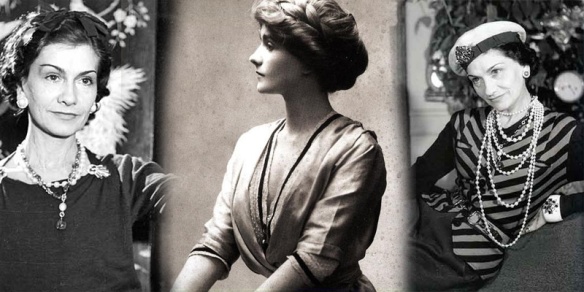
Source: lipstiq.com

Source: lipstiq.com

The whitewashing of history is a sore subject for me, and the case of Coco Chanel, in particular, has bothered me for a long time. Then, a few weeks ago over the recent Christmas holidays, I watched a French film about Chanel’s alleged affair with the famed composer, Igor Stravinsky, in 1920. “Coco Chanel & Igor Stravinsky” is a gorgeous but problematic account for a few reasons, not the least of which is whether or not there was an actual affair. (Coco Chanel insisted it occurred, Stravinsky’s main lover and second wife insisted that it did not.) Regardless, the story reminded me of the Chanel that so few talk about, the real Gabrielle Chanel, and it brought back all my old feelings.

I won’t get into the details of Chanel’s extremely difficult childhood, or the well-worn territory of her rise to power through the assistance of various lovers. Both periods of time have been amply discussed. I concede here and now, explicitly, that childhood traumas can shape us, determine our character, and are important in discussing a person’s motivations as an adult. Again, I repeat, I concede that point fully.

However, I firmly believe that there are lines, lines which cannot be excused by one’s opportunistic hungers or by an ingrained desire to survive. For me, Gabrielle Chanel crossed those lines, badly, and the cultish worship of Chanel as a fashion icon, woman and person needs to stop. There needs to be a more balanced, considered, and critical approach that takes into consideration the two faces of Gabrielle Chanel, a woman who I think resembles Oscar Wilde’s Dorian Gray.

"Sleeping with the Enemy," 2011 book cover. Source: Stylemagazin.hu

“Sleeping with the Enemy,” 2011 book cover. Source: Stylemagazin.hu

The primary focus for the following discussion will be a book called Sleeping with the Enemy: Coco Chanel’s Secret War by Hal Vaughn. Mr. Vaughn (who passed away three months ago) was a former diplomat who was also involved with the CIA before he became a journalist. His book was released in 2011, relies heavily on recently declassified French and German documents, and garnered many rave reviews.

The issue of Coco Chanel’s anti-Semitism and war-time collaboration with the Nazis is widely known, though rarely discussed, but the book went much further than that. Based on those newly released documents, Vaughn revealed that Chanel was a Nazi spy. Yes, an actual spy. With a code-name referencing her British lover, the Duke of Westminster, who was another notorious anti-Semite.

PRE-WAR CHANEL:

New York Times‘ book review on Sleeping with the Enemy provides a succinct chronological background to Chanel’s actions at the end of the 1920s, actions that lay the groundwork for some of the events that were to come to pass:

As her personal fortunes rose [in the late 1920s], she turned her attention to making serious inroads into British high society, befriending Winston Churchill and the Prince of Wales and becoming, most notably, the mistress of the Duke of Westminster, Hugh Richard Arthur Grosvenor (known as Bendor), reputedly the wealthiest man in England.
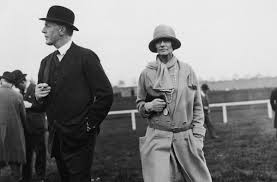
Chanel and the Duke of Westminister. Source: The New York Times.

Chanel and the Duke of Westminster. Source: The New York Times.

Bendor’s — and Chanel’s — anti-­Semitism was vociferous and well documented; the pro-Nazi sensibilities of the Duke of Windsor and many in his circle have long been noted, too. All this, it appears, made the society of the British upper crust particularly appealing to Chanel. As Vaughan notes, after she was lured by a million-dollar fee to spend a few weeks in Hollywood in 1930 — Samuel Goldwyn, he writes, “did his best to keep Jews away from Chanel” — she found herself compelled to run straight back to England, so that she could wash away her brush with vulgarity in “a bath of nobility.” [Emphasis to names added by me.]
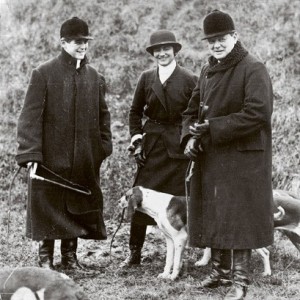
Chanel with WInston Churchill (far right) and his son. Source: betterthannylund.blogspot.com/

Chanel with Winston Churchill (far right) and his son. Source: betterthannylund.blogspot.com/

Coco Chanel wasn’t turned into an anti-Semite by her ducal lover. Many sources, including Vaughn, argue that her bigotry had deep roots, going back to her childhood at a convent where such views seemed commonplace amongst the nuns and villagers. What was more significant about the Duke of Westminster, the richest man in England and her lover for 6 years, was that he introduced Chanel to Winston Churchill. They became life-long friends, and it was a friendship that would serve her well when the time came down the road. In the meantime, she was living it up in Paris and was one of the wealthiest women in the world, thanks, in part, to the runaway success of Chanel No. 5.
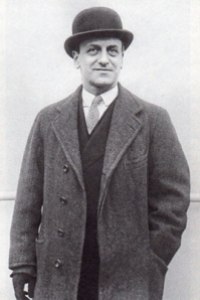
Pierre Wertheimer. Source: newyorksocialdiary.com

Pierre Wertheimer. Source: newyorksocialdiary.com

A little known fact is that Coco Chanel had Jewish partners, Pierre and Paul Wertheimer, whose descendents now control the entire Chanel empire. (As a result, the modern-day Wertheimer brothers are billionaires, with a combined net worth of over $19 billion dollars.) Chanel may have been an anti-Semite, but she was an opportunist first and foremost — and she badly needed the Wertheimer brothers in order to make her perfumes a success. I’ll rely on Pierre’s Wikipedia entry for the basic background details, though I’m fully aware that Wikipedia often has serious flaws and should only be used as a starting point in things. Still, the brothers aren’t the focus of this piece, and the Wikipedia account is supported by a site called Funding Universe. So, back to the Wertheimers. In the early 1920s, the two brothers were very wealthy, thanks to their father who founded the French makeup company, Bourjois. (It is still the cheaper arm for Chanel cosmetics to this day.)

In 1924, Chanel sought their financial backing in order to launch her perfume line and, most specifically, Chanel No. 5. In essence, the Wertheimers acted as venture capitalists in a new corporate entity called “Parfums Chanel,” in return for a whopping percentage of the rights and profits. As the Wikipedia entry explains:

In 1924, Coco Chanel made an agreement with the Wertheimers creating a corporate entity, “Parfums Chanel.”

Chanel believed that the time was opportune to extend the sale of her fragrance Chanel No. 5. to a wider customer base. Since its introduction it had been available only as an exclusive offering to an elite clientele in her boutique. Cognizant of the Wertheimer’s proven expertise in commerce, their familiarity with the American marketplace, and resources of capital, Chanel felt a business alliance with them would be fortuitous. Théophile Bader, founder of the Paris department store, Galeries Lafayette, had been instrumental in brokering the business connection by introducing Pierre Wertheimer to Chanel at the Longchamps races in 1922. […] 
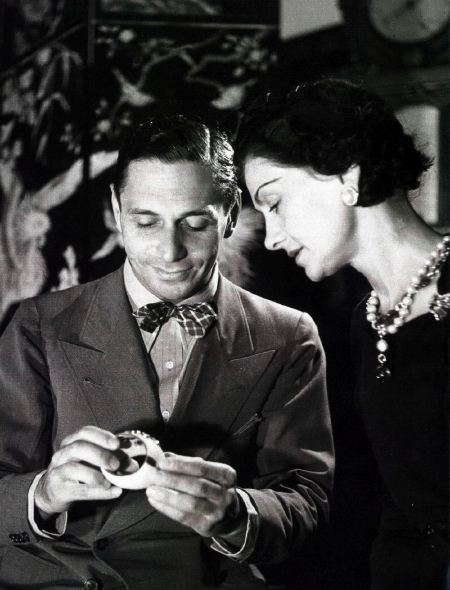
Source: http://reneeashleybaker.wordpress.com

Source: reneeashleybaker.wordpress.com

For a seventy percent share of the company, the Wertheimers agreed to provide full financing for production, marketing and distribution of Chanel No. 5. Théophile Bader was given a twenty percent share. For ten percent of the stock, Chanel licensed her name to “Parfums Chanel” and removed herself from involvement in all business operations.[4] Ultimately displeased with the arrangement, Chanel worked for more than twenty years to gain full control of “Parfums Chanel.” In 1935, Chanel instigated a lawsuit against the Wertheimers, which proved unsuccessful.[5]

Then, war came, and oh, what an opportunity it was for Mademoiselle Chanel. Up to that time, she had been living the high-life in a luxurious apartment at the Paris Ritz Hotel. While that part of her life didn’t change when the Nazis goose-stepped their way up the Champs-Elysees, they brought with them the convenient benefit of Aryanization laws that would target Jewish-owned business.

THE NAZIS & CHANEL:
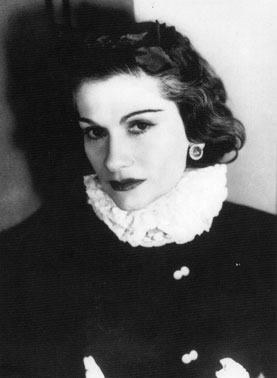
"Chanel, age 56, photographed by George Hoyningen-Heune, 1939 (copyright Horst/ Courtesy Staley-Wise Gallery)." Source: Newyorksocialdiary.com

“Chanel, age 56, photographed by George Hoyningen-Heune, 1939 (copyright Horst/ Courtesy Staley-Wise Gallery).” Source: Newyorksocialdiary.com

To quote a New Republic book review called “The Stench of Perfume“:

While her fellow countrymen starved and died, she lived like a queen in the Ritz, surrounded by Nazi officers and enjoying Nazi parties. Berlin ordered that the Ritz was “reserved exclusively for the temporary accommodation of high-ranking personalities,” meaning that Chanel must have made connections with some very powerful Nazis in order to stay there. And there is the matter of her anti-Semitism.

In addition to her collaborations, Chanel spoke loudly and vehemently against Jews, and even tried to take advantage of the Nazi seizure of Jewish businesses and property. Her world-famous perfume, Chanel No. 5, was owned and produced by the Wertheimers—a rich Franco-Jewish family. Chanel had always been paranoid that the Wertheimers were stealing from her (though her lawyer assured her of the contrary), and during the war, when the family had fled to America, she attempted to take full control of Chanel No. 5. But the Wertheimers had anticipated that the Nazis (or Chanel) might try to steal their company, and therefore they signed it over to a Frenchman for the duration of the war. Chanel couldn’t touch it. The Wertheimers also sent a spy, Herbert Gregory Thomas (under the pseudonym, Don Armando Guevaray Sotto Mayor), to retrieve the chemical formula to make Chanel No. 5 as well as collect all the necessary ingredients. He then brought everything back with him to America, so that the Wertheimers could continue to produce and sell the fragrance.

Chanel may have been thwarted in her attempts to use Nazi Aryanization laws to obtain control of the perfume company that bore her name, but the Nazis still made her rich. Very, very rich. The blog, MessyNessyChic, explains:
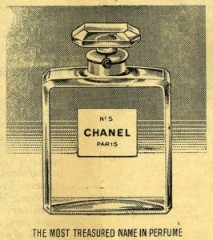
Source: MessyNessyChic.com

Source: MessyNessyChic.com

On May 5, 1941, Coco Chanel wrote to the government department in charge of the handling of Jewish financial assets.

These are her words in the letter:

Parfums Chanel is still the property of Jews … and has been legally ‘abandoned’ by the owners. I have an indisputable right of priority. The profits that I have received from my creations since the foundation of this business…are disproportionate.

Ultimately, Chanel was awarded the wartime profits from the sale of her perfume, including share of two percent of sales which amounted to the equivalent of $25 million a year in modern currency.  This made her the richest woman in the world at that time– thanks to the Nazis.

"The young Baron von Dinklage circa 1935 at the German Embassy in Paris when he was working for the Gestapo, already a close friend of Chanel." Source: NY Social Diary.http://www.newyorksocialdiary.com/node/1907697/print

“The young Baron von Dinklage circa 1935 at the German Embassy in Paris when he was working for the Gestapo, already a close friend of Chanel.” Source: NY Social Diary. http://www.newyorksocialdiary.com/node/1907697/print

Chanel was equally successful in satisfying her voracious sexual appetites. There’s nothing wrong with that, but my disdain stems from her choice of lovers: Baron Hans Gunther von Dincklage, a senior officer for the Abwehr or German Military Intelligence, who reported directly to Goebbels. Dincklage, who was much younger than Chanel, ended up being the last great love of her life.

Chanel didn’t stop at merely taking on a high-ranking Nazi lover. She became an actual Abwehr spy, with her own number: Abwehr Agent 7124. Her code name was “Westminster,” harkening back to her anti-Semitic ducal lover in England. The basis for Vaughn’s argument: those newly declassified documents from French and German authorities, as well as Nazi documents taken by the Soviets back to Russia and similarly released by that government in recent years.

General Walter Schellenberd, nicknamed "Hitler's Spymaster"

General Walter Schellenberg, nicknamed “Hitler’s Spymaster.” Source: Wikipedia.

Chanel and her Nazi lover sought to recruit wealthy Europeans to the Nazi cause, and Chanel had two actual missions. To be fair, some of Chanel’s wartime efforts were an attempt to secure the release of those she cared about. One mission to Madrid was done partially to secure her nephew’s release from a German POW camp. Some people try to justify her meeting in Berlin with the SS‘s intelligence chief, General Walter Schellenberg, and Himmler‘s right-hand man in the same way. (Yes, she met with Nazis who were that powerful!)

The reason for that meeting was “Modellhut” (or “model hat”). That was the codename for her second mission for the Nazis, which took place in 1943, and sought to counter the turning tide of the war by using Chanel’s friendship with Winston Churchill to achieve a peace with terms that wouldn’t hurt Germany. As a Washington Post book review of “Sleeping with the Enemy” puts it:

When Germany began to falter, the Nazis came to believe that Chanel might be useful in contacting her old friends Churchill and the Duke of Westminster and brokering a possible peace. She didn’t disappoint. She did what she was told to do and, in 1944, she wrote Churchill a letter, referring obliquely to her German connections.

[It didn’t work, but] Chanel continued to live at the Ritz, rub shoulders with Nazis and dine on poularde rotie, even as French families dug through the city’s garbage, trying to fend off starvation. […] 
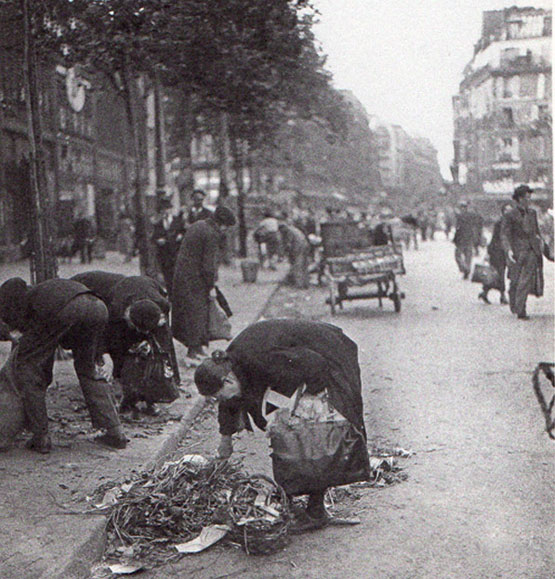
Parisians foraging for food, via NewYorkSocialDiary.com

Parisians foraging for food, via NewYorkSocialDiary.com. http://www.newyorksocialdiary.com/node/1907697/print

As the war ground on and Dincklage came and went from Berlin, convincing his bosses that she was trustworthy, thousands of French Jews were herded to sure deaths in Poland and Eastern Europe. But the glamorous woman with the deft needle and acid tongue was safe. The good life at the Ritz continued to roll on. There were legions of women of courage and derring-do throughout Europe, working hard to outwit the Nazis. Chanel was not among them.

THE LIBERATION OF PARIS & CHANEL:

In the final days of August 1944, after Paris was liberated, retribution for the “collabos” or those who collaborated with the Germans was harsh. Some say about 30,000 to 40,000 people were executed. “Horizontal collaborators” or women who merely slept with the Germans suffered as well, though it was primarily humiliation and ostracism. The punishment was swift and brutal, even though none of them were actual Nazi spies who went to Berlin to meet with Hitler’s spy chief. An excerpt of “Sleeping with the Enemy” in the New York Times gives you a small idea of what happened:

A thirst for revenge gripped the nation in the last days of August. Four years of shame, pent-up fear, hate, and frustration erupted. Revengeful citizens roamed the streets of French cities and towns. The guilty — and many innocents — were punished as private scores were settled. Many alleged collaborators were beaten; some murdered. “Horizontal collaborators” — women and girls who were known to have slept with Germans — were dragged through the streets. A few would have the swastika branded into their flesh; many would have their heads shaved. Civilian collabos — even some physicians who had treated the Boche — were shot on sight. The lucky were jailed, to be tried later for treason.

Female collaborators in Paris, rounded up and marked with swastikas. Source: histomil.com

Female collaborators in Paris, rounded up and marked with swastikas. Source: histomil.com

What did Coco Chanel do? She hurriedly ran out into the streets to give bottles of Chanel No. 5 to American GIs! (You have to almost admire her nerve.) A few days later she was arrested, but Winston Churchill made a phone call, and she was soon released.

Chanel got off scot-free, and for reasons that went much further than Winston Churchill’s intervention. With the help of influential friends, including her ex-lover the Duke of Westminster, she successfully orchestrated a cover-up. She lied about pretty much everything and to everyone. She even went so far as get a former collaborative ally arrested by the French Partisans and, later, to bribe the ailing Nazi spymaster to keep her secret. To quote the New York Times review that I referenced at the start:

She tipped off the poet and anti-Nazi partisan Pierre Reverdy, a longtime occasional lover, so that he could arrange the arrest of her wartime partner in collaboration, Baron Louis de Vaufreland Piscatory; she paid off the family of the former Nazi chief of SS intelligence Gen. Walter Schellenberg when she heard that he was preparing to publish his memoirs. (It was Schellenberg who had given her the “model hat” assignment.)

Chanel and Dinklage. in 1951 at Villars sur Ollon, Canton de Vaud, Switzerland. Source: fashionatto.literatortura.com via Paris Match & Bibliotheque des Arts Decoratifs, Paris, France/ Archives Charmet/ The Bridgeman Art Library

Chanel and Dincklage. in 1951 at Villars sur Ollon, Canton de Vaud, Switzerland. Source: fashionatto.literatortura.com via Paris Match &
Bibliotheque des Arts Decoratifs, Paris, France/ Archives Charmet/ The Bridgeman Art Library

God only knows what the partisans did to a French traitor like the Baron, but it can’t have been anything good. In the meantime, mere days after her questioning and release, Chanel fled to Switzerland. There she remained for 8 years, until 1954, with her Nazi lover, living in style and in the height of luxury. Oh, and taking drugs while she was at it as well. Chanel was a hard-core morphine addict, relying on it daily until she was well into her 70s.

Throughout it all and until her death, she was coldly unapologetic for her actions, which is one of the things that bothers me the most. She may have done some things to survive, but I think she went too far, and, worst of all, she never once felt any regret.

Instead, when asked in later years about her Nazi ties, she coolly responded, “I don’t ask my lovers for their passports.” As for the French, a Portugese site, Fashionatto, quotes her as saying, “The French got what they deserved” and “Not all Germans were bad guys.” No, not all Germans were bad, and yes, the French behavior during the Vichy Government was abominable, but Chanel’s callous dismissal of the details goes a step too far. One of the things that irritates me to no end is her sheer indifference to anything other than herself. There is narcissism, and then there is megalomaniacal narcissism — I’m trying to decide there should be an entirely separate category reserved solely for Gabrielle Chanel.

As even The New York Times puts it,

Gabrielle Chanel — better known as Coco — was a wretched human being. Anti-Semitic, homophobic, social climbing, opportunistic, ridiculously snobbish and given to sins of phrase-making like “If blonde, use blue perfume,” she was addicted to morphine and actively collaborated with the Germans during the Nazi occupation of Paris. And yet, her clean, modern, kinetic designs, which brought a high-society look to low-regarded fabrics, revolutionized women’s fashion, and to this day have kept her name synonymous with the most glorious notions of French taste and élan.

CHANEL’S POST-WAR COMEBACK & THE WERTHEIMERS:
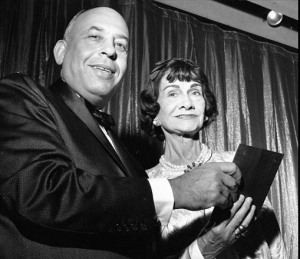
Chanel and Hans Gunther von Dincklage. Source: styleamor.com

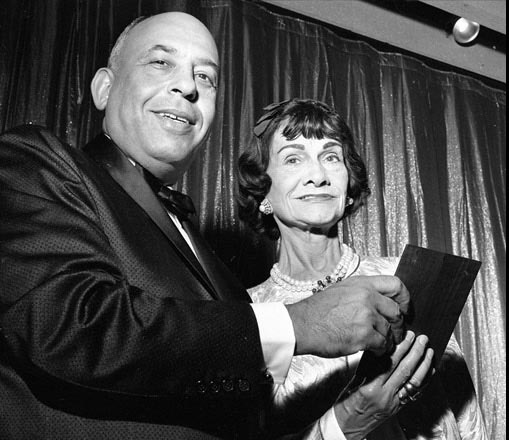
Chanel and Stanley Marcus of Neiman Marcus. Source: styleamor.com

One of the strangest parts of this whole sorry tale is the behavior of the Wertheimer Brothers after the war. They paid for Chanel to live in the lap of luxury, from her exile in Switzerland until her death in Paris in 1971 at the age of 87. Their generosity boggles my mind. I can understand why they would finance her reestablishment in French society and the re-emergence of Chanel as a business success; that benefits them indirectly and financially. It was a business decision about a corporate entity. But her personal bills? All of them, and until her death? Despite her collaboration and despite how she had treated them personally? That takes the milk of human kindness to levels that I simply cannot fathom. (Yes, I am a much less forgiving person.) Meanwhile, Chanel grabbed the money, and then declared that Pierre Wertheimer was “the bandit who screwed me.”

There seems to be the suggestion that Pierre Wertheimer was a long-time admirer of Chanel, and perhaps had a crush on her, but that didn’t prevent the two of them from having a little perfume war while Coco was in exile. There is a site called Funding Universe which has a detailed history of Chanel and her company, and which talks about the conflict over “Parfums Chanel“:

[After the war ended,] Pierre Wertheimer returned to Paris to resume control of his family’s holdings. Despite her absence, Coco Chanel continued her assault on her former admirer and began manufacturing her own line of perfumes. Feeling that Coco Chanel was infringing on Parfums Chanel’s business, Pierre Wertheimer wanted to protect his legal rights, but wished to avoid a court battle, and so, in 1947, he settled the dispute with Coco Chanel, giving her $400,000 and agreeing to pay her a 2 percent royalty on all Chanel products. He also gave her limited rights to sell her own perfumes from Switzerland.

Coco Chanel never made any more perfume after the agreement. She gave up the rights to her name in exchange for a monthly stipend from the Wertheimers. The settlement paid all of her monthly bills and kept Coco Chanel and her former lover, von Dincklage, living in relatively high style. It appeared as though aging Coco Chanel would drop out of the Chanel company saga.

At 70 years of age in 1954, Coco Chanel returned to Paris with the intent of restarting her fashion studio. She went to Pierre Wertheimer for advice and money, and he agreed to finance her plan. In return for his help, Wertheimer secured the rights to the Chanel name for all products that bore it, not just perfumes. Once more, Wertheimer’s decision paid off from a business standpoint. Coco Chanel’s fashion lines succeeded in their own right and had the net effect of boosting the perfume’s image. In the late 1950s Wertheimer bought back the 20 percent of the company owned by Bader. Thus, when Coco Chanel died in 1971 at the age of 87, the Wertheimers owned the entire Parfums Chanel operation, including all rights to the Chanel name.

Pierre Wertheimer died six years before Coco Chanel passed away, putting an end to an intriguing and curious relationship of which Parfums Chanel was just one, albeit pivotal, dynamic. Coco Chanel’s attorney, Rene de Chambrun, described the relationship as one based on a businessman’s passion for a woman who felt exploited by him. “Pierre returned to Paris full of pride and excitement [after one of his horses won the 1956 English Derby],” Chambrun recalled in Forbes. “He rushed to Coco, expecting congratulations and praise. But she refused to kiss him. She resented him, you see, all her life.”

Coco Chanel, back in Paris. Source: Source: fashionatto.literatortura.com

Coco Chanel, back in Paris. Source: Source: fashionatto.literatortura.com

There is an interesting interview with the author of “Sleeping with the Enemy” in The New Yorker, where he answers some questions about the Wertheimers, talks about Chanel’s return from exile, and why there is so little discussion about Chanel’s past.

[Q.] As your title makes clear, the book emphasizes Coco Chanel’s wartime life. Why has this story not received much attention over the years?

I have no idea. I can’t figure it out. Either people didn’t want to know or chose not to deal with it. Of course, this story will not please the Wertheimers, one of the richest families in the world. Other than that, I have no idea why not.

[Q.] After the war, Chanel moved to Switzerland. How was it possible that she would ever be able to reëstablish herself in France, as she did in the mid-nineteen-fifties?

The simple answer is Wertheimer money: Chanel was backed by the Wertheimers. But really there was also the fact that, by 1954, most French people didn’t give a damn about who collaborated and who didn’t. De Gaulle had decided that all Frenchmen had been resisters, and all this collaboration business was behind them. And let’s not forget that Chanel was also tremendously talented.

[Q.] After everything Chanel had done to Paul Wertheimer, why did he ultimately agree to finance the reëstablishment of her couture house in 1954? And why did he consent to pay all her expenses—large and small—for the rest of her life?

From the point of view of the Wertheimers, the decision was extremely logical. What they were doing is not buying a business but rather an empire for a lifetime, and indeed that’s what it’s been. Here we are in 2011—can you go to any major city without seeing a Chanel store? It’s the unique mark in the world today.

[Q.] Especially in France—a nation still grappling with the legacy of collaboration—how is it possible that the Chanel brand today bears almost none of the stigma assigned to other brands often associated with Nazi complicity

The work of Robert Paxton never quite rubbed off on our memory of Chanel—and for a simple reason. She is essentially a hard-currency machine. Chanel is an icon, an idol in France—never mind the details of her life, her anti-Semitism, her dealings with the Nazis. Interestingly enough, I should mention that the French have not bought my book—at least not yet. It’s coming out in America and in Britain and in Germany. It’s been translated in Portuguese and translated into Dutch. But the French have yet to buy the book.
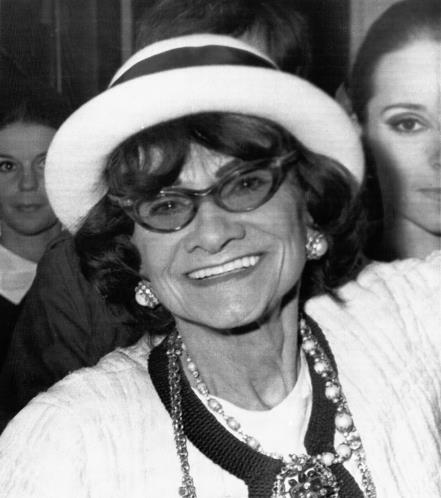
Source: entertainment.ru.msn.com

Source: entertainment.ru.msn.com

[Q.] Given Coco Chanel’s wartime past, what do you make of the prominence and popularity of the Chanel brand today? Should anyone still wear Chanel?

I have no feelings against Chanel. You can’t put someone like Klaus Barbie and Chanel in the same category: she didn’t kill anybody; she didn’t torture anybody. Madame Gabrielle Labrunie—Chanel’s grand-niece—said something to me that I found fascinating. She said to me: “You know, Mr. Vaughan, these were very difficult times, and people had to do very terrible things to get along.” Chanel was, very simply put, an enormous opportunist who did what she had to do to get along. [Format “Q.” insertions added by me for sake of clarity.]

I very much agree with him. I think the primary, driving characteristic of Gabrielle Chanel was opportunism, followed closely by a ruthless hunger to succeed at any or all costs. She was petty, avaricious (she was reported to be notorious for not paying her seamstresses as much as others, and treating them harshly), narcissistic, coolly calculating, and pragmatic. In my opinion, if she had her heart set on something (or someone’s husband), she would stop at nothing to get her way. She would sup with the devil, if need be, and she would do it all without a second thought.

The same thing applies to the consequences for that behavior. If she could get away with something, she would do everything to ensure it, no matter what the cost to others. And Chanel never seems to have paid for anything. By 1954, she undoubtedly realised that passions had cooled and a prosecution would be too risky. Too many unpleasant truths would come out about too many powerful people. Far better to drop it all, and pretend that none of it had happened, much as the French did for other dirty memories of those years. By the 1960s, she was dressing the wife of the French President, Madame Pompidou, and re-emerging as a success.

Yes, she was an anti-Semite, but she never seemed to let that get in the way of making money or climbing the social ladder. That is one reason why I laugh at the company’s attempted defense of Chanel. They weakly offer the “Jewish friends” argument, whimpering that she would not have ties to the Rothschilds or some Jewish friends if she were really an anti-Semite. The Rothschilds, the legendary and supremely, galactically wealthy Rothschilds?! Of course she would be their friend! Good God, Chanel would probably have peed in public while standing on her head if the Rothschilds had asked her to. That doesn’t mean that she wasn’t a bigot. I personally happen to believe that she did agree with a number of Nazi beliefs. The idea of a “super man” would very much fit how she saw herself, as well as her snobbish disdain for anyone without power, money, lineage, or some combination thereof. As a whole, though, I think Chanel’s only real, unwavering belief was in the currency and religion of Coco Almighty. Does that excuse her actions? Hardly.
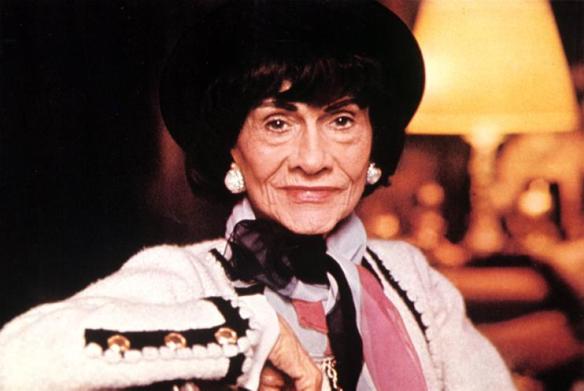
Chanel via The Telegraph and entertainment.ru.msn.com/

Chanel via The Telegraph and entertainment.ru.msn.com/

Two things need to be stated clearly. First, there are very few people alive today who are in a position to truly judge the situation of those wartime years. I did not go through the utter hell that was Nazi occupation, and I cannot know what I would do if I were in Chanel’s shoes. War and desperation can make us do terrible things. I recognize all that, and yet, I can never forgive Gabrielle Chanel her actions. Whenever I read people gushing over her admittedly exquisite taste, her glamourous life, and her luxurious apartments, I think about who she used, slept with, or betrayed. When people talk admiringly about her strong-willed passions and how fabulous she was, I grit my teeth. When people swoon over her exciting love affairs (e.g., a Romanov Imperial Grand Duke, among others), I think instead of her Nazi lover. I simply cannot get past what a vile and loathsome human being she really was.

Second, I want to preempt what is the inevitable response to all this: “genius can be terrible, but it’s still genius.” It is what I call the “Wagner Argument,” and often takes the subtext of “They were a genius, so it’s okay. We can excuse it, or still enjoy their accomplishments.” Perhaps, but I don’t think it’s actually okay. What I want is a more critical, balanced perspective of Gabrielle Chanel that doesn’t white-wash or excuse her. In short, I want the blind, whole-sale, positively cult-like worship of Gabrielle the woman to stop, even if people continue to enjoy the products or things that she achieved. And yes, I don’t think there is anything wrong with buying something with the name “Chanel” on it.

For me, the corporate entity that exists today has nothing to do with Gabrielle Chanel, and hasn’t in decades. That is one reason why I will never stop reviewing her perfumes or buying Chanel products. Certainly, “Parfums Chanel” was largely owned by everyone but Chanel since 1924. She had a mere 10% stake in the company from its birth, and lost even that after the war. Furthermore, she never made a single perfume herself after 1947; the Wertheimers did. Chanel is a multi-billion conglomerate that capitalizes on the personal mystique and legend of Gabrielle Chanel, and they would be foolish not to. It’s only business, as they say.

Nonetheless, the next time you admire something about Chanel, the woman and person, I hope you will remember the other side of the mirror. She was Janus, with one face that reflected a fashion and stylistic trailblazer, a pioneer whose achievements in those particular, narrow fields has to be terribly admired. I certainly do — enormously. But the Roman god, Janus, also has a second face. In the case of Gabrielle Chanel, it rather resembles Dorian Grey’s portrait in the attic: maggot-ridden, venal, ulcerous, oozing internal decay, and thoroughly diseased with amorality, cruelty, corruption, and the blackest of ethics.

BOOK DETAILS:
If you’re interested in Vaughn’s book, Amazon sells Sleeping with the Enemy: Coco Chanel’s Secret War in a variety of different formats. The paperback price is $13.13, while the Kindle price is $10.19. It is also available on Amazon UK and Amazon France. I assume it is available on all the other Amazon country sites, though I have not checked. I know that Amazon Australia only has it in Kindle form.

Aftelier Perfumes Cepes and Tuberose: Earthy Tuberose

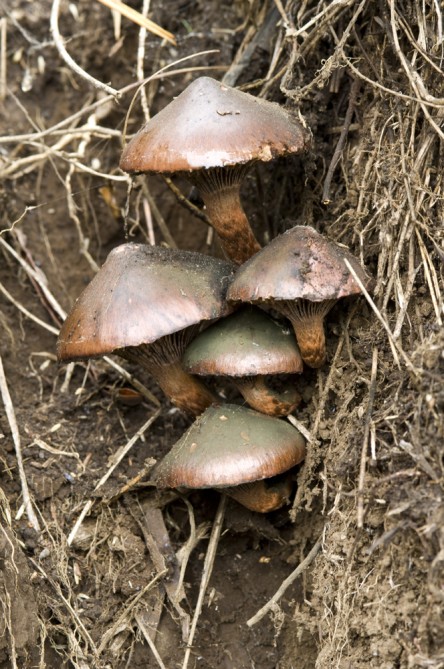
As it might be clear by now, I’m focusing on florals this week with a series that began by looking at various treatments of tuberose. Like Goldilocks, we’re exploring the range from the fresh, green kind represented by Carnal Flower to the warmer, creamier interpretation of Moon Bloom, and, now, the darkest one of all. This last one is a wholly original, incredibly creative twist on the great white flower, turning it earthy with all the mushrooms and earth of the forest floor. It is Cepes and Tuberose (sometimes written as “Cepes & Tuberose” by others), a perfume with very woody, resinous, chocolate, cinnamon and dried rose elements to go along with the mushrooms. 

Cepes or Porcini. Source: morelmushroomhunting.com

Cepes or Porcini. Source: morelmushroomhunting.com

Cepes and Tuberose was created by the highly respected, acclaimed all-natural perfumer, Mandy Aftel of Aftelier Perfumes. The perfume is classified as a fougère, which is a type of fragrance centered, in part, around herbs, along with more significant core components. Ms. Aftel has cleverly twisted the fresh, aromatic, herbal genre by taking a very different approach to the forest and mixing it with very different flowers. The critical component, however, are the cepes, a type of mushroom commonly referred to outside of France by its other name, porcini. Cepes and Tuberose comes in two concentrations: an eau de parfum concentration and in pure parfum. This review is for the former, the eau de parfum.
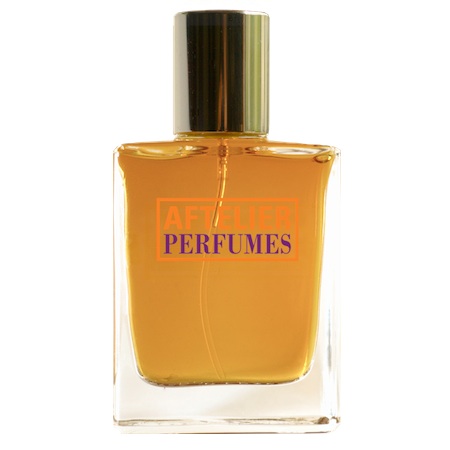
Cepes and Tuberose, the bottle for the Eau de Parfum version. Source: the Aftelier website.

Cepes and Tuberose, the bottle for the Eau de Parfum version. Source: the Aftelier website.

On her website, Ms. Aftel describes Cepes and Tuberose as follows:

Scent Family: Fougère
Wild mushrooms, with animal undertones and one of the world’s most voluptuous florals. Wild porcini mushrooms and Italian tuberose play a mysterious and earthy duet. One of my more enigmatic perfumes, it has won many awards and fans. — Chosen as one of “100 Perfumes Every Perfumista Should Try” by Now Smell This.

Featured Notes
Top: bois de rose.
Heart: tuberose, Moroccan rose.
Base: cepes [or Porcini mushroom] absolute, benzoin.

Source: Ronny Fein. (Website link embedded within photo.)

Source: Ronny Fein. (Website link embedded within photo.)

Cepes and Tuberose opens on my skin with notes that strongly resemble sticky raisins, cinnamon infused fruits stewed in brown sugar molasses, and woods. There is also a very animalic leather component, followed by a truffle-like earthiness, then actual mushrooms with a hint of chocolate. The sweetened, plump, raisin molasses is infused with dark green herbs, aromatic but slightly smoky woods, and a mossy pungency. Within minutes, the latter takes on a medicinal, old-fashioned fougère tonality that has a very distant kinship to barber shops of old. Unlike those scents, however, Cepes and Tuberose is both sweetened and earthy.

Source: 123rf.com

Source: 123rf.com

The earthiness is interesting. Initially, it really feels more like humus (not hummus) which is the soil detritus of plants, dirt, leaves, and decaying organic matter. The mushroom tonality is subtle at first, more a suggestion than full-on porcinis. As regular readers know, one of my favorite discoveries last year was Oriza L. Legrand‘s ode to the forest floor, Chypre Mousse, an extremely green, mossy, mushroom, wet leaf and humus scent with herbal undertones, darkened resins and a wisp of leather. I love both the mushroom and earth note in Chypre Mousse, but it smells very different in Cepes and Tuberose. Here, it is not like sweet, loamy, wet soil, but a very dry one. There is sweetness, but it is of a brown sugar sap variety. Nothing in Cepes and Tuberose feels green or elfish, but dark, resinous, dry, and sweet. And the sense of something herbal, elemental and decayed feels much stronger here.

Source: Diary of a Mad Hausfrau. (Website link embedded within photo.)

Source: Diary of a Mad Hausfrau. (Website link embedded within photo.)

The rosewood adds a distinct element of dark, smoky woods, but also something that resembles pine sap. It’s a warm, not chilled, version of the note in Serge LutensFille en Aiguilles. Actually, the Lutens fragrance that Cepes and Tuberose first brought to mind was Bois et Fruits. I think it’s due to the sticky raisin and spice accords, mixed with more autumnal woods. Yet, Cepes and Tuberose is much more leathered than either of those fragrances. It has a definite animalic component in the sense of muskiness, but it is never fecal, raw, sweaty or rank. It is more earthen, and infused with a sweetness that borders on cinnamon and chocolate.

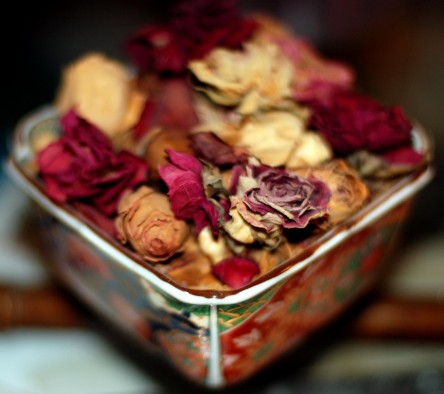
10 minutes in, Cepes and Tuberose starts to change. The fragrance feels less medicinal, herbal, and animalic. The leather note fades to the background, while the earthy one turns more mushroomy. There is a surprising meatiness to it that made me think of Portobello mushrooms, but at this stage, it’s still only a mere suggestion. The more significant change is the introduction of the florals, and this is where I start to really struggle. On my skin, the flowers are dominated by an amorphous, rose note that strongly resembles spiced, dried, pressed rose petals and potpourri. I’m not generally a fan of roses, fresh or dried, but I have particular problems with potpourri.

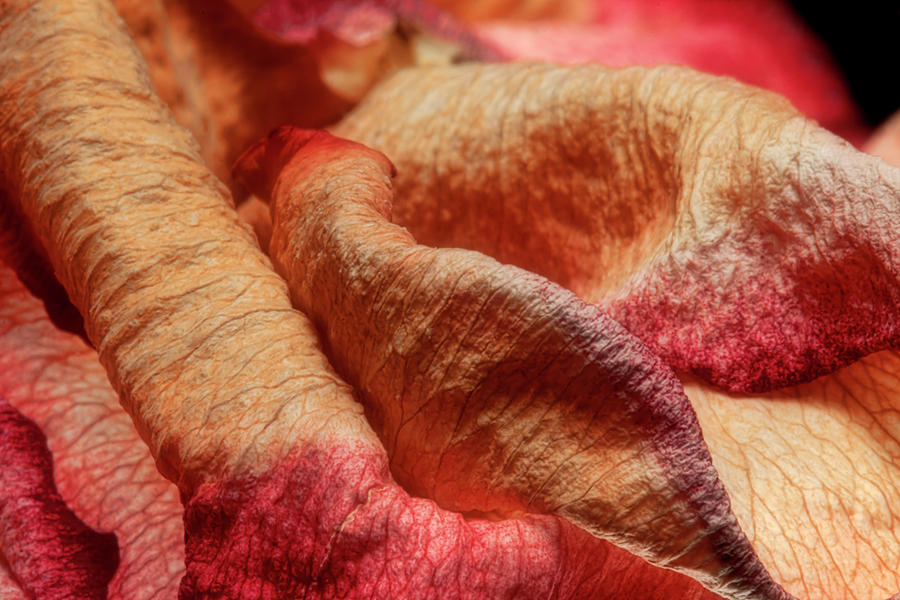
"Dried Rose Petals" by Tom Mc Nemar via Fineartamerica. http://fineartamerica.com/featured/dried-rose-petals-ii-tom-mc-nemar.html

“Dried Rose Petals” by Tom Mc Nemar via Fineartamerica.
http://fineartamerica.com/featured/dried-rose-petals-ii-tom-mc-nemar.html

As time goes by, the rose potpourri takes over Cepes and Tuberose’s bouquet on my skin. The perfume smells increasingly like a very woody take on heavily spiced, cinnamon-dusted dried rose petals with an earthy humus note. Alas for me, the latter soon turns into hardcore porcini mushrooms, to a degree that Chypre Mousse never did. Actually, to be more precise, I smell like meaty, cooked portobellos dusted with cinnamon. The herbal green element has faded, though a certain pungency remains. The leathery note feels less musky, the raisins and brown sugar resin both weaken, and so does that subtle impression of pine. Their place is taken by a pinch of sweetened floral powder, presumably from the benzoin mingling with the roses.

I never once detected tuberose in its traditional, usual way. Instead, what slowly weaves its way through the notes is something that smells like a very browned gardenia. It strongly resembles the decayed gardenia in Serge LutensUn Voix Noire. As many of you know, gardenia is one of those flowers whose smell can’t really be captured from the petals, whose scent cannot be distilled, and whose aroma has to be recreated using other essential oils. (Fragrantica has a tiny bit on this issue if you’re interested.) Tuberose is one of the ways to recreate the smell of the gardenia, which may account for why the version in Cepes and Tuberose smells more like the latter than the former on my skin. Plus, gardenias naturally have a mushroomy scent when they are very ripe or close to the edge of decay.

Source: mydecorative.com

Source: mydecorative.com

On my skin, the browned “gardenia” is perhaps the most tertiary of notes, and everything is trumped by the cinnamon-infused dried roses. The cepes are like a Jack in the Box, popping up on occasion to say “Boo” before sinking back down. They feel less meaty at the end of the first hour, and are more dirt-covered with the lightest touch of a mossy undertone. None of it is easy for me, though I enjoy the new arrival on the scene: cocoa. The initial hint of something chocolate-like in the base has now risen to the surface, but it resembles semi-sweet, dry cocoa powder more than an actual block of heavy chocolate.

At the start of the second hour, Cepes and Tuberose is a bouquet of cinnamon-rose potpourri with coca-dusted dry woods on the surface, while a dark, decayed white floral and meaty portobello mushrooms lurk down below. It is simultaneously dry, dirty, dusty, sweet, sharp, spiced, pungent and soft — contradictory as some of those things may sound. It isn’t the easiest of scents for me, though I had a moment of hope about 1.75 hours into Cepes and Tuberose’s development. There, suddenly, there was an utterly lovely drydown of spiced warmth with cocoa powder, cinnamon benzoin, dried roses and a touch of sweet powder, all nestled in a dry-sweet embrace of cocoa-dusted woods. All the edges felt smoothed out, and the result was a delicious, quasi-gourmand that felt beautifully balanced. At times, there was even a subtle patchouli vibe (and you know how I love my patchouli).

Source: the3foragers.blogspot.com

Source: the3foragers.blogspot.com

Unfortunately, this stage was very brief on me, and I can only blame my skin. Something happened, and less than 30 minutes later, Cepes and Tuberose turned into the smell of dry dirt on me. Not sweet, loamy, wet soil, but very dry, old dirt, with touches of the other elements that I’ve described above. In its final moments, Cepes and Tuberose was nothing more than a blur of dryness that smelled vaguely like old dirt and potpourri. The whole thing lasted 4.75 hours with two small sprays, and 6.25 hours with a larger quantity. Generally, the sillage was very soft after an initially strong start, but Cepes and Tuberose was quite potent when smelled up close for a number of hours. In both my tests, it became a skin scent after 1.75 and 2.25 hours, depending on the quantity that I applied.

My struggles with Cepes and Tuberose really surprised me. Not only is tuberose my favorite flower in real life, but I love dark, woody, resinous or earthy scents. I certainly have no problems with humus or mushroom notes, as regular readers know from my ravings about Oriza’s Chypre Mousse. I can only chalk things up in this instance to skin chemistry and my personal tastes.

Others, however, have had much better luck with Cepes and Tuberose. Now Smell This has the perfume on its list of 100 things that every perfumista must try, calling it “dark, earthy and sexy.” Olfactoria of Olfactoria’s Travels who doesn’t like tuberose scents was actually driven to song, dance, and music, writing that the “deliciously intoxicating fumes” of the perfume brought out a part of her soul.

Meanwhile, Victoria of EauMG thought it was both sultry and akin to a chocolate-dipped pretzel, writing in part:

Cepes and Tuberose opens with sharp rosewood and hay. After this settles, it’s a big floral with blooming tuberose and dewy rose. It’s slightly sweet and lactonic but not too sweet or lactonic. It’s balanced by a savory saltiness. Think of it as the chocolate dipped pretzel of perfumes or even better yet, a peanut butter cup – a perfect balance of sweet and salty. The dry-down is an earthy yet sweet vanilla-benzoin. On my skin, the mushroom is rather faint. In fact, it is more like the animalic richness that is naturally present in “overripe” white florals. And because of this, Cepes and Tuberose is a rather sultry fragrance.

Perfume-Smellin’ Things found Cepes and Tuberose to be unique, and more akin to umami than to a tuberose scent. I think her umami comparison is extremely clever and astute:

Smelled on its own, tuberose absolute is as I know it, buttery, slightly mentholated and slightly rubbery. Smelled on its own, cepes absolute smells of soy sauce and red wine, a mouthwatering, “tongue-coating”, savory aroma. Smelled right after cepes, tuberose suddenly turns to me with a facet it hasn’t shown before … there is something in fact meaty there … meaty and dry and coated in earth…a certain piquant pungency that it took a mushroom to bring to light…or darkness, as it were.

The composition of Cepes & Tuberose is uncluttered. The two main ingredients are so rich, complex and charismatic, that any other notes have to be “quite simple. The cepes and the tuberose intertwined was all the star material that the perfume could aesthetically accommodate.” (M.Aftel) A little bit of citrus in the top notes brightens the fleshy dark brown of the blend; woods seem to both enhance the creaminess of tuberose and to add to the dry spiciness of porcini. This is undoubtedly one of the most unique tuberose perfumes – and much more than a tuberose perfume. It seems wrong to categorize it as a floral. But neither is it anything else really. It requires a new olfactory category of its own … Umami.

I think the review with which I agree the most is that of my friend, The Perfume Dandy, who accurately notes Ms. Aftel’s achievements in the vanguard of experimental, truly original, almost “avant garde” works in the olfactory plane. In terms of his actual experience with Cepes and Tuberose, he writes:

Cepes and Tuberose stands out for The Dandy as an idiosyncratic masterwork.

Meaty sweet mushrooms meet fleshy over ripe flowers in a carnal embrace that is splendidly earthy at the opening and morphs into an extraordinary splicing of library, forest and eccentric boudoir.

Truly original and quite remarkable.

This may not be a scent for everyone, but in a world of apparently endless choice (are there now more Angels in heaven or on the shelves of Thierry Mugler?) I, for one, am so glad that there are such creative options available.

I very much agree. Cepes and Tuberose isn’t the easiest of scents, and it isn’t for everyone. However, one must applaud Ms. Aftel for pushing the boundaries with something very unique. I have enormous respect for Ms. Aftel in general, but Cepes and Tuberose merely increases it, even if the scent did not work for me personally. To combine tuberose with fougère elements and to create an earthy tuberose with mushrooms… it is brilliantly original.

DETAILS:
Cost & Availability: Cepes and Tuberose is exclusive to the Aftelier website, and comes in different formulations and sizes. Cepes and Tuberose is offered as: 2 ml mini of Pure Parfum for $50; 0.25 oz of Pure Parfum for $170; and 30 ml Eau de Parfum for $170. Samples are available for $6 for a 1/4 ml vial of both the EDP and the pure parfum. Samples: The Eau de Parfum version of Cepes and Tuberose is available from Surrender to Chance where prices have been discounted down to $3.99 from $9.99 for a 1/4 ml vial.