David Jourquin Cuir Tabac: Cozy Patchouli, or “Where’s Waldo?”

Source: womenworld.com.ua

Source: womenworld.com.ua

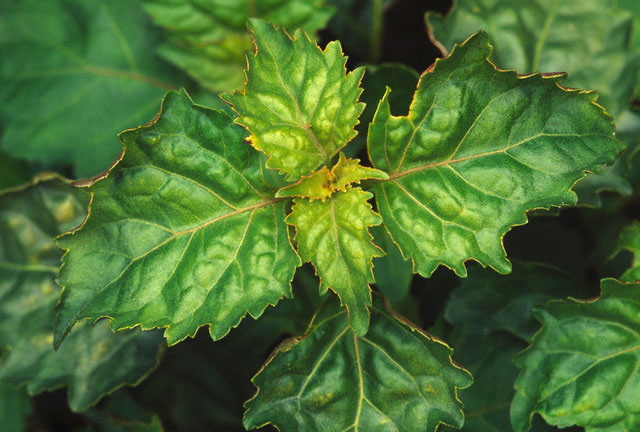
According to legend and stories swirled in the mist of history, patchouli was introduced to the West by traders who used the plant’s oil or its dark, green leaves to protecting their precious cargo of silk. The plant’s naturally medicinal, sometimes mentholated or antiseptic notes would ward off insects and other marauders. When the silk hit the streets of Europe, fine ladies were enchanted by the lingering sweet smell of patchouli and demanded more of it. One version of the tale credits Napoleon with the introduction of the scent, by way of shawls that he’d brought back from Egypt and which were redolent of the plant’s sweet, earthy aroma. Today, however, the smell of true, dark patchouli has fallen into disrepute as a result of negative associations with the 1970s and “filthy hippies,” and it’s not widely used in perfumery. Yet, patchouli happens to be one my favorite notes (in its dark, chewy incarnation), so when I heard that Cuir Tabac from David Jourquin contained five different types of it, I sat up and ordered a sample right away.
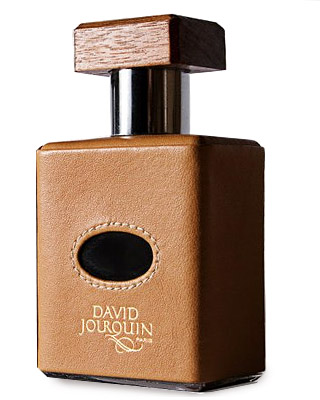
Cuir Tabac via Luckyscent.

Cuir Tabac via Luckyscent.

David Jourquin is a French perfumer, though I’m unclear on what his exact background may be or if he was in fashion before. He has two fragrances, both riffs on the same overall theme and with slightly similar notes, but one is intended to be a “day” scent and one is meant for “night.” Cuir Tabac is the “evening” scent, while Cuir Mandarine is the day one. Both fragrances were released in 2011, are eau de parfum in concentration, and are packaged quite solidly in leather, stitched with the David Jourquin signature. As First in Fragrance puts it, “[a] chiseled jewel, sealed with wood from the walnut tree, sheathed in finely sewn Spanish leather, with a window that reveals the rare, golden hewed liquid.”

The Jourquin fragrances are inspired, in part, by the olfactory memories of his mother with her leather jacket, his visits to Guadeloupe with his father, and the impact of trips to Morocco with his step-father. Luckyscent explains a little more about the specific inspiration and scent for Cuir Tabac:

For Cuir Tabac, the nighttime version of his pair of Cuir fragrances, David Jourquin drew heavily on his childhood memories of visiting the bustling marketplace of Pointe-à-Pitre, Guadeloupe with his father. By blending the sweet and pungent scents of the market with his powerfully evocative signature leather and tobacco notes, Jourquin has created something remarkable: an enveloping, warm, and edgeless fragrance that truly feels like a memory.

The Pointe-à-Pitre market. Source: guadeloupetraditions.free.fr

The Pointe-à-Pitre market. Source: guadeloupetraditions.free.fr

The David Jourquin website describes Cuir Tabac and its notes as follows:

The heady and insolent patchouli heightens the deep and profound tobacco, cigar and musk notes overturning the senses in a soft murmur of fine eternal lavenders.

Mixed with fine lavenders as top notes.
Brown tobacco, cigar and musk as middle notes.
Five patchoulis from five Indian regions as bottom notes.

"Black Widow v1" by *smokin-nucleus. Source: DeviantArt. (Website link embedded within photo.)

“Black Widow v1”
by *smokin-nucleus. Source: DeviantArt. (Website link embedded within photo.)

Cuir Tabac opens on my skin with every possible manifestation of patchouli imaginable. It’s dark, chewy, resinous, sweet, musky, earthy, and smoky. It’s black, but it’s also got green bits to it which result in a brief, 15-minute period of mentholated, slightly medicinal, bitter tonalities. At the same time, the patchouli is also extremely golden and pale, manifesting an incredibly creamy touch that smells a lot like milky café au lait. There are nutty undertones that are a little like roasted almonds, but there is also a faint whisper of chocolate lurking about. The whole thing is neatly wrapped up in a very quiet, subdued smokiness. It’s far from being as black as I’d like, and it lacks the weight or rich, baroque depths of the note in Profumum‘s Patchouly. Instead, it’s a lot closer to the patchouli in Serge LutensBorneo 1834 in the opening moments, mixed in with some of the creaminess of Chanel‘s Coromandel.
Artist: adrymeijer on DeviantArt. (Website link embedded within photo.)

Artist: adrymeijer on DeviantArt. (Website link embedded within photo.)

In less than a minute, other elements appear. First, and most prominent, is lavender which feels dry, pungent, herbaceous, and exactly like that in dried lavender sachets from Provence that I loathe so much. Thankfully, its abrasive sharpness is quickly mellowed out by the infusion of the patchouli, but it still has an edge to it that this lavender-phobe finds a little off-putting. Frankly, I’m not sure I can recall the last time I smelled a lavender-patchouli pairing, let alone one that is quite so singular and unadulterated in its focus. It’s an odd duo, and, yet, not wholly unappealing. What actually bothers me significantly more is the lurking, whip-sawing, crocodile’s tail of something synthetic that flickers around the dark waters of the base. I don’t know what it is, but it burns my nose with its razor sharpness, and continues to bother me throughout much of Cuir Tabac’s lifespan.

The third guest at the party is amber. Cuir Tabac’s perfume notes may not list amber, but there is a definite golden haze in the base that is sweet, musky, and resinous. Perhaps it’s merely another facet to the patchouli, but it seems much more resinous than just that. The whole fragrance sits atop a somewhat molten base that, at this point, is lightly tinged with a hint of creamy, almost vanillic, sweetness.

Source: www.hispanicallyspeakingnews.com -

Source: hispanicallyspeakingnews.com –

Five minutes in, the first glimmer of tobacco appears, smelling just like a fresh, unlit, Cuban cigar. If you’ve ever walked into a humidifier cigar room, you know the aroma here, though it’s very muted and subtle at first. The note also has sweet, golden, almost leathered, and floral underpinnings, and they don’t stem from the other accords so much as from the tobacco itself. Lurking about is a subtle smokiness that feels more like incense than tobacco smoke, but it may be a by-product of one of those five patchouli types.

If you’re wondering where is the leather in all this, you’re not alone. For a fragrance that is called Tobacco Leather, Cuir Tabac doesn’t actually feel like a leather fragrance at all. At no time do I ever get “leather” as a singularly dominant, individual, powerful force, at least not the leather that I’m used to. Instead, the fragrance sometimes carries the subtle feel of leather as a subset of the patchouli and resins, a manifestation of their characteristics, if you will. There are moments, much later on, when faint flickers of leather dance around the periphery, but if you’re expecting the sort of leather note that you’d find in Chanel‘s Cuir de Russie, Puredistance‘s M, Serge LutensCuir Mauresque, Parfum d’Empire‘s Cuir Ottoman, or Montale‘s Aoud Cuir d’Arabie, then you’ll be sorely disappointed. Cuir Tabac is not a true or hardcore leather fragrance by any means, no matter what the name may say. Given that the leather is mostly more of an implied suggestion, I think a more accurate name for the fragrance might be Patchouli Tabac….

Fifteen minutes in, Cuir Tabac starts to shift a little. The patchouli’s medicinal undertones have faded, while its other features have grown stronger. Now, the patchouli has a far greater whiff of something that is slightly green and herbaceousness. Even more noticeable is the dancing, wafting aroma of nuts and cream. The patchouli has a strong element of toasted nuts, and it’s no longer just a subtle impression of almonds, but toasted hazelnuts as well. There is also a growing creaminess to the patchouli that we’ll get to momentarily. The patchouli isn’t the only one to change, however. The lavender starts to turn sweeter; it feels creamy, fluffy, and a little like lavender ice-cream.

"Caramel Kaleidoscope" by Toni Jackson on Fineartamerica.com

“Caramel Kaleidoscope” by Toni Jackson on Fineartamerica.com

Near the close of the first hour, I’ve become convinced that Cuir Tabac’s list of notes is incomplete. The fragrance’s undertones are smoky at times, nutty at other times, and always resinous in feel. There is an increasingly vanillic aspect to the foundation, as if Siam Benzoin and/or Tonka Bean were used to add that creamy sweetness. It becomes more prominent as time goes on, especially once the lavender recedes in strength around the 50-minute mark. Cuir Tabac is now a lovely, multi-faced patchouli fragrance with nutty, creamy, sweet, musky, dark, and vanillic touches, followed by touches of lavender and the faintest hint of fresh cigars. Unfortunately, the base continues to have that synthetic note that feels as sharp as broken glass. I tested Cuir Tabac twice, just to be sure, and the aromachemical was there each time in differing degrees of prominence. At this point, I’m chalking it up to either an amber and/or musk synthetic accord.

I still don’t smell any dominant, hardcore leather, per se, but there is a growing impression of its feel flittering about the edges. At first, there was the subtle, muted whiff of something resembling new car seats in an extremely expensive vehicle, but the smell soon gave way to an impression of an old, comfy, sweetened leather, armchair.
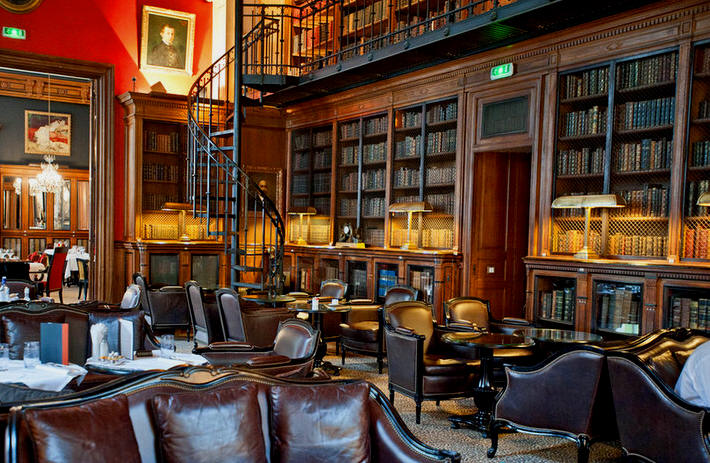
St. James Hotel's Library Bar, Paris.  Source: Oyster.com

St. James Hotel’s Library Bar, Paris.
Source: Oyster.com

Honestly, I think it’s probably the power of suggestion due to the fragrance’s overall feel. Cuir Tabac has definitely started to evoke the reading room and library in an old Mayfair gentlemen’s club with its wall of books, its comfy, well-worn, dark leather armchairs, and a warm fire. There is a butler passing around cognac snifters, accompanied by the finest Belgian chocolates, and a humidor of the most expensive Monte-Cristo cigars from Havana. For those who don’t feel like drinking, there is creamy café au lait, dusted by white cocoa powder and toasted nuts. And, somewhere in the background, someone is burning a tiny, itsy-bitsy bit of black incense.

It’s all very lovely, but, alas, it’s also an increasingly soft scent. With the exception of that sharp synthetic accord, the rest of Cuir Tabac starts to feel like a very well-blended blur. Less than 75-minutes in, the notes lose a lot of their edges and shape, and the sillage drops. Cuir Tabac is a warm, slightly nebulous glow of patchouli that is creamy, sweet, a little bit smoky, slightly leathered, very nutty, and just barely infused with lavender atop a musky, ambered base. The tobacco pops up once in a while to make itself noticeable, but it generally hovers at the periphery. The “leather” impression is similarly muted. Everything feels so swirled into the patchouli that it’s really hard to pull the other notes from the cloud which hovers an inch or two above my skin.

"Coffee and cream" Art Print by Shalisa Photography/ Sharon Lisa Clarke on FineartAmerica.com

“Coffee and cream” Art Print by Shalisa Photography/ Sharon Lisa Clarke on FineartAmerica.com

As time passes, Cuir Tabac continues to change. At first, it’s turns into a creamy café au lait with patchouli fragrance that has a subtle whiff of lavender, synthetics, and tobacco. Then, at the start of the third hour, the tobacco returns to the fold and starts to tango with the patchouli. Now, it’s no longer uncut Cuban cigars, but sweetened pipe tobacco infused with patchouli. The latter is still simultaneously creamy and dark, but all the subtle leathered, nutty, and incense undertones have vanished.

The fragrance sits right on the skin, and feels increasingly thin, gauzy, and discreet. It’s frustrating trying to pull the notes out of the air, especially as some of them keep coming and going like ghosts. Just like the tobacco did earlier, it’s now the vanilla’s turn to play hide and go seek. The same story applies to the creamy and milky café au lait tonality. Clearly, the fragrance is very well-blended and reflects different facets on different occasions, but I wish it had more body, depth, and structure. Both times I wore it, the results were slightly different in terms of the small details, as well as in the order and prominence of all the notes except for the patchouli, but the nebulous feel of the fragrance was the same.
Source: de.123rf.com

Source: de.123rf.com

About 4 hours in Cuir Tabac’s development, the fragrance settles down for its final stage. It is now a creamy, vanilla patchouli fragrance with subtle whiffs of sweetened, unlit pipe tobacco, along with the tiniest speck of smoke and musk. It is also now a complete skin scent, as sheer as gauze. Cuir Tabac remains unchanged until its final moments, a little under 11 hours from its start.

In some ways, it seems that Cuir Tabac dissolves in on itself, but you can also argue that it’s meant to be a soft glow that discreetly envelops you before it turns into something more personal. The latter interpretation seems to be supported by David Jourquin’s somewhat abstract attempts at philosophical, poetic stylings on his website, both in the section about him and the one devoted to his philosophy. The references to dark shyness, “a secret wake like a promise,” and “firm determination enveloped in infinite softness and warmth” seem to be as much about his fragrances as they are about him. Then, too, there is the part about how “[h]e is like his fragrance, sensitive, secret, calm and yet bubbling over, motivated by an intense passion.”

So, if Cuir Tabac is intentionally meant to be this secret, quiet, shy whisper of softness and warmth, then I can hardly criticize the perfumer for achieving his goal. I know a number of people who prefer wispy, gauzy, soft scents that remain close to the skin and are just a private message to themselves. If they like dark patchouli, then Cuir Tabac is tailor-made for them. However, even they might not think the perfume was worth it for the price and accessibility issue. Cuir Tabac is an eau de parfum that costs $235 or €168 for a 100 ml/ 3.4 oz bottle, and has only limited distribution. In the U.S., only Luckyscent carries it. I couldn’t find any vendors in Canada, the U.K., Oceania, and vast swathes of Europe, though it is carried by Germany’s First in Fragrance, and there are plenty of vendors in France and Russia. My point is, would someone want to risk a wispy, unobtrusive blur of a scent that is quite expensive and, for many perfumistas in different parts of the world, not easy to test out first?

Judging by the handful of reviews for Cuir Tabac on Fragrantica, the answer would be “no.” In fact, almost all the reviews say the same thing: that the fragrance is too discreet, “puny,” and sheer for the price tag. To wit:

  • God bless the individual that’s willing to spend hundreds of dollars on this fragrance. The problem with Cuir Tabac isn’t the scent. The bigger issue is that you’re gonna be playing the olfactory version of “Where’s Waldo”. This is more like a thin scent rather than a skin scent. The tobacco smells like a walk-on instead of the star in this concoction. The rest of the notes are puny and shows no interest in fighting back the tyranny of fleetingness. Definitely not a fragrance built for the playoffs.
  • Starts out with almost only dry strong patchouli and a hint of pipe tobacco, soon to transform into more like the smell of a warm – unlit – cigarette and a more subtle spicy note. [¶] Two hours later what’s left is a discrete patchouli note and a warm very present, yet not aggressive, amber-like touch.  [¶] Beautiful scent but less isn’t always more and maybe this one would’ve been better off with more potency.
  • For the first hour, you get hints of sweet pipe tobacco, quickly overshadowed by a medicinal tone (probably the mix of lavender & patchouli). I typically enjoy both lav & patch, but something is awry with this particular mix. After the lav & patch fade, you get the sweet pipe tobacco that I remember my grand uncle (mother’s uncle) smoking, for hours to come. Is this stuff good? In a word, yes. Do I wanna smell like my 70+ year-old uncle? No. And I really don’t wanna pay $235 USD to 🙂

Where's Waldo, via The Telegraph.

Where’s Waldo, via The Telegraph.

The “Where’s Waldo?” comment is brilliant, and my hat is off to “Roge” who used it! I think the reference definitely applies not because of the scent itself, on my skin at least, but because of how many of its notes just vanish like a ghost, only to occasionally reappear later, or how hard they are to pull out of the nebulous patchouli cloud. Lord knows, if one expects a true leather fragrance, Cuir Tabac will be “Where’s Waldo” indeed! If you will note, not a single one of those comments (or the remaining few on Fragrantica) mentions leather at all. Odd for a purported “Cuir” fragrance, wouldn’t you say? I’m relieved that it’s not just me. As for the tobacco, judging by those comments, it seems to have played hide-and-go seek with a few other people as well, since the reports are quite split on its prominence.

One thing that needs some elaboration, however, is the issue of Cuir Tabac’s longevity. The thin, unobtrusive nature of the scent and its low sillage clearly was a problem for two of the commentators quoted up above. However, if you look at the votes on Fragrantica, the majority voted for “very long lasting” (12+ hrs), followed by “long lasting” (7-12 hrs) in second place. In short, don’t let the fragrance’s wispy nature and weak sillage fool you.

An unrelated topic brought up by Fragrantica is the issue of similar scents. One commentator found absolutely no difference between Cuir Tabac and its sibling for the day, Cuir Mandarine. Another thought Cuir Tabac was too similar to the more affordable Thierry Mugler fragrance, A* Men Pure Havane. I haven’t tried the latter, but I’ve read that it’s a very honey-dominated fragrance, not a patchouli one. Still, if the similarities are true, then it makes Cuir Tabac seem even more pricy.

Ultimately, I think that Cuir Tabac is a very mixed bag. The creamy bits are lovely, as is the café au lait undertone that sometimes vaguely mimics a similar nuance in Chanel‘s Coromandel, and I always enjoy dark patchouli, even when mixed with lavender. Unfortunately, I had enough problems with the scent that, at that price range, I would far prefer to get Profumum’s glorious, smoky Patchouly soliflore with its incredible concentration, baroque richness, salty ambergris, and lack of razor-sharp synthetics. Still, if money is no object, if you prefer your patchouli to be gauzy, lightweight, and discreet, and if you also enjoy lavender, but don’t like leather or dominant tobacco notes, then Cuir Tabac may be for you. It’s an extremely narrow category of perfumista, but I’m sure you’re out there!

DETAILS:
Cost & Availability: Cuir Tabac is an eau de parfum that is available only in a 100 ml bottle and which costs $235 or €168. David Jourquin: you can purchase Cuir Tabac directly from David Jourquin for €168. Samples are also available for €3,50. In the U.S.: Cuir Tabac is sold at Luckyscent, along with a sample. Luckyscent seems to be the only U.S. distributor or vendor for the Jourquin line. Outside the U.S.: I can’t find Canadian or UK vendors for David Jourquin. In France, there seem to be many, especially in Paris. There, Cuir Tabac is sold at Jovoy, the Ritz hotel, and The Different Company, among others. Germany’s First in Fragrance also sells the perfume and ships worldwide. In Belgium, David Jourquin is apparently carried at Brussel’s Absolut’ly, but I can’t find the line on the store’s website. For all other locations, you can turn to the David Jourquin Store Locator which lists vendors from Russia and Saudi Arabia to Spain and the Ukraine. As a side note, the brand has a lot of vendors in France and Russia, but it seems to have a very limited European presence and even less so elsewhere. Your best bet may be with companies like Luckyscent, Jovoy, or First in Fragrance who ship worldwide. Samples: I obtained my sample from Surrender to Chance which sells Cuir Tabac starting at $3.59 for a 1/2 ml vial. You can also order a sample from Luckyscent.

Review En Bref: A Lab on Fire What We Do In Paris Is Secret

My Reviews En Bref are for fragrances that — for whatever reason — didn’t merit one of my lengthy, exhaustive, detailed assessments.

Source: A Lab on Fire's Flickr page.

Source: A Lab on Fire’s Flickr page.

Fluffy, clean, powdery, gourmand, and very young. That, in a nutshell, is the summation for A Lab on Fire‘s What We Do in Paris Is Secret. “What We Do In Paris Is Secret” is a bloody long name, so I’ll just shorten it to “What We Do in Paris” or “WWDIP.” The fragrance is an eau de parfum from the legendary perfumer, Dominique Ropion, long considered one of the most technically brilliant, talented, master perfumers. A Lab on Fire is a new niche brand, created in 2011, and, according to Now Smell This, is a sister house to S-Perfume. According to that NST article, A Lab on Fire’s mission is to create fragrances in collaboration with master perfumers, and to “emphasize the juice over the packaging (What We Do is housed in a plain lab bottle with a smear of black paint and a label, and there’s a ziploc bag instead of a box[.].” Hence, a very utilitarian, minimalistic bottle in a silver bag.

The WWDIPIS bag. Source: Fragrantica

The WWDIP bag. Source: Fragrantica

What We Do In Paris was released in 2012, and is classified on Fragrantica as a Fruity Floral. Luckyscent says the perfume notes are as follows:

Bergamot, honey, lychee, Turkish rose essence, tonka bean, vanilla, heliotrope, tolu, sandalwood, ambergris, musks.

What We Do In Paris opens on my skin with a soft, fragile rose note, infused with powder and honey. It is quickly followed by something chemical with a strong aroma of burnt plastic and a faint undertone of medical astringent. I test What We Do In Paris twice, and the same thing occurred both times. The combination is quickly joined by a light, watery, pastel, fruity note that just barely hints at being sweet lychee, but it is almost completely buried under the chemical element and by the advent of a new arrival. It’s powder. Full-blown powder, bursting on the scene, feeling girly and light, infused with vanilla and an almond note from the heliotrope. The whole thing is bound up with enormous sweetness, though it never feels like honey, and feels very airy, soft, and gauzy.

Vanilla powder and essence. Source: food.ninemsn.com.au

Vanilla powder and essence. Source: food.ninemsn.com.au

Within minutes, What We Do In Paris changes. The rose note recedes far to the background, the lychee vanishes completely, and the perfume is reduced to an incredibly feminine cloud of sweet powder scented with vanilla and heliotrope. There is a faint whiff of clean, sweet, light musk at the edges, but that’s about it. The notes are so sheer and minimalistic, I actually doubled the amount of my dose to see if it were a simple problem of application and amount. Nope. What We Do In Paris emphasizes two main notes, and you bloody well better like them. Occasionally, like a ghost, there will be flickers of rose from far recesses of the perfume’s depths, and that lingering trace of burnt plastic chemicals, but generally What We Do In Paris is all about the vanilla, almond-heliotrope powder.

Play-Doh set and station via Amazon.com

Play-Doh set and station via Amazon.com

In the middle of the second hour, the perfume turns warmer, softer, and just a little bit richer. It’s all highly relative for this airy, frothy, singularly limited gourmand confection. The minuscule hints of rose have vanished, and a subtle undertone of amber stirs in the base. The more almond-y nuance of the heliotrope has turned into actual Play-Doh, and the vanilla seems richer.

Around the 4.75 hour mark, What We Do In Paris gains another side. Now, there are the creamy, generic, beige woods that modern perfumery insists on pretending is “sandalwood,” but which smell absolutely nothing like the real kind from Mysore. There’s also a subtle sense of something ambered in the base, though it has no chance of competing with the dominant accords. WWDIP is now a simple blend of Play-Doh heliotrope, vanilla, sweet powder, and ersatz, fake, “sandalwood” creaminess flecked with amber. In its final moments, What We Do In Paris is merely creamy sweetness with vanillic powder. It lasted just shy of 6.25 hours on my skin, and had soft sillage.

WWDIP is far from my personal cup of tea. It’s soft, sweet, and fluffy, though I’m not sure I mean that as a compliment. It’s a pleasant enough scent that skews extremely feminine and gourmand in nature, but is also extremely simple with limited range and a total lack of depth. What We Do In Paris is not fruity or floral enough to merit a “fun and flirty” designation, but it does scream “youthful.” It seems like the perfect sort of innocuous, soft, sweet, powdery scent for a young, female, high school student. It’s so pleasantly and innocuously powdery sweet that it actually seems more like a commercial scent that you’d find at the mall, instead of a niche fragrance that costs $110.

The surfeit of sweetness and the young, safe, fluffy banality bore me, but a lot of gourmand lovers seem to adore What We Do In Paris. It’s a fragrance that has often been compared to the cult hit Luctor et Emergo from The Peoples of The Labyrinths, as well as to Kenzo‘s Amour. The drydown has even been admiringly compared to Givenchy‘s notorious Amarige. I love Amarige, own it, and don’t find a lot of similarities between its lovely, richer, deeper, more appealing amber in the drydown, and the deluge of powdered sweetness in WWDIP. I haven’t tried the other scents to know how they may compare, but Now Smell This and Freddie of Smelly Thoughts found some overlap between What We Do In Paris and other gourmand fragrances, including Serge Lutens‘ Rahat Loukoum and Louve. Like me, Freddie wasn’t bowled over by What We Do In Paris, calling it “slightly immature” and “safe and predictable.” He called it “a perfect blind buy for someone who just likes to smell good but doesn’t care of what in particular.”

If you’re a gourmand lover, however, and are looking for an uncomplicated, completely safe scent, you may want to read the glowing, gushing raves on Luckyscent where many people find WWDIP to be delicious, sweet nectar and utterly addictive. Everyone talks about the powder or Play-Doh, but they generally love it, with only a few dissenters finding the perfume to be excessively sweet or like “baby powder.” One admiring commentator said the fragrance was delicious Play-Doh in “a comforting, loving feminine role-model wearing kind of way. Reminds me of a kind pre-school teacher.” I agree with that last bit. I could definitely see a pre-school teacher wearing WWDIP as a scent that would comfort and soothe toddlers….


DETAILS:
Cost & Availability: What We Do In Paris Is Secret is an eau de parfum that is most commonly available in a 60 ml bottle that costs $110 or, generally, around €110. There is also a 15 ml bottle that is sold by some vendors for €24. Both sizes are listed on the Lab on Fire website, but it doesn’t seem to have an e-store offering online purchase. In the U.S.: you can find What We Do In Paris at Luckyscent. Outside the U.S.: In France, I found the perfume in a 15 ml size bottle at Colette which sells it for €24. I couldn’t find any UK vendors, but I didn’t search exhaustively. In the Netherlands, WWDIP is sold at Skins in the 60 ml bottle for €115,85. In Germany, First in Fragrance offers What We Do In Paris for €110, and I believe they ship worldwide. For all other locations, you can turn to the Lab on Fire Stockists list on their Facebook page which lists vendors from Austria to Poland, Greece, Switzerland and elsewhere in the EU. No UK or Australian vendors are listed, however. Samples: I obtained my vial from a friend, but you can buy samples at Surrender to Chance which offers WWDIP starting at $5.99 for a 1ml vial.

Perfume Review: Armani Privé Les Éditions Couture Nuances (Limited Edition)

There is a great irony in calling a perfume “Nuances” when, for the vast majority of its life, it has none. Such is the case with the new, limited-edition, super expensive, ultra exclusive, iris fragrance from Giorgio Armani called Nuances. It is part of the prestige Privé line, and the even more exclusive sub-collection called Les Éditions Couture.

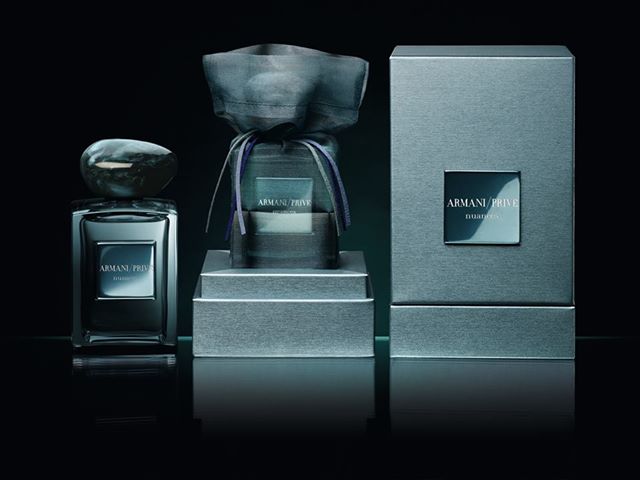
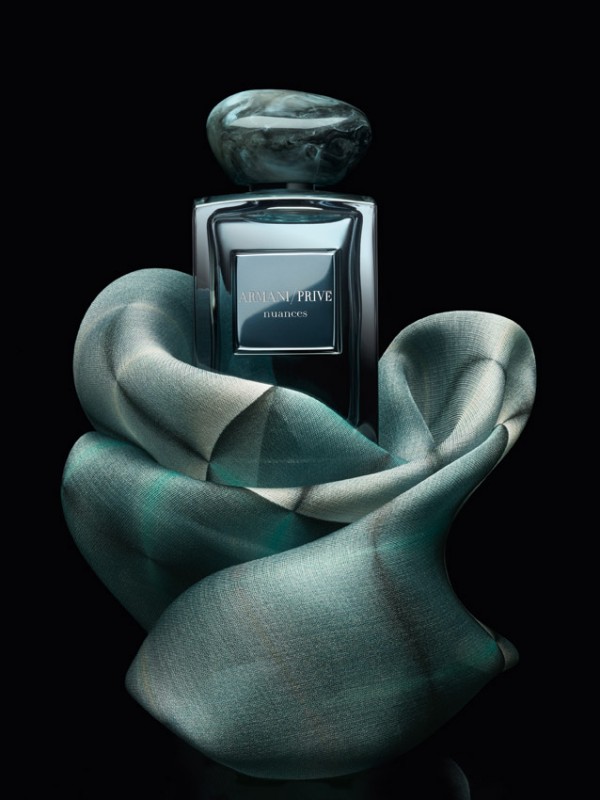
Armani Nuances 2

Nuances is an eau de parfum for men and women which was released in May 2013,  and which takes refined elegance to such stratospheric heights that it’s practically bloodless and gasping for oxygen. It made me think of a perfectly coiffed, elegant, eighty-year old dowager doddering away in seclusion on her aristocratic British estate; or of a very pale, elderly gigolo immaculately garbed in Armani who tries to fade as unobtrusively as possible into the background at a cocktail party while his current patron makes the rounds. Nuances is bloodless, simply bloodless. It’s just there — except when it’s not, because it’s decided to take off for a jaunt for and act like a ghost until it decides to grace you with its presence again.

But let’s start at the beginning. In typical Armani understatement, his website barely bothers to discuss the perfume in any detail other than a brief, completely unhelpful paragraph that bleats on about nuances, prisms, and the “juxtapositions of light and colour.” Thankfully, other sources don’t believe in his obsession with minimalism. For example, The Moodie Report says that the inspiration for the perfume was a piece of fabric, and explains how iris is the olfactory thread that needles its way through all three of the Armani Privé Couture fragrances:

Armani NuancesThe scent was inspired by an Armani fabric print, which featured in the designer’s latest fashion collection. The origin of the print was a photograph, taken using optical prisms and mirrors.

Each of the 1,000 signature bottles is dressed in the organza print; every pouch is unique, and adorned with leather ties. The lacquered green bottle is topped with a marble-like cap, in different shades of black, turquoise and anthracite. 

Iris is the key ingredient that connects all three Armani Privé Éditions Couture fragrances (Armani Privé La Femme Bleue features black iris; Armani Privé Nacre musky iris). 

The press release quoted by Harrods adds even further information and detail:

Inspired by this season’s fashion collection, Armani Prive Nuances is a brilliant reflection of the multi-faceted world of Giorgio Armani. Each of the 1,000 signature bottles comes dressed in the organza print, specially selected from Mr. Armani’s workshops in Milan. Within the pouch, the bottle itself is a work of art. Its cap, reminiscent of smooth marble, is crafted in three colours of resin making each one of them unique.

The fragrance uncovers a woody-iris accord, build around Italian orris absolute. A juxtaposition of different notes reveal an enveloping fragrance, sophisticated yet radiant, with a light note of androgyny in its woody base.

Armani doesn’t bother to list the notes for Nuances, but the sum total — as compiled from the Moodie report and Fragrantica — seems to be:

Italian orris absolute, bergamot, cinnamon, heliotrope, vetiver, vanilla, cocoa, benzoin and sandalwood.

Source: Kootation.com

Source: Kootation.com

Nuances opens on my skin with a brief flash of bergamot, followed by iris. The latter is floral, rooty, earthy, and lightly powdered all at once. Within minutes, the iris is warmed by vanilla, but it is the louder, more dominant influence of vetiver which initially has the greatest impact. When combined with the iris, it creates an earthiness that feels almost like that of damp soil.

Heliotrope. Source: bestflowerwallpapers.com

Heliotrope. Source: bestflowerwallpapers.com

The iris keeps flickering and changing in these early moments. One minute, it is infused by fresh bergamot, the next by a light, musky vanilla, then by earthy notes. Once in a while, it feels infused by an amorphous woodiness. Generally, however, Nuances is merely different degrees of floral rootiness backed by vanilla.

The vanilla is interesting because it’s a very light, sheer, dry note, but whiffs of other elements lurk underneath. Something warmer, richer, softer and creamier. It’s not custard, cinnamon, or cocoa, but some indecipherable combination of all of them. A few minutes later, the vanilla is joined by heliotrope which adds a strong element of sweet almonds that almost borders on pate d’amande or marzipan.

At the thirty minute mark, Nuances starts to shift a little. Now, it is primarily a woody, musky, iris fragrance with lightly powdered, almond-y heliotrope and vanilla. The rooty, earthy undertones have become much less dominant, as has the vetiver. Taking their place instead is a light sprinkling of white cocoa powder with the faintest dash of cinnamon. Nuances remains this way for the next hour without any significant change — except in the base. It is always an amorphous, abstract, woody muskiness infused by vanilla, but there is something increasingly unpleasant about it. There is a subtle nuance that, in some indescribable manner, feels a little cheap and almost synthetic, but not quite. Perhaps, it is the musk which reminds me of the white version in a lot of inexpensive, mass-market fragrances. Or, perhaps, it is the vanilla which feels surprisingly low quality for such an expensive fragrance. Adding to the subtle flickers of something unpleasant lurking down below is a humming in the base. Luca Turin once described ISO E Super as a “low woody hum,” and that is precisely how it is here. Later, alas, my synthetic nemesis makes a far greater appearance, resulting in a charming 2 hour headache.

Right around the 90-minute mark, Nuances becomes a skin scent and, by the two-hour one, it is nothing more than a faded, muted, almost abstract, woody muskiness with a soft, lightly powdered, floral veil that just barely — barely — translates to iris. There are no concrete, distinct, individual traces of sandalwood, vetiver, cocoa, cinnamon, or anything else for that matter.

Then, three hours in, Nuances vanishes. I put my arm right to my nostrils, and sniffed like a man dying for oxygen. I sniffed like the very best German Shepherd K9 in a drug squad. Nope, caput, finito, basta. I thought to myself, “okay, so much for longevity,” and shrugged. Then, lo’ and behold, an hour later, Nuances decides to suddenly come back. I have no idea where it decided to go, or why it decided to flounce off, but it apparently decided to revisit my arm. A few of the Chanel Exclusifs like to play “ghost,” as I call it (31 Rue Cambon, I’m looking at you in particular!), and clearly, Nuances is the same sort of animal. But, once Nuances decided to stay, it bloody well wouldn’t give up! All in all, it remained — in a nebulous, abstract, musky, woody, slightly powdered, monotonous, faintly iris-y hum — for another 11.5 hours. Granted, I had to practically inhale at my arm like a rabid, frothing, deranged animal to detect it a lot of the time, but it was absolutely there, no question about it.

Normally, I would test a fragrance with these sorts of odd characteristics at least twice — but I really couldn’t muster up the energy for Nuances. It’s not just that the perfume gave me a headache at one point from the subtle flickers of ISO E Super in the base; it’s mostly because Nuances was driving me a little mad with its linear refinement. It is so well-coiffed, so perfectly smooth, immaculate, conservative, sophisticatedly dull and unobtrusive, it verges on the mundane. I kept thinking of George Hamilton or Giorgio Armani having all the blood sucked out and replaced by embalming fluids, until they lost their perfect tans and their lifeless corpses were propped up on a chair somewhere. In fairness, I think a hardcore iris addict would probably love Nuances. Of course, that assumes that they could easily and consistently detect it on their skin — something about which I’m highly dubious. Yet, I think even they would admit that there are, in fact, few nuances to the fragrance, and that it is rather limited in both depth and range.

All of this makes Nuances shockingly over-priced. Yes, I understand it’s not only Armani Privé, but also limited-edition with only 1000 bottles made. But it’s £500.00! Nuances is not listed at all on the U.S. Armani website, so if we’re to go by the current exchange rate, that’s $760! If you want to pay a small fortune for an iris fragrance with actual nuances, and which is just slightly less difficult to obtain, then may I point you in the direction of Ormonde Jayne‘s Tsarina from the new Four Corners of The Earth Collection? It’s a lovely, incredibly elegant, sophisticated iris scent with layers, and without the many, varied problems of the Armani one. Plus, Tsarina is cheaper, too. (Well, purely on a relative scale of things….)

As you can tell, I was not a fan of Nuances. If it were a $100 (or even $150) bottle of perfume, and you were a hardcore iris addict who didn’t mind a really conservative, boring, but elegant, iris soliflore, then I’d definitely recommend giving Nuances a try to see if the nonexistent sillage and peculiar longevity issues work out for you. As it is, however, then no. Simply no.

DETAILS:
Cost & Availability: Nuances is a limited-edition Eau de Parfum that only comes in a 100 ml/3.4 oz bottle. I can’t find pricing in U.S. dollars, but it costs £500.00 or Swiss CHF 690. Nuances is shown on the International Armani Beauty website and on its UK Beauty site (where it is currently sold out). However, neither Nuances nor the rest of the Privé Couture line is shown on Armani’s U.S. website somehow. Plus, I can’t seem to figure out if you can purchase the perfume from the non-UK, international website directly, as I don’t see a button to click and put the fragrance into a cart. Armani has an Index Website listing with versions for Asia, Italy, Germany, Spain and elsewhere that you may want to use to see if Nuances is listed for your location. In the U.S.: Nuances will undoubtedly be sold at any Armani boutique that carries the Privé Collection line of fragrances. Outside the U.S.: Nuances is currently available at Harrods. I know it is available in the Middle East. Normally, I try to provide as many online retail links as possible, but in the case of Nuances, it proved to be a little hard. And, to be honest, I wasn’t very motivated.

Perfume Review: gs03 by Geza Schoen for biehl. parfumkunstwerke

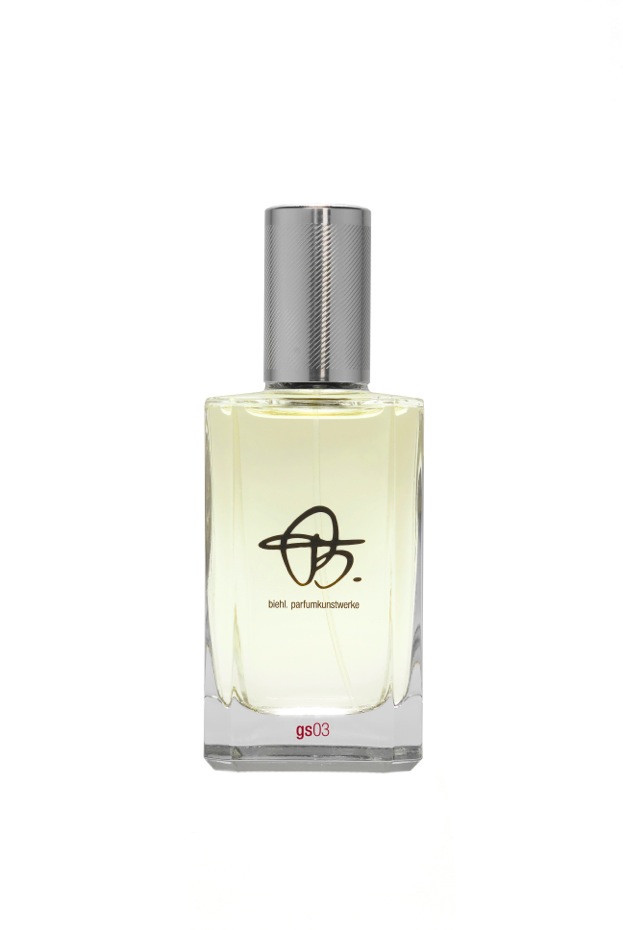
Photo: Sohrab Ghotbi. Used with permission.

Photo: Sohrab Ghotbi. Used with permission.

Perfume as art. Individuality, purity, modernity without the limitations of commercialism, and uniqueness. It that may not be for the masses, but that is not the goal of biehl. parfumkunstwerke. (For the sake of simplicity, I will refer to the house as “Biehl” in this review, even if the capitalization is not the official form of the name.) Biehl is a German niche perfume house founded by Thorsten Biehl who explicitly sought to create “an olfactory gallery. a free space for perfume artists” to be artists without commercial, mass-market considerations. To that end, it has given free rein to some of the most avant-garde perfumers, like Geza Schoen (or “Geza Schön”), to pursue a more intellectual approach to perfumery.

Geza Schoen. Source: Hypoluxe.

Geza Schoen. Source: Hypoluxe.

To me, the house has a vision that seems very German in its ethos of avant-garde minimalism and purity. That trend is reflected in both the intentionally fluid, minimalistic packaging of the bottles and in the perfumes’ names. As the website states: “no borrowed concepts of super-model dream worlds. no extravagant packaging frills. no try-hard bottle design. instead we concentrate on what is essential – the perfume.” Each fragrance comes in a minimalist bottle, and is named simply after the initials of the perfumer, followed by the index number of his works.

Thus, the new perfume, gs03, stands for Geza Schoen and for the fact that it is his third creation for the perfume house. It is part of Biehl’s Young Savages collection which also includes fragrances by Mark Buxton and Patricia Choux, and two others by Geza Schoen, for a total of eight fragrances in all. gs03 is the very latest addition to the line, an eau de parfum that seeks to reinvent and restructure the concept of eau de cologne — only with 20% concentrated perfume oil. As the press release explains, in part:

gs03

gs03

Scope: to rejuvenate the ‘eau de cologne’ theme for the 3rd millennium. […]

It was however a complex restructuring process to modernize such a well-known scent. The traditional, overpowering freshness of orange flower, neroli, and citrus notes needed the depth, warmth, and lasciviousness of modern musk notes, benzoe siam, moss, and castoreum. The result: ostensibly clear and innocent – provocatively innocent, disrespectful – how beautiful.

Head: Fresh yet tender Neroli, orange flower absolue, mandarine, juniper, schinus molle [pink peppercorns].
Heart: Lustrous elegance. A fusion of iris absolue, rose oil and hedione.
Fond: Sophisticated sensuality. Vetiver, castoreum, musk, benzoe siam, moss, tonka, cedarwood.

Juniper.

Juniper.

gs03 opens on my skin with sparkling green, white and yellow notes. Hedione with its lemony nuances flits about with soft, translucent orange blossoms and greener neroli in a heavy veil of soap. Hints of evergreen and juniper evoke a snowy, white mountain top, as does the underlying musk with its clean freshness. Interestingly, the juniper smells not only of pine trees (or evergreen), but also of gin.

The bouquet shines as brightly as a pristine, white, Alpine landscape, channeling the outdoors with such a crispness that it almost feels as though you were crunching on snow. Yet, despite the brisk, outdoors-y overtones, there are also flickers of warmth from the sweet orange blossom. Thanks to the sparkling, green effect of the hedione and the edgy, almost aquatic coolness of the juniper, it’s never indolent, thick, or syrupy, but, instead, airy and green. The overall impression is of a fragrance that is extremely aromatic, light, clean, energizing and fresh, but also incredibly soapy. Far, far too much so for my own personal tastes. (Soapiness is only a step below the dreaded ISO E Super in my estimation….)

Source: picstopin.com

Source: picstopin.com

What’s interesting about gs03 as a whole — and what starts to become noticeable less than five minutes into the perfume’s development — is the chiaroscuro effect. Contrasts abound all over the place: light and dark; crisp cologne but with a parfum feel; airy, breezy twists on indolic, usually heavy essences like orange blossom; and alpine, white coolness with warmer, peppery, or deeper hues. Flashes of darkness start to emerge, first with subtle whiffs of vetiver and moss in the base, almost paralleling the brisk evergreen and juniper lurking about the top. Then, slowly, slowly, hints of castoreum — a most unusual element in this sort of mix. In general, and as Fragrantica explains, castoreum has an aroma which can range from animalistic and leathery, to fruited, musky, or sweetly carnal. Here, in gs03, it creates more of a feel, if that makes sense: warm, plush, velvet, and languid. It never smells like raw, animalistic leather; instead, there is the subtlest hint of warm suede to its plushness.

Thirty minutes in, gs03 shifts a little. There is a soft breath of fruity, pink peppercorns, and, alas for me, the start of ISO E Super. Geza Schoen clearly loves the blasted aromachemical like nothing else in the world, and I guessed it would be an inevitable part of gs03, but still, I had held out hope that just once (once!) he may stop hugging it to his bosom like treasured gold. Nope, it’s in there. The quantity is not the scarring, utterly traumatic nightmare that it was in his Montabaco for Ormonde Jayne, but there is enough ISO E Super to give me a headache — which doesn’t happen to me unless a perfume has quite a bit of the bloody stuff. Still, on a positive note, and to my relief, the ISO E Super is relatively bearable in gs03, smell-wise. It’s not an antiseptic horror that evokes hospitals or chemistry experiments, there is no rubbing alcohol nuance, and it doesn’t smell abrasive or harsh. In fact, it is simply a low-level, throbbing, woody hum (to paraphrase how Luca Turin once described ISO E Super) that adds a velvety touch to the base. Still, those of you who always get searing migraines from the note (or from the Ormonde Jayne line) should take heed.

As time passes, gs03 begins to reflect different elements. Around the start of the second hour, the perfume turns warmer, softer, woodier and more layered. On the surface, the primary bouquet is still a soapy orange blossom, gin, and lemon triptych, but there are far greater nuances lurking below. The cedar element is much more prominent and peppery; the white musk smells much warmer and less bracingly clean; the oakmoss starts to make its presence noticeable with a grey, dry nuance; and there is a faintest tinge of bitter greenness hovering around the edges. Even one of the top notes — the lemon — has changed a little. It now smells a lot like lemon verbena, thanks to a rather creamy richness that has taken over.

Source: picstopin.com

Source: picstopin.com

All these elements change the visuals from that of a pristine, cool, crisp, outdoor scene high atop a snowy Alpine mountain speckled with pine and juniper trees, to something that takes further below in a fragrant valley warmed by the sun. The image is further underscored around the middle of the third hour when gs03 turns into a very woody, musky scent. The top notes are rather amorphous and abstract, but they are supported by a slightly rooty vetiver and an increasingly prominent iris note. The soapy orange blossom has receded to the background, along with the lemon note, adding a muted floral touch.

Starting in the fourth hour and all the way through to the middle of the seventh, gs03 turns into a lovely iris fragrance. The note is neither powdery, nor really very rooty. Rather, it’s cool, faintly floral, restrained and strongly evocative of buttery, grey suede. It adds to the overall feel of gs03 in this second stage as something plush, velvety and smooth, instead of being hygienically fresh. The perfume no long evokes the scent of a man’s skin right after he’s taken a shower and then splashed on a citric cologne. Instead, gs03 now radiates a sort of controlled warmth and perfumed softness that is elegant, sophisticated, and refined. It’s hard to explain, and I’m undoubtedly not doing it justice, but I’m starting to agree with the press release description of gs03 as “lascivious purity, warm, subtle, hidden seduction.” Well, “lascivious” goes too far (and I’d personally use the word “refined” instead), but the rest of it is certainly very accurate. There is something about the richness of that iris absolute which adds smoothness and elegance to gs03.

Source: wallpaper777.com

Source: wallpaper777.com

The perfume remains as an iris scent backed by vetiver, gin, woody musk, soapiness, and darting flickers of orange blossom for another few hours, softening all the while. By the end, gs03 is simply an amorphous, soapy, musky scent with the faintest impression of something woody flittering about its edges. All in all, gs03 lasted just under 10.25 hours on my voracious skin, and the sillage was generally moderate. The perfume only became a skin scent around the seventh hour, which is pretty good indeed.

As noted at the start, gs03 is a brand new fragrance; in fact, it was launched in Berlin just a few weeks ago. On Fragrantica, the only person who has tried it thus far considered it to be a fresh, uplifting, earthy cologne that turned muskier over time. In a separate article for Fragrantica, The Perfume Shrine‘s Elena Vosnaki found a few parallels with Jean-Claude Ellena‘s fragrances, but, ultimately, far greater differences in overall style and approach. Her experience with gs03 is actually quite similar to mine, minus the deluge of soapiness and the issue of the ISO E Super. Her review reads, in part, as follows:

The top note is as clear as a church bell pealing on a mountain top in the Alps, but at the same time quite soft, comprised of a pink pepper note (allied to what can only come across as sweet lemon to my nose) which reveals a less sharp than citrus, slightly fruity-rosy scent carried far by the scent of the alcohol carrier. The rejuvenating scent of juniper gives an herbal accent that recalls the bracing feel of downing a good gin. The lemony touch just aids in bringing forth the herbal aspects of juniper berries. […] The gin and tonic combination is as perennially pleasing as a button-down oxford shirt in white; it just works in any situation, on any wearer. It’s also effortless […] [¶]

… It seems to me that there is also a bitterish artemisia hint, a tickling of the sinuses which aids the pungent freshness of GS03; it would serve as both a contrast and a modifier, rendering the juniper fresher and the rest fruitier by contrast. The anchoring elements consist of the musky-woody hum which we have come to associate with Geza Schoen, with an added layer of castoreum, just enough to give interest. […]

GS03 has Geza Schoen’s signature style all over it: fused into the skin, it gains in warmth and sensuality as the body heats up; always on the brink of consciousness but never quite openly there. I catch whiffs now and then and if I lean over the spots I sprayed it’s most definitely there, but it doesn’t come across as “you’re wearing perfume.”

I agree with almost all of it, but especially with her last paragraph: gs03 really does melt into the skin as something that is like an elegant, clean extension of your own, slightly warmed body, only with a subtle hint of musky, woody florals.

Given my personal tastes, I’m far from the target audience for gs03, but I think those who are in that group will like it. It’s a good perfume which completely meets Biehl’s stated goals of taking an eau de cologne and re-imagining it as something with greater depth, warmth and modernity. gs03 is also intended to be something elegant for casual, perhaps daytime, use — and I can see that as well. It’s absolutely unisex, versatile, and easy to wear. Those who are looking for something very fresh, clean, and understated, but with a soft, refined, floral, woody touch will undoubtedly enjoy it quite a bit. And its moderate sillage combined with excellent good longevity makes gs03 perfect for office wear. In fact, there is such a professional feel to its restrained, elegance that I keep visualizing a banker in an expensive, dark business suit. It certainly is a fragrance that morphs drastically from that opening image of a crisp, cool snowy Alpine landscape dotted by pine trees and with orange blossom as the sole burst of bright colour. And the iris part is very pretty, indeed. My only word of caution is that you have to really like soapy scents and clean, white musk. If you do, then give gs03 a sniff. 

DISCLOSURE: Perfume sample, courtesy of Hypoluxe. I do not do paid reviews. As always, I make it clear in advance to the perfume company or to distributors that there is no guarantee of a positive review — or even any review at all. My first obligation is to my readers, and to be completely candid in my opinions.

DETAILS:
Cost & Availability: gs03 is an eau de parfum that comes in a 100 ml/3.3 fl oz bottle and which retails for $195 or €150. In the U.S.: gs03 is available at Lucky Scent, Osswald NYC (but not yet listed on their online website), Avery Fine Perfumery New Orleans, Blackbird Ballard Seattle, and Henri Bendel NYC (also not yet listed on their website), with selected additional stores to follow. In Europe: gs03 is obviously available at Thorsten Biehl’s biehl. parfumkunstwerke in Hamburg, though their website does not seem to have an e-store. It is also carried at Essenza Nobile for €150.