Perfume Review: Tom Ford Private Blend Amber Absolute

Some perfumes just announce their presence. Tom Ford’s Private Blend Amber tom-ford-amber-absoluteAbsolute is one of those perfumes. While his entire line of fragrances — Private Blend or not — seems to have a very brash, forceful attitude, I think Amber Absolute takes it to new levels. It is known to be the most concentrated and the strongest amber perfume on the market, but it’s far more than just that: it’s also a frankincense monster. To be honest, it reminds me of one of the aggressive, giant gorillas in Planet of the Apes — complete with chest-thumping machoism. I am not a fan.
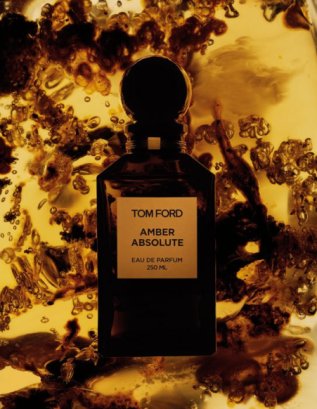
Amber Absolute is categorized as a unisex oriental eau de parfum. On his website, Tom Ford describes it as follows:

AMBER ABSOLUTE is a honey-colored scent infused with the purest form of Amber, joined by a tenacious refrain of African Incense, Labdanum, Rich Woods and a touch of Vanilla Bean.

There are no further details about the ingredients and no further elaboration of what kind of “rich woods.” Amber Absolute is intended to be a simple scent; it is meant to be little more than pure, concentrated amber with a “tenacious” hint of those other things. To that extent, you could argue that Tom Ford succeeded in his goal. It really depends on how you interpret the “tenacious refrain” part, and the extent to which the amber was meant to dominate.

Bois de Jasmin has an extremely useful discussion of amber in perfume, and I think it would be helpful to share it here:

While amber commonly tends to refer to the semi-precious fossilized resin, in perfumery, the word refers to an abstraction of the complex odors of ambergris. Rich, animalic, warm and salty, this substance regurgitated by the sperm whale, has been sought after since antiquity for its unique scent. Given its scarcity and high price, amber

accords have been devised using materials like labdanum, which approximate the fragrance of ambergris, particularly since purified labdanum contains ambrein, one of the materials that gives ambergris its scent. The classical amber accord in perfumery tends to be sweet and vanillic. The best examples I can offer include Serge Lutens Ambre Sultan, L’Artisan Parfumeur L’Eau d’Ambre and Annick Goutal Ambre candle .
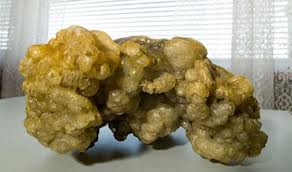
Ambergris

Ambergris

I find it unlikely that Tom Ford used pure ambergris in his perfume, so I’m guessing the infusion of “the purest form of Amber” must be synthetic ambergris (or ambroxan) with a healthy, if not enormous, chunk of labdanum. In my Glossary,
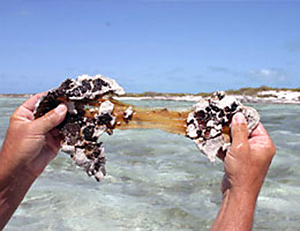
Pure, fresh ambergris found on the beach.

Pure, fresh ambergris found on the beach.

I elaborate on labdanum which is the distillation of the cistus plant and which imparts a dry, resinous, faintly woody smell. To me, labdanum is generally similar to ambergris (or to its synthetic form, Ambroxan) and to ambery resins. However, I think it has more of a masculine toughness as compared to amber’s sweetness, a touch more edge and a bit of a dirty, animalic spice.
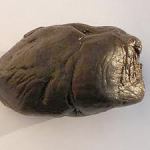
Labdanum

Labdanum

Tom Ford doesn’t explain if his “African incense” is frankincense or what comprises his “Rich Woods.” The former must be Olbanum, and I’ve read some guesses that the latter consists of Guaiac Wood. I suspect that’s true. Descriptions of guaiac wood’s smell range from burning leaves and pepper, to rubbery rosy-sweet honey, to smoky, rubbery, tar-like asphalt. (See Glossary for more details.) All the descriptions apply here.

The reason why I’m spending perhaps a little more time than usual going over the notes is because I don’t find Amber Absolute to be a predominantly amber scent. To me, it’s smoky, peppery, almost asphalt-like frankincense fragrance first and foremost, and only then amber. Amber is merely the context and cocooning wrap, frankincense is the head and heart. And there is way too damn much frankincense!

Amber Absolute opens with a lovely note of spiced rum. It’s all Chinese Five Spice, headed by star anise. I cook with star anise, and was surprised by just how redolent the smell is here. The amber is rich and so boozy, I immediately thought of Captain Jack Sparrow in the “Pirates of the Caribbean” series and his love of rum. Here, the rum note is so concentrated, a mere whiff might make the mighty pirate drunk.

The frankincense is visible too and, initially, it isn’t quite the star player, though it is jostling for the center stage. It’s strong, smoky and has the sharp bite of black pepper. It’s faintly acrid; I can smell it at the back of my nose. There is also a definite burnt asphalt smell which can stem from either the possible Guaiac wood element or from the incense alone. Whatever the cause, the incense or frankincense notes become stronger and stronger. And stronger. It ends up becoming the olfactory equivalent to assault and battery, a most intentional tort.

It is such an aggressive assault that I should point out the need to be extremely careful in how much Amber Absolute you apply. Be careful for your own sake, never mind others. I thought I had been careful, but apparently, not enough. As I repeatedly state, my body consumes perfume. Consequently, for any sort of accurate test, I always use about 3-4 dabs from the small sample vial, smeared up and down each arm. That is the baseline. However, with Amber Absolute, I used far less. I know from prior experience the strength of Tom Ford scents — especially in their opening salvo — but I had also read enough about how Amber Absolute was the strongest amber on the market to know I had to be careful. So, I only put on 1-2 dabs on each arm. Oh boy!

It was absolutely tolerable — nay, lovely — in the opening 15 minutes or so. There, it was a mix of boozy amber (verging on seriously concentrated rum), star anise and spices with an element of frankincense. But the frankincense muscled the supporting players off the stage, took over, and then set up a chest-thumping rhythm of increasing shrillness. What happened to a mere “refrain of African incense”? Oh, right. “Tenacious.” Mr. Ford, I think you’ve confused “tenacious” with obnoxious.

As my prior reviews show, I’m a huge fan of frankincense, so it should tell you something that I found it really too much here. Isn’t this supposed to be an amber scent first and foremost? Frankincense and amber are a lovely combination but, here, there is nothing to really dilute, soften and tame the hard, extremely smoky, almost acrid (and verging on painfully sharp) edges.

Which brings me to my real problem with Amber Absolute: it is not well-rounded for a large portion of its lifespan. It’s too top-heavy on one key note. It’s unbalanced and, unbalanced to such an extent, it clearly must be intentional. I can’t fault Amber Absolute for being a simple, even linear scent; that was what they wanted it to be. But I can absolutely fault it for being painfully unbalanced.

Speaking of linearity, it’s not always a bad thing. I certainly don’t use “linear” as a constant negative. Nor do I need for my scents to always morph and transform like Cinderella. In fact, comfort scents like rich, warm, cozy ambers are one category where I can very much enjoy linearity. It’s akin to having the lovely basenotes (sometimes, the best part of a perfume!) there from the onset but just in different degrees of concentration. But I don’t like this linear perfume.

After three hours of being assaulted and beaten up by frankincense, the charging gorilla decides he’s got better things to do and goes to sit in the corner. The dry-down starts, and it’s a relief. There is salty caramel, vanilla and more of what I consider to be real amber. Soft, nutty, sweet and delicious. The salt of the caramel is balanced by the sweetness, and the whole thing has a lovely touch of smoke. The frankincense is still there, but it’s glowering from the corner and shackled. It’s been tamed enough to almost smell a bit like dirty patchouli, but not quite. The combination is lovely but it’s faint. Like most Tom Ford scents on me, the opening salvo is loud and intense, but when it fades into softness, it’s almost too soft.

Which brings me to something that I often wonder about when it comes to Tom Ford fragrances: olfactory fatigue. I don’t think I experience it with other lines, but I often suspect it is a factor with Tom Ford scents. Most of them open with such an enormous (if not overwhelming) blast that I wouldn’t be shocked if my nose tuned things out after a few hours. I’ve read mentions of olfactory fatigue when it comes to Amber Absolute in particular, so I suspect my assessment of the length or power of the dry-down phase may be strongly influenced by fatigue. Don’t get me wrong, it’s a linear scent even then, and there really isn’t a hell of a lot to write about how it unfurls at this stage. I simply am not sure of how strong it is at this point because my nose has been barraged in the preceeding hours.

All in all, Amber Absolute lasted about 8 hours on me with the projection being very good for the first 3 hours, then closer to the skin for the remainder of the time. Given how quickly my body consumes perfume, 8 hours is a long time. On others, however, I have read reports of Tom Ford scents lasting 12-18 hours, and I suspect that Amber Absolute would push things to the higher or highest end of that range.

All in all, I didn’t hate Amber Absolute, but I certainly didn’t love it. I had really expected that I would. In fact, from all that I had read about it and from a friend’s experience with it, I had expected it might be “The One” as far as amber scents go. I have thought long and hard about whether disappointment and very high expectations have contributed to my negative impressions of the scent. I don’t think they have. I’m not judging this as an amber perfume because, on me, it wasn’t one. At least, not a real amber. I’m judging this as a predominantly frankincense perfume in the cocoon of amber. And, even as a frankincense monster, it is not a thing of beauty. For a large portion of its run, it’s not even a thing of comfort. It feels slightly insolent in its extremely aggressive, chest-thumping swagger as it announces: “I’m here! I’m the strongest amber around. And I am absolute!”

So, my hunt for the perfect amber goes on. Maybe it will be Hermès’ Ambre Narguilé from its Hermessence collection, or maybe you can suggest something that I should try. Have you found your perfect amber? If so, what is it? I’d love to hear your thoughts on either Amber Absolute or the best amber that you’ve encountered thus far.
 

DETAILS:
Cost & Availability: $205 for a 50 ml/1.7 oz bottle or $495 for a 200 ml/8.45 oz bottle. In doing a search today for all sites selling Amber Absolute, I came across a claim that it was just discontinued two months ago, in October 2012. I can’t seem to ascertain the accuracy of that comment. Certainly, Tom Ford’s website has the perfume listed as part of his Private Blend collection. However, I can no longer find it listed on the Nordstrom, Bergdorf Goodman or Neiman Marcus websites. Neiman Marcus has it listed, but the category is empty and without a picture of the bottle. Barney’s does not appear to carry any of the Private Blend line, so that’s no help. I’m extremely surprised given the enormous popularity of Amber Absolute, but I’m starting to suspect that chap was right and maybe the scent has been discontinued. If you’re eager to try it, though, there is always eBay where Amber Absolute is plentiful. And, of course, Tom Ford’s website, for now at least. If you like amber, I suggest trying out a sample which can be found for $3 on Surrender to Chance, or on other decant/sample sites like The Perfumed Court.

Perfume Review – Les Néréides Imperial Oppoponax: Evoking the Guerlain Classics

Imagine a pool of molten amber, covered with the sheen of fresh citrus oil. It’s like a thin film covering the thick, unctuous depths below. At the very bottom of the pool is a thin layer of white. Not sand, but powdered vanilla. That is the image evoked by Les Néréides Les NImperial Oppoponax, a unisex fragrance that is all sweet myrrh, amber, sandalwood and powdered vanilla.

Les Néréides is a French perfume house that initially started in the world of expensive, high-end costume jewelry before branding out into perfume. Their fragrances represent their overall ethos of the most basic, pure and simple ingredients but at the most luxurious level. They eschew expensive or fancy bottling, preferring to opt for a minimalistic aesthetic, both to appearance and, to some degree, the perfume itself.

Imperial Oppoponax embodies that aesthetic very well. It also embodies something else: vintage Shalimar by Guerlain. It’s incredibly similar, to the point that I’m in a Shalimarslight state of disbelief. (And joy.) Those who mourned the loss of their beloved legend to the horrors of IFRA restrictions and reformulations should rejoice. Because I could swear I’m wearing Shalimar, particularly in its dry-down stage! Imperial Opoponax (which has now been renamed simply “Opoponax”) is a mere eau de toilette, but it truly conjures up the glories of Shalimar at its best — both in the stronger parfum concentration and in its vintage state, before Shalimar was destroyed in a haze of synthetics and IFRA-mandated changes. (“IFRA” is the international perfume federation whose 2010 rules on the amount, type and concentration of certain key ingredients has forever altered the nature of the perfume world for the worse.)
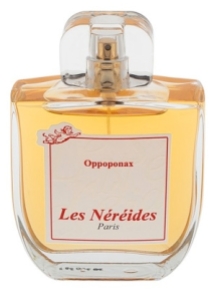
Imperial Oppoponax is classified as a “Oriental Woody” on Fragrantica and its notes are not complicated:

citrus, opoponax (sweet myrrh), amber, vanilla, sandalwood, and benzoin (resin).

For point of comparison, Shalimar has a few more: citrus; lemon and bergamot, jasmine, may rose, opoponax, Tonka bean, vanilla, iris, Peru balsam and gray amber. (And, yet, on me, Imperial Oppoponax has a slightly similar citrus opening and an identical dry-down.)

Imperial Oppoponax opens with a sharp, almost masculine burst of citrus. There is a definite feeling of classic men’s colognes in its sharpness; impressions of Guerlain‘s Habit Rouge cologne for men float through my mind along with Guerlain’s Shalimar. It’s definitely the opening of a very intense citrus-y, woody, aromatic oriental. I put on some vintage Shalimar parfum on my other arm and compared the scents. Shalimar is richer in its citrus start, more nuanced and complex, with florals and greater warmth. Imperial Opoponax is much closer to Habit Rouge with its crisp, fresh, faintly herbal twist on a citrus start.

Ten minutes into the opening, hints of the sweet myrrh and resins begin to tiptoe into the picture. You can find more details on benzoin and sweet myrrh in my Glossary, but,

Benzoin

Benzoin

in a nutshell, benzoin is a type of resin that has a light, sweet, often powdery vanilla scent, while sweet myrrh can range from slightly nutty and amberous, to faintly herbal and balsam-like.

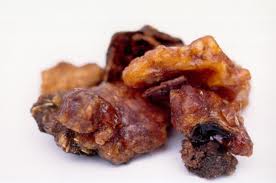
According to NST, opoponax “has a sweet,

Opoponax

Opoponax

balsam-like, lavender-like fragrance when used as incense. King Solomon supposedly regarded opoponax as one of the ‘noblest’ of all incense gums.” Here, the balsam element to opoponax adds a woody, almost smoky note to the perfume, while the lavender is an aromatic.

The two notes together, along with that citric start, solidify my impressions of old Habit Rouge. I happen to adore Habit Rouge with a passion, so I can’t stop sniffing my arm. Some find the opening of Imperial Opoponax too masculine and too strongly evocative of an old time barber shop. To me, Imperial Oppoponax is a happy trip down memory lane! Lemon and lime! Subtle lavender (but in a good way) with traces of powdered vanilla! Wood that almost smells faintly cedar-ish! God, this is lovely!

It may sound odd to think of balsam trees and lavender mixed with a very boozy, sweet,  almost nutty, ambery scent and vanilla powder, but it works. Like Habit Rouge, the sharp, almost excessively zesty citric start is balanced by an immediate impression of greater depth and warmth. There is a strong hint of smokiness and incense that are emerging, but the real star is a definitely boozy amber with its undertones of powder.

The citric notes fade about 30 minutes in, leaving the rest of the perfume as one very well-blended resin booze fest. There is real intensity to the sweet myrrh and benzoin, and it’s almost narcotically heady. There is a faint sharpness or accridness to the smell, though I don’t know if it’s from the smoke — which makes me think of a weak form of frankincense –or if it’s the combination of the ingredients together.

Imperial Oppoponax is a very well-blended perfume but it might easily be called linear. From reading comments about Les Néréides style, I get the definite impression that they seek to essentially bottle the essence of an ingredient in its most concentrated, pure form. Here, it’s oppoponax and while there are other players on the stage, they are all supporting cast members to support the star and to make it shine even more brightly. I also get the crazy feeling that Les Néréides’s goal with Imperial Oppoponax was essentially to bottle the basenotes of the classics. Did you ever smell something whose basenotes or dry-down was so enchanting that you thought to yourself, “why can’t they just bottle THAT?! I would buy a full bottle of that!”

Well, I think that’s what Les Néréides tried to do here. If they didn’t seek to do so intentionally, it is the final result nonetheless. Imperial Oppoponax evokes the Guerlain classics extremely well but what it really epitomises is the dry-down on Shalimar. It starts off as Habit Rouge, and then develops into Shalimar. With every passing hour, as the Imperial Oppoponax opens further, softens and unfurls its warm heart, it evokes the sweet myrrh, ambergris, tonka bean, and vanilla base notes of Shalimar. The tonka bean and vanilla that form the Guerlinade or signature to almost all Guerlain scents is evident here, even though the sweet vanilla and powder comes from benzoin instead. And the peru balsam in Shalimar is paralleled by the balsam notes to the opoponax that both perfumes share.

Tea fireplace

A cat who clearly shares my appreciation for fireplaces and cozy atmospheres.

The middle to final stages of Imperial Oppoponax are all cozy, snuggly and warm. I felt imperious, slightly haughty and very Parisienne when I went out earlier this afternoon with Imperial Oppoponax enveloping me. But tonight, once home, the warmth and coziness made me reach for my flannel pajamas and a soft pashmina wrap, as I suddenly wished I lived someplace where a real fireplace wouldn’t be laughable. It’s a scent of great femininity but also great softness; it makes you want to cuddle and snuggle, even if it’s just with a soft blanket and your German shepherd.

Imperial Oppoponax has impressive sillage for the first two to three hours. If you spray too much, you may smell the sweet myrrh almost at the back of your nose. It has definite forcefulness, this perfume. And it does “not go gently into that good night” either, to quote the poet Dylan Thomas. No, Imperial Oppoponax stays and stays — even on me. It projected its scent solidly for the first three hours but only became close to the skin about five hours in! However, I could still smell it on my wrist for hours after that. All told, Imperial Oppoponax lasted just over 8 hours on me. Eight. Me! It’s positively shocking, especially when you consider that this is a mere eau de toilette!

It’s also an incredibly affordable eau de toilette, if not a flat out steal. Imperial Oppoponax — or just plain “Oppoponax” as it is now called — costs $70 for a large bottle (100 ml or 3.3/3.4 fl. oz.). In contrast, a 1.7 oz bottle of Shalimar eau de toilette costs $73 at Sephora. And, if I may point out once again, that would be for a reformulated version of Shalimar which smells nothing like the real, original scent, and which is full of synthetics that smell artificial and sharp. If you ever loved the middle to final notes of (original) Shalimar, then Imperial Oppoponax is a scent you may want to strongly consider. It’s almost a bargain in some ways. If, however, you never were all that fond of the powdered vanilla Guerlinade base to begin with, or if you don’t like a powdery accord to your boozy resins, then Imperial Oppoponax may not be for you.

Personally, I’m thrilled to finally have a way to smell both my beloved Habit Rouge and Shalimar, all in original vintage form and all in one bottle. I consider Imperial Oppoponax to be some sort of karmic finger in the face of the IFRA olfactory atrocities. It’s almost as though Les Néréides said, “You think you’re going to change the face of perfume history? Well, we’ll see about that!”

I don’t know how they did it, but bravo!

DETAILS:
Cost & Availability: Imperial Oppoponax is sold (under the fragrance’s new name, “Oppoponax”) on Luckyscent for $70 for 100 ml/3.4 fl oz. You can also find it on the company’s website, Les Néréides, for 50,00 € tax incl. It only comes in Eau de Toilette version.

Sale: “Surrender to Chance” Boxing Day Sale

If any of you are interested in trying out some perfume, the sample site Surrender to Chance is having a sale where everything is 20% off on Dec. 26th and 15% off on Dec. 27-28 with the applicable codes. The site has everything imaginable and the best shipping rates, in my opinion: $2.95 within the US (no matter how big or small your order), $5.95 to Canada or anywhere overseas on orders under $50, and just a little bit higher for orders over $50.

The information I received in the email provides the codes and states:

“We want to celebrate Boxing Day and thank you for all of your support this year.

Take 20% off with code boxing all day December 26, 2012 (midnight to midnight Eastern time)

Take 15% off with code snowflakes from December 27 and December 28, 2012 (midnight to midnight Eastern time).”

Website: http://surrendertochance.com/

I hope you’ll ring in 2013 with some new perfume. So, go shop! 😀 And make sure you let me know what you got.

Perfume Review: Guerlain Shanghai Les Voyages Olfactifs 05 from the “Une Ville, Un Parfum” Collection.

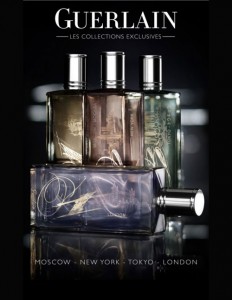
guerlain-cities-232x300Guerlain has an exclusive, limited distribution collection of unisex fragrances entitled “Une Ville, Un Parfum” or “A City, A Fragrance.” Confusingly, the line is also often referred to as “Les Voyage Olfactifs” (An Olfactory Voyage). Until recently, the cities were Moscow, New York, Toyko and London.
guerlain-shanghai

Shanghai

In October 2012, Shanghai joined the line as Les Voyages Olfactifs 05 and the press release quoted by Fragrantica states that the scent is “noted for its freshness and delicacy which are the hallmarks of the collection.” The bottle was designed by the legendary designer Serge Mansau and depicts Shanghai’s famous Oriental Pearl Radio and TV Tower with a big squiggly “05” to represent its numerical place in the collection.

Shanghai was created by Guerlain’s in-house nose, Thierry Wasser, and is supposed to be a light oriental, though I’ve sometimes read it described as a “woody floral scent.” I was excited to obtain a large sample of Shanghai from Debbie, my olfactory secret weapon on eBay, because I was fascinated by the city upon my visit in 2008. (If my external hard drive hadn’t died, taking with it over 60,000 photos, this post would have been deluged by my photos of that jaw-droppingly futuristic city.) It seems, however, that Guerlain is harkening back to the Shanghai of old, the “Paris of the Orient” of the ’20s and ’30s.

I believe it was Luca Turin who once said that all modern perfumes stem from the benchmark scents of the past. They are all children of the perfumed tree, if you will. As such, it’s hard for modern perfumers to escape the influence — conscious or unconscious — of such greats as Shalimar, L’Heure Bleue, Fracas, Opium, Chanel No. 5, Joy, and the like. It must be even harder for a Guerlain perfumer to escape the influence of the greats within his own house, particularly when creating a floral oriental and particularly given the influence of the powdery greats like L’Heure Bleue.

Shanghai represents something that I am starting to see more and more. Perfume houses updating and modernizing their legendary classics for the modern era. They seem to achieve this through a variety of different ways: by lightening the scent, adding fruity or fruity patchouli accords to appeal to young consumers or to the modern taste, sweetening the scent to appeal to the Angel market base, or by adding fresh, clean accords to comply with that blasted trend towards soapy freshness.

Lightening the scent also achieves something convenient for houses like Guerlain: they save money by reducing the amount or concentration of ingredients; they can market the new result as an even more expensive, “exclusive” line to reap the financial profits; and their brand seems less old-fashioned, stodgy and fuddy-duddy to young consumers. (Guerlain’s Les Voyages/Une Ville perfumes cost $215 for 3.4 fl.oz/100 ml.) Everyone wins, except the consumer’s wallet, classicists like me, or those who cannot stand any of the modern trends that they are applying (which is also me).

Shanghai’s notes, according to Fragrantica and the Guerlain press release, are:

anise, orange blossom, almond, cardamom, ylang-ylang, jasmine, iris, mimosa, cedarwood, patchouli, vanilla and sandalwood.

On its website, Guerlain describes Shanghai as a “woody and floral fragrance” and adds:

Surprising and faceted, the fragrance Shanghai from “A City, A Fragrance” collection pays homage to the ever-changing megalopolis of Shanghai. The initial impression is of a sweet freshness, perfectly reflected by an almond accord, combined with a hint of aniseed. Sweet, sun-drenched flowers, ylang-ylang, orange blossom and jasmine combine to create an exquisitely full-bodied scent that conjures up an abstract bouquet with hints of iris and delicately sophisticated mimosa. This olfactory voyage of discovery is underscored by three woody notes—cedar, patchouli and, most sandalwood—offset by a gentle whisper of vanilla, which adds a softening touch to this composition. The fragrance finishes with a suave, elegant flourish.

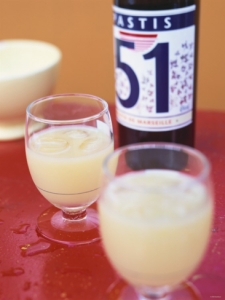
Shanghai opens with an utterly lovely note of almond and a subtle whiff of anise. My nose finds the anise seed to be less like the usual licorice smell and more like the slightly green, bitter, woody anise scent that is absinthe. But, again, it’s extremely subtle. The anise seed combines with the milkiness of almond to create a very milky sweet impression of diluted Pastis (or Ouzo, if you’re Greek), an anise drink that is common in Europe.

French Pastis.

French Pastis.

The usually strong licorice aspect of concentrated anise is diluted to a pale shimmer, either through the milky almond or through a third note that is raising its head: sweet vanilla. It’s a powdery vanilla but not the true Guerlinade that is the signature of so many of the house’s famous scents. Here, it’s just a shadow, a faint touch. (I think “faint touch” describes almost every aspect of this scent.)

The combination of the almond and the powdered vanilla create an almost patisserie-like impression. If you’ve ever been to a French pastry shop and smelled some of their almond offerings, you’ll know what I mean. That said, Shanghai is not a gourmande perfume by any means. It’s not sweet or powerful enough, and there is none of that almost cloying, overwhelming surfeit of linear sugar that characterizes most gourmands. In short, it’s not diabetes in a bottle.

Almond Brioche. Source: Atelier Christine.

Almond Brioche. Source: Atelier Christine.

Twenty minutes in, I think I can smell some iris in the powdery, patisserie, vanilla under notes but it could simply be my imagination. I certainly don’t smell cardamon, ylang-ylang, jasmine or mimosa. I don’t basically smell much, except for anise, almond and vanilla — and the strength of those notes is sharply dropping by the minute. A full 30 minutes from the time I first put on the perfume, the sillage has drastically shrunk; and exactly 1:16 minutes from the start, I smell almost nothing. If I really push myself and plead with my nose, I suppose I can smell a faint tinge of sandalwood in the powdered vanilla dry-down that remains. But I wouldn’t bet money on it. Why isn’t there more to this scent? What the hell happened to the “full-bodied” of the website description? And isn’t this taking “light” to a new level?

I am so determined to try to smell something more than those three linear notes that I start all over again. This time, I spray about 6 squirts onto each arm. Aaah, that delicious opening of anise and almond, milk and vanilla…. it really is lovely — especially when you really spray a lot of the perfume. But the development remains the same: the hint, almost invisible shimmer of anise, strong almond, powdery vanilla and…. er…. Well, I suppose there may be a touch of sandalwood, but really, this is just a three-trick pony. If all those remaining notes (Ylang-ylang? Really?) are a part of the perfume, they’re in such microscopic quantities that they’re essentially undetectable by my nose.

There are almost no full, detailed reviews on Shanghai thus far, so it’s not easy to see if others have had better luck. One of the few reviews that does go into any depth is by The Non-Blonde. She too smells the anise, almond and patisserie notes, but she finds a bit more to the scent than I do:

Star anise, iris and almond are the first things I smell upon spraying Shanghai. Naturally, my first thought was about the inspiration that obviously comes from L’Heure Bleue more than from China. Shanghai is more floral and also lighter in every way: airier, less sweet, and the base is not that much of a patisserie creation, but the resemblance is there, especially in cooler weather. It took me a little while to really like Shanghai. I love my L’Heure Bleue dearly, so I wasn’t all that thrilled with the idea of a modern interpretation in a massive bottle. But the composition is very pleasing, and as I said– it’s easily recognizable as a Guerlain, which is a good thing for me.

There’s some weakness in the base of Shanghai- not as in the opposite of “strength” (the fragrance has an assertive sillage and a reasonable longevity), but in the lack of real creamy sandalwood. Guerlain Perfumer Thierry Wasser did his best with an approximation and fortified it with cedarwood (dry and almost peppery). It goes well with the powdery iris note that seems to be at the core of Shanghai, but some of the exotic element could have used a big dose of the real thing (one can dream).

I didn’t smell any cedar wood my first time round and, this second time, with about double the amount of perfume sprayed all over my arms, I think I can smell it faintly. Perhaps. Maybe I’m just trying to convince myself. Whatever is there is definitely dry, but it’s not the sort of cedar wood that I’m used to smelling, and most definitely not peppery. If I did smell pepper, I might agree more with her comparison to L’Heure Bleue but, as it is, I find the two scents completely dissimilar. I smell sandalwood much more than any cedar, but, given how little there is, that’s not really saying much. In fact, I’m very relieved to know that The Non-Blonde also has trouble with the nature or quantity of sandalwood that is supposedly in Shanghai.

While The Non-Blonde attributes the powdered heart of Shanghai to iris, I think it’s more of a plain vanilla powder. There is iris there, as I noted earlier, but it’s faint. (I’m getting tired of using the word “faint” when it comes to this scent, but really, it typifies everything about it!)

If you’ll note, neither she nor I ever mention patchouli, jasmine, ylang-ylang, mimosa or any of the other notes purportedly in this incredibly linear scent. Because you really can’t smell them. At all! If I keep at this, and keep sniffing my arm with those notes planted firmly before my eyes, I’m sure that my brain can convince itself that I’m smelling them but, the truth of the matter is, I don’t.

I also don’t share her experiences with sillage or longevity, but I may not be alone in thinking the perfume dies fast. On Basenotes, there are differing reports regarding both issues, with a number reporting experiences similar to mine. Some posters have noted a generally moderate amount of longevity, even if it’s just simmering quietly in the background.

The Basenotes comments are interesting because, there, Shanghai has generally received praise by those who have tried it thus far. Several people note a woody element to the scent that I didn’t really find. (But, yet again, no-one mentions anything about ylang-ylang, mimosa, jasmine or patchouli, so it’s definitely not just my nose that can’t detect them.) One brief review of Shanghai by a male poster, Mikeperez23, may be helpful to those seeking a different perspective on the scent:

I love the extremely limited Quand Vient la Pluie and in my opinion, there is a ‘part’ of QVLP inside of Shanghai – a sort of sweet, almond, heliotrope-ish note that smells simultaneously nutty, floral and woody. Slightly edible, but not in a full-blown gourmand way. Shanghai is more of a transparent, sheer, cologne-ish version of this accord and bolstered by an anisic top note and a less rich, complex drydown. In fact, this one fades fast, so I have to really douse myself with it to ‘stick’, which it finally does. […] Shanghai is perfect for hot weather because of its sheerness and non-heavy feeling that still allows me to enjoy the Guerlinade I so enjoy. […] Not cheap, in fact I think it’s sort of overpriced considering I have to douse myself with it. But, there is nothing that smells like this (well, except as I have noted above, other Guerlain scents) and it’s unique, versatile and comforting aura is addictive.

Another person went so far as to say that the perfume not only has great longevity, but also great “character.” Her description of the perfume is as follows:

I actually get great longevity out of it. I smell it all day at work, and into the evening. On clothing, it lasts even longer. Not as strong as it could be, but strong enough. And I can wear it more than one day in a row, easily, which I can’t do with all of my scents.

Very versatile. Not too casual, not too formal. Good in the Vegas heat, good in the current cold. Not too masculine, not too feminine. But it has character. Lots of it.

I couldn’t disagree more. But I should point out that the last reviewer states that she adores Coco Noir, and admits to loving a lot of mainstream scents that she says she doesn’t even dare mention, so she’s obviously coming at this from a very different vantage point than I am. Perhaps the only thing I do agree with is that this is not a formal scent and it’s not typically casual either. But that’s about it. In my opinion, this scent not only has very little character but it’s also incredibly linear. (And since this is supposed to be one of the better and stronger scents in Guerlain’s Les Voyage/Une Ville collection, I’m not sure what that says about the other fragrances in the line.)

What little character does exist is simply not worth the price tag. I would never pay $215 for this. In fact, I wouldn’t wear it unless it were about $15. At that price, perhaps it would be worth it for those days when I went to the dog park and fell into a mud pit. At  that price, I could drench myself with it beforehand and hope that it lasted 2 hours or more. (And, for the record, Shanghai did last longer on my second go-around when I sprayed a ton all over me. But it’s a matter of degree; maybe 2.5 hours in total, instead of about 1.5 hours.)

Bottom line, I cannot recommend the perfume. It’s simply not that interesting for the price. If it were $45 or $60, I would absolutely recommend it to someone seeking something subtle, versatile, and with a slight twist on the usual floral scents. But not at $215, even if it didn’t have dubious sillage and longevity. Life is too short. Go out and smell something with actual character and some pizzazz.


Details:
Target Audience: Unisex. Men definitely wear this. In fact, men have made some of the more positive comments that I have seen thus far.
Cost & Availability: Shanghai is available on Guerlain‘s website and costs $215 for 3.4 fl. oz/100 ml. It can also be found at Bergdorf Goodman and on their website. The rest of the Les Voyage line (Moscow, Tokyo, London and New York) can be found on the Saks Fifth Avenue website, though not Shanghai. Nordstrom’s doesn’t carry any of the line. Surrender to Chance has samples only of Tokyo, Moscow and New York. The Perfumed Court has Shanghai in different sample sizes with the smallest size (1 ml) costing $5.99 and the largest (15 ml) costing $83.99. Neither LuckyScent nor BeautyHabitat carry Guerlain.