Perfume Review: Ramon Monegal Pure Mariposa for Neiman Marcus

Spring is in the air, though clearly some parts of the world don’t seem to be so fortunate. Nonetheless, it seemed to be a good time to try out a few light, fresh fragrances that epitomize the upcoming season. One, in particular, caught my attention: Pure Mariposa, the new perfume created by the Spanish niche perfume house of Ramon Monegal for the American luxury department store, Neiman Marcus. Pure Mariposa is a bespoke perfume exclusive to the store and was released in February 2013.

One Neiman Marcus store with a floating butterfly decor. Source: Flickr.

One Neiman Marcus store with a floating butterfly decor. Source: Flickr.

Neiman Marcus' butterflies.

Neiman Marcus’ butterflies.

“Mariposa” means butterfly in Spanish and is not only a reference to Neiman Marcus’ happy, bright symbol of butterflies but the perfume’s point of inspiration.

In the press release for the perfume, Ramon Monegal said: The butterfly is an extraordinary creature that embodies many of the values that motivate me when I look for inspiration to fashion an olfactory tale in the form of a perfume.”  That “olfactory tale” seems to be one of flowery nectar in an airy, ozonic green forest:

Pure Mariposa will offer a floral-nectar accord with a festive tone in a dew-covered green forest, surrounded by a breeze of ozonic air, on a rich bottom accord of amber and musk.

Ramon Monegal Pure Mariposa

Neiman Marcus describes this as a “fruity, green-floral, woody scent” and lists the notes with great descriptive flair. Since it is their perfume, let’s go with their version, but note how Ramon Monegal or Neiman Marcus is trying to cover every possible base or category of perfumery imaginable:

Top Note

  • Fresh festive colorful: orange, grapefruit, bergamot.
  • Fruity vital, cheerful: yuzu, black currant, plum.
  • Ozonic pure, graceful: helional, melonal, calone, ultrazur. (molecules)

Middle Note

  • Green natural: oakmoss, grass accord, fig.
  • Floral rich, elegant: Osmanthus, jasmine, lily of the valley, rose wardia, tuberose.

Base Note

  • Woody powerful, harmonious: sandalwood, cashmeran (m), iris, anchouli (m). 
  • Silky sophisticated, majestic: peach, tonka bean, amber.

I assume the “(m)” abbreviation stands for “molecules” but the reference to “anchouli” made me blink, so I turned to Fragrantica. To my relief, it doesn’t seem to stand for some sort of anchovy oil. Instead, “anchouli” seems to be either a typo (like another on Neiman Marcus’ page) or a reference to some sort of synthetic “patchouli.”

I’m not a fan of synthetics — and particularly not of calone — so the listing of six different aromachemicals gave me great pause. I approached Pure Mariposa with some trepidation and first just gave the small decant a sniff. It was absolutely gorgeous in the bottle! Let me repeat that again: gorgeous! A beautiful scent with fresh, sweet, fruited and bright green notes. I could detect grapefruit that was yellow and sweet, not red and tart, along with fresh yuzu, juicy, sun-ripened yellow citrus, sweet (non-artificial) melon, sweetly green lily-of-the-valley, and fig. There was also that cheerful, happy note of freshly cut grass that is so evocative of the summer and sunshine. I was thrilled, and quite relieved.

Then, I put it on my skin. And it was a very different story…. A huge waft of synthetics and chemicals immediately hit my nose, followed quickly by incredibly dry, pungent, bitter oakmoss and equally bitter grass. There were also a panoply of sour notes from the citrus elements which contrasted strongly with the sweetness of the melonal aromachemical. The pungently dry aspects of mineralized oakmoss were side by side with sweet melon and sour citrus —  all on a base of synthetics and artificially peppered woods. Soapy lily-of-the-valley lurked in the corners, adding a different sort of green and white impression to the whole ghastly mélange.

I don’t know if my skin magnifies synthetic aromachemicals or if there is simply too damn many of them in Pure Mariposa, but the contrast between the beautiful brightness of the perfume in the bottle and its manifestation on my skin was a huge disappointment. That robust underpinning of aromachemicals remained long after the perfume’s opening changed to something much less bitter and dry, and much more melon-y sweet, metallic and airily green.

Ten minutes in, the perfume became simultaneously even more bitter but, also, more sweet. The very dusty, dry, grey mineralized feel of the oakmoss competed with the green lily-of-the-valley’s sweetness, the freshness of yellow citrus and the feel of a green honeydew melon mounted on aquatic underpinnings of calone. The calone is just brutally strong in this perfume and truly dominates everything at its heart, while the melonal runs over the top of everything like a bulldozer. Yet, at the same time, there are synthetically peppered woods with a definite metallic, somewhat alcohol-like undertone.

Two hours in, I’m surrounded by a cloud of calone and melonal: aquatic melon freshness is everywhere. Within the cloud projecting several feet from my arm, the bitterness of very dry oakmoss remains but it’s underneath and on the skin, not wafting around. Some vaguely amorphous, abstract floral notes dance around, joined by occasional, fleeting flickers of powder and soap. At the same time, there is that annoying metallic, alcohol note that pops up every now and then, like a ghost flitting about under the endless mushroom cloud of fresh melon. The metallic note is not continuously present, but it never completely leaves, either. My mind is utterly confused by the endless contrast of bitter and sweet, dry and fresh, sour and aquatic, flowers and alcohol.

And the perfume remained that way for hours and hours without any fundamental change. The sillage dropped after about four hours but, like many perfumes with aromachemicals, it has persistent longevity. On my perfume-consuming skin, it lasted about 9 hours until I simply couldn’t take it any more and desperately sought a change. Yes, I washed it off. There is only so much melon and metallic alcohol a person can take, after all!

On Fragrantica, there is only one review thus far for Pure Mariposa and it’s not an endorsement:

fresh but weird scent…drydown..is a cloying nutty smoky (think ur fireplace and throw orange peels in and let them dry out…took days to take off my skin…good last power..but the scent is kinda like beautiful(C KLEIN)..but with burnt notes…im not fond of.

I’m sad to say that I think their experience was still better than mine.

For the sake of fairness, I should point you to The Non-Blonde who received an early press sample and who had a very positive experience with the perfume, though she shared my initial trepidation when reading the large list of synthetics in the notes:

Ramon Monegal chose to also list several of the synthetic molecules: helional (a green hay-like grassy odor), melonal (excatly [sic] what it says), calone (usually the worst marine-ozonic offender), ultrazur (another fresh-ozonic beast, sweeter and greener than calone). It sounds like a warning sign and it took all my trust in Ramon Monegal’s perfumery skill and style to make me take that first spritz on my wrist.

I shouldn’t have worried. While Pure Mariposa opens with a burst of sharp and fresh citrus oil, I don’t smell the sea or any rotten melons; just air from a window opened early in the morning, letting in cool air. It’s a mix of bright yellow and bright green: the freshly mowed grass, a glass of freshly squeezed grapefruit juice, meyer lemons arranged in a bowl on the table. Then things become more floral as the day (and Pure Mariposa) starts to unfold. New blossoms open every day, white, pink, and orange. The heart is rather abstract, I can’t say “here’s muguet! there’s rose!”, but it is very floral, slightly honeyed (those fresh water molecules are gone and forgotten), juicy and a bit pulpy. I do smell quite a bit of peach and it goes hand in hand with a strong tuberose note. There’s a point that Mariposa becomes a blend of powder and tuberose, very feminine on my skin (dry and woody on the husband) and if you over spray it really takes over the room.

On her skin, Ramon Monegal lasted 16 hours. In my opinion, that is further testament to the synthetic nature of the perfume since we all know that synthetics can make a perfume last forever — even when you wish the perfume would die, and die now.

Clearly, something about my skin chemistry seems to turn aromachemicals into something pretty extreme. I was with two people who aren’t perfumistas, but who absolutely loved the scent of Pure Mariposa that pulsated in the air like a sound wave. They found it “fresh and sweet.” (Apparently, they love melonal more than I do.) Nonetheless, when one of them smelled it on my arm, they grimaced.

My reviews are based solely my personal (and, therefore, obviously subjective) experience with a scent. And, on my skin, there is something incredibly artificial, chemical, and unpleasant about Pure Mariposa. If you love very fresh, melon-y, floral, green, woody fragrances and if you can’t smell any metallic undertone to calone’s aquatic notes or aren’t sensitive to aromachemicals in general, then this may be one for you to try. But make sure you don’t just smell it in the bottle or on a strip of paper. This is one you need to actually apply to your skin! Also, beware the amount that you apply and perhaps reconsider wearing it to the office. As the Non-Blonde noted, this is a “robust” scent, so “be careful if you’re around grumpy office people who don’t appreciate this colorful scented presence.”

Personally, I wouldn’t recommend this with a ten-foot pole unless you know ahead of time that you like synthetics, especially melonal and calone. Not for $200 a bottle. Oh, did I not mention the cost? It’s $200 for a 1.7 ounce bottle of eau de parfum. I won’t bring up Neiman Marcus’ pejorative nickname, but I think those of you outside America should count yourselves fortunate that this exclusive item is not available for shipping overseas.

All in all, a huge disappointment. 
DETAILS:
Pure Mariposa is an Eau de Parfum that comes only in a 1.7 oz/50 ml bottle and costs $200. It is exclusive to Neiman Marcus. Unfortunately, the department store will not ship or export the perfume outside of the United States. I went to the page and tried numerous different countries in the “Shipping to” link at the top, and each time received a message in the lower right-hand corner stating, “We are sorry, but we are unable to ship this item to _______[insert country’s name].” As for samples, I don’t see the perfume listed yet on any of the US perfume decanting sites.

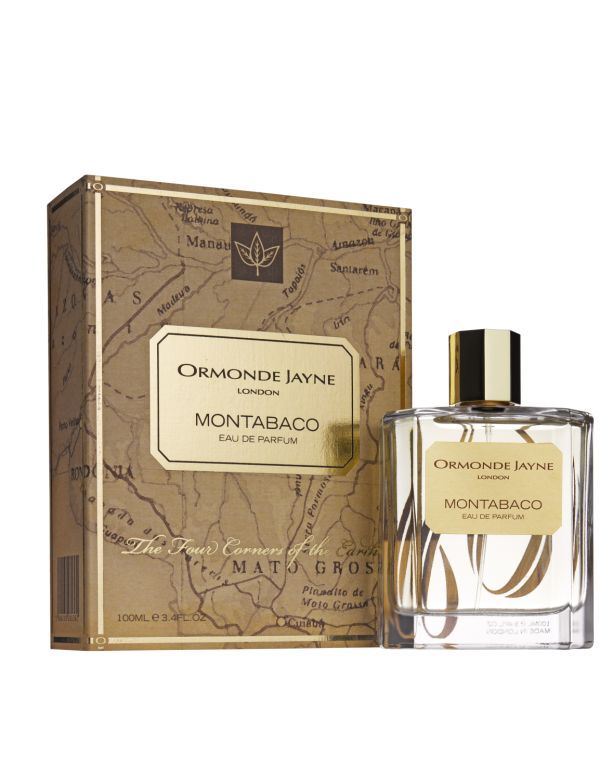
Perfume Review: Montabaco by Ormonde Jayne (Four Corners of the Earth Collection)

The essence of Latin America and “suggestive sensuality.” That was the goal and inspiration for Montabaco from Ormonde Jayne, the London luxury niche perfume house. Montabaco is one of the new Four Corners of the Earth collection which was released in late 2012 and which pays homage to the different parts of the world that have inspired Ormonde Jayne’s founder, Linda Pilkington. The collection is the result of collaboration between Ms. Pilkington and the perfumer, Geza Schoen, and consists of four fragrances: Tsarina, Qi, Montabaco and Nawab of Oudh. (I have samples of all four fragrances, provided courtesy of Ormonde Jayne, and am working my way through the collection. I have already reviewed Nawab of Oudh and Tsarina.)

OJ MontabacoThe description of the fragrance from Ormonde Jayne definitely intrigued me and led me to imagine a profoundly rich, sensuous and lush experience:

Montabaco is a perfume to capture the essence of Latin America: leather, suede, wood and tobacco leaf repeated over and over again creating a suggestive sensuality and Latino temperament. It sits above the rich floral presence of magnolia, jasmine and rose. It is all unashamedly seductive yet profoundly simpatico.

The perfume’s notes certainly added to my anticipation:

top: air note, orange absolute, bergamot, juniper, clary sage, cardamom. heart: magnolia, hedione, rose, violet, tea notes. base: tobacco leaf, iso e, suede, sandalwood, moss, tonka, ambergris.

Unfortunately, I struggled with Montabaco. Profoundly. It opens on my skin with a sharp burst of antiseptic alcohol — camphorous, mentholated, highly peppered, sharp, and pungently acrid. I was so astounded that I gave my arm another two sprays, thinking perhaps there was congestion in the nozzle or something that had turned the notes “off” in some way. The fragrance seemed so incredibly far from the notes and from what I had expected. But, no. It was the same thing. Intensely alcoholic, mentholated and antiseptic. There was such a resemblance to certain types of oud that have an undertone of medicinal, rubbery pink band-aids that I actually checked the sample twice to see if I had accidentally tried something else. Then I double-checked the notes to see if agarwood or oud was listed. I was so confused that I thought maybe over-application (4 sprays) was to blame, so I applied a far lesser amount (2 sprays) to the other arm and waited to see if the difference in amount would yield different results.

It did not. Though the strength of the perfume varied due to the amount per arm, the core essence of Montabaco remained the same for a vast number of hours. It was persistent, unchanging, and quite exhausting. As time progressed, about six hours to be precise, other notes had a minor chance to compete — but not by much. Nothing could really undercut the barrage of the mentholated, camphorous, peppered, rubbery, almost metallic, medicinal, oud-like note. Still, they gave it a valiant effort.

From the very first opening seconds, there was a strong undertone of tobacco but, here, it was not the sweet, dried tobacco leaves nor the more fruited sort of pipe tobacco. Instead, it was more like pungently dry tobacco in an unlit cigar. There were also hints of other things: citrus; herbaceous clary sage with its lavender underpinnings; a vaguely leathered nuance; and the merest suggestion of velvety, creamy, rich magnolia sweetness. After about five minutes, the impression of rubbing alcohol disappears but the bitter, medicinal, highly peppered, metallic accord remains dominant. Slowly, quiet notes of suede, cardamom, violet and pungent oakmoss join the mélange, but they too are mere whispers in the night.

There is simply no way for anything to compete with that overwhelming, overpowering main note. It truly feels like the sort of oud blast that one finds in some Montale fragrances — so much so that I poured over the perfumes notes in the press release three times just to check if agarwood was mentioned. It is not. But, damn, it feels as though I’m wearing a particularly strident, acrid Montale Aoud.

Time does not necessarily ameliorate the situation. By the second hour, the mentholated camphor wood has another rival: cigars. And this time, it’s a lit cigar. The arm which has a lot of Montabaco on it reeks of cigar smoke; the one which has much less of the perfume smells, in part, like an ashtray. The cigar smoke and ashtray notes become much less noticeable after an hour, returning back to a very dry, unlit tobacco note — but it was still an hour too long for me, particularly given its combination with the medicinal elements. Something in my body chemistry clearly does not respond well to Montabaco, though I’ve rarely had this situation with other tobacco fragrances. Hell, I own Tom Ford‘s potent Tobacco Vanille and Serge LutensChergui but those manifest themselves as a very different sort of tobacco. Neither of them ever made me feel as though I were sitting in a closed-in cigar bar’s smoking room.

Four hours in, the stridently camphorated, peppered wood note finally quietens down a bit in intensity. It’s still powerful and the main part of Montabaco, but other elements now have the chance to breathe a little. There is some lovely citrus and bergamot, along with orange, suede and the lavender-nuanced clary sage; and they all sit atop a subtle, sweetly fragranced base of magnolia with the smallest hints of rose and sandalwood. The magnolia adds a breath of much-needed sweetness to the fragrance, but it is too little, too late.

By the sixth hour, the basenotes start to appear — at least on the arm where I didn’t apply a lot of the fragrance. There is sweet tonka, clary sage, orange, bergamot and some sort of amorphous “floral” note. In contrast, the other arm is still reeking predominantly of peppered, smoky woods, though the camphor element has now started to wane. And it stays that way for another few hours until it, too, finally turns into some sheer, minor softness with tonka, bergamot and vague florals.

All in all, Montabaco lasted between over 7.5 and 8 hours when 2 sprays were used, and approximately 10.5 hours when about 4 sprays were used. In the former instance, the sillage was good and the perfume could be detected from a small distance away for the first two hours, thereafter becoming somewhat softer. It became close to the skin around 4.5 hours in. On the arm where I applied a lot, however, the sillage remained quite forceful for a number of hours, finally becoming close to the skin about 7 hours later where it remained for an additional length of time. This is a strong and very powerful perfume if you use more than 2 sprays!

I tried to see if others had an experience similar to mine with Montabaco, but there aren’t a lot of reviews out there. One in-depth assessment came from The Candy Perfume Boy who was similarly disappointed in the fragrance, though his experience seems very far from my own. A part of his review reads as follows:

I find it to be somewhat of a disappointment. I wanted something rich and oozing with latin spirit, instead Montabaco feels decidedly spirit-less.

The main attraction in Montabaco is the mixture of rich, heavy notes such as tobacco, coffee, vanilla and woods with four or five gallons of Iso E Super. Now the addition of Iso E is no surprise as the Ormonde Jayne collection relies quite heavily on the stuff and perfumer Geza Schoen uses it in isolation for his Escentric Molecules line. The problem is that where the ingredient usually adds silkyness and lift, in Montabaco it seems way too omnipresent, almost as if all of the other notes are tripping over it just to get some attention.

Montabaco plays one tune and it plays it consistently for a very long time. It’s just a shame that this particular tune finds it difficult to stir any emotions. […]

It doesn’t sound as though he experienced any antiseptic medicine or peppery camphor. On the other hand, he seems to have smelled quite a bit of coffee which I didn’t, unless he’s referring to Montabaco’s pungent bitterness.

Yet his reference to the “gallons” of ISO E Super led me to wonder: was that the reason for the extremely sharp, antiseptic, rubbing alcohol feel? I’m not an expert on ISO E Super, though I’ve certainly smelled a number of perfumes that have contained it. Jacques Polge of Chanel is well-known to love the aromachemical, using large amounts to add a velvety feel and to accentuate floral notes, but no Chanel that I’ve ever encountered shared Montabaco’s painful characteristic. Jean-Claude Ellena uses it too, but I can’t recall any Hermès fragrance that smells so acrid and metallic. A brief Google search showed that Montabaco’s perfumer, Geza Schoen, is apparently a huge fan of ISO E. However, he’s used it before in other Ormonde Jayne fragrances — and I never experienced an unpleasant, synthetic note that reminded me of hospital antiseptics. Whatever the nature or impact of ISO E Super, to me, Montabaco translates as a synthetically medicinal oud/agarwood perfume. Not the beautiful, gorgeous agarwood that was in Ormonde Jayne’s spectacular Nawab of Oudh, either, alas.  

Perhaps I’m simply not masculine enough or strong enough to appreciate Montabaco. The perfume has only one comment in its Fragrantica listing and that one is a rave:

I tried all of Four Corners and must admit that Montabaco was the one I truly and deeply fell for. (unlike most bloggers who praise Tsarina which on my skin smelled dull and somehow flat). Montabacco on the other hand is a completely different story: it’s strong, it’s powerfull and it demands atention. Definitely not a scent for faint hearted and weak women as it has a subtle yet dominant masculine note. This is one of the very few fragrances that I can actually distinguish separate notes and according to my nose the strongest is tobacco, leather and sandalwwod accompanied by duo of jasmine and rose. I can also smell clary sage which my brain classifies as a balmy accent.

Judging by what appeared on my skin, I don’t think there is anything “subtle” about Montabaco’s “dominant masculine note.” This is a scent that I think fans of Montale’s more… er… potent Aoud creations might appreciate, but I’m not sure it is for everyone. It certainly isn’t for me.

Disclosure: My sample of Montabaco was provided courtesy of Ormonde Jayne. As Always, that did not impact this review. My primary commitment is, and always will be, to be as honest as possible for my readers.

DETAILS:
Price & Availability: Montabaco is an Eau de Parfum which comes only in a large 100 ml/3.4 oz size and which costs £260.00 or, with today’s exchange rate, approximately $394. Neither Montabaco nor any of other Four Corner Collection are currently listed on the Ormonde Jayne website, but you can find all of them in the Ormonde Jayne stores, as well as at Harrods. Unfortunately, Harrods’ website says that this perfume is not available for export. Ormonde Jayne’s two London boutiques are at Old Bond Street and Sloane Square with the precise addresses listed on the website here. As for samples, none of the perfume decant sites in the US currently offer any of the Four Corners of the Earth collection.

Perfume Review: Hedonist by Parfums Viktoria Minya

Source: UniqueLiving.com

Source: UniqueLiving.com

A stroll in Provence at the end of Spring. The scent of peaches and orange blossoms in the air. Fresh citruses and sparkling champagne. Heavily-laden mimosa trees adding colours of yellow, white and green. Bees buzzing everywhere, zipping from the fragrant flowers to honeycombs dripping with thick sweetness.

Viktoria Minya. Source: Fragrantica.

Viktoria Minya. Source: Viktoria Minya.

Those are the images evoked by Hedonist, a new perfume and the first in a line from the independent Paris house of Parfums Viktoria Minya. Ms. Minya spent many years studying the art of fragrance production in Grasse — the center for French (if not world) perfumery that is located in Provence — and then in working for various fragrance creation companies. Ms. Minya recently explained her philosophy and the goal behind Hedonist in an interview she gave to Fragrantica:

Impregnated of Grasse’s spirit, in the cradle of perfumery, I thought a perfume should be a celebration, it should be crowning your day, and it should be a moment of pure joy. I created Hedonist according to these values in my mind. I wanted it really to be a piece of beauty[.]

The spirit of Grasse is very strong in Hedonist and is probably why images of Provence are so vivid in my mind, recalling part of my childhood summers in the area. And the perfume is, indeed, beautiful, though I have to admit that hedonistic excess is not really the feel of it for me. Instead, it makes me feel extremely serene, soothed by the sweetness of honey and fruited flowers.

Hedonist in its handmade wooden box that is "fashioned to capture the sleek look and feel of snakeskin leather."

Hedonist in its handmade wooden box that is “fashioned to capture the sleek look and feel of snakeskin leather.” Source: Viktoria Minya website.

Nonetheless, Hedonist is described as follows:

A powerful and provocative perfume for a woman who dares to be true to her desires. Lush notes of jasmine and orange blossom absolute flirt with the dark intensity of rum and the world’s finest woods for a scent that is as captivating as it is unforgettable.

Source: Viktoria Minya.

Source: Viktoria Minya.

Hedonist is presented within a beautifully crafted bottle filled with hundreds of genuine bohemian crystals that sparkle brilliantly in the divine golden liquid and the bottle itself is enclosed within a handmade wooden box fashioned to capture the sleek look and feel of snakeskin leather.

The notes in the perfume, as compiled from both Fragrantica and an interview there with Viktoria Minya, are:

Top notes: Rum CO2, bergamot, peach;

Heart notes: Indian jasmine absolute, Tunisian orange flower absolute, osmanthus absolute, tobacco;

Base notes: Haitian vetyver, Virginia cedar oil, Indonesian Patchouli, and vanilla.

Fragrantica classifies Hedonist as a “woody chypre.” Frankly, that leaves me utterly baffled. The perfume is hardly a chypre and has no oakmoss. On my skin, it’s not particularly woody, either! Instead, it’s a lovely, very sweet fruit-floral with a very cozy feel, thanks to its honey and vanilla heart.

Bees on a honeycomb. Source: McDanielHoneyFarm.com

Bees on a honeycomb. Source: McDanielHoneyFarm.com

From the very first whiff, Hedonist is pure honey. A tidal wave of honey that is rich and warm with an element of almost bourbon-like richness beneath the tone. Yet, surprisingly, it’s not very thick, boozy or heavy; it doesn’t feel like the sort of boozy heaviness of Guerlain‘s Spiriteuse Double Vanille with its genuinely rum (and rum raisin) accord. Here, instead, it feels more like very dark honeycombs, infused with florals.

Source: RebootwithJoe.com

Source: RebootwithJoe.com

Seconds after that opening burst, there is lush peach, heady jasmine, citrus notes and some orange blossom. The jasmine is beautifully intertwined with the peach which is so ripe and sweet, it feels as though its juices are dribbling down your chin. The fruity note is also quietly underscored by the honeyed apricot aspect of osmanthus. There are no significant orange accords, however, and the orange blossom is very muted at this time.

In comparison, the citrus notes are much more prominent in the opening minutes. They are fresh and sparkling, seeming at times like bergamot, while, at other times, adding a very subtle, quiet nuance of lemony freshness. They are joined by just a hint of green vetiver, but it is bright and a bit more like lemon grass than the usual earthy, dark, rooty note. With the citrus notes, it creates the image of the green leaves surrounding a peach.

The interesting part of Hedonist’s opening is the distinctly soapy undertone to the perfume. While I suspect it stems from the orange blossoms, what’s unusual about it is that it really feels like soapy woods! White woods, soft and light, but soapy nonetheless. The conjunction of that soapy note with Hedonist’s fizzy brightness calls to mind aldehydes, but also champagne. In this case, both the drink and YSL‘s Champagne/Yvresse perfume which I adore and which is one of my long-standing “happy” perfumes. It is a beautiful, fruity-floral fragrance with peaches, nectarines, apricots, vetiver, and fizzy aldehydes.

Source: Philolog at Traumwerk.Stanford.edu

Source: Philolog at Traumwerk.Stanford.edu

That same sparkling feel exists here with Hedonist, and its bubbly pop leads me to think that either aldehydes or hedione are part of the perfume. For one thing, hedione has long been a key part of 20th century perfumery, especially for French perfumes. While it is often used in place of jasmine absolute, hedione is also sometimes used for its own characteristics in order to create a bright, green, lemon-nuanced fizzy note. Here, the jasmine note is not indolic, over-ripe, sour or plastic-y but, rather, very airy and almost green — the way it would be if hedione were used.

As for the aldehydes, they too are often added to create that shimmery brightness which is evident here. For the record, Ms. Minya says there are no aldehydes in the scent, but it sometimes feels like it. Not merely because of the occasionally soapy aspect to the perfume (though that vanishes after an hour), but also because of the sparkle and airiness. For all that Hedonist feels like a very heady perfume, it’s actually not opaque or thick at all. After that initial heaviness from the honey note (the Rum CO2) in the opening minutes, the perfume is actually quite light in feel. It’s definitely not oppressively weighted down or indolically narcotic.

mimosa-flower-200x300I wouldn’t be surprised if there are other notes in the perfume that are not included on the list. For some reason, it almost feels as though there is a subtle mimosa note to all the cheerful, happy, sweet yellowness of the scent. I think it’s because I keep seeing yellow before my eyes when I smell the perfume. (And, also, because mimosas were also a big part of my childhood in the South of France.) At the same time, Hedonist also seems to have a light musk note underlying everything. That accord becomes more evident as time passes and the perfume develops more into its core base: honey, peach and beeswax over a light foundation of musk with vanilla. 

After an hour, the notes change a little in nuance, but the perfume’s fundamental characteristic remains the same. The citrus notes have faded away completely to be replaced by more woody ones, along with the advent of orange blossom. The latter is subtle and well-blended into the jasmine. As time progresses, however, it becomes even less evident on my skin, though it occasionally pops up, here and there, in different degrees of strength. On my skin, Hedonist is not really an orange blossom scent, but a peach and honey one. As the other notes start to drop away, the honey becomes even more evident, strengthened by beeswax and the image of rich honeycombs. There is also the start of the vanilla undertone; it’s very soft and gauzy but, simultaneously, rich and creamy. When combined with the honey, beeswax and ripe, juicy peaches, the overall impression is of great sweetness.

The woodsy notes are very muted on my skin. There is a quiet element of cedar wood in the background, but it is just the barest shimmer. As for tobacco leaves, the first of my two tests of Hedonist showed the subtle hint of sweetened, dry tobacco leaves in the opening ten minutes of the scent, but it disappeared soon thereafter, never to reappear in any significant way. During my second test, however, both the tobacco leaves and the cedar wood were much more evident. They appeared at the end of the second hour, and I suspect it’s because I applied a far greater quantity of Hedonist than I did during my first test.

Another reason for the (small) difference might be because Hedoniste is a beautifully blended scent. Everything melds together in one very harmonious balance, making a few of the individual notes hard to detect in any significant way (with the exception of the honey). The background notes add to the richness of the scent in an indirect, subtle way, but they never visible morph the perfume into one thing or another. Instead, the core essence remains the same.

And that essence is a very classique scent. Hedonist has a very old-French aspect to it, though it’s not weighted down by some of the more traditional elements in French perfumery like oakmoss, powder, civet or patchouli. (Ms. Minya said in her interview with Fragrantica that patchouli was one of the notes in the perfume; I can’t smell it.) I think the airiness makes Hedoniste a very modern sort of classique fruity-floral. It is not trying to be revolutionary, unsettling or edgy; it simply wants to be beautiful and elegant.

Honeycomb. Source: Robert.Maro.net

Close-up of a honeycomb.
Source: Robert.Maro.net

Hedonist succeeds in that goal. Personally, however, I found it a much more soothing, serene, cozy scent than something sensuously hedonistic or sexy. It actually reminded me at times of Couvent de Minimes’ Honey and Shea body wash that I always turn to for its soothing, comforting qualities. Whatever Hedonist’s other elements or nuances, on my skin, it was first and foremost an uncomplicated, fruited honey, honeycomb and beeswax scent — and I loved it for that. And the perfume’s final drydown of honey, beeswax, vanilla and light musk was so pretty and cozy, I felt like curling up like a cat.

Hedonist is a strong perfume (though stronger if you apply more than the equivalent of 2 small sprays), but, as noted earlier, the feel is surprisingly light as a whole. The sillage starts as strong but, after the opening hour, became a touch above moderate in its projection on my skin. However, I was dabbing it on, so I suspect the perfume would be stronger if you applied Hedonist via an aerosolized spray bottle. Nonetheless, the first time I tested it, I was surprised by how quickly the fragrance became soft — which I think will be a definite bonus for those who prefer a less powerful scent. The perfume became very close to the skin only around the third hour, detectable only by bringing my nose to my arm. It hovered there as a soft, sweet veil for a number of hours. In terms of longevity, Hedonist lasted just about 9 hours on my perfume-consuming skin when I applied a lot, and approximately 7.5 when I applied less.

Hedonist’s richness is underscored by its utterly spectacular, luxurious presentation. Though I haven’t seen it in person, the photographs show a bottle that is filled with 500, genuine, Bohemian crystals which create a glittering, sparkling, jeweled effect that I find to be really stunning. I also think it happens to mimic the perfume’s very fizzy, champagne-like feel.

Source: Fragrantica.

Source: Viktoria Minya.

All in all, Hedonist is an extremely sweet, very feminine scent and would be perfect for those who love sweet fruity-florals. Even those who normally shy away from florals and prefer gourmand scents may be drawn to it, thanks to all that lovely honey and the quiet vanilla in the background. It is far too feminine, in my opinion, for the majority of men to pull of it off, but men apparently love it on their girlfriends or wives. In her interview with Fragrantica, Ms. Minya said women who tested Hedonist “all liked the perfume, but their boyfriends/husbands were actually going crazy for it and begging their wife/girlfriends to wear it.”

I wear perfume for myself, not for others or their reaction to it, and I would definitely wear Hedonist. It’s one of those easy, uncomplicated scents that makes me feel very cheerful, cozy and warm. It’s a very happy scent that seems to have bottled the bright sunshine of Provence. Sparkle, cheerfulness and sweetness — all with beautiful crystals. I’m a fan.

DISCLOSURE: Sample provided courtesy of Viktoria Minya. However, that did not impact this review. As always, I make it very clear at the outset that samples are no guarantee of a positive review and that my first obligation is honesty to my readers.

DETAILS:
Cost & Availability: Hedonist is an Eau de parfum that is available directly from Viktoria Minya where it costs €130 (or, approximately, $168 at the current exchange rate) for a 45 ml/1.5 fl oz. bottle filled with 500 Bohemian crystals. Viktoria Minya Parfums offers a flat-rate shipping fee of €9 (or approximately $11.50). There are no geographic restrictions and she will ship everywhere. Samples are also available for €5 (or, approximately, $6.50) for a 1.8 ml vial with free shipping. Samples are now available from US stores, but you still get a better deal (given the 1.8 ml size) if order from the company with the free shipping. In the U.S.: Hedonist is now available at Luckyscent which sells the bottle for $195 with 0.8 oz samples for $5.  Surrender to Chance also sells samples starting at $6.49 for a 1/2 ml vial.

Perfume Review – Ineke Hothouse Flower: Welcome to Spring!

Spring is in the air. The garden is a sea of green, bright, dark and light, all showing signs of the lushness to come and falling like a waterfall over romantic secluded arbors. White flowers raise their heads in the corners and open their delicate buds, reaching towards the sun to let their sweet scent waft in the air. Dew sparkles like diamonds on the leaves. A spring shower is imminent.

Kew Gardens, London. Source:  MrsMiniversDaughter.Blogspot.com

Kew Gardens, London. Source: MrsMiniversDaughter.Blogspot.com

That is the image evoked by Hothouse Flower, a very pretty fragrance from the San Francisco niche perfume house, Ineke. I received a sample as a gift from my fellow perfume blogger, the lovely Undina of Undina’s Looking Glass who is a definite expert on florals and who enjoyed the freshness of the scent enough to buy a full bottle.

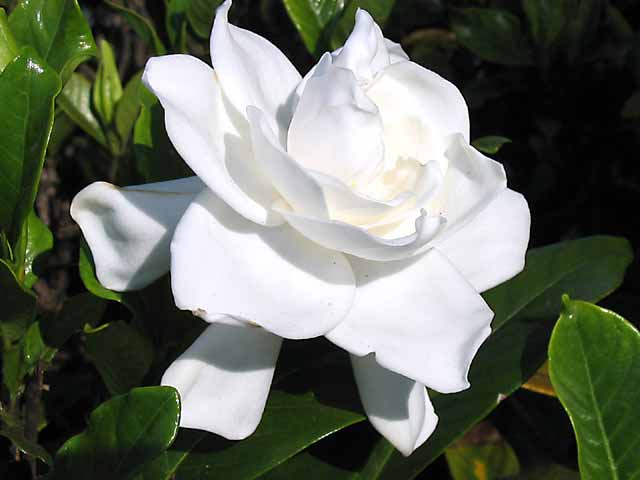
Gardenia-beauty

Hothouse Flower is a soliflore which means a fragrance centered around one single flower; in this case, gardenia. This is not your usual gardenia, however. It’s not a 1980s heavy, indolic, overpoweringly thick, or headache-inducing white floral. Instead, it is the brightest, lightest, most Spring-like gardenia you can imagine and is accompanied by the freshness of green leaves and Earl Grey tea with peppery woods — all over a quiet base of light musk and smoke.

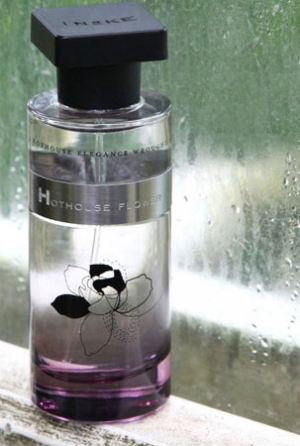
Ineke Hothouse FlowerHothouse Flower was created by Ineke’s founder and nose, Ineke Ruhland, and was released in 2012. According to Ineke’s website, the notes in the perfume are:

Top notes are Earl Grey tea, green folliage and cypress; middle notes are gardenia, galbanum, fig and frankincense; base notes are guaiac wood, musk and corn silk.

Hothouse Flower opens on my skin as a bouquet. It feels like an armful of the loveliest fresh hyacinth, tuberose and gardenia flowers have been bound up with the brightest green leaves and a dainty, white ribbon. Though there is no hyacinth or tuberose in the notes, it really feels like it. The flowers have an unusual twist, however. They are peppered! The note is light, though, and never takes away from the freshness or airiness of the scent. While the pepper waxes and ebbs in prominence throughout the perfume’s development, in the opening minutes, it is particularly subtle.

"Butchart Gardens in the rain" by Matt Emrich. Source: Redbubble.com

“Butchart Gardens in the rain” by Matt Emrich. Source: Redbubble.com

Those minutes transport you to the most beautiful country garden, surrounded by walls of climbing greenery and the most fragrant of Spring flowers. I truly expected a Spring shower at any moment, as I inhaled the delicate bouquet with its dewy, fresh notes. The gardenia is surprisingly light for such a rich flower, though there is already an undertone of coconut which I found to be a bit disconcerting in the midst of such an airy symphony. Its underlying richness is a paradox, given the freshness of the fragrance which has a very gauzy, lightweight texture.

Woodland Bridal Bouquet with Gardenias. Source: FrancoiseWeeks.com

Woodland Bridal Bouquet with Gardenias. Source: FrancoiseWeeks.com

As time progresses, the green notes grow more prominent. The scent of new leaves is now joined by the aromatic fragrance of Earl Grey tea. Together, they serve to counter that initial coconut undertone to the gardenia, as does the persistent peppery note. Though I would have preferred absolutely no coconut (which sometimes feels here a little like coconut lotion on my skin), there is no denying that Hothouse Flower is a lovely balance of light sweetness, never heavy or overdone.

Ground pepper

Pepper, whole and ground.

Soon, ten minutes in, the perfume transforms from a spring bouquet to something that is less purely floral in nature. The quiet note of finely ground pepper starts to turn woody, bringing the garden’s trees into the mix. Cypress has definitely entered center stage, singing a duet with the gardenia, while fig hovers shyly to the side and in the background. The latter is not a ripe, gooey, sticky version of the fruit but, rather, more akin to something fresh and just barely sweetened. It’s a lovely counterpart to the dark peppered woods. It also contributes to the fresh aspects of the scent when combined with the subtle undertone of earthiness from the galbanum which feels, here, a little like rich, wet soil. The two notes very much add to the overall feel of a garden first thing in the morning.

As noted earlier, the Earl Grey tea note is also noticeable but, like much to do with this fragrance, it is extremely light and subtle. It adds a quiet fragrancy to the green and dark notes, but I think a true tea-lover may find it a little too muted and ephemeral. That said, the second time I tested Hothouse Flower, I applied a far greater quantity of the perfume and the tea note was a little bit more evident. When combined with the woodsy notes, the smoke from the frankincense, and the pepper, the tea takes on a more complex undertone than mere bergamot. This is not citrusy, and definitely resembles Earl Grey instead. Nonetheless, as a whole, it is extremely subtle and never really stands out on its own in this well-blended fragrance.

Despite the darker notes, the true star of the show is the gardenia. It is really lovely and delicate. Regardless of its creamy coconut undertone, it is also never indolic, thick, custard-y or excessive. I know Hothouse Flower is supposed to represent the lush, hot-house version of the flower, but the perfume is simply too airy, thin, fresh and light for that. For many people, that will be a definite plus.

Nonetheless, by the end of the first hour, the perfume does lose some of its gorgeous freshness. The green notes vanish for the most part, and there is no longer the impression of a dewy, Spring bouquet. But Hothouse Flower was intended to be a gardenia soliflore, first and foremost, so I certainly can’t (and don’t) fault it for that.

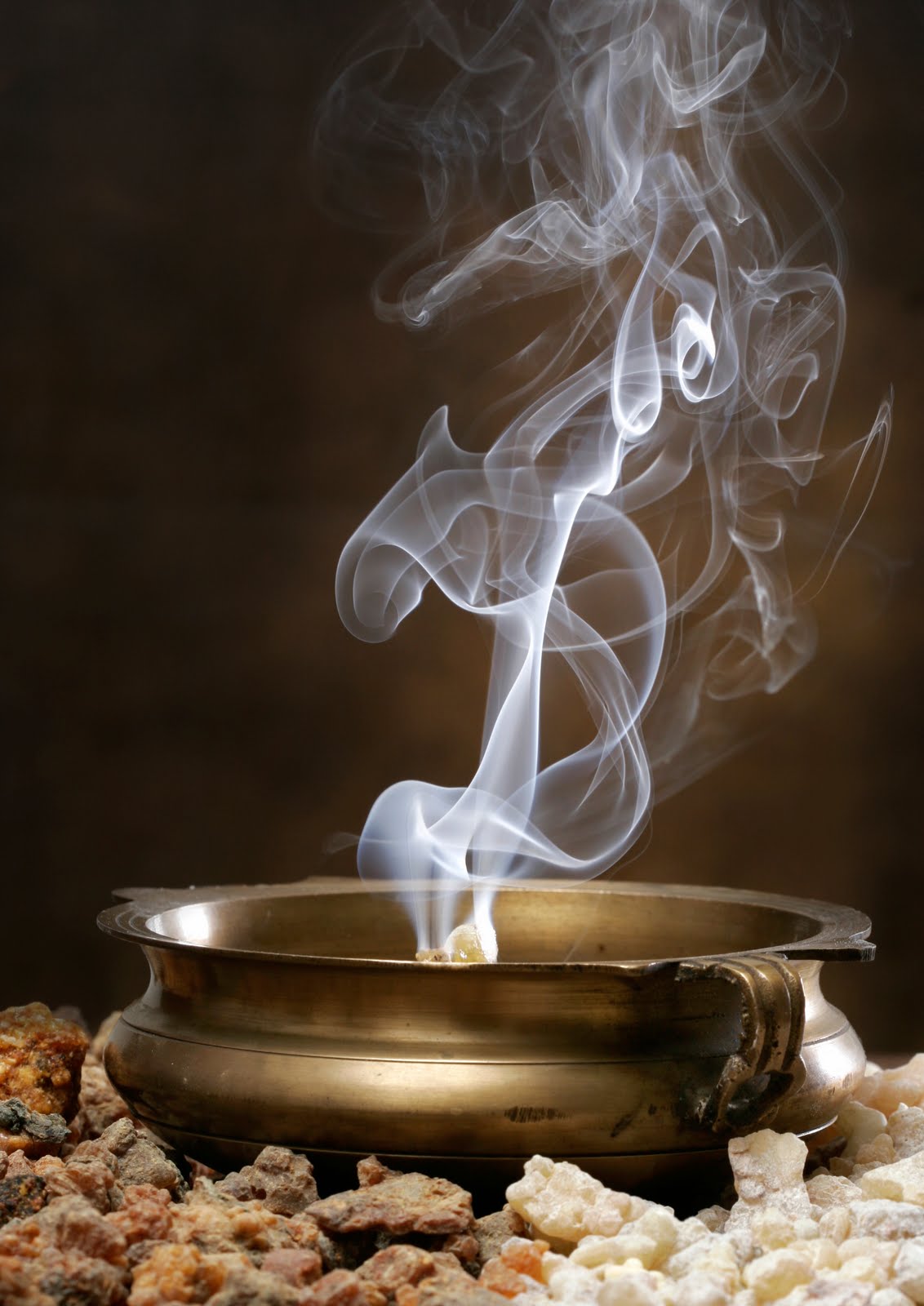
Frankincense Smoke  iStock_000003278665MediumFrom the second hour to the end of the perfume’s development, Hothouse Flower takes on its primary characteristic: coconut-y gardenia over a base of light smoke, subtle pepper and quiet musk. It never changes beyond those notes. It may not be wholly my cup of tea due to the coconut, but it is pretty. The addition of the really subtle smoke note from the frankincense and the almost imperceptible pepper hovering in the background adds a lot more complexity to the scent than one would initially imagine from the word “soliflore.” Moreover, despite the rise in the coconut undertone — which makes Hothouse Flower a much richer, heavier scent than it was initially — it’s still incredibly lightweight.

In fact, it’s so light, I had a big problem smelling it at times. The sillage begins at a very low-level from the start, but soon drops even further. Within an hour, at most, Hothouse Flower is a skin scent. By the end of the third hour, I had thought it had disappeared completely! It is a little surprising for something that is eau de parfum concentration. To be honest, I’m not even sure how long Hothouse Flower lasted on me. The first time I tested the perfume, it seemed to vanish by the time the fourth hour rolled around. Only by extremely determined sniffing (in this case, more akin to the feral attack of a hyena on my arm) could I detect small patches of it lingering here and there. By the start of the fifth hour, I wouldn’t swear to its presence in any noticeable way. However, the second time I tested Hothouse Flower, I doubled the amount and could smell faint traces a little after the 6 hour mark.

Clearly, this is a scent whose projection and longevity you can manipulate via quantity. Again, I think that will make the perfume ideal for those who like extremely discreet, very light skin-scents. However, those who prefer moderate projection or great longevity — not to mention more body — will be sorely disappointed, as this is a very thin, sheer perfume. You may have to apply a double-to-triple dose if you want to detect its smell after the first hour from more than an inch away, and to have it last a substantial amount of time.

Despite those issues, Hothouse Flower is a very pretty fragrance and it’s made even lovelier by its price. In the world of niche perfumery, finding a well-blended, well-made, non-artificial, lovely scent that retails for under $100 in a large (2.5 oz/ 75 ml) bottle is a bit like stumbling upon a mythical unicorn in some secret garden. But Ineke Ruhland has done it. Not only that, but she also makes her perfumes extremely accessible via a Deluxe Sample pack of all eight of her eau de parfums for an incredible $25 with free shipping. Honestly, it’s mind-boggling. One cannot help but give a huge “Brava” to someone who very clearly wants the world to enjoy perfume without problems of access or cost.

Gardenia bouquet. Photo: Eric Kelley via Wedding Chicks on ILoveSWmag.com. For more beautiful gardenia bridal photos and bouquets, click on the photo to go to the website.

Gardenia bouquet. Photo: Eric Kelley via Wedding Chicks on ILoveSWmag.com. For more beautiful gardenia bridal photos and bouquets, click on the photo to go to the website.

The combination of all these factors make me think that the perfume would be particularly lovely as a bridal scent. The freshness, femininity, and low sillage would make it a perfect, discreet accompaniment on the big day. And, for those who love gardenia scents, even more so. On Fragrantica, one person (“raw umber”) wrote the perfect summation:

Hothouse Flower smells like Spring erupting on all sides. It’s Spring on steroids. It is extremely uplifting and soothing. I could see this being very complimentary to the aroma of a morning cup of coffee. It’s like natural anti-depressants. If you like gardenia, but dislike those heavy, sneeze-inducing, overpowering florals, this variation on a true to life green gardenia should help you begin your day on the right foot.

The perfume website, CaFleureBon, also loved Hothouse Flower. So much so that they rated it as one of the Top 25 perfumes of 2012, writing:

In a year with so many good gardenia fragrances it shouldn’t be a surprise I have two on my list. Ineke Ruhland captures a gardenia weighted down and surrounded by the humidity of a hothouse. This gives a depth to the central note that nobody else who assayed this in 2012 came close to matching. I felt like I was surrounded and consumed with this gardenia.

Personally, I don’t think that the gardenia note is “weighted down” since Hothouse Flower is such a light, airy fragrance, but I definitely agree that the flower has depth here.

In short, Hothouse Flower is a very pretty scent, and one that I would definitely recommend for those who enjoy incredibly light, unobtrusive, discreet, fresh florals. Welcome to Spring!


DETAILS:
Cost & Availability: Hothouse Flower is an Eau de Parfum that comes in a 2.5 oz/75 ml size and which costs $95. You can purchase it from the Ineke website which ships within the US and to Canada. As noted above, there is a fantastic deal on a Deluxe Sampler set where you get all 8 perfumes in the line for $25 with free shipping. Purchase of the set also gives you a discount if you end up buying a full bottle of one of the perfumes from the Ineke website: “When you place an order for the Deluxe Sample Collection, you will also be provided with a discount code that you can apply against your next order of a 75 ml product from our alphabetical collection on our website. The Floral Curiosities collection for Anthropologie is not part of this program.” In the US and Canada, the perfume is also sold at Anthropologie for the same $95 price. In the UK, Ineke fragrances are carried at about seven different sites throughout the country (as listed on Ineke’s website), but the best online resource seems to be The Grooming Clinic which sells Hothouse Flower for £79.75 with free shipping within the UK. I should note that the Ineke line is generally carried by Liberty London, but I don’t see Hothouse Flower listed on the website. In Australia, you can generally find Ineke perfumes on the Libertine website for AUD$160 but, unfortunately, they don’t list Hothouse Flower. Other retail locations — including a good number of international sellers from Italy to Denmark, Greece, Poland and the UAE — can be found on the company’s Stores page.  Samples of the perfume are available via Ineke’s own sample set but if you just want to try this one, Surrender to Chance has Hothouse Flower starting at $2.99 for a 1 ml vial.