The U.S. Fragrance Industry: Sales Figures, Popular Fragrances & Market Changes

Source: knozhawa.com

Source: knozhawa.com

The numbers are in for the perfume industry’s sales in 2013 as a whole. I’m always interested in the financial side of the fragrance industry, especially how perfume is doing as compared to the overall beauty market. However, the most fascinating thing this time were changes that occurred in people’s perfume tastes, in the categories of perfumes that were purchased in the last year, and in who was doing the buying. I’m not hugely surprised by what men are doing in the U.S. and U.K., but I was a bit taken aback by a change in the American woman’s buying habits and tastes. I’ll cover all of that in this post, along with: the U.S. sales figures for market leaders like Estée Lauder, Elizabeth Arden, Coty, and Inter Parfums, along with what those figures tell us about the overall fragrance industry in America.

Another post will look at the broader picture by focusing on the global perfume market. The topics include: the most popular perfumes for women and men in different European countries; the role of Valentine’s Day in the UK; the 3 perfume houses that dominate the French market; a perfume Fatwa by a Grand Mufti in the Middle East (no, I’m not joking, but it was a positive edict); the industry’s astonishing projected growth; the degree of profits for L’Oreal, LVMH, IFF, and Givaudan; and the different international perfume markets in the UK, France, Italy, Germany, The Netherlands, Spain, India, and the Middle East. [Update: there are also posts on the Brazilian and Asian markets (China and Japan). In another 2014 post, the second half has newer figures for L’Oreal, Estée Lauder, Coty, and P&G.]

As always, I would like to emphasize that I am the furthest thing imaginable from a business expert. I often can’t make heads or tails of the specific fine point and details in financial reports. In fact, I intentionally went to law school to stay as far away as humanly possible from anything mathematical or financial in nature. Still, I hope you find some of the reports below interesting. Please note, however, that all of the articles focus on the more established and significantly larger commercial fragrance market, not the niche one.

Source: goodfon.com

Source: goodfon.com

U.S. BEAUTY & FRAGRANCE INDUSTRY:

I’d previously quoted and discussed the flat U.S. sales in the first part of 2013 in a post on the 2013 business reports for the perfume industry. To put the new figures into context, I want to start with the numbers for the beauty market as a whole. A MediaPost article quotes the NPD global market research group as saying, in part:

sales of prestige beauty products — those sold in department stores — gained 5% in 2013. But the lower-end brands sold in drugstores struggled, gaining just 1%.

Among the prestige labels, NPD reports that skincare and makeup was especially strong — both up 7% in dollar sales from the prior year — while fancy fragrances were flat. Direct-to-consumer sales grew 19%. But the more expensive products were, the better they sold. Fragrances priced $100 and higher jumped 30% in sales, and makeup priced at $60 and up climbed 28%.

Drugstore brands had a tougher go of it. […] Makeup gained 2%, while mass fragrance sales sank 6%. [Emphasis added by me.]

In short, prestige makes a difference to sales. I have to wonder how much of that was driven by niche perfumery or, to be more precise, the impact of niche perfumery on more mainstream brands (like Chanel, for example) raising their prices.

Source: marieclairvoyant.com

Source: marieclairvoyant.com

I found a CNBC article that added some interesting details. For one thing, it notes that Christmas is perhaps the biggest time for perfume sales. In fact, 45% of all such purchases usually occur between October and December. The article, which came out in November 2013, didn’t have such an optimistic view this time around. More interestingly, it quotes a Euromonitor expert on which specific perfumes were popular:

What used to be a go-to Christmas gift is no longer smelling quite as sweet.

After gaining back some of the ground lost after four years of negative sales during the economic downturn, fragrance sales are basically flat on the year, and experts predict they will continue their holding pattern during the holidays.

According to The NPD Group, 15 percent of shoppers will purchase a fragrance this holiday, which is unchanged from 2012; similarly, Euromonitor forecast that the category’s sales will tick higher by only 0.2 percent this year. […][¶]

Jo Malone fragrance via joyce.fr.

Jo Malone fragrance via joyce.fr.

Most of the growth in the prestige fragrance category—sales logged primarily in department stores—has come from pricier, niche fragrances such as Demeter Fragrance Library’s Oud, and scents from Jo Malone and Tom Ford, [Virgina Lee of Euromonitor] said.

She pointed to Bond No. 9Estée Lauder’s Modern Muse and Coty’s Marc Jacobs Honey as other fragrances she expects to perform well.

While celebrity perfumes continue to saturate the market—including scents from Rihanna, One Direction and Taylor Swift—the category’s real value growth is now being driven by an older, more sophisticated shopper who doesn’t care to smell like a pop star, Lee said. She also predicts prestige will continue to outperform mass offerings, as higher-income shoppers have the money to burn on a $250 fragrance, she said.

Bloomingdale’s, Sephora and Saks all listed fragrance as one of their top areas of focus for the season, with Bloomingdale’s calling out its Tory Burch fragrance exclusive; Sephora its multibranded fragrance samplers; and Saks its mini-fragrance collections and fragrance sets, including Carven and Viktor & Rolf’s Flowerbomb. [Emphasis to names added by me.]

SPECIFIC PERFUME COMPANIES:

So, what happened when Christmas ended, the sales were tallied up, and the reports were released? Well, as noted above, NPD says that 2013 perfume sales were flat for “prestige” (ie, department store) fragrances, while drug store ones sank by 6%.

Britney's Curious perfume.

Britney’s Curious perfume.

However, some specific companies really took a hit. Elizabeth Arden, a huge corporation which distributes everything from Brittany Spears‘ many lucrative fragrances to the super-popular ones from Justin Bieber and Elizabeth Taylor, fared poorly in its second-quarter, in part because of those flat U.S. perfume sales. According to Medill Reports:

  • Net income fell 22%;
  • On an adjusted basis, quarterly earnings fell 32%; and
  •  “Quarterly sales totaled $418.1 million, a 10.6 percent drop from $467.9 million in the second quarter of 2013. Revenues from its North American business, which account for about two-thirds of total sales, fell 13.3 percent to $269.6 million from $311.1 million.”

It’s actually a pretty big deal if a company like Elizabeth Arden does poorly in the U.S., because it controls such a big portion of the market here. According to the Elizabeth Arden Wiki-Invest stock page:

The global fragrance industry has a market cap at $36.6 billion dollars. Currently Elizabeth Arden has a 15% market share from their owned and licensed brands North America compared to the 2% market share in Europe. Europe has largest fragrance market at $13 billion which is currently twice that of North America.

Photo: Bruce Weber for Bottega Veneta. Source: stylefrizz.com

Photo: Bruce Weber for Bottega Veneta. Source: stylefrizz.com

Coty didn’t do enormously well in 2013, either. The company’s fragrances generally seem to average out to the mid-level range in terms of department store offerings, as its brands include: Bottega VenetaCalvin Klein, Chopard, CerruttiMarc Jacobs, Chloé, Roberto Cavalli, Sarah Jessica Parker, BeyoncéLady Gaga, Madonna, Vivienne Westwood, Vera Wang, and Davidoff. Coty said its fiscal second-quarter earnings for 2013 dropped 33%, though much of that was from weak cosmetics sales. The fragrance sector reported a 2% loss in revenue, but the company’s revenue as a whole sank 4.1% to $1.32 billion.

For the Estée Lauder behemoth, fragrance is only a small portion of their sales. According to Trefis, 49.9% of their stock price comes from skin care, 39.5% from makeup, and only 7.5% from fragrance. The company continues to beat all quarterly estimates with a very strong performance. The full Trefis report states:

The contribution of fragrances to overall revenues has seen a consistent decline for the company, from 19% of total revenues in 2007 to 13% by 2012, driven by higher skin care product demand globally. During the same period, skin care revenue share increased from 37% to 44% by 2012. The skin care product market worldwide reached $100 billion in 2012, growing at an annualized rate of 4.1% between 2007 and 2012 while the worldwide fragrance market reached $37 billion. [1] [2] […]

However, despite its declining share, the fragrance division witnesses a strong growth rate in Q2, supported by holiday season spending on luxury fragrance products.

Source: Fragrantica.br

Source: Fragrantica.br

The fragrance division registered a 32% growth in revenues during Q2FY13 while other divisions such as skin care, hair care and make up registered growth rates of 15%, 16% and 9% respectively. Premium fragrance brands such as Jo MaloneModern Muse and Tom Ford have historically been strong drivers for divisional revenues. Furthermore, the company launched various limited edition fragrance products exclusively for the holiday season which could boost revenues. We expect another quarter of strong performance from the company’s fragrance division. [Emphasis added by me.]

Another company with slightly more “prestige” fragrances also did well. Inter Parfums reported a 19% increase in fourth-quarter sales, according to a report in the Wall Street Journal. You may not know Inter Parfum’s name, but you certainly know the perfume brands it distributes: Lanvin, Van Cleef & Arpels, Balmain, Agent Provocateur, Boucheron, Jimmy Choo, Karl Lagerfeld, MontblancPaul Smith, S.T. Dupont, Repetto, Alfred Dunhill, Anna Sui, Shanghai Tang, Oscar de la Renta, Gap, Brooks Brothers, bebe, and Betsey Johnson

There is clearly a vast divide in the fortunes of Elizabeth Arden and Coty, on the one side, and Estée Lauder and Inter Parfums, on the others. It comes down to the nature of the respective companies’ perfume brands, and underscores the conclusion of one market researcher: prestige sells, even in today’s economy. The NPD global research group states:

Value is important to consumers, but premium-priced offerings are thriving is US prestige beauty. Even though sales for the total prestige fragrance category were flat, fragrances priced $100 and over grew 30 percent in dollars, while face makeup priced at $60 and up increased 28 percent, and skincare for the face gained 15 percent in dollar sales (compared to 2012).

THE SHIFTING SCENT OF THE U.S. WOMAN:

Now that you have the context as a whole, I wanted to talk about one of the more interesting things I discovered. When the average American woman wants to buy a new perfume from a department store, they are increasingly choosing woody orientals! According to an NPD report entitled “The Shifting Scent of a Woman“:

While total industry dollar sales declined slightly to $2 billion in the 12 months ending December 2013, sales of woody oriental scents, the second largest fragrance family, and smaller segments grew during the same time period.

“Floral fragrances aren’t fading away, but less traditional scents are gaining more of the attention from female consumers than ever before,” said Karen Grant vice president and senior global industry analyst, The NPD Group, Inc. “Fragrance is a powerful tool that can exude an image and even empower an individual as an expression of personal preference. With the emergence of more artisanal scents on the market, women are welcoming the opportunity to experiment and explore different options.”

The standalone oriental, woods, citrus, and fruity fragrances are still a small portion of the market, at just 7 percent of women’s fragrance dollar sales, but they are growing at the expense of the larger segments, including the top selling fragrance family, floral. Woody oriental is the only one of the larger blended fragrance families to experience growth in 2013. Two of the top 5 women’s prestige fragrances sold in the US are part of the woody oriental fragrance family, while the other three in the top five are florals and a soft floral.

“The recognizable classics remain strong, but new players are important rising stars to watch,” said Grant. “Today, the opportunity for reinvention afforded by a novel scent coexists with the instant indulgence provided by the classics.”

In my admittedly biased opinion, I am going to credit niche perfumery as having some role in why less traditional categories of perfumery may be gaining ground with the average American women. Just as with fashion being influenced by trends that slowly trickle down from Haute Couture, so too must the more inventive fragrances put out by niche houses eventually trend the commercial perfume giants. You can see it with oud which started as a revolutionary failure with YSL’s M7 (under Tom Ford), but which has now trickled down into every conceivable type of perfume at every price point.

Source: blogs.nordstrom.com

Source: blogs.nordstrom.com

WHAT MEN ARE UP TO:

It seems American and British gentlemen really, really love their fragrances. The Yanks in particular are spending a fortune, which is why I’m including this section here and not in Part II with the rest of the global analysis. An NPD report has the figures for men’s purchases between November 2012 and October 2013:

men’s fragrance juice sales drove positive dollar performance for the overall fragrance category in the US and UK[.] Total fragrance performance was soft elsewhere in Europe, with declines across men’s and women’s offerings, primarily in the EDT segment.

“While women’s individual juices continue to be the top selling fragrance segment across the US and Europe, new launch activity has been a boost for men’s sales across most countries,” said Karen Grant, vice president and senior global industry analyst, The NPD Group, Inc.

In addition to men’s juice sales, the other positive growth segments for both the US and UK prestige* fragrance industries in the 12 months ending October 2013 were women’s juices, and both men’s and women’s fragrance gift sets. With the exception of Spain, which had declines across fragrance segments, there were segments of flat to positive performance in other European countries. Men’s gift sets were the star in France during this time period. In Italy, men’s juice and women’s gift sets held steady.

ALL IN ALL:

Although there seems to be movement in specific areas, I think if you look at the picture as a whole, you will see that the perfume industry in the U.S. continues to struggles. Sales are generally soft, not dynamic and huge. The percentages reported are always very small, moving upwards by about 2% in a lot of cases, or else dropping by 6% to 7%. If you take a bird’s-eye view, make-up and skin care do gangbusters in the U.S., but not fragrances. Even the expensive ($100+) perfumes are only selling moderately if you look at picture as a whole, as opposed to taking a narrow view of “prestige” fragrances vs. drugstore ones.

And remember, the definition of “prestige” here revolves around department store perfumes, not niche. Given the nature of a niche or artisanal company, and the fact that it is privately owned with no need to report to shareholders, I think it would be virtually impossible to find data on how that sector of the industry is doing. The individual companies are certainly not going to report it. I also can’t see niche distributors like Luckyscent, Osswald, First in Fragrance, or Essenza Nobile releasing sales figures by perfume house.

Still, I think it’s always interesting to know how the industry as a whole is doing. To that end, Part II will focus on the global picture, from market titans like LVMH and Givaudan, to popular perfumes and sales in individual countries such as the U.K., France, Germany, The NetherlandsItaly, Spain, India, and the Middle East.

LM Parfums Giveaway: Hard Leather

I’m incredibly excited to announce that LM Parfums has generously offered a really huge giveaway of ten (10!) prizes. Ten winners will each get one 5 ml glass decant of Hard Leather, the perfume I fell for so hard last year and which I put as #1 on my list of Best of 2013. It is also ranked #1 on my list of Favorite Perfumes from all current, non-vintage fragrances on the market. For reasons explained below, I’m afraid this giveaway is for U.S. readers only.

HARD LEATHER:

Hard Leather in the 100 ml bottle.

Hard Leather in the 100 ml bottle.

I loved Hard Leather from the very first instant that I smelled it. It was immediate, automatic, and visceral, with the sort of reaction I haven’t felt in years. I’m rather aloof in public or with people who I don’t know well, but, as I wrote in this story of meeting Laurent Mazzone, the founder of LM Parfums, his Hard Leather made me completely lose my crackers in public, and in one of the most constipatedly snobbish, haughty places in Paris. So, what does it smell like? You can read my detailed review, but the short list of Hard Leather’s notes may help in the meantime:

Rum, Leather, Iris, Honey, Sandalwood, Cedarwood, Oud, Frankincense, Styrax and Vanilla.

Source: 123people.es

Source: 123people.es

For me, Hard Leather is as much about the lusty animalic aspects and the dark woods as it is about the actual leather. It has very expensive aged Laotian oud, but the true beauty is the massive amounts of very genuine Mysore sandalwood. Regular readers know how I consistently go through modern “sandalwood” fragrances with a curled lip, and a dismissive “not real Mysore” response. Infact, one reader has vowed to get me a t-shirt with the words “Sandalwood Snob” on it, and I would wear it gladly. But Hard Leather has the real stuff.

The use of such a rare ingredient in such vast amounts makes complete sense when you meet Laurent Mazzone. He is a man who began his career in fashion, loves opulence, has the highest standards for everything he does, and is intensely passionate about his perfumes. He wants to his fragrances to be a luxury in a way that harkens to the golden time of perfumery through the use of the richest ingredients possible, only done with a nod to modern tastes. He talks of the legendary Guerlains with love, but he is far too aware of current fashions to create something dated or old-fashioned in feel. He always goes for the best, from his choice of the Hotel Costes for us to meet, to asking his friend, the late Mona di Orio, to create one of his fragrances, or insisting on the most expensive raw materials from Robertet. (They are a fragrance ingredient company known for the highest quality naturals, and whose focus is on “cultivating the real thing.” Mr. Mazzone would expect nothing less.)

Source: Tumblr. Original source or photographer unknown.

Source: Tumblr. Original source or photographer unknown.

yet, for all its refined, sexy lustiness and opulent Mysore sandalwood, Hard Leather is not for everyone. It is dark, animalic, musky, slightly raunchy, smoky, and skews very masculine. I happen to think that it is the most refined take possible on animalic leather, but how you fare will depend strongly on skin chemistry. For the lucky ones, like one or two Basenotes commentators, Hard Leather is as good as the revered Puredistance M, and the best release of 2013. Others, however, experienced a fecal note to the leather in Hard Leather’s opening 15 minutes, and really struggled with the scent. So, I repeat, Hard Leather is a complex, elaborate scent that isn’t for everyone.

Hard Leather is not currently available in the U.S., though you can order it from either LM Parfums or Premiere Avenue (which is also owned by Laurent Mazzone). (See, the Details section at the end for full retail information.) Osswald in NYC is the exclusive LM Parfums distributor in North America, but they don’t have Hard Leather listed on their website and I don’t know when they will get the fragrance. None of the decanting services offer Hard Leather. In short, U.S. perfumistas have very limited access to the perfume at this time, unless they pay an expensive shipping fee from Europe.

This is the main reason why I’m limiting the giveaway to U.S. readers. In addition, however, I will be shipping the decants to the winners myself, so I’ll be honest and say that the high international shipping rates charged by the U.S. Postal Service played a small role in my decision as well.

THE PRIZES:

Hard Leather 5 ml decant.

Hard Leather 5 ml decant.

Ten (10) readers will each get ONE (1) 5ml glass dab bottle of Hard Leather which is an Extrait or Pure Parfum. Hard Leather retails for €295 for the 100 ml bottle which, at the current rate of exchange, comes to roughly $406. The retail price of the 5 ml decant is €19, but with shipping, you’re looking at spending well over $50 for the decant being offered here. In short, LM Parfums was unbelievably generous.

ENTRY REQUIREMENTS:

There are two requirements to enter:

  1. You are in the U.S.; and
  2. You have to leave a comment down below, perhaps letting me know your favorite animalic scent or if you have tried anything from LM Parfums.

As a side note, I usually respond to each and every comment left in one of my Giveaways, but I won’t be doing so this time, for reasons of time and a really hectic schedule this week. I hope you won’t think me rude. Rest assured, I’ll be jotting all your names down and answering any questions that you may have.

WHEN DOES IT END:

The entry period lasts until the end of Friday February 21, 2013 at 11:59 p.m. Central Standard Time (CST) in the U.S. which is -6:00 GMT (Greenwich Mean Time).

WINNERS, EMAILS & SHIPPING:

The 10 winners will be chosen by Random.org, and will be announced sometime the next day on Saturday, February 22nd.

Once I post the winners, you have THREE (3) days to contact me with your shipping information. Deadline is end of the day, my time, on Tuesday February 25th. Please send an email to Akafkaesquelife @ gmail . com  (all one word, scrunched together) with your shipping details.

If you don’t contact me, and if I fail to hear from you within the deadline, I will give your prize to the next person on the list.

Please be aware that I am not responsible for items accidentally lost or destroyed in transit for some reason. I will bubble-wrap like mad, but one never knows what may happen. The prize cannot be replaced. 

FINALLY:

Laurent Mazzone. Source: love2beauty.ru

Laurent Mazzone. Source: love2beauty.ru

I’d like to express my enormous gratitude to Laurent Mazzone of LM Parfums, as well as to Fabienne who assists him in these matters. He is truly one of the nicest guys you’ll meet in general, but this is an incredibly lavish gesture. I really don’t have the words to properly thank Mr. Mazzone for his generosity, kindness and thoughtfulness in offering such a huge number of decants of such an enormously expensive, but utterly fantastic, perfume. I wish you knew how ridiculously excited and happy I am that more of you will get to try my beloved Hard Leather. I know it won’t suit all of you, but I hope a few of you buckle to your knees as I did. Given Hard Leather’s price and the fact that it isn’t even available in the U.S. yet, this is a unique opportunity for all of you to try the scent, an opportunity which wouldn’t be possible at all without Mr. Mazzone. So, again, my deepest thanks to him.

Good luck to everyone!  

GENERAL DETAILS:
Cost & AvailabilityHard Leather is pure parfum extrait that is available only in a 100 ml/3.4 oz bottle which costs €295. It available at LM Parfums. You can sample Hard Leather in the 5 ml size offered here for €19, but shipping to the U.S. is high. Premiere Avenue also has a decant of Hard Leather for the same price. (It’s one of Laurent Mazzone’s companies.) In the U.S.: Laurent Mazzone’s fragrances are sold exclusively at Osswald NYC, but as of the date of this posting, they don’t have Hard Leather yet. Outside the U.S.: You can find Hard Leather, along with all LM Parfums, and a 5 ml Hard Leather sample of each at Laurent Mazzone’s Premiere Avenue which ships throughout Europe. In the UK, the LM Parfums line is exclusive to Harvey Nichols. In Paris, LM Parfums are sold at Jovoy. In the Netherlands, you can find LM Parfums at ParfuMaria or Silks Cosmetics. In Germany, First in Fragrance carries the full line, and sells small samples as well. You can also find LM Parfums at Essenza Nobile, Italy’s Vittoria Profumi, or Alla Violetta. In the Middle East, I found most of the LM Parfums line at the UAE’s Souq perfume site. For all other countries, you can find a vendor near you from Switzerland to Belgium, Lithuania, Russia, Romania, Croatia, Azerbaijan, and more, by using the LM Parfums Partner listing. Laurent Mazzone or LM Parfums fragrances are widely available throughout Europe, and many of those sites sell samples as well.

As a result, I’m limiting this Giveaway to

Masque Fragranze Montecristo

Source: opserver.de

Source: opserver.de

Welcome to the jungle, as Axl Rose would say. Somewhere, perhaps in Paraguay, Africa, or Mongolia, a leather and fur-skin clad hunter called Montecristo stalks his prey through a jungle filled with tobacco plants and Cabreuva trees smelling of lemony florals. The trees are sprinkled with red chili pepper, cumin and costus root, then heavily blanketed in honey. The ground is a soft field of creamy brown from ambrette shrubs that waft a warm, vegetal, muskiness sweetness. They too are covered with honey. Scampering through the vegetation is the fluffiest, most adorable animal imaginable. He occasionally stops to pee on all the bushes, emitting a sharp, feral “YEOOWWL” in happy relief, as his scent swirls with the honey, spices and tobacco.

Source: godlikeproductions.com

Source: godlikeproductions.com

On his heels is the hunter whose heated skin and sweat stains the rough leather of his vest. The chase is hopeless, our little rodent is too fast, and the hunter goes home. Covered with honey, he’s dirty and skanky from his exertions, and his musky skin is stained with traces of tobacco and sweaty leather. As he sips a glass of rum, his wife sponges him off lightly, leaving a mix of cleanness and animalism on his warm skin, before she takes him off to bed to make love.

The adventures of Montecristo the Hunter are the adventures at the heart of the latest masculine, niche fragrance from Milan. Montecristo is an eau de parfum from Masque Milano, or Masque Fragranze as it is written on their website. (The house is better known as Masque Milano, so that is what I shall call them from this point forward.) The company is a relatively new, and was founded in 2012 by two close friends, Riccardo Tedeschi and Alessandro Brun.

Masque Milano founders. Source: their website.

Masque Milano founders. Source: their website.

They see their fragrances as operas in several acts, even calling their brand at one place on their website: “Masque Fragranze – the Opera of life in four acts.” They add:

With Masque Fragranze, Alessandro and Riccardo do not intend to create a myth, a best-seller, a one-size-fits-all perfume for everyone. Rather, they aim at creating a collection of perfumes with a soul. Each one unique. Perfumes to wear like a second skin … the perfume behind the mask. […] The fragrances of Masque are to be created with a soul, and the nose’s appointment is to give life to our scene. Hence, every scene will have “its” nose.

Source: Luckyscent.

Source: Luckyscent.

In the case of Montecristo, an eau de parfum which was released late last year in 2013, that nose is Delphine Thierry. On their website, Masque Fragranze describes Montecristo and its operatic screenplay as follows:

I – II
MONTECRISTO
In the livingroom of an old villa, in the Tuscan countryside.
It is the close of day.

Act I scene two
Every single element of the interior contributes to the warmth and reassuring comfort. The floor of old robust wood planks, aged and worn with the use. In the massive fireplace, coals are still burning. The comfortable couch is made of the best leather, once stout and rigid, and spotlessly tanned, is now soft and worn, and the colour is fading away. A deck of used playing cards abandoned on the coffee table. The tobacco leaves of the hand rolled cigar. A glass of rum.

Head Notes
Cabreuva, Ambrette Seeds, Rum

Heart Notes
Tobacco Leaves, Celery Seeds, Cistus [Labdanum], Benzoin

Base Notes
Golden Stone [Hyrax], Styrax Gum, Gaiac Wood, Cedar Wood, Patchouli. [Emphasis in bolding added by me.]

The Cabreuva tree. Source: purenature.co.nz

The Cabreuva tree. Source: purenature.co.nz

Two of those notes leapt out at me as something totally alien, so I did some research. As it turns out, those two ingredients play a big role in terms of Montecristo’s development on my skin, so I’ll take some time to explain what they entail. Apparently, “Cabreuva” is a type of tree found primarily in Paraguay. The aromatherapy site, White Lotus Aromatics, explains its smell and perfume uses:

The essential oil of Cabreuva (Myrocarpus fastigiatus) is a pale yellow liquid displaying a delicate, suave, sweet woody bouquet with a balsamic, floral undertone of good tenacity. […][¶] It is highly valued as a low cost fixative.

“Although very delicated and apparently faint, the odor of Cabreuva oil is often under-estimated in its effect of freshness and suave floral notes. In rose, lily of the valley, cassie, ambre and in woody-oriental perfumes, Cabreuva lends teancity and distinct notes of ‘precious wood’ with a background of slightly green, dry floralness, a combination rarely found in synthetic perfume materials.” Steffen Arctander

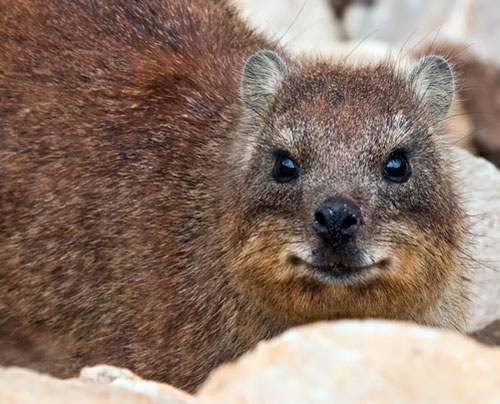
I have absolutely no idea what “golden stone” may be as an ingredient, and Google yielded nothing that applied, but the note appears to be what Fragrantica lists as Hyrax on its Montecristo page. According to its Hyrax definition entry, the hyrax is a small, adorably cute rodent whose feces have a super useful purpose in both ancient and modern perfumery. The Hyrax is the single, most important element in Masque Milano’s Montecristo, so bear with me as I quote from Fragrantica:
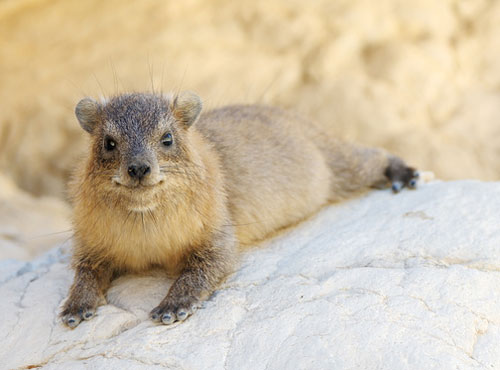
Hyrax via Fragrantica.

Hyrax via Fragrantica.

Odor profile: essence from the small rodent hyrax’s dried up crystalline fecal matter, combining olfactory facets of musk, civet and castoreum. Invaluable in a time when animalic essences derived by cruelty are banned. [¶]

Hyraceum, or Hyrax, is an aromatic raw material of the antique perfumery. However, men used this material much before they started to use it in perfumery. The African tribesman and people of the Middle East used Hyraceum as a traditional remedy for epilepsy, kidney problems, convulsions and feminine hormonal disorders. [¶] This substance is actually the petrified and rock-like excrement formed from the urine of hyrax. Hyraceum is fairly sterile, stone-hard material that also contains pheromones[….]

Photo: Fragrantica

Photo: Fragrantica

In perfumery, we use very old, fossilized, dry and stone-heavy Hyraceum, which is typically over hundreds if not thousands of years old. It gives an animalistic, sensual and deep note that feels like a combination of musk, civet, castoreum, tobacco and agarwood. Because of its characteristic structure, this material is also known as Africa Stone. Earthy, rich and resinous[….] Last but not the least, no animals are harmed in making this material. [Emphasis added by me.]

When I smelled Masque’s Montecristo in the vial, I was struck by the softly lemony, floral musk aroma and how it glittered with drops of golden honey. Taking a deeper sniff, I could immediately see the feral yeowl in the back, but the primary impression was a lemon-infused “slightly green, dry floralness,” as quoted in Cabreuva’s description up above. When you apply a small dose of Montecristo on the skin, that bouquet continues to be very dominant, though it is not the main player by any means. It’s quite another story, however, if you apply a lot of Montecristo; in my case, about 3 good smears amounting to more than 1/4th of a 1 ml vial, or about the equivalent of one spray from a bottle. This review will focus primarily on what happens in that situation.
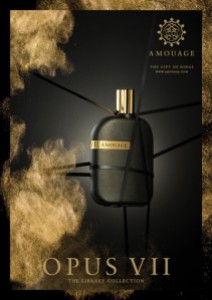
Amouage Opus VIIMontecristo opens on my skin with a lightly floral, woody muskiness, but the fluffy, cute hyrax rodent’s yeowl is evident from the start. The animalic notes are urinous, dirty, skanky, raunchy, and every other adjective that you can possibly imagine. I was immediately struck by the thought of vintage Kouros, and, to a much lesser extent, Amouage‘s Opus VII. Parts of what I wrote in that review apply here as well, as Montecristo’s scent is

urinous, like animal droppings, but also musky with a faint tinge of dirty hair underneath and [lemony nuances]. […] [The] sharply animalic note — often described by some as resembling “urinal cakes” — makes vintage Kouros a deeply polarizing fragrance. I suspect the same will be true of Opus VII. … [As a whole,] it is a deeply woody-leathery fragrance that feels quite smooth, with a savagely sensuous heart at its base and something that seems almost like a velvety floral.

Both vintage Kouros and Opus VII contain costus, an animalic base created by Symrise. There is no such note listed in Montecristo, but hyrax was described up above as having an aroma that combined the olfactory profiles of civet, castoreum, and real musk, presumably of the original Tonkin deer musk variety. So, if you’re familiar with any of those aromas, or with Opus VII, then you will have a definite idea of the main note in Montecristo’s opening hour. However, I should add that the costus-like aroma in Montecristo is substantially weaker than what I experienced with Opus VII. There, it was so intense and sharp that I described feeling as though a lion had peed on me and then dragged me through the Wild Cat enclosure at the zoo. Montecristo is nowhere as extreme, thank God, as I found Opus VII well-nigh unbearable. In contrast, I truly enjoy every bit of Montecristo’s raunchy dirtiness.
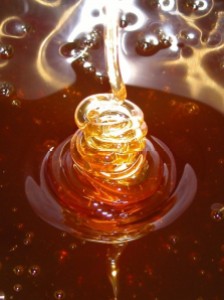
Source: etshoneysupliers.

Source: etshoneysupliers.

Part of the reason why is because the animalism is much better modulated in Montecristo, but the main reason is due to its combination with the other notes. Sharing center stage with the hyrax musk is deep, potent honey. It infuses every part of the scent with a further animalic touch, but also with a rich sweetness that is almost indolic. My skin amplifies base notes, so I’m not surprised that the honey is so dominant, but I wish I knew where it came from. Cabreuva wood is described as being balsamic, not honeyed, so I’m quite lost. Perhaps it’s a side-effect of the rum, though the note doesn’t feel liqueured to me but more like straight honey.

Lurking underneath it is a quiet spiciness that slowly grows more fiery. It takes less than 4 minutes for something to appear that distinctly resembles dusty cumin, followed by what smells distinctly like a fiery, red chili pepper. There is also a natural, vegetal, very warm muskiness from the ambrette (or musk mallow) stirring deep in the base. More noticeable from the start, though, are the golden leaves of tobacco which weave their way throughout the musk and feel drenched with the honey. Lightly sprinkled on top of the whole bundle is a light, boozy note of rum. The overall mixture is a plethora of warmth, feral sharpness, sharp honey, natural sweetness, tobacco, spices, and vegetal musk.

Source: thesportshole.com

Source: thesportshole.com

I find myself utterly transfixed by the animalic muskiness of the hyrax and, more to the point, all the different perfumes that Montecristo calls to mind. The urinous edge to the musk makes Montecristo different than Parfums d’Empire‘s challenging Musc Tonkin which, on my skin, opened with an extremely difficult aroma of hair, fur, fat and unwashed skin. Yet, there is a warmth underlying both fragrances, thanks to their shared note of ambrette. Montecristo feels like a more honeyed, tobacco-flecked, boozy, and ambered version of Musc Tonkin’s later, easier stages, once the fur and fat have died down. On the other hand, Montecristo is different in having the spices, as well as the lingering, extremely muted touches of the Cabreuva’s lemony, floral greenness at its edges.

Absolue Pour Le Soir, Photo pastiche: CaFleurBon

Absolue Pour Le Soir, Photo pastiche: CaFleurBon

At the 10 minute mark, the honeyed, urinous raunchiness grows stronger, as does the cumin-chili spiciness, thereby triggering similarities to other fragrances. On both occasions that I tested Montecristo and regardless of the quantity that I applied, the first parallel that arose was Absolue Pour Le Soir by Maison Francis Kurkdjian. Both scents have the same heavily honeyed focus, infused with cumin, leathered undertones, dirty musk, and ambered spiciness at the beginning. There are differences, though, as Montecristo has a chili bite (from God knows where), not to mention tobacco and booze, but no incense or strong florals. With a much lesser quantity, Montecristo’s more tobacco-centered bouquet reminded me of a distant cousin to Serge LutensChergui. A very distant cousin, as this would be an animalic, feral Chergui with spices, more amber, a thousand times more honey, darker woodiness, and no powder.

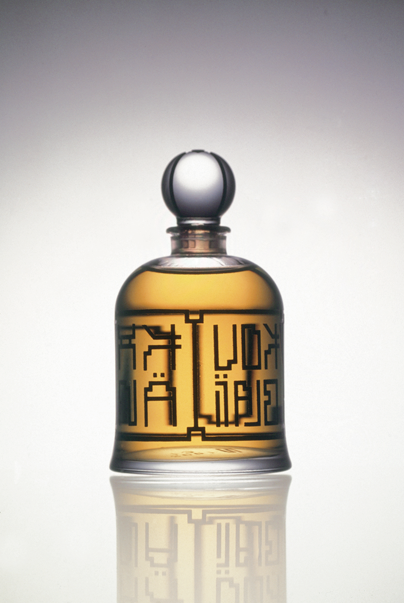
Special, limited-edition, rare bell jar bottle of Muscs Koublai Khan. Source: Serge Lutens Facebook page.

Special, limited-edition, rare bell jar bottle of Muscs Koublai Khan. Source: Serge Lutens Facebook page.

The main resemblance, however, is to another Serge Lutens fragrance: the magnificent, complicated, notorious Muscs Koublai Khan. If you apply only a small quantity of Montecristo, the musk smells similar, perhaps because the shared ambrette note, though the Masque Milano version is significantly sweeter with that powerful, animalic honey. If you use more, then Montecristo’s urinous, costus-like side is much fiercer, sharper, and rougher than it is in Musc Koublai Khan, not as smooth or refined. The more obvious, early differences are the tobacco, boozy rum, and that odd, inexplicable spice mix of cumin and chili pepper tonalities. Yet, once Montecristo’s opening mellows out and smoothens, especially three or four hours in, then the similarity to the Lutens is much closer. Perhaps the best way to sum up Montecristo’s first two hours on my skin is as a combination of Musc Koublai Khan, Absolue Pour Le Soir, and Serge Lutens’ Miel de Bois, before it eventually transitions into something more like Musc Koublai Khan mixed with lemony oud, dark resins, and leather. (We’ll get to those notes shortly.)

All this talk of Absolue Pour Le Soir brings me to another point: honey and skin chemistry. Honey — whether real or the side-effect of another note — is one of the trickier elements in perfumery. On some skin, it can turn screechingly sharp, akin to cat pee, plastic, or both. On others, however, it blooms. I happen to be one of the lucky ones, with the rather glaring exception of Miel de Bois. The one time I tested it was a rather horrific experience, though I plan on giving it a thorough, full assessment at some point in the future. My point, though, is that you may want to keep the skin chemistry issue in mind if you’re curious about Montecristo but don’t know how your skin traditionally deals with honey. And, as should obviously be clear by now, if you can’t stand any sort of animalic, dirty musk, or cumin notes in your perfumes, you will want to give Montecristo wide berth.

If the discussion of animalic honey and musk, costus, feral notes, rodent pee, cumin and the rest has you alarmed, well, Montecristo is a lot more balanced than you’d think. The perfume moves a bit like the shape of an “M” on a graph, where it opens softly, builds up mere minutes later, and feels pretty ferocious after 15 minutes. Yet, even at that point, changes are occurring to soften the impact, counter the animalic “Yeowl” that I keep referencing, and start the transition downwards to something much more approachable in nature. A quarter of an hour in, a soft, almost powdered creaminess stirs in the base. It’s lovely, reminding me of white honey beeswax butter or cream. Slowly, very slowly, it helps to take the edge of the urinous raunchiness, diffusing its slightly acidic sharpness. Also making its first appearance is a dried woodiness that, at lower doses of Montecristo, had a distinctly oud-like aroma.

Photo: Samuel S.  Photo-men.com

Photo: Samuel S. Photo-men.com

It takes exactly 28 minutes for Montecristo to lose some of its ferocity on my skin, and to begin the slow transition to a smoother, less aggressively sharp fragrance. All the same elements are there as in the opening, but the raw, hard edges are being coated with a honeyed creaminess and satiny mellowness. I really think the ambrette plays a large part in all this, as its musky aroma is of the ultra-smooth, vegetal, plush variety. For me, its warmth is akin to the real scent of human skin, but clean, warm, skin the way it after a long, deep nap under a thick blanket. Montecristo’s musk isn’t at that stage yet, but it does show the first touches of a baby-soft, human fuzziness about it.

If I’m not talking loads about the tobacco, it’s because it really wasn’t the dominant note on my skin. In neither of my two tests of Montecristo did it trump the musk. In fact, the tobacco felt significantly weaker when I applied a greater quantity of Montecristo, as the honey and animalic musk were amplified.

At the end of the first hour, Montecristo turns softer in weight, density, and silage. The perfume is now a cloud radiating 2-3 inches above the skin, as soft as a baby’s chenille blanket in feel. It is primarily a warm, vegetal, sweet musk that really evokes for me the feel of human skin. It is still urinous and animalic, but the dirty side is much softer, more muted and smoother. With every passing quarter-hour, the urinous edge seems to take another tiny step back to the sidelines to join the tiny dabs of tobacco, boozy rum, and that rather nebulous whisper of woodiness.

Photo: Samuel S. via trendhunter.com

Photo: Samuel S. via trendhunter.com

As a whole, the musk feels much more velvety, deep, and creamier than it is in Serge Lutens’ Muscs Koublai Khan (“MKK“). What I can’t seem to decide is whether the note is more or less feral than it is in the Lutens at a similar stage. In other words, the degree of pee. (The MKK was never fecal on my skin as it is on some people.) At various points in my notes, I wrote that Montecristo’s urinous yeowl softens much, much sooner than the same note does in MKK. On my skin, MKK has a quieter urinous, dirty, musky note at the start, relatively speaking, but it seems to last much longer than it does with Montecristo. In fact, when I wore MKK this summer, the feral bits were very sharp on me at times as well.

Yet, every time in the first few hours that I think that Masque’s Montecristo has settled into something not as animalic, something that is closer to the fuzziness of MKK’s later stages on my skin, something happens to make me change my mind. The urinous edge fools me, repeatedly, into thinking that it has receded. To be clear, it lasts almost to the very end, but I’m talking about how dominant it is, how long it takes for it to feel less of a dominating presence, and the time it takes for Masque’s Montecristo to approach the softer, “human skin” stage of the Lutens. All I can firmly say is that, as a whole, the musk in the Lutens feels thinner, lighter, and without the creaminess that I sense in Montecristo.

At the 90 minute mark, Montecristo turns drier and darker. The honey is much less dominant, and is folded into the musky base as a whole. The urinous edge is more muffled in feel, as are the tobacco and cumin. The rum and chili pepper have completely vanished. In contrast, the abstract woodiness starts to rise to the surface, along with that growing flicker of something oud-like. After 2.5 hours, Montecristo is a soft, animalic, vaguely dirty, sweetened scent with great warmth, ambrette musk, and leathery accents, all atop an amorphously woody base. Only the lightest touch of honey and tobacco lurk in the background. The perfume also hovers just above the skin at this point, and very weightless in feel.

Leather Tanning in Morocco. Photo by Burrard-Lucas via http://www.burrard-lucas.com/photo/morocco/leather_tanning.html

Raw leather being tanned in Morocco. Photo by Burrard-Lucas via http://www.burrard-lucas.com/photo/morocco/leather_tanning.html

What is interesting throughout Montecristo’s life is the leather undertone. It is never full-on or strongly black leather, but, rather, an impression resulting from the hyrax’s castoreum-like side. And its prominence fluctuates quite sharply. In the opening minutes, Montecristo has a definite whiff of something that made me think of the raw, uncured, animalic hides in Montale‘s Aoud Cuir d’Arabie. The note was quickly subsumed with the general, costus-like, urinous swirl of dirty animalism, but the leather was a definite subtext in the first hour. By the end of the 3rd hour, however, the leather feels unbelievably supple, lurking under the warm muskiness in a way that simply magnifies the latter. The softened, leathered castoreum also makes the warm musk feel incredibly velvety, evoking the feel of heated skin, perhaps after sex. A few hours later, however, the leather regains some rawness, but it’s a rather fluctuating dance back and forth. In all cases, the leather is only an undertone on my skin, and a rather quiet one at that.

Source: imgfave.com. Artist or creator unknown.

Source: imgfave.com. Artist or creator unknown.

Montecristo is beautifully blended, and the notes feel quite seamless at times. I think that explains, in part, the variegated nature of the leather, but it’s not the only note that fluctuates. Once the intensity of the honey dies down, the cumin reappears as well, but this time it’s quite different. Instead of smelling merely like dusty powder in some Moroccan souk, the cumin smells lightly dirty. I don’t want to say “body odor,” because I don’t want to give the impression that the note smells like sweaty, hairy armpits. It doesn’t. It also doesn’t carry a stale, fetid, aroma of someone who hasn’t washed in days. I swear, it really doesn’t. But, yes, there is no getting around the light, earthy whiff of a body scent. God, I can see half of you stampeding for the door by now, as this is probably the very last straw in this whole Montecristo saga. If it makes any difference, it’s all very subtle. I mean it quite sincerely when I say that, if you can handle the cumin note in Absolue Pour Le Soir, you should have no problems with it here.

Montecristo continues to turn darker and woodier. By the end of the 5th hour, the Cabreuva’s lemony touches return, though they now feel underscored by a very fragrant, balsamic, dark resin. The slightest touch of something nebulously floral lurks at the edges, but much more noticeable is the almost agarwood-like nuance to the wood. As a whole, Montecristo increasingly smells of a lemony, slightly oud-like, vaguely dusty, resinous woodiness infused with a warm musk that is simultaneously vegetal and slightly urinous. The honey has been folded within; the tobacco briefly returns before flitting away again; and the leather fluctuates back and forth in strength, smoothness, and prominence. Montecristo remains weightless in feel, and continues to hover just above the skin, requiring little effort to detect its nuances if you bring your arm near your nose.
Source: Zavvi.com

Source: Zavvi.com

It takes about 9 hours from the opening for Montecristo to turn into truly fuzzy musk scent. It is soft, warm, and sweet with just a slight powderiness underlying it. The texture is lovely, as it feels as soft as a petal. Now, finally, it becomes harder to detect, though Montecristo had turned into a skin scent somewhere near the end of the 7th hour. Montecristo turns more and more into the scent of sweetened, slightly heated human skin with a tiny touch of powderiness. It finally fades away on the same note, just over 14 hours from the start. I thoroughly enjoyed every bit of its dirtiness and multi-layered complexity, finding its fluctuating, morphing levels to reflect great technical skill, and I remained fascinated with its nuances from start to finish.

There are already a handful of reviews for Montecristo, mostly from people who are drawn to this sort of fragrance to begin with and, as such, they are all very positive. Though I’ll get to the blog reviews shortly, I actually think the forum analysis from places like Basenotes and Fragrantica provides more useful, detailed or comparative information. One early Basenotes thread lovingly called Montecristo a “skanky, little monster,” and the poster, “Alfarom,” talked about Serge Lutens’ MKK:

The opening is literally arresting. A skank overload provided by a thick amount of hirax and other animalic musks. It immediately brings to mind of the fecal opening of MKK but whereas the Lutens morphes into a floral rosey thing, Montecristo gets all dark and moody with tobacco, resins and some of the darkest patchouli ever. Boozy / balmy notes lurk in the back providing some smoothness to an otherwise extremely challenging fragrance. The result is fascinating to say the least. The fragrance is pervaded by a warm animalic vibe throughout. Sort of a mash up between Lubin’s most oriental offerings and heavy animalic musks fragrances a-la Musk Tonkin and MKK.

On Fragrantica, there is similar talk about MKK. One commentator, “deadidol,” had a very different experience than I did with Montecristo, and you may find his wonderfully detailed review to be quite helpful. It reads, in part, as follows:

This has a super dirty opening of hyraceum and ambrette seed that could give MKK a run for its money. But whereas MKK is very civet-based, this leans more toward the sweatier side of things and will certainly challenge those who don’t fair well with hard-core musks. However, within ten minutes, it takes a massive detour into an unconventionality that’s wildly evocative and decidedly convincing in the associations it brings up.

Rum via cafekeyif.com.au

Rum via cafekeyif.com.au

There’s a booze note (rum), but it’s more like the smell of booze that’s oozing from the pores of someone who downed the bottled a few hours ago—it’s got an unnerving filtered feeling to it. […] There are some relatively undefined wood notes, but combined they smell more like old bookshelves and furniture; and there’s something here that gives the impression of an extinguished fire as well. Imagine a poorly ventilated space that’s been coated with a layer of sticky, smoky, charcoal-type residue—a slightly sweet ashy scent, but mixed with dust that’s sat for days to produce a not unpleasant staleness that’s completely comforting. Frankly, it’s quite hard to perform a technical dissection of Montecristo as it’s evoking space more than individual notes, and it’s doing so phenomenally well.

So, this is a dusty, rustic, vaguely reminiscent scent that feels as though you’re looking into its world through an opaque piece of glass. Everything in it seems peculiarly distanced, yet it all comes together in a sublime way. I don’t know how wearable this would be for most people as it almost smells stagnant, but it’s hugely compelling and surprisingly cozy. If you’ve ever been drawn to parchment type scents (or perhaps the smell of old bookstores), or you like the challenge of a good ambrette seed musk, this is absolutely sui generis, and for me, it’s the best scent of 2013 hands-down.

There are female commentators on Fragrantica who seem to like Montecristo too, though there are only a handful of them thus far. One of them initially wrinkled her nose and thought, “this is way too much” but further testing changed her mind: the “more I test “Montecristo”, the more I adore it.” She calls it “a superb example of a true niche perfumer” that is “complex and dramatic.”

Source: Dailymail.com from Tradewinds Realty.

Old trapper’s hunting cabin. Source: Dailymail.com from Tradewinds Realty.

In terms of blog reviews, one of the more detailed ones comes from Fragrantica itself, where Serguey Borisov talks at length about the hyraceum and has a very evocative description of Montecristo. The piece is long, so I’ll quote the more relevant parts beginning with the images which Montecristo evokes for him. As you will note, he had a similar experience to “deadidol” on Fragrantica in terms of the perfume’s dusty woodiness:

An old clay mug with rum or whiskey stands on the table, an old sagging leather chair with cracked, scuffed and greasy arms, an old dog lying on the bearskin in front of it. Animal head trophies are on the wall—heads with the fangs, horns and ears. An old hunting rifle is positioned next to them. The entire room smells of animal musk, clove buds and dusty mineral particles which are reminiscent of gold or diamonds.

This is what the home of a troubled man smells like. The man had to be a priest and a soldier, a hunter and his prey, a miner and a night watchman. He lived so many different lives, with every single one’s own story written on his face. […]

Montecristo has a special animalic aura. It’s goaty smell is similar to costus or Symrise’s animalic base. [Hyraceum’s] scent is elegant and reminiscent of musk, castoreum, oud and civet. […][¶] It’s a wild and animalic nuance, it’s uncivilized and dangerous and as vague as dark shadows in a nocturnal forest. Wild, intense and smelly aromas make Montecristo just as dirty and brutal as Oud Cuir d’Arabie by Montale, but more bitter and more mineralic. The opaque brown formula, the scent of goat, resins and the bitterness of patchouli—that’s what distinguishes Montecristo from conventional incense perfume. Plus, it was strengthened with Iso E Super and musk.

I truly don’t detect ISO E Super in Montecristo, and I’m usually a weathervane for the bloody note. If it’s there, I don’t think it’s responsible for that vaguely oud-like smell to the wood. Serguey Borisov says the hyrax can be reminiscent of oud, so that’s the probable cause. I don’t detect any of ISO E Supercrappy’s usual troublemaker aromas; not its “pink rubber bandages,” its lemony-woody buzz, its antiseptic notes, or its basic, simple, dry pepperiness. There is also nothing which gives me a searing headache, so if there is ISO E crap in Montecristo, it has to be the most infinitesimal drop around.

The Non-Blonde loved Montecristo passionately, calling its complexity “mind boggling” and writing, in part:

I can’t imagine the reaction of an average perfume buyer to Montecristo by new(ish) perfume house Masque Milano. I just can’t. This is not the perfume to wear in close quarters with the uninitiated, because you will get The Look, I guarantee.

There are too many perfume brands and too many perfumes on the market. Very few of them offer anything new, even fewer come up with anything exciting that gets added to my “Must.Get.Bottle.Now” list. I just ordered my third sample set of Masque Milano perfumes, but I already know that Montecristo is going to be in my life from now on. Because it’s that good. That sexy. That fascinating.

As you’ve probably figured out by now, Montecristo is an unabashedly animalic perfume. The main culprits are two: ambrette seed with its expensive but unwashed musky vibe, and hyrax or hyraceum, which is basically fossilized pee of a cute rodent (completely cruelty free). The complexity of this animalic combination is mind boggling. It reminds me of really good civet, gorgeous intimate musk, the dirtiest part of exquisite oud, and a general air of debauchery. […] Montecristo is, indeed, dirty and slightly sweaty (cumin isn’t listed anywhere, but I swear I can smell traces about four hours into its wear-time) , it’s also warm, very boozy, leathery and intimate. It holds you close and tells you its interesting life story all through the night [….][¶] Montecristo is still there the next morning.

I share her opinion on the fascinating nature of Montecristo. Even more so, on how it would make average perfume buyers run screaming for the cliffs, then jump off. (I could see the survivors later burning any clothing that Montecristo happened to touch.) Montecristo is probably not a perfume even for someone well-versed in niche perfumery, unless they have a definite taste for animalic, dirty, leathered, goaty scents that skew very masculine. In short, this is a perfume for those with very specific tastes. I personally would wear it if I owned it, without a doubt. But I am hesitant as to whether I would ever buy it for myself.

Source: Tumblr. Original source or photographer unknown.

Source: Tumblr. Original source or photographer unknown.

The reason is probably not what you would expect: it’s Hard Leather. The LM Parfums‘ animalic creation is my absolute favorite fragrance in recent years, and nothing is going to budge it from being at the very top of my list. If I have the need for honey-covered animalic, raunchy leather with muskiness, spice, oud and woodiness, I’ll turn to my precious bottle of Hard Leather. The perfume is more obviously leathered, has much more oud, and massive amounts of incense as well. Much more importantly, it has heaping mounds of almost impossible-to-find, genuine Mysore sandalwood from start all the way through to its gorgeous finish. The animalic notes in Hard Leather are much smoother, more refined and better calibrated than the Montecristo; the Masque Milano fragrance has a significantly more feral core, is much more urinous, and is also much sweeter. Plus, can I repeat my swoon over Hard Leather’s heaping, walloping, galloping amounts of genuine, rare Mysore sandalwood? Not a nary of a whiff of that in Montecristo.

For me personally, Hard Leather is also more versatile and easier to wear. Its dirty raunchiness is much more limited and refined in scope, so I would have no problems wearing it every day if it were not so expensive. In contrast, Montecristo is much more focused on the feral hyrax from start to finish. When you throw in the powerful role of the honey in Montecristo, the result is a scent that is best suited for special occasions, not everyday ones. Then again, I also think that way about Absolue Pour Le Soir, which is another fantastic scent, so that isn’t a slam.

If Hard Leather didn’t exist, I would absolutely consider Montecristo because I really think that it’s a super fragrance. It has phenomenal longevity, really good sillage, complexity, depth, and sexiness. It’s also not too bad in price: 100 ml of eau de parfum costs $215 or €150, which is substantially less than Hard Leather. So, if you ever wanted a mix of Absolue Pour Le Soir (APLS)  and Muscs Koublai Khan (MKK), with a small shout-out to Opus VII from the costus-like raunchiness and a nod to the rawness of Montale’s Aoud Cuir d’Arabie, then you should give the Masque Milano fragrance a sniff.

Otherwise, I would advise extreme caution. I have to emphasize as vociferously as I can that Montecristo is not for everyone. In fact, I think a lot people would struggle with it, unless they are APLS, MKK, and Hard Leather fans. I also think that Montecristo skews highly masculine. Women who don’t appreciate skanky, dirty, leathered or masculine fragrances will probably be repulsed by the urinous aspects evident here. For this perfume more than for most, skin chemistry is also going to be paramount. It’s really going to determine just how extreme some of the nuances are on your skin, from the hyrax’s dirtiness to the animalic honey and cumin.

If all goes well, hopefully, you’ll be taken to the jungle with Montecristo the hunter. If it doesn’t, don’t say that I didn’t warn you. 

DETAILS:
Cost & Availability: Montecristo is an eau de parfum that comes in a 100 ml bottle that costs $215 or €150. In the U.S.: you can buy Montecristo from Luckyscent, along with a sample. I could not find any other vendors. Outside the U.S.: Montecristo is available at First in Fragrance and Essenza Nobile, both of which sell samples. In the Netherlands, it is sold at ParfuMaria for €149. I couldn’t find any other retailers, especially in the UK. Masque has a website showing Montecristo, but it has no e-store and I could see no vendor list either. Samples: Surrender to Chance carries Montecristo starting at $3.99 for a 1/2 ml vial.

Profumum Sorriso

Source: Profumum website.

Source: Profumum website.

Everyone has a few perfume houses that they have a soft spot for, and generally like. Profumum (or Profumum Roma) is one of those for me, a brand whose focus on doing one thing in the richest way possible appeals to me very much. I like their aesthetic, even when some of their fragrances don’t suit my personal tastes or style. In fact, there has only been one Profumum scent that I found to be a massive disappointment. Well, now there are two.

Source: Profumum Roma website.

Source: Profumum Roma website.

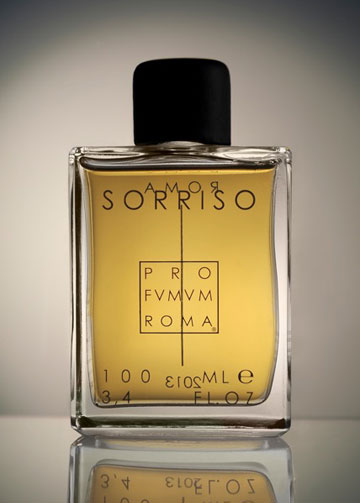
Sorriso (the Italian word for “smile”) is the newest fragrance from the Italian niche perfume house, an eau de parfum that was released in late 2013. Profumum‘s website describes the perfume very simply:

The taste of life and the enthusiasm of
an embrace will donate her marvalous smile.

[Notes:] Bitter chocolate, bitter orange, vanilla, tropical woods

Sorriso opens on my skin with a concentrated, somewhat boozy, intensely sweetened vanilla note which is overtaken seconds later by dusty cocoa powder, a hint of musky oil, and a subtle woodiness. As the dry cocoa asserts its supremacy, the vanilla melts into it, losing its boozy undertone at the same time and turning slightly drier.

Source: Saveur.com

Source: Saveur.com

The bouquet in the first five minutes is nothing more than that of a swirled chocolate and vanilla milkshake. It’s deep, smooth, rich, and decadent. The chocolate is lovely, feeling simultaneously like the powdered, dusty, semi-sweet kind and a milk-based hot chocolate. There is absolutely no orange that appears on my skin, but there is a faint whisper of something a bit like dried roses wafting about for three or four minutes. The less pleasant aspect is the hint of a musky oiliness.It smells a lot like a sweetened, but very generic, inexpensive oil before eventually turning into the smell of a common, drugstore Shea butter.

Sorriso barely changes, except for the growing prominence of the sweetened, musky oil. Twenty minutes in, Sorriso is a simple chocolate milkshake scent whose every molecule is infused with vanilla, all enveloped in a musky, wholly artificial-smelling, common oiliness. Sorriso is sweet, yes, but it is also a relatively dry sweetness. This is not a syrupy or diabetically gooey gourmand on my skin. It is also a very soft scent that is surprisingly thin in feel for a Profumum. It lacks the heft, viscosity and potency of the other fragrances in the line, particularly Ambra AureaDulcis in Fundo, Patchouly, and Arso. It is also much thinner in feel than Fiore d’Ambre, though it is richer than the unpleasant, wholly synthetic Santalum. Sorriso’s projection is as soft as its weight, wafting out 2 inches at best from my skin with 3 massive smears. 

Source: Bath & Body Works.

Source: Bath & Body Works.

There is a woody note underlying Sorriso that is hard to place. It doesn’t smell like Australian Sandalwood or any of its generic, beige, synthetic substitutes. If I had to take a guess, I’d say it smells more like Cashmeran. I own a hand cream from Bath & Body Work‘s True Blue Spa Line called “Shea Cashmere,” and it smells a lot like Sorriso, minus the cocoa powder. None of these comparison to common products — whether drugstore Shea butter or a B&BW cream — is meant as a particular compliment, by the way. Not at Profumum’s prices.

Sorriso stays on its uninspired trajectory for eons, taking Profumum’s general singularity to a new level. I always say that there is nothing wrong with linearity if you like the notes, but the issue here is that they are so unimpressive and mediocre. The other problem is that, even by Profumum’s soliflore standards, its scents usually have more variegated layers or nuances than Sorriso. There are changes in such Profumum scents as Arso, Ambra Aurea, Acqua di Sale, Olibanum, or the like, even if they can occasionally be subtle or a question of degree. Sorriso makes Ambra Aurea look like one of Serge Lutens’ morphing, complex, twisting, bell jar masterpieces. Hell, it makes the entire rest of the Profumum line look like something out of an Amouage catalog, particularly in terms of quality.

Source: 123rf.com

Source: 123rf.com

Sorrio’s scent is a fatally boring flat-line, with the most noticeable changes being to the weight, body, and sillage. It takes a mere hour for Sorriso’s notes to fold onto themselves, and for the fragrance to turn into a relatively thin choco-musk bouquet with vanilla, a hint of woodiness, and musky, Shea-like butter. By the end of the second hour, it’s soft and not particularly deep, though it’s not exactly gauzy either. At the end of the 4th hour, Sorriso is a skin scent, though you can still easily detect the unchanging, mediocre bouquet if you sniff it up close.

The one, solitary change is the sudden appearance of the orange towards the middle of the 7th hour. Its unexpected arrival was almost shocking in the novelty of having something different finally happen! Unfortunately, the orange was both minor, hazy, and muted, doing nothing more than to underscore the continuing impression of Sorriso as a scent whose main characteristic from afar is dry-sweetness. Up close, if you sniff really hard with your nose on your skin, the perfume’s primary essence remains unchanged: a nebulous, sweetened, choco-musk bouquet, though even the cocoa is massively faded by now. In any event, the orange only lasted 20 minutes on my skin, so it doesn’t really matter anyway.

All too soon, Sorriso devolves into nothing more than an abstract, amorphous smear of musky, woody sweetness. There it remains until its very end, 9.75 hours from the start. I was thoroughly unimpressed with almost all of it, except for the opening two minutes which were relatively pleasant but still nothing to write home about. (Plus, the longevity was a big disappointment as compared to the rest of the Profumum line.)

1980s Bain de Soleil ad via Pinterest.

1980s Bain de Soleil ad via Pinterest.

I actually tested Sorriso twice, and my first experience was extremely different. These next words may not mean anything to anyone who didn’t live through the early 1980s, but I think it will definitely ring a bell for those who did: Bain de Soleil! At the time, my family and I were living in New York during the school year, and the big thing in America at the time were the commercials and print adverts for the suntan oil. The television commercials were especially catchy with their refrain, “Bain de Sole-ay/ For the St. Trop-ay/Tan.” It always amused me, because I never saw anyone IN St. Tropez or the South of France actually using the stuff. But I loved the commercials and how they mentally took me away from a place (and school) that I did not enjoy. So, I bought the damn thing, and rather liked the smell, primarily because it was nothing like the greasy, heavy, coconut aroma of the Hawaiian Tropic oils. Instead, the Bain de Soleil of my memory smelled of musky, sweetened Shea oil, with a touch of vanilla, some indistinct dryness, and a vague sense of a dried, abstract brown…. something. Dried fruits? Who knows? It was all so nebulous, except for the sweetened oil.

Bain de Soleil ad, 1983. Source: Pinterest.

Bain de Soleil ad, 1983. Source: Pinterest.

When I applied only a small quantity of Profumum’s Sorriso, the aroma on my skin smelled exactly like my memory of Bain de Soleil: sweetened, musky oil with a Shea oil-like aroma that was dry and infused with some intangible dried fruitiness. Bain de Soleil wasn’t at all tropical like usual suntan oils, and neither is Sorriso. But the similarities left me rather astounded for hours on end, transporting me back in time. With the small dosage, the cocoa was virtually nonexistent on my skin except as some sort of dusky, dusty…. something. The main aroma was… well, Bain de Soleil. There is no other way I can describe its nebulous, amorphous oddness. I couldn’t get over it. So, I was quite relieved when I tested Sorriso a second time around using the 3 massive smears, and detected chocolate from the start. Unfortunately, as I’ve already explained, it all went downhill from there.

My overall reaction to Sorriso isn’t boredom. It is more along the lines of, “Seriously??! This is it?!” My main problem is that Sorriso really lacked the luxuriousness that is Profumum’s signature, as well as the brand’s concentrated, hefty, rich elegance. Sorriso felt generic, cheap, and wholly pedestrian. I couldn’t help comparing it to Profumum’s gourmand take on vanilla, Dulcis in Fundo, which is one of the richest, most over-the-top vanillas that I’ve encountered, even if it is too much for my personal tastes. Sorriso does not do the same for chocolate.

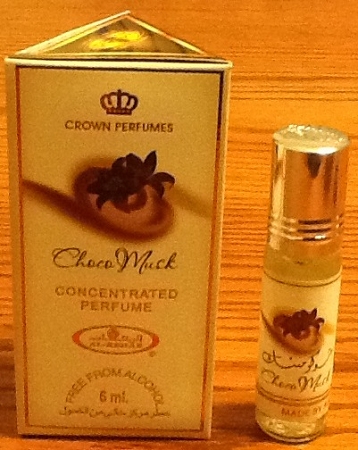
Choco Musk perfume oil. Source: Al-Rashad and Amazon.

Choco Musk perfume oil. Source: Al-Rashad and Amazon.

In fact, I consistently found myself pondering whether the massively inexpensive Choco Musk oil from Al Rehab would be deeper and heavier. I haven’t tried it, but I’ve heard talk of Choco Musk, and I bet it is the same as (if not better than) Sorriso, especially for the price. It only costs $3.75 for 6ml on Amazon. Sorriso, in contrast, costs $265 which is either a rare exception to the usual Profumum price, or part of the company’s new, anticipated price hike for the line which was supposed to occur either sometime this month or in March. I’m going to order the Choco Musk just to compare, because Sorriso? Bah.

The blog reviews for Sorriso thus far are either ambivalent or negative. For Jessica on Now Smell This, the main problem seemed to be the longevity, though it doesn’t scream enthusiasm to me as a whole. Her short review states:

Just as Vanitas feels like a smoother, better constructed version of Confetto (minus the almond), Sorriso is an improvement on Battito d’Ali’s theme. It doesn’t have Battito d’Ali’s strange sharp after-taste; the vanilla helps to encourage the chocolate’s sweetness, without turning it into cake frosting, and the “bitter orange” note is meshed with a subtle anise and some mysterious additional aromatic-herbal note. The main problem with this fragrance, for me, is its lack of longevity — if Sorriso is a smile, it’s a fleeting one. And, as for much of the line, the price seems high for compositions that aren’t particularly innovative or complex. I like a guilty-pleasure gourmand as much as anyone, but to me, it shouldn’t cost more than a perfume from Editions de Parfums or Serge Lutens.

The Non-Blonde couldn’t stand Sorriso, though she had no longevity problems at all. She wrote, in part:

I was very excited about Sorriso, the new fragrance from Profumum. […] It sounds like a gourmand heaven for my chocolate-loving heart. The problem started right away: Sorriso greeted me with a harsh and loud saccharine confection that reminded me of dairy-free whipped desserts. It’s frothy, sweet, vanillic, and utterly artificial. The worst part? On my skin this perfume smells cheap.

No matter how much I tried, the chocolate Profumum had promised never arrived for me (neither did the bitter orange). I tested Sorriso in the cold air and while working out. No chocolate, but … I kept getting this piercing not-really vanilla foam. I did not enjoy the process. The husband’s skin was not much help, either. Sorriso on him was a bit fatty with a hint of a coconut-like suntan lotion. Not real coconut, just that manufactured oiliness. No chocolate either.

As is often the case with overly sweet perfumes that trigger my Do.Not.Want reflex, Sorriso has the tenacity and  determination of Her Majesty The Queen. […] I enjoy several Profumum creations, mostly the masculine woody ones. I guess Sorriso will join Dulcis in Fundo and Acqua e Zucchero, two other hugely popular Profumum gourmands that I simply can’t stand.

I smirked when I read about her husband’s experience and the fatty suntain oil. (I wonder if he’s ever smelled Bain de Soleil?) It does seem as though the Non-Blonde herself doesn’t like serious, heavy gourmands, though her issue here was clearly more with the total domination of a synthetic-smelling vanilla than with anything else. I don’t like hardcore gourmands, either, but Sorriso wasn’t one on my skin. It wasn’t anything, frankly, except wishy-washy and utterly mediocre, at best. If it had at least tried to be like Dulcis in Fundo, I would respect it for meeting the Profumum standard, but it doesn’t. In fact, Sorriso falls far short of it, in my opinion. And we won’t even start on how over-priced it is for what you’re getting!

On Fragrantica, there are only two reviews for Sorriso thus far, and they are widely divergent. The first is positive:

If Dulcis in Fundo can be called a magnificent orange dreamsicle, then Sorriso can sit beside it in the freezer as a magnificent Fudgesicle. [¶] It’s a prominent, yet soft, cocoa on a creamy vanilla base, tempered by a touch of popsicle stick. I get no orange here (certainly nothing like Dulcis in Fundo).

I find it gentle and appealing, something I would be happy to wear. I would be tempted to go for a full bottle if I had not already invested in Gourmand Coquin. Gourmand Coquin is *in your face* divine, while Sorriso is more reserved. They don’t serve quite the same purpose, but it would take a budget bigger than mine to justify owning both.

The second review is from “Alfarom,” a poster with whom I often seem to share the same opinion of things. In fact, his second sentence is verbatim what I wrote in my notes a few times:

What? Are they serious? Considering the name of the fragrance, I don’t think so. Italian word *Sorriso* stands for english word *Smile* but I think at Profumum they understimated the hilarious power of this stuff. It would have probably better be labelled as *Laugh* or, considering how juvenile this stuff smells, even *LOL*.

A cheap and vile concoction of cacao and hyper-sweet vanilla with a tad of the sweetest sandalwood thrown in. It would suck even in the I Tesori d’Oriente’s range. Meh!…with a laugh.

Rating: 3/10.

I quite agree. “Are they serious?” sums it up perfectly. 

DETAILS:
Cost & Availability: Sorriso is an Eau de Parfum that only comes in a large 3.4 oz/100 ml bottle which costs $265 (or €190, I think). Profumum unfortunately doesn’t have an e-shop from which you can buy their fragrances directly. In the U.S.: Sorriso is available at Luckyscent. While most of the Profumum Roma line is carried by OsswaldNYC, Sorriso is not included for some odd reason. Outside the U.S.: In the UK, Profumum perfumes are sold at Roja Dove’s Haute Parfumerie in Harrods. My problem in trying to give you European retail links this time around is that I can’t find a single seller who carries Sorriso online! All the traditional Profumum vendors do not show Sorriso on their website, even though it was released several months ago. I have no explanation, but if you’re reading this post much later from its original date of publication, you can generally find Profumum sold at: Osswald in Zurich, Paris’ Printemps store, Premiere Avenue in France (which also ships worldwide, I believe), France’s Soleil d’Or, the Netherlands’ Celeste, Hungary’s Neroli, and Russia’s Lenoma boutiques. According to the Profumum website, their fragrances are carried in a large number of small stores from Copenhagen to the Netherlands, Poland, France, the rest of Europe, and, of course, Italy. You can use the Profumum Store Locator located on the left of the page linked to above. Samples: Surrender to Chance carries samples of Sorriso starting at $3.99 for a 1/2 ml vial. You can also order from Luckyscent.