Roja Dove Diaghilev (The Imperial Collection)

A perfume with the feel of the past, concentrated as if distilled to its richest essence through the ravages of time, and brought back to life with a price tag from the future.
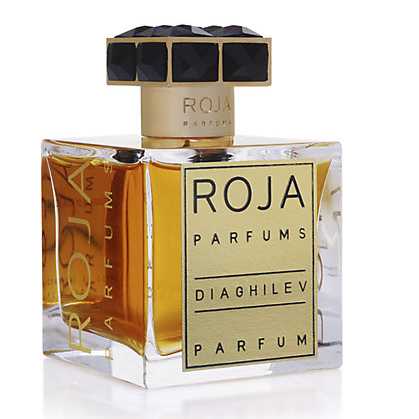
Source: Paris Gallery, UAE.

Source: Paris Gallery, UAE.

It’s hard to know where to begin in discussing Diaghilev, a 2013 release from the famous Roja Dove. The perfume has a history beyond just the ballet legend whose name it bears, a history that starts at an exhibition at the Victoria and Albert museum in 2010, and indirectly goes back much further still to a Guerlain fragrance with which it shares enormous similarities for a good portion of its opening hours. Plus, Diaghilev has a huge buzz about it, and not solely because of the Roja Dove name, as you will soon see. Perhaps the real reason why I find it so hard to know where to begin is because I’m simply not moved by Diaghilev. No matter how many times I try it, I recognise its quality on an intellectual level, but it does absolutely nothing for me emotionally. From the first time I tried it last year in Paris, to repeated tests now… my emotions are always at a firm distance. 

Diaghilev is a pure parfum or extrait that was inspired by Serge or Sergei Diaghilev, the famous early 20th century ballet impresario who founded the legendary Ballets Russes. On his personal Roja Parfums website, Roja Dove describes the perfume and its notes as follows:

“Decadent Intoxicating Sophistication”

WARM, DRY, SWEET, FRUITY, SPICY, SOFT, & VERY SENSUAL

“I am immensely proud of this work. I love its rich opulence, its complexity and depth, volume, and sensuality. I was inspired by Diaghilev, one of the greatest creative forces of the twentieth century, who changed the world and totally re-wrote the rules – this creation is for exactly that type of person”. Roja Dove

Source: lth-hotels.com

Source: lth-hotels.com

INGREDIENTS
TOP: Bergamot, Lemon, Lime, Orange, Tarragon
HEART: Blackcurrant Buds, Heliotrope, Jasmine, Peach, Rose, Tuberose, Violet, Ylang Ylang
BASE: Ambrette, Benzoin, Cedarwood, Civet, Clove, Cumin, Guaiacwood, Labdanum, Leather, Musk, Nutmeg, Oakmoss, Patchouli, Peru Balsam, Sandalwood, Styrax, Vanilla, Vetiver.
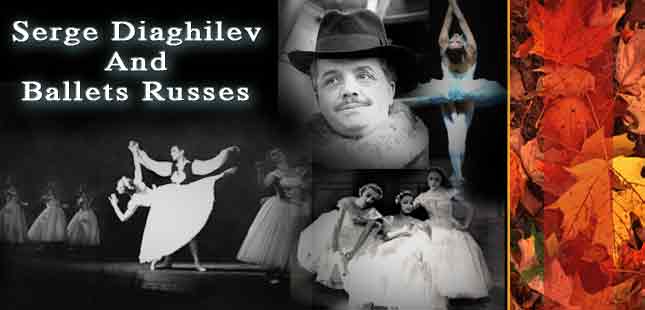
Source: 123rf.com

Source: 123rf.com

Diaghilev opens on my skin with a flood of oakmoss on the most beautiful, animalic, castoreum-like base. The base is truly spectacular, especially in the opening 20 minutes. It’s like beautifully darkened, oiled leather with velvety, musky, dirty, and skanky undertones. There is no castoreum listed in Diaghilev, but it really smells like it to my nose. The raunchiness is kept in perfect balance; a touch sweet, urinous, and earthy all at once. It is not feral or fecal, but, rather, akin to the most gentlemanly dirtiness around. The musk is delicately dusted with earthy, dry, cumin, and infused with the sweetened, “fuzzy, warmed skin” characteristics of ambrette seeds (musk mallow).

"Novemthree" by Olaf Marshall. Source: vitaignescorpuslignum.blogspot.com

“Novemthree” by Olaf Marshall. Source: vitaignescorpuslignum.blogspot.com

The overall bouquet is a simply perfect base for the vista of green that lies atop it. There is the carpet of oakmoss that is dense, pungent, lightly fusty, vaguely oily and mushroomy, and wholly amazing in its viscosity. The greenness is underscored by the small bits of earthy vetiver, which dance at the edges next to an extremely bitter lime peel. I don’t know quite how Roja Dove has replicated the feel of vintage, real oakmoss so well, but he’s done it in spades with something that feels like juices from the past that have been reduced down to a darkened thickness.

Source: wallpaperuser.com

Source: wallpaperuser.com

In less than a few minutes, the colours change. A bright yellow arrives to dapple the mossy forest floor, followed by massive dabs of orange. The first is the bergamot, the second is the peach. The freshness of the former is a muted touch, while the heavy juices of the latter are quite noticeable on my skin indeed. The ripened fruit combines with the cumin to add to the fleshiness underlying Diaghilev, creating the image of musky, heated flesh that merely happens to be lying on a well-oiled leather couch made from castoreum in the midst of an oakmoss forest.

Jubilation 25. Photo: Basenotes.

Jubilation 25. Photo: Basenotes.

It’s all very lovely, and all massively familiar. This is Mitsouko parfum, in vintage form, reduced to the level of an attar in density, and thoroughly infused with Amouage‘s cumin-flecked Jubilation 25 (Women). Every minute of Diaghilev’s opening two hours on my skin feels like Mitsouko drenched with Jubilation, right down to the light dance of the very well-blended florals. At this point, Diaghilev’s florals are an abstract, seamless blur that are hard to pull apart, though the jasmine stands out the most. Again, like Jubilation. (And later, it is the ylang-ylang, which is again like Jubilation.) There is even a light flickering fizziness of something nebulous like aldehydes, the way I would experienced with old Mitsouko. By the way, if we’re talking about echoes of famous perfumes, there is also a fleeting, tiny kinship to the post-1989, cumin-y, vintage version of Femme by Rochas as well, though Diaghilev is darker, drier, greener, more leathered, and less fruited.

Most of those differences can be chalked up to Diaghilev’s substantially concentrated Extrait formulation. It is certainly explains why Diaghilev’s oakmoss is much more dense than it is in Jubilation 25. And I’m sure the skanky bits in the Amouage perfume would feel heavily leathered and resinous as well, if the perfume had been amped up by a 1000 to an extrait level the way Diaghilev has been.

Source: RebootwithJoe.com

Source: RebootwithJoe.com

That said, I loved the opening 20 minutes of Diaghilev. The perfectly calibrated degree of cumin-y, skanky, leathered, castoreum-like velvetiness that rises up to bite you on the nose is glorious. And it’s so wonderful next to the dark oiliness of the heavy oakmoss, the earthy vetiver, and the bitter lime. The perfume has a real, substantial kick to it that makes it stand out at that point.

Unfortunately, the elegant meow of animalic bitchiness soon turns much more well-mannered, sedate and restrained in nature, as the dirty accords sink into the base. You can still detect them, quite easily if you sniff up close, but they blend into the overall blur of greenness that is dominated primarily by the dark, slightly fusty oakmoss with its peachy undertones. For me, by muffling the skanky whiffs, Roja Dove has de-fanged Diaghilev of its more modern, interesting touches, and moved the perfume squarely back a century to the well-bred, distant past.

Regardless, Diaghilev is a very nice, opulent, luxurious perfume in its opening stage. It is a perfectly seamless, extremely dense blend of green chypre notes with thick oakmoss, lime, bergamot, cumin, peach, amorphous florals, and touches of vetiver atop an oily castoreum-like, leathered, skanky base. It is monumentally heavy in feel at this point, as well, much to my great enthusiasm. Two big smears feel like the equivalent of 6 very large sprays of the most potent eau de parfum around.

Yet, to my surprise, the heavy Diaghilev wafts only 2-3 inches above the skin even in its opening. Spraying improved matters, but only moderately, by maybe another 2 inch at most. A friend and reader of the blog, “Tim,” was kind enough to send me a small spray atomizer of Diaghilev which I used in my 3rd test of the perfume, and there was no monumental increase in projection that I detected. The one difference is that spraying brought out the rose note after an hour, though it was still muted and muffled in that perfectly seamless blend of what really just seems like abstract “florals” from afar.

Source: 10wallpaper.com

Source: 10wallpaper.com

45 minutes into its development, Diaghilev drops in sillage, and also turns much softer in feel. 90 minutes in, the perfume loses even more of its body, heft and density. It’s primarily an oakmoss scent with sharp lime, bergamot, amorphous florals, peach, atop a velvety dark base just lightly flecked with cumin. Part of the problem in trying to dissect Diaghilev is that it’s so perfectly melded that it is really hard to separate out its tiny details at times. You get the plethora of greenness and the chypre elements up front, but many of the other notes lurk behind, peeking out in the most polite manner. And I’m only referring to 6 or 7 of Diaghilev’s 30 ingredients. The remainder is wholly subsumed within the larger whole.

At the end of the 2nd hour, however, I noticed new elements darting about, weaving their way through the top notes. Now, there is: clove, nutmeg, guaiac wood, mossy patchouli, and cedar. For about 5 minutes, there is even a really pretty touch of soft, earthy, delicate violets. Yet, with the exception of the new spices at hand, most of the elements were mere flickers and are not really a profound presence in a strong, individual, clearly delineated way.

Ylang-Ylang. Source: Soapgoods.com

Ylang-Ylang. Source: Soapgoods.com

Much more noticeable instead is the sudden arrival of the ylang-ylang with its custardy, vaguely banana-like, rich undertones. It adds a lovely touch to the pungency of the oakmoss, and is also a great contrast to the skanky, leathered, darkly oily base. I also really like the introduction of the spices, especially the cloves which add a subtle heat to the scent, enlivening it. The guaiac adds a subtle undertone of smokiness, while the cedar brings a tiny burst of pepperiness. The overall effect is to veer Diaghilev straight back into Jubilation’s arms.

Every time that I’ve tested Diaghilev, I noticed what feels like a transitional bridge period that starts always about 2 and a half hours into the perfume’s development. Diaghilev starts to lose its purely oakmoss-chypre focus, and begins the slow move towards an oriental scent. After having reviewed a handful of Roja Dove creations at this point, I get the strong sense that he seems happiest and most comfortable when making Chypre-Oriental hybrids. Many of his best and most beloved fragrances certainly start off as Chypres before turning into pure Orientals, like, for example, Puredistance M and the two Fetish Extraits. At the very least, I think we can agree that he’s a master at the split genre.

Here, the transition is gradual. The visuals are the first to change. It’s as though an oriental autumn has hit the green, oakmoss-covered peach trees and florals in the cumin-dusted forest with its skankily leathered floor. The dark greens are now heavily covered by rich, spiced, brown-reds and by velvety, custardy, ylang-ylang yellow. Sprinkles of white appear from sweetened vanillic powder, as the benzoins and tonka stir in the base. The subtle patchouli element pops up its head to inject a wine-red colour, taking on a liqueured, sweet, jammy richness. The woods encroach on the dominant moss and peach duo, as the guaiac and cedar crowd around, casting dark shadows. Bitter nutmeg is countered by the first traces of a sheer, gauzy wisp of smooth amber. 

Source: 1ms.net

Source: 1ms.net

Technically, it’s masterful, and theoretically, it should all be right up my alley. Yet, I’m unbelievably detached and disinterested. It’s not the sense of déja vu, but something that is very hard to explain. For me, Diaghilev feels like a technically perfect evocation of the classique tradition, but without a soul or a spark of passion in its depths. It’s like listening to a cover band who is playing all the right notes in a perfect rendition of some classic hit, but it doesn’t fresh, alive, distinctive, or individual. At least, it doesn’t for me. I feel as though I’m stuck in a room listening to Stephen Hawkings giving the most technically correct elucidation of theoretical physics… in Aramaic. Diaghilev’s soul simply gets lost in its correctness, its technical mastery, and in its translation of the past.

Vintage Ballet Russe poster. Source: Pinterest.

Vintage Ballet Russe poster. Source: Pinterest.

The perfume continues its march towards Orientalism. At the start of the 4th hour, Diaghilev is primarily a spicy cinnamon, clove and nutmeg dominated, abstract “floral” scent on my skin, with earthiness and woody elements over a leathered, castoreum-like base lightly infused with skanky civet, labdanum amber, and a whisper of warm ambrette muskiness. By the middle of the 5th hour, it is almost a skin scent that feels extremely abstract. Warm, musky, earthy, sweet, and spicy are the dominant elements. Soon, there is the sense of dry earthiness like soil that has been sprinkled with cinnamon, nutmeg, cloves and vetiver. Dancing at the edges is a dry, brown patchouli. The tiniest veins of labdanum amber, tonka vanilla, and musk run through it all like golden threads. Diaghilev is still strong if smelled up close with your nose on your skin, but it feels like a silken, brown-red sheath of earthy spiciness and sweetness, dappled at its base with musky skankiness from various accords.

At the start of the 7th hour, Diaghilev sets its course for the next few hours. It is primarily a gauzy, soft labdanum amber scent with abstract spices, skanky elements and a touch of vanilla powderiness. It remains that way for ages, until it finally turns into cinnamon, vanilla powder from the benzoins and tonka atop the thinnest smear of civet-y muskiness. In its dying moments, Diaghilev is merely spiced, sweet powder. All in all, Diaghilev consistently lasted over 14.5 hours on me when I applied moderate amounts, and over 16 or 17 hours with larger quantities.

"Copper abstract" by StarwaltDesign via deviantart.com. http://starwaltdesign.deviantart.com/art/Copper-Abstract-207268167

“Copper abstract” by StarwaltDesign via deviantart.com. http://starwaltdesign.deviantart.com/art/Copper-Abstract-207268167

It’s hard to review Diaghilev without bringing up its price. I never examine perfumes in a vacuum, but I usually state that price is an individual, wholly subjective assessment. That’s undoubtedly why most perfume bloggers rarely talk about the matter when assessing fragrances. However, when you have a perfume that costs over $1000 with tax — that retails for $990, €990 or £750 — then price becomes something more quantifiable and objectively critical. In fact, I’d argue that price becomes an integral part of the perfume’s fabric, as much as its notes or its olfactory genre. Intentionally so.

Roja Dove via his Twitter feed.

Roja Dove via his Twitter feed.

The basic bottom line seems to be that Roja Dove is aiming for a clientele that is part of the 1%. He’s aiming for the very rich, or, in the case of his special “Roja” perfume that costs well over $4,000, perhaps the super rich. He’s intentionally seeking exclusivity in a way that even Joel Arthur Rosenthal, the stratospherically expensive, legendary jeweler, isn’t trying to do with most of his JAR perfumes. It’s Roja Dove’s right to price his stuff as he sees fit, and there is no doubt that all his fragrances scream high-quality, expensive luxury. No doubt at all. But it is my right to think them over-priced at times, times like now.

I’ve pondered the issue of Diaghilev’s cost for days, and I can certainly see all the logical reasons why people would spend the money on it. But would I, even if I had the money to buy 10 Diaghilevs? I doubt it. I’ve thought about it in-depth, and I’m being honest. Diaghilev feels old in a way that never once crossed my mind when I wore Amouage’s Jubilation. I haven’t tried vintage Mitsouko in years, so I don’t know how I would feel about it now, but I never liked Mitsouko enough to be willing to spend $1000 on it. And, honestly, for me, the very best part of Diaghilev is its opening 20 minutes which are truly glorious. After that, when the skankiness subsumes itself into the base, it loses the one real spark of passion and distinctiveness that it exuded for me. It turns into a very expensive-smelling, beautifully crafted perfume that someone like Joan Collins would love. Glamourous, but dated.

Nijinsky and Pavlova, the two superstars of Les Ballets Russes. Vintage image. Source: jbtaylor.typepad.com

Nijinsky and Pavlova, the two superstars of Les Ballets Russes. Vintage image. Source: jbtaylor.typepad.com

There are quite a few reviews for Diaghilev out there, but the most fascinating one comes from The Non-Blonde. I will quote parts, but I encourage you to read the long review in its entirety, as it echoes many of my sentiments. And the opening two sentences are a doozy:

A very successful perfumer who’ll remain nameless described the perfumes from Roja Dove’s line as “belong in a museum”. After a few seconds of thought he added, “so does Roja”. I didn’t inquire further as to what specific aspect of Roja Dove’s public persona he was referring. Your guess is as good as mine. Diaghilev, a larger-than-life chypre is a perfect example for what the famous perfumer meant. Diaghilev, with its mélange of notes is so over the top that if I weren’t standing at the Bergdorf Goodman counter with the tester right in front of me when I first smelled it, I’d have thought (convinced even) that someone has mislabeled a vintage perfume sample. A very very vintage perfume. Something from the 1920s, perhaps, when leather, oakmoss, all the spices in the world, and a thick overripe floral bouquet could be thrown together and then worn in public without shame.

There’s cumin in the top notes which the husband detected immediately while my own skin smoothed it over. I can smell traces of many thick and plush perfume ideas, the ghosts of  famous perfumes the way they smelled back when Louise Brooks, Dorothy Parker, Lillian Gish and Marlene Dietrich used to wear them. Diaghilev is rich, plush, and very animalic, padded with a thick layer of oakmoss that I can smell throughout the perfume’s development. It’s everything I can ask for in a scent. In a different time and place (ok, and a different personality) Diaghilev could have easily been a contender for my signature scent.

They no longer make them like that. They no longer sell them like that. And if you want to wear this type of perfumes you probably need to run with a very specific crowd who appreciate things like that. There aren’t all that many of us around these days, which is probably the reason that Diaghilev stands out so much and feels so shocking. You just don’t smell perfumes like this unless you’re well-versed in vintage perfumes. […]

Here’s the thing: Diaghilev is a magnificent perfume. It’s a very fitting tribute to Sergei Diaghilev and his uncompromising artistic vision. But I almost feel like an oblivious Gwyneth Paltrow prattling about in her GOOPy ways as I’m writing this, because it’s nearly impossible in this case to separate the excellent perfume from its positioning at the very top of the fragrance market. Roja Dove has made sure of that. [snip]

You should read her piece in full. In my case, I doubt I would be inspired to wear Diaghilev, whether it were gifted to me or cost $100. From the very first time I sniffed it at Jovoy around the time of its release, I shrugged and moved on. “Very well done, nice, but …. eh.” I suspect my problem is the lack of strong personality, and not the very dated, “museum” feel of the perfume. I love vintage perfumes, but this feels far too well-bred, dull, and old. Plus, given how very little time I have to wear perfume for myself these days, I would never waste a precious “free day” on Diaghilev. It wouldn’t even cross my mind. (The fascinating Jubilation 25, however, would be a very different matter….)

Diaghilev, the original EDT limited-edition bottle.

Diaghilev, the original EDT limited-edition bottle.

Speaking of museums, there is an important issue I need to cover: the original Diaghilev. A few commentators to the Non-Blonde’s post brought up the fact that Diaghilev was originally released in 2010 as part of an exhibition that commemorating Les Ballets Russes at the Victoria & Albert museum. It was a limited-edition fragrance which cost £75, and supposedly only 1000 bottles were released, though there is mention of Roja Dove selling refills in huge 250 ml aluminium bottles on his website. I paused at the comments, like the one talking about “the earlier EDP version’s affordability” and how it felt like “naked manipulation of the consumer.” And I very much agreed. It seemed like bloody cheek for a man to sell a perfume for £75, but then, 3 years later, stick the exact same thing into a crystal-capped bottle and sell it for exactly ten times as much at £750. It seemed outrageous, as if he were pulling the wool over your eyes, while laughing all the way to the bank.

Except that is not what actually happened. I did some digging, and the facts are different. It’s true, as Roja Dove discusses in old blog posts on his website, he made Diaghilev for the exhibition and, yes, he did release it back the for a substantially lower price. There are two key differences, however, between the original Diaghilev and the one released in 2013. For one thing, the original was an eau de parfum, though a number of people also state that it was a mere eau de toilette. Regardless, the new one is an Extrait, and, as noted, has the dense viscosity of an oil in feel, at least in the first few hours. For another, the current Diaghilev is supposedly remastered and changed.

The website, Cosmetopica, writes about that last fact in a glowing review for the new Diaghilev where she also explains the differences between the versions. Her article reads, in part, as follows:

Why the change, I asked Roja’s PR? Because Roja visited the Kremlin, he said. Once he got to Russia, he completely reformulated his ideas about Diaghilev and his oeuvre, and the perfume had to change with it.

The immediate effect of the opening notes of the ‘new’ Diaghilev is identical to the ‘old’ Diaghilev but it only lasts a second before there is then a massive bloom of citrus like falling head-first into a vat of bergamot. You might not get out alive, but it would be a good way to go. To this untutored nose, the citrus melange smelt above all like tangerines (a note that I see is absent). It is also strong enough to knock a horse over at 20 paces.

This phase of the perfume lasts a good 30 minutes – a very long time for citrus – and is fabulously rich and oily, not light and sparkling. […] [It] has the richness of the real deal, due to its use of natural materials in abundance.

I loved this phase of the fragrance, but it got even better in the second act. The floral heart emerges over time like a full orchestra tuning up and to be honest, I found it impossible to pick out the notes. It is at this point that the fragrance morphs back into the character of the original Diaghilev – true, old-style grand perfumerie. Ten hours later, it’s still going strong, wafting up from your clothing whenever you move or sweat, but “curiously well-behaved,”[.]

The next morning, the animalic facets are still there, which I love. I like a bit of skank in a perfume […] So the base notes of civet and musk that hang around for about 24 hours on clothing are just fine by me. […]

Source: scent-intoxique.com

Source: scent-intoxique.com

As for the issue of Mitsouko, Cosmetopica writes:

Diaghilev mark 1 smells like Mitsouko should and no longer does, and that, apparently, is no accident. Having read that Diaghilev the man used to spray his curtains with Mitsouko, this is partly Dove’s interpretation of what that atmosphere must have been like.

Does it smell like Mitsouko? Well no. It smells like a Guerlain we haven’t met yet – no accident, I guess, given that Dove worked for the company before it was swallowed up, masticated and vomited back out by LVMH.

I agree that it doesn’t smell purely and wholly like Mitsouko. However, to me, it starts off strongly as a mix of Mitsouko with Jubilation 25 (Women), before eventually shrugging off the Guerlain and turning more into Amouage territory. And I’m not the only one who thinks that. On Fragrantica’s page for Jubilation, 8 people noted a resemblance to Diaghilev, while 3 voted for Mitsouko. There are the same 8 votes for Jubilation on the actual Diaghilev entry as well.

On Fragrantica, the reviews for Roja Dove’s creation are almost all uniformly admiring. The shortest, flattest comment comes from one person who writes simply, “If Mitsouko and Vol de Nuit met and had a baby, their offspring would be Diaghilev.” Others, however, wax rhapsodic. Here are two of the shorter reviews representing the general consensus:

  • As usually with Roja Dove’s fragrances, Diaghilev as well is strongly inspired by big fragrances of the past. In this case, the old-fashioned chypre structure, comes directly from huge compositions such as Mitsouko and Sous Le Vent. A wonderful fizzy citrusy opening evolving into an extremely refined floral middle phase to then turn into a fresh and rich mossy vetiver drydown which is not so distant from the latest phases of Onda Extrait. [¶] The level of appreciation of Diaghilev is strongly related to one’s personal preference towards extremely classic fragrances. That said, if you like the genre, this is one of the best chypres currently available on the market.
  • Insanely opulent and suave chypre that, hilariously, reminds me of Aromatics Elixir. A smooth oak moss flanked by top-shelf patchouli and vetiver with minuscule touches of citrus and culinary herbs floating around. Ambrette and civet are present, but highly civilized; many of the myriad fruit / floral notes are there, but not prominent enough to isolate. The whole thing is big, round, and undeniably impressive, but it’s hard not to snicker at the kind of over-the-top luxury it’s signifying. Excellent, beautiful, stunning, and a tad ridiculous. [¶] Break out your Liberace furs and bling, slap some of this on, then go stomp around the neighborhood like you *own* the damn place.
Source: 10wallpaper.com

Source: 10wallpaper.com

Both those reviews come from men, by the way, which should alleviate any concerns that you may have that Diaghilev is a woman’s fragrance. As for the price, well, a good response comes from “Tymanski,” my friend who so generously sent me a small atomizer from his own bottle:

i never EVER thought i would even contemplate spending a week’s pay on a bottle of perfume. i made the fateful step of trying this juice out the other day and over the course of the day this smell just got better & better & better. i was extremely sceptical of roja dove – tried several and thought “what’s this guy pulling here”, but with Diaghilev, i take it all back. this is just spectacular on every level. a chypre of such depth, elegance, balance, simply a perfect fragrance. i am not going to start with notes, as this is prodigiously complex; i will say that the rose middle is the finest i’ve ever smelled. the sillage is quite discrete but very solid, and longevity is where it should be for an 850 euro (!!!) parfum. the long drydown has a beguiling affinity with amouage epic man (another favouite). some say this is similar to vintage mitsouko, i really can’t say. it does embody everything i love about chypres in the end, i was seduced.

The bottom line for you is that you should seek out a sample of Diaghilev if you’re a lover of rich chypres, vintage perfumes, Mitsouko, Jubilation 25, and/or very heavy, strongly classical fragrances. Do it for the experience, particularly you’re relatively new to perfumery and want to learn about opulent chypres done in the vintage manner. (Consider it an expensive educational lesson, if you will.) For those who don’t fall into any of the aforementioned categories, I am somewhat dubious as to your reaction. I suspect that you might find Diaghilev overly heavy, very dated and museum-like indeed.

As to what will happen once you smell it, well, then the issue of price will come back to bite you squarely on the nose. You will either: be unable to separate the issue of the cost from the smell, much like The Non-Blonde; think Diaghilev is worth it and be in a quandary; or be like me and intellectually recognize Diaghilev’s quality, but be utterly unmoved nonetheless. One thing is absolutely certain, though: the price tag is the 800-pound gorilla in Diaghilev’s room. £750 to be precise.

DETAILS:
Cost & Availability: Diaghilev is a pure parfum or Extrait which is available in a 100 ml/3.4 oz size which costs $990, €990 or £750. In the U.S.: Diaghilev is carried by New York’s Osswald and Bergdorf Goodman. Outside the U.S.: In the UK, you can buy Diaghilev from Roja Dove at his Haute Parfumerie on the 5th Floor of Harrods London, from Harrod’s online, or from Roja Dove’s e-store at Roja Parfums. In France, Jovoy Paris seems to be the exclusive distributor for Roja Parfums and sells Diaghilev for €990. In the UAE, the Paris Gallery has Diaghilev for AED 5,175. For all other locations, you can use the Roja Dove Locations listing which mentions more stores from Poland to Germany, Switzerland, Lithuania, Russia, and the Ukraine. By the way, in Russia, Roja Dove is supposed to be at Moscow’s tsUM, but I couldn’t find the brand listed on their website when I did a search. There are no Canadian, Asian or Oceania vendors. Samples: I purchased my main, core sample. It came from Surrender to Chance which sells Diaghilev starting at $7.49 for a 1/4 ml vial.

Art, Beauty & Perfumes: The Genius of Roberto Greco

Sometimes, you stumble upon art of such great beauty that you stop in your tracks with awe. Art can move you deeply, whether it is from the sensuality that you see portrayed, the boldness of colours, the inherent drama of juxtaposed images, or the sheer talent that is involved. Last week, I came across a photographer whose works transcended mere pictures and involved actual Art. It left me speechless. In an extremely hectic week, his photographs (if one can even call them that) felt almost like a port in the storm, a place where I could seek quiet refuge to soothe my frazzled soul.

Candice Swanepoel in "Strict" by Mert & Marcus for Interview Magazine September 2011.

Candice Swanepoel in “Strict” by Mert & Marcus for Interview Magazine September 2011.

I rarely talk about my love for photography, even to my friends, but I’ve had it since childhood. Other people’s photography, to be clear, as I have no talent of my own in this field whatsoever. I started by admiring the nature photography of Ansel Adams and the photojournalism of Robert Doisneau, then developed a particular interest in fashion and art photography. I have a huge passion for the works of the late, great Herb Ritts who is my absolute favorite, though I also really like Richard Avedon, and Helmut Newton. These days, I can fall down the rabbit-hole for hours staring at the strong, sexy women of Mert & Marcus, a brilliant duo who may be aesthetic sons of both of those last legends combined and whose work I’ve used a number of time for the blog.

Last week, I was calmly minding my own business, going about my work, when I received a very lovely email. I often receive notes from perfume lovers who want to talk about some of their favorite fragrances or to occasionally ask me a question. This one was from a chap called Roberto Greco who wrote that he was a photographer and a perfume addict who really appreciated my reviews. He added that he thought he’d share a link to some small photographs that he’d taken a year ago for himself. The mention of photographs was nothing big; it was all understated, presented more like a little vanity project that he’d done privately out of his love of perfumery and that he merely wanted to share with another perfume lover.

Willem Kalf, (1619-1693)  "Still Life with Ewer, Vessels and Pomegranate." The Getty Museum. Source: Wikipedia.

Willem Kalf, (1619-1693) “Still Life with Ewer, Vessels and Pomegranate.” The Getty Museum. Source: Wikipedia.

I clicked on the link, and… GOOD GOD! In fact, those were close to the actual words that I said to myself, since I just about fell over in my chair at what I saw. The next words which blasted through my mind were “Vermeer,” “Rembrandt,” and “Dutch Old Masters.” I was captivated, and wrote back to Mr. Greco with my astonishment. He’s an incredibly sweet man with excessive modesty, if you ask me, as he seemed rather amazed at my response. He shyly shared a few more of his photos and his main website, where I discovered further treasures, both perfume-related and otherwise.

I decided that I wanted as many people to see his work as possible, and asked him if he would mind if I highlighted his photos in a post on the blog. He has generously given me permission, and let me pick the images that I wanted to use, including several that were commissioned for commercial use by perfume houses, fashion designers, magazines or the like. (I insisted that he put a watermark and his name on them, lest they get stolen. Mr. Greco has a much kinder view of human nature than I do, but he put in a tiny one so that it wouldn’t ruin your enjoyment of the images.)

I’m really so happy to be able to share his work with you, because I think the word “talented” doesn’t even begin to describe him. So, I’ll start with the very first, initial photographs that I saw and that impressed me so much with their evocation of the classical still life painting tradition.

Roberto Greco Coco

Roberto Greco Tom Ford Still Life 2Roberto Greco Coco Noir Still Life

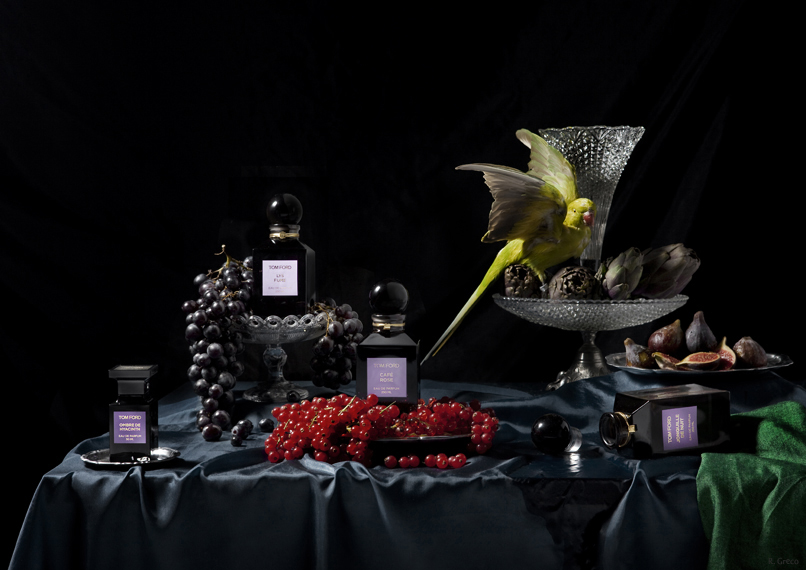
Roberto Greco Diptyque Still LifeLook at his eye for details, from the giant beetle on the corner which matches the colour of the velvet in the next photo:Roberto Greco Tom Ford Still Life  1There is no doubt that Mr. Greco is influenced by the Old Masters and the baroque tradition of still-life paintings. Some of the commercial work on his website makes that abundantly clear. Each work has such depth, richness, and dark luxuriousness, but I also love the extremely bold, powerful imagery. It hits you right off the bat, from contrast of colours, the unexpected juxtapositions, and those tiny, minute details that you only pick up if you look closer upon a second or third viewing. Honestly, I think this is actual Art, with a capital letter, more than just a mere photograph:

"Budgie and Pomegranate."

“Budgie and Pomegranate.”

"Girl and Grapes."

“Girl and Grapes.”

Look at how the juices from the grape stain her thigh, in the photo above, and the luminescent light of her skin that speaks more to painting than photography. I think Vermeer and his Dutch brethren would be so impressed by Mr. Greco’s Girl with Grapes.

Yet, Mr. Greco doesn’t slavishly copy the classical Baroque tradition. He turns it upside down by inserting animals or unexpected details into his still-lifes.

Roberto Greco __Still life with rats

“Still life with rats.”

"Still life with Discus fish."

“Still life with Discus fish.”

Commercial work for others can sometimes require an artist to restrain himself or to edit his voice, but I think Mr. Greco’s work remains powerful and still demonstrates his overall aesthetic beautifully.

Commissioned by Les Echos magazine.

Commissioned by Les Echos magazine.

"Bloody Wood" for the perfume house, Les Liquides Imaginaires

“Bloody Wood” for the perfume house, Les Liquides Imaginaires

"Bello Rabelo" for Les Liquides Imaginaires.

“Bello Rabelo” for Les Liquides Imaginaires.

"Dom Rosa" for Les Liquides Imaginaires

“Dom Rosa” for Les Liquides Imaginaires

For fashion designer, Nunzio del Prete.

Photo commissioned by the fashion designer, Nunzio del Prete.

Commissioned by Les Restos d'Occase.

Commissioned by Les Restos d’Occase.
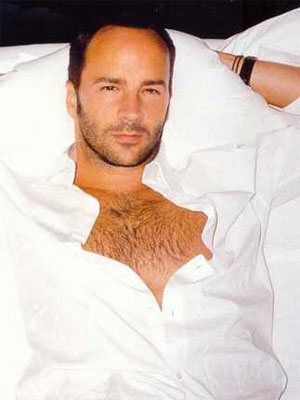
Photo commissioned by Oriza L. Legrand.
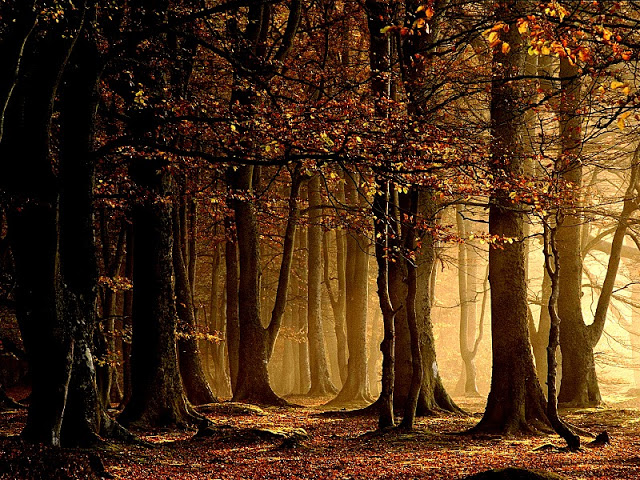
Photo commissioned by Oriza L. Legrand.

The funny thing about that last photo is that I actually saw it while I was in the Oriza L. Legrand boutique last fall in Paris. I distinctly remember the crown, and doing a double-take at it, thinking to myself, “What a fantastic picture. I wonder who took it?” The world is a very small, funny place at times.

Roberto Greco Cuir de RussieI asked Mr. Greco about himself. His website biography talks about the exhibitions that he’s had, or the galleries that have proudly shown his work, but it doesn’t say much about the man himself. It’s clear he was educated in Switzerland, and that he now spends his time between Paris and Geneva, but little else. So, I asked Mr. Greco to write a tiny bit about himself, how he came to love perfume so much, and his aesthetic approach. English is not his primary language, but I think he managed beautifully:

I think it all started when, as a kid, my mother sprayed her perfume on my pillow to help me wait a long holiday absence. This smell was a picture, her face.

I’m a south Italian, but I was born in Geneva, Switzerland. At 15, I made studies in horticulture, but art was never really far. Indeed, I studied in 2 different art schools in Switzerland, and nature has a prominent place in my artistic work from the beginning.

Whether plants or animals in my childhood, the smell they gave off always fascinated me. Just a look at the steam emanating of a pile of wet leaves when it’s cold outside, will make you able to capture the complexity of all these organic things that surround us. All these smells are images. I will keep forever in my mind, and now I try to transcribe them in my art.

Once, an art director told me that my way of creating was the same as a perfumer. Different intensities which punctuate the picture. Here a detail, another one there, and then the rhythm starts to give the tempo and make an harmony …much like top notes , heart notes and base notes of a fragrance.

Recently, I found interesting to add a scent during my last personal exhibition. All the space was immersed in an animal and sweat scent. I make it by mixing different scents, and hidden some manure everywhere.

Today I am often asked to photograph perfumes, and it is a joy for me to marry two passions. Interpret the world of a fragrance while playing with the codes of art is an exciting challenge!

"Eaux Sanguines" for Les Liquides Imaginaires.

“Eaux Sanguines” for Les Liquides Imaginaires.

Currently I am very attracted to odours that remind me of my past. For example, olibanum incense is quite an obsession, probably because all those years I came to the church (Bois d’Encens by Armani Privé, Wazamba by Parfum D’ EmpireOlibanum by Profumum and Sancti by Les Liquides Imaginaires ). Woods and plants are also very present (Chêne and Iris Silver Mist by Serge Lutens, Virgilio by Diptyque).

Recently, I bought a perfume because when I smelled it, it referred me immediately to my Italian grandmother. It was obvious : this blend of lilies, dusty incense, wet clothes drying in the sun… It was her ! At least her image, because she doesn’t wear any perfume, and this is exactly for this kind of situation that I love and need perfume. (It was Relique d’Amour by Oriza L. Legrand ).

Now I live and work in Paris, and for a perfume addict like me, what could I expect more? [Emphasis to names with bolding added by me.]

Like every artist with depth, there is more to Mr. Greco than just baroque images or still lifes. He doesn’t limit himself to one particular thing, because photography is, at its heart, all about self-expression, a way to reveal different sides of oneself. Some of his perfume photos demonstrate a meditative, almost mystical quality, like the Chanel Cuir de Russie above, or the Opium photo below. Perfume bottles hidden by smoke, or the mists of time, perhaps. Others reflect a very modern sensibility with sleek minimalism or an almost textural, liquid feel.

Roberto Greco OpiumRoberto Greco FahrenheitRoberto Greco Calvin Klein CK One

"Blue Armani."

“Blue Armani.”

Then, there is the joyous mood of his hyper-saturated, pastel photos. The candied simplicity of their pop cultural, Andy Warhol-like brightness is brilliantly intercut with the unexpectedness of hair — hair twisted to grow like living bushes or sculptured into sleek, architectural waves:

Photo with Olivier Schawalder, hairstylist.

Photo with Olivier Schawalder, hairstylist.

Photo with Olivier Schawalder, hairstylist.

Photo with Olivier Schawalder, hairstylist.

Photo with Olivier Schawalder, hairstylist.

Photo with Olivier Schawalder, hairstylist.

Photo with Olivier Schawalder, hairstylist.

Photo with Olivier Schawalder, hairstylist.

Valentino. Photo with Olivier Schawalder, hairstylist.

Valentino. Photo with Olivier Schawalder, hairstylist.

These are only a fraction of the multi-faceted things that Mr. Greco has done. You can see more of his artistic and exhibition work on his current website, but also on his earlier one that is devoted to some of his other projects, whether his personal perfume pictures, his fashion photography, videos, or the like.

One of my favorite things about blogging is the people who I meet, and the passions that they share with me. When I opened up that first email from Mr. Greco and diffidently clicked on the link enclosed, I had no expectations of anything. Humble, little photographs is essentially how he conveyed himself to me. I certainly didn’t expect to be blown away by Art, with a capital A. But that is what it is. Mr. Greco paints with his lens: textures, layers, moods, richness, and passion.

There is enormous depth and sensuality underlying his images, but a naughty, mischievous sense of humour, too, with the unexpected touches like the white mice in one of the still-life tableaux. (The piece is entitled “Still life with rats,” but they are cute little mice, not ugly rats, so I’m ignoring the official title.) Mr. Greco also throws in little “Easter egg” elements that reward the careful viewer who takes a second or third look, like the gigantic cicada (I thought it was a moth) hovering at the corner of the bowl of strawberries in his hanging Fish and Vegetable still-life for Les Restos d’Occase. I can look at his photos again and again, always finding new meaning or symbolism. A pink rose that drips like wax downwards, in contrast to the rigid, still, vertical legs going up of the dead bird in the corner. Or, the meatiness of the cherries that lie symbolically stabbed and bloodied by shards of glass in the photo, “Bloody Wood” for Les Liquides Imaginaires. So damn clever!

Many artists are temperamental creatures driven by ego or moods, and photographers are not necessarily an exception. I should know, as I have one in the family; a former fashion photographer who was even the legendary Helmut Newton’s assistant at one point. (If you want to talk about utterly crazy, egomaniacal geniuses, the late Helmut Newton might have topped the list.)

Yet, Mr. Greco seems to be quite a different sort of artist. Granted, I’ve only had email communication with him, but his modesty and consistently humble nature are striking. He is totally lacking in pretentious artifice or arrogance. All he sought to do in contacting me was to privately share his passion for perfumery. I’m the one who insisted on featuring him on the blog, because I thought that many of you would be as impressed as I was. And I really hope you have been. I also hope that you will share in the comments anything that struck you, moved you, or was a favorite, as well as the reasons why. If you have a message for Mr. Greco, please feel free to leave that, too. All artists love to hear feedback, or to learn about the emotional response that their creations evoke.

The great Ansel Adams once said, “You don’t make a photograph just with a camera. You bring to the act of photography all the pictures you have seen, the books you have read, the music you have heard, the people you have loved.” In the case of Roberto Greco, you can add perfumes to that list as well.

Disclosure: All photos used by permission. Full rights are reserved to Mr. Greco, and nothing may be used without his express authorization. Please don’t steal and not give credit!

LM Parfums Black Oud

The darkness of incense and an extremely refined oud, speckled with red-brown, earthy, and fiery spices. A deep woodiness that is soon married with a purple liqueured richness, before its sweetness eventually turns drier. Bold richness that moves into an intimate, gauzy whisper. Those are some of the different aspects of Black Oud from LM Parfums.

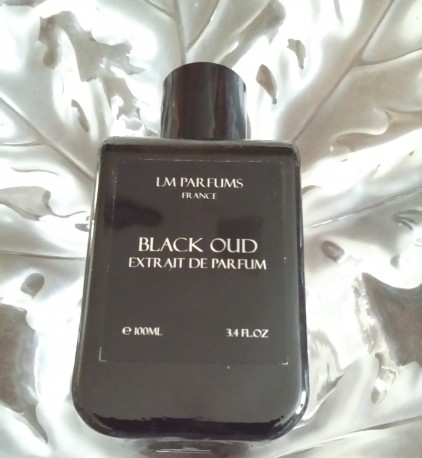
Photo: my own.

Photo: my own.

Black Oud is a pure parfum extrait that was released in 2012. LM Parfums describes the perfume and its notes as follows:

«Blend into the middle of a black and white tainted forest, be in the most obscure darkness, to deliver the fragrance of Oud.» This is my wish to take you into the depth of Indonesia.

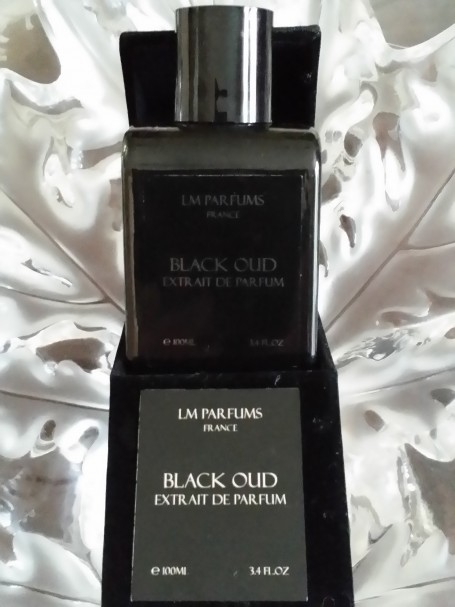
Photo: my own.

Photo: my own.

The subtlety of the Oud fragrances, mixed to cistus gum, wrapped with nutmeg, caraway, and incense, this generous fragrance brings in its wake cedar, amber and sandalwood, embellished with a touch of musk.

Top Notes: Nutmeg, Cumin, Incense.
Heart Notes: Oud Wood, Labdamum.
Base Notes: sandalwood, Cedar, Civet, Castoreum, Vanilla, Amber.

Source: wallpaperup.com

Source: wallpaperup.com

Black Oud opens on my skin with a darkness quite worthy of its name. I’m surprised by that, since so many perfumes labelled “Noir” or “Black” don’t actually convey that sense or impression to me. Black Oud does — at least in its opening minutes. There is a burst of beautifully refined, high-quality agarwood that is thoroughly infused with a spicy, peppered sweetness. There is dusty, vaguely earthy cumin, but also the fiery bite of what feels like red, pimento chilis. A rich, very darkly resinous stickiness follows moments later, along with what feels distinctly like a jammy patchouli note. It completely throws me off, as nothing in the notes indicates patchouli, but that is what I smell. It’s a deeply purpled, velvety, liqueured richness with a vaguely fruited aspect. 

I love Black Oud’s opening. The spices are the key, adding a great depth to the smooth, refined oud. They are dusty, dusky, and dry, but never sweaty. I don’t smell the nutmeg at all on my skin, but the cumin is really lovely. For all its spiced dryness, it also smells oddly fresh in a way, and something about it evokes rye bread more than anything curried, sweaty or stale. The whole bouquet is wrapped up with a thick ribbon of billowing, black frankincense, but it is blended so seamlessly into the notes that it’s more of an overall feel of darkness than a sharp, easily delineated note.

Black in bottle, non-travel form.

Black in bottle, non-travel form.

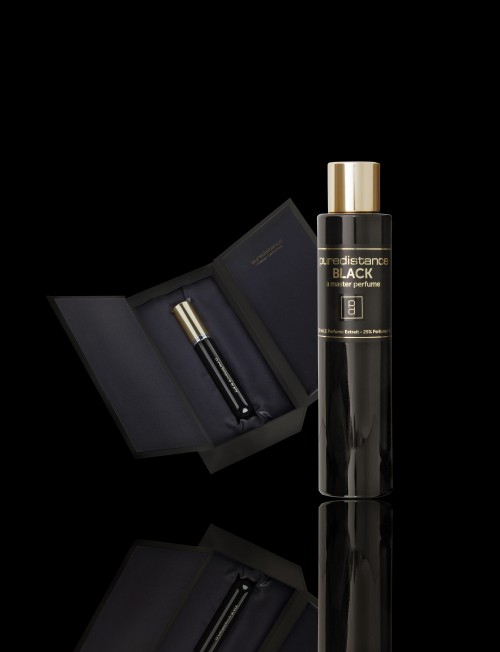
I’ve worn Black Oud a number of times, and on each occasion in the opening minutes, my initial impression is always the same thing: a much better, more refined, drier Puredistance Black. (Puredistance insists on typing it as BLACK, but I refuse.) Black Oud was released in 2012; Puredistance’s Black in summer of 2013. They are both Extrait perfumes with spices, incense, oud, and a liqueured patchouli sweetness, though Puredistance refuses to release its exact notes for the fragrance and Black has a definite floral component. I was the only blogger out of the first lot who initially reviewed Black to say that I didn’t like it, and I received a bit of flack for it. Well, I stand by my opinion, as I still don’t like Black.

Source: quotes-pictures.feedio.net

Source: quotes-pictures.feedio.net

In the opening moments, Black Oud blows the Puredistance scent out of the water. It’s much smoother, more refined, and deeper. Unlike the Puredistance scent, the overall effect of one actually feels black in mood, perhaps because Black Oud is much smokier, drier, less unctuously sweet, and more spiced. The jammy, purple, fruit-chouli aroma is much more subtle in Black Oud’s opening phase, while the incense is much more profound. In addition, the oud note feels more luxuriously smooth and expensive. However, as we will soon see, the early differences soon fade, and I’m afraid Black Oud becomes a lot closer to Puredistance Black in nature. Several of the things in Puredistance Black that I struggled with manifest themselves here, to the point where I wonder if Antoine Lie made LM Parfums’ Black Oud a year before he made the significantly more expensive (and over-priced) Puredistance Black.

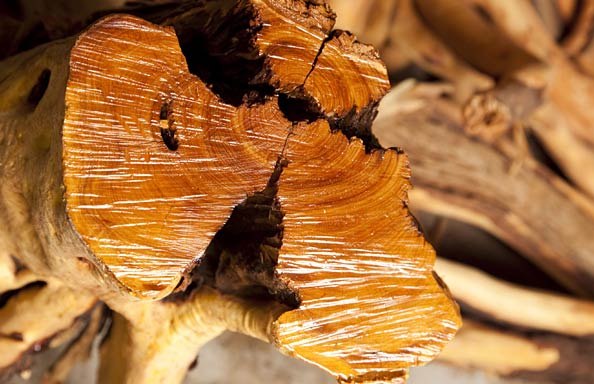
Mysore sandalwood cross-section. Source: vk.com

Mysore sandalwood cross-section. Source: vk.com

It takes very little time for Black Oud to start to evolve. Exactly 5 minutes into Black Oud’s development, the sandalwood peaks up its head. It’s muted at first, but it’s a lovely, subtle touch of spicy, creamy, smoky red-gold woodiness that feels like real Mysore wood. Laurent Mazzone has shown his willingness with the spectacular Hard Leather to spend any amount of money on the genuine Mysore wood, no matter how costly the rare ingredient may be, and I think he must have insisted on the real thing for Black Oud as well.

A few minutes later, other changes occur. The cumin starts to slowly melt into the other notes, creating a more abstract sense of “spiciness” instead of a distinct, individual cumin note. The sandalwood grows stronger, while the labdanum suddenly starts to stir. It’s got a deliciously toffee’d, vaguely dirty, almost chocolate-y undertone. Yet, Black Oud is never skanky, raunchy, urinous or dirty in any way on my skin. I never detect the civet, castoreum, or nutmeg, though there is a subtle muskiness and earthiness that creeps in towards the end of the perfume’s development.

As a whole, Black Oud in the opening half-hour is a very smooth, delicately spiced, liqueured, black-purple oud scent that is infused heavily with smoky incense and that inexplicable jammy element, then lightly flecked with Mysore sandalwood and labdanum amber. While LM Parfums’ Hard Leather is a lusty, “skanky” take on leather, incense, oud, and sandalwood, Black Oud is the sweeter, non-animalic, more purely oud and incense sibling. Every single one of its elements feels rich, seamless, and luxuriously refined, but the whole thing is also very gauzy in feel. Surprisingly so for an Extrait concentration.

"Purple Velvet Gold Flakes" by *Will3style at Deviantart.com. http://will3style.deviantart.com/art/Purple-Velvet-Gold-Flakes-258099755

“Purple Velvet Gold Flakes” by *Will3style at Deviantart.com. http://will3style.deviantart.com/art/Purple-Velvet-Gold-Flakes-258099755

Black Oud slowly turns sweeter, as the liqueured, fruited, patchouli-like jamminess grows stronger. Unfortunately for me, there is the first twinge of something aroma-chemical that stirs in the base. I’m not a fan of it, though it’s thankfully subtle and muted at this point. What is much prettier, however, is the cumin which adds a dry, almost herbal, green-brown spiciness to the base.

At the start of the 2nd hour, the aroma-chemical in the base turns into one of the main notes. It smells like some sort of very arid, “amber” substitute, but also very woody, harsh and, to my nose, jangly with its sharp edges. I don’t like it one bit, though I realise that I have a sensitivity to aromachemicals, and that the vast majority of people can’t detect them. At least the dryness of the note (whatever it is) helps to cut through some of Black Oud’s increasing sweetness, though the jammy liqueur is still very prominent. The incense retreats to the sidelines, along with the spiciness, while the sandalwood slowly starts to fade away.

Art by: LordmOth on Deviant Art. (Click on photo for website link embedded within.)

Art by: LordmOth on Deviant Art. (Click on photo for website link embedded within.)

Black Oud also turns thinner and sheerer, with sillage that now projects only about an inch above the skin. By the 1.75 hour mark, the perfume is a gauzy thin blur of refined oud, the excessively dry aromachemical, incense smokiness, and the jammy fruitchouli note. There is a subtle nuance of something vaguely herbal and earthy in the base, but the overall impression is of a non-floral, woodier, drier version of Puredistance Black.

Black Oud remains largely unchanged for the next few hours. Thankfully, the harsh aromachemical note disappears by the end of the 3rd hour, and my mood improves. By the middle of the 4th hour, Black Oud is a skin scent that slowly turns drier and woodier. It’s a sheer, very pretty blend of vaguely oud-y woodiness and sweetness with tiny, subtle flickers of smokiness, earthiness, and something vaguely herbal lurking at the edges. Around the 7th hour, a touch of beeswax appears, undoubtedly from the labdanum, and a growing element of muskiness.

Source: hotguyscollection.com

Source: hotguyscollection.com

In its final hours, Black Oud also takes on sexy muskiness that has a tobacco-like undertone and a velvety earthiness that almost feels mushroom-y at times. I suspect it stems from the castoreum. As a whole, though, Black Oud’s drydown is generally just abstract woodiness with a touch of sweetness and dryness blended within. Something about it is quite seductive. Call me crazy, but this is what I imagine Tom Ford to smell like. Sweet, dry, woody muskiness with a touch of the scent of a man’s warm skin, all wrapped in a very refined, understated bouquet. Yes, I know Tom Ford is the least “under-stated” person around, but he is what I think of when I smell Black Oud’s drydown: open-shirted, bare-chested and revealing skin that carries the discreet musky sweetness of Black Oud.

As noted earlier, Black Oud is an extrait or pure parfum. It doesn’t feel like it on my skin, I’m afraid. On a few occasions when I’ve worn it, I was surprised by how quickly it faded. Two decent-sized sprays gave me between 9 and 9.75 hours in duration, but the perfume consistently became a skin scent at the start of the 3rd hour. I frequently thought that it had vanished by the end of the 5th hour, but, no, Black Oud definitely lingered, and was noticeable when I put my nose directly on my skin and smelled very hard. With 3 big sprays, Black Oud lasted a good 12 hours on my skin, but, again, it was extremely discreet.

A number of LM Parfums start strongly and then become much more intimate, as that seems to be part of the brand’s overall aesthetic. The gorgeous Sensual Orchid is one example, where the opulent, bold, narcotic sensuality slowly turns into something more romantically discreet, as though it were olfactory lingerie. I am starting to have the impression that Laurent Mazzone might feel that a subtler suggestion is better for his bolder, richer aromas, the new Hard Leather excepted. So, when seen in that light, perhaps Black Oud’s softness and subtlety makes sense, but I was still taken aback. It really didn’t feel like an Extrait on my skin, and its wispiness was another thing that made me think of the intentionally “whispering” Puredistance Black.

While I have extremely wonky, perfume-consuming skin, I’m apparently not alone on the issue of Black Oud’s subtlety and limited projection. On Fragrantica, two other people felt the same way, though their overall assessment for the fragrance was very positive. For example:

If Valentino ever produced an OUD based fragrance it would smell something like this.

Romantic and Deep are the key words here. A rich mix of delicate spices and oud emphasizing the intricate balance between eastern and western perfumery. Smooth pristine and dressed up.

It isn’t loud by any means. In fact I think it is a sleeper that will wake up at unexpected moments. It is however very durable.

Leave it on for a while before you try to decipher it….it’s one of those. […][¶]

EDIT :
Been wearing this for a full day now. I hate to say it but this has nothing to do with an Extrait as far as projection goes. […] EDIT : TWO Days later. I share the same feelings still. Nice *subtle* romantic oud scent that lasts a good amount of time as a skin scent with just minimal projection. [¶] DEFINITELY not one of the stronger Extraits/Parfums that I have sampled but what can you expect for $225 100ml Extrait.

Others agree on the romantic, refined nature of Black Oud, including a woman commentator who offers up the first review below:

  • This perfume is a dream come true : when I wear it,I have the feeling that I smell a mysterious lover’s smell (a latin one, of course !)on my skin all day long! Very erotic ! Wonderful ! You’ll feel very sexy while wearing it (for men or women.)
  • very amazing perfume and it’s like Black Afgano but with more Oud and more sillage .. [¶] I love this perfume[.] [Emphasis to name added by me.]

On Basenotes, there are 3 reviews for Black Oud, 2 of which are positive and one is a mere “neutral.” Their views, in part or in full, are as follows:

  • Simple comfort to wear animalic oud scent.
  • It starts quite alcoholic and spiced , with a soft frankincense. Then it develops to a sweet-rosey oud .Finally it dries down towards a kind of animalic sandalwood . [¶] This reminds me of L’Air du Desert Marocain with a touch of oud .This is not dark nor black . [¶] Longevity is regular , taking into account that this is an extract of parfum . [¶] Over-priced for what it is , 200 eur . [Emphasis to name added by me.]
  • Wonderfully smooth and powerful scent [….][¶] I love it, it isn’t too powerful, very “smooth” as someone else mentioned, and it is really just what I was looking for, a sensual date scent. […]
Source: HDwallpapers.

Source: HDwallpapers.

One perfume blogger who isn’t a fan of agarwood wrote that Black Oud was the first scent with the note that she liked. The site, Esperanza Van Der Zon, wrote, in part:

Black Oud became the first oud perfume I really liked. It is a very well blended oud extrait with rich wood and incense elements. The oud is not dominating the perfume but part of the whole composition like a primus inter pares, equal amongst the other notes. It is hard to detect individual notes as they are very well blended. But I do detect rich frankincense lingering at the beginning, followed by warm dark woods to continue to labdanum and golden oud. The extrait changes its scent showing some different aspects at first but does not change very much during the day on my skin. What remains is a warm wooden resinous drydown, modern, strong, very present and with a little edge. Compared to a texture it would be soft black wool, still a bit tingling when you touch it. […][¶]

Although the Black Oud is an extrait (pure perfume), its sillage is enormous, one spitz is enough for a whole day. Some called Black Oud a sillage monster. I would say this extrait is for true sillage lovers or people who do not like to reapply during the day. You can still scent Black Oud after 24 hours so have some caution when applying !

Her sillage and longevity experiences are obviously quite different from what I or some of the Fragrantica people experienced, so skin chemistry is clearly key. What I found interesting about her review is how taken she was by Black Oud. Even though she found the perfume a “bit too masculine” by her standards, she said she would still buy a full bottle if it were cheaper:

There are cold days I really enjoy wearing Black Oud. It is a pity it only comes in 100 ml bottles for about 200 euro. If it was sold in smaller bottles I would have bought a full bottle some time ago.

That’s quite an endorsement from someone who says bluntly that she does “not like oud very much.”

Speaking of prices, Black Oud costs $225 or €195 for the 100 ml bottle. It may not be cheap, but it is substantially less expensive than Puredistance Black which costs almost $600 for a similar 100 ml size. (Both are Extrait fragrances, so their prices can definitely be compared on an equal basis.)

Source: 8tracks.com

Source: 8tracks.com

Black Oud is a much better value than the Black, and a better fragrance as a whole, in my opinion, because it feels much more refined. The oud smells more luxurious and smoother, and the perfume lacks the annoying rose-fruitchouli singularity of Puredistance Black. The latter ended up making me think of pinks and purples, fluffy clouds, and Turkish delight. It was not “Black,” let alone very smoky or woody on my skin. In fact, it smelled significantly aromachemical in nature, and was much more generic in profile, two reasons why I think Puredistance Black is badly over-hyped and over-priced for what it is.

Black Oud, on the other hand, seems darker, smokier, woodier, and drier. The opening 30 minutes are really fantastic, and the drydown is both pretty and quite sexy. The middle stage, alas, didn’t thrill me at all; I don’t like whatever amber aromachemical was used in the base, and the liqueured sweetness of Black Oud was a bit difficult for me as a whole. I’m also not enthused by the discreet, intimate sillage. However, at the end of the day, all of those things are a matter of personal tastes and skin chemistry. Black Oud isn’t very me, but I can respect it (minus that aromachemical bit) and I can completely see why people find it to be a beautifully blended oud fragrance. Puredistance Black, on the other hand, just leaves me scratching my head. At best.

In short, if you’re looking for a refined, approachable oud scent with sweetness, incense, and dryness, you may want to give Black Oud a sniff.

Disclosure: Perfume provided courtesy of LM Parfums. That did not impact this review. I do not do paid reviews, my opinions are my own, and my first obligation is honesty to my readers. 

DETAILS:
Cost & Availability: Black Oud is pure parfum extrait that is available only in a 100 ml/3.4 oz bottle which costs $225 or €195. In the U.S.: Laurent Mazzone’s fragrances are sold exclusively at Osswald NYC. If, at some point in the future, you don’t see Black Oud listed at that link, it’s because Osswald takes down a perfume’s page when they’re temporarily out-of-stock, then puts it back up later. Outside the U.S.: you can buy Black Oud directly from LM Parfums. In addition, they offer large decant samples of all LM Parfums extraits which are priced at €19 for 5 ml size. LM Parfums also owns Premiere Avenue which sells both Black Oud and the 5 ml decant. It ships worldwide. In the UK, the LM Parfums line is exclusive to Harvey Nichols. In Paris, LM Parfums are sold at Jovoy. In the Netherlands, you can find Black Oud at ParfuMaria. The LM Parfums line is also available at Silks Cosmetics. In Germany, First in Fragrance carries the full line, and sells samples as well. You can also find LM Parfums at Essenza Nobile, Italy’s Vittoria Profumi, or Alla Violetta. In the Middle East, I found most of the LM Parfums line at the UAE’s Souq perfume site. For all other countries, you can find a vendor near you from Switzerland to Belgium, Lithuania, Russia, Romania, Croatia, Azerbaijan, and more, by using the LM Parfums Partner listing. Laurent Mazzone or LM Parfums fragrances are widely available throughout Europe, and many of those sites sell samples as well. Samples: A number of the sites listed above sell samples. In the U.S., none of the decanting sites carry LM Parfums, but you can call Osswald NYC at (212) 625-3111 to order samples. They have a special phone deal for U.S. customers where 10 samples of any 10 fragrances in 1 ml vials is $10 with free shipping. However, they are currently out of vials until mid-March.

Parfums de Nicolaï Sacrebleu Intense

Some perfumes have a quiet prettiness that weave their way around you over time, or that touch you with a feeling of comforting familiarity. Sometimes, they are also about a study in contrasts, contradictions that work together seamlessly in a way that becomes more important than the individual notes. Sacrebleu Intense from the Guerlain descendent, Patricia de Nicolaï, and her company, Parfums de Nicolaï, is one of those perfumes.

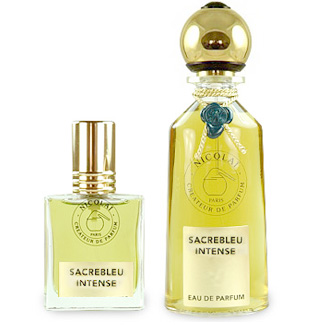
The 30 ml and 100 ml bottles of Sacrebleu Intense. Source: Luckyscent

The 30 ml and 100 ml bottles of Sacrebleu Intense. Source: Luckyscent

It is an eau de parfum that appealed to me the first time I smelled it, but it didn’t bowl me over and throw me into a state of maddened lust. It still doesn’t, if truth be told, but Sacrebleu Intense quietly squirreled its way into my thoughts, and I ended up succumbing to a relatively blind buy months after the fact. It has a quiet solidity and classical appeal with just enough of a nod to the past to be comforting at times.

What I like is the feeling of contrasts that have been superbly blended into a seamless whole. There is sticky, chewy darkness, but also, airy, white sweetness. Bitter green leafiness lies side-by-side with boldly fiery, red cloves, brown cinnamon, smoky blacks, and twiggy, petitgrain, neroli orange-browns. Sometimes, the contrasts are just about the stark black and whites: black licorice and smoke, against white Church incense and spicy red carnation. Sometimes, they are about gender, as femininity collides with touches of masculinity. Often, they are about boldness and strength mixed with refined quietness; or the contradictions of weightless heaviness.

Photographer: Carl Bengtsson. Source:  fashionproduction.blogspot.com

Photographer: Carl Bengtsson. Source: fashionproduction.blogspot.com

Sacrebleu Intense is about all those things. It is fierce and potent, but understated and quietly elegant. It is a nod to the past that is also very modern. It has a simple beauty whose appeal grows stronger with time, and it manages to stay in your head, long after you’ve smelled it. At least, that was the case for me. I first encountered the perfume in Paris where I was trying the full Parfums de Nicolaï‘s line at one of her shops. (From this point out, I hope you will forgive me if I spell Nicolaï as just “Nicolai” for reasons of speed and convenience, as it takes a while to put on the dots, or Trema.)

Sacrebleu Intense stood out immediately amidst the Nicolai offerings. A few of the other scents were pretty, but too subdued or restrained. A good number felt too damn thin by half, but Sacrebleu Intense made me do a wee, tiny double-take, and I sniffed my wrists appreciatively. However, I almost never trust first impressions and needed a sample to test to see how it would develop over time, especially on my wonky skin. Unfortunately, the Parfums de Nicolai line doesn’t seem to believe in that practice, and I was always told, “I’m sorry, we don’t have any vials.” So, I skipped it. Upon my return to America, though, the memory of Sacrebleu Intense nagged away at me for months. I finally said, “to hell with it,” and ordered a bottle.

Guerlain's L'Heure Bleue via radiobresil.com.

Guerlain’s L’Heure Bleue via radiobresil.com.

I did so for one reason, and one reason only. Every time I had tested Sacrebleu Intense, the same thought rang in my head: “L’Heure Bleue. This is a definite nod to L’Heure Bleue, only it’s more modern, fruitier, with different spices, and possibly a more unisex feel.” Now, vintage L’Heure Bleue is one of my two, absolute favorite Guerlain scents. In fact, it is only fickleness and a slightly fiercer love for vintage Shalimar that prevents L’Heure Bleue from ranking as my favorite Guerlain of all. Plus, vintage L’Heure Bleue can be a wee bit powdery for my tastes, though none of it matters in the face of the reformulated modern version. Sacrebleu Intense reminds me of vintage L’Heure Bleu, though with enough differences for it to be its own scent. It feels more modern, and not as wistful in nature.

Patricia de Nicolaï, via her own website.

Patricia de Nicolaï, via her own website.

The strong connection to one of Guerlain’s masterpieces should come as no surprise to anyone who knows about Patricia de Nicolai‘s background. I’ve written about how she is part of the Guerlain family, a grand-daughter of the house’s founder, Pierre Guerlain, a niece to Jean-Jacques Guerlain, and a relative of the famed nose and current Guerlain family patriarch, Jean-Paul Guerlain. Madame de Nicolai is also on record as saying that she absolutely loves L’Heure Bleue, though she stopped just short of saying that it is the Guerlain scent that has had the most impact on her own perfumery. Still, her love of L’Heure Bleue shines through in Sacrebleu Intense, though I have to emphasize that I think they are very different scents at their heart.

Sacrebleu Intense is an eau de parfum that was released in 2008. It seems to have been intended as a bolder version of the original Sacrebleu which has now been discontinued, though I’ve also read in one place that the Intense was meant to highlight the floral notes more than the original. According to Fragrantica and Luckyscent, Sacrebleu Intense has:

Top notes: mandarin orange, red berries and fruity notes; Middle notes: carnation, tuberose, cinnamon and jasmine; Base notes: peru balsam, sandalwood, tonka bean, patchouli, olibanum [myrrh], woody notes and vanilla..

Source: CaFleureBon

Source: CaFleureBon

Sacrebleu Intense opens on my skin with massive amounts of carnation cloves, followed by cinnamon, dark resins, and green notes. There is a strong spiciness to  the scent beyond just the cloves, a sort of piquancy that makes me think of peppery, fuzzy geranium leaves, as well as of bitter neroli and petitgrain. Petitgrain is a citrus tree’s twigs, distilled down into the bitter, pungent woody, masculine notes, while neroli is a different method of distilling the trees’ orange blossoms. Honestly, on my skin, I don’t smell mandarin oranges in their traditional, sweet, sun-ripened juiciness. There is the strong bitterness of neroli, and the woodiness of petitgrain instead.

FrankincenseThere are other elements as well. Lurking in the base is a black, leathery smokiness from the styrax, the least sweet of all the resins or benzoin-like notes. There is also a heavy presence of olibanum or myrrh. It is nothing like the High Church, soapy, chilly, dusty character that it usually manifests, at least not yet. Instead, it smells like chewy black licorice with a hint of anise. There is a definite sense of smokiness, though. A sweet incense note that feels like sweet myrrh, rather than pure, dry, black frankincense.

Clove Studded Orange. Source: DwellWellNW blog at DowntoEarthNW.com

Clove Studded Orange. Source: DwellWellNW blog at DowntoEarthNW.com

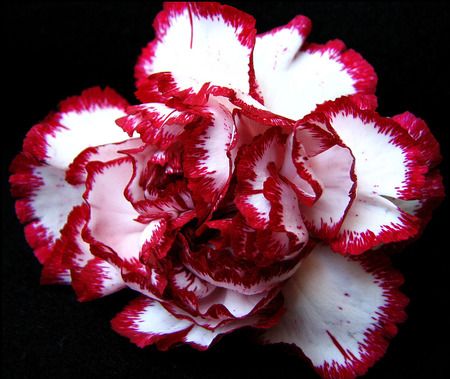
The odd thing is the nature of the floral notes. I’ve worn Sacrebleu Intense a few times, and only once did I ever really detect tuberose. It was brief, very muted, and had a slightly rubbery, black undertone to it. However, the tuberose was so thoroughly blended into the other elements, it was extremely hard to pick out and I don’t think it lasted for more than perhaps 10 minutes at best. The main flower on my skin instead is always the carnation, though it is barely floral at all. Carnations can take on a peppered rose aroma or a clove-like one, and it is the latter which shows up on my skin. In fact, Sacrebleu Intense is heavy cloves from start almost to finish, with only a touch of actual carnation.

Geranium pratense leaf, close-up. Source: Wikicommons

Geranium pratense leaf, close-up. Source: Wikicommons

I keep imagining a clove flower with a spicy neroli heart, bitter petitgrain twigs and peppery, pungent, green geranium leaves, all dusted with cinnamon. The “flower” grows out of soil made from black licorice and the stickiest, chewiest, balsamic resin around. It’s a base that is faintly leathered and smoky, but the main impression is of bitter fruits heavily dusted with cinnamon and cloves.

For the most part, Sacrebleu remains that way for the majority of its long life on my skin. This is a fragrance that is beautifully blended, and each time I wear it, different parts seem to be emphasized alongside the clove carnation. Never the tuberose, but the green bits and the smokiness seem to fluctuate in degree. On one occasion, all that came to mind was black, chewy, resinous smokiness on a white, airy background that felt only vaguely fruited and was heavily dusted with spices instead. As a whole, Sacrebleu Intense is a scent that is very hard to pull apart. The notes move into each other seamlessly, and, as indicated, that makes the perfume a bit linear in nature. For that reason, this review will be a little different than most of mine, and will focus mainly on the perfume’s overall development and feel.

Pez. Source: Wikipedia.

Pez. Source: Wikipedia.

The one thing that does change (and is quite constant each time I wear Sacrebleu Intense) is the touch of powderiness that creeps in after a while. When it precisely occurs seems to vary, and I’ve noticed that one arm (my right, which is not my usual testing arm) reflects very little of it as compared to the other, but there is always some degree of powder. At first, it’s only a subtle touch that is almost iris-like at times. It’s definitely sweetened powder, and its combination with the bitter neroli and petitgrain-like accord creates a distinct impression of Pez candy. A sort of Sweet-Tarts or Pez powderiness, if that makes sense.

I have to admit, I’m not very keen on it, and I become less keen as time passes because it turns into quite a distinct myrrh incense note that I always struggle with. It’s a spiced, slightly dusty powderiness, though much more sweetened than most High Church incense fragrances. As regular readers know, I’m not particularly enthused by High Church or Catholic Mass tonalities, let alone powder, so I must admit, I struggle a little with Sacrebleu after about 5 or 6 hours. Still, as noted earlier, the perfume is well-blended and there are enough spicy clove, carnation, and resinous elements to make up for it.

 Source: darulkutub.co.uk

Source: darulkutub.co.uk

In its final stage, Sacrebleu Intense is a blend of myrrh incense, spiciness, and sweetened Pez powder, lightly flecked with bitterness and a hint of something vaguely fruity. In its last moments, it’s powdered sweetness and myrrh. I like it… from afar and as long as I don’t smell it up close too much.

All in all, Sacrebleu Intense consistently lasts 12 hours or more on my wonky skin, depending on how much I apply. It generally becomes a skin scent about 4-5 hours into its development, though it requires absolutely no effort whatsoever to detect the perfume if you bring your nose near your arm. Furthermore, you can push both time frames if you spray on a lot. With 3 big sprays, I once experienced a 14 hour duration, even though I had to put my nose on my skin and sniff extremely hard to detect the faint traces after the 12th hour.

I’m glad I bought Sacrebleu Intense, though I have mixed feelings about the drydown stage. In fact, if some of my discussion sounds a little like blind buyer’s remorse, there is that on occasion, but only because I really don’t like Churchy myrrh incense or powder. That said, there is something about the opening moments of Sacrebleu Intense that really compensates for it all.

I can’t really explain in any logical way except to say that there is a mood and feeling which overcomes a lot of the sticky details down the road. Something about Sacrebleu Intense feels like elegant familiarity, perhaps because of that distant, tiny kinship to L’Heure Bleue. It’s such a classic, refined scent that it makes me feel as though I should sit up straighter, put on my best clothes, and get ready for a garden party. It feels like something suited for High Tea at the Plaza Athenée, or a walk through the Jardins de Luxembourg near the Louvre. It lacks the va-va-voom luxuriousness of vintage Shalimar, or the emotional power of vintage L’Heure Bleue‘s haunting melancholy, but Sacrebleu Intense has a definite, quiet charm.

Photographer: Carl Bengtsson. Source:  fashionproduction.blogspot.com

Photographer: Carl Bengtsson. Source: fashionproduction.blogspot.com

Sacrebleu Intense doesn’t take me back in time or feel dated. I don’t feel as though I belonged in the 1920s or 1950s. Perhaps because there is an airiness to the scent that seems to belie the strength and potency of its spicy, piquant notes. It doesn’t feel opulently heavy at all, to the point that I don’t think of luxuriousness when I think of Sacrebleu Intense. Rather, I think of spiciness — intense spiciness and resins. Peppered, resinous, smoky, chewy blackness and white daintiness, speckled with every shade of red, brown and green.

In some ways, Sacrebleu Intense feels a little like an attractive girl whose appeal grows stronger over time. She may not blow you away at first, and, in fact, she may not even sweep you off your feet after you’ve known her for years, either. But you’d definitely miss her if she weren’t around, and, whenever you’re with her, you enjoy the experience. Something about her stays with you — her good humoured spiciness, perhaps — and you can’t forget how comfortable she makes you feel.

Almost all the blog reviews out there are for Sacrebleu, the original, and not for Sacrebleu Intense. There is said to be a difference. It’s not only that Sacrebleu was an eau de toilette, while the Intense is an eau de parfum, but the notes seem to be different. The original is said to have included: black currant bud, peach blossom, jasmine, tuberose, vanilla, tonka bean and incense. I also vaguely remember one Parfums de Nicolai sales lady telling me that the focus of the two scents is different, though for the life of me, I cannot now recall how.

Cellists. Source: Nathan Branch

Cellists. Source: Nathan Branch

The one blog review for Sacrebleu Intense comes from Nathan Branch who writes:

For a couple of hours, Sacrebleu Intense is mesmerizingly beautiful — rich, full, deep . . . like a roomful of cellists all playing the same sad, sweet song, but then everything starts to sound (or, in this case, smell) a little off — too much noise, too many notes crammed up close together and discordantly overlapping.

It’s a shame, too, because when the stuff is pulling together it really shines, but the last half of the scent’s lifespan is a sloppy mess — well, until you hit the patchouli/balsam drydown, which deserves some praise.

Maybe the original, less pumped-up Sacrebleu is better, less messy, than this Intense version?

Source: nature.desktopnexus.com

Source: nature.desktopnexus.com

On Basenotes, one person has the following thoughts on the two versions:

Sweet but not fruity once the initial orange has departed. Close to, the jasmin is not wholly evident, but floats a nose- distance away until displaced by carnation (not cloves). The cinnamon is a mere hint (according to the assistant in PdN in Paris the ‘intense’ version has vanilla instead of cinnamon, but it’s still there to me). Overall less spicy than sacrebleu and therefore easier to wear. Intense is an edp rather than the original sacrebleu which is an edt. However the difference is not just in the concentration, they smell noticeably different, so worth trying both

As a whole, forum and website reviews for Sacrebleu Intense are mixed, with the vast majority being very positive in nature. I also think the reason for the split is that Sacrebleu Intense is a perfume best suited to those with specific tastes, starting with an appreciation for L’Heure Bleue. After that, ideally, you’d love a heaping amount of cinnamon, myrrh incense, and the bitter petitgrain and neroli aspects of orange. It might also help if you like Pez powder or Smarties, the latter being a comparison that was raised in two Fragrantica reviews.

One Fragrantica commentator, “vitabhaya,” has what I think is a good summation of Sacrebleu Intense:

Call me nuts, but the topnotes on this smell like a blend of Guerlain’s L’Heure Bleue and Smarties–you know, those colored, super-sweet candies that come in a roll. It is melancholy but energizing, sweet yet with a great mellow depth, really a mezmerizing fragrance.

After an hour or two, the tonka bean, patchouli, sandalwood and olibanum lilt along the edge of a vanilla that is neither quite sweet nor spicy. It feels rich, sensual and downright sexy. It reminds me of late afternoon sun drifting through the curtains after a lover’s rendevous. There is something hypnotic about this blend, and I find myself lingering with my arm up to my nose long enough to wonder how long I’ve held this pose. Suddenly I feel as if I enjoy the longing for past lovers for pure memories’ sake. I cannot at this point decide if it is slightly melancholy (L’Heure Bleue?) or if it is rather dusky and languid. Oooooh, how I love it!

This goes on the “must have” list.

Source: Fragrantica.ru

Source: Fragrantica.ru

Other Fragrantica commentators seem equally enamoured, with one saying that Sacrebleu Intense had replaced L’Heure Bleu in her heart:

  • For a very long time, since we first met in a candy-box perfumery in Salzburg decades ago, L’Heure Bleue was my absolute favourite scent of all. With all due respect and nostalgia, the Pefume Queen’s Throne in my heart is now occupied by another sovereigh: Sacrebleu. (Especially that L’Heure Bleue’s new formula does not have the perfection of its predecessor.) It is the softest, most embracing, soothing, calming scent about, and I absolutely enjoy its elegant velvety dark character. Mind you, Sacrebleu’s darkness is not menacing, it’s mistery is not dangerous. It is a peaceful night, when you know you are safe, loved and can relax without a hint of worry and care. It is related to L’Heure Bleue, but more modern, less melancholy and much more life-affirming. [¶] To my nose and mind this scent is so perfect, that while wearing it I never once try to isolate it’s notes…it is a perfect harmony, and I don’t care the least what single notes make up this wonderful olfactory symphony. Truly wonderful!
  • I think Sacrebleu Intense is one of the sophisticated and finest scents I have sniffed. Very feminine [….]  I do not get candies from Sacre Bleu, but sacred feel yess. I have also L´heure Bleue and this might be kinda sister, but they are standing quite far from each others. Sacrebleu is more sensitive…. but eaven if she is sensitive do not take her to be not strong!
  • Prepare yourself to be granted a sweet redemption, to gain a second or third youth, to leave the ground and premises in bliss… [¶] Concentrate on happiness! […][¶] Olibanum and Peru Balsam control the -harsh- tubereuse. Carnation and Tonka Bean rule over the omnipresent cinnamon. Mandarin, Jasmin and Sandal turn your face to the light! [¶] Sacrebleu Intense has lifted me with joy.
  • I got this sample from the lovely Carnation. I smell hot spice! This is warm and intense and perfect for me. There is a sweetness to it that could be vanilla but its not cloying. This is a perfect combination of the things I love, Sandalwood, Patchouli, Vanilla and Spice (must be the cinnamon) I love it!
Photo: mypham.us

Photo: mypham.us

One male commentator loved Sacrebleu as well, writing:

A fruit and floral aroma that embraces you with power, quality and exuberance.
The heart is beautifully made of jasmine and tuberose, going to a soft side of the fragrance, surrounded by peru balm, olibanum (frankincense), woods and a delightful vanilla.
It starts completely feminine and then, goes to a more unisex scent during its evolution on the skin. Fierce yet delicate, strong yet romantic…nice work!

Smarties. Source: imgarcade.com

Smarties. Source: imgarcade.com

However, not everyone was quite as thrilled, whether from the fruit or the spices. In fact, I think the following comments underscore the importance of a love for cinnamon, not to mention skin chemistry, of course:

  •  very fruity and sweet. vitabhaya mentions Smarties and L’heure Bleue. I agree about the Smarties, but feel it’s only got a nod in passing from L’Heure Bleue. I purchased a sample because I love cinnamon and hoped for more cinnamon/carnation effect – but fruit tends to overwhelm my nose. Should have checked more carefully, because the top notes are all fruity, and they tend to hang around. Altogether not bad, won’t be one of my favourits, though.
  • Sweet,juicy fruity opening,but I could not detect any spices throughout this at all. […] It’s probably one of the worst I have smelled-cloying and rubbery would describe this perfectly.
  • I get cinnamon, but the horrid thing is that on my skin it smells like a cheap cinnamon candle. [¶] You ever been to a candle store, and then felt a bit yuck after smelling a tonne of candles? That’s this scent on my skin, unfortunately.
  • Hmmm, no. Opening is sweet orange, then comes cinnamon that has a very synthetic feel to me. A whisper of flowers, then some Tonka in the dry down. Average longevity and projection. L’huere bleu made me realize that I have a strong desire to smell like carnations and I was hoping this would be an interesting, well rounded composition with a clear carnation note, but it seems to have been hidden by the cinnamon. So disappointed.

On my skin, as noted, the clove-like smell of the carnations was far more dominant, but Sacrebleu Intense has a few resins or benzoins that can manifest a cinnamon side. Given that the perfume contains actual cinnamon as well, then you bloody well better like the spice if you’re going to try the perfume!

You should also like strong perfumes. On Surrender to Chance, one person commented that they liked the juicy, fruity opening but that Sacrebleu Intense was “too strong.” Well, it is, but that’s why I gravitated towards it, instead of the thinner scents in the line. Sacrebleu Intense is definitely a scent for those who like their fragrances to be bold and full-bodied.

The 30 ml bottle. Source: randewoo.ru

The 30 ml bottle. Source: randewoo.ru

One of the big positives about Sacrebleu Intense, and the Parfums de Nicolai line in general, is affordability. There is always a small 30 ml size which is very reasonably priced. For Sacrebleu Intense, the 1 oz size costs $65 or €51. It may be too tiny for some, but it’s great if you have a vast number of scents in your collection, or if you just don’t want to spend a fortune on perfume. Plus, as noted earlier, a little Sacrebleu Intense goes a long, long way.

Lastly, I think Sacrebleu Intense skews a little feminine, but not overly so and really only at the start. The incense, resins, spices and piquant neroli certainly make it very unisex in nature. My only hesitancy is the slight powderiness of the scent. It’s not at Guerlainade levels, and is much more myrrh-based in nature, but it’s something to keep in mind.

All in all, if you’re looking for a more spicy, modern version of L’Heure Bleue that is strongly centered on carnations with orange and neroli, dark smokiness that turns to white myrrh incense, and very piquant green leafiness, you may want to give Sacrebleu Intense a sniff.

DETAILS:
Cost & Availability: Sacrebleu Intense is an eau de parfum that comes in two sizes. There is a tiny 30 ml/1 oz bottle that costs $65 or €51, and there is a large 100 ml/3.3 oz bottle that costs $165 or €153. As a side note, I think that there might have been a recent price increase for the Nicolai line, as I see a number of sites selling the large bottle for $185 now.  In the U.S.: Luckyscent sells both sizes of the perfume, with the large one at the old price of $165, and also offers samples. Beautyhabit sells the small and large sizes of Sacrebleu Intense at the same price. In New York, the New London Pharmacy is selling the 100 ml bottle for $150 on its website. OsswaldNY lists the 100 ml bottle as retailing for $190, which is way above retail, but is currently discounting the large bottle for $150. Parfum1 sells the large 100 ml bottle for the new price of $185. Outside the U.S.: For Canadian readers, the US-based Perfume Shoppe sells the small 30 ml size for US$65, and you can email them to ask about Canadian pricing. Their Canadian website offers Sacrebleu Intense in a 4ml travel spray for CAD$30. In the U.K., Parfums de Nicolaï has a shop in London on Fulham Road. You can check the Store Link below for the exact address. For all European readers, you can order directly from Parfums de Nicolaï which sells Sacrebleu Intense in both sizes for €51 and €153, respectively. In France, the company has numerous boutiques, especially in Paris. First in Fragrance sells the large 100 ml bottle for €152. In the Netherlands, ParfuMaria carries both sizes of Sacrebleu Intense, as does Annindriya’s Perfume Lounge. In Spain, I found the perfume listed in the 30 ml size at Ruiz de Ocenda for €52. In Hungary, you can find the perfume at Neroli, and in Russia, there are a lot of retailers but one of them is Eleven7. For other locations in France and the one store in London, you can turn to the Nicolai Store Listing. It doesn’t show any vendors outside France or the UK. I found nothing in Asia, the Middle East, or Australia. Samples: Surrender to Chance sells Sacrebleu Intense starting at $3.99 for a 1 ml vial. You can also order from Luckyscent.