Arquiste Boutonnière No. 7: Vetiver Gardenia

Carlos Huber. Source: Fragrantica

Carlos Huber. Source: Fragrantica

History in a bottle, and a trip back in time through scent are the specific goals of the American niche perfume house, Arquiste. Founded by the architect turned perfumer (and now, also, designer), Carlos Huber, Arquiste always attempts to bottle a specific moment in history, using fragrance as a symbolic time-machine. In the case of Boutonnière No. 7, the target date is 1899 in the lobby of the Paris Opera house.

Released in late 2012, Boutonnière No. 7 was created by Rodrigo Flores-Roux and is an eau de parfum. (I’ll refer to the fragrance from this point forth merely as “Boutonniere” for convenience and practical reasons.) Boutonniere is categorized as a “Floral” on the Fragrantica website but, interestingly, Carlos Huber calls it a “Floral Woody” on the Arquiste website.

Source: Arquiste.

Source: Arquiste.

There, Carlos Huber elaborates further on the precise historical scene that the perfume is meant to recreate:

May 1899, Foyer of the Opéra-Comique, Paris
During the Opera’s intermission, a group of seven young men gather at the Grand Foyer in search of new flirtations. Women of all sorts are lured in by the crisp, green scent of the men’s gardenia boutonnieres, enlivened with the bergamot and lavender colognes they wear. As they draw closer, the “Opera Flower” exudes its elegant masculinity, the last breath of a bloom sacrificed on a black-tie lapel.

Notes include:
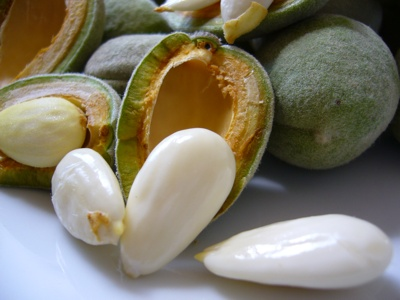
Lavender, Bergamot, Italian Mandarin, Gardenia jasminoides/Gardenia citriodora duo, Genet absolute, Vetyvert, Oakmoss.

Rodrigo Flores-Roux (left) and Carlos Huber (right). Source: Fragrantica.

Rodrigo Flores-Roux (left) and Carlos Huber (right). Source: Fragrantica.

A brief word about the notes. First, “genet” is apparently some sort of Broom plant, not a relative of the civet mammal. (A big thank you to perfumer, Maggie Mahboubian, who clarified that point for me, and who also commented that it has a rich, honeyed, herbal aroma.) Second, you have to remember that the smell of a gardenia flower is often replicated through other floral notes. In this case, however, Arquiste seems to be saying that different varieties of actual gardenias were used. Regardless of source, the goal seems to have been a masculine, green floral. A Fragrantica profile on Boutonniere and Carlos Huber states, (or perhaps quotes Huber himself):

In taming and “sharpening” gardenia’s multifaceted nature towards a great masculine feel, it took a mix of lavender, bergamot, Italian mandarin, vetiver and oak moss. And the “gardenia” is a duo of Gardenia jasminoides and Gardenia citriodora. While citrus and bergamot combine with lavender to create the opening, the base of vetiver and oak moss in the final stages will always back up the straightforward courage into the subdued passion of the wearer.  

It all sounds terribly good on paper. How often do you have the lush, indolic, hyper-feminine gardenia flower treated almost like a traditional fougère with its lavender, moss and herbal elements? A masculine take on gardenia has infinite potential for originality, so I was really excited to try Boutonniere when I won a sample set of the Arquiste line in a giveaway on The Fragrant Man blog. If only the reality of Boutonniere were as complex or unique as the promise of its notes.

Boutonniere No. 7 presentation on the Arquiste website.

Boutonniere No. 7 presentation on the Arquiste website.

Boutonniere opens on my skin with a burst of fresh, very green gardenia. It is heavily infused with vetiver that has a brief nuance of something rather minty, and is also accompanied by a touch of bright, springy mossiness. The whole thing is a visual panoply of emerald greens with a bright, dewy, green-white gardenia at its center. Dainty whiffs of bergamot, orange, and a vaguely herbal, very abstract aromatic note dance around the edges, but they are mere specks in the picture. The final element is a subtle, synthetic tonality resembling ISO E Super that lurks deep down in Boutonniere’s base, though it is very muted at this point. [Update: Arquiste has clarified that the aroma-chemical in question is Ambermax, a synthetic which Givaudan describes as having “the power of dry amber” with “subtantive [sic] fusing [of] cedarwood facets.”] Initially, the whole thing wafts in an extremely airy cloud that blooms 2-3 inches above the skin. It is perfectly balanced between the bright, fresh, green elements and the sweet gardenia, and is initially strong when sniffed up close. From afar, however, Boutonniere smells merely like a translucent wisp of green gardenia with vetiver.
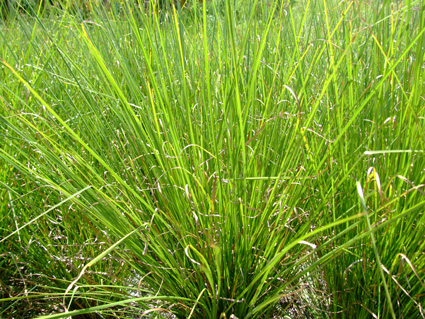
Haitiian vetiver grass. Source: astierdemarest.com

Haitiian vetiver grass. Source: astierdemarest.com

Time is not kind to Boutonniere on my skin. Less than 15 minutes in, the perfume starts to devolve. Boutonniere becomes thinner in feel, and also loses its touches of citrus and mint. A bare 25 minutes in, the sillage drops further, and Boutonniere hovers an inch above the skin. Before the first hour is even up, the perfume lies right on the skin, and is close to becoming a skin scent. It accomplishes that disappointing feat a mere 75 minutes into its development. Around the same time, a subtle element of pepperiness pops up at the periphery, as the ISO E Super Ambermax starts to rise from the base.

Gardenia jasminoide. Source: flowerpictures.org, photographer unknown.

Gardenia jasminoide. Source: flowerpictures.org, photographer unknown.

The end of the first hour ushers in another change as well. Boutonniere feels creamier and warmer, as the more jasmine-based gardenia element becomes more prominent. The scent still retains its greenness, but the flower is less dewy and crisp. It parallels the evolution of a white flower that you pick and wear, moving from the dainty, fresh greenness to a warmer, more yellowed creaminess after a few hours. The minuscule citric curlicues vanish; and the vetiver begins to turn more dry. It eventually becomes more woody than green and bright, but, for now, Boutonniere is still primarily a gardenia scent with varying levels of fresh vetiver.

By the end of the third hour, Boutonniere lives up to its description on the Arquiste website as a woody floral, for the softened, velvety gardenia is now firmly entrenched in a woody, dry vetiver embrace. It has a lightly mineralized feel that is supplemented by the tiniest touch of oakmoss, but there really isn’t much more to the scent. It is light, simple, and airy, but it clings to the skin like translucent gauze. In fact, the perfume is so wispy and thin that I was sure it was going to die at any moment after a mere 2 hours, so you can imagine my surprise to see Boutonniere cling on tenaciously for quite a bit longer.

Vetiver roots, the primary source of the aroma. Photo:  Herbariasoap.com

Vetiver roots, the primary source of the aroma. Photo: Herbariasoap.com

As the hours passed, Boutonniere fought for dear life as the most basic gardenia soliflore around, with fluctuating degrees of vetiver and a growing ISO E Super Ambermax peppered flourish. At times, the vetiver actually seemed like it had wiped out the gardenia altogether, but the flower is stalwart and makes a comeback. In its final moments, Boutonniere is the sheerest smear of a vaguely greenish gardenia. All in all, it lasted just under 7.5 hours on my skin.

On Fragrantica, the comments range all over the place:

  • Like Carnal Flower, but less skanky/interesting. WAY too feminine for unisex IMO.
  • On paper I thought that maybe a little bit of Carnal flower had somehow got mixed up in my sample, I was overpowered by crushed gardenia petals. However when put on skin the sweet floral edge almost disappears to give way to a sensual spicy skin scent that I can not stop sniffing! This is like carnal flowers darker sultry sister, still with a hint of sweet gardenia but mostly about spicy wood (vetiver) and balmy lavender, and dirty (in a good way) genet and a shimmer of petitgran. In the heart the creamy sparkly gardenia comes back a bit to soapy strong for my liking. This scent wears very close to the skin not much silage. But depending on how long the soapy gardenia lasts this could be a little gem that should be worn close to skin, a little secret that only those close to you can appreciate.
  • This smells like a balloon that was rubbed against someone’s head…. [¶] I honestly don’t know know what notes are clashing to create that sharp, dense rubber note (oakmoss and genet poop perhaps!?), but I cannot imagine forking out that kind of money to smell like this, it’s bizarre.
Source: Hdwallpaperes.com

Jasmine. Source: Hdwallpaperes.com

Kevin of Now Smell This had an infinitely better experience than either that last commentator or me, though Boutonniere did not seem to sweep him off his feet. In his review, he wrote:

Arquiste Boutonnière no. 7 opens with a burst of fleshy white flowers (not gardenia, but jasmine); the flowers are sweet, mildly indolic and have an undercurrent of woodiness. As the fragrance quickly develops, I detect a soft “orange peel” note, a gentle touch of “smoke” (the vetiver?) and oak moss. Arquiste Boutonnière no. 7 plays nicely on skin: after I sprayed the fragrance on, I detected indoles on my left hand, orange peel on my right hand, and vetiver and flowers on my wrists; this fragmentation makes for an interesting experience, and all the perfume’s notes work together to create a “happy,” sunny, summertime vibe. Boutonnière no. 7 dries down to a “fresh” (but creamy) white floral and smooth vetiver perfume.

Arquiste Boutonnière no. 7 can easily be worn by women, but how will men take to a jasmine/“gardenia” fragrance? (I’m betting, without any evidence, that women will buy this fragrance more than men.) Arquiste Boutonnière no. 7 contains excellent ingredients, has good lasting power, discreet sillage, and it does not smell old-fashioned[….] As for me…the gardenia perfume I’ve been waiting for has not yet arrived.

Victoria of Bois de Jasmin loved Boutonniere, though her experience was closer to mine with all the vetiver than to Kevin’s. In her review, she writes, in part:

My first impression of Boutonniere no.7 was that it was a gardenia at long last. […][¶] But as I wore Boutonniere longer, I realized that it’s really a vetiver fragrance with just a scattering of white petals. The earthy vetiver and cool moss are so rich in the drydon that you are no longer sure if you’re smelling the petals or the stems. The damp, nutty vetiver may seem a surprising companion to the lush gardenia, but their earthy facets are natural complements. A bright touch of bergamot keeps the composition sparkling and vivid, while lavender takes off the overripe, indolic edge. The result is a bright, crisp fragrance, the heady gardenia notes notwithstanding. […]

There are many elements of Boutonniere that draw me to it. I love its contrasts and smooth transitions from one accord to another. I love the salty, damp darkness of vetiver that is contrasted against the white petals. I also love its quality and polish.

I envy her experience. I wish I had “twists” with Boutonniere No. 7, let alone “transitions.” On my skin, the only significant changes pertained to the early, muted, tiny flickers of tertiary elements vanishing in less than 15 minutes.

I love big white florals, so I enjoyed the green gardenia in Boutonniere quite a bit, but my overall reaction is disappointment. The Arquiste signature style seems skew towards light, discreet scents as a whole, but the sillage on Boutonniere is far too weak in my opinion. 50 minutes for it to lie right on the skin, and a 75 minutes for a skin scent? It is extreme. If Boutonniere had more projection, body, or richness, then I wouldn’t mind that it was a completely basic, linear soliflore that primarily consisted of two elements.

I don’t believe in examining perfumes in a vacuum, and, in this case, all the factors combined together are very problematic in light of the perfume’s cost. Arquiste may currently sell the perfume for $175 for a small 55 ml bottle on its website, but most of the big U.S. retailers are charging $195. The same story applies in Canada, too. With tax, that makes the final price for a small bottle of Boutonniere just under $220. In my opinion, that’s bloody high for the fragrance and size in question.

I find it interesting that a handful of the biggest perfume sites in Europe seem to have dropped Arquiste. Perhaps it is merely a contract issue, but Arquiste fragrances are no longer available on Liberty London’s website, and Jovoy Paris has stopped carrying the line entirely. At the same time, First in Fragrance is massively slashing its prices on those few fragrances in the line that it still has, an action that I find to be quite telling. Others large retailers who continue to carry the Arquiste line (like Essenza Nobile, Osswald in Zurich, and First in Fragrance as well) don’t even bother with Boutonniere No. 7, suggesting that the perfume simply doesn’t sell at the high price point that Arquiste wants for it. 

[UPDATE 1/30/14: Arquiste has responded in the comments to both the pricing differential and to the distribution issue, and it’s only fair to repeat the gist of their position up top in the text where everyone can see it. Arquiste clarifies that the $195 price is for a special numbered edition of the fragrance which comes with a steel stick-pin made by jewelers. The regular, retail price for the normal Boutonniere No. 7 fragrance is still $175. According to Arquiste, the “stores have chosen which one to carry based on what they liked.” As for the issue of distribution in Europe, Arquiste states that it is a matter of finding out which partnerships work and which don’t. You can read the full text of their response down in the comments.]

One can only wonder if perhaps Arquiste is over-pricing fragrances that are consistently sheer, wholly unobtrusive, quite simple, thin, and with only moderate longevity. I really love Arquiste’s Anima Dulcis, but it has similar flaws in projection, body, and longevity which renders its price too high for me. Same story with another Arquiste fragrance that I tested last week. As for l’Etrog, an Arquiste citrus scent I reviewed a while back, I found it to be a dull, overly simplistic, terribly boring, linear, ISO E Super-laden disappointment.

Boutonniere is a significantly better fragrance than that one, but a complex, nuanced masterpiece it is not. I think it would work best for women who are looking for an extremely intimate, green gardenia scent that few other people can detect. Boutonniere is most definitely suited for an office environment. I’m less certain as to whether men may fall hard for Boutonniere. It’s not as masculine as touted, and the amount of vetiver (let alone lavender) that you may experience will undoubtedly depend on skin chemistry. I think if you enjoy green interpretations on white florals (like, for example, Frederic Malle’s Carnal Flower), but want something even sheerer, lighter and more unobtrusive, then Boutonniere No. 7 will be right up your alley. I’m still highly dubious about the value for the price, though. 

DETAILS:
Cost & Availability: Boutonniere No. 7 is an eau de parfum that is available only in a 55 ml/1.85 oz size. It costs currently $175 on the Arquiste website, but many U.S. retailers carry the special, numbered edition which costs $195. The perfume’s non-US price is: CAD$195, £125, or €159 (I think). In the U.S.: You can buy Boutonniere for $175 from Avery Fine Perfumery, The Twisted Lily, and Babalu Miami. The following sites sell it for the higher $195 price with the numbered bottle and accompanying steel stick-pin: BarneysOsswald NYC, Beauty Habit, and Aedes. Outside the U.S.: In Canada, the Arquiste line is available at Holt Renfrew Bloor in Toronto (though I could not locate it on the overall Holt Renfrew website), or at Etiket in Montreal for CAD $195. Each store is the exclusive dealer for the Arquiste line in their city. In the UK, Boutonniere is available for £125.00 from Bloom Parfumery, along with a sample. In France, Jovoy no longer carries Arquiste, and First in Fragrance is discounting those few Arquiste fragrances that it still carries. In Australia, there are a few vendors which carry the Arquiste line, such as Peony Melbourne or Libertine which sells Boutonniere for AUD$199. Arquiste is also sold at numerous small retailers throughout France, Italy, and Germany, but also Mexico, New Zealand, Lithuania, Croatia, Ireland and more. You can use Arquiste’s “Stockists” page to find a retailer near you. Samples: Samples are available at Surrender to Chance where the price starts at $4.99 for a 1/2 ml vial. The site also sells all 7 perfumes from the Arquiste line in a sample pack for $33.99.

Ormonde Jayne Orris Noir

Source: Fragrantica.

Source: Fragrantica.

On occasion, I’ll come across a perfume whose most striking characteristic for me is a textural one. Instead of specific notes or a movement of change throughout the stages, the perfume merely evokes a lovely creaminess that is almost devoid of an actual olfactory smell. That is the case for me with Orris Noir, a fragrance from Ormonde Jayne that is meant to be so “haunting” that it “defies description.” I’m afraid it fell far short of such a description in my eyes, but, then, in all fairness, what fragrance could positively live up to that line?

Ormonde Jayne is a high-end, niche London perfume house founded by Linda Pilkington in 2002. All her perfumes are created in conjunction with Geza Schoen, and Orris Noir is no exception. The fragrance was released in 2006, and is available in two concentrations: pure parfum (with 30% fragrance oils) and eau de parfum (25%). This review is for the eau de parfum.

Black Iris via Soundcloud.com

Black Iris via Soundcloud.com

Ormonde Jayne’s website describes Orris Noir as follows:

Orris Noir – so haunting, it almost defies description.

The Iris flower is named after the Greek Goddess of the rainbow, the messenger of the Gods and the Black Iris of Amman is the Royal symbol of the Kings of Jordan. Thriving in a landscape of ample sun, it is a rich, purple black flower of smouldering beauty.

This dark, spicy Oriental scent is for those who want to leave their mark.

A spellbinding perfume, Orris Noir is a rich, seductive aria of unmistakable individuality, not for shrinking violets.

Top Notes: Davana, pink pepper, coriander seed, bergamot
Heart Notes: Iris, [jasmine] sambac absolute, pimento berries, bay
Base Notes: Incense, myrrh, patchouli, chinese cedar, gaiac.

Source: Dailymail.com

Source: Dailymail.com

Orris Noir opens on my skin with black peppered lemon and cream, followed by a touch of pink peppercorn berries and a whisper of fruit. A spectral hint of rooty iris pops up at the edges, but it is very subtle. It carries the tiniest undertone of sweet carrots, I think, but the iris note as a whole is so muffled that it may well be my imagination. Certainly, when I’ve tested Orris Noir in the past using only a small quantity, none of it showed up. Instead, the main bouquet smells to me of a very milky, creamy tea with lemon, a vague and nebulous floralacy, pink peppercorns, and a touch of something fruity.

Source: artid.com

Source: artid.com

The issue of quantity impacting notes is interesting when it comes to Orris Noir because I noted differences based on that amount of scent that I apply. When I applied only a small quantity (perhaps 1/3 of a 1 ml vial), there was a brief suggestion of something fiery or biting from the pimento chili peppers, but it was so fleeting that it too may have just been imagined. At the same time, there was a more distinct puff of black incense in the background, but you had to sniff extremely hard and long to really detect it. Both elements, however, were minor and barely lasted.

In contrast, I could definitely detect the iris when I applied a greater amount of Orris Noir. (I used about 2/3rds of a 1 ml vial.) Regardless of quantity, however, and taken as a whole, the iris feels like a tertiary, very quiet, very muted player on the sidelines. For a fragrance that is intended to be a dark homage to iris, I’m afraid that Orris Noir was really everything but that for the majority of its development on my skin.

Davana. Source: hermitageoils.com/davana-essential-oil

Davana. Source: hermitageoils.com/davana-essential-oil

Instead, the primary bouquet of Orris Noir in its opening hour on my skin is extremely creamy Earl Grey tea. Not milky, for the textural quality of the fragrance goes beyond a merely lactonic quality, but rich, smooth cream. It’s infused with lemon, pepper, and, after 20 minutes, by the Davana. I happen to really like the last note, and I think Davana is an element that should be used more often in perfumery. It is an Indian flower with a very lush, velvety, floral smell and a fruity undertone, most specifically of apricots. Here, with Orris Noir, the apricot tonality is extremely subtle at first and the main aroma is of a petal-soft, vaguely tropical flower with endless creaminess.

Orris Noir remains that way for the next few hours, largely unchanged except for the sillage and subtle variations in the notes. It’s all lemon-pepper cream with davana florals, and an increasingly strong sense of fruitiness. The iris lingers like a ghost in the back, as does the cedar. In fact, the two together generally impart a wholly abstract, nebulous undertone of a woody, floral musk, but neither note stands out on my skin with any individual character. I would never sniff Orris Noir and think, “Ah, Iris,” because the flower is practically a nonentity on me after the first hour.

At the start of the second hour, the sillage drops to an inch or two above the skin, though the perfume is easily detectable if sniffed up close. The only major change occurs about 2.5 hours in, when there is the first, very muffled suggestion of jasmine. Orris Noir’s main characteristic continues to be a very smooth, textural creaminess, though it is becoming increasingly difficult to pull it apart into a specific, actual olfactory note. It also now feels more nebulously woody than purely floral in nature.

Source: de.123rf.com

Source: de.123rf.com

About 3.5 hours in, Orris Noir is a creamy, lemony, floral skin scent with light touches of jasmine, soft abstract woodiness, and a slightly fruited nuance. It remains that way until the end of the 6th hour when the jasmine finally steps out of the shadows, and takes over. There are lingering traces of the davana, but Orris Noir is primarily a very sheer, blurry wisp of sweet jasmine woody musk. The perfume remains that way until its very end. It lasted 8.75 hours with a large quantity, and just over 7.75 hours with a smaller amount.

Orris Noir is very pretty, easy-going, approachable, and smooth, but it is also a bit underwhelming, if I’m to be honest. Its creaminess was its most distinctive feature for me, and something that I enjoyed a lot. Plus, to my relief, Orris Noir had only the most microscopic drop of ISO E Super, unlike some Ormonde Jayne fragrances which practically ooze it out of every pore. Orris Noir was well-balanced, had some pretty bits, and was perfectly pleasant as a whole. Yet, I really wasn’t moved; none of it sings or stands out for me.

Tania Sanchez seems to have had much greater problems with Orris Noir. In Perfumes: The A-Z Guide, she classifies Orris Noir as a “peppery cedar” and gives it a low 2 stars. Her reviews states:

The name combines two of the biggest recent trends: orris (iris-root butter) is showing up everywhere, and so are perfumes named Something Noir (or Black Thingamajig). The trouble is that there’s nothing particularly iris or noir about this. Instead, it smells like lemon and pepper with an oily-woody background, slightly chemical and faceless, a rare misstep for the excellent Ormonde Jayne line.

I really don’t think it’s that bad, not by any means, though I do agree with the “faceless” part. I think my feelings would be different if I experienced a lot (or even some) incense in the fragrance, but I did not. Like Tania Sanchez, I thought Orris Noir was lemony-pepper, albeit with davana creaminess, some jasmine, and a nebulous woody musk.

Other bloggers, however, definitely experienced more incense, spiciness, and darkness than I did. Whether you read Eyeliner on a Cat, Bois de Jasmin, or The Non-Blonde, they seem to have detected a more sultry, quasi-oriental fragrance, though no-one thinks that the iris dominates or that Orris Noir is particularly bold. The bloggers all liked Orris Noir, and Bois de Jasmin’s review is quite representative of the general consensus:

Even if Ormonde Jayne Orris Noir does not present its promised black iris, it more than makes up for it with its exquisite combination of spices, incense ashes and velvety woods. Its form crafted out of resinous and balsamic notes is nevertheless rendered as luminous and weightless, like silk, rather than wool.

The spicy notes provide an opulent leitmotif that persists as Orris Noir develops. They frame the lemony green top notes and foil the sheer floral heart. The echoes of sweet warmth of allspice can be noticed in the rich woody base. The chilly breath of iris is quite a subtle accent in this vivid arrangement, yet it lends a certain restraint. Incense, smooth and smoky, envelops the composition in its translucent dark veil.

My skin seems to have brought out more of the davana creaminess than anyone else, especially as compared to those on Basenotes. They generally like Orris Noir, though not everyone gushes enthusiasm. Take the review by “Alfarom” who writes, in part:

No iris whatsoever, not “noir” at all.

That being said, if you’re fine with a peppery-woody-incensey fragrance dominated by a nice, yet unquestionably synthetic vibe, this is a pretty decent composition. Kinda dry yet, somewhat, slightly powdery, woody and incensey with nice piquant undertones. Far from being a masterpiece yet nice.

A number of women absolutely adore the scent, though a few think they detect a “rose” note which I suspect might be the davana at play. One of the more positive reviews reads:

Three words to describe Orris Noir: Gorgeous, gorgeous, gorgeous. Lighter than its name implies, but spellbinding nonetheless, ON skims along the surface of the skin so deftly I kept expecting it would disappear entirely any minute. Instead it became creamier as it opened up, and was still marvelously “there” hours after I first put it on. It is a beautiful blend of light spices and delicate exotic florals, the pink pepper, coriander and powdery iris (fortunately more iris than powder) definitely come through on me.

On Fragrantica, there is the same generally positive response to Orris Noir. Interestingly, a greater number of commentators picked up on the creaminess and the “candied, fruity” elements in the scent, while one reviewer, “Cohibadad,” also detected plenty of iris. Generally, a number of people seemed to think Orris Noir was quite oriental in feel, which just goes to show you the importance of one’s personal and definitional standards. For me, Orris Noir isn’t remotely oriental, even if one doesn’t use brands like Amouage as a baseline. For me, it’s a floral woody musk. I think that it is all going to depend on your skin chemistry and on your personal standards.

Orris Noir isn’t my personal cup of tea, but it’s a nice fragrance and those who like airy, creamy, discreet florals may want to give it a try. I think it skews somewhat feminine, as do some men on Basenotes, but it all depends on what you’re comfortable with. It is a very approachable scent that is versatile, and could also be worn to the office without making waves.

Disclosure: I was sent Orris Noir for review by Ormonde Jayne, but I had previously purchased my own sample from Surrender to Chance, and that is what I used for this review. In all cases, I do not do paid reviews, my opinions are my own, and my first obligation is honesty to my readers.

DETAILS:
Cost & Availability: Orris Noir is available in a 50 ml flacon of either parfum extrait or eau de parfum. The EDP price for the regular bottle (without the gold stopper) is $126 or £80. There is also a 4 x 10 ml travel set of Orris Noir that costs $100 or £64, a body cream of the scent, and other accompanying body products. Finally, there is a full Discovery Set that costs $75 or £48 for 2 ml sample sprays of the entire Ormonde Jayne line. It comes with free world-wide shipping. Orris Noir can be purchased directly from the Ormonde Jayne website, its two stores in London, and from HarrodsIn the U.S.: Ormonde Jayne is not carried by any stores in the U.S. at the moment. You would have order from London, but unfortunately, UK postal regulations for any perfume weighing over 50 ml is extremely high. The shipping cost to the U.S. will run you over $50, though that does not apply to the sample set. Elsewhere in Europe: Ormonde Jayne fragrances are carried by Senteurs d’Ailleurs in Brussels (though it has ceased its online e-sales), and by Zurich’s Osswald. For other vendors from Spain to Italy, Norway, Germany (where a large number of different retailers carry the line) and various other European countries, you can use the Ormonde Jayne’s Store LocatorSamplesSurrender to Chance sells samples of Orris Noir EDP starting at $3.99 for 1/2 ml. They also carry the Pure Parfum version.

La Via del Profumo Tabac

Imagine a fragrance that bottles the olfactory trajectory of the tobacco plant from its natural start to its finish, a perfume that evokes images of its greenness rooted in the dark earth of a Virginia plantation where it blooms with flowers, to its brown softness as the leaves are later dried in the sun, to Havana where it is rolled into Cohiba cigars.

Tabac via the Profumo site.

Tabac via the Profumo site.

That is Tabac, a 3-D display of the note in all its complexity. It traverses the spectrum from floral and green, to tarry rawness and chewy resinous darkness; and then from leathered smokiness to its final manifestation as the most expensive of smooth Cuban cigars that are eventually dusted with cinnamon-tonka and dry amber. It is a remarkably deft treatment of a very concentrated absolute essence, augmented by the smokiest of cedar, but also tamed by the breathiest whisper of dry vanilla and gingerbread warmth. I find it to be brilliantly done, from start to finish.

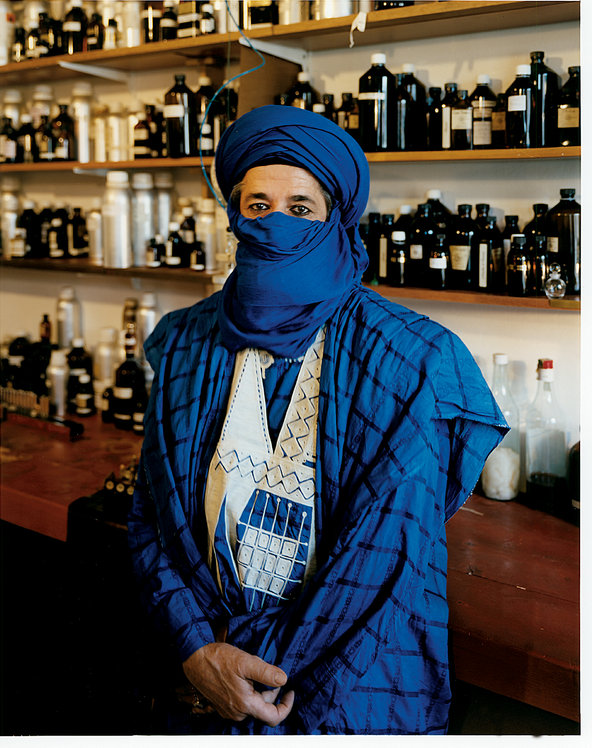
Dominque Dubrana via the NYT. Photo by Domingo Milella.

Dominque Dubrana via the NYT. Photo by Domingo Milella.

Tabac is an eau de parfum from the highly respected perfumer, Dominique Dubrana, who also goes by the name “Abdes Salaam Attar.” His Italian perfume house, La Via del Profumo, creates all-natural fragrances. In the case of Tabac, the focus is on tobacco absolute. Abdes Salaam Attar describes Tabac on his Profumo website as follows :

The absolute of tobacco is the theme of this perfume. In the composition the overwhelming aroma of the tobacco is moderated with the spicy and resinous essences traditionally used to scent pipe tobacco…. Vanilla, cistus, tonka etc.

At a bare minimum, the notes seem to be:

Tobacco Absolute, Vanilla, Cistus [Labdanum Amber] and Tonka.

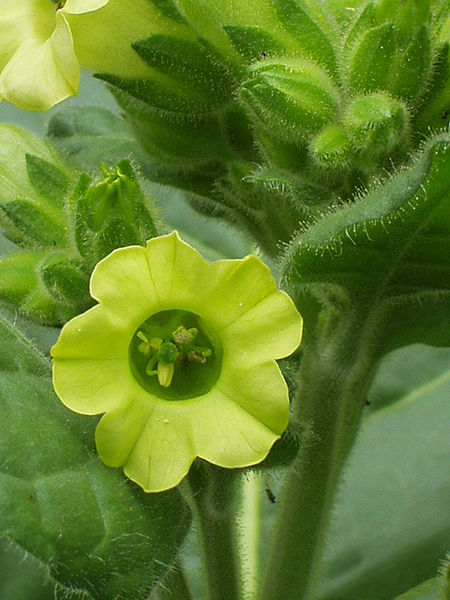
Native American Tobacco Flower via Wikipedia. Photo: William Rafti.

Native American Tobacco Flower via Wikipedia. Photo: William Rafti.

Tabac opens on my skin with floral tobacco, as if the blooming flowers on the plant were captured and bottled with all their fragrant sweetness. It is followed by the rawness of tobacco juice, and by honeyed, sun-dried leaves. Within seconds, the flowers are infused with a camphorated, resinous greenness that is simultaneously grassy and a bit tarry.

The light, bright freshness of the flowers stands in stark contrast to the dark, chewy, gooey treacle that quickly overtakes them. The note is blackened, extremely smoky, tarry, and leathered. Yet, at the same time, there remains a touch of green; it feels as though a rich mass of chewing tobacco and leather had been infused with the brightest of summer grass, along with a touch of aromatic, herbal concentrate. I also detect a strong note of cedar in Tabac, revealing itself as a woody smokiness that is laced throughout all the other elements. It mixes with the hardcore, resinoid aspect of the tobacco absolute to accentuate the leathered undertone running through the fragrance.

"Autumn Abstract." Photo: Tim Noonan via Flickr. (Website link embedded within photo.)

“Autumn Abstract.” Photo: Tim Noonan via Flickr. (Website link embedded within photo.)

Tabac is fascinatingly multi-faceted in its presentation of tobacco. I’ve noticed that if you only dab on a little, perhaps a 1/5th of a vial, the floral and grassy accords emerge more strongly. However, if you apply on 3 really big smears, you’re suddenly presented with significant dark, smoky, and resinous elements.

Source: rgbstock.com

Source: rgbstock.com

In all cases, however, Tabac is a very dry take on tobacco, especially as compared to the versions put out by Tom Ford with his Tobacco Vanilla or the even sweeter Tabac Rouge by Phaedon. Mr. Dubrana’s version is unsweetened, substantially smokier, and earthier. It’s as though a heaping dose of the smokiest, dark cedar and an earthy, woody version of something green (vetiver?) were used as accompaniments in lieu of the usual vanilla or sweetened fruits. Yet, for all that, Tabac isn’t bitter or acrid. The sweetness is delicate and subtle, but it is definitely there, even if it is a hesitant whisper in the shadows at this stage. Tabac also differs from Serge Lutens‘ Chergui in a number of ways. Tabac lacks Chergui’s strong touch of powder and honeyed tonalities. It is much more leathered, dry, dense, smoky, and heavy. The main difference, however, is that the tobacco is more multi-faceted, complex, and powerful a note.   

Source: fivepalms.com

Source: fivepalms.com

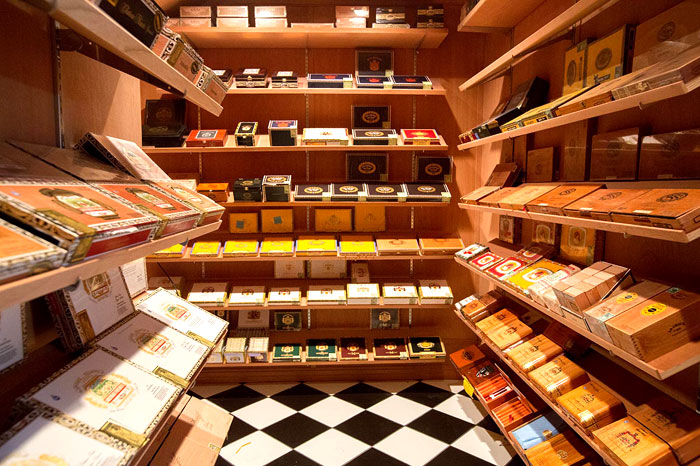
Ten minutes in, Tabac starts to change. The smoky, dried tobacco leaves lose their grassy and fresh touches, while that initial pop of floralacy retreats to the sidelines. There, it takes up a ghostly act, sometimes materializing noticeably before flitting away, then reappearing again much later on. As a whole though, Tabac is now a very woody, resinous, chewy tobacco fragrance with serious heft in its notes. I keep thinking of Cuba or humidor rooms with shelves of boxed Monte Cristo or Cohiba cigars. At times, the best part of the scent is the smokiness which verges more on mesquite wood than either incense or actual tobacco smoke. It certainly doesn’t smell like cigarettes or stale ashtrays. What I keep imagining is a wood-burning BBQ at an old plantation in the South, under the shade of cedar trees, while tobacco leaves slowly dry inches away. It’s very Gone with the Wind, with a small detour to Havana. 

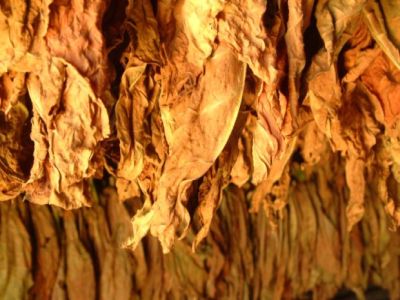
Dry tobacco leaves. Source: cigarettesplace.net

Dry tobacco leaves. Source: cigarettesplace.net

30 minutes in, Tabac turns softer, warmer, and smoother. The vanilla and tonka stir in the base, indirectly adding a light touch of sweetness. They can’t be singled out individually, but you can definitely feel the impact on the tobacco. The camphorated, green pungency has faded from sight, along with the grassy element. Lingering traces of a leathered accord remain, however, as does the overall smokiness. The dark undercurrent feels less chewy, and most of the blackness has visually turned to a deep brown-gold. The tobacco itself has changed, feeling primarily like semi-sweet, dried leaves, though there is still a subtle wetness and tinge of rawness left behind. The sillage also changes, dropping from its initial forcefulness to a soft cloud that wafts about 2 inches above the skin. Nonetheless, Tabac is still very potent and strong when sniffed up close, and it remains that way for a couple of hours.

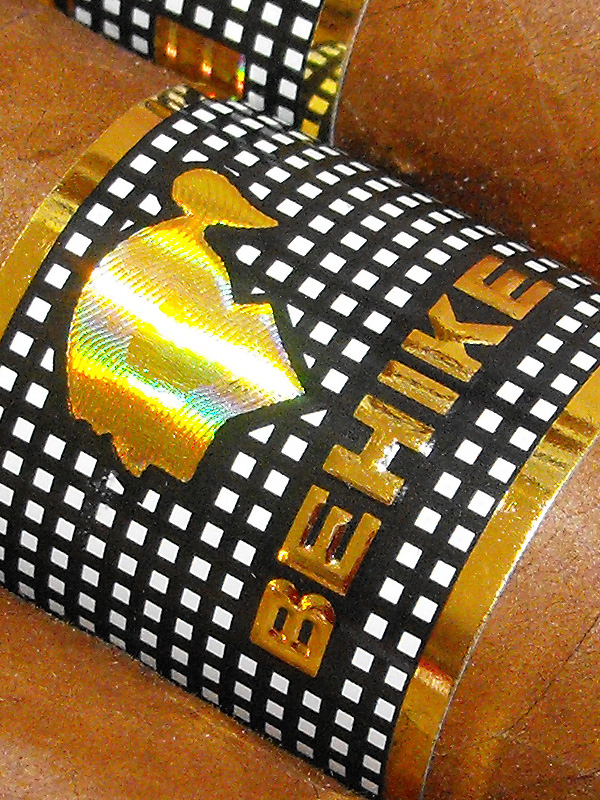
The Cohiba Behike, one of the best cigars in the world. Source: cgarsltd.co.uk

The Cohiba Behike, one of the best cigars in the world. Source: cgarsltd.co.uk

Almost all the tobacco fragrances that I’ve tried seem to manifest pipe tobacco with its fruited, sweetened tonalities. They also toss in vanilla — whether powdered, resinous, or both. Profumo’s Tabac is very different. To me, this is pure cigar tobacco. A dry, unsmoked cigar, but also one with very smoky and woody nuances. There are no fruits, barely a drop of sweetness, and what amber there is isn’t a molten thickness.

At best, the fragrance is nestled in a tinge of golden softness and warmth, but nothing about it translates as real, hardcore amber to my nose. In fact, for the longest time, there was none of the nuttied, caramel, toffee elements of labdanum amber that forms the core of such fragrances as Dior‘s Mitzah, nor the ambergris amber in Dior’s Ambre Nuit or Profumum Roma‘s Ambra Aurea. The golden warmth here is much more abstract in nature, and wholly infused with mesquite smokiness and dryness rather than with heavy, thick sweetness. I love Tabac’s pure authenticity, and find it to be a novel change from the traditional tobacco scents on the market. This is the plant in all its manifestations, from the initial greenness and flowers of its natural state, to the cigar at the end of the line.  

Shortly before the end of the 2nd hour, Tabac changes once again. Now, the tonka bursts onto the scene, dusting everything with cinnamon. The labdanum finally perks up, adding a faintly burnt caramel, nuttied undertone to the proceedings, but it’s incredibly muted, sheer, and thin. Most of the time, it’s hard to single out, as Tabac is superbly blended. What happens instead is that it works from the sidelines to impact the other notes, and the overall cocoon in which the tobacco lies. It still doesn’t change Tabac’s dryness, however, which continues in large part thanks in part to the cedar’s smokiness.

"Copper abstract" by StarwaltDesign via deviantart.com. http://starwaltdesign.deviantart.com/art/Copper-Abstract-207268167

“Copper abstract” by StarwaltDesign via deviantart.com. http://starwaltdesign.deviantart.com/art/Copper-Abstract-207268167

A strange thing slowly happens. Tabac takes on almost a mocha-cocoa quality. Some combination of the bitter tobacco, the toffee’d labdanum amber, and the tonka has melded into an accord that smells like bitter coffee, dusty cocoa powder, vanilla, and cinnamon. The overall effect is to create a mocha tobacco impression on my skin that I love. I initially thought I was imagining it, but there was the same nuance that popped up both times that I tested Tabac. It’s obviously a question of skin chemistry, but it’s a super outcome in conjunction with the lingering traces of darkened leather and wooded smokiness. The leather undertone — muted and mild as it now is — is particularly great in tying everything together like a cord.

Source: ironwood-design.com

Source: ironwood-design.com

Tabac continues to soften, and its sillage drops further. For the first two hours, Tabac hovered about 3 inches above the skin, then it drops to a mere inch at the start of the third hour. By the 4.5 hour mark, it is a skin scent that is primarily cinnamon-dusted, tonka tobacco with traces of chocolate mocha, leathered darkness, and cedar smoke, all nestled in the quietest cocoon of dry amber. Tabac turns more and more abstract, spending the next 5 hours as a blur of vanilla-dusted tobacco leaves with amber and the lightest, tiniest speckle of powder. To my surprise, it’s still not hard to detect if you put your nose on your skin. In its final moments, Tabac is merely cinnamon sweetness and dryness. All in all, Tabac lasted 12.75 hours on my skin, with moderate sillage for the first third of its life, then discreet sillage.    

On Basenotes, the consensus over Tabac is overwhelmingly positive. Out of 12 reviews, 10 are positive, 1 is neutral, and only 1 is negative. The most interesting thing concerning the last two is that those people seem to significantly disagree as to whether Tabac actually smells like tobacco. So, let’s start with the neutral and negative reviews first:

  • [Neutral:] cedar verging on turpentine.
  • [Negative:] I’m a huge fan of tobacco scents (a “reformed” smoker), but I get absolutely no tobacco from this one… not even a hint. What I do get is “grass”; not new-mown grass, not “pot”, but a strong, soothing, grassy smell. Which I like. I’d like it much more, if it wasn’t astronomically expensive. But no tobacco.

Well, skin chemistry is a funny thing, and his skin obviously brought out all the greenness of the scent. Another commentator also found that Tabac had no tobacco but he, in contrast, gave the fragrance a thumbs-up, writing: “Definitely NOT Tobacco, but….. a great perfume!”  

Source: 123rf.com

Source: 123rf.com

Others, though, got a full dose of the note, with several posters proclaiming that Tabac is a “must try” for any serious tobacco lover. The analysis of one commentator, “Hirch_Duckfinder,” is superb:

Starts with a slightly boozy blast of tobacco, like an islay malt, smokey and resinous with echoes of hay. For a short while the tobacco remains centre and top until it settles down and it drops into a strong structure with the warm tobacco at the low register, some lovely fluid labdanum, sweet tonka and beautiful vanilla sitting in layers. There is clary sage too, seamlessly integrated as flavouring. The drydown is absolutely my favourite tobacco accord of all time. The balance is wonderful, the tobacco is present but not too sharp or musty, not sour and thin or thick and overwhelming but with body and lightness at the same time. The other notes are carefully built around to pull out aspects of its complex smell.

This has instantly become my favourite tobacco scent and one of my favourite perfumes of all. If you like tobacco at all, you must try this.

While the opening is quite masculine, I think the drydown is very wearable by a woman who likes tobacco.

I am not sure if it is the natural materials, the composition or both, but there is something in these profumo perfumes which gives me the impression of 3D, its almost like I can see the layers of the structure, distinct but in balance and with clear air between them.

Two more reviews are useful in providing comparisons to other tobacco fragrances on the market. First, “The Good Life” who writes:

I can’t add much to hirch’s lucid desciption. It is indeed a wonderful, must-try fragance. I, too, appreciate the absence of honey-dripping sweetness, as in SMN’s Acqua di Cuba, Boellis Panama and many other tobaccos and anyone who finds the musty density of [Creed‘s] vintage Tabarôme overly stifling will find here a clearer, more accentuated and tobacco-focused scent. That said, it is by no means simple – Dubrana has pointed out that this is in fact his most complex fragance in which he employs ingredients themselves constructed from many individual oils. Yet it is supremely elegant and easy to wear and even quite long lasting for a natural perfume. [Emphasis and bolding to names added by me.]

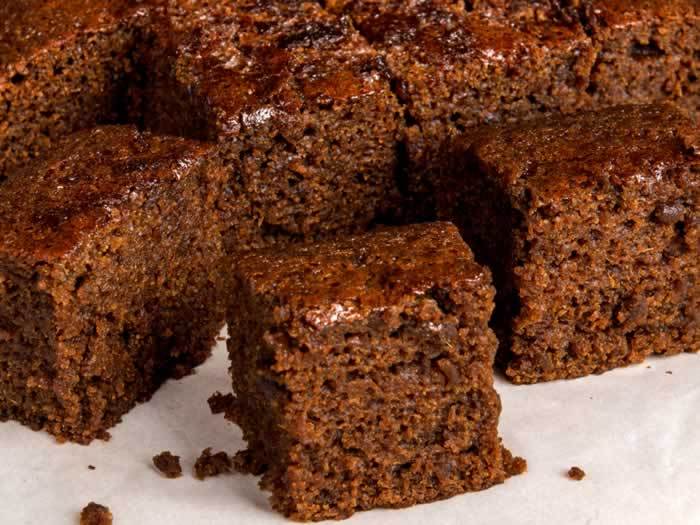
Gingerbread Cake by Mark Woods, at Shelbyville Times-Gazette, t-g.com.

Gingerbread Cake by Mark Woods, at Shelbyville Times-Gazette, t-g.com.

WillC” adds a comparison to Miller HarrisFeuilles de Tabac, and also brings up Luca Turin:

A deliciously comfortable masculine” (cf. Luca Turin) is a brilliant encapsulation of this fantastic fragrance. You might look at this description in the following way: “deliciously” referring to the slightly gourmandish aspects of the fragrance – most obviously gingerbread-like (as with Feuilles de Tabac – which Tabac, in my view, comfortably outclasses), although sometimes I seem to catch a faint whiff of something a bit like cocoa in the top notes. “Comfortable” – sometimes it reminds me of putting on a favourite old jumper (Tabac works well in winter, I’ve yet to try it in warmer weather), and there is definitely a strongly comforting aspect to the fragrance (perhaps this is partly because I used to be a smoker), although Tabac wouldn’t be at all out of place at a black-tie event. “Masculine” – I would say the fragrance is most obviously masculine, though I think a daring woman could pull it off.

There is a kind of sense of depth and density the fragrance has to it – this is perhaps due to the complex blending of a large number of natural ingredients – which I find very appealing. [¶] All in all, one my personal favourites from the La Via del Profumo line, and, I think, a definite must-sample for anyone looking for a truly high-quality tobacco fragrance. [Emphasis to names added by me.]

As for Luca Turin, yes, he does indeed love Tabac, which is one of three Profumo scents to which he awarded Four Stars. In fact, Profumo is supposedly the only all-natural perfume house that he includes in his book, Perfumes: the A-Z Guide. There, he calls Tabac a “tobacco leaf” fragrance, and writes:

Some years back I lived for a time in [Durham] North Carolina… home to half a dozen tobacco companies, including Lucky Strike. On some days, the downtown streets smelled so wonderfully of tobacco that the whole place felt like it had been carved out of a giant gingerbread. Tabac approximates that beautifully, without being overly sweet or honeyed. A deliciously comfortable fragrance.

I agree that Tabac is a comfortable fragrance, but I find it much more than that. I think it’s damn sexy. It conjures up the masculinity of the hottest, most rugged man on earth with a seriously gravelly, stubbly cheek that you could light a match against. (Those of you who know me well know of my massive obsession with …. er… interest in Jim Caveziel and “Mr. Reese” in the television show, Person of Interest. And, yes, I’m imagining smelling this on “Mr. Reese.”) Yet, the softness and spiced coziness makes Tabac something that would be fascinating on a confident, strong woman, creating an utterly alluring set of contradictions between Hemingway’s unlit Cohiba and the softly feminine tonka bean, the honeyed touch, and the gingerbread. If you’re a woman who loves tobacco scents or whose skin amplifies sweetness, then I don’t think you’ll find Tabac to be very “masculine.”

Photo of Faun by Forest Rogers, via Australian Perfume Junkies.

Photo of Faun by Forest Rogers, via Australian Perfume Junkies.

I know I’m quoting a lot of people but I want to give you the fullest picture possible, which is why I have to toss in perhaps one of the most visually descriptive takes on Tabac. It comes from Portia of Australian Perfume Junkies, who has a terrific photo to convey what she experienced:

It opens up deliciously vanilla and murky green tobacco on my skin, deep and humus rich earthy, maybe the cistus (rock rose) flies above but to me there is a fruity/jammy quality to the higher notes so you have a 2 speed fragrance. The depth and steady boom of the vanilla/tonka/smoking tobacco are played against this light flower/green tobacco/hay/fruity accord, there may even be a boozy side story here just on the edge of smelling. It is quite a ride, you can almost feel the sun on the cut grass, warming and drying it. This is a perfume, hefty, tasty, lusty and delicious; not for the faint hearted or affeared of fragrance. There is no hint of light aquatic, fruity nothing here. As it begins to lose its potency and aims towards dry down Tabac becomes sweeter before it goes dark, like the vanilla has come back to round the whole story out. Scent, longevity and sillage; Tabac by La Via del Profumo seems to have it all for me. When I finish this nearly empty sample it will be FB time.

I’m with Portia because, in case you hadn’t gathered by now, I thoroughly enjoyed Tabac and want a bottle for myself. It hits my sweet spot of a “comfort fragrance,” but it’s also so much more than that. Tabac’s grassiness, tarry leather, woody smokiness, soft cinnamon tonka, and mysterious floral element make it a 3D hologram of a tobacco plant. For me, the sum-total effect is very original, complex, sexy, and sophisticated. It’s also such a damn relief not to have a tobacco fragrance dripping with gooey syrup, powder, or oud!

Yes, I admit, the sillage isn’t monumental. No-one will ever compare a Profumo scent to a Tom Ford powerhouse. That said, I thought Tabac tied with Milano Caffé as being the strongest of the line that I’ve tested thus far. (Plus, Mr. Dubrana suggests spraying a fragrance on one’s hair and clothing to increase longevity and power.) At least it is something you don’t have to fear wearing to the office. As an added bonus, Tabac is moderately priced at $50 for the smallest bottle, a little goes a long way, and samples aren’t difficult to obtain, either.

Tabac is the last of my Profumo reviews, and I think it is a great way to close out this mini-marathon. It joins the expresso-patchouli-vetiver fragrance, Milano Caffé, and the “death by jasmine” Tawaf as my personal favorites from the line. I think that many other tobacco lovers will also enjoy Tabac. That includes women, too, so long as they like dry, unsweetened, and/or semi-masculine fragrances. Tabac’s gingerbread, cinnamon, tonka drydown feels as unisex as you can get, so perhaps it’s merely a question of getting past the more overtly masculine opening. Give it 15-30 minutes, and you will see that the raw edges start to soften. Give it 90 minutes, and you’ll see the beginnings of the delicious drydown. In short, whatever your gender, if you’re looking for a pure tobacco scent with leather, smoked woodiness, and softly spiced amber, then Tabac should definitely be on your list of things to try.

Disclosure: My sample was courtesy of AbdesSalaam Attar. That did not impact this review. I do not do paid reviews, my views are my own, and my first obligation is honesty to my readers.

DETAILS:
Cost & Availability: Tabac is an eau de parfum that comes in a variety of sizes. It is available exclusively from the Profumo.it website, which ships its scents world-wide. All the following prices for Tabac are in Euros without VAT: €36,70 for 15.5 ml, €78,69 for 33 ml (a little over 1 oz) and €112,13 for 50 ml/1.7 oz. At today’s rate of exchange, the USD prices roughly comes to: $50 for the 15.5 ml, $107 for the 32 ml, and $152 for the 50 ml bottle. The site says: “Prices are without VAT and are valid for USA and all non EEC countries[;] for shipments in the EEC 22% VAT will be ADDED to the amount in the shopping cart.” There is also a Mignon Discovery Coffret which is available for any 5 fragrances, each in a glass 5.5 ml bottle. The price depends on which perfumes you pick, as the choice is up to you. The 5.5 ml bottle of Tabac is €15,87. On a side note, I received my samples from Mr. Dubrana incredibly quickly, less than 4 days after he sent it. Additionally, I have the impression that, with all purchases, Profumo provides free 2 ml samples, especially of any new fragrances that he is developing, since AbdesSalaam is very interested in feedback. In short, if you’re ordering fragrance, you may want to ask for a sample of something that strikes your eye. Samples: you can order a sample of Tabac from Surrender to Chance which sells the perfume starting at $6.99 for a 1 ml vial.

La Via del Profumo Sharif: The Bedouin Desert

Source: Friendfeed.com

Source: Friendfeed.com

Leather, civet, dry woods, almonds and amber in a scented creation meant to represent the “noble man” of Arabia. It is a list that made me sit up when I saw it, and not only because I’ve seen Lawrence of Arabia a few times too many. It all sounded very Lutensesque, but the fragrance comes from Dominique Dubrana, the French Sufi mystic and poetic perfumer who goes by the name, “Abdes Salaam Attar.”

Photo: Profumo.

Photo: Profumo.

Sharif is a 2011 all-natural eau de parfum from Mr. Dubrana’s Italian perfume house, La Via del Profumo. Sharif is one of his “Arabian Series” of fragrances, and is meant to be embody the “fierce people of the desert.” As Abdes Salaam Attar explains on his Profumo website, the name “Sharif” means “noble man” in Arabic and is a description of character, not of lineage or descent:

Nobility, for the fierce people of the desert, is a quality of the soul. […] Sharif is the fragrance of a noble sheikh of Arabia who has chosen supreme elegance over flamboyance, gentleness over arrogance and seduction over haughtiness.

In the pure middle Eastern tradition Sharif blends intense leathery notes with aromatic woods and the delicious oriental aroma of amber, sweet and almondy.

The scent of Civet, far in the background, confers to the fragrance a sensual touch of desert wilderness, like the sillage left by a caravan of camels crossing the Bedouin lands at the sunset.

Source: amyglaze.com

Source: amyglaze.com

The following seems to be the succinct list of notes:

Almonds, aromatic woods, leather, civet, amber.

Sharif opens on my skin with intense, bitter almonds, followed by a darkened leather infused by smoke and dry sweetness. It’s a fantastic, wholly original combination, one that Serge Lutens would probably have loved to invent. The bitterness of the almonds feels concentrated and raw, but the brilliant touch is that their whiteness is lightly infused with blackness. The smoke is tinged with a tarry, almost licorice-like chewiness. None of it is remotely gourmand; there are no impressions of marzipan, or French confectionary pastries here at all.

Source: reinsofthenight.com

Source: reinsofthenight.com

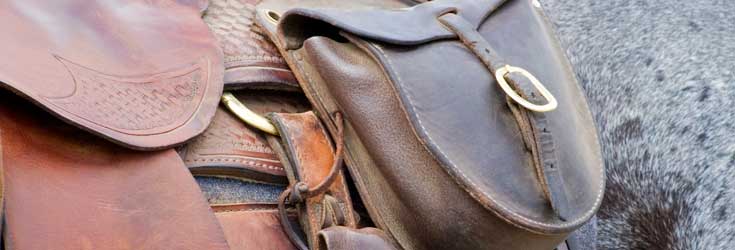
The leather is a very subtle undercurrent, but I’m fascinated by it. It’s not birch-tar leather; there are no fecal or horsey qualities, and it’s far from rubbery or raw. Yet, it’s not wholly refined, either. It doesn’t feel like aged, burnished, oiled leather. The tiniest touch of civet gives it a rough-hewn, musky feel. Honestly, I keep imagining the saddle-bags that you would see on horses in Middle Eastern or cowboy movies of old. I myself never rode with them, but I’ve seen and touched that rough leather, and it is what comes to mind here. Perhaps the most accurate way to describe the note here is that it often feels like an impression of dark, smoky leather, more than the actual thing.

Source: pathauldren.com and YouTube.

Source: pathauldren.com and YouTube.

Something about the scent consistently makes me think about the desert, and it’s not due solely to the Profumo description. No, there is definitely grainy, warm, sandy textural quality to the scent that is really hard to explain. It makes me imagine a Bedouin tent in North Africa with raw almond treats inside, the golden dryness of sand all about, and the faintest touch of leather from the horses outside. The sandy quality underlying the notes calls to mind Pierre Guillaume‘s descriptions of Parfumerie Generale‘s Djhenné, a fragrance meant to evoke the African desert, as well as the warm, Northern, cool, woody sands that Serge Lutens used to describe Fille en Aiguilles. Sharif couldn’t be further from those two fragrances if it tried, but this is the one perfume out of the lot that successfully manages to convey a dry, woody, golden, sandy texture.

Civet. Source: focusingonwildlife.com

Civet. Source: focusingonwildlife.com

The almonds grow stronger and stronger, and their bitterness dominates Sharif, but something else starts to rise to the surface. It’s the civet which Mr. Dubrana implies that it is the real stuff with a “non vegan” label on Sharif’s page. Some of you may know that genuine civet is no longer used in modern perfumery. The synthetic type of musk that you may encounter is often quite animalic, if not urinous and aggressively feral as well. Sharif’s civet is not. It is a surprisingly well-rounded, rich, and deep, adding a modulated, carefully calibrated level of muskiness that is never perianal on my skin. In one test, it was virtually nonexistent for the first 40 minutes; in another, it was noticeable from the start, adding a subtle sharpness and depth to that abstract, smoked leather accord.

15 minutes in, Sharif slowly shifts. There is a floral herbaceousness deep in the base that I can’t pinpoint. Clary sage? It lacks the latter’s lavender or soapy qualities, but there is a distinct herbal, leathered element that is fragrant, aromatic, a touch floral, and a bit green. A more important change is that the almond note which dominates Sharif starts to soften. If you’re not an almond fan, I imagine that you’d find this version of the note to be “nose-searing” as one person described it. Yet, it does start to smooth itself out. It is still infused with incense-like smokiness and dry woods, still has a gravelly, pebble-y quality, but it is less forceful.

Source: Micks Images. (Website link embedded within.)

Source: Micks Images. (Website link embedded within.)

From afar, Sharif’s main bouquet after 30 minutes is of bitter almonds that are thoroughly infused with a dark, abstractly leathered smokiness, followed by dry sweetness and musk. The perfume remains the same for the next few hours; the only real change is in the fluctuating strength of the notes and in the sillage. Sharif becomes a skin scent at the end of the 2nd hour, the civet becomes much more noticeable on me about 3.5 hours in, and the bitter almond finally starts to weaken as the primary note around the end of the 4th hour.

Once it finally pipes down, the leathery base becomes much more noticeable and, to a lesser extent, the civet as well. At the top of the 5th hour, the abstract, incense-y “leathery” darkness vies with the almonds for center stage. The whole thing is extremely muted and blended seamlessly on my skin, so it takes some hard sniffing to single out the specific layers. The incense-like note, the sandy dryness, and the leather gradually fade away entirely. In its final moments, Sharif is nothing but creamy sweetness, vaguely reminiscent of fresh almonds. All in all, Sharif lasted 9.75 hours on my skin, with extremely soft sillage after the second hour.

I tested Sharif twice, including once with the fragrance on both my arms, and it was largely the same thing each time. On my right, non-testing arm, the almonds in Sharif were significantly smokier, darker, and more leathered — not only from the start, but throughout the perfume’s lifespan. The civet was strong in the opening minutes too, making Sharif a much dirtier, darker, animalic scent. The dry, grainy sandiness was also more noticeable. As time passed, the Sharif turned more into a leathered almond scent on that arm, while the dark accords were more muted and muffled on my main, (left) testing arm. However, all these differences were tiny, fractional ones of degree, not of kind; the scent was identical in its core essence in both cases. Instead of Lawrence of Arabia, you have leathered-incense Almonds of Arabia.

Source: gypsyriver.com.au

A Bedouin tent. Source: gypsyriver.com.au

The desert is also what came to mind when The Non-Blonde (and her husband) tested Sharif. They experienced primarily a civet-woody-leather fragrance, though the Non-Blonde’s ingredients list does put almonds at the top. Her review reads, in part:

Sharif, a 2011 release, is an incredibly complex wood/animalic fragrance. The aromatic opening is a bit deceiving– you almost think that you’re getting an old school balsamic camphoric men’s cologne when it captures you and pulls you into its world: leather, amber, and the unmistakable touch of civet. Sharif, like other  La Via del Profumo fragrances aims to take you away from the world of perfume as you know it. This time the journey is to an imaginary desert. The landscape is stark and the sandstorm blurs reality. There are tall figures approaching, their silhouettes appear in the dusty air. Are they friends or foes? There’s a smell of danger in the air.

Sharif’s desert scene is stark and only marginally sweet. It’s as far from what we call an “oriental” perfume as the artwork above is different from the opulence and decadence of Orientalist art. […][¶] I do think that it’s quite gender neutral and women who find the notes and ideas expressed in this fragrance should give it a try (must love civet). The sillage of Sharif is polite, but it’s incredibly long-lasting on mys skin as well as on the husband (10 hours easily); it also clings to fabric until after a second washing. Sharif is an all-natural perfume, meaning no synthetic ingredients, but it’s decidedly not vegan. The civet you smell here is the real thing, and I’m pretty sure I don’t want to know where and how AbdesSalaam Attar acquired it.

For Kevin at Now Smell This, the civet dominated to such an extent that he had to wear the fragrance outside of the house to test it, lest his “infuriated” cat attack him in an attempt “to obliterate Sharif from his environment.” I find that hysterically funny, but the non-feline parts of Kevin’s review focuses on the tarry nuttiness that he too experienced in a significant way:

Sharif smells wonderful. It starts off with a nose-searing note that smells like tonka beans in turpentine (with a nutty background aroma, almost dessert-like, but not too sweet). A beautiful, almost smoky, leather scent appears next, blending well with tonka and spice (a clear, pungent cinnamon-clove note). Sharif remains in tonka-leather-cinnamon territory for a long time before turning a tad powdery with musky (civet) amber in the dry-down. There is a hint of smooth “incense ash” in the base notes also. The entire composition is fine-tuned and high-quality (what a relief it is to smell Sharif after sampling too many cheap perfumes from other houses recently).

Now, to my “relationship” with Sharif. First, its arrival on a chilly day was auspicious; this is a cool-weather perfume. Though it is not overpowering and dense, it has more tenacity than you’d expect from a natural perfume (it lasts at least six hours on my skin, with minimal sillage).

For Grain de Musc and Octavian Coifan of 1000 Fragrances, Sharif’s main qualities were a honeyed almond, saffron-tinged spiciness, and civet leather. Grain de Musc writes:

… [L]ike a noble character, [Sharif] doesn’t let itself be approached or tamed easily: you’ve got to go through the fire of its camphoraceous top notes before feeling its softness. It is almost surprising to find Sharif so liquid in its bottle, because its smell conjures the fatty, tactile, ductile quality of a paste. It feels like something you could lick or chew: a smooth, resinous preparation similar to majoun, a type of cannabis jam where the resin is blended with honey and almond. There’s no cannabis note in Sharif, but it does have honey and almond notes, saffron providing a medicinal note and a leather effect. Though the latter is the core of the scent, it is also, to my nose, an expansion of the properties of civet. Old civet tinctures do display the smoothly dark honeyed facets of Sharif.
Desert Caravan. Photo: "Artemis." Via Tripwiremagazine.com

Desert Caravan. Photo: “Artemis.” Via Tripwiremagazine.com

Octavian Coifan‘s review also has a detailed elaboration of the notes, ranging from camels representing leathered Peau d’Espagne to the “precious ambery-balsamic” foundation that he thinks Sharif shares with Profumo’s Mecca Balsam. He writes, in part:

A small saffron-like note is the golden sprinkle above the peppery spiciness transforming the majestic combination of the 4 ancient spices into the golden precious “honey”, deep, highly aromatic with herbal undertones and melting on the skin. The almond-vanilla quality of the drydown, with subtle animalic notes suggesting the leather-skin facet of Musk Tonkin and the herbal-silex dimension of Hyraceum, transforms the darkness found in Balsamo Della Mecca into something serene and elegant. It evokes the ancient opopanax perfumes, different from modern opopanax resin. The sweetness is crystallized not in “sugar”, as in a Tonka bean, but in camphor, like the combination between laurel leaf/cinnamon leaf/clove and a balsamic base.

The perfume evokes the rich quality of dry tobacco preserved in an ancient leather pouch, blended with unknown powerful herbs and pepper. Its evolution on the skin is surprising and with Balsamo Della Mecca, Sharif is one of the most elegant natural perfumes. […] The creations from Abdes Salaam Attar are based on the true essence of an antique craft. They are the most profound and refined expression of that lost world. [Emphasis in the original.]

I’m afraid I didn’t experience anything quite as interesting, complex, or spiced. My version was fractionally closer to that described by one Basenotes commentator in Sharif’s entry on the site:

This is a sexy fragrance that I would love to smell on a man. It is the aroma of scented tobacco and suede, of being held by a man who smells manly. Yet, it is a beautiful scent on a woman, too. On me, it opens with a hint of smoke and leather, like an outdoor fragrance. Right away, a cherry-almond sweetness comes forward, inviting me inside where it is warm, and sweets are being served to guests. This one glows like a fire and simmers nicely on the skin. A must-try.

Source: gypsyriver.com.au

Source: gypsyriver.com.au

The two other reviews on Basenotes are equally positive, talking about how Sharif is an easier, more accessible version of Mecca Balsam. The description by one chap, “A Good Life,” is very evocative:

 In the pure tradition of the Middle East, Sharif consists of intense notes of leather and aromatic woods with the delicious aroma of amber scents of the East, and sweet almond,” the perfumer tells us. It is, first of all, a wonderfully pleasant perfume and an ideal entry into the world of natural perfumery, as it is much more accessible than the starkly meditative, distantly elegant Mecca Balsam. The latter requires study before you can deeply appreciate it, while Sharif provides pure pleasure even before you begin investigating its complexity. There is a perfect harmony of spice and sweetness, dryness and deftness, of clarity and density, the slender elegance of a minarett and the opulence of a plate of Arabian sweets. The dry craggy resins of Mecca Balsam’s pilgrimage are here enveloped in smooth delicious amber. Imagine yourself being entertained in the golden tent of an Arab nobleman, the scent of fine resins rising from incense burners, eating honey and almond cakes while a pipe rests by your side and a distant smell of leather saddle and noble horses wafts over from the stables. You are at peace, but you feel energy brimming inside you. New deeds of your own choosing await, but for now, you enjoy the tranquil flow of life and its pleasures.

I don’t see any similarities to Mecca Balsam at all, but then my skin rendered that one very anomalous indeed. Regardless, I join him in being transported me to a Bedouin tent filled with almond treats and smoky darkness. I was happy to see that he too envisioned “the distant smell of leather saddle,” even if he wasn’t talking about small saddle bags. I hadn’t read any of these reviews when I was testing the perfume and writing my notes, so I’m glad it’s not just my imagination.

Bedouin Oasis Ras Al Khaimah. Source: ras-al-khaimah.eu

Bedouin Oasis Ras Al Khaimah. Source: ras-al-khaimah.eu

Unfortunately, what appeared on my skin simply wasn’t as interesting as what everyone else experienced. The almonds dominated to an enormous degree, and far overshadowed both the smoky darkness and the leather. The latter was also an impression more than the smell of actual leather. The civet was a rich, warm, very smooth touch that I enjoyed, but I wish all the notes would have replaced the almonds as the perfume’s central characteristic. I particularly wanted more leather!

Clearly, skin chemistry makes a difference, and enough people got a hardcore civet, leather, woody, ambered scent for it to be worth your while to test Sharif if you’re interested in those notes. I think it is definitely unisex in nature, but, given two of the accounts quoted here, it may be wisest if you like civet musk. (And almonds!) As for the sillage, Mr. Dubrana told me that “you should use the perfumes on your clothes and hair in order to enjoy them fully and longer.” He also perfumes his beard with them as well.

Even if the vagaries of skin means that Sharif doesn’t work for me personally, I think it’s a fascinating, very different, original take on both leather and orientals. If you love almonds or leather, you should give it a sniff. 

Disclosure: My sample was courtesy of AbdesSalaam Attar. That did not impact this review. I do not do paid reviews, my views are my own, and my first obligation is honesty to my readers.

DETAILS:
Cost & Availability: Sharif is an eau de parfum that comes in a variety of sizes. It is available exclusively from the Profumo.it website, which ships its scents world-wide. All the following prices for Sharif are in Euros without VAT: €44,63 for 15.5 ml, €97,20 for 32 ml (a little over 1 oz), and €143,81 for 50 ml/1.7 oz. At today’s rate of exchange, the USD prices roughly comes to: $60 for the 15.5 ml, $132 for the 32 ml, and $195 for the 50 ml bottle. The site says: “Prices are without VAT and are valid for USA and all non EEC countries[;] for shipments in the EEC 22% VAT will be ADDED to the amount in the shopping cart.” There is also a Mignon Discovery Coffret which is available for any 5 fragrances, each in a glass 5.5 ml bottle. The price depends on which perfumes you pick, as the choice is up to you. The 5.5 ml bottle of Sharif is €17,70. On a side note, I received my samples from Mr. Dubrana incredibly quickly, less than 4 days after he sent it. Additionally, I have the impression that Profumo provides free 2 ml samples with all purchases, especially of any new fragrances that he is developing, since Abdes Salaam is very interested in feedback. In short, if you’re ordering fragrance, you may want to ask for a sample of something that strikes your eye. Samples: you can order a sample of Sharif from Surrender to Chance which sells the perfume starting at $10.99 for a 1 ml vial. It would seem more cost-effective to order the 5.5 ml mini from Profumo itself.