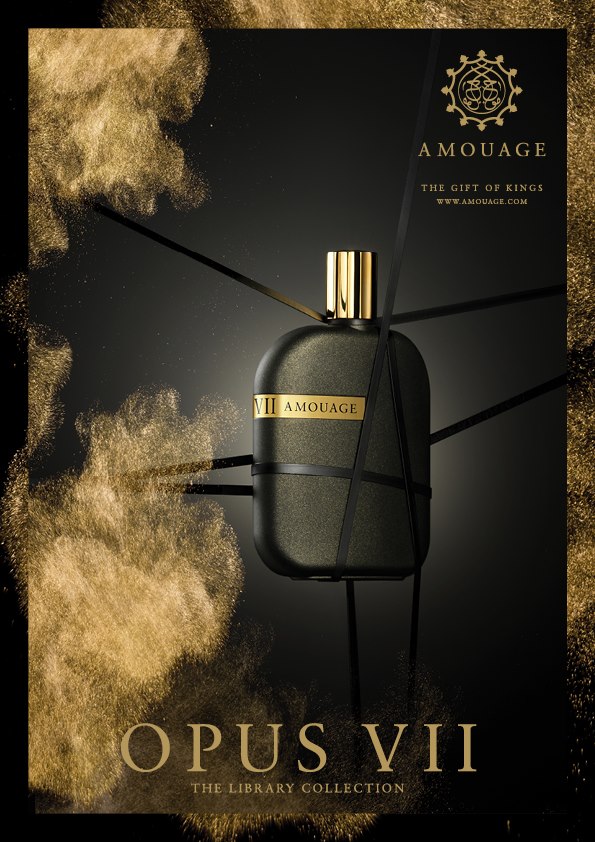
Arabian Oud Sehr El Kalemat

Source: Gamma Parfums, Russia.

Source: Gamma Parfums, Russia.

Some perfumes are an immediate love affair, some are immediate hate, a few can result in total apathy or boredom, but many take a few tries for you to make up your mind. Personally, I tend to know what I like or don’t like pretty much right off the bat, but, occasionally, I’ll come across a perfume where I’m ambivalent and truly undecided, no matter how many times I test it. Sehr el Kalemat from Arabian Oud is one of those fragrances.

Sehr el Kalemat is a flanker to the popular Kalemat (sometimes written as Kalamet, with an “e,” and a few other linguistic variations). I love the original Kalemat, and it is only fragrance where I’ve urged people with a specific sort of perfume taste to buy a scent blindly. One of my readers, Feral Jasmine, purchased both Kalemat and its flanker, Sehr el Kalemat, and kindly offered me a sample. The caveat: I had to write honestly what I thought about it, without worrying about her feelings. I never have a problem being blunt or candid, but, in this case, I’m truly at a bit of a loss as to what I think. I’m at the end of my fourth test of Sehr el Kalemat, and I think the most accurate description of my reaction is that I’m underwhelmed. Torn, conflicted, but generally underwhelmed.
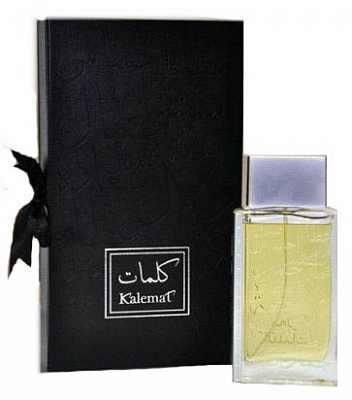
Seher KalematBefore I get to the scent itself, I have to go through the confusing issue of its name. Like many Middle Eastern fragrances, the perfume has a few alternative spellings, such as Sehr Al Kalemat (on the official, Arabian Oud website), Seher Kalemat (on eBay), or Seher Al Kalemat (on some online retailers). Some perfumistas call it Kalemat Black, perhaps because of the black box, while a few on Basenotes get confused over how Kalemat Black is actually perhaps Kalemat White because of the silver-white plates on the side. I’m going to go with Sehr el Kalemat as it is easier to type, and that is how the fragrance is spelled on Arabian Oud’s Amazon listing.

As always with anything involving Arabian Oud, it’s an utter nightmare trying to get concrete, definitive, set details on the fragrance. Arabian Oud has no description for it on its official, Middle Eastern website. Its UK one doesn’t even list the perfume! The few other retailers that do offer Sehr el Kalemat have substantial differences in the notes that they include, and completely disagree with Arabian Oud about the bottle size.
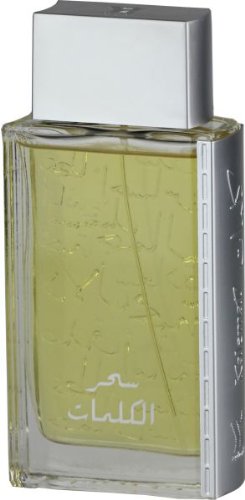
The bottle as shown on Arabian Oud's Amazon page.

The bottle as shown on Arabian Oud’s Amazon page.

According to Arabian Oud‘s Amazon listing, Sehr el Kalemat is either a 75 ml or a 100 bottle of eau de parfum with:

Top Note: Cardamom, bergamot, pink pepper Middle Note: Saffron, coriander, Bulgarian rose Base Note: Amber, vetiver and sandal 75 ml. [Emphasis added.]

However, a different page on Amazon from the same company states:

Between Patchouli flower, violet and bottom Albergmot wonderful mixed layer through a mixture of vanilla and touches of Oud eventually subside on the bottom of musk and amber luxury.

Meanwhile, a vendor site in South Africa, Fragrances Unlimited, writes what seems to be a slightly (slightly!) closer description of the fragrance that I experienced:

Following the success of the legendary perfume, Kalemat,comes Seher Al Kalemat, the name literally mean Magic of the Words, another designer outfit pairing black and silver. This new hit from Arabian Oud is an elegant fragrance recomposed around fruity aromatic facet & delicately oriental trail. Of the 3 original facets of Seher Al Kalemat (Fruity,Woody & Oreintal) the oriental one wins thanks to the Amber, musk and vanilla base note.

Top Note: Bergamot, Rose and Saffron

Heart Note: Patchouli, Sandalwood, Violets and Guaiac Wood

Base Note: Vanilla, Amber and Musk

Size: 100 ml

Type: Eau de Parfum

Between Arabian Oud’s hot mess of a website, the sizing differences, and the big variation in notes depending on site, I’m a bit frustrated, but I would say the notes that I personally detected are something more like this:

Spices, Berries, Patchouli, Rose, Saffron, Guaiac Wood, Incense-y tonalities, something almost oud-y, Vanilla, Amber,  and Musk.

As mentioned above, I’ve tested Sehr el Kalemat a few times, using different quantities and amounts. For the most part, the fragrance is exactly the same, minus some minor variations on the opening with a lesser amount (2 sprays). I’ll give you the general development with a larger application of 4 small sprays.

Source: Dailykos.com

Source: Dailykos.com

Sehr el Kalemat opens on my skin with peppered berries, saffron, and amorphous spices, though not cardamom or coriander, per se. It is followed by patchouli, honey, a dash of a rose note, and some abstract, amorphous, dry woodiness. The berry note is interesting because, to my nose, it smells identical to the blueberry purée that the original Kalemat opens with, along with the merest whiff of something verging on raspberry. I don’t know if the notes are the result of the very fruited, purple patchouli, of the “pink pepper” berries mentioned in one list, of both elements together, or something else entirely. To me, the opening smells like Kalemat’s “bilberry” or blueberry, and I’m a bit of a sucker for it. As a whole, Sehr el Kalemat’s overall, opening bouquet on my skin when smelled from afar is that of blueberries, patchouli, and saffron.
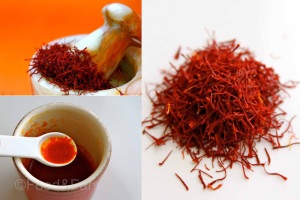
Saffron. Source: FoodandFarsi.com (Website link embedded within.)

Saffron. Source: FoodandFarsi.com (Website link embedded within.)

All the other notes are folded within that main trio. There are hints of a dry smokiness underlying Sehr el Kalemat, but it never feels like actual frankincense. The rose is extremely muted at this stage, and so is the undercurrent of honey. The woodiness can’t be teased out as something individually distinct or specific at first. At no point, however, can I detect any violet whatsoever in Sehr el Kalemat’s development, nor any bergamot, vetiver, or sandalwood (real or otherwise).

What does appear instead, especially if a very small amount of Sehr el Kalemat is applied, is cocoa and an almost cold, metallic scratchiness. While cardamom (listed in one version of the perfume’s notes) can occasionally take on a cocoa powder nuance, I’m detecting something more genuinely chocolate-y in tone. The first time I tested Sehr el Kalemat and applied only a little, the bouquet after 15 minutes was of cocoa-dusted berries with saffron, vanilla, synthetic dryness, honeyed amber, slight smoke, and a faintly oud-y wood. The cocoa was a rich, almost buttery, thick chocolate with a nutty undertone that soon mixed with a very custardy vanilla in the base. I chalk the cocoa up to the patchouli, though the latter generally tended to be more fruited in nature on my skin than the darker, earthier variation of the note. Either way, the cocoa and vanilla accord only seems to appear in the opening phase if a small amount of Sehr el Kalemat is sprayed. Now, as I repeat often, my skin amplifies base elements and sweetness, so that is perhaps the cause, as Sehr el Kalemat is not generally a super-sweet (let alone a gourmand) fragrance for most of its life.   
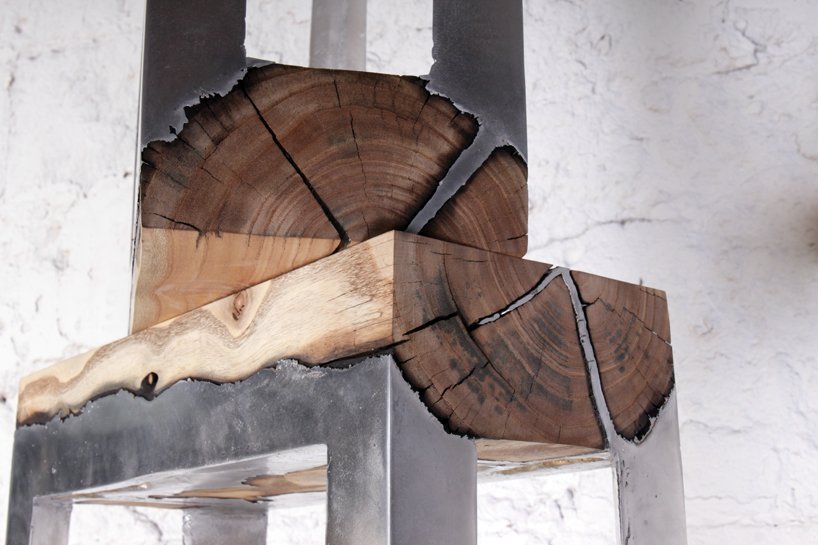
Wood and steel welding, via Wikitree and also jeanniejeannie.com.

Wood and steel welding, via Wikitree and also jeanniejeannie.com.

The scratchy, dry, dusty, almost metallic, steeliness in Sehr el Kalemat is a given, no matter how much of the fragrance I applied. It always appears about 15-20 minutes into the fragrance’s development, transitioning it from a very berried, fruity, saffron, honeyed amber scent into something that is distinctly drier, sharper, and smokier. Sehr el Kalemat has a definite smoke element, but it never feels like pure frankincense to me, and really verges more on the dusty, dry, almost sharp aroma of something burnt in the outdoors. Yet, it’s not the full-on sharp intensity of cade nor birch tar’s campfire smoke, either.
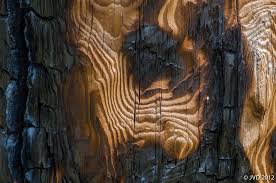
Photo: Jo Van Damme on Flickr. (Website link embedded within photo..)

Photo: Jo Van Damme on Flickr. (Website link embedded within photo..)

To me, it has the characteristics of guaiac wood: singed woods with an aroma like that of burnt leaves in a large autumnal bonfire. Something about it has a scratchy steeliness, which I realise makes no sense unless you’ve actually tried Sehr el Kalemat for yourself. The whole thing also feels rather synthetic in nature, if truth be told. It’s like guaiac wood’s dry smokiness on some sort of aromachemical steroids to make it extra arid, scratchy, and sharp.

What is disconcerting to me, and part of the reason why I’m so torn on Sehr el Kalemat, is that the steely burnt woods are simultaneously wrapped up with blueberry saffron compote, honeyed amber, and a touch of syrupy roses. It’s an oddly overwrought, jangling bouquet of opposites, as if Arabian Oud threw every contradictory thing that it had at the basic, original Kalemat structure. And yet… it grows on you. Sometimes. I think. Or perhaps not. Perhaps I’m merely oddly enraptured by blueberry-saffron-honey compote? Quite honestly, and in all candour, I don’t know what to make of it myself, or even how I feel most of the time about this very odd variation of Kalemat. Perhaps I merely like the parts of Sehr el Kalemat that resemble the original? One thing is definite though: I much prefer Kalemat to this flanker version.
Burnt Wood, via Docmattk on Flickr. (Website link embedded within photo.)

Burnt Wood, via Docmattk on Flickr. (Website link embedded within photo.)

At the end of the first hour, the extremely dry, occasionally searing, burnt smoke vies with the fruited, saffron, patchouli, honeyed sweetness for dominance. A synthetic, sharp, but clean, oud aromachemical adds to the dusty, scratchy aridness of the top notes. The two together cut through a lot of Sehr el Kalemat’s jamminess, diffusing the sweetness. Underneath, far down in the base, there is the first real flicker of vanilla, but it too feels a little dry. 

The change in sweetness accompanies a change in sillage and weight. Initially, Sehr el Kalemat is seriously forceful and intense in projection, though very light and sheer in weight. This isn’t a dense, opaque, molten fragrance by any means, but its notes are very powerful and Sehr el Kalemat wafts a good 6 inches off the skin in its opening minutes with 4 sprays. A smaller quantity yields a smaller cloud with about a 3 inch radius. Up close, however, Sehr el Kalemat is very powerful. As time passes, that scratchy, steely, synthetic, burnt guaiac note seems to grow in prominence even more when the fragrance is sniffed up closed. After 90 minutes, however, the dry woods cut through the heavy top notes of fruited, saffron sweetness to such an extent that the fragrance feels almost thin, weak, and light in comparison to the opening.
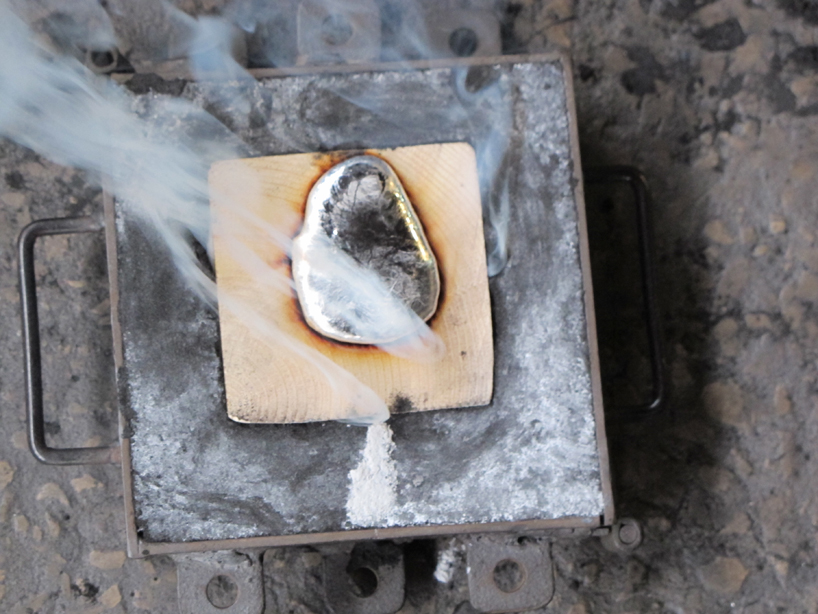
Wood and smoke casting. Source: www.jeanniejeannie.com -

Wood and smoke casting. Source: www.jeanniejeannie.com –

For the next few hours, Sehr el Kalemat doesn’t change its primary focus in any major way. The notes described above vary in prominence and strength, but the fragrance’s core essence remains as berries, burnt woods, and sharp smoke, followed closely by synthetic oud, saffron, jammy roses, honeyed amber, and a touch of vanilla. There is the faintest, tiniest dusting of amorphous spices, though it doesn’t really smell like cardamom and it definitely doesn’t smell of coriander, as one list mentioned. It’s more like a flicker of something verging on chocolate powder, but it’s extremely muted.

Amouage Interlude Man. Source: Vogue.ru

Amouage Interlude Man. Source: Vogue.ru

By the start of the fourth hour, Sehr el Kalemat smells of a super dry, smoky, somewhat oud-y, burnt woods, followed by blueberry-honey that is lightly infused with saffron and amber. It hovers right on the skin, and feels very thin.

I think the sharpness of the dry, smoky woods give Sehr el Kalemat a far greater similarity to Amouage‘s Interlude Man than the original Kalemat ever had, though I think the nature of the smoke is different. In Interlude Man, as well as in the original Kalemat, the note smells more like actual, black frankincense. In Sehr el Kalemat, it’s like burnt trees and burning leaves in an outdoor fire. The note is thinner, drier, more scratchy and sharp, and much less smooth than it is in either Interlude or Kalemat. Plus, Sehr el Kalemat has much more fruitiness than the other two fragrances. In contrast, Interlude has a green, herbal component that isn’t evident on my skin with either Arabian Oud brother. That said, in terms of how dry smoke dominates a stage of the perfume’s development, I can see some parallels between Sehr el Kalemat and the much more expensive Amouage fragrance.    

Source: middleearthadventurer.blogspot.com

Source: middleearthadventurer.blogspot.com

Sehr el Kalemat’s smokiness finally recedes at the end of the 6th hour, as the vanilla appears to soften the fragrance and return it to greater warmth. The perfume is now an abstract, dry, woody fragrance with plummy or blueberry fruits, saffron, honeyed amber, and vanilla, all in a sheer, thin gauze that coats the skin.

Increasingly, the scent turns warm and sweet, until it is merely blueberry amber with honey and vanilla. The saffron, oud, and burnt guaiac dance all around, weaving in and out in the smallest of ways, but they are increasingly hard to detect in any individual, substantial way. Once the real drydown or end-phase begins, Sehr el Kalemat is nothing more than a blurry haze of honeyed sweetness with traces of vaguely fruity, musky, and incense-like elements hovering at the edges.

Stock footage via shutterstock.

Stock footage via shutterstock.

Sehr el Kalemat’s longevity is fantastic. With four tiny squirts from the atomizer, the scent lasted just a fraction over 17.5 hours (!!!) on my perfume-consuming skin. I’ll give you a second to process that astonishing number. Yes, I didn’t quite believe it myself, and, truth be told, there were tiny, dime-sized spots on my skin that still had the faintest trace of honeyed sweetness even after that point. The sillage, in comparison, was generally moderate to low for about 13 of those hours. With a smaller dosage of two small sprays, Sehr el Kalemat’s longevity is naturally much less, but it still clocks it at over 13 hours on my nutty skin. The sillage, however, dropped to virtually nothing with that amount after 90 minutes. 

There aren’t really any in-depth, detailed reviews for Sehr el Kalemat that I can provide for comparative purposes. The Fragrantica entry for the perfume doesn’t have a single comment in it. There is a Fragrantica thread asking for additional feedback after someone fell in love with the fragrance, but the poster doesn’t describe the scent. All that they say is: “I fell in love instantly as it struck me as a hybrid between Guerlain and Amouage creations.” She hasn’t had any replies.

I did find one very succinct, brief review for the scent under the name Arabian Oud Seher Al Kalemat (aka Kalemat Black) on Notable Scents. The review reads, in part, as follows:

* Kalemat Black starts off with sweet incense grounded with dry herbs.

* The projection is powerful and massive, this one is not for the meek of heart.

* A boozy vanilla joins the top notes and the three blend together seamlessly.

* As it begins to calm down (after 3-4 hours), the vanilla dries out as the oud starts to come in.

* The base is a mild oud, nothing too gamey or aggressive.  A slightly sweet amber balances is out.

Kalemat Black is a modern-day powerhouse, lasting more than 24 hours on my skin.  Even after showering, I could still smell the base notes on my skin.  Though not office-friendly, its a really good fragrance for those who want an oud scent that is not medicinal or barnyard, but still referential to traditional Arabic perfumery.

The perfume’s Amazon page has two comments about the fragrance, but only one describes it:

Sehr el Kalemat starts out dry, austere, with something of the scent of a heated cast-iron skillet. At this stage it is very masculine. Over the next hour it evolves to a warm amber with dome fruit and spice, very different from Kalemat but equally unisex. At this point I love it on myself, so I spray an hour or so before work and let it evolve until it’s ready for the general public! But it smells good on men at every stage.

Sehr el Kalemat is slightly more expensive than the original Kalemat for American buyers. The fragrance comes in a 100 ml size (no matter what Arabian Oud may say about 75 ml on a portion of its Amazon description) and costs $89.99. Kalemat is priced in the U.S. at $59.99 price with a discount, though its retail price generally seems to be $99 worldwide.

I think Sehr el Kalemat might be a good choice for someone looking for an inexpensive, dry, woody, slightly masculine Middle Eastern fragrance that bears a microscopic similarity to Amouage’s costly Interlude Man. However, I must emphasize that I personally think the two fragrances are extremely different if you take out the smokiness issue. Interlude Man has a spectacular sandalwood drydown, for one thing, and an aggressive, sometimes difficult, pungently green, herbal start. It is also not a fragrance that I immediately think of as “fruited” or berried as one of its key, main characteristics. That element, however, is a definite part of Sehr el Kalemat on my skin. I also want to emphasize yet again that my skin amplifies base notes, and tends to increase sweeter elements in a fragrance. Those with a different skin chemistry may experience an even drier version of Sehr el Kalemat than I did, so please keep that in mind.

For me, personally, I prefer the original Kalemat. “Feral Jasmine” who sent me my sample says that Sehr el Kalemat grows on one. I can definitely see how it might, though I don’t think it will happen in my case. The things that I like about Sehr el Kalemat, I can simply get from Kalemat itself — and more of it, too. Plus, Kalemat has a lovely tobacco element that I can’t find here, the oud doesn’t smell sharply synthetic, and it doesn’t have that scratchy steeliness about the wood element. In Kalemat, it is dry cedar and frankincense, not burnt guaiac, which are at play, and that makes a difference for me personally. I think it’s also a substantially smoother fragrance that smells or feels more expensive in nature.

Ultimately though, as with everything related to perfumery, it’s a matter of personal tastes and style. I can see some men vastly preferring Sehr el Kalemat to Kalemat because of the significantly greater facade of dry, burnt smokiness, as well as the more noticeable oud element. I think most women (but not all) would have a much easier time with the original Kalemat, as it’s a warmer, more accessible, more inherently unisex fragrance. In all cases, however, if deeply dry, woody smokiness is your thing, you may want to give Sehr el Kalemat a try.  

DETAILS:
Cost & Availability: Sehr el Kalemat is available on Amazon (U.S.) for $89.99 for a bottle that is either 100 ml or “75 ml”, with a shipping cost of $16.48. (Arabian Oud combines shipment if two items are purchased, with a lesser price for shipping the second item.) I think Arabian Oud has a typo with the smaller size listed in the description of the perfume’s notes, as all other vendors have the perfume listed as being 100 ml. Outside the U.S.: Whatever the size, if you’re located outside of the United States, you can also find the fragrance on eBay. One vendor in Kuwait is currently selling the fragrance for $95, and ships worldwide. His eBay store is called Jawimall and carries a few Arabian Oud fragrances, so you are reading this review months from now, you can check to see if he has Sehr el Kalemat in stock. There is also the original, non-UK Arabian Oud website which sells it for (Saudi Riyal) 440 SAR which seems to come to a little over $117 or €85 at the current currency conversion rates. I believe they ship internationally. I don’t find the perfume listed anywhere on the UK Arabian Oud site, and I went through every section. (If you check there, you may want to immediately mute the volume on the site as it plays annoyingly repetitive music incredibly loudly.) Sehr el Kalemat is also not listed anywhere on the Zahras catalog for Arabian Oud. If you ever use the Zahra site, be warned that almost all their perfume notes and descriptions seem to be incorrect. Elsewhere, the fragrance is sold under the name Seher Al Kalemat by Kuwait’s Universal Perfumes in the 100 ml bottle for $115.99, and they ship worldwide. In South Africa, I found the fragrance sold under the same name at Fragrances Unlimited in a 100 ml bottle. Sehr el Kalemat is sold by a ton of Russian online sites, one of which is Gamma ParfumSamples: I obtained my sample from a reader of the blog. I could not find a single place that sold samples of Sehr el Kalemat, although I know The Perfume Court has a few others from the line, like the fragrance oils. However, it does not have the Sehr.

LM Parfums Hard Leather: Lust In The Woods

Source: Tumblr. Original artist or site unknown.

Source: Tumblr. Original artist or site unknown.

Sex. Seduction. The scent of a man in leather and smoke. The softness of a woman in sandalwood and vanilla. Musky figures entwined on a rumpled bed, in a room filled with the black swirls of incense. The smell of his neck, his chin rough with dry stubble, and the lingering traces of rum on his mouth. Her body golden, smooth, covered with honey, and damp with sweat. Hardness, softness, and always, pure animal sensuality.

The images that come to my mind when Hard Leather first opens on my skin are wholly inappropriate for further description. But it happens each time I smell the new fragrance from by LM Parfums. In the past, seduction has come to mind with a few fragrances that I’ve tried this year, notably Hard Leather’s older sister, Sensual Orchid, and Amouage‘s Fate Woman, but nothing quite like this. Nothing quite so animalic, so overt. This is not about coy, flirtatious seduction, but steamy intimacy.

Source: timeslive.co.za

Source: timeslive.co.za

For me, the opening hour of Hard Leather is primal, purely sexual, and it impacted me immediately from the very first time I smelled it. It made me quite lose my cool, despite being with the actual perfumer in the most haughtily snobbish, constipated place in all of Paris. And every time I’ve worn it since, it makes me feel quite heated. In short, Hard Leather has one of the best openings of any perfume I’ve smelled this year. In many a year, actually. The rest of the fragrance is not quite as glorious, primarily due to a middle phase that I struggle with a little, but the perfume is still incredibly well done as a whole and I think a lot of men are going to love it. 

LM Parfums Hard Leather 3Hard Leather is set to release some time this week or the next in France, so I thought it was time for a full, proper review, beyond just my cursory, initial ravings. [Update: The perfume was officially released a few hours after the posting of this review, and is now available for sale.] Hard Leather is pure parfum with 20% fragrance oils, and part of LM Parfum’s new line called The Intimacy Collection. The press release description sent to me states that Hard Leather’s olfactory pyramid includes:

Top Notes: Rum, Leather.

Heart Notes: Iris, Honey.

Base Notes: Sandalwood, Cedarwood, Oud, Frankincense, Styrax and Vanilla.

Smoke #6 by Stefan Bonazzi. (Website link embedded within photo,.)

Smoke #6 by Stefan Bonazzi. (Website link embedded within photo,.)

When you smell Hard Leather from the sprayer on the bottle, you are hit with a wave of black incense that is almost fiery and piercing. It is followed by smoky, sweet oud that smells as though it were taken straight from an extremely old agarwood tree in Laos. On its heels is a powerful, intense sandalwood that is most definitely the real, spicy, glorious, and very rare kind from Mysore. There is a dustiness, a dryness to the wood-incense combination, but also a patina of sweetness. To my nose, the aroma evokes both the incense-sandalwood profile of my beloved vintage Opium, as well as the much drier, dustier, more fiery incense-sandalwood-oud combination of Neela Vermeire‘s Trayee. But you can’t judge a perfume by its bottle aroma, any more than you can a book by its cover.

Source: Tumblr. Original source or photographer unknown.

Source: Tumblr. Original source or photographer unknown.

Hard Leather opens on my skin with an initial whiff of honey and genuine Mysore sandalwood, then a powerful, potent burst of animalic, raw, musky leather. It’s as though a light coat of honey was thinly layered over raw animal hides left in the sun, which are then drenched with musk. The leather is initially like that in Montale‘s Aoud Cuir d’Arabie, before it turns into something midway between Aoud Cuir d’Arabie and Serge Lutens‘ glorious Cuir Mauresque. By the same token, the musk is similar to that in Serge LutensMuscs Koublai Khan (hereinafter “MKK“), only rounder and generally softer. It has the most fleeting urinous edge, but far less than the Lutens had on my skin. I’m generally not one for very raw, extremely animalic leather, but, my God, it’s sexy here. It’s leather with the scent of skin, heated and musky after sex, lightly drizzled with honey, and wrapped up with tendrils of black incense.

On skin, the oud initially lurks behind the leather, but it rears its head after a few minutes. It smells exactly like the aged Laotian kind used in such expensive lines as Xerjoff, and Laurent Mazzone confirmed to me that it is indeed aged Asian agarwood. The wonderful difference, here, is that the oud never smells fecal, or (even worse) like rotting gorgonzola, the way that Laotian agarwood can sometimes be in perfumery. Instead, it’s smooth, with a bit of that “noble rot” funk that is true to real oud. It’s also sweet, thanks to the honey, and slightly smoking from the incense. The oud is blended perfectly with the other woods in Hard Leather, from the slightly musky, dry cedar, to the gloriously rich, smooth, spicy sandalwood. The latter most definitely smells like the real stuff, and judging by the Robertet name on my tiny decant and the fact that they deal with the most expensive raw materials, I suspect Mr. Mazzone spent a fortune ensuring he got actual, red Mysore instead of some generic beige wood or green Australian “sandalwood.”

Source: 123people.es

Source: 123people.es

The final result is an opening that I find to be utterly addictive, a smoldering cocktail of raw, steamy sex appeal. It’s as though Serge Lutens’ Cuir Mauresque mixed with MKK, Neela Vermeire’s Trayee, Montale’s Aoud Cuir d’Arabie, and a dash of vintage Opium’s drydown, only the final result is ramped up by a hundred. It’s Lawrence of Arabia’s swarthy, musky sheikhs, with Turkish harem concubines clothed only in tendrils of incense, having sex in the ancient agar forests of Laos under freshly tanned, cured leather coated in honey and sandalwood.

Yet, for all that the notes may sound aggressive or too much, Hard Leather’s opening is utterly seamless and perfectly blended. The notes fluidly move one into the other, each transforming the next, with no hard edges, roughness, or spiky, prickly bits. In this phase, the incense may be the sharpest thing about the fragrance, waging a war of blackness on the sexual musk and leather, as if to drag the lovers to a Chinese temple. One thing I’ve noticed is that Hard Leather is a fragrance where less is sometimes more at the start, because two big sprays can be quite intense.

Thirty minutes in, Hard Leather starts to shift. The leather loses some of its rawness, turning richer, and more burnished. The musk softens too, feeling a little less dirty or skanky, while the honey blends in the base to add the faintest touch of sweetness. The sandalwood becomes even deeper, and even takes on a floral touch that is quite lovely. Actually, all the wood accords grow stronger, as does the smoke. Slowly, Hard Leather begins the transition to its next phase where the wood elements dominate the scent to such an extent, I sometimes wonder if the perfume might be more aptly named Hard Woods.

An hour into its development, Hard Leather begins its second stage, turning intensely dry. The desiccated feel from the woods and smoke essentially neutralizes the honey, but I think something else is at play. I smell Norlimbanol with its arid and, yes, its synthetic feel. For those who are unfamiliar with the name, Norlimbanol is a super aromachemical from Givaudan that puts ISO E Super to shame with its power. It has an ultra powerful, sharp aroma of woodiness with an undertone of leather, but it is always bone-dry to the point of dustiness.

Recently, I spent 10 minutes sniffing just the outside of my little decant of Hard Leather, and there was a definite synthetic whiff of dry woodiness right from the sprayer. On skin, it only shows up after an hour or 75 minutes, but it does show up. A few times when I’ve sniffed Hard Leather on my arm and up close, I get an immediate tightness in my nose and the faintest tickle at the back of my throat. The Norlimbanol is merely a speck at first, but it becomes increasingly powerful in Hard Leather’s 2nd through 5th hours, and I have to admit, I’m not a fan of it. Even without it, I think the new focus on dry woods destroys the perfection of the first hour with its raw animalism and unapologetic, lusty sensuality. Bring back the sex and leather, I say!

Smoke #11   Stefano Bonazzi Selected Digital Works. (Website link embedded within photo.)

Smoke #11 Stefano Bonazzi Selected Digital Works. (Website link embedded within photo.)

About 90-minutes into its development, Hard Leather is a different fragrance. The oud and Norlimbanol have taken over, turning the scent into one of extreme woods and incense with a very arid feel. The lusty, raunchy leather is blended into it, but it is a much more muted layer that lies underneath, and it is no longer Hard Leather’s main focus. At the same time, Hard Leather’s initially powerful sillage drops. With 2 big sprays (or the equivalent of 3 enormous smears), Hard Leather initially wafts about 5-6 inches around you, before dropping down after 90 minutes to a softer, airier cloud that is only about 3 inches. It’s very intense when smelled up close, and remains that way for hours.

The other notes make a valiant effort to counter-balance the the power of the oud, incense, and Norlimbanol. Unfortunately, my skin takes synthetics like the latter and runs with it, so they’re not particularly successful. Still, I really like how the Mysore sandalwood blooms, turning more floral and much creamier. I can also detect the sweeter notes stirring in the base. Styrax is a smoky, spicy, slightly leathered sort of amber resin, and it adds little flecks of golden warmth like fireflies in an extremely dark, smoky forest. The tiniest tendrils of vanilla curl up as well, stroking the woods, trying to tame them with sweetness in order to end the dry spell.

Source: hqdesktop.net

Source: hqdesktop.net

The core essence of Hard Leather’s second stage remains largely unchanged for the next few hours. Different notes wax and wane in prominence or strength, but the intense smoke, dry woods, and oud dominate. The power of the trio and the length of their stay really seems to depend on how much Hard Leather you apply. The more you spray, the longer their duration and force, and the less sweetness the fragrance manifests. Regardless, midway during the third hour, the vanilla starts to play a much bigger role. It’s now quite cuddly, cozy, rich, and sweet. The sandalwood turns even creamier; it’s a very smooth, incredibly luxurious aroma that begins to muscle its way onto center stage. Hard Leather is an elegant blend of dryness, sweetness, spiciness, creaminess, smokiness, leather, and woods, with just a hint of something raunchy, untamed, and animalic at its edges.

Source: 123rf.com

Source: 123rf.com

At the end of the fifth hour, the dryness finally recedes, and Hard Leather transitions to its third stage. The primary focal point is now spicy sandalwood and sweet vanilla, followed by oud, incense and increasingly muted hints of musky leather. It is all much more discreet, lying right on the skin, though it doesn’t take any effort to detect Hard Leather up close. Other notes pop up and down like a Jack in the Box. The honey reappears from time to time in the background, adding to Hard Leather’s growing glimpses of sweetness. The base feels much warmer now as well, though the styrax resin never seems like actual amber but something much more abstract in nature.

The oddest thing is the iris. Sometimes, Hard Leather has a definite floral element, but it really seems to stem primarily from the sandalwood. On occasion, however, the iris appears on my skin, primarily as a cool, soft suede with the faintest tinge of soft powder. It’s incredibly muted and weak on me, and I suspect cooler or paler skins may bring out the iris more than my warm, basenote-amplifying chemistry.

Source: top.besthdwallpapers.info

Source: top.besthdwallpapers.info

Hard Leather’s final stage begins around the 8th hour. The perfume is a blur of spicy sandalwood with tiny flickers of smoky oud, musk, and sweetness. It feels quite abstract on some levels, though the sandalwood is unmistakable. In its final moments, Hard Leather is merely a gauzy whisper of sweet, slightly spicy woodiness. The scent has astounding longevity on my perfume-consuming skin. Two big sprays (the equivalent of 3 enormous smears) lasted 14.25 hours, though it was quite patchy in spots and I actually thought it may have died after 12 hours. With only one spray, Hard Leather lasts just under 12.5 hours. The sillage is initially quite fierce, but, like all LM Parfums, softens and drops around the 90-minute mark. Using the smaller quantity, Hard Leather became a true skin on me at end of the 4th hour; with a larger application, at the end of the 6th.

I love Hard Leather, though it’s not perfect. I will never get tired of its opening, and how jaw-droppingly seductive it is. It is pure sex on a stick (or, in this case, sex in a bottle). I wish with all my heart that it would last forever, especially as I’m less enthused by the 2nd phase with all its Norlimbanol. Still, the aromachemical is miles away from the demonic toxicity of YSL‘s utterly heinous Noble Leather, and it certainly didn’t impact me in the same way. It’s also much softer and tamer in small quantities, so I’d gladly wear Hard Leather even with the bloody Norlimbanol. That should tell you how much I love that raunchy, sexual, primal start. It’s positively indecent — in the very best way possible! Hard Leather ends on a happy note, too, with creamy, rich, gloriously real Mysore sandalwood, warm vanilla, and, less excitingly, oud.

For all that I would like to drown myself in Hard Leather’s opening, for all its impact on me, I most definitely do NOT recommend the perfume to everyone. Those who disliked any of the fragrances that I’ve mentioned here — from Aoud Cuir d’Arabie and Cuir Mauresque, to Muscs Koublai Khan or Trayee — should stay away. Those who have issues with oud of any kind, especially aged agarwood, or who find animalic scents to be dirty, should avoid Hard Leather as well. People who like their leather to be more like suede or expensive handbags will find this scent to be far too raw for their tastes. And, as a whole, I don’t think Hard Leather is a fragrance that the vast majority of women would like on their own skin, though I think a lot would find it incredibly sexy on a man.

Hard Leather is a fragrance that skews sharply and unapologetically masculine, rendering things like Puredistance‘s glorious M extremely unisex in comparison. (I personally think that M really is unisex, but I know a number of women who feel they can’t wear it. That sentiment would be amplified by a thousand for Hard Leather.) I think the dryness of Hard Leather’s second phase may also be difficult for people of either gender who prefer a little more sweetness with their woods or animalic touches.

Amouage Opus VIISpeaking of that dryness, Hard Leather at the end of the second hour made me think of Amouage‘s Opus VII. The two fragrances are very different, particularly because of the herbal oddness of the fenugreek in Opus VII and the nature of the two musks. On my skin, the animalic elements in Opus VII turned into something strongly reminiscent of a wild cat enclosure at the zoo with peeing lions, instead of the scent of skin during sex. Opus VII is visually greener, with strong spices, and heavily peppered with ISO E Super. Yet both fragrances have an extreme darkness to them, and share oud, incense, sandalwood, leather tonalities, and amplifying synthetics with a bone-dry feel. I think Hard Leather is much less desiccated than Opus VII, and has sweeter, warmer elements, but, in terms of an aesthetic style, the two fragrances share some distant kinship, though I must stress again that they don’t smell anything alike.

Photo: Oleksiy Maksymenko. Source: FineArtAmerica. (Website link embedded within photo.)

Photo: Oleksiy Maksymenko. Source: FineArtAmerica. (Website link embedded within photo.)

Still, if Opus VII was your cup of tea and you didn’t find it too dry, oud-y or smoky, then you should definitely try Hard Leather. If neither Opus VII nor any of the other fragrances mentioned here were your style, Hard Leather won’t be either. In my case, I loathed Opus VII (thanks to the peeing lion and the ISO E Super), but I do love Hard Leather because of its greater kinship with fragrances like Cuir Mauresque, MKK, and Trayee. The raunchy sexuality of that opening phase is so beautifully balanced, melded so seamlessly with the other notes, that it is very tasteful in my eyes — which makes it even more seductive and hot. Perhaps the best way to describe it is to compare it to the height of foreplay, instead of anything more… climactic, shall we say. Hard Leather’s subsequent journey into the depths of a dark, smoky forest undergoing a drought is hardly as appealing, but the creamy, sweetened warmth of the final stage takes us back to bed, with a couple now sleeping off the after-effects of both stages in a haze of sandalwood, oud, and sweet muskiness. 

Unfortunately, none of this comes cheaply. From what I’ve gathered, and from my early taste of the 2014 LM Parfums fragrances that I tried in Paris, Laurent Mazzone’s new Intimacy Collection seeks to focus on more complex, sophisticated scents based on the most expensive of ingredients. Hard Leather is the first in that collection, and it is priced accordingly at €295. (The current extraits perfumes are €195, a €100 less.) I don’t know what the American price will be when it eventually hits these shores and comes to Osswald in New York, but €295 is $400 at today’s rate of exchange. On the other hand, Hard Leather is also pure parfum in concentration, and there is a 100 ml of it. It smells expensive; it includes incredibly costly ingredients like aged Laotian oud, iris, and, more importantly, rare, almost extinct Mysore sandalwood; and a single spray has great potency and longevity.

I’m the first one to decry perfumes that are over-priced for what they are, but I think you’re definitely getting your money’s worth with Hard Leather. It is worth every penny. In fact, if the perfume consisted solely of that smoking hot, steamy opening, but cost twice as much, I’d contemplate selling a kidney to buy it. My God, that opening… that opening…. I don’t know if I should take a freezing cold shower, or just spray on some more. 

Disclosure: sample provided by LM Parfums. That did not impact this review. I do not do paid reviews, my opinions are my own, and my first obligation is honesty to my readers. 

DETAILS:
Cost & Availability: Hard Leather is pure parfum extrait that is available only in a 100 ml/3.4 oz bottle which costs €295. It was released just today, 12/04/13, online, at LM Parfums. Samples of all LM Parfums extraits are usually available and priced at €19 for 5 ml size, and I see Hard Leather is also listed as of 12/14. Laurent Mazzone’s Premiere Avenue now has a decant of Hard Leather for that price as well. In the U.S.: Laurent Mazzone’s fragrances are sold exclusively at Osswald NYC, but they informed me on Twitter that they won’t receive Hard Leather until January 2014. I will try to update this post when they do. Outside the U.S.: You can find Hard Leather, along with all LM Parfums, and 5 ml samples of each at Laurent Mazzone’s own Premiere Avenue which ships throughout Europe. Hard Leather is not yet offered in decant form, but you can check back later as the perfume was just released today.  In the UK, the LM Parfums line is exclusive to Harvey Nichols. In Paris, LM Parfums are sold at Jovoy. In the Netherlands, you can find LM Parfums at ParfuMaria or Silks Cosmetics. In Germany, First in Fragrance carries the full line, and sells samples as well. You can also find LM Parfums at Essenza Nobile, Italy’s Vittoria Profumi, or Alla Violetta. In the Middle East, I found most of the LM Parfums line at the UAE’s Souq perfume site. For all other countries, you can find a vendor near you from Switzerland to Belgium, Lithuania, Russia, Romania, Croatia, Azerbaijan, and more, by using the LM Parfums Partner listing. Laurent Mazzone or LM Parfums fragrances are widely available throughout Europe, and many of those sites sell samples as well.

Profumum Dulcis in Fundo and Arso

Simplicity done in the richest, most concentrated way possible seems to be the signature of Profumum Roma. It is an Italian niche perfume house founded in 1996, and commonly called Profumum by most. The fragrances are often soliflores, or centered around one main note, but Profumum takes that note and concentrates it with 43% to 46% perfume oils to create the height of luxurious richness. Today, I thought I’d look at Dulcis in Fundo and Arso, two pure parfums which focus, respectively, on vanilla and on piney incense.

DULCIS IN FUNDO:

Source: stuffpoint.com

Source: stuffpoint.com

Have you ever gone into an ice cream or frozen yoghurt shop, sniffed the air, and felt almost uplifted at the aroma of freshly baked waffle cones sprinkled with sugar? Have you ever ordered a creme caramel, and thought its aroma of caramelized vanilla was utterly delicious? If you have ever wanted to put those scents into a bottle, then you may want to try Dulcis in Fundo.

Dulcis in Fundo is an eau de parfum that was released in 2001. Profumum‘s website describes the fragrance and its notes very simply:

Sin of gluttony… sin of heart:
In essence, don’t both passion and seduction
evolve through a flare of vanilla?

Sicilian citrus fruits, Vanilla

Source: Profumum

Source: Profumum Roma.

The description from Luckyscent nails the essence of the fragrance, and pretty much negates the need for much more extensive elaboration from me:

This opens with a very fresh, very sweet orange, like a clementine being peeled, complete with the tangy sharpness of citrus oil on your fingers. Then the sweetness intensifies and becomes richer, as if drizzled with Grand Marnier, and a billowy dollop of luscious, creamy, unadulterated vanilla tops it all off. Warm and brazenly sweet, this ambrosial blend is for the woman who wants to smell delicious. This is dessert at its irresistible best: whipped cream being licked off fingers, fits of giggles fueled by liqueur, suggestive whispers over shared spoonfuls. We suspect that more is going on here than citrus and vanilla (some say a saucy little apricot was involved) but perhaps it is just a citrus and a vanilla that get along exceedingly well. Delectable.

Blood Orange. Source: Twitter.

Blood Orange. Source: Twitter.

Dulcis in Fundo opens on my skin with a burst of juicy oranges that is not sweet but more like the tangy aroma of dark, ruby-red blood oranges. The note is concentrated, deep, tart and a little bit bitter. It is quickly infused with warm, rich, heavy vanilla that is quite custardy in its depth. I smell like an orange creamsicle with hints of freshly baked, warm-from-the-oven, waffle cones. There is almost something creamily woody deep, deep down, because there is a subtle impression of gingerbread to the waffle base.

The vanilla soon turns richer, making Dulcis in Fundo smell very much like a creme caramel with a slightly singed top. Less than 15 minutes into the perfume’s development, the orange top note abates, leaving an aroma that is primarily that of waffle cones and creme brulée dusted with tablespoons of sugar. I loved the tart citric element, so it’s a bit of a shame that it vanished so quickly and that it contents itself with popping up from the sidelines only once in a blue moon in the first two hours. Dulcis in Fundo is sweet and intensely strong, but without massive sillage and with surprising airiness. In its opening ten minutes, it hovers perhaps 1-2 inches, at best, above my skin, but is profoundly concentrated when smelled up close. 

Crème Brûlée. Source: eugeniekitchen.com. For an easy recipe, go to: http://eugeniekitchen.com/creme-brulee-recipe-burnt-cream-french-custard/

Crème Brûlée. Source: eugeniekitchen.com. For an easy recipe, go to: http://eugeniekitchen.com/creme-brulee-recipe-burnt-cream-french-custard/

Dulcis in Fundo is a largely linear, simple, uncomplicated gourmand that smells of nothing more than sugared vanillic pastries. Funnel cake, waffle cones, creme caramel, Italian baked goods — you take your pick. Dulcis in Fundo is a cozy, cuddly, sweet delight, but there is sufficient dryness that (on my skin at least), it never felt like diabetes in a bottle. I’ve tried gourmand fragrances and vanilla scents that made my tooth ache from their sweetness, but Dulcis in Fundo is not one of them. It is never unctuously heavy, either, no matter how rich the fragrance may initially appear or the subtle sheen of oils that it initially left on my skin.

Actually, for all its concentrated feel, Dulcis in Fundo is rather light in weight. In fact, to my surprise, it became a discreet skin scent on me after an hour. Perhaps Profumum felt that so much rich vanilla needed a very light hand and unobtrusiveness in order to prevent a cloying, nauseating feel. All in all, Dulcis in Fundo lasted a good solid 8.75 hours on my skin, though there were lingering traces of it well over the 12-hour mark. I’m going to put the longevity at the lower figure, solely because Dulcis in Fundo really seemed like it was about to disappear at the start of the 8th hour, even if little patches lasted for another four.

Funnel cake cupcakes. Source: confessionsofacookbookqueen.com (Website link embedded within photo.)

Funnel cake cupcakes. Source: confessionsofacookbookqueen.com (Website link embedded within photo.)

Dulcis in Fundo is the furthest thing from edgy, revolutionary, or complex, but it may be the most decadent of sinfully rich vanillas. That is probably one reason why it seems to be many gourmand lovers’ idea of heaven. The perfume is not exactly cheap at $240 or €179, but it is 100 ml of something that is essentially pure perfume extrait with its 43%-46% concentrated oils. Profumum always has the richest fragrances on the market, with generally exceptional longevity, so the price makes their perfumes a good deal for what you’re getting, if you love the scent in question. I personally am not such a fanatic about vanilla or gourmand fragrances, but enough people are for Dulcis in Fundo to be completely sold out at this time at on the Luckyscent site.

Whether it’s people I observe on fragrance groups or those commenting on Fragrantica, gourmand lovers of both genders seem to adore Dulcis in Fundo. Some of the Fragrantica reviews:

  • If I had money to burn, I’d burn it on this perfume. For me, it’s one of those “eyes roll back in your head” perfumes. The citrus and vanilla are perfectly blended to create a tart, sweet, tangy, candy-like scent Willy Wonka would be proud of. My first thought – Smarties! If you’re looking for sultry, smoky, grown-up vanilla – keep shopping. If you want a truly sweet, delicious, unique perfume with the punch of a Jolly Rancher that’s not watery or shadowy (like most mainstream / celebrity fruity vanillas), this is it.
  • Seriously the best thing I have ever smelled. Warm, deep, sweet, bourbon-y. [¶] I don’t get any orange other than *maybe* a passing hint right at application. Sillage is great – dabs on my wrists keep this floating to my nose all day. It’s actually distracting. In a good way.
  • I don’t’ get any citrus at all in this, but it’s an incredible vanilla, very true to bourbon vanilla to the point of almost smelling at times like extract. There are smoky notes, faint incense feeling, and just that rich, thick vanilla, but it’s not cloying, sweet or overpowering. Lovely lovely scent. I want more.
  • Top notes: lemon cake
    Middle notes: vanilla cake and a hint of cinnamon
    Dry down: vanilla cake and marshmallow filling  [¶] Not particularly complex. Probably too sweet for me to wear very often but positively delicious nonetheless. The vanilla in this is more candy like and than floral. The most pleasant gourmand I’ve come across.

One of the women who purchased Dulcis in Fundo did so despite the cost and after extensively testing a wide variety of other gourmands. She wrote, “at $240 (which could also be a nice pair of boots!)– it had better be IT if I’m paying money for it,” but, for her, Dulcis in Fundo did turn out to be “It.” She even says it seemed to have a huge impact on a younger, male co-worker on whom she had a crush. More to the point, the perfume didn’t smell like cheap vanilla:

I’m a fan of vanilla in theory, but some as you know can smell tawdry or cheap. Some are overrun by other things –smoke, flowers, musk or what have you–which is fine if that’s what you’re looking for. […] This is vanilla with a touch of citrus–heaven sent vanilla. I keep smelling my arm, with the overwhelming urge to rub my face in it.

For others, however, with less of a passion for sweet perfumes, Dulcis in Fundo was too much. Too sweet, too expensive, and too much like food. A few experienced some bitterness, with the tiniest bit of “skank” from what they found to be a cistus, amber-like note in the base. The vast majority, however, loved the fragrance, including some men.

I’m not a gourmand lover, but I think anyone who adores dessert fragrances centered on vanilla should try Dulcis in Fundo. It’s very well-done, and very cozy.

ARSO:

Arso: Source Luckyscent.

Arso: Source Luckyscent.

Arso means burnt in Italian, but strong smoke is only part of the fragrance by that name from Profumum. Arso was released in 2010, and is classified as an Eau de Parfum but, like all its Profumum siblings, it is actually an Extrait or Pure Parfum in concentration. Profumum‘s beautifully evocative description for the scent reads:

Outside the first snow was falling and
the wind was caressing the leaves of the pine trees.
Inside the chalet of a good red wine
mingled with the notes of a beautiful jazz music.
You and I hugging on an old sofa
and around us the smell of a crackling fireplace,
the white smoke of a precious incense
and the warm scent of pine resin.

Luckyscent has a similar, mood-based description for Arso:

The sharp, evocative scent of wood smoke – triggering childhood memories of bonfires and burning leaves – is at the heart of this eloquent scent. Arso means “burned” and the masterfully rendered smokiness works with the crisp cool scent of pine to conjure up a cabin in winter, with a crackling fire on the hearth. You … also get the warm indoor scents of well-worn leather and glowing incense, as well as the fire. The mood is calm and comfortable and safe [….] This is perfectly suited for the strong, silent type – the sort of man who could build a house single-handedly and maybe even chop down the trees to build all by himself. Quiet, reassuring and powerful.

Profumum Roma rarely seems to give a complete list of notes for its fragrances, and I suspect a lot is often left out. The company says Arso contains, at a minimum:

Leather, incense, pine resin, cedar leaves

Pine tree sap. Source: howtocleanstuff.net

Pine tree sap. Source: howtocleanstuff.net

Arso opens on my skin with pine sap, smoky cedar, and sticky caramel amber. There is a hint of muskiness to the golden, sweetened base where there is plainly ambergris at hand, not amber. The note is a common signature to many Profumum scents, and it is always beautiful. As usual, it’s salty, a little bit wet and gooey, musky and sweet. The marshy saltiness works stunningly well with the woody, wintergreen, pine sap with its slightly chilly, tarry briskness. The latter feels sometimes like resin pouring out of a pine tree, then boiled down to concentrate with brown sugar until it is simultaneously sweet, tarry, and wintery wood in one. My word, what an intoxicating start. Small tendrils of black smoke curl all around, adding to the richness of the notes and preventing any cloying sweetness. In a nutshell, Arso is smoky, piney, woody, dry, sweet, salty, and golden, all at once.

The black smoke grows stronger with the passing minutes, as do the dark, green coniferous elements. Arso evokes a campfire, complete with burnt leaves and singed, smoking wood, but this campfire is drizzled lightly in sweetness. Underneath, there is a touch of leather, but it’s never harsh, black, brutally raw or animalic. Instead, it’s aged leather, sweetened by the ambergris and piney resinous tree sap into burnished richness. Still, it’s not a predominant part of Arso at this point by any means, and it certainly doesn’t alter the perfume’s woody, piney, smoky essence.

Photo: David Gunter Source: Flickr (website link embedded within photo.)

Photo: David Gunter Source: Flickr (website link embedded within photo.)

Some people have compared Arso to Serge LutensFille en Aiguilles, but I think the two fragrances share only surface similarities. The Lutens has a fruited component with its dark, plum molasses. There are strong spices up top, while the base is dark, purple-black and green in visual hue, as compared to Arso’s base of salty caramel-gold with black. The pine notes are another big difference. Arso feels as though pine needles have been crushed in your hands, but, for me at least, the fragrance never evokes the chill of a winter forest or Christmas time. It’s not because the pine is much more significant and potent in Arso, but more because it has been sweetened in a very different way. The ambergris lends it a salty quality, turning Arso much warmer, less brisk, and almost more honeyed than Fille en Aiguilles.

Source: Theatlantic.com

Source: Theatlantic.com

Perhaps more important, there is a substantial difference to the quality and feel of the smoke in Arso. It smells like juniper or cade, with a phenolic, almost camphorous tarriness that evokes leather and bonfire smoke. It’s sharper, more intense, blacker, and subsumed with the forest smells, instead of feeling more like temple incense infused with plums and spices. Lastly, on my skin, the smoky cedar is as dominant a part of Arso as is the pine. In contrast, Fille en Aiguilles is primarily fir and plummy fir resin. In short, Arso is much more purely woody, salty, musky, and leathery than Fille en Aiguilles which is much more centered on heavy frankincense with gingered sugar plums, spiced molasses, and brown sugar. I love Fille en Aiguilles passionately (and own it), but Arso is a fabulous scent in its own right and for very different reasons.

Source: wallibs.com

Source: wallibs.com

Both scents, however, evoke the very best of a forest. With Arso, it’s a landscape speckled with the warmth of summer’s golden light. The pine needles crunch under your feet, releasing their oils, and melting into an air filled with the aroma of a thick, rich, salty caramel. You know the smell of ice-cream shops that make waffle cones? Well, the note that is such a profound part of Dulcis in Fundo also lurks about Arso’s opening, though it is much more fleeting and minor. It is deep in the base, not the center of the fragrance, but there is a whiff of that same delicious sweetness in the ambergris’ rich undertones.

Josh Holloway who plays "Sawyer" on Lost. Source: momdot.com

Josh Holloway who plays “Sawyer” on Lost. Source: momdot.com

Here, it mixes with the aroma of the great outdoors, a bouquet that conjures up images of Colorado’s vast vistas of dark pine forests, complete with a trickle of smoke spiraling out a small log cabin’s chimney. It is summertime, and everything is a blur of gold, green, and black. The man who appears is handsome but rugged, with a faint scruff of beard on his face. In my mind’s eye, I see “Sawyer” from the television show, Lost, the sexy, tough con man with an inner softness and golden heart. Arso fits him perfectly, with its rugged piney profile, saltiness, smoldering dark depths, leatheriness, and sweetened smokiness.

It takes about 4 hours for Arso to change. The first stage is all sharp, tarry, piney smoke with salty, golden, caramel ambergris, cedar, pine resin, forest greenness, and sweetness. The second stage is much drier, and more about the bonfire smoke and the leather. In fact, the latter occasionally dominates on my skin, though it feels like the result of the other notes swirling about than actual, hardcore leather in its own right. There is an animalic undertone to the note, as well as a sour edge that feels almost civet-like on occasion.

The leather vies with the tarry, black campfire smoke for supremacy, with both notes overshadowing the amber. The woody elements have retreated, especially the pine, though the cedar is still noticeable. I’m not a huge fan of the sour edge to the leather, and I’m substantially less enthused by Arso’s later stages than its opening, but I suspect that it is my skin which is responsible. It doesn’t help that the gorgeous, salty amber-caramel largely vanishes around the start of the 5th hour, turning Arso much darker and smokier. In its very final moments, the fragrance is merely a blur of abstract woodiness with a touch of dark leather and the merest whisper of bonfire smoke.

As with all of Profumum’s scents, Arso is not a very complicated scent, though it is much less linear than some of the line. The Italian perfume house seeks to highlight a handful of notes in the most luxurious, plush, opaque manner possible, and Arso is no generally different. However, I was surprised by how quickly the perfume felt thin and airy; it lost much of its concentrated, heavy richness around the 2.5 hour mark which is also when Arso turns into a skin scent on me. It is not a powerhouse of projection, either. I’ve worn Arso three or four times, and no matter the quantity, its sillage in the first hour hovers, at best, about 2 inches above the skin. The sharpness of the juniper-cade’s black smoke and leatheriness remains forceful for ages though, and the perfume as a whole is still easily detectable for the first four hours when sniffed up close. All in all, Arso’s lasts between 9 and 10.25 hours on my perfume consuming skin, depending on the amount applied. As always with Profumum scents, there are minuscule patches where the aroma seems to linger for about 12 hours, all in all. 

I think Arso skews more masculine in nature, though women who love bonfire aromas, smoky pine, tarry cade, and leather fragrances will also enjoy it. I know a few who are big fans of Arso, but, generally, it is men who gush about it obsessively, falling head over heels for the tarry, woody smoke. Still, one woman on Fragrantica, wrote the following review:

Wow. I am so surprised. Arso is totally different from what i expected from the notes listed. I thought this was going to be a kinda brisk woodsy fresh forest scent; but instead its a thick dark caramel and tar. Tree sap being melted over a fire with cedar and pine logs. The beginning reminds me a lot of Mamluk (which came a year later). It settles into a cool dry *almost bitter* smooth leather scent

Im a girl and dont happen to find this too masculine smelling at all!!

Source: freeirishphotos.com

Source: freeirishphotos.com

A male commentator, “raw umber,” had a very good description for the scent, writing:

Arso is a dry pine that is encrusted with sticky, highly flammable sap. It starts out Christmas tree, and ends up blackened fire pit. [¶] On the exhale, I get the faintest trace of something that has burned, like the smoldering remains of a campsite cookout.

The almost undetectable leather and incense provide a faint saltiness, which enhances the dimension of the burned smell as Arso dries down, but it never plainly spells LEATHER, or INCENSE. It’s projection and longevity are both very good.

The slightly charred pine is the feature here from start to finish. It is 100 percent unisex, and it can be worn whenever you wish to smell like you’ve been camping.

A few people hated Arso at the start, then suddenly fell in love. Take, for example, the assessment by “alfarom” who wrote”

Arso is possibly one of my biggest 180 so far. I always found it unbalanced, sort of too smoky but I was wrong! It smells so darn good.

Strongly resinous, incensey with a tad of sweetness during the opening and with leather hints throughout. A shy boozy note discreetely remakrs its presence druing the initial phase to slowly disappear leaving space to a slighlt sweet amber note while the fragrance dries down. Smells exactly like an estinguished campfire where they burned resinous pine, cedar and tones of dry leaves, smells of velvety white smoke, smells incredibly salubrious. Initally I thought about a mash-up between Fille En Aiguilles and Black Torumaline but overall Arso is less balmy, less sweet and as much as I love the Lutens and the Durbano, this one is much more wearable.

Surely among the best deliveries from Porfumum. Terrific!

There are a few others who initially hated Arso, too, like one chap who first thought it was a “no no” of masculine pine and harsh incense at the start, before suddenly finding, after 3 hours, that it was utterly addictive. The time made a difference, turning Arso smoother, softer, and “delicious.” He found himself “blown away” and, though he still preferred Serge Lutens’ Fille en Aiguilles, he found Arso much more wearable.

I am the opposite. I find my beloved Fille en Aiguilles to be much more approachable, perhaps because the smoke isn’t like extinguished campfires and there is no cade-like, tarry leather that feels sharp or a bit animalic at times. I’m not passionate about Arso’s dry final stage, whereas I love the Lutens from start to finish. It is simply a matter of personal preferences and skin chemistry, so I’ll stick with my bottle of Fille en Aiguilles, while admiring Arso for being a wonderful smoky, woody fragrance of a different kind. That said, I think Arso would be a great Christmas gift for a man (or woman) who loves intensely smoky, woody fragrances, or scents with a incense-leather profile. It’s wonderfully evocative, and very sexy.

DETAILS:
DULCIS IN FUNDO Cost & Availability: Dulcis in Fundo is an Eau de Parfum that only comes in a large 3.4 oz/100 ml bottle which costs $240 or €179. Profumum unfortunately doesn’t have an e-shop from which you can buy their fragrances directly. In the U.S.: the perfume is available at Luckyscent, which is currently sold out, but it is taking back orders for December delivery. Dulcis in Fundo is also carried at OsswaldNYC. Outside the U.S.: In the UK, Profumum perfumes are sold at Roja Dove’s Haute Parfumerie in Harrods. Elsewhere, you can find Dulcis in Fundo at Premiere Avenue in France (which also ships worldwide, I believe) and which also has Dulcis’ matching shower gel and body oil as well. The fragrance is also carried at Switzerland’s Osswald, France’s Le Parfum et Le Chic (which sells it for €185), Paris’ Printemps department store, the Netherlands’ Celeste (which sells it for €180), and Russia’s Lenoma (which sells it for RU16,950). According to the Profumum website, their fragrances are carried in a large number of small stores from Copenhagen to the Netherlands, Poland, France, the rest of Europe, and, of course, Italy. You can use the Profumum Store Locator located on the left of the page linked to above. Samples: Surrender to Chance carries samples of Dulcis in Fundo starting at $6.99 for a 1 ml vial. You can also order from Luckyscent.
ARSO Cost & Availability: Arso is an Eau de Parfum that also comes in a large 3.4 oz/100 ml bottle which costs $240 or €179. Again, Profumum unfortunately doesn’t have an e-shop from which you can buy their fragrances directly. In the U.S.: Arso is available at Luckyscent, and OsswaldNYCOutside the U.S.: In the UK, the full line of Profumum fragrances is at Roja Dove’s Haute Parfumerie in Harrods. Elsewhere, you can find Arso at Premiere Avenue in France, Paris’ Printemps store, the Netherlands’ Celeste (which sells it for €180), Zurich’s Osswald, and Russia’s Lenoma (which sells it for RU16,950). For all other locations from Copenhagen to the Netherlands, Poland, France, the rest of Europe, and, of course, Italy, you can use the Profumum Store Locator to find a vendor near you. Samples: Surrender to Chance doesn’t carry Arso, but you can order from Luckyscent at the link listed above.

Jovoy Paris Private Label: Mad Max’s Smoked Vetiver Leather

Mad Max 2.

Mad Max 2.

Mad Max in black leather, burning up the roads. A bomb blast that left bubbling, tarry, rubbery asphalt. The burning, black tire bonfires used as smoke signals in Black Hawk Down. Vetiver on steroids, then nuked with napalm. Peppermints and candy canes at Christmas. Peaty single-malt Scotch, and aged cognac. The quiet, firm, confident masculinity of Gary Cooper or Rhett Butler which hides a sensitive heart. And, beatnik patchouli from the 1960s “Summer of Love.”

Private Label. Source: Bloom Perfumery.

Private Label. Source: Bloom Perfumery.

Those incongruous, contradictory thoughts are what come to mind when I wear Jovoy Paris‘ fragrance, Private Label. Most hardcore perfumistas have heard of Jovoy, a Paris boutique that is a mecca for buying the most high-end, exclusive, or rare fragrances. What many people don’t know is that Jovoy was once a perfume house going back to the Roaring Twenties, and “known for selling perfumes for the ‘gentlemen’s nieces’, a polite way Parisian dandies described buying gifts for their mistresses[.]” The house declined in the bleak years of the Depression, and ended completely during WWII, but it was resurrected in 2006 by Francois Hénin who launched a new range of fragrances.

In 2012, Private Label joined their ranks. It is an eau de parfum created by Cécile Zarokian, and Aedes says that it was “commissioned for a Jovoy client looking for a strong, oriental fragrance that is masculine, woody and ‘oud-free’.” Private Label is actually Francois Hénin’s personal favorite, his “ideal oriental scent.” He says, “This is the archetypal parfum de silage: it leaves a distinct trail while remaining consistent over time.” Luckyscent lists its notes as follows:

Papyrus, vetiver, leather, patchouli, sandalwood, Cistus labdanum

Source: thegiftedpony.com

Source: thegiftedpony.com

Each and every time I smell Private Label from afar, my immediate first impression is peppermints. To be precise: twisted, deranged, napalm-smoked, nuclear, apocalyptic, smoked peppermints in the middle of the snowiest pine forest somewhere in Siberia. It’s an impression that I can’t shake off, and it’s one I generally like.

The problem, however, is when I smell Private Label up close, as the result is distinctly less enchanting. In a nutshell, Private Label has a consistent structural backbone of burnt rubber and bubbling tar from a hot, melting asphalt road. The note is there in Private Label’s development from start to finish, varying only in its prominence, order of appearance, or forcefulness. It is always mentholated and camphorous, with a subtext of eucalyptus and peppermints, but also of sharp smoke and burnt rubber. Whenever I think that it has been tamed by patchouli, whenever I think that Private Label has been softened with labdanum amber and a big splash of aged cognac, I’ll smell another part of my arm, and that rubbery, Mad Max, medicinal, burnt napalm smell will suddenly pop back up.

Birch Tar pitch via Wikicommons.

Birch Tar pitch via Wikicommons.

Private Label lists “leather” in its notes and, yes, the fragrance is often summarized as a vetiver-leather fragrance. To me, however, that description doesn’t tell the whole story. On my skin, Private Label isn’t a leather fragrance so much as it is birch tar one. There is a huge difference to my mind. Huge. Birch tar is a resinous extract that has been traditionally used to coat and treat rawhide and, as such, the camphorous, pine-y, phenolic, sometimes sulphurous ingredient is often used in perfumery to replicate the aroma of a certain type of black “leather.”

Cade oil from a juniper tree. Source: purearomaoils.com

Cade oil from a juniper tree. Source: purearomaoils.com

The Perfume Shrine states that “[r]endering a leather note in perfumery is a challenge for the perfumer[,]” and that what is “actually used” to create that olfactory impression are vegetal or synthetic ingredients which can include birch tar, juniper cade and quinoline. To my nose, Jovoy Private Label reflects multiple facets of each of these notes which really dominate the fragrance’s overall bouquet for much of its evolution. I could tell you that Private Label smells of “leather” and smoke, but those general terms have the potential to give you a very misleading impression of this utterly uncompromising, aggressively intense, very hardcore scent.

So, let’s take a look at The Perfume Shrine’s explanation of what the key notes actually smell like:

Birch: Betula Alba, the tree known as birch [….] Traditionally used in tanneries in Russia, Finland and Northern Europe in general, its bark produces birch tar and resin, an intensely wintergreen and tar-like odour, which has been used in Cuir de Russie type of scents in the distant past. 

Juniper and cade oil:
Juniper trees produce dark viscuous oil (cade) upon getting burned which possesses a smoky aroma that reminds one of campfires in the forests. Also used in Cuir de Russie type of scents in the past along with birch. […]

The major revolution in the production of leathery notes in perfumery came in the 1880s with the apparition of quinolines, a family of aromachemicals with a pungent leather and smoke odour that was used in the production of the modern Cuir de Russie scents appearing at the beginning of the 20th century such as Chanel’s (1924) as well as in Caron’s Tabac Blond (1919), Lanvin’s Scandal (1933) and, most importantly, Piguet’s Bandit (1944). […][¶]

isobutyl quinoline … possesses a fiercely potent odour profile described as earthy, rooty, and nutty, echoing certain facets of oakmoss and vetiver and blending very well with both. Isobutyl quinoline also has ambery, woody, tobacco-like undertones: a really rich aromachemical!

Scene from Mad Max 2 via cinemasights.com

Scene from Mad Max 2 via cinemasights.com

I suspect all three things are used in Jovoy’s Private Label when it summarily mentions mere “leather.” The perfume is a vetiver scent in many ways, but it is vetiver transformed into one living in Mad Max’s world, a scent that the Road Warrior would wear with its uncompromising smoke, tar, asphalt, and rubber facets. If any of you love the toughness of Robert Piguet‘s vintage Bandit and the birch tar smoke of Andy Tauer‘s Lonestar Memories, but want both taken up a notch and infused with smoked vetiver, then Jovoy’s Private Label is for you.

Photo: Narinder Nanu via washingtonpost.com

Photo: Narinder Nanu via washingtonpost.com

Private Label opens on my skin with a forceful blast of mentholated tar, medicinal astringent, chewy patchouli, smoky vetiver, and piney juniper-cade smoke. The patchouli has hints of aged cognac underlying it, but its more dominant nuance is an earthy, almost medicinal, slightly mentholated note that evokes a black, 1960s “head shop,” hippie scent. Private Label most definitely has leather seeping all throughout, infusing all the other notes, but as explained above, this is really birch tar and cade “leather.” It smells like campfire bonfires, smoked rubber, diesel fuel, and a tarmac set aflame until the asphalt is hot, almost bubbling, and smoking. I rarely think that notes have a heated temperature, but the “leather” in Private Label starts off feeling as though the piney, sulphurous resin has been set on fire.

Tar pit bubbles. Source: Los Angeles' La Brea tar and asphalt pits. tarpits.org

Tar pit bubbles. Source: Los Angeles’ La Brea tar and asphalt pits. tarpits.org

One reviewer for the fragrance had a very different impression of both the note and Private Label’s opening blast. For Freddie of Smelly Thoughts, the leather made him think of a rubber dildo. No, he said that, really!

Private Label opens with a harsh, nail-varnish leather. A raw, earthy, smoky vetiver comes in quickly and together – the combination is pretty foul. It smells black and rubbery (yes, dildo was the first word that came into my head then too), with squeaky vinyl (stop!!!), and underneath, a resinous amber (lots of labdanum), a bit of incense and other bitter greens that just make it worse and worse.

I can see why he’d think that way, but I don’t hate it the way he does, and a large reason why may be due to the peppermints. On my skin, the patchouli’s underlying sweetness interacts with the mentholated, chilled accord to create a definite, very strong impression of hard-boiled, peppermint sweets. Christmas candy canes, perhaps, except these have been burnt and are emitting a sweet-bitter smokiness that is infused with eucalyptus. It’s an interesting aroma, and makes Private Label quite an arresting fragrance. From afar.

Photo: Larry Workman. Source: ssl.panoramio.com

Photo: Larry Workman. Source: ssl.panoramio.com

Ten minutes in, Private Label starts the slow (very, very slow) process towards softness and mellowness. The labdanum starts to move in the base, the aged cognac and sweet peppermint elements increase, and Private Label loses some of that bubbling asphalt feel. It’s a fractional change, though, as the perfume’s primary scent is that of the darkest, smokiest vetiver mixed with the very tarriest, smokiest, eucalyptus, cade rubber. It is simultaneously bone-dry, and sticky with chewy patchouli earthiness and the minty sweetness.

As time passes, the amber and vetiver elements becomes more dominant, and the birch-cade tar recedes, but it takes a lot of time and the rubber element never fully vanishes. What is interesting to me is the contrast between the mentholated, sweet peppermint, candy canes in the top layer, and the aged cognac in the bottom. In some ways, there is almost a peaty, single malt Scotch vibe to Private Label.

Source: high-definition-wallpapers.info

Source: high-definition-wallpapers.info

Around the second hour, when the juniper tar has receded to glower menacingly and threateningly from the sidelines, the other notes create a lovely winter bouquet from afar. I think of pine forests in the snow, candy canes on Christmas trees, aged cognac in a snifter beside a leather armchair by a warm, amber fire, and a chimney that is lightly smoking. It’s a visual that shatters whenever that resinous, burning,tar pops back up, skipping around different parts of my arm to show up at different times, and always taking me back to Mad Max in an apocalyptic world where the men are clothed in black, rubbery leather and the sole plant left on earth is a vetiver bush turned mutant through a napalm bomb.

Peat, in bricks, and used in a fire. Source: freeirishphotos.com

Peat, in bricks, and used in a fire. Source: freeirishphotos.com

The core essence of Private Label doesn’t change for hours on end. All that happens is a fluctuation in the prominence of certain notes, and a dropping of the fragrance’s sillage. After 60-minutes, Private Label hovers about 3 inches above my skin; by the end of the fourth hour, it is a skin scent, though it remains extremely potent when sniffed up close. The prominence of the smoke elements varies, with the birch tar seeming softer and more manageable for a brief period around the second hour. Then, suddenly, at the start of the third hour, Private Label somehow seems even smokier! Though the mentholated notes are much less, the vetiver has overtaken the birch tar as the dominant element, and my word, is it dark! I’ve never encountered vetiver that is quite so smoked. This is not smooth vetiver like in Chanel’s Sycomore, but some sort of mutant hybrid created in a peaty bonfire.

Source: colourbox.com

Source: colourbox.com

The vetiver continues to dominate the rest of Private Label’s development. By the end of the fourth hour, the perfume is a peppermint-eucalyptus vetiver over a soft amber infused with patchouli, cognac, leather, menthol, and the tiniest hint of sandalwood. It is soft in sillage, but still sharp and hard in actual scent. By the start of the seventh hour, Private Label is a peppermint vetiver over amber. The burnt rubber element continues to pop up here and there, hiding behind the other notes on some parts of my arm, while smelling of full-on acrid smoke and melting asphalt on a few tiny patches. In Private Label’s very final moments, the fragrance is merely a blur of woody sweetness with lingering traces of sharpness, rubber and smoke. All in all, it consistently lasted over 12 hours on my skin, with soft sillage but sharp notes.

I’m very torn on Private Label. The whole thing is a medley that, at times, fascinates and intrigues. At other times, however, it bewilders with a bit of cacophony, and those occasions tend to trump the more positive ones. From afar, it can be really pretty, but do you want a fragrance that you sometimes don’t dare to smell close up lest you singe your nostrils? I’m also not sure how versatile the perfume is, because it feels like a definite mood scent. Would anyone want to wear Private Label outside the snowy months of winter? Still, the seasonal issue doesn’t seem to matter so much as the gender one.

I generally believe that all fragrances are unisex in nature, but I think Private Label definitely skews more masculine. I suspect a number of women would recoil sharply at the fragrance, finding it medicinal, “chemical” (to quote one disgusted woman who smelled it on my arm), pungently aggressive, and unpleasantly rubbery. Hell, even some men do, judging by the reaction of Freddie from Smelly Thoughts. And he’s a chap with very avant-garde, extreme tastes!

However, I think that there is a narrow group of people who may very much enjoy Private Label: men and women who adore vetiver, but who also love birch tar, smoky fragrances, mentholated eucalyptus blends, and black leather notes. For me, it’s as though Andy Tauer’s Lonestar Memories and Naomi Goodsir‘s Bois d’Ascece had a swingers’ orgy with bucketfuls of tarry cade, a very hippie Woodstock patchouli, Santa Claus’ peppermint-eucalyptus muscle rub, Olivier Durbano‘s Black Tourmaline, and Serge LutensFille en Aiguilles. Nine months later, the baby that resulted was Private Label.

Gary Cooper. Source: allocine.fr

Gary Cooper. Source: allocine.fr

If that sounds like an odd fragrance that is far too harsh, I should add that I also see softness lurking in Private Blend’s heart. On the right man and the right skin, Private Blend would be a smoking hot fragrance, oozing sex appeal. It is a scent that exudes tough, confident masculinity but with glimpses of an underlying softness and sensitivity. The smoky rubber side might seem appropriate for Christian Bale’s Dark Knight, but I can’t help but also see Gary Cooper or Clark Gable’s Rhett Butler wearing Private Label. Peppermints, tough leather, smoky woods, aged cognac, and amber seem like an incredibly sexy combination. If I close my eyes, I can actually conjure up the man who would wear this, and envision sniffing the scent wafting from his neck. It would be damn hot.

Gary Cooper, "A Man's Man" via thewildmagazine.com

Gary Cooper, “A Man’s Man” via thewildmagazine.com

On Fragrantica, guys seem to love Private Label, calling it a fragrance that is unapologetically masculine, or perfect for a true vetiver lover. Take one commentator, “Alfarom,” who writes:

Probably my favorite among this line…at least so far.

A no-compromise, extremely woody-earthy, peatchouli-vetiver concoction enriched by warm leathery undertones (castoreum?) and dry sandalwood facets. What’s not to like? Absolutely assertive and straight forward. It has an overall “familiar” vibe which I can’t currently put my finger on but the general feel of the composition, is of something “pushed to the limits”.

If you like unapologetic, masculine, dark-&-dry fragrances, you have to try this.

Outstanding projection and extremely good lasting power.

Others echo his words and general impression:

  • probably one of the most true to life vetiver fragrances out there. the leather creates something dark and smoky that is balanced by a good dose of sandalwood.
  • One Of The Best Fragrances Money Can Buy, Fullstop
  • As if a sandalwood/Champaca/patchouli incense stick has been liquefied. Resinous, smokey and altogether as perfectly done as any fragrance can get. There is a hint of sweetness that makes me reminisce of another fragrance, but I can’t put my finger on which one it is. Guaic wood isn’t mentioned but it seems to make an appearance.
  • A very sexy, dry and smoky vetiver. This is a fragrance for true vetiver lovers. Very well balanced and a truly finished product. Excellent sillage and longevity. This one is a 10 out of 10 for me.

I think Private Label is too potentially difficult a scent to buy blindly (not that I ever recommend that in general!), and it’s certainly not for me, but I do think it would be a great fragrance for a very narrow group of people. If you love deeply smoky juniper cade, mentholated birch tar, rubbered black leather, chewy patchouli, and peaty, smoked vetiver, you should give Private Label a sniff. When I say that it would be “smokin’ hot,” I mean it in all senses of the phrase, good and bad….

Disclosure: I obtained my sample from Jovoy itself, but it was while I was in the store, browsing as a customer. My sample was not given to me for the purposes of a review. I do not do paid reviews, and my opinions are my own. 

DETAILS:
Cost & Availability: Private Label is an eau de parfum that comes in a 100 ml/3.4 oz bottle that costs $180, €120, or  £100. It is available directly from Jovoy Paris which also offers a smaller 1.7 oz/50 ml bottle for €80. In the U.S.: it is available at
MinNYLuckyscentAedes, and Aaron’s Apothecary. Outside the U.S.: In the UK, Private Label is available in both sizes from Bloom Perfumery, with the smaller 1.7 oz bottle retailing for £70. Samples are also available for purchase. The larger 100 ml size is also sold at Roullier White for £100, with a sample similarly available for purchase. Other retailers include Harvey Nichols and Liberty London. In France, the perfume is obviously available from Jovoy, but you can also buy Jovoy fragrances from Soleil d’Or. In the Netherlands, all the Jovoy line of perfumes are sold at ParfumMaria. In Italy, you can find them at Vittoria Profumi and Sacro Cuoro Profumi for €120. In Croatia, the line is sold at Flores in Zagreb, but their website is currently undergoing construction. In Russia, Jovoy is sold at iPerfume. For Germany and the rest of Europe, the entire Jovoy line is available at First in Fragrance in Germany (which also ships worldwide and sells samples), but the price is €5 higher at €125 a bottle. Same story with Germany’s Meinduft, though the latter does offer the smaller bottles at €85. Samples: I obtained my sample while at Jovoy itself, but a number of the retailers listed above also offer vials of the fragrance for purchase.