Perfume Review – Ashoka by Neela Vermeire Créations: A Comforting Embrace

Mary Cassatt. "Sleepy Thomas Sucking His Thumb." (1893)

Mary Cassatt. “Sleepy Thomas Sucking His Thumb.” (1893)

A mother’s warm, comforting embrace, holding you close and protectively. A journey into a green wood of peppered vetiver. And a final resting place of creamy sandalwood infused by smoke, ambered resins, and gingerbread vanilla, caressing your skin like the softest of golden veils. 

That was my experience with Ashoka, the newest release from Neela Vermeire Créations (“NVC”) which will be released in early Fall of 2013. The perfume was shown at the Milan Esxence show this past March and someone thoughtfully sent me a small vial. The quantity wasn’t enough for my usual two tests, so I may update this review later in the Fall when I obtain a greater sample, especially if it is from a spray. But I certainly had enough for a very thorough test, and I really liked the perfume.

Ashoka is very different from Neela Vermeire‘s existing trio of Trayee, Mohur, and Bombay Bling. For one thing, it has three, very distinct phases. For another, parts of Ashoka represent Comfort for me. If Trayee could be categorized as “Sexy Seductiveness” that can sometimes feel like a wonderful force of nature, Mohur as “Sophisticated, Elegant Femininity,” and Bombay Bling as “Ebullient, Joyful Energy,” then Ashoka is, in large part, “Soothing Comfort.” There is a middle phase where that doesn’t really quite apply, but the perfume as a whole is an easy, wearable, very soothing, relaxing scent.

Emperor Ashoka.

Emperor Ashoka.

Ashoka is meant as a tribute to a legendary Indian emperor whose personal history very much matches the perfume’s development. Intentionally so, if I may add. The press release explains both points further:

Inspired by a legendary ruler, Neela Vermeire Création’s new release, Ashoka, is a tribute to an emperor who was conquered by his own compassion at the moment his victory was assured. He converted to Buddhism and devoted the rest of his life to spreading the Buddha’s teachings, to truth, to justice and to compassion for all living creatures beneath the sun.

His own evolution from ruthless conqueror to benevolent emperor is reflected in Ashoka’s journey from the fierce opening to a softly floral heart & the gentle embrace of its richly complex drydown.

Ashoka: Source: Fragrantica.

Ashoka: Source: Fragrantica.

Ashoka is an eau de parfum that was created in collaboration with Bertrand Duchaufour. According to an article on Fragrantica, the fragrance underwent numerous formulations to try to achieve a development that matched that of the Emperor himself. Over a year’s worth — until it finally matched Ms. Vermeire’s exacting standards, and the olfactory image she had in her mind of Ashoka’s character and life path. The perfume’s long list of notes includes:

fig leaves, leather, white and pink lotus, mimosa, fig milk, osmanthus, rose, water hyacinth, vetiver, styrax, incense, sandalwood, myrrh, tonka bean, and fir balsam.

I’d read a few things about how Ashoka’s pyramid of notes feels inverted, with the darker, heavier elements being first, starting with leather and green notes, followed by a descent into milkiness. My experience was different, and the usual pyramid scheme seemed solidly in place. In fact, from the very start when I sniffed the perfume vial, there was a lovely bouquet of sweet, milky figs, accompanied by green leaves and a dryly woody note like that of a stem. In essence, it replicated the whole fig on a vine — sweet, fresh, milky, green and woody. 
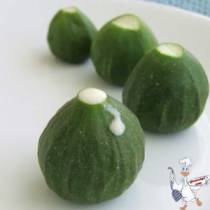
Unripe Figs via Giverecipe.com. (For recipe on Unripe Fig Jam, click on photo. Link embedded within.)

Unripe Figs via Giverecipe.com. (For recipe on Unripe Fig Jam, click on photo. Link embedded within.)

The perfume was a bit different on my skin as Ashoka opens primarily with lactonic notes. It’s fresh, sweet, and supported by what definitely feels like coconut underneath. Fig leaves are said to smell like coconut, and that is certainly the case here. Generally, I’m not a fan of coconut in perfumery because it’s almost invariably blob-like, heavy, gooey, thickly buttered, and verging on Hawaiian suntan oil. But not here where the aroma is much more like coconut milk: fresh, light, delicately sweet, never buttery, or unctuous. It’s a lovely note that helps bolster the fruit’s naturally light aroma and milky sap.

Wild Fig Tree via Wildernessarena.com.

Wild Fig Tree via Wildernessarena.com.

Accompanying the various milky elements is some bitter green, adding balance and ensuring that the perfume is not excessively sweet. The green notes feel like leaves that have the faint vestigial hint of the trees they came from, creating a canopy over the fig and coconut milk. Sweet floral notes lurk behind in the shadows, feeling almost watery in their delicacy. It must be from the lotus flowers which are said to have an aquatic, sweet aroma. I like the contrast of the slightly bitter green leaves with the milky fig and coconut, but I was a little surprised not to get any of the heavy leather that I had read about. Frankly, I think it works better this way.

Five minutes in, Ashoka is a swirling blend of creamy milkiness with dark greenness, and delicate, watery florals. Vetiver and a subtle hint of vanilla arrive on the scene, accompanied by what feels most definitely like a small dash of ISO E Super. The earthy vetiver with the velvety wood accord of the ISO E Super are subtle at this stage, mere backdrops for the milky notes. The latter starts to turn sweeter and more floral; and the bitter leaves begin to fade away.

Mary Cassatt's "Breakfast in Bed."

Mary Cassatt’s “Breakfast in Bed.”

Ashoka slowly turns into an incredibly soft, soothing bouquet of milky flowers that strongly evokes a mother’s embrace. It feels like a mother’s loving caress when you’re ill and feverish. It’s the sense of comfort that you feel when, as a child, you would nestle in your mother’s arms at bedtime. Ashoka, in this stage, really reminds me of hugging my own mother. Her arms, velvety soft from the milky cream that she slathers herself in at night; the warmth of her body bringing out the light smattering of sweet flowers left on her neck and chest from her morning spray of perfume; the comfort as she holds me close, nestled, protected, and safe. The peppered wood notes underlying Ashoka never really take away from that image because they are just beneath the surface at this point. What is up top is that incredibly maternal, nurturing, comforting combination.
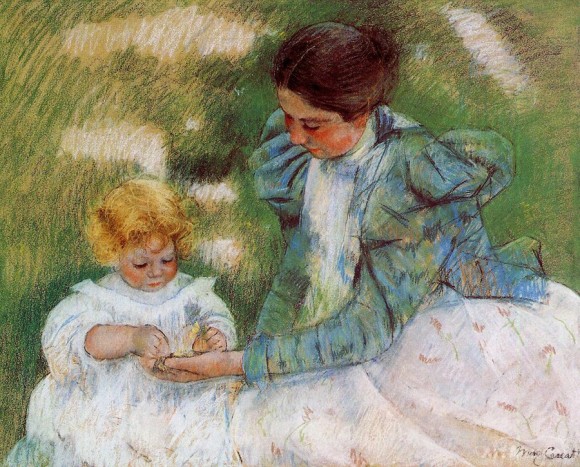
Mary Cassatt. "Mother Playing With Child."

Mary Cassatt. “Mother Playing With Child.”

At the end of the first hour, Ashoka starts to slowly shift, and the second phase in the perfume’s development begins. The wood and ISO E Super rise in prominence, overtaking the lactonic elements which slowly recede to the background. Now, Ashoka is primarily heavily peppered vetiver with ISO E Super on a quiet base of coconut-fig milk. It’s as if your mother — or, in this case, Father Ashoka — has taken you to play outside amidst the grassy vetiver at the outskirts of some peppered woods.

The ISO E Super is not overwhelming and never has the feel of rubbing alcohol underneath it, as it sometimes does. Unfortunately, after an experience last month, I think I have almost a Pavlovian response to the note, and I react even if the bell is the smallest one around. The faintest ring — or, in this case, the lightest note — will send my senses tingling. I simply don’t like it. Yes, I realise that prior experience has scarred me for life, but that is solely my own, personal, slightly neurotic issue. Thankfully for the rest of you, most people seem to be completely anosmic to ISO E Super which has been found, in some cases, to act almost like an aphrodisiac pheromone. So the majority of you should have no worries, and only those few people with acute sensitivities to ISO E Super may want to take heed.

At the start of the third hour, my favorite part of all NVC perfumes begins: the sandalwood. As always, it is that opulently creamy, richly spiced note that feels like real Mysore sandalwood and which is the hallmark of all the fragrances thus far. The wood is so rare, it might as well be priceless, so heavens only knows how astronomical the cost to have it as the base here. But it’s lovely, especially as the milky coconut-fig accord melds in seamlessly to add extra creaminess. The spicy sandalwood is accompanied by quiet hints of incense smoke, vanilla tonka and amber, but they are subtle at this stage, just flickers in the campfire glow of that wood. I smell a few vague, almost abstract, light florals too; something that seems like the suggestion of rose, accompanied by mimosa, but it’s not strong on my skin. The peppered vetiver is still present, but it has softened somewhat, letting the other players share some time on the stage. I should add that the combination of these notes makes Ashoka a definite Oriental in my mind, regardless of Fragrantica’s classification of it as a “woody aromatic.”

The rich purr of the sandalwood and the peppered woodsy notes with amber continue their dance for a few hours. There are occasional flickers of osmanthus, smelling like light apricots and black tea, but it’s extremely subtle. There is also a fleeting impression of powdered vanilla that darts about here or there, but it might as well be a ghost at this stage. I never smell the leather. I suspect that, if I had enough perfume for the equivalent of two big sprays, it may be a very different story. I’ve noticed in the past that it’s much easier to detect the subtle nuances in NVC perfumes if one uses both a spray and a fair portion. The fragrances are simply too well-blended to allow the small, microscopic elements to be detected with a small dose, since everything blends so seamlessly into each other. Still, I’m surprised to get no leather at all, especially as that it’s a heavier molecule and one which is supposed to be quite prominent in the perfume. The leather is intentionally meant to reflect Emperor Ashoka’s early life as a cruel, ruthless, military conqueror, so either my skin is wonky or I need a good few sprays.

Marc Chagall. "La Branche." (1976)

Marc Chagall. “La Branche.” (1976)

By the start of the sixth hour, Ashoka smells of a cozy gingerbread accord with vanilla — all sitting atop quiet, velvety, softly polished woods. The perfume has the same sort of subtly spiced, vanilla-infused, ambery resin base that some of the Chanel Orientals have (like Bois des Iles, for example), but the lingering traces of ISO E Super turns Ashoka’s base into something much woodier and, to my nose, peppery. By the very end, almost 10.5 hours later, the final notes are of creamy vanillic amber. I suspect that length of time would be significantly increased if I had a greater amount to apply, as NVC fragrances usually last between 12-14 hours on my perfume-consuming skin.

As a whole, Ashoka is a very airy fragrance that is moderately strong at the start, while being lightweight in feel. Its projection is moderate to low. The latter may stem from the reduced quantity that I used but, in general, I think Ashoka is fully intended to be a softer, lighter perfume than something like Trayee or Bombay Bling. It is in line with the whole goal of replicating Emperor Ashoka’s transformation into an advocate of Buddhism, peace, and serenity. The perfume’s comforting, soothing, maternal (sorry, this perfume simply doesn’t fit my mental associations and image of a paternal scent) opening was strong but gentle, never forceful or overpowering, and its final drydown is even softer.

I think all that makes Ashoka an easier fragrance in some ways as compared to its more intense siblings. It’s not that Trayee, Mohur or Bombay Bling are not versatile. They are, especially Mohur. But none of them is so gentle, soft, and casual. As I noted at the top of this review, Ashoka fills a gap in the NVC line, one that I never realised until now: cozy comfort. Bombay Bling may comfort a lot of people, but it does so through its energizing, ebullient nature. It’s not restful, the way that Ashoka is for much of its development. (I’m leaving out the middle part’s trip to the vetiver forest in my assessment, since I personally don’t equate vetiver with soothing embraces.)

I really enjoyed Ashoka. I absolutely adored the milkiness of the opening stage, and really liked the final drydown. My personal issues with ISO E Super made me struggle with the middle part, but that’s my own peculiarity. Most people I know can’t even detect it! So, don’t let it stop you. I think Ashoka’s creamy gentleness and soft embrace will make it a big, big hit.

[ED. Note: You can find a review for the new, upcoming Neela Vermeire “Mohur Esprit” which will come out at the same time as Ashoka here.] 

DETAILS:
Cost & Availability: Ashoka is an eau de parfum and will be released in the Fall of 2013. I will update this section at that time to include links to websites where you can obtain it. I have no idea as to pricing, but I’m sure it will be in the general vicinity of NVC’s other perfumes which cost $250 or $260 (depending on which one) for a 50 ml bottle. Samples are generally available from the NVC website or Luckyscent, but I will update that part, too, when they become available in the Fall

Review En Bref: Aftelier Perfumes Secret Garden Eau de Parfum

As always, my Reviews En Bref are for perfumes that — for whatever reason — didn’t seem to warrant one of my more lengthy, exhaustive, detailed reviews.

SecretGarden bookOne of the most beautiful children’s books is The Secret Garden (1910/1911) by Frances Hodgson Burnett. As a rather lonely, very isolated child whose main companions were books and animals, The Secret Garden gave me hours of comfort, joy and peace. In fact, I kept my copy of it throughout the years and am staring at it as we speak. So, as you might imagine, I was extremely excited to try its concrete, olfactory manifestation: Secret Garden by the highly respected, acclaimed perfumer, Mandy Aftel of Aftelier Perfumes.

Ms. Aftel is a perfumer who specializes in natural fragrances, seeking out only the finest in pure essences and oils. She hand-blends and bottles all the perfumes herself in small batches in her Berkeley studio. As she explains on her website:

My perfumes and products contain only the purest, most sublime botanical essences from around the world. I work with awe and passion for the alchemy that transforms these rare, gorgeous individual natural essences into a beautiful perfume. Indulge yourself in authentic luxury.

Secret Garden Eau de Parfum. Source: Fragrantica.

Secret Garden Eau de Parfum. Source: Fragrantica.

In 2011, Ms. Aftel released Secret Garden, a floral oriental fragrance that comes in Pure Parfum and Eau de Parfum concentrations. This review is only for the latter. According to the Aftelier website, the perfume’s notes include:

Top: bergamot, bois de rose, Geraniol, blood orange.
Heart: jasmine sambac, raspberry (compounded isolate), Turkish rose.
Base: civet, castoreum, vanilla, deertongue (plant), benzoin, aged patchouli.

A few words about the notes. First, I’ve read on a number of sites, including Fragrantica, that the perfume also includes Blue Lotus, which has a sweetly aquatic, watery, floral aroma. I don’t know if it is still included, since it is not listed on the Aftelier website. Second, “deertongue” is a plant and has nothing to do with any animal. There are no animal cruelty issues to be concerned about here! The plant is sometimes called the “Vanilla Plant,” and its scent is described by Ms. Aftel as a combination of “the sweet and powdery notes of tonka beans with the aromas of the countryside.” Third, Ms. Aftel clarified in a comment on Now Smell This that Bois de Rose is another name for rosewood. Lastly, as Fragrantica explains, Secret Garden “includes two historical animal essences: very old civet bought from a retired perfumer and castoreum tinctured from the beaver.” Since the civet was extremely old stock, there should be no concerns of animals being harmed to create Secret Garden, but those who seek completely vegan perfumes may want to ponder the civet issue.

Ms. Aftel describes the perfume as follows:

Like fitting a key in a lock, when you inhale Secret Garden, you enter a redolent and sensual wild garden, where the scent awakens a vitalizing force in the wearer.

Secret Garden opens into roses and wood, brightened with mixed citrus. The jasmine sambac heart of the perfume, with its spicy indolic kick, paired with the jammy raspberry, lends the illusion of spice where there is none — like the lure of a blind pathway in a garden. This intertwines with voluptuous Turkish rose absolute.

Secret Garden opens on my skin with animalic notes from the very start. There are subtle touches of geranium alongside a very heavy, rich, red rose, atop a foundation of raspberry with just the subtlest hint of citrus. But these are all extremely muted; the primary, overwhelming impression is of castoreum and civet, creating a dense musk tonality with strongly leathered, almost tarry, undertones. The castoreum is potent and, for once, the term “animalic” applies quite literally.

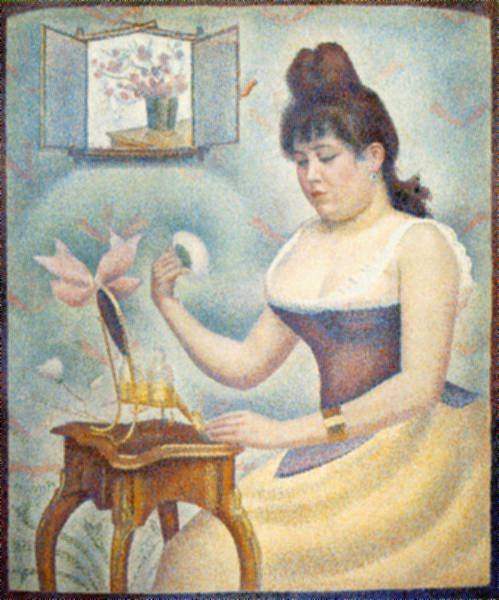
George Seurat: "Young Woman Powdering Herself."

George Seurat: “Young Woman Powdering Herself.”

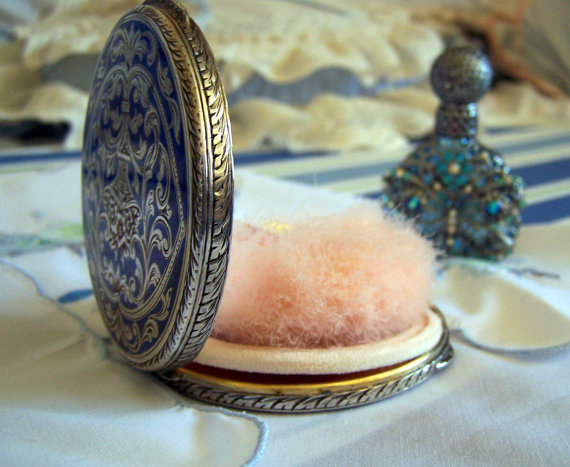
There are also hints of vanillic powder that lurk in the background and that become stronger with every passing moment. As it increases in prominence, less than five minutes into the perfume’s development, it softens the potent, opaque, heavy richness of the animalic tones, rendering them lighter and softer. The powder accord strongly brings to mind those extremely old-fashioned, big, powder poofs that women in the late 19th century would use to dust their décolletage to erase any suggestion of a moist sheen. Here, the note is that exact same old-fashioned, vanilla-centered, makeup powder accord. It’s light and daintily sweet, but, as time passes, it becomes one of the primary, dominant notes on my skin, overshadowing much else except the castoreum.

Ten minutes in, the perfume shifts a tiny bit. The geranium recedes to the background, to be replaced by muted hints of rose and jasmine. They are not strong. In fact, the flowers are never wholly distinct on my skin at all, and are completely dominated by the other notes. By the twenty-minute mark, the floral bouquet feels almost amorphous and abstract, just an overall suggestion in the midst of what is predominantly fruity musk, raspberry and vanilla powder. Very soon thereafter, and for the remainder of the perfume’s development on my skin, Secret Garden is merely powdery, raspberry musk. That’s it.

I tried Secret Garden twice, and it was the exact same development on both occasions. Before the start of the second test, I wondered if perhaps my skin was too dry to bring out the lush, blooming garden that I had so anticipated, so I put on some unscented lotion, waited thirty minutes, and then re-tested the perfume. I applied a greater quantity; I even applied a smear to my inner thigh as well, in case something about my arms was wonky and was throwing off the scent. But, alas, nothing worked. Just like the first time, there were minimal florals at the start, followed by almost none after the first 20 minutes. Instead, the perfume was mainly raspberry castoreum musk and old-fashioned, scented makeup powder, lying close to the skin. And Secret Garden remained that way for approximately 5.5 hours and 6.5 hours, respectively, until the last traces finally faded away. (For an all-natural perfume with no synthetics, the longevity on my voracious, perfume-consuming skin was quite impressive.)

Vintage 1930s Powder Puff Compact. Source: Etsy Boutique "ItsAGoodThing" listing 72555631

Vintage 1930s Powder Puff Compact. Source: Etsy Boutique “ItsAGoodThing” listing 72555631 (Link to the Etsy store embedded within. Click on photo.)

Given my personal style and tastes, the way Secret Garden manifested itself on my skin wasn’t my cup of tea. Something about my skin chemistry completely refused to bring out the lush garden that I kept reading about in all the reviews. Whether one reads the assessments on Now Smell This, The Non-Blonde, The Perfume Shrine, Perfume-Smellin’ ThingsOlfactoria’s Travels, or Smelly Thoughts, they are all glowing; and the vast majority talk about the rich, spicy, powerful floral heart that prevents the perfume from being too jammy or too much of a fruit cocktail. Reading Freddie’s experiences in his Smelly Thoughts review, in particular, I felt as though I was crazy and smelling a different fragrance entirely. Naturally, the tricky issue of skin chemistry will often mean that a perfume manifests itself differently. But those are usually small differences in degree, here or there, not a totally polar opposite experience.

I would have felt like a complete anomaly in the vast ocean of positive raves about the lush, floral garden if I hadn’t come across a few isolated voices whose comments reflected — just in small part — my own experience. For example, on Surrender to Chance, one person wrote: “Sadly, on me it smelled unexciting — like Juicy Fruit gum, with a little nutmeg thrown in. Next.” If we’re going by this analogy, I would compare it more to a powdery sweet, raspberry bubble gum, but I can understand the impression. On Fragrantica, one of the two (both positive) comments says “Warning: it can smell ‘grandmother-y’ to certain people used to very conventional perfumes.” I like both conventional and extremely unconventional scents, and I’m hardly a perfume dilettante, but, yes, I think Secret Garden’s manifestation on my skin was “grandmother-ly.” Without any doubt at all. It’s the overwhelming powder. It’s not bad, and it’s almost sweetly pretty, but that extremely old-fashioned, simple character is not to everyone’s taste.

Again, the minor criticisms or caveats are few and far between. Judging by the blogosphere, 99% of people seem to have had a completely different experience than I did. All perfume experiences are subjective; I repeat that again and again in my reviews. My personal experience with Secret Garden may very well be a complete anomaly. But given the overwhelming nature of those many (many) positive reviews, I thought it was important to share a dissenting opinion, especially as we’re talking about a perfume whose cost can reach $170 for a small bottle. I very much hope that Secret Garden manifests itself on your skin as a lush, blooming floral garden with a secret heart of animalic gold, a perfume that incorporates India’s heady, opulent, orientalist flowers with the best of the English countryside. But, if it doesn’t, you’re not crazy and not completely alone.


DETAILS:
Cost & Availability: Secret Garden comes in different formulations and sizes. It is available directly from the Aftelier website as 2 ml of Pure Parfum for $50; 0.25 oz of Pure Parfum for $170; and 30 ml Eau de Parfum for $170. Samples are available for $6 for a 1/4 ml vial of both the EDP and the pure parfum. Aftelier’s shipping rates start under $5 in the U.S., and under $9 worldwide. I obtained my sample of the Eau de Parfum from Surrender to Chance where prices start at $3.99 for a 1/2 ml vial.

Perfume Review – Chanel Bois des Iles (Les Exclusifs): Out of Africa

Out of Africa. Smoldering sensuality that purrs like a languid cheetah resting on a sandalwood branch. Sophisticated luxury under the most polite and elegant of veneers. The Chanel signature taken to exotic lands.

African sunset. Source: Tumblr

African sunset. Source: Tumblr

That is essence of Bois des Iles, a spectacular Chanel fragrance with a very feline heart that makes me just close my eyes in the deepest of admiration. I’m not generally a Chanel enthusiast; the typical floral-aldehyde signature leaves me rather cold, and I find that restrained aloofness to be far from my style. Whether green and powdery, floral and soapy, or just plain unobtrusive, Chanel rarely tempts me. But Bois des Iles…. my God, is it good! And I’m just talking about the current eau de toilette version from the Exclusifs line. One can only imagine the smoldering richness of the pure Parfum. And the vintage version would probably bring me to my knees in tears of joy.

Ernst Beaux.

Ernst Beaux.

Bois des Iles (which translates to “Wood of the Isles”) has a long, rich history. Ostensibly the very first “woody” fragrance for women, it was released in 1926 and was the result of collaboration between Coco Chanel and her cohort in olfactory adventures, the great, legendary Ernst Beaux. He was a Russian émigré who created some of the greatest perfumes in history, and an extremely intellectual man who supposedly used both Tchaikovsky and the great Russian poet and novelist, Aleksandr Pushkin, as his inspiration for Bois des Iles. In specific, Beaux is said to have created the perfume while entranced by Tchaikovsky’s opera, The Queen of Spades (“La Dame de Pique”), which was based on Pushkin’s story of love, obsession and madness.

Chanel, however, gives a very different backstory for the perfume on its website, describing instead the Paris of the 1920s, gripped by the fever of Africa and exotic lands:

Josephine Baker who danced at Le Bal Negré and who helped trigger the fascination with Africa in 1920s Paris.

Josephine Baker who danced at Le Bal Negré and who helped trigger the fascination with Africa in 1920s Paris.

The year was 1926. People were discovering the explorer within themselves. They danced at the Bal Nègre. Africa became the inspiration for fabrics, jewelry and earthenware. Mademoiselle Chanel and Ernest Beaux took their turn at evoking distant lands with BOIS DES ILES. It’s all there: the precious woods, the opiate scents and magnificent, languid flowers. The fragrance is a mysterious, faraway continent in itself.

I never even knew Africa was mentioned when I was testing the perfume and, yet, oddly, my notes for Bois des Iles were filled with comments about languid cheetahs, the sizzle of the Serengeti, and opiate woods. There is something about the sandalwood heart of the perfume that purrs not like a pussy cat but, rather, like a large, sleek, jungle cat.

Chanel Bois des IlesIt’s very surprising given the current situation worldwide for real Indian sandalwood. The current Bois des Iles is not the exact same formula used in the perfume created back in 1926. This one was released in 2007 as part of Chanel’s prestige, quasi-niche line, Les Exclusifs, and was created by the line’s in-house perfumer, Jacques Polge, who tried to stick as closely as he could to the original version. Unfortunately, he was hampered by the fact that Mysore sandalwood — the essence of the first Bois des Iles — is now in danger of extinction. So, he constructed an ode to sandalwood that doesn’t use the actual ingredient — and what a spectacular job he did!

According to Fragrantica, the notes in Bois des Iles include:

aldehydes, bergamot, neroli, peach; jasmine, rose, lily of the valley, iris, ylang-ylang; vetiver, sandalwood, benzoin, musk.

The perfume’s start on my skin is not exactly joyous. Chanel’s signature floral-aldehyde combination is twisted from its usual sparkling, frothy, soapy nature into something sharp, bitter, pungent and darkly green. It’s still soapy, but it’s also acrid and, yet, simultaneously, tinged with a somewhat odd sweetness. It is unpleasant, but sheer enough to be easily ignored. 

In less than ten minutes, however, the perfume starts to change. The bitterness and green sharpness start to fade away, as the floral notes start to grow stronger. At first, they are initially just abstract; an amorphous and vague sense of general “flowers,” if you will, with no individual components. Soon, however, they start to take shape with a strong rose note, backed by jasmine, then light touches of orange blossom, lily of the valley, and bergamot. The latter doesn’t resemble Earl Grey’s bergamot but, rather, a lemon-nuanced orange. Florals dominate these opening moments of Bois des Iles; the sandalwood cheetah is still sleeping. Instead, rose, orange blossom and citruses dance under the veil of softly soapy aldehydes.

Source: Wallpapers Online.

Source: Wallpapers Online.

Fifteen minutes in, the sandalwood starts to slowly rise to the surface. It’s so creamy, it almost verges on a coconut note. As it starts to infuse the florals, the aldehydes drop; their soapiness is tamer, softer, milder, adding just a subtle touch to the woodsy notes. At the same time, the resins begin to appear, creating a slow amber purr in the background as if some golden, black-spotted cheetah were sunning himself on the sandalwood branches of a great plain. Chanel’s resins are rarely the sort of molten, viscous, heavy, opaque ambers that you find in other houses or perfumes. Yet, here, there is something deep, rich, almost smoking in the combination of the sandalwood and resin. It’s rich and luxurious — all while feeling very lightweight in feel. It’s a combination that really seems to start at a low burn (or purr, if you will), smoldering quietly in the background until it takes over completely by the end in a blaze of smoky, spiced sandalwood glory.

Source: Coverslike.com

Source: Coverslike.com

But, in these opening hours, the cheetah is just awaking, opening his eyes upon a plain of flowers and woods. The bitterness of that green opening vanished long ago, replaced by vetiver that creates a vision of green and brown: its earthy rootiness is combined with the soft, loamy black earth, and just the quietest hint of musk. The bouquet of florals blooms, sometimes abstract, sometimes with more easily detected individual notes like jasmine or ylang-ylang. And, throughout it all, the sandalwood trees smoke little trails of what almost feels like a light incense. Less than 90 minutes in, the sandalwood has an orange-spice feel that is simply beautiful. It mixed with the much more prominent jasmine which is simultaneously sweet, heady, sheer and light, in a beautiful balance. The jasmine is far from indolic, and never feels over-ripe, sour, plastic-y, or verging on the narcotic. Underneath that beautiful jasmine-sandalwood canopy, there are flickers of citrus, orange blossom, amber and vetiver.

For my personal tastes, I would love it if the combination were richer, spicier, and deeper (clearly, I need to get the eau de parfum!), but Bois des Iles is not meant to be unctuous. It’s intended to be a lighter version that is airy and soft. Even the sillage is moderate, wafting out just a foot (or less) in the opening two hours, before dropping further. Bois des Iles is not gauzy or translucent, but it’s definitely not heavy and thick. It is like a cashmere cardigan on your skin, keeping you warm despite its lightness.

Source: 360doc.com

Source: 360doc.com

By the start of the second hour, Bois des Iles is all creamily spiced, rich sandalwood with lightly smoked resins. It’s as smooth as the gait of the waking cheetah, stalking the spiced woods and its golden fiefdom. That image isn’t wholly figurative; there is almost an animalic, leathery quality to the resinous combination — though it is light and just a subtle undertone. The perfume remains that way for hours and hours, until finally, it turns into a slightly powdery amber-and-smoke combination. People are always talking about how Chanel’s orientals have a “gingerbread” accord in the final drydown, and it’s almost like that here, if you really push your imagination. But, on me, the final touches of Bois des Iles are really just spiced amber with some extremely light hints of powder and musk.

Bois des Iles lasted an incredibly long time on my skin. Ten hours later, I could still detect faint traces of it on my arm. But there were times when the perfume replicated my experience with Chanel’s extremely lovely 31 Rue Cambon by taking on ghostly qualities: it seemed to disappear completely from a certain part of my arm, only to pop back up thirty minutes later. The scent in some parts seemed to wax and wane in strength, sometimes seeming to fade, only to end up even stronger than before. It’s a puzzling thing about some of Chanel’s Exclusifs, and I’m hardly the first one to experience it. I sometimes wonder if that ghostly act — which is particularly bad in the case of 31 Rue Cambon — is the reason why a few people (not all or many, but simply a few) think that the perfume has faded away completely in a brief portion of time. I certainly thought so for Rue Cambon and, after all, how many people spend their day constantly smelling their arm (or having someone sniff their neck)?

Nonetheless, longevity seems to be a problem with Bois des Iles. For once, I was incredibly lucky with how long a perfume lasted on me. In contrast, some people on Fragrantica reported Bois des Iles dying after an hour! The numbers are all over the place: one person gave 12 hours in duration, another 7-8 hours, and one saying 30 minutes with “generous spritzing.” Oh dear.

I don’t think that possible longevity issues should stop you from at least trying this beautiful perfume. It all depends on your personal chemistry, and you may have no problems at all. Plus, you need to see what the fuss is about because, for once, it is truly warranted. Even if you ignore the rave reviews littering the blogosphere, consider the perspective of the perfume critics, Luca Turin and Tania Sanchez who awarded it the full 5 stars in Perfumes: The A-Z Guide. There, Ms. Sanchez writes:

What Ernst Beaux’s plush Cuir de Russie did for leather, his cozy Bois des Iles did for sandalwood. Though I’ve never worn a sable stole, I insist it must feel like Bois des Iles: a dark, close, velvety warmth, sleepy and collapsingly soft. For once, the marketing material has it right. Chanel says it smells like gingerbread in the drydown, and so it does, sweet with vanillic balsams and spice. But that description doesn’t begin to communicate the depth of the fragrance: there are aldehydes sifting a powdery brightness over all, so that the fragrance feels sometimes like the brunette sibling of No. 5. There is the delicious top note of citrus and rose, with the fruity brightness of cola. It is basically perfect and, though over eighty years old, seems as ageless as everything Chanel did in those inventive years. If you think of all the best Chanel fragrances as varieties of the little black dress — sleek, dependable, perfectly proportioned — Bois des Iles is the one in cashmere.

My experience with the perfume was not really the same as Ms. Sanchez. For one thing, she doesn’t talk about that difficult opening 10 minutes; read any number of comments on Fragrantica or elsewhere, and the subject does come up. For another, on me, the aldehydes didn’t last for long (thank God). I also think the term “fruity brightness” may create a very misleading impression since this isn’t a fruity perfume by any means. Lastly, I don’t think her review conveys — at all — the true feeling of Bois des Iles with its smoldering sandalwood that is stunningly spiced, smoky, creamy, dark and ambered. The elements she describes are brief, fleeting flickers that never seriously impact the feline heart of this perfume. In fact, all the talk of aldehydes and roses almost detract from the basic fact that Bois des Iles is primarily a very sultry, amber oriental.

Where I absolutely agree with Ms. Sanchez is that Bois des Iles is a sandalwood stunner that is incredibly elegant in feel and simply oozes “money” (or “a sable stole”). It is restrained in that classic Chanel way, but you can almost sense that the woman wearing that perfect, elegant dress is sporting the sexiest of skimpy lingerie underneath it — if she’s wearing any at all….

Comparisons are repeatedly drawn between Bois des Iles and other Chanel perfumes. Three names, in particular, come up: Egoiste, No. 5, and No. 22. It’s been a while since I tried all three that I wouldn’t be able to make acute, detailed comparisons, but my memory syncs up with those of general commentators on Fragrantica. Bois des Iles is more refined than Egoiste, as well as softer, less intense, less complex, and creamier. It’s also less spiced than Egoiste which has a strong cinnamon undertone. (My comments only apply to vintage Egoiste, which I adore, and not to the current, reformulated version.) Bois des Iles also differs from Chanel No. 5 which is sweeter, richer, heavier, more powdery and (to me) soapier, though some seem to disagree on that last part. It is, also, more animalic at its heart, and its primary nature is floral. Bois des Iles’ nature is primarily woody, with the florals being mere accentuating touches. As for No. 22, my memory of that one is the weakest, but I recall it as being much yellower, much sweeter, far soapier with the aldehydes, and with significant powder (which Bois des Iles does not have). All in all, I’d say Bois des Iles was like the lovechild of Egoiste and No. 5, combining the best parts of both.

Bois des Iles is both unisex and incredibly versatile. Its moderate sillage makes it perfect for the office, but it is also a perfume that works well on a night out with friends, on a date, or just to curl up and feel sultry at home. It has immediately become one of my favorite Chanel fragrances, tying with (vintage) Coco and the beautiful oriental, Coromandel, Chanel’s ode to incense and labdanum. But something about Bois des Iles feels much more feline to me than those other two perfumes. Try it, and dine with the cheetah….

"Dining with a cheetah" photo by Leombrumo-Bodi, Vogue 1960. Condé Nast via Tumblr.

“Dining with a cheetah” photo by Leombrumo-Bodi, Vogue 1960. Condé Nast via Tumblr.

Details
Cost & Availability: This review applies only to the Eau de Toilette version of Bois des Iles. It comes in two different sizes: $130 for a 2.5/75 ml oz bottle or $230 for a massive 6.8 oz/200 ml. You can find it exclusively at Chanel boutiques or on the Chanel website. (The more concentrated, richer Parfum is $175 for 0.5 fl. oz.) You won’t find Bois des Iles at Nordstrom, Barney’s, or the like, though readers tell me that it is available at select Saks Fifth Avenue Stores (like the NYC flag-ship and the one in Washington, D.C.). It is also apparently available in-store at NYC’s Bergdorf Goodman and the Seattle Nordstrom (which will ship out to you wherever you are). However, Bois des Iles is not listed on any of those stores’ websites, so your best bet if you’re not near one of them is to go through Chanel itself. You can also use Chanel’s Store Locator guide on their website to try to find Chanel boutiques near you. As a side note, bottles are frequently sold for a bit less than retail on eBay. As for samples, you can find them at Surrender to Chance where prices start at $3.00 for the smallest vial (1 full ml) of the Eau de Toilette. If you want to try the pure Parfum version, it’s $5.99 for a tiny 1/4 ml, $11.98 for a 1/2 ml, $23.96 for a 1 ml vial, and up.

Perfume Review: Mona di Orio Vanille (Les Nombres d`Or Collection)

Untitled (Violet, Black, Orange, Yellow on White and Red), 1949. Source: The Guggenheim Museum.

Untitled (Violet, Black, Orange, Yellow on White and Red), 1949. Source: The Guggenheim Museum.

There is something strangely captivating about Vanille from the highly admired perfume house of Mona di Orio. Vanille is part of Les Nombres d`Or Collection, and it is not your standard vanilla at all. Actually, the best way to sum up the perfume Vanille might be through analogy to the work of the famous painter, Mark Rothko, with his “Untitled (Violet, Black, Orange, Yellow on White and Red) 1949.” Like that painting, the perfume starts out as blood-red orange — and I mean that quite literally. Then, it turns into orange with the merest hints of yellow, before slowly transforming into creamy custardy yellow, custardy yellow on a darker, smoky, woody base, and, finally, into the palest of cream.

I wasn’t a fan of the blood-orange phase, and found Vanille’s opening to be almost a little nauseating, but the middle to end phases captured my interest. Almost against my will, I might add. Those of you who have read me for any amount of time know that I like neither very sweet perfumes nor gourmand ones. But, again, this is not your standard vanilla perfume. You might even argue that it is an Oriental-Gourmand hybrid at times, and one which merely happens to be heavily based on raw, concentrated vanilla. In the end, and taken as a whole, Mona di Orio Vanille was not my personal cup of tea, but I would definitely recommend it to those who adore non-traditional vanilla fragrances.

Mona di OrioThe company’s website explains the inspiration and character of the perfume, with a key point about how their key note differs from that used in some other vanilla perfumes:

When composing Vanille, Mona di Orio imagined a romantic back story involving an old ship from long ago, on its way to Madagascar or the Comoros Islands, carrying precious cargo: rum barrels, oranges, vanilla beans, ylang-ylang, cloves and sandalwood …
Gourmand, smoky, and boozy with a subtle aromatic orange note lingering in the background, Vanille is one Bateau Ivre of perfectly blended notes that will derange your senses with its sensuality.Vanille opens with a shot of rum flavoured with orange rind and spiced with cloves. Amber and tonka further warm up this brew as ylang-ylang’s sharp sweetness joins with rich vanilla. Gaiac wood adds incensey smoke as woody notes from vetyver and sandalwood help to create an elegant finish.

But the real star of the show, not surprisingly, is vanilla. Instead of using ethyl vanillin, one of vanilla’s main components that can come across as powdery and sugary, di Orio used pure vanilla in this elixir. For a moment — amid this elegant orchestral arrangement of notes in the key of Vanilla — the pulpy, sensual creaminess of a split vanilla bean is right there in front of your nose. Delicious!

The exact notes are as follows:

Bitter Orange from Brazil, Rhum Absolute, Petitgrain, Clove, Vanilla from Madagascar, Tolu [Balsam, a resin], Gaiac Wood, Vetyver, Sandalwood, Ylang-Ylang, Tonka Bean, Leather, Musk, Amber.

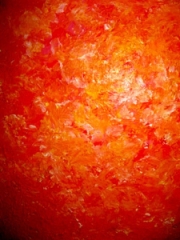
"The Orange Album - Abstract Art, Custom Painting, Imagery" by Bob Shelley at CustomMade.com

“The Orange Album – Abstract Art, Custom Painting, Imagery” by Bob Shelley at CustomMade.com

Vanille opens on my skin with a veritable explosion of orange in every form and variation possible. There is what feels like the most concentrated form of floral orange blossom, along with loads of highly sweetened blood orange, browned and very bitter petitgrain, and rummy Bourbon. This is orange to the Nth degree — sometimes blood-red in nature; heavily dark twig-brown; sometimes rum-like orange-brown, and always sweet. So, so sweet. Frankly, I’m a little overwhelmed.

Orange blossom is not listed in the notes but it is one of the most prominent notes to my nose during those opening minutes. Mona di Orio Vanille doesn’t feel like pulpy, orange or citrus fruits, but more like a combination of neroli and petitgrain. It has an oddly buttery feel to it — and I’m talking about actual melted butter. There are also touches of gaiac wood, the merest suggestion of cloves, and strong vetiver, all over a dry, smoky, vanilla base with cups of bitter petitgrain, and galloping gallons of Bourbon.

Bourbon is an American type of whiskey that is extremely sweet, and tinged with the wood from the charred-oak caskets in which it is aged. The alcohol note in Vanille has been compared to rum but, to me, it’s more akin to the woody, smoked aspect of sweet Bourbon. And it is such a huge part of the opening that the only way to really describe it all is to coin a new word: Bourbon-ized. Every note in the perfume is coated with Bourbon, but the main thrust is bourbonized orange blossom.

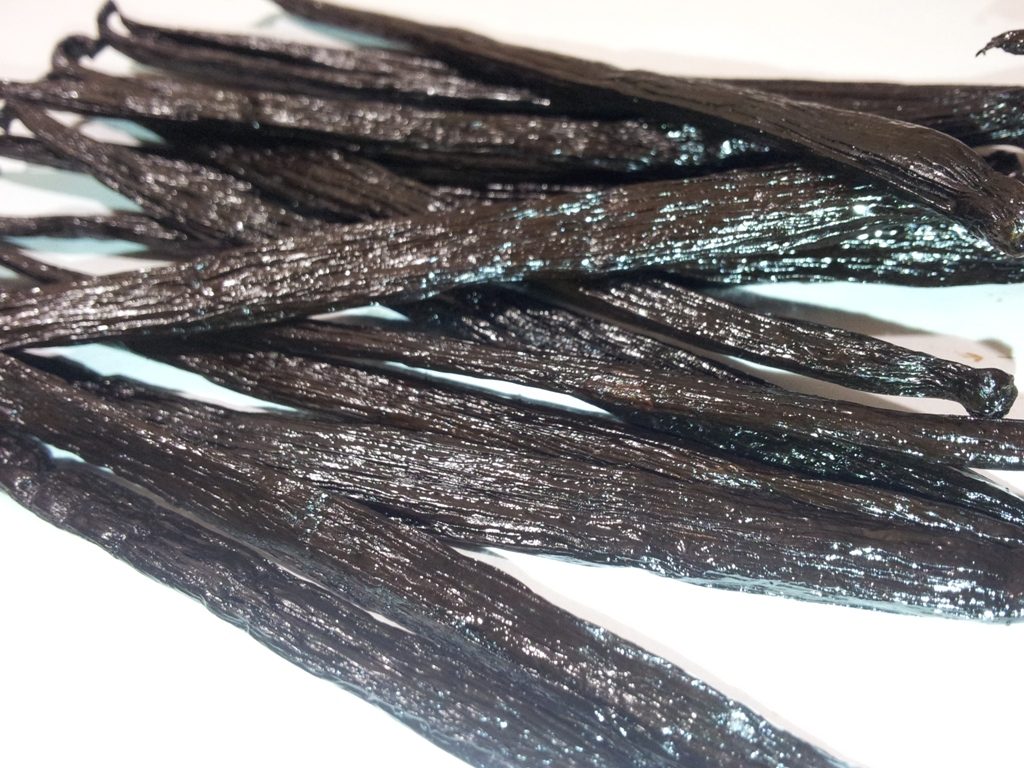
Vanilla BeansAfter about 5 minutes, the perfume starts to shift a little. Vanilla starts to rise to the surface. It is just like a freshly sliced vanilla pod; rich, raw, custardy, and potent. It immediately impacts the other notes, softening the orange blossom and taming the bitter petitgrain to something a little less sharp. It serves to alleviate some of the heavier aspects of the perfume that were, to me, unbearably cloying. And, with every passing moment, the sweetness drops — matched by a converse rise in the fragrance’s dry notes.

Less than fifteen minutes into the perfume’s development, Mona di Orio Vanille begins to turn into something much more nuanced and balanced. The pepper, smoke and woody notes appear (much to my relief) in a more individually distinct form. The gaiac wood is backed by the merest suggestion of cloves and earthy vetiver, but it is the slow, quiet, almost muted suggestion of smokiness in the background that I prefer. The perfume is still incredibly potent, rich and heavy, but it is not a cupcake sugariness or something that is purely gourmand. However, it is still far, far too rich for those who like airy, gauzy, sheer perfumes.

Clarified butter.

Clarified butter. Source: Sodahead.com

The note which perplexes me is something that definitely evokes the aroma of melted, clarified butter. I cannot explain it, but it is inescapable. I’ll tell you a brief story of my experience the other day. I planned to test the perfume, opened the vial to give it a sniff, but, then, suddenly, realised the time and that I had to go to my book club meeting. Unbeknownst to me, I must have gotten faint traces of Vanille on my fingers. Well, for the next two hours, I kept asking my hostess, “What is that smell of melted butter and vanilla?” She looked at me blankly, especially as I kept sniffing the air, my shirt, and parts of her kitchen like some sort of crazy person. I thought it may have been one of her hot, very buttered rolls that she had out, but it didn’t smell anything like the aroma that was haunting me. Finally, I realised that the scent came from two of my fingers. It was Mona di Orio’s Vanille. And, I’m telling you, it was just like the most concentrated form of highly sweetened, pure vanilla extract in a saucepan of bright yellow, sweet cream, Bourbon butter, with a touch of orange petitgrain. The note was there during both of my two, full tests of the perfume — and I really didn’t like it. Something about it called to mind the large canisters of cloying, heavy, butter oil that American movie cinemas use on popcorn.

Forty minutes into the development of the perfume, Mona di Orio Vanille is a strong vanilla custard with buttered Bourbon, followed by orange blossom, and muted hints of smoke and wood. On me, both the clove note and the dry, wood, smoke combination are significantly less than what others on Fragrantica and elsewhere have reported. Then, things start to get interesting. There is the merest whiff of ylang-ylang which just grows stronger as the time passes.

Less than 90 minutes in, the perfume becomes a wonderfully balanced, mellow, smooth, floral vanilla custard. The vanilla is still the dominant note, but it is tinged with airy ylang-ylang. The creaminess of the vanilla is perfectly complemented by the custardy, banana-like aspects of the flower which is, itself, balanced by its sheerness and lightness. Underneath it all, there are whispers of orange blossom, woods and vetiver. The buttery note is much more muted now (thank God), and the perfume feels significantly less opaque, gooey and unctuously sweet. In fact, even the sillage has dropped to a perfect amount, projecting in such a small cloud around you.

I started to smile and sniff my arm with some enthusiasm exactly two and a half hours in, when the sandalwood appeared. Creamy, soft, luxurious, rich sandalwood was intertwined sinuously with the vanilla, creating a silky, smooth, wonderfully blended scent. There were some mysteriously tantalizing hints of smoke and woodiness in the background that made Vanille seem a little more like an Oriental/Gourmand hybrid than a purely gourmand one. It’s almost as if there is some incense note but, like the clove one before it, it’s far from prominent on my skin. I still wouldn’t go so far as to call Vanille an incense-vanilla fragrance the way so many others do, but it is a lovely, subtle touch at this stage.

For reasons I can’t quite explain, Mona di Orio Vanille makes me think of Serge LutensUn Bois Vanillé which I like quite a bit. It’s a peculiar thought as they actually aren’t very alike. Mona di Orio’s perfume is monumentally richer, stronger, deeper, thicker, and more Oriental with its floral and smoky touches. The Lutens is milkier, creamier, with almond, licorice, light coconut, and honey. No flowers or buttered Bourbon at all. And the vanilla never feels raw, like concentrated pod paste as it does here with the Mona di Orio. However, Un Bois Vanillé does share the guaiac wood and sandalwood notes which combine with the vanilla to create a definitely smoky, woody, vanilla feel at certain stages — even if it is substantially lighter and milder. Perhaps the similarity in my mind stems from the fact that I haven’t encountered a lot of woody vanilla-sandalwood fragrances, as opposed to purely dessert and cupcake ones (which I despise).

Mark Rothko. "No. 14-10 Yellow Greens."

Mark Rothko. “No. 14-10 Yellow Greens.”

As the perfume starts the dry-down phase, a little over six hours later, Mona di Orio Vanille turns into a tonka vanilla perfume with sandalwood, quiet amber, a touch of wood, and subtle orange notes lurking in the background. It’s sheer, soft, and pleasant. In its final moments, about 9.5 hours, it’s really just simple tonka with some amorphous, lightly musked, woody note. All in all, Vanille lasted just short of 10 hours on my perfume-consuming skin. It was a strong perfume throughout much of its early development, but the sillage went from heavy to moderate by the second hour, then dropped further as the perfume progressed. It became a skin scent around the fifth hour.

The comments on Fragrantica are all over the place for Mona di Orio Vanille. The majority absolutely love it, calling it a well-balanced, smoky vanilla with lots of wood. A number find the opening to be unpleasant; a large number call the fragrance a dirty, complex vanilla that is their favorite; some compare the vanilla note to that in Dior‘s Addict; and a handful comment on how it is essentially “Rum, rum, rum. I hope you like rum, because…rum.” There are scattered statements here or there on how parts of the perfume are stomach-churning or “nearly nauseating.” I would bet you anything that it’s the Bourbonized butter and orange combination that the commentators are finding to be excessively cloying. I certainly felt queasy myself.

Yet, one of the bloggers whom I respect — The Non-Blonde — really adored this fragrance and you may find parts of her review to be instructive:

Vanille is reasonably sweet and somewhat ambery, but the main thing that’s amplified on my skin and tales me on some serious ride is sandalwood. Sandalwood like I haven’t smelled in ages: deep exotic and spicy as well as creamy. It’s a very posh cousin of the chai-sandalwood blend from Kenzo Jungle L’Elephant.

Vanille progresses from slightly boozy and intoxicating to smooth and mysterious. There’s no question about sex-appeal: this would get you sniffed and followed around. The vanilla is woven into every stage of the development and belongs there, be it as part of hot toddy, a treasured spice in a craved wooden box or a rare incense that sends you off on a fantasy journey. 

If I had experienced as much sandalwood and incense on my skin as she seems to have done, I may have been a little more bowled over by the fragrance. I am certain, however, that I would still have enormous difficulty with the opening two hours. I’ve got some more of the Vanille (yet again) on my arm as we speak, and I simply cannot handle the Bourbon butter.

How you feel about Mona di Orio Vanille will really depend on how you feel about the main note, and gourmand fragrances as a whole. Those who love truly sweet, fully dessert-like fragrances may find it not to be sweet enough. This is no simple, uncomplicated Bath & Body Works vanilla. Those who enjoy the note in conjunction with other things may really appreciate this non-traditional, smoky woods and orange version of things. And those who are like me — who love spiced Orientals or super-charged florals, who wouldn’t go out of their way to experience a vanilla scent, and who eschew sweetness in any significant degree — may enjoy parts of the Mona di Orio, but not the whole. I definitely can’t see them being wow’ed enough by the overall experience to want a full bottle of it, especially as it costs $230. There are, however, different sizes and pricing options that may make Mona di Orio Vanille more accessible for those who adore their vanilla.

As a side note, this fragrance is absolutely nothing like Guerlain‘s Spiritueuse Double Vanille. Two very different kettles of fish. It’s been a long time since I smelled Annick Goutal Vanille Exquise, but, going on my memory of it, I don’t think the Goutal is similar, either. Despite deploying an incense twist on vanilla, it’s not as rich as the Mona di Orio, has much less concentrated vanilla, and includes quite a bit of bitter angelica. I believe Montale has a woody, boozy vanilla fragrance amongst its vast line, but I haven’t tried it. Lastly, Mona di Orio Vanille has absolutely nothing in common with Tom Ford‘s Private Blend Tobacco Vanille. The latter has dried tobacco leaves that occasionally create an impression of Christmas plum pudding. No part of Mona di Orio’s notes replicate the predominantly tobacco-woods or the spices in the Tom Ford. Furthermore, the type of vanilla and the fundamental nature of the fragrances are very different, too.

All in all, if you adore rich, sophisticated, boozy, vanilla fragrances with a non-traditional twist, you may want to give Mona di Orio’s Vanille a sniff.

DETAILS:
Cost, Sizes, Sets & Availability: Les Nombres d`Or Vanille is an eau de parfum, and comes in a variety of different options and sizes. The full bottle is 3.4 oz/100 ml and costs $230. It is available world-wide on the Mona di Orio website. In the U.S., you can find it at Luckyscent, Parfum1, and MinNewYork (which also offers free shipping within the US). There is also a Discovery Set of 8 x 5ml roll-on bottles of the entire Nombres d’Or collection which Mona di Orio sells for €90, and Luckyscent/ Parfum1 for $145. MinNY discounts the set for $5 off, pricing it at $140. Mona di Orio also offers a Travel Set of just the Vanille perfume in 3 bottles of 10 ml each, with the whole set priced at €85 (or about $110 with today’s currency conversion rate). That set is not offered at Luckyscent or Parfum1. In Canada, The Perfume Shoppe carries its own sort of “Discovery Set” of 4 perfumes in the Nombres d’Or collection, one of which is Vanille. It retails for CAD$100. Oddly, I don’t see the full bottle on their website when searching by brand name, but I found it via a Google search listed here and marked as “available.” It’s also marked as selling for $170, which I don’t understand at all. So, you may want to drop them an email. In the UK, you can find Vanille at Les Senteurs which sells it for £135.00 and which also carries a sample vial for sale. The perfume is also carried on Roullier White in the UK. In Paris, I see Mona di Orio listed on the Marie Antoinette Paris website but can’t find prices or individual perfumes for the line. For the rest of Europe, you can turn to Germany’s First in Fragrance which carries the perfume for €160.00, along with a Travel Kit of 3 x 10 ml bottles for €85, and a smaller sample for purchase. For all other countries from Russia to Netherlands to the UAE/Dubai, you can use the Store Locator guide on the company website. Samples: I obtained mine from Surrender to Chance which sells them starting at $6.99 for a 1 ml vial. Of course, you can also find samples at Luckyscent, Parfum1, and many of the European retailers linked to above.