YSL Majestic Rose & Supreme Bouquet (Oriental Collection)

YSL’s new Oriental Collection is a trio of fragrances that are meant to be “an invitation to travel” to the Orient. Each one is an eau de parfum housed in a gold-covered bottle, and offered in limited distribution at a very high price. The other day, I covered the toxic abomination that is Noble Leather. Today is the turn of the remaining fragrances in the line: Majestic Rose from the great Alberto Morillas; and Supreme Bouquet, created by perhaps the even greater Dominique Ropion

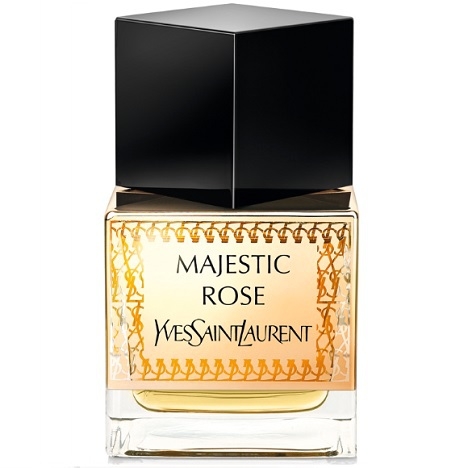
MAJESTIC ROSE:

The most complete and detailed information I found for Majestic Rose comes from Osmoz which states, in part, that:

Source: Osmoz

Source: Osmoz

Majestic Rose pays tribute to the queen of flowers. Rose goes animalic here, becoming one with the oud wood in the trail. […] Composed around rose, the fragrance starts by unveiling notes of bergamot, raspberry and papyrus. The rose heart is sweetened with honey and spiced with saffron and maté. The woodsier trail is composed of oud, guaiac and vanilla. Perfumer: Alberto Morillas, Firmenich.

Note of Top : Raspberry, Bergamot, Papyrus

Note of Heart : Rose, Mate, Saffron, Honeyed Notes

Note of Base : Vanilla, Oud, Gaiac Wood
Maté is not a common note in perfumery, and it plays a part in Majestic Rose’s opening, so I thought this description of it from Osmoz might be useful:

Tobacco, Herbaceous, Hay, Tea. […] Maté is a variety of holly that grows in South America. […] Used primarily in men’s perfumery to create fougere and chypre tonalities[.]

Source: apartmenttherapy.com

Source: apartmenttherapy.com

Majestic Rose opens on my skin with: indistinct, anonymous “fruit;” something very much like ISO E Super; stale, dusty, dry tobacco; fruited rose; dusty, dry parchment paper; cheap synthetic “oud;” dry, leathery, spicy saffron; and a hint of vanilla. Oh, did I happen to mention dust? The fragrance is the oddest mix of sweet syrup and dust notes. All I can think about when wearing it is actual dust in an old library that has been drenched in a thin layer of fruit syrup, saffron, and jammy roses, all sprinkled with astringent, peppered ISO E Super, synthetic tea, and a drop of honeyed tea. It’s an airy mix with moderate sillage, but the prickly, peppered, spiky, synthetic elements all give it a certain roughness and sharpness.

Majestic Rose may not be the toxic dust cloud of its brother, the vile Noble Leather, but it has its own share of chemicals. I would bet anything that the perfume contains Kephalis. It is a synthetic which smells a lot like ISO E Super, is extremely dry, and which Givaudan describes as a long-lasting note with an amber-woody-tobacco profile. As for all that dust in Majestic Rose, it may stems from the papyrus, but the sheer degree of aridness underlying the scent seems much more consistent with the super synthetic, Norlimbanol. It is produced by Alberto Morillas’ own firm, Firmenich, and has been described by Chandler Burr as “quite simply, the smell of extreme dryness, absolute desiccation.”

Source: The Guardian.

Source: The Guardian.

At its core, Majestic Rose is a dust, rose, and “oud” fragrance. Certain notes act as supporting players, waxing and waning in prominence, but the perfume’s essential profile doesn’t really change. Five minutes into its development, the vanilla in the base starts to stir, while the papyrus becomes stronger and more significant. Majestic Rose just gets drier, and drier. And drier. 15 minutes in, Majestic Rose loses much of its syrup, and the fragrance starts to feel like a dust bowl with synthetic peppered ISO E Super, bone-dry woodiness, and, in a wholly discordant mix, sweet pink roses. It’s almost disconcerting to smell the flowers given the other notes. It’s as though a single, fresh, pink rose were pressed in parchment paper scrolls, then stuck in a monastery’s library which hadn’t been dusted since the late 11th Century. 

Thankfully, that phase is short-lived and only lasted about 40-minutes, but at least it was somewhat interesting and different. It’s a lot more than I can say for the rest of Majestic Rose’s development. As the dust recedes, the fragrance turns into a generic bouquet of syrupy rose, synthetic oud, and ISO E-ish chemicals in a cocoon of indistinct, abstract dryness. Hints of other things come and go, like vanilla and tobacco, or the merest drop of something that occasionally feels tea-like, but Majestic Rose’s main thrust is rose-oud (with synthetics). Needless to say, it’s not a particularly distinctive combination these days. In fact, something about Majestic Rose feels awfully familiar, but it’s hard to know which rose-oud fragrance it might be — there are literally hundreds of them.

Source: Ashes of Roses Designs, Facebook page.

Source: Ashes of Roses Designs, Facebook page.

I’ll be honest, I scrubbed off Majestic Rose after three hours. Normally, I would put up with an unpleasant fragrance, partially to see what happens but, primarily, for the sake of thoroughness. However, after the indescribable horror of YSL’s Noble Leather, my tolerance levels are wholly depleted. Moreover, I saw zero chance of Majestic Rose suddenly morphing into something different, it was giving me a mild headache, and I’m pretty much fed up with bad perfumes from YSL. So I had a Thanksgiving Day indulgence, even if that consisted of soap and aggressiveness with a loofah. You probably won’t be shocked to hear that Majestic Rose — like most very synthetic, chemical fragrances — was not easy to remove….

As with all the fragrances in the Oriental Collection, Majestic Rose costs £185 or €177 for an 80 ml bottle. At the current rate of conversion, £185 is $301. I’ll spare you a repetition of how inexpensive it is for individuals like you or I to buy a bottle of each of those synthetics cost in concentrated, undiluted form, or how little L’Oreal/YSL probably spent to make this fragrance. Suffice it to say that the cost of this fragrance is utterly ridiculous, given the ingredients and banality of the scent.

SUPREME BOUQUET:
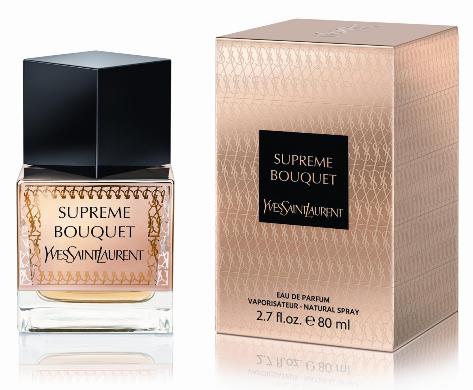
Source: dubaidutyfree.com

Source: dubaidutyfree.com

According to Osmoz, Supreme Bouquet was created by the legendary Dominique Ropion of IFF, and it provides the following description of the scent:

Sweet and creamy, Supreme Bouquet is a perfume in Yves Saint Laurent’s Oriental Collection. Inspired by the mysteries of the Orient, the line is an invitation to travel. The house describes Supreme Bouquet as an escapade in an oriental garden. The fragrance is composed around white flowers.

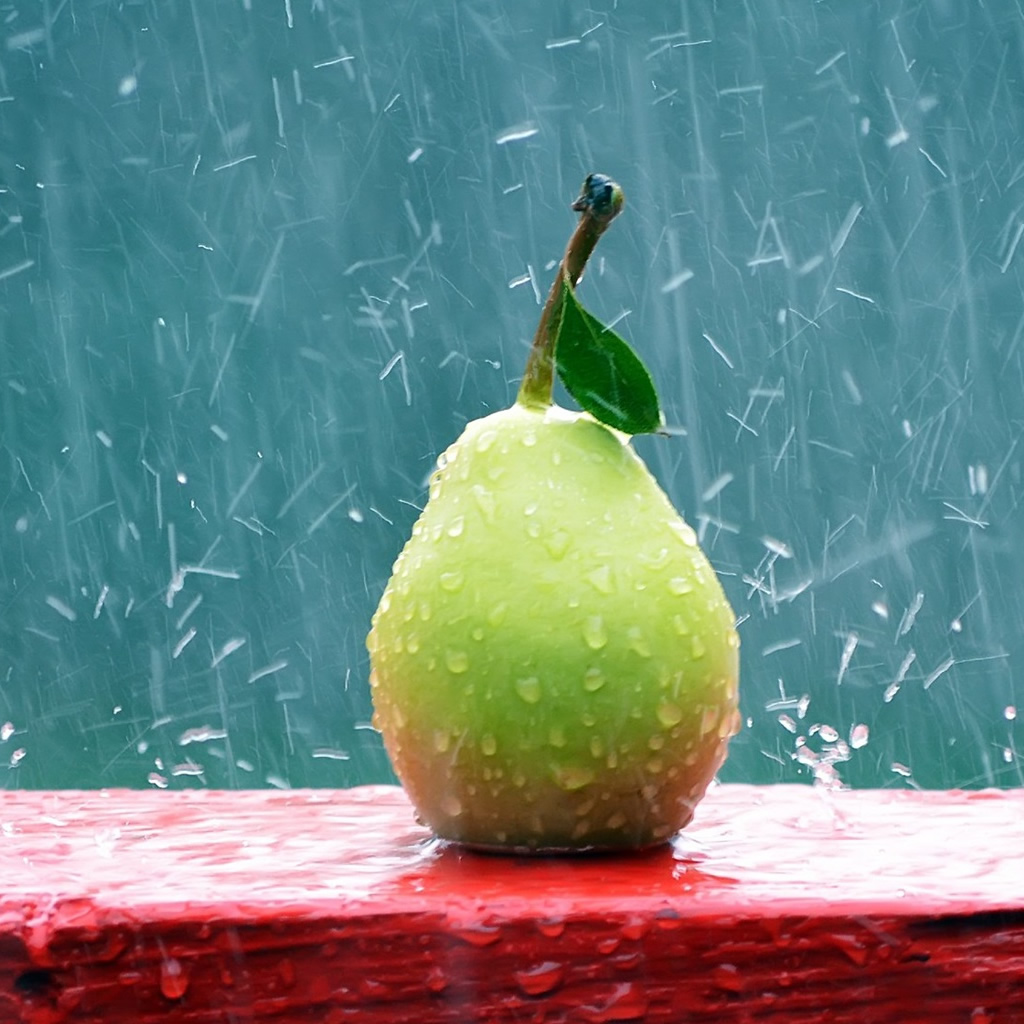
Supreme Bouquet opens with notes of bergamot, pink pepper and pear. The heart pairs tuberose with jasmine and ylang-ylang. The slightly ambry trail is composed of white musk and patchouli.

Note of Top : Pear, Bergamot

Note of Heart : Jasmine, Tuberose, Ylang Ylang

Note of Base : Patchouli, White Musks, Ambry Notes

I’m a sucker for tuberose, so I perked up a little when I sniffed Supreme Bouquet back in Paris. It was still a very tempered response, however, and one that was wholly relative to my utter disdain for the other two fragrances in the Oriental Collection. On paper, it seemed moderately pleasant and pretty, but nondescript and lacking much originality.

The sad thing is that it’s actually much better on paper! On the skin, it’s merely yet another synthetic trip to disappointment. In a nutshell, Supreme Bouquet is like any fruity-white fragrance available at Sephora or at a middle-level department store. Actually, I’m pretty sure some celebrity fragrances are like Supreme Bouquet — right down to their chemical base.
Source: ilikewallpaper.net -

Source: ilikewallpaper.net –

In the vial, Supreme Bouquet smells like a dewy, watery, sweet, white floral scent dominated by tuberose, and lightly infused with pear and white musk. On the skin, it opens with pink peppercorns, white musk, sweet greenish pears, and tuberose. The notes sit atop a base of synthetic, clean, white musk, a synthetic like ISO E Super, and fake “ambry” notes. The synthetics soon become as dominant as the supposedly natural notes, turning Supreme Bouquet into a very sharp, almost laundryesque white floral bomb with pear, pink pepper, and prickly, peppered, sharp ISO E Super. The perfume is a lot of things: it’s very sweet, very fresh, very clean, very white, and very synthetic — but not, alas, very interesting.
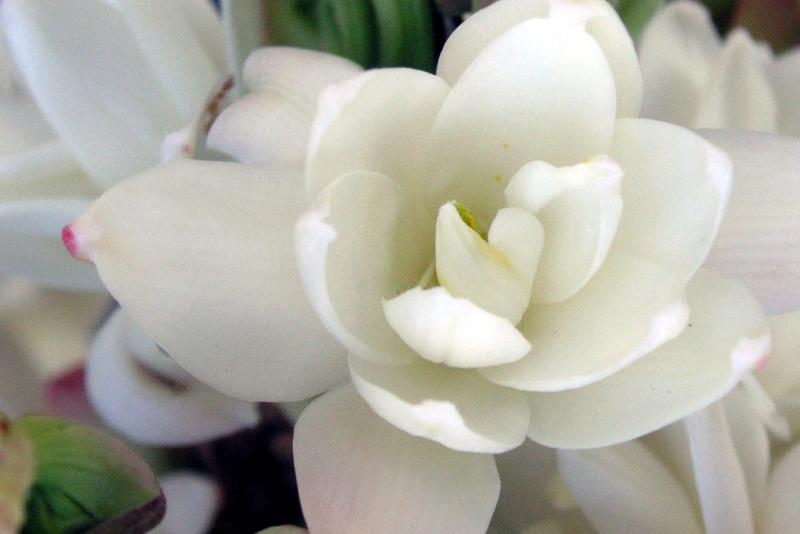
TuberoseIt takes less than five minutes for my skin to be radiating sharp, synthetic white musk and spiky ISO E Super infused with tuberose, pink peppercorns and pear. It gave me an instant headache. Only after an hour do the synthetics finally start to soften, retreating to the edges of the fragrance. The purple patchouli surges to take their place, turning the tuberose even sweeter and adding a much heavier, deeper, fruited touch. By the end of the second hour, Supreme Bouquet is fruity-floral with gooey, purple patchouli and still sharp musk over a sheer, generic, abstract “amber” base with ISO E Super. The jasmine is as prominent as the tuberose now, but the patchouli threatens to dominate them both.

Supreme Bouquet is a largely linear, simple fragrance. Only at the start of the 7th hour does it change, but it’s one of degree. The fruited patchouli is now equal to the tuberose, if not sometimes a bit more dominant, and both notes are trailed by lingering traces of peppered synthetic. Honestly, I see no amber whatsoever in the base. In its very final moments, Supreme Bouquet is merely an abstract blur of a fruited white floral. It lasted 10.75 hours on my skin, with sillage that was moderate only for the first hour but which quickly turned soft. The potency of the synthetic notes, however, meant that Supreme Bouquet was still quite sharp and easily detectable if sniffed up close. The perfume only became a skin scent after about six hours.

If you’re looking for a tuberose with fruity patchouli and synthetics, you should spare yourself Supreme Bouquet’s ridiculous price, and just take yourself off to Sephora, or a bargain basement to look for a celebrity fragrance. There are any number of places where you won’t be charged £185 or €177 for an utterly generic fruity-floral fragrance reeking of ISO E and white musk. Let’s not forget those pink peppercorns, either, something which is wholly passé as a perfume trend now but which was such a mainstay of commercial perfumery to go with the fruited patchouli and the white florals.

Dominique Ropion via fotomag.com.ua

Dominique Ropion via fotomag.com.ua

It’s sad to see the great Dominique Ropion‘s name attached to something that, quite frankly, makes some of the Tocca line of perfumes look like high-quality masterpieces. He really is a superb perfumer; from Ysatis to half of the most famous Frederic Malle fragrances and many other celebrated gems, he is enormously talented. He’s also seems to be a wiz with florals, and tuberose in particular. For example, the famous Carnal Flower, Dior‘s white Pure Poison, and the sadly maligned Amarige. To go from Carnal Flower to this?! In fact, if you’re looking for a simple fruity-floral, you may want to go with the Tocca brand than YSL. Tocca’s Florence is a much better fragrance which also has pear, tuberose, jasmine, bergamot, and musk. In addition, it also has more nuance, thanks to gardenia, violet, iris, and apple; it lacks patchouli; and it is a much fresher, greener, less sickly sweet perfume. Plus, it costs $68, not $300.

I don’t blame Dominique Ropion, however, for the utterly generic, Britney Spears-like fragrance that he’s created. (Britney Spear‘s best-selling Curious has a similar tuberose, pear and musk profile, but also many more notes and no fruited patchouli.) No, in this case, I blame Ropion’s masters at L’Oreal, since the simple fact is that all perfumers must abide by the agenda, briefs, and price point set by the client. Still, there is no getting around it: Supreme Bouquet is not Mr. Ropion’s finest hour. I wonder if he was bored out of his mind making it? I certainly was while wearing it.

DETAILS:
Cost & Availability: Each fragrance in YSL’s Oriental Collection is an eau de parfum that comes in a 2.7 oz/ 80 ml bottle, and is subject to very limited distribution. The price is £185 or €177. The French YSL website and the UK YSL site both carry the Oriental Collection, but not the US one. In the U.S.: I haven’t found any American retailers thus far that carry the line. Outside the U.S.: In Europe, from what I’ve seen thus far, the Oriental Collection is most widely found in the UK and France. In the UK, and for Supreme Bouquet, the London links are: House of Fraser (which is discounting the scent at £148), Harvey Nichols, and HarrodsJohn Lewis is offering Majestic Rose and Supreme Bouquet at a slight discount with a price of £166 instead of £185. There are only 3 bottles left of each at the time of this post. John Lewis ships internationally to over 33 countries, and has free UK delivery. For Majestic Rose, the perfume is currently sold out at London’s House of Fraser, but it is available at Harvey Nichols. I couldn’t find it on the Harrod’s site, but I know they sell it. In Paris, I’ve read that the full line is available at the main Sephora on the Champs Elysees. In Ireland, Brown Thomas sells Majestic Rose and Supreme Bouquet for €205. In Russia, Orental has Majestic Rose and Supreme Bouquet. Airports: Finally, you can find YSL’s Oriental Collection at a number of airports. I myself tested it at Paris’ CDG International Departures, and I know it is also available at London’s Heathrow. I suspect the same applies at all other large airports. Samples: I obtained my samples from Surrender to Chance which sells the complete trio in a set starting at $13.99 for a 1/2 ml vial. Majestic Rose and Supreme Bouquet are also available individually starting at $4.99 for a 1/2 ml vial. Obviously, the complete set is a bit of a better deal. 

YSL Noble Leather (Oriental Collection) – Ignoble Leather

Source: www.luxe-en-france.com

Source: luxe-en-france.com

You better hold onto your seats because I’m not in a good mood. In fact, I’m in a distinctly vile mood, thanks to Noble Leather, a new fragrance from YSL that was released last month in very limited distribution. Ignoble Noble Leather is one of three scents in the new Oriental Collection that is meant to honour the brilliant Yves St. Laurent himself.

All I have to say to that is that the poor man would cry in his grave if he smelled this fragrance. He happens to have been a personal idol of mine, a man I practically worshiped in my youth, and whose creations were once a huge part of my life in numerous different ways. He would cry at the toxic horror that is Noble Leather, and I would join him — if I didn’t feel like taking a sword and stabbing it through L’Oreal‘s heart. 

Source: Basenotes.

Source: Basenotes.

The most common, frequent description of Noble Leather lies through its teeth when it states:

Yves Saint Laurent has drawn its inspiration from the splendours of the East to give birth to an exceptional collection. In honour of its creator and his never-ending passion for the elsewhere, the Oriental Collection celebrates the mysteries and refinement of a land of infinite richness. The potent and deep scent of leather fervently states its case and whispers an elegant, raw and carnal sensuality. The ambery wood accord embraces languid vanilla and the earthy scents of patchouli before giving way to intermingling tanned leathers. Enhanced by a dash of bright saffron notes and softened by the candied sweetness of the dried fruit accord, this skin-deep fragrance leaves an unforgettable impression.

Noble Leather. Source: Luxe-en-France.com

Noble Leather. Source: Luxe-en-France.com

The most complete and detailed information I found for the fragrance comes from Ozmoz. It states that Noble Leather was created by Julie Massé of Mane, and it provides both a description of the bottle and the full list of notes:

Sensual and animalic, Noble Leather is a fragrance in Yves Saint Laurent’s Oriental Collection line. Inspired by the mysteries of the Orient, the collection is an invitation to travel. Noble Leather is composed around a leather accord that’s sweetened with dried-fruit notes. The cubic bottle is sheathed in gold and nestles in a golden box inspired by an Oriental palace. Available from selected points of sale only.

Top : Violet Blossom, Saffron, Tangerine

Heart : Tobacco, Leather, Dried Fruit

Base : Vanilla, Patchouli

A pack of lies, if you ask me. Nothing in this fragrance “celebrates the mysteries and refinement of a land of infinite richness.” What it celebrates are laboratory concoctions. An invitation to travel? Where? To see the scientists at work in the bowels of Givaudan creating vats of cheap Norlimbanol, the ISO E-like Kephalis, cheap purple fruit-chouli, and Safraleine? As for the Orient, bah! It would join Mr. St. Laurent in weeping copious tears of shame that its name has been linked to this over-priced, outrageous hot mess. At least one of them should sue for defamation.

And L’Oreal, you should be utterly ashamed at what you’ve done to the Yves St. Laurent name, a name that was once highly respected, and my own personal favorite amidst all the perfume houses. For shame. FOR SHAME, you revolting, mercenary creatures. Stop picking at the Yves St. Laurent carcass, like the maggoty, mangy, flea-ridden vultures that you are. Haven’t you done enough with the emasculated eunuch and abomination that is the current Opium?

Source: hdwallpapers.lt

Source: hdwallpapers.lt

I suppose I should get to what this vile horror smells like, but I’ve been trying to put off revisiting the memory from sheer misery. Well, Noble Leather opens like a toxic cloud of chemical napalm on my skin. There is a momentary pop of saffron, rich rose, and then a powerful, unexpected burst of an oud-y woodiness, followed by a tidal wave of synthetics. That artificial “oud” is highly peppered and dry, to the point that it feels prickly, spiky, and almost sulphurous. It actually doesn’t smell like the real wood, but my brain is clearly making the connections between the chemicals that often accompany agarwood in fragrances like Montale’s Aouds, and interpreting it as “oud.” Only here, it smells like a really bad, cheap version of Montale’s “oud” — which says something….

In these opening minutes, it is genuinely difficult for me to detect much in Noble Leather behind the deluge of chemicals that are, alternatively, profoundly peppered, aggressively sharp, sulphurously smoky, prickly, and syrupy sweet. My nose is pounding from some sort of piercing dryness, while a sudden pain shoots behind my left eye. But, eh, I’m generally used to such things when there is a gallon of synthetics involved, no matter how miserable the experience. What I’m significantly less used to is the feeling that someone has taken the edge of a sharp kitchen knife and scraped it all along the back of my throat. It feels raw, scratchy, and then it starts to burn. What the hell is in this bloody perfume?!

Art by: LordmOth on Deviant Art. (Click on photo for website link embedded within.)

Art by: LordmOth on Deviant Art. (Click on photo for website link embedded within.)

It is a rhetorical question because I actually recall the unpleasant medley of toxic chemical smells from a prior experience, though it had been faint in comparison then and it never — ever — triggered a reaction like this. This smell that is almost like ISO E Super, but not quite; this olfactory cocktail that begins with a slightly astringent (and quite oud-like) note, before quickly radiating a spiky, smoked, highly peppered cedary dryness, with amber and the vaguest undertone of leather — this medley feels extremely familiar.

Early this summer, I came across a discussion about the synthetic aromachemicals, Kephalis and Norlimbanol on the blog, Scent Intoxique. I am forever indebted to Duke Hunt whose invaluable description taught me to recognize the cocktail of synthetics that I detect here (only Noble Leather has them amped up on steroids, if you ask me). In his review for Nasomatto’s Black Afgano, Duke Hunt wrote:

Straight out of the bong you’re greeted with a dense aroma chemical sucker punch made up of synthetic Givaudan oud, coupled with an underpinned cedar effect in the form of Kephalis (which is an Iso-E-Super substitute, only with a more woodier/smokier feel).

Finally I can make out some quite prominent vetiver/tobacco notes, adding to the “greenness” which the general nose picks up. I may be off, but I definitely feel like I’m picking up one of the main players here and that’s Norlimbanol™, which is described as an “extremely powerful woody/animal amber note. That has a dry woody note in the patchouli direction”. 

As described by Chandler Burr, “Norlimbanol is one of the most amazing scents around, a genius molecule that should be worth its weight in gold; Norlimbanol gives you, quite simply, the smell of extreme dryness, absolute desiccation, and if when you smell it, you’ll understand that instantly—the molecule is, by itself, a multi-sensory Disney ride.”

It’s this same compound which I believe gives the scent its subtle leathery undertones along with the amber. [Emphasis in font to the names added by me.]

Almost everything he’s written — not everything, but almost all — I detect here. From “the subtle leathery tones along with the amber,” to the spiky, peppered, almost greenish notes that resemble smoked cedar, to acutely dry, astringent, almost sulphurously burning woody-amber notes. The patchouli he mentions, well, that is provided in additional form with the actual note, as is the supposed tobacco (which is probably just more Kephalis in disguise). And the whole, utterly heinous, indescribable abomination is wrapped up with an ISO E Super-like bow that explodes at you right out of the starting gates. I sharply and vehemently disagree with Chandler Burr that this is genius gold.

To me, Noble Leather’s toxic brew is a chemical hell on earth that is the perfume equivalent of napalm. Each and every time I sniff I my arm, the back of my throat burns, and I get a spasmodic pain behind my eye. I have smelled a lot of ISO E or synthetic fragrances, and, while I may hate the aroma, I don’t get physical reactions unless the quantity of aroma-chemicals is really enormous. And I certainly can’t recall the last time I had a physical reaction that was this strong.

Source: Shutterstock.com

Source: Shutterstock.com

Minutes after the traumatizing tsunami of toxicity that is unleashed on me, more notes arrive on the scene. There is a jammy patchouli that evokes the aroma of syrupy red roses dominated by dark fruits, then small bubbles of a sweet tangerine and a powdery violet. At first, the citric element is a bit juicy and tart, but it soon takes on a plastic synthetic profile. You know those cheap “Made in China” plastic toys? Well, imagine the smell of one of those just barely infused with something orange-like. As for the violet, it’s delicate, but also somewhat woody and is quickly transformed with a peppery bite from the other accords. Much more prominent to me is a note that distinctly smells like jammy roses, even though there is none listed in the perfume. I assuming it’s my mind making those connections again, as fruited purple patchouli often accompanies a rose accord in perfumery. Whatever the reason, there is a fruited floralness in Noble Leather that goes beyond mere “violets” and which I’ll just call “rose” from this point onwards.

Safraleine. Source: Givaudan.

Safraleine. Source: Givaudan.

Then, there is the saffron. It starts off being a little fiery and spiced, but soon takes on a warm, almost leathery bent. It is most definitely Safraleine, a Givaudan creation that the company describes as follows:

Safraleine has a very unique warm and vibrant character offering a new alternative to existing spicy odorants. Safraleine exhibits warm, powerful, leathery and tobacco facets but its complexity also reveals characteristics of spices reminiscent of natural saffron, enriched by rose ketone-like floral aspects.

The shrieking madness finally starts to abate about 10 minutes into Ignoble Leather’s development. Now, it’s only a moderately aggressive chemical bath of violet, jammy fruited patchouli, plastic orange, fake oud-y woodiness, and highly peppered, ISO E-like sharpness. For the first time, the tobacco and leather appear on the scene. The former is dusty, dry, and smells a bit like a stale, unlit cigar. The latter smells like suede infused with cheap, pleather vinyl. Yet, neither one feels distinctive or much like the notes in their own right.

Kephalis. Source: Givaudan.

Kephalis. Source: Givaudan.

The best way to explain it is that the tobacco doesn’t smell like the actual tobacco found in other fragrances focusing on the note. It smells like an abstract approximation of what “tobacco” is supposed to smell like. My guess is that there is no actual tobacco in Noble Leather but that the aroma has been artificially created by Kephalis, that cousin to ISO E Super. Duke Hunt talked about Kephalis in the section I quoted above, but Givaudan‘s description of the synthetic is useful:

Kephalis is a very versatile and rich product, used as a long lasting heart/basic note. It blends well with floral notes (jasmine, rose, violet, lavender, etc.) as well as sophisticated amber, woody-aldehydic, tobacco and masculine creations. 

Thirty minutes in, the balance of power in the perfume starts to shift. As the super-shrill astringent, sulphurous, dusty and dry woody synthetics abate (a little), there is a matching rise in the fruited patchouli. It becomes heavier, more prominent, and suddenly, Noble Leather feels even sweeter. The most positive thing that I can say about the whole ghastly concoction is that the violet is pretty. Oddly enough, the peppered ISO E-like note seems to give the sometimes wan, frail note a little oomph. As a whole, though, the violets are never a significant part of Noble Leather on my skin. How could something so delicate withstand the power of a super synthetic like Norlimbanol?

"Rose Reflections" by HocusFocusClick on Flickr. (Click on photo for website link which is embedded within).

“Rose Reflections” by HocusFocusClick on Flickr. (Click on photo for website link which is embedded within).

At the end of the first hour, Noble Leather is a slightly softer mess of sharp, dusty, woody dryness with spiky, peppered ISO E-like notes, a syrupy pink rose, sticky fruits, cheap vinyl-smelling leather, hints of violets, stale tobacco, and synthetic, buttered saffron. It starts to devolve, with the fruited patchouli becoming more prominent, the fragrance taking on an amber undertone, and the woody notes turning more abstract.

In the middle of the second hour, Noble Leather feels more and more like a vaguely floral patchouli with fruited molasses, amber, and ISO E, over a base of extremely dry woodiness that, at best, resembles a sharp cedar. The vague abstraction of cheap leather retreats to the sidelines. The whole thing is much softer and, though I’m not keen on patchouli rose, Noble Leather smells better. It is almost pleasant — albeit on the most relative of absolute scales fabricated in the bowels of Hell. Perhaps it’s the relief talking, as Noble Leather’s soft cloud is now radiating only 3 inches off my skin, instead of punching me in the head like Mike Tyson.

Regardless of what the notes may say, Ignoble Leather has a definite underpinning of amber. I suspect it stems from some combination of the synthetics together. Whatever the precise reason, by the middle of the second hour, Noble Leather smells of a soft, “oud”-y rose with fruited patchouli, dusty saffron, dusty and stale tobacco, dry cedar-ish woods, and Norlimbanol amber. The perfume’s sillage drops, but the notes are still forceful when smelled up close. In fact, each and every time I sniff my arm, it feels like someone has taken an old-fashioned 18th-century straight razor to the back of my throat.

Source: 123rf.com

Source: 123rf.com

At the end of the fourth hour, Noble Leather is a woody, dry amber fragrance with tobacco, saffron, and that patchouli rose. There is the vaguest hint of suede that pops up every now and then, but leather? Elvis left the building a while ago. Taking his place is a subtle, very dry vanilla that starts to rise to the surface. Noble Leather turns increasingly abstract and hazy, and its final moments consists primarily of an amber with indistinct, super dry woodiness and vanilla, atop an amorphous, slightly fruited sweetness. All in all, the bloody perfume lasted just over 9 hours on my perfume-consuming skin with sillage that was initially fierce, then strong, before it turned soft about 2.5 hours into Noble Leather’s development. As you might have gathered by now, I was not a fan. Of any of it.

In fact, I wasn’t a fan even in my first encounter with the perfume. I actually smelled Noble Leather while I was in Paris. It was on a paper mouillette, but I was taken aback even then by the sharp wave of horrors that came at me. I didn’t know Noble Leather’s official notes, but I recall telling the sales assistant that I smelled oud, and asked if it had ISO E Super. When she stared at me blankly, I wrapped things up by simply saying that I was tired of safraleine-oud-rose fragrances. I could smell much of it, even back then from mere paper. But on actual skin…. it’s a whole other matter entirely.

On Fragrantica, the main focus of people’s discussion of Noble Leather is Tom Ford‘s Tuscan Leather. I took out my sample of the latter today to give it a cursory comparative test, and the two scents are simultaneously extremely alike and nothing alike. Yes, the perfumes have an extremely close olfactory bouquet but, at no time, does the Tom Ford fragrance hit you with a tsunami of toxicity. There are definitely traces of Norlimbanol in Tuscan Leather, and it has an incredibly dry, peppered base, but the relative degrees are night and day apart. On a scale of 1 to 10, with 10 being the highest, the amount of synthetics used in Noble Leather would rate a solid 10 in the opening minutes. Tom Ford’s would rate a 1.5, which rises to about a 2 or 2.5 as the Norlimbanol starts to stir and become more prominent. For what it’s worth, Tuscan Leather triggered some scratchiness in my throat as well, so I’m clearly sensitive to that particular aroma-chemical in ways that I am not even to ISO E Super. But it is more like minor irritation, a small cough, as opposed to feeling that my skin has been scraped raw by a straight razor.

I realize that the degree of my fury may seem quite disproportionate to the situation at large. I am sure many of you think that the perfume can’t possibly be that unpleasant, and that my nose is simply much more sensitive than the average person. I concede that last point. I always had an acutely sensitive nose but, the more I sniff perfumes daily, the more sensitive it becomes, since, in essence, the nose is merely another type of muscle. Exercising it daily makes it much stronger. But, in my opinion, Noble Leather really is that bad. For all that people think it’s a clone of Tuscan Leather, the latter is an infinitely better, smoother, more well-rounded, high-quality, expensive-smelling fragrance. It lacks Noble Leather’s sharp, bony, spiky elbows and prickly roughness. Noble Leather amps up the chemicals to a shocking degree; it’s vats of the stuff, instead of a few table spoons.

One of the reasons why I’m so angry is the cost of Noble Leather. YSL is charging £185 or €177 for an 80 ml bottle. At the current rate of conversion, £185 is $301. That is completely outrageous given the ingredients used in the fragrance. Yes, real saffron is bloody expensive, and a lot of perfume companies use Safranal or Safraleine instead. But the ISO E-like tobacco, Kephalis? Norlimbanol? I can go out right this minute and buy 4 ml of Norlimbanol in undiluted concentrate from The Perfumer’s Apprentice for $3.99, or a large 80 ml bottle (the same sized bottle as Noble Leather) for $36. I can buy 80 ml of Kephalis for $18. Given that L’Oreal undoubtedly gets a massive discount for wholesale orders of the stuff, the cost to them would be even lower. Plus, since all this stuff is subsequently diluted in an perfumer’s alcohol base, 80 ml of either chemical could probably make several hundred bottles of perfume.

That makes Noble Leather’s $300 price tag simply insulting. Sheer venal greed for a totally crap, cheaply made, chemical perfume that is a tsunami of toxicity. Yves St. Laurent was the epitome of elegance, luxury, seductiveness, and opulent orientalism. This “homage” to him is an utter abomination. I can’t even bear to talk about it any more.

DETAILS:
Cost & Availability: Each fragrance in YSL’s Oriental Collection is an eau de parfum that comes in a 2.7 oz/ 80 ml bottle, and is subject to very limited distribution. The price is £185 or €177. The French YSL website and the UK YSL site both carry the Oriental Collection, but not the US one. In the U.S.: I haven’t found any American retailers thus far that carry the line. Outside the U.S.: In Europe, from what I’ve seen thus far, the Oriental Collection is most widely found in the UK and France. In the UK, I found Noble Leather slightly discounted at John Lewis which sells the scent for £166 instead of £185. There are only 3 bottles left at the time of this post. John Lewis ships internationally to over 33 countries, and has free UK delivery. Elsewhere in the UK, London’s House of Fraser carries Noble Leather, as does Harvey Nichols and Harrods. In Paris, I’ve read that the full line is available at the main Sephora on the Champs Elysees. In Ireland, Brown Thomas sells Noble Leather for €205. In Russia, Noble Leather is carried at Orental. Kuwait’s Universal Perfumes had tester bottles of Noble Leather for $189.99, but they are “out of stock.” Airports: Finally, you can find YSL’s Oriental Collection at a number of airports. I myself tested it at Paris’ CDG, and I know it is also available at London’s Heathrow. I suspect the same applies at all other large airports. Samples: I obtained my samples from Surrender to Chance which sells the complete trio in a set starting at $13.99 for a 1/2 ml vial. Noble Leather is also available individually starting at $4.99 for a 1/2 ml vial. Obviously, the complete set is a bit of a better deal. 

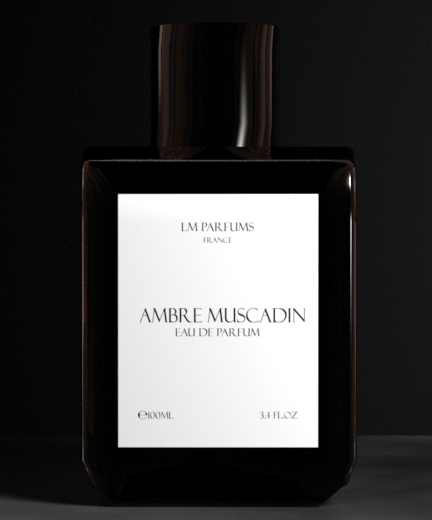
LM Parfums Ambre Muscadin

Ambre MuscadinAmbre Muscadin is an unusual fragrance for an amber. It starts off as the dryest, smoked woody fragrance with sharp animalic notes, before ending up as something quite different. Its progression actually reminds me of a horse race where the three dark, woody, smoky, animalic sprinters burst right out of the gate to lead the pack before, suddenly, everything changes. A small, golden, amber gelding and a powerful, creamy, vanilla stallion both surge ahead to tie, neck and neck, with the front-runners, before gradually overtaking them in a long haul. Midway during the race, like Secretariat or Barbaro in days gone by, the mighty vanilla stallion sweeps them all with a flourish.

Ambre Muscadin is a fragrance from LM Parfums, a French niche house founded by Laurent Mazzone. I’ve met Mr. Mazzone and he is a rather adorable man, with a passion for very classic, but bold, perfumery done with a modern twist. That philosophy is certainly visible in Ambre Muscadin, an eau de parfum (with 15% perfume oil concentration) that was released in 2011. It is unclear who was the nose who collaborated with Mr. Mazzone on the fragrance. Rumour has it that it was the late Mona di Orio, with whom I know Mr. Mazzone was quite close.

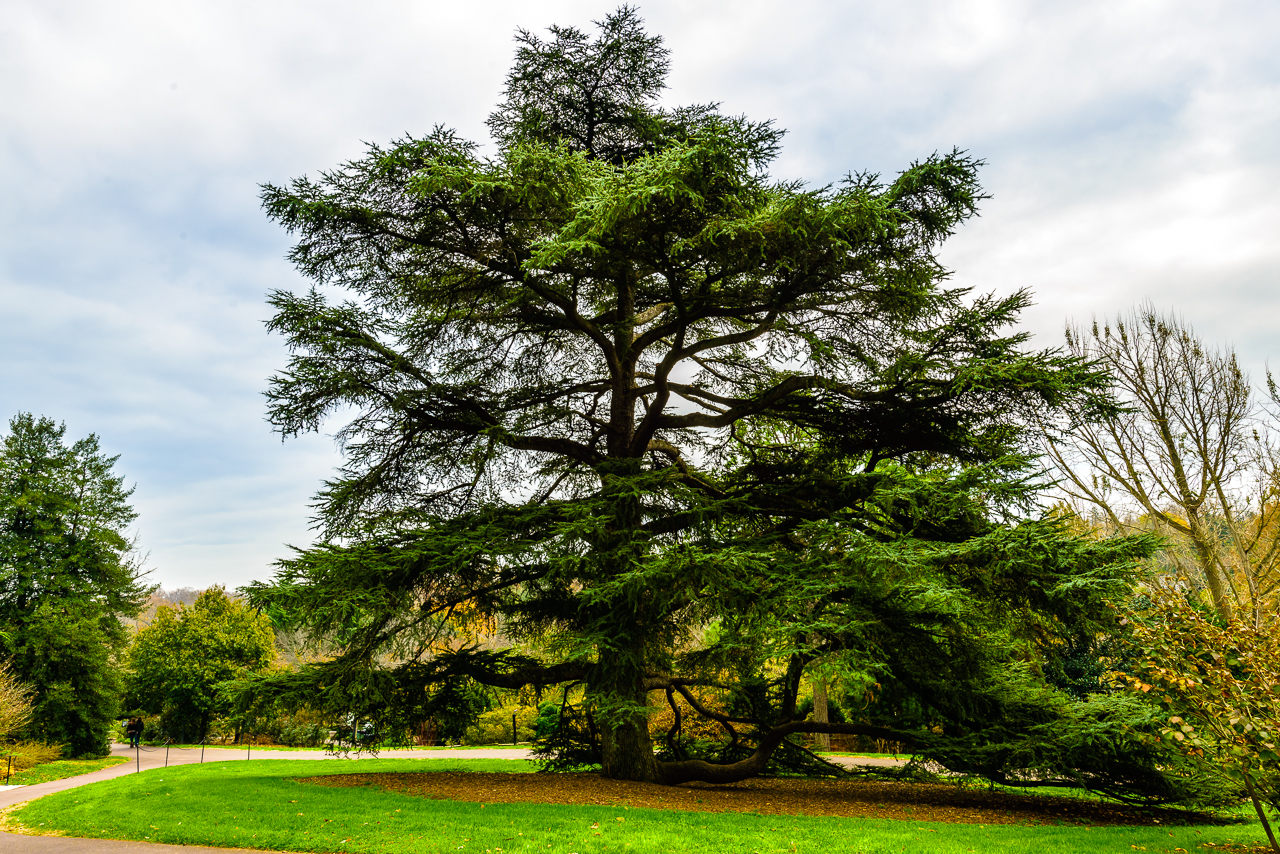
Atlas cedar. Source: sodahead.com

Atlas cedar. Source: sodahead.com

LM Parfums describes Ambre Muscadin as follows:

The opulence of the atlas cedar adorned with mystery.
A bold violet, a charmer vetyver rise up its natural elegance.
White honey, lascivious vanilla, highlights its facets flesh and velvety. Then Amber reveals its heart of a sensuous mosaic cryptic, balsamic radiates the charms of the Orient …

Top Notes: Mount Atlas cedar, vetiver java, Violet
Heart Notes: Madagascar vanilla absolute, white honey
Base Notes: Siam benzoin, amber, musk

Ambre Muscadin opens on my skin with a ferocious blast of cedar, then vetiver. The notes are all coated with the faintest sliver of vanilla, white honey, amber and a very sharp musk that veers between feeling wholly animalic and, initially, a wee bit synthetic. I must confess, I’m not a particular fan of how Ambre Muscadin begins on me, because it consistently reminds me of some murky cedar swamp, infused with mossy, peaty, smoked vetiver. Once in a while, I think of the cedar chips underlying a hamster’s cage, only this cage is also filled with vetiver, and the whole thing lies under a dome of sharp smokiness, intense dryness, and the feral, urinous whiff of a musky animal. Ambre Muscadin is a very masculine amber on my skin in these opening moments, very much a woody fragrance first and foremost, then animalic, with amber and honeyed vanilla coming in absolutely last on the list.

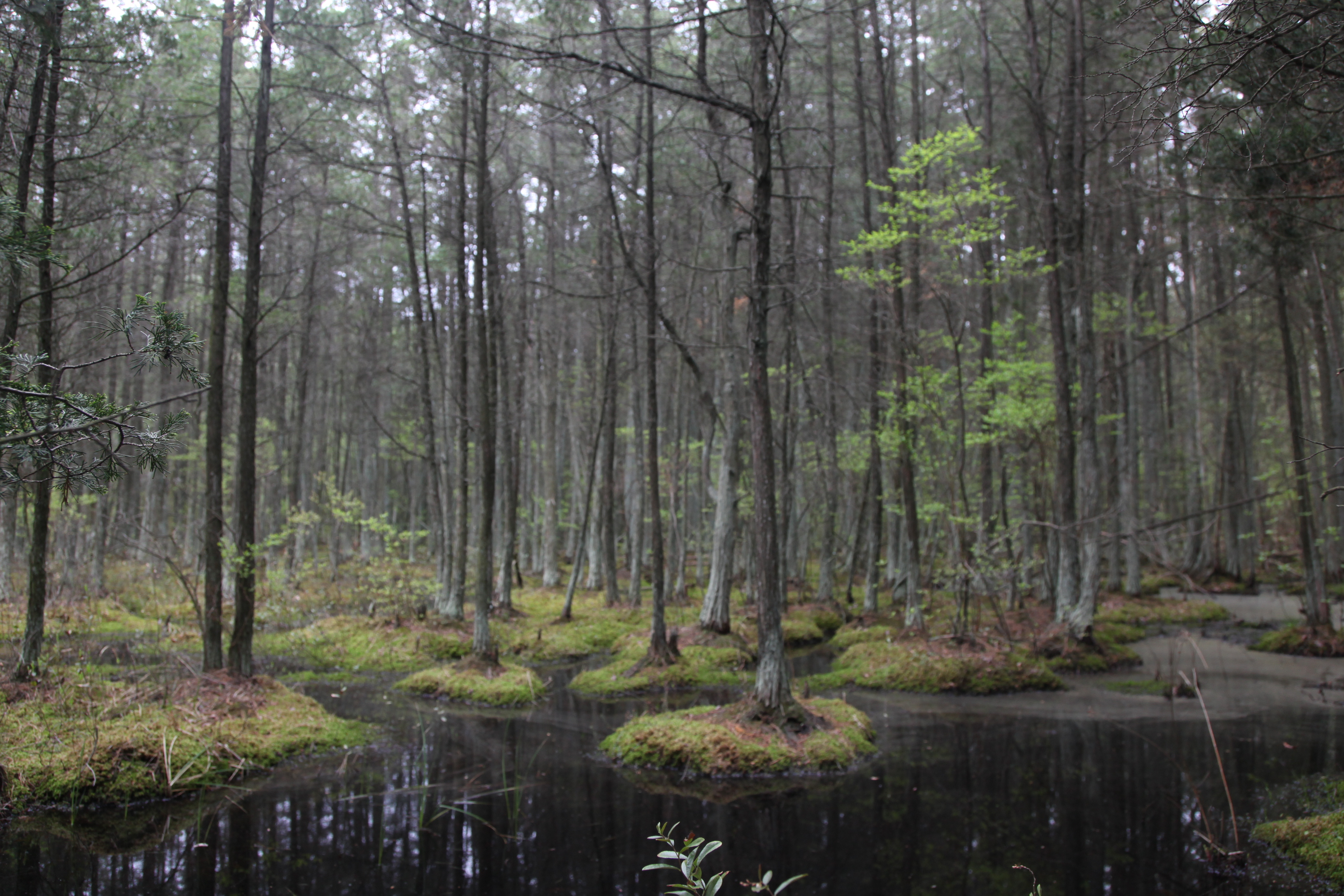
"Young Atlantic White Cedar Swamp" by Jason Howell. http://www.motivepicture.com/?attachment_id=138

“Young Atlantic White Cedar Swamp” by Jason Howell. http://www.motivepicture.com/?attachment_id=138

Five minutes in, Ambre Muscadin slowly begins to shift. The vetiver becomes as prominent as the cedar, and it smells just like the note in really expensive, single-malt Scotch. The mossy, peaty aroma has a slightly burnt nuance, however, and both woody elements merge together to create something definitely quite leathery in feel on my skin. For some odd reason, the overall bouquet sometime reminds me of a significantly less sweet, drier version of Profumum Roma‘s Arso, only with a slightly honeyed tone, sharp animalism, and very little amber. Ambre Muscadin is hardly as thick, dense, sweet or sticky, but there is something about the profoundly dominant cedar focus of both fragrances, along with their smoked sharpness, that feels distantly related. 

Civet. Source: focusingonwildlife.com

Civet. Source: focusingonwildlife.com

The impression is fleeting. The amber in Ambre Muscadin starts to rise to the surface ten minutes into the fragrance’s development. Trailing behind it is the honey which most definitely feels like the white, creamy kind. It is a light touch, never very strongly sweetened, and delicately coated with the sheerest breath of vanilla. Like horses in a race, the notes stalk the front-runners, trying to catch up and tame Ambre Muscadin’s sharpness. They don’t succeed for the next 15 minutes, as that pungently feral, almost civet-like, urinous edge fights with the cedar and vetiver for the lead. It’s not my favorite combination in the world, so it’s quite a relief when the fragrance finally starts to mellow about 20 minutes in. The cedar pipes down to a medium hum, the vetiver feels more woody than burnt, and that animalic pungency is lightly diffused by a sweet, golden warmth.

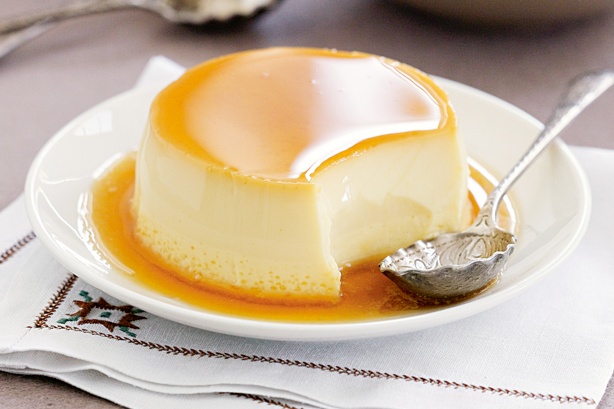
I frequently feel as though I should write the beginning of this review from the perspective of someone other than myself. I’ve sprayed Ambre Muscadin on a lot of people; at no time has it smelled quite so intensely masculine, dry, woody, or sharp on their skin from the opening burst. In fact, on almost everyone, the aroma bouquet which wafts from the first spray is of a dry, but slightly sweet, caramel flan. Women, men…. it’s always caramel flan. Actually, to be precise, it’s rather more like “sexy flan,” to quote my friend and fellow blogger, Caro of Te de Violetas. She deserves full credit for the term, since she was the first to label it as such. And, yes, lest you are curious, there is a difference between regular flan and “sexy” flan, which all comes down to the degree of sweetness or having a subtle heart of dry darkness amidst the golden hues.

Adding a dry, smoked touch to food using a chef's cloche. Photo: my own.

Adding a dry, smoked touch to food using a chef’s cloche. Photo: my own.

I end up with “sexy flan” too, but it always takes me a whole hour to even begin to reach that same point. The first step occurs around the 20-minute mark, when the flan slowly merges into the drier, woody top notes, resulting in a cedar fragrance that is still smoked, but now also softly tinged with caramel amber. It’s not a fluffy, gooey, or dessert-y amber by any means. It is light, filled with a musky, animalic edge, and flecked with creamed honey.

Then, at the end of the second hour, Ambre Muscadin finally metamorphoses into pure caramel flan that sits on a plate with a tiny sauce of dry vanilla and atop a thin layer of white honey. There are the merest lingering, smoky traces of dark cedar and vetiver at the edges. Much more noticeable, but temperamental, however, is the animalic musk which hovers around like a ghost. It rears its head from time to time behind the sweetened amber, then traipses off, before popping back in unexpectedly. The musk continues to linger as a slightly urinous, Jack-in-the-Box undercurrent before it finally gives up near the end of the fourth hour, and vanishes.

Source: taste.com.au

Source: taste.com.au

By the start of the fourth hour, I smell rather delicious, even if I do say so myself. Delicate, sheer caramel-vanilla amber coats my skin, with a subtle whisper of honey. the bouquet is still too dry and woody to be really “foodie” in nature, though. In fact, the unusual nature of the vanilla element leads me to think that the rumour may, in fact, be true, and that Mona di Orio might have created this fragrance. For one thing, she loved Bourbon Vanilla extract, but often tried to make it rather dry in nature. Something about the amber-vanilla here reminds me of her Ambre, though Ambre Muscadin thankfully never manifests that fragrance’s heavily powdered nature on my skin.

Instead, Ambre Muscadin is a sheer organza of dry, caramel-vanilla, amber flan that continues to feel smoked and somewhat woody in an abstract way. As time passes, the vanilla starts to overtake even the amber, eventually turning Ambre Muscadin into a fragrance that is primarily a dry, abstractly woody vanilla with only the mildest dusting of sweet benzoin powder. It dies away in much the same way, a full 12.75 hours from the time of the first spray.

Source: onlinefabricstore.net

Source: onlinefabricstore.net

Ambre Muscadin is very pretty in its secondary manifestation, and lasts a prodigiously long amount of time for such a sheer, airy fragrance. On my skin, it was never unctuous, heavy, thick, or very sweet. The sillage was initially moderate, despite the fragrance’s sharpness, and hovered 2-3 inches above the skin. Ambre Muscadin started to soften after the first hour, in both forcefulness, weight, and sillage. It took about four hours to turn into a skin scent on me, but the perfume clung on tenaciously despite its sheerness.

My favorite review for Ambre Muscadin comes from Caro of Te de Violetas, though I notice her detailed description sadly never mentions the utterly wonderful “sexy flan” phrase. (I absolutely love that summation, and can never think of Ambre Muscadin as anything else since the moment I heard it!) According to Caro, it is indeed Mona di Orio who is behind the fragrance. Her review also finds some thematic similarities to the late perfumer’s Ambre, and it reads, in part, as follows:

Ambre Muscadin brings instantly to mind two other fragrances that I love: Mona di Orio Ambre and Editions de Parfums Musc Ravageur. Deeper, sweeter and more intense than any of those two, it also smells less abstract.

The opening is all about cedarwood at its most opulent and resinous. For a moment, I wonder whether this should be renamed Cèdre Muscadin. A dark, velvety violet briefly peeks from underneath the coniferous greenness. Before I can even realise it, I am carried away by a whirlwind of honey, amber and vanillaAmbre Muscadin is thick and sweet but the omnipresent cedarwood note cuts through the sweetness keeping it at bay; consequently the composition never becomes cloying. The drydown is powdery and musky, slightly animalic but not excessively dirty.

There is an aura of nostalgia about Ambre Muscadin, but the result is not passé. Nothing in it smells synthetic and I find it wondefully comforting. Its tenacious vanillic embrace holds me for hours on end.

I’m not in love with Ambre Muscadin the way she is, no doubt due to the fact that I had, quite obviously, a very different experience. From the nature of the musk to our perceptions of Ambre Muscadin’s density, to the peaty vetiver in lieu of violet, my version was substantially drier, woodier, smokier, dirtier, and more pungently animalic. There was more of a modern twist on me, with little sweetness, powder, or aura of nostalgia. Yet, I very much agree with the core of her review, and I think she summed it up well. I most definitely share her feeling that the fragrance seems, at times, to be more aptly described as Cèdre Muscadin. In fact, I wrote the exact same thing in my notes. Verbatim. (That should tell you how much the cedar dominates Ambre Muscadin’s opening phase!)

Caro’s experience seems similar to that of Juraj from BL’eauOG who writes:

Ambre Muscadin … is very powdery and woody oriental. Ambre Muscadin is very soft, thick and sweet perfume with generous amber dry down. It feels like the liquid gold on the skin. Opening of Ambre Muscadin is very woody with vetiver, cedar wood and later on, the softness takes over – vanilla, violet, honey notes. Dry down is made of gold because it has beautiful, soft amber and benzoin. For the grand finale, everything is wrapped with musk.

For Lucas of Chemist in the Bottle, things were a little different. For one thing, the musk was as dominant on his skin for the opening stage as it was on mine. It was also somewhat dirty, though it doesn’t seem to have been half as animalic as my experience. His review reads, in part:

Musk plays a significant role in this perfume. It’s sensual and erotic. Not exactly clean as it has some dirtier facets bringing to mind a view of sweaty, sporty body. Amber is luminous here. Not plastic at all but more mineral, slightly marine-salty with a noticeable tones from cedar wood. Later on vanilla and benzoin amplify the amber accord adding it more depth and weight. They add a creamy and slightly gourmand feeling to the composition of Ambre Muscadin. The notes of amber, musk, honey, entwine with each other creating a harmony of aromas.

Most of the people upon whom I sprayed Ambre Muscadin had slightly different experiences from all the above-mentioned bloggers, and even myself. To my surprise, on two of the four people’s skins, the opening had very little cedar and no animalic pungency at all. On one person, Ambre Muscadin was almost entirely a dry, slightly smoky caramel-vanilla flan from the very start. On all of them, I never detected any thickness or strong sweetness. And the sillage was incredibly discrete on two of them after a mere hour, though the longevity was excellent as it usually is for all LM Parfums. 

I generally like Ambre Muscadin, but only after its sharp opening has passed. In fairness, however, the perfume seems to be a little bit of a chameleon, with the nature of that starting phase depending largely on individual skin chemistry. While I may not be swooning over the fragrance as a whole, or tempted to reach for it frequently, I do think Ambre Muscadin is well done. If you’re a huge fan of cedar perfumes, Mona di Orio’s fragrance style, and/or dry, woody, amber-vanillas, I think it’s definitely worth a test sniff.

Disclosure: My sample of Ambre Muscadin was provided by Laurent Mazzone of LM Parfums. That did not influence this review. I do not do paid reviews, my opinions are my own, and my first obligation is honesty to my readers.

DETAILS:
Cost & Availability: Ambre Muscadin is an eau de parfum that comes in a 100 ml/3.4 oz bottle. It costs $175, €125 or £125. In the U.S.: Laurent Mazzone’s fragrances are sold exclusively at OsswaldNYC. Unfortunately, none of the U.S. perfume sample sites currently offer samples of this fragrance. However, Osswald offers a special sample offer for its US customers where any 10 fragrances are available in 1 ml vials for $10, with free domestic shipping. You have to call (212) 625-3111. Outside the U.S.: In Europe, you can buy Ambre Muscadin directly from LM Parfums for €195. Samples are also available for €14, and come in a good 5 ml size. In the UK, the line is carried exclusively at Harvey Nichols which sells the Eau de Parfums for £125. In France, you can find all the LM Parfums, along with the 5 ml samples of each, at Laurent Mazzone’s own Premiere Avenue. In Paris, it’s sold at Jovoy. Germany’s First in Fragrance carries the full line and sells Ambre Muscadin for €125, in addition to samples. You can also find LM Parfums at Essenza Nobile, Italy’s Vittoria Profumi, or Alla Violetta. In the Netherlands, you can find the line at ParfuMaria. For all other countries, you can find a vendor near you from Switzerland to Belgium, Lithuania, Russia, Romania, Croatia, Azerbaijan, and more, by using the LM Parfums Partner listing. Laurent Mazzone or LM Parfums fragrances are widely available throughout Europe, and many of those sites sell samples as well. 

Phaedon Tabac Rouge, Rouge Avignon & Pure Azure

Pierre Guillaume. Source: Fragrantica

Pierre Guillaume. Source: Fragrantica

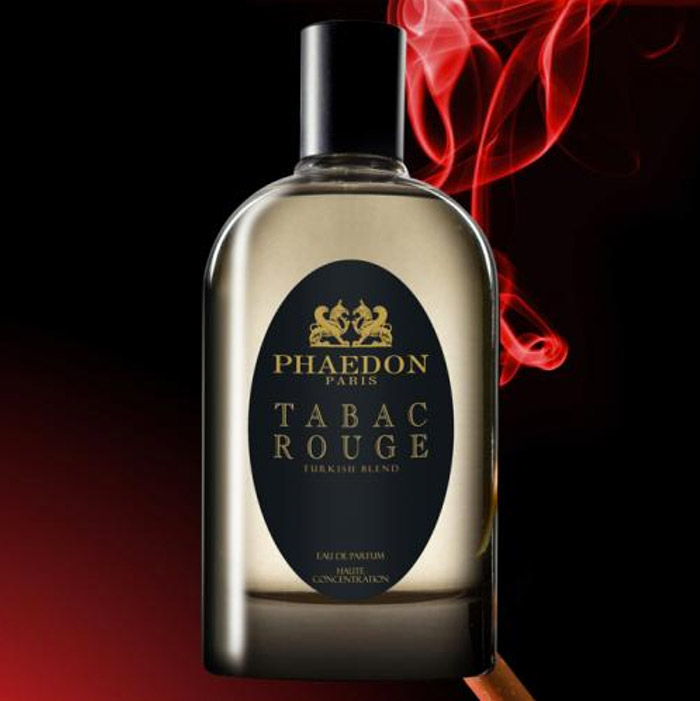
While in Paris, I had the chance to sniff fragrances from Phaedon, the Paris niche perfume house founded in 2011 by Pierre Guillaume (who also owns Parfumerie Generale and is behind Huitieme Art). The line previously had seven eau de toilettes, but, this summer, Mr. Guillaume launched seven more fragrances that are all “High Concentration Eaux de Parfums.” The new creations were all made by Pierre Guillaume in collaboration with various perfumers.

I obtained samples of three of the fragrances, thanks to the kindness of the Paris niche boutique, Sens Unique, a fantastic store which I will rave about in another post one day. The perfumes in question are: Tabac Rouge (Turkish Blend), Rouge Avignon, and Pure Azure. For reasons that will soon become clear, I’ve decided not to follow my usual course of doing a lengthy, comprehensive review for each fragrance individually. Instead, I’ll merely provide a brief synopsis and my impressions for all three perfumes in a single post.

TABAC ROUGE:

Tabac Rouge. Source: Fragrantica

Tabac Rouge. Source: Fragrantica

Phaedon describes Tabac Rouge (Turkish Blend) as follows:

Turkish Blend is a quintessentially Art Deco composition. Turkish tobacco absolute and incense make up the core accord, spare, dry and perfectly balanced. As in Tamara de Lempicka’s paintings, the “color” palette is pared-down and vibrant: ginger, cinnamon and a lick of honey. In the base notes, musks, bolstered by warm, powdery Siam benzoin, blend the scent with your skin. Androgynous, stylized and luxurious.

Fragrantica‘s list of notes, oddly enough, excludes the main ingredients in the scent which are Turkish tobacco absolute and incense. Adding those in, Tabac Rouge’s ingredients would include:

Turkish tobacco absolute, incense, ginger, cinnamon, honey, musk, powdery notes and benzoin.

Source: Basenotes

Source: Basenotes

Tabac Rouge is, in a nutshell, a simpler, slightly less forceful, lighter version of Tom Ford‘s Tobacco Vanille. The major differences to me are that the Phaedon version is fractionally less sweet than its cousin, lacks a fruited base, has weaker sillage, less density, and doesn’t quite take on the Yankee Candle Plum Pudding undertone of Tobacco Vanille.

Like Tobacco Vanille, Tabac Rouge starts with a strong blast of honeyed tobacco that is infused with incense and vanilla, and dusted with spices in a potent blend that eventually turns softer, airier, more powdered, and more vanillic in nature. The differences that exist are largely minute, and one of degree. As noted above, Tabac Rouge lacks a plum pudding undertone, but it also feels much more honeyed to me. In fact, the honey was much more pronounced on my skin than the vanilla which seemed less significant than in Tobacco Vanille. A much bigger difference is that Tabac Rouge feels much softer and lighter than the Tom Ford fragrance. It doesn’t have the latter’s dense, thick chewiness, but it does have its longevity.

In essence, it’s very sweet, it’s pretty, and it’s a much better deal than the Tom Ford fragrance at $160 for 100 ml, instead of $210 for a mere 50 ml. Nonetheless, it’s obviously treading water that’s been explored before, which is why I agree, to some extent, with Mark Behnke of CaFleureBon whose entire summation of Tabac Rouge amounted merely to this:

Tabac Rouge, travels a well-worn path of combining tobacco and incense. It is fine but it didn’t ever rise to a level of something I would be reaching for when I am in the mood for tobacco and incense. If you like these notes and want a lighter simpler take on them Tabac Rouge could fill the bill.

I like Tabac Rouge more than he did, but I too would get my incense and tobacco fix elsewhere.

ROUGE AVIGNON:

Rouge Avignon. Source: Fragrantica

Rouge Avignon. Source: Fragrantica

Phaedon describes Rouge Avignon as follows:

A Gothic composition, as opulent and dark as the shadow of the Papal Palace looming over nations and centuries… The carmine red of the papal stole is conjured with a fleshy, spicy rose facetted by ylang-ylang and raspberry. In the heart notes, waxed woods, cocoa bean, black truffle and earthy smoky vetiver lure us into the private apartments of the Supreme Pontiff. Gilt moldings and religious ornaments glint in the firelight while gray tendrils of smoke rise from a censer burning sandalwood chips mixed with musk and amber.

The succinct list of notes is:

raspberry, ylang-ylang, rose, cacao pod, hinoki wood, tuber [black truffle], vetiver, sandalwood, musk and amber.

Rouge Avignon opens on my skin with a bouquet of honeyed sweetness and delicate florals that soon turn into a fleshy, fruited, purple rose. A strong heaping of sharp, almost clean musk ensues, and deep down in the depths, there is a very noticeable dose of cocoa powder. The latter is soon overwhelmed by the syrupy, jammy rose, and doesn’t really appear again until a few hours later. I honestly don’t smell raspberry as the fruit, per se, in its own right but, instead, an amorphous, almost berry-like fruitiness.

Source: nature.desktopnexus.com -

Source: nature.desktopnexus.com –

Something about the overall combination and my skin chemistry has produced instead an accord very similar to a patchouli rose. It’s a profusion of abstract dark berries and syrupy sweetness, much like the purple patchouli I loathe so much. In fact, I’m reminded of Frederic Malle‘s Portrait of a Lady, only Rouge Avignon has a greater degree of musk that feels a little synthetic, along with extremely muted, minor hints of something dark in the base. I’m not the greatest fan of fruited, syrupy, patchouli-like roses, and I don’t like Portrait of a Lady, so I confess that I’m equally underwhelmed here.

I was surprised to see that Mark Behnke of CaFleureBon also struggled with the forceful combination. On him, the fruited element definitely seemed like raspberry in its own right, as opposed to some amorphously red-purple fruit syrup, but he still wasn’t fond of the overall effect:

I really enjoyed the foodie heart of Rouge Avignon but I must confess the strength of the rose and raspberry in the top notes took some getting used to. I think I will revisit this in the chill of the fall.

By the standards of CaFleureBon with their positive, laudatory take on everything, that simple confession speaks volumes. As for the issue of seasons, it’s almost December here, and I’d like Mr. Behnke to know that Rouge Avignon is still a painfully sweet, berried rose from start to finish.

There are only a few minor changes in the fragrance’s primary backbone and theme. After a few hours, a subtle touch of sweetened powder emerges, as does a slightly earthy, murky, brown funk with a faint undertone of cocoa. On my skin, it’s never the “foodie heart” that Mr. Behnke talks about, at least not in any dominant or substantial way. Still, there is some minor darkness deep down in the base, and that turns Rouge Avignon from a scent that begins as Portrait of a Lady into something closer to Tom Ford‘s Noir de Noir. Rouge Avignon is lighter, airier, thinner, and more synthetic in feel than both those fragrances, and it also lacks Noir de Noir’s powdered violet nuance, but the similarities struck me repeatedly nonetheless.

At the end of the day, I simply don’t find the sum-total of Rouge Avignon to be all that interesting. Actually, I grew to hate it quite intensely. The rose is painfully, almost torturously sweet for my tastes, and the perfume feels wholly unoriginal. The list of notes is fantastic, but the reality on my skin is primarily of a very fruited rose with sharp, very synthetic musk, and only a modicum of a dark, earthy heart. However, if you’re looking for something in the general vein or family of Portrait of a Lady, but much lighter and airier, then you should consider Rouge Avignon. It is a much better bargain at $160 (or €120) for a large 100 ml bottle, than Portrait of a Lady which costs $340 for that same sized bottle. The same goes for Noir de Noir which Tom Ford sells for $210 for 50 ml. Rouge Avignon has moderate sillage, turns into a skin scent after four hours, but has good longevity.

PURE AZURE:

Pure Azure. Source: CaFleureBon

Pure Azure. Source: CaFleureBon

The description and advert for Pure Azure are meant to transport you to Mykonos in summer:

This giddy balancing act of a scent carries us high above the cliffs of the Aegean Sea, where azure skies contrast with the blinding whiteness of fishermen’s villages… The fragrance of fig trees and orange blossom, the warmth of vanilla and spices, the sensuousness of jasmine rise from the shores of the Mediterranean. In the base notes, the mouth-watering warmth of tonka bean is brought out by a delicately salty note. A “Mediterranean Oriental” hovering between the radiant and the animal….

The succinct list of notes is:

fig, orange blossom, vanilla, spicy notes, jasmine, tonka bean and salt.

Orange Blossom. Photo: GardenPictures via Zuoda.net

Orange Blossom. Photo: GardenPictures via Zuoda.net

Pure Azure opens with an explosion of whiteness that is both clean and verging on the florid. There is orange blossom, tinged with hints of a more bitter, woody, spicy neroli, and then a big burst of saltiness that is truly wonderful. It’s a visual landscape of white with orange blossoms that are languid, sweet, indolic, utterly lush, and, yet, also fresh. There is spiciness and a definite sense of greenness underlying those orange blossoms, but it is the initial sprinkling of saltiness that really captured my interest.

Unripe Figs via Giverecipe.com. (For recipe on Unripe Fig Jam, click on photo. Link embedded within.)

Unripe Figs via Giverecipe.com. (For recipe on Unripe Fig Jam, click on photo. Link embedded within.)

Unfortunately, it soon fades, but it is replaced by an interesting fig note. Like the orange blossoms, the fruit is simultaneously sweet, fresh, and green. There is none of the leathery darkness that figs can sometimes take on. Instead, there is an almost milky quality that evokes a slightly unripe fruit in late Spring, before the summer heat has turned it fleshy, dark, and gooey. Deep down in Pure Azure’s base, there are touches of vanilla, but it’s never custardy, heavy, or rich.

Pure Azure has a beautiful medley of notes, but what is initially so great about it is the paradoxical mix of freshness and lushness. The orange blossoms have hints of lush, heavy, indolic ripeness, but not quite. It’s as though the sweet flowers are almost green, with a dewy, light feel that truly feels fresh.

The scent is crisp (though not like a cologne), feels very summery, and most definitely meets Phaedon’s goal of recreating the Mediterranean coast. (I actually saw Capri more than an Aegean island, but let’s not quibble about lovely places where fresh flowers bloom in the warm, salty air.) The best way I can describe Pure Azure’s feel in my mind is to refer to a crisp white shirt worn against a man’s tanned skin (à la Kilian Hennessey), instead of the more common or traditional visual associated with indolic white flowers, namely, languid courtesans reclining with ripe, white flesh and heaving bosoms.

On the negative side, however, Pure Azure’s opening has an undertone of soapiness, as well as an increasingly strong blast of white, clean musk that, unfortunately, feels very synthetic. Both elements help underscore the fresh crispness of Pure Azure’s opening, but I would have been happier without the splitting headache that the musk gave me for a few hours. Despite that, I generally liked Pure Azure’s opening stage because of the green touch to the flowers and fruit.

Agave. Source: Self.com

Agave. Source: Self.com

The freshness doesn’t last long. About 75 minutes in, Pure Azure turns into a simple, honeyed floral, as the jasmine emerges and the white musk recedes to lurk underneath. The jasmine soon becomes fully integrated into the orange blossoms, and both are completely drenched in sweetness. The honey is not heavy syrup, however, but more like agave nectar which is both sweeter and lighter. Despite the lack of density, it’s very potent, transforming even that clean, laundry, white musk into something warmer.

Pure Azure soon turns rather abstract, feeling like a soft cloud of blowsy, ripe, white florals, with heavy honey, a dollop of musk, and the faintest smidgen of salt. It’s like a floral cousin to Mona di Orio‘s Eau Absolute, only lighter, airier, and without citric elements. In its final moments on my skin, Pure Azure is a nebulous smear of honeyed sweetness with just a vague hint of something floral behind it. I like honey, which my skin tends to amplify, but I have to admit, I was taken aback by how quickly and by how much it dominated Pure Azure. I know it’s probably my skin’s fault, but it was all too much for me by the end. Too linear, too simple, too boring.

Source: picsfab.com

Source: picsfab.com

At this point, I have to bring up Mark Behnke’s review again, because Pure Azure is where we part ways a little. He loved it, finding it his favorite of the new Phaedon line. I’m less enamoured. His review reads as follows:

My favorite of the new collection was a surprise to me as with a name like Pure Azure I was expecting a variation on an aquatic theme. Instead I was treated to a fantastic summer floral which appealed to me on many levels. Fig and orange blossom open Pure Azure on a bright accord. Vanilla and jasmine turn things sweeter and deeper. Tonka and a bit of a marine accord cut the sweet without making it go away. For almost the entire time I wore Pure Azure I was in the midst of a grove of fig trees, orange trees and jasmine swirling in and out of each other. I ended up wearing this on a day the thermometer hit 100 and it was perfect for that kind of heat. It wasn’t cloying or too much it was just right.

Pure Azure was significantly less interesting on my skin than on his, but I can see why he liked it so much. I smelled pretty much all of them at Sens Unique, and Pure Azure captured my interest the most at first sniff. Nonetheless, my feelings are highly qualified because I struggle with the potency of the clean, fresh synthetics, as well as with the way Pure Azure veers so sharply to the other extreme of warm, almost indolic sweetness. I also wish Pure Azure had a more complex evolution than mere honeyed florals in its later stage.

ALL IN ALL:

My problem with the new Phaedon line isn’t that many of them seem derivative, but, rather, with their extreme sweetness. Pierre Guillaume is a chap known for having a very gourmand touch with his Parfumerie Generale fragrances, and the Phaedon line doesn’t seem to be an exception. It’s simply too, too much for my personal tastes.

I also struggled with the synthetic feel to some of his fragrances. During one test for Rouge Avignon, I became completely exhausted by the deluge of syrup and roses, and tried to scrub it off. “Tried” should be the operative word here. It took me over an hour to get most of it off my skin, using everything from rubbing alcohol (3 times), nail varnish remover (2 times), soap, dishwashing liquid (2 times), and Tide laundry detergent (2 times). Even after all that, I still could smell lingering traces of that damn fruited rose on parts of my arm later that evening. Only something with definite synthetics in the base will be that impervious to cleaning agents. (As a side note, a few of the fragrances I sniffed at the store had ISO E Super, an aromachemical that Pierre Guillaume loves to use in his Parfumerie Generale line.)

The synthetics may also help explain why the line has such good longevity on my perfume-consuming skin. The Phaedon fragrances consistently lasted over 11 hours, with some tests almost approaching 13 hours, depending on quantity. The sillage was potent at first, and the fragrances very forceful, but they are all uniformly airy in feel, lack density, and turn into something that is generally quite soft. On average, it took between 4 and 4.5 hours for them to become skin scents, though they were usually easy to detect up close.

Judging by what I’ve sniffed as a whole and tested in specific, I think the Phaedon line is generally pleasant, and good value for those who want a more affordable, lighter, softer cousin to some existing fragrances on the market. They’re not my personal cup of tea, but I can see the appeal.

DETAILS:
Cost & Availability: Tabac Rouge, Rouge Avignon and Pure Azure are all eau de parfums that comes in a 3.3 oz/100 ml size and which costs $160, €120, or £95. In the U.S.: you can purchase Tabac Rouge, Rouge Avignon and Pure Azure from Luckyscent, though the first two are currently sold out and can be back-ordered for December delivery. Pure Azure is in stock. Samples of all the fragrances are generally available for purchase. Elsewhere, the Phaedon line is at NY’s Osswald Parfumerie, which also offers a US-only sample program for telephone orders. 10 samples for $10 with free domestic shipping. Outside the U.S.: You can buy all three perfumes directly from Phaedon, which also offers samples of all 14 of its fragrances (7 EDP, and 7 EDT) in a Discovery Set which costs €40 for 14 x 1.5 spray vials. The set is sold out at the time of this review. I should add that Phaedon doesn’t provide any information as to the countries they ship to, and if they limit things just to the EU. In the UK, you can buy Phaedon from London’s Bloom Parfumery which sells each Eau de Parfum for £95, along with samples. In Paris, Tabac Rouge, Phaedon and all Pierre Guillaume’s other brands are carried at Sens Unique in the Marais district. They don’t have an e-Store, but they have teamed up with DesFragrances for online orders. In Switzerland, I found Phaedon at Osswald Zurich; in Russia, I found the line at Lenoma and Lesse Parfum; in Poland at Galilu; and in Italy at Profumeria Gini. For the full list of retailers carrying the Phaedon line, you can turn to the company’s Stockist page. Samples: many of the sites linked above offer samples for purchase. I obtained mine from Sens Unique in Paris. For American readers, Surrender to Chance does not carry any of the new Phaedon Eau de Parfums at this time, so your best bet is Luckyscent.