DSH Perfumes Cafe Noir & Parfum de Luxe

Source: en.visitparisregion.com

Source: en.visitparisregion.com

Expresso, licorice, amber, cinnamon, leathered tobacco, and smoky resins lie at the respective hearts of two sibling fragrances from DSH Perfumes. Cafe Noir was inspired by the jazz cafés of Paris at night, while the thought behind Parfum de Luxe stems out of the Art Deco movement of the 1920s and the French Riviera. One fragrance begins as a golden, buttered gourmand before shedding its skin to turn resinous, dark, and chewy. The other has dark expresso and licorice on my skin, with a surprising touch of decayed florals lurking at its edges that is replaced by leathery tobacco. Both, however, have their darkness end on a soft finish of vanilla.

CAFE NOIR:

Cafe Noir Pure Parfum in the antique bottle. Source: DSH Perfumes website

Cafe Noir Pure Parfum in the antique bottle. Source: DSH Perfumes website

Cafe Noir is meant to evoke Paris jazz cafés at night. It is a 96% botanical eau de parfum that the DSH website describes as follows:

Cafe Noir is an oriental fragrance that harmonizes spice, floral, resin and wood notes with the beloved aroma of black coffee.

It is a Paris night.  Dark and sophisticated, it evokes late concerts in smoke filled rooms…sipping coffee and listening to jazz.  Captivating  and sensual, Cafe Noir fuses classical sensibilities with the flair of the artist.

The notes, as compiled from Fragrantica and the tags on DSH Perfume, are:

Top notes: bergamot, black pepper, cinnamon bark, and pimento berry;
Middle notes: Siam Benzoin, Bulgarian rose otto, grandiflora jasmine, and labdanum.
Base notes: coffee absolute, tolu balsam, and vanilla.

Source: mainstreamsochi.blogspot.com

Source: mainstreamsochi.blogspot.com

Cafe Noir opens on my skin with a delicious explosion of goldenness that is the furthest thing in feel from any dark, sultry café. Actually, it evokes Cinnabons, more than the world of Ella Fitzgerald in smoke-filled rooms at midnight. The opening bouquet is of boozy cinnamon with rich Bourbon vanilla, a touch of fiery chili, and the tiniest whisper of coffee. Cafe Noir is, first and foremost in these opening minutes, centered on a very powerful, buttered cinnamon note that really evokes a pastry dusted with spice, heavily buttered, and with a warm, fresh-baked bread aroma.

It’s a visual of gold and red in a scent that feels very comforting. Yet, for all its gourmand tendencies, nothing about Cafe Noir is sweet or cloying on my skin. The expected note is extremely muted, feeling more like a suggestion of coffee on the side. Oddly enough, there is a distinct Earl Grey tea impression that seems much more profound. The unexpected tonality undoubtedly stems from the very aromatic bergamot. I love the overall warmth and sweetness of Cafe Noir, the feeling of tea time centered around cinnamon buns.

Source: Dailymail.com

Source: Dailymail.com

The boozy cognac fades away within minutes, and its place is taken by other elements. There is a waxy, honeyed note from the labdanum. Vanilla swirls around now as well, but the central focus of Cafe Noir after 10 minutes continues to be the blend of hot, buttered cinnamon rolls with Earl Grey tea. The whole thing gently wafts 1-2 inches above my skin in a deep, concentrated cloud that initially feels very airy.

The coffee soon vanishes entirely, and its place is taken by the occasional suggestion of abstract florals. Sometimes, I think I can smell ripe jasmine; once, I thought I detected rose; another time, there was also a fruity nuance that popped up. Yet, all of it is hard to pinpoint and lurks in the far corners of the background. For the most part, there is merely a sense of something vaguely “floral” that lurks about, but it is too nebulous and too well-blended into the other notes to be a significant part of the fragrance. The same story applies to the pimento chili pepper which appears once in a blue moon in a visible manner, but is generally subsumed into the overall bouquet.

Much more noticeable are the growing presence of dark accords. There is honey that feels syrupy and, often, quite burnt. There are also the labdanum and balsamic resins. The tolu in particular feels smoky, chewy, and almost masculine. By the end of the first hour, the three notes combine to wipe out the golden, gourmand, cinnamon haze of Cafe Noir, blanketing it with darkness that is a little bit smoked and singed. The sticky, burnt honey comes fully to the foreground, followed by the labdanum. It continues to emit the tiniest touch of honeyed beeswax, but its primary aroma is of a very dark, slightly masculine, tough amber. It feels dusted by pepper and a suggestion of pimento. Following the labdanum is the smoky tolu as the third main player on Cafe Noir’s stage.

Photo: naldzgraphics.net

Photo: naldzgraphics.net

Cafe Noir’s second phase is fundamentally different than its opening. Cinnamon continues to blanket everything, but this is a dry note now that feels almost woody at times. All suggestions of hot, flaky, buttered pastries have disappeared, while the Earl Grey tea is a mere blip on the horizon. At the end of the 2nd hour, Cafe Noir is a very dark, resinous amber with almost a smoky nuance. It is dusted by spices, then lightly flecked by vanilla and by the tiniest, muted touch of jammy roses. It is a skin scent by this point, but deep, concentrated, and very strong when sniffed up close.

Photo: sitnica.

Photo: sitnica.

Cafe Noir doesn’t change much for the rest of its life. The core of darkness merely reflects different secondary notes on the periphery, like occasional lingering touches of beeswax, spiciness, vanilla, or cinnamon. For the most part, it simply turns into a blur of smoky, resinoid darkness with an undertone that almost verges on tobacco’d leather at times. Cafe Noir continues to have a very concentrated, dense feel up close, but it’s also an increasingly sheer in weight. With every passing hour, the tolu balsam takes over more and more on my skin, adding to that leathery impression in the haze of smoky darkness. I’m really surprised by the complete 180 turn from Cafe Noir’s opening stage.

In its final moments, Cafe Noir is merely a wisp of something resinous and dark, with the tiniest suggestion of sweet, almost tonka-like vanilla mixed in. All in all, the scent lasted over 8.5 hours on my skin. The sillage was soft but generally decent for the first few hours, helped by the very dense, chewy feel to the notes. Even when Cafe Noir turned into a skin scent, it still was easy to detect up close until the start of the 6th hour.

Source: Pinterest and lattelisa.blogspot.com

Source: Pinterest and lattelisa.blogspot.com

The lovely Victoria at EauMG had a very different experience with Cafe Noir, but she loves it, calling it a “beatnik” chypre that conveys exactly the jazz café atmosphere that it intended. Her review reads, in part, as follows:

Cafe Noir is a moody, rich fragrance. I love it. I call it “beatnik in a bottle”. It’s smart and sophisticated and a bit counter-culture (if a perfume can be described as such). It reminds me of a classic French perfume created for the kind of gal that spends late nights/early mornings reading Lawrence Ferlinghetti by the fireplace, sipping on midnight black coffee. […][¶] This scent reminds me of “beat” poetry.

My first impression of this fragrance creates a bit of confusion in my mind. I know that I like it but I find it very odd. It hits as if it is a spicy, mossy, dirty, chypre. It smells a bit wild and untamed and actually hot. It reminds me of all of those classic Guerlains like Mitsouko but Cafe Noir is much dirtier and grittier and with a kick of spice. It reminds me of moss and Atomic Fire Balls. You just know like beat poetry, that this is a fragrance with so much to say. Once my mind finally gets that this is a dirty, spicy chypre, I get an unexpected “shot” of bitter coffee beans. To add to even more complexity, I get lovely “classic” perfumey. I get rich, thick Parisian florals of rose and jasmine. But, it isn’t classic because of the bitter coffee. The dry down is moody and fairly simple. It has smoky incense like copal rich sweetness with grounding notes of vanilla, labdanum, and balsam. It is like being in a room where incense was once burning. It is slightly smoky but mostly you get the sweetness of the smoke floating through the air. I can not imagine my perfume collection without Cafe Noir in it. This one is very special.

Photo by Satr via This Blog Really Stinks.

Photo by Satr via This Blog Really Stinks.

For This Blog Really Stinks, Cafe Noir was a romantic, sexy, cozy fragrance that was also about more than mere coffee:

Sure, there’s a beautiful coffee note present, but that’s not all! Let’s talk about the coffee, though, for a minute. Where New Haarlem (Bond No.9)  was a bracing double-shot in a styrofoam cup, Cafe Noir is richer, softer coffee in a cup and saucer. The barista sprinkled some cinnamon in it, a spicy-sweet twist. […][¶]

Once the nose acclimates to the steaming coffee and delicate spice, it’s free to venture further. With the cinnamon coffee always present, a sexy floral blend wafts in. Jasmine and rose dance softly but distinctly, reminding me a bit of twin snakes of smoke and steam spiraling upwards from lit cigarettes and hot mugs.

Labdanum, a note I’m learning more about (and love), is probably what’s responsible for the somewhat creamy, ambery facet to this perfume. It’s the slightest bit like warm skin kissed by smoke.

Source: tomsguide.com

Source: tomsguide.com

On Fragrantica, however, a number of the commentators found Cafe Noir to be all about the cinnamon. One person detected no coffee at all, and hardly anyone talks about floral notes. Some of the range of opinions:

  • Straight up, I get an unexpected blast of alcohol, specifically brandy, followed by the strong cinnamon that puts me immediately into a Christmas state of mind. Soon this settles and then the other notes mingle to create a comfort, feel-good scent. I don’t get strong coffee here, but it IS gourmand. It is more coffee bun dusted with cinnamon[….] In a way, this is also reminiscent of a BPAL in that the scent is so evocative and strong, you could be in the moment in that coffee shop…. with that bun.
  • Source: davidwarkentin.blogspot.com

    Source: davidwarkentin.blogspot.com

    Well the way I would rate the notes would be: 1. Cinnamon 2. Pepper/Pimento 3. Benzoin 4. Coffee 5. Vanilla 6. Tolu [¶] This to me is all about a nice hot latte with a heavy sprinkling of cinnamon on top of the foam while you sit quietly eating a warm cinnamon bun. This is gorgeous, warm and creamy but really for me the cinnamon is what takes center stage. A beautiful addition for fall and winter. This is just the perfect amount of spice without becoming a total spice bomb. I agree with the others, I don’t smell the flowers but I am sure they are helping the spices to stay grounded and not get too carried away!!! [¶] For a real caffeine kick I will stick with Ava Luxe’s Cafe Noir.

  • As a rule I have liked all the DSH perfumes I have sampled, however this one is very disappointing. I don’t smell any coffee at all, just cinnamon and amber. It’s also extremely sweet, almost sickeningly so. In its favour it lasts a few hours on my skin.
  • Cafe Noir is exactly that–a deeply aromatic, rich elixir that gives you a caffeine kick merely by absorbing it through your skin. [¶] The opening is piquant and dark and takes some time to diffuse, which is no surprise considering the viscosity if this natural blend. [¶] The flowers are not overt but deliver a roundness and subtle sweetness in combination with the vanilla. [¶] Labdanum, benzoin and tolu balsam give an exotic, ambery richness and a long lasting layered complexity. [¶] Incredibly indulgent and a well composed perfume which I think is suitable for both men and women. It makes me long for a cup of Turkish coffee with a piece of lokum on the side. I also find this a great natural alternative to Opium.

I find zero resemblance to my beloved Opium, but I do agree that Cafe Noir is a very unisex fragrance that both men and women would enjoy. I think some appreciation for cinnamon is in order, and, ideally, you wouldn’t have great expectations of a very coffee-dominated scent (or a floral one). If you are looking for a very resinous, balsam-heavy amber infused with spices, some smokiness, and varying levels of sweetness, Cafe Noir may be right up your alley.

PARFUM DE LUXE:

Parfum de Luxe in the more expensive Art Deco bottle, I think. Source: DSH Perfumes website

Parfum de Luxe in the more expensive Art Deco bottle, I think. Source: DSH Perfumes website

Parfum de Luxe was inspired by the Art Deco movement of the 1920s and ’30s, but it feels very much like Cafe Noir’s sibling. It too is an eau de parfum that is dark, resinous, smoky, and faintly leathered. To my surprise, it, too, manifested a coffee note on my skin. In fact, it was a substantially stronger one than the tiny blip in Cafe Noir, and was centered around bitter expresso.

Parfum de Luxe is a 94.5% botanical fragrance which the DSH website describes as follows:

A vintage style chypre-tabac perfume with subtle surprise praline and leather nuances in the drydown.  It is eclectic and yet fabulously suave.

On the Riviera, I was overwhelmed by the charm and grace of my surroundings. The Perfume in the air was magnificent. Inspired by the Art Deco movement of the 1920´s and ´30´s, Parfum de Luxe is rich, pure and confident.

The notes, as compiled from a comment on Fragrantica and the general tags on DSH Perfume, include:

Top: bergamot, clary sage, neroli, petit grain and violet.
Heart: Bulgarian rose absolute, Centifolia rose, Chinese geranium, honey, iris, tuberose and ylang-ylang.
Base: amber, Siam benzoin, brown oakmoss, labdanum, patchouli, sandalwood, tobacco absolute, musk, and vanilla.

Source: free-hdwallpapers.com

Source: free-hdwallpapers.com

Parfum de Luxe opens on my skin with crisp bergamot, herbal clary sage, leathered tobacco, and geranium, all on an earthy, musky base. The latter is infused with patchouli, dusty spices, what smells like cloves, a hint of oakmoss, and the tiniest touch of bitter, woody petitgrain. Then, for reasons that I absolutely cannot explain, something in Parfum de Luxe starts to strongly radiate bitter expresso on my skin, as well as black licorice and anise. I’m guessing that it must be some aspect of the tobacco, perhaps impacted by one of the other notes, but I’ve never had tobacco absolute turn to either expresso or licorice on my skin. Regardless, I’m rather keen on it.

Licorice. Source: Dylanscandybar.com

Licorice. Source: Dylanscandybar.com

The licorice grows more prominent with every passing minute, evoking hard, chewy, black Twizzler sticks. The bergamot and oakmoss quickly fade, leaving a scent that is primarily centered on dark accords. After 10 minutes, a whisper of tuberose creeps in, though it too is infused with the expresso, licorice and tobacco. The whole thing is an extremely strong, rich, dense scent that initially hovers an inch above the skin with 3 large smears.

There are very few florals at first, apart from the bitter geranium and that whisper of tuberose. The latter frequently disappears, only to reappear ten minutes later, in a ghostly dance that goes back and forth. Once, I thought there was the faint suggestion of iris, but it too darts away every time I try to pinpoint it.

Source: SnapperOne Blogspot.

Source: SnapperOne Blogspot.

Parfum de Luxe slowly starts to shift. There is a honeyed nuance which appears, mixing with the licorice to create the impression of burnt caramel. Then, to my surprise, a very ripe, brown floral element arrives. It smells primarily like a decayed gardenia, similar to that in Serge LutensUne Voix Noire, and is mixed with the tiniest, most minuscule touch of an over-ripe ylang-ylang. Both flowers are blanketed by the licorice-like accord and the sticky, toffee’d, burnt honey, then lightly flecked by an earthy muskiness. Bitter petitgrain and geranium dart about throughout the top notes, but what fascinates me is the mushroom aroma in the background.

It is something I’ve encountered with gardenia, but never with tuberose, no matter how ripe or indolic. Then again, most “gardenia” notes are derived from the combination of other florals, like tuberose, so perhaps that is the explanation. Either way, the mushroomy earthiness is extremely muted and even more brief, lasting only about 10 minutes before it fades away. However, it leaves in its wake a little bit of funk to Parfum de Luxe’s base, which joins the leathered edge from the “licorice” that I cannot explain. None of it is what I was expecting from the notes, but it all works very well as a licorice-expresso fragrance with a touch of dying gardenia. I like the richness and depth to the scent, as it feels quite hefty despite the airiness of the bouquet.

Photo: stonecontact.com

Photo: stonecontact.com

Parfum de Luxe hovers just above the skin after 25 minutes, smelling primarily of licorice, sticky honey, expresso, and dark resins, followed by a decayed floral, musk, and the tiniest hints of tobacco. Vanilla creeps in from the sidelines 45 minutes into the perfume’s development. The floral elements melt into the background around the same time, letting the dark, resinous, and burnt honey accords dominate center stage. They are joined there by the first suggestion of something vaguely ambered and golden at the end of the first hour. There is a dense stickiness to this dark heart which is really appealing. It’s also very well calibrated and balanced, as it never feels cloying or like a saccharine overload on my skin, thanks to the bitter elements which help to keep the sweetness fully in check.

Parfum de Luxe turns into a skin scent on me shortly after the 90 minute mark, losing some of its resinous density and turning somewhat thinner in feel. However, it is still extremely strong when you sniff your arm up close. Interestingly, the tobacco finally starts to emerge in its own right, though it’s quite muted at first. Parfum de Luxe is now primarily an expresso and licorice scent, infused with burnt, caramelized honey and an occasional ghostly pop of vanilla.

Source: texeretrade.co.uk

Source: texeretrade.co.uk

The notes slowly start to overlap each other, losing their distinct, individual edge at the end of the 2nd hour. Parfum de Luxe feels like a blur of darkness, dominated primarily by expresso with growing touches of an abstract tobacco. The scent feels almost leathery at times. On occasion, an abstract “floral” tonality pops up in the background, but it is nebulous and hard to pull apart. Sometimes, I think I can detect a subtle strain of a jammy rose, but other times I think I’m just imagining it. The dark, resinous, somewhat bitter mass has only momentary hints of sweetness, but they always fade away. About 3.5 hours into Parfum de Luxe’s development, it becomes even harder to separate the tobacco and expresso from the general sense of a bouquet that is simply dark and balsamic.

Photo: stonehousetiles.co.uk

Photo: stonehousetiles.co.uk

The one big change in all this is the role of the vanilla. It begins to grow more prominent, especially at the start of the 6th hour, and occasionally takes on a soft, powdered undertone reminiscent of tonka. It helps to soften Parfum de Luxe’s sometimes sharp, bitter edge from the expresso and tobacco, but only to a small extent. In its final moments, Parfum de Luxe is a simple smear of darkness with a hint of vanillic sweetness. All in all, the perfume lasted just over 6.25 hours on me, with generally soft sillage throughout.

I haven’t read of anyone experiencing black licorice or bitter expresso with Parfum de Luxe, but the core essence of a resinous, dark scent has been talked about by a few people. Victoria of EauMG has a lovely review of Parfum de Luxe which reads, in part, as follows:

This fragrance contains many, many notes. They all play off of each other nicely. However, when worn on my skin, I pick up sweetness. I get rich, raw honey. It’s sexiness verges on vulgarity. I love it. Yeah, at the initial wear I get a bit of the balsamy, purifying sage. But, that is blended with rich old-fashioned roses. (DSH uses the finest rose absolutes that I’ve ever sniffed). These roses are hard for me to identify because they are soaked in sticky, raw honey. They smell gourmand, candied, sticky, and sweet. Throughout the wear the honey really sticks on me (no pun intended). I do get buttery, creamy orris mixed with the honey. Sometimes when I wear this, I get the rich white florals but they have been baked into a buttery, honey cake. I must add that the orris and honey combo is lovely. It inspires me to add orris root to my next honey cake. (Perhaps toasted orris root?) I think it would be quite amazing. Anyways, back to this fragrance. The base still has sweetness. The honey doesn’t vanish but it does get quieted down by rich, resins and unisex mosses. This is the stage where I would definitely call Parfum de Luxe a chypre. It’s woodsy and mossy but still sweet with amber, tobacco, and vanilla. I want to call it a gourmand chypre if there is such a thing. Regardless if there is or isn’t such a thing, I know I like it. It’s delicious, rich, sensual.

Caramelized sauce amber

Like I said, this fragrance wears very sweet on me. It’s all honey, candied/edible flowers, and rich, gummy resins. I find it very sexy and it is one that I love to wear in the fall/winter. Its richness warms me up on cool, damp, classic Western Washington days. [¶][…]

It is long-lasting and it smells expensive. I think this would be a nice replacement for Tom Ford Private Blend’s retired Moss Breches [….][Emphasis to name with bolding added by me.]

Source: posterpal.com

Source: posterpal.com

Perfume-Smellin’ Things has a brief comparison of Cafe Noir and Parfum de Luxe, at least in terms of their feel and visuals:

Café Noir is meant to re-create the vibe of a Paris night at a club during the Jazz Age. It has a very vintage feel, with a bit of Habanita’s decadent soul in it, and it is definitely one of those “handle with care” scents that are better suited for a hot date than a job interview. It has Black Pepper, Coffee Absolute, Tolu Balsam and Vanilla Absolute, among other things. Its “sister scent” is Parfum de Luxe and I am pretty sure she is the older sister. Café Noir is the intriguing gamine with the short dark hair, but Parfum de Luxe is a Cool Blonde with lots of money and spends her summers on the Riviera. It is meant to bring to mind the Art Deco movement, and it smells very French indeed[.][Emphasis to names with bolding added by me.]

On Fragrantica, there is only one review for Parfum de Luxe. “Sherapop” writes:

I’ve been celebrating the arrival of cold weather for its most notable virtue: the sudden suitability of labdanum amber-based oriental perfumes!

DSH Parfum de Luxe is a dense and rich blend of a variety of oriental base elements and flowers which ends up smelling somewhat dirty to me. Perhaps the oakmoss and clary sage are somehow producing an animalic effect? I do not believe that ambergris (as opposed to labdanum amber) is present here, but the overall effect is slightly naughty smelling.

Whatever the source of the dirtiness of this scent may be, Parfum de Luxe is clearly brothel-ready and probably a good choice also for those who find straight-up labdanum amber perfumes too boring. I would place this composition in the neighborhood of such creations as Cartier Le Baiser du Dragon and Must. A very heavy scent. [Emphasis to names with bolding added by me.]

The particulars of my experience may differ substantially from those of other people, but I think all of these other reviews fully capture the feel and mood of Parfum de Luxe. Even the talk of dirtiness makes sense, though I don’t think Parfum de Luxe is skanky, and it definitely isn’t ripe like a brothel scent. The one area where I sharply disagree is with Perfume-Smelling’ Things’ comparison to a blonde, for Parfum de Luxe feels quite as dark as its Cafe sister. Actually, substantially darker, since it lacks Cafe Noir’s golden, gourmand beginning.

"Fire Storm" by Marina Petro. Source: marinapetro.blogspot.com

“Fire Storm” by Marina Petro. Source: marinapetro.blogspot.com

I think both scents are strongly unisex and could be worn by anyone who appreciates dense, resinous Orientals with amber and various levels of sweetness. Both Cafe Noir and Parfum de Luxe have substantial heft, and a heart of darkness. One is more smoky after a gourmand start that focuses on cinnamon, while the other is more bitter with expresso, licorice and burnt honey, but both turn into a very resinous, dark, ambered scent with a slightly leathered or tobacco’d nuance. That said, the differences between the two are significant enough to warrant trying both, if you’re interested, especially given how other people experienced significantly more floral or chypre accents from one fragrance to the next. In both cases, however, Cafe Noir and Parfum de Luxe are very well-done, interesting, and rather sexy with moderate to good longevity that could probably be increased further by generous spraying. So, if you’re tempted, give them a sniff!

Disclosure: Perfume samples were courtesy of DSH Perfumes. That did not impact this review, I do not do paid reviews, and my opinions are my own.

DETAILS:
Cost & Availability: Cafe Noir and Parfum de Luxe are both Eau de Parfums that are offered in a variety of different sizes, as well as in a pure parfum concentration. All versions are sold on DSH Perfumes’ website. Cafe Noir is offered in: a 1 dram miniature size flask of EDP for $27; a 10 ml EDP for $63; and a 1 oz EDP for $135. The Pure Parfum Extrait version in an 10 ml antique Art Deco bottle costs $125. Samples are available at $5 for a 1/2 ml vial of EDP. Additional Parfum Extrait options are available as well. For Parfum de Luxe, the pricing is as follows: 1 dram mini of EDP for $27; a 10 ml decant of EDP for $63; and a 1 oz bottle of EDP for $135. The Pure Parfum Extrait starts at $125 for a 5 ml antique bottle, and goes up in price from there. In general, all orders over $10 will receive free samples of fragrances, with the number depending on the amount of your order. If you are outside the U.S., international shipping is available if you contact DSH Fragrances. As a side note, Cafe Noir is also offered on Indiescents in the 30 ml EDP size for $135. Samples: in addition to the samples available on DSH perfumes, Surrender to Chance offers Cafe Noir starting at $3.99 for a 1/2 ml vial of EDP. Parfum de Luxe is available for the same price.

DSH Perfumes Le Smoking (YSL Retrospective Collection)

Yves St. Laurent. Photo via Pinterest.

Yves St. Laurent. Photo via Pinterest.

One of my greatest icons and heroes in the artistic world was Yves St. Laurent. As a child, long before I knew the extent of all his accomplishments, he was an indirect part of my world through my fashionista mother, and I worshipped him. Thank to her, I spent hours at his Avenue Montaigne boutique, admiring the sleek clothes and the even sleeker women who bought them. I would marvel at the beauty of the African and Ethiopian models he used on the runways (he was the first fashion designer to really break the colour ceiling), and at how they loped with exquisite grace in highly structured clothes that often plunged down to their navels or that were slit up to their hips. There were the famous Helmut Newton photo shoots, the aesthetic focus on Morocco and Africa, the stunning power of Opium perfume, the creation of the safari jacket, and Le Smoking.

Photo: Helmut Newton, 1975. YSL Smoking.

Photo: Helmut Newton, 1975. YSL Smoking.

Above all else, and far before Opium became my personal holy grail, it was all about Le Smoking, Yves St. Laurent’s reinvention of the tuxedo jacket for women that oozed sexuality, sleek minimalism, and power. From Catherine Deneuve (Saint Laurent’s longtime muse) to Bianca Jagger, Jerry Hall, and many others, all the most iconic, famous women of the day clamoured for Le Smoking, often wearing it with nothing underneath. Today, when you see fashion mavens like Gwyneth Paltrow, Rihanna and others wearing a sleek tuxedo jacket and little else, it’s a direct nod to Yves Saint Laurent.

Source: DailyMail.com

Source: DailyMail.com

One reason why Le Smoking became as significant as it did is because the jacket exuded a powerful androgynous attitude, mixed with women asserting their sexuality in more traditionally masculine ways. What Caron‘s Tabac Blond sought to do for perfumery in the early 1920s, the Saint Laurent smoking jacket sought to do for fashion, amped up times a thousand with more overt sexualization. It was a fashion re-engineering of gender in a way that was completely revolutionary after the lingering impact of Dior’s New Look with its focus on hyper-femininity, and the hyper obviousness of the Courreges miniskirt. (As a side note, YSL was actually the head designer at Dior for a few years. He reached that lofty level at the mere age of 21; a mere two years later, he designed the wedding dress for Farah Diba, future Empress, for her marriage to the Shah of Iran. You can read more about his fascinating, complicated life on Wikipedia, if you are interested.)

Source: Denver Art Museum.

Source: Denver Art Museum.

Given my feelings about Saint Laurent, I was keenly interested when I heard that there was a perfume that paid tribute to Le Smoking. Nay, a whole collection of fragrances that were created in homage to Yves St. Laurent, from Le Smoking to my beloved Opium itself. It was the YSL Retrospective Collection from DSH Perfumes, an indie, artisanal American line out of Colorado.

Dawn Spencer Hurwitz. Source: The Perfume Magazine.

Dawn Spencer Hurwitz. Source: The Perfume Magazine.

DSH Perfumes was founded by Dawn Spencer Hurwitz, and all its fragrances are her personal creation. In 2012, she collaborated with the Denver Art Museum which was holding an exhibit on Yves Saint Laurent’s long, storied career “as one of the greatest influencers in the world of fashion, culture and perfume.” Those are not my words, or hyperbole. Those are CaFleureBon‘s words, and they’re accurate because Saint Laurent really was that important. (To learn more about YSL and his “Gender Revolution,” you can watch a PBS video on the Denver Exhibit, or click on a photo gallery from the Denver Museum that is available at the bottom of the linked page.)

To that end, Ms. Hurwitz created 6 fragrances, each of which was an olfactory interpretation of some aspect of Yves Saint Laurent’s life. By a wonderful twist of fate, Ms. Hurwitz contacted me mere days after I was looking (for the umpteenth time) at her website. At the time, I had been too overwhelmed by all the tempting choices to make a selection, so I was grateful when Ms. Hurwitz offered to send me a number of her fragrances to test. I suspect that some of you might feel similarly at a loss to know what to choose, so I’m going to cover a number of her fragrances in a row.

Le Smoking in the 5 ml antique bottle. Source: DSH perfumes

Le Smoking in the 5 ml antique bottle. Source: DSH perfumes

Today’s focus is the very unisex, green chypre-tobacco eau de parfum called Le Smoking. Other planned reviews include her patchouli scent, Bodhi Sativa. And there is obviously no way this Opium fanatic would miss Ms. Hurwitz’s nod to, and reinvention of Opium, with her Euphorisme d’Opium. For the rest, I’m trying to decide between fragrances from her Egyptian collection and her Persian one, as well as her botanical Vanilla and some of the spice scents.

As a side note, I have to say that Ms. Hurwitz is one of the sweetest people I’ve encountered in a while. The overwhelming impression is of gentleness, mixed with a lovely warmth. She is down-to-earth, open, understanding, gracious, and a lady to her very fingertips. None of that will impact my objectivity in reviewing the actual fragrances, but I did want to thank her. She never once blinked at my numerous requests for the specific notes in each fragrance (the full list is not provided on the website), and she seemed to actually appreciate my obsession with details. (That last one alone is rather remarkable.)

Le Smoking. 10 ml mini bottle of EDP. Source: DSH Perfumes website.

Le Smoking. 10 ml mini bottle of EDP. Source: DSH Perfumes website.

Speaking of notes, Ms. Hurwitz says some of the many ingredients in Le Smoking include:

Top: galbanum, bergamot, clary sage, hyacinth, blackberry;
Heart: grandiflorum jasmine, damascena rose absolute, orris co2 extract, carnation, geranium, marijuana accord, honey;
Base: blond tobacco absolute, incense notes, styrax, leather, peru balsam, green oakmoss absolute, ambergris, castoreum.

Source: 10wallpaper.com

Source: 10wallpaper.com

Le Smoking opens on my skin with a small blast of bitter greenness from galbanum and oakmoss. Both notes are infused with a lovely, dark, smoky incense, that is followed by a touch of marijuana. Now, I’ve never smoked marijuana, but I have occasionally been around people who do, so I’m somewhat familiar with the general aroma. To my untutored nose, the note in Le Smoking doesn’t smell exactly like smoked pot, because it lacks a certain pungency that I’ve detected (skunks!), but it’s not exactly like the unsmoked grassy version either. It’s a little bit sweet, earthy, green but also brown, and, later on, quite a bit like patchouli mixed with marijuana.

Source: rgbstock.com

Source: rgbstock.com

Mere seconds later, one of my favorite parts of Le Smoking arrives on scene. It’s tobacco drizzled with honey, intertwined with leather, all nestled in the plush, rich oakmoss. The greenness of Le Smoking softens quite quickly on my skin, leaving a fragrance that is increasingly dark and smoky. It’s flecked with sweetness, and has almost a chewy feel to it at times. On other occasions, the river of dark leather seems more dominant, especially once the styrax arrives. It also adds in a different form of smokiness that works beautifully with the deep oakmoss and that sometimes pungent galbanum that flitters about.

As a whole, Le Smoking doesn’t feel particularly green on my skin. Rather, it feels like a darkly balsamic fragrance centered around honeyed tobacco and incense that merely happens to have some galbanum and to be centered on an oakmoss base. Its darkness sometimes feels like a balsam resin that has been set on fire. On other occasions, however, the sweetness of the honey swirled into the tobacco dominates much more. Lurking in the background is that ganja accord which is sweet, woody, chewy, and green, all at once. It is subtle now, after its initial pop in the opening minutes, but it is increasingly taken on a patchouli like aroma.

Source: colourbox.com

Source: colourbox.com

It’s all terribly sexy, but it’s also quite masculine in feel. In fact, Le Smoking evokes so many “masculine” fragrances with their dark elements that I blinked the first time I tried it. I had had the vague impression that the perfume was a chypre for women. But, then, I remembered YSL’s gender-bending goal, and the actual Le Smoking of the past. Feminine as masculine, masculine as feminine, but always boldness and sexiness throughout. Well, mission accomplished, Ms. Hurwitz. And to think that I had initially dreaded this fragrance as some sort of potential galbanum green bomb! Not one bit.

Other elements start to stir. Initially, the bergamot and clary sage were nonexistent on my skin, but they slowly start to raise their heads after ten minutes to add a quiet whisper. The clary safe is more noticeable out of the two, adding a herbal touch that is just faintly like lavender with a touch of soap. It’s all very muted, however, unlike the carnation and geranium which are the next to arrive on scene. They add a peppered, spicy, and piquant edge, but the carnation has a clove-like undertone that works particularly well with the honeyed tobacco, leather, incense, and marijuana accords. Apart from the carnation, the other florals are very hard to detect on my skin, and the blackberry is nonexistent.

After 15 minutes, Le Smoking turns into a lovely bouquet of chewy, dark notes. The sweetness is perfectly balanced, and cuts through the smoky incense to ensure that the scent is never austere, stark, or brooding. The ganja’s earthiness melts beautifully into the clove-y note from the carnation, while the leather is now met by a slight muskiness that betrays the castoreum in the base. Galbanum and oakmoss provide a little green sharpness, while the minuscule flickers of clary sage add a tinge of herbal freshness in the background. Throughout it all, honeyed tobacco continues to radiate a dark sweetness that is intoxicating. Call me suggestive, but one of Yves St. Laurent’s plunging jackets really would be the perfect accompaniment to this scent.

Photo: Terry Richardson. Source: stylesaint.com

Photo: Terry Richardson. Source: stylesaint.com

I keep thinking about Tabac Blond, Caron’s gender-bending foray into leather and tobacco. It is such an enormously different perfume than Le Smoking, particularly in Tabac Blond’s current version. For one thing, the leather note smells fundamentally different in the Caron scent, as it stems from birch tar. Le Smoking’s leather does not. If anything, it is more of a subtle suggestion that is amplified by the castoreum in the base. Tabac Blond’s tobacco also smells extremely different than the version here, and is just a minor touch. In fact, Tabac Blond’s dominant focus on my skin seems to be the feminine traits of lipstick powder and florals, traits that only tangentially happen to have a masculine undertone on occasion. (The reformulated, modern Extrait is really a disappointment.)

With Le Smoking, the focus is almost entirely masculine, and all florals are subsumed so deep that they’re impossible to pull out. The carnation is the only one, and even then, it smells primarily of cloves instead of anything floral on my skin. The hyacinth, jasmine, and rose… they barely exist. At most, they are swirled into a very nebulous sense of something vaguely “floral” that lingers in the background in the most muted and muffled form. (And even that only lasts 15 minutes or so.) On me, Le Smoking is a thick layer of darkness dominated by tobacco, incense, sweetness, spice, earthiness and slightly animalic musk. The perfume feels more like something that would come out from Nasomatto (albeit, a non-aromachemical Nasomatto) than Caron, if that makes any sense. Tabac Blond, this is not.

Source: wallpoper.com

Source: wallpoper.com

The differences become even more stark after 30 minutes, as Le Smoking turns into a very different fragrance than what originally debuted. The patchouli-ganja element becomes more and more dominant, as does the castoreum. The latter is fantastic, feeling simultaneously musky, leathered, velvety, oily, dense, and a bit skanky. The two notes join the honeyed tobacco and the incense as the main players on Le Smoking’s catwalk.

In contrast, the suggestion of leather softens, the galbanum retreats completely to the sidelines, and the brief blip of clary sage dies away entirely. The oakmoss feels as though it has melted into the base where it adds an indirect touch to the top elements. For the next two hours, I thought on a number of occasions that it had actually died away, but the oakmoss waxes and wanes, sometimes popping up to add a wonderful green touch to the increasingly brown-and-black landscape.

The overall effect after 35 minutes is a scent that feels wonderfully dense, earthy, musky, spicy, smoky, and sweet, with light touches of oily skank, upon a plush, mossy base. Le Smoking lies right above the skin at this point with a graceful airiness that belies the concentrated richness of its notes. More and more, the ganja note pirouettes like patchouli in a mix of sweet, smoky earthiness, with spiciness from the “cloves” and a pinch of cinnamon (presumably from the styrax). There is even a vague sense of something chocolate-like lurking deep underneath its chewy facade. I have to say, I love all of it.

Source: wallpaperswa.com

Source: wallpaperswa.com

Other changes are afoot around the same time. At the end of the first hour, the tobacco turns darker and more concentrated in feel, while the honey starts to fade away. The leather and oakmoss feel even more like mere undercurrents, but the castoreum blooms. Unfortunately, the fragrance becomes harder to dissect at this point. One of the reasons why is that every element melts seamlessly into the next.

The other reason is the sillage. Ms. Hurwitz told me that her aesthetic preference is for soft, intimate fragrances, as she hates to “taste” perfume. As a result, she avoids creating anything with big projection. The problem is, on my skin, the lack of big sillage has resulted in several fragrances that have virtually NO sillage. I have problems with longevity, not projection, so it was quite a shock when a good number of the DSH line turned into skin scents on me after a mere 20 minutes. A few took even less time. Le Smoking was the best and strongest out of the ones that I’ve tried thus far, but it required me using over 1/3 of a 1 ml vial to experience even decent projection. Tests with a smaller quantity were rather hopeless, I’m afraid.

With the larger amount, Le Smoking initially wafted 1-2 inches in a very concentrated cloud. However, it took less than 12 minutes for the perfume to lie a mere inch above my skin. It dropped at the end of an hour to lie right on the skin, though it was always dense and rich in feel when smelled up close. Le Smoking turned into a skin scent after just 2 hours with the increased dose, but using anything less than 3-4 enormous smears gave me anywhere from 30 minutes to an hour. Le Smoking has decent longevity on my skin if I apply a lot, but the perpetual intimacy of its scent is not my personal cup of tea. In fact, I find it to be a huge problem.

It was even more of a problem for my Yves St. Laurent-adoring, Smoking-wearing, chypre-loving mother who was a natural target for my testing. After a mere 5 minutes with 2 big smears of Le Smoking, she said bluntly, “I can barely smell it.” So, I applied 2 more. It didn’t change things much, and my mother kept frowning at me as she sniffed. In fact, she later said that Le Smoking didn’t last more than 2 hours on her, which is unfortunately similar to some other reports of the perfume’s longevity. One reason for such a brief period of time is that Le Smoking is almost all natural (or possibly, entirely natural, I forget which now). However, having a skin scent sillage doesn’t help in letting people know the perfume might still be clinging on tenaciously.

The bottom line is that Le Smoking’s projection will be a massive problem for anyone who wants to smell their fragrance without having to actually put their nose on their skin and inhale forcefully. The longevity may be another big issue as well. On the other hand, the entire DSH line would be perfect for even the most conservative office environment.

Source: sharefaith.com

Source: sharefaith.com

Le Smoking is a largely linear fragrance on my skin, and loses a lot of its multi-faceted complexity after a while. As regular readers know, I think there is absolutely nothing wrong with linearity if you enjoy the notes in question. In this case, I love the early bouquet of tobacco, incense, earthy ganja-patchouli, and musky castoreum, with its chewy, honeyed, cloved, leathered, mossy and occasionally skanky inflections. Alas, at the end of the 2nd hour, Le Smoking turns primarily into a tobacco and marijuana fragrance with more abstract, indistinct elements ranging from earthiness, to spices, sweetness, and muskiness. It’s still lovely, but I have to admit, it isn’t as interesting or as enchanting as it was at the start.

An hour later, Le Smoking becomes an increasingly simple scent of earthy, sweet, musky tobacco. It remains that way until the end when Le Smoking dies away as a blur of sweet earthiness. All in all, Le Smoking lasted just under 8 hours on my skin with the massive dose. With more regular amounts, I had about 3-4 hours of duration. Yes, the difference was that dramatic, and my only explanation is that perhaps I simply couldn’t smell any lingering traces of the perfume.

Bianca Jagger in Yves St. Laurent. Source: lifestylemirror.com

Bianca Jagger in Yves St. Laurent. Source: lifestylemirror.com

I loved Le Smoking’s opening hour, absolutely loved it. It’s sexy as hell, beautifully done, very elegant, and incredibly sophisticated. The remainder was lovely, until the end of the third hour basically, at which point my frustration with the sillage started to impact my feelings about the scent as a whole. That’s not fair, and I know it, but it’s hard when you really like something and can barely detect it. I’m clearly the wrong target demographic for DSH Perfumes, but it doesn’t change how smoldering or sexy Le Smoking can be at first, or how brilliantly it conveys Yves St. Laurent’s whole message behind his jackets.

The reviews for Le Smoking are very positive, though rarely detailed. (As a side note, there are no comments posted on Fragrantica about  the scent.) At Bois de Jasmin, guest-writer Suzanna had a tiny paragraph which was mostly about Le Smoking’s notes. The one sentence about the smell of the actual perfume itself was: “The brilliant touch is that this fragrance, which might sound like a heavyweight, dries down to a light, erotic skin scent.” Mark Behnke wrote more for CaFleureBon:

For Le Smoking Ms. Hurwitz embraces the masculine origins of the tuxedo with the herbal quality of clary sage and green galbanum making a provocative start. Geranium carries the green theme into the heart and then a sweet jasmine leads to a honey and cannabis accord that truly smokes. Tobacco signals the transition to the base and this is a sweeter tobacco for arising from the cannabis. It is complemented by incense, balsam, and leather.

Over at Now Smell This, Angela loved Le Smoking, calling it one of her two favorites from the YSL Retrospective Collection

On my skin, Le Smoking is a trip to a spring pasture while wearing a classy formulation of Dana Tabu. Le Smoking is a sweet-dirty medley of tobacco, benzoin, incense and dry leather with a chiffon-like veil of tart green overlaying it for the five minutes the green takes to burn off. All those flowers listed in its making? I’m sure they do something important, but they collapse to a sultry, unisex potion fit for double agents who lounge in private clubs.

Neither of these fragrances lasts much longer than three hours before retreating to skin level, but it’s an enjoyable ride while it lasts.

Dried tobacco leaves. Source: colourbox.com

Dried tobacco leaves. Source: colourbox.com

Le Smoking lasted a similarly brief period of time on Marlen over at The Perfume Critic, but he also loved the scent and thought it a throwback to the men’s classics of the ’70s. His detailed review reads, in part, as follows:

Le Smoking is a stunning, unisex chypre built on leather, tobacco/marijuana and Moroccan incense. […]

You’ll like this if you like: Tobacco, chypres, leather fragrances, Fresh Cannabis Santal.

Pros: So incredibly different from most chypres thanks to Dawn’s light hand with the oakmoss – no grassy, soapy drydown here; absolutely no “natural perfume” vibe.

Cons: I wish the longevity was a bit better. [¶][…]

Reminds me of: Le Smoking is a throwback to men’s fragrances of the mid-80′s – think Tuscany Uomo and Santos de Cartier…or even further back to the classic chypres of the late 60′s and early 70′s such as Rabanne Nuit, Ivoire de Balmain, etc. It’s tone, however, is a bit lighter than all of these. [¶][…]

Le Smoking is seamlessly blended and though it moves from a bright neroli & citrus opening to warm, ambery basenotes, the core of the composition never really shifts – tobacco, marijuana and leather are always at the heart. […][¶] Lasted about 2-3 hrs on my skin; I wish it packed a bit more punch for a longer period of time. […]

Le Smoking was my hands down favorite of Dawn’s collection created for the Denver Art […] [A]s chypres and I never really get along, likely due to the dry and bitter soapiness of the oakmoss (and I also have problems with tobacco scents for the same reason), I was a bit surprised to fall so deeply in love with Dawn’s creation. Despite the complexity of the composition, Le Smoking has a singular character, not unlike the aroma that greets the nose at the opening of a filled humidor. But what really gets me going is the vanillic sweetness at the drydown that lingers and lingers, so unlike many of the scents it reminds me of who become far too dry for my tastes.

Truly, Le Smoking as a natural perfume feels as if it could have come from an equivalent niche house like L’Artisan or Caron.

I agree, Le Smoking doesn’t smell like the typical natural perfume, and would work well on someone who loves tobacco, leather, or cannabis scents. I would add patchouli and smoky fragrances to that list as well, but not necessarily chypres. I think anyone who expects a typical or truly green chypre perfume may be in for a little bit of a surprise.

All in all, I think the Maestro would have thoroughly enjoyed Le Smoking and its dark, sultry character. I know he would have smiled approvingly at how elegantly the perfume crosses gender lines. Le Smoking is absolutely lovely, and I would wear it in a heartbeat if … well, you know.

Disclosure: Perfume sample courtesy of DSH Perfumes. That did not impact this review, I do not do paid reviews, and my opinions are my own.

DETAILS:
Cost & Availability: Le Smoking is an Eau de Parfum that is offered in a variety of different sizes, as well as in a pure parfum concentration. All versions are sold exclusively on DSH Perfumes’ website. Le Smoking is offered in: a 10 ml decant size of EDP for $55; a 5 ml EDP in an antique bottle for $98; a 1 oz/30 ml EDP size for $125; and an Extrait Pure Parfum version in an antique bottle in a 0.5 oz size for $198. Samples are available at $5 for a 1/2 ml vial of EDP. There is also a special YSL Retrospective Collection Coffret, where all 6 fragrances in the line are offered in 5 ml bottles for $98. All orders over $10 will receive free samples of fragrances, with the number depending on the price of your order. If you are outside the U.S., international shipping is available if you contact DSH Fragrances. Samples: a number of DSH fragrances are available on Surrender to Chance under the name of “Dawn Spencer Hurwitz,” but the YSL Retrospective collection is not offered. The Perfumed Court does not have any fragrances from DSH Perfumes. Your best bet is to order directly from the company itself.

Roja Dove Diaghilev (The Imperial Collection)

A perfume with the feel of the past, concentrated as if distilled to its richest essence through the ravages of time, and brought back to life with a price tag from the future.

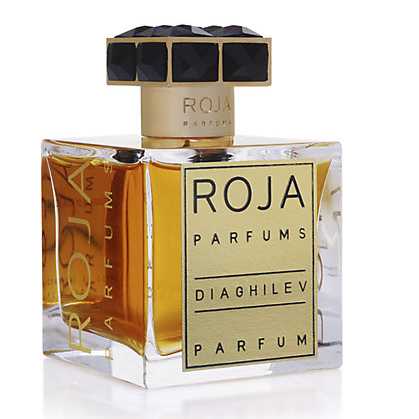
Source: Paris Gallery, UAE.

Source: Paris Gallery, UAE.

It’s hard to know where to begin in discussing Diaghilev, a 2013 release from the famous Roja Dove. The perfume has a history beyond just the ballet legend whose name it bears, a history that starts at an exhibition at the Victoria and Albert museum in 2010, and indirectly goes back much further still to a Guerlain fragrance with which it shares enormous similarities for a good portion of its opening hours. Plus, Diaghilev has a huge buzz about it, and not solely because of the Roja Dove name, as you will soon see. Perhaps the real reason why I find it so hard to know where to begin is because I’m simply not moved by Diaghilev. No matter how many times I try it, I recognise its quality on an intellectual level, but it does absolutely nothing for me emotionally. From the first time I tried it last year in Paris, to repeated tests now… my emotions are always at a firm distance. 

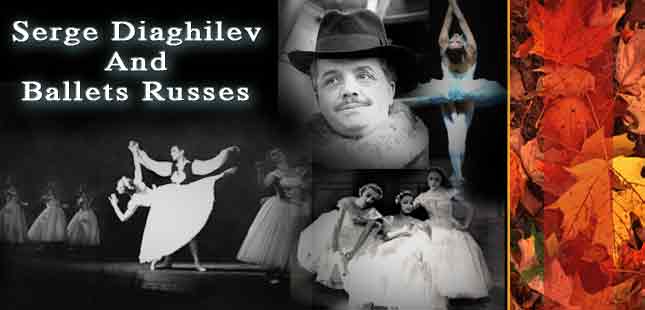
Diaghilev is a pure parfum or extrait that was inspired by Serge or Sergei Diaghilev, the famous early 20th century ballet impresario who founded the legendary Ballets Russes. On his personal Roja Parfums website, Roja Dove describes the perfume and its notes as follows:

“Decadent Intoxicating Sophistication”

WARM, DRY, SWEET, FRUITY, SPICY, SOFT, & VERY SENSUAL

“I am immensely proud of this work. I love its rich opulence, its complexity and depth, volume, and sensuality. I was inspired by Diaghilev, one of the greatest creative forces of the twentieth century, who changed the world and totally re-wrote the rules – this creation is for exactly that type of person”. Roja Dove

Source: lth-hotels.com

Source: lth-hotels.com

INGREDIENTS
TOP: Bergamot, Lemon, Lime, Orange, Tarragon
HEART: Blackcurrant Buds, Heliotrope, Jasmine, Peach, Rose, Tuberose, Violet, Ylang Ylang
BASE: Ambrette, Benzoin, Cedarwood, Civet, Clove, Cumin, Guaiacwood, Labdanum, Leather, Musk, Nutmeg, Oakmoss, Patchouli, Peru Balsam, Sandalwood, Styrax, Vanilla, Vetiver.

Source: 123rf.com

Source: 123rf.com

Diaghilev opens on my skin with a flood of oakmoss on the most beautiful, animalic, castoreum-like base. The base is truly spectacular, especially in the opening 20 minutes. It’s like beautifully darkened, oiled leather with velvety, musky, dirty, and skanky undertones. There is no castoreum listed in Diaghilev, but it really smells like it to my nose. The raunchiness is kept in perfect balance; a touch sweet, urinous, and earthy all at once. It is not feral or fecal, but, rather, akin to the most gentlemanly dirtiness around. The musk is delicately dusted with earthy, dry, cumin, and infused with the sweetened, “fuzzy, warmed skin” characteristics of ambrette seeds (musk mallow).

"Novemthree" by Olaf Marshall. Source: vitaignescorpuslignum.blogspot.com

“Novemthree” by Olaf Marshall. Source: vitaignescorpuslignum.blogspot.com

The overall bouquet is a simply perfect base for the vista of green that lies atop it. There is the carpet of oakmoss that is dense, pungent, lightly fusty, vaguely oily and mushroomy, and wholly amazing in its viscosity. The greenness is underscored by the small bits of earthy vetiver, which dance at the edges next to an extremely bitter lime peel. I don’t know quite how Roja Dove has replicated the feel of vintage, real oakmoss so well, but he’s done it in spades with something that feels like juices from the past that have been reduced down to a darkened thickness.

Source: wallpaperuser.com

Source: wallpaperuser.com

In less than a few minutes, the colours change. A bright yellow arrives to dapple the mossy forest floor, followed by massive dabs of orange. The first is the bergamot, the second is the peach. The freshness of the former is a muted touch, while the heavy juices of the latter are quite noticeable on my skin indeed. The ripened fruit combines with the cumin to add to the fleshiness underlying Diaghilev, creating the image of musky, heated flesh that merely happens to be lying on a well-oiled leather couch made from castoreum in the midst of an oakmoss forest.

Jubilation 25. Photo: Basenotes.

Jubilation 25. Photo: Basenotes.

It’s all very lovely, and all massively familiar. This is Mitsouko parfum, in vintage form, reduced to the level of an attar in density, and thoroughly infused with Amouage‘s cumin-flecked Jubilation 25 (Women). Every minute of Diaghilev’s opening two hours on my skin feels like Mitsouko drenched with Jubilation, right down to the light dance of the very well-blended florals. At this point, Diaghilev’s florals are an abstract, seamless blur that are hard to pull apart, though the jasmine stands out the most. Again, like Jubilation. (And later, it is the ylang-ylang, which is again like Jubilation.) There is even a light flickering fizziness of something nebulous like aldehydes, the way I would experienced with old Mitsouko. By the way, if we’re talking about echoes of famous perfumes, there is also a fleeting, tiny kinship to the post-1989, cumin-y, vintage version of Femme by Rochas as well, though Diaghilev is darker, drier, greener, more leathered, and less fruited.

Most of those differences can be chalked up to Diaghilev’s substantially concentrated Extrait formulation. It is certainly explains why Diaghilev’s oakmoss is much more dense than it is in Jubilation 25. And I’m sure the skanky bits in the Amouage perfume would feel heavily leathered and resinous as well, if the perfume had been amped up by a 1000 to an extrait level the way Diaghilev has been.

Source: RebootwithJoe.com

Source: RebootwithJoe.com

That said, I loved the opening 20 minutes of Diaghilev. The perfectly calibrated degree of cumin-y, skanky, leathered, castoreum-like velvetiness that rises up to bite you on the nose is glorious. And it’s so wonderful next to the dark oiliness of the heavy oakmoss, the earthy vetiver, and the bitter lime. The perfume has a real, substantial kick to it that makes it stand out at that point.

Unfortunately, the elegant meow of animalic bitchiness soon turns much more well-mannered, sedate and restrained in nature, as the dirty accords sink into the base. You can still detect them, quite easily if you sniff up close, but they blend into the overall blur of greenness that is dominated primarily by the dark, slightly fusty oakmoss with its peachy undertones. For me, by muffling the skanky whiffs, Roja Dove has de-fanged Diaghilev of its more modern, interesting touches, and moved the perfume squarely back a century to the well-bred, distant past.

Regardless, Diaghilev is a very nice, opulent, luxurious perfume in its opening stage. It is a perfectly seamless, extremely dense blend of green chypre notes with thick oakmoss, lime, bergamot, cumin, peach, amorphous florals, and touches of vetiver atop an oily castoreum-like, leathered, skanky base. It is monumentally heavy in feel at this point, as well, much to my great enthusiasm. Two big smears feel like the equivalent of 6 very large sprays of the most potent eau de parfum around.

Yet, to my surprise, the heavy Diaghilev wafts only 2-3 inches above the skin even in its opening. Spraying improved matters, but only moderately, by maybe another 2 inch at most. A friend and reader of the blog, “Tim,” was kind enough to send me a small spray atomizer of Diaghilev which I used in my 3rd test of the perfume, and there was no monumental increase in projection that I detected. The one difference is that spraying brought out the rose note after an hour, though it was still muted and muffled in that perfectly seamless blend of what really just seems like abstract “florals” from afar.

Source: 10wallpaper.com

Source: 10wallpaper.com

45 minutes into its development, Diaghilev drops in sillage, and also turns much softer in feel. 90 minutes in, the perfume loses even more of its body, heft and density. It’s primarily an oakmoss scent with sharp lime, bergamot, amorphous florals, peach, atop a velvety dark base just lightly flecked with cumin. Part of the problem in trying to dissect Diaghilev is that it’s so perfectly melded that it is really hard to separate out its tiny details at times. You get the plethora of greenness and the chypre elements up front, but many of the other notes lurk behind, peeking out in the most polite manner. And I’m only referring to 6 or 7 of Diaghilev’s 30 ingredients. The remainder is wholly subsumed within the larger whole.

At the end of the 2nd hour, however, I noticed new elements darting about, weaving their way through the top notes. Now, there is: clove, nutmeg, guaiac wood, mossy patchouli, and cedar. For about 5 minutes, there is even a really pretty touch of soft, earthy, delicate violets. Yet, with the exception of the new spices at hand, most of the elements were mere flickers and are not really a profound presence in a strong, individual, clearly delineated way.

Ylang-Ylang. Source: Soapgoods.com

Ylang-Ylang. Source: Soapgoods.com

Much more noticeable instead is the sudden arrival of the ylang-ylang with its custardy, vaguely banana-like, rich undertones. It adds a lovely touch to the pungency of the oakmoss, and is also a great contrast to the skanky, leathered, darkly oily base. I also really like the introduction of the spices, especially the cloves which add a subtle heat to the scent, enlivening it. The guaiac adds a subtle undertone of smokiness, while the cedar brings a tiny burst of pepperiness. The overall effect is to veer Diaghilev straight back into Jubilation’s arms.

Every time that I’ve tested Diaghilev, I noticed what feels like a transitional bridge period that starts always about 2 and a half hours into the perfume’s development. Diaghilev starts to lose its purely oakmoss-chypre focus, and begins the slow move towards an oriental scent. After having reviewed a handful of Roja Dove creations at this point, I get the strong sense that he seems happiest and most comfortable when making Chypre-Oriental hybrids. Many of his best and most beloved fragrances certainly start off as Chypres before turning into pure Orientals, like, for example, Puredistance M and the two Fetish Extraits. At the very least, I think we can agree that he’s a master at the split genre.

Here, the transition is gradual. The visuals are the first to change. It’s as though an oriental autumn has hit the green, oakmoss-covered peach trees and florals in the cumin-dusted forest with its skankily leathered floor. The dark greens are now heavily covered by rich, spiced, brown-reds and by velvety, custardy, ylang-ylang yellow. Sprinkles of white appear from sweetened vanillic powder, as the benzoins and tonka stir in the base. The subtle patchouli element pops up its head to inject a wine-red colour, taking on a liqueured, sweet, jammy richness. The woods encroach on the dominant moss and peach duo, as the guaiac and cedar crowd around, casting dark shadows. Bitter nutmeg is countered by the first traces of a sheer, gauzy wisp of smooth amber. 

Source: 1ms.net

Source: 1ms.net

Technically, it’s masterful, and theoretically, it should all be right up my alley. Yet, I’m unbelievably detached and disinterested. It’s not the sense of déja vu, but something that is very hard to explain. For me, Diaghilev feels like a technically perfect evocation of the classique tradition, but without a soul or a spark of passion in its depths. It’s like listening to a cover band who is playing all the right notes in a perfect rendition of some classic hit, but it doesn’t fresh, alive, distinctive, or individual. At least, it doesn’t for me. I feel as though I’m stuck in a room listening to Stephen Hawkings giving the most technically correct elucidation of theoretical physics… in Aramaic. Diaghilev’s soul simply gets lost in its correctness, its technical mastery, and in its translation of the past.

Vintage Ballet Russe poster. Source: Pinterest.

Vintage Ballet Russe poster. Source: Pinterest.

The perfume continues its march towards Orientalism. At the start of the 4th hour, Diaghilev is primarily a spicy cinnamon, clove and nutmeg dominated, abstract “floral” scent on my skin, with earthiness and woody elements over a leathered, castoreum-like base lightly infused with skanky civet, labdanum amber, and a whisper of warm ambrette muskiness. By the middle of the 5th hour, it is almost a skin scent that feels extremely abstract. Warm, musky, earthy, sweet, and spicy are the dominant elements. Soon, there is the sense of dry earthiness like soil that has been sprinkled with cinnamon, nutmeg, cloves and vetiver. Dancing at the edges is a dry, brown patchouli. The tiniest veins of labdanum amber, tonka vanilla, and musk run through it all like golden threads. Diaghilev is still strong if smelled up close with your nose on your skin, but it feels like a silken, brown-red sheath of earthy spiciness and sweetness, dappled at its base with musky skankiness from various accords.

At the start of the 7th hour, Diaghilev sets its course for the next few hours. It is primarily a gauzy, soft labdanum amber scent with abstract spices, skanky elements and a touch of vanilla powderiness. It remains that way for ages, until it finally turns into cinnamon, vanilla powder from the benzoins and tonka atop the thinnest smear of civet-y muskiness. In its dying moments, Diaghilev is merely spiced, sweet powder. All in all, Diaghilev consistently lasted over 14.5 hours on me when I applied moderate amounts, and over 16 or 17 hours with larger quantities.

"Copper abstract" by StarwaltDesign via deviantart.com. http://starwaltdesign.deviantart.com/art/Copper-Abstract-207268167

“Copper abstract” by StarwaltDesign via deviantart.com. http://starwaltdesign.deviantart.com/art/Copper-Abstract-207268167

It’s hard to review Diaghilev without bringing up its price. I never examine perfumes in a vacuum, but I usually state that price is an individual, wholly subjective assessment. That’s undoubtedly why most perfume bloggers rarely talk about the matter when assessing fragrances. However, when you have a perfume that costs over $1000 with tax — that retails for $990, €990 or £750 — then price becomes something more quantifiable and objectively critical. In fact, I’d argue that price becomes an integral part of the perfume’s fabric, as much as its notes or its olfactory genre. Intentionally so.

Roja Dove via his Twitter feed.

Roja Dove via his Twitter feed.

The basic bottom line seems to be that Roja Dove is aiming for a clientele that is part of the 1%. He’s aiming for the very rich, or, in the case of his special “Roja” perfume that costs well over $4,000, perhaps the super rich. He’s intentionally seeking exclusivity in a way that even Joel Arthur Rosenthal, the stratospherically expensive, legendary jeweler, isn’t trying to do with most of his JAR perfumes. It’s Roja Dove’s right to price his stuff as he sees fit, and there is no doubt that all his fragrances scream high-quality, expensive luxury. No doubt at all. But it is my right to think them over-priced at times, times like now.

I’ve pondered the issue of Diaghilev’s cost for days, and I can certainly see all the logical reasons why people would spend the money on it. But would I, even if I had the money to buy 10 Diaghilevs? I doubt it. I’ve thought about it in-depth, and I’m being honest. Diaghilev feels old in a way that never once crossed my mind when I wore Amouage’s Jubilation. I haven’t tried vintage Mitsouko in years, so I don’t know how I would feel about it now, but I never liked Mitsouko enough to be willing to spend $1000 on it. And, honestly, for me, the very best part of Diaghilev is its opening 20 minutes which are truly glorious. After that, when the skankiness subsumes itself into the base, it loses the one real spark of passion and distinctiveness that it exuded for me. It turns into a very expensive-smelling, beautifully crafted perfume that someone like Joan Collins would love. Glamourous, but dated.

Nijinsky and Pavlova, the two superstars of Les Ballets Russes. Vintage image. Source: jbtaylor.typepad.com

Nijinsky and Pavlova, the two superstars of Les Ballets Russes. Vintage image. Source: jbtaylor.typepad.com

There are quite a few reviews for Diaghilev out there, but the most fascinating one comes from The Non-Blonde. I will quote parts, but I encourage you to read the long review in its entirety, as it echoes many of my sentiments. And the opening two sentences are a doozy:

A very successful perfumer who’ll remain nameless described the perfumes from Roja Dove’s line as “belong in a museum”. After a few seconds of thought he added, “so does Roja”. I didn’t inquire further as to what specific aspect of Roja Dove’s public persona he was referring. Your guess is as good as mine. Diaghilev, a larger-than-life chypre is a perfect example for what the famous perfumer meant. Diaghilev, with its mélange of notes is so over the top that if I weren’t standing at the Bergdorf Goodman counter with the tester right in front of me when I first smelled it, I’d have thought (convinced even) that someone has mislabeled a vintage perfume sample. A very very vintage perfume. Something from the 1920s, perhaps, when leather, oakmoss, all the spices in the world, and a thick overripe floral bouquet could be thrown together and then worn in public without shame.

There’s cumin in the top notes which the husband detected immediately while my own skin smoothed it over. I can smell traces of many thick and plush perfume ideas, the ghosts of  famous perfumes the way they smelled back when Louise Brooks, Dorothy Parker, Lillian Gish and Marlene Dietrich used to wear them. Diaghilev is rich, plush, and very animalic, padded with a thick layer of oakmoss that I can smell throughout the perfume’s development. It’s everything I can ask for in a scent. In a different time and place (ok, and a different personality) Diaghilev could have easily been a contender for my signature scent.

They no longer make them like that. They no longer sell them like that. And if you want to wear this type of perfumes you probably need to run with a very specific crowd who appreciate things like that. There aren’t all that many of us around these days, which is probably the reason that Diaghilev stands out so much and feels so shocking. You just don’t smell perfumes like this unless you’re well-versed in vintage perfumes. […]

Here’s the thing: Diaghilev is a magnificent perfume. It’s a very fitting tribute to Sergei Diaghilev and his uncompromising artistic vision. But I almost feel like an oblivious Gwyneth Paltrow prattling about in her GOOPy ways as I’m writing this, because it’s nearly impossible in this case to separate the excellent perfume from its positioning at the very top of the fragrance market. Roja Dove has made sure of that. [snip]

You should read her piece in full. In my case, I doubt I would be inspired to wear Diaghilev, whether it were gifted to me or cost $100. From the very first time I sniffed it at Jovoy around the time of its release, I shrugged and moved on. “Very well done, nice, but …. eh.” I suspect my problem is the lack of strong personality, and not the very dated, “museum” feel of the perfume. I love vintage perfumes, but this feels far too well-bred, dull, and old. Plus, given how very little time I have to wear perfume for myself these days, I would never waste a precious “free day” on Diaghilev. It wouldn’t even cross my mind. (The fascinating Jubilation 25, however, would be a very different matter….)

Diaghilev, the original EDT limited-edition bottle.

Diaghilev, the original EDT limited-edition bottle.

Speaking of museums, there is an important issue I need to cover: the original Diaghilev. A few commentators to the Non-Blonde’s post brought up the fact that Diaghilev was originally released in 2010 as part of an exhibition that commemorating Les Ballets Russes at the Victoria & Albert museum. It was a limited-edition fragrance which cost £75, and supposedly only 1000 bottles were released, though there is mention of Roja Dove selling refills in huge 250 ml aluminium bottles on his website. I paused at the comments, like the one talking about “the earlier EDP version’s affordability” and how it felt like “naked manipulation of the consumer.” And I very much agreed. It seemed like bloody cheek for a man to sell a perfume for £75, but then, 3 years later, stick the exact same thing into a crystal-capped bottle and sell it for exactly ten times as much at £750. It seemed outrageous, as if he were pulling the wool over your eyes, while laughing all the way to the bank.

Except that is not what actually happened. I did some digging, and the facts are different. It’s true, as Roja Dove discusses in old blog posts on his website, he made Diaghilev for the exhibition and, yes, he did release it back the for a substantially lower price. There are two key differences, however, between the original Diaghilev and the one released in 2013. For one thing, the original was an eau de parfum, though a number of people also state that it was a mere eau de toilette. Regardless, the new one is an Extrait, and, as noted, has the dense viscosity of an oil in feel, at least in the first few hours. For another, the current Diaghilev is supposedly remastered and changed.

The website, Cosmetopica, writes about that last fact in a glowing review for the new Diaghilev where she also explains the differences between the versions. Her article reads, in part, as follows:

Why the change, I asked Roja’s PR? Because Roja visited the Kremlin, he said. Once he got to Russia, he completely reformulated his ideas about Diaghilev and his oeuvre, and the perfume had to change with it.

The immediate effect of the opening notes of the ‘new’ Diaghilev is identical to the ‘old’ Diaghilev but it only lasts a second before there is then a massive bloom of citrus like falling head-first into a vat of bergamot. You might not get out alive, but it would be a good way to go. To this untutored nose, the citrus melange smelt above all like tangerines (a note that I see is absent). It is also strong enough to knock a horse over at 20 paces.

This phase of the perfume lasts a good 30 minutes – a very long time for citrus – and is fabulously rich and oily, not light and sparkling. […] [It] has the richness of the real deal, due to its use of natural materials in abundance.

I loved this phase of the fragrance, but it got even better in the second act. The floral heart emerges over time like a full orchestra tuning up and to be honest, I found it impossible to pick out the notes. It is at this point that the fragrance morphs back into the character of the original Diaghilev – true, old-style grand perfumerie. Ten hours later, it’s still going strong, wafting up from your clothing whenever you move or sweat, but “curiously well-behaved,”[.]

The next morning, the animalic facets are still there, which I love. I like a bit of skank in a perfume […] So the base notes of civet and musk that hang around for about 24 hours on clothing are just fine by me. […]

Source: scent-intoxique.com

Source: scent-intoxique.com

As for the issue of Mitsouko, Cosmetopica writes:

Diaghilev mark 1 smells like Mitsouko should and no longer does, and that, apparently, is no accident. Having read that Diaghilev the man used to spray his curtains with Mitsouko, this is partly Dove’s interpretation of what that atmosphere must have been like.

Does it smell like Mitsouko? Well no. It smells like a Guerlain we haven’t met yet – no accident, I guess, given that Dove worked for the company before it was swallowed up, masticated and vomited back out by LVMH.

I agree that it doesn’t smell purely and wholly like Mitsouko. However, to me, it starts off strongly as a mix of Mitsouko with Jubilation 25 (Women), before eventually shrugging off the Guerlain and turning more into Amouage territory. And I’m not the only one who thinks that. On Fragrantica’s page for Jubilation, 8 people noted a resemblance to Diaghilev, while 3 voted for Mitsouko. There are the same 8 votes for Jubilation on the actual Diaghilev entry as well.

On Fragrantica, the reviews for Roja Dove’s creation are almost all uniformly admiring. The shortest, flattest comment comes from one person who writes simply, “If Mitsouko and Vol de Nuit met and had a baby, their offspring would be Diaghilev.” Others, however, wax rhapsodic. Here are two of the shorter reviews representing the general consensus:

  • As usually with Roja Dove’s fragrances, Diaghilev as well is strongly inspired by big fragrances of the past. In this case, the old-fashioned chypre structure, comes directly from huge compositions such as Mitsouko and Sous Le Vent. A wonderful fizzy citrusy opening evolving into an extremely refined floral middle phase to then turn into a fresh and rich mossy vetiver drydown which is not so distant from the latest phases of Onda Extrait. [¶] The level of appreciation of Diaghilev is strongly related to one’s personal preference towards extremely classic fragrances. That said, if you like the genre, this is one of the best chypres currently available on the market.
  • Insanely opulent and suave chypre that, hilariously, reminds me of Aromatics Elixir. A smooth oak moss flanked by top-shelf patchouli and vetiver with minuscule touches of citrus and culinary herbs floating around. Ambrette and civet are present, but highly civilized; many of the myriad fruit / floral notes are there, but not prominent enough to isolate. The whole thing is big, round, and undeniably impressive, but it’s hard not to snicker at the kind of over-the-top luxury it’s signifying. Excellent, beautiful, stunning, and a tad ridiculous. [¶] Break out your Liberace furs and bling, slap some of this on, then go stomp around the neighborhood like you *own* the damn place.
Source: 10wallpaper.com

Source: 10wallpaper.com

Both those reviews come from men, by the way, which should alleviate any concerns that you may have that Diaghilev is a woman’s fragrance. As for the price, well, a good response comes from “Tymanski,” my friend who so generously sent me a small atomizer from his own bottle:

i never EVER thought i would even contemplate spending a week’s pay on a bottle of perfume. i made the fateful step of trying this juice out the other day and over the course of the day this smell just got better & better & better. i was extremely sceptical of roja dove – tried several and thought “what’s this guy pulling here”, but with Diaghilev, i take it all back. this is just spectacular on every level. a chypre of such depth, elegance, balance, simply a perfect fragrance. i am not going to start with notes, as this is prodigiously complex; i will say that the rose middle is the finest i’ve ever smelled. the sillage is quite discrete but very solid, and longevity is where it should be for an 850 euro (!!!) parfum. the long drydown has a beguiling affinity with amouage epic man (another favouite). some say this is similar to vintage mitsouko, i really can’t say. it does embody everything i love about chypres in the end, i was seduced.

The bottom line for you is that you should seek out a sample of Diaghilev if you’re a lover of rich chypres, vintage perfumes, Mitsouko, Jubilation 25, and/or very heavy, strongly classical fragrances. Do it for the experience, particularly you’re relatively new to perfumery and want to learn about opulent chypres done in the vintage manner. (Consider it an expensive educational lesson, if you will.) For those who don’t fall into any of the aforementioned categories, I am somewhat dubious as to your reaction. I suspect that you might find Diaghilev overly heavy, very dated and museum-like indeed.

As to what will happen once you smell it, well, then the issue of price will come back to bite you squarely on the nose. You will either: be unable to separate the issue of the cost from the smell, much like The Non-Blonde; think Diaghilev is worth it and be in a quandary; or be like me and intellectually recognize Diaghilev’s quality, but be utterly unmoved nonetheless. One thing is absolutely certain, though: the price tag is the 800-pound gorilla in Diaghilev’s room. £750 to be precise.

DETAILS:
Cost & Availability: Diaghilev is a pure parfum or Extrait which is available in a 100 ml/3.4 oz size which costs $990, €990 or £750. In the U.S.: Diaghilev is carried by New York’s Osswald and Bergdorf Goodman. Outside the U.S.: In the UK, you can buy Diaghilev from Roja Dove at his Haute Parfumerie on the 5th Floor of Harrods London, from Harrod’s online, or from Roja Dove’s e-store at Roja Parfums. In France, Jovoy Paris seems to be the exclusive distributor for Roja Parfums and sells Diaghilev for €990. In the UAE, the Paris Gallery has Diaghilev for AED 5,175. For all other locations, you can use the Roja Dove Locations listing which mentions more stores from Poland to Germany, Switzerland, Lithuania, Russia, and the Ukraine. By the way, in Russia, Roja Dove is supposed to be at Moscow’s tsUM, but I couldn’t find the brand listed on their website when I did a search. There are no Canadian, Asian or Oceania vendors. Samples: I purchased my main, core sample. It came from Surrender to Chance which sells Diaghilev starting at $7.49 for a 1/4 ml vial.

Parfums MDCI Chypre Palatin: Baroque Grandeur

Blenheim Palace. Photo: WilowbrookParkBlogspot.com (Website link embedded within.)

One small part of Blenheim Palace, England. Photo: WillowbrookPark.Blogspot.com (Website link embedded within.)

Somewhere in an alternate universe, there must surely be a European palace that smells of Chypre Palatin. The massive, stony Neo-Classical structure opens onto a vast entrance hall decorated with mossy, emerald velvet and gold in an opulently ornate Baroque and Rococo style. An enormous chandelier hangs from the vaulted ceilings painted in citrus yellow, ambered gold, delicately pastel florals, and more mossy greens. Light sparkles off the prisms, bouncing into ambered air filled with just a trace of incense.

Photo: Andrew Yee for How To Spend It Magazine via FashionGoneRogue.com

Photo: Andrew Yee for How To Spend It Magazine via FashionGoneRogue.com

The vast hall gives way to a long, mirrored passage way filled with dancing ghosts called Shalimar, Bal à Versailles, Sacrebleu Intense, Coromandel, Habit Rouge. and Yvresse/Champagne. They blow you scented kisses, and the aroma melts into the citrus and mosses that waft off the velvet covering the walls, mixing with the vanilla that seeps up from the floors. The Bal à Versailles ghost is particularly naughty, flashing you her knickers and a glimpse of her musky, naked breasts. It seems as though you’re in that ornate passageway forever, but after a few hours you enter the heart of the house. The royal bedchambers are decorated with more velvet, this time in shades of resinous black, vanilla custard cream, golden amber, and refined patchouli brown. There, you curl up to sleep, covered in aromas like the finest, sheerest, but richest, silks that glide over you in a whisper of softened, ambered sweetness. That is the palace of Chypre Palatin.
Drottningholm Palace, Sweden. Photo: CubeFarmEscape at http://cubefarmescape.com/2011/06/pick-a-palace-or-two/

Drottningholm Palace, Sweden. Photo: CubeFarmEscape at http://cubefarmescape.com/2011/06/pick-a-palace-or-two/

Chypre Palatin is an eau de parfum created by the famous Bertrand Duchaufour for Parfums MDCI. The French niche house was founded in 2003 by Claude Marchal with a specific philosophy: that perfumes “should be an art more than an industry, a source of pleasure, pride and beauty more than a commodity.” Mr. Marchal was inspired by the luxurious opulence of the Renaissance, and the masterpieces that came out of it: the palaces of Catherine de Medici; the lush gardens of the Luxembourg; Greek and Roman antiquities; gold and rock-crystal vases; the vast treasures of Louis XIV, the Sun King, or those found in Florence’s Uffizi museum and Vienna’s Treasure Room.

Parfums MDCI decided to ask the world’s most famous perfumers to make a small number of fragrances with almost total freedom, and a no-holds-barred, unlimited budget. There were only two caveats: use the most expensive, richest ingredients possible; and don’t create scents that copy trends or caters to the crowd. The cost didn’t matter, but excellence did, no matter how long it took. Parfums MDCI is not one of those houses that puts out several fragrances at year, let alone several collections every few months. (Tom Ford, I’m glaring straight at you.) In fact, Parfums MDCI had only 5 fragrances in their line at first, but the number has slowly risen over the years to include 8 more scents. Chypre Palatin was released in 2012 and, as noted earlier, was made by Bertrand Duchaufour.

Chypre Palatin, regular Tassel Bottle. Source: First in Fragrance.

Chypre Palatin, regular Tassel Bottle. Source: First in Fragrance.

First in Fragrance has what looks like the official press release description for Chypre Palatin, as well as the most complete set of notes that I’ve found. I think the description is accurate to large degree, so I’ll quote it in full, even though it is quite long:

The opening is green, a warm, woody and strong green, peppered with a few hyacinths, garnished with the fragrant ripe flesh of clementines, spiced with a sprig of lavender and a hint of thyme. All this creates cozy, warm frissons, intrigues and generates a great appetite for more.

The skilled use of aldehydes lets Chypre Palatin shine, but without getting into too-familiar waters. We can already imagine the soft growl of a wild cat. She lolls pleasurably, full of devotion and delight on the sun-warmed forest floor, crushing the dark velvety roses, iris, gardenia and jasmine. It is so mysterious that our senses are in turmoil. Here and there, dried fruit and peppery Oriental spices join this lascivious game of the lioness as her birth-giving becomes more enticing and the fire blazes.

Here is masculine animality and feminine lust perfectly united and masterfully enacted. It is an indulgence and a stroll in brocade and velvet, courted by the most beautiful leather and the delicate touch of Immortelle. Balsam of Tolu and vanilla show themselves along with the extreme complexity of benzoin and storax that perfectly harmonize with typical chypre oak moss.

Chypre Palatine seems to have fallen directly through time where nostalgic, magnificent ball-nights combine with wild cat-like grace and flirt with the melting of feminine and masculine fragrant notes on the skin.

Top Note: Hyacinth, Clementine, Aldehydes, Labdanum (Rockrose), Galbanum, Thyme, Lavender
Heart Note: Rose, Jasmine, Iris, Prune, Gardenia
Base Note: Benzoin, Storax, Leather, Vanilla, Balsam of Tolu, Castoreum, Costus, Oakmoss, Everlasting Flower [Immortelle].

Photo: Jimpix.co.uk

Photo: Jimpix.co.uk

Chypre Palatin opens on my skin with mossy sharpness infused with bright, sun-sweetened tangerines, zesty lemon, and tons of smoky sweetness from the styrax resin, along with a hint of its leathered underpinnings. In the base, there is a rich plumminess mixed with incense and leather. A quiet floracy weaves through the top notes, though it’s impossible at this point to tease them out. Seconds later, the castoreum and animalic costus root arrive. Costus root is something that gave vintage Kouros is urinous growl, but here, it add a civet-like muskiness that is perfectly balanced. Sharp and definitely a bit skanky, but never urinous. It’s damn sexy. My God, is this a sexy perfume.

Galbanum

Galbanum

Completing the picture are sparkling aldehydes, and the dark, green pungency of galbanum. Now, I normally struggle with both notes, as galbanum can be painfully sharp in its green-blackness, while aldehydes often turn to pure soap on my skin. Not here. Not with Chypre Palatin. They are so perfectly calibrated, I can’t get over it.

Source: 123rf.com

Source: 123rf.com

The aldehydes combine with the utterly spectacular, velvety, rich oakmoss (how can this perfume be IFRA compliant???!) to conjure up the fizzy, sparkling elegance of YSL’s gorgeous fruity chypre, Champagne or Yvresse. The galbanum somehow manages to evoke the famous Bandit from Robert Piguet, only in approachable, less dangerous or brutal form. There is something of Bandit’s green leathered feel lurking about that normally difficult note, but it’s just the faintest suggestion and somehow serves to amplify the overall depth of the oakmoss. The latter never feels fusty, dusty, or like grey mineralized lichen, but it’s not the bright, fresh, springy moss note generated by patchouli, either. On my skin, it smells like really expensive oakmoss — and a lot of it. I really have no idea how this perfume passed IFRA/EU compliance tests. Whatever combination of elements or tricks Bertrand Duchaufour used to create this vision of endless, forest-green velvet, it really feels genuine.

Bal à Versailles.

Bal à Versailles.

The overall effect of the avalanche of notes that falls over me is not just the impression of incredibly baroque grandeur, but a flashback to the past. Chypre Palatin feels like a greatest hits remix of: Bandit, Shalimar, Habit RougeChampagne/Yvresse, Coromandel, and vintage Bal à Versailles. I’m not complaining. Not one bit. In fact, I gulped at the opening, said “Oh my God,” promptly dabbed on some more, and then felt like one of those possessed figures you see in horror movies whose head spins around and around. Only here, I was joyously possessed by such incredibly opulence, such intense deepness, and sensual headiness in such a seamless, luxurious blend that I didn’t know what to take in first.

The Green Velvet Room at Hardwick Castle, England. Photo: NTPL/Nadia Mackenzie.

The Green Velvet Room at Hardwick Castle, England. Photo: NTPL/Nadia Mackenzie.

Yet, Chypre Palatin is more than various parts of its ghostly, perfume predecessors, and is quite its own thing. Yes, it is retro and classique; the fougère elements, the aldehydes, galbanum, oakmoss, and skanky touches all harken to the past. However, it also feels modern with the definite oriental foundation. This isn’t a Chypre to me, not even at first, but a Chypre-Oriental hybrid done with a lightness that belies the heaviness of its super-rich notes. Perhaps the most modern aspect of Chypre Palatin for me is that careful calibration that I talked about earlier. There is none of the excess of the past, whether it is vintage Bal à Versailles’ hardcore, dirty, skank, Bandit’s brutal bite, or the tidal waves of aldehydes in any number of classics from the 1920s Chanel No. 5 to the 1970s Van Cleef & ArpelsFirst. Everything here is measured, to the point of being super refined, even muffled to an extent. Perhaps that is why I keep envisioning extremely thick, forest green, velvet curtains around a four-poster bed, drowning out the sound.

Source: beauty-places.com

Source: beauty-places.com

Yet, there are dainty touches that subtly waft around the baroque splendour. Delicate hyacinth adds a floral pastel colour to the opulent decor, while the iris brings in a touch of sweet, powdered suede. Initially, I don’t detect the lavender in any concrete, individual way, but after ten minutes, a definite strain of something herbal creeps in. It’s not the revolting, pungent, almost abrasive dried sort that evokes barber shops or something medicinal. Instead, it’s creamy, slowly turning into lavender-vanilla icecream. Tiny pops of bright colour come from the yellow citruses, while the orange tangerine brings in a dash of sweetness.

Chypre Palatin sometimes feels more like a seamless movement of notes, a piece of richly elaborate music, or a mood than a set of distinct notes. It rolls over you like a plush, seamless mix that is simultaneously mossy, fresh, dark, bright, animalic, fruity, leathered, smoky, resinous, vanillic, skanky, and sparkling. It overwhelms my senses, in the best way possible. Coincidentally, around the time that I sat down to do a full, proper test of Chypre Palatin, I put in a DVD of Carmen, the opera from Bizet. (No, I swear, contrary to what it may seem like these days, I don’t listen only to opera! My favorite groups are actually Rammstein and Depeche Mode, and I also tend to listen to a lot of ’80s music.) In any event, Carmen’s overture is pretty famous, one of those things that many people will recognise once they hear it, and I’ll be damned if the movement of the music didn’t feel exactly like the movement of Chypre Palatin in the first hour.

So, the best way I can convey to you how Chypre Palatin’s opening feels like to me is to share with you this short, 2 minute clip of Carmen’s overture. Take note of the rapidity of the musicians’ movements, their enormous precision, the music’s moments of daintiness, the occasional bursts of something darker from the drums, and how seamlessly everything fits together. They manage to create a mix that has sparkling vibrancy, symphonic complexity and opulent intensity. For me, it’s not only catchy but representative of Chypre Palatin’s initial deluge of notes:


It’s hard to decide what is my favorite part of the scent’s opening phase. At first, my favorite part of Chypre Palatin is the skank naughtiness that lurks in the base. It strongly evokes Bal à Versailles, but MDCI’s version lacks the powderiness and extreme dirtiness of the famous legend. Ten minutes later, like the most fickle person imaginable, I decide the real beauty is not the faintly raunchy take on oakmoss, but the way the fruits are so beautifully nestled into the dark styrax. Out of all the resins, that is the one which is the least sweet, the most smoky and leathered. Then again, the growing flickers of labdanum is gorgeous, as is the subtle patchouli. They show up after 20 minutes, with the labdanum giving a quiet touch of nutty toffee in the base.

Tolu Balsam. Source: somaluna.com

Tolu Balsam. Source: somaluna.com

On the other hand, Tolu Balsam is my second favorite resin (after Peru Balsam), and it adds a rich, opulent, treacly layer to the base. It is faintly spiced with what feels like cinnamon, but it is also infused with a growing sense of vanilla. Something about the overall combination of the citrus-flecked oakmoss on top, with the smoky, leathered, animalic, resinous and vanillic accords at the bottom, keeps bringing vintage Shalimar to mind, as well as Shalimar’s cologne counterpart, Habit Rouge, and Shalimar’s descendant, Parfums de Nicolai‘s Sacrebleu Intense. Shalimar has Peru Balsam (a brother to the Tolu kind in Chypre Palatin), along with citruses, vanilla, civet, rose, jasmine, orris, and leathered, smoky touches. Those notes are either the same as, or one tiny degree apart from, the notes in Chypre Palatin. It’s the same story with Habit Rouge, though I think that has Chypre Palatin’s styrax instead of either Tolu or Peru Balsam. In contrast, Sacrebleu Intense is more overtly floral but also shares fruits, vanilla, cinnamon, smoke, patchouli and the same tolu balsam base. 

There are obvious differences, however, primarily the heady and hefty amounts of greenness in Chypre Palatin. For the first few hours, that is the dominant colour of the scent, mostly from the oakmoss but also from small strains of the galbanum and patchouli. The oakmoss is thoroughly lemony and slightly fruity, though the latter is never strongly sweet. The herbal and lavender accord fades away extremely quickly on my skin, thereby ensuring that Chypre Palatin never ventures into cologne or barbershop territory.

Chandelier reflections

Source: pbs.org

It’s very hard to deconstruct Chypre Palatin because it is a prismatic scent. By that, I mean that the perfume throw off different notes like light hitting crystals on a chandelier, with each wearing revealing different facets at different times. Part of it, again, is how beautifully Bertrand Duchaufour has blended the fragrance, as well as the obviously expensive, high-quality of the ingredients. Chypre Palatin doesn’t change dramatically in its core essence for the next few hours, but different notes feel highlighted at different times. Sometimes, it is the vanilla; at other times, the skank, the leather, citruses or resins take turns. At all times for the first 4 hours, those notes radiate out from the green-velvet oakmoss core. The weakest elements on my skin are the hyacinth, lavender, orange, iris and jasmine. In fact, the overall floral accord is the hardest to tease out into individual notes. The jasmine might be the most noticeable one, but, as a whole, you merely have the sense of a truly lush, velvety, oakmoss-infused “floral bouquet.”

The more obvious change to Chypre Palatin over time is not the development of a particular note, but the perfume’s sillage and weight. At first, it wafted out about 3 inches from the skin. The overall bouquet feels much thicker and heavier than it actually is, since the perfume itself is quite airy in weight. Chypre Palatin is so potent up close, that it feels opaque, concentrated and ornate. That is deceptive and fools you into not realising how the projection is slowly dropping, but it’s hard to miss after 45 minutes. Chypre Palatin turns thinner, lighter, and less rich in weight. It also becomes very soft and discreet in projection, wafting an inch above the skin by the end of the first hour.

90 minutes in, Chypre Palatin is a blur of vanilla, citruses and oakmoss, trailed by incense, dark resins, and a subtle, muted touch of very abstract florals. Unfortunately, you have to sniff hard to detect all the layers and details because, from afar, Chypre Palatin seems primarily like a vanilla-oakmoss scent with some citruses. The vanilla is lovely, though. Smooth, deep, air-whipped, and with only a dash of sweetness. It’s too gauzy to feel like custard, but there is a wonderful eggy richness to it.

Still, everything else seems to have collapsed on each other like a house of cards blowing over. It’s partially the fault of how well-blended and seamless the fragrance is; all the secondary notes have melted into each other. Only the prism’s core — that triptych of oakmoss, vanilla, and vaguely citrusy fruits — really stands out easily. I just wish it hadn’t happened so soon, especially as Chypre Palatin feels as though it’s about to turn into a skin scent any moment now. It doesn’t, but it’s a frustrating feeling that continuously plagues me. In reality, Chypre Palatin tenaciously hovers just above the skin for several more hours, and doesn’t turn into actual skin scent until the 5.5 hour mark. I’m constantly taken aback by how rich it is up close. The weak sillage is very misleading.

The more immediate change is that the scent turns more and more vanillic. By the start of the 3rd hour, when I smell Chypre Palatin from afar, I primarily get a blur of sweet, rich vanilla that sits atop a layer of vaguely spicy, smoky, dark resin. The fruited-oakmoss duo occasionally joins the vanilla, but, more and more, it lurks in the background.

Source: Wallpaperscraft.com

Source: Wallpaperscraft.com

With every passing hour, the resins move closer and closer to the surface. By the start of the 5th hour, Chypre Palatin is halfway transformed into an amber scent dominated by toffee’d, caramel labdanum. There are strong veins of smoke, Tolu balsam, vanilla, and lightly spiced, brown-red, woody patchouli, all blended within the amber’s golden-brown folds. But every time I think the oakmoss-citrus accord has finally vanished, it somehow pops back up. On two occasions, I briefly thought that Chypre Palatin had reverted back to being a vanilla-oakmoss fragrance, only for the amber to push the duo back and take the lead again. The overall effect is a beautiful, concentrated richness that belies Chypre Palatin’s sheerness.

New elements arrive to weave their way through the amber. There is a really subtle, muted hint of booziness that lurks about Chypre Palatin’s edges, no doubt thanks to the patchouli in combination with the labdanum. There is also a lovely cinnamon that is sprinkled over the vanilla. Much of this is due to the Tolu balsam. According to Fragrantica and other sites, Tolu balsam has a deeply velvety richness with a vanilla aroma that is much darker than that of benzoins. To my nose, however, it is always a very spiced, slightly smoky, rather treacly, dark note with a subtle leathered nuance; it doesn’t feel like a truly vanillic element. To give you an idea of what I’m talking about, here are a some of the perfumes listed by Fragrantica as scents that feature Tolu balsam (or its close sibling, Peru balsam, in some cases): Bal à Versailles, Opium Ormonde Jayne’s Tolu, Estee Lauder‘s Youth Dew and Cinnabar, MPG’s Ambre Precieux, Mona di Orio‘s Ambre, Guerlain‘s Chamade, Rance‘s Laeticia, Memo‘s Italian Leather, Reminiscence‘s Patchouli Elixir, and many others.

Source: footage.shutterstock.com

Source: footage.shutterstock.com

If I’m spending more time talking about all these ambered or dark elements than the florals that technically make up a “chypre” fragrance, it’s simply because Chypre Palatin isn’t really a floral scent on my skin. It was muted and largely abstract at the start, and it soon becomes the last horse in the race. By the start of the 3rd hour, I’m not sure it’s even there any more. It certainly isn’t by the time Chypre Palatin enters into its heart phase which is dominated by the aforementioned tolu balsam, then labdanum, vanilla and refined patchouli.

And what patchouli it is too! Beautifully red-brown, slightly spicy, and wafting tendrils of incense-like smokiness. Like the Tolu balsam, it has a subtle nuance of something leathered, but there is nothing earthy, green, minty or “head-shop”-like about this note. Actually, the overall combination strongly — strongly — conjures up Chanel’s glorious Coromandel for me. It has to be the way the patchouli is simultaneously vanillic and smoky. The only difference here is that Chypre Palatin feels significantly darker. There is white chocolate or visuals of chai lattes. Also, there remains the faintest hint of skankiness that occasionally waves its musky arm at you from the edges.

Source:  dianafabrics.com

Source: dianafabrics.com

For hour after beautiful hour, Chypre Palatin radiates a plethora of brown, golden, umbered, and ambered hues. The notes are perfectly balanced between dryness, sweetness, and darkness. Somehow, to my utter confusion, Chypre Palatin almost seems to have increased in projection, or perhaps the resinous balsams are simply so rich that they’re throwing out little tendrils in the air. I could have sworn it had turned into a skin scent but, when the wind blew as I took the Hairy German out for a walk around the 10th hour, I could feel the flickers of Chypre Palatin’s incense-patchouli-balsam notes lightly swirling around me. Chypre Palatin remains that way until its very end when it fades away in a blur of abstract, dry sweetness. All in all, 3 medium-ish dabs gave me 14.75 hours in duration. I’m astonished, especially given my wonky skin. It really is a testament to the richness of the notes in question. No expense spared, indeed!

In case it wasn’t obvious by now, I’m rather in love with Chypre Palatin. If the perfume were the imperial official that the “Palatin” part of its name references, I would ask him to… well, never mind. Just trust me when I say that… No, on second thought, really, never mind. All I’ll say is that I wasn’t alone in having an intensely strong reaction to the fragrance. I made The Perfume Snob #1 try it, primarily because my sophisticated, haughty mother has loved and wore every opulent, over-the-top, oriental, chypre and/or skanky classic ever made, from vintage Bal à Versailles to Joy, Opium, Femme, Jolie Madame, and many others.

However, she’s extremely hard to please with modern scents, unless it’s an Amouage. Otherwise, whenever I’ve approached her lately at the weekend dinners, wafting some new scent that I’ve been testing, she’s given me a definite “don’t even think about it” look. (One scent that I shan’t name resulted in an ultimatum that I leave the house if I didn’t scrub it off immediately.) Many of my favorites from Fille en Aiguilles to Fourreau Noir, De Profundis, and Ambra Aurea trigger a dismissive Gallic shrug, while the glorious Mitzah resulted in a violent shudder. Perfume Snob #1 is often impossible to please, but she took one sniff of Chypre Palatin, clutched her wrist, and went glassy-eyed. She then spent the rest of the time until I left sniffing her wrist compulsively and, by her reserved standards, raving about it. I’m still blinking thinking about the intensity of her reaction.

Source: 1ms.net

Source: 1ms.net

For The Scented Hound, Chypre Palatin also “struck a nerve upon first sniff[.]” My sample was a gift from him, and he clearly has phenomenal taste. However, his experience was very different from mine, and shows another side to this very prismatic scent. In his review, he writes, in part:

Chypre Palatin’s first offered up a rush of citrus and cedar and then quickly a warm amberish lavender and what seemed to be eucalyptus (but I’m not seeing eucalyptus in the notes?? hmmm).  The fragrance goes on very warm without being heavy and it’s very comforting.  In a little while the scent then moves to an even warmer almost floral setting.  It’s very peaceful and serene.  The kind of scent where you want to close your eyes and breath in its aromatherapeutic qualities.

As Chypre Palatin continues it’s drydown it moves into a very familiar what I would call barbershop phase.  It’s traditional and old world and masculine at this point.  But stop, don’t let me confuse you by thinking this fragrance is old-fashioned and masculine.  It’s not.  The opening and the dry down make it much more universal and modern.  In the end, Chypre Palatin quiets down to a nice oak moss and vanilla scent with just a touch of powder.  However, depending on what you’re doing, those middle warm aromatic notes will still come to surface as the day wears on.

Longevity is average as is the sillage.  Chypre Palatin is a lovely surprise that feels old and new world at the same time and I think would be perfect for men and women alike.

Alexandre III bridge, Paris. Source: wallpaperscraft.com

Alexandre III bridge, Paris. Source: wallpaperscraft.com

For Suzanne of Eiderdown Press, Chypre Palatin wasn’t masculine but more akin to Amouage’s Jubilation 25 (Women), and a scent that swept her off her feet by bottling the majestic grandeur of Paris. She writes, in part:

This is one of the richest smelling chypres I’ve ever worn; to the degree that I’m not sure I would have identified it either as a chypre or as something created by perfumer Bertrand Duchaufour if I had smelled it blind without knowing its name or maker. […] Chypre Palatin smells stately, grand and what I think of as classically French in terms of its construction … and maybe because it is a Duchaufour creation, it doesn’t go overboard in this direction. It’s got just enough heft and richness to suggest opulence without crossing over into ostentation.

Before I describe it further, let me say that while it’s marketed as a masculine, I wouldn’t characterize it that way at all (for maybe all of thirty seconds it is masculine-smelling on my skin) and would go so far as to suggest that Chypre Palatin would appeal to women who love scents like Amouage Jubilation 25, which it reminds me of, except that Chypre Palatin is more refined and less challenging, not having the cumin and animalic emphasis that Jubilation 25 possesses, while still smelling every bit as expensive.

The rest of the review is too long for proper etiquette to let me quote it in full, but, for Suzanne, Chypre Palatin basically has a gentle touch of fruitiness in its floral heart, “hypnotic custard-creaminess,” “golden richness, seamless blending” and cashmere-like oakmoss. You can read her review for the full details.

Remember how I described Chypre Palatin as prismatic, throwing off different notes each time you wear it? Well, for Angela at Now Smell This, a full week of Chypre Palatin seemed to reveal several different olfactory profiles. Her review describes each day; how Chypre Palatin seemed like Seville à L’Aube‘s big brother on one occasion, to a fragrance that seemed to reference fougères with its “floral-lavender aspects” on another. Sometimes it conjured up an entirely different impression with its “spicy-mossy amber” and “complex tapestry.” She was fascinated by “how Chypre Palatin could be so intricate, but yet so robust.” As she writes:

The result is a fragrance with the structure and delicacy of an 18th century French table. I’ve been wearing Chypre Palatin all week, and every day the fragrance reveals something new.  […][¶]

Ultimately, Chypre Palatin seduced me with its beauty and craftsmanship, but like a Versailles-era oil painting, it isn’t quite “me.” If my budget didn’t limit me, I’d order a bottle in a second to sniff when I wanted reminding of the skill and imagination of a gifted perfumer. This is the sort of fragrance that rewards the nose you’ve developed through all the years you’ve sniffed through piles of samples. It also rewards a mind open to beauty that melds tradition and modern sensibility.

Blenheim Palace. Source: Liveinternet.ru

Blenheim Palace. Source: Liveinternet.ru

On Fragrantica, reviews are split, primarily because a number of women think the scent is too masculine for them. One person put it best: it’s really going to come down to skin chemistry. I would also add personal tastes and experience with the classics into that equation as well. If you are the sort who finds Shalimar to be too heavy or “old lady-ish,” don’t bother with Chypre Palatin. If you dislike any bits of lavender with citruses in the opening of your fragrance, or your skin amplifies herbal notes, then you may find Chypre Palatin to skew too masculine. If you’re not a fan of even a tiny bit of naughty skank in your scents, or fragrances with a leathered, dark undertone, this won’t be for you, either. But if you love the legendary classics or deeply opulent scents like the modern Amouages, then I think Chypre Palatin is a must sniff for you.

On Basenotes, there are several discussion threads raving about the scent, but the official entry page only has 6 reviews, 5 of which are positive. The lone negative rating seems to be from a woman who finds Chypre Palatin to be too expensive, too masculine, and a bit old-fashioned, though classically elegant. For almost everyone else, Chypre Palatin is a “luxurious chypre,” or “Proudly classicist and grand in scale” like Habit Rouge or the Amouage Jubilation.

One repeated theme in the discussion pertains to Chypre Palatin being “old-fashioned” in feel. Most posters approve of that fact, but one positive review actually disagrees on the retro issue, finding that the perfume isn’t vintage enough in feel. “DrSeid” experienced a rather powdery scent for the majority of Chypre Palatin’s lifetime, not the super-rich oakmoss fest that I had, which probably explains part of his review:

Chypre Palatin is billed as a “throwback” vintage chypre, but I have to respectfully disagree. I find it quite modern, and that is my biggest problem with it. The powdery nature of the scent just does not remind me of the best chypres of old, instead Duchaufour plows new ground in having Chypre Palatin remain classy and elegant in its mild powdery nature throughout but it just does not mesh with my tastes. I personally like my chypres heavier on the oakmoss and lower on the powder showing a bit less polish and a bit more “spunk.” While I won’t be buying a bottle, I can see why many folks who have tried this have really fallen in love with it as it is top quality. If you like powdery modern scents Chypre Palatin is absolutely worth a sniff and maybe even a purchase if you can afford its relatively lofty price tag. I give Chypre Palatin a solid “good” rating and 3 to 3.5 out of 5 stars.

The two different 60 ml bottles of Chypre Palatin. Source: Luckyscent.

The two different 60 ml bottles of Chypre Palatin. Source: Luckyscent.

As you may have noticed, the issue of price comes up a lot. Chypre Palatin does indeed have a “lofty price tag.” A 60 ml bottle called the “tasselled version” costs $250. And that’s the “cheap” version! Apparently, Parfums MDCI really takes its whole philosophy about art very, very seriously. Their regular bottles are famous for having a Roman or Renaissance-like bust statue on the top. The price: $375 for 60 ml. (There is the additional option to have your statue in exclusive Limoges china if you should so wish for the princely sum of €1200!) 

Frankly, the “discount” version sends me rather into a tizzy as it is, given the measly 60 ml/ 2 oz size and, more importantly, Chypre Palatin’s weak sillage on my wonky skin. Others had way more luck in that last regard, but I’m still frustrated by the situation. Nonetheless, if I had endless spare cash lying around, I would have ordered not only a bottle of the scent already, but a back-up as well. Low sillage, be damned! Instead, it’s going straight to the top of my Wish List.  [UPDATE: one of my readers, The Smelly Vagabond, informed me in the comments that the bottle is actually closer to 75 ml but MDCI’s owner decided to list it as 60 ml due to bottle variations. They’re all hand-blown, so he wanted to err on the side of caution. Also, there is a special deal exclusive to the MDCI website where the cost of a sample set will be credited to the cost of buying a full bottle. In short, things are looking much better than I had thought, in terms of price-per-ounce value, decants, and accessability. See the DETAILS section at the end for more.]

The Marble House, Vanderbilt "cottage," Newport. Photo: Gavin Ashworth. Source: http://blog.newportmansions.org

The Marble House, a Vanderbilt “cottage,” Newport, RI. Photo: Gavin Ashworth. Source: http://blog.newportmansions.org

Bottom line, I think Chypre Palatin is grandeur and sensuality on a scale that would have made Leonardo, half the Medicis, and all the bloody Borgias wet their pantalones. It’s been a months and months since I had such an immediate, intense reaction to a scent, such awed amazement, and a lemming turned into Moby Dick. (The last time was for Hard Leather, lest you’re curious.) I’m all in a tizzy, discombobulated, and hot under the collar. In fact, I better end this now before I spend a few thousand more words raving about Chypre Palatin and its baroque glory.

DETAILS:
Cost & Availability: Chypre Palatin is an eau de parfum that comes in two different sorts of a bottles. There is a regular 60 ml bottle called a “tasselled” bottle which costs $250 or €215, and a fancier bottle with a bust statue on it in the same 60 ml size for $375. {UPDATE: One reader let me know that the bottles are much bigger than 60 ml and closer to 75 ml, or 2.5 oz. Various readers as a whole have also kindly shared that Parfums MDCI has a deal exclusive to their website involving their discovery sets. Apparently, if you order either of 2 discovery set (set of 5 or set of 8), that amount is credited towards the purchase of a full bottle. The sets are, respectively, €90 or €140 with shipping. At today’s rate of exchange, that comes to roughly $123 for the small set, or $191 for the larger one. One reader informed me that you can get all of the bottles in the same fragrance, i.e., all Chypre Palatin. To buy the sets or a bottle, you apparently send the company an email with the catalog # of the item you wish to purchase. The catalog numbers are listed on the page in the link. Afterwards, you pay MDCI directly via Paypal.} In the U.S.: Luckyscent has both bottles of Chypre Palatin, along with a Discovery Set of 8 different Parfums MDCI fragrances in a 12 ml size for $210. Regular sized samples are also available for purchase. Osswald also has both versions, but sells the basic bottle for $263, not $250. Outside the U.S.: Parfums MCDI has a website which shows pricing on its bottles, but no e-store for direct purchase. (You have to follow the procedures outlined above.) In Canada, the Perfume Shoppe carries the full line and sells the regular Chypre Palatin for $230, as well as a travel size of your choice of Parfums MDCI fragrance for $50. I’m not sure those are Canadian prices, even if that seems to be a Canadian link, but then I find the company quite confusing. It is US-based, so Canadian readers may want to email them to be sure. In the UK, Parfums MDCI is available at Roja Dove’s Haute Parfumerie at Harrod’s. In Paris, Chypre Palatin is available from Jovoy for €215 in the regular bottle. The perfume is also carried at Sens Unique, but they don’t have an e-store. In Italy, Sacro Cuore Parfumi sells the bust version for €325, but doesn’t have the cheaper bottle. Germany’s First in Fragrance sells the regular bottle for €215. The Netherland’s Lianne Tio sells Chypre Palatin for €229. You can also find the perfume at Hungary’s Neroli Parfum and Russia’s Lenoma. For all other European countries, you can use the MDCI’s Retailers List to find a vendor near you. However, there are no sellers listed in Australia, Asia, or the Middle East. Samples: Surrender to Chance sells Chypre Palatin starting at $5.99 for a 1/2 ml vial.