Perfume Review: Ambra Aurea by Profumum Roma

Source: the Mirror newpaper, Mirror.co.uk.

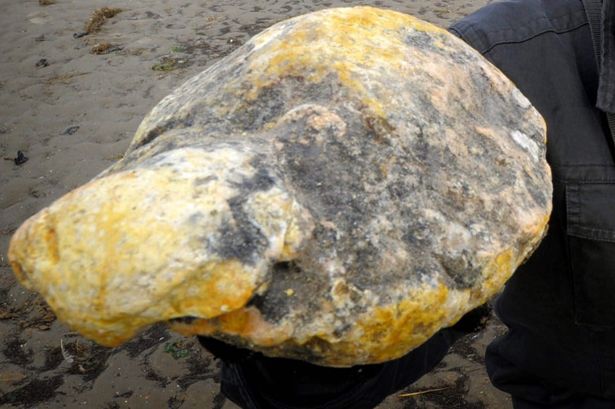
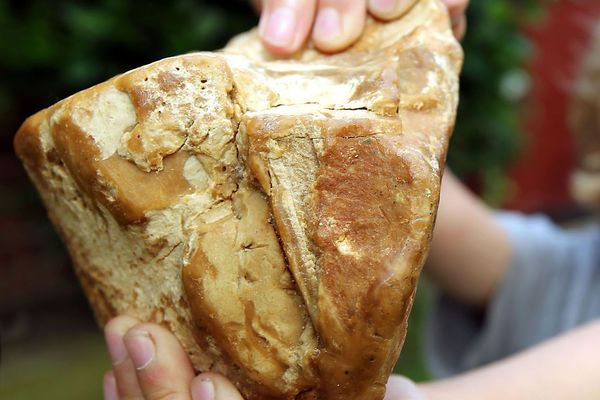
Ambergris found on a beach. Source: the Mirror newpaper, Mirror.co.uk.

One of the most prized, rare, expensive, luxury ingredients in perfumery is ambergris. True ambergris is hard to find nowadays, especially in any large quantity, but it is a scent adds incredible depth and body to a fragrance. It is also nothing like “amber” which usually comes from a combination of plant-based resins and/or synthetics. In contrast, ambergris comes, in an over-simplified nutshell, from whale vomit and has a unique salty, musky, sweet, almost marshy scent.

The Perfume Shrine has a great analysis of the difference between “amber” and ambergris which also helps explain the reason for the rather sweet character of most of the “amber” fragrances on the market. The explanation for the rather unique, special smell of ambergris (sometimes known as grey amber) is as follows:

It’s hard not to fall in love with ambergris … [which] smells, depending on the piece and whom you’re talking to, like musk, violets, fresh-hewn wood, tobacco, dirt, Brazil nut, fern-copse, damp woods, new-mown hay, seaweed in the sun, the wood of old churches, or pretty much any other sweet-but-earthy scent”. [Kemp Chris., Floating Gold: A Natural (and Unnatural) History of Ambergris]

Source: The Mirror, Mirror.co.uk

Source: The Mirror, Mirror.co.uk

The ingredient is rather sticky and gelatinous like, like a fat lump of grey color at first; while when it dries it becomes harder like a fragile but hard resin. […] [After some years, it] gains a beautiful patina that famously chemist Gunther Ohloff described as “humid, earthy, fecal, marine, algoid, tobacco-like, sandalwood-like, sweet, animal, musky and radiant”. Other people have dscribed it as having the scent of  wood in old churches or Brazil nuts.

[¶] Its greatest attribute is its capacity for rendering a composition rounder, especially in oriental perfumes or in floral compositions where it melds the notes into one and brings out their best qualities. It clings on to fabric too, through repeated washings even, becoming ever sweeter with time. Therefore it is prized for its fixative power: the ability to anchor more volatile notes and make them last. [¶] Most commercial perfumes today use a synthetic substitute, because the real thing is so expensive.
The reason for this long discussion of ambergris — synthetic or natural — is because its aroma is the heart and soul of Ambra Aurea, a luxurious, deep, beautiful, amber eau de parfum from Profumum Roma (sometimes called just “Profumum” or “Profvmvm,” but also written as “Pro Fvmvm” on the company’s website).

The Italian niche house is based in Rome and was founded by four siblings in 1996, but its history goes back to right after the end of WWII. The founders’ artisanal grandparents, Celestino and Lucia Durante, left the tiny Italian village of Sant’ Elena Sannita for Rome where they opened a tiny storefront, which over time grew into a chain of stores, featuring hand-made soaps, fragrances and beauty products. Their grandchildren decided in 1996 to start a line of exclusive fragrances which, as Luckyscent explains, were “crafted to evoke emotions, memories and a sense of their beloved Italy. These rich and layered fragrances are designed to work equally well on men and women, and, amazingly, they really do.”
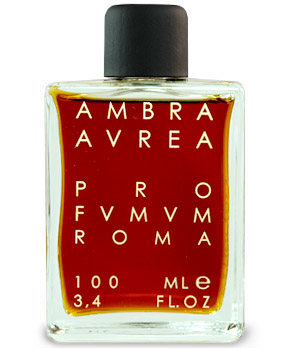
Ambra AureaI’d heard a lot about Profumum’s fragrances, especially Ambra Aurea which many consider to be one of the best amber perfumes around. And, you know, it’s pretty damn good! Profumum‘s website describes it very simply:

Scent of antique temptations:
scent of pleasure and warmth.

Grey amber, Incense, Myrrh

Ambra Aurea opens on my skin with a stunningly rich aroma that is simultaneously: salty, sweet, sticky, extremely nutty, slightly musky, beautifully golden and honeyed. It radiates smooth warmth, like a bath of salty caramel. It really smells of genuine ambergris, even though Ambra Aurea must surely use a synthetic version given the exorbitant cost of the real thing. But, honestly, wow! The beautiful depth of real ambergris is all here with its musky, salty, almost marshy, gooey, minutely sweaty feel. In fact, there is actually something a little vegetal in the undertones to the perfume that is hard to explain, yet very much feels like the real thing. But, while real ambergris can sometimes be a bit too raw, rough, and untamed, here, the edges are smooth as silk, layered with rich honey, and supplemented by other elements. For example, labdanum. There has to be a large dose of labdanum in the base with its nutty, subtly leathered feel, to go along with all the beautiful smoke from the myrrh that wafts delicately in the background.
Source: Twitter.

Source: Twitter.

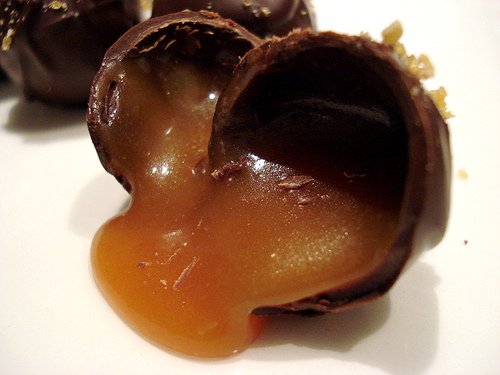
Ambra Aurea’s stunning, gorgeous, luxurious opening consistently brings two things to mind: caramel and candlelight. The perfume feels exactly like the darkest, goo-iest, richest caramel, the sort which oozes from the middle of an extremely expensive piece of chocolate. If you’ve ever bitten into a Maison du Chocolat, Teuscher or Godiva chocolate, you’ll know what I’m talking about: that thin, but incredibly rich, flow of brown caramel. At the same time, Ambra Aurea feels so golden, it’s like a room lit only by candles. There is a warm glow to the scent in its opening stage which just radiates coziness. I would wear this non-stop and, in truth, I couldn’t stop sniffing my arm. The real clincher for me is the ambergris feel with its salty notes. It’s absolutely nothing like the smell in most “amber” fragrances that one encounters with their labdanum-vanilla-benzoin bases. Ambra Aurea’s note isn’t hugely sweet, but more like salted, earthy, musky, almost wet, humid amber atop layers of deep, dark honey and nutty resins.
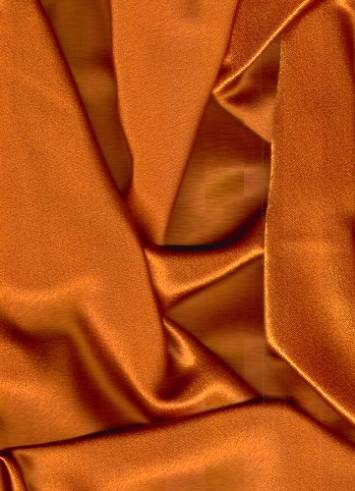
Amber SatinThe most fascinating, appealing aspect to the whole thing may be its smoothness. It truly feels like silk or, better yet, satin. There is a heavenly undulating smoothness that flows like a gentle wave in an incredibly sexy, sensuous manner. And, while the perfume is incredibly potent in those early moments, it never feels leaden or resinously thick. It’s not an airy, light scent by any means, but the weight of the perfume is absolutely perfect for such rich notes. It is truly what I had expected Tom Ford‘s Amber Absolute to be like, but which ultimately wasn’t.

Ten minutes in, Ambra Aurea shifts a little. The honey note becomes even richer but also takes on an undertone of beeswax. The musky element and the subtle smokiness also become more prominent, lessening and cutting through some of the feel of caramel-like nuttiness. God, it’s a beautiful amber scent. Unfortunately for me, a lot of that ambergris richness and honey element starts to recede, replaced by a heavy dose of labdanum. While I love labdanum, no-one can say it’s quite as unique, rare or special a note as compared to ambergris. Making it even less attractive to me here is the fact that the note has a strong undertone of “cherry Cola” at the start of the second hour. Personally, I prefer it when labdanum has a more honeyed, nutty, faintly leathery nuance. That said, Ambra Aurea is still very pretty. The labdanum has a light dusting of incense and a creamy amber finish that feels lightly infused with a custardy vanilla. In some odd way, the combination makes me think a little of “Tauerade,” the drydown base to many of Andy Tauer’s perfumes. The difference here is the ambergris note in the background with its musky, salty feel.

For the next ten hours (yes, ten!), Ambra Aurea remains primarily as a labdanum-amber-incense perfume with fluctuating levels of each element. The labdanum eventually loses much of its “Cherry Cola” nuance, the ambergris remains as a light component infused with saltiness and light incense, there are strong elements of beeswax lurking in the background, and the whole thing sits atop a generalized amber base that has a subtle vanillic element to it. By the thirteenth hour (!), Ambra Aurea is nothing more than a vague, generalized, musky ambery perfume with a faint suggestion of smoke and saltiness.

If your eyes are popping open at those longevity numbers on my voracious, perfume-consuming skin, you’re not alone. Ambra Aurea lasted at least 13 hours on my skin! In truth, I think I detected faint remnants of the perfume flickering here and there in small pockets around the 16th hour. It’s mind-boggling to me, especially as I did not apply very much at all. Which brings me to the sillage. Ambra Aurea is not a perfume with the sort of monstrous projection that emanates in tidal waves across a room. For the first thirty minutes, the projection was expansive but, after one hour, it dropped quite a bit to emanate only 2-3 inches above the skin. Yet, within its own little pocket, it is very noticeable and powerful. I think it became a skin scent only about 6.5 hours into its development, but you still didn’t need to inhale at your arm to detect it. I suspect all of these numbers would be massively higher if I not only applied a greater quantity but if I did so via a spray bottle. Aerosolization always adds far greater potency to a perfume than mere dabbing from a vial. And, God, what I would give to spray on a lot of Ambra Aurea for its opening stage! What an amber!
Source: Stock photos.

Source: Stock photos.

Ambra Aurea is intentionally and expressly intended to be an amber soliflore — meaning a perfume centered around one main note — so it is obviously going to be very linear and uncomplicated in nature. I frequently say that “linear” is a bad word only if you hate the scent in question. And I most definitely did not hate Amber Aurea. Nonetheless, I thought the opening phase was significantly better than its subsequent, less interesting, less special change into a predominantly labdanum-based amber. If the opening hour had remained for most of Ambra Aurea’s development, I would be contemplating how to buy a bottle right now. The notes were so sumptuously smooth, so satin-y rich and layered, I was in absolute heaven and I truly thought Ambra Aurea would become my go-to amber, cozy fragrance. I could just see myself after a long day, after a hot bath, spraying on the perfume and curling up for a cozy evening. The beauty of that start, its cocoon-like warmth, and the extent to which it was comforting, soothing, and relaxing… I can’t begin to convey it properly. But, to me, it didn’t remain that way and, while the subsequent development of the perfume was perfectly lovely and pretty, I’m not convinced that it’s special enough for the perfume’s price.

Which brings me to perhaps one of the biggest problems with not only Ambra Aurea, but with Profumum’s fragrances in general: cost. The perfume is only available in a large 3.4 oz/100 ml bottle that costs $240 or €179 (with some European vendors selling it for more). It’s a little steep for a perfume that is a linear soliflore whose second act doesn’t quite match its first one. If Ambra Aurea came in a smaller size, I think it would be much harder to resist but, as it is, I’m still weighing the pros and cons. I’m not the only one having problems with the cost issue. It’s a subject that is frequently and commonly raised when it comes to both Ambra Aurea and Profumum as a whole, though some seem to think it’s wholly justified. On Basenotes (where Ambra Aurea has a 100% positive rating from 8 reviews), I read a very interesting claim by a commentator, “sultan pasha,” who wrote, in part:

After Profumi Del Forte’s Ambra Mediterrana this has to be one of the greatest and most sublime and richest Ambergris driven amber fragrance I’ve ever smelt. A lot a of people complain about the price, but I’ve heard on good authority that Ambra Aurea is stronger than most normal perfume extraits. For the $240 you are getting 100ml of parfum with a staggering concentration of 46% which is higher than most extraits available in the market! So stop complaining and buy a bottle!

I have no idea where he got the 46% concentration number or if it’s true. I’ve found nothing on any site elsewhere to support that fact which, if true, would be utterly astounding and the highest thing I’ve ever seen. I did some investigation, and the only thing I can find to corroborate that number is a French perfume retailer called Soleil d’Or whose online purchase page for Ambra Aurea states: “Perfume very highly concentrated (43%).”

Outside of genuine curiosity at such a high number, I don’t ultimately care about the technicalities and, in truth, I actually wouldn’t be surprised if Ambra Aurea’s concentration were that insanely high. It smells like it! As “Sultan pasha” wrote in the rest of his review, this is a perfume where one spray will last overnight, and he’s probably right that it would last over a week on clothing. Ambra Aurea has spectacular longevity and its concentrated dosage certainly may warrant its high price. (On the other hand, that concentration would make a smaller bottle even more practical; a 100 ml of such potent juice may well last a person for the next 80 years!) At the end of the day, however, cost is wholly subjective, so I think people who love rich orientals or ambers with smoke absolutely should try Ambra Aurea — for a sniff at the very least. It’s shamefully under-appreciated and unknown.

There aren’t a lot of in-depth reviews for the perfume out there, probably because it isn’t a very complicated scent at the end of the day, but a few assessments from Basenotes may help you decide, especially in terms of comparisons to other amber fragrances out there like Serge LutensAmbre Sultan:

  • A dark, resinous, warm and sensual amber fragrance, probably one of my favourites because of its deep and obscure character, softened by some saline and rounding facets – surely due to its high percentage of ambergris that gives this fragrance its wonderful identity. As all other Profvmvm fragrances, its quite oily texture add a long-lasting but close-to-skin quality at the same time. Really addictive!
  • Ambra Aurea is a top of the line Amber along with Amber Sultan. However, I am not a fan of the sharp stink factor of really raw Amber. I love the other aspects of both of these, but what they were competing against in my samples was Fiore d’Ambra by Profumum Roma. To me, Fiore d’Ambra is the most heavenly, well balanced, and intoxicating Amber. Ambra Aurea is a little darker, mellower, with a touch of sharp Amber stank, while Fiore d’Ambra is refined enough to take the edge off, introduce a slight spice floral with a mere suggestion of powderiness and let the warm vanilla laced amber soar in majestic opulence. Ambra Aurea by contrast stays more grounded and less high flying. With quality this high between these 3, it really comes down to personal preference. […] In summary, this is one of the best Ambers ever, but it just isn’t as incredible as its sister.
  • First of all, l do not think this is at all similar to Ambre Sultan; the Sultan is much more herbal & medicinal than this one. This fragrance is most similar to Tom Ford’s Amber Absolute, & along with that one, it is one of the very best ambers that l’ve tried. l also find it much more satisfying than its’ sister fragrance, Fiore d’Ambra. This has the “wow” factor for me; a strong, raw, resinous amber that smells like it just dripped out of a pine tree. After 30 minutes it sweetens to a deep, rich, velvety amber that is not at all powdery. The sillage is great & the longevity even better. lf you’re looking for a raw amber fragrance with lots of depth that’s not TOO sweet, this one is definitely worth a try.

I haven’t tried Fiore since Ambra Aurea is my very first Profumum fragrance, but Patty at The Perfume Posse has a brief line about it in an Amber round-up. [UPDATE: here’s my Fiore d’Ambra review.] In the sub-category “The Mongol Hordes are Coming” (which is hilarious), she writes:

Profumum has two fairly fierce ambers – Fiore d’Ambre and Ambra Aurea.  You would have to go a long ways to find two ambers from one line that are quite good, and Profumum has done that.  Fiore is warmer.  Aurea is a little sweeter on the open, more honeyed.  If it weren’t for my annoyance with Profumum’s huge price tag with perfumes in such plain bottles, I’d be a huge fan.  I am a huge fan of these two and several of their perfumes, but I get stuck on thinking their price point is just not right.

As you see, we’re back to the price issue, but I agree with her. At a lower price point, I wouldn’t hesitate to buy Ambra Aurea, uncomplicated and simple though it may be. All I can do is to urge the rest of you to try it and see for yourself. Now, if you’ll excuse me, I have to go figure out how to get my hands on a decant of the perfume. It’s that good!

DETAILS:
Cost & Availability: Ambra Aurea is an Eau de Parfum that only comes in a large 3.4 oz/100 ml bottle which costs $240 or €179. In the U.S.: it is available at Luckyscent and OsswaldNYC. Outside the U.S.: In the UK, Profumum perfumes are sold at Roja Dove’s Haute Parfumerie in Harrods. Elsewhere, you can find Ambra Aurea at Paris’ Printemps store, Switzerland’s OsswaldPremiere Avenue in France (which also ships worldwide, I believe), Le Parfum et Le Chic (which sells it for €185), Soleil d’Or, and Germany’s Apropos Concept Store. According to the Profumum website, their fragrances are carried in a large number of small stores from Copenhagen to the Netherlands, Poland, France, the rest of Europe, and, of course, Italy. You can use the Profumum Store Locator located on the left of the page linked to above. Samples: Surrender to Chance carries samples of Ambra Aurea starting at $4.99 for a 1/2 ml vial. You can also order from Luckyscent.

Perfume Review – Lubin Idole (Eau de Toilette): Take Me To The Jungle

Africa Zambia Sunset.

African sunset, Zambia.

Set the jungle on fire!

Set it ablaze “with a woody liqueur rich in scorching spices, as sweet as sugar cane, and as warm as leather.” That was the express goal of famous perfumer, Olivia Giacobetti, in creating Idole, the much-loved fragrance from the ancient French perfume house of Lubin. Idole is a reinvention of a 1962 Lubin fragrance, and is supposedly their 466th creation! It would sound like a complete lie from anyone else but Lubin, a perfume house whose storied history utterly fascinates me.

Lubin coat of arms logo

Lubin was founded in 1798 by Pierre François Lubin, soon after the French Revolution. He had apprenticed under the perfumer who served Marie-Antoinette but this was a new political climate. Lubin soon won favour with Napoleon’s Imperial court and his scents were beloved by both Empress Josephine and Napoleon’s influential sister, Pauline. The royal courts of Europe soon followed suit, from the King of England to the Tsar of Russia. Once Napoleon fell, the seemingly wily, pragmatic Lubin managed to curry favour with the new royal dynasty by dedicating his fragrances to the Bourbon queen, Marie-Amélie. A very ambitious man, Lubin seemed to need more worlds to conquer and, in 1830, became the first perfume-maker to conquer the New World with perfumes that reached the banks of the Mississippi. I have no idea if that last part of biographical past was embellished a little bit but, frankly, I don’t care one whit. For a history fanatic like myself, it is all utterly fascinating.

Idole was released in 2005 as an eau de toilette. In 2012, Lubin issued an Eau de Parfum version which I’ve read is largely similar to the Eau de Toilette with only minor differences and considerably greater depth. This review is only for the Eau de Toilette version. The Lubin press release (as quoted by Libertine Perfumes) describes the fragrance as follows:

Inspired by the ancient maritime spice routes, from Madagascar and Zanzibar in East Africa to Java in the Spice Islands of Indonesia, Idole is a seductive fragrance that never overwhelms.  Rum and exotic spices mingle with dark, smoky woods and leather, creating a warm and seductive fragrance.

Lubin Idole EDT

Serge Mansau designed the stunning bottle to much international acclaim with the inspiration being the sail of the traditional wooden boat known as a felucca, and features a carved African mask on the cap — a true collector’s item[.]

If you ever have time to spare, I urge you to check the Lubin website for their gorgeous graphics, music and the detailed story associated with Idole, which is as well done for Idole as it is for all their scents. As for the bottle, it is truly spectacular. One of the most eye-catching and unusual I’ve seen.

The notes in Idole include:

rum absolute, saffron, bitter orange peel, black cumin, Doum palm, smoked ebony, sugar cane, leather and red sandalwood.

As a side note, “black cumin” is another name for Nigella Sativa and seems to be quite unrelated to the type of cumin that is used in Indian curries. According to Wikipedia, Nigella Sativa is sometimes alternatively called “Fennel Flower,” “Nutmeg Flower,” or “Roman Coriander.” Its Turkish name — “çörek otu” — literally means “bun’s herb” from its use in flavouring the çörek buns. With a sweet, bitter taste, it is frequently used in Middle Eastern pastries or in liqueurs. 

Sunset at Lake Kariba, Zimbabwe. Photo by: de Paula FJ via Flickr: http://www.flickr.com/photos/fjota/2573634501/

Sunset at Lake Kariba, Zimbabwe. Photo by: de Paula FJ via Flickr: http://www.flickr.com/photos/fjota/2573634501/

Idole EDT opens on my skin with a strong note of actual, pure rum infused with sugar cane and followed immediately thereafter by loads of saffron. The latter is spicy, nutty, and sweet, but nothing like the dessert-like saffron used by Giacobetti in her famous Safran Troublant for L’Artisan Parfumeur. Idole’s top notes blend together to create a beautiful sum-total which is then joined by touches of bitter orange peel and a smoky, creamy, smooth wood note. I was extremely taken aback by just how airy the perfume is, given the richness of all those accords.

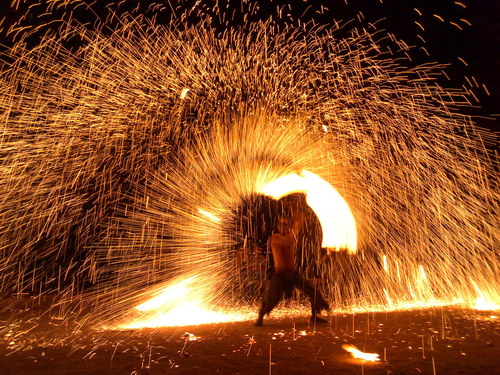
NW Africa fire dance via viewphotos.org

NW Africa fire dance via viewphotos.org

Within a few minutes, the perfume starts to shift. The saffron becomes less obvious as an individually distinct note, receding to the background to lend its indirect effect to the perfume’s rum, sugar cane notes. A very smoky, woody element that I assume is the Doum Palm muscles its way to the top. On its footsteps is a hint of some dry, dark, minutely bittered spice with an anise-like undertone which I assume is the “black cumin.” Flickering touches of something leathery dance at the periphery. The combination of elements swirls together to create a very spiced, rummy, woody, ambered feel. It is soft, almost gauzy on my skin, especially as compared to similarly boozy ambers with spice, but, despite that airy, lightweight feel, the notes seem rich, smooth and very warm. At least in the beginning….

One of Lubin's associated images for Idole.

One of Lubin’s associated images for Idole.

Thirty minutes in, Idole’s woody notes become very prominent. I’ve never smelled “Doum Palm,” but anyone who has been to the tropics knows the smell of palm trees with their almost vegetal, very beige, warmly woody aroma. Here, there is something darker lurking underneath, adding an almost smoky edge to the note. It’s probably the ebony. In his admiring Four Star review of Idole in Perfumes: The A-Z Guide, the famed perfume critic, Luca Turin, wrote that the perfume had “an eerie driftwood gray note at its center,” and I think that’s as good a way as any to describe the unusual smelling note. Alongside, there is a sugar cane-infused leather accord that feels wonderfully brown and rich. Saffron lurks in the background, adding a delicate touch of nuttiness to the underlying elements but it’s never strongly pronounced. To be honest, I would have preferred much more of it, along with the bitter peel orange accord which seems to have largely vanished from sight.

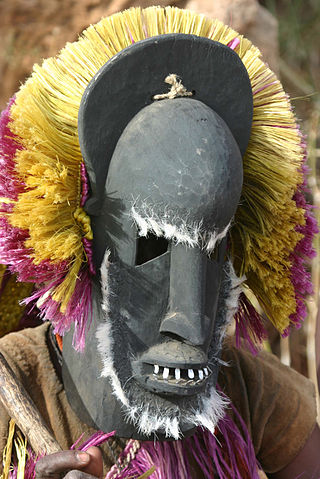
Traditional African Dogon Masque via Wikicommons

Traditional African Dogon Masque via Wikicommons

Idole remains that way for the rest of its duration on my skin — spiced rum and sugar cane with strongly woody notes that are smoked and supported by tinges of leather. It doesn’t fundamentally morph in any way, though the leather nuances recede about 90 minutes in and the darker, smoky wood accord becomes somewhat stronger. The smoke is perhaps one of my favorite parts, and its light tendrils embrace the wood in a truly lovely way. The flickering touches of the anise-like black cumin are also very pretty, though the note is even more muted after an hour than it was initially. In its final moments, Idole is primarily a musky, abstract rum with hints of woodiness and a sprinkling of sugar cane. All in all, it lasted 6.75 hours on my perfume-consuming skin, always feeling incredibly light and airy. The sillage wasn’t bad, but Idole isn’t a scent with enormous projection. Like everything else about the scent, it is moderate.

I liked Idole, but I have to admit, I was surprised it wasn’t more complex or nuanced. After all that I had heard about it, I had thought it would be darker, smokier, heavier. I had thought the jungle would be on FIRE; and it wasn’t, except for a few, itsy bitsy logs. (It didn’t help that Giacobetti’s quote kept making the refrains of the old 1980s song — “The roof! The roof! The roof is on Fire! Let the *___* burn” — ring out continuously in my head.) Also, for my personal tastes, Idole was far too soft and sheer. It seems to be Giacobetti’s signature to make heavy elements feel positively airy, but I really had expected far more, something that would take me to the heart of darkness, to reference the famous Joseph Conrad book, and to full sense of an African-like Apocalypse Now.

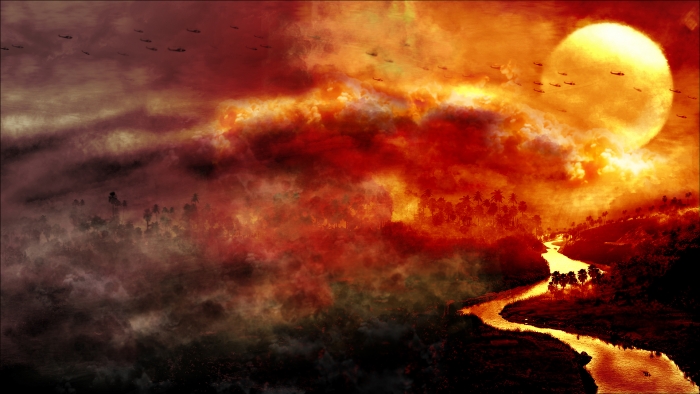
Via hdwpapers.com

The Heart of Darkness and the Apocalypse Now that I had expected. Via hdwpapers.com

That said, I think Idole EDT would be a perfect choice for those who don’t want to give up their Orientals during the hot, sticky summer months. It is quite a versatile ambery Oriental, given its moderation on all fronts. Plus, its dry notes make it suitable for those who don’t like their boozy scents to verge on the gourmand. I also think Idole is highly unisex. Judging by what appeared on my skin, I don’t think it’s masculine at all. On Fragrantica, a number of people disagree, but I think it’s a highly subjective matter that all depends on your personal tastes. If you like clean, fresh, fruity, floral or dessert scents, then Yes, Idole may seem masculine with its smoked woody notes and leather nuances. If you’re used to Orientals, then, No.

African tribal makeup via iStock.

African tribal makeup via iStock.

As a whole, Idole is a much-loved fragrance. Though there is a firm split on the issue of sillage and longevity, most people on Fragrantica either admire or flat-out adore the fragrance itself. Perhaps the most useful review comes from The Non-Blonde who, like me, wanted to love Idole EDT, but who struggled with its development on her skin and with its overall lack of depth. She ended up being blown away instead by the new Idole Eau de Parfum which is clearly something I have to seek out post-haste:

I first met (the modern) Idole de Lubin shortly after it came out in 2005. It was stunning. Completely and utterly breathtaking with its boozy opening and intense dark spicy heart. I loved it and tried for a long time to make it work, but there was a hollowness halfway through Idole EDT that make it fade and die on my skin much too quickly. It was like a great romance that didn’t survive the hardships of reality, but made me wistful whenever I looked back.

Six years later we meet again. Idole EDP is a changed perfume. Stronger, fuller and more reliable. I smell less cumin and more leather, the rum is sweeter and the incense smokier. It’s all I ever wanted Idole to be, and here it is- more brooding, taller but familiar. I want to bury my face in its warmth, wrap it over my shoulder and breath the dark woody aroma.

In asking her to create Idole EDP, Lubin allowed perfumer Olivia Giacobetti to make things right, to let Idole become what it was meant to be. It’s one of the best incense perfumes around, romantic and mysterious. On Luckyscent’s masculine-feminine spectrum they placed it slightly to the manly side and I agree, sort of. The rum-cumin-smokes wood ensures that Idole will appeal to men and smell magnificent on them, but women who have a thing for the dark side and wear perfumes such as Black Cashmere, Safran Troublant, Passage d’Enfer or Tea For Two will find a lot to love in it (the last three are also by Giacobetti).

Out of all the big bloggers out there, I find the Non-Blonde is the one whose views and experiences are always the closest to my own. We rarely seem to diverge in any serious respect. In contrast, I almost always differ widely in opinion, skin experiences, and detected notes from Bois de Jasmin — to the point that I often wonder if we’re smelling the same fragrance. I bring that up only because Bois de Jasmin swooned for Idole Eau de Toilette, writing about it as if it were one of the darkest, smokiest, most richly spiced, heavy fragrances she’d smelled in a while:

The warmth of spices is layered over the vibrant richness of woods, making Idole de Lubin one of the most voluptuous and darkest fragrances composed by Olivia Giacobetti. It does not evoke the images of transparency and hazy glow. Instead, the fragrance burns with the passionate intensity of sweet spices. A hot flame of clove accented by pepper slowly spills into the heart of the composition where it dies down in the smooth folds of orange sweetened leather. The base is filled with the caramel redolent vapors of rum, their warmth imbuing the darkness of woods with appealing sweetness. Against the backdrop of dark rosy sandalwood, a whisper of incense smoke lends an ethereal touch.

While the composition does not have a soft translucence characteristic of Olivia Giacobetti’s creations, her take on an oriental theme is interesting in terms of its ability to give airiness to the dark and heavy wood notes and to maintain outstanding tenacity. Like gold embroidery on silk, Idole de Lubin is a beautiful compromise between opulent richness and refined softness.

Obviously, perceptions of darkness, spice, and orientalism are a very relative thing. I do think that Idole is a pretty fragrance, but I didn’t find it even a tenth as complex, nuanced or “voluptuous” as what she experienced. (And I certainly didn’t detect any cloves or sandalwood.) Instead, I agree with The Non-Blonde’s impressions of ultimate hollowness, general softness, and insufficient depth or body. Even Now Smell This felt the same way, writing:

Olivia Giacobetti… fragrances make a virtue of simplicity and rarely raise their voice above a whisper, and Idole is no exception. It starts with peppery spices in a cloud of rum; the orange peel and saffron shine through beautifully as the alcohol burns off. The spice notes linger on into the dry down, lending an exotic touch to the smoky charred woods and leather. After an hour or so, it is rather mild and soft, just a whisper of leather and woods, no more than lightly sweet, with a subtle, close to the skin presence.

Idole EDP

Idole EDP

Clearly, whether it’s on Fragrantica or between bloggers, there is a huge split on the issue of Idole’s richness. Since perfume is so subjective — especially in areas pertaining to richness, heaviness, spiciness, and depth — then, if you’re tempted by the fragrance, I would strongly recommend that you try both the Eau de Toilette and the fuller, seemingly more complex Eau de Parfum version before buying. Or, if you know you prefer heavier, richer perfumes, just opt right away for a sniff of the Eau de Parfum instead. The prices for both are excellent, especially given the size of the bottles and the fact that such enormously loved niche perfumes (in stunningly gorgeous, unusual bottles) are rarely so reasonable: the EDT comes in a 2.5 oz/75 ml bottle that retails for $120 or €95, while the Eau de Parfum comes in a large 3.4 oz/100 ml bottle that costs $160 or €120. The relatively low cost of the fragrance, especially in Eau de Toilette form, may be one reason why many of the retailers that I have linked to below list the Eau de Toilette as one of their best sellers. In fact, it is completely sold out on Luckyscent at the moment.

Whichever version you opt for, I think Oriental lovers should definitely try Idole. If you’re lucky, it will take you to the heart of Africa and set the jungle on FIRE!

African Masai Warrior. Source: Foursquare.com

African Masai Warrior. Source: Foursquare.com

DETAILS:
Cost & Availability: Lubin comes in Eau de Toilette and Eau de Parfum. This review is only for the former which is available in a 75 ml/2.5 oz size for $120 or €95. In the US, Idole EDT is currently sold out on Luckyscent but it is available at Aedes and on BeautyHabit. I could only find the EDP version on MinNY. In Europe, Essenza Nobile and First in Fragrance both carry Idole EDT for €95. The site also sells samples. In the UK, Harrods carries Idole at Roja Dove’s Haute Parfumerie division (which doesn’t have its perfumes listed online). In Australia, Idole EDT is available at Libertine for USD$199. In the UAE, Karji is the exclusive distributor for Lubin. For all other countries, the Lubin website offers a list of retailers from Canada to the Netherlands, France and Hong Kong. As for the Eau de Parfum, it costs $160 for a large 3.4 oz/100 ml bottle, instead of $120 for the 2.5 oz/75 ml EDT. It is sold at all the same retailers listed above for the Eau de Toilette version. To make life easier for you, here is the Luckyscent EDP link for any US readers. Samples: Surrender to Chance sells Idole EDT starting at $4.99 for a 1 ml vial. It does not carry samples of the Eau de Parfum, except for the vintage 1962 version which is universally considered to be a totally different fragrance.

Perfume Review: Mona di Orio Ambre (Les Nombres d`Or Collection)

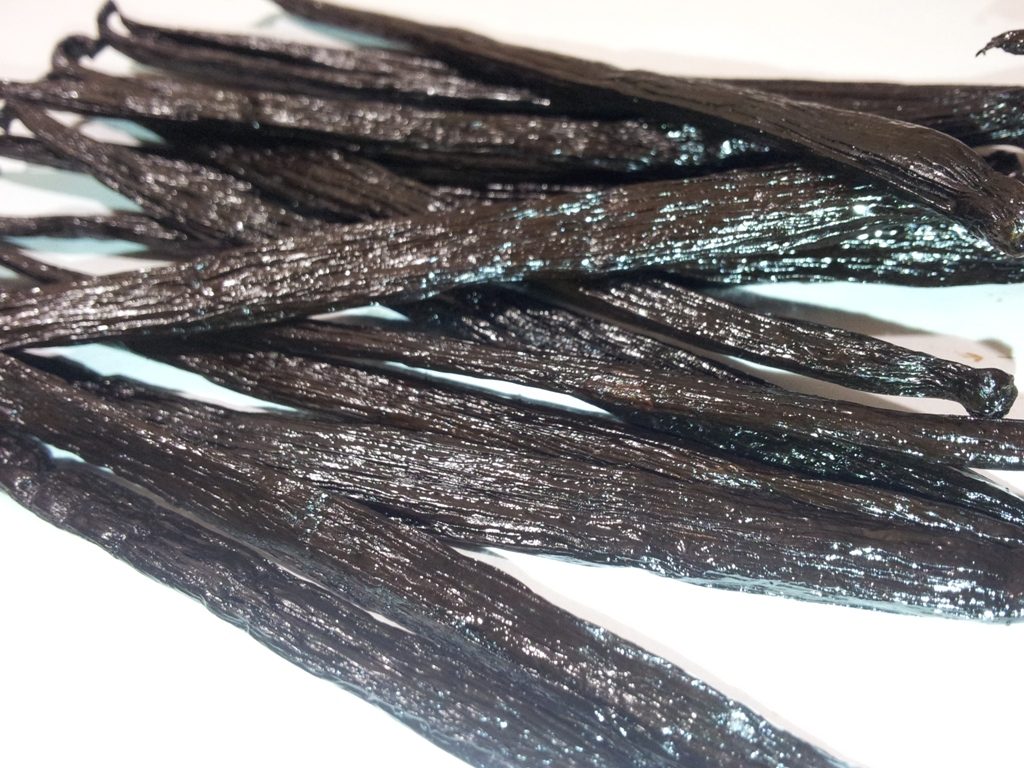
Vanilla Beans

Vanilla beans.

The chef’s kitchen was airy and sparkling white, almost dainty at times. So too was his mise en place: small crystal bowls filled with ylang-ylang, a silver tray covered with the finest Madagascar vanilla bean pods, and a large pile of cedar. He began with the vanilla pods, slicing them horizontally, scooping out the tender flesh inside and grinding it to a thick paste. He added some butter, a few yolks and gallons of cream, then whipped the whole thing into the airiest custard possible. Nay, actually, by the time he finished, it was more like a vanilla custard mousse, flecked with bits of the black bean pod.

Chef Tre Ghoshal via Flickr.

Chef Tre Ghoshal via Flickr.

The chef was a talented man who believed in invention and originality in his food, so he turned his attention to the ylang-ylang. It was a rich, buttery, heady flower that felt very yellow to him. So he ground it down into an emulsion filled with a few pinches of butter. He thought it would bring out the flower’s intrinsic nature. He took the emulsion, folded it into the vanilla mousse and then set about for the twist: he whipped in the lightest pinch of black pepper, and covered the whole thing with a veil of white, confectioner’s powder. With great care, he placed the bowl of powdered vanilla-ylang-ylang mousse over a smoker filled with cedar chips. As he set fire to the wood, its delicate smoke wafted up into the air. The chef added a glass dome over the contraption, trapping the smoke and letting its delicate tendrils seep into the powdered, floral, vanilla custard mousse. Phase One was complete.

Chef Michael Gillet of The Bazaar by José Andrés. Photo: Antoinette Bruno. Source: Starchefs.com

Chef Michael Gillet of The Bazaar by José Andrés. Photo: Antoinette Bruno. Source: Starchefs.com

Phase Two was almost a completely separate affair. About three hours after the frothy, airy smoked-infused mousse was finished, when all the powder had vanished, and only woody elements really remained, he waved his culinary magician’s hand over the creation and turned it to amber. He would never reveal his secret of how he made his dessert suddenly turn into something very different — far from the almost Guerlainade-like opening with its dainty vanillic powder and the unexpected cedar smoke atop that airy, custard mousse — but it was different.

Golden Champagne via PicStopinSuddenly, it was ambered, golden-bronze, dryer, smokier, spicier, and with a surprisingly unexpected undertone of nutty hazelnut. Or was it actually a light dusting of marron glacé? Whether it was glazed chestnuts or toasted hazelnuts, he would never tell, but everyone who tasted his ambered vanilla wondered. Their greatest surprise, however, was the complete disappearance of the powder, to be replaced by something that would have been boozy had it not been so gauzy and lightweight. It didn’t matter — they liked it. Even the critic who normally despised anything with a gourmand character liked it. Not enough perhaps to go out and actually buy it, but the critic would absolutely eat it again if it ever fell into his lap.

The chef’s tale is really the tale of Mona di Orio‘s Ambre, a surprising perfume that perhaps doesn’t warrant the name “Amber” for the full first half of its development but which I liked quite a bit. It is an extraordinarily easily, wearable perfume that traverses from being a slightly modern twist on Guerlainade — Guerlain’s signature of vanillic powder that is at the base of all their classic perfumes — to a completely different end of the spectrum. In a way, it’s almost as if Mona di Orio has upended the usual Guerlain pyramid that traditionally starts with one thing and ends with vanilla powder. This is the complete reverse. And, at all times, it’s light, airy, almost frothy and cheerful, with unexpected twists of cedary smoke, bits of pepper, and then, later, boozy amber whipped into gauzy air.

Mona di Orio AmbreAmbre was released in 2010 as part of Mona di Orio‘s Les Nombres d`Or Collection. It is an is an eau de parfum, though Luckyscent and Fragrantica both erroneously list it as an eau de toilette. The company categorizes it otherwise and, naturally, we’ll go with their designation. Mona di Orio’s website describes Ambre as follows:

As delightfully sensual as bias-cut silk, Ambre draws you in to its world with curls of smoky amber. Cedar draws you further into the mystery while vanilla adds a slightly sweet resinous kick that can’t help but delight. Ylang ylang adds a glaze of innocent soapiness to the Film-Noir aspects, but never completely obscures them; who would want to? Easily as at home, at a ball or an intimate evening out, Ambre manages to be both reminiscent of something from long ago yet as fresh as tomorrow, and always very, very French.

Its notes include:

Cedarwood from Atlas, Ylang Ylang from Comores, Benzoin, Tolu [amber resin], Absolu Vanilla from Madagascar.

Source: Soapgoods.com

Source: Soapgoods.com

The very first blast of Ambre on my skin is vanilla. Rich, concentrated, almost buttered, and very much like the paste that you scrape out of a black Madagascar vanilla pod. Immediately on its heels come the bucketfuls of the ylang-ylang. The flower’s similarly buttered, rich, almost banana-like nature feels almost velvety. When combined with the vanilla, result is the overwhelming impression of a thick vanilla custard — except this one feels so light, it might as well have been whipped into a mousse! The pairing of the two rich notes is prevented from being cloying or overly sweet by a heavy dose of cedar, adding a lovely, dry counterbalance to the perfume’s richness. It’s not peppery but, rather, more akin to tendrils of woody smoke. Amber is the last one on the scene, smelling like vanillic benzoin instead of anything thick, balsamic and molten like Tolu.

For my tastes, this is much more my sort of “vanilla” than Mona di Orio’s super-popular Vanille (also from Les Nombres d’Or collection) which I thought was painfully excessive in its buttered undertones and sweetness. Then again, I cannot abide gourmand perfumes as a general rule, and I rarely succumb to any vanilla fragrances to begin with. Perhaps the appeal of Ambre is that the vanilla is not meant to be the primary focus but, rather, second or third to the floral and woody notes; it falls much more in the oriental category than in any gourmand one. I know that when I think of Ambre, months from now, I will always think of it first and foremost as a vanilla perfume infused with florals and smoke, before having to remind myself about the amber.

Source: Wisegeek.com

Source: Wisegeek.com

I was musing on the issue of Ambre’s surprising appeal when, suddenly, less than three minutes in, I was hit by a huge wave of powder. It isn’t like makeup powder or talc but, instead, evokes a white veil of confectioner’s sugared powder suddenly blanketing my vanilla-ylang-ylang-smoke mousse. It takes over Ambre completely, dominating the top notes and leaving the ylang-ylang to peek up from underneath.

When the powder combines with the vanilla, the result calls to mind a riff on Guerlainade, the signature base for classic Guerlain perfumes. Here, it’s much tamer than in the old French classics, mostly due to the impact of the cedar. Though it seems completely non-existent in any individually distinctive way, the note’s effects are present in a certain dry, smoky woodiness at the base that alleviates that Guerlainade a little. Mona di Orio’s airiness is another difference which impacts the nature of the powder. In Guerlain perfumes, especially in its vintage beauties, the famous signature base can sometimes feel very heavy and plush. It’s also often marked by orris root which creates a makeup or lipstick impression. Here, however, the absence of the orris root — and the presence of the smoky wood in a perfume that is quite airy overall — shifts the Guerlainade-like note away from the full-on, traditional, makeup powder and to something much more modern. To me, it feels closer to confectioner’s powder with its sweetened nature, but I know others smelled only lipstick.

Less than fifteen minutes into Ambre’s development, it starts to shift a little, like a mousse that is starting to settle. Its sillage drops and the perfume softens. It feels incredibly floaty (to invent a word), hovering like gauze just an inch above the skin. The notes have blended into a perfect whole: powder-and-vanilla-custardy-mousse-with-florals-and-light-smoke. And it remains that way for quite a while, with only minor changes. Slowly, the vanilla feels less custardy and much lighter, while the powder element slowly starts to drop in prominence. The cedar with its light tinges of smoke begins to rise much more to the surface until, suddenly, three hours in, Ambre has completely changed. Now, it is smokier, dryer and with an unexpected booziness that definitely feels like the super-rich amber resin, Tolu Balsam. The powder has finally become less predominant, though it continues to mix and meld with the vanilla. In the background, subtle tinges of ylang-ylang adds some subtle, creamy, velvety richness.

Source: Wallpaperscraft.com

Source: Wallpaperscraft.com

For the most part, however, the impact of the powder and floral notes is minimal because Ambre has finally begun to match its name. Tolu Balsam is one of my favorite ambers because of its spicy nuance and its slightly smoky feel that, here, is further accentuated by the cedar. The wood, in turn, has shifted a little to reveal a tone that just almost, just barely, verges on peppered. And the whole thing sits atop a base of warm, cozy, rich vanilla infused by smoke. There are flickers of something interesting in that combination of Tolu and concentrated vanilla: nuttiness. There is definitely an undertone that calls to mind roasted hazelnuts with the smallest, faintest suggestion of marron glacé. The whole thing is extremely subtle, almost ghostly, especially given the strong vanilla note, but I found myself sniffing my arm in appreciation for its occasional flickers here and there. As a whole though, the perfume is primarily a vanillic-amber in nature.

I wish Ambre had remained that way for a while, but it didn’t. The lovely, spicy Tolu Balsam phase lasted just over two hours — and almost as a skin scent at that. Finally, about 5.5 hours in the perfume’s development, the drydown begins. It begins as a simple, vanillic, benzoin amber that has the smallest suggestion of woodiness and powder. It’s so sheer and light, you have to forcefully inhale at your arm to detect it. Finally, just short of the eighth hour, Ambre fades even more to become nothing more than a general, amorphous, woody-vanilla flicker.

Most people seem to classify Ambre as … well, an amber perfume. To me, and on my skin, it was primarily a vanilla. Not a gourmand vanilla, thank God, but definitely a vanilla. And I liked this “vanilla” significantly more than the perfumista favorite from Mona di Orio: Vanille. I truly couldn’t handle it, though I still recommend Vanille for those who enjoy sweet perfumes and want a non-traditional vanilla fragrance with a twist. My problem is that I cannot abide excessive sweetness. As a result, Vanille was too, too much, but — like Goldilock’s porridge — Ambre was the perfect balance with its floral, dry wood, and smoke notes. Taking the issue of relativity even further, as someone who worships potent, massively opaque, moltenly resinous Orientals, I find it well-nigh impossible to think of the perfume as an “Amber.” The strength of that vanilla absolute, even in the drydown phase, makes it the dominant note in my mind.

On that same scale, I have to rate Ambre as a very airy, gauzy fragrance. Others seem to agree, though the term a number of people use on Fragrantica and elsewhere is “silky” instead of “airy.” They also find the sillage to be, on average, very “moderate.” In terms of longevity, the largest amount of votes is for “moderate,” followed then by “long-lasting.”

The consensus seems to end there, however, as reviews for the perfume itself on Fragrantica are sharply split. One commentator, “Hélio Sérgio Rocha,” picked up on the two separate phases of the perfume, writing:

The opening is sweet, powdery and light. [¶] The Ylang Ylang gives a sweet floral aspect to this scent and i can feel some honey too.

Then this perfume gets smoky and silky itself. [¶] I do not see on it distinct phases on the ofactory pyramid, but I feel a combination of two different phases: a sweeter one; and darker another. […] 

Funny how this scent starts with a luminous amber and ends with an resinous aspect, so dark, mysterious and smoky. [¶]  

I felt i was wearing a silk made cloth as a second skin of mine …  [Paragraph and format alterations are my own, due to length.]

Many share his feelings, writing about how Ambre is an incredibly “cozy,” warm, “spiced,” amber fragrance that was “refined and elegant,” or “heaven in a bottle.” (The word “cozy” comes up repeatedly.)

On the complete opposite end of the spectrum, however, are those who shudder at Ambre’s powder, finding it to be far too excessive and, as a result, a complete deal-breaker. One woman thought the opening smelled just like baby powder, though she really liked the spicy amber phase (where she, too, smelled a nut-like undertone). And a good portion of men found the perfume to be too feminine, with one writing that it was “not unisex at all in my mind.”

As noted above, I really didn’t find the powder note to be akin to makeup or lipstick, and on my skin, it was far from overwhelming. I don’t like a lot of powder, especially if it smells like makeup or, even worse, like baby powder, so I would tell you if I detected that on my skin. I didn’t. In fact, I actually liked the powder stage a little — perhaps because of the rich ylang-ylang-custard-vanilla-smoke combination underneath it. Plus, I truly believe that the dry, smoky cedar note (and the absence of orris root) prevents the perfume from being very much like lipstick. Nonetheless, I completely agree with much of the other comments about how the amber stage was more enjoyable in its cozy spiciness, and how Ambre leans quite feminine. I don’t think this is a perfume that anyone should purchase blindly.

While I myself would never buy Ambre, I would absolutely wear it if a bottle somehow fell into my lap. I’d wear it frequently, in fact, and for one simple reason: it’s an incredibly easy perfume. I can see this as fitting a wide variety of circumstances, but especially when you’re in a rush and want to spray something simple while you’re on your way out the door. Ambre is the furthest thing from revolutionary, complicated, or novel. It’s hardly a masterpiece, and isn’t even particularly interesting on some levels. But it’s one of those very practical, daily staple-like perfumes that could be a good workhorse scent for someone who would like a little cozy comfort, a little sweetness, and a good amount of vanilla (with light amber) and no gourmand tendencies. Unfortunately, I think a full bottle costs a damn sight too much at $230 for such a simple, staple scent. On the other hand, that price is for a large 3.4 oz/100 ml bottle, and there are much cheaper alternatives available in terms of travel sets and minis. Plus, as I always say, price is a very subjective, personal matter.

Perhaps the biggest problem is that Ambre is not a perfume that will drive people wild with enthusiasm and excitement. But we all need perfumes that are easy, breezy, simple basics; perfumes that you can just spray and go. If you can handle some powder (or, perhaps, a lot of powder?), then Ambre fits the bill nicely.

DETAILS:
Cost, Sizes, Sets & Availability: Les Nombres d`Or Ambre is an eau de parfum, and comes in a variety of different options and sizes. The full bottle is 3.4 oz/100 ml and costs $230. It is available world-wide on the Mona di Orio website. In the U.S., you can find it at Luckyscent, Parfum1, and MinNewYork (which also offers free shipping within the US). There is also a Discovery Set of 8 x 5ml roll-on bottles of the entire Nombres d’Or collection which Mona di Orio sells for €90, and Luckyscent/ Parfum1 for $145. MinNY discounts the set for $5 off, pricing it at $140. Mona di Orio also offers a Travel Set of just the Ambre perfume in 3 bottles of 10 ml each, with the whole set priced at €85 (or about $110 with today’s currency conversion rate). That set is not offered at Luckyscent or Parfum1. In the UK, you can find Ambre at Les Senteurs which sells it for £135.00 and which also carries a sample vial for sale. The perfume is also carried on Roullier White in the UK. In Paris, I see Mona di Orio listed on the Marie Antoinette Paris website but can’t find prices or individual perfumes for the line. In the Netherlands, it is carried at Skin Cosmetics, but they say that they are out of stock at the moment. For the rest of Europe, you can turn to Germany’s First in Fragrance which carries the perfume for €160.00, along with a Travel Kit of 3 x 10 ml bottles for €85, and a smaller sample for purchase. In the United Arab Emirates, it’s sold at Harvey Nichols. In Australia, it’s sold at Melbourne’s Peony Haute Perfumerie for AUD $230. For all other countries from Russia to Spain, you can use the Store Locator guide on the company website. Samples: I obtained mine from Surrender to Chance which sells them starting at $6.99 for a 1 ml vial. Of course, you can also find samples at Luckyscent, Parfum1, and many of the European retailers linked to above.

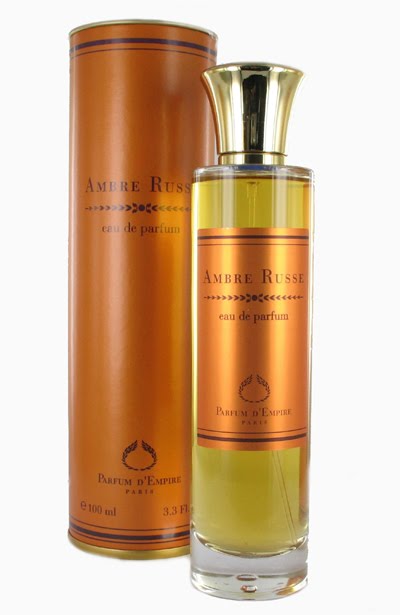
Perfume Review – Parfum d’Empire Ambre Russe: Old Mother Russia

St. Basil's Cathedral. Source: Tripthirsty.com

St. Basil’s Cathedral. Source: Tripthirsty.com

It was a cold Spring, that April in 1986, when I went behind the Iron Curtain and visited the Soviet Union. Snow still lingered in parts of Moscow and the rural countryside that my group visited. I remember the grimness of Moscow, and have crazy stories about my time there: from our Russian minders; to the bugs in the telephone at the vast hotel where we stayed (either the Hotel Ukraina or the Cosmos) in Moscow; to stomping through birch forests to use a medieval, wooden out-house; and how I was interviewed on camera in the lobby for a news piece about the recent U.S.-Russian ballistic nuclear arms treaty. They quickly yanked and cut that interview when the journalist discovered I wasn’t just some mindless, young tourist who would babble about the glories of peaceful Mother Russia. To his unmitigated horror, I answered his question by giving a concise, Cold War breakdown of the history of nuclear arms talks and treaties between the U.S. and the U.S.S.R. going back to the 1960s. His dirty looks followed me all across the giant lobby as I left….

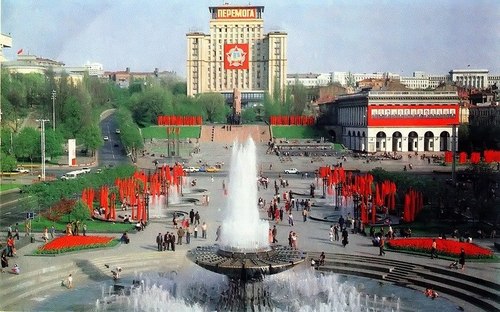
Kiev in the 1980s. Source: Englishrussia.com. For the full post on great colour photographs of Russian cities from 1968-1984, click on the photo. Link embedded within.

Kiev in the 1980s. Source: Englishrussia.com. For the full post on great colour photographs of Russian cities from 1968-1984, click on the photo. Link embedded within.

My group ended up being kicked out of the Soviet Union after someone on it was caught engaging in black market dealings and a few other transgressions. (Not me!) It was probably just as well since we were in Kiev at the time and, as I mentioned, it was April 1986. Kiev, for those of you who don’t know, is in the Ukraine, and less than an hour’s drive from Chernobyl where the worst nuclear reactor disaster in history occurred only a few days later. We would have been there, but, instead, I was back in Paris when news of the disaster hit. The prevailing winds drew most of the radioactive fall-out away from the city, but my mother was still relieved that we left earlier than planned, even if it was under less than glorious circumstances.

Source: www.ruskerealie.zcu.cz

Dormition Cathedral. Source: www.ruskerealie.zcu.cz

Though I went to the Soviet Union, I saw enough of old Russia during my time there, from the magnificent old churches to the palaces. It is always Vladimir, however, which comes instantly to mind when I think of that trip. It was one of the ancient capitals of medieval Russia, and two of its cathedrals are now World Heritage sites. The solemn grandeur of those enormous, dark, often candle-lit churches — and Dormition Cathedral, in particular — with their huge walls covered in icons, painted figures and gold is something I will never forget. It instantly took me back in time to the Russia of Rasputin and Catherine the Great.

Dormition Cathedral in Vladimir. Photo by O1e9. Source: Flickr

Dormition Cathedral in Vladimir. Photo by O1e9. Source: Flickr

In a way, so too does Ambre Russe by Marc-Antoine Corticchiato, the founder and nose behind Parfum d’Empire. Well, it takes me back to Russia, though it’s more to a tea room filled with large samovars and smoke as people lounge on velvet or leather sofas and knock back drinks over plates of sweetened fruits. But it’s certainly more than I expected. Unfortunately, the perfume was also significantly less than I expected. It didn’t live up to its wonderful opening and that trip back in time; it was too sheer, light and airy to be the true molten, luxurious, opaque marvel of Rasputin’s boozy, intense, dark, opulent Russia. However, those who prefer more lightweight, airy approaches to their booze and amber Orientals, may enjoy Ambre Russe very much indeed.   

Ambre RusseI don’t think any perfume house has better stories or descriptions to accompany their fragrances than Parfum d’Empire, and Ambre Russe is no exception:

An opulent elixir, as passionate as the Slavic soul. In this intense elixir, the opulence of the Russian Empire is conjured by the golden warmth of ambergris, intensified by vibrant spices, the smoky aroma of Russian tea and the spirituality of incense. Ambre Russe, a fragrance for impassioned souls. […]

In the flamboyant world of Ambre Russe, nothing is done in half-measures: parties are as intoxicating and sparkling as the champagne that flowed in Imperial Russia but they can end in the white brutality of an icy shot of vodka.

Ambre Russe also conjures the warmth and comfort of dachas where Russian tea, laced with cinnamon and coriander, is brewed all day long in samovars. It’s slightly smoky aroma melds with those of the birch and juniper tar rubbed into the legendary Russian leather. At last the golden facets of Ambre Russe are burnished by the incense of the Orthodox Church, before melting into a cloud of musk. And the celebration ends in mystic ecstasy. Ambre Russe: as impassioned and uncompromising as the Slavic soul.. 

I don’t know who writes Parfum d’Empire’s descriptions, but I want to meet him or her, and bow down in awe. As for the perfume notes, Luckyscent offers the following:

tea, incense, vodka, champagne, cumin, coriander, cinnamon, ambergris, vanilla, leather.

The Russian Tea Room, with an iced Russian bear & vodka display. Source: Therussiantearoomnyc.com

The Russian Tea Room, with an iced Russian bear & vodka display. Source: Therussiantearoomnyc.com

Ambre Russe opens on my skin with so much depth, complexity and nuance that I couldn’t stop sniffing my arm. The very first thing you detect is citrus note like that in really good champagne. It is light, fresh, fruity-sweet, and absolutely sparkling. It is followed by a “chaser” of vodka and spices. The alcoholic blast is accompanied by: treacly cardamom; slightly woody-citrusy coriander; endlessly spiced, rich honey, the slightly tarry aspects of the birch tree; browned, aged leather; and, finally, rich ambergris. The amber, honey and boozy sweet notes combine with the tarry, leathery undertones of the birch to create a note of tobacco. Rich, warm and just like that in fruited pipe tobacco. 

Despite those many notes, it is truly the intense booziness of the scent, combined with the plethora of spices, which dominates those opening minutes. It feels a lot like the opening to my beloved Alahine, though the latter lacks some of the leather and tobacco undertones that are here. Ambre Russe also has a significantly drier feel to it, along with a faintly bitter, smoky edge and black tea notes that truly conjure up a Russian samovar. And, as the clock ticks by, Ambre Russe becomes even drier, woodier, dustier, and smokier. Hints of cumin appear, though they never evoke curry, stale sweat, or body odour. Instead, the cumin feels much like the dry, dusty powder. Unless you are a truly extreme cumin-phobe, I wouldn’t worry; the cumin is so minute and fleeting a note in Ambre Russe that I don’t think most people would detect it, especially given the extreme booziness of the scent.

Source: Orangette.blogspot.com (Website link embedded within. Click on the photo.)

Source: Orangette.blogspot.com (Website link embedded within. Click on the photo.)

Speaking of which, the champagne note slowly turns more into that of spiced rum, accompanied by the vast amounts of dried, stewed fruit that are a large part of the perfume’s base. The fruits feel like rum-raisin and stewed prunes, but there is also a surprising amount of stewed oranges to the note, thanks to the champagne. At times, the combination feels closer to fruity champagne, while, at other times, its more like simple, rich, spiced fruit. It flickers back and forth, but the truly odd thing about it is just how damn light, airy and sheer it feels. For a perfume with such strong notes, especially in the beginning, Ambre Russe is surprisingly lightweight in feel.

Hermès saddle. Source: eBay.com

Hermès saddle. Source: eBay.com

The swirl of dusty spices and fruit sit atop a subtle leather note. It feels honeyed, aged, and rich — much like the old, burnished, and oiled leather riding saddle that I once had. There is a faint powderiness that also appears, but it is generally well hidden under the warm smoke from the incense, the equally smoky black tea, and the strong hints of pipe tobacco.

You almost feel as if you’re in an old Russian tea-room in Kiev. The ceilings are a little black from decades of smoke, old icons cover the wall, birch trees logs are tossed into the fireplace, and the bells from a medieval cathedral chime in the background. As you collapse into the comfortable, soft leather banquets, a server puts champagne flutes on the table, next to strong black tea from the Samovar that is infused with massive dollops of cinnamon-honey. Stewed fruit are the only thing to save your stomach, as you ponder the baffling question of why a tea room is filled with sacks of dry, slightly dusty spices.

About 90 minutes in, Ambre Russe turns into a cinnamon-flecked amber perfume with incense smoke. Yes, there are undertones of honey, leather, tobacco, birch, and stewed fruit but they are light and grow increasingly subtle. To be honest, after that glorious opening and particularly after the second hour, Ambre Russe settles into little more than a light, cinnamon, boozy amber on my skin, and remains that way until the very end.

It is also incredibly — and, for my personal tastes, disappointingly — sheer. As early as the thirty minute mark, Ambre Russe starts to get sheerer and softer until, midway in the fourth hour, it feels as gauzily transparent as a thin, ambered kleenex. On my skin, the overall development of Ambre Russe was fully in the mold of a Jean-Claude Ellena fragrance — and I do not mean that as a compliment. In fact, there are quite a few tonal similarities between Ambre Russe and Ambre Narguilé, especially given the boozy rum, smoke, pipe tobacco, and stewed fruit notes. But, ultimately, Ambre Russe is significantly drier, woodier, and more dustily spiced. It also does not tip-toe up to the edges of the gourmand category in the way that Ambre Narguilé does.

Sillage and longevity also differ. In the first 20 minutes, Ambre Russe had good to average sillage, but after that, it projects little and its insubstantial weight turns the perfume into a skin scent surprisingly quickly. I tried it twice and, on both occasions, Ambre Russe turned into amber kleenex on my skin before the end of 2nd hour. (Far before Ambre Narguilé did on my skin.) Thereafter, Ambre Russe remained as dry, dusty spices and smoke over the lightest possible boozy amber base. That’s truly about it. However, Amber Russe has surprisingly longevity and lasted approximately 11 hours on both occasions on my perfume-consuming skin. At the end of the day, though, I found it to be an anorexic scent with little body and overall depth in the long haul.

I realise that not everyone shares my love for opaque, thick, molten perfumes, but that isn’t the real issue here, in my opinion. It’s that Ambre Russe’s beautiful, skeletal structure is there, but without the depth, complexity and nuance of its early start. It feels like a Lite or Diet version of a true, boozy, spiced amber. That said, those who prefer lighter, sheerer ambers may find Ambre Russe to be a perfect compromise, especially in light of some of the spices. Its lack of sillage, but serious longevity, may also make it perfect for those who worry about wearing serious orientals to a conservative office-environment.

I should note that I seem to be in the minority on the issue of Ambre Russe being far too thin. Take, for example, Luca Turin‘s admiring, four-star review in Perfumes: The A-Z Guide in which he writes:

Ambre Russe is quite simply the biggest, most over-the-top, most expansive, most nutritious amber in existence. If there was a cross between pipe tobacco and pain d’épices, this would be it. To call this an oriental is like saying that Nicholas II was no genius.

Notwithstanding that incredibly amusing last line, I couldn’t disagree more on the “nutritious,” expansive nature of Ambre Russe. But then, I rarely seem to agree with His Majesty….

There is a lot of love for Ambre Russe out there, along with a few polar opposite reactions. Perhaps the funniest (and my favorite) description for the perfume comes from Patty at The Perfume Posse who writes:

This amber rolls in fueled by vodka and lust after a handful of Exstasy and Coke hit the pleasure palace center of the brain, and you settle in for the long night partying in Kiev.  As the morning light reveals the detritus of the night’s Pan-like revelry, you find yourself deep in conversation with a beautiful/handsome poet who talks about life and love as an art form, and the amber turns to beautiful glowing warmth, glad for human comfort and conversation.  If only you could find your clothes, car and dignity, this would have been a great night.

Absolutely fantastic! Another favorite comes from Fragrantica where “Espi” writes:

Wearing Ambre Russe is like sitting next to a drunk but very attractive Russian sailor in a nice and comfortable pub. The only thing I don’t really get is why he’s got spiced honey smeared all over his body! 🙂 Quite the intoxicating smell [….]

Others talk about leather armchairs, expensive cognac, cigars, and old-world, sophisticated opulence. On Luckyscent, more than a few have given descriptions similar in spirit to this one from “yonderblues” who writes about “a room lit by candles filled with ladies in brocade dresses, surrounded by chavalier in their tall leather boots, sabers slapping their thighs and the scent of tobacco trailing after them.” I personally think these descriptions would be more apt if Ambre Russe were not quite so lightweight and gauzy since that completely destroys any sense of “opulence” in my mind, but, again, I have very different standards and personal tastes.

The main objection by those who hate Ambre Russe is the booziness. On both Fragrantica and Luckyscent, the negative reviews seem to center upon the opinion that there is just too much damn alcohol and vodka in the perfume. A handful of those commentators state that they don’t drink and don’t want to smell as though they do (“I hate vodka. I don’t drink.”) which is an extremely valid consideration. I honestly don’t think the vodka is that strong, especially after the first 15 minutes, and thought the fruity champagne note was much more pronounced, but, clearly, it’s all still too much alcohol for some people. As with everything in perfumery, interpretations are subjective and depend on your personal tastes, preferences, and history. 

All in all, if the notes sound appealing to you, and if you love very dry, boozy, spiced amber Orientals, I would definitely give Ambre Russe a sniff. Those who are completely phobic about cumin — in even its mildest, most microscopic manifestions — may think that the perfume smells like “Rasputin’s armpit” (to quote one commentator at the Perfume Posse), but I don’t think most people will. It’s a very pretty spiced amber, and I think it’s extremely evocative of Old Mother Russia. 

DETAILS:
Cost & Availability: Ambre Russe is an eau de parfum and is available on Parfum d’Empire’s website where it costs €92 for a large 3.4 oz/100 ml bottle. In the U.S., you can also find it at Luckyscent which sells the smaller bottle in a 1.7 oz/50 ml size for $75 and the larger 3.4 oz bottle for $110, in addition to a sample for $3. MinNewYork sells that same small 50 ml bottle for $100. Canada’s The Perfume Shoppe sells the large 3.4 oz bottle for $110 but you should contact them for the Canadian price. (The Perfume Shoppe website always confuses me a little.) In Europe, First in Fragrance sells the large 3.4 oz bottle of Ambre Russe for €115, along with samples. In Australia, Libertine carries a few of the Parfum d’Empire line, but not Ambre Russe. For all other countries, you can find a retailer near you using the Store Locator on Parfum d’Empire’s website. To test Ambre Russe for yourself, Surrender to Chance sells samples starting at $3.49 for a 1 ml vial. Parfum d’Empire also offers two different sample sets directly from its own website. The first Mini Sample Set is for 3 fragrances of your choice in 2 ml vials for €6 or €10 (depending on your location) with free shipping, while the Full Sample Set of all 13 Parfum d’Empire fragrances also is for 2 ml vials with free shipping and costs €14 or €22 (for the EU or the rest of the world).