Arabian Oud Sehr El Kalemat

Source: Gamma Parfums, Russia.

Source: Gamma Parfums, Russia.

Some perfumes are an immediate love affair, some are immediate hate, a few can result in total apathy or boredom, but many take a few tries for you to make up your mind. Personally, I tend to know what I like or don’t like pretty much right off the bat, but, occasionally, I’ll come across a perfume where I’m ambivalent and truly undecided, no matter how many times I test it. Sehr el Kalemat from Arabian Oud is one of those fragrances.

Sehr el Kalemat is a flanker to the popular Kalemat (sometimes written as Kalamet, with an “e,” and a few other linguistic variations). I love the original Kalemat, and it is only fragrance where I’ve urged people with a specific sort of perfume taste to buy a scent blindly. One of my readers, Feral Jasmine, purchased both Kalemat and its flanker, Sehr el Kalemat, and kindly offered me a sample. The caveat: I had to write honestly what I thought about it, without worrying about her feelings. I never have a problem being blunt or candid, but, in this case, I’m truly at a bit of a loss as to what I think. I’m at the end of my fourth test of Sehr el Kalemat, and I think the most accurate description of my reaction is that I’m underwhelmed. Torn, conflicted, but generally underwhelmed.
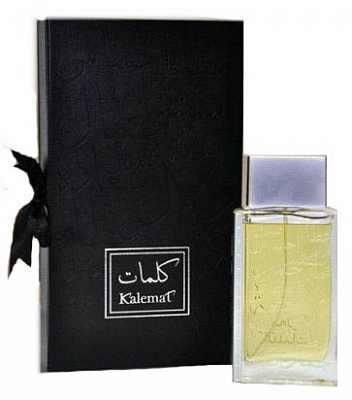
Seher KalematBefore I get to the scent itself, I have to go through the confusing issue of its name. Like many Middle Eastern fragrances, the perfume has a few alternative spellings, such as Sehr Al Kalemat (on the official, Arabian Oud website), Seher Kalemat (on eBay), or Seher Al Kalemat (on some online retailers). Some perfumistas call it Kalemat Black, perhaps because of the black box, while a few on Basenotes get confused over how Kalemat Black is actually perhaps Kalemat White because of the silver-white plates on the side. I’m going to go with Sehr el Kalemat as it is easier to type, and that is how the fragrance is spelled on Arabian Oud’s Amazon listing.

As always with anything involving Arabian Oud, it’s an utter nightmare trying to get concrete, definitive, set details on the fragrance. Arabian Oud has no description for it on its official, Middle Eastern website. Its UK one doesn’t even list the perfume! The few other retailers that do offer Sehr el Kalemat have substantial differences in the notes that they include, and completely disagree with Arabian Oud about the bottle size.
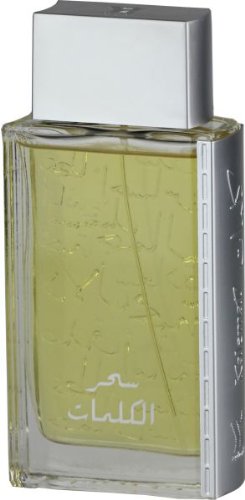
The bottle as shown on Arabian Oud's Amazon page.

The bottle as shown on Arabian Oud’s Amazon page.

According to Arabian Oud‘s Amazon listing, Sehr el Kalemat is either a 75 ml or a 100 bottle of eau de parfum with:

Top Note: Cardamom, bergamot, pink pepper Middle Note: Saffron, coriander, Bulgarian rose Base Note: Amber, vetiver and sandal 75 ml. [Emphasis added.]

However, a different page on Amazon from the same company states:

Between Patchouli flower, violet and bottom Albergmot wonderful mixed layer through a mixture of vanilla and touches of Oud eventually subside on the bottom of musk and amber luxury.

Meanwhile, a vendor site in South Africa, Fragrances Unlimited, writes what seems to be a slightly (slightly!) closer description of the fragrance that I experienced:

Following the success of the legendary perfume, Kalemat,comes Seher Al Kalemat, the name literally mean Magic of the Words, another designer outfit pairing black and silver. This new hit from Arabian Oud is an elegant fragrance recomposed around fruity aromatic facet & delicately oriental trail. Of the 3 original facets of Seher Al Kalemat (Fruity,Woody & Oreintal) the oriental one wins thanks to the Amber, musk and vanilla base note.

Top Note: Bergamot, Rose and Saffron

Heart Note: Patchouli, Sandalwood, Violets and Guaiac Wood

Base Note: Vanilla, Amber and Musk

Size: 100 ml

Type: Eau de Parfum

Between Arabian Oud’s hot mess of a website, the sizing differences, and the big variation in notes depending on site, I’m a bit frustrated, but I would say the notes that I personally detected are something more like this:

Spices, Berries, Patchouli, Rose, Saffron, Guaiac Wood, Incense-y tonalities, something almost oud-y, Vanilla, Amber,  and Musk.

As mentioned above, I’ve tested Sehr el Kalemat a few times, using different quantities and amounts. For the most part, the fragrance is exactly the same, minus some minor variations on the opening with a lesser amount (2 sprays). I’ll give you the general development with a larger application of 4 small sprays.

Source: Dailykos.com

Source: Dailykos.com

Sehr el Kalemat opens on my skin with peppered berries, saffron, and amorphous spices, though not cardamom or coriander, per se. It is followed by patchouli, honey, a dash of a rose note, and some abstract, amorphous, dry woodiness. The berry note is interesting because, to my nose, it smells identical to the blueberry purée that the original Kalemat opens with, along with the merest whiff of something verging on raspberry. I don’t know if the notes are the result of the very fruited, purple patchouli, of the “pink pepper” berries mentioned in one list, of both elements together, or something else entirely. To me, the opening smells like Kalemat’s “bilberry” or blueberry, and I’m a bit of a sucker for it. As a whole, Sehr el Kalemat’s overall, opening bouquet on my skin when smelled from afar is that of blueberries, patchouli, and saffron.
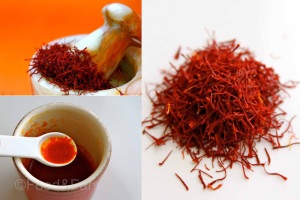
Saffron. Source: FoodandFarsi.com (Website link embedded within.)

Saffron. Source: FoodandFarsi.com (Website link embedded within.)

All the other notes are folded within that main trio. There are hints of a dry smokiness underlying Sehr el Kalemat, but it never feels like actual frankincense. The rose is extremely muted at this stage, and so is the undercurrent of honey. The woodiness can’t be teased out as something individually distinct or specific at first. At no point, however, can I detect any violet whatsoever in Sehr el Kalemat’s development, nor any bergamot, vetiver, or sandalwood (real or otherwise).

What does appear instead, especially if a very small amount of Sehr el Kalemat is applied, is cocoa and an almost cold, metallic scratchiness. While cardamom (listed in one version of the perfume’s notes) can occasionally take on a cocoa powder nuance, I’m detecting something more genuinely chocolate-y in tone. The first time I tested Sehr el Kalemat and applied only a little, the bouquet after 15 minutes was of cocoa-dusted berries with saffron, vanilla, synthetic dryness, honeyed amber, slight smoke, and a faintly oud-y wood. The cocoa was a rich, almost buttery, thick chocolate with a nutty undertone that soon mixed with a very custardy vanilla in the base. I chalk the cocoa up to the patchouli, though the latter generally tended to be more fruited in nature on my skin than the darker, earthier variation of the note. Either way, the cocoa and vanilla accord only seems to appear in the opening phase if a small amount of Sehr el Kalemat is sprayed. Now, as I repeat often, my skin amplifies base elements and sweetness, so that is perhaps the cause, as Sehr el Kalemat is not generally a super-sweet (let alone a gourmand) fragrance for most of its life.   
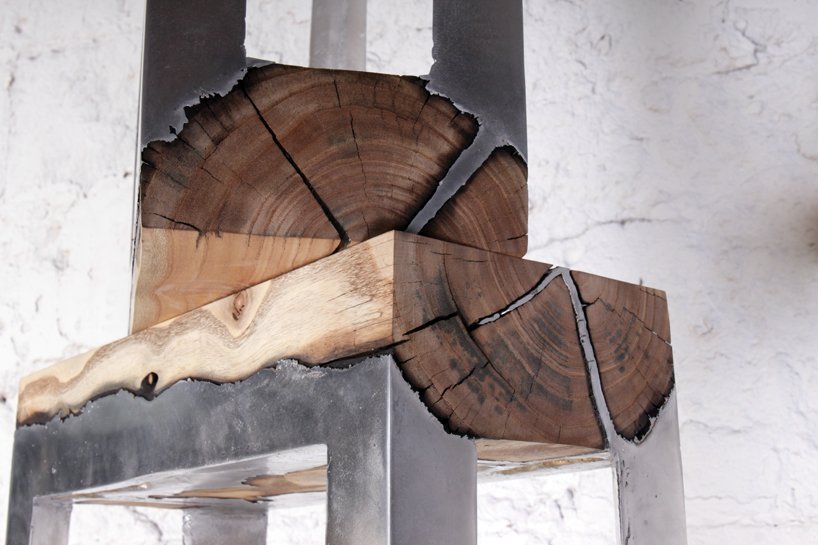
Wood and steel welding, via Wikitree and also jeanniejeannie.com.

Wood and steel welding, via Wikitree and also jeanniejeannie.com.

The scratchy, dry, dusty, almost metallic, steeliness in Sehr el Kalemat is a given, no matter how much of the fragrance I applied. It always appears about 15-20 minutes into the fragrance’s development, transitioning it from a very berried, fruity, saffron, honeyed amber scent into something that is distinctly drier, sharper, and smokier. Sehr el Kalemat has a definite smoke element, but it never feels like pure frankincense to me, and really verges more on the dusty, dry, almost sharp aroma of something burnt in the outdoors. Yet, it’s not the full-on sharp intensity of cade nor birch tar’s campfire smoke, either.
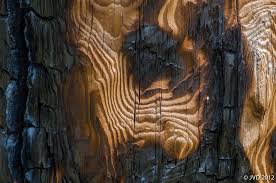
Photo: Jo Van Damme on Flickr. (Website link embedded within photo..)

Photo: Jo Van Damme on Flickr. (Website link embedded within photo..)

To me, it has the characteristics of guaiac wood: singed woods with an aroma like that of burnt leaves in a large autumnal bonfire. Something about it has a scratchy steeliness, which I realise makes no sense unless you’ve actually tried Sehr el Kalemat for yourself. The whole thing also feels rather synthetic in nature, if truth be told. It’s like guaiac wood’s dry smokiness on some sort of aromachemical steroids to make it extra arid, scratchy, and sharp.

What is disconcerting to me, and part of the reason why I’m so torn on Sehr el Kalemat, is that the steely burnt woods are simultaneously wrapped up with blueberry saffron compote, honeyed amber, and a touch of syrupy roses. It’s an oddly overwrought, jangling bouquet of opposites, as if Arabian Oud threw every contradictory thing that it had at the basic, original Kalemat structure. And yet… it grows on you. Sometimes. I think. Or perhaps not. Perhaps I’m merely oddly enraptured by blueberry-saffron-honey compote? Quite honestly, and in all candour, I don’t know what to make of it myself, or even how I feel most of the time about this very odd variation of Kalemat. Perhaps I merely like the parts of Sehr el Kalemat that resemble the original? One thing is definite though: I much prefer Kalemat to this flanker version.
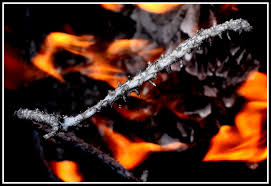
Burnt Wood, via Docmattk on Flickr. (Website link embedded within photo.)

Burnt Wood, via Docmattk on Flickr. (Website link embedded within photo.)

At the end of the first hour, the extremely dry, occasionally searing, burnt smoke vies with the fruited, saffron, patchouli, honeyed sweetness for dominance. A synthetic, sharp, but clean, oud aromachemical adds to the dusty, scratchy aridness of the top notes. The two together cut through a lot of Sehr el Kalemat’s jamminess, diffusing the sweetness. Underneath, far down in the base, there is the first real flicker of vanilla, but it too feels a little dry. 

The change in sweetness accompanies a change in sillage and weight. Initially, Sehr el Kalemat is seriously forceful and intense in projection, though very light and sheer in weight. This isn’t a dense, opaque, molten fragrance by any means, but its notes are very powerful and Sehr el Kalemat wafts a good 6 inches off the skin in its opening minutes with 4 sprays. A smaller quantity yields a smaller cloud with about a 3 inch radius. Up close, however, Sehr el Kalemat is very powerful. As time passes, that scratchy, steely, synthetic, burnt guaiac note seems to grow in prominence even more when the fragrance is sniffed up closed. After 90 minutes, however, the dry woods cut through the heavy top notes of fruited, saffron sweetness to such an extent that the fragrance feels almost thin, weak, and light in comparison to the opening.
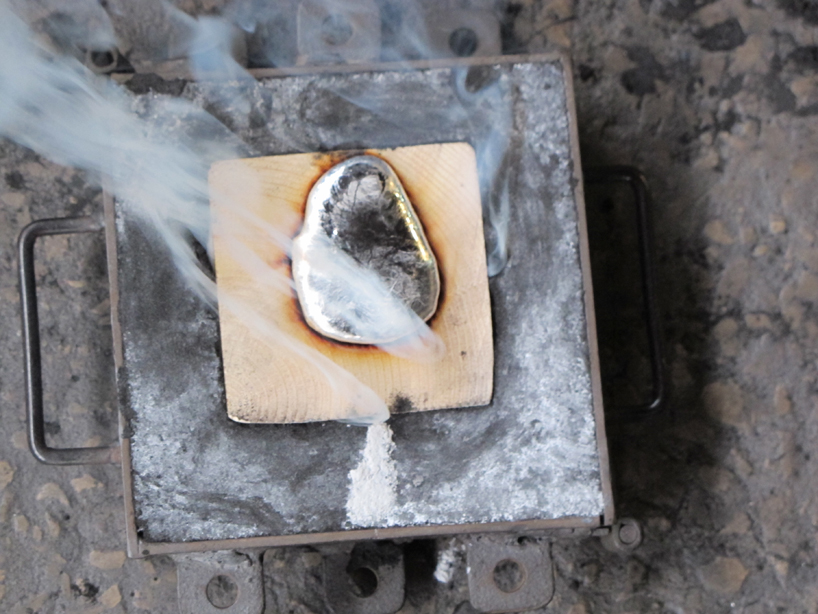
Wood and smoke casting. Source: www.jeanniejeannie.com -

Wood and smoke casting. Source: www.jeanniejeannie.com –

For the next few hours, Sehr el Kalemat doesn’t change its primary focus in any major way. The notes described above vary in prominence and strength, but the fragrance’s core essence remains as berries, burnt woods, and sharp smoke, followed closely by synthetic oud, saffron, jammy roses, honeyed amber, and a touch of vanilla. There is the faintest, tiniest dusting of amorphous spices, though it doesn’t really smell like cardamom and it definitely doesn’t smell of coriander, as one list mentioned. It’s more like a flicker of something verging on chocolate powder, but it’s extremely muted.

Amouage Interlude Man. Source: Vogue.ru

Amouage Interlude Man. Source: Vogue.ru

By the start of the fourth hour, Sehr el Kalemat smells of a super dry, smoky, somewhat oud-y, burnt woods, followed by blueberry-honey that is lightly infused with saffron and amber. It hovers right on the skin, and feels very thin.

I think the sharpness of the dry, smoky woods give Sehr el Kalemat a far greater similarity to Amouage‘s Interlude Man than the original Kalemat ever had, though I think the nature of the smoke is different. In Interlude Man, as well as in the original Kalemat, the note smells more like actual, black frankincense. In Sehr el Kalemat, it’s like burnt trees and burning leaves in an outdoor fire. The note is thinner, drier, more scratchy and sharp, and much less smooth than it is in either Interlude or Kalemat. Plus, Sehr el Kalemat has much more fruitiness than the other two fragrances. In contrast, Interlude has a green, herbal component that isn’t evident on my skin with either Arabian Oud brother. That said, in terms of how dry smoke dominates a stage of the perfume’s development, I can see some parallels between Sehr el Kalemat and the much more expensive Amouage fragrance.    

Source: middleearthadventurer.blogspot.com

Source: middleearthadventurer.blogspot.com

Sehr el Kalemat’s smokiness finally recedes at the end of the 6th hour, as the vanilla appears to soften the fragrance and return it to greater warmth. The perfume is now an abstract, dry, woody fragrance with plummy or blueberry fruits, saffron, honeyed amber, and vanilla, all in a sheer, thin gauze that coats the skin.

Increasingly, the scent turns warm and sweet, until it is merely blueberry amber with honey and vanilla. The saffron, oud, and burnt guaiac dance all around, weaving in and out in the smallest of ways, but they are increasingly hard to detect in any individual, substantial way. Once the real drydown or end-phase begins, Sehr el Kalemat is nothing more than a blurry haze of honeyed sweetness with traces of vaguely fruity, musky, and incense-like elements hovering at the edges.
Stock footage via shutterstock.

Stock footage via shutterstock.

Sehr el Kalemat’s longevity is fantastic. With four tiny squirts from the atomizer, the scent lasted just a fraction over 17.5 hours (!!!) on my perfume-consuming skin. I’ll give you a second to process that astonishing number. Yes, I didn’t quite believe it myself, and, truth be told, there were tiny, dime-sized spots on my skin that still had the faintest trace of honeyed sweetness even after that point. The sillage, in comparison, was generally moderate to low for about 13 of those hours. With a smaller dosage of two small sprays, Sehr el Kalemat’s longevity is naturally much less, but it still clocks it at over 13 hours on my nutty skin. The sillage, however, dropped to virtually nothing with that amount after 90 minutes. 

There aren’t really any in-depth, detailed reviews for Sehr el Kalemat that I can provide for comparative purposes. The Fragrantica entry for the perfume doesn’t have a single comment in it. There is a Fragrantica thread asking for additional feedback after someone fell in love with the fragrance, but the poster doesn’t describe the scent. All that they say is: “I fell in love instantly as it struck me as a hybrid between Guerlain and Amouage creations.” She hasn’t had any replies.

I did find one very succinct, brief review for the scent under the name Arabian Oud Seher Al Kalemat (aka Kalemat Black) on Notable Scents. The review reads, in part, as follows:

* Kalemat Black starts off with sweet incense grounded with dry herbs.

* The projection is powerful and massive, this one is not for the meek of heart.

* A boozy vanilla joins the top notes and the three blend together seamlessly.

* As it begins to calm down (after 3-4 hours), the vanilla dries out as the oud starts to come in.

* The base is a mild oud, nothing too gamey or aggressive.  A slightly sweet amber balances is out.

Kalemat Black is a modern-day powerhouse, lasting more than 24 hours on my skin.  Even after showering, I could still smell the base notes on my skin.  Though not office-friendly, its a really good fragrance for those who want an oud scent that is not medicinal or barnyard, but still referential to traditional Arabic perfumery.

The perfume’s Amazon page has two comments about the fragrance, but only one describes it:

Sehr el Kalemat starts out dry, austere, with something of the scent of a heated cast-iron skillet. At this stage it is very masculine. Over the next hour it evolves to a warm amber with dome fruit and spice, very different from Kalemat but equally unisex. At this point I love it on myself, so I spray an hour or so before work and let it evolve until it’s ready for the general public! But it smells good on men at every stage.

Sehr el Kalemat is slightly more expensive than the original Kalemat for American buyers. The fragrance comes in a 100 ml size (no matter what Arabian Oud may say about 75 ml on a portion of its Amazon description) and costs $89.99. Kalemat is priced in the U.S. at $59.99 price with a discount, though its retail price generally seems to be $99 worldwide.

I think Sehr el Kalemat might be a good choice for someone looking for an inexpensive, dry, woody, slightly masculine Middle Eastern fragrance that bears a microscopic similarity to Amouage’s costly Interlude Man. However, I must emphasize that I personally think the two fragrances are extremely different if you take out the smokiness issue. Interlude Man has a spectacular sandalwood drydown, for one thing, and an aggressive, sometimes difficult, pungently green, herbal start. It is also not a fragrance that I immediately think of as “fruited” or berried as one of its key, main characteristics. That element, however, is a definite part of Sehr el Kalemat on my skin. I also want to emphasize yet again that my skin amplifies base notes, and tends to increase sweeter elements in a fragrance. Those with a different skin chemistry may experience an even drier version of Sehr el Kalemat than I did, so please keep that in mind.

For me, personally, I prefer the original Kalemat. “Feral Jasmine” who sent me my sample says that Sehr el Kalemat grows on one. I can definitely see how it might, though I don’t think it will happen in my case. The things that I like about Sehr el Kalemat, I can simply get from Kalemat itself — and more of it, too. Plus, Kalemat has a lovely tobacco element that I can’t find here, the oud doesn’t smell sharply synthetic, and it doesn’t have that scratchy steeliness about the wood element. In Kalemat, it is dry cedar and frankincense, not burnt guaiac, which are at play, and that makes a difference for me personally. I think it’s also a substantially smoother fragrance that smells or feels more expensive in nature.

Ultimately though, as with everything related to perfumery, it’s a matter of personal tastes and style. I can see some men vastly preferring Sehr el Kalemat to Kalemat because of the significantly greater facade of dry, burnt smokiness, as well as the more noticeable oud element. I think most women (but not all) would have a much easier time with the original Kalemat, as it’s a warmer, more accessible, more inherently unisex fragrance. In all cases, however, if deeply dry, woody smokiness is your thing, you may want to give Sehr el Kalemat a try.  
DETAILS:
Cost & Availability: Sehr el Kalemat is available on Amazon (U.S.) for $89.99 for a bottle that is either 100 ml or “75 ml”, with a shipping cost of $16.48. (Arabian Oud combines shipment if two items are purchased, with a lesser price for shipping the second item.) I think Arabian Oud has a typo with the smaller size listed in the description of the perfume’s notes, as all other vendors have the perfume listed as being 100 ml. Outside the U.S.: Whatever the size, if you’re located outside of the United States, you can also find the fragrance on eBay. One vendor in Kuwait is currently selling the fragrance for $95, and ships worldwide. His eBay store is called Jawimall and carries a few Arabian Oud fragrances, so you are reading this review months from now, you can check to see if he has Sehr el Kalemat in stock. There is also the original, non-UK Arabian Oud website which sells it for (Saudi Riyal) 440 SAR which seems to come to a little over $117 or €85 at the current currency conversion rates. I believe they ship internationally. I don’t find the perfume listed anywhere on the UK Arabian Oud site, and I went through every section. (If you check there, you may want to immediately mute the volume on the site as it plays annoyingly repetitive music incredibly loudly.) Sehr el Kalemat is also not listed anywhere on the Zahras catalog for Arabian Oud. If you ever use the Zahra site, be warned that almost all their perfume notes and descriptions seem to be incorrect. Elsewhere, the fragrance is sold under the name Seher Al Kalemat by Kuwait’s Universal Perfumes in the 100 ml bottle for $115.99, and they ship worldwide. In South Africa, I found the fragrance sold under the same name at Fragrances Unlimited in a 100 ml bottle. Sehr el Kalemat is sold by a ton of Russian online sites, one of which is Gamma ParfumSamples: I obtained my sample from a reader of the blog. I could not find a single place that sold samples of Sehr el Kalemat, although I know The Perfume Court has a few others from the line, like the fragrance oils. However, it does not have the Sehr.

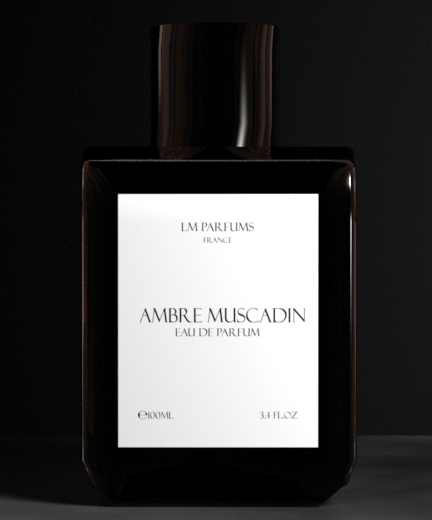
LM Parfums Ambre Muscadin

Ambre MuscadinAmbre Muscadin is an unusual fragrance for an amber. It starts off as the dryest, smoked woody fragrance with sharp animalic notes, before ending up as something quite different. Its progression actually reminds me of a horse race where the three dark, woody, smoky, animalic sprinters burst right out of the gate to lead the pack before, suddenly, everything changes. A small, golden, amber gelding and a powerful, creamy, vanilla stallion both surge ahead to tie, neck and neck, with the front-runners, before gradually overtaking them in a long haul. Midway during the race, like Secretariat or Barbaro in days gone by, the mighty vanilla stallion sweeps them all with a flourish.

Ambre Muscadin is a fragrance from LM Parfums, a French niche house founded by Laurent Mazzone. I’ve met Mr. Mazzone and he is a rather adorable man, with a passion for very classic, but bold, perfumery done with a modern twist. That philosophy is certainly visible in Ambre Muscadin, an eau de parfum (with 15% perfume oil concentration) that was released in 2011. It is unclear who was the nose who collaborated with Mr. Mazzone on the fragrance. Rumour has it that it was the late Mona di Orio, with whom I know Mr. Mazzone was quite close.

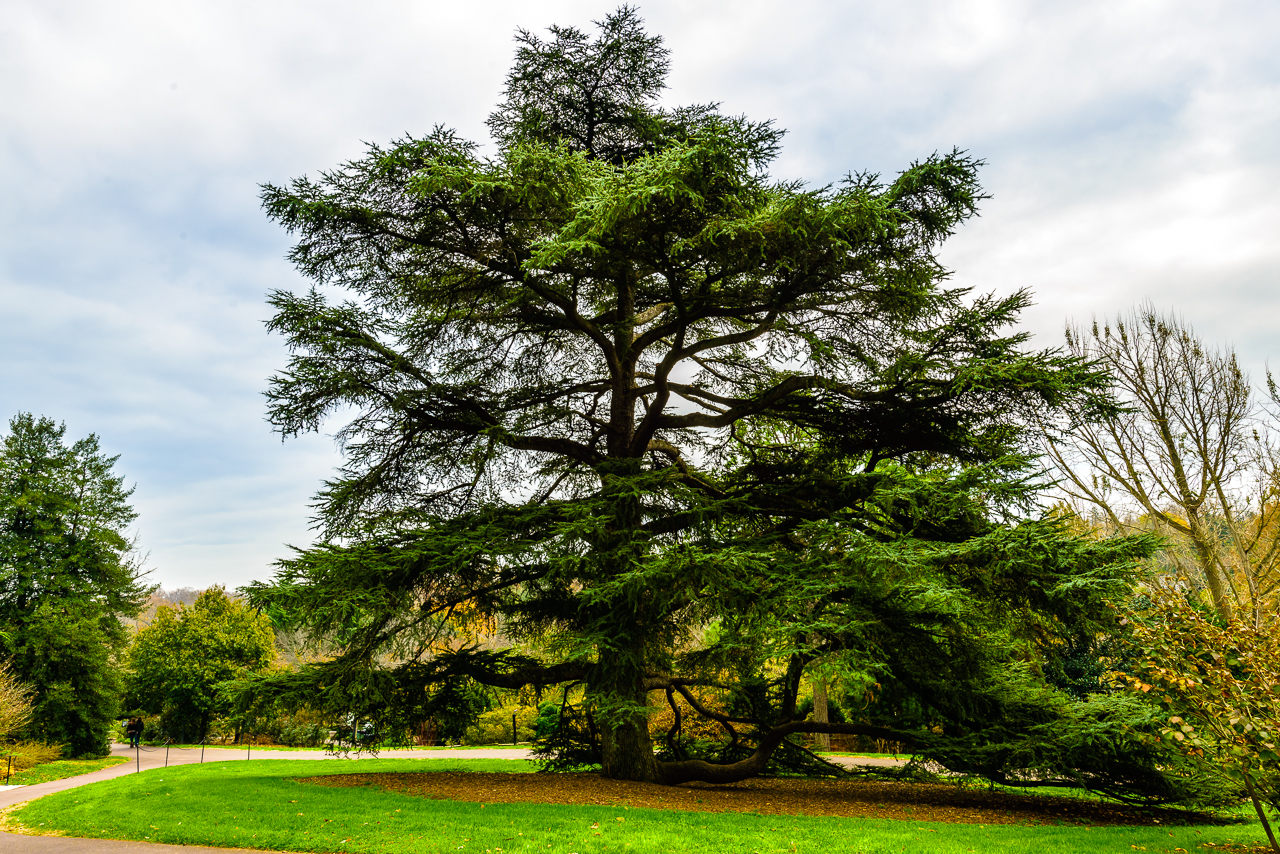
Atlas cedar. Source: sodahead.com

Atlas cedar. Source: sodahead.com

LM Parfums describes Ambre Muscadin as follows:

The opulence of the atlas cedar adorned with mystery.
A bold violet, a charmer vetyver rise up its natural elegance.
White honey, lascivious vanilla, highlights its facets flesh and velvety. Then Amber reveals its heart of a sensuous mosaic cryptic, balsamic radiates the charms of the Orient …

Top Notes: Mount Atlas cedar, vetiver java, Violet
Heart Notes: Madagascar vanilla absolute, white honey
Base Notes: Siam benzoin, amber, musk

Ambre Muscadin opens on my skin with a ferocious blast of cedar, then vetiver. The notes are all coated with the faintest sliver of vanilla, white honey, amber and a very sharp musk that veers between feeling wholly animalic and, initially, a wee bit synthetic. I must confess, I’m not a particular fan of how Ambre Muscadin begins on me, because it consistently reminds me of some murky cedar swamp, infused with mossy, peaty, smoked vetiver. Once in a while, I think of the cedar chips underlying a hamster’s cage, only this cage is also filled with vetiver, and the whole thing lies under a dome of sharp smokiness, intense dryness, and the feral, urinous whiff of a musky animal. Ambre Muscadin is a very masculine amber on my skin in these opening moments, very much a woody fragrance first and foremost, then animalic, with amber and honeyed vanilla coming in absolutely last on the list.

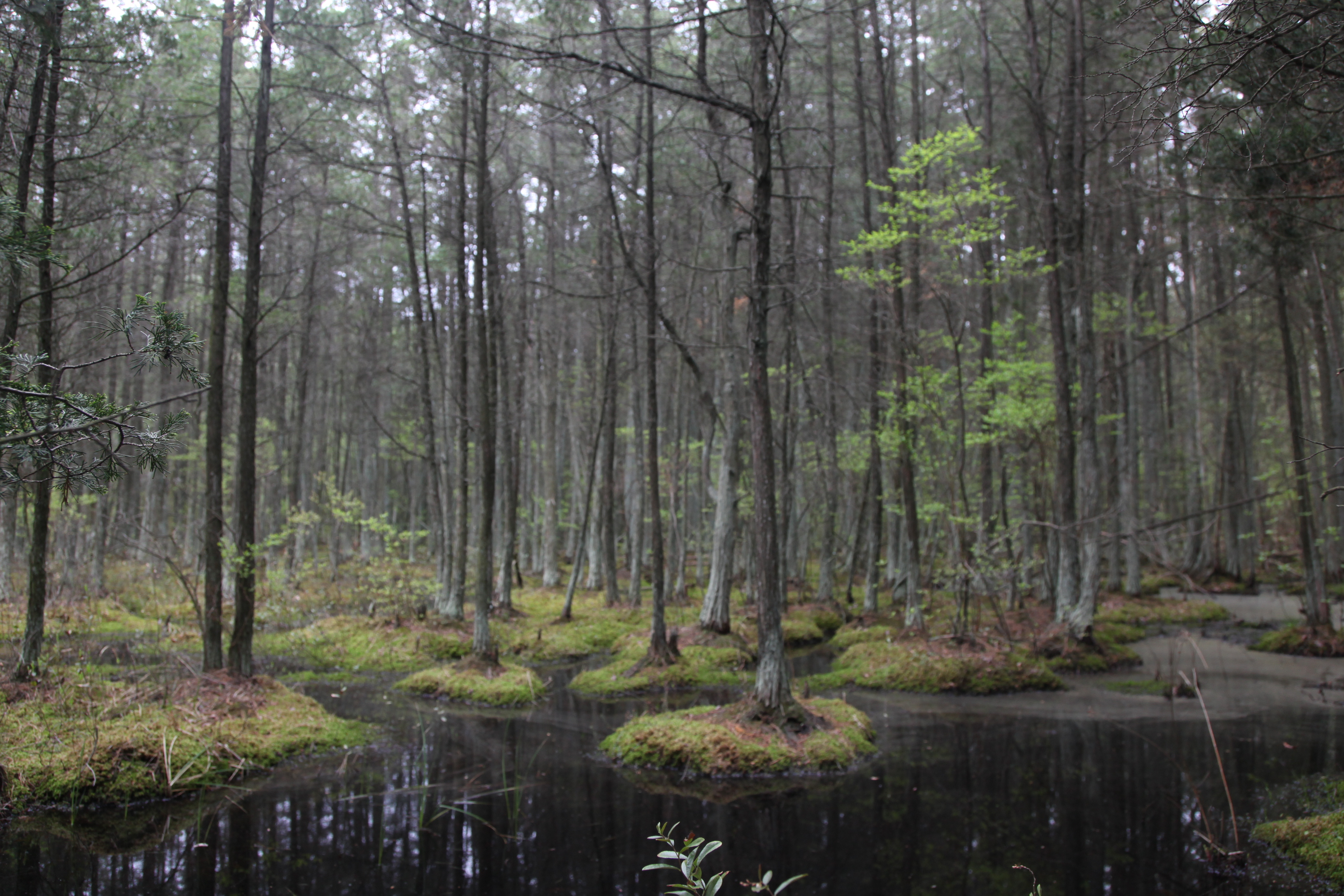
"Young Atlantic White Cedar Swamp" by Jason Howell. http://www.motivepicture.com/?attachment_id=138

“Young Atlantic White Cedar Swamp” by Jason Howell. http://www.motivepicture.com/?attachment_id=138

Five minutes in, Ambre Muscadin slowly begins to shift. The vetiver becomes as prominent as the cedar, and it smells just like the note in really expensive, single-malt Scotch. The mossy, peaty aroma has a slightly burnt nuance, however, and both woody elements merge together to create something definitely quite leathery in feel on my skin. For some odd reason, the overall bouquet sometime reminds me of a significantly less sweet, drier version of Profumum Roma‘s Arso, only with a slightly honeyed tone, sharp animalism, and very little amber. Ambre Muscadin is hardly as thick, dense, sweet or sticky, but there is something about the profoundly dominant cedar focus of both fragrances, along with their smoked sharpness, that feels distantly related. 

Civet. Source: focusingonwildlife.com

Civet. Source: focusingonwildlife.com

The impression is fleeting. The amber in Ambre Muscadin starts to rise to the surface ten minutes into the fragrance’s development. Trailing behind it is the honey which most definitely feels like the white, creamy kind. It is a light touch, never very strongly sweetened, and delicately coated with the sheerest breath of vanilla. Like horses in a race, the notes stalk the front-runners, trying to catch up and tame Ambre Muscadin’s sharpness. They don’t succeed for the next 15 minutes, as that pungently feral, almost civet-like, urinous edge fights with the cedar and vetiver for the lead. It’s not my favorite combination in the world, so it’s quite a relief when the fragrance finally starts to mellow about 20 minutes in. The cedar pipes down to a medium hum, the vetiver feels more woody than burnt, and that animalic pungency is lightly diffused by a sweet, golden warmth.

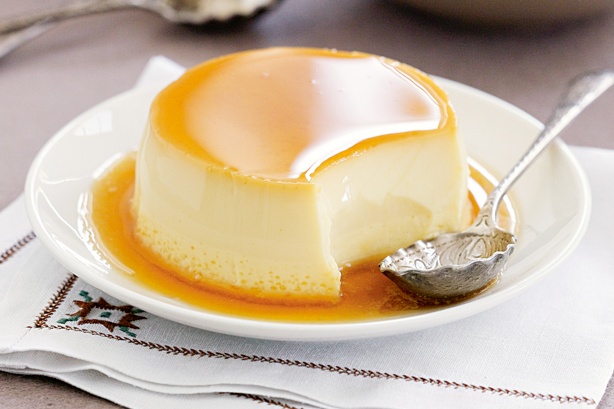
I frequently feel as though I should write the beginning of this review from the perspective of someone other than myself. I’ve sprayed Ambre Muscadin on a lot of people; at no time has it smelled quite so intensely masculine, dry, woody, or sharp on their skin from the opening burst. In fact, on almost everyone, the aroma bouquet which wafts from the first spray is of a dry, but slightly sweet, caramel flan. Women, men…. it’s always caramel flan. Actually, to be precise, it’s rather more like “sexy flan,” to quote my friend and fellow blogger, Caro of Te de Violetas. She deserves full credit for the term, since she was the first to label it as such. And, yes, lest you are curious, there is a difference between regular flan and “sexy” flan, which all comes down to the degree of sweetness or having a subtle heart of dry darkness amidst the golden hues.

Adding a dry, smoked touch to food using a chef's cloche. Photo: my own.

Adding a dry, smoked touch to food using a chef’s cloche. Photo: my own.

I end up with “sexy flan” too, but it always takes me a whole hour to even begin to reach that same point. The first step occurs around the 20-minute mark, when the flan slowly merges into the drier, woody top notes, resulting in a cedar fragrance that is still smoked, but now also softly tinged with caramel amber. It’s not a fluffy, gooey, or dessert-y amber by any means. It is light, filled with a musky, animalic edge, and flecked with creamed honey.

Then, at the end of the second hour, Ambre Muscadin finally metamorphoses into pure caramel flan that sits on a plate with a tiny sauce of dry vanilla and atop a thin layer of white honey. There are the merest lingering, smoky traces of dark cedar and vetiver at the edges. Much more noticeable, but temperamental, however, is the animalic musk which hovers around like a ghost. It rears its head from time to time behind the sweetened amber, then traipses off, before popping back in unexpectedly. The musk continues to linger as a slightly urinous, Jack-in-the-Box undercurrent before it finally gives up near the end of the fourth hour, and vanishes.

Source: taste.com.au

Source: taste.com.au

By the start of the fourth hour, I smell rather delicious, even if I do say so myself. Delicate, sheer caramel-vanilla amber coats my skin, with a subtle whisper of honey. the bouquet is still too dry and woody to be really “foodie” in nature, though. In fact, the unusual nature of the vanilla element leads me to think that the rumour may, in fact, be true, and that Mona di Orio might have created this fragrance. For one thing, she loved Bourbon Vanilla extract, but often tried to make it rather dry in nature. Something about the amber-vanilla here reminds me of her Ambre, though Ambre Muscadin thankfully never manifests that fragrance’s heavily powdered nature on my skin.

Instead, Ambre Muscadin is a sheer organza of dry, caramel-vanilla, amber flan that continues to feel smoked and somewhat woody in an abstract way. As time passes, the vanilla starts to overtake even the amber, eventually turning Ambre Muscadin into a fragrance that is primarily a dry, abstractly woody vanilla with only the mildest dusting of sweet benzoin powder. It dies away in much the same way, a full 12.75 hours from the time of the first spray.

Source: onlinefabricstore.net

Source: onlinefabricstore.net

Ambre Muscadin is very pretty in its secondary manifestation, and lasts a prodigiously long amount of time for such a sheer, airy fragrance. On my skin, it was never unctuous, heavy, thick, or very sweet. The sillage was initially moderate, despite the fragrance’s sharpness, and hovered 2-3 inches above the skin. Ambre Muscadin started to soften after the first hour, in both forcefulness, weight, and sillage. It took about four hours to turn into a skin scent on me, but the perfume clung on tenaciously despite its sheerness.

My favorite review for Ambre Muscadin comes from Caro of Te de Violetas, though I notice her detailed description sadly never mentions the utterly wonderful “sexy flan” phrase. (I absolutely love that summation, and can never think of Ambre Muscadin as anything else since the moment I heard it!) According to Caro, it is indeed Mona di Orio who is behind the fragrance. Her review also finds some thematic similarities to the late perfumer’s Ambre, and it reads, in part, as follows:

Ambre Muscadin brings instantly to mind two other fragrances that I love: Mona di Orio Ambre and Editions de Parfums Musc Ravageur. Deeper, sweeter and more intense than any of those two, it also smells less abstract.

The opening is all about cedarwood at its most opulent and resinous. For a moment, I wonder whether this should be renamed Cèdre Muscadin. A dark, velvety violet briefly peeks from underneath the coniferous greenness. Before I can even realise it, I am carried away by a whirlwind of honey, amber and vanillaAmbre Muscadin is thick and sweet but the omnipresent cedarwood note cuts through the sweetness keeping it at bay; consequently the composition never becomes cloying. The drydown is powdery and musky, slightly animalic but not excessively dirty.

There is an aura of nostalgia about Ambre Muscadin, but the result is not passé. Nothing in it smells synthetic and I find it wondefully comforting. Its tenacious vanillic embrace holds me for hours on end.

I’m not in love with Ambre Muscadin the way she is, no doubt due to the fact that I had, quite obviously, a very different experience. From the nature of the musk to our perceptions of Ambre Muscadin’s density, to the peaty vetiver in lieu of violet, my version was substantially drier, woodier, smokier, dirtier, and more pungently animalic. There was more of a modern twist on me, with little sweetness, powder, or aura of nostalgia. Yet, I very much agree with the core of her review, and I think she summed it up well. I most definitely share her feeling that the fragrance seems, at times, to be more aptly described as Cèdre Muscadin. In fact, I wrote the exact same thing in my notes. Verbatim. (That should tell you how much the cedar dominates Ambre Muscadin’s opening phase!)

Caro’s experience seems similar to that of Juraj from BL’eauOG who writes:

Ambre Muscadin … is very powdery and woody oriental. Ambre Muscadin is very soft, thick and sweet perfume with generous amber dry down. It feels like the liquid gold on the skin. Opening of Ambre Muscadin is very woody with vetiver, cedar wood and later on, the softness takes over – vanilla, violet, honey notes. Dry down is made of gold because it has beautiful, soft amber and benzoin. For the grand finale, everything is wrapped with musk.

For Lucas of Chemist in the Bottle, things were a little different. For one thing, the musk was as dominant on his skin for the opening stage as it was on mine. It was also somewhat dirty, though it doesn’t seem to have been half as animalic as my experience. His review reads, in part:

Musk plays a significant role in this perfume. It’s sensual and erotic. Not exactly clean as it has some dirtier facets bringing to mind a view of sweaty, sporty body. Amber is luminous here. Not plastic at all but more mineral, slightly marine-salty with a noticeable tones from cedar wood. Later on vanilla and benzoin amplify the amber accord adding it more depth and weight. They add a creamy and slightly gourmand feeling to the composition of Ambre Muscadin. The notes of amber, musk, honey, entwine with each other creating a harmony of aromas.

Most of the people upon whom I sprayed Ambre Muscadin had slightly different experiences from all the above-mentioned bloggers, and even myself. To my surprise, on two of the four people’s skins, the opening had very little cedar and no animalic pungency at all. On one person, Ambre Muscadin was almost entirely a dry, slightly smoky caramel-vanilla flan from the very start. On all of them, I never detected any thickness or strong sweetness. And the sillage was incredibly discrete on two of them after a mere hour, though the longevity was excellent as it usually is for all LM Parfums. 

I generally like Ambre Muscadin, but only after its sharp opening has passed. In fairness, however, the perfume seems to be a little bit of a chameleon, with the nature of that starting phase depending largely on individual skin chemistry. While I may not be swooning over the fragrance as a whole, or tempted to reach for it frequently, I do think Ambre Muscadin is well done. If you’re a huge fan of cedar perfumes, Mona di Orio’s fragrance style, and/or dry, woody, amber-vanillas, I think it’s definitely worth a test sniff.

Disclosure: My sample of Ambre Muscadin was provided by Laurent Mazzone of LM Parfums. That did not influence this review. I do not do paid reviews, my opinions are my own, and my first obligation is honesty to my readers.

DETAILS:
Cost & Availability: Ambre Muscadin is an eau de parfum that comes in a 100 ml/3.4 oz bottle. It costs $175, €125 or £125. In the U.S.: Laurent Mazzone’s fragrances are sold exclusively at OsswaldNYC. Unfortunately, none of the U.S. perfume sample sites currently offer samples of this fragrance. However, Osswald offers a special sample offer for its US customers where any 10 fragrances are available in 1 ml vials for $10, with free domestic shipping. You have to call (212) 625-3111. Outside the U.S.: In Europe, you can buy Ambre Muscadin directly from LM Parfums for €195. Samples are also available for €14, and come in a good 5 ml size. In the UK, the line is carried exclusively at Harvey Nichols which sells the Eau de Parfums for £125. In France, you can find all the LM Parfums, along with the 5 ml samples of each, at Laurent Mazzone’s own Premiere Avenue. In Paris, it’s sold at Jovoy. Germany’s First in Fragrance carries the full line and sells Ambre Muscadin for €125, in addition to samples. You can also find LM Parfums at Essenza Nobile, Italy’s Vittoria Profumi, or Alla Violetta. In the Netherlands, you can find the line at ParfuMaria. For all other countries, you can find a vendor near you from Switzerland to Belgium, Lithuania, Russia, Romania, Croatia, Azerbaijan, and more, by using the LM Parfums Partner listing. Laurent Mazzone or LM Parfums fragrances are widely available throughout Europe, and many of those sites sell samples as well. 

Phaedon Tabac Rouge, Rouge Avignon & Pure Azure

Pierre Guillaume. Source: Fragrantica

Pierre Guillaume. Source: Fragrantica

While in Paris, I had the chance to sniff fragrances from Phaedon, the Paris niche perfume house founded in 2011 by Pierre Guillaume (who also owns Parfumerie Generale and is behind Huitieme Art). The line previously had seven eau de toilettes, but, this summer, Mr. Guillaume launched seven more fragrances that are all “High Concentration Eaux de Parfums.” The new creations were all made by Pierre Guillaume in collaboration with various perfumers.

I obtained samples of three of the fragrances, thanks to the kindness of the Paris niche boutique, Sens Unique, a fantastic store which I will rave about in another post one day. The perfumes in question are: Tabac Rouge (Turkish Blend), Rouge Avignon, and Pure Azure. For reasons that will soon become clear, I’ve decided not to follow my usual course of doing a lengthy, comprehensive review for each fragrance individually. Instead, I’ll merely provide a brief synopsis and my impressions for all three perfumes in a single post.

TABAC ROUGE:

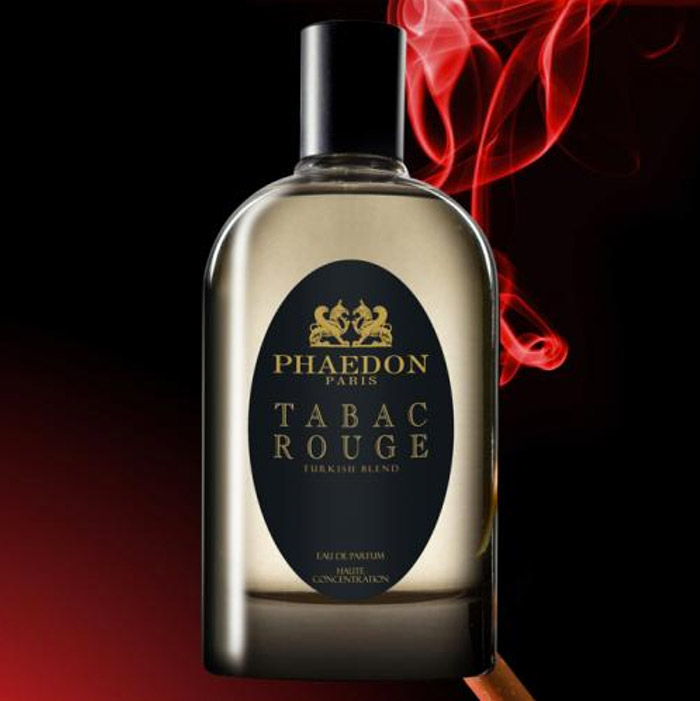
Tabac Rouge. Source: Fragrantica

Tabac Rouge. Source: Fragrantica

Phaedon describes Tabac Rouge (Turkish Blend) as follows:

Turkish Blend is a quintessentially Art Deco composition. Turkish tobacco absolute and incense make up the core accord, spare, dry and perfectly balanced. As in Tamara de Lempicka’s paintings, the “color” palette is pared-down and vibrant: ginger, cinnamon and a lick of honey. In the base notes, musks, bolstered by warm, powdery Siam benzoin, blend the scent with your skin. Androgynous, stylized and luxurious.

Fragrantica‘s list of notes, oddly enough, excludes the main ingredients in the scent which are Turkish tobacco absolute and incense. Adding those in, Tabac Rouge’s ingredients would include:

Turkish tobacco absolute, incense, ginger, cinnamon, honey, musk, powdery notes and benzoin.

Source: Basenotes

Source: Basenotes

Tabac Rouge is, in a nutshell, a simpler, slightly less forceful, lighter version of Tom Ford‘s Tobacco Vanille. The major differences to me are that the Phaedon version is fractionally less sweet than its cousin, lacks a fruited base, has weaker sillage, less density, and doesn’t quite take on the Yankee Candle Plum Pudding undertone of Tobacco Vanille.

Like Tobacco Vanille, Tabac Rouge starts with a strong blast of honeyed tobacco that is infused with incense and vanilla, and dusted with spices in a potent blend that eventually turns softer, airier, more powdered, and more vanillic in nature. The differences that exist are largely minute, and one of degree. As noted above, Tabac Rouge lacks a plum pudding undertone, but it also feels much more honeyed to me. In fact, the honey was much more pronounced on my skin than the vanilla which seemed less significant than in Tobacco Vanille. A much bigger difference is that Tabac Rouge feels much softer and lighter than the Tom Ford fragrance. It doesn’t have the latter’s dense, thick chewiness, but it does have its longevity.

In essence, it’s very sweet, it’s pretty, and it’s a much better deal than the Tom Ford fragrance at $160 for 100 ml, instead of $210 for a mere 50 ml. Nonetheless, it’s obviously treading water that’s been explored before, which is why I agree, to some extent, with Mark Behnke of CaFleureBon whose entire summation of Tabac Rouge amounted merely to this:

Tabac Rouge, travels a well-worn path of combining tobacco and incense. It is fine but it didn’t ever rise to a level of something I would be reaching for when I am in the mood for tobacco and incense. If you like these notes and want a lighter simpler take on them Tabac Rouge could fill the bill.

I like Tabac Rouge more than he did, but I too would get my incense and tobacco fix elsewhere.

ROUGE AVIGNON:

Rouge Avignon. Source: Fragrantica

Rouge Avignon. Source: Fragrantica

Phaedon describes Rouge Avignon as follows:

A Gothic composition, as opulent and dark as the shadow of the Papal Palace looming over nations and centuries… The carmine red of the papal stole is conjured with a fleshy, spicy rose facetted by ylang-ylang and raspberry. In the heart notes, waxed woods, cocoa bean, black truffle and earthy smoky vetiver lure us into the private apartments of the Supreme Pontiff. Gilt moldings and religious ornaments glint in the firelight while gray tendrils of smoke rise from a censer burning sandalwood chips mixed with musk and amber.

The succinct list of notes is:

raspberry, ylang-ylang, rose, cacao pod, hinoki wood, tuber [black truffle], vetiver, sandalwood, musk and amber.

Rouge Avignon opens on my skin with a bouquet of honeyed sweetness and delicate florals that soon turn into a fleshy, fruited, purple rose. A strong heaping of sharp, almost clean musk ensues, and deep down in the depths, there is a very noticeable dose of cocoa powder. The latter is soon overwhelmed by the syrupy, jammy rose, and doesn’t really appear again until a few hours later. I honestly don’t smell raspberry as the fruit, per se, in its own right but, instead, an amorphous, almost berry-like fruitiness.

Source: nature.desktopnexus.com -

Source: nature.desktopnexus.com –

Something about the overall combination and my skin chemistry has produced instead an accord very similar to a patchouli rose. It’s a profusion of abstract dark berries and syrupy sweetness, much like the purple patchouli I loathe so much. In fact, I’m reminded of Frederic Malle‘s Portrait of a Lady, only Rouge Avignon has a greater degree of musk that feels a little synthetic, along with extremely muted, minor hints of something dark in the base. I’m not the greatest fan of fruited, syrupy, patchouli-like roses, and I don’t like Portrait of a Lady, so I confess that I’m equally underwhelmed here.

I was surprised to see that Mark Behnke of CaFleureBon also struggled with the forceful combination. On him, the fruited element definitely seemed like raspberry in its own right, as opposed to some amorphously red-purple fruit syrup, but he still wasn’t fond of the overall effect:

I really enjoyed the foodie heart of Rouge Avignon but I must confess the strength of the rose and raspberry in the top notes took some getting used to. I think I will revisit this in the chill of the fall.

By the standards of CaFleureBon with their positive, laudatory take on everything, that simple confession speaks volumes. As for the issue of seasons, it’s almost December here, and I’d like Mr. Behnke to know that Rouge Avignon is still a painfully sweet, berried rose from start to finish.

There are only a few minor changes in the fragrance’s primary backbone and theme. After a few hours, a subtle touch of sweetened powder emerges, as does a slightly earthy, murky, brown funk with a faint undertone of cocoa. On my skin, it’s never the “foodie heart” that Mr. Behnke talks about, at least not in any dominant or substantial way. Still, there is some minor darkness deep down in the base, and that turns Rouge Avignon from a scent that begins as Portrait of a Lady into something closer to Tom Ford‘s Noir de Noir. Rouge Avignon is lighter, airier, thinner, and more synthetic in feel than both those fragrances, and it also lacks Noir de Noir’s powdered violet nuance, but the similarities struck me repeatedly nonetheless.

At the end of the day, I simply don’t find the sum-total of Rouge Avignon to be all that interesting. Actually, I grew to hate it quite intensely. The rose is painfully, almost torturously sweet for my tastes, and the perfume feels wholly unoriginal. The list of notes is fantastic, but the reality on my skin is primarily of a very fruited rose with sharp, very synthetic musk, and only a modicum of a dark, earthy heart. However, if you’re looking for something in the general vein or family of Portrait of a Lady, but much lighter and airier, then you should consider Rouge Avignon. It is a much better bargain at $160 (or €120) for a large 100 ml bottle, than Portrait of a Lady which costs $340 for that same sized bottle. The same goes for Noir de Noir which Tom Ford sells for $210 for 50 ml. Rouge Avignon has moderate sillage, turns into a skin scent after four hours, but has good longevity.

PURE AZURE:

Pure Azure. Source: CaFleureBon

Pure Azure. Source: CaFleureBon

The description and advert for Pure Azure are meant to transport you to Mykonos in summer:

This giddy balancing act of a scent carries us high above the cliffs of the Aegean Sea, where azure skies contrast with the blinding whiteness of fishermen’s villages… The fragrance of fig trees and orange blossom, the warmth of vanilla and spices, the sensuousness of jasmine rise from the shores of the Mediterranean. In the base notes, the mouth-watering warmth of tonka bean is brought out by a delicately salty note. A “Mediterranean Oriental” hovering between the radiant and the animal….

The succinct list of notes is:

fig, orange blossom, vanilla, spicy notes, jasmine, tonka bean and salt.

Orange Blossom. Photo: GardenPictures via Zuoda.net

Orange Blossom. Photo: GardenPictures via Zuoda.net

Pure Azure opens with an explosion of whiteness that is both clean and verging on the florid. There is orange blossom, tinged with hints of a more bitter, woody, spicy neroli, and then a big burst of saltiness that is truly wonderful. It’s a visual landscape of white with orange blossoms that are languid, sweet, indolic, utterly lush, and, yet, also fresh. There is spiciness and a definite sense of greenness underlying those orange blossoms, but it is the initial sprinkling of saltiness that really captured my interest.

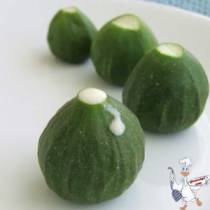
Unripe Figs via Giverecipe.com. (For recipe on Unripe Fig Jam, click on photo. Link embedded within.)

Unripe Figs via Giverecipe.com. (For recipe on Unripe Fig Jam, click on photo. Link embedded within.)

Unfortunately, it soon fades, but it is replaced by an interesting fig note. Like the orange blossoms, the fruit is simultaneously sweet, fresh, and green. There is none of the leathery darkness that figs can sometimes take on. Instead, there is an almost milky quality that evokes a slightly unripe fruit in late Spring, before the summer heat has turned it fleshy, dark, and gooey. Deep down in Pure Azure’s base, there are touches of vanilla, but it’s never custardy, heavy, or rich.

Pure Azure has a beautiful medley of notes, but what is initially so great about it is the paradoxical mix of freshness and lushness. The orange blossoms have hints of lush, heavy, indolic ripeness, but not quite. It’s as though the sweet flowers are almost green, with a dewy, light feel that truly feels fresh.

The scent is crisp (though not like a cologne), feels very summery, and most definitely meets Phaedon’s goal of recreating the Mediterranean coast. (I actually saw Capri more than an Aegean island, but let’s not quibble about lovely places where fresh flowers bloom in the warm, salty air.) The best way I can describe Pure Azure’s feel in my mind is to refer to a crisp white shirt worn against a man’s tanned skin (à la Kilian Hennessey), instead of the more common or traditional visual associated with indolic white flowers, namely, languid courtesans reclining with ripe, white flesh and heaving bosoms.

On the negative side, however, Pure Azure’s opening has an undertone of soapiness, as well as an increasingly strong blast of white, clean musk that, unfortunately, feels very synthetic. Both elements help underscore the fresh crispness of Pure Azure’s opening, but I would have been happier without the splitting headache that the musk gave me for a few hours. Despite that, I generally liked Pure Azure’s opening stage because of the green touch to the flowers and fruit.

Agave. Source: Self.com

Agave. Source: Self.com

The freshness doesn’t last long. About 75 minutes in, Pure Azure turns into a simple, honeyed floral, as the jasmine emerges and the white musk recedes to lurk underneath. The jasmine soon becomes fully integrated into the orange blossoms, and both are completely drenched in sweetness. The honey is not heavy syrup, however, but more like agave nectar which is both sweeter and lighter. Despite the lack of density, it’s very potent, transforming even that clean, laundry, white musk into something warmer.

Pure Azure soon turns rather abstract, feeling like a soft cloud of blowsy, ripe, white florals, with heavy honey, a dollop of musk, and the faintest smidgen of salt. It’s like a floral cousin to Mona di Orio‘s Eau Absolute, only lighter, airier, and without citric elements. In its final moments on my skin, Pure Azure is a nebulous smear of honeyed sweetness with just a vague hint of something floral behind it. I like honey, which my skin tends to amplify, but I have to admit, I was taken aback by how quickly and by how much it dominated Pure Azure. I know it’s probably my skin’s fault, but it was all too much for me by the end. Too linear, too simple, too boring.

Source: picsfab.com

Source: picsfab.com

At this point, I have to bring up Mark Behnke’s review again, because Pure Azure is where we part ways a little. He loved it, finding it his favorite of the new Phaedon line. I’m less enamoured. His review reads as follows:

My favorite of the new collection was a surprise to me as with a name like Pure Azure I was expecting a variation on an aquatic theme. Instead I was treated to a fantastic summer floral which appealed to me on many levels. Fig and orange blossom open Pure Azure on a bright accord. Vanilla and jasmine turn things sweeter and deeper. Tonka and a bit of a marine accord cut the sweet without making it go away. For almost the entire time I wore Pure Azure I was in the midst of a grove of fig trees, orange trees and jasmine swirling in and out of each other. I ended up wearing this on a day the thermometer hit 100 and it was perfect for that kind of heat. It wasn’t cloying or too much it was just right.

Pure Azure was significantly less interesting on my skin than on his, but I can see why he liked it so much. I smelled pretty much all of them at Sens Unique, and Pure Azure captured my interest the most at first sniff. Nonetheless, my feelings are highly qualified because I struggle with the potency of the clean, fresh synthetics, as well as with the way Pure Azure veers so sharply to the other extreme of warm, almost indolic sweetness. I also wish Pure Azure had a more complex evolution than mere honeyed florals in its later stage.

ALL IN ALL:

My problem with the new Phaedon line isn’t that many of them seem derivative, but, rather, with their extreme sweetness. Pierre Guillaume is a chap known for having a very gourmand touch with his Parfumerie Generale fragrances, and the Phaedon line doesn’t seem to be an exception. It’s simply too, too much for my personal tastes.

I also struggled with the synthetic feel to some of his fragrances. During one test for Rouge Avignon, I became completely exhausted by the deluge of syrup and roses, and tried to scrub it off. “Tried” should be the operative word here. It took me over an hour to get most of it off my skin, using everything from rubbing alcohol (3 times), nail varnish remover (2 times), soap, dishwashing liquid (2 times), and Tide laundry detergent (2 times). Even after all that, I still could smell lingering traces of that damn fruited rose on parts of my arm later that evening. Only something with definite synthetics in the base will be that impervious to cleaning agents. (As a side note, a few of the fragrances I sniffed at the store had ISO E Super, an aromachemical that Pierre Guillaume loves to use in his Parfumerie Generale line.)

The synthetics may also help explain why the line has such good longevity on my perfume-consuming skin. The Phaedon fragrances consistently lasted over 11 hours, with some tests almost approaching 13 hours, depending on quantity. The sillage was potent at first, and the fragrances very forceful, but they are all uniformly airy in feel, lack density, and turn into something that is generally quite soft. On average, it took between 4 and 4.5 hours for them to become skin scents, though they were usually easy to detect up close.

Judging by what I’ve sniffed as a whole and tested in specific, I think the Phaedon line is generally pleasant, and good value for those who want a more affordable, lighter, softer cousin to some existing fragrances on the market. They’re not my personal cup of tea, but I can see the appeal.

DETAILS:
Cost & Availability: Tabac Rouge, Rouge Avignon and Pure Azure are all eau de parfums that comes in a 3.3 oz/100 ml size and which costs $160, €120, or £95. In the U.S.: you can purchase Tabac Rouge, Rouge Avignon and Pure Azure from Luckyscent, though the first two are currently sold out and can be back-ordered for December delivery. Pure Azure is in stock. Samples of all the fragrances are generally available for purchase. Elsewhere, the Phaedon line is at NY’s Osswald Parfumerie, which also offers a US-only sample program for telephone orders. 10 samples for $10 with free domestic shipping. Outside the U.S.: You can buy all three perfumes directly from Phaedon, which also offers samples of all 14 of its fragrances (7 EDP, and 7 EDT) in a Discovery Set which costs €40 for 14 x 1.5 spray vials. The set is sold out at the time of this review. I should add that Phaedon doesn’t provide any information as to the countries they ship to, and if they limit things just to the EU. In the UK, you can buy Phaedon from London’s Bloom Parfumery which sells each Eau de Parfum for £95, along with samples. In Paris, Tabac Rouge, Phaedon and all Pierre Guillaume’s other brands are carried at Sens Unique in the Marais district. They don’t have an e-Store, but they have teamed up with DesFragrances for online orders. In Switzerland, I found Phaedon at Osswald Zurich; in Russia, I found the line at Lenoma and Lesse Parfum; in Poland at Galilu; and in Italy at Profumeria Gini. For the full list of retailers carrying the Phaedon line, you can turn to the company’s Stockist page. Samples: many of the sites linked above offer samples for purchase. I obtained mine from Sens Unique in Paris. For American readers, Surrender to Chance does not carry any of the new Phaedon Eau de Parfums at this time, so your best bet is Luckyscent.

Tom Ford Oud Fleur & Tobacco Oud (Private Blend Collection)

Tom Ford recently came out with Oud Fleur and Tobacco Oud, two new agarwood fragrances to join his original Oud Wood perfume. The latter has only been re-packaged into a new bottle to match its baby siblings and has not changed. As a result, this review will focus simply on Oud Fleur and Tobacco Oud.

OUD FLEUR:

Oud Fleur via chicprofile.com

Oud Fleur via chicprofile.com

According to CaFleureBon, Oud Fleur was created by Yann Vasnier of Givaudan who has made a number of fragrances for Tom Ford. The perfume’s notes on Fragrantica are extremely limited:

rose, patchouli, agarwood (oud), sandalwood and resins.

I tried Oud Fleur twice, and I realised mere minutes into my first test that half of the things I was scribbling on my notepad weren’t on that list. From cardamom to ginger, apricot-y osmanthus, and more, the notes I detected didn’t match up with Fragrantica’s bare bones description. So I did some digging, and I found a much more substantial list at The Moodie Report which is presumably quoting a Tom Ford Press release. It describes Oud Fleur as follows:

Private Blend Oud Fleur is composed around an oud wood core, amplified with additional woody notes: patchouli, sandalwood, incense, styrax, cistus, a leather accord, ambergris and castoreum.

The Middle East’s Damascus Rose heritage is evoked with a blend of Rose Bulgaria ORPUR, Rose Absolute Morocco and Rose Absolute Turkey ORPUR, said to combine fresh petal, nectar and stem-like scent signatures.

This floral heart is enhanced with ginger CO2, cardamom seed oil ORPUR, cinnamon bark Laos ORPUR and pimento berry. The composition is completed with a touch of Geranium Egypt ORPUR, tagette, osmanthus, davana oil and a date accord.

So, the succinct list of notes would be:

pimento, cinnamon, cardamom, ginger, three different types of rose absolutes, geranium, tagette, osmanthus, davana oil, a date accord, patchouli, sandalwood, incense, styrax, cistus [labdanum amber], a leather accord, ambergris and castoreum.

Osmanthus. Source: en.wikipedia.org

Osmanthus. Source: en.wikipedia.org

A few words about the ingredients on that list and in the Moodie press release, as they may not be familiar to everyone. “ORPUR” seems to be the name given by Givaudan, the fragrance aroma and ingredients giant, to its ultra, high-end “pure naturals.” Osmanthus is an Asian flower whose aroma can be like that of apricots, tea, and/or limpid, dewy, light florals.

Davana. Source: hermitageoils.com/davana-essential-oil

Davana. Source: hermitageoils.com/davana-essential-oil

Davana is an Indian flower whose aroma is very creamy, rich, and heady with a subtext of apricots and fruit as well. Tagette or tagete is the name of plant in the marigold family that has an odor which is “sweet, fruity and almost citrus-like.” Some sources say that, depending on type, tagette oil can be a little musky, pungent and sharp with herbaceous notes that soon turn into something very fruited, almost like green apples. As for castoreum, I’ll spare you what it is, but its aroma is animalic, very leathery and a bit sharp. On occasion, it will have a slightly civet-like urinous edge that often turns into something deeper, more rounded, sensuous, and musky. Tiny amounts are often added to non-leather fragrances to provide a plush, velvety, rich brownness in the base, and a bit of subtle “skank.” Finally, on a more familiar note, pimento is simply another name for a type of spicy red chili pepper. 

Source: impfl.com

Source: impfl.com

As always with Tom Ford fragrances, the amount you apply impacts the notes that you detect, their prominence, and their forcefulness. In addition, the potency of many Private Blend fragrances means tha it’s better starting off with a lesser amount. As a result, the first time I tried Oud Fleur, I only applied about 2 really giant smears, or about 1.5 sprays. It made the expected difference to the notes in the opening hour. Oud Fleur started with a much more creamy, mellow, soft aroma that was primarily a dewy, pale rose infused with fruited elements and strewn lightly with spices over a very creamy, sweetened wood base. Everything was creamy and soft. There was even a subtle whiff of a very creamy saffron note like an Indian rice pudding dessert lightly sprinkled with cardamom. The rose flits in and out of the top notes, while the patchouli works from the base to add a subtle touch of fruited sweetness. There was just the merest, faintest suggestion of something leathered, dark, and chewy underneath, but Oud Fleur’s main composition was of very creamy woods. 

Source: popularscreensavers.com

Source: popularscreensavers.com

It was one of my favorite parts of the perfume. With a minimal quantity, Oud Fleur’s opening stage somehow consisted of a sandalwood-like fragrance more than an oud one. It never feels like actual Mysore sandalwood, but the impression of something similar has been created through subtle augmentation via the spices and resins. It boosts what feels like a rather generic “sandalwood” base into something very much like the real thing with its spiced, slightly smoked, sweet, golden-red aroma. It’s all largely thanks to that cardamom note with the subtle saffron-like element (which probably stems from the pimento). The final result for Oud Fleur’s first hour is a fragrance that is a lovely, delicate blend of creamy woodiness with sweet, dusty spices and a subtle sprinkling of light rose petals. It’s all incredibly sheer and seems to positively evaporate from my skin within minutes.

Ginger. iStock photo via Wetpaint.com

Ginger. iStock photo via Wetpaint.com

The second time I tested Oud Fleur, however, I applied about 4 massive smears which would be the equivalent of 3 small sprays, and the perfume’s opening hour was substantially different and much more spicy. Oud Fleur began with a blast of ginger, vanilla, rose, patchouli, amorphous, vague woodiness, and a hint of slightly skanky, animalic leather. The leathery element disappeared within seconds, but the somewhat urinous, feline or civet-like edge of the castoreum hovered about for another minute before it, too, vanished. Sweet florals quickly took their place, from the ginger-infused osmanthus to the creamy davana with its fruited apricot overtones. There was a hint of light spice from the sandalwood, then heaps more from a heavy, rich dose of nutty, dry cardamom.

Source: splendidtable.org

Source: splendidtable.org

With a much bigger application, the ginger came to the foreground, but Oud Fleur’s opening hours were also heavily dominated by the pimento which was completely nonexistent during my first test. It added a fiery kick to the fragrance, feeling precisely like the sort of peppered heat of a red chili pepper. The larger application also brought significantly greater definition to the floral notes. Before, Oud Fleur was primarily a creamy wood fragrance that was initially dominated by a dewy, pale rose with some fruitedness, cardamom, and some other vaguely osmanthus-like elements. The second time, however, Oud Fleur opened mainly as fruity-floral fragrance with heavy amounts of chili and ginger, and a lot of the davana flower’s apricot-floral overtones. There was no real incense, and the woody notes were largely overwhelmed.

Damascena roseAn hour into Oud Fleur’s development, the perfume’s main bouquet is of: sharp, biting pimento; dusty, sharp ginger; creamy davana apricots; floral, apricot-y osmanthus; and a heavy burst of rose. There are slight touches of incense and oud, but little sandalwood or leather. The rose alternates between being jammy and fruited (as a result of the patchouli and other accords), and being dewy, pale, soft and fresh. It also waxes and wanes in prominence, like a small wave hitting Oud Wood’s creamy shores before retreating. On occasion, it’s also supplemented by some greenness from the geranium.

Source: taste.com.au

Source: taste.com.au

By the middle of the second hour, Oud Fleur smells like a creamy, almost custardy, almost mousse-y, airy flan infused with slightly burning spikes of chili pepper, then covered with a blanket of lightly sweetened, fruited flowers. The notes have blurred into each other, the fragrance feels increasingly soft, and hovers just an inch above the skin.

If you’ll notice, I haven’t mentioned oud or agarwood in either of my descriptions of Oud Fleur’s opening stage. There’s a reason for that. In both tests, the oud lurked completely at the fragrance’s edges, popping up like a ghost once in a while to give a little animalic “Boo” in the softest of whispers. On occasion, it took on a more musky, leathered feel (thanks to the castoreum and leather accords); at other times, it was more sweet, seeming like Indian oud instead of the Laotian kind on the list. Actually, to be honest, this doesn’t seem like real agarwood at all. It feels more synthetic than real, and it’s certainly not profoundly woody, deep, or dominant. In all cases, however, the note is really like Casper the Friendly Ghost throughout the majority of Oud Fleur’s lifespan. This is an “oud” perfume for people who actually dislike or struggle with oud. 

"Cosmic Swirls Beige" by Jeannie Atwater Jordan Allen at fineartamerica.com

“Cosmic Swirls Beige” by Jeannie Atwater &Jordan Allen at fineartamerica.com http://fineartamerica.com/featured/cosmic-swirls-beige-jeannie-atwater-jordan-allen.html

The differences in the two openings really lasts about two to three hours at most, and then the two roads of Oud Fleur merge into one. Basically, the second, more robust, spiced version of Oud Fleur takes on the soft, gauzy, creamy woodiness of the first version. It merely takes three hours, instead of just under two hours, for Oud Fleur to turn into a creamy flan-like bouquet infused with slightly fruited florals, abstract beige woodiness, the smallest flecks of oud, a tinge of incense, and some amber. Eventually, the floral elements fade away, leaving a generic, indistinct creamy woodiness with a hint of amber and some tonka vanilla. In its final moments, Oud Fleur is a nebulous smear of woods with a tinge of powdered sweetness.

Oud Fleur has decent longevity and low sillage on my skin. With 2 big smears, the perfume opened very softly, became a skin scent after about 90 minutes, and lasted a total of 7.75 hours. With 4 very big smears, Oud Fleur opened with moderate sillage that projected about 3 inches, then dropped after 2 hours to hover just an inch above the skin. It became a skin scent at the start of the 4th hour, and remained as a sheer, gauzy wisp for several more hours. All in all, it lasted just a little over 9.25 hours.

Oud wood with its "noble rot." Source: The Perfume Shrine via Dr. Robert Blanchette, University of Minnesota - forestpathology.coafes.umn.edu

Oud wood with its “noble rot.” Source: The Perfume Shrine via Dr. Robert Blanchette, University of Minnesota – forestpathology.coafes.umn.edu

I think Oud Fleur is a pretty, pleasant fragrance that has some wonderful creamy bits and can be quite lovely at times. It is more complicated than a simple, small application would lead you to believe, and veers from being sweet, sexy and feminine, to being quite cozy in an elegant manner. However, at heart, it’s really a misnamed fragrance that is more a light fruity-floral with spices and some generic woods than an actual oud fragrance. If I’m to be honest, I think Oud Fleur is very pretty, but somewhat over-priced for a fragrance that isn’t very distinctive. I also think those expecting a true agarwood perfume, or something with the heavy, woody richness of Oud Wood will be sorely disappointed. The same applies to anyone seeking a very masculine or true oud. This is not Xerjoff or Amouage territory!

On the other hand, those who liked By Kilian‘s Playing with the Devil (In The Garden of Good and Evil) would probably like Oud Fleur quite a bit. For me, Tom Ford accomplished what Kilian Hennessey failed to do, creating a fruity-floral with a bit of a fiery, spicy bite (the Devil) that turns into soft, creamy, floral woodiness (Goodness in the Garden). By the same token, women who enjoy soft fruity-florals and don’t like oud may greatly enjoy Oud Fleur. Men who are looking for a more woody twist on creamy florals with some cozy sweetness in the base may feel the same way.      

TOBACCO OUD:

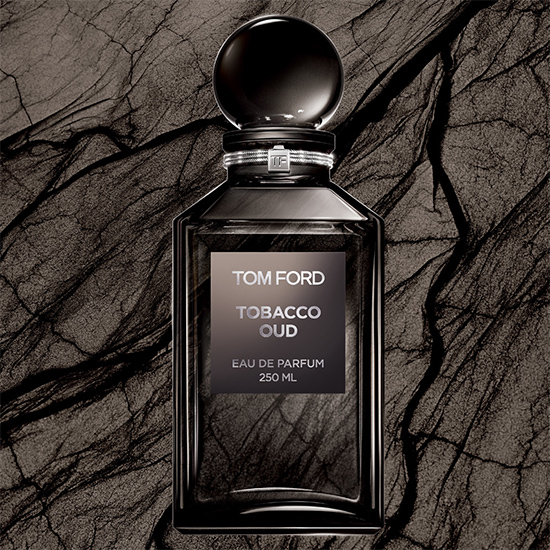
Tobacco Oud via beautyscene.net

Tobacco Oud via beautyscene.net

Tobacco Oud is a fragrance that mimicked a wide range of many existing Tom Ford fragrances on my skin. I kid you not, Tobacco Oud had parts that were extremely similar to four different Tom Ford Private Blends. In order: Amber Absolute, Tobacco Vanille, Café RoseSahara Noir, then back to Amber Absolute in the drydown. Make of that what you will when you contemplate Tobacco Oud’s originality….

According to CaFleureBon, Tobacco Oud was created by Olivier Gillotin of Givaudan who made Tobacco Vanille for Tom Ford. The Moodie Report describes the fragrance and its notes as follows:

As its name suggests, Private Blend Tobacco Oud features a tobacco accord inspired by “dokha,” a blend of herbs, flowers and spice-laden tobacco that was smoked in secret five centuries ago during a ban on smoking — and retains its allure as a widely used tobacco today.

Other key ingredients include roasted Tonka organic absolute, coumarin, sandalwood, amber, cistus oil, cistus absolute, cedarwood Atlas ORPUR, patchouli and castoreum. 

So, a succinct summary of notes would be:

A ‘Dokha’ Tobacco accord, herbs, coumarin, flowers, Tonka bean absolute, sandalwood, cistus [labdanum amber] oil, cistus [labdanum amber] absolute, oud, amber, cedarwood, patchouli, and castoreum.

Labdanum compiled into a chunk. Source: Fragrantica

Labdanum compiled into a chunk. Source: Fragrantica

Tobacco Oud opens on my skin with a burst of amber and labdanum, then hints of tobacco and oud. For those of you who may mistake the two, labdanum and amber have very different smells. As one perfume nose told me in her studio, labdanum is “real amber,” while “amber” is often the compilation of various other notes to create that overall impression. Labdanum has a very particular, completely unique aroma that is dark, slightly dirty, very nutty and toffee’d with subtle, underlying nuances of honey, beeswax, musk, and/or something a bit leathery. It is almost always a deeper, richer, denser, stronger, darker aroma that is less soft, creamy, and cuddly than regular, lighter “amber.”

All of this is key, because labdanum is really at the heart of Tobacco Oud, as well as its forbearer, the now discontinued, labdanum monster, Amber Absolute, and Amber Absolute’s extremely similar replacement, Sahara Noir. On my skin, Tobacco Oud opens exactly like Amber Absolute, with hints of Tobacco Vanille. That last part can’t be very surprising given that the same perfumer also made this new tobacco fragrance.

Source: visualparadox.com

Source: visualparadox.com

After the opening burst of labdanum, other elements emerge. Joining the tobacco in second place is patchouli, adding a subtle jamminess and additional layer of sweetness to the scent. Bringing up the rear are hints of: vanilla; a smoky, very dry, very brittle cedar; a whisper of oud; and a subtle flicker of something vaguely herbal that is too faint to really place. Tobacco Oud’s main, overall bouquet is of a nutty, dirty, dark, rich, labdanum toffee infused with a fruited pipe tobacco, a jammy sweetness, strong cedar, and a hint of vanilla. The perfume is initially rich and strong in its potency, but it’s far from being dense, opaque, or thick in feel. Actually, it feels much airier than the heavy Amber Absolute, even from the start.

Source: gawallen.piczo.com

Source: gawallen.piczo.com

Ten minutes in, other nuances appear under the top notes. There is a whiff of something floral, something almost rose-like, but it’s very minor at first. Much more noticeable is the subtle aroma of burnt beeswax, along with the merest suggestion of a darkened leather coated with honey. Both are side-effects of the labdanum. My skin tends to amplify the note, but it also makes patchouli act like a bullhorn a lot of the times, and Tobacco Oud is no exception. It takes the patchouli and runs with it, bringing out a definite syrupy, fruited, almost fruit-chouli like sweetness. Less than 30 minutes into Tobacco Oud’s development, the patchouli merges into the floral note to create a jammy rose sweetness that completely overwhelms the tobacco. I’ll be honest, I was a bit baffled, but, clearly, it’s the patchouli at play and, as usual, my skin wreaks havoc with it.

As the notes begin to blur into each other and overlap, Tobacco Oud turns into a labdanum, patchouli, and sweetened rose fragrance on my skin with only the vaguest suggestion of tobacco, oud, incense smoke, or cedar. Around the 75-minute mark, Tobacco Oud’s projection drops, the notes become even softer, and the fragrance loses most of its tobacco layer. The jamminess of the rose mixed with the dark labdanum amber creates something that, on my skin, distinctly resembles portions of Tom Ford’s Café Rose.

Tom Ford advert for Sahara Noir. Source: Fragrantica.

Tom Ford advert for Sahara Noir. Source: Fragrantica.

As regular readers will know, I’m not a fan of jammy, fruit-chouli, so it’s a huge relief when it fades by the end of the second hour and Tobacco Oud changes again. Now, it’s a gauzy, sheer, relatively dry-ish amber infused with frankincense and the merest flicker of oud. In short, the third hour opens in Sahara Noir territory, only Tobacco Oud is substantially thinner and weaker in feel. As the review linked above makes clear, I found Sahara Noir itself to be a copy of Amber Absolute, only much better balanced and less bullying, but somewhat lighter, less unctuous, without quite so much frankincense intensity, and with the new (but subtle) addition of oud.

Source: openwalls.com

Source: openwalls.com

So, really, Tobacco Oud has really returned cycled back to the beginning. The main difference is in density, thickness, projection and dryness. Tobacco Oud seems much drier than Amber Absolute, much less opaque, resinous, indulgently dense and gooey in its labdanum. It’s weaker in both weight and sillage, hovering just an inch above the skin at the middle of the third hour. To me, Tobacco Oud is actually much less smoky or incense-heavy than either Sahara Noir or Amber Absolute. Yet, it also feels dryer, probably because the labdanum isn’t such a heavy, rich layer.

Source: rexfabrics.com

Source: rexfabrics.com

Tobacco Oud continues to devolve, reflecting neither of its namesake elements in any noticeable way. Near the end of the 4th hour, it loses the remainder of its incense, turning into a scent that is primarily gauzy, wispy labdanum with a hint of nebulous woody dryness that can just vaguely, barely, be made out as “oud.” Even that goes by the end of the 6th hour. From that pointon, until Tobacco Oud’s final moments, the perfume is a mere smear of soft amber. All in all, it lasted 9.5 hours on my skin with generally low sillage after the third hour.

People’s reactions to Tobacco Oud seem highly mixed, and generally much less enthusiastic than the response to Oud Fleur. On Fragrantica, almost all the talk about Tobacco Oud centers on just how much of those two namesake notes are in the scent, and the degree of similarity it shares to Amber Absolute. A number of people find the two perfumes to be very similar in their opening stage, but dissimilar in overall development, weight, and feel. A few find zero similarity, no doubt because they experienced a heavy amount of tobacco. (Oddly, a number of those bring up Sahara Noir instead.) Obviously, the more the tobacco element manifests itself on your skin, the less you’re likely to think Tobacco Oud resembles Amber Absolute.

To give you an idea of the debate and divergence in opinion, here are some snippets from Fragrantica:

  • Tobacco and Oud you are looking for? Look elsewhere. This fragrance is very similar to Amber Absolute at the top of this, rich with resinous amber but not as rich and less patchouli than AA. This fragrance is slightly drier. This fragrance does not have the longevity and projection that Amber Absolute has. There is no Oud and very minimal tobacco. Once this dries down, it turns into an amber/sandalwood scent with very light spices. […] This is very similar to amber absolute but if you’re an amber absolute fan this would not be a suitable replacement. It definitely lacks the richness that AA has.
  • tobacco oud? this is more amber absolute with just a bit of spices. nice scent and good sillage and longevity.
  • The tobacco is the most prominent aspect of it (considerably more so than the oud), and the note is split between the herbal facets of tobacco leaves and a genuinely dirty smoke effect. The spices are surprisingly grungy for a Tom Ford, and I’m assuming that there’s some civet or some choyas playing up against the patchouli to get this effect. The oud is minimal […] This is all placed over a fairly stock amber base that’s got a vanillic edge, but is largely characterless. It’s the same thing you find at the base of the lifeless Rive d’Ambre. [¶] There’s no connection to Amber Absolute here whatsoever. None. [¶] There is, however, what appears to be a hint of benzoin that draws some parallels to Sahara Noir, but the similarity is minimal. […] As an oud fragrance, it’s lackluster, but it’s on par with the other non-oud ouds from similar brands [.]
  • it is a very simple scent with a deep onslaught of a pipe’a’riffic notion. kinda like a cherry black and mild before it is burnt. i like it but i can’t see myself smelling like this often. it’s more like a novelty item then a fragrance i would wear. however it is a quality product and for someone who is looking for a very specific item. this fits your pipe tobacco needs.
  • Oh dear, love tobacco vanille, love oud wood more. This is nasty

Personally, I was much more interested in what a close friend of mine thought, as she is a die-hard Tom Ford fan whose “holy grail” fragrance is Oud Wood, followed then by Amber Absolute. For her, Oud Wood and Amber Absolute are absolute perfection. She is the very talented, thorough, globally successful beauty blogger, Temptalia, and her review of Tobacco Oud reads, in part, as follows:

Tobacco Oud opens with a burst of smoke, spice, and almost reminds me of incense burning at an altar. It’s dry, like walking in the woods during autumn, when it’s chilly enough that fireplaces are crackling, but there’s no snow or rain yet. Or stepping into a dry sauna–it’s just a lot of smokiness and drier woods to me; I keep thinking cedarwood (which is a note). There’s amber in the background, somewhere, that’s fleeting initially, and then it settles in for a long stay. It morphs into a mix of smoke, spice, amber, labdanum, and the beginning tendrils of vanilla. Finally, it becomes a more comforting, warmer scent that smells of lightly sweetened vanilla with a soft smokiness and a wee bit of spice that lingers. Oud is here and there throughout the first few hours of wear; it’s not the star–the smokiness from tobacco is definitely more in the forefront. If you’re looking for a strong oud note, it’s not in this scent.

The discontinued Amber Absolute.

The discontinued Amber Absolute.

She too has noted how Tom Ford fragrances differ substantially in smell depending on the quantity applied, and I think her observations are useful, along with the ever-helpful comparisons to her beloved Amber Absolute:

I found Tobacco Oud’s metamorphosis was greatly influenced by the number of sprays; less than two, and it was very, very dry and lacked warmth, but three sprays gave me that warmth that I missed the first time I wore it, and that warmth made me understand some of the comparisons to Amber Absolute. With that being said, Amber Absolute is much, much heavier on the amber; it’s headier, thicker, warmer, cozier; when Amber Absolute opens, I get that resinous quality but not the smokiness that I wafts from Tobacco OudAmber Absolute is also sweeter throughout the wear, where Tobacco Oud turns slightly sweeter from the tonka bean after six to eight hours of wear. Even if the two had more similarities than differences, the most marked difference is that Amber Absolute is a monster–it has more projection, longevity, and overall, it is just more potent. Amber Absolute–one spray split between my wrists–is still a skin scent twenty-four hours after I’ve applied and taken a shower.

Tobacco Oud is standing in front of the hearth and warming your hands, a brief respite from the cool outdoors.  Amber Absolute is curling up in a luxurious blanket in your favorite chair and settling in for the night.

Due to differences in skin chemistry, the opening I experienced was much more ambered and sweet than hers, as well as with substantially less tobacco and dryness. Nonetheless, I think she’s absolutely right about the overall differences, and she’s summarized them extremely well. I also agree that Amber Absolute has far greater sillage, weight, and duration.

That said, my dear friend has what I affectionately call “unicorn skin,” because she gets longevity from all fragrances to a degree that is simply unique. I’ve never seen numbers (from anyone!) like what she regularly gets from a single, tiny, split spray of perfume. (Any perfume, any brand — doesn’t make a difference.) She’s in a whole other territory, beyond even “glue skin,” and verging on something completely epic. It fills me with the deepest envy, but it also requires me to caution you that you should not take her longevity numbers as the typical norm.

You should, however, listen to the die-hard Oud Wood and Amber Absolute fan when she tells you that Tobacco Oud won’t satisfy your oud itch, and that it won’t measure up to Oud Wood or Amber Absolute for anyone who is truly passionate about either fragrance. I couldn’t agree more. Tobacco Oud isn’t a bad perfume, but, as this discussion should make clear, it’s incredibly generic and wholly unoriginal.

In essence, Tobacco Oud is like a Greatest Hits remix of the Tom Ford line, only played at a much lower volume, and not in High-Definition or surround-sound. Unfortunately, the sum total effect is not equal to the originals by themselves. I’m truly not sure to whom Tom Ford is marketing this fragrance, especially at $210 for the smallest sized bottle. All the people who love ouds and/or tobacco scents will have infinitely better, richer, more opulent choices elsewhere — often for much less. And, for the exact same price, Tom Ford fans can always turn to his existing line-up (or to eBay for Amber Absolute). I know a ton of guys who own both Oud Wood and Amber Absolute (with a few owning Tobacco Vanille and/or Sahara Noir as well). Layer some combination of those fragrances, and you’ll get a more potent, richer, deeper Tobacco Oud. Why spend $210 for a less distinctive, ersatz copy? Do they really think Tom Ford aficionados are that stupid, or that unfamiliar with the rest of the line? The only possible explanation lies in the perfume industry cycle, and the pressures imposed by annual shareholder reports on large conglomerates like Estée Lauder (which owns Tom Ford). Because perfume originality, creativity, body, depth, and quality aren’t it.

DETAILS:
Cost & Availability: Both Oud Fleur and Tobacco Oud are eau de parfums. They come in three sizes that cost: $210, €180, or £140.00 for a 50 ml/1.7 oz bottle; $280 or £320.00 for a 100 ml/3.4 oz bottle; and $520 or €420 for a 250 ml/8.45 oz bottle. There are also accompanying bath products to go with Tom Ford’s original Oud Wood fragrance. In the U.S.: you can find the two new Oud perfumes at Nordstrom Neiman Marcus, Saks Fifth Avenue, Bloomingdales, and Luckyscent (which has just started to carry Tom Ford’s Private Blend collection). I don’t see the new Oud fragrances on the Bergdorf Goodman site, only the original Oud Wood. Outside the U.S.: In Canada, I believe Tom Ford is carried at Holt Renfrew, but they only list the old Oud Wood on their online website, not the new ones. In the UK, you can find the Oud collection at HarrodsHarvey NicholsSelfridges, or House of Fraser. All four stores sell the small 1.7 oz/50 ml size for £140.00, and the super-large 250 ml bottle for £320.00. In France, Tom Ford Private Blend fragrances are available at the Sephora in Paris, along with Premiere Avenue which sells the 50 ml bottle for €180, and the large 250 ml bottle for €420. (Scroll down the page at the link above to see the new Oud listings.) Premiere Avenue ships throughout Europe, and I believe they might ship world-wide but I’m not sure. For other all other countries, you can use the store locator on the Tom Ford website to find a retailer near you. Samples: I bought my samples of the new Oud fragrances at Surrender to Chance which sells both Oud Fleur and Tobacco Oud (as well as Oud Wood) starting at $3.99 for a 1/2 ml vial.