Perfume Review – Serge Lutens Serge Noire: Janus & The Cloven Beast

Serge Lutens describes Serge Noire as a phoenix rising from the ashes. Phoenix Rising 2Perhaps. I see it more as a cloven beast, with “cloven” referring not only to the cloves that make up such a large part of its character but also to the traditional definition of the word: split in two. To me, Serge Noire is Janus, that ancient Roman god with two faces and the god of beginnings and ends. In common, modern parlance, you might say that Serge Noire is slightly bi-polar.

A good starting point in discussing Serge Noire is the Lutens’ press release. As provided by BoisdeJasmin, it states:

The ether of ashes… A phoenix, the mythical bird of legend burns at the height of its splendour before emerging triumphant, reborn from the ashes in a choreography of flame, conjuring the shapes of yesterday in a dance of ashes. The swirls of oriental grey enrich the twilight with depth and intensity while windswept memories hint at the beauty of transformation. An ode to everlasting beauty under cover of night’s rich plumage.

The Lutens website omits the poetry, and simply says:

nothing can capture this scent’s spirit better than subtle “snapshots” from the past, like a forgotten glove lying on an antique chair.

Incense stirred by the smell of burnt wood.

The full, complete notes for Serge Noire are hard to pinpoint with any uniform, agreed-upon accuracy. The consensus on the basic elements seems to be: cloves, cinnamon, patchouli, incense and “dark woods.” However, Perfume Shrine also referenced “elemi,” a spicy, peppery and citrusy resin. Fragrantica gives the notes as: “patchouli, cinnamon, amber, woody notes, incense, clove, spices and ebony wood.” And, yet, most think that there must be some cumin in there too. I also see repeated references to grey ash, labdanum/cistus, benzoin and castoreum. (Castoreum essentially comes a beaver’s anal sacs and has been used in such famous fragrances as Shalimar, Jicky, Cuir de Russie, Antaeus, Amouage Epic and more. See, the Glossary for a full definition and more details.) I’ve even read a few comments that mention gunpowder too!

I was a bit terrified to try out Serge Noire because of the sheer forcefulness of the negative reviews. This is a fragrance that seems to engender extremely intense reviews, but the positive ones on places like Basenotes are nowhere as vehemently extreme as the negative ones. (If you’re ever bored, I suggest reading some of the comments. At the very least, they’re really amusing.) To give you an idea of some of the Basenotes comments:

  • “Sacré bleu, Serge! Why did you market this horror?”
  • “[W]hy did I buy this? just like chewing tin foil”
  • “It starts out like a punch in the face and a savage cauterizing of the ol’factory with several murderous spices. Then ATTACK OF THE CLOVES and suddenly your feet are raised high above your head as you are hoisted in the dental chair preparing for root canal treatment. This surely must be somebody’s idea of a practical joke.”
  • “Absolutely, incredibly and horribly foul. One of the most disgusting things I have ever smelled in my life.”
  • “Pure evil!”

An even more alarming review came from NST where the perfume was compared to a potpourri of ingredients whose recipe included, just in small part, the following:

  • 50 pieces of charred cassia bark (the bark should be blackened and retain only the most rancid traces of oil and odor);
  • Ten 1/8-inch slices of Swiss cheese;
  • Chain-gang T-shirt bits (with scissors, cut out and save the stained, armpit areas (bits) of 25 sweaty T-shirts that have been worn at least 10 hours on a 90-100 degree day;
  • One large box of moth balls, roasted (roast on a grill in the open air while wearing a HEPA-filter mask); and
  • 10 handfuls of singed hair (… for pre-singed locks, visit the worstsalon in your area and obtain fall-out from recently botched dye jobs, hair-straightening sessions, permanents, etc.).

Finally, pour the contents of three bottles of Angostura bitters and two bottles of grenadine into the bucket, top off with more salt, and let the mixture ‘rest’ in the (covered) bucket — in a dark and dank place — under lock and key — for at least two weeks.

To be fair, there are a lot of extremely passionate, gushing, postive reviews for Serge Noire, with its fans calling it the best Lutens fragance “in years” and with others applauding the genius of the “nose” behind its creation, the very famous Christopher Sheldrake. Some of those — like Perfume Shrine‘s review — wax so poetically, they are almost other-worldly. In fact, the latter review seemed much more like existentialist tract on philosophy and poetry than an assessment of mere perfume.

Nonetheless, I’ve found the horror outweights the poetry when it comes to reactions. There are also constant references to “BO” (body odor) and sweat which I found alarminng. But when Smelly Thoughts — a blogger who adores niche fragrances that are somewhat avant-garde or extreme — called it “hideous” just a few days ago, I really paled a little. So, it’s not surprising that I put it on with great trepidation. And I must say, I hardly find it to be “pure evil.”

I loved the opening spray of Serge Noire, but I wonder how much of my reaction stemmed from enormous relief rather than actual love. My initial notes actually read like this: “CLOVES! No sweat, thank god! Ooops… sweat.” As someone who cooks extensively, I have issues with cumin and, to me, it often evokes an impression of dirty, sweaty socks with the rancid, fetid body odor of someone who has never understood the joys of soap and water. Serge Noire definitely evoked “BO.” But, to my surprise, there was just a fleeting note of sweat in the opening salvo. Instead, I was strongly reminded of the smell of a leather saddle, slightly damp and with a touch of the horse or rider’s sweat. There was also a fascinating mix of camphor to counter the sweetness of the clove and what almost seemed like star anise. There is a faint touch of something medicinal that vaguely brings to mind Tiger’s Balm muscle rub, but it’s a sweet note as compared to the sharply metallic, cold, screechy medicinal accord in some oud fragrances. The camphor is not a surprise;Sheldrake has used it before in fragrances for Serge Lutens. Tubereuse Criminelle is perhaps the most well-known for that accord but there, the camphor mixes with a green floral scent, not with something as sweet as cloves and cinnamon.

I was so enchanted by the warmth of the cloves that I actually added another two sprays (though small in size) to my other arm. The cloves are a bit surprising in their expression on my skin; they’re not sharp but deeper, warmer and more well-rounded than I had expected. Some of the Lutens fragrances can be a bit cacophonous in their opening but Serge Lutens surprises me by being much tamer than the ferocious, hideous beast of the reviews.

I was really enjoying the fragrance thus far and it made me feel rather Christmas-y in some ways. Yet, the strongest and most constant memory that it evoked was Estée Lauder’s legendary Cinnabar, that famous 70s cousin to YSL’s Opium. The cloves in Serge Noire are, on my skin, much sharper than the more cinnamon-predominant Cinnabar, but they definitely share similarities to my mind and not solely because they are powerhouse scents centered around cinnamon and cloves. No, there is definitely a slightly retro feel to Serge Noire, though it’s a modern take on retro with the cinnamon.

On MakeupAlley, one commentator said they smelled “deadly hot pepper” but I don’t see it. Another said that she had a very strong impressed of ketchup mixed with a spicy BO scent. I definitely agree on the ketchup, but it’s a very vague, tenuous and fleeting impression, and it’s really due to the cloves and patchouli. Others reference the frankincense but to me, in the first two hours, it’s more patchouli. If it is frankincense that creates that peppery, smoky, dirty black scent, then it’s a very different type of frankincense than the one in Chanel’s Coromandel. (Reviewed here.) No, I think it’s more patchouli than frankincense, though Perfume Shrine (linked up above) seems to ascribe the peppery, spicy notes to a resin called “elemi.”

Either way, the linear nature of the fragrance in the early hours is a slight disappointment. The heart of cloves, cinnamon and camphor is just too strong of a constant thread. Yes, there is incense and patchouli, but it’s hard to separate them at times. Serge Noire is an extremely well-blended fragrance — so much so that the patchouli, cloves, cinnamon, and incense blend together in an extremely harmonious whole. I would have preferred something that morphed much more. And it does, later, change a little but not by much.

I thought Serge Noire was a very warm fragrance which is why reviews referencing its cold, “austere” nature were a little confusing at first glance. Austere? Is it the incense? Perfume Shrine’s review noted a definite and almost overwhelming impression of old, slightly dusky, byzantine Orthodox churches. That was my feeling for Chanel’s Coromandel, but not for Serge Noire. Others have said it’s the holiest of all holy incense fragrances, but I don’t agree with that either because it would seem to imply that Serge Noire is primarily an incense fragrance. I think it’s primarily a clove one. Which brings me to another point: cinnamon. There is definitely cinnamon here but it’s true presence comes later. To me, cinnamon is a much milder, softer, gentler and more feminine scent than cloves which is hot, not merely warm. It’s sharper, dirtier, sometimes slightly more acrid or astringent, but always more forceful.

Starting on the second hour, another note starts to rear its head. It’s the smell I had dreaded upon initially reading reviews for the perfume. It’s the smell of sweat and body odor. If this were a horse race, the clove chestnut that had led the pack, followed closely by the cinnamon sorrel, have now faded from the leader spot. They’re being edged out by a faint nose by the black patchouli stallion and its incense twin. However, coming up from the rear, is the sweaty horse whose saddle is slick with its earthy nature. And the dark woods all around the racetrack are starting to gently sway in the breeze, as if to participate in the events before it.

The award-winning, incredibly brilliant expert, Elena Vosnaki, at Perfume Shrine has a polar opposite impression:

Initially dry and spartan with the flinty, camphoreous aspect of gun powder comparable to Essence of John Galliano for Diptyque, ashes to ashes and snuffed out candles, Serge Noire by Lutens assaults the senses with the intense austerity of real frankincense and elemi. The impression is beautifully ascetic, hermetic, like an anchorite who has dwelled in a cave up in the rough mountains with only the stars as his companion in the darkest pitch of the night: the “noire” part is meditatively devoid of any ornamentation, eclipsing any pretence of frivolous prettification. The surprising transparency is evocative of the Japanese Kodo ritual rather than the denser cloud of Avignon. Those who are unitiated to the wonders of Lutens might coil away with trepidation and apprehension at this point, but much like the alarming mentholated overture of Tubéreuse Criminelle, this subsides eventually, although never quiting the scene completely.

And yet behind the caustic and mineral masculinity, a hopeful ascent of a feminine trail of lightly vanillic, ambery benzoin and sweet spice is slowly, imperceptibly rising after half an hour; like a subtly heaving bosom draped with Japanese garments or the curvaceous calligraphy of thick black ink on gaufre paper of ivory or creamy skin. It is then when cistus labdanum provides an erotic hint of sophisticated elegance in Serge Noire while the emergence of sweet spice, a touch of cinnamon, gives a burnished quality of black that is slowly bleeding into grey.

The ashen ballet in the flames, the swirls of oriental grey sing an ode to everlasting beauty, beauty under the cover of night’s rich plumage.

Perfume may be subjective, but there are few more respected experts in the perfume world than Elena Vosnaki, so her impressions of Serge Noire make me wonder why I’m getting such a different vibe. To my huge relief, Perfume Posse resolved my dilemma and made me realise that we’re BOTH right: “it just has a lot of facets that go in and out – dust, warmth, cool incense, woods.” It is coldly austere, but also red hot. (Actually, “red hots,” the cinnamon candies, are a big note in the perfume’s dry down.) It’s all incense (or, for Grain de musc, “a sizzling succession of resins”), or it’s dental chairs of camphor and stale body sweat.

In short, Serge Noire is a bit schizophrenic. It is simultaneously exactly like my review, and like that of the Perfume Shrine. Hot and dusty, or austere, cold and full of the greyJanus ashes of a dying fire — it is both things at once. Or, to go back to Janus, it wears two faces. Remember all that Lutens PR and the seemingly over-the-top, marketing flights of fancy? Well, I actually get it now. The phoenix rises from the dusty, cold ashes of death, reborn as a fiery, powerful, red-hot swirl of light and warmth, before Phoenix Risingflying off above the woods and into the cold night. It not only true, but it’s actually is pretty genius how the marketing so captured what seems to be a very intentional and deliberate ethos behind this perfume. So intentional that it reportedly took ten long years to create this scent’s contradictory nature, a scent that is Serge Lutens’ own personal favorite.

For all of Serge Noir’s vociferous opening, it definitely quietens down after about two hours. And four hours in, it’s very close to the skin and almost…. well, I wouldn’t say “subtle” but it’s definitely been tamed. It’s quiet amber and spice with the frankincense or patchouli just barely shimmering in the light. It’s cinnamon and resin. And sweat.

I did mention the rise of the sweat factor, didn’t I? Well, it becomes quite prominent in the dry-down, though I should emphasize again that the perfume is extremely close to the skin at this point. Still, after about five or six hours, I would catch a faint but definite smell of body odor. I’d been doing other things, forgotten about the perfume (yes, that actually is possible at this point) and, for a fleeting moment, thought to myself, “God, is that me?”

I like Serge Noire a lot more than I had expected to and, indeed, found the opening quite enchanting. But, after some reflection, that body odor element combines with a few other things to make this a bottle I wouldn’t buy. (If given to me, however, I’d certainly wear it on occasion. I think….)  It’s a fascinating fragrance and, on me, certainly wasn’t as “hideous,” “evil,” “horrific” and venomous as the critical reviews had led me to expect. If you’re a perfume junkie with a curious streak, I would definitely recommend buying a small vial for $3.99 at Surrender to Chance just to see what all the fuss is about. If you’re a fan of cinnamon and clove, I’d advise the same. And, honestly, you may really like it; there are certainly plenty of people who do. For everyone else, however — particularly those of a less inquisitive, bold or fool-hardy nature, or those who like the “fresh, clean” scents — I would recommend staying far, far away.


Details:
Cost: The perfume comes only in one formula, Parfum Haute Concentration, and can be purchased on the Serge Lutens website for $140 for a 50 ml/1.7 oz bottle. It’s also available at other retailers, like Barney’s or Luckyscent.
Sillage: Enormous at first, before fading in the second hour and then becoming close to the skin around the fourth. But, as always, this is on me and my body consumes perfume.
Longevity: Very long lasting for a Serge Lutens fragrance, in my opinion. My prior experiences have been extremely short in duration. On me, all in all, this lasted about 5.5 hours. On others, the reports are for much longer.

Reviews En Bref – Boucheron, Montale, Caron, & Annick Goutal: From Average to Terrible

In case you hadn’t noticed, I’m verbose. 😉 I can’t seem to help it and, frankly, it often exhausts me as much as it probably overwhelms (terrifies?) you. So, from time to time, I thought I would offer brief thoughts and conclusions on a wide range of colognes or perfumes. Sometimes, they will include fragrances that I plan full reviews for down the line. Other times, like now, it’s for perfumes that I don’t like and find it difficult to sum up the enthusiasm to write a full review.

BOUCHERON:
Boucheron For Men Eau de Parfum is a scent I should like, in theory. It’s a powerhouse citrus aromatic that is most definitely unisex, regardless of what’s written on the bottle. I didn’t like it. It opened with too much soapy citrus and was utterly overwhelming. I’m not easily overwhelmed and usually like powerhouse perfumes. This one is justifiably considered by some to be utterly unbearable. (For the sake of balance, others adore it. It’s definitely a very split opinion.) Boucheron became much better as it developed but not enough for me to like it. Bottom line: nothing special and somewhat nondescript in the end.


MONTALE:

I’m glad I tried Montale’s Oriental Flowers if only to prove to myself that my intense dislike for Montale scents thus far has nothing to do with oud. The two Montale oud fragrances that I’ve tried (and reviewed here) were nothing short of Chernobyl on my arm and made me desperate for a Silkwood shower. A close friend recently tried Montale’s Amber Aoud and commented: “Montale clobbers you over the head and drags you back to a cave to roast you on a rack.” So, clearly, it’s not just me. Oriental Flowers is better — but that’s not saying much. It’s sharp, screechy, and very synthetic (to me, at least). For a floriental, there is a note that suspiciously calls to mind the oud in Montale’s other fragrances.

Perhaps it’s the very synthetic lime note that keeps appearing in the Montale perfumes, even though there shouldn’t be lime in any of those that I’ve tried thus far. I think “sharp, hostile lime” is how my nose processes the extremely synthetic florals and ouds in the Montales. Regardless, I find the rose scent in Oriental Flowers to be synthetic and screechy too. Over all, the perfume gave me a headache and I wanted it off me. It wasn’t the unrelenting horror and nuclear explosion of the Montale ouds, but it was damn unpleasant. And, even worse, it simply won’t go away. There is just no escape from Montale scents, no matter how microscopic the amount.

CARON:

Perfumistas and bloggers rave about Nuit de Noel, a favorite particularly around Christmas time and a fragrance that Karl Lagerfeld allegedly sprays around his house to get him in the holiday mood. Huh. Maybe I need to try the vintage version, because I’m in the clear (and tiny) minority on this one. Consider me utterly unimpressed, though so, so desperately eager to like this one. Dammit, why don’t I?! It’s a floriental whose spice is supposed to evoke marron glacés, old-fashioned Christmases with gingerbread men, sugar and spice, baking cookies, and cozy fireplaces. Even Goth Christmases and the 1920s. The superb blog, Perfume Shrine, had an absolutely delicious review (which convinced me to buy it)  and which reads, in part, as follows:

Caron’s Nuit de Noël (1922) is a soft oriental built on an accord of rose absolu and Mousse de Saxe perfumer’s base (i.e. a ready-made accordof ingredients producing a specific effect), with the addition of 25% sandalwood, jasmine, ylang ylang, lily of the valley, vetiver, amber and iris. It’s prismatically constructed around 6-isobutylquinoline, a leathery molecule.

The fragrance emits a cozy, inviting scent poised between the starch of marrons and the bitterness of the iodine/leathery note(hence my Fernet Branca evocation) fading into musky woods. Indeed the famous “Mousse de Saxe accord” is comprised of geranium, licorice (created with anise), isobutyl quinoline (leather notes), iodine and vanillin (synthesized vanilla). If older Carons, especially in their superior vintage form, are characterised by a signature “Caronade”, a common thread that runs through them, Nuit de Noël is a good place to start this escapade into one of the most chic and historical French perfume houses.

Less incensey than similarly oriental Parfum Sacré, less abrasive or bold than straightforward leathery En Avion or Tabac BlondNuit de Noël has a sheen that starts and ends on an unwavering tawny pitch. The spiced rum-licorice notes aplified by musk (a musk comparable to that in Chanel’sNo.5 and Bois des Iles) take on a rich saturation; the fragrance dries down to a powdery warmth redolent of the bourgeois scents of a festive evening spent outdoors.

Every single one of the reviews mentions things that are right up my alley, and make me wonder about my own judgment. (Did I mention that I’m desperate to like Nuit de Noel?) Unfortunately, as I wrote to an inquiring friend yesterday, I actually regret having bought a full bottle. A small sample would have sufficed. I only get fleeting notes of a few of the things mentioned by others, if at all. Plus, there is a very surprising bit of an underlying coldness and dryness to it. Someone called it “melancholy” but in a good way; I’m not sure I would go that far. Now, again, the vintage may be very different, but the bottom line is that my version is nothing particularly special. It’s perfectly nice, nondescript and pleasant, but I don’t want “pleasant.” There are too many perfumes in the world for unenthused “pleasant.”

Montaigne by Caron is one I’m on the fence about. It’s not a perfume I reach for often and, when I do, I think to myself, “I should wear this more.” It makes me think of Cannes, mimosa flowers under a brilliant blue sky, and Van Gogh paintings. It’s a floriental and the notes are described as follows: Top notes are jasmine, coriander, bitter orange, mimose and tangerine; middle notes are narcissus and black currant; base notes are sandalwood, amber and vanille. It’s sunny, elegant, and incredibly powerful both in terms of sillage and longevity. I have no clue why I don’t like this more. Perhaps it’s going to take a lot more tries, though that didn’t work for Nuit de Noel.

ANNICK GOUTAL:

Grand Amour is a perfume I should adore, and not solely because of the incredibly romantic story behind it. It’s a perfume that Annick Goutal created in 1996 for herself as an ode to love and her husband. Lucky Scent says: “Grand Amour is the perfume that encapsulates the serene passion Annick experienced with her husband, the cellist Alain Meunier, who would bring her a bouquet of white flowers every week. A dense perfume with flowery chords, amber, and musk that speaks of love, because “love is everything.” It’s another floriental (can you see a theme in my tastes?), and according to Fragrantica: “[t]he composition is based on three accords: floral, amber, and musk. In the floral bouquet, lily, honeysuckle, and hyacinth lead the way to Turkish rose, French jasmine, and Indian mimosa, with a touch of fruity notes. Oriental accord (amber) is represented by the notes of amber, vanilla and myrrh. In the base the sensual musk united with precious rare balsams create a very long trace.”

Hmmph. If they say so. To me, Grand Amour has a painfully green opening. It is the filthy, fetid, murky green remnants of a week-old vase of flowers whose water has not been changed and started to stink. At the same time, it’s a bit powdery and soapy. After a queasy hour or two, it turns softer. But now it’s musky soap and powder, but with leather and balsam. There’s something about it that I find unpleasant. I bought it because I love hyacinth, amber and myrrh; because the rest of the notes sounded completely up my alley; and because it was reported to be one of the rare Goutals that has good longevity. Well, the longevity isn’t bad, but it’s an utter ordeal and chore to wear it. It’s hardly akin to the sheer horror that is Montale (nothing is), but it’s one of the few perfumes I own that I want to sell. Not only do I not want to have anything to do with it, but I need to have that full bottle stop staring at me so hauntingly and reproachfully.

Perfume Review – Alahine by Téo Cabanel: Ambered Moroccan Palaces & Opulence

Alahine was meant to evoke opulent oriental palaces, and it certainly succeeded in that endeavor. I see a Moroccan palace, shimmering in the heat under a turquoise sky, and surrounded by gardens of roses and ylang-ylang, lined with large silver urns billowing out smoky amber and incense.Kasbah-Tamadot_1259269939

Alahine comes from the French perfume house, Téo Cabanel, founded in 1893 in Algeria by Théodore Cabanel. Upon moving to Paris, he developed over 150 different perfume formulae and soon came to the attention of high society. He was a favorite of the Duchess of Windsor — the woman for whom King Edward VIII gave up the English throne — and she would order enormous amounts of his fragrances (Julia and Yasmina). Unfortunately, over time, the house faded away, but it was essentially reborn in 2003 under the direction of Caroline Illacqua who had a distant connection to Cabanel’s daughter. Illacqua brought in the perfumer, Jean-Francois Latty (who had created fragrances for YSL and Givenchy), and together they launched Alahine in 2007.

Latty describes Alahine as a soft amber, but it is technically a floral oriental (or floriental).  Téo Cabanel’s website lists Alahine’s notes as follows:

bergamot, ylang ylang, jasmine, Bulgarian rose, orange tree, pepper plant, Morroccan rose, iris, cistus, patchouli, benzoin, vanilla, sandalwood, and musk.

Some perfume sites have suggested other ingredients as well. Basenotes adds lavender to its list of top notes, but I’m a bit skeptical and believe it may be just how bergamot smells to some people. Luckyscent includes sandalwood as one of the base notes; that one, I can well imagine.

As the NST website noticed, Téo Cabanel claims that the perfumes contain “100% pure and natural ingredients.” Technically, that’s not really possible as musk (or civet) comes from animals and, as such, is off limits in its natural form.

In an interview with Sniffapalooza magazine, Ilacqua clarified that Téo Cabanel’s fragrances contain between 85% and 95% natural ingredients, and its amber and musk are synthetic.

For those who can’t immediately place some of the natural notes or what they smell like, here’s a brief nutshell description that may be useful later in explaining the depth and layers to Alahine. The smell of bergamot falls between orange and lemon, and is most closely associated with Earl Grey tea. It can turn a little woody and some people can occasionally smell hints of lavender lurking around. Ylang-ylang comes from a bright, banana-yellow flower and has a rich, heady, sweet, floral smell that is slightly fruity and custardy. One commentator called it “the eccentric sister to jasmine” but it’s also often compared to such flowers as tuberose, frangipani, and tiaré. Personally, I think it has a richer, fruitier and, definitely, spicier scent than any of those flowers. As a side note, the smell of ylang-ylang has long been considered to be both an aphrodisiac and soothing. Moroccan roses are a type of cabbage rose and, as such, have a sweet, honey-like scent. In contrast, Bulgarian roses belong to the damask rose category 4132690778_4a15f1c8d0which usually have a heady, richer, darker element to them. (To my nose, at least.) Benzoin is a type of resin and, as such, evokes the scent of amber. Depending on the type of resin, it can be both sweet and smoky, or just incense-y and slightly woody. “Cistus” really refers to Labdanum. The small cistus shrub is native to the Mediterranean and Middle East, and the distillation of its leaves produces a dry resinous, faintly woody smell that is called labdanum in perfume. Essentially, labdanum is another resin like amber, but it has more of a masculine toughness to amber’s sweetness. Labdanum can be dirty, animalic and almost reminiscent of sex at times, while other compositions can bring out a more leather-like smell.

The real reason that I took this detour into the notes is because the complexity of Alahine required me to take a refresher! The perfume is so expertly blended, and the scents fold so well into each other, that at times I struggled to figure out what ingredient was responsible for what! It was almost too much at times for me to distinguish what was going on. And a big part of that problem stemmed initially from a very big mistake I made: I sprayed on too much!

Do you want to know how much is “too much” for Alahine? Well, three spritzes where I just barely depressed the plunger! Three small spritzes of Alahine sent my nose into a tailspin because this is one seriously powerful perfume! I had to wait for the smell to fade on one arm before I could try again a few hours later with it on the other. This time, I gingerly and fearfully used one tiny spray, resulting in a few droplets. (And I never use one tiny spray! Ever. I always use 3 good spritzes spread out all along my arm and I do so for every perfume when testing it out, given how my body consumes perfume.) But trying Alahine in a small amount let me have a much better understanding of the notes. (Did I mention that this is powerful?!)

Alahine opens with a trumpeting blast of booziness, bergamot, orange, and what definitely smells like peach. After re-reading the definitions of some of the notes, I realise the peach (and some other lingering faintly fruity smells) have to be the ylang-ylang, though none of the ylang-ylang I’ve smelled (and loved) in the past ever evoked such a smell. In my first go round, I smelled such a sharply intense, screeching smell of smoky incense and black pepper that I was convinced there had to be frankincense in there as well. (There isn’t, but that is apparently what happens when you spray too much Alahine on your first try and sniff. It totally blows out your nose.)

In those opening minutes, the citrus and ylang-ylang fruits are joined by what smells like cloves, cinnamon and a fainty soapy muskiness. There is almost a medicinal note from the cloves, but also a heavy, (heavy!), thick viscous, gooey, treacly element that has to be the amber! It’s heavy and black enough at this stageA13-11-2010-22.01.49_0105 that I wonder if perhaps I’m really smelling the patchouli? It’s hard to know at this stage, but if that is really just the amber, colour me impressed.

Ten minutes in, the heady smell of roses and iris appears, followed a bit later by the jasmine. Alahine is softer now, less shrill, gentled perhaps due to the powder notes that are also there. And yet, there is also definite black pepper behind it all, pepper that is biting, faintly woody, almost balsam-like. I suspect this is from the pepper plant they used. And I still smell peach!

As Alahine develops over time, it turns more into a predominantly amber-y scent, combined with the rose, musk and powder. But this is like few amber fragrances that I have come across. There is a distinctly boozy nature to the element that brought to M1mind very aged bourbon and rum, almost cognac-brown in their richness and sweet thickness. (I wonder if it’s the labdanum that is responsible?)

I’m not the only one who thought of alcohol. The blog Perfume-Smellin Things noted: “[t]he intense, almost liqueur-like center of this perfume’s universe is Bulgarian and Moroccan rose essence of high quality that gives it a rounded and almost fruity quality overall.” She attributes it to the rose notes but I have to wonder. It seems more an attribute of the various resins at play here, particularly as the boozy accord is accompanied by perpetual smoky, incense-y notes with an almost bitter-chocolate earthiness. (Now, that’s definitely the labdanum!)

I should admit that I didn’t completely understand the enormous fuss over Alahine on my first try. (I’m going to blame that on using too much – illogical as it may be.) It was absolutely lovely, yes, but the incredible raves and almost crazed gushing?? I couldn’t see it. But my second try showed its real beauty. And that is something that has happened to others, too. The chap at the Nathan Branch blog was initially unimpressed, but repeated pleas from perfumistas he respects made him give it another shot:

At first, nothing struck me as extraordinary. The pieces all functioned properly, the mix was good, the scent pleasant, but I didn’t get a particularly noteworthy vibe. I’ve learned, however, that first impressions can be deceiving, which was the case with Alahine. What seemed initially a little lazy or derivative of its betters became much more than that with repeated wearings.

But after more than one wearing, his reaction was, “Yowza! How did I miss all this?” Perfume Posse said something similar:

I was charmed by Alahine´s transformation. It starts out with a ladylike floral note, a generalized citrus/jasmine/ylang, very classic and expensive smelling. […] From there Alahine only gets better as the pepper, iris and the naughty bits start to bloom, but it’s sexy in a subtle way, the woman in the corner of the room who catches your eye, and suddenly compared to her quiet chic everyone else looks a bit overdone.

[Update 4/14 — I have to add to this review because, in the 18 months since I wrote this review, I have noticed the same pattern mentioned by Nathan Branch and others happening again and again with readers who have tried Alahine on my recommendation. It’s happened so often that I wanted to raise the issue directly, and not just in the comment section where this is frequently discussed. It consistently seems to take 4 tries for people to fall for Alahine. I’ve actually lost track at this point of the number of people who were wholly unimpressed at first, only to subsequently become utterly obsessed. That includes men, as well as those who normally can’t stand fragrances with roses.

I’ve concluded that Alahine seems to involve some form of Stockholm Syndrome. It may also help to go easy on the application at first, since the intensity of the boozy spicebomb can be quite overwhelming if you spray with reckless abandon. But what matters most of all for Alahine is a little patience. You really need to try it four times before it suddenly seems to transform before your eyes into the most intoxicating brew you’ve encountered.]

So, what really is Alahine, beyond just a changeling? NST‘s review (linked up above) described Alahine, in part, as “ylang-ylang crème brulée lightened with rose and dusted with powder.” I think that is true, but far from the whole story. For me, Alahine is far more than the scent they describe:

Alahine is an oriental treatment of ylang ylang. Alahine takes the flower’s cold cream-like scent and spins it with amber, sandalwood, and vanilla. The result is a ylang ylang crème brûlée lightened with rose and dusted with powder. It’s warm, thick, sweet, and feminine — comforting without being maternal. Its sillage is moderate, and its lasting power is excellent.

Alahine isn’t edgy or surprising, but in some ways that’s an asset. Think of it as the camel coat fashion magazines are touting as a major trend for this fall. People have been wearing camel coats for a good long time, and they’ve always been appropriate and sometimes even stylish, even if they’re only sporadically fashionable. Alahine is like that. You’re always correct (and warm) in Alahine.

One of my disagreements with that summation is that it omits the incredibly smoky, boozy, incense-y, viscous nature of the perfume. Basically, Alahine is far too intense and powerful to be a mild camel coat — no matter how chic or expensive it may be.  And “comforting”? Please! I think it’s too seductive to be comforting (let alone maternal!). This is a fragrance to wear with a black dress. Not a revealing, little black dress, but a tailored one that is cut tantalisingly low, or perhaps with a very long slit up the side. Or it’s a fragrance to wear with a slinky, slightly revealing cashmere sweater over a short black skirt, with opulent jewelry and sky-high stilettos. (I have no idea what men feel is their ideal elegantly sexy attire when seeking to subtly and quietly seduce, so I will leave that up to my male readers to determine.) Alahine is not about the full-on reveal and Bada-boom, but about the most sophisticated, elegant seduction. It’s the scent of a Bond girl — but one of the quiet ones who lures James Bond into her web.  Camel coats…. bah!

I also disagree with NST’s assessment of its sillage. My body consumes perfume and this one well-nigh consumed me at first! (Did I mention those first 3 sprays were small?!) Yes, Alahine does become close to the skin…. but 6 hours later! (On me!) And the longevity? I can still smell it almost 12 hours later. On someone else, I suspect this perfume could easily go 16 hours or more. In fact, depending on amount used, a full 24 hours wouldn’t shock me at all.

One area where I actually do agree with NST is the issue of edginess. This is not an edgy perfume, particularly not in that occasionally disturbing, disorienting, or intentionally different way that some niche scents can be. There are some very classique elements to Alahine’s elegance and opulence. I’ve read some comparisons to the legendary Bal à Versailles; and the minute I saw them, I thought, “Ah, yes. They have a point.” This is like Bal à Versailles, but it’s much less soapy and powdery than my memories of BaV. Alahine is more resinous, spicy, smoky, fruity (the ylang-ylang) and incense-y. Other comparisons have been to Parfum d’Empire‘s Ambre Russe, though that is supposed to be boozier and more intense. I don’t have it (yet) to be able to assess that claim.

Alahine is marketed as a perfume for women but it is absolutely unisex, in my opinion. From the opening bergamot notes to the thick, resinous amber, patchouli, incense and faintly woody base, this is a scent that I think would be very sexy on a man. (And, according to his blog, Nathan Branch’s boyfriend thought so too.) I also have quite a number of male friends who wear Alahine, and don’t think it’s “feminine” at all.

For me, this is a perfume that I would well consider buying as a full bottle. In all honesty, if I could, I would do so right now. This minute. There is just something about Alahine that makes me feel happy and sunny. I think it’s too opulent to be “cozy” and “comfy,” but it makes me feel like purring. It brings to mind visions of Morocco, turquoise and roses, smoke and mirrors, spice and life. Try it. You’ll see.

[IMPORTANT UPDATE March 2017: This fragrance has been reformulated, and very badly at that, too, in my opinion. I bought a back-up bottle which smelled completely different. The roses were clearly synthetic, and smelled like very cheap, low quality versions to my nose with a very shrill and thin character. In addition, there was now a massive amount of very synthetic cedar front and center, and it, too, was very shrill. Finally, the jasmine, spice, and amber levels were completely altered and slashed. To make certain that the changes were not limited to my new bottle, I later purchased a cheap set of 15 manufacturer samples on eBay, and they all had the exact same, new, reformulated composition, so it is clearly not an anomalous situation. The changes are so immense, in my opinion, the scent is so different from the original one talked about in this review (in Alahine’s original bottle design), and the new reformulated version is so unpleasant to my nose that I refuse to wear it and have given away my new second bottle. I don’t know when precisely and exactly the changes took place, because companies never give official statements admitting reformulation, but I would advise caution before buying the current Alahine. Test it first to see if it suits your tastes.]

DETAILS:
General Cost & Discount Prices: Alahine comes in Eau de Parfum form (which is what I reviewed), but also in Extrait de Parfum. For the EDP, it costs $130 or €95 for 1.7 oz/50 ml as of 11/12/2013. The price for the larger size used to be $145 for 3.3 oz, but I’m not sure as to is current cost as of this November 2013 date. The parfum extract version was $220 for 0.5 oz/15 ml, but it may have increased from the original time this review was posted. However, Alahine is also available at huge discounts from a variety of online retailers: LilyDirect sells a large 3.4 oz bottle for $82, and they are a very reliable, reputable perfume retailer. EvePerfumeStore sells it for $102. Small 1.7 oz bottles can be found on eBay for about $50, while large 3.4 oz bottles are easily found for around $70 (instead of about $145).
U.S. Vendors: Luckyscent now carries the whole Teo Cabanel line. It sells Alahine for $130 for a 50 ml bottle. You’d do better to order the large 100 ml bottle for $82 from LilyDirect. The Posh Peasant also carries Alahine, but the bottles sell out quickly so you will have to check.
Teo Cabanel: The Teo Cabanel website (in English and French) also has a separate e-shop boutique. They show a list of retailers who carry their products by country, so whether you live in the Netherlands or say, Japan, you should be able to find someone who sells their perfume. I don’t know their shipping prices, however, and I could not find any information on it.) Prices are €95 and €120, depending on the size of the bottle. A 7-Piece Sample Set is also sold of the complete range for €8.5.
Overseas: In London, you can find Alahine at Bloom Perfumery which sells Alahine in two sizes: 50 ml/1.7 oz for £89.00, and 100 ml/3.4 oz for £113.00, along with a 2 oz sample vial for £2.00. Elsewhere in London, I’ve read that Téo Cabanel is carried at Fortnum & Mason’s, but I don’t see it shown online. Liberty’s states that Téo Cabanel fragrances are available only in their actual store. As a whole, for European readers, I saw it online at Parfums MDP (which I think is in the UK?) for the same €82 and €101 price as the company’s website. They say that there is “free worldwide postage” which I find to be stunning (and hard to believe)! For Canada, the Cabanel’s website lists Fritsch Fragrances as a vendor but I cannot find a website for the store. Elsewhere, I’ve also that Teo Cabanel perfumes are available at: Galeries Lafayette, Douglas (France, Lithuania, Russia), Kadewe Berlin, Oberpollinger Munich, and Albrecht in Frankfurt. In Australia, I saw the large 100 ml/3.4 oz bottle of Oha on GetPrice for AUD$109.65. For all other countries, you can try to use the company’s Retailers guide on their website.
Samples: Samples are available at Luckyscent for $4 for a 0.7 ml vial. Surrender to Chance sells Alahine starting at $3.99 for 1 ml vial, and going up in size to 15 ml/0.50 oz for  $51.87. Shipping costs around $2.95 within the U.S. (no matter how small or large the order), and approximately $12.75 for overseas.

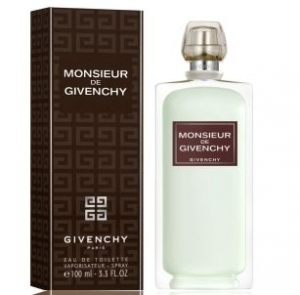
Perfume Review – Monsieur de Givenchy by Givenchy: Vintage vs. Modern

I like to wear men’s colognes. I admit that quite proudly. In fact, the modern commercial trend towards generic sugar bombs and gourmands has made me resort more and more to men’s cologne of late. So, from time to time, I will post brief reviews or impressions of ones I enjoy. One of them, deeply ingrained in the memories of my childhood, is the 1959 classic, Monsieur de Givenchy (which I’ll just call “Vintage” or “MdG-V” from now on) by nd.1968Givenchy. My father used to wear it, along with a number of other classic, legendary men’s fragrances. (In fact, it’s thanks to my father that I ever developed a nose for men’s cologne to begin with!) Recently, a dear friend of mine recently sent me a very large decant of the vintage version, circa 1970s judging by his box. And it was as amazing as I remember.

Being inquisitive and also lucky to have a father with a nice selection of colognes, I decided to poke through his current collection. There, I saw a new-ish bottle of Monsieur de Givenchy (hereinafter “Modern” or “MdG-M” with the “M” standing for “Modern.”) My father dates it to about 2004 or 2005. So, I temporarily stole his bottle and decided to do a side-by-side comparison. Bottom line: I think there is clearly a huge, HUGE difference between the two fragrances. And one of them is terrible.

First, I need to make a point of clarification about the different versions. MdG may have been reformulated a few times over its 50 year history. The array of boxes shown on different Basenotes threads could be a hint of that.

Modern version of MdG on the Left, Vintage version on the Right. Source: Basenotes.

Modern version on the Left, Vintage version on the Right. Source: Basenotes.

(I’ve seen at least 3 different ones.) Making matters more complicated, Basenotes states that Givenchy issued a fragrance called “Monsieur de Givenchy II” in 1993 as an updated version of the classic, but then discontinued it, before finally just re-issuing it as Greenergy. It is a totally different scent. So too is Givenchy Gentleman (1974). Givenchy Gentleman and Monsieur de Givenchy are complete opposites. The Gentleman is heavier with patchouli and leather, while the MdG is a citrus chypre. If you’re still with me, I fear I may lose you when we get to 2007.

2007 was when Givenchy launched Les Parfums Mythiques – Monsieur de Givenchy Givenchy for men, a fragrance that has very different ingredients listed.

Mythique version.

Mythique version.

For example, the carnation, cinnamon, and pepper in the top notes are now gone. And, by all reports, the oakmoss heart has been so diluted that it has essentially vanished. Despite these huge changes, Les Mythiques appears to have completely replaced the MdG — whatever its prior formulations. Adding to this belief is the fact that Givenchy’s Mythiques line consists of a number of its classical colognes like Xeryus and Vetyver; it would seem to be a complete rebranding and modernisation of all its oldest fragrances. So, for the purposes of this review, when I refer to “MdG-M,” I’m referring to the final version of Monsieur (1990s to 2006) prior to its reformulation as Les Mythiques. And the Vintage version refers to the 1970s/80s formulation (or older) that is the true MdG, in my opinion.

One thing I can assure you: you can easily find the Vintage version on eBay. And, in this case (perhaps even more than usual), the vintage version is best. It is absolutely something you will want to seek out if you love aromatic citrus scents that are very discreet.  But onward and upwards, to the fragrances themselves.

MdG (in all its permutations) is commonly classified as “Citrus Aromatic.” Its notes are not so clear beyond the basics which are: lemon, lavender, bergamot and sandalwood. The details, however, vary from site to site. Fragrantica lists the notes for MdG-V as follows: “Top: carnation, cinnamon, pepper and lemon; middle notes are lavender and lemon verbena; base notes are sandalwood, musk and oakmoss.”

Basenotes has even less details, with no reference to the carnation and cinnamon, let alone the geranium and civet that I know is there. NST has a much more complete list, though it’s completely unclear to me which version of MdG they’re talking about. Nonetheless, this is how NST described the original scent:

A hesperides lover’s dream come true, Monsieur is composed of bergamot, lemon, lime, petitgrain, lavender, clary sage, orange, basil, musk, civet and cedar. Don’t worry — if it sounds herbal, it is, but only slightly.

That’s for the Vintage version. In contrast, the notes for the Modern version are a quarter of that. Fragrantica lists them as follows: “Top notes are bergamot and lemon; middle notes are lavender and lemon verbena; base notes are hinoki wood and oakmoss.” (I have absolutely no idea what “hinoki wood” is, but Google informs me that it’s Japanese cypress.) My father’s bottle of MdG-M essentially lists the same, only with the inclusion of “coumarin” (a classic Fougère element), oak moss “extract,” and “cinnamal.” (No sight  of anything resembling “hinoki,” by the way.) Observe how different the ingredient list for the Modern scent is from both Fragrantica and NST’s listings for the vintage. For the Vintage, I think we should go with NST’s fuller version of the ingredients because they seem much more accurate to my nose.

I put on a 3-4 average splashes of the Vintage (circa 1970s or early 1980s) on my right arm, and about 3-4 sprays of Modern (circa 2004) on the left. From the very opening splash of the Vintage, I got a sparkling, super bright explosion of green. Green, green and more green, but never in a linear, one-note manner. There was lemon, verbena and mossy greens with depth, complexity and a lovely herbal note. In contrast, my 3-4 squirts of the Modern led me to actually mutter out loud: “What the hell is this???!” It was watery and diluted beyond belief. The difference was mind-boggling.

There was such a wimp factor that I hurriedly sprayed 2 more bursts, then an additional 2 to 3 for good measure. So, now, I’ve got about 7 or 8 sprays of the Modern on my left arm and about 3-4 good splashes of the Vintage on the right. And I still smell the Vintage more! The Modern version was all watery lemon with absolutely no oakmoss from the onset. After 15 minutes, I suppose you can say that it had turned into lemon-lavender soap. I suppose. There is really so little to say about it.

In contrast, the Vintage version had started to open up. The lemon, verbena and oakmoss accords began to include geranium and lavender. They emerged quite prominently, along with the carnation and a faint touch of soap. I wonder if I can smell the sage and basil, or if I’m imagining it, but it doesn’t matter. Oh, lordie, is that geranium lovely! I can smell no cinnamon or orange, but I’m glad for it because I think it would detract from the lovely green, herbal woodiness. The petit-grain also helps in creating that impression. (Petit-grain is the result of distilling the twigs from citrus trees, creating a bitter, woody, masculine scent.) The result is an incredibly  balanced, harmonious and sophisticated composition that oozes elegance and class.

An hour in, the vintage version has turned to a lemon lavender musk with soap, some lingering geranium and wood (especially the cedar). There is also some warmth. The musk, civet and sandalwood start a quiet purr. Some have said that the vintage contains real santal oil, and I can believe it because there is a real depth and richness to the warmth.

I think these base notes are what separate MdG-V from another fragrance that it is often compared to: Chanel‘s classic, Pour Monsieur (1955). Pour Monsieur is much, much soapier. It’s also greener and has spice (ginger, cardamon, coriander, basil) at its base, while there is none in MdG. Instead, MdG-V has warmth (sandalwood) and musk (civet). MdG-V is actually closer to Dior‘s legendary Eau Sauvage (1966) in its vintage form.

However, it is all very discreet. Verrrrrrrrrrrrrrrrrrrrrry discreet. Everyone always says that MdG is fleeting (in all its formulations), and that is especially true on me. While most give the vintage about 4-5 hours in longevity, on me it starts to seriously fade 2 hours in. A little after the fourth hour, I can smell it faintly on the skin only if I touch my nose to my arm and inhale forcefully.

In contrast, the MdG-M version died about 2 hours in. Died completely, if I may add. Dead as a door nail. And I have little to say about the rest of its development prior to that point. I think it’s an utterly undistinguished, worthless, and watery scent that is easily superceded by most drugstore lemon-lavender soaps. Yes, there is a hint of civet that adds some muskiness later down the line but, really, this thing is a travesty to the name of Monsieur de Givenchy! Others think that there is no difference between vintage MdG and its later incarnations but… bah, humbug! Not in my opinion. (And one can only shudder to think of how bad the Mythiques version must be, given the reports of even further dilution.)

However, I firmly believe that the MdG-Vintage is worth a small effort to track down on eBay. I am usually someone who opts for orientals, spice and warmth, but I can’t help but really like MdG-V. Despite its limited sillage and fleeting longevity, it’s pure class and refinement. I see MdG as something Cary Grant would wear with a Saville Row bespoke grey suit, double-breasted and with a discreet ,white pochette.

And, yet, I hear that it was Freddie Mercury’s signature scent. Freddie Mercury! Queen! Tight, red leather pants, a bare, hairy chest, bouche à pipe lips, and hot, smoldering sexuality! Freddie Mercury, the original sexpot rebel that Adam Lambert only wishes he could be. Freddie Mercury and MdG!!! Honestly, there aren’t enough exclamation points to convey the incongruity of that pairing in my mind. One thing is for certain: it proves that MdG is not necessarily your grandfather’s cologne. So, if you like herbal citrus colognes and you’re in the market for a refined office scent that is both sophisticated and elegant, you may want to consider this one.

But I don’t promise that anyone will think you’re Freddie Mercury….