David Jourquin Cuir Tabac: Cozy Patchouli, or “Where’s Waldo?”

Source: womenworld.com.ua

Source: womenworld.com.ua

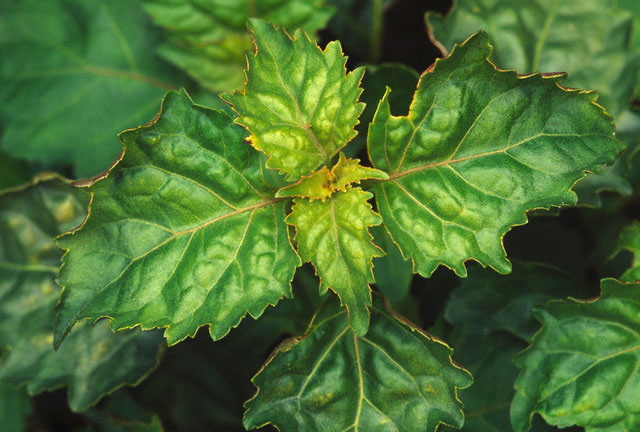
According to legend and stories swirled in the mist of history, patchouli was introduced to the West by traders who used the plant’s oil or its dark, green leaves to protecting their precious cargo of silk. The plant’s naturally medicinal, sometimes mentholated or antiseptic notes would ward off insects and other marauders. When the silk hit the streets of Europe, fine ladies were enchanted by the lingering sweet smell of patchouli and demanded more of it. One version of the tale credits Napoleon with the introduction of the scent, by way of shawls that he’d brought back from Egypt and which were redolent of the plant’s sweet, earthy aroma. Today, however, the smell of true, dark patchouli has fallen into disrepute as a result of negative associations with the 1970s and “filthy hippies,” and it’s not widely used in perfumery. Yet, patchouli happens to be one my favorite notes (in its dark, chewy incarnation), so when I heard that Cuir Tabac from David Jourquin contained five different types of it, I sat up and ordered a sample right away.
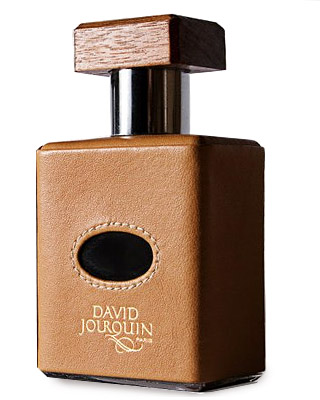
Cuir Tabac via Luckyscent.

Cuir Tabac via Luckyscent.

David Jourquin is a French perfumer, though I’m unclear on what his exact background may be or if he was in fashion before. He has two fragrances, both riffs on the same overall theme and with slightly similar notes, but one is intended to be a “day” scent and one is meant for “night.” Cuir Tabac is the “evening” scent, while Cuir Mandarine is the day one. Both fragrances were released in 2011, are eau de parfum in concentration, and are packaged quite solidly in leather, stitched with the David Jourquin signature. As First in Fragrance puts it, “[a] chiseled jewel, sealed with wood from the walnut tree, sheathed in finely sewn Spanish leather, with a window that reveals the rare, golden hewed liquid.”

The Jourquin fragrances are inspired, in part, by the olfactory memories of his mother with her leather jacket, his visits to Guadeloupe with his father, and the impact of trips to Morocco with his step-father. Luckyscent explains a little more about the specific inspiration and scent for Cuir Tabac:

For Cuir Tabac, the nighttime version of his pair of Cuir fragrances, David Jourquin drew heavily on his childhood memories of visiting the bustling marketplace of Pointe-à-Pitre, Guadeloupe with his father. By blending the sweet and pungent scents of the market with his powerfully evocative signature leather and tobacco notes, Jourquin has created something remarkable: an enveloping, warm, and edgeless fragrance that truly feels like a memory.

The Pointe-à-Pitre market. Source: guadeloupetraditions.free.fr

The Pointe-à-Pitre market. Source: guadeloupetraditions.free.fr

The David Jourquin website describes Cuir Tabac and its notes as follows:

The heady and insolent patchouli heightens the deep and profound tobacco, cigar and musk notes overturning the senses in a soft murmur of fine eternal lavenders.

Mixed with fine lavenders as top notes.
Brown tobacco, cigar and musk as middle notes.
Five patchoulis from five Indian regions as bottom notes.

"Black Widow v1" by *smokin-nucleus. Source: DeviantArt. (Website link embedded within photo.)

“Black Widow v1”
by *smokin-nucleus. Source: DeviantArt. (Website link embedded within photo.)

Cuir Tabac opens on my skin with every possible manifestation of patchouli imaginable. It’s dark, chewy, resinous, sweet, musky, earthy, and smoky. It’s black, but it’s also got green bits to it which result in a brief, 15-minute period of mentholated, slightly medicinal, bitter tonalities. At the same time, the patchouli is also extremely golden and pale, manifesting an incredibly creamy touch that smells a lot like milky café au lait. There are nutty undertones that are a little like roasted almonds, but there is also a faint whisper of chocolate lurking about. The whole thing is neatly wrapped up in a very quiet, subdued smokiness. It’s far from being as black as I’d like, and it lacks the weight or rich, baroque depths of the note in Profumum‘s Patchouly. Instead, it’s a lot closer to the patchouli in Serge LutensBorneo 1834 in the opening moments, mixed in with some of the creaminess of Chanel‘s Coromandel.
Artist: adrymeijer on DeviantArt. (Website link embedded within photo.)

Artist: adrymeijer on DeviantArt. (Website link embedded within photo.)

In less than a minute, other elements appear. First, and most prominent, is lavender which feels dry, pungent, herbaceous, and exactly like that in dried lavender sachets from Provence that I loathe so much. Thankfully, its abrasive sharpness is quickly mellowed out by the infusion of the patchouli, but it still has an edge to it that this lavender-phobe finds a little off-putting. Frankly, I’m not sure I can recall the last time I smelled a lavender-patchouli pairing, let alone one that is quite so singular and unadulterated in its focus. It’s an odd duo, and, yet, not wholly unappealing. What actually bothers me significantly more is the lurking, whip-sawing, crocodile’s tail of something synthetic that flickers around the dark waters of the base. I don’t know what it is, but it burns my nose with its razor sharpness, and continues to bother me throughout much of Cuir Tabac’s lifespan.

The third guest at the party is amber. Cuir Tabac’s perfume notes may not list amber, but there is a definite golden haze in the base that is sweet, musky, and resinous. Perhaps it’s merely another facet to the patchouli, but it seems much more resinous than just that. The whole fragrance sits atop a somewhat molten base that, at this point, is lightly tinged with a hint of creamy, almost vanillic, sweetness.

Source: www.hispanicallyspeakingnews.com -

Source: hispanicallyspeakingnews.com –

Five minutes in, the first glimmer of tobacco appears, smelling just like a fresh, unlit, Cuban cigar. If you’ve ever walked into a humidifier cigar room, you know the aroma here, though it’s very muted and subtle at first. The note also has sweet, golden, almost leathered, and floral underpinnings, and they don’t stem from the other accords so much as from the tobacco itself. Lurking about is a subtle smokiness that feels more like incense than tobacco smoke, but it may be a by-product of one of those five patchouli types.

If you’re wondering where is the leather in all this, you’re not alone. For a fragrance that is called Tobacco Leather, Cuir Tabac doesn’t actually feel like a leather fragrance at all. At no time do I ever get “leather” as a singularly dominant, individual, powerful force, at least not the leather that I’m used to. Instead, the fragrance sometimes carries the subtle feel of leather as a subset of the patchouli and resins, a manifestation of their characteristics, if you will. There are moments, much later on, when faint flickers of leather dance around the periphery, but if you’re expecting the sort of leather note that you’d find in Chanel‘s Cuir de Russie, Puredistance‘s M, Serge LutensCuir Mauresque, Parfum d’Empire‘s Cuir Ottoman, or Montale‘s Aoud Cuir d’Arabie, then you’ll be sorely disappointed. Cuir Tabac is not a true or hardcore leather fragrance by any means, no matter what the name may say. Given that the leather is mostly more of an implied suggestion, I think a more accurate name for the fragrance might be Patchouli Tabac….

Fifteen minutes in, Cuir Tabac starts to shift a little. The patchouli’s medicinal undertones have faded, while its other features have grown stronger. Now, the patchouli has a far greater whiff of something that is slightly green and herbaceousness. Even more noticeable is the dancing, wafting aroma of nuts and cream. The patchouli has a strong element of toasted nuts, and it’s no longer just a subtle impression of almonds, but toasted hazelnuts as well. There is also a growing creaminess to the patchouli that we’ll get to momentarily. The patchouli isn’t the only one to change, however. The lavender starts to turn sweeter; it feels creamy, fluffy, and a little like lavender ice-cream.

"Caramel Kaleidoscope" by Toni Jackson on Fineartamerica.com

“Caramel Kaleidoscope” by Toni Jackson on Fineartamerica.com

Near the close of the first hour, I’ve become convinced that Cuir Tabac’s list of notes is incomplete. The fragrance’s undertones are smoky at times, nutty at other times, and always resinous in feel. There is an increasingly vanillic aspect to the foundation, as if Siam Benzoin and/or Tonka Bean were used to add that creamy sweetness. It becomes more prominent as time goes on, especially once the lavender recedes in strength around the 50-minute mark. Cuir Tabac is now a lovely, multi-faced patchouli fragrance with nutty, creamy, sweet, musky, dark, and vanillic touches, followed by touches of lavender and the faintest hint of fresh cigars. Unfortunately, the base continues to have that synthetic note that feels as sharp as broken glass. I tested Cuir Tabac twice, just to be sure, and the aromachemical was there each time in differing degrees of prominence. At this point, I’m chalking it up to either an amber and/or musk synthetic accord.

I still don’t smell any dominant, hardcore leather, per se, but there is a growing impression of its feel flittering about the edges. At first, there was the subtle, muted whiff of something resembling new car seats in an extremely expensive vehicle, but the smell soon gave way to an impression of an old, comfy, sweetened leather, armchair.
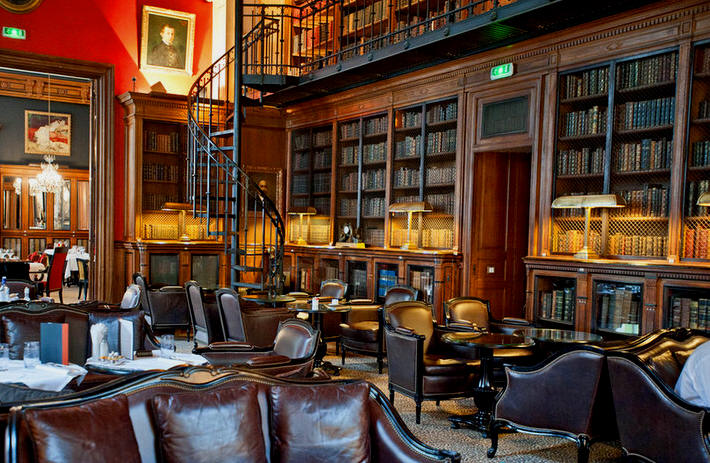
St. James Hotel's Library Bar, Paris.  Source: Oyster.com

St. James Hotel’s Library Bar, Paris.
Source: Oyster.com

Honestly, I think it’s probably the power of suggestion due to the fragrance’s overall feel. Cuir Tabac has definitely started to evoke the reading room and library in an old Mayfair gentlemen’s club with its wall of books, its comfy, well-worn, dark leather armchairs, and a warm fire. There is a butler passing around cognac snifters, accompanied by the finest Belgian chocolates, and a humidor of the most expensive Monte-Cristo cigars from Havana. For those who don’t feel like drinking, there is creamy café au lait, dusted by white cocoa powder and toasted nuts. And, somewhere in the background, someone is burning a tiny, itsy-bitsy bit of black incense.

It’s all very lovely, but, alas, it’s also an increasingly soft scent. With the exception of that sharp synthetic accord, the rest of Cuir Tabac starts to feel like a very well-blended blur. Less than 75-minutes in, the notes lose a lot of their edges and shape, and the sillage drops. Cuir Tabac is a warm, slightly nebulous glow of patchouli that is creamy, sweet, a little bit smoky, slightly leathered, very nutty, and just barely infused with lavender atop a musky, ambered base. The tobacco pops up once in a while to make itself noticeable, but it generally hovers at the periphery. The “leather” impression is similarly muted. Everything feels so swirled into the patchouli that it’s really hard to pull the other notes from the cloud which hovers an inch or two above my skin.

"Coffee and cream" Art Print by Shalisa Photography/ Sharon Lisa Clarke on FineartAmerica.com

“Coffee and cream” Art Print by Shalisa Photography/ Sharon Lisa Clarke on FineartAmerica.com

As time passes, Cuir Tabac continues to change. At first, it’s turns into a creamy café au lait with patchouli fragrance that has a subtle whiff of lavender, synthetics, and tobacco. Then, at the start of the third hour, the tobacco returns to the fold and starts to tango with the patchouli. Now, it’s no longer uncut Cuban cigars, but sweetened pipe tobacco infused with patchouli. The latter is still simultaneously creamy and dark, but all the subtle leathered, nutty, and incense undertones have vanished.

The fragrance sits right on the skin, and feels increasingly thin, gauzy, and discreet. It’s frustrating trying to pull the notes out of the air, especially as some of them keep coming and going like ghosts. Just like the tobacco did earlier, it’s now the vanilla’s turn to play hide and go seek. The same story applies to the creamy and milky café au lait tonality. Clearly, the fragrance is very well-blended and reflects different facets on different occasions, but I wish it had more body, depth, and structure. Both times I wore it, the results were slightly different in terms of the small details, as well as in the order and prominence of all the notes except for the patchouli, but the nebulous feel of the fragrance was the same.
Source: de.123rf.com

Source: de.123rf.com

About 4 hours in Cuir Tabac’s development, the fragrance settles down for its final stage. It is now a creamy, vanilla patchouli fragrance with subtle whiffs of sweetened, unlit pipe tobacco, along with the tiniest speck of smoke and musk. It is also now a complete skin scent, as sheer as gauze. Cuir Tabac remains unchanged until its final moments, a little under 11 hours from its start.

In some ways, it seems that Cuir Tabac dissolves in on itself, but you can also argue that it’s meant to be a soft glow that discreetly envelops you before it turns into something more personal. The latter interpretation seems to be supported by David Jourquin’s somewhat abstract attempts at philosophical, poetic stylings on his website, both in the section about him and the one devoted to his philosophy. The references to dark shyness, “a secret wake like a promise,” and “firm determination enveloped in infinite softness and warmth” seem to be as much about his fragrances as they are about him. Then, too, there is the part about how “[h]e is like his fragrance, sensitive, secret, calm and yet bubbling over, motivated by an intense passion.”

So, if Cuir Tabac is intentionally meant to be this secret, quiet, shy whisper of softness and warmth, then I can hardly criticize the perfumer for achieving his goal. I know a number of people who prefer wispy, gauzy, soft scents that remain close to the skin and are just a private message to themselves. If they like dark patchouli, then Cuir Tabac is tailor-made for them. However, even they might not think the perfume was worth it for the price and accessibility issue. Cuir Tabac is an eau de parfum that costs $235 or €168 for a 100 ml/ 3.4 oz bottle, and has only limited distribution. In the U.S., only Luckyscent carries it. I couldn’t find any vendors in Canada, the U.K., Oceania, and vast swathes of Europe, though it is carried by Germany’s First in Fragrance, and there are plenty of vendors in France and Russia. My point is, would someone want to risk a wispy, unobtrusive blur of a scent that is quite expensive and, for many perfumistas in different parts of the world, not easy to test out first?

Judging by the handful of reviews for Cuir Tabac on Fragrantica, the answer would be “no.” In fact, almost all the reviews say the same thing: that the fragrance is too discreet, “puny,” and sheer for the price tag. To wit:

  • God bless the individual that’s willing to spend hundreds of dollars on this fragrance. The problem with Cuir Tabac isn’t the scent. The bigger issue is that you’re gonna be playing the olfactory version of “Where’s Waldo”. This is more like a thin scent rather than a skin scent. The tobacco smells like a walk-on instead of the star in this concoction. The rest of the notes are puny and shows no interest in fighting back the tyranny of fleetingness. Definitely not a fragrance built for the playoffs.
  • Starts out with almost only dry strong patchouli and a hint of pipe tobacco, soon to transform into more like the smell of a warm – unlit – cigarette and a more subtle spicy note. [¶] Two hours later what’s left is a discrete patchouli note and a warm very present, yet not aggressive, amber-like touch.  [¶] Beautiful scent but less isn’t always more and maybe this one would’ve been better off with more potency.
  • For the first hour, you get hints of sweet pipe tobacco, quickly overshadowed by a medicinal tone (probably the mix of lavender & patchouli). I typically enjoy both lav & patch, but something is awry with this particular mix. After the lav & patch fade, you get the sweet pipe tobacco that I remember my grand uncle (mother’s uncle) smoking, for hours to come. Is this stuff good? In a word, yes. Do I wanna smell like my 70+ year-old uncle? No. And I really don’t wanna pay $235 USD to 🙂

Where's Waldo, via The Telegraph.

Where’s Waldo, via The Telegraph.

The “Where’s Waldo?” comment is brilliant, and my hat is off to “Roge” who used it! I think the reference definitely applies not because of the scent itself, on my skin at least, but because of how many of its notes just vanish like a ghost, only to occasionally reappear later, or how hard they are to pull out of the nebulous patchouli cloud. Lord knows, if one expects a true leather fragrance, Cuir Tabac will be “Where’s Waldo” indeed! If you will note, not a single one of those comments (or the remaining few on Fragrantica) mentions leather at all. Odd for a purported “Cuir” fragrance, wouldn’t you say? I’m relieved that it’s not just me. As for the tobacco, judging by those comments, it seems to have played hide-and-go seek with a few other people as well, since the reports are quite split on its prominence.

One thing that needs some elaboration, however, is the issue of Cuir Tabac’s longevity. The thin, unobtrusive nature of the scent and its low sillage clearly was a problem for two of the commentators quoted up above. However, if you look at the votes on Fragrantica, the majority voted for “very long lasting” (12+ hrs), followed by “long lasting” (7-12 hrs) in second place. In short, don’t let the fragrance’s wispy nature and weak sillage fool you.

An unrelated topic brought up by Fragrantica is the issue of similar scents. One commentator found absolutely no difference between Cuir Tabac and its sibling for the day, Cuir Mandarine. Another thought Cuir Tabac was too similar to the more affordable Thierry Mugler fragrance, A* Men Pure Havane. I haven’t tried the latter, but I’ve read that it’s a very honey-dominated fragrance, not a patchouli one. Still, if the similarities are true, then it makes Cuir Tabac seem even more pricy.

Ultimately, I think that Cuir Tabac is a very mixed bag. The creamy bits are lovely, as is the café au lait undertone that sometimes vaguely mimics a similar nuance in Chanel‘s Coromandel, and I always enjoy dark patchouli, even when mixed with lavender. Unfortunately, I had enough problems with the scent that, at that price range, I would far prefer to get Profumum’s glorious, smoky Patchouly soliflore with its incredible concentration, baroque richness, salty ambergris, and lack of razor-sharp synthetics. Still, if money is no object, if you prefer your patchouli to be gauzy, lightweight, and discreet, and if you also enjoy lavender, but don’t like leather or dominant tobacco notes, then Cuir Tabac may be for you. It’s an extremely narrow category of perfumista, but I’m sure you’re out there!

DETAILS:
Cost & Availability: Cuir Tabac is an eau de parfum that is available only in a 100 ml bottle and which costs $235 or €168. David Jourquin: you can purchase Cuir Tabac directly from David Jourquin for €168. Samples are also available for €3,50. In the U.S.: Cuir Tabac is sold at Luckyscent, along with a sample. Luckyscent seems to be the only U.S. distributor or vendor for the Jourquin line. Outside the U.S.: I can’t find Canadian or UK vendors for David Jourquin. In France, there seem to be many, especially in Paris. There, Cuir Tabac is sold at Jovoy, the Ritz hotel, and The Different Company, among others. Germany’s First in Fragrance also sells the perfume and ships worldwide. In Belgium, David Jourquin is apparently carried at Brussel’s Absolut’ly, but I can’t find the line on the store’s website. For all other locations, you can turn to the David Jourquin Store Locator which lists vendors from Russia and Saudi Arabia to Spain and the Ukraine. As a side note, the brand has a lot of vendors in France and Russia, but it seems to have a very limited European presence and even less so elsewhere. Your best bet may be with companies like Luckyscent, Jovoy, or First in Fragrance who ship worldwide. Samples: I obtained my sample from Surrender to Chance which sells Cuir Tabac starting at $3.59 for a 1/2 ml vial. You can also order a sample from Luckyscent.

Tableau de Parfums/Andy Tauer Loretta

Collaborations across different art forms and platforms are always intriguing. I think it is even more so when two different artists use the same source of inspiration to create works in two different mediums. Tableau de Parfums is one such collaboration, consisting of a perfume and movie pairing between the Swiss perfumer, Andy Tauer, and the American, Memphis-based, indie filmmaker, Brian Pera (who is also a perfume blogger at I Smell Therefore I Am).

Source: Tauerperfumes.com

Source: Tauerperfumes.com

There are three Tableau perfumes (Miriam, Loretta, and Ingrid) and, as the Tableau Parfums website at Evelyn Avenue explains, each one is an olfactory portrait “inspired by the films of Pera’s ongoing series, Woman’s Picture.” According to the website, “Woman’s Picture is an anthology film inspired by classic women’s films of the thirties, forties, and fifties. The story is divided into three sections, each of which presents a portrait of a specific female character.” The Miriam perfume is supposed to be quite heavily aldehydic, so I eschewed that one, and opted for Loretta which is an eau de parfum released in 2012 and which is supposed to be centered around tuberose. It’s my favorite flower, but the fragrance also has orange blossom (another winner in my book), ambergris, and other appealing notes.

Loretta‘s cinematographic tale is about a young woman by that same name who works in a motel. It comes in three parts, two of which are posted here. As Fragrantica summarizes: “She is shy and withdrawn, but creates her own life in a fantasy world where she danced and falls in love with a man. She is sensual, sexy and seductive, but she has a secretive dark side.” The reason why that’s important is because of the way the perfume is intended to reflect her light and dark sides. According to the press release quoted by Now Smell This:

Like the film, Loretta the fragrance explores the way fantasy and reality inform each other in an interplay of light and dark impulses and energies. In the film, the character of Loretta, played by Amy LaVere, deals with a difficult, mysterious past by transforming it into a dream world of possibility and romantic adventure. The balance between the past and her fantastic reinvention of it is delicate, fraught with tensions, where childlike naivete and adult awareness twist and curl into increasingly complex sensual patterns. Fragrance becomes an important gateway into this transformed world.

Andy Tauer on Loretta: “Loretta is an incredibly sensual and erotic story, in which a daydream world becomes a powerful, seductive reality. In Loretta’s world there is music, dance, romantic intimacy, soft light and a natural, childlike shyness confronted with somewhat dark, adult realities. Loretta’s flower is tuberose, and I wanted this fragrance to be as dark and mysterious, as opulent and seductive as her reveries themselves.”

It all sounds fascinating and intriguing, doesn’t it? Alas, I did not share Loretta’s adventures with the fragrance, not even remotely, which is a sad disappointment given the story, the tantalizingly dark aspects to the short films, and the wonderful notes in the fragrance. Those notes, as compiled from Luckyscent, Fragrantica, that press release, and The Perfumed Court, include:

ripe dark fruit, velvet rose, cinnamon, clove, coriander, spicy tuberose, orange blossom,  patchouli, woody notes, ambergris, leather, vanilla, and sweetened orris root.

Source: Boston.com

Source: Boston.com

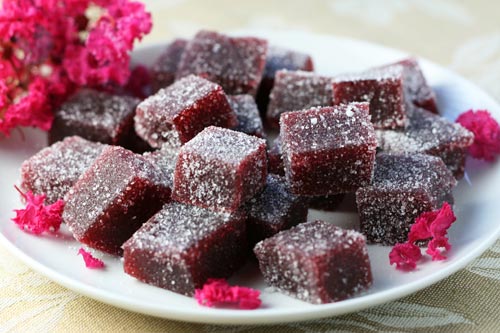
Loretta opens on my skin with an explosion of grape juice that smells exactly like the American brand, Welch’s, in concentrated form. It’s as though a thousand kilos of Concord grape have been distilled down with about a gallon of sugar into a treacly syrup. There are lots of perfume explanations for the aroma, from the use of methyl anthranilate that occurs naturally in tuberose, to the amplifying effect of the dark fruits like plum. I’m sure the use of fruited patchouli had some indirect effect on the combination as well. Either way, I’m not a fan, and it doesn’t make me happy how prominent the grape juice accord is for a vast portion of the perfume’s lifespan.

Source: tastefood.info

Source: tastefood.info

In the immediate seconds after that unbelievably sweet burst of grapes, other notes are introduced. There are candied dark fruits, led by plum, and covered with more sugar, followed by coriander, some amorphous dark notes, and hints of cinnamon. A very hesitant orange blossom peeks her head through the curtains, along with touches of vetiver and sugared orris root, but all three remain on the sidelines for fear that they’ll be plowed down by the stampede of grape and crystallized dark fruits. Have I mentioned sugar yet? God, it seems to be seeping out from so many different corners! Take the orris root which is where one commonly gets the approximation of an iris smell. Here, on my skin, the note doesn’t smell so much of the flower, but of some sugared root. There is also a vague hint of some darkened, aged leather lurking about, but that too is sweetened. It’s simply too, too much for me.

Hovering all around is a wafting floral bouquet. It never feels like tuberose in the traditional sense, and it’s not like typical orange blossom or rose, either. In fact, it’s simply an abstract floral sweetness without much shape, delineation, or substance. It simply smells fruited and cloyingly sweet. (Have I discussed sugar, lately?)

Thirty minutes in, Loretta shifts a little. The leathery undertones temporarily become more prominent, along with amorphous, abstract woody notes and the blasted ISO E Super that Mr. Tauer loves so much. The latter isn’t overwhelming though, nor particularly strong, and it certainly isn’t medicinal in any way. Frankly, I think the reason why it doesn’t smell very noticeable is because not even that synthetic horror can compete with the saccharine grape juice and its bulldozer effect upon everything in its path.

While the perfume is getting a little darker on some levels, it’s also getting a little lighter on other ones. There is the subtle introduction of a powdery element that smells both vaguely floral in nature and slightly vanillic. Lurking underneath is a jarring hint of something that really resembles cooked celery to my nose. Perhaps it is the result of the combination of the vetiver with coriander, orris, and leather, but there is a definite vegetal quality in the base. Alongside it is a faintly sour nuance underlying the fragrance’s woodiness, but the latter is so vague, it’s hard to really analyze.

Source: LTphotographs Etsy store. (Website link embedded within photo.)

Source: LTphotographs Etsy store. (Website link embedded within photo.)

At the 90-minute mark, the notes blur, the perfume falls flat, and starts to feel thin. Loretta is still primarily a grape floral with dark fruits and increasingly soft spices, but the patchouli starts to feel more prominent. It doesn’t feel dark, dirty, and chewy like black patchouli, but it’s not wholly fruity and purple, either. Equally noticeable is the powder which is more sugared than anything akin to orris or makeup powder. In his blog entry about the making of Loretta, Mr. Tauer said he used benzyl acetate (a natural component of tuberose) to create a soft, sweet powdery note that lasts throughout the perfume’s development. He succeeded, because it does. Underneath all this are hints of something rooty, but they’re not distinguishable as either orris or vetiver. There are also whispers of darkened leather and vanilla flittering about, but they feel nebulous as well.

Source: theberry.com

Source: theberry.com

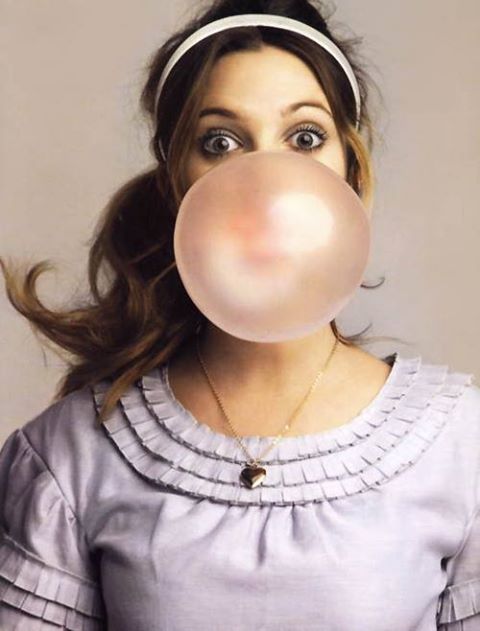
By the start of the 3rd hour, Loretta is an abstract, intangible, amorphous bouquet. The notes feel flat, muted, and vague. The fragrance itself hovers just an inch or two above the skin, though it is still very potent when sniffed up close. For the most part, Loretta is a candy, bubblegum floral, thanks to the overall combination of sweet powder, fruits, and flowers. It has little delineation or definition, and not a single bit of it feels like the woman in the tale with her dark side, her quiet eroticism, and her fantasies of seduction. To the extent that Loretta, the woman, had a “soft light and a natural, childlike shyness,” that part is covered, but the seductive, languidly fleshy, heady, opulent and erotic side of such indolic flowers as tuberose and orange blossom? There is not a whisper of it on my skin. I’m quite saddened, not only because of my love for both flowers, but because I know how much work went into the fragrance. Andy Tauer’s blog has a detailed perfume breakdown of what he did to the tuberose, and the other elements he used. All the “tuberose specials” that he talks about, along with the concentrated orange blossom absolute, somehow got lost in translation on my skin. I’m not alone in that, but we’ll get to other people’s experiences in a moment.

Juicy Fruit gumFor a long time, I was very confused as to why Fragrantica classified Loretta as a floral oriental, but things became clearer at the end of the fourth hour. Until that point, Loretta had gone from being a cloying, unbearably sweet, fruity scent with vague florals, to just plain, powdered Juicy Fruit with less sweetness and still vague florals. At the end of the fourth hour, however, Loretta veers sharply and abruptly into a whole new category when the amber rises to the surface. In less than an hour, it takes over completely. Loretta is now sweet powdered amber with a lingering trace of Juicy Fruit gum. There are hints of a jammy, patchouli-infused rose that pop up every now and then, but they’re fleeting and extremely muted. For the most part, Loretta is merely soft, hazy, sugar-powdered amber, and it remains that way until its dying moments when it is nothing more than powdered sweetness. All in all, it lasted Loretta lasted just shy of 11.5 hours on my skin. It had moderate sillage throughout most of its lifetime, though it was generally quite potent if you sniffed it up close for much of the first 7 hours.

I’m not the only person who found Loretta to be dominated by an incredibly sweet grape note and, to a lesser extent, sweet powder. The Scented Hound had the same reaction, and, like me, found the remaining notes to be hard to pull out from under the deluge. In his very diplomatic review, he wrote:

Loretta opens with candied tart sweetness.  It’s bright with just a tinge of sour.  Quickly it moves into grape soda.  Really???  Then quickly again, the grape soda is met with a light powder.  […] Thankfully, the grape soda is met with a bit of warmth that helps to anchor the sweetness.  The plum (which to me smells like grape soda) completely dominates and therefore makes it hard for me to pick out additional notes even though I know they’re there as the fragrance starts to even out.  Finally, Loretta settles down some to reveal a lightly sweetened patchouli woodiness tinged with a bit of what seems to be some coriander.  [¶]

Loretta confuses me.  I don’t hate her and I don’t love her and am struggling with when I would want to wear her. I keep reading about the tuberose in this, but that is completely escaping me.  Finally, besides grape soda, Loretta reminds me of what the penny candy aisle at the Ben Franklin store used to smell like.  Not for me, but I could see someone else digging this for its uniqueness.

On Fragrantica, there is more talk about the fragrance’s sweetness and oddness. To give just one example:

This smells to me as if I was carrying grape flavor Crush inside of a black leather pouch. It’s very weird and dissonant, like an orchestra tuning before a show.

I get a strong leather note, with a sweet plum and tuberose accord. Super strange perfume… it’s sweet, sweet, sweet, but in an airy kind of way that only orange blossom has. It’s also screechy and spicy. I’m reminded of extremely synthetic gummy candies and that’s fun. This is truly a scent for an original individual, I think, while being very sexy and confident. Who can pull this off!!?? It’s all over the place, colorful and confusing, but mesmerizing, like an acid trip. I keep on sniffing it and I get this highly enjoyable repulsion/attraction duality. I love that. 

Another trippy perfume that wears me instead of me wearing it… smells just like a purple gummy bear stuck to my black leather jacket. Fun times.

Others talk about how the fragrance smells of “spicy tutti-fruity” gum, sticky sweetness, a greasy oily nuance, or black rubber notes. One commentator finds that “the plum overtakes everything and with the other warm resinous notes it smells of decadence- overripe fruit right on the verge of rotting.” Well, I agree that Loretta has a tutti-fruitti gum note, but, for me, the scent is not “fun times” as stated in the quote above, and I can see why one reviewer finds it “unwearable.” Even apart from the fragrance’s nebulous haziness, I don’t want a weird “acid trip… repulsion/attraction duality” with “purple gummy bears” for $160 for a 1.7 oz bottle. I don’t mind very different, weird fragrances if they smell good, but a cloyingly sweet scent that makes me feel I just got three cavities is not my cup of tea at any price.   

Source: weheartit.com

Source: weheartit.com

My personal tastes notwithstanding, Loretta is not a bad fragrance, and I think it would be well suited for a young woman who is looking for something different, quirky, and playful. It’s definitely original and unconventional enough to venture into the “fun” category. In fact, I can see CosPlayers dressed up as Japanese anime characters enjoying the scent, or, perhaps, Lolita types. Whether they’d want to pay $160 for the experience, I have no idea. People who love extremely sweet fruity-florals, powdery sugar scents, or Welch’s grape juice may also want to give Loretta a sniff. For everyone else, especially men, I wouldn’t recommend Loretta.

DETAILS:
Cost & Availability: Loretta is an eau de parfum that comes in a 50 ml/1.7 oz bottle that costs $160 or €135, and which comes with a DVD and movie poster. Loretta also comes in a small 7 ml travel spray that costs $40. In the U.S.: you can buy Loretta from Luckyscent or Portland’s The Perfume House. However, neither Loretta nor Tableau de Parfums as a whole is listed on The Perfume House’s website. Outside the U.S.: In Europe, you can find Loretta at Germany’s First in Fragrance which sells the perfume for €135.00 and the travel size for €39. It too carries samples. In the UK, Scent & Sensibility carries Tableau de Parfums, and sells Loretta for £110.00. In Italy, you can find the fragrance at Milan’s Profumi Import, but I’m not clear about price or if they have an e-store. Tableau de Parfums fragrances are also sold at a handful of other locations in Europe, from Marie-Antoinette in Paris, to Switzerland and Lithuania. You can find that information on the company’s websiteSamples: I obtained my sample from The Perfumed Court, but I no longer see the fragrance listed on the website. The only available option is a Loretta Soap. Loretta is not sold at Surrender to Chance, so your best bet seems to be Luckyscent which sells samples for $4.

Tauer Perfumes Une Rose Chyprée: Bewitching Opulence

“‘Tis the last rose of summer,” once wrote the famous 19th-century Irish poet, Thomas Moore, in a poem that later inspired everyone from Beethoven to Felix Mendelssohn. The line definitely comes to mind when I wore Une Rose Chyprée, a spectacular chypre-oriental hybrid that features an autumnal, amber rose. Yet, that is only one part of the story.

Source: npr.org

Source: npr.org

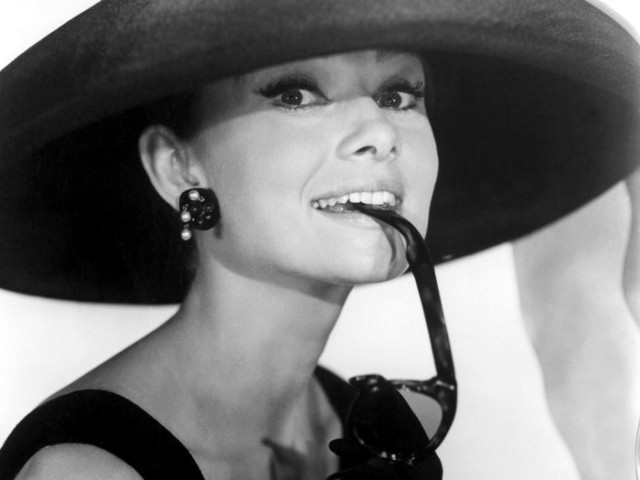
At the same time, Une Rose Chyprée also conjured up everything from a coquettish, youthful, warm Audrey Hepburn in the 1960s, to thoughts of a woman’s warm, heated flesh as revealed by an opulent, dramatic dress cut low enough to seduce. It is a scent that is surprisingly playful and welcoming for a chypre — normally a very cool, haughty, aloof fragrance family — but Une Rose Chyprée is graced by an oriental seductiveness as well. I’m not one who goes weak in the knees for chypres, let alone scents that are primarily rose-centric in nature, but Une Rose Chyprée may be the best rose I have smelled in years and it completely swept me off my feet.

Source: Tauer Perfumes

Source: Tauer Perfumes

Une Rose Chyprée (sometimes written as “08 Une Rose Chyprée“) is an eau de parfum released in 2009 by Andy Tauer, the founder and nose behind the much-adored Swiss niche house, Tauer PerfumesOn Fragrantica, the fragrance is classified as chypre floral, but it seems more accurate to me to call it a chypre-oriental hybrid. The Tauer website supports this impression, describing Une Rose Chyprée as:

An exclusive oriental rose on a vintage chypre chord.
Une Rose Chyprée is a modern vintage perfume. It reaches back to the craft of traditional high perfumery, using a luxurious setting of raw materials. At the same time, I wanted it to be a rose of today, that speaks our language.

According to Luckyscent, the notes in Une Rose Chyprée include:

Rosa Damascena Absolute and essential oil, Bay, Cinnamon, Bergamot, Lemon, Clementine, Bourbon Geranium, Labdanum, Oak Moss, Patchouli, Vetiver, and Vanilla.

Geranium pratense leaf, close-up. Source: Wikicommons

Geranium pratense leaf, close-up. Source: Wikicommons

I tested Une Rose Chyprée three times, and, each time, it opens on my skin with a bouquet that’s so sultry and exquisite, it feels like a growl that eventually turns into a sensuous purr. There is smoky incense intertwined with the peppery, spicy bite of fuzzy, green geranium leaves, followed by tart, green, unripe lemons and rose. The rose begins this journey as something green and mossy, but soon takes on a bubblegum, fruity undertone. There are momentary flickers of a purple grape underlying the flower’s tightly closed bud, perhaps from the patchouli or something like methyl anthranilate, but they are soon replaced by hints of sweet clementine.

Photo: Arbyreed on Flickr, (Website link embedded within, click on photo.)

Photo: Arbyreed on Flickr, (Website link embedded within, click on photo.)

Every part of the citrus is there: the sweet, sun-ripened, heavy pulp; the squirting oil of its zested, slightly bitter rind; and the candied flesh, crystallized with hints of dark, earthy, chewy, black patchouli. The smorgasborg of notes swirls into the geranium, adding brightness to its piquant verdancy in a combination that has me utterly enraptured. Sweet but peppered, orange but green, zesty but spicy, sun-laden warmth but fuzzy, leafy darkness. It’s a chiaroscuro of light and dark that weaves its intoxicating, unexpected, and original thread throughout a good portion of Une Rose Chyprée’s early hours, and I can’t get enough.

Source: wallpapersnatural.com

Source: wallpapersnatural.com

At the heart of Une Rose Chyprée’s tapestry is the rose. It swirls all around you in a veiled shimmer of greens, garnet red, earthiness, and mossy trees — all rolled into one. This is a green rose whose petals were crushed into the damp, wet soil of the forest floor; a rose that lies nestled amidst fresh, just slightly mineralized, faintly bittersweet mosses; a rose infused with the concentrated essence of a thousand dark green, slightly spicy, peppered leaves, then sprinkled with hints of alternatively tart and zesty citruses. It is a rose that is fruited, but spiced with cinnamon, and wrapped with the tendrils of black incense. It is a rose that smells like bubblegum at times, like grapes once in a while, and even like bananas or earthy mushrooms in different tests.   

Une Rose Chyprée is a swirling kaleidoscope of all those things, and then some. This is a fragrance with so many facets and dimensions, it made my head spin. It made me test the perfume twice, doubting that it was possible that I was accurately smelling such nuances (bubblegum? mushrooms?), and it left me quite awed. It was so fabulous, I have worn it for a third time, almost draining my sample that a very kind, generous reader of the blog — the lovely “Dubaiscents” — gave me as a gift. I even went to see what The Ultimate Perfume Snobs — aka, my parents — thought of it, and if you think my reaction is fervent, you should have seen theirs! My father actually put Tristan und Isolde on pause to ask about the perfume — and few things distract my father from his Wagner.

Source: hqwalpapers.com

Source: hqwalpapers.com

I think the real appeal of Une Rose Chyprée is that it’s not a haughty fragrance. A number of classic or vintage chypres keep you at a distance with oakmoss that can be coldly pungent, fusty, or slightly dusty, or with galbanum that can feel as sharp as the crack of black leather whip. Une Rose Chyprée is almost a coquettish chypre that beckons you with a sweet smile, despite the emeralds and rubies glowing around her elegant, rosy throat. The perfume’s opening is that of a chypre suited to Audrey Hepburn whose slim elegance and classic style never hid her sparkling, elfish beauty and approachable warmth. From Eliza Doolittle going to the ball in a tiara, to Holly Golightly, to Audrey herself in her perfect little black Givenchy dress with a radiant smile, Une Rose Chyprée combines the refined elegance of a classic chypre with a warmth that is open, modern, bright, and always approachable.

It’s not all a bed of roses, however. There are thorns in the form of a synthetic or two that lurks in the perfume’s base. At first, around the 40-minute mark, there is merely a sharp note that is hard to pinpoint, but which gives me a dull ache behind my eyes. It feels woody, but not exactly like ISO E Super at first. Soon, unfortunately, the aroma-chemical’s telltale peppery, humming buzz makes itself noticeable, along with a rhythmic jack-knife drilling through my skull. It lasts for hours and, since I don’t always get an ISO E Super headache unless there is a hell of a lot of the synthetic at play, I rue one more time Mr. Tauer’s love for the bloody note. (No, Mr. Tauer, not everyone thinks it serves as a wonderful photoshop-like finishing touch!) Given the forcefulness of the synthetic carrion vulture circling around my head, I suspect that there is something else going on as well, like Ambroxan. Whatever the specific synthetics in question, it’s a testament to Une Rose Chyprée that I don’t care in the slightest. That says a lot. Regular readers know that I think the rampant use of ISO E Super in perfumery is akin to an outbreak of the Bubonic Plague, and that I despise the majority of fragrances that include it. But Une Rose Chyprée is special.

Around the same time that the devil’s chemical minions pop up their blasted head, Une Rose Chyprée starts to slowly morph. First, it’s just a question of feel, as the notes start to blur and overlap each other. Then, the fragrance starts to turn more gauzy, like a sheer veil of garnet red and mossy green gliding in the air like a kite. Yet, despite the breezy weight of the fragrance, Une Rose Chyprée is incredibly potent and pulsates its bouquet out across a room in a beautiful juxtaposition of airiness with strength. Perhaps the best way to describe it is like a cloud that billows out several feet around you, with notes that reflect brightness, lightness and dark.

Vanilla Custard. Source: Sacchef's Blog.

Vanilla Custard.
Source: Sacchef’s Blog.

Another change is that Une Rose Chyprée starts to manifest faintly gourmand undertones. Vanilla starts to rise to the surface; it’s beautifully creamy, rich, and custardy, with such a ripe sweetness that it almost takes on a banana custard aspect on occasion. At the same time, a sugared, floral powder quality creeps into the scent. When it combines with the vanilla custard, the sun-sweetened clementine, the rose, geranium, and the cinnamon, the result is something that actually smells of pink bubblegum. One reason may stem from the patchouli which feels fruity on occasion, but whatever the cause, there is a definite candied, pink, bubblegum tonality to the rose that manifested itself on all three occasions that I tested Une Rose Chyprée. Somehow, it adds to the fragrance’s playful, flirtatious open side, underscoring once again what an unusual sort of chypre this is and how it straddles different perfume families.

"Rose Reflections" by HocusFocusClick on Flickr. (Click on photo for website link which is embedded within).

“Rose Reflections” by HocusFocusClick on Flickr. (Click on photo for website link which is embedded within).

Yet, despite the quiet, fruited undertones, Une Rose Chyprée is still primarily a rose scent with green notes that are wrapped up in a ribbon of black smokiness. A third verdant element pops up around the 90-minute mark: vetiver. It’s simultaneously a bit earthy, musky, and rooty all in one, a swirl of dark greens and browns. I suspect that it’s responsible for the occasional mushroom nuance I detect, but what makes it really special is the way it interacts with the vanilla. Vetiver and vanilla are an old, established combination in perfumery, but it’s done extremely well here in conjunction with the other notes. It works particularly well with the flickers of spicy, peppered geranium leaves and the fading whisper of juicy citruses. And, somewhere in this complicated, unusual, multi-faceted mix is a hint of beeswax from the labdanum.

Source: fr.123rf.com

Source: fr.123rf.com

The beeswax heralds the arrival of the final, and most substantial, change to the fragrance. One hour and forty-five minutes into Une Rose Chyprée’s development, the amber becomes prominent, lending a golden hue to the rose’s glossy garnet and mossy, emerald gleam. The labdanum here doesn’t have any of its usual, typical characteristics; it has no leathery, nutty, animalic, musky, masculine or dirty undertones. Instead, it’s merely a smooth, rich glow, infused with that sweet vanilla custard and a tinge of fruited patchouli. Resinously deep, it sweeps through the fragrance like a coursing river of molten, amber lava flecked with hints of cinnamon, beeswax, vanilla, and earthy vetiver. As the sweeter, warmer elements surge forward, the geranium-oakmoss-clementine trio weaken in strength, and Une Rose Chyprée loses some of its youthful, coquettish playfulness. Slowly, the fragrance starts to turn into an Oriental that is more seductive and openly sensual.

The labdanum grows stronger and stronger until, at the start of the fifth hour, it completely transforms that mossy, smoky, slightly bubblegum, fruited rose. Une Rose Chyprée has become primarily an amber scent, emitting a caramel tonality mixed with vanilla custard, patchouli, and a hint of floral powder. The rose is almost wholly abstract now, feeling like a supporting player on the sidelines. The green notes have receded or faded completely away, leaving a scent that is resinous and almost chewy in feel. The patchouli that was once almost fruity has now turned into my absolute favorite kind: black, dark, faintly spiced, lightly musky and smoky, and completely chewy. It folds and melts into the amber and vanilla custard, creating a very sexy, sumptuously rich scent.

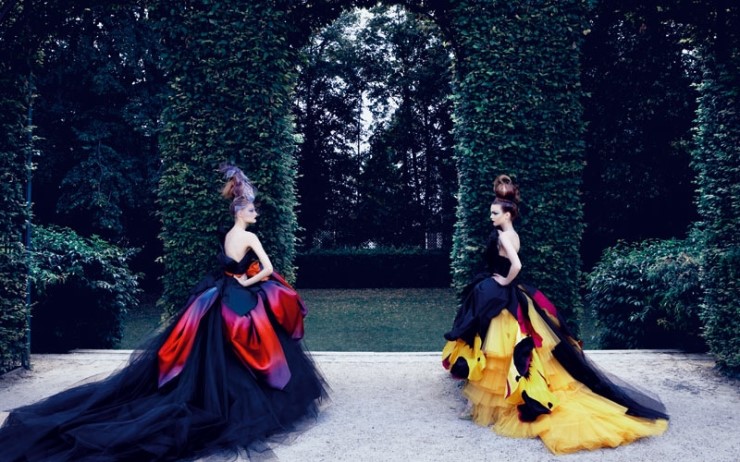
Dior Couture. Photo: Patrick Demarchelier for "Dior Couture," a  book by Ingrid Sischy, Patrick Demarchelier.

Dior Couture. Photo: Patrick Demarchelier for “Dior Couture,” a book by Ingrid Sischy, Patrick Demarchelier.

Something about the fragrance’s dramatic opulence and warm, sensuous creaminess makes me think of the suggestion of a woman’s golden, musky, voluptuous flesh languidly spilling out from a deep décolleté. Une Rose Chyprée is no longer a gamine, playful Audrey Hepburn rose. Instead, it’s now an oriental seductress in an amber and patchouli haute couture ball gown tantalizing you with suggestions of heated warmth and musky, sweet abandon. And the fragrance remains that way until its very end. Around the 7.5 hour mark, the fragrance turns into a hazy blur of golden sweetness that hovers right above the skin. Powdery touches (that I really don’t like) come and go, until the 9th hour, when Une Rose Chyprée begins its final change into a simple wisp of lightly powdered amber.

All in all, Une Rose Chyprée consistently lasted over 12 hours on my perfume-consuming skin. During the first test, I applied 4 large smears of the scent, and the perfume lasted well over 16.5 hours. The sillage was monstrously huge, wafting a good 2-3 feet across the room, and it remained that way until the 5th hour when it dropped to about 3-4 inches above the skin. Even when Une Rose Chyprée was closer to the skin, it was still extremely potent. In fact, the fragrance only became a skin scent on me around the middle of the 9th hour. All in all, the longevity was utterly astounding, especially given how voraciously my skin eats perfume, but it is also further proof of the synthetics underlying the mix.

The second time around, I applied my usual quantity of two large smears, and Une Rose Chyprée lasted just over 12.75 hours. There was a difference in the perfume’s development, as the ISO E Super seemed substantially more prominent, and the top notes (particularly the geranium-moss-clementine accord) were significantly weaker. By the same token, the perfume seemed much smokier and a wee bit more spiced at a lower dosage, while the fruited notes were more muted. In addition, the powdery quality to the fragrance crept in much sooner, as did the resinous amber undertones. In short, if you use a small quantity of Une Rose Chyprée, your skin may not bring out the fragrance’s top notes in quite the same way and the fragrance may lose some of its more beautiful nuances. Other than those small issues of strength and timing, the core essence of Une Rose Chyprée remained unchanged. With the lesser dosage, the sillage dropped faster, and the fragrance became a skin scent around the 6th hour, but it was always very potent in feel and it still lasted an incredibly long time.

My experiences with Une Rose Chyprée differs from that of a few people. For one thing, there are dramatically polar opposite accounts about the perfume’s sillage and duration. On both Luckyscent and Fragrantica, a number of people think the perfume simply doesn’t last and has weak projection. In fact, going by the votes on Fragrantica, the majority find the Une Rose Chyprée’s longevity is merely “moderate.” Even more people, combined, think that the perfume’s duration is “poor” or “weak.” My response to that is the same as one disbelieving reviewer’s reaction: I “can’t believe what im seeing.” The explanation may lay in the quantity used. My own experiences, and the 2nd test in particular, make me think that applying a very drop or two of the fragrance will curtail its potency, in addition to hiding its nuances and layers. Still, skin chemistry is a tricky and deeply individual thing, so be warned that some people have problems with Une Rose Chyprée’s projection and duration.

As for the fragrance itself, general commentators seem split on its appeal, with some finding it to be too heavy and old, while others think it is the most beautiful, “extravagant” or “3D” rose they’ve encountered. It will all depend on your benchmarks. I wouldn’t recommend Une Rose Chyprée to anyone looking for a light, fresh rose fragrance, nor to those looking for something edgy, revolutionary, or quirky. Une Rose Chyprée was intentionally created to be a modern twist on a very classic, traditional style of perfumery, and it succeeds in that goal beautifully. This is a fragrance with a heavy, vintage feel, so those who want a light, youthful, simple fruity-floral should not bother one iota. But, if you’re looking for an over-the-top glowing jewel of a rose that throws out more notes than a diamond hit by the sun, or if you’re looking for an opulent scent with a wickedly sensuous, seductive, “come hither” allure, then Une Rose Chyprée is for you. I’d also like add that anyone who was deeply disappointed in Frederic Malle‘s much-vaunted (and, in my opinion, hugely over-hyped) rose fragrance, Portrait of a Lady, should run to try Mr. Tauer’s stunner. This is how it’s done!

Ava Gardner.

Ava Gardner.

If you think all this fuss is from a blogger with an over-active imagination, you’d be mistaken. For one thing, as I said at the start, I don’t particularly like rose fragrances to begin with, and chypres are not my favorite category. More importantly, however, reviews from everyday perfume users gush just as much about the fragrance as do all the bloggers out there (and trust me, the bloggers lose their knickers for Une Rose Chyprée). On MakeupAlley, where the fragrance has a perfect 5.0 score with 8 reviews, one apt description of the scent succinctly reads:

This fragrance is gorgeous and dark. It is sexy, animalic, and gutsy. If I had to give you a visual, I would say Ava Gardner in her prime.
Haunting, fascinating, utterly gorgeous.

I personally would go with 1950s Audrey Hepburn for the fragrance’s chypre opening stage, but let’s not quibble. She’s absolutely and completely right about Ava Gardner for the middle and end stages.

That said, don’t interpret these comparisons as something that feels dated and old. Another raving MakeupAlley review talks about how the scent felt just as appropriate in a grunge pit and jazz club, as it did at the opera:

I tend to avoid roses as they are often too pink and polite to my nose [….]. Une Rose Chyprée is different. Despite its wide range of notes that feel like a salute to different fragrance families, it is a unique interpretation that does not have a futile attempt to satisfy the chyprée and gourmand lovers at the same time- how horrendous would that be! On the contary, it is a tremendous blend that hints at an intelligent crossroad but does its own thing in a versatile way. On me, the oakmoss base gives a fantastic depth to the vintage rose but the result is just like modern classical music sounds to my ears. I am a music lover and I have worn this to the opera. I felt like I was dressed in velvet. I wore it to a couple of grunge and noise gigs with deep V necks and felt super accessible and unreachable at the same time. It also goes well with jazz clubs. My next plan is to stock this masterpiece, be forced to declare bankruptcy and feel completely untouchable at the courtroom i.e. I am addicted.

Finally, if any of these references or photos make you think that guys can’t pull off Une Rose Chyprée, think again. But don’t take just my word for it; the award-winning blogger, Persolaise, thinks so, too. In a comment on Basenotes (where Une Rose Chyprée has a 91% approval rating), he gives it 5-stars and writes:

The ghosts of all the old, bewitching Guerlains are to be found in Une Rose Chyprée, a pitch-perfect manifestation of pure sensuality. My initial reaction to it was to let out a gasp of astonishment and exclaim, “I don’t think I’ve got enough noses with which to smell this.” Yes, in simplistic terms, it’s a rose, but then, a rose is a rose is a rose… Earthy and sparkling, this is a substance of gilt-edged richness, which also accomplishes the feat of remaining unabashedly unisex throughout its development.

I completely agree. Une Rose Chyprée is unabashedly unisex with the luxurious, opulent quality and elegance of a vintage Guerlain, while still retaining a very modern drama and oomph. It’s got a refined elegance that turns into a deep-throated growl of sensuality. And it has enough prismatic nuances that you will, indeed, think you need a few more noses with which to smell it.

Source: hdwallpaperes.com

Source: hdwallpaperes.com

One downside to the fragrance is that it’s not cheap for the small size at $140 for a 30 ml/ 1 oz bottle. That said, it is an eau de parfum in concentration, and a tiny amount of Une Rose Chyprée goes a long, long way. Plus, the ingredients are extremely expensive. At the fragrance’s launch in 2009, Mr. Tauer said that each hand-packaged bottle contains one pound of steam-distilled rose petals, as well as rosa damascena absolute. In one of his recent blog entries, he wrote that his rose base “comes to 450 Francs per kilo. That’s the price you have to pay for a real rose base. Actually, compared to the rose absolute per se it is a bargain (rose absolute sells for about 4000 $ [.]” That costly rose damascena absolute is a big part of Une Rose Chyprée, as well. In short, the reason why the fragrance costs so much is the same reason why the rose glows like a jewel: it’s got the real stuff in there, and in huge quantities to boot.

I could write several thousand more words about the beauty of this scent, and why it feels so special. I’ll spare you that. The bottom line is that Une Rose Chyprée may be, at its heart, an essentially simple green-then-ambered rose, but it’s greater than the sum of its parts. To expand on the line from the poet, Thomas Moore, ’tis the last rose of summer whose refined green-red brightness has now given way into autumn’s sultry red-golden amber. It’s also the sexiest, most compelling, addictive, mesmerizing, bewitching rose-centric scent that this rose-skeptic has smelled in a long, long time. I bow down at Mr. Tauer’s feet in utter admiration.

DETAILS:
Cost & Availability: Une Rose Chyprée is an eau de parfum that comes in a 30 ml/1 oz bottle that costs $140 or €95.60 (if purchased from the Tauer website). In the U.S.: you can buy Une Rose Chyprée from Luckyscent or MinNewYork, as well as directly from Tauer Perfumes where it is cheaper at $128.60. (See further details down below in the Tauer section.) Luckyscent also sell a sample vial for $3, and MiN for $5. Samples are available from The Perfumed Court as well, starting at $8.99 for a 1/2 ml vial. It is not sold at Surrender to Chance. Outside the U.S.: In Canada, the full line of Tauer Perfumes is available at Saltridges which sells Une Rose Chyprée for CAD$168. I think Saltridges may be the exclusive Canadian vendor for Tauer, but I’m not sure. In Europe, you can find Une Rose Chyprée at France’s Premiere Avenue for €99, while Germany’s First in Fragrance sells the perfume for €105.00. It too carries samples. In the UK, Les Senteurs sells Une Rose Chyprée for £99.00, along with samples. In Italy, you can find the fragrance at Vittoria Profumi which sells Une Rose Chyprée for €104. In Russia, the Tauer line of fragrances is available at 1st Original. The Tauer website’s store locator also provides locations in over 10 countries — ranging from France and the Netherlands to Russia, Singapore, the UK, Poland, Romania, Spain and more — where its products are available. You can find that list of stores here.
Cost & Availability from the Tauer Website: The Tauer Perfumes website lists the cost of the 30 ml/1 oz bottle as: Fr. 118.00 / USD 128.60 / EUR 95.60. Tauer Perfumes also sells a sample 1.5 ml/ 0.05 oz glass vial of Une Rose Chyprée for: Fr. 5.00 / USD 5.50 / EUR 4.10. Though they used to ship to most places in the world, you need to know that they can’t ship to a number of places in Europe right now. The website explains that they can only ship to customers in Switzerland, France, Germany and Austria and cannot ship “Great Britain, UK, Russia, Belgium and the Czech Republic.” As a side note, the Tauer website also sells a sample Discovery Set of 5 different Tauer perfumes (for free shipping to most places in the world) which you can choose at will for: Fr. 31.00 / USD 33.80 / EUR 25.10. The website provides the following information:
Free selection: It is your choice to pick a set of 5 DISCOVERY SIZE perfume samples in glass spray vials. 1.5 ml each (0.75 ml of 0.75 ml of UNE ROSE CHYPRÉE or UNE ROSE VERMEILLE or CARILLON POUR UN ANGE) are at your disposal. Pick any scents from the Tauer perfumes range. The amounts of 1.5 (0.75 ml) are minimal amounts. Usually , we will ship around 2 ml (1ml). The DISCOVERY size vials are spray vials and will allow you to enjoy our fragrances for several days.Packaging: The DISCOVERY SET comes in a glide-cover metal box for optimal protection.Shipment: This product ships for free within 24 hours after we received your order world wide. Exceptions: Italy, United Kingdom, Russia, Belgium, Czech Republic.

Profumum Patchouly & Santalum

Simplicity done in the richest, most concentrated way possible seems to be the signature of Profumum Roma. It is an Italian niche perfume house founded in 1996, and commonly called Profumum by most. (The name is also sometimes written as “Profvmvm,” but, making matters more complicated, the company puts it as “Pro Fvmvm” on their website, skipping the “Roma” part entirely). As regular readers will know, I’ve become utterly obsessed with Profumum’s fragrances, after trying their two great, incredibly rich ambers, Fiore d’Ambra and Ambra Aurea. I ended up falling hard for the latter with its gorgeous, rare, salty, expensive ambergris. In my opinion, it is the best, richest, and most luxurious amber fragrance around.

I think Profumum is a shamefully under-appreciated house, so I’ve become determined to go through their line and draw some attention to their fragrances. Last time, it was the turn of Acqua di Sale. Today, it’s time for Patchouly and Santalum, fragrances which focus, respectively, on patchouli and on sandalwood. One of them is absolutely lovely. The other, alas, was not, and is my first big disappointment from the line.

PATCHOULY:

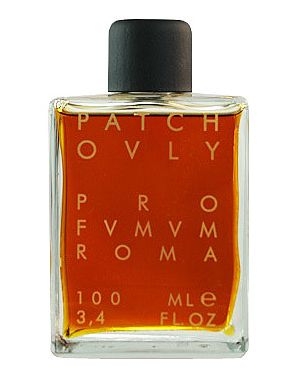
Patchouli is one of my favorite notes when it is dark, chewy, and somewhat dirty. These days, however, the patchouli used in perfumery is usually the purple, fruited sort. I’m not a fan, to put it mildly, so it was with some trepidation that I approached Profumum’s soliflore. What I found was a callback to the past, an utterly glorious, hardcore, seriously dark patchouli that felt as rich as a thick, six-inch brownie infused with resins, caramel and nuttiness. A long time ago, when I was 14, my signature scent was a fragrance from the French jewellery house, Ylang Ylang. The eponymous fragrance was a visual feast of black, gold, and brown, redolent of black patchouli and incense, golden amber, and spicy brown sandalwood. For decades now, I’ve been searching for a scent to replicate that old favorite, only to fail again and again. Profumum’s Patchouly is not it, either, but the opening twenty minutes came so close, I could have cried.

Profumum PatchoulyPatchouly is an eau de parfum that was released in 2004. Profumum‘s website describes the fragrance and its notes very simply:

Remote regions of my unconscious are in turmoil.
I hardly hold the emotions that overcome me,
like memories of antique pleasures.

Patchouli, Amber, Sandal, Incense.

The description from Luckyscent also references memories and antiques and, in my opinion, is generally quite on point in its characterisation of the scent:

A devastatingly rich and earthy take on patchouli that fully exploits its profound and powerful nature. Amber helps bring out its irresistible, chewy sweetness that is just this side of narcotic, sandalwood accentuates its warm heart and incense wraps it all in a veil of intrigue. This is like opening a forgotten trunk found in the attic of an old manor, and discovering a bewitching mix of memories and treasures. The scent of warm, dry wood envelops you as a honeyed swirl of memories flit about like smoke. Deep and evocative.

"Fading Flower" by Hani Amir via Fotopedia.com

“Fading Flower” by Hani Amir via Fotopedia.com

Patchouly opens on my skin with a blast of blackness. Dark, chewy, dirty, smoky patchouli with a bite of black incense. It’s followed by ambergris, an expensive, rare element that seems to be the signature base of so many of Profumum’s Orientals, and whose unique, special characteristics differ so widely from that of the usual “ambers” on the market. Here, the ambergris has a musky, salty, earthy, slightly mushy, and faintly sweaty aroma with a caramel undertone. It adds to the rich, resinous, chewiness of the patchouli.

The two notes create an earthy funk but, to me, it never smells of 1970s hippies and “head shops.” Actually, to be totally honest, I’ve never been quite sure what exactly the term entails. It’s often used to describe a certain kind of dark patchouli, but I’m too young or too square to know about the whole ’70s drug culture. Though I’ve been in modern, Bohemian, hippie, counter-culture shops that had patchouli, crystals, incense, tie-dye garments, and other things, this is not the same sort of smell that wafted about there. The patchouli here is dark, yes, but it’s far too infused with ambergris’ sweet and salty goldenness to be a true ’70s, dirty, skunky funk.

Source: footage.shutterstock.com

Source: footage.shutterstock.com

Though Patchouly is essentially a simple soliflore — a fragrance focusing on one primary element — there is more going on under the surface. A spicy undercurrent lurks about in those opening minutes, almost as if cloves, black pepper, and perhaps chili were added to the notes. I’ve found that Profumum’s notes are not always complete, so it’s quite possible there are spices tossed into the mix as well. Further down below in the base is a subtle touch of leatheriness, though it feels more like a subset of one of the resins than any actual leather. The whole thing adds up to a mix that is smoky, spicy, sweet, salty, earthy, and chewy, all at once.

The glorious, dark funk of the patchouli doesn’t last long. Unfortunately for me, ten minutes into the Patchouly’s development, the hardcore nature of the note is soon weakened and diffused by the increasingly prominent ambergris. It softens the beautiful chewiness of that black patchouli, infusing it with a salty, nutty, caramel, satiny richness.The smokiness of the incense recedes to the edges, as does much of the momentary spiciness of the opening. Thirty minutes in, the primary, dominant note in Patchouly is the salty, musky, caramel-sweet ambergris. The fragrance feels a lot like Profumum’s Ambra Aurea, only mixed with patchouli and a hint of incense. 

Source: wallpaperswa.com

Source: wallpaperswa.com

As time passes, the ambergris takes over completely. It’s a disappointment, but perhaps understandable. Patchouli doesn’t have the best reputation as a note, given that whole “head shop” thing of the past. Consequently, keeping it within the warm embrace of an amber cocoon prevents it from being too overwhelming for people, the majority of whom do not like a dark, dirty version of the note. Still, I personally would have preferred that both the patchouli and the incense not weaken quite so fast. I’m sure everyone else, however, will be thrilled by that.

At the 1.25 hour mark, Patchouly turns, soft, gauzy, and blurry around the edges. It is still extremely potent up close, but the fragrance is more diffused in weight and feel. It floats about like a golden-black veil about 3-4 inches above the skin, wafting a chewy, musky, caramel amber with streaks of patchouli. It’s still dense and earthy, but not quite in the same way or for the same reasons. And it’s far too golden, sweet and nutty to feel truly dark. By the start of the fourth hour, Patchouly is primarily an amber and musk fragrance, only lightly tinged with its eponymous note. The fragrance smells like sweet, warmed flesh that is a tiny bit musky from time in the sun or from exertion. Patchouly has essentially melted to create a “my skin but better” bouquet of musk atop a base of rich, satiny, caramel ambergris. It remains that way until the very end, almost 11.75 hours from the perfume’s start.

I think Patchouly is a beautiful fragrance, especially for those who are leery of true, hardcore patchouli scents and who prefer something softer or tamer. It is an incredibly rich, luxurious, long-lasting fragrance that I think is extremely sexy. However, the extremely close similarities to Ambra Aurea may make Patchouly feel a little redundant for anyone who owns the other Profumum fragrance. I happen to have a large decant of Ambra Aurea, and that is the only thing stopping me from yearning for an immediate bottle of Patchouly.

There aren’t a ton of blog reviews for Patchouly out there. Perfume-Smellin’ Things has a short paragraph on the scent which Marina also liked a lot:

An expansive, full-bodied patchouli scent with generous helpings of sweet amber, velvety sandalwood and a dry, dark incense note that, from the middle stage on, seems to overwhelm the aforementioned amber and wood and to rule the blend alongside patchouli. I liked this one a lot. I am not sure I will be buying a bottle, I am not that big a fan of patchouli and will never be able to finish a 100ml jug…I must also add that it layers wonderfully well with Fiori d’Ambra and Acqua e Zucchero, adding to them the depth and the va va voom that both are missing.

People seem to detect different notes underlying that patchouli. On Fragrantica, the note had a chocolate nuance on some people’s skin. Others talk about the ambergris, or note some vanilla in the base. For one blogger, Nathan Branch, the fragrance had a medicinal opening, though he thought the Profumum scent was the best of a number of patchouli fragrances that he tested:

Profumum Patchouly: leaps out of the gate as a no-nonsense, take no prisoners medicinal patchouli. Your average sweet and floral perfume lover will be startled by the high-pitched mint & mothball breath of Profumum Patchouly and flee to seek comfort and solace elsewhere. True patchouli aficionados, however, will be thrilled. Includes amber, sandalwood and incense ingredients (the incense is especially nice), but these are added sparingly and only show up much later in the game. […] In summation: Profumum Patchouly is the most genuinely patchouli-ish of the bunch, graced with a nice incense afterburn

If you’re tempted by the fragrance, but have lingering trauma from the ’70s, perhaps this Fragrantica review from “MsLeslie” will reassure you:

Ever since 1967, when I was a run-away teenager in the Haight Ashbury trying [and failing] to be a flower child, I have loathed the nasty, oily, musty smell of patchouly exuding from the bodies around me. And I have avidly avoided patchouly ever since.

Or at least I did until I received this amazingly gorgeous Patchouly from Profumum Roma in a grab-bag of samples from the Perfumed Court a few months ago.

THIS patchouly is irresistable! It is rich, deep, intense, complex, with a strong redeeming sweetness that balances out the musty quality. 

This is a beautiful scent!

It really is! Absolutely lovely, and a must-sniff for anyone who loves real patchouli.

SANTALUM:

Profumum SantalumSandalwood is one of my favorite notes, so I was incredibly excited to try Profumum’s eau de parfum tribute called Santalum. Released in 2003, Profumum describes the scent as follows:

Scented votive fumes rise to the sky.
Flower garlands, statues and columns everywhere.
Carpets and drapes have been prepared.
The warm and humid air diffuses
the scent of the sacred forest.
The ceremony has started…

Sandalwood absolute, Myrrh, Spices

Santalum was a disappointment from the start. Those of you who are regular readers have christened me a “sandalwood snob,” and while it is absolutely true, it is not the reason for my enormous irritation with the scent. Well, not the main one, at least. The problem, for me, is that Santalum is a synthetic, ISO E Super hot mess. The fragrance opens on my skin with a medicinal, oud-like undertone, followed by incense, hints of powdery sweetness, and spices. The wood is rich and creamy, sweet and smoky. It’s lightly dusted by cinnamon and a hint of cloves. Within minutes, the powdery element overtakes the oud-like overtone, but also weakens some of the fragrance’s smokiness. There is a strong resemblance to Crabtree & Evelyn‘s now discontinued, vintage, 1973 fragrance, Sandalwood.

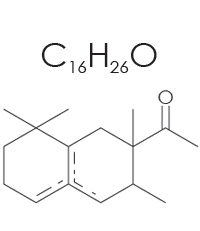
ISO E Super. Source: Fragrantica

ISO E Super. Source: Fragrantica

Then, the ISO E Super kicks in. At first, the synthetic only faintly resembles ISO E Super, and is merely a dry, woody aroma. In exactly 9 minutes, however, the note shows its true colours, and starts to make my head throb. Something else lurks in the base, too, a synthetic approximation of sandalwood that isn’t even that terrible, ersatz, fake Australian version that so many fragrances have come to rely upon these days. Santalum turns more powdery, though it is still creamy, lightly smoked, and faintly imbued with a quiet spiciness. At the end of the first hour, the fragrance is a vague approximation of “sandalwood” with large amounts of synthetics and ISO E Super, light dashes of cinnamon, hints of incense, and powderiness — all atop a slightly ambered base.

Source: the3dstudio.com

Source: the3dstudio.com

Santalum remains that way until its very end. The levels of cinnamon, powder, and incense fluctuate, weakening over time, but the strongly synthetic undertones are a constant. The only real change to the fragrance is in its feel. It takes less than 90 minutes for Santalum to turn sheer, airy, and very light in weight. It’s a surprise for a Profumum scent, given their usual richness, concentrated, dense feel. Still, to be fair, there are occasions when the fragrance wafts by in the air around you, and it is quite pretty, but it’s something that is much better smelled from a distance. By the end of the fourth hour, however, Santalum is a faded, blurry, abstract haze of creamy woods with a light undertone of synthetics, powder and cinnamon atop an ambered base. It only vaguely smells like “sandalwood,” and I’m talking about the ersatz kind, not even the real Mysore one.  All in all, the fragrance lasted just over 8.75 hours, with generally soft sillage throughout.

By all accounts, Santalum has been reformulated from a dark, rich, woody, myrrh fragrance into something that is significantly lighter and more powdery. I have no idea if the fragrance was always such a synthetic bomb, but I do know that I’m not the only one who was disappointed with the existing version. On Fragrantica, the most recent review is from 2012 and states:

This is not the best use of sandalwood in perfume. I got a lot of camphor-like notes (oud?) in the opening and what I suspect is Austalian sandalwood, much different and greener than the wonderful Indian sandalwood,that is beautifully woody and resinous. then comes plastic, along with some powder. this smells similar to Crabtree and Evelyn’s sandalwood gift set, so if you like powder with your sandalwood, you may like this. Longevity was about 3 hours.

Other reviews from 2012 also reference the powderiness of Santalum, along with yet another comment about a “medicinal” nuance to the scent. As a whole, the comments reflect either qualified, hesitant “liking,” or actual disappointment. Older reviews, in contrast, are much more positive and talk extensively about the fragrance’s myrrh, incense, and amber. On Luckyscent, one commentator wrote:

I bought Santalum about a year ago and really enjoy the richness and warmth of its scent. I bought another bottle this year and was disappointed in the re-engineering done to the product. It’s dark ambery appearance has been replaced with a slightly off-color yellow. The product’s scent is lighter now and much of the richness of its former rendition is no longer present to my nose.

Clearly, something has changed — and not for the better. One doesn’t have to be a sandalwood snob to find the fragrance disappointing, but, even if you like powdery “sandalwood,” I think there are probably better versions out there for the price. In my opinion, the current version of Santalum isn’t worth it.


DETAILS:
PATCHOULY Cost & Availability: Patchouly is an Eau de Parfum that only comes in a large 3.4 oz/100 ml bottle which costs $240 or €179. Profumum unfortunately doesn’t have an e-shop from which you can buy their fragrances directly. In the U.S.: Patchouly is available at Luckyscent, and OsswaldNYC. Outside the U.S.: In the UK, Profumum perfumes are sold at Roja Dove’s Haute Parfumerie in Harrods. Elsewhere, you can find Patchouly at Switzerland’s Osswald, Paris’ Printemps store, Premiere Avenue in France (which also ships worldwide, I believe), France’s Le Parfum et Le Chic (which sells it for €185), the Netherlands’ Celeste (which sells it for €180), and Russia’s Lenoma (which sells it for RU16,950). According to the Profumum website, their fragrances are carried in a large number of small stores from Copenhagen to the Netherlands, Poland, France, the rest of Europe, and, of course, Italy. You can use the Profumum Store Locator located on the left of the page linked to above. Samples: Surrender to Chance carries samples of Patchouly starting at $4.99 for a 1/2 ml vial. You can also order from Luckyscent.
SANTALUM Cost & Availability: Santalum is an Eau de Parfum that only comes in a large 3.4 oz/100 ml bottle which costs $240 or €179. Profumum unfortunately doesn’t have an e-shop from which you can buy their fragrances directly. In the U.S.: Santalum is available at Luckyscent, and OsswaldNYCOutside the U.S.: In the UK, Profumum perfumes are sold at Roja Dove’s Haute Parfumerie in Harrods. Elsewhere, you can find Santalum at Switzerland’s Osswald, Paris’ Printemps store, Premiere Avenue in France (which also ships worldwide, I believe), Le Parfum et Le Chic (which sells it for €185), the Netherlands’ Celeste (which sells it for €180), and Russia’s Lenoma (which sells it for RU16,950). For all other locations from Copenhagen to the Netherlands, Poland, France, the rest of Europe, and, of course, Italy, you can use the Profumum Store Locator to find a vendor near you. Samples: Surrender to Chance doesn’t carry Santalum, but you can order from Luckyscent at the link listed above.