AbdesSalaam Attar La Via del Profumo Mecca Balsam

Source: The Telegraph.

Source: The Telegraph.

The road to Mecca, filled with the scent of millions of pilgrims radiating amber, incense, and spice. A mysterious Sufi mystic garbed in blue robes of the desert who has been called a “genius” and “a magician” with natural essences. And the desire to recreate “the perfume of the mosques and the music of the wind organs in cathedrals.”

Some of the millions of white-robed pilgrims at Mecca. Source: The Telegraph.

Some of the millions of white-robed pilgrims at Mecca. Source: The Telegraph.

That last line alone stopped me in my tracks with its beautiful imagery, the poetry of perfumery focused on the very heart of the Middle East: Mecca. Mecca Balsam is the creation of the perfumer, Dominique Dubrana, but I have to admit, I have no clue as to how I should call his perfume house. Many sites list it as La Via del Profumo, his website is called Profumu.it, but American decanting services and perfumistas often refer to the line as “AbdesSalaam Attar (profumo.it)” or AbdesSalaam Attar. The latter is the nom de plume he uses on Basenotes, where he is a contributor and with whom he’s created a few perfume series. I’ve decided to opt for the very long name of “AbdesSalaam Attar La Via del Profumo” at first, and then to shorten it to “AbdesSalaam Attar.”

I’ve been interested in the highly respected, almost legendary, Dominique Dubrana for a while. The New York Times had a fascinating article from 2010 entitled “Smellbound” in which Jim Lewis describes the man and his creations:
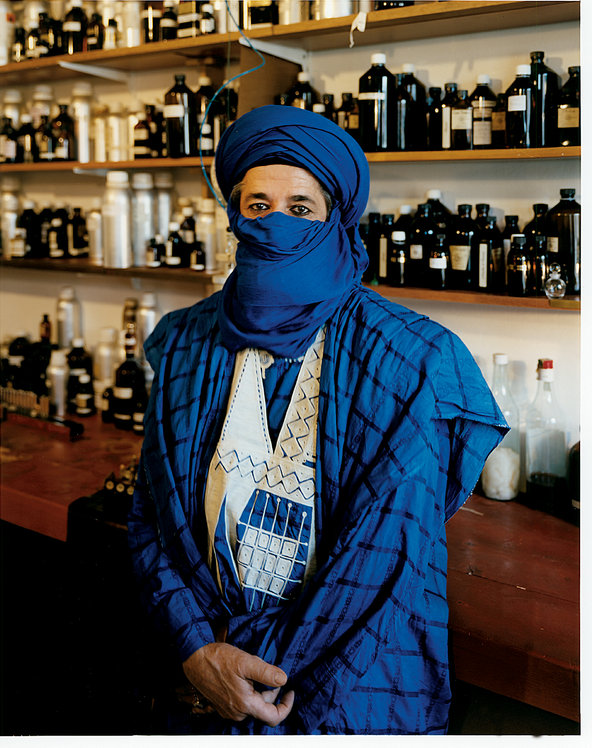
Dominque Dubrana via the NYT. Photo by Domingo Milella.

Dominque Dubrana via the NYT. Photo by Domingo Milella.

One overcast afternoon last May I sat in a small atelier in a tiny town in the hills of Rimini, Italy. Across from me sat a man in royal blue robes and a matching blue turban, with a long gray beard and kohl-rimmed eyes; on his desk, and on the shelves behind him, in a cabinet by the door — all over the room — there were small amber-tinted glass bottles, scores of them, and as we spoke he would take one up, open the top, hand it to me and invite me to smell the contents. This went on for hours. It was why I’d come: to meet Dominique Dubrana, a 54-year-old Frenchman living in Italy, a Sufi convert, a grand eccentric and a genius of sorts. […]

Dubrana is a perfumer, and there is no one quite like him working anywhere in the world today. [¶] For one thing, he has no store — and no corporation to answer to and no marketing budget. He invents his own stuff, bottles it and sells it only online, relying on word of mouth to spread his name. […][¶] More important, he uses all natural ingredients, an ancient craft in the modern world, where synthetic molecules make up as much as 90 percent of most commercial perfumes and where some familiar notes — most musks, for example — are almost impossible to find in their natural state. [¶][…]

Luca Turin, the author of “Perfumes: the Guide,” a visiting scientist at M.I.T. and the capo of perfume critics, says: “He’s one of these very rare examples of a natural-born perfumer. He seems to be incredibly sure-footed, in a way which reminds me of François Coty. There are dozens of all-natural perfumers; I don’t pay much attention to them, because every time I do I get a bunch of hideous crap. But I love his fragrances. I don’t think anyone can touch him in the field of natural perfumery.”

Source: upww.us

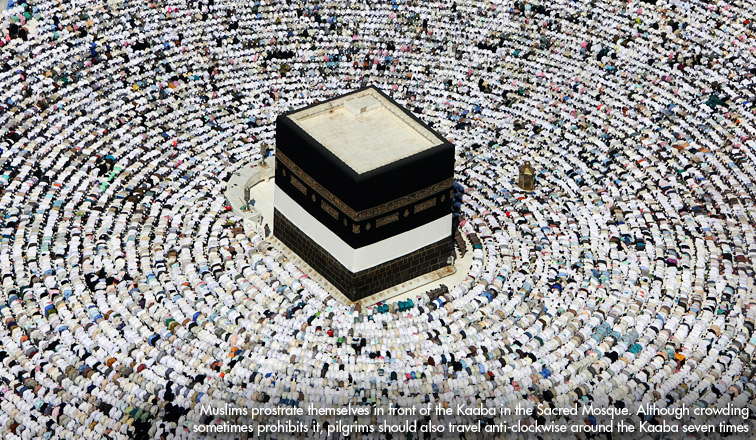
Masjid al Haraam in Mecca, the Sacred or Grand Mosque, which is perhaps the holiest place in Islam. Source: upww.us

I haven’t had much luck with natural perfumery thus far, but I’ve heard nothing but raves for the AbdesSalaam Attar line. My problem was where to start. There were an overwhelming number of his fragrances listed on Surrender to Chance, but one name caught my eye: Mecca Balsam. The perfume was inspired by Mr. Dubrana’s trip to Mecca, and the smells of the city. A quick check of the Profumo.it website description, where the fragrance is called Balsamo della Mecca, and I was sold. It was so damn evocative!

In Mecca, the scents of Labdanum resin, of Benzoin, frankincense and of the precious Agar wood invade the streets together with the 4 million pilgrims who pour to the streets 5 times every day, walking to the great mosque like river. […][¶]

The trail of a million scents in the wake of the pilgrims at Mecca raptures the nose of the visitor and make this travel an unforgettable experience for a westerner little used to such a profusion of olfactory stimulus.

I have imagined the perfume at Mecca itself while walking in the mist of the pilgrims, and I had already found its name there; “Mecca Balsam”. I would compose it with the smells and fragrances that are omnipresent in the holy city, it would be it’s olfactory signature.

Source: faculty.tamucc.edu

Source: faculty.tamucc.edu

Back to Italy, my memories still fresh and my spirit still filled with the pilgrimage, I started blending the essences of my perfumer’s organ.

The grave and austere note of Labdanum, deep and resinous, at once sacred and profane, is the center of gravity of “Mecca Balsam”.

Wrapped in the amber fragrance of Tonka and in the mystic aroma of the Arabic Frankincense, Labdanum wildness is tamed in an almost ecclesiastic scent that evocates at once the perfume of the mosques and the music of the wind organs in cathedrals.

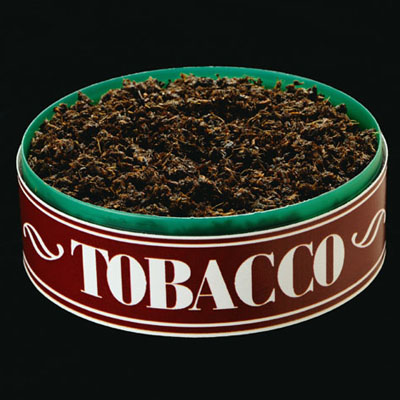
The scent of raw Tobacco, always present in the background, is like an anchor that binds the  base accord, giving them a common denominator.

The flowery notes of  Indian Tuberose and of Damask Rose enrich the base of the balsam in the fashion of Arabic fragrances, bestowing to the perfume an opulence worthy of the precious aromatic elixirs worn by the royal family of Saudia.

Mecca Balsam is a fragrance that is liked by men and women alike, its aroma is warming, full, aromatic, and somehow gives a fatherly sense of security.
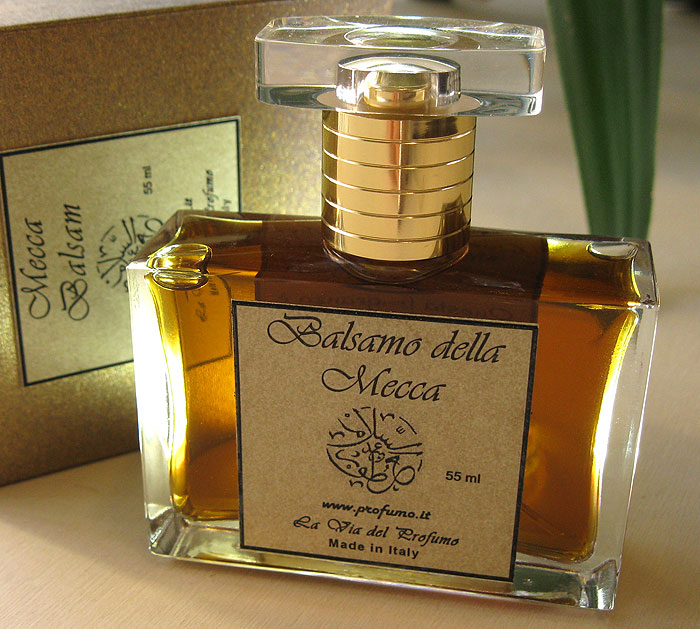
Mecca Balsam via the Profumi.it website.

The succinct list of notes would be:

tonka, Arabic frankincense, labdanum, raw tobacco, Indian tuberose and Damask rose.
Source: drugnet.net

Source: drugnet.net

Mecca Balsam opens on my skin with intense booziness, like sharp, young cognac, followed by fruit and tobacco. The latter smells definitely raw, like the juice from tobacco wads that some men and American baseball players chew. The notes are infused with smoky incense and a rough labdanum, but there is also a hint of something leathered, rubbery, and a little mentholated at the edges. The strongest impression is of the tobacco juice and a dirty, rough amber, flecked lightly by incense. It’s all very gritty, dark, leathery in feel, almost verging on the dirty, raw, untamed and masculine. At the same time, however, it’s also sweet, soft, warm, and strong. The fragrance hovers a few inches above the skin, at most, but is extremely potent and dense when sniffed up close.

I don’t smell the florals in Mecca Balsam in any distinct, individual, or significant way. However, the hint of something rubbery, almost diesel-like, and mentholated makes me wonder if it stems from the tuberose. There is a whiff of something underlying the note that makes me think of how the flower has been deconstructed in Serge LutensTubereuse Criminelle. With Mecca Balsam, the floral aspect never appears fully, but there is the faintest suggestion of tuberose after about 5 minutes. It’s more akin to dirty indoles, though it’s never fecal, sour, or even particularly lush. Whatever it is, the floral undertone is extremely muted and quickly fades away entirely.

Source: iherb.com

Source: iherb.com

About 20 minutes into its development, Mecca Balsam changes completely. All the rough edges suddenly start to soften, as the fragrance becomes smoother and smoother. From its initial start of lots of raw, concentrated tobacco juice over a heart of dirty, warm amber with smoke, the perfume suddenly turns into… cinnamon orange spiced tea! The similarities were so overwhelming that I actually hunted in my pantry for an errant box of the stuff (which I don’t like very much), brewed a cup, and compared the two aromas. Mecca Balsam is obviously richer, deeper, thicker, and warmer in smell than a thin liquid, but I’m telling you: Orange Spice!

Source: sweetsouthernprovisions.com

Source: sweetsouthernprovisions.com

I don’t understand any of it, but what emanated from my skin for almost the next 12 hours was various levels of cinnamon orange tea over a base of warm, dark, slightly leathered amber with tobacco. The cinnamon is extremely dominant, but it never approaches the fiery aspect of “red hots” cinnamon candies. It’s much smoother and mellower than that. I suspect it stems from the Tonka being impacted by the other accords, but I have no explanation for the distinct smell of orange that appears by its side. The fruited aspect waxed and waned in strength, but there was always some aspect of a sweet citrus edge; at first, it was right on top with the cinnamon, but eventually, it became a more muted note by the edges.
Source: 123rf.com

Source: 123rf.com

The base notes are interesting. The amber never smelled like a lot of labdanum that I encounter: it was never toffee’d, nutty, or honeyed, and even the leathery nuance was subtle. As a whole, it merely smelled like an amorphous, really warm, golden base with a dirty edge. The tobacco eventually lost its rawness and was generally folded within the amber, though occasionally it was much more noticeable in its own right. The whole thing was dry and lightly flecked by the tiniest amount of incense, but Mecca Balsam was never a really smoky scent on me. For the most part, it was primarily just black tea that was highly spiced with cinnamon and sweetened with oranges.

At the end of the 6th hour, Mecca Balsam shifts a little. It takes on a slightly powdered touch at the edges that occasionally makes me think of powdered orange drinks. It also becomes a complete skin scent. Still, I was surprised by how long it took for Mecca Balsam to fade in strength. It never had more than soft sillage to begin with, but for an all-natural fragrance, it was surprisingly strong when sniffed up close. Perhaps that is due, in part, to the rawness or concentration of certain notes like the cinnamon or the tobacco. Even more surprising was how long Mecca Balsam lasted on my perfume-consuming skin. I could smell faint traces of it well after the 12th hour, and it finally died away as a blur of warm, spiced, ambered tea about 13.5 hours from the start.

I have to admit, I was disappointed with Mecca Balsam. The story, the inspiration, the magical, mystical, Bedouin and Sufi look of Mr. Dubrana, all led me to expect something very different. Perhaps nothing would have measured up to the images in my head, or to my growing fascination with Mr. Dubrana, but raised expectations are not the real cause. Rather, it’s the notes and how they manifested itself on my skin. I love labdanum and incense, I enjoy tobacco fragrances, and heavy, rich orientals are my absolute favorite. I did not expect Bigelow’s Orange Spice tea!

The greatest problem for me personally was the tobacco. At the start, it was incredibly dirty in a way that was simply too intense and sharp for my personal tastes. Even when it subsequently became muted, relatively speaking, and was folded into the amber of the base, I still struggled with it. I can take dirty labdanum or leather, but the rawness of the tobacco was perhaps a few steps too far on the dirty scale. I kept envisioning American baseball players in some 1950s movie with a wad of tobacco bulging in their lip, and spitting out streams of raw juice into a spittoon. It’s unappealing mentally, and the scent isn’t so refined on an olfactory level either. Again, in fairness, the scent softened and mellowed quite a bit after the first two hours, but then we go back to Orange Pekoe and cinnamon tea. It’s not my personal favorite.

Skin chemistry obviously plays a huge role in how perfumes bloom on the skin, but I have to wonder if batch variations might also be a factor as well. I have the impression, perhaps mistaken, that Mr. Dubrana does everything by hand and on a relatively small-scale. If so, then that may account for some variations, as Mecca Balsam is a much applauded scent with reviews that sometimes seem to describe something extremely different than what I experienced. All of this is apart from the fact that there seem to be at least two different versions of Mecca Balsam, from the Arabian series that I tested, to an early version made in 2010 for Jim Lewis who wrote The New York Times article, as well as what might be an extrait.

Source: alaan.cc

Source: alaan.cc

There are many blog reviews for Mecca Balsam, and a common thread between them is a discussion of the amber-tobacco heart. A number of reviewers also noted a “meditative” aspect as well. Take the assessment by The Non-Blonde who wrote, in part: 

I don’t think I’ve ever fully grasped the idea of a meditative perfume until I smelled Mecca Balsam [….] I’ve never actually experienced a perfume that took me there.

Why is Mecca Balsam different? It might be the depth and rawness of the natural ingredients. There are no minimalistic tricks and gimmicks here- this is the real thing. […][¶] The first whiff of Mecca Balsam is nothing short of stunning. It makes you stop, take a deep breath and take it all in. […] What you get here is dark and dry, resinous and smoky. It creates a certain mood right away. It’s very deliberate and there’s nothing casual about this scent. The labdanum and tobacco are the most pronounced notes on my skin. They make me feel like I’ve stepped into a dark, sacred place out of time. Sweet incense is burning in the corner and the red and pink lights of sunrise are felt more than actually seen through an elaborately ornamented window.

It’s a mental and emotional place, not a real one, but it feels safe and honest and allows one to take a good introspective look. The scent is strong and would affect your surrounding, but at the same time it’s personal and reflective.  [Emphasis in the original, but not underlined.]

Photo: Karin Kloosterman  at greenprophet.com

Photo: Karin Kloosterman at greenprophet.com

Suzanne of Eiderdown Press seemed to feel something a bit similar, writing:

its opening notes have all the gravitas of a prayer: they are weighty and deeply resinous—almost medicinally so, such that I could swear I smell the astringent lash of clary sage among them, though perhaps it is a figment of my imagination, as the perfumer does not list it among the notes. After five minutes, the labdanum and frankincense combination become smokier and more ash-like, with a little bit of tarriness that makes me also wonder if there might be a hint of castoreum, too, in the composition. As it continues to dry down, the fragrance softens considerably but continues to unfold. The smokiness is still there but it is ever so lightly sweetened by the balsamic and ambery tonka note, and then rounded out by the warmth of tobacco. The floral notes go unnoticed, as their function here seems to be that of a soothing olfactory balm, if you will—taking the edge off the rawer notes and lending softness and depth to the scent .

What is most impressive about Balsamo Della Mecca is that it does what most all-natural perfumes don’t do: it stays with you. After its weighty opening, it becomes this wonderfully breathy tobacco scent that you fear is going to disappear on you—it becomes a tobacco-y skin scent, really,  a rare thing among tobacco scents—and remarkably, it goes the distance. I get at least seven hours of wear from two generous spritzes of Balsamo Della Mecca.

Kevin from Now Smell This had an experience a little closer to mine, at least in terms of spices:

Balsamo della Mecca begins with rich, ‘leather-y’ labdanum and smoky frankincense. As the fragrance develops, interesting facets emerge — accords that smell of unsweetened cinnamon, “cola” and musky tobacco. The fragrance is dense and only lightens after hours of wear when the notes seem to “dry out” and turn powdery — a lovely phase when frankincense and benzoin/tonka predominate. […][¶] I don’t detect much tuberose and rose in Balsamo della Mecca … and agarwood is “overcome” by labdanum and frankincense. Balsamo della Mecca is a great incense perfume, wearable by men and women.

I was surprised at all-natural Balsamo della Mecca’s lasting power: over 10 hours. And in case you’re “worried,” it is not a sillage-monster. Balsamo della Mecca is an excellent layering scent and adds depth (and a touch of incense) to floral perfumes (it digests citrus fragrances in minutes).

Basenotes reviewers are entirely positive about the fragrance which is entered in the site under the name Balsamo della Mecca. Both men and women alike describe it in terms of uniqueness, spirituality, beauty, or a meditative feel. Just two examples:

  • Tall, dark and soulful. [¶] This one is an experience rather than a list of notes. Warm and comforting, this is a scent I reach for when it’s been a long day or promises to be one. It wraps me up. To be honest if scents can have a soul then I think this one has the soul of a healer. A sexy healer! […] warm, enduring and strangely compassionate[.]
  • this one is all about labdanum: resinous , spicy , with some tobacco and loads of frankincense, that i mixed for some pepper [¶] it opens up like a blast of some herbaceous spices including pepper , for a soup :)….gourmand like to my nose, and then goes on heated by the body heat for hours, like it melts layer by layer, its dense, resinous, sweetish scent with lot of spices, a little bit dark [¶] this one is unique, and i like it but i did get the feeling when i wore it that its not for this world 🙂 its for special purposes , some religious ceremonies….transcendental, the name fits it perfectly it does feel like balsamic!healing the soul 🙂

Even one person who was not moved by the scent gave it a positive review, finding Mecca Balsam to be both “complex” and “stellar”:

If I can sum this scent in one word it would be this: COMPLEX. It took me more than a few days of wearing before realizing I came nowhere close to unraveling its mysteries.

On my skin BALSAMO DELLA MECCA plays a symphony comprising of three main accords: balsamic labdanum, dry frankincense and aromatic tobacco, interspersed with the nuanced sweetness of dried fruits. The rose note is subtle at best, wearing close to the skin. Overall I find the scent warm and inviting with a texture that is dry but not quite as dusty nor as Lutens-like syrupy as I had initially feared. I don’t know if it’s my skin but the tobacco is surprisingly tenacious.

Despite its formidable charms, it failed to move me though I smiled a little when I caught a glimpse of a cleverly hidden tuberose. […] I also suspect some of the more glowing reviews could have been influenced at least in part by its rather exotic name and the association it carries with the annual Muslim pilgrimage to the holy city of Mecca. But it matters not. For what it’s worth, I think this release is nothing short of ‘stellar’.

Obviously my experience was completely different, though the common themes of cinnamon, strong tobacco, amber, and undertones of leather and incense are all there. How one interprets a note is naturally subject to one’s personal mental filters, and for me, it was Orange Spice black tea with amber and various degrees of raw spittoon tobacco juice. I’m afraid I don’t get any meditative or spiritual qualities from the scent, and I agree with the commentator above that the fragrance’s name and associations might have influenced some of the talk of spirituality on Basenotes and elsewhere. Then again, skin chemistry is key, and perhaps there are some batch variations as well.

I don’t think Mecca Balsam is for everyone. I think some people would find it far too masculine and, depending on skin chemistry, perhaps even dirty, thanks to the raw tobacco juice. That said, I encourage those who adore incense, labdanum, or Middle Eastern scents above all else to give Mecca Balsam a try. The fragrance is very well done, and my experience was obviously outside the norm. Plus, samples aren’t hard to obtain, and the perfume is offered in a variety of sizes, starting at €36 or about $50 for 15 ml. There are 20 positive reviews in a variety of languages from English to Russian and Asian linked on the Profumo.it site that attest to the fact that the fragrance is something different, original, and complex. Maybe you’ll get my Lapsang Souchang cinnamon orange tea with tobacco bouquet, or maybe you’ll experience the dark, dry, meditative, incense fragrance that takes you to Mecca at dawn. Either way, it’s quite an experience, and undoubtedly like nothing else you’ve really tried.

DETAILS:
Cost & Availability: All of AbdesSalaam fragrances can be purchased directly from the Profumo.it website which ships its scents world-wide, along with many natural ingredients. Mecca Balsam seems to come in a few different versions and has several entries on the website, but the version I sampled came under the name Mecca Balsam (Arabian Series). That version offered in a variety of different sizes. All the following prices are without VAT: €36,70 for 15.5 ml, €78,69 for 32 ml (a little over 1 oz) and €112,13 for 50 ml/1.7 oz. At the current rate of exchange, the 50 ml bottle comes to a little over $154 in USD. The site says: “Prices are without VAT and are valid for USA and all non EEC countries[;] for shipments in the EEC 22% VAT will be ADDED to the amount in the shopping cart.” Samples: I obtained my sample from Surrender to Chance which sells a ton of AbdesSalaam Attar/Profumi scents. Mecca Balsam (Arabian Series) starts at $6.99 for a 1 ml vial.

Amouage Sandal Attar

Some of the most luxurious creations in the perfume world are rich Middle Eastern attars, and few people do it as well as the royal perfume house, Amouage. I recently had the chance to try Sandal, an lesser-known Amouage attar, thanks to the kindness of a reader of the blog, “Dubaiscents,” who generously sent me a sample. Sandal is a soliflore centered around one ingredient, and one ingredient alone: sandalwood. 

Sandal attar, via Fragrantica.

Sandal attar, via Fragrantica.

Sandal‘s press description is provided by one EU retailer, Profumeria Pepos, and reads:

Unique and therefore absolute. Only one player dominates the heart of this attar, Sandalwood. Mystic wood celebrating the oriental cults. Aphrodisiac wood smelling the nights of love. Lonely lover’s skin is often sought to sublimate the Asian touch with its dry and velvety touce. Here, a maximum concentration of itself, was left alone to be admired in its absolute beauty.

Mysore sandalwood cross-section. Source: http://vk.com/wall172858112_51

Mysore sandalwood cross-section. Source: http://vk.com/wall172858112_51

Sandal is supposedly nothing but pure Indian sandalwood. It is one of my favorite notes, and I grew up in an age where all the fragrances I wore had copious amounts of the glorious Mysore wood. Rich, red, spicy, often a little smoky, creamy, and with a touch of sweetness, it was beautiful. Unfortunately, nowadays, true Mysore sandalwood is so rare and so astronomically priced in even the smallest quantities that it might as well be extinct for the purposes of perfumery. As regular readers of the blog know well, I’m a huge sandalwood snob, and I find the Australian kind to be significantly different. I can count the modern fragrances that include genuine Mysore sandalwood on one hand, as the smell is truly distinctive for me.

Australian "santalum spicatum," via alibaba.com .

Australian “Santalum Spicatum,” via alibaba.com .

To my nose, Amouage’s Sandal attar smells like Australian sandalwood, and nothing like the Mysore variety that I grew up wearing in fragrances and oils. Sandal opens on my skin as green creaminess that smells exactly like buttermilk with the slightest, faintest tinge of sourness. The wood smells young and green, and doesn’t evoke the visuals of true Mysore sandalwood with its red-gold hues, rich spiciness, light smokiness, and sweetness. I recently received some oil from an Australian sandalwood plantation, and Amouage’s Sandal is almost identical to that on my skin. The only difference is that the Sandal lacks the occasionally medicinal touches, and is infinitely creamier. It’s beautifully soft and smooth, but it still smells green to me.

As a single-note oil, Sandal doesn’t change much on my skin. After a few hours, a lovely, extremely delicate, and light floral element creeps into the creamy woody smoothness. It has an almost a lemony undertone to it and, on occasion, smells a little like lemongrass. At no time is any of it spicy or smoked in feel. The attar wears very close to the skin, hovering perhaps an inch above at best in initial projection in the opening hour. It becomes a skin scent after about 5.5 hours, then fades away entirely at the start of the 9th hour.

Australian sandalwood or "Santalum Spicatum." Source: rarewoodsandveneers.com

Australian sandalwood or “Santalum Spicatum.” Source: rarewoodsandveneers.com

I couldn’t find any blog reviews for Sandal, but there are brief assessments in some very old Basenotes threads. In one discussion dating back to 2010, a commentator found the sandalwood in the attar to be genuine Mysore sandalwood and described the smell like “coconut water.” He thought it was exactly like the old Mysore scents he used to wear in the 1970s. However, in an earlier thread from 2009, the two olfactory descriptions of the Sandal attar were different.

  • I’ve sniffed Al Andalous and Sandalwood and both seemed to be very similar to other typical Middle Eastern attars of the same respective genres, with a fair dose of clearly synthetic ingredients.  […] The Sandalwood attar was not unpleasant but not anywhere near the pure sandalwood oil.
  • The Sandal is very medicinal, like a cough crop. That sounds strange but it’s gorgeous.

Amouage’s attars are not immune from reformulation or weakening, so I don’t know if the 2013 version that I tested has changed from the 2010 version of the Basenotes commentator who detected “genuine” Mysore sandalwood. All I can say is that, to my nose, Sandal has creamy buttermilk greenness, not the red Mysore spiciness, sweetness and smoke.

Sandal is pretty in its creaminess and, if one were not a sandalwood snob, would probably be very enjoyable to wear. For me, personally, however, I could not justify spending the amount of money asked by Amouage for such a green, buttermilk version of my favorite note, especially given the sillage. I tested the attar a few times and, on one occasion, asked a family member who loves Mysore sandalwood what they thought. It was only an hour after application, but they could barely detect the scent on my skin. I said, “it’s sandalwood,” to which they replied, “doesn’t smell like it to me.”

Sandal is cheaper than Amouage’s better known attars like Tribute and Homage, but they’re still not giving away. You can find the smallest size (12 ml) starting at $250 or €168, which is better than Tribute’s opening price of $370. It’s still quite a hefty outlay for a mere 12 ml of a soliflore with weak sillage. For me, personally, the glorious, fantastic Tribute blows it out of the water, but Tribute is a much more complicated beast and definitely not a soliflore. I also prefer the interesting, nuanced Al Mas and Asrar attars, but, again, it probably isn’t fair to judge a single-note fragrance by the standards of scents with more layers.

At the end of the day, price is always a subjective matter, as is probably the aromatic impression of Mysore wood in general. So if you’re looking for a creamy and pretty take on sandalwood, then you may want to consider Sandal. It’s not the easiest thing to find, but it’s not impossible either. 

DETAILS:
Cost & Availability: Sandal is a concentrated perfume oil, and comes in two sizes: 12 ml and 30 ml. Amouage has stopped carrying its attars outside the Middle East. Sandal is not sold in the U.S. nor available directly from the Amouage website, but you can find it on a few online retailers. Before I get to that, however, your best bet in finding the attar is in perfume groups. One is “Facebook Fragrance Friends” on Facebook, in which decants or samples of all the Amouage attars are currently being offered by the kind reader who provided me with Sandal. She paid the lower Oman and Dubai price for the bottles, so you may save a little over buying them at the higher Western price. Outside of Facebook, both sizes of Sandal are available at Zahras, a US online site specializing in Middle Eastern fragrances. You will have to scroll down that PDF link to page 19 to find the listing. The prices are $250 and $469 respectively for the 12 and 30 ml bottles. In the EU, I found Sandal at Profumeria Pepos which sells 12 ml of Sandal for €168. Same thing with Al Sacro Cuore, another Italian site. I could not find Sandal on the Dubai perfume site, ASF-Dubaishop, which normally carries a few of the Amouage attars at a good price, but not this one. Kuwait’s Universal Perfumes also doesn’t carry Sandal, but Italy’s Alla Violetta has numerous Amouage attars listed, including the Sandal at €168. However, none of them seem to be in stock, as they all carry the comment, “notify me when available” and you can’t put anything into a shopping cart. In terms of other vendors, Sandal is sold by Russia’s ry7. I don’t think the Amouage boutique in London carries the attars any more, as they’ve been limited to the Middle East by now, but you can always check. Samples: I haven’t found samples of the Sandal to be available on any of the decanting sites.

Imaginary Authors Cape Heartache and The Cobra & The Canary

I was intrigued by the concept of scent intertwined with literature, so I recently tried out some fragrances from Imaginary Authors, an American indie line begun in 2012 by perfumer, Josh Meyers. Today, the focus will be the new 2013 scent, Cape Heartache, followed by The Cobra & The Canary. In a follow-up post, I’ll briefly cover Memoirs of a Trespasser, and Soft Lawn.

According to its website, the Imaginary Authors line was “born from the concept of scent as art and art as provocation.” Each fragrance is entitled with the name of a book, penned by an imaginary author who does not actually exist. All the fragrances are eau de parfum in concentration, and the vast majority were released in 2012.

CAPE HEARTACHE:

Cape Heartache.

Cape Heartache.

Imaginary Authors describes Cape Heartache, in the context of an imaginary novel set in a homestead in the forests of the Pacific Northwest in 1881. The fragrance was released this year, and its notes are as follows:

NOTES: Douglas Fir, Pine Resin, Western Hemlock, Vanilla Leaf, Strawberry, Old Growth, Mountain Fog.

I have absolutely no idea what “Old Growth” and “Mountain Fog” are supposed to entail as specific ingredients, but I can tell you what is missing from that list: ISO E Super or, as one of my readers accurately calls the cheap aromachemical, “ISO E Supercrappy” (™ SultanPasha). It’s there — and there is a lot of it!

ISO E Super. Source: Fragrantica

ISO E Super. Source: Fragrantica

I tried Cape Heartache a number of time, and the first time, I scrubbed it off after 10 minutes. Three sprays gave me so much ISO E Supercrappy that I had the most enormous migraine imaginable, complete with red-hot shooting pains through my eye and drilling in the back of my skull. As regular readers will know, I am sensitive to certain synthetics, but they don’t affect me physically unless a huge amount is used in the fragrance. Cape Heartache, like all of its siblings, is painfully synthetic, and filled with cheap aroma-chemicals. Sadly, it is not even the worst of the lot.

The fourth time I tried Cape Heartache, I carefully applied less, and I had an easier time of it so long as I never actually smelled my arm up close for any significant amount of time. Obviously, that makes writing a detailed review well nigh-impossible. Even apart from the ISO E, however, I disliked the scent so much, I still scrubbed it off after a couple of hours. However, I’m nothing if not determined, so I finally took two Tylenols ahead of time, avoided excessive application, and forced myself to get down to it. Thanks to the paracetamol, instead of being torturous, I merely find Cape Heartache to be a nauseating, cloying, linear, discordant scent.

Source: Cakechooser.com

Source: Cakechooser.com

Cape Heartache opens on my skin as strawberry shortcake and pine. There are the crisp needles on the forest floor, sweetened pine resin with brown sugar, and buttery, slightly floured, strawberry shortcake biscuits. Seconds later, ISO E Supercrappy follows, smelling like antiseptic toner, typewriter cartridge fluid, and chilled, metallic, peppered chemicals. It grows increasingly strong, adding an industrial bent to the cloying, sweet, top notes. I assume that the ISO E is intended to evoke the “mountain fog” mentioned in the notes, and it certainly does add a note of icy, thin chilliness. It also gives me a painful tightening in my nose at best, and a ferocious, almost crippling migraine at worst.

Strawberry Shortcake doll. Source: cakechooser.com

Strawberry Shortcake doll. Source: cakechooser.com

Cape Heartache’s dominant bouquet is a massive, walloping, thick spread of strawberry jam infused with pine resin. The fruited element has an undertone of floured, buttered bread, and it makes me think of the children’s cartoon, Strawberry Shortbread, as well as the Cabbage Patch dolls of the 1980s.

I refuse to think of Serge LutensFille en Aiguilles, a glorious scent to which a number of people find similarities. It would be a travesty to compare the bizarre Imaginary Authors version with Christopher Sheldrake’s masterpiece. Plus, there are differences between the two scents: Cape Heartache has very little smokiness as compared to the Lutens, and its heart is not darkness but strawberry jam, flour, and butter. There is no cheap ISO E Super in the Lutens, the fruited element is different, and the sweetness stems from different things. I can’t wrap my head around Cape Heartache, and it doesn’t help when a touch of vanilla joins the wholly discordant hodge-podge. 

Source: hdwallpapers.mi9.com

Source: hdwallpapers.mi9.com

Cape Heartache turns softer, sweeter, and less heavily piney after ten minutes, though the typewriter toner fluid of ISO E Super continues to thrum away. During one test, its peppered, prickly, spiky tones completely overwhelmed the strawberry pine, while on another occasion, the synthetic stood more to the sidelines. The quantity that you apply clearly makes a difference. After an hour, Cape Heartache is a blur of strawberry and pine resin, with fluctuating levels of vanilla and floured, buttered bread nuances. The scent never changes from its core essence, remaining in one linear line until its end almost 11.5 hours from the start. The sillage was soft after the second hour, though the fragrance was strong when smelled up close for quite a number of hours afterwards.

I could not bear Cape Heartache, but I’m in a distinct minority on that point. The blogosphere is filled with joyous raves about the scent, and how it’s perfect for winter. Perhaps if you have a fondness for strawberries, pine, and very sweet scents, along with total anosmia to ISO E Super, you may enjoy it. I would never recommend it, though.

THE COBRA & THE CANARY:

Imaginary-Authors-Canary-and-Cobra-CaFleureBonThe Cobra & The Canary is a leather and iris scent which Imaginary Authors describes as follows:

When a tip from a clairvoyant leads 23-year old Neal Orris to a rural Connecticut barn housing his deceased father’s secret obsession, a pristine 1964 Shelby Cobra Roadster, it is the getaway ticket he was desperately searching for. After liberating his best friend Ike from his dead-end job on the family farm, the two hit the open highway. Aiming for the Palm Springs race tracks, their journey is a blur of seedy motels, cool swimming pools, hot debutantes, cocktails, and cigarette smoke. Each stop finds the friends inventing new pseudonyms and personas for themselves, their innocent game hurtling into the depths of decadence and desolation.

NOTES: Lemon, Orris, Tobacco Flowers, Leather, Hay Fields & Asphalt.

It’s a lovely story, but The Cobra & The Canary was hell on earth for me. I mean it. The fragrance is laden with a cheap aromachemical that made me feel as though I’d been punched in the nose, had a scalpel scrape off the skin inside, and had a bloody nose. I have never had that reaction to a fragrance before, and it’s been a while since I experienced genuine physical pain in sniffing a fragrance. Each and every time.

Norlimbanol. Source: leffingwell.com

Norlimbanol. Source: leffingwell.com

The degree of the painful rawness that The Cobra & The Canary triggered in my nose makes me wonder if the fragrance has Norlimbanol, an ISO E-like cousin from Givaudan’s stable of aromachemicals that has an incredibly dry feel, and is used to recreate a leather nuance. The note in The Cobra & The Canary doesn’t smell identical to the Norlimbanol that I’ve encountered it previously, but the scent has dryness to a massive, sharp degree and there are also moments a few hours into its development where there was a definite ISO E-like tonality.

It’s undoubtedly something related to Norlimbanol, but whatever the actual synthetic may be, I felt actual, genuine physical pain every time I sniffed the scent — and I’ve tried it a few times. The first time, I had such a sharp pain in my nose and behind my eye, I had to scrub it off almost immediately. The next few times, I lasted a bit longer, but not by much. I finally gave it a full test, but my nose had to recuperate for two days afterwards from the metaphoric skin scraping.

Broken asphalt via good-wallpapers.com.

Broken asphalt via good-wallpapers.com.

The Cobra & The Canary opens on my skin with sun-sweetened lemon and dry, chemical synthetics. There is a floral element that vaguely resembles iris, but more frequently smells like a combination of lemony linden blossoms with a touch of narcissus. There is a subtle whiff of blackened leather and hay lurking underneath in these early moments, but it was hard to detect under the tsunami of synthetics. Initially, the latter merely smelled dry, but it soon transformed into a stronger tarry, rubbery note like the dry blackness of an asphalt road on a scorching day. The Cobra & The Canary’s olfactory list mentions asphalt, along with leather, and they’re definitely both there. As a whole though, the fragrance’s overall bouquet in the first minutes is of lemony florals with sweetness, a touch of hay, a subtle whiff of tarry leather, and an arid aromachemical.

Black latex rubber via bodysolid.com

Black latex rubber via bodysolid.com

The Cobra & The Canary starts to shift after 15 minutes. The lemon note begins to fade, and is replaced by a more prominent orris butter aroma. Something about the iris’ undertone in combination with the other notes evokes an industrial cleaner, along with carpeting in a sterile office. The leather element grows increasingly strong at the same time. It’s blackened and dark, with rubbery undertones akin to birch tar, though it lacks the diesel or smoky undertones of a truly birch-based creosote. Instead, it smells more like rubber latex, and is infused with the scratchy, sharp, synthetic aridness. By the start of the second hour, the synthetic leather has taken over much of The Cobra & The Canary, followed by the iris butter and the smell of industrial cleaner. Trailing behind in last place is the first suggestion of a soft suede with the tiniest hint of something powdery.

Source: artid.com

Source: artid.com

Over the next few hours, the leather and the Norlimbanol-related synthetic slowly give way to the iris butter. The Cobra & The Canary turns into an iris butter scent, with a touch of powder and a tarry, rubber latex edge by the middle of the 4th hour. The industrial cleanness replaces the dry arid, asphalt note as the dominant chemical, but both are much more muted than they were initially. Still, they hover under the top notes, giving me the feel of a nose bleed each time I smelled the fragrance up close.

Eventually, The Cobra & The Canary turns into a dry, powdered iris suede scent with greyish, industrial-smelling cleanness and general dryness. By the end, it’s a vague blur of something iris-y with that industrial signature. It lasted well over 12.5 hours on my skin, by which point, I’d had enough of the bloody thing and washed off the final traces.

ALL IN ALL:

I realise that I am more sensitive than most to certain synthetics like clean white musk, ISO E Super, Kephalis, and Norlimbanol. Aromachemicals usually have much larger molecules than other olfactory ingredients, which explains some of my reaction. This degree of pain, however, is pretty rare for me. It’s been more than 24 hours since that last test of The Cobra & The Canary, and the inside of my nose still feels a touch raw and bruised.

Experiencing actual, physical pain from perfumery never puts me in a good mood, which is why I’m going to eschew my usual approach to reviews. I normally try to include other people’s experiences, both positive and negative, to give a full, comprehensive picture of a scent. I don’t care enough to do so this time. Suffice it to say that Imaginary Authors has its fair share of admirers, and I seem to be in the minority. I also seem to be far from the target audience, as I don’t enjoy the chemical signature that I detected in all the Imaginary Author scents. Unlike some, I don’t consider the heavy use of intense synthetics to be appealing, revolutionary, or creative perfumery. 

Perfume tastes and reviewing are inherently subjective, personal matters. For me, all the Imaginary Authors fragrances that I ordered and have tried (which is half of the line at this point) are terribly cheap in smell, synthetic, simplistic, unpleasant, and largely linear. The perfumes cost $85, so they can hardly be filled with expensive oils and luxurious essences, but I am not judging them by the standards of an Amouage scent or something three times the IA price. (Plus, I’ve certainly given plenty of bad reviews to Amouage, Puredistance, Kilian, Armani, Serge Lutens, and other expensive lines for using cheap aromachemicals.) I’m judging Imaginary Authors in a vacuum, with each as an individual creation. And none of the scents is my personal cup of tea.

There are plenty of people who like The Cobra & The Canary, and I know for a fact there are tons who absolutely worship Cape Heartache. I’m glad it works for them.

DETAILS:
Cost & Availability: Each of the fragrances is an eau de parfum that comes in a 60 ml bottle that costs $85. You can purchase them directly from Imaginary Authors, with the following direct link for Cape Heartache. The company also offers a sample service, where each fragrance costs $6 per vial with the full set of 8 priced at $35. Imaginary Authors’ full line is carried by several Portland retailers, along with Parfums1, which ships overseas, though at a high price. The line is also carried at Brooklyn’s Twisted Lily. You can find other US vendors, along with some Canadian ones, at Imaginary Authors’ Stockist site. There are no European retailers listed. Samples: you can find samples of Cape Heartache at Parfums1, and Canada’s Italian Barber which sells a 2 ml plastic vial for $4.50.  Surrender to Chance sells Cape Heartache for $4.25 for a 1 ml vial, along with several other scents from line, including Soft Lawn, The Cobra & The Canary, and Memoirs of a Trespasser.

Jovoy Paris Psychédélique: A Fantastic Trip

Source: standout-fireplace-designs.com

Source: standout-fireplace-designs.com

A man in a library before a crackling fire, sipping cognac on a leather sofa, as the air around him swirls with a phantasmagoric stream of colours. Burnt umber, raw ocher, dusty terracotta, dark tobacco, golden caramel, nutty toffee, and a touch of blackened green. There are hints of spice and smoke in the air, along with a musky earthiness, but it is a scene of endless warmth, coziness, and richness.

Then, as if a magician waved his hand, the swirling coloured mists dissolve, and the scene changes. The man has been transported outdoors to a land filled with dark, mentholated greens, touched by earthy browns, and a hint of reddened dust. It’s muddy at times, and a muted chanting sound in the background momentarily conjures up the Summer of Love in 1968. It’s only a brief trip, though, and soon, he finds himself in his bed, surrounded by the finest, gauzy, silky sheets made of soft red, ambered caramel gold, and creamy vanilla. Did it actually happen, or was it a trip most Psychédélique?

Source: Bloom Perfumery.

Source: Bloom Perfumery.

Psychédélique is a fragrance from Jovoy Paris, an utterly glorious patchouli scent in all its best, truest, spicy-sweet-smoky red-brown incarnations. The fragrance (which I shall spell here on out without the warranted accents, for ease and speed) is really close to my ideal patchouli, though it doesn’t have the best projection after its opening stage. But what an opening it is!

Psychedelique is an eau de parfum, created by Jacques Flori of Robertet and released in 2011. Jovoy’s owner and creative director, Francois Hénindescribes the scent and its notes as follows:

“Psychedelic: my great patchouli fragrance, dark and smoky, ambered, generous and opulent… Even the rain and mud of Woodstock won’t wash it away.”

Head notes:  fresh hesperidium [citrus]

Heart notes: floral rose, geranium, ambered, woody (patchouli, cistus, gum cistus)

Base notes: vanilla, musk

Psychedelique with its box. Source: Roullier White.

Psychedelique with its box. Source: Roullier White.

Luckyscent has rather a wonderful description of Psychedelique:

Psychédélique, Jovoy’s magnificent ambered patchouli, largely stays in the shadows, meditating on the synergies between a cocoa-like amber and an inky-dark patchouli, although rose and geranium offer a touch of freshness to its earthy sexiness.

The synaesthete might say that on the olfactory color wheel, patchouli resides somewhere between black and chocolate brown, with a bit of iridescent chartreuse green shimmering in between. Camphory, inky, aromatic, and even darkly refreshing, the elegant patchouli in Psychédélique […] is like an olfactory Mark Rothko painting that explores the gradations between dark colors — in this case, patchouli, amber, and musk.

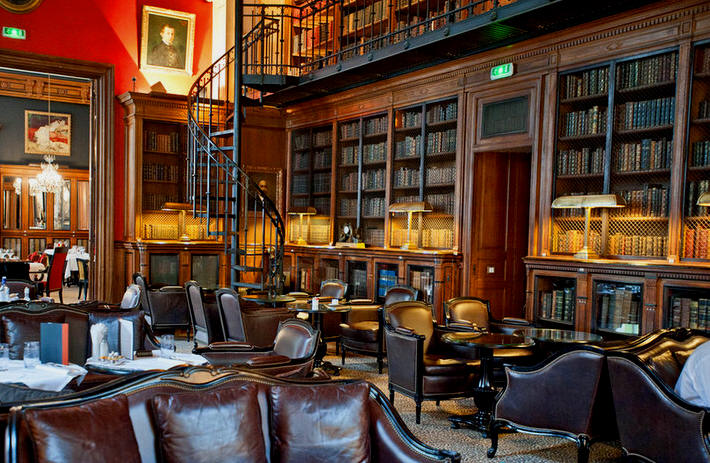
St. James Hotel's Library Bar, Paris.  Source: Oyster.com

St. James Hotel’s Library Bar, Paris.
Source: Oyster.com

Luckyscent finds the name unfortunate, as do I, because it tends to create the impression that Psychedelique is a dirty, filthy, head-shop, incense-y fragrance best suited to hippies. It’s not. It’s extremely refined, elegant and well-done. For me, the image which came to mind again and again was primarily that of a traditional men’s club or a rich library, filled with dark, studded, stuffed Chesterfield leather sofas, a crackling fire, aged cognac, a hint of smoke in the air, and a plate of caramels. Yes, there is a mentholated, camphorous stage redolent of green patchouli, but it’s not significant on my skin, and really far from the core essence of the fragrance. In fact, most of the time, the green undertone translates as wonderful peppermint.

Source: porjati.ru

Source: porjati.ru

Psychedelique opens on my skin with strong labdanum amber and patchouli, infused by a huge amount of boozy cognac. The patchouli has all its true nuances: leathery, spicy, smoky, sweet, dry, woody, and with a hint of something almost resembling tobacco. Psychedelique even carries the faintest whiff of a fruited element that smells like cinnamon-studded oranges. A definite blast of chilly peppermint follows, arm in arm with chewy, dark chocolate. Patchouli’s camphorous, green side lurks underneath, along with a tinge of black, almost “head-shop” like incense, but they’re only the subtlest of suggestions on my skin. Much more significant is the utterly glorious toffee and caramel amber, just lightly flecked by creamy vanilla.

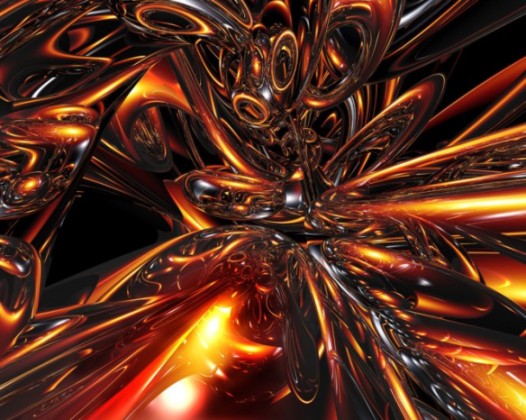
"Black Widow v1" by *smokin-nucleus. Source: DeviantArt. (Website link embedded within photo.)

“Black Widow v1” by *smokin-nucleus. Source: DeviantArt. (Website link embedded within photo.)

It’s a very potent brew in the opening hour, especially when sniffed up close, but Psychedelique has a soft quality about it. It feels a lot denser and more concentrated than it actually is, and is only truly intense within its small 3 inch bubble. To me, the opening has the best aspects of Oriza L. Legrand‘s Horizon and of Reminiscence‘s Elixir de Patchouli, but with none of the latter’s swampy, smoked cedar and sharp vetiver. When smelled from afar, Psychedelique is a beautiful swirl of ambered caramel gold and reddened, spicy patchouli, infused with cognac, toffee, peppermint, dry cocoa, sweetness, and a hint of fruitiness.

Source: urlm.co

Source: urlm.co

Within 5 minutes, Psychedelique starts to morph. At first, there is a dusty, dry earthiness that smells like damp, wet soil. To my regret, it cuts through some of the aged, boozy cognac which I love so much. At the same time, the rich amber in which all the notes are nestled turns slightly musky. There is also an increasing whiff of the salty-sweet aspect of the ambergris, mixed with the labdanum’s nutty, toffee’d caramel aroma. Chocolate and peppermint continue to be laced throughout, and there is the faintest stirrings of vanilla in the base, but there is nary a hint of a citrus, rose or geranium note in Psychedelique, regardless of what the ingredient list may say.

"Green and Maroon," by Mark Rothko. Source: ArtTribune.com

“Green and Maroon,” by Mark Rothko. Source: ArtTribune.com

It takes 25 minutes for Psychedelique’s greener side to become apparent. The fragrance becomes much more mentholated and camphorous; at the same time, the amber’s lovely caramel, vanilla, and toffee tonalities weaken. The boozy cognac retreats almost completely to the sidelines, and eventually vanishes before the hour is over. Psychedelique feels simultaneously softer, sharper, and dirtier. The dusty cocoa powder and chewy chocolate remain, but both are significantly more muted. Psychedelique is now very green-black in visual huge, instead of the red-brown-golds of the opening.

Source: rgbstock.com

Source: rgbstock.com

I should point out, however, that the degree of greenness in this stage varied depending on the amount of perfume that I applied, and that the note was not a huge part of the scent in a few of my tests. The more Psychedelique you spray, the more the green phase seems to come out around the 30 minute mark. A number of times, the main duo of golden caramel and patchouli remained as the dominant focus alongside with the mentholated, green-black note. In other words, if you don’t spray on a lot of Psychedelique, the greenness doesn’t take over the scent.

In all cases, however, the stage is pretty short-lived, and lasts under an hour or so. Generally, it begins to recede 90 minutes into Psychedelique’s development. At that point, the fragrance begins its slow transformation back to its original stage, minus that wonderful cognac booziness and heavy richness. At the end of the second hour, Psychedelique is a soft, smooth blend of patchouli with amber and sweetness, and only vestigial traces of the greenness lurking to the side. The sillage is low, unfortunately, and Psychedelique hovers an inch above the skin.

Via hdwpapers.com

Via hdwpapers.com

About 3.5 hours in, Psychedelique is a soft, spiced patchouli sweetened with creamy vanilla, and flecked by nutty, toffee’d labdanum. There are hints of cocoa powder, smokiness, and earthiness, but the whole thing is beautifully balanced. It’s neither too sweet, nor too spicy, smoky, chewy, or earthy. There is almost a dry woodiness to the plant, but Psychedelique never feels truly woody like some of its kin in the genre, many of whom are heavily infused with cedar and/or vetiver.

The whole thing is absolutely lovely, but it’s also a sheer, discrete skin scent — too much so for my personal preference. Unobtrusiveness seems to be the Jovoy style and signature, as all the other fragrances that I’ve tried from the line have been similar. They start with a bang that eventually fades to sheerness in a polite whimper. Here, I feel almost cheated. I’ve been looking for a great patchouli for ages, so to find one with a truly lovely opening and drydown, only to have to sniff my wrist with determination by the 4th hour is incredibly frustrating.

Mark Rothko, Untitled (Violet, Black, Orange, Yellow on White and Red), 1949. Source: The Guggenheim Museum.

Mark Rothko, Untitled (Violet, Black, Orange, Yellow on White and Red), 1949. Source: The Guggenheim Museum.

On the plus side, however, Psychedelique lasts and lasts. It may take some determined whiffs to detect it at the end, but that end phase frequently lasts over 14 hours on my perfume-consuming skin. No, seriously, it does. The smallest quantity of Psychedelique will yield 12 hours at a minimum, with minuscule traces lasting up to the 14th hour. With a larger amount, the perfume’s longevity is well over-night. Just 3 small sprays from my tiny atomizer sample, amounting to 2 sprays from a regular bottle, made Psychedelique last 19.5 hours on me. I couldn’t believe it. Again, it did take some determined sniffing to detect, with my nose fully on the skin, but Psychedelique was definitely pulsating away in a few quarters on my arm.

In all cases, the drydown was a perfect, slightly spiced patchouli with vanilla and amber. Up until the 9th hour, the golden haze was flecked with a hint of chilly mentholated peppermint and a touch of cocoa powder. In its very final moments, Psychedelique was just a smear of golden sweetness.

On Fragrantica, Psychedelique has very positive reviews. A number of people compare the scent to Reminiscence’s take on the note, and one mentions Montale‘s Patchouli Leaves. On my skin, the Montale was very different and quite gourmand, while both Reminiscence fragrances were significantly woodier in nature. I think a much closer comparison would be to Oriza‘s Horizon, except the Psychedelique has greater heft, depth, and body. It’s also got better projection and longevity, as Horizon was painfully diaphanous on my skin. The Psychedelique feels much chewier as a whole, more ambered. It has more cocoa, and substantially more greenness than Horizon, too. If only it didn’t drop in projection after 2.5 hours!

In terms of helpful commentary, I think the reviews on Luckyscent are more useful than the Fragrantica ones in showing how Psychedelique may turn out on some skins. The two comments there read as follows:

  • Psychedelique starts out on the sharp, dry end of the patchouli spectrum — not at all unpleasant, and rather similar to L’Artisan’s Patchouli Patch. But an hour later, the sharp notes have dropped back into place and the fragrance becomes warmer, more rounded and much more nuanced. There’s a really nice play between the drier and warmer elements of the fragrance. I totally agree that the name Psychedelique, and its connotations with dirty hippies and cheap patchouli, is rather unfortunate, because this is a sophisticated, very wearable patchouli-based scent.
  • It’s funny, this one – I have almost a love/hate with it. If you’re patient and can wait for the drydown 30-60 minutes later, you’ll be thrilled. The [Luckyscent] description is as good one, but it takes awhile to get intoxicating. Initial blast is super sharp, but with time, your skin is left with a beautiful woodsy, ambered patchouli. My patience is good though and I bought a FB.

As a side note, a number of people in the blogosphere have been talking lately about Von Eusersdorff‘s Patchouli scent, and I got to try that while at Jovoy too. It was a brief, cursory test in the midst of a lot of other sniffing, so my perceptions may be a little skewed, but I thought Psychedelique was much better. It struck me as richer, deeper, chewier, darker, boozier, and significantly more intense. I remembering telling the manager at the time, “Ah, this is a proper patchouli.”

I’m seriously considering getting a full bottle of Psychedelique, but I keep hesitating. The perfume costs $180 for 100 ml, and the cheap-skate side of me is saying that $180 is quite a lot for what is essentially a patchouli-amber soliflore with sillage issues. At $180 with fantastic projection for the first 5-6 hours, I would have no problem whatsoever. At $140 with soft sillage, I probably would not hesitate, especially as 100 ml gives me the opportunity to reapply frequently. But something about the $180 figure with the sillage gives me pause. There is a cheaper option with a 50 ml bottle, but that seems to be limited to international, EU vendors like London’s Bloom Perfumery and Jovoy itself. Besides, I loved Psychedelique enough to want a full 100 ml.

At the end of the day, however, pricing is a personal determination, so if you are looking for a great, traditional patchouli, you should at least give Psychedelique a sniff. It’s definitely unisex, it’s not at all difficult (especially after the brief, muted 40-minute green stage), and might be appropriate at the office (if you spray it 2 hours before you leave for work). It’s a perfect winter scent, but I have no doubt that true patchouli lovers would enjoy it all year round.

Disclosure: I obtained my sample from Jovoy itself, but it was while I was in the store, browsing as a customer. My sample was not given to me for the purposes of a review. I do not do paid reviews, and my opinions are my own. 

DETAILS:
Cost & Availability: Psychedelique is an eau de parfum that comes in a 100 ml/3.4 oz bottle that costs $180, €120, or  £100. It is available directly from Jovoy Paris which also offers a smaller 1.7 oz/50 ml bottle for €80. Some British vendors also sell Psychedelique in the smaller 50 ml size for £70. In the U.S.: Psychedelique is available at MinNYLuckyscent, and Aedes. The line is usually carried at NY’s Aaron’s Apothecary but the site had malware on it, so I didn’t risk getting a link. Outside the U.S.: In Canada, Psychedelique is available at The Perfume Shoppe for US $180, but you may want to email them to ask for the CAD price. In the UK, Psychedelique is available in both sizes from Bloom Perfumery, with the smaller 1.7 oz bottle retailing for £70. Samples are also available for purchase. The larger 100 ml size is also sold at Roullier White for £100, with a sample similarly available for purchase. Other retailers include Harvey Nichols and Liberty London. In France, the perfume is obviously available from Jovoy, but you can also buy Jovoy fragrances from Soleil d’Or. In the Netherlands, all the Jovoy line of perfumes are sold at ParfumMaria. In Italy, you can find them at Vittoria Profumi and Sacro Cuoro Profumi for €120. For Germany and the rest of Europe, the entire Jovoy line is available at First in Fragrance in Germany (which also ships worldwide and sells samples), but the price is €5 higher at €125 a bottle. Same story with Germany’s Meinduft, though the latter does offer the smaller bottles at €85. In Croatia, Jovoy is sold at Flores in Zagreb, but their website is currently undergoing construction. In Romania, Jovoy fragrances, including Psychedelique, are available at Createur5. In Russia, Jovoy is sold at iPerfume, and in Greece, the line is available at Rosina Parfumery, though the site doesn’t have an e-store. Samples: I obtained my sample while at Jovoy itself, but a number of the retailers listed above also offer vials of the fragrance for purchase.