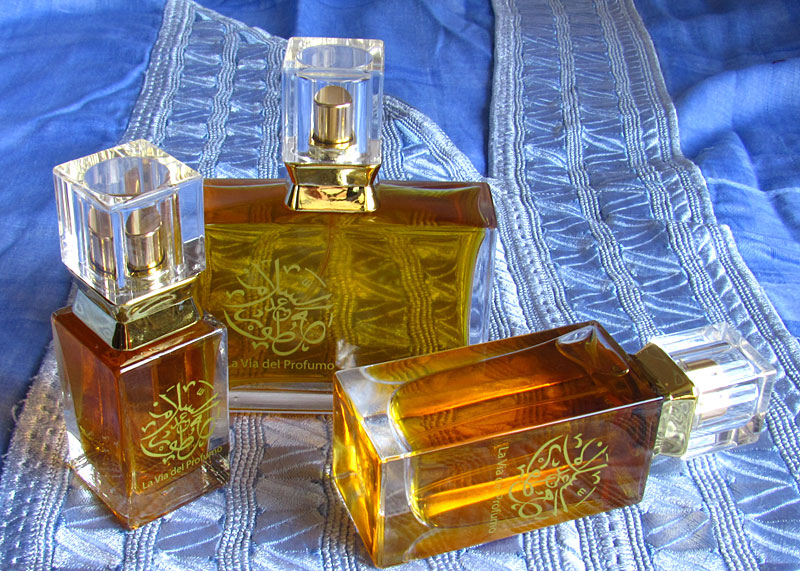
La Via del Profumo Hindu Kush

Hindu Kush, via smscs.com

Hindu Kush, via smscs.com

Close your eyes, and imagine yourself on the side of a mountain. It is one in a range of craggy giants on the Hindu Kush, each one stonier and more barren than the last. You stand on a narrow ledge beside large boulders, breath in the cold air, and survey a vast no-man’s land that is a vista of grey and brown, dotted with the green of pine trees. You wonder from whence comes the strong smell of cold, dusty incense that the wind wraps around you. You see no-one, feeling like the last man on earth as the dust at your feet intermingles with the crushed needles of pine trees. The austerity feels holy and serene, as if you were at the top of Mother Nature’s craggiest cathedral, and you turn inward before you drift off in a blur of myrrh and pine.

Hindu Kush via Fragrantica.

Hindu Kush via Fragrantica.

That emotional, meditative, and visual trip is the essential aroma of Hindu Kush, as well as its explicit goal and inspiration. Hindu Kush is the creation of Dominique Dubrana, who also goes by the name “AbdesSalaam Attar.” His perfume house, La Via del Profumo, focuses on all-natural fragrances, many of which have a Middle Eastern flair or subtext. Abdes Salaam Attar’s description of Hindu Kush on his Profumo website is useful because I think it really conveys a lot about the fragrance’s feel or emotional spirit, particularly the first part about the mountains:

The chain of mountains of the Hindu Kush is the natural boundary of the ancient India with Persia and central Asia. It is from here that the sacred river Indus comes down from the highest valleys with unbridled force. [¶] It’s a rough and wild land difficult to get to and populated by fierce warriors who challenge every day the intrusion of progress. This is a land the time forgot where neither people nor landscapes are contaminated by technology. Here travellers can fall in love with the air that they breathe and with the state of mind that overcomes someone until they become part of the mountain and part of the people changing clothes, habits and religion. 

The unforgettable fragrance of the Hindu Kush is made of the aroma of its forests, of its wood fires and the smells of the bazaars overflowing with oriental spices and things to eat.

Hindu Kush is the perfume that unites both the sacred and the profane. The aromas of incenses and perfumed woods are woven together with those of the sensual and appetising fragrances of oriental spices. […] Close your eyes and breathe in, Hindu Kush is like taking a walk in an Indian market, where clouds of incense smoke escape through the open doors of temples to be mixed with the perfumes of the east, ginger, cumin, nutmeg and pepper. [¶] Take a step inside and all is peace, silence and meditation, take a step outside and you find the crowd rushing here and there, noises and confusion.

For these reasons Hindu Kush is a perfume for people who feel attracted by eastern mystics, in which the sacred and the profane become confused in the everyday life, and for many people simply to smell it is an emotional experience because it generates the state of mind they are inwardly looking for.

Hindu Kush is not loved by everybody, this should teach us to be humble and make us reflect that harmony between physical and inner realities is not an aim in itself but is merely a mean to reach a much higher goal.

The Hindu Kush, Himalayan Karakorum side. Source: ecuadorciencia.org

The Hindu Kush, Himalayan Karakorum side. Source: ecuadorciencia.org

As best as I can determine, the list of notes seems to be:

Incense, perfumed or aromatic woods, ginger, cumin, nutmeg, pepper.

I have mentioned a few times that I am a hedonist, and I am undoubtedly a heathen as well, because I’m not particularly one for mysticism of any kind. Things like spiritual exercises, meditation, and enlightenment leave this sybarite feeling rather bewildered and lost. I’m all about decadent excess and hot sensuality, which is perhaps one reason why I struggled with the cool austerity of Hindu Kush.

Photo: Neil Harris. The Lowry Pass in Pakistan with the Hindu Kush in back.

Photo: Neil Harris. The Lowry Pass in Pakistan with the Hindu Kush in back.

The more specific reason is that myrrh is a troublesome note for me, and I need to make that clear at the outset. I love incense, when it is frankincense. Myrrh, however, is difficult for me with its cool, dusty, stony, white, and, often, soapy qualities. And Hindu Kush is a largely myrrh-centered fragrance. It never evokes the usual Catholic “High Church” feeling that most olibanum fragrances do, but it does evoke Nature’s church set in piney, barren, stony, and dusty mountains. I think Hindu Kush accomplishes its express goal beautifully, and there is no doubt that it is a high-quality, brilliantly made fragrance. I deeply respect it, but it lies far outside my personal comfort zone because of the olibanum focus. You need to keep that in mind as I describe it. 

Sawdust via my-walls.net.

Sawdust via my-walls.net.

Hindu Kush opens on my skin with myrrh’s cold, dusty, white smoke, followed by an intense, pungent green that feels like galbanum with hints of moss. Then, the warm, nutty, highly honeyed touch of sweet myrrh (opoponax) arrives, followed by the aroma of old wood. The latter is fascinating as it is dry, crumbly, honeyed, dusty, but also like sweet wood all at once. In short, it’s like the most unusual, cool but warm, saw dust. I’ve never encountered a note quite like in perfumery, and it’s brilliantly original. 

Pine tree sap. Source: howtocleanstuff.net

Pine tree sap. Source: howtocleanstuff.net

There is a distinct pine aroma that becomes stronger and stronger with the passing minutes. It smells like Pine Sap Absolute, with a very honeyed, ambered tonality. It reminds me of a much smoother, softer version of the souped-up, tarry pine sap in Profumum Roma‘s Arso. This version is nowhere as sweet, let alone as coniferous, tarry or phenolic. Instead, it is dry, dusted by old woods, and infused by the stony coolness of the myrrh.

As the pine sap grows stronger, that pungent blast of green from the galbanum-like note in the opening fades away and its place is taken by an amorphous, muted, indistinct touch of spices. I’ve worn Hindu Kush a few times, and only in one of my tests was there a really powerful, distinct, clearly delineated aroma of ginger. It smells like the powdered, dry kind that you have in your pantry, not the more spicy, piquant aroma that you get from fresh ginger. In any event, most of the time, the spices are quite abstract on my skin, vaguely feeling like the peppered, dusty, combined aroma you find in a spice shop where all the odors blend into one gentle mass. The spice accord is a very subtle one, lingering on the sidelines to add a bit of depth to the woody-incense duality that dominates Hindu Kush’s main core.
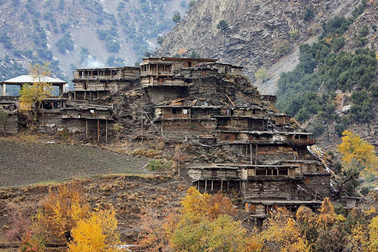
Home of the Kalash tribe in the Hindu Kush, Pakistan. Source: globalheritagefund.org

Home of the Kalash tribe in the Hindu Kush, Pakistan. Source: globalheritagefund.org

Ten minutes in, Hindu Kush is a truly original, unusual blend of aromas. It reminds me simultaneously of: an old church set mostly outdoors in a pine forest clearing dusted by dry lichen mosses and filled with the aroma of myrrh incense; a carpenter’s workshop filled with dry, sweet sawdust; and the arid, dry, mountain range of a country I once lived in, where the cool winds and great heights created a solemn sparsity and austere serenity. I keep using the word “fascinating,” because it really is, but I’m not sure it’s very me.

Beeswax. Source: honey-center.gr

Beeswax. Source: honey-center.gr

Hindu Kush starts to shift around the 20 minute mark. The sweet myrrh’s honeyed beeswax rises to the surface to soften and dilute the cold, dusty dryness of the myrrh’s incense. Hindu Kush is now a blend of cool white smoke, warm honeyed beeswax, amorphous spices, dry woods, and a touch of pine resin. The pungent, galbanum-like note has completely vanished, and the only green touches left are that from the yellow-green pine resin. Deep down in the base, there is a nebulous floral note that flits about, popping up once in a blue moon from behind the two types of myrrh, then quickly fading away once again. I can’t place it, and it keeps vanishing whenever I try to pinpoint it, but it’s a very brief breath of delicate, warm floracy.

George Braque, "Woman Reading." Source: pictify.com

George Braque, “Woman Reading.” Source: pictify.com

On my skin, and in repeated tests, Hindu Kush is primarily a tale of two myrrhs: sweet and regular. They are nestled in a dry-sweet woody embrace that becomes increasingly amorphous, with only the pine sap really standing out. The spices briefly add a soft, dusty pepperiness to the top notes, but slowly lose ground less than 40 minutes in. The most noticeable thing about Hindu Kush are the contrasts: cool versus warm; sweet versus dry; dusty versus honeyed wax; and old wood shavings versus fresh, yellowed, pine sap. From start to finish, it’s a visual palette of greys, whites, taupe, and honeyed cream, with a splash of dark, pine green tossed about like something from the painter, Jackson Pollack. Actually, Pollack’s signature is of hectic frenzy and chaos — two things that most definitely are not a part of Hindu Kush — so a more accurate comparison would be to the cragginess of George Braque’s “Woman Reading” from 1911.

The greatest changes in Hindu Kush pertain to the sillage, and to the degree of the honeyed sweet myrrh. 30 minutes in, the sillage drops, and the fragrance hovers 2 inches above the skin. After 90 minutes, the sillage softens even further, and Hindu Kush lies right above the skin. In all cases, however, it is potent and rich when smelled up close. As a whole, it is primarily a blend of myrrh with piney resin and the merest hint of sweet myrrh. It is cold, a bit dusty, and very austere. In a few tests, there was a touch of soapiness at this point, but it was very minor on my skin. The pine resin has lost its sweet aspects, and feels more like the concentrated oil from crushed pine needles. It adds yet another level of coolness to Hindu Kush.

The Hindu Kush via Stanford.edu.

The Hindu Kush via Stanford.edu.

Images of a carpenter’s workshop have vanished, along with that of any church (set in nature or otherwise), or a spice store. I’m now fully atop a craggy, jagged, dusty mountain with only pine trees and their detritus around me, and the cold wind blowing olibanum my way. I would prefer more of the sweet myrrh to try to counter some of this austerity, because the creamy smoothness of the honeyed beeswax is my favorite part. Unfortunately, the note really fluctuates on my skin during the first four hours. Half the time, it hides behind the cool, stony myrrh, but occasionally it is just as noticeable and Hindu Kush turns into a triptych of myrrh, sweet myrrh, and pine sap resin.

Hindu Kush remains that way until its very end. It takes 3 hours for Hindu Kush to turn into a skin scent, though it is only hard to detect after the 4th hour. All in all, it consistently lasted between 7 and 8 hours on my skin depending on the quantity that I used. A small amount, approximately 3 small smears, gave me the lower time frame, while 3 big sprays gave me more. The sillage throughout was very discreet after the third or fourth hour, depending on the quantity that I applied.     

Hindu Kush has received extremely positive reviews on Basenotes‘ official listing for the scent (where it is also listed as “Indu Kush”). I think the description from a poster called “Quarry” really sums up one aspect of it very well:

My notion of new-sawn wood is vastly different from yours, I’m sure. I expect your experiences harken from freshly cut trees or home-improvement-center lumber or year-old firewood. Whereas the most impressionable wood from my life is much older, as are the buildings and furnishings that make up our home. Even as my dear husband renovates our house, he’s using lumber harvested generations ago and stored through most of the 1900s by my frugal father. The green vapors have dissipated from this stuff; it is tightly grained, resin-sweet, and musty-dusty in a good way. To my mind, this kind of wood is the primary ingredient in Hindu Kush. Its creator talks of “taking a walk in an Indian market, where clouds of incense smoke escape through the open doors of temples to be mixed with the perfumes of the east, ginger, cumin, nutmeg and pepper.” Not having any experiences like that, I associate HK’s secondary accord to be like walking past the open door of a Penzeys Spices store–there’s just that general melange of comforting scents–not firey, not sharp. And this, my friends, is the totality of Hindu Kush: simplicity, beauty, timelessness, and without gender. Unlike any other of the hundreds of bottled fragrances I’ve smelled, I want to draw in HK’s scent deeply, like you would steam from a pungent soup or narcotic smoke. It feels like you should breath Hindu Kush, and I suppose at least part of that is due to its being composed of natural ingredients.

When I first sampled HK from a bottle with a reducer opening, I thought the scent faded away too quickly, but once I applied it from an atomizer and allowed the overspray to hit my cuffs, I was rewarded with hours and hours of aroma. Now, having gotten to know the scent over many days, I can find only one drawback to wearing it: I am too contented. Where other fragrances may make me kick up my heals or swoon or smile, Hindu Kush will let me settle and feel lazy, wistful. So it isn’t a workday fragrance–at least not a workday where you actually want to get anything accomplished. 

All six of the other Basenotes reviews are positive, though they describe a scent that is more incense-driven than woody. A few examples from both men and women:

  • Quarry has written an absolutely fabulous commentary on Hindu Kush! For me, I get the initial blast of green – almost camphorous – which disappears almost as mysteriously as it came…yet somehow, it leaves a residual green that combines with dry woods and incense. […] it feels like the dry & cozy warmth of a small cabin whose only source of heat is a woodburner! I find this association quite charming. […] My personal preferences don’t usually run in the direction of incense based fragrances, but I find myself intrigued and impressed!
  • “Hindu Kush” is one of the most aptly named perfumes I have ever come across. It smells exactly like the Hindu Kush-mountains look like: Very sparse, stony, airy and cold, with some woods underneath the mountains. I can even smell the wind blowing! There is just a little coziness in it, like sitting by a small campfire and trying to catch at least a little bit of warmth. Together with the somewhat mysterious “Mecca Balsam” is this my favourite perfume that I have sampled from the “Scents of the Soul”-line. Whereas “Mecca Balsam” is warm, uplifting and inviting, an indoor kind of smell, “Hindu Kush” is more grounded, rough and cold, an outdoor kind of smell, and I must admit that it’s not always easy to wear ’cause it’s so austere. Although the both perfumes are totally different, they share a certain quality that is able to put me in a meditative state of mind. Awesome stuff!
  • Hindu Kush is an appealing spicy Oriental fragrance and an all-natural frankincense perfume that anyone who likes incense ought to love. It starts with a conglomoration of exotic spices, both pungent and sweet, each appearing quickly at different intervals. The incense is high-quality and rich. At the base is a thick, deep labdanum–a dark amber–smelling of wood and, in combination with the spices, a bit smoky with subtle, maple nuances. Altogether, it creates a mystical, adventurous, rather sexy fragrance.
  • Soothing, spiritual and uplifting. [¶] My favorite fragrances have resinous woods and incense, and I’m loving this. 5 stars, full bottle worthy. [¶][…] wearing this is: an experience. It’s the kind of scent I reach for when I’m in meditative or contemplative mood, or for when I want to feel calm and grounded. I have a little collection of calming resinous scents and this so far is my favorite go to of the bunch.
  • Funny how I could smell the deep green mossy undertones within minutes of application. Beyond the aromatic spices and uplifting incense, HINDU KUSH shows surprising depth, with beguiling balsamic facets that put me in a meditative, even contemplative mood. Luca Turin hit the nail on the head when he described it as ‘resinous oakmoss’.
Source: hazara.co.uk

Source: hazara.co.uk

Speaking of Luca Turin, La Via del Profumo are the only all-natural fragrances that he has reviewed and covered in his Perfumes: The A-Z Guide. Mr. Turin is on record saying that Dominique Dubrana is the only all-natural perfumer that he will bother with, because otherwise he will get “hideous crap.” His full quote to The New York Times:

There are dozens of all-natural perfumers; I don’t pay much attention to them, because every time I do I get a bunch of hideous crap. But I love his fragrances. I don’t think anyone can touch him in the field of natural perfumery.

Luca Turin has included three of Mr. Dubrana’s scents in his Perfumes book, awarding each Four Stars. The review for Hindu Kush is succinct and to the point:

If your favorite part of Mitsouko is the resinous, floor-wax-and-church-incense start, here it is in the pure state, made with only natural materials and delicious, though not particularly long-lasting. 

I’ve noticed that Profumo scents do better in terms of longevity when sprayed, rather than dabbed. One of the Basenotes commentators thought the same for Hindu Kush. That said, as an all-natural fragrance, you have to keep in mind that the longevity won’t be as great as for regular perfumes which have synthetic additives included often for the sole task of increasing a scent’s duration.

I enjoyed testing Hindu Kush, and absolutely loved the unique, visual and mental trip of being transported to that austere mountain range. Alas, I am a heathen with no spirituality, and little long-term appreciation for myrrh. I don’t own a single fragrance centered around the note, because it isn’t something I personally could wear on a regular basis. That doesn’t mean I don’t respect Hindu Kush, though. I do, and I think it’s a masterful, brilliantly original take on an incense fragrance. So, if you’re a fan of myrrh, then you should give Hindu Kush a sniff. It is wholly unisex in nature, and suitable for the office with its discreet sillage. More importantly, it is an experience. From top to bottom, it a mood scent with an extremely meditative, contemplative feel to it. Smell it, and take a trip to the Hindu Kush in all its stark, resinous, serene beauty. 

Disclosure: My sample was courtesy of AbdesSalaam Attar. That did not impact this review. I do not do paid reviews, my views are my own, and my first obligation is honesty to my readers.

DETAILS:
Cost & Availability: Hindu Kush is an eau de parfum that comes in a variety of sizes. It is available exclusively from the Profumo.it website which ships its scents world-wide. All the following prices for Hindu Kush are in Euros without VAT: €32,73 for 15.5 ml, €70,82 for 33 ml (a little over 1 oz) and €94,20 for 50 ml/1.7 oz. At today’s rate of exchange, the USD prices roughly comes to: $44, $96, and $132 for the 50 ml bottle. The site says: “Prices are without VAT and are valid for USA and all non EEC countries[;] for shipments in the EEC 22% VAT will be ADDED to the amount in the shopping cart.” There is also a Mignon Discovery Coffret which is available for any 5 fragrances, each in a glass 5.5 ml bottle. The price depends on which perfumes you pick, as the choice is up to you. The 5.5 ml bottle of Hindu Kush is €12,30. On a side note, I received my samples from Mr. Dubrana incredibly quickly, less than 4 days after he sent it. Additionally, I have the impression that, with all purchases, Profumo provides free 2 ml samples, especially of any new fragrances that he is developing, since Abdes Salaam is very interested in feedback. In short, if you’re ordering fragrance, you may want to ask for a sample of something that strikes your eye. Samples: you can order a sample of Hindu Kush from Surrender to Chance which sells the perfume at $6.99 for a 1 ml vial.

La Via del Profumo Tawaf: Mata Hari’s Jasmine

Mata Hari, 1905, via Pinterest.

Mata Hari, 1905, via Pinterest.

The hedonistic excesses of Imperial Rome; the fleshiness of heaving white bosoms; Mata Hari in flowers as she dances to seduce; the wild rambunctiousness of the French cancan at the height of the 19th-century Moulin Rouge; the flashing of the frilliest of white knickers; and pure skank that finally subsides to a creamy, honeyed whisper — these are not the things that you’d expect to imagine from a fragrance that is meant to evoke the holiest of spiritual aromas. Yet, those are the things that came to mind when I tried Tawaf. It is a fragrance that blew my socks off while it lasted, a jasmine lover’s dream perfume in many ways, and the worst nightmare of anyone who hates indolic scents. God, it’s glorious. If only… well, we’ll get to that part eventually.

Tawaf via the Profumo website.

Tawaf via the Profumo website.

Tawaf is a 2012 eau de parfum from the highly respected French perfumer, Dominique Dubrana, who also goes by the name “Abdes Salaam Attar.” His Italian perfume house, La Via del Profumo, creates all-natural fragrances. They are so bold, intense, rich, and concentrated in feel that it’s hard to believe they are all natural, but Mr. Dubrana is a bit of a wizard. Many of his fragrances have a Middle Eastern flair, subtext, or inspiration, and this is especially true for Tawaf. The perfume is the last in his “Arabian Series” of fragrances, and is meant to be the olfactory “melody” of the most sacred scents at the heart of Mecca.

The Ka'abah or Kaaba. Source: upww.us

The Ka’abah or Kaaba. Source: upww.us

As AbdesSalaam Attar explains on his Profumo website, the name “Tawaf” refers to the ritual of pilgrims circling the sacred Kaaba (or Ka’abah) building in Mecca. He calls the Ka’abah “the geographic center of the Arabian soul,” so he sought to create a fragrance that was the “melody” of the scents surrounding the pilgrims:

the trails of Jasmine Sambac that pilgrims wear, the rose water poured from buckets to wash the white marble floor and the Oppoponax attar spread by the handful over the corners of the Ka’abah. These are the essences that comprise the new fragrance. [¶] Other ingredients meaningful in the Arabic tradition are Narcissus and Myrrh.

The perfume is binary in structure, with a Jasmine accord intertwining with an Oppoponax accord in the same way those chinese silk fabrics display two different colours depending on how the light shines on them.

The following is the succinct list of notes:

Jasmine sambac, rose water, opoponax [sweet myrrh], myrrh, and narcissus [daffodil].

I am clearly a heathen who is going to hell because Tawaf didn’t evoke anything spiritual or pure in my mind. In fact, quite the opposite. For me, its opening was pure, raw sensuality, carnality, and hedonistic excess — times a hundred. This is Mata Hari‘s jasmine, a scent born to seduce some, and kill others.

Jasmine

To understand that, you have to understand the essence of a flower like jasmine when it is taken to the extreme heights that it is here. The jasmine in Tawaf feels like the fleshiest of white flowers, with a syrupy sweetness and meatiness that is so opulently intense that it is truly quite narcotic. It’s brawny, potent, heady, meaty, indolent, and addictively sniffable for those who love jasmine, but the living nightmare of those who don’t.

In fact, the carnality of the note in Tawaf reminds me of the quote that the famous nose, Roja Dove, once said about tuberose (in the context of the legendary white floral powerhouse, Fracas):

tuberose is the most carnal of the floral notes. It smells like very, very hot flesh after you’ve had sex — that’s the bottom line. [via The Independent, 12/14/2002.] [Emphasis added.]

I think the same can be said of jasmine, especially when it is amplified to the extent that it is here. And, good God, is there jasmine in Tawaf. It explodes on the skin with such richness that it left my jaw rather agape. (In case you haven’t gathered by now, I love my jasmine.)

Bee on a tuberose. Photo: faixal_javaid via Flickr. (Website link embedded within photo.)

Bee on a tuberose. Photo: faixal_javaid via Flickr. (Website link embedded within photo.)

The other thing that Tawaf opens with is indoles. All white flowers have them, primarily for the evolutionary purpose of attracting bees who can’t see colourless florals. In their most concentrated, purest form, indoles can smell like musty mothballs and thereby act as a signal flare to the bees. However, when diluted to just a few drops in floral perfumes, they create a radiant richness that is often described as narcotic, heady, dense, voluptuous or sensuous. Unfortunately, on some people’s skin, very indolic flowers can take on an over-blown, ripe quality that occasionally smells sour, plastic-y, fecal, urinous, or reminiscent of a cat’s litter box. Its richness in classic, very opulent floral fragrances is probably why some people find indolic fragrances to smell “old lady-ish.” Those who prefer clean, fresh scents are also likely to struggle with indolic fragrances, and not only because of their heavy feel.

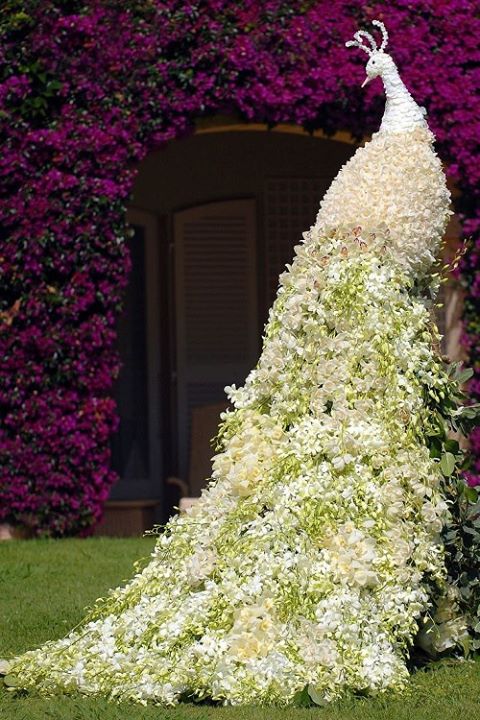
Jasmine peacock created from jasmine flowers. Source: Hdwallpaperes.com

Jasmine peacock created from jasmine flowers. Source: Hdwallpaperes.com

Tawaf opens on my skin with the fleshiest, most opulent, over-the-top jasmine that I’ve ever encountered, followed by indoles that manifest both their ripe, overblown side and their skank. Tawaf has a definite dirty factor that appears within minutes on the skin. At first, it’s only a subtle whisper of something a bit urinous, but it only takes 20 minutes for Tawaf to demonstrate almost a civet-like feral growl.

In the opening minutes, there is also a rubbery darkness underlying the intense white flowers that makes it feel as though they had been tinged with something black. It’s almost tarry and mentholated in a way, though never to the extent that Serge Lutens managed to do to jasmine’s white sister, tuberose, with Tubereuse Criminelle. Here, it never evokes diesel or iced menthol, but there is a definite undertone of something rubbery, dark, and almost smoky. It helps to cut through some of the jasmine’s bubble-gum sweetness, though there is still quite a lot of it that remains.

Mata Hari via euroxpress.es

Mata Hari via euroxpress.es

The overall effect feels wickedly naughty and voluptuous. If ever a jasmine were so fleshy that it amounted to a courtesan’s pillowy breasts heaving above the top of a tight corset, it would be Tawaf. There is a decadent excessiveness, overt carnality, and lush ripeness that positively oozes fleshiness. The white togated courtesans of Nero’s Rome would have drowned themselves in Tawaf while the city burned and he fiddled. And it definitely feels like the perfect scent for one of the greatest seductresses of all time, Mata Hari. Tawaf is simply super-charged jasmine on steroids — and I can’t get enough of it.

Twenty minutes in, the dirty skank factor moves from a quiet, muffled “meow” to a rather exuberant yell. I suddenly feel like someone in the 1890s Moulin Rouge who just had one of the Cancan dancers flash me her frothy white bloomers. No, truly, the indolic jasmine is like a chorus line of dancers as they rev up and go full throttle, kicking up their legs higher and faster with every minute.

La Folies Bergère, Paris, circa 1900 ad, by Rene Lalique.

La Folies Bergère, Paris, circa 1900 ad, by Rene Lalique.

In the midst of all this wild abandon, there are the tiniest whiffs of other elements. The least of them is the daffodil’s fresh sweetness that lurks in the sidelines, but for the longest time, I thought it was a figment of my imagination. It still might be. Whatever that vaguely fresh note may be, it simply can’t compete with all that bouncy Cancan. Slightly more noticeable is the sweet myrrh, which initially comes across more like cinnamon than the traditional nutty way that opoponax shows itself on my skin. Regardless, it is extremely muted, and also bears little chance of competing with the powerhouse white florals on center stage. Tawaf’s jasmine is as dense as a solid gold brick, and its initial projection is about 3 inches with 2 medium smears, but about 4-5 inches with a greater quantity.

Jean Renoir's "French Cancan" 1954. Source: blu-ray.com

Jean Renoir’s “French Cancan” 1954. Source: blu-ray.com

Alas, 45 minutes in, the wonderful madness winds down, and the frothy, skanky knickers collapse in an exhausted, subdued heap on the floor. The jasmine loses much of its opulent, dirty richness as Tawaf becomes a skin scent. It’s now a light, sweet jasmine touch with a drop in its dirty, rubbery, dark undertones. It’s still lushly white and narcotic, but Tawaf is much less blowsy and not as ostentatious. My skin never has much luck in holding onto jasmine soliflores. For example, my skin ate through another jasmine soliflore, Serge Lutens‘ fantastic A La Nuit, with even greater rapidity.

Speaking of which, I once read that A La Nuit was considered to be “death by jasmine,” but I think Tawaf makes the Lutens look like child’s play in comparison. Tawaf feels a hundred times more concentrated and dense than A La Nuit, which would make the Dubrana version my ideal if it retained its projection for several more hours. As an all-natural fragrance, I realise that is extremely difficult to do, especially for a floral scent. Still, I’m rather crushed, as Tawaf’s opening salvo is truly spectacular.

Source: picsfab.com

White honey and white flowers. Source: picsfab.com

Tawaf slowly begins to change about 75 minutes into its development. The sweet myrrh finally appears properly, adding a nutty warmth and sweetness, while the (regular) myrrh provides the faintest hint of dustiness. They are both incredibly subtle, however, and their main effect is to turn Tawaf more golden, less white and sweet. Half an hour later, the sweet myrrh kicks into high gear, smelling like the smoothest of mild, white honey or honeyed wax. It coats the skin like the thinnest of layers, and starts to vie with the jasmine for dominance.

Source: Robert.Maro.net

Source: Robert.Maro.net

About 2.75 hours in, Tawaf becomes an extremely creamy, delicately soft, vaguely floral, honeyed beeswax, and it remains that way until its very end. All in all, Tawaf lasted 6.25 hours on my skin, with occasional small patches continue to radiate out the scent if I really rooted at my arm ferociously. It had the shortest longevity out of all the Profumo scents that I’ve tried thus far, which had previously given me 10 hours or more. None of them were pure florals, though, and my skin can be particularly bad with those, even when they aren’t all-natural perfumes.

The Non-Blonde had almost the identical experience that I did with Tawaf. Her review reads, in part, as follows:

Smelling Tawaf from La Via del Profumo for the first time can be shocking. If there ever was a “Death by Jasmine” perfume this is it. Tawaf, religious and spiritual back story aside, is as dirty and indolic as they come. […] Tawaf is very much about jasmine- real and raw, even when it’s softened and tempered with a cream-to-powder opoponax.  […][¶]

Once you can smell and breathe beyond the heady jasmine garlands that seem to have landed around your neck, there’s more to explore. The jasmine becomes smoother and beautifully honeyed. That’s where my doubts disappear and I fall in love again and again. Opoponax is usually pretty resinous, but here it emerges from the honey with a very creamy feel that dries down fairly quickly into a slightly woody powder that complements and grounds the jasmine just a little: it’s still heady and golden, but the way the note responds to  skin is warm and highly satisfying.

Tawaf remains detectable for five to six hours, though its projection is rather low and there’s little sillage once the initial blast is gone. While jasmine is considered a mostly feminine note in Western perfumery, there’s nothing girly or womanly in this fragrance. Tawaf is atmospheric, so men who aren’t afraid of jasmine should give it a chance and see what happens when they go there.

She also adds something else that I agree with wholeheartedly:

In my opinion [Dominique Dubrana is] one of the most fascinating perfumers working today; well worth the minor hassle of ordering samples from his website (profumo.it).

The Non-Blonde didn’t fall in love from first sniff, but she definitely did by the end because of the drydown. It’s true, the honeyed creaminess is very appealing, even if it is excessively discreet. Another thing with which I agree is that men who aren’t afraid of jasmine should try it.

Source: Hdwallpaperes.com

Source: Hdwallpaperes.com

If you don’t think a guy can or should wear jasmine, you better not tell that to Kevin of Now Smell This who barely restrains himself from saying that he LOVES (in all caps, no less) Tawaf:

Tawaf is composed of beautiful, strong aromas*: a vibrant floral accord of jasmine and rose (sweet, syrupy and possessing an indolic punch); a note that reminds me of musky, honey-drenched hay (no, I’ve never encountered honey-drenched hay in person, just in my imagination); warm opopanax; and buzzing, floral amber — clear and pungent, but not too “clean” (is that a bit of patchouli I smell?) Tawaf’s opening comes close to duplicating one of the most mesmerizing floral scents: the powerhouse perfume of  blossoming Cestrum nocturnum (gardeners: if you love flowers that can scent an entire block, investigate this plant). As Tawaf dries down, it becomes sheer with hints of honeycomb, myrrh and residual floral notes.

I try to avoid hyperbole in describing my attraction to perfumes (how can I ‘LOVE’ a non-living thing?); let’s say I ‘adore’ Tawaf. Though I’ve enjoyed all La Via del Profumo Arabian series perfumes, Tawaf is my favorite. One spritz of Tawaf goes a long way…for a short time (two hours); if you’d like the fragrance to extend to three or four hours, apply more perfume in the first place but expect to scent a HUGE space with your sillage. On the masculine-feminine “scale,” Tawaf veers more towards feminine perfume territory, but if you’re the type of man who has no problem with heady florals, go for it.

Oh, Kevin, just say you love it. We can rock our Tawaf together, preferably with more than one spritz, even if the amplified result ends up killing all the jasmine-phobes who come close.

Speaking of those who are usually rendered ill by jasmine fragrances, the sole review for Tawaf on Fragrantica comes from someone who seems to make an exception for the Profumo version. “Lilybelle911” writes:

This is a lovely jasmine fragrance. It does not make my stomach feel queasy as some jasmine scents do. I received a generous decant as part of a sampling group, and I have a spritz now and then when I am in the mood for its serene beauty, when no mass market perfume will suffice to soothe and inspire. I have been fortunate to sample quite a few Via del Profumo fragrances, and they never fail to have a pronounced effect upon my psyche and sense of well being. They are not only very well composed perfumes, but have aromatherapy benefits as well. I highly recommend this line of perfumes. Mr. Durbano is blessed with a rare gift.

I’m thoroughly glad she enjoyed it, but I still wouldn’t recommend Tawaf to anyone who doesn’t wholeheartedly love indolic white flowers. “Death by Jasmine” may be a wonderful way for me to go, but I don’t think others may be so sanguine.

Tawaf bears what I’m starting to realise is a distinct Profumo signature: bold intensity in the opening. Mr. Dubrana doesn’t seem to do anything by half-measures — God bless him — and that intensity is a joy for someone who likes the note(s) in question. It’s not as easy if you’re ambivalent, no matter how soft, whispering and lovely the subsequent drydown may be. So Tawaf may be best for those who enjoy the most opulent of narcotic, white flower bombs, along with a little dirty skank. 

In short, if you’re a jasmine lover, you really must try Tawaf. It is moderately priced at $63 (or roughly €56 with VAT) for the smallest bottle, samples aren’t difficult to obtain, and I think it will make your head spin in the best way possible. The discreet sillage and reduced longevity are the only drawbacks to what may be the ultimate jasmine perfume. In spite of those flaws, I still think that Tawaf is worth testing, especially for that monumental opening. It takes decadent excess and seductiveness to an extent that would make even Mata Hari sit up and blink.

Mata Hari via Wikipedia.

Mata Hari via Wikipedia.

Disclosure: My sample was courtesy of AbdesSalaam Attar. That did not impact this review. I do not do paid reviews, my views are my own, and my first obligation is honesty to my readers.

DETAILS:
Cost & Availability: Tawaf is a concentrated eau de parfum that comes in a variety of sizes. It is available exclusively from the Profumo.it website, which ships its scents world-wide. All the following prices for Tawaf are in Euros without VAT: €46,61 for 15.5 ml, €94,22 for 32 ml (a little over 1 oz) and €146,79 for 50 ml/1.7 oz. At today’s rate of exchange, the USD prices roughly comes to: $63 for the 15.5 ml, $146 for the 32 ml, and $200 for the 50 ml bottle. The site says: “Prices are without VAT and are valid for USA and all non EEC countries[;] for shipments in the EEC 22% VAT will be ADDED to the amount in the shopping cart.” There is also a Mignon Discovery Coffret which is available for any 5 fragrances, each in a glass 5.5 ml bottle. The price depends on which perfumes you pick, as the choice is up to you. The 5.5 ml bottle of Tawaf is €17,70. On a side note, I received my samples from Mr. Dubrana incredibly quickly, less than 4 days after he sent it. Additionally, I have the impression that, with all purchases, Profumo provides free 2 ml samples, especially of any new fragrances that he is developing, since AbdesSalaam is very interested in feedback. In short, if you’re ordering fragrance, you may want to ask for a sample of something that strikes your eye. Samples: you can order a sample of Tawaf from Surrender to Chance which sells the perfume starting at $8.99 for a 1 ml vial.

La Via del Profumo Milano Caffé

Source: hqdesktop.net

Source: hqdesktop.net

Have you ever tried a perfume, took a sniff, then almost fell over yourself to spray on more? That’s what happened to me with Milano Caffé, which led to an actual “ohhh” out loud, then a frenzied application all over. It is a visual plethora of dark colours from the blackness of bitter expresso and licorice, to the mahogany of deep woods, the green-blackness of patchouli and smoky vetiver, and the darkness of black chocolate. Subtle hints of goldenness flit about from amber and vanilla, but on my skin, they are mere fireflies in the dark forest.

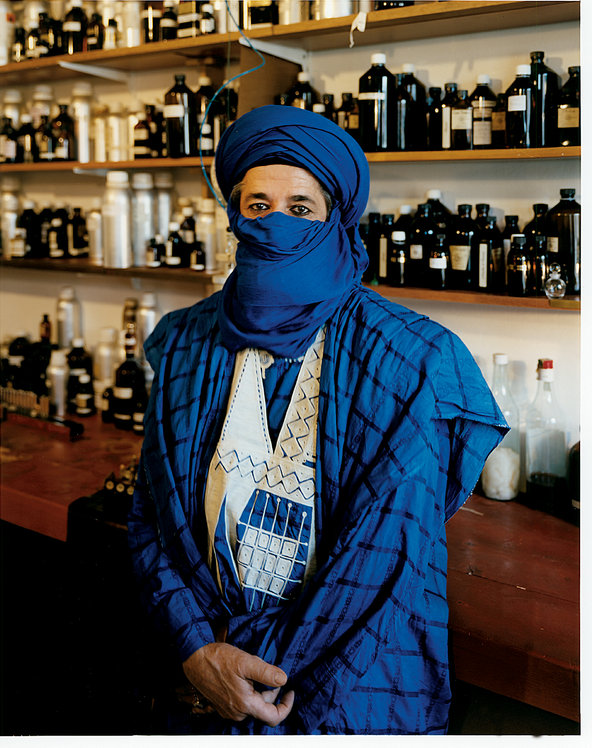
Dominque Dubrana via the NYT. Photo by Domingo Milella.

Dominque Dubrana via the NYT. Photo by Domingo Milella.

Milano Caffé is the creation of the perfumer, Dominique Dubrana, who also goes by the name “AbdesSalaam Attar.” His perfume house, La Via del Profumo, focuses on all-natural fragrances, many of which have a Middle Eastern flair or subtext. I’m utterly fascinated by Mr. Dubrana, a man who some consider to be a genius and magician and who was the focus of a fantastic, gushing article in The New York Times  entitled “Smellbound.”

In 2013, he debuted an “Italian Series” of fragrances which sought to pay tribute to his adopted homeland. Milano Caffé (which I’ll just write without the accent as “Milano Caffe” for ease and speed) is the first of the line, and is classified on Fragrantica as an “oriental vanilla.” Personally, I would categorize it as a Woody Oriental. On his Profumo website, AbdesSalaam Attar describes Milano Caffe as follows:

This first fragrance, named for Milan, is centered on the omnipresent and most characteristic smell of the city, the aroma of coffee. It pervades the streets and workplaces; it is part of every event and encounter, professional or leisurely; and is present in every social occasion.

I have blended coffee with chocolate because that is the Milanese way: the residents of that marvelous city add Cacao powder to cappuccinos, and place a single square piece of chocolate next to your cup of coffee.

The combination of coffee and chocolate is your introduction to the city of Milan, but it is merely the start.  The original blast of coffee- chocolate melts quickly into woody-spicy notes. The body of ‘Milano cafè’ is an elegant male fragrance worthy of the sophisticated fashion that characterizes the city: Warm, dry, woody, sober and at the same time rich, with a determined, confident character.

A subdued spicy accord alludes to the multi-ethnic aspect of the city, as manifest in the Somali and Arab restaurants that have flourished there in recent years.

Milano caffè is not your usual masculine, composed of trite notes to appeal to a mass audience. It is, instead, a new and unexpected accord that will appeal to people who make trends, not those who follow them.

Milano Caffe via The Perfume Shrine.

Milano Caffe via The Perfume Shrine.

Fragrantica provides the succinct list of notes:

coffee, cappuccino, chocolate, iris, woody notes, spicy notes, opoponax [sweet myrrh], tonka bean and amber.

There are a lot of unspecified, uncategorized notes on that list, and on my skin, they dominate. What appears on my skin, after quite a few tests, would be something more like this:

Patchouli, vetiver, cedar, expresso coffee, dark chocolate, cocoa powder, licorice, sweet myrrh, iris, something phenolic and tarry that might be birch, then tonka and amber. Possibly also: coriander.

I meant what I said at the beginning about my initial reaction to Milano Caffe, but it is significant for another reason as well. In my eagerness to spray on more, I applied Milano Caffe to my second arm, instead of just to my main testing arm which is the left one. I noticed an immediate, and quite substantial, difference in smell. Perhaps it is a pH issue, or perhaps my skin is even stranger than I suspected, but there was a very different version of Milano Caffe on my right arm than on my left one.

As a result, I’ve tested the fragrance three times in all, on both arms simultaneously. The same differences occurred each time during the first few hours. The perfume’s drydown is largely the same, but one arm gives a significantly darker, drier, woodier, smokier version of Milano Caffe. The other (my main testing left arm) reflects more vanilla, amber, warmth, and sweetness. One version is slightly more unisex, the other is hardcore masculine, though I think the fragrance skews very masculine in general. So, I’ll give you both versions of how Milano Caffe appeared on me.

VERSION 1:

Source: Sodahead.com

Source: Sodahead.com

Milano Caffe opens on my skin with an intense darkness, along with earthy, woody and smoky notes. There is smoked vetiver, something that resembles smoky Lapsong Souchang tea, cedar, earthy but green patchouli, sweet green grass, and spices. There is also a whisper of sweet muskiness that smells natural, as if you’re smelling it on a flower in nature or from the earth. It’s iris, but done in a way that may be the very first time I’ve ever loved the note. It’s delicately floral, but also infused with woody and smoked tonalities. A minute later, the bitterest of expresso coffees floods in to add a truly original, intense touch to the whole combination.

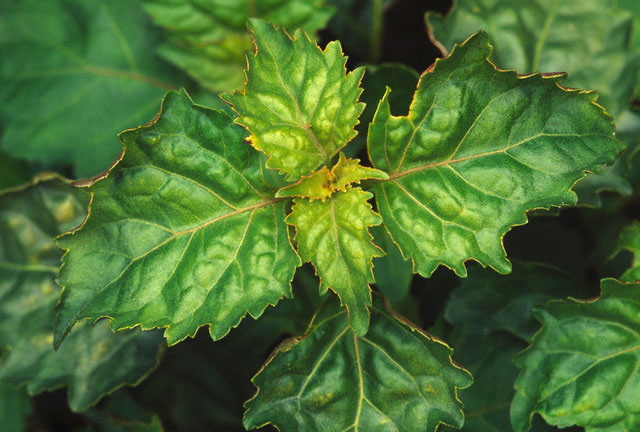
Patchouli. Source: womenworld.com.ua

Patchouli. Source: womenworld.com.ua

There is zero doubt in this patch head’s opinion that Milano Caffe contains a lot of patchouli, and I love every bit of it. It’s not the revolting modern version with its purple, syrupy fruit-chouli characteristics, but the real, hardcore, original stuff. In fact, the patchouli manifests itself from the top of the plant to the bottom: there is the green, pungent, medicinal edge of the leaves, but also the sweet, wet, damp earthiness of the soil around its base. At first, it is a subtle touch, but it takes maybe 2 minutes for the patchouli to become one of the main players on my skin, injecting both a medicinal greenness and a peppermint note to the proceedings.

This is no spicy, ambered, brown-red patchouli, but a very green one. Yet, despite that, it is as chewy and dense as the common labdanum-infused, boozy patchoulis on the market. The black-green kind in Milano Caffe also sometimes reflects a distinct boozy cognac touch that appeared in a few of my tests in the opening minutes, but that aspect is incredibly brief. As a whole, the patchouli in Milano Caffe in all tests and on both arms spans the green end of the spectrum from metholated and medicinal, to peppermint.

Licorice. Source: Dylanscandybar.com

Licorice. Source: Dylanscandybar.com

Other notes are perfectly blended within. There is a definite, very strong element of licorice that appears every time I’ve tested Milano Caffe. It’s black and very chewy in feel. It counters the floral element that, in some tests, was quite noticeable in the opening minutes, but very muted and muffled in others. The same thing applies to the sweet myrrh which adds a nutty quality, but also a quiet, subdued touch of smokiness. In some tests, it was initially quite noticeable, but, in most of them, it was the tiniest of notes that barely registers.

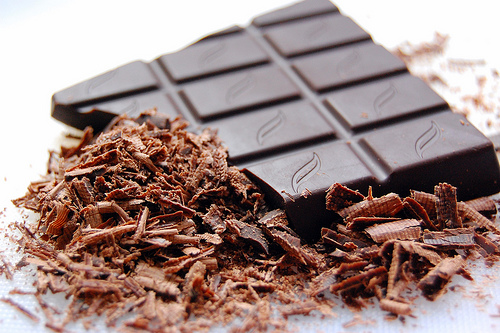
Black chocolate via bioshieldinc.com

Black chocolate via bioshieldinc.com

Much more significant, however, is the chocolate. At first, it’s just a whisper that feels like unsweetened, black chocolate that lurks on the sidelines or under the expresso. About 20 minutes in, it grows stronger, thoroughly infusing the expresso and the patchouli’s peppermint, until the three notes are essentially one. At the same time, there is also a feeling of dusty, semi-sweetened cocoa powder sprinkled on everything.

Lurking far below in the base is something that feels distinctly phenolic and tarry, with a very leathered, smoky feel. It’s not like the birch tar in some leather fragrances, because it’s hardly animalic, fecal or raw, but there is something of birch’s smokiness about it. It’s subtle, more akin to tiny tendrils blown from a campfire in the distance, but there is definitely something deeply dark, leathered, and smoky in Milano Caffé’s base. Milan and Italy are as famous for their leathers as for their expresso, so it wouldn’t be surprising if an olfactory ode to the city gave a nod to that element.

Source: brookstone.com

Source: brookstone.com

The overall combination and effect drove me wild. Coffee’d patchouli with black chocolate, licorice, smokiness, and dark woods. Genius, pure genius. Why has no-one ever done that before? How come no-one has ever thought to mix the darkness of patchouli and its peppermint qualities with something like bitter expresso and chocolate? I haven’t had such an instant, immediate reaction to a fragrance’s opening since my Paris trip, and the perfumes I bought or singled out for samples to test on my return. I wrote in my notes, “so happy, I could scream.” You have to be a patchouli addict to understand and relate to that, because I don’t think Milano Caffe’s dark, bitter, smoky, woody opening will be for everyone. Most definitely not, and especially not for most women, in my opinion. But I loved it.

Twenty minutes in, Milano Caffe is a seamless, rich, decadent, endlessly dark blend of notes. There is woody darkness, smoky vetiver, green patchouli, bitter black expresso, iris, smoke, licorice, black chocolate, and damp, sweet earth. Only the subtlest touch of warm amber lurks about, the iris is fading away, and both the sweet myrrh and cedar feel indistinct. In the background, there is an amorphous, indistinct touch of spiciness. I keep wondering if Milano Caffe has coriander in it because I occasionally pick up on the oddest nuance of something lemony, but dry. The whole bouquet feels incredibly dense and chewy, but Milano Caffe’s projection drops from its initial intensity to something that is only moderate at this point.

From a distance, the main bouquet is of bitter coffee infused with patchouli peppermint, licorice, chocolate and green, medicinal pungency. I’m fascinated by the interplay of notes, especially the ones you can smell if you go in close, because the notes sound like such a crazy combination. And, yet, they work so well here. The subtle ambered heart helps to counter the forcefulness of the elements, and to provide some warmth, but it never verges on sweetness.

Source: chaoswallpapers.com

Source: chaoswallpapers.com

As a whole, on my right arm which I don’t usually use for testing, Milano Caffe is a very dry, woody, greenly dark fragrance that is bitter-sweet at best. In truth, I would have preferred more of a counter-balance to that aspect of things, because my skin takes the base notes and runs with them to quite an unrelieved extreme. About 1.75 hours in, Milano Caffe is primarily a peppermint patchouli-vetiver combination. I wish it weren’t quite so dominant, as it has far overshadowed the coffee and other elements. While my skin normally amplifies sweetness and amber, it hasn’t done so here. I have to admit, this vetiver-peppermint stage was a little disappointing for me, not only because it lacked the complexity of the opening, but also because its darkness was a bit too constant for my personal tastes.

Peat bricks in an outdoor fire. Source: freeirishphotos.com

Peat bricks in an outdoor fire. Source: freeirishphotos.com

In fact, in one of my tests on this arm, Milano Caffe turned even darker. There was much more smoky woodiness, from the vetiver, the cedar, and the mysterious tarry element. The latter definitely evoked an outdoor bonfire in the way that birch tar or cade can often do, while the vetiver takes on a peaty tonality. The overall combination repeatedly called to mind Jovoy‘s Private Label, another fragrance with blackness, peppermint, woods and smokiness. There are big differences, however, as Private Label took all those elements to an extreme, while Milano Caffe is significantly better modulated and balanced. Plus, it has coffee, licorice and dark chocolate, while the Jovoy fragrance is centered on hardcore smoked vetiver and birch tar smoke with leather.

Perhaps it’s merely an odd idiosyncrasy of the skin on my non-testing arm, but Milano Caffe flattens into a patchouli peppermint with dark woods scent for the rest of its duration. I wish it hadn’t, as it was too much of the same thing for me, and the necessary counterbalance of ambered warmth was far too inconsequential on my skin to have much effect. Milano Caffe turns into a skin scent at the end of the third hour, and, in its final moments, Milano Caffe is merely dry woodiness with a vague suggestion of something patchouli about it. All in all, it lasted about 10.75 hours with 3 small sprays. Thankfully, Milano Caffe is consistently better balanced on my other arm.

VERSION 2 – MAIN TESTING ARM:

Source: 123rf.com

Source: 123rf.com

Milano Caffe opens on my skin with boozy, rich cognac and amber, followed by patchouli’s green notes and expresso. Seconds later, a chewy, black licorice appears, along with dark, bitter chocolate that is simultaneously like the solid slab as well as the dusty powder. The coffee initially has the bitterness of expresso, but also the smoother, milder aspects of regular coffee. The main notes are subtly infused with earthiness, smoky vetiver, a hint of dusty cedar, and the nuttied undertones of labdanum amber. The overall combination is much warmer, less bitter and dark than it was on my right arm.

"Green and Maroon," by Mark Rothko. Source: ArtTribune.com

“Green and Maroon,” by Mark Rothko. Source: ArtTribune.com

As the minutes pass, Milano Caffe continues to evolve and darken. The licorice grows much stronger, as does the pungent, medicinal sides of the patchouli. It’s not camphorated and doesn’t smell extremely mentholated, but it is very green, bitter, cool and chilly. There isn’t the musky sweetness or damp, wet earthiness of the first version, nor any of the iris floralacy either. Though there is the same smoky, woody greenness from both the vetiver and the patchouli, there is also the feel of some vanilla that was lacking the first time around.

The cognac booziness fades ten minutes into Milano Caffe’s development, and something else takes its place: peppermint. The patchouli’s green side loses its medicinal pungency, and the peppermint takes its turn on center stage next to the coffee, dark chocolate, and amber. Once again, there is something phenolic and tarry in Milano Caffe, a black, almost leathered, smokiness that appeared in both versions and in all the tests. Here, however, it is only a subtle, light touch, and far outweighed by the coffee.

Mark Rothko, ":'Magenta, Black, Green on Orange', 1947. Source: studyblue.com

Mark Rothko, “:’Magenta, Black, Green on Orange’, 1947. Source: studyblue.com

At the end of the first hour, Milano Caffe turns softer and a bit sweeter. The peppermint patchouli smooths out, as it is infused by the growing amber element. The vanilla rises to the surface and mixes with the other accords to create the impression of a dry caramel, infused with coffee. It’s an odd caramel though, as it has limited sweetness and a touch of bitterness. At the same time, the coffee and chocolate blend together to create a dry mocha accord. The patchouli is laced throughout it all. It is still primarily like peppermint, but it’s a much softer, warmer, earthier touch.

By the 3.5 hour mark, Milano Caffe is a soft coffee fragrance with slightly powdered vanilla and peppermint patchouli, nestled in a woody dryness and dusted by cocoa powder. There are lingering traces of both bitterness and smokiness, but they are subtle. The combination feels chewy in its notes, but the fragrance itself is a skin scent by now that is only hefty when you smell it up close. The notes remain easy to detect for another few hours, though they slowly lose their richness.

Mark Rothko, #20 or "Black,brown on maroon." Source: artsearch.nga.gov.au

Mark Rothko, #20 or “Black,brown on maroon.” Source: artsearch.nga.gov.au

At the start of the 6th hour, Milano Caffe is a soft, dusty cocoa powder with woodiness that vaguely translates to patchouli and a hint of something pepperminty. At the end of the 8th hour, it feels almost gone, but Milano Caffe clings on tenaciously. It finally dies away 10.25 hours from the start as a blur of cocoa powder and dry woodiness.

ALL IN ALL:

Regardless of arm or test, Milano Caffe never evokes an urban city for me. Instead, it takes me to the darkest of woods filled with endless vistas of patchouli, vetiver, and greenness. In a clearing at the heart of darkness is a table for two, set with an array of café treats. The scent of freshly brewed, bitter expresso fills the air, as you chew on a selection of peppermints, dark chocolate and licorice on a chair made of vetiver and cedar. A tiny cup of vanilla sits at the far side of the table, next to thimble of cognac. Fireflies of amber act as candlelight, but they are tiny vestiges of warmth in the dark forest.

Zucca coffee shop, Milan on The Perfume Shrine, via the virtualtourist.com

Zucca coffee shop, Milan on The Perfume Shrine, via the virtualtourist.com

Other bloggers, however, were taken to the heart of Milan, and experienced a scent that was driven primarily by coffee and dark chocolate, with only minor degrees of woodiness or patchouli. Take, for example, The Perfume Shrine who describes Milano Caffe, in part, as follows:

The pervading and intoxicating scent of freshly ground coffee is one small part of [the Italian sybarite’s] luxury of letting time slip by. The mingling of chocolate in the composition of Milano Caffé recalls the dusting of cocoa powder on the white “caplet” of a hearty and filling cappuccino, drunk leisurely with a view of the impressive Duomo before taking a stroll down the Via Montenapoleone for some serious window shopping. The Milanese are nothing if not sticklers for detail, from their dog’s collar to their impeccable shoes, and I can feel in Milano Caffé the vibrancy of the elegant woody and spicy background which hums underneath the culinary notes of the top. Coffee is naturally a complex smell, comprised of caramelized & smoky/acrid facets on one end, of woody, like freshly sharpened pencils, on the other.

The dry quality of the fragrance despite the tonka bean and ambery richness elevates the composition into classic resinous-balsamic level; one mistakes smelling Milano Caffé for a full-bodied vintage that peels layer after layer after layer. In fact, what is most surprising is finding a hint of the cocoa-facet of orris and something which reminds me of the fluff, the flou quality of the resin opoponax, amidst the proceedings. This caress under the dark and bitterish flavor of coffee only serves to consolidate the infiltrating appeal of that highly prized bean, that elixir of life, the coffea arabica, cutting its slightly acidic character. Although the spicy woodiness might make Milano Caffé more conventionally masculine in direction, its richness and cuddly chocolate note makes it a great choice for the woman who doesn’t follow trends but rather sets them herself.

Kevin at Now Smell This also experienced a coffee-chocolate dominated scent, though he detected the patchouli as I did. In his review, he wrote:

Milano Caffè opens with a pleasantly discordant mix of espresso beans, bitter chocolate…and perhaps a touch of real patchouli. Next up is the scent of an expensive bar of dark chocolate, scented with cinnamon/clove, and an accord that reminds me of cardamom, something “sage-y”/green and a dark, almost caramelized sweet note (the “spirit” of opoponax followed me as I wore this perfume). Milano Caffè’s character in mid-development is of an off-kilter amber fragrance, with its bits and pieces not quite fitting together. I love the fact that this is NOT a smooth, predictable, culinary take on coffee and chocolate, but more of an herbal/spice-coffee-chocolate perfume “tonic.” There is a woody vibe in the extreme dry down, and the perfume gets a tad incense-y (benzoin?) the longer I wear it. (There is also a phase that reminds me of Thai iced tea, with its cream and star anise aromas.)

On first sniff, Milano Caffè went to the top of my favorite coffee-chocolate perfumes list, and I like it more each time I wear it; the fragrance would be great to wear in autumn and winter, even on a chilly spring day. [¶] La Via del Profumo lists Milano Caffè as a masculine fragrance, but, to me, it’s unisex. Milano Caffè’s lasting power is good for an all-natural fragrance (around four hours on me); sillage is minimal.

Obviously, the patchouli wasn’t as dominant on his skin, and I clearly had a much longer time-span for Milano Caffe as a whole. In fact, the length of time for all the Profumo scents that I’ve tried thus far is quite astonishing, given that they are all natural. I consistently experience 10 hours or more, and given my wonky skin, that says something.

Basenotes‘ official listing for Milano Caffe has no reviews yet, while, on Fragrantica, only two people have provided an actual description of the scent. The first is from “Oscar_84” who talks as much about the vanilla and amber as the coffee:

As soon as I spray Milano Caffè on my wrists, the coffee aroma and the sweetness of chocolate feel kind of intoxicating, pervading my senses. It’s very much like entering a café in a cold morning and ordering a cappuccino… the comforting aroma of freshly ground coffee that blends with the dustiness of cocoa powder over the soft and creamy drink will instantly warm you and make you feel good even in the grayest day. After top notes, that still remain perceivable through the following stages, Milano Caffè reveals its truest oriental vanilla nature with a smoothest but pretty masculine accord of vanilla and woody notes, while iris nuances provide the scent a delicate elegance: in its drydown the fragrance reveals oriental accords of amber, spices and balsamic hints that provide the fragrance it an unexpected fresh vibe. As for longevity-projection, the fragrance has a moderate lasting power (about four hours) and a pretty good sillage.

In my opinion Milano Caffè has very detectable, warm and discrete features that make it perfectly suitable not only for casual wear but also for job meetings, evening dates and any other events when one may need both an energetic and kind of cuddling scent.

The second review is from a woman who experienced a bit more of the medicinal aspects that I encountered from the patchouli, though they didn’t last long on her:

This has a very vintage feel to it, especially in the beginning. The first initial spray smell is not my favorite, it’s very harsh almost medicinal and not very pleasant. But after about 5 minutes it turns into a bitter coffee chocolate, latte smell, but not in a sweet way sugary way. This perfume is definitely not sweet, but it has a very Italian feel to it. It’s very complex, the coffee, bitter chocolate, latte smell stays around for about 1 hour, then it gets more woodsy but a bitter chocolate note shines through here and there. I also get a bit of Shalimar similarity in it, somewhere in the beginning. I wouldn’t wear this out, but I love this in the morning with when I’m having my coffee. I would say it’s a perfume for your self, and it grows on you over time. I’m glad to have it in my collection.

I suspect it is the patchouli’s green side that she finds medicinal, while the Shalimar comparison may stem from the subtle smokiness and leathery undertones in Milano Caffe.

Obviously, skin chemistry makes a difference to how Milano Caffe will appear on your skin, but I think anyone who loves coffee and real patchouli scents should try it. I don’t think the fragrance is for everyone, though. Those who love gourmands will struggle with the dryness, and I think the fragrance will feel very masculine for women who don’t enjoy the boldest and darkest of scents.

I also agree with the female Fragrantica commentator that Milano Caffe grows on you with time, so I would recommend trying it at least twice. While I loved its opening bouquet from the very first time, the subsequent drydown took a few tries for me to appreciate quite as much. One thing I’ve noticed is that Milano Caffe is perfect for layering with a warmer, sweeter scent. I sprayed Arabian Oud‘s Kalemat for a honeyed, richly ambered foundation, then applied Milano Caffe over it, and I loved the overall combination of the two.

There is something else that I think is critical to keep in mind when trying not just Milano Caffe, but every scent from La Via del Profumo. You have to keep in mind who Abdes Salaam or Dominique Dubrana is himself. In my opinion, he is very much in the vein of visionaries like Serge Lutens, perfumers who follow the beat of their own drum, with visions in their head that differ from the more conventional, approachable, easy things created by others. Regular readers know my worship of Serge Lutens, the man, so this is one of the highest compliments I can give someone. Both men have complicated depth, an intellectual nature, a fiercely passionate, unique approach to perfumery, and a deeply poetic soul.

In fact, Mr. Dubrana’s website, Profumo, is subtitled in one section as “Scents of the Soul.” If you read his writings, from the holistic and perfumetherapy parts to his blog, if you look at his calligraphy, or if you observe his beautifully philosophic quotes from Rumi in his Twitter page, you will find a complex, fascinating intellectual who stands apart. I should also state that I’ve interacted briefly with Mr. Dubrana via email correspondence, and find him to be the epitome of an Old World gentleman, in every sense of that word. I’m fascinated, enchanted, and determined to explore more of his line.

As with Serge Lutens, some of the Profumo fragrances are intensely different and perhaps rise to the level of art that is to be admired. It doesn’t mean that every scent is always approachable, wearable, or versatile. Serge Lutens’ creations aren’t always so for me, though his fragrances dominate my collection. I think Profumo scents are the same way. Mecca Balsam didn’t work for me given how badly my skin distorted it, and I don’t think Milano Caffe is for everyone either, though I personally enjoy it a lot. In all cases, however, they are fragrances to respect. They stand out with their boldness, originality, and intensity.

The average perfumista may be overwhelmed, just as many are by Serge Lutens or Amouage, but that doesn’t mean you shouldn’t expand your horizons and try them. When you do, keep in mind that they are meant to be different. Mr. Dubrana has sent me samples of a few of his scents, so I shall cover one or two more in the upcoming days, with the jasmine-centered Tawaf being next. I can tell you that a mere sniff of the scent in the vial blew me away, and its opening is the most beautifully intense, lush, narcotic jasmine I’ve tried in recent memory. After that, I’ll review the cool, austere, incense fragrance, Hindu Kush, the almond-leathered desert scent, Sharif, and the tobacco, Tabac.

As for Milano Caffe, it is a complicated, dark beauty. It is also quite affordable at prices that start at $44 (or roughly €37 with VAT) for the smallest size. A little goes a long way, so I definitely encourage men who love expresso or true patchouli to give it a sniff. Women who enjoy bold, very woody or dark scents may enjoy it too.

Disclosure: My sample was courtesy of AbdesSalaam Attar. That did not impact this review. I do not do paid reviews, my views are my own, and my first obligation is honesty to my readers.

DETAILS:
Cost & Availability: Milano Caffe is an eau de parfum that comes in a variety of sizes. It is available exclusively from the Profumo.it website which ships its scents world-wide. All the following prices for Milano Caffe are in Euros without VAT: €32,73 for 15.5 ml, €70,82 for 33 ml (a little over 1 oz) and €97,20 for 50 ml/1.7 oz. At today’s rate of exchange, the USD prices roughly comes to: $44, $96, and $132 for the 50 ml bottle. The site says: “Prices are without VAT and are valid for USA and all non EEC countries[;] for shipments in the EEC 22% VAT will be ADDED to the amount in the shopping cart.” There is also a Mignon Discovery Coffret which is available for any 5 fragrances, each in a glass 5.5 ml bottle. The price depends on which perfumes you pick, as the choice is up to you. The 5.5 ml bottle of Milano Caffe is €12,30. On a side note, I received my samples from Mr. Dubrana incredibly quickly, less than 4 days after he sent it. Additionally, I have the impression that, with all purchases, Profumo provides free 2 ml samples, especially of any new fragrances that he is developing, since AbdesSalaam is very interested in feedback. In short, if you’re ordering fragrance, you may want to ask for a sample of something that strikes your eye. Samples: you can order a sample of Milano Caffe from Surrender to Chance which sells the perfume at $5.99 for a 1 ml vial.

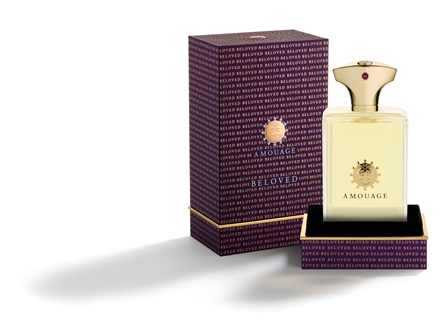
Amouage Beloved Man (Special Limited Edition)

Lemon chiffon mousse with smoky dryness and woods. I don’t think I’ve ever summed up an Amouage fragrance in one short sentence, but there is a first time for everything. An even shorter synopsis might be “elemi creaminess.” That is the essence of Beloved Man, a wholly unisex fragrance that is quite lovely but extremely simple. In many ways, it feels like the anti-Amouage, or an Amouage for those who normally struggle with the perfume house’s complicated, complex creations.

Source: CaFleureBon

Source: CaFleureBon

Beloved Man (hereinafter just “Beloved“) was released in 2013 as either a limited edition or limited distribution eau de parfum that is only available in Amouage boutiques, and a handful of department stores or online vendors. Since the fragrance is no longer listed on Amouage’s own website, it’s hard to know how they describe the scent. The PR copy quoted by First in Fragrance and also summarized by sites like CaFleureBon states:

The special edition Beloved for Men by Amouage is a woody Oriental fragrance with spicy top notes accentuated by an opulent heart of floral notes. Created in Grasse under the guidance of Amouage’s Creative Director Christopher Chong, he explains “that everyone has a remembrance of a loved one and the fragrance is a nod to the 1980 movie “Somewhere in Time” starring Christopher Reeve and Jane Seymour. This intimate fragrance with its selection of rich woods and resins in the base enrapture the wearer in a comforting sensation of warmth that these treasured memories bring”.

Beloved was created by Bernard Ellena, though Fragrantica mistakenly credits Alexandra Carlin and Emilie (Bevierre) Coppermann. Regardless, everyone agrees that Beloved’s notes are:

orange, grapefruit, elemi, geranium, jasmine, orris, saffron, cedar wood, guaiac wood, leather, patchouli, musk, and vetiver.

Canarium Commune tree. Source: gallery.trip.sk

Canarium Commune tree. Source: gallery.trip.sk

Elemi is a main part of Beloved on my skin, so I’m going to take a minute to go over what it is. According to The Perfume Shrine‘s wonderfully detailed explanation, elemi has a long history. It was used by ancient Egyptians in embalming, and its remnants have been found in sarcophogii. Nowadays, “elemi” apparently refers to the harvested secretions from the Canarium Commune tree in the Phillipines, and its smell can best be summed up as: lemony, clean freshness that is also peppered and smoky. Elemi shares some characteristics with frankincense, but it can also take on a green, piney aroma like that of fresh pine needles. Elemi oil can be deep, clean and citrusy in profile, while the resin version can be peppered, woody, and a little bit spicy. Like the two faces of Janus, Beloved reflects both sides of the elemi coin on my skin.

Source: hdwpapers.com

Source: hdwpapers.com

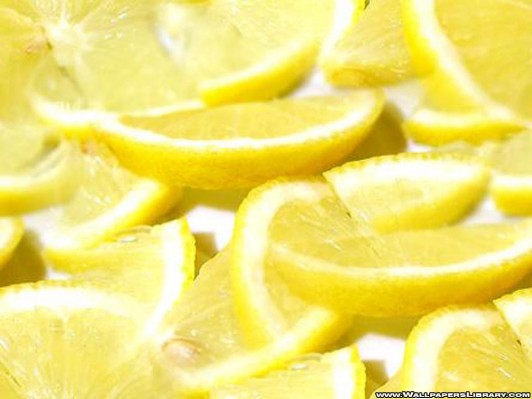
Beloved opens with a crisp, cool, chilled lemon aroma infused with elemi smokiness, as well as what also smells like actual frankincense. It is followed by a dry, faintly leathered aromachemical, then pepper, a hint of clean soapiness, and the tart, sweet freshness of a grapefruit. There are glimpses of something creamy and warm underneath, as well a hint of sweetness from patchouli. It’s all rather light in feel, and evokes very yellowed, Italianate images, as if Beloved were made for a warm summer’s night in Capri.

Lemon Mousse Parfait by  Mary Bergfeld on One Perfect Bite blogspot. (Link to website with recipe embedded within photo.)

Lemon Mousse Parfait by Mary Bergfeld on One Perfect Bite blogspot. (Link to website with recipe embedded within photo.)

As a whole, Beloved’s opening is a mix of opposites: crisp, chilled citruses with warm, creamy sweetness; dark smokiness with light, fresh cleanness; and, later, dryness with almost custardy smooth richness. It takes hardly any time for Beloved’s citruses to lose their crisp, aromatic zestiness and to turn warmer, richer, deeper, as if hanging off a tree in the warm summer sun. The aromachemical tinge departs within minutes, and the leather nuance fades to a blip on the sidelines.

What is left is primarily an extremely creamy citrus scent that is as smooth as custard, but as airy as a mousse. The faintest trace of smokiness from the elemi is diffused throughout, adding a chiaroscuro effect of darkness to dapple the yellow warmth. Beloved never seems like a smoky or incense fragrance, though. That aspect of the elemi is too muffled on my skin; it merely works indirectly from the sidelines to add subtle touches to the wood’s fresher, lemony characteristics.

10 minutes in, Beloved starts to shift. The increasing warmth takes on the faintest trace of saffron and an abstract floralacy. I don’t smell iris, jasmine, or geranium in any individual way, though something vaguely “iris-like” seems strongest. By the same token, there is no vetiver on my skin at all, and the leather never reappeared again after its initial blip. What there is, however, is a nondescript, nebulous woodiness that darts in and out of the creamy lemon mousse in the top notes. There is also the faintest trace of a musky sweetness.

Source: Polyvore.com

Source: Polyvore.com

There really isn’t a hell of a lot more to the core essence of Beloved on my skin. There are only variations in the strength of the elemi’s woody, smoky, and dry sides over the course of the next few hours, along with fluctuating degrees of ISO E-like aromachemical pepperiness. As a whole, though, Beloved is a seamless blend of the two faces of elemi, and the fragrance’s main characteristic for a good portion of its opening hours is creaminess. It’s absolutely beautiful in that way, feeling as rich, smooth, and effortless as the silkiest creation from a chef in a restaurant devoted to lemony desserts.

It takes less than an hour for Beloved to lose every distinct, clearly delineated trace of something other than lemon mousse with dry, woody smokiness. The abstract floral element vanishes, and the saffron turns into a vague suggestion of something vaguely spicy that hovers at the edges. Beloved’s sillage drops 75 minutes in. It had opened with moderate projection, but the fragrance now hovers 2 inches, at best, above the skin. It feels very gauzy, though simultaneously, very creamy and smooth. The sillage becomes increasingly discreet, while the perfume itself grows more subtle, abstract and hazy in its notes. I’m very impressed by how beautifully balanced it is. For a mousse-y, lemon cream trifle, it has a wonderful balance of dryness and woodiness that prevent Beloved from ever verging on a gourmand or dessert scent. And don’t mistake me, it isn’t one by any means, but the creaminess is terrific.

Source: burkedecor.com

Source: burkedecor.com

By the end of the third hour, Beloved is basically locked into its profile for the remainder of its lifespan: creamy woodiness that is infused with dryness, muted hints of smokiness, and something vaguely citrusy in nature. The ISO E Super peppered touch is speckled throughout, but it is subtle and primarily in the background. As a whole, Beloved feels almost more like a texture than a set of notes, as the latter are mostly amorphous, blurry, and hard to pick out. The fragrance is wispy, light, and a total skin scent by this point as well, though you can detect it easily for another 6 hours if you smell it up close. Beloved lingers on as a gauzy, discreet whisper until it finally dies away as a hint of dry creaminess. All in all, Beloved lasted 12.75 hours on my skin.

Source: Normann Copenhagen. (Link to blog site with recipe for lemon mousse embedded within photo.)

Source: Normann Copenhagen. (Link to blog site with recipe for lemon mousse embedded within photo.)

As I’ll discuss shortly, I don’t think my experience with Beloved Man was representative or the norm, beyond the basic commonality of citruses and woodiness. I haven’t seen anyone else describe the scent as citric creaminess, but I can only tell you how it was on my skin. Lest it was not clear by now, I really liked the lemon chiffon aspect of Beloved. As a whole, I find the perfume to be a well-balanced, easy, uncomplicated fragrance that is very enjoyable as a tame, extremely safe, very basic, approachable Amouage. I also think it is thoroughly and completely unisex.

In fact, the way Beloved Man was on my skin reminded me of Amouage‘s beautiful Ubar for Women, a fragrance that had an equally beautiful lemon custard facet to it. Ubar is a stunner that is much more complex, nuanced, floral, and rich (not to mention nuclear in projection), but Beloved Man felt like a riff on one of Ubar’s prettiest features. In essence, a drier, woodier, smokier, simpler and lighter version of Ubar’s lemon custard. I see no reason at all why women who prefer woodier scents couldn’t wear Beloved. In all cases, Beloved would work really well as a discrete fragrance that is practical and versatile for every day use. You could wear it to the office, but it also feels like an elegant, rich take on citruses that is suited for the summer.

Yet, for all that, Beloved is also linear, simplistic, and lacking much flair or ooomph. And it really needs some profound distinctiveness for the price that Amouage is asking. As a “special edition” or limited-edition fragrance, Beloved seems to have the retail cost of $425. That is a lot of money for an unobtrusive citrus scent with some smoke and woodiness! You might argue that it is an Amouage, but the problem is that Beloved seems like an anti-Amouage to a large extent. Yes, its simplicity has some definite benefits in terms of ease and versatility, but do you want to pay $425 or €340 for it? I wouldn’t.

Speaking of price, it seems to vary all over the place. I’ve never encountered a fragrance where each retailer seems to set a different figure on the same bottle. It’s not listed on the Amouage website at this time, so I have no idea what price they once gave for it. CaFleureBon mentions $425, but I’ve also read $450 and one Fragrantica commentator (probably hyperbolically) said $500. I’ve found Beloved selling for $360 in the U.S., and as low as £265 or €320 in Europe, but I repeat again: woody, citrus mousse!

As you may gather, I’m quite torn on Beloved. If I’m to be honest, it was rather disappointing for an Amouage. It has little to do with the price, but with the fact that I expect more from them. If Beloved were issued by Maison Francis Kurkdjian as a counterbalance to his tendency to create very commercial, safe, often fresh and clean scents (with the fantastic, rich, opulent Absolue Pour Le Soir as being the lone exception to the rule), then I would undoubtedly praise Beloved. It would still be simplistic, safe, and lacking much flair, but, generally speaking, I no longer expect much more than that from MFK.

However, I do expect something different from Amouage which I think is one of the best, most innovative, interesting perfume houses around. Its creations stand out and are admired because they’re complicated, complex, nuanced, and different. Should one judge Beloved in a vacuum, or by the standard of the house? Well, perhaps by both, but I suppose it depends on price as well, which brings us back full circle to that $425. I find it mind-boggling, simply mind-boggling.

Amusingly enough, a commentator on Fragrantica has a preemptive response to my criticisms, presumably because he has heard numerous other people saying the same thing. “Johnnybr0801” argues:

The more I use it, the more I love it!! 🙂 Don’t hate this because of the “lack of uniqueness” or simply because of the price tag! Yes, it is overpriced, as this is a limited edition! I don’t say that this automatically validates the price tag , however I have to tell that whenever I smell an Amouage frag, I always feel like I would pay whatever price they ask for!
Not because Im a fan of the house, but the quality, the creative process, the ingredients, etc. Everything speaks value here! I think they are one of the only houses with a clear concept what they want, and what they want to tell with their fragrances. No bullshit here. You get what you paid for. Period.
This little pricy bastard meant to light up those moments in your life when you feel like you wanna remember forever for that moment. It could be a date, a girl, a man, whatever. It still can be an everyday scent, but I feel like in heaven wearing this every time I put on! This is true ART!!! 

Well, I’m a fan of the house, too, and I agree that its fragrances are of superior quality, but that doesn’t mean that Beloved is a specific case of “true ART!!!” Blind worship is not my thing, and I don’t do it for any perfume brand. I simply cannot fathom what he’s experiencing with Beloved that makes him think it is unique enough to light up his life or to remember a special occasion forever. All the more power to him, though.

What was interesting in reading the largely critical reviews on Fragrantica was seeing the different ways Beloved can manifest itself on one’s skin. To wit:

  • This is a light fragrance that smells a bit like baby powder when applied but man o man have I receive so many compliments in just the two times I’ve worn it this far. It also lasts a while on my skin but does not seem to project that far.
  • At the start I’m smelling the grapefruit and geranium then
    I’m mainly picking up a soft sweet powdery peppery spice with jasmine, musk with a hint of leather. [¶] I don’t know what to make of this scent as all the notes seem to come at you all at once.
  • its the sweatest [sweetest?] and softest manly smell you ever can wear, deep mix and hard to describe, you cant describe it as spicy or woody, or even floral, its nicely mixed to a level where nothing truely dominate.
  • a gentleman perfume for men, with burst of citrus smells, then woodsy pencil shaving smell[.]

Though Beloved has some admirers, most assessments are quite disparaging. One person wrote that Beloved was “a concoction of nothingness not worth its price.” Another said: Beloved is “[u]nworthy of the Amouage name, tested it twice and found it so unremarkable and forgettable[.]” A handful find Beloved to be so “generic” that they couldn’t even be bothered to describe what they smelled, while many others compare it to a whole slew of commercial, department store fragrances. There are several statements to the effect of, “Oh man this is somehow what Paco Rabanne’s 1 Million tries to be.” Other perfumes mentioned are: original, vintage Gucci HommeDior Homme Sport 2012; and Escada‘s Casual Friday.

The blogger, Persolaise, brings up elements of other fragrances as well in a review that calls Beloved “less than spectacular”:

It’s not often I’m relieved to discover that a perfume is less than spectacular. I’ve got so many ‘must buy’ Amouages on my list, that … perversely, I am grateful that Beloved Man won’t tempt me to part with my cash. When compared to last year’s Beloved Woman – a far-reaching chypre composed by Bernard Ellena – it feels like something of a let-down. But taken on its own terms, it’s a solid, competent, ambery-wood masculine.

Fans of Guerlain‘s Heritage and Cartier‘s Declaration will recognise several elements of those scents here, but Beloved Man adds an ‘exotic’ twist, mainly through the use of pepper (always warm; never sneeze-inducing) and a strange, grapefruit-inflected, melting plastic note, not unlike that displayed by Interlude Woman. In combination with cardamom, the aforementioned amber and a disappointingly prominent dose of abrasive wood materials, this curious facet unsettles the wearer and diminishes the romantic effect implied by the scent’s name. But it settles down before too long and makes room for an innocuous, musky drydown. [Emphasis and bolding of names added by me.]

As you can see, his synthetic woody blend is quite different from my own experience. In fact, I seem to be the only one who had an elemi-centric cocktail of mousse-y citruses with smoke and dry woodiness.

Yet, regardless of the different manifestations of Beloved — from baby powder to sweet floral woodiness, leathered woods, or “grapefruit-inflected melting plastic” with “abrasive woods” — there seems to be a common theme in many of these assessments: disappointment. (I’ve even seen “disappointing” as a headline on a YouTube vlog review!) I think it boils down to two things: Beloved feels like quite the anti-Amouage; and it’s bloody expensive for such simplicity. I expect more than just high-quality from Amouage, especially for $425. Beloved’s citrus-woody mousse falls short of the mark, alas.

DETAILS:
Cost & Availability: Beloved Man is an eau de parfum that only comes in a 100 ml/3.4 oz size. It is a limited distribution scent, and isn’t listed on Amouage’s website. I can’t figure out the retail price, and I’ve seen numbers that vary all over the place: $360, $425, $450, £265, £285, €320, €325, or €340. What I’ve read on CaFleureBon is that “Beloved Man is sold exclusively in Amouage standalone stores and a select number of department stores such as Bergdorf-Goodman in New York City and retails for $425.00.” However, I don’t see it listed on the Bergdorf website anymore. Perhaps it is merely an in-store item? In the U.S.: I found Beloved for $360 on Amazon U.S. from a vendor listed as “Amouage,” but the page also puts “Rare Perfume” as the seller name on the right. Outside the U.S.: In Canada, I found Beloved at The Perfume Shoppe for what appears to be US $425. In Europe, I found Beloved Man at Essenza Nobile for €320, at Premiere Avenue and First in Fragrance for €325, at the Netherland’s ParfuMaria for €330, at Italy’s Al Sacro Cuore for €335, and at Jovoy Paris for €340. I know both FiF and Essenza Nobile sell samples, and ship world-wide, as does Premiere Avenue. In the U.K., Beloved is available at Selfridge’s for £285. It’s slightly cheaper at Fascination Perfumery at £265. Harrod’s and Roja Dove’s Haute Parfumerie normally carry all the Amouage scents, but Beloved was not listed in Harrod’s Amouage for Men page. In Australia, David Jones sells Beloved for AUD$490, while Libertine sells it for AUD$495. In Russia, you can find it at Original ParfumSamples: you can try Beloved from Surrender to Chance which sells vials starting at $5.99 for a 1/2 ml vial.