Hiram Green Perfumes Moon Bloom: Ophelia’s Tuberose

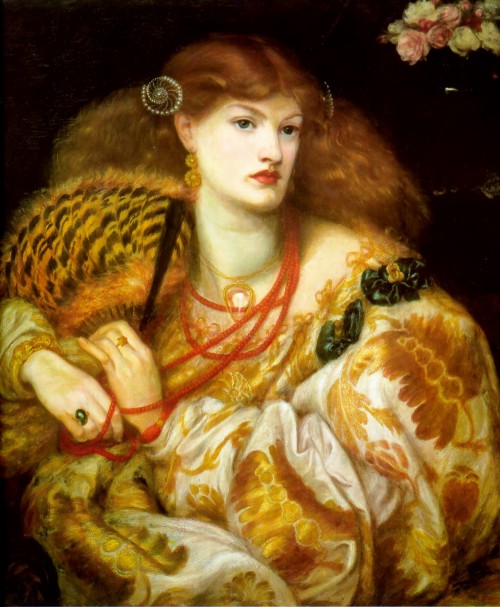
"Monna Vanna" by Dante Gabriel Rossetti.

“Monna Vanna” by Dante Gabriel Rossetti.

One of my favorite periods in art is the Pre-Raphaelite movement led by Dante Gabriel Rossetti. His exquisite beauties with almost translucent ivory skin and their manes of Titian-red flames stare at you with large, haunted eyes and seemingly quivering lips. Their graceful bodies are either garbed in ornate furs or velvets, or are the embodiment of simplicity against the lushness of nature. In all case, though, they always straddle the line between prim daintiness and richness, delicacy and sensuality, darkness and light.

The Pre-Raphaelite Brotherhood repeatedly came to mind when I wore Moon Bloom, a fragrance centered around the richness of white flowers, particularly tuberose. Yet, it wasn’t my favorite, Dante Gabriel Rossetti, with his ornate beauties who the perfume conjured up.

"Ophelia" by Arthur Hughes. Source: preraphaelitesisterhood.com

“Ophelia” by Arthur Hughes. Source: preraphaelitesisterhood.com

Instead, it was the various portrayals of Ophelia by other members of the brotherhood, from John William Waterhouse to Arthur Hughes. The key is the radiance of an Ophelia who glows white, embodying delicacy, gracefulness, warmth and femininity in the midst of very measured, very calibrated, careful lushness. For me, that is the essence of Moon Bloom.

Moon Bloom is an all-natural, handcrafted eau de parfum that released in 2013, the debut creation of Hiram Green Perfumes. The perfume house is based in the Netherlands, but was founded by a British gentleman, Hiram Green, who has quite a background with perfumery in general. His website explains further:

After founding Scent Systems, a perfumery located in central London, Hiram learnt that most perfumes, even the ‘best quality’ ones, are manufactured using synthetic materials. Wanting to offer a natural alternative to his customers, he was hard-pressed to find anything suitable.

After relocating to the Netherlands, Hiram spent several years researching and experimenting with natural fragrant materials. In his studio in Gouda he develops and produces his natural fragrances in small batches.

Moon Bloom via the Hiram Green website.
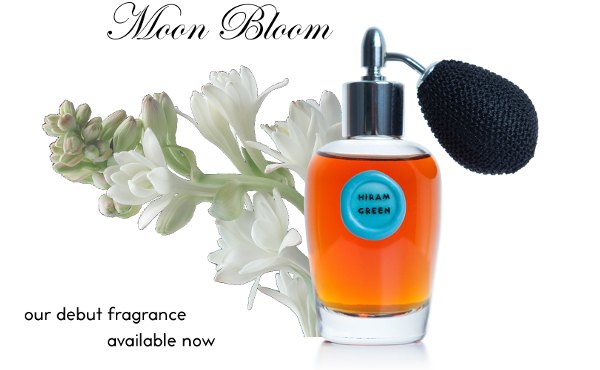
Moon Bloom via the Hiram Green website.

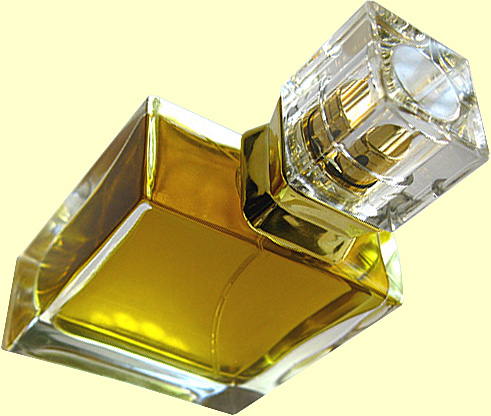
I love the look of Moon Bloom which comes is a glass bottle with an old-fashioned black atomizer “poofer” (as I call it) pump, dark ambered liquid, and a turquoise wax seal. The description for the fragrance may be even prettier, as it uses a phrase I’d never previously heard in connection with my favorite flower. “The mistress of the night.” I shan’t forget it. Even though I see tuberose as the exquisite embodiment of whiteness, enough people find its narcotic qualities to be overwhelming and utterly evil, thereby making “mistress of the night” quite an apt, very amusing moniker of darkness.
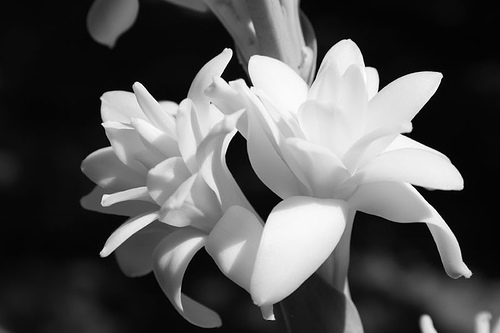
Source: Fragrantica

Source: Fragrantica

The perfume’s full description reads:

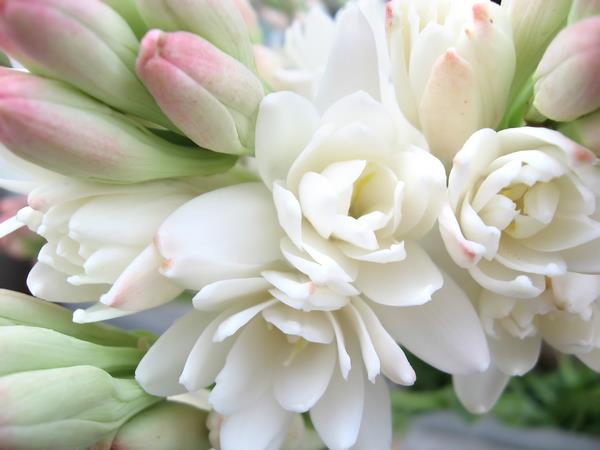
Moon Bloom is a lush and elegant tuberose themed eau de parfum. Tuberose is a tropical night blooming flower. Often referred to as ‘the mistress of the night’, tuberose is an admired theme in perfumery because of its soft and creamy but also powerful and narcotic aroma.

Moon Bloom includes generous amounts of tuberose absolute, jasmine absolute and ylang ylang. There are also notes of coconut, leafy greens and hints of tropical spices and resins.

Moon Bloom opens on my skin with green, fresh tuberose that has a very mentholated, chilly, rubbery note. I have to admit, I muttered to myself, “here we go again.” It’s undoubtedly unfair to have a bias against the eucalyptus-like, chilled metal opening of many modern tuberose scents. After all, the deconstructed essence of the flower and their indoles often has that precise profile. Still, I’m not a particular fan of it, especially when it takes on the merest whisper of mothballs, the tell-tale sign of truly concentrated or undiluted indoles. Thankfully for me, both the mothballs and the hardcore, rubbery, mentholated intensity fade away within mere minutes. Less than 4 actually, so it truly doesn’t last long on my skin, though a certain chilly coolness does linger for another hour.

tuberoseThe opening moments are a contrast of light and dark. The tuberose is followed almost immediately by a touch of sweet jasmine and by milkiness. Though the dark, rubbery mentholated camphor fades quickly, there remains a light greenness that lurks around the edges. At the same time, the tuberose feels lush, opulent and heady, with indoles that almost border on the dirty. The sweetness of the jasmine grows in strength, flitting all around the top notes, intertwined inextricably with the potent tuberose. The whole thing is warm and rich from the start, with a spicy quality that hints at the base elements.

While Moon Bloom’s opening minutes definitely shares the deconstructed tuberose element of Serge LutensTubéreuse Criminelle, I find definite differences between the two. It’s not merely the length of time that each note lasts. It’s also that the note never smells like diesel or gasoline. After the opening salvo, it feels more like a touch of smoky darkness that is replaced by icy menthol. At times, the latter almost feels fizzy, like the aerated champagne bubbles in YSL‘s vintage Champagne or Yvresse. The flood of sweet jasmine also ensures that the indoles don’t stay rubbery or too medicinal for long.
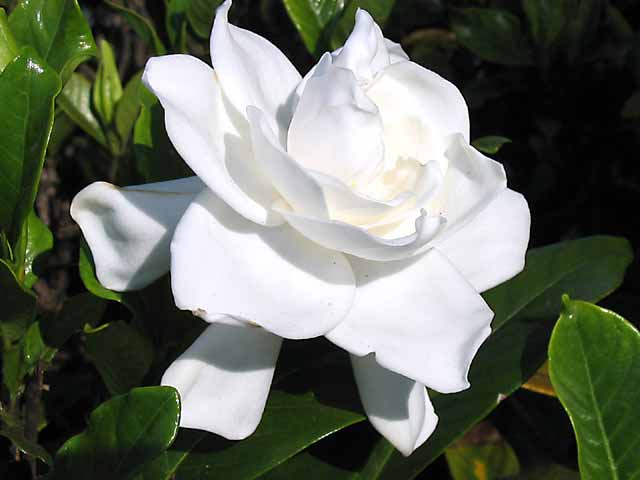
Source: crazy-frankenstein.com

Source: crazy-frankenstein.com

There is another great white flower that I smell, crazy as it sounds. On every occasion when I’ve worn Moon Bloom, there is a core note of what I would swear is gardenia. I thought I was completely mad, as there is no gardenia whatsoever in Moon Bloom. So I wrote to Mr. Green about it, and he replied: “I think of gardenia absolute as smelling between Jasmine and Tuberose. It would not surprise me then if you smelt gardenia in Moon Bloom.” Mr. Green is a very courteous gentleman, so he may have been trying to make me feel better, but I’m going with his explanation. From this point on, I’ll just write “gardenia” in quotes so that you know I’m referring to the oddity of my own nose.

As a whole, Moon Bloom quickly turns into a rich tuberose and jasmine duet with the lightest touch of both greenness and darkness. My favorite part may be the coconut. It’s actually more like vaguely coconut-y, floral milk, than actual heavy, gooey, Hawaiian Tropics butteriness. It’s a delicate, initially watery, soft note that is never cloying or unctuous, though it is quite muted and muffled. For most of Moon Bloom’s lifespan on my skin, the coconut works in the shadows, adding an indirect effect to the base notes and providing a textural quality more than an actual smell of milkiness.

White opal via swissgemshop.ch

White opal via swissgemshop.ch

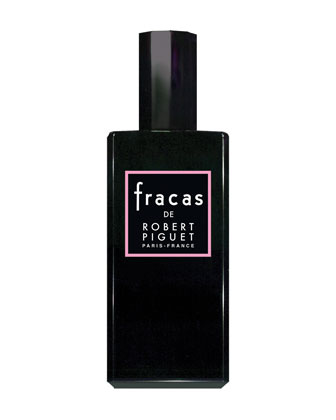
“Radiant” may be the best description for Moon Bloom, despite its initial potency and indolic quality. Contrary as it may sound, the perfume feels more radiant and delicate than carnal, fleshy, and over-ripe. It’s a dainty take on a floral powerhouse, and the soft, airy quality that takes over after 20 minutes underscores that impression. Instead of evoking pillowy, fleshy bosoms on languid courtesans, instead of the hot, almost opaque excesses of Fracas (which I love for precisely that reason), Moon Bloom makes me think of an opal stone with its touch of iridescence amidst a milky smoothness. Perhaps its the name of the fragrance with its imagery of flowers blooming in the silvery light of the moon, but I think it’s Moon Bloom’s radiant quality that feels like a perfectly calibrated mix of lushness and bright freshness.
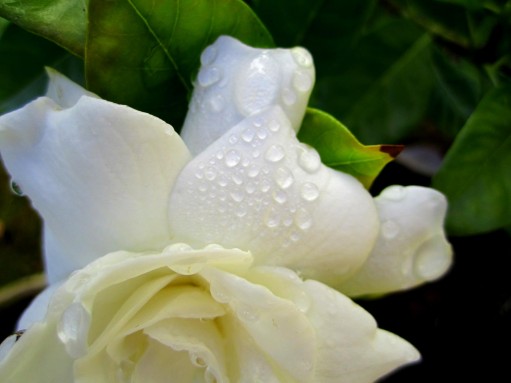
Photo: onewomanshands.blogspot.com

Photo: onewomanshands.blogspot.com

20 minutes in, Moon Bloom starts to shift. The “gardenia” note grows stronger. Here, it is simultaneously a very dewy, green “gardenia” like the version in Ineke‘s Hothouse Flower, and also a lusher, richer interpretation of it. I realise that it is probably the jasmine, but regardless of the actual source, I love the creaminess with its contradictory freshness. The tuberose-jasmine duo still dominate, but the “gardenia” definitely trails in third place. The flowers feel almost weightless, a little too much so for my personal tastes. On my skin, the jasmine is far meatier and richer than the tuberose which feels utterly translucent at this stage. Around the same time, Moon Bloom’s projection drops. It was initially extremely strong, but is now an airy cloud that hovers 2 inches above the skin with 3 spritzes from a little atomizer. 

The prominence and role of the individual flowers in Moon Bloom are really interesting. After wearing the fragrance a number of times in the last month, I’ve noticed what seems to be a trend in the perfume’s overall development. Moon Bloom always begins with tuberose, but it then goes through stages where other flowers seem to take over. It feels like a horse-race where the tuberose bursts out of the gate, but becomes neck-and-neck with the other flowers after thirty minutes. First, it is jasmine which surges ahead by a nose, and stays there for the first few hours. Then, its place is taken by the “gardenia” which is heavily intertwined with the tuberose for the next stage. In the end, though, the tuberose returns to overtake them both on the home stretch, and races past the finish line. For me, that’s unusual as most tuberose-centered fragrances that I’ve tried inevitably end up finishing as jasmine or something else. Not Moon Bloom, though the tuberose is definitely in second place for long stretches of time.

Ylang-Ylang. Source: Soapgoods.com

Ylang-Ylang. Source: Soapgoods.com

You may have noticed that I haven’t mentioned ylang-ylang in all this. Well, for the first thirty minutes, I can’t detect it at all. Then, almost on the dot, it appears, albeit in extremely muted form. It adds a velvety smooth texture, and, for a second, just the tiniest hint of something banana-like. At the same time, however, it is infused with an almost moss-like greenness at its edges that smells both leafy, and a wee bit reminiscent of Givenchy‘s vintage Ysatis, a ylang-ylang chypre. The greenness is quite separate from the lingering traces of menthol that remains at the edges, but the whole thing is extremely subtle, a bare flicker that only occasionally pops up.

45 minutes in, Moon Bloom is a seamless blend of jasmine, gardenia, tuberose, and ylang-ylang, in that order, with varying, subtle undertones of greenness that range from the leafy to the fizzy to the faintly mentholated. There is a quiet, muted spiciness that stirs in the base, tossing up a touch of gold to the very white, cream, and green coloured palette. The coconut milk has disappeared as an individual note, but it has a profound effect on the base when combined with the ylang-ylang. Thanks to the two elements, the plush, heady white flowers are nestled in a suede-like richness and warmth. I was going to say “custardy,” but that is not really accurate. Nothing about Moon Bloom feels heavy or thick. It’s too delicate to be like velvet, but too creamy to be an airy mousse.

Source: Fragrantica

Source: Fragrantica

Perhaps the best way to describe Moon Bloom’s perfectly calibrated, tight-rope act would be to describe the fragrance as “petal-soft.” It mimics the velvety softness that you feel when you stroke a gardenia’s petals and breath in its heady richness, but there is also the airy, fresh radiance of flowers that have not reached their peak or turned blowsy.
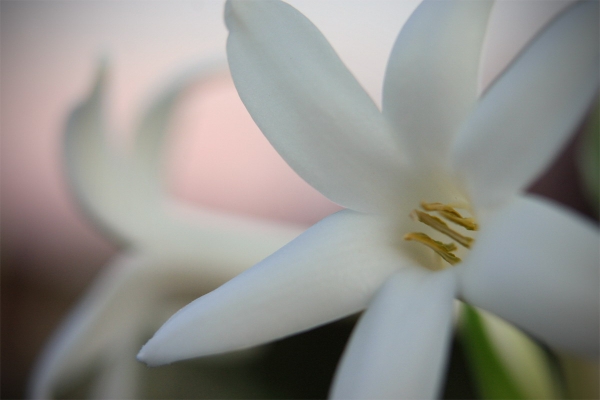
Photo: mypham.us

Photo: mypham.us

Moon Bloom turns more beautiful with time. Around the 2.5 hour mark, it’s a gorgeous “gardenia” and jasmine scent, infused with tuberose, upon the creamiest, velvety softness. It feels lush, but dainty, and I prefer all of it to Carnal Flower. Best of all, Moon Bloom lacks the Malle perfume’s synthetic base with that terrible, cheap white musk that always gives me a headache if I sniff Carnal Flower up close for too long. Instead, Moon Bloom’s base has an abstract (though muffled) spiciness to it which grows stronger, shedding a golden haze over the soft white flowers.

I find the balancing act that Mr. Green has achieved to be masterful, utterly masterful. He’s managed a refined, modern take on white flowers that never emasculates them or robs them of their true identity. He doesn’t reject their inherent lushness in favour of some ostensible, overbearing “freshness” done purely for the sake of appealing to current market trends. Moon Bloom has that modern vitality and lightness, for this is no Fracas or 1980s powerhouse after all. Yet, instead of aping Carnal Flower, he eschews pure greenness in favour of creaminess and yellowed warmth. (For me, visually, jasmine often skews a buttercup yellow on the colour spectrum, illogical as that may be.)
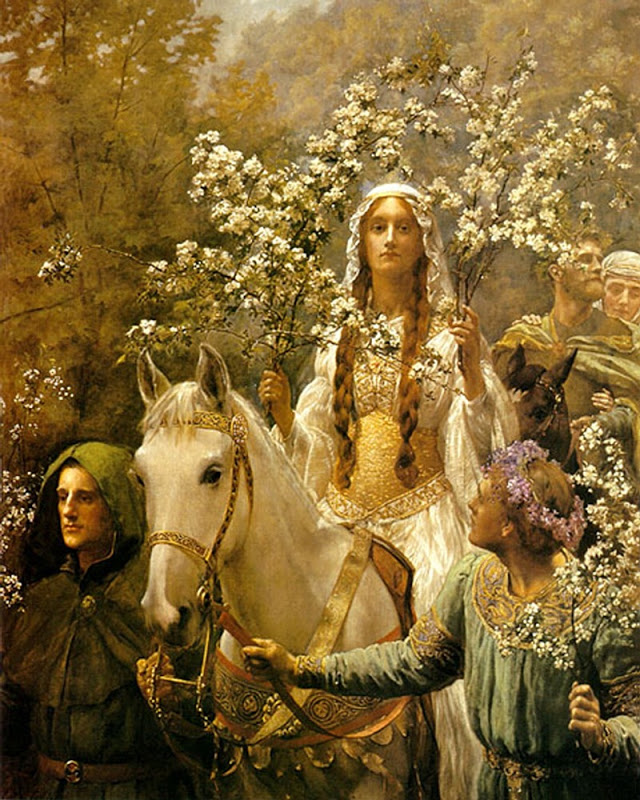
John Collier, "Queen Guinevere's Maying" (1900). Source: Wikipedia.

John Collier, “Queen Guinevere’s Maying” (1900). Source: Wikipedia.

Mr. Green has taken the best of both worlds — the old of Fracas and the new of Carnal Flower — and mixed them into a perfume that gleams like an opal. It has the subtle sensuality of Rossetti’s women, but at a sotto voce level, and countered by the delicate beauty of the Ophelia of his Pre-Raphaelite brethren. There is the luxurious feel of old-style, full-bodied, classique perfumes, but, also, the lightness, airiness, restrained discreetness and brightness of the modern style. Finally, Moon Bloom balances the cool aspects of a green freshness with the warmth of that creamy base, a base whose golden sunniness evokes the Queen of the May far more than “the mistress of the night.” Have I mentioned the word “masterful” yet?

At the end of the 4th hour, Moon Bloom hovers right above the skin, but the scent is so deep or rich that I’m amazed it’s all-natural. The perfume is a velvety-soft blur of white flowers led by the tuberose-gardenia-jasmine trio. The tuberose has finally overtaken its white cousins, as if the jasmine decided to give up the race. The “gardenia” impression continues, while the ylang-ylang is as muted as ever on my skin. The best part of the scent, apart from the return of the tuberose, is that surprisingly creamy base. After 5.25 hours, it feels smoother than ever with a plushness that is texturally very natural and more petal-like than ever. Carnal Flower, at a comparable point in its development, had nothing like it, and was merely a blur of musky jasmine. Moon Bloom has actual depth and body, yet its richness never feels overwhelming.
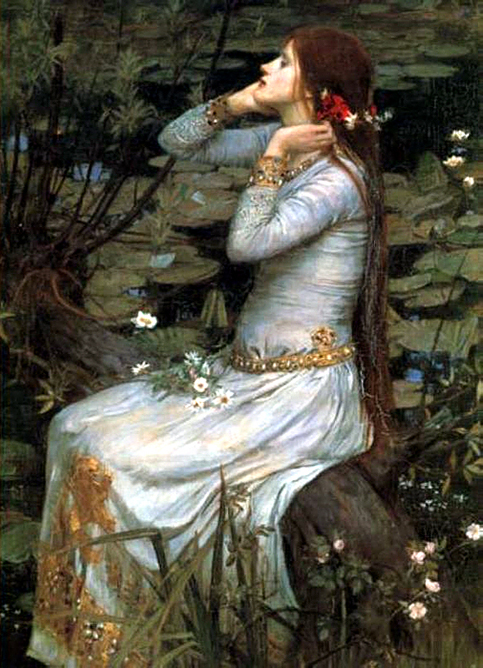
"Ophelia" by John William Waterhouse, 1910. Source: preraphaelitesisterhood.com

“Ophelia” by John William Waterhouse, 1910. Source: preraphaelitesisterhood.com

To the contrary, Moon Bloom’s drydown has a softness that borders on the soothing. It’s hard to explain, but there is something about that velvety, petal-like quality and Mr. Green’s perfect balancing act which creates an easiness about the scent. Moon Bloom is so much more comfortable than my beloved Fracas which is all about dressing up to the nines or to seduce. Moon Bloom has an accessible gentleness, but it’s an easiness that never once surrenders its creamy white soul or loses sight of what white flowers are really like. Nothing about the scent feels like a generic, banal, white flower cocktail that you could find at Sephora, but it’s also not a diva act. All of which bring us back to Ophelia. If Fracas is the iconic Maria Callas in diamonds and furs, then Moon Bloom is a Pre-Raphaelite Ophelia. Graceful femininity with seamless smoothness and an absence of rough edges (or synthetics) done in a way that makes the white flowers radiant and soft, but never showy or bold.

In its final hours, Moon Bloom is a velvety tuberose with occasional flashes of “gardenia.” It coats the skin like a whisper, but there is a richness to the tuberose if you put your nose right on your skin. I’m amazed at Moon Bloom’s longevity on my wonky skin. Three good squirts from the little atomizer, or the equivalent of 2 small sprays from a regular bottle, gave me 11.5 hours in duration. One big atomizer squirt gave me about 9 hours, though the sillage dropped much more rapidly and Moon Bloom became a skin scent after 2.5 hours. On Fragrantica, the few votes for longevity are evenly split between “long lasting,” “moderate,” and “weak,” while the sillage numbers are primarily for “moderate,” followed by 1 vote for “heavy.” I really think that the quantity you apply will impact both issues, as well as, obviously, your skin chemistry.

As you can tell, I loved Moon Bloom. It’s a lovely scent that falls midway on the spectrum between Carnal Flower‘s fresh greenness and subdued restraint, and the more indolic variations on tuberose. It’s a far, far cry from Fracas (or even the indolic jasmine powerhouse of La Via del Profumo’s Tawaf), but it’s also removed from Carnal Flower. It feels like a perfectly calibrated mix of both, with strong touches of its own character.

That said, I’m someone whose tastes skew strongly toward super opulent, bold, powerhouses when it comes to my florals, so you need to put my assessment into that definitional context. If you’re someone who finds Carnal Flower to be too intense a white flower explosion, then I do not recommend Moon Bloom. If you can’t stand tuberose or jasmine, then, quite obviously, you should stay far, far away. Moon Bloom is for those who find Carnal Flower to be too anemic or wispy, but who also think Fracas is taking lush richness too far to the other extreme.

My definitional standards and preferences might be firmly placed on the extreme side of the white flower scale, but I’m far from being alone in finding Moon Bloom to be lovely. The perfume has won over many bloggers, with a number of them placing it on their Best of 2013 list. Take, for example, the witty, lovely Victoria of EauMG who writes, in part:

Moon Bloom is a minty, green tuberose with a creamy banana ylang-ylang. It’s huge and luscious and dare I say glamorous! Indoles fall out of jasmine’s cleavage when she bends forward. Her glistening skin is subtly moisturized with coconut oil and this adds a warmth to the white florals. The florals become more “peachy” and lose some of their crisp greenness. Moon Bloom’s dry-down is acrid incense with “green” coconut.

Moon Bloom is glamorous and flawlessly put together. I realize that my description or even the note list may scare away some people that have white floral “issues”; however, please don’t let it. Moon Bloom is big but subtle. It’s one of the few tuberose perfumes that allows you to be the diva and doesn’t try to steal your spotlight. I really think this one will win over those timid of tuberose. And it will be loved by those that adore white florals. I can’t stop sniffing it when I wear it. It’s gorgeous and it makes me feel gorgeous. […]

Moon Bloom has average projection and longevity. In my opinion, it wears for much longer than other all-natural compositions. I get 6-8 hours. It does become more subtle after 2-3 hours but that’s fine with me. […]

Victoria’s Final EauPINION – Gorgeous, glamorous tuberose soliflore. I think Mr. Green just helped a lot of perfumistas find “their” tuberose. This is the easiest to wear straightforward tuberose soliflore that I’ve ever encountered.

Victoria loved it so much that she put it on her Best of 2013 list, but she’s not alone in appreciating Moon Bloom. The Perfume Shrine put the fragrance in a tie with Aftelier’s Cuir Gardenia for their Best Natural of 2013. And Olfactoria’s Travels thinks it’s great as well.

Olfactoria writes that she has a very cautious relationship with tuberose, though she no longer has outright hatred for the note. In Moon Bloom, she found the flower to be “perfectly balanced,” soft and with “no hint here of the hysterical, diva-esque antics” that many tuberose fragrances display. On her skin, the florals eventually “recede a bit and a base emerges that is warm, a tiny bit spicy (think carnation/clove) and cosy in an unsweet, ambery (vanilla/labdanum) way.” As a whole, Moon Bloom evoked a woman whom she found to be

extremely sympathetic. I feel myself drawn to her and her charmingly enticing ways. She is intelligent, calm, she knows who she is. She is beautiful and desirable, but she doesn’t use that as a weapon, it is merely a fact of her life, equal among many. She loves to smile and there is an air of mystery around her, but this doesn’t make her appear aloof or remote, but draws you in closer, wanting to find out more.

What stands out most about this woman though, is her smile: warm, loving, caring and infinitely sweet, it is hard to remain untouched when you find yourself in the radiant presence of that smile.

Warmth is a far cry for what one adoring blogger perceived in Moon Bloom. My favorite review of the fragrance comes from The Silver Fox, a blogger who admittedly loves white floral bombs, but who has tried enough of them to know that Moon Bloom is special. He begins his review with fantastic elucidation of why it can be so cool for men to wear fleshy white flowers:

For me, a man wearing white florals is the subversive writhing of indolic strangeness, the blush of purity degraded, underpinned by the all too sexual skin washes of tuberose, lilies, ylang, gardenia and orange blossom. It is the fleshy conflict between light and dark, beauty and decay, sex and chastity that fascinates me.

In many ways these are overtly female blooms, but I adore transgression as many of you know. Boys smell so decadent in florals, so Tennessee Williams, muscular, tense and ambiguous, afraid of inner desires yet reaching out to embrace them. […][¶]

Hiram Green’s luscious, alabaster Moon Bloom is probably one of the best tuberose soliflores I have tried in many years. This shocked me for several reasons. One, I thought I had probably tried as many permutations and plays on the blooms as were strictly speaking possible and two, Hiram’s delicious scent is made exclusively from natural ingredients, a notification that does not generally make my Foxy heart sing.

Moon Bloom is creamy, glittering perfection. The name is so alluring and romantic, exactly right for this narcotic formulation of floral wonder. It is a strangely intense perfume, inhaling it transports me to frozen streets pierced by milky shafts of moonlight in a silent city. Snow falls, marble glistens, time slows. My skin is waxen, radiating the ivory effulgence of tuberose and jasmine absolutes. A lick of distant tropics from an ice-cold coconut note, green and glacial at the same time.

I highly recommend reading the entirety of his long but absolutely stellar, beautifully evocative review. There, he talks about why Mr. Green’s technical balancing act with the essential absolutes is so masterful, as well as offering further details of how the tuberose appears, the “pearlescent” jasmine, and the key impact of the coconut milk in his version of Moon Bloom. For him, the latter reminded him “of the wonderful oozing ripe fig effect used in the Extrème version of Premier Figuier by L’Artisan Parfumer.”  He ends his fantastic analysis with these powerful images:

Moon Bloom is made for night skin, waxen and white-lit under bleak staring moons. A fragrance for skins in troubled love, in pain, lost perhaps. There is alchemy at work here and it smells like snow falling in the hush of night.

"Moon in the billowing mists" by Norroen-Stjarna on Deviantart.com

“Moon in the billowing mists” by Norroen-Stjarna. http://www.deviantart.com/art/Moon-in-the-billowing-mists-306095826

The Silver Fox seems to have experienced a lot more of the freezing, “iced metal” aspects of the menthol that either I or the other bloggers did, but it’s all a matter of skin chemistry. For me, Moon Bloom is not about “billowing snow,” and my skin did not bring out “a dazzling blindness to the carnal theme of Hiram’s whiteness, the kiss of frozen lips in a city paralysed by ice and the swirling rogue of winter flurries.” (What a spectacular piece of writing!) In fact, the concept of carnality never once crossed my mind with Moon Bloom, which just goes to show you how much one’s yardstick matters in assessing indolic florals. In fact, I’m starting to wonder just how much my childhood imprinting with Fracas and my subsequent love for Amouage-like Middle Eastern opulence has impacted my definitions, because I thought Tawaf was the embodiment of carnal voluptuousness, while Moon Bloom seems so lady-like and approachable.

To be clear, The Silver Fox does largely agree with that as well, writing extensively about how the tuberose is never lascivious or extreme. As he so amusingly puts it, the tuberose of Moon Bloom never screeches like a “drunken karaoke singer belting out gay anthems” who has to be tackled by his mates to shut up. For him, the tuberose is thankfully “far removed from this pitiful spectacle. It is strong-willed, full of drama, but intelligent and deeply charismatic, filling the room with brilliant, searching light.”

As you can see, the word “intelligent” keeps coming up in connection with Moon Bloom, along with “calm,” “approachable,” or “radiant” in descriptions that emphasize how the tuberose is not divaesque. And it’s true. This version is not the Ride of the Valkyries, and it’s not just my wonky, skewed perception. I love Fracas, but she’s not always the easiest thing to wear on a daily basis. Moon Bloom is.

Moon Bloom bottle and decant, via Hiram Green.

Moon Bloom bottle and decant, via Hiram Green.

Moon Bloom is available in two different sizes. There is an affordable 5 ml decant sold for roughly $27 (or €25 with the VAT), while the full bottle costs about $150 with a more affordable refill option being introduced later this year. The original bottle is gorgeous, though, with the perfect blend of classicism and clean-cut modernism.

All in all, if you’re a white flower lover, I strongly recommend that you try Moon Bloom. For those with a much more tenuous relationship to the florals, I think you have to like both the initial mentholated aspect and a touch of indoles to enjoy the scent. On the other hand, Olfactoria who is iffy on tuberose really liked Moon Bloom, so perhaps you will too. As a whole, I think Moon Bloom skews more feminine than unisex, but in all cases, its relatively moderate longevity and soft sillage make it suitable for the office.

I have to end this long review with a simple word about Hiram Green: talented. Enormously talented. His debut effort is an utterly masterful display of technical brilliance. Bravo.

Disclosure: My sample was courtesy of Hiram Green. That did not impact this review. I do not do paid reviews, my views are my own, and my first obligation is honesty to my readers.

DETAILS:
Cost & Availability: Moon Bloom is an eau de parfum that comes in a 50 ml bottle that costs €111.57 for non-European customers and €135 for European ones who have to pay VAT. It is available the Hiram Green website, which also sells a 5 ml decant for €20.66 without VAT, and €25 with the tax included. Later this year, a cheaper refill option should be available. I believe the current bottle and decant are also refillable at the current time. Whichever bottle you choose to get, the website will automatically subtract or add the VAT based on your delivery address. ships its scents world-wide. In the U.S.: There are no US retailers at this time. You have to order from Hiram Green, or from one of the European vendors which carries the line. [UPDATE 7/9/14: Moon Bloom has now come to the U.S. and is exclusive to Indigo Perfumery which sells the full bottle for $165, with the 5 ml travel spray for $40, and a sample for $4.]  Outside the U.S.: Moon Bloom is available at 7 European retailers. One is First in Fragrance which ships world-wide and which sells Moon Bloom at retail for €135, with a sample for €8. In the Netherlands, Amsterdam’s Annindriya Perfume Lounge sells both the 50 ml bottle and the 5 ml decant size. Other vendors are in Austria, Germany, and Sweden. They are listed on Hiram Green’s Stockist Page. Samples: I could not find Moon Bloom at this time on either Surrender to Chance or The Perfumed Court. I will try to update this section if the fragrance becomes available at either one.

Frederic Malle Carnal Flower

The benchmark for all tuberose scents was set by the legendary Fracas, but the modern contender and favorite for the throne may be a creation by Frederic Malle: Carnal Flower. It is an accessible, easy, very fresh and, therefore, very modern take on white floral powerhouses. I’m generally not one for floral scents, but I make a particular exception for the fleshiest of white, narcotic, indolic flowers. I’m an absolute sucker for a white powerhouses, and tuberose is my favorite flower in the world. So, I should positively adore Carnal Flower, right? Hm.

Frederic Malle. Source: Paris.com

Frederic Malle. Source: Paris.com

The luxury fragrance house Editions de Parfums Frederic Malle is one of the most respected niche perfume lines in the world. It was founded in 2000 by Frederic Malle, a man who has expensive perfume in his blood. His grandfather started Christian Dior Perfumes, and his mother later worked as an Art Director for the same perfume house. In 2005, Malle teamed up with legendary perfumer, Dominique Ropion, to create Carnal Flower. It is an eau de parfum inspired by Malle’s aunt, the actress Candice Bergen, and her role in the 1971 film, Carnal Knowledge.

Source: Forty Five Ten.

Source: Forty Five Ten.

Malle’s website describes Carnal Flower as follows:

If nature offers olfactive clashes, tuberose is probably the best example of it. These pretty flowers exude an almost carnal smell, superimposing in a quasi-miraculous way flower shop freshness, camphorous violence – spicy and animalic – and milky sweetness. This mysterious equilibrium has always fascinated perfumers. 18 months were necessary for Dominique Ropion to forward a modern version of that theme, an “olfactive Everest” that only the most talented perfumers were capable of reaching.

Fragrantica lists its notes as follows:

The top notes contain: bergamot, melon and eucalyptus. The middle notes include: ylang-ylang, jasmine, tuberose, Salicylates (natural, toxic product of herbal origin, a sort of a herbal feromone which is used by plants as a warning). The base encompasses: tuberose absolute, orange blossom absolute, coconut and musk.

Source: tarrantcounty.com

Source: tarrantcounty.com

Carnal Flower opens on my skin with a tinge of bergamot and green honeydew melon, then a loud bang of tuberose and eucalyptus. The fleshy, white flower is rendered icy with the mentholated notes, but there is also a definite milky quality to the scent. It stems from the tiniest flicker of the coconut in the base. The nicest part of Carnal Flower is the cool, green vibe. From the start, almost to the finish, there is a watery quality to the scent, not just from the dewy melon, but from a sense of the tuberose stem having been cut and dripping out its green liquid into the vase water that surrounds it.

Eucalyptus leaves.

Eucalyptus leaves.

The eucalyptus adds a chilly camphorated note that cuts like a knife through the flower’s usual sweetness. In other tuberose scents, that sweetness that can sometimes verge on either bubble gum or Welch’s grape jelly, due to the salicylates. Not here. At the same time, the eucalyptus ensures a freshness that pre-empts any indolic fleshiness, over-ripe voluptuousness, and heaviness. Indoles can create an over-blown ripeness in a floral scent which, on some skin, can end up turning fecal, urinous, plastic-y or reminiscent of a cat’s litter box. That is never the case here, for Carnal Flower’s indolic richness is kept firmly in check by the freshness of the icy eucalyptus and that subtle touch of green melon.

Carnal Flower’s initial blast of eucalyptus softens in less than five minutes. The briefly camphorated undertone turns into a simple greenness that is cool and crisp. The touch of citric freshness vanishes, and its place is taken by the first stirrings of the other white flowers. The orange blossom and jasmine lurk in the base for the most part, along with the coconut, but they start to throw up a translucent white arm to wave hello once in a while before sinking back to the depths like a shy mermaid. For now, Carnal Flower is all about the tuberose, singing a solo on center stage with the eucalyptus standing a few feet behind.

Tuberose. Source: Fragrantica.de

Tuberose. Source: Fragrantica.de

The greenness in Carnal Flower is quite multi-faceted. Besides the chilliness imparted by the eucalyptus, there is an aroma that feels as though the tuberose’s green leaves, stem, and unripe buds have been crushed into a slightly bitter oil. Later, the note takes on the distinct aroma of vase water that has been left untouched for a few days. There is a murkiness to the leafy, green note, though it never really rises to the level of fetid. Still, every time I’ve worn Carnal Flower, there is always a subtle flicker of dark, watery greenness that calls to mind stale, stagnant vase water.

Jasmine via Wikicommons

Jasmine via Wikicommons

It takes 20 minutes for the jasmine to arrive, fusing with the tuberose to become the focal point of the scent. The eucalyptus’ icy chilliness slowly begins to fade away, though the green freshness remains as a strong constant throughout the life of Carnal Flower. As the mentholated undertone becomes a mere flicker, Carnal Flower turns warmer, sweeter, and deeper, less fresh and cool. Ten minutes later, the orange blossom joins the parade of white flowers, creating quite a layered lushness.

The sillage, however, is moderate on my skin. Three small sprays from my small decant gives me a soft, airy cloud that wafts a maximum of 3 inches, at most. The thin, airy weight and restrained projection are a surprise for a scent that is so strong when smelled up close for the first two hours. Interpretations of airiness and sillage will obviously depend on one’s personal yardstick, but for me, none of Malle’s fragrances have much heft. He seems to ascribe to the modern French definition of “strong,” which seems to be significantly different than that of some American and Middle Eastern fragrance houses. Or perhaps it’s just me, for I’m continually unimpressed by what Malle considers to be intense or rich, let alone “Oriental.”

I think it’s only fair to explain that feeling, as it bears a lot on this review and my response to Carnal Flower. When I visited one of Malle’s Paris boutiques, I went through the range of Malle fragrances which were laid out in what seemed to be a progression of strength and richness from left to right. At the far end of the scale was Musc Ravageur whose placement seemed to be presented as the most opulently oriental, extreme, heavy or rich scent that they had. It bore home to me that my definition of things varies enormously from that of Monsieur Malle. I kept asking the rather constipated, prune-mouthed sales assistant for something “stronger, heavier, richer,” because half the scents seemed to be watery, thin, translucent, or restrained to the point of aloofness.

Fracas Eau de Parfum.

Fracas Eau de Parfum.

The point of all this is that I am obviously not Malle’s target customer. Not in a million years. And I think that is especially true when it comes to his florals. If I’m going to wear tuberose, I want a sonic boom like the Fracas that I grew up with, or like an Amouage scent. I want concentrated heft, richness, and body. For me, personally, I don’t see the point otherwise. I’m not wearing an all-natural fragrance with its inherent limitations.

The problem seems to be that my benchmark for white florals was set by Fracas when I was 7 years old. Vintage Fracas is one of two perfumes that forever shaped both me and my perfume tastes. (The other being the benchmark scent for Orientals, vintage Opium.) When you are imprinted with vintage Fracas as your idea of the perfect tuberose, and then you’re faced by a very pretty, albeit watery and green, tuberose that has a fraction of its richness and little of its indolic, narcotic, heady fleshiness, you’re bound to be somewhat underwhelmed.

Source: Colourbox.com

Source: Colourbox.com

Carnal Flower definitely leaves me at a bit of a loss, especially after the end of the first hour. It becomes this translucent, diaphanous, gauzy blur of whiteness with some greenness and some creaminess. The prominence and power of certain notes vary over the next few hours, but the core essence never changes one iota. The orange blossom fluctuates in strength, but it is always in third place behind the jasmine and tuberose on my skin. In any event, it fades away about 2.75 hours into Carnal Flower’s development. The jasmine often seems to overtake the tuberose on my skin as the main note, but it’s sometimes hard to single out the specific floral components as Carnal Flower becomes an increasingly abstract veil of white flowers with some freshness. The creamy quality never translates as coconut on my skin, and is much more of a textural quality. As a whole, it’s nice, but …. eh.

While the coconut leaves me underwhelmed, I’m wholly unenthused by the white musk that pops up about 4.75 hours in. It’s a synthetic touch that consistently gives me a headache if I sniff Carnal Flower up close for too long. I don’t even see the purpose of it. It doesn’t smell fresh or clean. It’s simply… there. Eventually, Carnal Flower devolves into a vaguely musky jasmine scent with some occasional touches of tuberose and greenness. It remains that way until its end. All in all, Carnal Flower lasted 11.25 hours on me, perhaps thanks to the white musk which my skin clings onto like mad.

It is all very pretty, with enjoyable greenness and a refined handling of the tuberose, but Carnal Flower really fails to do much for me. Every single time I’ve worn Carnal Flower over the last two years, the trajectory of my reaction is always the same:

Opening: “Oh, eucalyptus. Ugh,”

10 minutes later: “Huh, this is so incredibly pretty, why don’t I wear this more often??!”

An hour after that: “Oh. Right. Now I remember why. Hm. Maybe I should put some vintage Fracas over it?”

I’ve spent so much time trying to explain my reaction to Carnal Flower for a few different reasons. First, I’m fully aware that saying Carnal Flower is insufficiently potent, indolic, rich, and full-bodied makes me sound insane to the average perfumista. For almost everyone else, it is the epitome of an indolic, opulent, white floral powerhouse. Well, maybe you had to grow up with Fracas in the 1970s, and have a taste for super-charged, bold, or Middle Eastern perfumery in general. Second, Carnal Flower is one of those legendary scents that most people have already tried and have an opinion on, so there isn’t much point in quoting other reviews. At this point, it’s merely a case of comparing experiences, and providing a context for one’s perspective. 

Source: Basenotes.

Source: Basenotes.

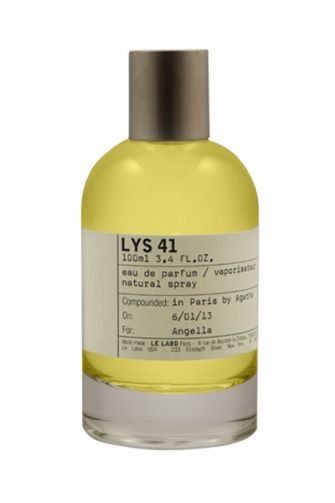
What may be more useful is to compare Carnal Flower to other tuberose-centered fragrances in this genre. As noted above, Fracas is the reference and gold standard, but it is a very different fragrance as a whole. It’s more fleshly, heavy, opaque, and voluptuous. Alas, the new modern eau de parfum is also syrupy, sweet, and somewhat synthetic in feel. Carnal Flower’s essence is slightly closer to Le Labo‘s 2013 Lys 41 which is a similarly fresh white floral cocktail, but again there are differences. Lys 41 has the dewy, faintly metallic coolness of lily, not the green freshness from eucalyptus. It is also substantially creamier and more vanillic, thanks to the buttery notes provided by the Tahitian gardenia or tiaré. On my skin, Carnal Flower’s coconut was neither particularly noticeable in an individual, distinct way nor tropical in nature, but Un Lys definitely had that undertone. 

Source: hdwallpaperspics.com

Source: hdwallpaperspics.com

Serge LutensTubereuse Criminelle is much more significant, as Malle and Ropion were clearly influenced by the Lutens version which preceded Carnal Flower by six years. The 1999 Tubereuse Criminelle has a heavily mentholated, rubbery, almost diesel-like and leathered blackness to its opening eucalyptus notes. It is more masculine, bold, intense, and forceful (in both body and projection), before softening and eventually turning into something very golden and warm with vanilla and styrax. It never feels green and fresh, let alone watery, and it is also a much more difficult fragrance than the easier, more accessible Carnal Flower. I suspect that is why Malle’s tuberose scent edges out the Lutens as the favorite modern tuberose.      

The Perfume Shrine has a fantastic rundown of Carnal Flower’s place on the tuberose spectrum, beginning with the reference benchmark, Fracas:

The history of tuberose in perfumery passes through that parfum phare as the French say (a “lighthouse perfume”, a landmark more like it): Fracas, conceived by the fauvist Germaine Cellier for Robert Piguet, with its fleshy, lush contradicting qualities edged upon the two extremes: creamy, candy-ish beauty and violent hystrionics leading to decay. Blonde by Versace is its poorer , aspiring -and rather successful- imitator with a flamboyant style that is very Italian, a civet come-hither innuendo and quite pleasant in calculated moderation especially in extrait de parfum. Serge Lutens Tubéreuse Criminelle presents a peculiar problem : one has to wait for the crucial first 15 minutes, when the demonic camphor note subsides, giving reign to the glorious creaminess and silky softness of the flower. Caron’s Tubereuse is very radiant , yet perfume-y although lighter and not suited to today’s sensibilities, I find. Carolina Herrera (the original one by the famous designer) is a bit too operatic, being so much infused with another bombshell : jasmine. Some of the rest (Lauder’s Private Collection Tuberose Gardenia and Do Son by Diptyque) are either more positioned towards gardenia or too light for carnal aspirations. Vamp a NY by Honore des Pres is more candied than that and with a generous helping of pink jasmine, although equally magnificent. Tuberose perfumes are a real continent: there are variations in the verdure to suit everyone. [Emphasis to names and bolding added by me.]

Candace Bergen via Pinterest.

Candace Bergen via Pinterest.

The Perfume Shrine helped me understand why Carnal Flower leaves me giving a Gallic shrug. It’s not “operatic.” I happen to love and own the Carolina Herrera scent that she mentions (I told you I loved tuberose), and its rich tuberose-jasmine duet is like Maria Callas in full aria. Though it’s increasingly hard to find now, it was once the signature fragrance of Angelina Jolie and the actress may be the perfect embodiment of the scent, while Carnal Flower fits the young Candice Bergen much better. She was lovely with fresh, golden, California girl looks, so the comparison is not intended to be an insult at all. It’s merely a difference in style.

Plus, as the Perfume Shrine says so well, Malle was clearly seeking to do something very different: “Carnal Flower was from the beginning a mission into offering something different.” He wanted not only the feel of Southern California, but Candace Bergen’s clean beauty with

a seemingly fresh scent, something that will titillate the nostrils and the mind. The camphor note, reminiscent of eycalyptus leaves, is a necessity: At once freeing the weight of the inherent indolic character of the blossom, which browns as it decays, and imitating the exhalation of tuberose in nature: greenish and somewhat mentholic from afar.  Yet the mentholated note does not make a grand appearence in Carnal Flower like it does in Tubéreuse Criminelle: the composition is therefore less striking, arguably less thought-provoking, but more wearable by more people as a result. Not a jarring note in sight; even the fruitier notes, like coconut and melon, are interspersed through sleight of hand to evoke freshness and sensuousness. Like Candice Bergen, it’s beautiful, but then again, not without wits or substance, and although undeniably sensual and sexy, it is high class and a lady, not a slut, at all times. 

I agree with her fully, even if I prefer more thought-provoking or operatic scents. Carnal Flower is indeed beautiful, elegant, and refined. It’s also incredibly easy to wear, though I’m probably the lone weirdo who thinks its restraint and simplicity makes it more of a daily scent than a special occasion one. I highly doubt anyone else would think Carnal Flower is the breezy thing to quickly spray on to run errands or to visit the vet. For me, if I were to opt for tuberoses on a date night or evening out, it would always be vintage Fracas or the eponymous Carolina Herrera scent.

In my admitted skewed and distorted opinion, the only thing that would put Carnal Flower into the more “special” category is its very high price. The smallest bottle costs $240 or €160, though there are more affordable travel-sized sprays that are also available. Is it worth it? If you love fresh, green, barely indolic tuberose, then most definitely yes! If you can’t stand big white flowers, or even moderately indolic scents, then obviously you should stay away. Carnal Flower may be greener than most tuberose scents, but it’s not that fresh.

All in all, Carnal Flower is gorgeous by the average person’s (white floral) standards, and a very modern take on the tuberose opulence of old. It has decent sillage and good longevity as well. I think it skews wholly feminine in nature, but I do know men who wear Carnal Flower. In fact, one of my best friends can’t live without his “Carnal Flora” which he confidently wears to the office without a second thought. Other men, however, seem to prefer the bolder, darker Lutens’ fragrance. And I prefer to stick to the even bolder, operatic, old-school versions. In all cases, and regardless of gender, I think it’s going to come down to the sort of white flowers that you like.   

DETAILS:
Cost & Availability: You can purchase Carnal Flower in a variety of different forms and sizes. On his website, Malle offers: a small 50 ml/1.7 oz bottle for $240 or €160; or a large 100 ml/3.4 oz bottle for $350 or €235. On the EU website, there is the option of 3 travel-sized sprays in a 10 ml size for €105. In the U.S., there is also a Carnal Flower hair mist which costs $160 for 100 ml. Finally, in EU and U.S. both, there is a 200 ml body butter cream for $215 or €140. In the U.S.: You can find Carnal Flower at Barneys which offers all the different versions of the scent, except for the EU travel spray option. In NYC, Aedes offers Carnal Flower in the 3×10 ml travel sprays for $160, along with the other versions of the scent but not the 50 ml bottle. Elsewhere, you can find it at Forty Five Ten, and there are other U.S. retailers listed on the Malle website at the store link below. Outside of the U.S.: you can find Carnal Flower at Frederic Malle’s International/EU website and in his Paris boutiques. In Canada, Carnal Flower and Malle fragrances are exclusive to Holt Renfrew which only offers the 100 ml bottle of the scent for CAD$385. In the UK, it is sold at London’s Liberty, though it only offers the 100 ml (for £210) or the body butter. However, Les Senteurs has Carnal Flower in the small and travel sizes, and sells samples. Elsewhere, you can find Carnal Flower at Skins in the Netherlands (in all versions from the travel sprays to the 50 ml bottle), Italy’s Alla Violetta, Australia’s Mecca Cosmetica (the online site only offers the 100 ml for AUD$350), Dubai’s Harvey Nichols, Saudi Arabia’s D’NA, Singapore’s Malmaison by the Hour Glass, and many others. For all other countries, you can use the Store Locator to find a location nearest you from Japan to South Africa. Samples: If you want to test Carnal Flower, Surrender to Chance sells it starting at $8.99 for a 1 ml vial.

La Via del Profumo Tabac

Imagine a fragrance that bottles the olfactory trajectory of the tobacco plant from its natural start to its finish, a perfume that evokes images of its greenness rooted in the dark earth of a Virginia plantation where it blooms with flowers, to its brown softness as the leaves are later dried in the sun, to Havana where it is rolled into Cohiba cigars.

Tabac via the Profumo site.

Tabac via the Profumo site.

That is Tabac, a 3-D display of the note in all its complexity. It traverses the spectrum from floral and green, to tarry rawness and chewy resinous darkness; and then from leathered smokiness to its final manifestation as the most expensive of smooth Cuban cigars that are eventually dusted with cinnamon-tonka and dry amber. It is a remarkably deft treatment of a very concentrated absolute essence, augmented by the smokiest of cedar, but also tamed by the breathiest whisper of dry vanilla and gingerbread warmth. I find it to be brilliantly done, from start to finish.

Dominque Dubrana via the NYT. Photo by Domingo Milella.

Dominque Dubrana via the NYT. Photo by Domingo Milella.

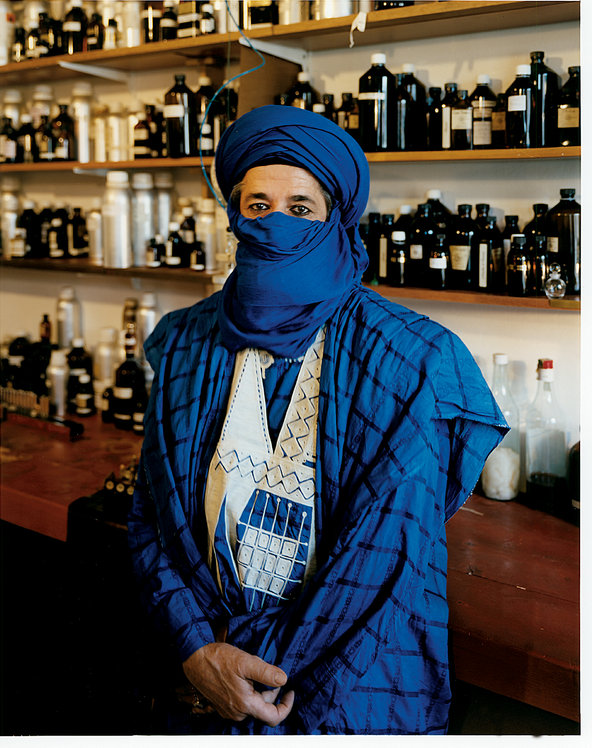
Tabac is an eau de parfum from the highly respected perfumer, Dominique Dubrana, who also goes by the name “Abdes Salaam Attar.” His Italian perfume house, La Via del Profumo, creates all-natural fragrances. In the case of Tabac, the focus is on tobacco absolute. Abdes Salaam Attar describes Tabac on his Profumo website as follows :

The absolute of tobacco is the theme of this perfume. In the composition the overwhelming aroma of the tobacco is moderated with the spicy and resinous essences traditionally used to scent pipe tobacco…. Vanilla, cistus, tonka etc.

At a bare minimum, the notes seem to be:

Tobacco Absolute, Vanilla, Cistus [Labdanum Amber] and Tonka.

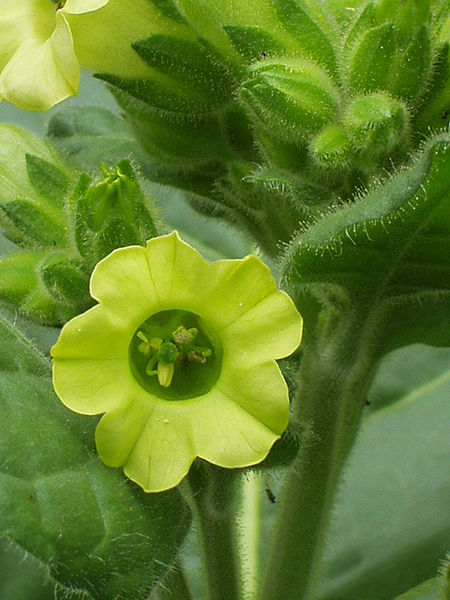
Native American Tobacco Flower via Wikipedia. Photo: William Rafti.

Native American Tobacco Flower via Wikipedia. Photo: William Rafti.

Tabac opens on my skin with floral tobacco, as if the blooming flowers on the plant were captured and bottled with all their fragrant sweetness. It is followed by the rawness of tobacco juice, and by honeyed, sun-dried leaves. Within seconds, the flowers are infused with a camphorated, resinous greenness that is simultaneously grassy and a bit tarry.

The light, bright freshness of the flowers stands in stark contrast to the dark, chewy, gooey treacle that quickly overtakes them. The note is blackened, extremely smoky, tarry, and leathered. Yet, at the same time, there remains a touch of green; it feels as though a rich mass of chewing tobacco and leather had been infused with the brightest of summer grass, along with a touch of aromatic, herbal concentrate. I also detect a strong note of cedar in Tabac, revealing itself as a woody smokiness that is laced throughout all the other elements. It mixes with the hardcore, resinoid aspect of the tobacco absolute to accentuate the leathered undertone running through the fragrance.

"Autumn Abstract." Photo: Tim Noonan via Flickr. (Website link embedded within photo.)

“Autumn Abstract.” Photo: Tim Noonan via Flickr. (Website link embedded within photo.)

Tabac is fascinatingly multi-faceted in its presentation of tobacco. I’ve noticed that if you only dab on a little, perhaps a 1/5th of a vial, the floral and grassy accords emerge more strongly. However, if you apply on 3 really big smears, you’re suddenly presented with significant dark, smoky, and resinous elements.

Source: rgbstock.com

Source: rgbstock.com

In all cases, however, Tabac is a very dry take on tobacco, especially as compared to the versions put out by Tom Ford with his Tobacco Vanilla or the even sweeter Tabac Rouge by Phaedon. Mr. Dubrana’s version is unsweetened, substantially smokier, and earthier. It’s as though a heaping dose of the smokiest, dark cedar and an earthy, woody version of something green (vetiver?) were used as accompaniments in lieu of the usual vanilla or sweetened fruits. Yet, for all that, Tabac isn’t bitter or acrid. The sweetness is delicate and subtle, but it is definitely there, even if it is a hesitant whisper in the shadows at this stage. Tabac also differs from Serge Lutens‘ Chergui in a number of ways. Tabac lacks Chergui’s strong touch of powder and honeyed tonalities. It is much more leathered, dry, dense, smoky, and heavy. The main difference, however, is that the tobacco is more multi-faceted, complex, and powerful a note.   

Source: fivepalms.com

Source: fivepalms.com

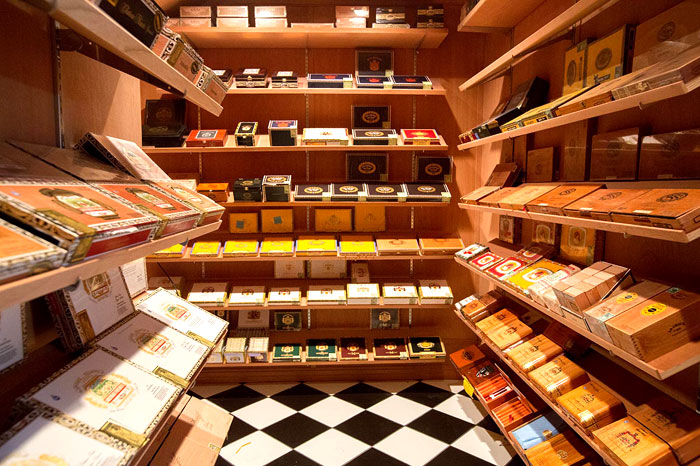
Ten minutes in, Tabac starts to change. The smoky, dried tobacco leaves lose their grassy and fresh touches, while that initial pop of floralacy retreats to the sidelines. There, it takes up a ghostly act, sometimes materializing noticeably before flitting away, then reappearing again much later on. As a whole though, Tabac is now a very woody, resinous, chewy tobacco fragrance with serious heft in its notes. I keep thinking of Cuba or humidor rooms with shelves of boxed Monte Cristo or Cohiba cigars. At times, the best part of the scent is the smokiness which verges more on mesquite wood than either incense or actual tobacco smoke. It certainly doesn’t smell like cigarettes or stale ashtrays. What I keep imagining is a wood-burning BBQ at an old plantation in the South, under the shade of cedar trees, while tobacco leaves slowly dry inches away. It’s very Gone with the Wind, with a small detour to Havana. 

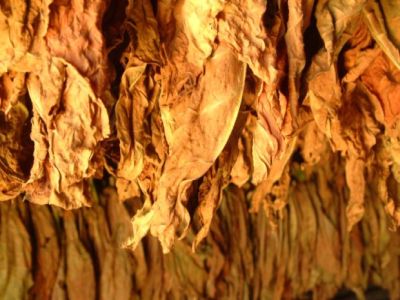
Dry tobacco leaves. Source: cigarettesplace.net

Dry tobacco leaves. Source: cigarettesplace.net

30 minutes in, Tabac turns softer, warmer, and smoother. The vanilla and tonka stir in the base, indirectly adding a light touch of sweetness. They can’t be singled out individually, but you can definitely feel the impact on the tobacco. The camphorated, green pungency has faded from sight, along with the grassy element. Lingering traces of a leathered accord remain, however, as does the overall smokiness. The dark undercurrent feels less chewy, and most of the blackness has visually turned to a deep brown-gold. The tobacco itself has changed, feeling primarily like semi-sweet, dried leaves, though there is still a subtle wetness and tinge of rawness left behind. The sillage also changes, dropping from its initial forcefulness to a soft cloud that wafts about 2 inches above the skin. Nonetheless, Tabac is still very potent and strong when sniffed up close, and it remains that way for a couple of hours.

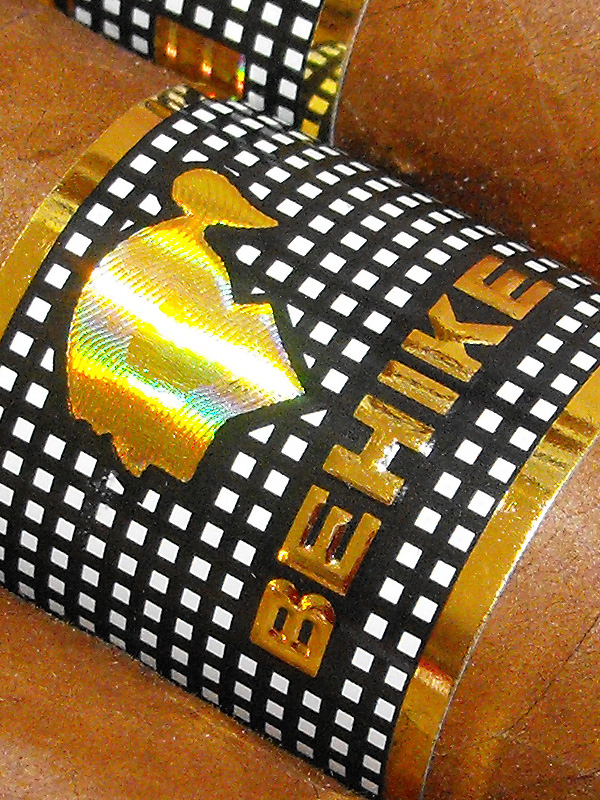
The Cohiba Behike, one of the best cigars in the world. Source: cgarsltd.co.uk

The Cohiba Behike, one of the best cigars in the world. Source: cgarsltd.co.uk

Almost all the tobacco fragrances that I’ve tried seem to manifest pipe tobacco with its fruited, sweetened tonalities. They also toss in vanilla — whether powdered, resinous, or both. Profumo’s Tabac is very different. To me, this is pure cigar tobacco. A dry, unsmoked cigar, but also one with very smoky and woody nuances. There are no fruits, barely a drop of sweetness, and what amber there is isn’t a molten thickness.

At best, the fragrance is nestled in a tinge of golden softness and warmth, but nothing about it translates as real, hardcore amber to my nose. In fact, for the longest time, there was none of the nuttied, caramel, toffee elements of labdanum amber that forms the core of such fragrances as Dior‘s Mitzah, nor the ambergris amber in Dior’s Ambre Nuit or Profumum Roma‘s Ambra Aurea. The golden warmth here is much more abstract in nature, and wholly infused with mesquite smokiness and dryness rather than with heavy, thick sweetness. I love Tabac’s pure authenticity, and find it to be a novel change from the traditional tobacco scents on the market. This is the plant in all its manifestations, from the initial greenness and flowers of its natural state, to the cigar at the end of the line.  

Shortly before the end of the 2nd hour, Tabac changes once again. Now, the tonka bursts onto the scene, dusting everything with cinnamon. The labdanum finally perks up, adding a faintly burnt caramel, nuttied undertone to the proceedings, but it’s incredibly muted, sheer, and thin. Most of the time, it’s hard to single out, as Tabac is superbly blended. What happens instead is that it works from the sidelines to impact the other notes, and the overall cocoon in which the tobacco lies. It still doesn’t change Tabac’s dryness, however, which continues in large part thanks in part to the cedar’s smokiness.

"Copper abstract" by StarwaltDesign via deviantart.com. http://starwaltdesign.deviantart.com/art/Copper-Abstract-207268167

“Copper abstract” by StarwaltDesign via deviantart.com. http://starwaltdesign.deviantart.com/art/Copper-Abstract-207268167

A strange thing slowly happens. Tabac takes on almost a mocha-cocoa quality. Some combination of the bitter tobacco, the toffee’d labdanum amber, and the tonka has melded into an accord that smells like bitter coffee, dusty cocoa powder, vanilla, and cinnamon. The overall effect is to create a mocha tobacco impression on my skin that I love. I initially thought I was imagining it, but there was the same nuance that popped up both times that I tested Tabac. It’s obviously a question of skin chemistry, but it’s a super outcome in conjunction with the lingering traces of darkened leather and wooded smokiness. The leather undertone — muted and mild as it now is — is particularly great in tying everything together like a cord.

Source: ironwood-design.com

Source: ironwood-design.com

Tabac continues to soften, and its sillage drops further. For the first two hours, Tabac hovered about 3 inches above the skin, then it drops to a mere inch at the start of the third hour. By the 4.5 hour mark, it is a skin scent that is primarily cinnamon-dusted, tonka tobacco with traces of chocolate mocha, leathered darkness, and cedar smoke, all nestled in the quietest cocoon of dry amber. Tabac turns more and more abstract, spending the next 5 hours as a blur of vanilla-dusted tobacco leaves with amber and the lightest, tiniest speckle of powder. To my surprise, it’s still not hard to detect if you put your nose on your skin. In its final moments, Tabac is merely cinnamon sweetness and dryness. All in all, Tabac lasted 12.75 hours on my skin, with moderate sillage for the first third of its life, then discreet sillage.    

On Basenotes, the consensus over Tabac is overwhelmingly positive. Out of 12 reviews, 10 are positive, 1 is neutral, and only 1 is negative. The most interesting thing concerning the last two is that those people seem to significantly disagree as to whether Tabac actually smells like tobacco. So, let’s start with the neutral and negative reviews first:

  • [Neutral:] cedar verging on turpentine.
  • [Negative:] I’m a huge fan of tobacco scents (a “reformed” smoker), but I get absolutely no tobacco from this one… not even a hint. What I do get is “grass”; not new-mown grass, not “pot”, but a strong, soothing, grassy smell. Which I like. I’d like it much more, if it wasn’t astronomically expensive. But no tobacco.

Well, skin chemistry is a funny thing, and his skin obviously brought out all the greenness of the scent. Another commentator also found that Tabac had no tobacco but he, in contrast, gave the fragrance a thumbs-up, writing: “Definitely NOT Tobacco, but….. a great perfume!”  

Source: 123rf.com

Source: 123rf.com

Others, though, got a full dose of the note, with several posters proclaiming that Tabac is a “must try” for any serious tobacco lover. The analysis of one commentator, “Hirch_Duckfinder,” is superb:

Starts with a slightly boozy blast of tobacco, like an islay malt, smokey and resinous with echoes of hay. For a short while the tobacco remains centre and top until it settles down and it drops into a strong structure with the warm tobacco at the low register, some lovely fluid labdanum, sweet tonka and beautiful vanilla sitting in layers. There is clary sage too, seamlessly integrated as flavouring. The drydown is absolutely my favourite tobacco accord of all time. The balance is wonderful, the tobacco is present but not too sharp or musty, not sour and thin or thick and overwhelming but with body and lightness at the same time. The other notes are carefully built around to pull out aspects of its complex smell.

This has instantly become my favourite tobacco scent and one of my favourite perfumes of all. If you like tobacco at all, you must try this.

While the opening is quite masculine, I think the drydown is very wearable by a woman who likes tobacco.

I am not sure if it is the natural materials, the composition or both, but there is something in these profumo perfumes which gives me the impression of 3D, its almost like I can see the layers of the structure, distinct but in balance and with clear air between them.

Two more reviews are useful in providing comparisons to other tobacco fragrances on the market. First, “The Good Life” who writes:

I can’t add much to hirch’s lucid desciption. It is indeed a wonderful, must-try fragance. I, too, appreciate the absence of honey-dripping sweetness, as in SMN’s Acqua di Cuba, Boellis Panama and many other tobaccos and anyone who finds the musty density of [Creed‘s] vintage Tabarôme overly stifling will find here a clearer, more accentuated and tobacco-focused scent. That said, it is by no means simple – Dubrana has pointed out that this is in fact his most complex fragance in which he employs ingredients themselves constructed from many individual oils. Yet it is supremely elegant and easy to wear and even quite long lasting for a natural perfume. [Emphasis and bolding to names added by me.]

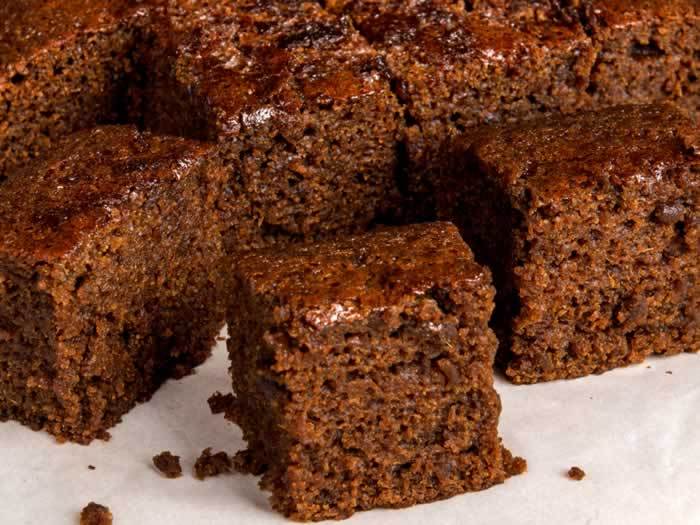
Gingerbread Cake by Mark Woods, at Shelbyville Times-Gazette, t-g.com.

Gingerbread Cake by Mark Woods, at Shelbyville Times-Gazette, t-g.com.

WillC” adds a comparison to Miller HarrisFeuilles de Tabac, and also brings up Luca Turin:

A deliciously comfortable masculine” (cf. Luca Turin) is a brilliant encapsulation of this fantastic fragrance. You might look at this description in the following way: “deliciously” referring to the slightly gourmandish aspects of the fragrance – most obviously gingerbread-like (as with Feuilles de Tabac – which Tabac, in my view, comfortably outclasses), although sometimes I seem to catch a faint whiff of something a bit like cocoa in the top notes. “Comfortable” – sometimes it reminds me of putting on a favourite old jumper (Tabac works well in winter, I’ve yet to try it in warmer weather), and there is definitely a strongly comforting aspect to the fragrance (perhaps this is partly because I used to be a smoker), although Tabac wouldn’t be at all out of place at a black-tie event. “Masculine” – I would say the fragrance is most obviously masculine, though I think a daring woman could pull it off.

There is a kind of sense of depth and density the fragrance has to it – this is perhaps due to the complex blending of a large number of natural ingredients – which I find very appealing. [¶] All in all, one my personal favourites from the La Via del Profumo line, and, I think, a definite must-sample for anyone looking for a truly high-quality tobacco fragrance. [Emphasis to names added by me.]

As for Luca Turin, yes, he does indeed love Tabac, which is one of three Profumo scents to which he awarded Four Stars. In fact, Profumo is supposedly the only all-natural perfume house that he includes in his book, Perfumes: the A-Z Guide. There, he calls Tabac a “tobacco leaf” fragrance, and writes:

Some years back I lived for a time in [Durham] North Carolina… home to half a dozen tobacco companies, including Lucky Strike. On some days, the downtown streets smelled so wonderfully of tobacco that the whole place felt like it had been carved out of a giant gingerbread. Tabac approximates that beautifully, without being overly sweet or honeyed. A deliciously comfortable fragrance.

I agree that Tabac is a comfortable fragrance, but I find it much more than that. I think it’s damn sexy. It conjures up the masculinity of the hottest, most rugged man on earth with a seriously gravelly, stubbly cheek that you could light a match against. (Those of you who know me well know of my massive obsession with …. er… interest in Jim Caveziel and “Mr. Reese” in the television show, Person of Interest. And, yes, I’m imagining smelling this on “Mr. Reese.”) Yet, the softness and spiced coziness makes Tabac something that would be fascinating on a confident, strong woman, creating an utterly alluring set of contradictions between Hemingway’s unlit Cohiba and the softly feminine tonka bean, the honeyed touch, and the gingerbread. If you’re a woman who loves tobacco scents or whose skin amplifies sweetness, then I don’t think you’ll find Tabac to be very “masculine.”

Photo of Faun by Forest Rogers, via Australian Perfume Junkies.

Photo of Faun by Forest Rogers, via Australian Perfume Junkies.

I know I’m quoting a lot of people but I want to give you the fullest picture possible, which is why I have to toss in perhaps one of the most visually descriptive takes on Tabac. It comes from Portia of Australian Perfume Junkies, who has a terrific photo to convey what she experienced:

It opens up deliciously vanilla and murky green tobacco on my skin, deep and humus rich earthy, maybe the cistus (rock rose) flies above but to me there is a fruity/jammy quality to the higher notes so you have a 2 speed fragrance. The depth and steady boom of the vanilla/tonka/smoking tobacco are played against this light flower/green tobacco/hay/fruity accord, there may even be a boozy side story here just on the edge of smelling. It is quite a ride, you can almost feel the sun on the cut grass, warming and drying it. This is a perfume, hefty, tasty, lusty and delicious; not for the faint hearted or affeared of fragrance. There is no hint of light aquatic, fruity nothing here. As it begins to lose its potency and aims towards dry down Tabac becomes sweeter before it goes dark, like the vanilla has come back to round the whole story out. Scent, longevity and sillage; Tabac by La Via del Profumo seems to have it all for me. When I finish this nearly empty sample it will be FB time.

I’m with Portia because, in case you hadn’t gathered by now, I thoroughly enjoyed Tabac and want a bottle for myself. It hits my sweet spot of a “comfort fragrance,” but it’s also so much more than that. Tabac’s grassiness, tarry leather, woody smokiness, soft cinnamon tonka, and mysterious floral element make it a 3D hologram of a tobacco plant. For me, the sum-total effect is very original, complex, sexy, and sophisticated. It’s also such a damn relief not to have a tobacco fragrance dripping with gooey syrup, powder, or oud!

Yes, I admit, the sillage isn’t monumental. No-one will ever compare a Profumo scent to a Tom Ford powerhouse. That said, I thought Tabac tied with Milano Caffé as being the strongest of the line that I’ve tested thus far. (Plus, Mr. Dubrana suggests spraying a fragrance on one’s hair and clothing to increase longevity and power.) At least it is something you don’t have to fear wearing to the office. As an added bonus, Tabac is moderately priced at $50 for the smallest bottle, a little goes a long way, and samples aren’t difficult to obtain, either.

Tabac is the last of my Profumo reviews, and I think it is a great way to close out this mini-marathon. It joins the expresso-patchouli-vetiver fragrance, Milano Caffé, and the “death by jasmine” Tawaf as my personal favorites from the line. I think that many other tobacco lovers will also enjoy Tabac. That includes women, too, so long as they like dry, unsweetened, and/or semi-masculine fragrances. Tabac’s gingerbread, cinnamon, tonka drydown feels as unisex as you can get, so perhaps it’s merely a question of getting past the more overtly masculine opening. Give it 15-30 minutes, and you will see that the raw edges start to soften. Give it 90 minutes, and you’ll see the beginnings of the delicious drydown. In short, whatever your gender, if you’re looking for a pure tobacco scent with leather, smoked woodiness, and softly spiced amber, then Tabac should definitely be on your list of things to try.

Disclosure: My sample was courtesy of AbdesSalaam Attar. That did not impact this review. I do not do paid reviews, my views are my own, and my first obligation is honesty to my readers.

DETAILS:
Cost & Availability: Tabac is an eau de parfum that comes in a variety of sizes. It is available exclusively from the Profumo.it website, which ships its scents world-wide. All the following prices for Tabac are in Euros without VAT: €36,70 for 15.5 ml, €78,69 for 33 ml (a little over 1 oz) and €112,13 for 50 ml/1.7 oz. At today’s rate of exchange, the USD prices roughly comes to: $50 for the 15.5 ml, $107 for the 32 ml, and $152 for the 50 ml bottle. The site says: “Prices are without VAT and are valid for USA and all non EEC countries[;] for shipments in the EEC 22% VAT will be ADDED to the amount in the shopping cart.” There is also a Mignon Discovery Coffret which is available for any 5 fragrances, each in a glass 5.5 ml bottle. The price depends on which perfumes you pick, as the choice is up to you. The 5.5 ml bottle of Tabac is €15,87. On a side note, I received my samples from Mr. Dubrana incredibly quickly, less than 4 days after he sent it. Additionally, I have the impression that, with all purchases, Profumo provides free 2 ml samples, especially of any new fragrances that he is developing, since AbdesSalaam is very interested in feedback. In short, if you’re ordering fragrance, you may want to ask for a sample of something that strikes your eye. Samples: you can order a sample of Tabac from Surrender to Chance which sells the perfume starting at $6.99 for a 1 ml vial.

La Via del Profumo Sharif: The Bedouin Desert

Source: Friendfeed.com

Source: Friendfeed.com

Leather, civet, dry woods, almonds and amber in a scented creation meant to represent the “noble man” of Arabia. It is a list that made me sit up when I saw it, and not only because I’ve seen Lawrence of Arabia a few times too many. It all sounded very Lutensesque, but the fragrance comes from Dominique Dubrana, the French Sufi mystic and poetic perfumer who goes by the name, “Abdes Salaam Attar.”

Photo: Profumo.

Photo: Profumo.

Sharif is a 2011 all-natural eau de parfum from Mr. Dubrana’s Italian perfume house, La Via del Profumo. Sharif is one of his “Arabian Series” of fragrances, and is meant to be embody the “fierce people of the desert.” As Abdes Salaam Attar explains on his Profumo website, the name “Sharif” means “noble man” in Arabic and is a description of character, not of lineage or descent:

Nobility, for the fierce people of the desert, is a quality of the soul. […] Sharif is the fragrance of a noble sheikh of Arabia who has chosen supreme elegance over flamboyance, gentleness over arrogance and seduction over haughtiness.

In the pure middle Eastern tradition Sharif blends intense leathery notes with aromatic woods and the delicious oriental aroma of amber, sweet and almondy.

The scent of Civet, far in the background, confers to the fragrance a sensual touch of desert wilderness, like the sillage left by a caravan of camels crossing the Bedouin lands at the sunset.

Source: amyglaze.com

Source: amyglaze.com

The following seems to be the succinct list of notes:

Almonds, aromatic woods, leather, civet, amber.

Sharif opens on my skin with intense, bitter almonds, followed by a darkened leather infused by smoke and dry sweetness. It’s a fantastic, wholly original combination, one that Serge Lutens would probably have loved to invent. The bitterness of the almonds feels concentrated and raw, but the brilliant touch is that their whiteness is lightly infused with blackness. The smoke is tinged with a tarry, almost licorice-like chewiness. None of it is remotely gourmand; there are no impressions of marzipan, or French confectionary pastries here at all.

Source: reinsofthenight.com

Source: reinsofthenight.com

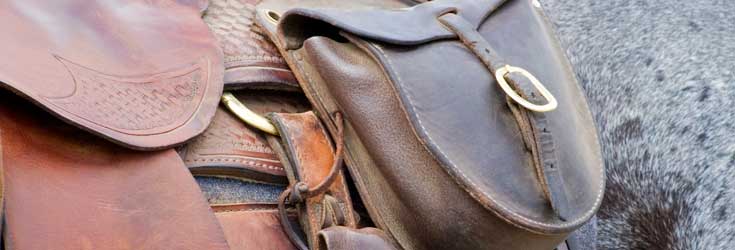
The leather is a very subtle undercurrent, but I’m fascinated by it. It’s not birch-tar leather; there are no fecal or horsey qualities, and it’s far from rubbery or raw. Yet, it’s not wholly refined, either. It doesn’t feel like aged, burnished, oiled leather. The tiniest touch of civet gives it a rough-hewn, musky feel. Honestly, I keep imagining the saddle-bags that you would see on horses in Middle Eastern or cowboy movies of old. I myself never rode with them, but I’ve seen and touched that rough leather, and it is what comes to mind here. Perhaps the most accurate way to describe the note here is that it often feels like an impression of dark, smoky leather, more than the actual thing.

Source: pathauldren.com and YouTube.

Source: pathauldren.com and YouTube.

Something about the scent consistently makes me think about the desert, and it’s not due solely to the Profumo description. No, there is definitely grainy, warm, sandy textural quality to the scent that is really hard to explain. It makes me imagine a Bedouin tent in North Africa with raw almond treats inside, the golden dryness of sand all about, and the faintest touch of leather from the horses outside. The sandy quality underlying the notes calls to mind Pierre Guillaume‘s descriptions of Parfumerie Generale‘s Djhenné, a fragrance meant to evoke the African desert, as well as the warm, Northern, cool, woody sands that Serge Lutens used to describe Fille en Aiguilles. Sharif couldn’t be further from those two fragrances if it tried, but this is the one perfume out of the lot that successfully manages to convey a dry, woody, golden, sandy texture.

Civet. Source: focusingonwildlife.com

Civet. Source: focusingonwildlife.com

The almonds grow stronger and stronger, and their bitterness dominates Sharif, but something else starts to rise to the surface. It’s the civet which Mr. Dubrana implies that it is the real stuff with a “non vegan” label on Sharif’s page. Some of you may know that genuine civet is no longer used in modern perfumery. The synthetic type of musk that you may encounter is often quite animalic, if not urinous and aggressively feral as well. Sharif’s civet is not. It is a surprisingly well-rounded, rich, and deep, adding a modulated, carefully calibrated level of muskiness that is never perianal on my skin. In one test, it was virtually nonexistent for the first 40 minutes; in another, it was noticeable from the start, adding a subtle sharpness and depth to that abstract, smoked leather accord.

15 minutes in, Sharif slowly shifts. There is a floral herbaceousness deep in the base that I can’t pinpoint. Clary sage? It lacks the latter’s lavender or soapy qualities, but there is a distinct herbal, leathered element that is fragrant, aromatic, a touch floral, and a bit green. A more important change is that the almond note which dominates Sharif starts to soften. If you’re not an almond fan, I imagine that you’d find this version of the note to be “nose-searing” as one person described it. Yet, it does start to smooth itself out. It is still infused with incense-like smokiness and dry woods, still has a gravelly, pebble-y quality, but it is less forceful.

Source: Micks Images. (Website link embedded within.)

Source: Micks Images. (Website link embedded within.)

From afar, Sharif’s main bouquet after 30 minutes is of bitter almonds that are thoroughly infused with a dark, abstractly leathered smokiness, followed by dry sweetness and musk. The perfume remains the same for the next few hours; the only real change is in the fluctuating strength of the notes and in the sillage. Sharif becomes a skin scent at the end of the 2nd hour, the civet becomes much more noticeable on me about 3.5 hours in, and the bitter almond finally starts to weaken as the primary note around the end of the 4th hour.

Once it finally pipes down, the leathery base becomes much more noticeable and, to a lesser extent, the civet as well. At the top of the 5th hour, the abstract, incense-y “leathery” darkness vies with the almonds for center stage. The whole thing is extremely muted and blended seamlessly on my skin, so it takes some hard sniffing to single out the specific layers. The incense-like note, the sandy dryness, and the leather gradually fade away entirely. In its final moments, Sharif is nothing but creamy sweetness, vaguely reminiscent of fresh almonds. All in all, Sharif lasted 9.75 hours on my skin, with extremely soft sillage after the second hour.

I tested Sharif twice, including once with the fragrance on both my arms, and it was largely the same thing each time. On my right, non-testing arm, the almonds in Sharif were significantly smokier, darker, and more leathered — not only from the start, but throughout the perfume’s lifespan. The civet was strong in the opening minutes too, making Sharif a much dirtier, darker, animalic scent. The dry, grainy sandiness was also more noticeable. As time passed, the Sharif turned more into a leathered almond scent on that arm, while the dark accords were more muted and muffled on my main, (left) testing arm. However, all these differences were tiny, fractional ones of degree, not of kind; the scent was identical in its core essence in both cases. Instead of Lawrence of Arabia, you have leathered-incense Almonds of Arabia.

Source: gypsyriver.com.au

A Bedouin tent. Source: gypsyriver.com.au

The desert is also what came to mind when The Non-Blonde (and her husband) tested Sharif. They experienced primarily a civet-woody-leather fragrance, though the Non-Blonde’s ingredients list does put almonds at the top. Her review reads, in part:

Sharif, a 2011 release, is an incredibly complex wood/animalic fragrance. The aromatic opening is a bit deceiving– you almost think that you’re getting an old school balsamic camphoric men’s cologne when it captures you and pulls you into its world: leather, amber, and the unmistakable touch of civet. Sharif, like other  La Via del Profumo fragrances aims to take you away from the world of perfume as you know it. This time the journey is to an imaginary desert. The landscape is stark and the sandstorm blurs reality. There are tall figures approaching, their silhouettes appear in the dusty air. Are they friends or foes? There’s a smell of danger in the air.

Sharif’s desert scene is stark and only marginally sweet. It’s as far from what we call an “oriental” perfume as the artwork above is different from the opulence and decadence of Orientalist art. […][¶] I do think that it’s quite gender neutral and women who find the notes and ideas expressed in this fragrance should give it a try (must love civet). The sillage of Sharif is polite, but it’s incredibly long-lasting on mys skin as well as on the husband (10 hours easily); it also clings to fabric until after a second washing. Sharif is an all-natural perfume, meaning no synthetic ingredients, but it’s decidedly not vegan. The civet you smell here is the real thing, and I’m pretty sure I don’t want to know where and how AbdesSalaam Attar acquired it.

For Kevin at Now Smell This, the civet dominated to such an extent that he had to wear the fragrance outside of the house to test it, lest his “infuriated” cat attack him in an attempt “to obliterate Sharif from his environment.” I find that hysterically funny, but the non-feline parts of Kevin’s review focuses on the tarry nuttiness that he too experienced in a significant way:

Sharif smells wonderful. It starts off with a nose-searing note that smells like tonka beans in turpentine (with a nutty background aroma, almost dessert-like, but not too sweet). A beautiful, almost smoky, leather scent appears next, blending well with tonka and spice (a clear, pungent cinnamon-clove note). Sharif remains in tonka-leather-cinnamon territory for a long time before turning a tad powdery with musky (civet) amber in the dry-down. There is a hint of smooth “incense ash” in the base notes also. The entire composition is fine-tuned and high-quality (what a relief it is to smell Sharif after sampling too many cheap perfumes from other houses recently).

Now, to my “relationship” with Sharif. First, its arrival on a chilly day was auspicious; this is a cool-weather perfume. Though it is not overpowering and dense, it has more tenacity than you’d expect from a natural perfume (it lasts at least six hours on my skin, with minimal sillage).

For Grain de Musc and Octavian Coifan of 1000 Fragrances, Sharif’s main qualities were a honeyed almond, saffron-tinged spiciness, and civet leather. Grain de Musc writes:

… [L]ike a noble character, [Sharif] doesn’t let itself be approached or tamed easily: you’ve got to go through the fire of its camphoraceous top notes before feeling its softness. It is almost surprising to find Sharif so liquid in its bottle, because its smell conjures the fatty, tactile, ductile quality of a paste. It feels like something you could lick or chew: a smooth, resinous preparation similar to majoun, a type of cannabis jam where the resin is blended with honey and almond. There’s no cannabis note in Sharif, but it does have honey and almond notes, saffron providing a medicinal note and a leather effect. Though the latter is the core of the scent, it is also, to my nose, an expansion of the properties of civet. Old civet tinctures do display the smoothly dark honeyed facets of Sharif.
Desert Caravan. Photo: "Artemis." Via Tripwiremagazine.com

Desert Caravan. Photo: “Artemis.” Via Tripwiremagazine.com

Octavian Coifan‘s review also has a detailed elaboration of the notes, ranging from camels representing leathered Peau d’Espagne to the “precious ambery-balsamic” foundation that he thinks Sharif shares with Profumo’s Mecca Balsam. He writes, in part:

A small saffron-like note is the golden sprinkle above the peppery spiciness transforming the majestic combination of the 4 ancient spices into the golden precious “honey”, deep, highly aromatic with herbal undertones and melting on the skin. The almond-vanilla quality of the drydown, with subtle animalic notes suggesting the leather-skin facet of Musk Tonkin and the herbal-silex dimension of Hyraceum, transforms the darkness found in Balsamo Della Mecca into something serene and elegant. It evokes the ancient opopanax perfumes, different from modern opopanax resin. The sweetness is crystallized not in “sugar”, as in a Tonka bean, but in camphor, like the combination between laurel leaf/cinnamon leaf/clove and a balsamic base.

The perfume evokes the rich quality of dry tobacco preserved in an ancient leather pouch, blended with unknown powerful herbs and pepper. Its evolution on the skin is surprising and with Balsamo Della Mecca, Sharif is one of the most elegant natural perfumes. […] The creations from Abdes Salaam Attar are based on the true essence of an antique craft. They are the most profound and refined expression of that lost world. [Emphasis in the original.]

I’m afraid I didn’t experience anything quite as interesting, complex, or spiced. My version was fractionally closer to that described by one Basenotes commentator in Sharif’s entry on the site:

This is a sexy fragrance that I would love to smell on a man. It is the aroma of scented tobacco and suede, of being held by a man who smells manly. Yet, it is a beautiful scent on a woman, too. On me, it opens with a hint of smoke and leather, like an outdoor fragrance. Right away, a cherry-almond sweetness comes forward, inviting me inside where it is warm, and sweets are being served to guests. This one glows like a fire and simmers nicely on the skin. A must-try.

Source: gypsyriver.com.au

Source: gypsyriver.com.au

The two other reviews on Basenotes are equally positive, talking about how Sharif is an easier, more accessible version of Mecca Balsam. The description by one chap, “A Good Life,” is very evocative:

 In the pure tradition of the Middle East, Sharif consists of intense notes of leather and aromatic woods with the delicious aroma of amber scents of the East, and sweet almond,” the perfumer tells us. It is, first of all, a wonderfully pleasant perfume and an ideal entry into the world of natural perfumery, as it is much more accessible than the starkly meditative, distantly elegant Mecca Balsam. The latter requires study before you can deeply appreciate it, while Sharif provides pure pleasure even before you begin investigating its complexity. There is a perfect harmony of spice and sweetness, dryness and deftness, of clarity and density, the slender elegance of a minarett and the opulence of a plate of Arabian sweets. The dry craggy resins of Mecca Balsam’s pilgrimage are here enveloped in smooth delicious amber. Imagine yourself being entertained in the golden tent of an Arab nobleman, the scent of fine resins rising from incense burners, eating honey and almond cakes while a pipe rests by your side and a distant smell of leather saddle and noble horses wafts over from the stables. You are at peace, but you feel energy brimming inside you. New deeds of your own choosing await, but for now, you enjoy the tranquil flow of life and its pleasures.

I don’t see any similarities to Mecca Balsam at all, but then my skin rendered that one very anomalous indeed. Regardless, I join him in being transported me to a Bedouin tent filled with almond treats and smoky darkness. I was happy to see that he too envisioned “the distant smell of leather saddle,” even if he wasn’t talking about small saddle bags. I hadn’t read any of these reviews when I was testing the perfume and writing my notes, so I’m glad it’s not just my imagination.

Bedouin Oasis Ras Al Khaimah. Source: ras-al-khaimah.eu

Bedouin Oasis Ras Al Khaimah. Source: ras-al-khaimah.eu

Unfortunately, what appeared on my skin simply wasn’t as interesting as what everyone else experienced. The almonds dominated to an enormous degree, and far overshadowed both the smoky darkness and the leather. The latter was also an impression more than the smell of actual leather. The civet was a rich, warm, very smooth touch that I enjoyed, but I wish all the notes would have replaced the almonds as the perfume’s central characteristic. I particularly wanted more leather!

Clearly, skin chemistry makes a difference, and enough people got a hardcore civet, leather, woody, ambered scent for it to be worth your while to test Sharif if you’re interested in those notes. I think it is definitely unisex in nature, but, given two of the accounts quoted here, it may be wisest if you like civet musk. (And almonds!) As for the sillage, Mr. Dubrana told me that “you should use the perfumes on your clothes and hair in order to enjoy them fully and longer.” He also perfumes his beard with them as well.

Even if the vagaries of skin means that Sharif doesn’t work for me personally, I think it’s a fascinating, very different, original take on both leather and orientals. If you love almonds or leather, you should give it a sniff. 

Disclosure: My sample was courtesy of AbdesSalaam Attar. That did not impact this review. I do not do paid reviews, my views are my own, and my first obligation is honesty to my readers.

DETAILS:
Cost & Availability: Sharif is an eau de parfum that comes in a variety of sizes. It is available exclusively from the Profumo.it website, which ships its scents world-wide. All the following prices for Sharif are in Euros without VAT: €44,63 for 15.5 ml, €97,20 for 32 ml (a little over 1 oz), and €143,81 for 50 ml/1.7 oz. At today’s rate of exchange, the USD prices roughly comes to: $60 for the 15.5 ml, $132 for the 32 ml, and $195 for the 50 ml bottle. The site says: “Prices are without VAT and are valid for USA and all non EEC countries[;] for shipments in the EEC 22% VAT will be ADDED to the amount in the shopping cart.” There is also a Mignon Discovery Coffret which is available for any 5 fragrances, each in a glass 5.5 ml bottle. The price depends on which perfumes you pick, as the choice is up to you. The 5.5 ml bottle of Sharif is €17,70. On a side note, I received my samples from Mr. Dubrana incredibly quickly, less than 4 days after he sent it. Additionally, I have the impression that Profumo provides free 2 ml samples with all purchases, especially of any new fragrances that he is developing, since Abdes Salaam is very interested in feedback. In short, if you’re ordering fragrance, you may want to ask for a sample of something that strikes your eye. Samples: you can order a sample of Sharif from Surrender to Chance which sells the perfume starting at $10.99 for a 1 ml vial. It would seem more cost-effective to order the 5.5 ml mini from Profumo itself.