YSL Vintage Champagne/Yvresse: Sparkling Elegance

Source: evollt.com

Source: evollt.com

Bubbling joy, effervescent gold, the emerald of a mossy forest floor, glowing orange and pink jewels cocooned in French elegance, and a warm smile on the sunniest of days: Champagne. It is liquid gold, but so much more than that in the case of the extremely well-named, vintage fragrance from Yves Saint Laurent. Some things simply make you happy, and Champagne (or Yvresse, as it was quickly re-named) is one of those things for me. I always stand a little straighter when I wear it, feel brighter, with more of a kick in my step. It makes me feel elegant and sophisticated, even when I’m wearing jeans and a t-shirt. I feel smoothed out, covered in gold, and dripping glowing jewels of orange and pink.
Photo: Jimpix.co.uk

Photo: Jimpix.co.uk

It doesn’t make a lot of sense on the face of it because Champagne or Yvresse is very far from my usual style. At first glance, it appears like a simple, extremely sweet, very feminine fruity-floral. Look closer and take a deeper sniff, however, and you will see a dark, lush forest of green carpeting those fruits and flowers, a base of oakmoss of such high quality that I’ve only smelled its like recently in $400 and $900 fragrances from Roja Dove.

Source: parentium.com

Source: parentium.com

There is green aplenty in Yvresse, but perhaps the real joy stems from the effervescent, incandescent bubbles of gold that hit your nose from the very start. Clever uses of menthol create a chilled sensation that very much evokes the subtle, sparkling tingle of really good, expensive champagne. Yet, the bubbles are only half the story.

Tart, tangy juiciness drips from lush nectarines, lychee, and peaches with a joyful abandon that feels like the best of summer. Yvresse is most definitely a chypre first and foremost, but the fruited touch makes the scent as warm and as sweet as a big, infectious grin. All of the haughty, aloof, cool distance that the dark green oakmoss in a chypre can create has been replaced by bright, sunny plushness. Even when the fragrance turns drier and less sweet, the lingering touches of peach and vanilla create a softness that is approachable elegance at its best. It’s not the stark, perfect beauty of Grace Kelly (who is perhaps a perfect representation of a chypre’s aloof coolness), but the warm smile of Audrey Hepburn. Yvresse/Champagne is bright joy and sunniness mixed with elegant sophistication and sweet femininity — all in one very affordable bottle.

YSL Champagne ad showing the small, squat parfum bottle, not the EDT one. Source: ladies-with-bottle.blogspot.com

YSL Champagne ad showing the small, squat parfum bottle, not the EDT one. Source: ladies-with-bottle.blogspot.com

Yvresse was created by Sophia Grojsman, and was originally released as Champagne in 1993. The French champagne industry immediately had a snit-fit over the name, outraged that something could be called “Champagne” that wasn’t a French sparkling wine. (Technically, champagne is terroir-specific, as sparkling wines from other regions have a different appellation. To give you just one example, in Spain, they are called “Cava.”) The champagne industry sued for trademark violation, and if you’re rolling your eyes, you’d be right. Yves St. Laurent lost the lawsuit and was forced to change the fragrance’s name to Yvresse, which essentially means a state of intoxicated joy. All that changed was the label on the bottle and its look, not the ingredients themselves.

Yvresse in a 2 oz bottle to the left, Champagne in a 3.4 oz to the right. Photo: my own.

Yvresse in a 2 oz bottle to the left, Champagne in a 3.4 oz to the right. Photo: my own.

The fragrance is most commonly available as an eau de toilette, though a rare parfum version was also released. This review is just for the eau de toilette. I have bottles of both Yvresse and Champagne in that concentration, and find them to be virtually identical. The greatest difference between the two is sweetness and the price, as vintage Yvresse is extremely inexpensive and widely available on eBay. You can find a small bottle as low as $29 right now, but the same size for Champagne costs significantly more. (Almost a $100 more.) For that reason, in part, I used my bottle of Yvresse to test for this review, though the main reason is that my bottle of Champagne is running dangerously low and I want to keep it as long as possible. I’ll repeat that, in my eyes, the two fragrances are almost identical. The reason for the difference in pricing is that far fewer bottles of “Champagne” were released, so they are more of a collector’s item. The smell, however, is the same.

Otto Rose, named for Otto de Jager. Source: ludwigsroses.co.za

Otto Rose, named for Otto de Jager. Source: ludwigsroses.co.za

Fragrantica lists Yvresse’s main notes as:

nectarine, anise, menthol, Otto rose, blue rose, litchi, oak moss, patchouli, vetiver.

Ozmoz has a more complicated list, but, despite its entry date of 1993, shows a photo of the new, modern, very different Yvresse. So, taking things with a grain of salt and the possibility that Ozmoz is providing the reformulated fragrance’s new notes, the olfactory pyramid is supposedly:

Note of Top : Peach, Apricot, Star Anise / Chinese Anise, Cumin

Note of Heart : Jasmine, Carnation, Rose, Cinnamon

Note of Base : Castoreum, Vanilla, Cedar, Styrax
Source: hqdesktop.net

Source: hqdesktop.net

I’ve never seen any list for the original Champagne or Yvresse that includes carnation or jasmine, never mind cumin! I certainly don’t smell either of those three notes, and they’re not mentioned on the note list that came with my bottle of Champagne. Stranger still is Ozmoz’ omission of nectarine, which is commonly known to be a major part of the scent.

To my nose, the notes in vintage Yvresse include:

nectarine, peach, anise, menthol, Otto rose, blue rose, litchi, oak moss, patchouli, vetiver, castoreum, and vanilla. Possibly mandarin orange, cedar, and cinnamon as well.
Source: forwallpaper.com

Source: forwallpaper.com

Yvresse opens on my skin with intense fruited sweetness that dissolves instantly into tangy, tart nectarines, orange fruits, a pink rose, and oakmoss. There is a hit of bitter citric zestiness like when you peel a baby tangerine and the oils squirt on your skin. Soft ripe peaches join the parade, but there is as much tartness in the Yvresse’s opening as there is sweetness. There is also brightness, so much brightness that it positively glows. It infuses the deep, dark oakmoss with incredible vibrancy, transforming it from the typically drier aroma of real mousse de chene oakmoss absolute. There is still a massive amount of the dark note in Yvresse, but it’s fresher than the usual scent of dry tree bark with a touch of salt and slightly fusty, dusty, mineralized grey lichen. Instead, it feels like bright emerald green that carpets the forest floor with thick, bouncy plushness.

Other notes soon appear. There is a watery, sweet lychee lurking around the edges, along with a deep, pink, Damascena rose and whiffs of a velvety castoreum. Deep in the base, there are flickers of cinnamon, alongside a bright, fresh, green, almost minty vetiver. The whole bouquet sparkles as effervescently as champagne. There is a fizzy quality as the notes dance around, buoyant, fresh and happy like young girls on a red carpet, only this one is dark green, emphasizing their golden and orange glow even more.

Source: Miriadna.com desktop wallpapers.

Source: Miriadna.com desktop wallpapers.

For all the sweetness in the opening minutes, Yvresse is always much less syrupy on my skin than others have reported and a definite chypre from the very start. The dark, emerald moss is really the key to the fragrance; it’s a solid, dominant note which gives Yvresse a firm, sometimes dry, green spine from head to toe, and from start to finish.

Interestingly, I tried Champagne in a side-by-side test, and the fragrance was both significantly sweeter on my skin, and less mossy. I think the intense syrup stems from the fact that my bottle of Champagne is exactly 20 years old. The inevitable evaporation that occurs over time thereby concentrates some of the fragrance, and that amount of sweetness ends up overwhelming the dryness of the oakmoss in Champagne. In contrast, my much newer bottle of Yvresse (that may be about 10 years old, or a little bit younger) is drier, greener, less sweet, more chypre-like, and with significantly greater brightness. It also fizzles and sparkles from the start. Nonetheless, all of this is a question of degree, mere fractional differences that don’t change the primary essence of the fragrance.

In all cases, both Champagne and Yvresse open with enormous potency and sillage for a fragrance that is a mere eau de toilette. The strong sillage wafts about you like a cloud, projecting a good 4-5 inches of a cloud that is tart nectarines, zesty tangerines, sweet peaches, delicate lychee, a dash of rose, and endless vistas of dark oakmoss. The potent cloud softens a tiny bit after 20 minutes, and hints of other notes appear. There are spices, noticeably dry cinnamon, but there is also something fiery that feels like star anise with almost a chili-pepper, pimento bite. They’re subtle and very muted, however, and you have to really sniff to detect them. 

Source: mport.bigmir.net

Source: mport.bigmir.net

One of the things I love the most about Yvresse is the fizzy sparkle. Originally, I thought it may be the result of the contrast between the deep velvet of the foresty base and the tangy, tart, top notes. Later, I thought that it may be merely the power of suggestion. If so, then everyone who tries Yvresse is equally suggestible because they’ve all noticed the same thing. Something in Yvresse really and truly replicates the nose-tingling bubbles of champagne, subtle though it may be amidst all the powerful accords. However, having stared at the notes for this review, I’ve finally figured out the cause. The “menthol.” It’s a note that initially left me scratching my head, because nothing in Yvresse reads as anything medicinal, camphorated, or even very minty. It translates instead as a cool, almost icy, frosted chill. Yet, menthol makes sense. It serves to amplify the more mossy, green elements in the base, while also diffusing the sweetness at the top. It transforms those fruity accords into something more chilled, while also giving a little fizzy tingle in your nose the way really expensive champagne can do.

Source: Forwallpaper.com

Source: Forwallpaper.com

Thirty minutes in, Yvresse is a sweet, fizzy rose scent infused by tart, sweet fruit, a whisper of dry cinnamon and anise, and endless amounts of dark, dry oakmoss. The oakmoss feels as though it dominates the top, middle, and bottom layers, taking over every part of the fruit and rose accord, balancing it all out in the most elegant, sophisticated mix of green. Deep down in the base, the first touches of vanilla become noticeable, but it will take a while for it to rise up to the top.
"Pink & Green Tree Painting by Artist Louise Mead." Source: ebsqart.com. (Website link embedded within photo.)

“Pink & Green Tree Painting by Artist Louise Mead.” Source: ebsqart.com. (Website link embedded within photo.)

At the 90-minute mark, the fragrance starts to shift. Yvresse loses a lot of its fizzy, champagne quality, along with its sweetness. As they recede to the periphery, the cool, crisp greenness takes their place, imbued with some sharpness and with the faintest hint of spiciness from the star anise. Equally subtle is the whiff of castoreum in the foundation with its quietly animalic, brown velvetiness. All the base notes are muted, and detectable only if you really sniff hard; the general impression from afar is of a deep, multi-faceted, seamless blend of emerald green, foresty moss infused with roses and fruited sweetness.

Both the fragrance and the individual elements have softened, with projection now limited to only 2-3 inches above the skin. It’s still fantastic for a mere eau de toilette, though. In fact, in every way, from richness, depth, body and projection, Yvresse is really more like an eau de parfum than anything else. It’s certainly ten times stronger and more full-bodied than any current Hèrmes parfum from the ultra-minimalist Jean-Claude Ellena.

Yvresse remains largely unchanged for the next few hours. There are subtle differences in the order or prominence of the notes, but the most noticeable thing about the scent is that it gets drier and darker. Around the start of the third hour, there is a subtle smoked woodiness that appears, leading me to think that the fragrance may indeed have cedar in it as Ozmoz states. The nectarine fades to the sidelines, letting the peach take over, while the vanilla slowly rises to the top. Yvresse becomes a beautifully balanced mathematical equation of fruits and florals; sweetness and dryness; joyful, bright warmth and dry, restrained darkness in a blend that feels like a very grown-up, elegant take on a fruity-floral.
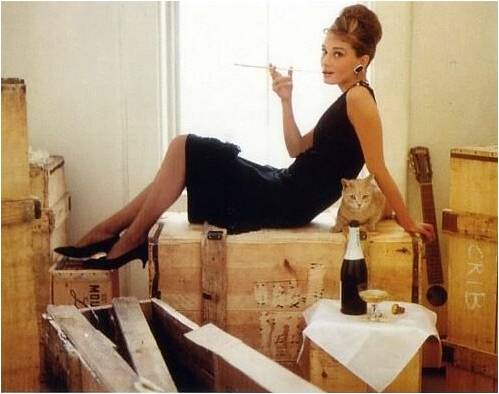
Audrey Hepburn in "Breakfast at Tiffany's."

Audrey Hepburn in “Breakfast at Tiffany’s.”

For me, modern interpretations of the fruity-floral genre always feel very young, very girly in a teenage-like way with its abundance of syrup and purple, fruited patchouli. (Exhibit A would be the terrible, banal, and simpering Chypre Fatal from Guerlain.) Originally, however, the fruited chypre genre was for sophisticated women, with scents like the legendary Mitsouko which is also based on peach and oakmoss. Yvresse is different, because it lacks the powerful bit of “skank” that makes Mitsouko so sensuous (or sexual, in some people’s eyes). It is a much sweeter, sunnier, happier scent without that overly sensuous underpinning. It’s not sexy like Sophia Loren, or a grand dame like Catherine Deneuve (who would perfectly embody Mitsouko). But it’s also not girlish and youthful like a Gigi.

Source: npr.org

Source: npr.org

For all the happy bubbliness of Yvresse’s start, there is too much underlying elegance and sophistication. It is Audrey Hepburn in Breakfast at Tiffany’s, with her charm, genuine warmth, and her open smile, all in a very classique, elegant body. In short, Yvresse is approachable chic and sophistication that never loses sight of its playful side. In modern parlance, Yvresse might perhaps be a very grown-up Reese Witherspoon going to the Oscars.

"Shades of Leaves," abstract photography by Bruno Paolo Benedetti. (Website link embedded withinphoto.)

“Shades of Leaves,” abstract photography by Bruno Paolo Benedetti. (Website link embedded within photo.)

In its final phase, Yvresse is a soft blur of oakmoss infused with abstract floral and fruited elements. For a while around the end of the 6th hour, you can still vaguely distinguish the peach, rose and cedar notes, but they are increasingly folded into that plush, soft, smooth greenness. The nectarine has vanished, as did the lychee and spices hours earlier. There is a subtle vanilla element in the base that feels as airy as mousse, but it’s blended in as well, and feels quite muted. In its final moments, Yvresse is merely a delicate haze of cool, somewhat dry, faintly sweet mossiness.

All in all, Yvresse consistently lasts between 9 and 9.75 hours on my perfume-eating skin, depending on the quantity I apply. With a larger dose, the fragrance takes 5.5 hours to become a skin scent, while a smaller amount yields about 4/25 hours. These are exceptional numbers for a mere eau de toilette, but as noted earlier, Yvresse feels very much like an eau de parfum in strength. 

I absolutely adore Yvresse/Champagne, and it is one of my “happy scents” that I turn to when I need a little energizing boost, or Prozac in a bottle. It always makes me feel more elegant and put-together, even though blazing femininity is not my style of perfumery. I would not recommend Yvresse for most men, as I think the bouquet would be viewed as too feminine by those with more conventional tastes.

However, I know a few confident men who love the fragrance, perhaps because of its mossy chypre character. Men who wear fruity-chypres like Mitsouko and who enjoy sweet scents may like Yvresse. On the other hand, Mitsouko is much drier and with significantly more pungent oakmoss, so don’t expect a very close kinship in that regard. Yvresse may actually be closer in feel to Andy Tauer‘s Une Rose Chyprée, taking a lot of its rich moss with a sunny, happy rose facade, and then tossing in a dab of the tart fruit in his stunning PHI Une Rose de Kandahar. Again, though, Yvresse starts at a much sweeter level.

YSL vintage golden couture, 1967. Photo by David Bailey for Vogue. Source: Styliista.com

YSL vintage golden couture, 1967. Photo by David Bailey for Vogue. Source: Styliista.com

Another fragrance that comes to mind is Viktoria Minya‘s exquisite Hedonist. Yvresse is a very different scent and lacks the boozy, oriental qualities of the niche scent, but the two share that same fizzy feel at the start, a fact I remarked upon even in my review of Hedonist. They also have the same very sunny, opulent, golden sophistication and joyousness. That said, Yvresse very much demonstrates the signature of its maker, Sophia Grojsman, who is responsible for such intensely feminine, sweet fragrances as YSL‘s classic Paris and Lancome‘s Trésor. In short, it definitely skews very feminine in nature.
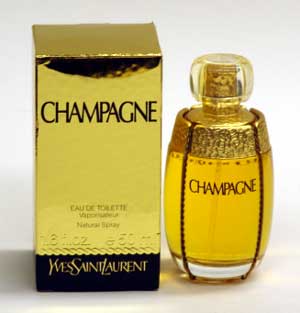
Champagne.

Champagne.

Yvresse is extremely affordable for such an elegant, vintage scent, though the same fragrance under the Champagne name costs significantly more. On eBay, you can find Yvresse for as low as $29 in the smallest 50 ml/1.7 oz size. It’s an absolutely fantastic price for a scent that shows the same complexity, elegance, richness, and nuance as a $200 niche fragrance. Actually, I’ve tested a number of $275 to $425 florals that don’t have one tenth of Yvresse’s sophistication or complexity. I don’t think the $29 figure is the norm, but Yvresse is still a bargain even at its more typical, slightly higher price.

As shown in the Details section below, you can generally find Yvresse on any number of discount or outlet fragrance sites for somewhere in the $42-$65 range for a 60 ml/2 oz size. In the UK, I’ve seen Yvresse sold cheaply for £33.31 in that same size, and for £50.05 for a huge 125 ml/4.25 oz bottle. Online retailers are a more steady, permanent option than relying on the vagaries of what may be offered on eBay, but you’ll sometimes get much better deals on the auction site, so you should check both. Unfortunately, I’ve never seen Champagne offered on any site other than eBay.

Vintage Yvresse but slightly newer and without the wide gold band around the top, and with much paler font in the writing. This version is still vintage Yvresse though.

Vintage Yvresse but slightly newer, without the wide gold band around the top, and with much paler font in the writing. This version is still vintage Yvresse though.

In all cases, it’s cheaper to buy Yvresse than Champagne. To give you an idea of the comparative range of prices for Yvresse versus Champagne on eBay, here are some links which, it goes without saying, will soon become obsolete once the auctions end in a few days: an unopened, boxed Yvresse EDT in a small 1.7 oz/50 ml size is going for $29.99; a 2 oz/60ml boxed Yvresse for $57.19 from FragranceNet; five bottles of boxed Yvresse in a 3.3 oz/100 ml bottle, each for $70.25; or a huge 125 ml/ 4.25 oz boxed Yvresse for $89.99. In contrast, the cheapest starting price for a boxed bottle of Champagne in the small 1.7 oz size is $125, with larger sizes averaging about $195-$200 before a single bid has been placed. For those who are reading this review months down the road, you can use the following search which should work regardless of time and which should not become obsolete: Yvresse and Champagne options on eBay, including the rarer parfum version.

Older vintage Yvresse with the gold band and much deeper, darker font in the writing.

Older vintage Yvresse with the gold band and much deeper, darker font in the writing.

One word of caution regarding names and boxes. No matter which name it is sold under, the eau de toilette always comes with a gold box and the bottle is oval-shaped, like a football. Slightly newer bottles of Yvresse don’t have the wide, dimpled, gold band going around the top of the bottle or dark font for the writing, but they are still vintage Yvresse. In fact, that is the version I own and used for this test. You can compare the bottle shown to the left with the one posted immediately above. They are both vintage. However, any fragrance with a red box is Yvresse Legere, which is a different perfume that was released in 1997 and which has a very different aroma profile. (It’s centered around mimosa, for one thing.)

New, modern, "La Collection Yvresse" from 2011. Source: Fragrantica.

New, modern, “La Collection Yvresse” from 2011. Source: Fragrantica.

Also, you will want to stay far away from anything in an opaque, cream-coloured bottle as shown in the photo to the right. In 2011, under L’Oreal’s ownership, YSL released a new Yvresse in 2011 called La Collection Yvresse. This is a totally different fragrance, no matter what its name purports to be. As that Fragrantica link will show you, the notes are substantially different and limited to 5 things: litchi, nectarine, rose, violet, and patchouli. In short, it is missing half the notes of the original Yvresse, most particularly the essential oakmoss base. I haven’t tried it out of protest, and I never will given my loathing of every single thing put out thus far by L’Oreal under the modern YSL name. They’re all terrible. (You don’t want to get me started on the revolting, emasculated eunuch that is the modern, current “Opium.” It is an utter travesty.)

Yvresse isn’t for everyone, but its cheerfulness makes it a favorite of mine, even if I don’t turn to it as much as I once did. In a few weeks, it will be New Year’s Eve, a time when champagne abounds. This year, I think I shall take my fizziness in a perfume bottle, with vintage golden bubbles from Yves Saint Laurent. It’s the perfect way to ring in 2014:  a note of boundless joy and bright optimism, all wrapped up in sparkling elegance. 
DETAILS:
Cost & Availability: Yvresse/Champagne is available in a variety of different sizes and concentrations. This review is only for the vintage eau de toilette version. I’ve seen bottles of the fragrance in a 1.7 oz/50 ml size, a 2 oz/60 ml size, a 3.3 oz/100 ml size, and a very large 4.25 oz/125 ml size. Prices range from $29 to $95 for Yvresse, but bottles with the Champagne name are consistently higher by a significant amount. The larger sizes of Champagne can even go up to $200. As noted in the review, I don’t think there is any significant, substantial difference between the two. The name change was done for litigation reasons, not reformulation ones. Outside of eBay: Yvresse is sold at a number of different outlet or discount fragrance sites. I found one in Czechoslovakia, others in Russia. In the U.S., Overstock.com sells Yvresse for $43.29 for a 2 oz/60 ml bottle, and they ship internationally to over 100 countries. Yvresse is sold in the same size for $42 from Sophia’s Beauty, and around $47 from Fragrance Original. Another world-wide site selling a lot of Yvresse at a good price is FragranceX which has 2 oz/60 ml bottles priced at $56.62. The PerfumeLoft sells it for a bit higher. Outside the U.S.: A number of the discount sites listed above ship worldwide. However, in the UK, I found Yvresse sold in two sizes at London Perfume Shop for £33.31 for a 60 ml/2 oz size, and for £50.05 for a large 125 ml/4.25 oz size. In Australia, I found Yvresse at ShopandSave for $64.95 (AUD?) for a 2 oz/60 ml bottle. In the Middle East, Yvresse is sold at Bustan PerfumesSamples: if you want to test the fragrance, you can order Yvresse from Surrender to Chance where prices start at $3 for a 1 ml vial. The site also offers Champagne (which it lists with the exact same notes) for the same $3 starting price.

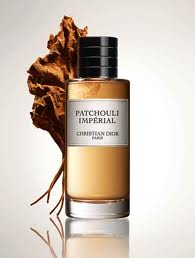
Dior Patchouli Imperial (La Collection Privée)

Patchouli Imperial is a crisp, aromatic, desiccated, very woody men’s cologne that is far from the patchouli soliflore that its name would imply. It starts off as a men’s fougère, before turning into a scent with faint ties to Guerlain‘s L’Instant Pour Homme and, to a much lesser extent, Habit Rouge. Eventually, it ends up as a dry woody fragrance with an ambered touch, but little character.

Source: Dior

Source: Dior

Patchouli Imperial is part of Dior’s prestige line of fragrances called La Collection Privée. (The line is sometimes called La Collection Couturier on places like Fragrantica and Surrender to Chance, but I will go with the name used by Dior itself on its website.) The eau de parfum was released in 2011, the creation of François Demarchy, the artistic director and nose for Parfums Dior. Dior describes the scent as follows:

Potent and sensual, Patchouli is an essential House of Dior ingredient that took up its place at the beginning of the New Look revolution in 1947.

Full of elegance, François Demachy’s composition, Patchouli Impérial, is a celebration of this legendary oriental ingredient with notes as sultry as they are sophisticated. “Patchouli is a major note, the most animal of all the plant notes. It is refined, revealing unprecedented elegance.”

Dior’s very limited — and I would argue, very incomplete — list of notes only mentions:

Russian Coriander, Indonesian Patchouli, Indian and New Caledonian sandalwood.

Source: Dior

Source: Dior

Fragrantica voters add in cedar, Sicilian mandarin, and Calabrian bergamot. I agree with them, but would also include some other things. What I smell is:

Lavender, Bergamot, Lime, Virginia Cedar, Russian Coriander, Indonesian Patchouli, Cocoa, Indian and New Caledonian/Australian sandalwood, and something ambered.

Source: 123rf.com

Source: 123rf.com

Patchouli Imperial opens on my skin with cologne and fougère traits of lavender, bitter lime, bitter dried orange peel, bergamot, lemony peppered coriander, and dust. It is followed by a sour wood note that is simultaneously green, unripe, and desiccated. Dustiness infuses everything, especially the coriander which smells old, stale, and sharp. It’s not the dustiness of patchouli, but rather, of a dirt road or a crypt.

The wood note isn’t appealing either, as it is slightly off, almost like rancid “sandalwood.” A few months ago, I received a concentrated Australian sandalwood oil, and it smells extremely close to the aroma in Patchouli Imperial. The oil had an oddly medicinal, mentholated edge which isn’t apparent here, but it had the same “off,” green tonality that eventually turned a bit creamy like sour buttermilk.

Photo: D&M Canon. dmcanon.blogspot.com

Photo: D&M Canon. dmcanon.blogspot.com

The dustiness is quite something. It leaves an itchiness at the back of my throat, but more than that, it creates a staleness around the notes that robs the citric elements of all their brightness and zestiness. It also amplifies the definite herbaceous quality in Patchouli Imperial, especially the lavender which has all the dried, pungent, sharp characteristics that I loathe so much. The overall effect is to a create a fragrance that is as much a dry woody scent as it is an aromatic, fougère cologne.

Source: vfxdude.com

Source: vfxdude.com

Other notes soon arrive to join the bitter citruses, pungent lavender, sour green woods, and dried tonalities. At first, it is cedar which is equally dry and musty. Then, there is a hint of creamy sweetness that cuts through the stale, bitter, and arid accords, but it is very muted. More noticeable is a sour medicinal element that appears after about five minutes. It is sharp and pungent, but it doesn’t smell like the camphorated, leafy darkness of patchouli. Instead, it has an almost leathered greenness that feels like a distant cousin to galbanum. 

Patchouli Imperial is such an odd mix of sourness, greenness, dark brown desiccation and aridity, dust, staleness, and pungency. Dried lavender, dried bitter orange peel, bitter lemon, heaping amounts of peppered coriander, dust, dry cedar, unripe sour buttermilk “sandalwood,” and more dust — it’s really unpleasant to my nose. I’ve tried Patchouli Imperial a few times over the last 6 months, and most recently again in Paris’ Charles de Gaulle airport in October, and each time, I’ve recoiled at its opening. People sometimes use the term “old lady” as a derogatory way to describe fragrances; I dislike the term as something that is both sexist and not particularly useful as a descriptor, but I’ve often wondered why no-one describes fragrances as being “old man” in nature.

Well, let me use it here. Patchouli Imperial has a sour, stale, musty “old man” aroma. It reminds me distinctly of an old Greek man I once knew whose old-fashioned fougère cologne mixed with a definite dustiness from his old books, as well as a subtle whisper of sour staleness from his unshaven face and his ancient, brown cardigan. He was a very sweet chap, but I wouldn’t want to smell like him.   

Light, natural, cocoa powder.

Light, natural, cocoa powder.

Fifteen minutes in, a creamy cocoa powder pops up in the sidelines, adding to the discordant jangle. The stale coriander powder grows sharper, as do the lemon and lime. The sour green sandalwood darts in and out, toying with the musty woodiness of the cedar. Thankfully, the pungency of the lavender softens a little, and that brief flicker of leathered greenness vanishes. The desiccated woodiness in the base remains, however, and my throat feels scratchier than ever. It has to be something synthetic, especially as there is something distinctly sharp in Patchouli Imperial when smelled up close. 

"Dusty Woods" by Brenejohn on DeviantArt. brenejohn.deviantart.com

“Dusty Woods” by Brenejohn on DeviantArt. brenejohn.deviantart.com

It takes about 25 minutes for Patchouli Imperial to soften, and for those sharp, pungent edges to get smoothed out. The fragrance’s sillage drops to a few inches above the skin, and turns mellower. It’s still incredibly dry, however, with a bouquet that is primarily woody lavender cologne with various dusty bits, an abstract patchouli, lemon, peppered coriander, and cedar. The patchouli that is starting to appear isn’t spicy, sweet, ambered, or mellow. It’s merely another form of dry woods with a dusty, herbal facet. The subtle whispers of cocoa and that green, unripe “sandalwood” in the base give Patchouli Imperial a very distant kinship with Guerlain‘s L’Instant Pour Homme Eau de Toilette (“LIDG”). Yet, the Dior has none of the latter’s black tea, its floral tonalities, or its creamy sweetness. At times, the dry citric and fougère elements remind me of Habit Rouge’s opening, but that fragrance was never sour, stale, or musty either.

Patchouli Imperial eventually loses its unpleasant start. The citric aromatics and lavender recede to the sidelines at the end of the first hour, but it takes a while longer for the creamy undertone and cocoa to fully emerge and to turn the fragrance into something less stale. The notes blur into each other, and Patchouli Imperial becomes a soft, gauzy, sheer haze of citric aromatics, dry woods, dry patchouli, dry cocoa powder, and some abstract creaminess. Tiny whispers of lavender and peppered coriander lurk underneath, but they’re muffled. Patchouli Imperial is a skin scent after 90 minutes, though the fragrance is still strong when sniffed up close.

"Golden Brown" by Emily Faulkner. Source: redbubble.com

“Golden Brown” by Emily Faulkner. Source: redbubble.com

Around 2.25 hours into Patchouli Imperial’s development, the fragrance takes on the characteristic that will remain for a while: a blurry soft, citrus, patchouli, woody scent. The amount of cocoa powder waxes and wanes, but the note feels increasingly nebulous and abstract as the hours pass. The best way I can describe it is as something that smells like dry sweetness, instead of actual chocolate. The patchouli also feels abstract, verging more an a generalized dry woodiness that has a hint of some sweetness than any actual, distinct “patchouli” in its own right. The citrus element finally fades away around the middle of the fourth hour, and an abstract “ambery” quality takes its place. In its final drydown, Patchouli Imperial is a nebulous, gauzy whisper of dry woods just lightly flecked with some ambered sweetness and a hint of powder.

Source: wallsave.com

Source: wallsave.com

Like all its Dior Privé siblings, Patchouli Imperial has moderate sillage and good longevity. At first, the fragrance is quite potent and strong, but the projection drops after 90 minutes, and Patchouli Imperial wears close to the skin for the rest of its duration. Dior intentionally wants its fragrances to be refined, unobtrusive, discreet, but strong and long-lasting, and Patchouli Imperial is no exception. All in all, it lasted a little over 9 hours on me. On people with normal skin, the more oriental or ambered Privé fragrances can last much longer.

I’m not at all enthusiastic about Patchouli Imperial. I’m not judging it as a patchouli fragrance, because, by and large, it isn’t one in my opinion. I’m judging it as a men’s cologne, and I think there are better takes on this particular profile than Patchouli Imperial. Its opening is horrid and incredibly unpleasant. While the fragrance subsequently improves and loses that discordant, jangling, dry, sour staleness, it merely devolves into a generic citric, dry woody scent before ending up as a slightly less dry, ambered, woody blur. I should probably repeat the word “dry” a few more times, but I think you’ve gotten the point by now.

You might argue that Patchouli Imperial is a refined take on patchouli, but it wasn’t on my skin. It felt uninteresting, average, and unoriginal more than anything else. For patchouli-mixed scents, I think you’d do far better with Guerlain’s L’Instant Pour Homme in either concentration (as there are olfactory differences between the two) or Chanel‘s Coromandel. For fragrances that primarily focused on patchouli, there are a host of options that I would recommend before this one, starting with Profumum‘s Patchouly. On the other hand, I think men who hate patchouli may enjoy Patchouli Imperial. By their standards, the note may seem very clean, fresh, and refined.

On Fragrantica, reviewers are more enthusiastic than I am about Patchouli Imperial. Some seem to have experienced much more actual patchouli than I did. Others compare the scent to Givenchy Gentleman or Nasomatto’s Absinth. I haven’t tried either to be able to compare. A number of people mention both amber and powder in the drydown, while a few bring up mentholated notes in the start. The comment that amused me the most came from a poster who said he got the most bizarre unsolicited comments whenever he wore Patchouli Imperial from friends who “associate it with along the lines of Caveman, Mummy’s Tomb, DOM, Closet filled of mothballs etc.” I suspect that is the crypt-like dust that dominates Patchouli Imperial’s start. 

I generally really like the Dior Privée line, but Patchouli Imperial is a complete pass for me. I don’t enjoy it as a cologne, and it’s definitely not my idea of a beautiful patchouli.   

DETAILS:
Cost & Availability: Patchouli Imperial is an eau de parfum that is available exclusively at Dior boutiques, at Dior online, and a few select, high-end department stores. Dior Privée perfumes come in two sizes: the 4.25 fl oz/125 ml costs $170 with the new Dior price increase, while the 8.5 fl oz/250 ml costs $250. (There is a third option which is so enormous, I can’t imagine anyone buying it.)
In the U.S.: Patchouli Imperial is found at Dior’s NYC boutique, and at the main Las Vegas store [call (702) 369-6072]. Ordering from the store is best as they will give you a free 5 ml mini bottle of the Dior perfume of your choice, along with 3-4 small 1 ml dab vial sample bottles, to go with your purchase. Even better, you will get free shipping and pay no tax. U.S. Department Stores: New York’s Bergdorf Goodman, San Francisco’s Neiman Marcus, and the Saks Fifth Avenue in Chevy Chase, Maryland also carry the Dior Privée line collection of perfumes.
Outside of the US: The Dior International page offers all their Privée fragrances for you to order online. This is the listing for Patchouli Imperial, but there doesn’t seem to be an e-store from which to purchase it. In addition, you can use the Points of Sale page on the Dior website to find a location for a Dior store near you. You can also navigate the Dior website’s International section to buy the perfume online. The problem is that the site is not very straight-forward. If you go to this page, look at the very far right to the bottom where it will say, in black, “International Version” and click on that. You should see options for Europe, Asia-Oceana, and South America. Within Europe, there are different sub-sites divided by country. The one closest to you should have the perfume available for sale.
Samples: If you want to give Patchouli Imperial a sniff, samples are available at Surrender to Chance where prices start at $3.00 for a 1 ml vial. If you’re interested in trying the whole Privée line (minus the discontinued Vetiver), Surrender to Chance sells all 13 fragrances in a sampler set for $35.99.

Montale Patchouli Leaves: Caramel Praline Patchouli

A perfume house known for its extensive line up of intense, potent ouds seems to be doing some lovely things with gourmands as well. Some months back, I covered Montale‘s two treatments of a lovely chocolate-rose with Intense Café and Chocolate Greedy, but it still wasn’t enough to sway me or to tempt to actually buy a Montale fragrance. Montale’s Patchouli Leaves may be the first, a perfume I’m considering getting for its indulgently gourmand, caramel-praline treatment of the controversial note.

"Autumn Abstract." Photo: Tim Noonan via Flickr. (Website link embedded within photo.)

“Autumn Abstract.” Photo: Tim Noonan via Flickr. (Website link embedded within photo.)

As I’ve tried to explain with this whole patchouli series, true patchouli is very different from the note so many people are exposed to in modern perfumery. It’s not the vile, purple, molasses syrup reeking of fruits and berries that accompanies so many florals or quasi-“chypres” in the aisles of Sephora. The original, real, true patchouli is smoky, spicy, very brown-red in hue, with hints of aged cognac or brandy, toffee, dark chocolate, milk cocoa powder, tobacco, leather, toasted nuts, dry woods, and incense. It’s a woody smell that can take on green, mentholated aromas, ranging from peppermint to medicinal camphor. It can also reflect earthy notes, whether dusty or like damp, black loamy soil. Whatever its many characteristics, the true, brown patchouli often has a negative reputation lingering from its days as a favorite of “dirty hippies” in the 1970s who doused themselves in it to cover the strong smell of pot (or a lack of hygiene).

Source: biofarmacia.ro

Source: biofarmacia.ro

The niche houses have tried to rehabilitate poor, maligned patchouli, refining it for the modern era with its modern tastes. Montale‘s version seeks to turn patchouli into something gourmand and indulgent, seeping the leaves for two years in Bourbon vanilla. The result is something that uses vanilla’s richness to soften and tame patchouli’s wilder side, creating a soft, affordable, cozy caramel (or caramel-praline) combination that feels wholly in tune with today’s love of gourmand fragrances.   

Source: Dezire.org

Source: Dezire.org

Montale puts Patchouli Leaves into the Woody or Bois category, and describes the perfume as follows:

Beautiful Patchouli Leaves macerated for two years in the trunk of the Oak tree combined with Vanilla, Amber and White musk on a base of Cystus Ladaniferus from Tibet.

Fragrantica classifies the scent as an Oriental Woody. It lists its notes as follows, excluding the mention of any oak:

patchouli, vanilla, amber, musk and labdanum.

Patchouli Leaves opens on my skin with a spicy, slightly smoky, mellow rich warmth that floods over me like the deepest, smoothest wave of brown-gold-red lava. It’s quickly infused by rich Bourbon vanilla, boozy aged cognac, and a distinctly toffee’d nuttiness. It smells like pralines, vanilla, and toffee’d woods, flecked lightly by a smoky incense. Deep down in its depths lurks a balsamic, ambered resin with a faintly leathered element. The labdanum amber isn’t detectable in its own right, and you never think, “oh, amber,” but the dark, chewy note runs like a deep vein through the base, giving off a toffee, nutty aroma that amplifies the same characteristics in the patchouli. 

"Black Widow v1" by *smokin-nucleus. Source: DeviantArt. (Website link embedded within photo.)

“Black Widow v1”
by *smokin-nucleus. Source: DeviantArt. (Website link embedded within photo.)

There is great warmth and a golden haze circling around me like a plush cloud. Patchouli Leaves is sweet, but never excessively so on my skin; there is too much dryness, woodiness, and smoky incense for it to be cloying and syrupy in any way. The cognac and brandy aroma softens surprisingly quickly, retreating to the sidelines and leaving mostly a subtle nuttiness. Another surprise is Patchouli Leaves’ weight. For a fragrance with such richness, body, and potency, it is quite airy. It never feels opaque, dense, or heavy, perhaps as a way of countering the richness of the vanilla that is slowly rising to the surface. The initial bouquet is very strong and intense, projecting easily 6 inches in range, depending on the quantity you use, but the actual fragrance itself feels like a pillowy, praline-coloured cloud of patchouli.

Source: Mama Quail at mammaquail.blogspot.com

Source: Mama Quail at mammaquail.blogspot.com

Ten minutes in, subtle changes occur. Patchouli’s greener, “dirtier” side emerges with subtle hints of earthy soil, mentholated peppermint, and dark chocolate. The latter is like bitter-sweet chocolate, though it eventually turns into a dusky cocoa powder. The earthy note is simultaneously musky, dusty, and like sweet, damp potting soil that you find in a garden. It’s subtle, and much more muted than the chocolate and peppermint accord. And the medicinal touch smells like eucalyptus camphor, though it’s much milder here than in other patchouli fragrances that I have recently tested. As Nathan Branch wrote in his brief review of the scent, “Montale Patchouli Leaves has an earthy, leafy tone that reins in the sharp bite of actual patchouli so that you’re smelling what might be patchouli plants growing in a deep forest.” 

Source: wallpapersus.com

Source: wallpapersus.com

All the notes are infused with a dry woodiness that, to my nose, smells more like aged, slightly smoky cedar than the lighter, milder oak. The notes blend together seamlessly, creating a beautiful spicy, sweet bouquet of: dark, smoky woods; toffee’d balsamic, amber resin; toasted nuts; damp, earthy soil; dark chocolate; chilly peppermint menthol; incense; Bourbon vanilla; and smoky cedar.

Source: 123rf.com

Source: 123rf.com

It takes about 20 minutes for the vanilla to rise fully to the surface. At first, it takes on an oddly musty dryness as it merges with the woods and the patchouli’s earthier side. As its sweet richness washes over the darkness, Patchouli Leaves loses more and more of its boozy, cognac, leathery nuances, its spiciness, and its dark, balsamic feel. A friend of mine recently compared patchouli’s rich, sweet, spiciness to a deep, fat, sub-woofer bass, and I think that’s a perfect way to describe the note’s most beautiful characteristics. Here, the sub-woofer is increasingly pumping out a deep, fat vanilla “thump, thump, thump” — both of the sweet Bourbon variety, and the drier, woody, occasionally dusty kind. The patchouli is on top, but its truly dark, balsamic, spiced smokiness has been tamed from a deep operatic bass to a mid-level tenor.       

Forty-five minutes in, Patchouli Leaves turns softer, creamier, and more blurred. The notes fold seamlessly into each other, though I wish they had a little more separation and distinct shape at this point. The woody elements seem less smoked and dry, the fragrance’s hint of dusty earthiness is more muted, and the dark, bitter-sweet chocolate is turning increasingly into milk chocolate powder. The faint traces of mentholated camphor are replaced almost entirely by peppermint, but they’re not very significant as a whole on my skin.

Source: pixabay.com

Source: pixabay.com

More and more, the focus of Patchouli Leaves is turning almost entirely into a caramel praline bouquet, with all the other notes standing on the sidelines. The prominence of the patchouli’s smoky, woody, or earthy characteristics varies over the next few hours, but they are increasingly inconsequential, appearing in only the subtlest way if you really sniff hard at your arm. Around the middle of the second hour, Patchouli Leaves’ powerful sillage finally drops, hovering now only 3 inches or so above the skin. However, it takes about 5.75 hours for the fragrance to turn into a true skin scent. After that, it just lasts and lasts.

Source: wallpapers.free-review.net

Source: wallpapers.free-review.net

Ten hours have passed, and I’m still wafting toffee’d caramel, praline, vanilla patchouli. A few more hours after that, the perfume fades in large part, but remains very noticeable on small patches of my arm. All in all, Patchouli Leaves lasted an astonishing 14.75 hours with a small application (2 big smears amounting to a single spray) on my voracious, perfume-consuming skin. With a larger amount (approximating 2 sprays), Patchouli Leaves lasted 17 hours on tiny parts of my arm. Montale fragrances are known for their longevity, but still!

What makes it so surprising in the case of Patchouli Leaves is that I don’t smell anything strongly synthetic in the base — and synthetics are what usually give a fragrance enormous longevity on my skin. Even more astonishing is the fact that there is no ISO E Super in Patchouli Leaves. None at all. That is a first for any Montale that I have tested. How Pierre Montale managed to survive without imbuing the perfume with his usual gallons of ISO E Super, I have no idea, but he did it. (Bravo, and please continue!)

To like Patchouli Leaves, you have to love both original, true patchouli in all its manifestations and gourmand sweetness. If you don’t like both, you’re in trouble. The reactions to Patchouli Leaves on Fragrantica are highly mixed, with some posters having issues with the patchouli’s “hippie” element, while others can’t handle the sweetness. Those who love patchouli with all its earthy, spicy, or occasionally medicinal sides have much less trouble, and love it. Some examples of the range of opinions:

  • My new OBSESSION! It’s drop-dead gorgeous. The amber is not synthetic like most ambers. This is a warm, mellow, slightly sweet amber perfume. Patchouli is intense–rich and nutritious like a peat bog. I smell plenty of dark, damp soil, full of partially decayed mosses and leaves. [¶] It reminds me of Prada’s Amber, but Prada is spicy, and I don’t get that spicy quality in Patchouli Leaves. [¶] So earthy, yet so heavenly.
  • Patchouli patchouli patchouli, a floral note drifting by.
    A tidal wave of sweet sweet patchouli, if you like pot brownies then this’ll probably tickle you in your bad spot. […] OH!, a moist dampness is present as well. [¶] A hippies wet dream.
  • Very sweet and creamy patchouli. After 1 hour smells like some eatable sweety made of patchouli and vanilla. Reaaly too sweet.
  • Patchouli Leaves smells like a cheap head shop perfume. The vanilla is awful sweet and unnatural, the Patchouli is sweet and unearthy, the amber is sweet and cloying. Allover it smells cheap-oily. For the goths out there: You don’t want this patchouli, you’d smell like your hippie grandma, who has lost her sense of smell by using too much acid.
  • This is definitely a hippie patchouli. It begins smelling intensely of mud and tilled soil, then it transforms into a bodily, sweaty patchouli within about a half hour. If you are a hippie, this is you in liquid form. It’s genius, but it’s not something I’d wear.
  • In the nutshell: remove cocoa note and you get l’instant pour homme extreme from guerlain. This is classy, deep, dark evening scent.
  • This is completely stunning. It creates a certain warmth that really puts me at ease. […] I can definitely smell patchouli (duh!), but it’s not what I have always known patchouli to smell like. Two people at my work wear some kind of patchouli scent, but on them it smells like dirt. It is obviously NOT Montale! Instead of smelling like a hippy, I smell angelic: fresh patchouli leaves mixed with a gourmand vanilla. Top shelf stuff!

Basenotes, however, has a very different, positive take on the scent. Out of 30 reviews, 24 are positive and only 6 are negative. Their perception of things:

  • Best patchouli ever made. Sorry Borneo and Coromandel, but you’re a step below of Patchouli Leaves. Opening is raw and earthy, then join the vanilla and make it creamy and sexy. Projection is huge, same with lasting power (over 12hs).
  • Or. Gasmic. [¶] My girlfriend suggested I use “smellgasm” or something similar but I just felt, in my bones, that it wouldn’t do this superlative scent justice. […] My goodness this stuff is dangerously divine.
  • I’ll tell you what I got with wearing this- old book pages in a library vanilla and I loved it. I’m going to own this some day (I hope). I sit down on the sofa and wear this as I read a book and it’s so comforting to me.
  •  it’s like a big scoop of Mint Chocolate Patchouli ice cream on me for the first 5 minutes. It develops quickly and warms into a loamy patchouli within 15 to 30 minutes on my skin, but it starts out as patchouli wearing a winter coat of bracing green (mint and/or lime and/or lavendar) and dark chocolate-oak boots. Granted, this feeling of coolness is very fleeting. It begins morphing almost immediately into a warmer patchouli and amber brew with a touch of vanilla.
  • Holy Smokes! This patchouli is no joke. This is not a classy, refined patchouli like Chanel’s Coromandel. This is not a dry, chocolaty patchouli like Borneo 1834. This is a sting-your-nose, transport-you-to-the-Grateful Dead-lot-circa-1989 kind of patchouli. […] This patchouli is very earthy and very rich. The juice itself is dark and seemingly thick. […] After about an hour the ferocity subsides considerably, leaving an amber/vanilla/patchouli that is indeed more akin to Coromandel, albeit more earthy.
  • This smells like the woods. Sweet, dry, powerful, earthy, serene. And it has the most beautiful deep brown colour. However, there is a lot of amber here. A LOT. A very beautiful fragrance that works amazing is the autumn.
  • Like eating dark chocolate with your lover under a tree after it has rained.

The people at Basenotes seem to have a better understanding and appreciation for real patchouli than those at Fragrantica, which probably explains why 24 out of 30 people gave Patchouli Leaves a positive rating. For me, I don’t think the fragrance is as “hippie” or “dirty” as they do, but my skin amplifies base notes and obviously brought out more of the vanilla from the start. On other people, the fragrance may be indeed have more of an earthy funk like damp soil or a medicinal touch for the first hour until the vanilla rises to the surface.

With regard to other patchouli scents, I agree with only some of their comparisons. Patchouli Leaves definitely isn’t as refined, nuanced, or gorgeous as Chanel‘s incense, white cocoa, and light patchouli amber fragrance, Coromandel, which is one of my favorite perfumes. Someone at Fragrantica wrote Les NereidesPatchouli Antique was a better interpretation of note, but for me the two scents are extremely different as Patchouli Leaves is very gourmand and vanillic, while Patchouli Antique is very musty, dusty, woody, and minty. They also preferred Reminiscence‘s Elixir de Patchouli which many people on Fragrantica repeatedly find is similar to the Montale. I don’t agree with that either. To me, the Elixir is significantly more woody, and smoked, with a mildew-y swamp quality from the strong vetiver. It is also more ambered and less vanillic, in my view, but it may be a question of skin chemistry. As a whole, the strongly gourmand touch in the Montale separates it out from all the patchouli scents that I’ve tried thus far, which is why I think Serge LutensBorneo 1834, David Jourquin‘s Cuir Tabac, or Profumum‘s Patchouly also don’t compare.

Source: vanillesdesiles.com

Source: vanillesdesiles.com

To be honest, I like Patchouli Leaves, but I’m not in love with it and something holds me back from committing fully. It’s not as chic as Coromandel, or as beautifully spiced as Profumum’s more ambered Patchouly. My main problem is that I’m not really into gourmand scents, and that is the essence of Patchouli Leaves on my skin. Deeply vanillic scents always leave me a little cold, even when they turn into caramel praline. I would prefer more spice and incense, and for the patchouli to really shine through as the main star, instead of being tamed by the equally significant vanilla.

On the other hand, Patchouli Leaves has some definite positives that I find hard to ignore. It’s a cozy scent that beats out all the others in terms of its projection and astounding longevity. It’s also extremely affordable, with one discount retailer selling the large 100 ml bottle for $104 instead of $160. Given the strength and richness of the fragrance, that 100 ml bottle may last you until the end of days. Those unwilling to commit to eternity can also go with a 50 ml bottle that costs roughly the same amount at retail.

At the end of the day, Patchouli Leaves will only work for you if you know and love patchouli in all its true, original manifestations. If that is you, and if you adore sweet fragrances centered around vanilla, then you should definitely give the Montale a sniff. It is an incredibly warm, rich, smooth and indulgent take on the note, and a perfect scent for a cold winter’s night curled up before the fireplace.  

DETAILS:
Cost & Availability: Patchouli Leaves is an eau de parfum and is most commonly available in a 3.4 oz/100 ml for $160 or €80, but some sites also sell a 50 ml bottle for $110. It is available on the Montale website only in the large 3.4 oz size for €80. Montale also offers a free 20 ml mini-bottle of the fragrance at the time of purchase. Discount Prices: I found Patchouli Leaves discounted at LilyDirect in the large 3.4 oz/100 ml bottle for $104.71, instead of $160. I’ve known a few people to buy from the site without problem, and they are a reputable vendor. In the U.S.: Patchouli Leaves is available in both sizes from Luckyscent and MinNewYork, at $110 for the small and $160 for the large. Parfums Raffy offers both sizes for a fraction less: the 50 ml size for $105, as well as the 3.4 oz/100 ml size for $155. All the sites sell samples. Outside the U.S.: In Canada, Patchouli Leaves is available at The Perfume Shoppe‘s Vancouver site which sells the 1.7 oz/50 ml size for US $110. Since the site is originally a U.S. vendor, you may want to contact them about Canadian pricing. In the UK, I couldn’t find any sellers. Germany’s First in Fragrance sells the 100 ml Patchouli Leaves for higher than retail or the Montale website at €94, but ships all over the world. In the Netherlands, the perfume is sold by ParfuMaria for €95, while Italy’s AllaVioletta offers it for €80. In the Middle East, I found Patchouli Leaves at PerfumeUAE, while in Russia, it is offered on Montale’s Russian website. In Japan, Montale is sold at a few stores, like Tokyo’s La Beauté One. For all other locations from Osaka to Spain, Austria, Italy, Bahrain, Lithuania, Kuwait, even Uruguay, and elsewhere, please check the Montale Distributor page. There are even more stores all over the world from Japan to Africa shown on Montale’s Store PageSamples: I obtained my sample of Patchouli Leaves from Surrender to Chance which sells 1ml vials starts at $3.99.

Comme des Garcons Series Luxe: Patchouli – Not Patchouli

CDG Patchouli Luxe in the pyramid bottle. Source: Fragrantica.

CDG Patchouli Luxe in the pyramid bottle. Source: Fragrantica.

There should be some sort of law against false misrepresentation with perfume names. At the very least, there should be some sort of penalty box where perfumes are sent to be egged when they not only fail to smell of the very thing with which they are titled, but when their primary aroma is something not even mentioned on the bloody list! As you can tell, I’m feeling rather irascible, and the reason is Comme des Garcons‘ endlessly wordy, misleadingly named scent, Comme des Garcons Series Luxe: Patchouli. (Yes, that last bit seems to be the full, official name of the fragrance, which is why I will just refer to it as “Luxe Patchouli” or “Patchouli Luxe” from here on out.)

Luxe Patchouli EDP in the regular bottle. Source: Nathan Branch

Luxe Patchouli EDP in the regular bottle. Source: Nathan Branch

Patchouli Luxe was created by Antoine Maisondieu, and is an eau de parfum that was released in 2007. (There is also an eau de toilette version.) The notes as compiled from Fragrantica and Luckyscent include:

White pepper, fenugreek, bearberry, lovage, oak extract, opoponax [sweet myrrh], patchouli, cedar, vanilla, sandalwood, vetiver.

Photo: Karen Gallagher. Source: morningjoy.wordpress.com

Photo: Karen Gallagher. Source: morningjoy.wordpress.com

Luxe Patchouli opens on my skin with a burst of white pepper quickly followed by smoked, slightly singed cedar, a boozy, vanilla-infused Bourbon, and more white pepper. There are hints of dried greens, dried grass, dried herbs, and smoked vetiver. On their heels is black pepper, fenugreek, dill pickle, and something not included on any ingredient lists that I could see: immortelle. Subtle flecks of a leathery darkness pop in and out of the beautiful pepper and herbal top notes. It’s like a vista of dry yellow and green fields dotted with foraging sheep. The field lies at the edge of a dark cedar and vetiver forest that is smoking, so someone decided to douse the sparks and singed tinder with sprinkles of vanillic Bourbon.

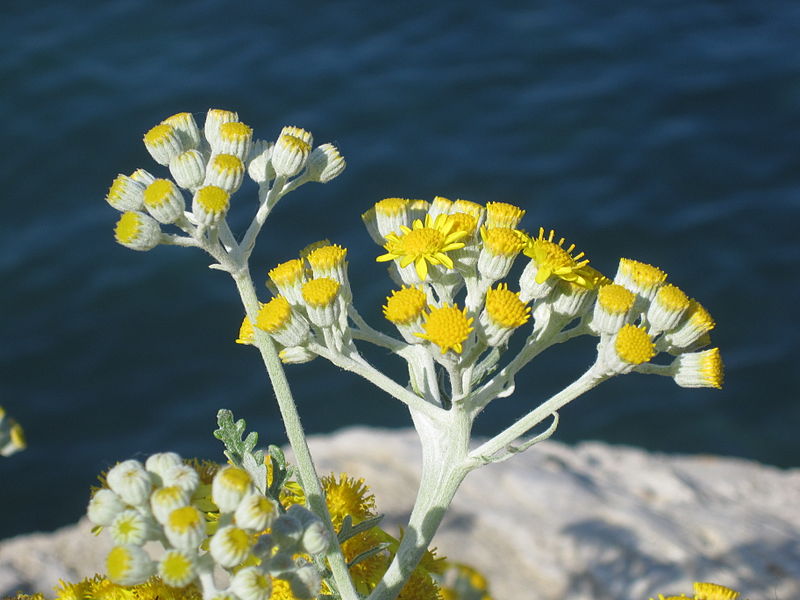
Immortelle, or Helichrysum in Corsica. Source: Wikicommons.

Immortelle, or Helichrysum in Corsica. Source: Wikicommons.

Less than five minutes in, the immortelle or Helichrysum suddenly springs into action, followed quickly by the fenugreek and a faint touch of mildewed woods. For me, Luxe Patchouli should really be called Luxe Immortelle since the flower seems to have been used by the bucketfuls. For a large part of the perfume’s development, the aroma reflects immortelle’s drier characteristics: a herbal floralacy that smells like dried chamomile, dandelions flowers, and yellow curry powder.

Source: indonesiapepper.com

Source: indonesiapepper.com

Soon, even more white pepper arrives on the scene, followed by sweet myrrh’s nutty warm smoke, and dry cedar. The pepper is absolutely lovely, as it smells exactly like the really expensive Muntok Indonesian kind you use in cream-based dishes. (Julia Child hated the use of black pepper in white sauces.) The white version isn’t something I’ve encountered frequently in perfumery, so I’m a big fan, though it vanishes in less than 10 minutes on my skin.

Dried fenugreek leaves via Suhana.co.in

Dried fenugreek leaves via Suhana.co.in

The immortelle’s curry powder characteristic is amplified by the fenugreek, which smells equally dried and herbal. Fenugreek is not something that a lot of people are familiar with, even in cooking, but I used to love using it and have a big bottle in my pantry. It has an aroma that is like concentrated dill mixed with parsley and dried leeks. It is often used to pickle vegetables in Indian food or is blended in South East Asian curries, while in Persian food it is responsible for one of the country’s most important dishes, a herbal, non-curried stew called Ghormeh Sabzi. For me, the aroma of the fenugreek combined with the immortelle in Luxe Patchouli actually brings the whole thing closer to another Middle Eastern dish called Baghali Polo (or sometimes, Sabzi Polo). (There is a recipe for Baghali Polo with lovely photos at Cooking Minette.)

Baghali Polo. Source: Cooking Minette.

Baghali Polo. Source: Cooking Minette.

In short, I smell of food and dried herbal flowers, with a touch of pickled dill, but there is nary a whiff of patchouli to be found anywhere. Actually, I am reminded distinctly of Serge LutensSantal de Mysore, which I’m pretty sure also contains a heaping amount of fenugreek and which made me think of the same dish. Luxe Patchouli is not as foodie, sweet, curried, or hotly buttered as the Lutens. It is a much more peppered, dry, woody take on the Lutens’ fenugreek Baghali Polo, but they definitely feel like cousins to me. I wasn’t a fan of the Lutens, and I’m not a fan of CDG’s bouquet either, though I do liked the singed cedar in the background.

Immortelle. Source: The Perfume Shrine.

Immortelle. Source: The Perfume Shrine.

CDG Luxe Patchouli simply does not change on my skin. Starting around 15 minutes into its development until its very end, it is primarily an immortelle and fenugreek perfume. There are subtle variations in characteristics of the immortelle, as well as in the prominence of the fenugreek, or the quantity of smoked, dry woods in the background, but, by and large, the fragrance is primarily some form of immortelle on my skin.

Patchouli? Not as I know it. Not green, medicinal patchouli, not conventional brown, spicy-sweet patchouli, or even the ghastly modern, fruited purple kind. Patchouli — luxe or otherwise — is simply not a factor in a fragrance whose name pays homage to that one, solitary note. I don’t understand any of it. While I could blame my skin for acting up, I’m not alone in finding Luxe Patchouli to be predominantly an immortelle scent. We will get to that shortly, since I should first give you the rest of the perfume’s development.

Luxe Patchouli has some unusual things going on with the sillage. Regardless of quantity, the fragrance hovers right on the skin within 45 minutes. At a larger dose, there are little tendrils that hover in the air around me, and the immortelle is noticeable from afar. As a whole, Luxe Patchouli feels very soft, very quickly. It’s a tiny, pillowy cloud of immortelle’s dryness, whether it is the dandelion and chamomile floral element, the dryness of its green stalks, or its faintly curry-like whiff. The whole thing is strongly infused with the fenugreek’s Middle Eastern dill, parsley, and leek herbal aromas, and the whole thing together combines to create a green, dry, herbal curry bouquet. The cedar lurks at the edges giving off singed smoke, but the vetiver, vanilla Bourbon, and white pepper have essentially vanished.

Source: pl.123rf.com

Source: pl.123rf.com

The immortelle does change, however. At the end of the first hour, it turns spicy and even more curried, instead of merely just dry, floral, or sweet. About 2.25 hours in, Luxe Patchouli is a mere skin scent with immortelle. There are indistinct, tiny hints of abstract, dry woodiness and smokiness at the edges, but they are very muted. Meanwhile, the fenugreek has started to retreat to the sidelines where it will remain for a few more hours. At the start of the 5th hour, Luxe Patchouli turns more sweet, as the immortelle’s maple syrup side emerges. There is some sort of quasi “sandalwood”-like note in the base that doesn’t feel like sandalwood, per se, but a generic creamy woodiness that is lightly spiced and sweet.

As a whole, the sweet elements are not enormous or extreme in Luxe Patchouli. They fade away about 6.75 hours in, along with any remaining traces of the fenugreek and curry, leaving a scent that is merely dry, dusty, herbal, floral immortelle. There is a hint of maple syrup, and the whole thing lies nestled in a cocoon of abstract woodiness that can just vaguely be made out as smoked cedar. By the start of the 8th hour, Luxe Patchouli is a smear of immortelle, abstract woods, and vanilla. In its final moments, a few minutes after the start of the 10th hour, it dies away as a haze of woody, dry sweetness. Not a whisper of patchouli showed up in any shape, size, or form on my skin, a fact I would find much less irritating if the whole scent were not intended to be “Luxe: Patchouli.”

Image: StocksbyAnnaforYou at stocksbyannaforyou.deviantart.com

Image: StocksbyAnnaforYou at stocksbyannaforyou.deviantart.com

As noted at the start, this review is for the eau de parfum version of Luxe Patchouli. I don’t have a sample of the eau de toilette that seems more commonly available, but, from what I gather, the two scents are alike in terms of how they smell. According to a Basenotes thread comparing the two, the differences are largely of depth and sweetness, with many finding the EDT to be drier, thinner, less original, and with less richness. Many called the EDT the “diet version.” A number of people who hate patchouli found Luxe Patchouli to be perfect for their tastes. I can’t figure out if that means they actually detected patchouli on their skins, if they don’t know what the real, brown, true patchouli smells like, or if they love the perfume because they didn’t detect it at all. I assume it was the latter, as a number of people who do describe themselves as patchouli fans found the EDT to leave them a little cold. One poster, “Hedonist222” wrote:

Frankly I don’t get much patchouli from it.
A lot of immortelle.

In fact, there are numerous Basenotes’ threads on the subject of the nonexistent patchouli. Let’s take just one, entitled “Comme des Garcons Luxe Patchouli – Where’s the patchouli?” A few of the responses:

  • All I get in this is what to me smells like angelica root. Angelica root is very powerful and tends to dominate anything it’s added to. It also smells like there is an attempt at synthetic irones as well (I have smelled some quality synthetic orris fragrance oils, and the note I get here is a close match).
  • I loved it, but not enough to purchase a FB. It’s basically immortelle and not much else. It’s very rich and dense; almost syrupy and SL-like. It’s not that complex and I would’ve bought it…say have it been 150.
  •  I tried this at the CdG shop here and it was a memorable experience because it was the only time I have felt compelled to find somewhere nearby to wash off all traces of a scent I have sampled as quickly as possible. If this is immortelle in the raw then I can live without it.

In the official Basenotes thread for the scent, a lot of people love Luxe Patchouli for all its non-patchouli characteristics. For one, it was a much better version than Annick Goutal‘s immortelle bomb, Sables. For another, Patchouli Luxe was all about the sweet myrrh. A third loved the angelica and fenugreek combination with the immortelle. A fourth chap, “Darvant,” wrote:

This is complex. A rich, spicy, sugary, very dark patchouli that is since the beginning smoky (sweet smoke) and with a sheer tarry and balsamic note of licorice in a link with something like anise or angelica (may be the bearberry) all surrounded by resins of oak, myrrh and vanilla. The aromatic blend ends smokey because of the influence of burnt woods from the top to the bottom but is aromatic and surprisingly green and earthy because of the influence of vetiver, bearberry and feengreek. The interaction of pepper, smoke, patchouli and  tarry-aromatics (immortelle, bearberry, feengreek?) grounds a very dark appalling structure  flanked by greens, hints of camphor and finally civilized and smoothed by a huge amount of balsams and resins. The fragrance itself is a tangle, the mildness is made of balsams and woods (sandalwood and cedarwood), the patchouli is well flavoured and hidden in the middle of a black  bitter-sweet shadow that is aromatic and earthy, tarry and mellow at once. All the elements are in a perfect balance. Ubermodern, futuristic fragrance with a huge amount of texture in my opinion, really searched and luxurious, perfect for clubbing in all the cozy, velvety, dark-violet club of the down town.

My experience was hardly as complex or as interesting. Whatever the momentary nuances of Patchouli Luxe’s opening minutes, it quickly devolved to nothing more than fenugreek dill, dill pickle, dried herbal flowers, and various manifestations of immortelle with a hint of singed cedar. If Darvant experienced all that far beyond the first 15 minutes, then I’m deeply envious. For myself and so many others, however, Luxe Patchouli was curried immortelle and little else.

Luxe Patchouli in its box. Source: Nathan Branch.

Luxe Patchouli in its box. Source: Nathan Branch.

Some bloggers seemed to have enjoyed Luxe Patchouli quite a bit, regardless of its quirks. For Lee at the Perfume Posse, the fragrance began as a refined patchouli, before the “second stage took me into an East Asian grocery[,]” and then ended as a “beautiful, truly dreamy immortelle kick.” For Nathan Branch (who has some truly exceptional photos of the bottle and box),

CdG Luxe Patchouli is warm, richly layered and exceptionally polished from front to finish. [¶] Whereas Le Labo’s terrific Patchouli 24 has a charred-wood quality that steers it in a darker, more unexpected direction, CdG Luxe Patchouli is nothing if not a smooth operator all the way through, definitely in the spotlight yet respectfully sharing the stage with a lush procession of incense, bourbon, dry wood, a touch of leather and a dash of salt.

I’ve spent so much time on other people’s experiences to give you an idea of the positive aspects of the fragrance if you’re looking for a dry, sometimes syrupy sweet, herbal, woody scent. I’m also trying to underscore as much as possible that you will be disappointed if you’re looking for a conventional, true, dark, brown patchouli with all its traditional characteristics. This isn’t it. This is indeed an “East Asian grocery” store, followed by immortelle.

Luxe Patchouli is a nice fragrance for what it is, though greatly over-priced at $290 for a mere 45 ml. It is refined and seamless; quite unisex; and its weak sillage (but good longevity) would make it appropriate for a conservative office environment. In my opinion, however, it is not a patchouli scent by any stretch of the imagination. If there were truth in advertising requirements about perfume names, someone at Comme des Garcons’ perfume or marketing department should get their knuckles rapped.

DETAILS:
Cost & Availability: Comme des Garcons Series Luxe: Patchouli is an eau de parfum that comes in a 45 ml bottle, shaped either like a cube or like a pyramid. It costs $290 or €190. In the U.S.: you can purchase Patchouli Luxe from Luckyscent in both shapes, though the pyramid one is currently sold out. The site also offers a sample at $6. The fragrance is also available in the cube bottle from BeautyHabit for $285. Outside the U.S.: In the UK, you can Patchouli Luxe EDP at Liberty London for £95. In France, the scent is available from Premiere Avenue, Paris’ Colette, or Pur-Sens for €190. The pyramid-shaped Patchouli Luxe is offered by Germany’s First in Fragrance for €190. The regular bottle is sold in Belgium by Senteurs d’Ailleurs, though they don’t have an e-store. In Russia it’s offered by Eleven7ru. I’m having difficulty finding more stores that carry the rarer EDP version. And there is no working, functional Comme des Garcons website. Samples: I obtained Patchouli Luxe from Surrender to Chance which sells vials starting at $4.99 for a 1/2 ml.