Arquiste Boutonnière No. 7: Vetiver Gardenia

Carlos Huber. Source: Fragrantica

Carlos Huber. Source: Fragrantica

History in a bottle, and a trip back in time through scent are the specific goals of the American niche perfume house, Arquiste. Founded by the architect turned perfumer (and now, also, designer), Carlos Huber, Arquiste always attempts to bottle a specific moment in history, using fragrance as a symbolic time-machine. In the case of Boutonnière No. 7, the target date is 1899 in the lobby of the Paris Opera house.

Released in late 2012, Boutonnière No. 7 was created by Rodrigo Flores-Roux and is an eau de parfum. (I’ll refer to the fragrance from this point forth merely as “Boutonniere” for convenience and practical reasons.) Boutonniere is categorized as a “Floral” on the Fragrantica website but, interestingly, Carlos Huber calls it a “Floral Woody” on the Arquiste website.

Source: Arquiste.

Source: Arquiste.

There, Carlos Huber elaborates further on the precise historical scene that the perfume is meant to recreate:

May 1899, Foyer of the Opéra-Comique, Paris
During the Opera’s intermission, a group of seven young men gather at the Grand Foyer in search of new flirtations. Women of all sorts are lured in by the crisp, green scent of the men’s gardenia boutonnieres, enlivened with the bergamot and lavender colognes they wear. As they draw closer, the “Opera Flower” exudes its elegant masculinity, the last breath of a bloom sacrificed on a black-tie lapel.

Notes include:
Lavender, Bergamot, Italian Mandarin, Gardenia jasminoides/Gardenia citriodora duo, Genet absolute, Vetyvert, Oakmoss.

Rodrigo Flores-Roux (left) and Carlos Huber (right). Source: Fragrantica.

Rodrigo Flores-Roux (left) and Carlos Huber (right). Source: Fragrantica.

A brief word about the notes. First, “genet” is apparently some sort of Broom plant, not a relative of the civet mammal. (A big thank you to perfumer, Maggie Mahboubian, who clarified that point for me, and who also commented that it has a rich, honeyed, herbal aroma.) Second, you have to remember that the smell of a gardenia flower is often replicated through other floral notes. In this case, however, Arquiste seems to be saying that different varieties of actual gardenias were used. Regardless of source, the goal seems to have been a masculine, green floral. A Fragrantica profile on Boutonniere and Carlos Huber states, (or perhaps quotes Huber himself):

In taming and “sharpening” gardenia’s multifaceted nature towards a great masculine feel, it took a mix of lavender, bergamot, Italian mandarin, vetiver and oak moss. And the “gardenia” is a duo of Gardenia jasminoides and Gardenia citriodora. While citrus and bergamot combine with lavender to create the opening, the base of vetiver and oak moss in the final stages will always back up the straightforward courage into the subdued passion of the wearer.  

It all sounds terribly good on paper. How often do you have the lush, indolic, hyper-feminine gardenia flower treated almost like a traditional fougère with its lavender, moss and herbal elements? A masculine take on gardenia has infinite potential for originality, so I was really excited to try Boutonniere when I won a sample set of the Arquiste line in a giveaway on The Fragrant Man blog. If only the reality of Boutonniere were as complex or unique as the promise of its notes.

Boutonniere No. 7 presentation on the Arquiste website.

Boutonniere No. 7 presentation on the Arquiste website.

Boutonniere opens on my skin with a burst of fresh, very green gardenia. It is heavily infused with vetiver that has a brief nuance of something rather minty, and is also accompanied by a touch of bright, springy mossiness. The whole thing is a visual panoply of emerald greens with a bright, dewy, green-white gardenia at its center. Dainty whiffs of bergamot, orange, and a vaguely herbal, very abstract aromatic note dance around the edges, but they are mere specks in the picture. The final element is a subtle, synthetic tonality resembling ISO E Super that lurks deep down in Boutonniere’s base, though it is very muted at this point. [Update: Arquiste has clarified that the aroma-chemical in question is Ambermax, a synthetic which Givaudan describes as having “the power of dry amber” with “subtantive [sic] fusing [of] cedarwood facets.”] Initially, the whole thing wafts in an extremely airy cloud that blooms 2-3 inches above the skin. It is perfectly balanced between the bright, fresh, green elements and the sweet gardenia, and is initially strong when sniffed up close. From afar, however, Boutonniere smells merely like a translucent wisp of green gardenia with vetiver.
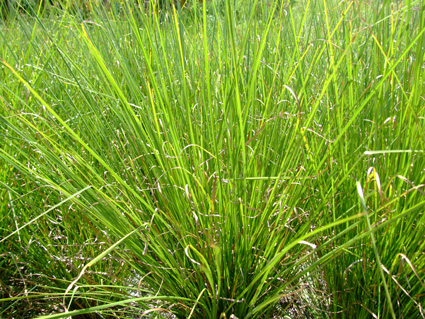
Haitiian vetiver grass. Source: astierdemarest.com

Haitiian vetiver grass. Source: astierdemarest.com

Time is not kind to Boutonniere on my skin. Less than 15 minutes in, the perfume starts to devolve. Boutonniere becomes thinner in feel, and also loses its touches of citrus and mint. A bare 25 minutes in, the sillage drops further, and Boutonniere hovers an inch above the skin. Before the first hour is even up, the perfume lies right on the skin, and is close to becoming a skin scent. It accomplishes that disappointing feat a mere 75 minutes into its development. Around the same time, a subtle element of pepperiness pops up at the periphery, as the ISO E Super Ambermax starts to rise from the base.

Gardenia jasminoide. Source: flowerpictures.org, photographer unknown.

Gardenia jasminoide. Source: flowerpictures.org, photographer unknown.

The end of the first hour ushers in another change as well. Boutonniere feels creamier and warmer, as the more jasmine-based gardenia element becomes more prominent. The scent still retains its greenness, but the flower is less dewy and crisp. It parallels the evolution of a white flower that you pick and wear, moving from the dainty, fresh greenness to a warmer, more yellowed creaminess after a few hours. The minuscule citric curlicues vanish; and the vetiver begins to turn more dry. It eventually becomes more woody than green and bright, but, for now, Boutonniere is still primarily a gardenia scent with varying levels of fresh vetiver.

By the end of the third hour, Boutonniere lives up to its description on the Arquiste website as a woody floral, for the softened, velvety gardenia is now firmly entrenched in a woody, dry vetiver embrace. It has a lightly mineralized feel that is supplemented by the tiniest touch of oakmoss, but there really isn’t much more to the scent. It is light, simple, and airy, but it clings to the skin like translucent gauze. In fact, the perfume is so wispy and thin that I was sure it was going to die at any moment after a mere 2 hours, so you can imagine my surprise to see Boutonniere cling on tenaciously for quite a bit longer.

Vetiver roots, the primary source of the aroma. Photo:  Herbariasoap.com

Vetiver roots, the primary source of the aroma. Photo: Herbariasoap.com

As the hours passed, Boutonniere fought for dear life as the most basic gardenia soliflore around, with fluctuating degrees of vetiver and a growing ISO E Super Ambermax peppered flourish. At times, the vetiver actually seemed like it had wiped out the gardenia altogether, but the flower is stalwart and makes a comeback. In its final moments, Boutonniere is the sheerest smear of a vaguely greenish gardenia. All in all, it lasted just under 7.5 hours on my skin.

On Fragrantica, the comments range all over the place:

  • Like Carnal Flower, but less skanky/interesting. WAY too feminine for unisex IMO.
  • On paper I thought that maybe a little bit of Carnal flower had somehow got mixed up in my sample, I was overpowered by crushed gardenia petals. However when put on skin the sweet floral edge almost disappears to give way to a sensual spicy skin scent that I can not stop sniffing! This is like carnal flowers darker sultry sister, still with a hint of sweet gardenia but mostly about spicy wood (vetiver) and balmy lavender, and dirty (in a good way) genet and a shimmer of petitgran. In the heart the creamy sparkly gardenia comes back a bit to soapy strong for my liking. This scent wears very close to the skin not much silage. But depending on how long the soapy gardenia lasts this could be a little gem that should be worn close to skin, a little secret that only those close to you can appreciate.
  • This smells like a balloon that was rubbed against someone’s head…. [¶] I honestly don’t know know what notes are clashing to create that sharp, dense rubber note (oakmoss and genet poop perhaps!?), but I cannot imagine forking out that kind of money to smell like this, it’s bizarre.
Source: Hdwallpaperes.com

Jasmine. Source: Hdwallpaperes.com

Kevin of Now Smell This had an infinitely better experience than either that last commentator or me, though Boutonniere did not seem to sweep him off his feet. In his review, he wrote:

Arquiste Boutonnière no. 7 opens with a burst of fleshy white flowers (not gardenia, but jasmine); the flowers are sweet, mildly indolic and have an undercurrent of woodiness. As the fragrance quickly develops, I detect a soft “orange peel” note, a gentle touch of “smoke” (the vetiver?) and oak moss. Arquiste Boutonnière no. 7 plays nicely on skin: after I sprayed the fragrance on, I detected indoles on my left hand, orange peel on my right hand, and vetiver and flowers on my wrists; this fragmentation makes for an interesting experience, and all the perfume’s notes work together to create a “happy,” sunny, summertime vibe. Boutonnière no. 7 dries down to a “fresh” (but creamy) white floral and smooth vetiver perfume.

Arquiste Boutonnière no. 7 can easily be worn by women, but how will men take to a jasmine/“gardenia” fragrance? (I’m betting, without any evidence, that women will buy this fragrance more than men.) Arquiste Boutonnière no. 7 contains excellent ingredients, has good lasting power, discreet sillage, and it does not smell old-fashioned[….] As for me…the gardenia perfume I’ve been waiting for has not yet arrived.

Victoria of Bois de Jasmin loved Boutonniere, though her experience was closer to mine with all the vetiver than to Kevin’s. In her review, she writes, in part:

My first impression of Boutonniere no.7 was that it was a gardenia at long last. […][¶] But as I wore Boutonniere longer, I realized that it’s really a vetiver fragrance with just a scattering of white petals. The earthy vetiver and cool moss are so rich in the drydon that you are no longer sure if you’re smelling the petals or the stems. The damp, nutty vetiver may seem a surprising companion to the lush gardenia, but their earthy facets are natural complements. A bright touch of bergamot keeps the composition sparkling and vivid, while lavender takes off the overripe, indolic edge. The result is a bright, crisp fragrance, the heady gardenia notes notwithstanding. […]

There are many elements of Boutonniere that draw me to it. I love its contrasts and smooth transitions from one accord to another. I love the salty, damp darkness of vetiver that is contrasted against the white petals. I also love its quality and polish.

I envy her experience. I wish I had “twists” with Boutonniere No. 7, let alone “transitions.” On my skin, the only significant changes pertained to the early, muted, tiny flickers of tertiary elements vanishing in less than 15 minutes.

I love big white florals, so I enjoyed the green gardenia in Boutonniere quite a bit, but my overall reaction is disappointment. The Arquiste signature style seems skew towards light, discreet scents as a whole, but the sillage on Boutonniere is far too weak in my opinion. 50 minutes for it to lie right on the skin, and a 75 minutes for a skin scent? It is extreme. If Boutonniere had more projection, body, or richness, then I wouldn’t mind that it was a completely basic, linear soliflore that primarily consisted of two elements.

I don’t believe in examining perfumes in a vacuum, and, in this case, all the factors combined together are very problematic in light of the perfume’s cost. Arquiste may currently sell the perfume for $175 for a small 55 ml bottle on its website, but most of the big U.S. retailers are charging $195. The same story applies in Canada, too. With tax, that makes the final price for a small bottle of Boutonniere just under $220. In my opinion, that’s bloody high for the fragrance and size in question.

I find it interesting that a handful of the biggest perfume sites in Europe seem to have dropped Arquiste. Perhaps it is merely a contract issue, but Arquiste fragrances are no longer available on Liberty London’s website, and Jovoy Paris has stopped carrying the line entirely. At the same time, First in Fragrance is massively slashing its prices on those few fragrances in the line that it still has, an action that I find to be quite telling. Others large retailers who continue to carry the Arquiste line (like Essenza Nobile, Osswald in Zurich, and First in Fragrance as well) don’t even bother with Boutonniere No. 7, suggesting that the perfume simply doesn’t sell at the high price point that Arquiste wants for it. 

[UPDATE 1/30/14: Arquiste has responded in the comments to both the pricing differential and to the distribution issue, and it’s only fair to repeat the gist of their position up top in the text where everyone can see it. Arquiste clarifies that the $195 price is for a special numbered edition of the fragrance which comes with a steel stick-pin made by jewelers. The regular, retail price for the normal Boutonniere No. 7 fragrance is still $175. According to Arquiste, the “stores have chosen which one to carry based on what they liked.” As for the issue of distribution in Europe, Arquiste states that it is a matter of finding out which partnerships work and which don’t. You can read the full text of their response down in the comments.]

One can only wonder if perhaps Arquiste is over-pricing fragrances that are consistently sheer, wholly unobtrusive, quite simple, thin, and with only moderate longevity. I really love Arquiste’s Anima Dulcis, but it has similar flaws in projection, body, and longevity which renders its price too high for me. Same story with another Arquiste fragrance that I tested last week. As for l’Etrog, an Arquiste citrus scent I reviewed a while back, I found it to be a dull, overly simplistic, terribly boring, linear, ISO E Super-laden disappointment.

Boutonniere is a significantly better fragrance than that one, but a complex, nuanced masterpiece it is not. I think it would work best for women who are looking for an extremely intimate, green gardenia scent that few other people can detect. Boutonniere is most definitely suited for an office environment. I’m less certain as to whether men may fall hard for Boutonniere. It’s not as masculine as touted, and the amount of vetiver (let alone lavender) that you may experience will undoubtedly depend on skin chemistry. I think if you enjoy green interpretations on white florals (like, for example, Frederic Malle’s Carnal Flower), but want something even sheerer, lighter and more unobtrusive, then Boutonniere No. 7 will be right up your alley. I’m still highly dubious about the value for the price, though. 

DETAILS:
Cost & Availability: Boutonniere No. 7 is an eau de parfum that is available only in a 55 ml/1.85 oz size. It costs currently $175 on the Arquiste website, but many U.S. retailers carry the special, numbered edition which costs $195. The perfume’s non-US price is: CAD$195, £125, or €159 (I think). In the U.S.: You can buy Boutonniere for $175 from Avery Fine Perfumery, The Twisted Lily, and Babalu Miami. The following sites sell it for the higher $195 price with the numbered bottle and accompanying steel stick-pin: BarneysOsswald NYC, Beauty Habit, and Aedes. Outside the U.S.: In Canada, the Arquiste line is available at Holt Renfrew Bloor in Toronto (though I could not locate it on the overall Holt Renfrew website), or at Etiket in Montreal for CAD $195. Each store is the exclusive dealer for the Arquiste line in their city. In the UK, Boutonniere is available for £125.00 from Bloom Parfumery, along with a sample. In France, Jovoy no longer carries Arquiste, and First in Fragrance is discounting those few Arquiste fragrances that it still carries. In Australia, there are a few vendors which carry the Arquiste line, such as Peony Melbourne or Libertine which sells Boutonniere for AUD$199. Arquiste is also sold at numerous small retailers throughout France, Italy, and Germany, but also Mexico, New Zealand, Lithuania, Croatia, Ireland and more. You can use Arquiste’s “Stockists” page to find a retailer near you. Samples: Samples are available at Surrender to Chance where the price starts at $4.99 for a 1/2 ml vial. The site also sells all 7 perfumes from the Arquiste line in a sample pack for $33.99.

Atelier Cologne Rose Anonyme

Rose Anonyme via the Atelier website.

Rose Anonyme via the Atelier website.

There are some houses that simply leave you cold, generating an apathetic indifference at best, and a raging dislike the rest of the time. Atelier Cologne is one of those for me, a brand that I find whiter than rice a good portion of the time with perfectly serviceable fragrances that are burdened by an incredibly mundane, safe, pedestrian character. For me, they never stand out except, on occasion, in the absolute worst way possible. (A future review for Mistral Patchouli will make that very clear.) A few Atelier scents (like Orange Sanguine) have brief moments that are utterly gorgeous, but all of them inevitably devolve into an incredibly boring, linear singularity marked by a signature accord that drives me insane. Rose Anonyme is one of the most beloved in the line, and it is one of the better Atelier fragrances that I’ve tried. The scale is wholly relative, however, and “better” for Atelier Cologne means very little in my view in an absolute sense.

Atelier Cologne was started in 2010 by founders and romantic partners, Sylvie Ganter and Christophe Cervasel. It is the first fragrance house entirely dedicated to fragrances in the classic cologne formulation. As many perfumistas know, eau de cologne is typically the mildest, weakest form of fragrance, so the creators decided to take it one step beyond. They created a whole new formulation of perfumery called the Cologne Absolue which seeks to amplify the freshness of a cologne with the longevity of an eau de parfum through the use of a much higher percentage of essential oils. Instead of using the usual 5%-7% levels, Atelier injects between 12% to 18% fragrance oils in their creations, while still maintaining a certain freshness. In my opinion, they achieve the latter through what seems to be a signature base accord of soapy, clean, fresh white musk. It is a signature that I’ve found in all their scents, and one which perpetually gives me a headache. More importantly, it smells bloody cheap.

Rose Anonyme, 30 ml bottle via Amazon.

Rose Anonyme, 30 ml bottle via Amazon.

Rose Anonyme was created by Jérome Epinette, and released in 2012. It is an eau de cologne absolue that contains 18% concentrated perfume oils, a level which is akin to that of some eau de parfums. Atelier Cologne describes the scent quite simply: 

Rose Anonyme, a breathtaking seductress caught in a stolen affair between light and dark, Turkish Rose Absolute sparkles and intrigues beneath notes of spicy Ginger, enwrapped in sultry veil of Velvet Oud, Indonesian Patchouli, mystic Papyrus and Somalian Incense.

Atelier says that the full list of notes is:

Calabrian bergamot, Chinese ginger, Turkish rose essence, Turkish rose absolue, Somali incense, velvet oud accord, Indonesian patchouli, Indian papyrus, benzoin from Laos.

Source: nature.desktopnexus.com

Source: nature.desktopnexus.com

Rose Anonyme opens on my skin with a rose turned jammy and concentrated with the vile, dreaded, purple fruit-chouli. It is syrupy, excessively sweet, and smells strongly of grapes and fruit molasses. The duo are infused with a brief pop of crisp bergamot and, more importantly a whole lot of an arid, acrid papyrus. The latter smells both like ancient parchment paper and something wholly aroma-chemical in nature. Moments later, a soft, emasculated “oud” arrives, followed by the lightest whisper of candied ginger. Deep in the base, there are traces of a soapy tonality.

The whole thing is oddly acrid, jammy, syrupy, soft, intense, and candied, all at once. There are definite resemblances at this point to Tom Ford‘s Noir de Noir in the richness of the blood-red rose infused with a grapey darkness, purple patchouli, and the merest flicker of muffled oud. However, the Tom Ford fragrance feels infinitely more luxurious, rich, deep, and smooth. It has no jangly rough edges, or notes of aroma-chemical aridity. It is also not cloying sweet, as the purple patchouli is much better calibrated. Later, as Rose Anonyme develops, it loses that kinship even more, as Noir de Noir takes on a powdered, violet quality that makes the fragrance resemble Turkish Delight.

Papyrus plant via wikicommons.

Papyrus plant via wikicommons.

In a number of perfumes, the attempt to create a “papyrus” impression is done through the use of something called Cypriol, an essential oil (or, sometimes, a synthetic) derived from the roots of the Cyperus scariosus plant. The latter is known in English as cypriol and in Hindi as Nagarmotha, and it is a member of the papyrus family. (You can read more about it on The Perfume Shrine‘s analysis of cypriol.) The only reason why I’m bringing it up here is many fragrances that claim to have “oud” really don’t. Andy Tauer argues that the vast majority just use a drop of “oudh” in a cypriol base. On his blog, he once wrote:

Often, “oudh” is used as a tag allowing brands to charge more because somehow everybody seems to think that perfume lovers are willing to pay extra for a fragrance with oudh notes. This does not make sense as there is not much oudh in anything. Yet, consumers pay the extra$$$ and are told that they get the exclusive fragrance with this expensive ingredient. This is wrong.

Apart from a drop or two, the rest of the “oudh” is bases, often with cypriol, in varying qualities, far away from the “real thing”. The real thing does not find its way into perfumes that you buy in your perfumery.

Atelier Cologne has the honesty to admit that Rose Anonyme only contains a “velvet oud accord,” but given the inclusion of “papyrus” and the way that particular note smells on my skin, I’d bet the whole thing is one laboratory-driven concoction. You definitely smell “papyrus” in Rose Anonyme, but if you’re expecting a significant oud aroma — let alone a genuine one — you’ll be sorely disappointed. On my skin, Rose Anonyme is merely fluctuating degrees of jammy rose infused with purple fruit-chouli and synthetic, acrid “papyrus.” And I cannot tell you how sick to death I am of fragrances that are essentially rose-patchouli soliflores.

Source: dultmeier.com

Source: dultmeier.com

The things that comes to mind repeatedly in the opening hour of Rose Anonyme are candy and soap. The richest, gooey-est, chewy, almost grapey candy sitting side by site with a bar of floral soap, close enough for the candy to pick up its small traces. The two are wrapped in a dry, acrid-smelling paper that almost has a grassy whisper to it. Something about the scent gives me a headache, though I’m not sure if it’s from the cloying sweetness or the cheap white musk that I find in so many Atelier scents. It is a synthetic cleanness that is always soapy at its core and, in this particular case, smells like really strong, sweetened, car freshener aerosol. If you’ve ever gone to a car wash and gotten the “rose” spray option for the inside of your vehicle, you’ll know a bit of what I mean.

Fruit molasses or jam. Source: Shutterstock.com

Fruit molasses or jam. Source: Shutterstock.com

The sweetness is intense, though I blame some of that on my skin. It always amplifies base notes, including anything sweet, and purple patchouli in particular. That said, I’ve noticed that the more you apply of Rose Anonyme, the worse it gets. With 2 sprays from my tiny atomizer or the equivalent of one good spray from a bottle, the sweetness is far too excessive for my personal tastes, but not so much as to make me want to scrub off the perfume. With 3 tiny sprays, however, amounting to 2 sprays from a proper bottle, the perfume is utterly unbearable. And there is no escape from it either, because Rose Anonyme initialy wafts a good 4-5 inches (regardless of quantity) in a dense cloud of rose jamminess.

Thirty minutes in, Rose Anonyme is a syrupy rose patchouli scent, with a subtle note of biting dryness and aridity, and the merest suggestion of some eunuch, emasculated “oud.” Unfortunately for me, it is now also trumpeting that Atelier signature of clean, fresh musk which always gives me a headache. Ignoring my personal sensitivity to white musk, I always find the note to have such an incredibly cheap feel. Any number of generic, mainstream, $50 floral scents in Sephora have it, perhaps because it is a way to comply with the modern mania for “freshness” at little to no cost to the manufacturer.

Speaking of Sephora, Atelier Cologne is now carried there, which says something. And the line has increased its prices so that the small 1 oz bottle now costs $75. Atelier may pretend to be “niche,” but it really is not. Plus, Rose Anonyme has a wholly generic, pedestrian profile that imitates a million other boring rose-patchouli-white musk scents also carried at Sephora. The degree of my boredom knows no bounds.

Source: hqwallbase.com

Source: hqwallbase.com

Rose Anonyme is an extremely linear scent. There is absolutely nothing wrong with that if you like the notes in question, but, in this case, I don’t. The main changes in the perfume are one of degree. The sillage drops after 90 minutes, and the perfume feels softer, more pillowy, though it is still diabetically sweet. It is a candied rose-fruitchouli scent with a miniscule drop of bergamot atop a dry papyrus base that feels peppered and a bit acrid. The whole thing is nestled in a cocoon of fresh cleanness. None of it smells opulent, luxe, rich or special to me. The blasted concoction turns into a skin scent after 4 hours, and continues on its singular path with all the determination of a red bulldozer. I’m so utterly bored, I contemplate making a list of how many scents out there might have been a model for Atelier to copy, but there are too many choices.

The one saving grace to this endless stream of banality is Rose Anonyme’s final drydown. In its last two hours, it turns into a genuinely pretty blend of a soft, dusty rose-patchouli dusted with chocolate powder. It’s lovely, and I wish it had been the dominant heart of the annoying scent. All in all, Rose Anonyme lasted 12.5 hours with 3 small sprays from the atomizer, and 10.25 with 2 smaller ones. I gave it two full, proper, focused tests, but I’ve also worn it a few times prior just casually for myself. (Only to scrub it off after 2 hours. That syrupy sweetness is revoltingly excessive on my skin.)

My feelings about Rose Anonyme are very, very far from the common consensus on the fragrance. It seems to tie with Orange Sanguine as many people’s favorite from the line. I concede fully that skin chemistry, amplification of the purple patchouli, my dislike of the note and of white musk, and my leeriness of rose scents are all to blame. However, I refuse to change my stance on Rose Anonyme’s utterly generic, common profile. And I point to Fragrantica where the (admittedly very positive) discussion of Rose Anonyme brings up a plethora of comparable fragrances. First and foremost, Juliet Has A Gun‘s Midnight Oud. Other names that come up are Tom Ford’s Noir de Noir, Montale Red Aoud, Thierry Mugler‘s Angel La Rose, Thierry Mugler‘s Amen line, Sisley Lune or de Soir, New York Oud, and several others.

Yet, Fragrantica commentators seem to overwhelmingly adore the softness and sweetness of Rose Anonyme. Even those who note the perfume’s linearity, its soapy quality, or the “synthetic” “metallic musk, love it. The one wholly negative review comes from “Sherapop,” who had great difficulty with the papyrus element:

Atelier Cologne ROSE ANONYME “cologne absolue” (isn’t that an oxymoron?) opens with a striking resemblance to Thierry Mugler Jardin d’Etoiles entry ANGEL LA ROSE. The first word out of my mouth was actually: patchouli. Then the rose swept in and I felt as though I really was wearing the Mugler flanker for a couple of minutes.

ROSE ANONYME continues to develop, however. What I perceive next is the emergence of a very strong and dominant papyrus note. Because focal papyrus is rare in my experience of perfumes, I have a very strong memory of it, and it appears most markedly of all in Jessica Simpson FANCY NIGHTS. I’d thought that the reason why I did not take to that perfume was because it was a vat-produced Parlux juice. Now, after sniffing ROSE ANONYME, I think that it must be the papyrus which makes me less than enthused about that perfume, too.

It took me a couple of minutes to figure out what exactly it was that I was smelling, but once I did, the connection to FANCY NIGHTS seemed unmistakeable.

One negative review, and that’s it. So, I’m clearly in the minority, and that’s fine. I find Atelier’s stuff dull as soapy dishwater, but Rose Anonyme is obviously everyone else’s rose candy.

If you like Juliet Has A Gun fragrances or are looking for a very jammy, lush, slightly clean rose scent, then you may want to give Rose Anonyme a try. It has an extremely emasculated (read, virtually non-existent) oud accord, but Atelier compensates by providing instead quite a bit of dry papyrus. It’s not enough to counter the diabolical intensity of the fruit-chouli, but that seems to be what makes the rose note so “velvety” in most people’s eyes. The perfume is definitely unisex (men seem to adore it), and has good longevity. However, I’d be extremely careful with the quantity that you apply if you want to wear Rose Anonyme to work. Also, if you have any issues with clean white musks, you may want to test the perfume first. However, if you’re not a lover of rose-fruitchouli or syrupy sweetness, then you can join me in the pariah’s corner and we can yawn ourselves to sleep.

DETAILS:
Cost & Availability: Rose Anonyme is a concentrated cologne that comes in 3 sizes: 1 oz/30 ml for $75, 3.3 oz/100 ml for $130; and a giant 6.7 oz/200 ml for $195. You can buy Rose Anonyme directly from the Atelier Cologne website. In terms of freebies, if you buy the massive 6.7 oz bottle, the company says it will give you: “a travel spray refilled with the Cologne Absolue of your choice in its leather pouch engraved with your name or initials.” The travel spray is, in fact, the 30 ml/1 oz bottle. The company also sells various Gift and Travel Sets, such as a refillable 1 oz/30 ml travel size in a box with soap, postcards, leather pouch, etc. starting at $95 for Rose Anonyme, or a travel box of 7 travel minis that are each 7.5 ml for prices starting at $95. The company sells samples (in a set of all their 11 perfumes in small vials for $20), a $3 sample of Rose Anonyme, candles, and more. I can’t find shipping information or costs. As a side note, Atelier has a few shops: at least one in Paris, and also one in New York. In the U.S.: You can find Rose Anonyme at SephoraLuckyscentBeautyBarNeiman MarcusBirchbox, and Bergdorf Goodman (which also carries soap and candle forms). Outside the U.S.: In Canada, you can find it on Sephora.Canada at prices starting at CAD$80 for the small 1 oz bottle, CAD$135 for the large 3.3 oz bottle, and CAD$205 for the massive 6.7 oz bottle. In France, you can find Orange Sanguine at Sephora.Fr for €60,50 for the small 1 oz/30 ml bottle and €100 for the 3.3 oz/100 ml bottle. Other Sephoras may also carry it, though I didn’t see it on some like Sephora Mexico or Singapore. You can use the International Sephora site to look up the branch near you, from Greece to Spain. In France, Les Galleries also carries the Atelier line. In the UK, you can find Rose Anonyme at Selfridges where prices start at £100 for the 100 ml/3.3 oz size bottle. Liberty London and Les Senteurs only have the giant 200 ml size, but the latter sells samples. In the Netherlands, the Atelier line is carried at Skin Cosmetics, in Germany at First in Fragrance or Essenza Nobile. For all other countries, you can use the Store Vendor locator on the Atelier website to find retailers near you. Atelier Cologne fragrances are sold by vendors from Etiket in Canada to those in Tokyo, Shanghai, Poland, Italy, Russia, Romania and more. However, I couldn’t find any sites in Australia or the Middle East listed on the company website. Samples: a number of the vendors listed above have samples for sale. Surrender to Chance sells vials starting at $3 for 1 ml.

Aftelier Perfumes Cepes and Tuberose: Earthy Tuberose

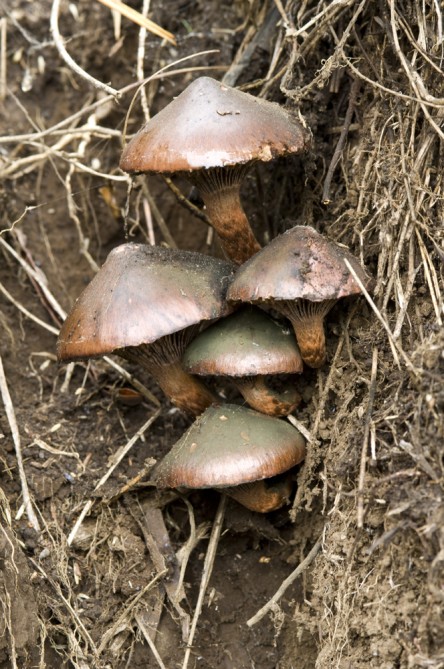
As it might be clear by now, I’m focusing on florals this week with a series that began by looking at various treatments of tuberose. Like Goldilocks, we’re exploring the range from the fresh, green kind represented by Carnal Flower to the warmer, creamier interpretation of Moon Bloom, and, now, the darkest one of all. This last one is a wholly original, incredibly creative twist on the great white flower, turning it earthy with all the mushrooms and earth of the forest floor. It is Cepes and Tuberose (sometimes written as “Cepes & Tuberose” by others), a perfume with very woody, resinous, chocolate, cinnamon and dried rose elements to go along with the mushrooms. 

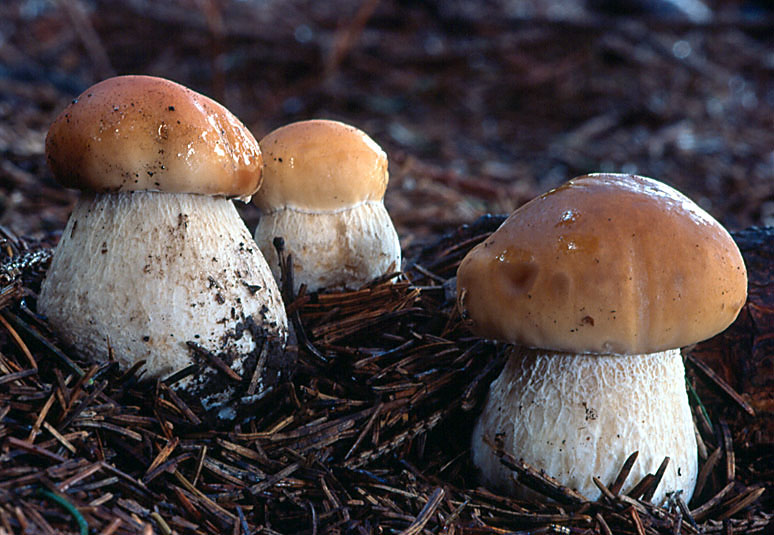
Cepes or Porcini. Source: morelmushroomhunting.com

Cepes or Porcini. Source: morelmushroomhunting.com

Cepes and Tuberose was created by the highly respected, acclaimed all-natural perfumer, Mandy Aftel of Aftelier Perfumes. The perfume is classified as a fougère, which is a type of fragrance centered, in part, around herbs, along with more significant core components. Ms. Aftel has cleverly twisted the fresh, aromatic, herbal genre by taking a very different approach to the forest and mixing it with very different flowers. The critical component, however, are the cepes, a type of mushroom commonly referred to outside of France by its other name, porcini. Cepes and Tuberose comes in two concentrations: an eau de parfum concentration and in pure parfum. This review is for the former, the eau de parfum.

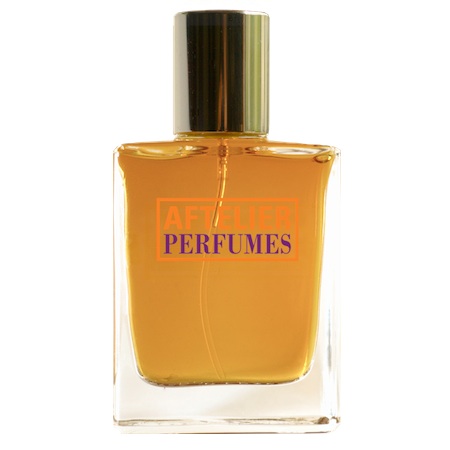
Cepes and Tuberose, the bottle for the Eau de Parfum version. Source: the Aftelier website.

Cepes and Tuberose, the bottle for the Eau de Parfum version. Source: the Aftelier website.

On her website, Ms. Aftel describes Cepes and Tuberose as follows:

Scent Family: Fougère
Wild mushrooms, with animal undertones and one of the world’s most voluptuous florals. Wild porcini mushrooms and Italian tuberose play a mysterious and earthy duet. One of my more enigmatic perfumes, it has won many awards and fans. — Chosen as one of “100 Perfumes Every Perfumista Should Try” by Now Smell This.

Featured Notes
Top: bois de rose.
Heart: tuberose, Moroccan rose.
Base: cepes [or Porcini mushroom] absolute, benzoin.

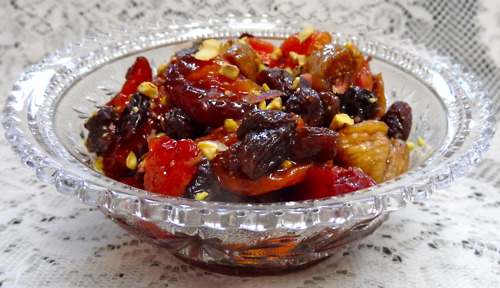
Source: Ronny Fein. (Website link embedded within photo.)

Source: Ronny Fein. (Website link embedded within photo.)

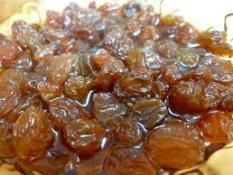
Cepes and Tuberose opens on my skin with notes that strongly resemble sticky raisins, cinnamon infused fruits stewed in brown sugar molasses, and woods. There is also a very animalic leather component, followed by a truffle-like earthiness, then actual mushrooms with a hint of chocolate. The sweetened, plump, raisin molasses is infused with dark green herbs, aromatic but slightly smoky woods, and a mossy pungency. Within minutes, the latter takes on a medicinal, old-fashioned fougère tonality that has a very distant kinship to barber shops of old. Unlike those scents, however, Cepes and Tuberose is both sweetened and earthy.

Source: 123rf.com

Source: 123rf.com

The earthiness is interesting. Initially, it really feels more like humus (not hummus) which is the soil detritus of plants, dirt, leaves, and decaying organic matter. The mushroom tonality is subtle at first, more a suggestion than full-on porcinis. As regular readers know, one of my favorite discoveries last year was Oriza L. Legrand‘s ode to the forest floor, Chypre Mousse, an extremely green, mossy, mushroom, wet leaf and humus scent with herbal undertones, darkened resins and a wisp of leather. I love both the mushroom and earth note in Chypre Mousse, but it smells very different in Cepes and Tuberose. Here, it is not like sweet, loamy, wet soil, but a very dry one. There is sweetness, but it is of a brown sugar sap variety. Nothing in Cepes and Tuberose feels green or elfish, but dark, resinous, dry, and sweet. And the sense of something herbal, elemental and decayed feels much stronger here.

Source: Diary of a Mad Hausfrau. (Website link embedded within photo.)

Source: Diary of a Mad Hausfrau. (Website link embedded within photo.)

The rosewood adds a distinct element of dark, smoky woods, but also something that resembles pine sap. It’s a warm, not chilled, version of the note in Serge LutensFille en Aiguilles. Actually, the Lutens fragrance that Cepes and Tuberose first brought to mind was Bois et Fruits. I think it’s due to the sticky raisin and spice accords, mixed with more autumnal woods. Yet, Cepes and Tuberose is much more leathered than either of those fragrances. It has a definite animalic component in the sense of muskiness, but it is never fecal, raw, sweaty or rank. It is more earthen, and infused with a sweetness that borders on cinnamon and chocolate.

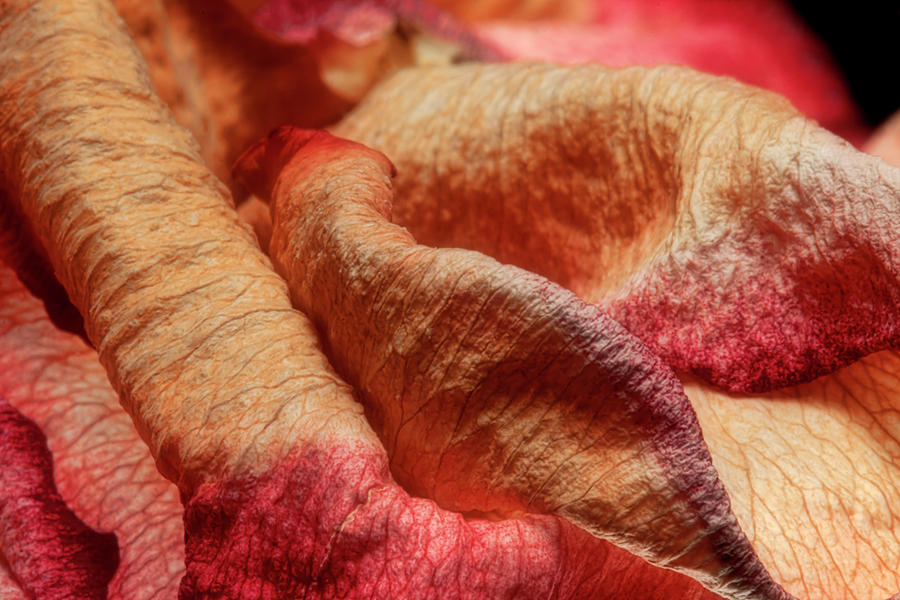
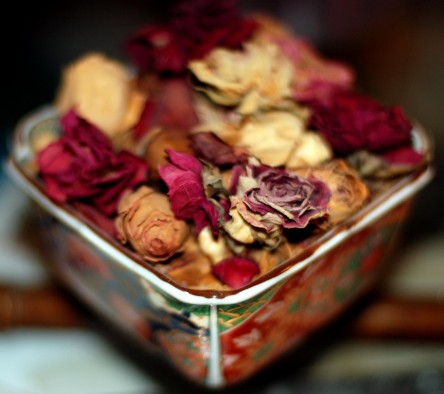
10 minutes in, Cepes and Tuberose starts to change. The fragrance feels less medicinal, herbal, and animalic. The leather note fades to the background, while the earthy one turns more mushroomy. There is a surprising meatiness to it that made me think of Portobello mushrooms, but at this stage, it’s still only a mere suggestion. The more significant change is the introduction of the florals, and this is where I start to really struggle. On my skin, the flowers are dominated by an amorphous, rose note that strongly resembles spiced, dried, pressed rose petals and potpourri. I’m not generally a fan of roses, fresh or dried, but I have particular problems with potpourri.

"Dried Rose Petals" by Tom Mc Nemar via Fineartamerica. http://fineartamerica.com/featured/dried-rose-petals-ii-tom-mc-nemar.html

“Dried Rose Petals” by Tom Mc Nemar via Fineartamerica.
http://fineartamerica.com/featured/dried-rose-petals-ii-tom-mc-nemar.html

As time goes by, the rose potpourri takes over Cepes and Tuberose’s bouquet on my skin. The perfume smells increasingly like a very woody take on heavily spiced, cinnamon-dusted dried rose petals with an earthy humus note. Alas for me, the latter soon turns into hardcore porcini mushrooms, to a degree that Chypre Mousse never did. Actually, to be more precise, I smell like meaty, cooked portobellos dusted with cinnamon. The herbal green element has faded, though a certain pungency remains. The leathery note feels less musky, the raisins and brown sugar resin both weaken, and so does that subtle impression of pine. Their place is taken by a pinch of sweetened floral powder, presumably from the benzoin mingling with the roses.

I never once detected tuberose in its traditional, usual way. Instead, what slowly weaves its way through the notes is something that smells like a very browned gardenia. It strongly resembles the decayed gardenia in Serge LutensUn Voix Noire. As many of you know, gardenia is one of those flowers whose smell can’t really be captured from the petals, whose scent cannot be distilled, and whose aroma has to be recreated using other essential oils. (Fragrantica has a tiny bit on this issue if you’re interested.) Tuberose is one of the ways to recreate the smell of the gardenia, which may account for why the version in Cepes and Tuberose smells more like the latter than the former on my skin. Plus, gardenias naturally have a mushroomy scent when they are very ripe or close to the edge of decay.

Source: mydecorative.com

Source: mydecorative.com

On my skin, the browned “gardenia” is perhaps the most tertiary of notes, and everything is trumped by the cinnamon-infused dried roses. The cepes are like a Jack in the Box, popping up on occasion to say “Boo” before sinking back down. They feel less meaty at the end of the first hour, and are more dirt-covered with the lightest touch of a mossy undertone. None of it is easy for me, though I enjoy the new arrival on the scene: cocoa. The initial hint of something chocolate-like in the base has now risen to the surface, but it resembles semi-sweet, dry cocoa powder more than an actual block of heavy chocolate.

At the start of the second hour, Cepes and Tuberose is a bouquet of cinnamon-rose potpourri with coca-dusted dry woods on the surface, while a dark, decayed white floral and meaty portobello mushrooms lurk down below. It is simultaneously dry, dirty, dusty, sweet, sharp, spiced, pungent and soft — contradictory as some of those things may sound. It isn’t the easiest of scents for me, though I had a moment of hope about 1.75 hours into Cepes and Tuberose’s development. There, suddenly, there was an utterly lovely drydown of spiced warmth with cocoa powder, cinnamon benzoin, dried roses and a touch of sweet powder, all nestled in a dry-sweet embrace of cocoa-dusted woods. All the edges felt smoothed out, and the result was a delicious, quasi-gourmand that felt beautifully balanced. At times, there was even a subtle patchouli vibe (and you know how I love my patchouli).

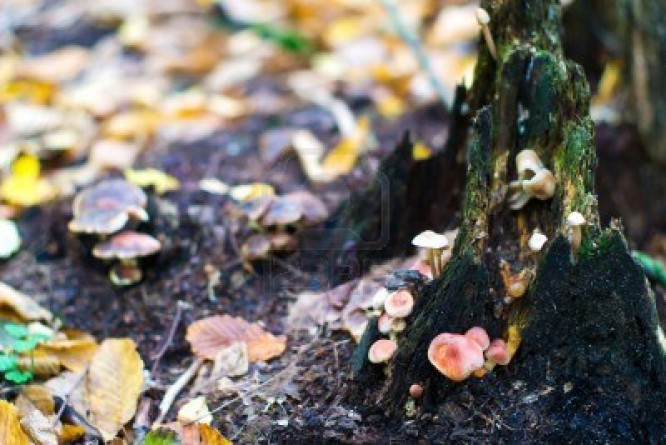
Source: the3foragers.blogspot.com

Source: the3foragers.blogspot.com

Unfortunately, this stage was very brief on me, and I can only blame my skin. Something happened, and less than 30 minutes later, Cepes and Tuberose turned into the smell of dry dirt on me. Not sweet, loamy, wet soil, but very dry, old dirt, with touches of the other elements that I’ve described above. In its final moments, Cepes and Tuberose was nothing more than a blur of dryness that smelled vaguely like old dirt and potpourri. The whole thing lasted 4.75 hours with two small sprays, and 6.25 hours with a larger quantity. Generally, the sillage was very soft after an initially strong start, but Cepes and Tuberose was quite potent when smelled up close for a number of hours. In both my tests, it became a skin scent after 1.75 and 2.25 hours, depending on the quantity that I applied.

My struggles with Cepes and Tuberose really surprised me. Not only is tuberose my favorite flower in real life, but I love dark, woody, resinous or earthy scents. I certainly have no problems with humus or mushroom notes, as regular readers know from my ravings about Oriza’s Chypre Mousse. I can only chalk things up in this instance to skin chemistry and my personal tastes.

Others, however, have had much better luck with Cepes and Tuberose. Now Smell This has the perfume on its list of 100 things that every perfumista must try, calling it “dark, earthy and sexy.” Olfactoria of Olfactoria’s Travels who doesn’t like tuberose scents was actually driven to song, dance, and music, writing that the “deliciously intoxicating fumes” of the perfume brought out a part of her soul.

Meanwhile, Victoria of EauMG thought it was both sultry and akin to a chocolate-dipped pretzel, writing in part:

Cepes and Tuberose opens with sharp rosewood and hay. After this settles, it’s a big floral with blooming tuberose and dewy rose. It’s slightly sweet and lactonic but not too sweet or lactonic. It’s balanced by a savory saltiness. Think of it as the chocolate dipped pretzel of perfumes or even better yet, a peanut butter cup – a perfect balance of sweet and salty. The dry-down is an earthy yet sweet vanilla-benzoin. On my skin, the mushroom is rather faint. In fact, it is more like the animalic richness that is naturally present in “overripe” white florals. And because of this, Cepes and Tuberose is a rather sultry fragrance.

Perfume-Smellin’ Things found Cepes and Tuberose to be unique, and more akin to umami than to a tuberose scent. I think her umami comparison is extremely clever and astute:

Smelled on its own, tuberose absolute is as I know it, buttery, slightly mentholated and slightly rubbery. Smelled on its own, cepes absolute smells of soy sauce and red wine, a mouthwatering, “tongue-coating”, savory aroma. Smelled right after cepes, tuberose suddenly turns to me with a facet it hasn’t shown before … there is something in fact meaty there … meaty and dry and coated in earth…a certain piquant pungency that it took a mushroom to bring to light…or darkness, as it were.

The composition of Cepes & Tuberose is uncluttered. The two main ingredients are so rich, complex and charismatic, that any other notes have to be “quite simple. The cepes and the tuberose intertwined was all the star material that the perfume could aesthetically accommodate.” (M.Aftel) A little bit of citrus in the top notes brightens the fleshy dark brown of the blend; woods seem to both enhance the creaminess of tuberose and to add to the dry spiciness of porcini. This is undoubtedly one of the most unique tuberose perfumes – and much more than a tuberose perfume. It seems wrong to categorize it as a floral. But neither is it anything else really. It requires a new olfactory category of its own … Umami.

I think the review with which I agree the most is that of my friend, The Perfume Dandy, who accurately notes Ms. Aftel’s achievements in the vanguard of experimental, truly original, almost “avant garde” works in the olfactory plane. In terms of his actual experience with Cepes and Tuberose, he writes:

Cepes and Tuberose stands out for The Dandy as an idiosyncratic masterwork.

Meaty sweet mushrooms meet fleshy over ripe flowers in a carnal embrace that is splendidly earthy at the opening and morphs into an extraordinary splicing of library, forest and eccentric boudoir.

Truly original and quite remarkable.

This may not be a scent for everyone, but in a world of apparently endless choice (are there now more Angels in heaven or on the shelves of Thierry Mugler?) I, for one, am so glad that there are such creative options available.

I very much agree. Cepes and Tuberose isn’t the easiest of scents, and it isn’t for everyone. However, one must applaud Ms. Aftel for pushing the boundaries with something very unique. I have enormous respect for Ms. Aftel in general, but Cepes and Tuberose merely increases it, even if the scent did not work for me personally. To combine tuberose with fougère elements and to create an earthy tuberose with mushrooms… it is brilliantly original.

DETAILS:
Cost & Availability: Cepes and Tuberose is exclusive to the Aftelier website, and comes in different formulations and sizes. Cepes and Tuberose is offered as: 2 ml mini of Pure Parfum for $50; 0.25 oz of Pure Parfum for $170; and 30 ml Eau de Parfum for $170. Samples are available for $6 for a 1/4 ml vial of both the EDP and the pure parfum. Samples: The Eau de Parfum version of Cepes and Tuberose is available from Surrender to Chance where prices have been discounted down to $3.99 from $9.99 for a 1/4 ml vial.

By Kilian Apple Brandy

Source: dailymail.co.uk

Source: dailymail.co.uk

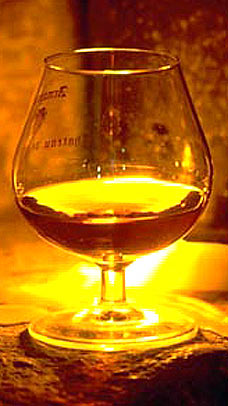
Some fragrances are not meant to be practical, versatile, daily experiences. They’re intended to be playful whimsy, a bit of a laugh for those with very deep pockets who can afford to indulge in a rich man’s expensive luxury once in a blue moon. I think that’s perhaps the best way to interpret and approach Apple Brand, the brand-new, recently released perfume from By Kilian. It is a fragrance that really isn’t something practical for most people to wear on a daily basis, unless you want your boss to think you’re an alcoholic and write you up to HR, or a police officer to look at you askance and subject you to a breathalyzer test. In a nutshell, Apple Brandy makes you smell like you were smeared from head to toe with a 1000 plates of Crepe Suzette, and then fell into an oak barrel of cognac after an all-night bender.

Source: Instyle.com.com

Source: Instyle.com.com

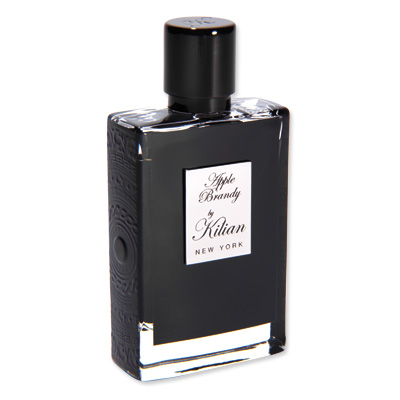
Apple Brandy is an eau de parfum that was created by Sidonie Lancesseur, and was released at the end of 2013 as a scent exclusive to Kilian Hennessy‘s new store in New York’s meatpacking district. As the Kilian website description makes clear, the fragrance is both a playful wink at the “Big Apple,” and an homage to his Hennessey cognac heritage:

BRANDY is the term used to designate “Cognac“ when your product is not actually produced in the region of Cognac. In order to recreate this very specific “Cognac” scent that belongs in Kilian’s olfactive memory, Sidonie created an accord combining the smoked wood from the Oak casks – Cedar wood from Texas, white Cedar from China and Labdanum from Spain – and the sugar from the alcohol – Vanilla and Ambroxan.

APPLE is of course a wink to New York, the “Big Apple”. In order to create an “Apple accord” that would not be anecdotal or too simplistic, we created an “Apple liquor” that would blend, rather than contrast, with the “Oak cask” accord.

The complete list of notes is as follows:

Oaken barrel, Texas cedar, Chinese white cedar, Spanish labdanum, Vanilla, Ambroxan.

Source: NYTimes.

Source: NYTimes.

Apple Brandy opens on my skin with a tsunami of pure, hard alcohol. I absolutely adore boozy notes, but Apple Brandy takes it to a whole new extreme and level, to the point where I actually said, “Whoaa…..” out loud. For an instant, the opening note is of apple — tart, crisp, and tangy like a Fuji — but it is almost immediately covered with cognac. The liqueur is sweetened with an extremely nutty, toffee’d undertone, and has traces of oak and a thick amber as well. It’s nice, but, my God, is there a lot of it! It’s intense, almost to the point of rawness, and beyond any “booziness” that I’ve previously encountered.

Source: yumsugar.com

Source: yumsugar.com

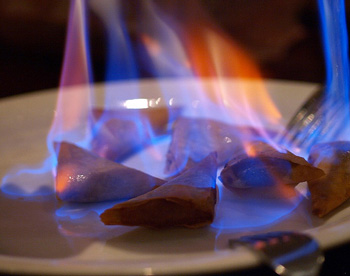
The overall effect is exactly like a caramelized apple at a fair, covered in heavy, dense toffee, and then dunked into an oak barrel of alcohol. Perhaps a more precise comparison is to Crepe Suzette, the kind were the apple-stuffed crepes are doused with sugar, then flambéed to a caramelized crisp with copious amounts of brandy. On the side, and all around the plate, is a luxurious crème anglaise sauce of slightly eggy, rich vanilla.

Crepes with creme anglaise. Source: foodspotting.com

Crepes with creme anglaise. Source: foodspotting.com

The intensity of the alcohol tsunami softens after 5 minutes, losing some of its rawness and undiluted, hard edge. I still smell like apple Crepe Suzette, but it’s after some of the brandy has been burned off. The first time I tested it, Apple Brandy was actually quite enjoyable as a cozy, warm, dense, boozy gourmand. I liked the ambered apple compote, and I have a particular weakness for crème anglaise sauce. The vanilla isn’t a huge part of the scent on my skin, but the flickers of it at the edge provide a lovely richness that makes Apple Brandy feel like a decadent indulgence. My favorite part, however, is the oak which really evokes oak barrels in the strongest way possible. It rather brilliant, in my opinion.

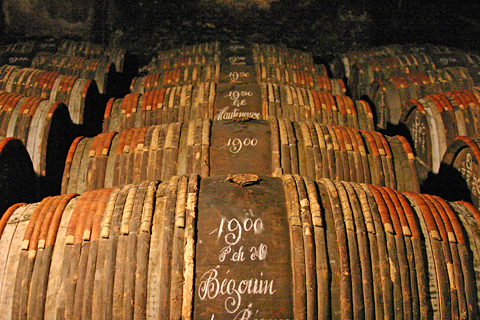
Oak Barrel with 1973 GC Le Peu Hennessy cognac/ Source: blog.cognac-expert.com

Oak Barrel with 1973 GC Le Peu Hennessy cognac/ Source: blog.cognac-expert.com

Apple Brandy is an enormously linear scent with very little change throughout its lifespan. It never transforms in any substantial way, but there are variations of degree that occur after the first hour. The fragrance’s apple tonalities weaken and slowly fade, while the oak barrels become much more dominant. There is something incredibly appealing about the oak when doused by the caramelized apple and the heady, boozy cognac. The wood is extremely smooth, slightly smoky, and rich, adding a layer of depth to the otherwise simplistic scent. The cedar never appears on me in any distinctive way, but I think it works indirectly from the edges, heightening the oak with that subtle smokiness. Really, the wood parts are beautifully done as a counterbalance to the Crepe Suzette and hard liqueur.

Ambroxan. Source: Aromachemicals.net

Ambroxan. Source: Aromachemicals.net

At the end of the first hour, Apple Brandy becomes increasingly drier and woodier, particularly as the Ambroxan starts to stir in the base. The synthetic, alas, is a little difficult for me. According to the Good Scent Company‘s olfactory database, Ambroxan’s strength is assessed as “high” or intense, and its aroma is: “ambergris, old paper, sweet labdanum, dry.” Here, it initially adds a warm, sweet, ambered feel to Apple Brandy’s opening, but the dryness takes over about 90 minutes into the perfume’s development. I am much more sensitive to aromachemicals than the average person, and Ambroxan is no exception. The inside of my nose hurts each time I sniff my arm up close, but it’s thankfully not an extreme reaction. As a whole, the aromachemical is well-blended into the fragrance, and doesn’t seem hugely excessive. Still, it’s enough to make Apple Brandy a much drier scent than it was originally.

At the start of the third hour, Apple Brandy is a blur of sweetened booze and woodiness on a very dry base. The caramelized apple compote note is muffled, and soon fades away entirely. The vanilla really never showed itself on my skin outside the opening hour where it was more of a supporting player on the sidelines. As for the other notes, they feel quite indistinct and abstract, lacking delineation and overlapping each other, with only the brandy really dominating. The sillage — which was initially quite intense with only a small amount of perfume applied — now drops, hovering only an inch or so above the skin.

Hennessy's aged, cognac oak barrels. Source: graperadio.com

Hennessy’s aged, cognac oak barrels. Source: graperadio.com

That’s really the sum total of Apple Brandy’s development on my skin. From the third hour until its very end, the fragrance is merely a dry, semi-sweet, woody, oak and cognac bouquet. In its final drydown, Apple Brandy is just an abstract smear of woodiness tinged with some vague sense of booziness. All in all, the perfume lasted just over 9.5 hours, with generally good sillage that only became a skin scent at the start of the 6th hour.

Source: autoblog.com

Source: autoblog.com

I enjoyed parts of Apple Brandy a great deal, but I have numerous caveats and issues with the scent. I live in a place where I cannot go anywhere without driving, and where the jackbooted police are notoriously aggressive over the smallest thing. I simply would not dare wear Apple Brandy outside my house for fear that — were I ever to get pulled over — the police would think I’d been drinking and driving. Knowing the police here, there is no way they’d believe my protests, “Officer, it’s only my fragrance.” I wince just imagining the scene.

I also would not be comfortable wearing the scent to social occasions either, lest people think I’d been on a bender or had alcohol problems. The smell of liquor is simply so intense from a few dabs, especially in the first two hours, that regular application might smell as though I’d doused my clothes with an entire bottle of expensive brandy. Lastly, as an attorney whose speciality was employment law for big corporations, I would strongly advise against wearing Apple Brandy to any workplace, period. This is the sort of thing that would lead to HR problems, because it really does not convey an appropriate, professional image.

Source: it.123rf.com

Source: it.123rf.com

On the upside, Apple Brandy might be a lovely scent to wear in your own home on a chilly, snowy winter’s night. It is the perfume equivalent of having a brandy while sitting before a fire. Yet, even as I write that, my brains whispers the other problems with the scent: it’s linear, it’s a novelty act, and it would get boring very quickly. I enjoyed parts of Apple Brandy quite a bit the first time around, especially before the dryness and Ambroxan kicked in. The second time around, however, I was less enthused and a bit bored. There is a somewhat exhausting quality to the scent; it beats you over the head at first, and you’re quite awed by both the intensity and the novelty. Later, though, its unchanging nature wears you down a bit, and you’d like something a bit different than just the incessant clamour of brandied oak barrels. In short, Apple Brandy’s playful, exuberantly celebratory act is perhaps something best suited to a rare occasion.

All of that brings me to the next issue: price. Apple Brandy costs $235 for a small 50 ml bottle, and unlike many other Kilian fragrances, I don’t see the (relatively) cheaper refill option listed. I personally would never spend $235 on a fragrance I wouldn’t dare to wear outside the house, and to which I’d turn only once in a blue moon as a novelty. On the other hand, in the same way that a really expensive bottle of brandy can be an occasional indulgence, so too is Kilian’s perfume equivalent. Parts of it are truly enjoyable at times.

At the end of the day, price is a subjective matter, so if you have no problems spending $235 to smell like flambéed Crepe Suzette and Hennessy oak barrels, go for it. Just don’t spray on a lot, or you may appear like an alcoholic on a bender. And, for the love of God, don’t drive while wearing Apple Brandy!

DETAILS:
Cost & Availability: Apple Brand is an eau de parfum that costs $235 for a refillable 1.7oz/50 ml bottle that comes in a black, wooden box. I don’t see the actual, and usually cheaper, refill option listed. The fragrance is said to be exclusive to the new Kilian store in New York, but you can purchase it from the US Kilian website. You can’t find it in Europe, or from the Kilian International site. However, you can always try to call the new boutique in New York to purchase it by phone. The store’s address and phone number are: 804 Washington Street, NEW YORK CITY, NY, 10014. +1 212-600-1298.  Samples: I obtained my sample of Apple Brandy from Surrender to Chance where prices start at $6.99 for a 1/2 ml vial.