Perfume Review: Penhaligon Vaara

Source: mariyatourtravels.com -

Jodhpur, India. Source: mariyatourtravels.com –

There once was a Maharaja who loved his granddaughter very much. So much so, that her mere birth felt like the occasion to celebrate with something special. He commissioned a famous perfumer to create a scent in her name, honouring both his granddaughter and the land that he loved so much. It is the story of Vaara, the new creation of Bertrand Duchaufour for the old, famous British perfume house, Penhaligon.

Source: telegraphindia.com.

Source: telegraphindia.com.

The perfume site, CaFleureBon, explains the tale:

Vaara,  was inspired by the Royal House of Marwar-Jodphur in Rajasthan when  His Highness Maharaja Gaj Singh II desired a scent to commemorate the birth of his granddaughter, Vaara and to reflect his family’s deep love and connection with Jodhpur. Vaara offers a unique glimpse into this aromatic world of the Maharaja.

Bertrand travelled to Jodhpur to explore the life of a Maharaja; visiting historic forts, family palaces, exotic gardens and bustling city markets. His journey provided him with an abundance of inspiration for the fragrance and the end result, Vaara, cleverly captures the spirit of this fascinating part of India.

Mehrangarh Fort, Jodhpur. Source: aboutrajasthan.in

Mehrangarh Fort, Jodhpur. Source: aboutrajasthan.in

I absolutely adore Jodhpur, which I found to be one of the most magical places in India, so I couldn’t wait to try Vaara. Penhaligon‘s description merely added to my excitement:

The fragrance begins with a delicious blend of coriander and carrot seeds, creamy saffron and juicy quince: ingredients discovered during his trips to local markets in Jodhpur. The heart of Vaara belongs to the gardens of Balsamand, the Maharaja’s summer palace, with two glorious roses blended elegantly with a billowing white note of Indian magnolia, a touch of freesia and a whisper of iris. The fragrance settles into a luscious combination of honey, white musks and resins dripping over an aromatic base of tonka, cedarwood and sandalwood.

According to Penhaligon and Luckyscent, the notes in Vaara include:

Quince, Rosewater, Carrot Seed, Coriander Seed, Saffron, Moroccan Rose Absolute, Bulgarian Rose, Freesia, Indian Magnolia, Peony, Iris, Honey, White Musk, Cedarwood, Sandalwood, Benzoin Resin, Tonka Bean.

Source: imgshowcase.blogspot.com

Source: imgshowcase.blogspot.com

Vaara opens on my skin with quince and a watery rose. For those who may be unfamiliar with the smell of quince, it has an aroma between pear and apple with a honeyed undertone. For some, the smell feels fresh but exotically spicy, while, for others, quince has an aroma that slightly resembles pineapples, citruses, or lemon blossoms. In Vaara, the quince does indeed smell like something between an apple or a pear, though it’s closer to the latter for me and has a faint tinge of lemon blossoms. The rose note in the fragrance is delicate, sweet, very pink in feel, and extremely watery in characteristic. It’s syrupy and strong in a way that feels a lot like a tea-rose. Its watery aspect doesn’t feel dewy or metallic, but the end result is something that feels like a waterlogged pastel.

Source: Dennis 7 Dees Gardening center. dennis7dees.com

Source: Dennis 7 Dees Gardening center. dennis7dees.com

Dancing all around the fragrance are strong whiffs of the accompanying players. First and foremost is a carroty smell of iris, followed by violets. The latter doesn’t last for more than a few minutes because it is bulldozed over by the onslaught of a clean, white musk that smells cheap, chemical, and synthetic. It has a sharp tone to it and strongly evokes hairspray. Quickly, it infuses all the other notes from the quince to the rose and iris. It does the same to the peony which arrives on the scene, smelling very fresh, syrupy, and quite similar to the roses. There is a small whiff of freesia, too. The floral notes all feel very young, feminine, and flirty — too much so for me. I’m having visions of teenage girls in the ’80s wearing big, chintzy, cabbage rose dresses from Laura Ashley.

Making a valiant attempt to prevent Vaara from dissolving completely and thoroughly into floral hairspray are a few whispers of other notes. There is the merest tinge of something lemony from the magnolia. That said, I never smell the flower in its full, creamy, velvety, floral richness, so perhaps the note really is a subset of the quince. I have no idea. About ten minutes in, the saffron appears, adding a subtle touch of spiciness. Five minutes later, the hairspray stops acting like an advance scouting team for a Panzer unit, loses a little of its forcefulness, and lets a few of the other notes shine through. The pear-lemon blossomy quince regains its place as the star of the show, followed by the chorus of pink roses, sweetly carroted iris, purple violets, and syrupy white peonies. Despite the minor, momentary pop of saffron, Vaara doesn’t feel remotely oriental to me. Not once was I transported to Jodhpur or felt the warm breath of India. Instead, Vaara conjures up a large, full-blossomed, bridal bouquet of quince and florals all wrapped up with clean, white, musk hairspray like a bow. While the musk may make Vaara feel fresh and bright, it also makes it smell quite cheap to my nose.

Source: oncewedd.com

Source: oncewedd.com

Twenty minutes into Vaara’s development, the perfume shifts a little. The carroty undertones rise in prominence, strengthening the iris note. Yet, the latter feels as floral as it does carroty. It’s probably the impact of all the other notes which seem to grow in sweetness, as well as in strength. The potency of the pastel florals makes Vaara a scent that is primarily floral in nature, then perhaps fruity-floral, but never one that seems even remotely “oriental” to me.

Linda Evans as "Krystle Carrington" in Dynasty. Source: Kootation.com

Linda Evans as “Krystle Carrington” in Dynasty. Source: Kootation.com

What it really does is conjure up the past. Vaara has such a British, Sloane Ranger, 1980s feel. A young, shy, Lady Diana, circa 1981, might have worn Vaara in her youth — except the fragrance is probably too potent and forceful in strength. A better choice might be the very blonde, sweet Krystle Carrington from the old television show, Dynasty — except Vaara smells too commercial for the wife of a corporate magnate. Then again, Vaara’s increasingly strong undertones of floral hairspray might suit the bouffant-loving Crystal quite well.

The sad thing is that Vaara might have been quite decent without the cheapness and the low-quality, girly, super-feminine ingredients. At its heart, there is a kernel of a truly lovely scent. Unfortunately, Bertrand Duchaufour already built on that kernel, and already made that fragrance. It’s Mohur from Neela Vermeire Créations. Mohur has an extremely similar opening to Vaara, so similar, in fact, that I was initially taken aback. Ignoring Vaara’s brief spasm of quince, and considering only the opening forty minutes, the two fragrances overlap to a sharp extent. Mohur has the exact same sweet, syrupy, watery, pink tea-rose, followed by carroty notes, iris, and purple violets. The similarities largely end there, however, as Mohur’s violet undertone feels deep, haunting and rich, and evokes old, classic Guerlain scents. Mohur has a flicker of oud, a hint of almonds, and a more successful, substantial spice note, instead of the minuscule pop of saffron given by Vaara. Those are the very minor differences, however.

The substantial and main ones are the fact that Mohur never feels even remotely synthetic, chemical, or cheap. The fragrance sits atop bucketfuls of the most precious, rare, almost extinct, genuine Mysore sandalwood — not a whisper of which is to be found in Vaara, no matter what its note list may claim. Mohur is luxe, sophisticated, endlessly elegant, very expensive in feel, and layered with complexity. Vaara lacks all of that. It feels like a shrill pre-teen jumping up and down at the skirts of its big, elegant sister, clamouring at a high pitch to be allowed to join in the fun. Oh, and did I mention the ’80s? The pre-teen is a big-haired, twelve-year old with lots of hairspray, and a hell of a sharp voice.
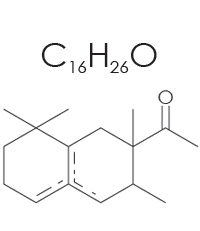
ISO E Super. Source: Fragrantica

ISO E Super. Source: Fragrantica

One reason for that sharpness is the use of ISO E Super, an aromachemical synthetic that some perfumers use as a “super-floralizer” and to add longevity to weak floral notes. To my chagrin, ISO E Super is present in Vaara to quite a significant degree. It not only amplifies the loudness of the white musk, but it adds to the forcefulness of floral notes (like iris or freesia) that, by themselves, are quite weak, dainty, little things. Given that I only dabbed on about 2.5 large smears of Vaara, I can’t get over its seriously intense potency during the first hour. Unfortunately, the loud buzziness of the synthetic combines with the equally synthetic white musk to give me one very intense headache. I don’t always get headaches from ISO E Super, but I do when a lot is used. Or, when a perfume is very cheap….

At the end of the first hour, Vaara starts its final transformation. All traces of a fruited element vanish from the top, as the quince becomes a muted blip in the horizon. Now, the scent is a quartet of rose, rose-like peony, carroty-floral iris, and violets — all infused with white hairspray musk. Vaara’s edges have started to blur, and the notes begin to overlap. Just after the 90-minute mark, the rose takes over as the main and dominant element, followed by white musk and ISO E Super, with only subtle whiffs of the other florals. With every passing half hour, the scent devolves further into a simple tea-rose scent that is simultaneously extremely syrupy sweet, somewhat watery, and, also, quite fresh and clean. I’m singularly unimpressed with any of it. What’s odd is that Vaara is muted in feel, while still very strong in power. No doubt, it’s thanks to the chemical Panzer unit that is stomping its way up my nose to the back of my throbbing skull.

Source: wallpaperswide.com

Source: wallpaperswide.com

And that’s really the end of the story. Not a whiff of sandalwood, nary a hint of benzoin sweetness and vanilla, no tonka bean, no discernible magnolia, and no cedarwood. Vaara merely becomes more nebulous: a shapeless, very commercial-smelling, very amorphous blur of sweet roses, and white musk. It stays that way in one linear, simple line until the 8.5 hour mark, when dripping, sweet honey makes an appearance. The base feels rounder and warmer, too, but it’s never anything specific. At most, one can say that ISO E Super’s “woody hum” (as Luca Turin describes the note) vibrates a little in the base along with some warmth. In its final hours, Vaara turns powdery with a slightly sour undertone and mixed with an abstract hint of rose. All in all, the fragrance lasted just short of 11.75 hours, a length of time which is quite rare for a pure floral on my perfume-consuming skin but which is further testament to all the synthetics underlying it. The sillage was generally high and good for most of Vaara’s life, though it had a 1980s powerhouse forcefulness for its initial hour.

You may think some of my critical harshness for Vaara stems from my issues with ISO E Super, or perhaps from my disdain for cheap synthetics as a whole. You’d be mistaken. It’s not just me. Bois de Jasmin gave Vaara a rare 3 stars, something I haven’t seen in a while. She, too, noted both the cheapness of the scent and its early similarities to Mohur:

…[W]hy is Vaara such a wallflower? Etro has already tried to take us to Rajasthan with its recent fragrance, but the violet and rose combination never got past the South of France. Despite its promises, Vaara doesn’t even cross the Channel. It’s soft spoken and mild, a perfume for someone who really doesn’t like orientals or anything richer than frozen yogurt. […][¶]

… [I]f the drydown either had more curves (or to put it bluntly, if Penhaligon’s had spared more pennies for the juice), Vaara would have been terrific. But instead of taking me for a ride, Vaara meanders around rose and settles for a well-behaved drydown of raspy woods and laundry musk.  It’s surprisingly clean, considering that we’re talking about an India inspired perfume. There is not even a hint of the bonfire smoke that pervades most Indian cities, nor the opulent incense hanging around the temples. At best, it’s a neatly packaged idea of India, without any messy bits.

These messy bits, however, make other Duchaufour fragrances much more compelling, whether it’s the sultry Eau d’Italie Paestum Rose, playful L’Artisan Traversée du Bosphore, or even Vaara’s older sister, Neela Vermeire Mohur.  By contrast, Penhaligon’s is a more commercial and approachable brand than the others I’ve mentioned, so Vaara’s garden party exoticism is not accidental. That Vaara is the low-budget version of Mohur is also not surprising.

Source: BrownThomas.com

Source: BrownThomas.com

I think she’s being far, far too kind, and extremely diplomatic. But, if you parse that review, you’ll find the blunt truth hiding behind the extreme tactfulness. Vaara is a “low-budget,” “commercial,” “wallflower” with “laundry musk” that is the result of Penhaligon not sparing enough pennies. In my opinion, it’s definitely commercial, belongs in a mall, and is far over-priced at $125 and $160. The extremely cheap-looking gold bow on the bottle (metal? plastic?) doesn’t help.

The early assessments from those who have tried Vaara are much more enthusiastic. On Fragrantica, all three of the reviews thus far are positive and two of the three come from men. One chap happily compared Vaara to that 1980s monster Poison, writing: “Here the honeyed plum has been replaced by quince but I would not be surprised to learn Duchaufour has made use of the same lush alpha- and beta-damascone combination of the Dior masterpiece.” Well, I certainly agree with his choice of decades….

The other two praise Vaara as well, with one gushing about how Vaara was not “a heavy, cloying oriental monster. No, [Duchaufour] mastered a truly delightful, fruity, wet and juicy, interesting and compelling new age world scent” with fruits, florals, and woods. His subsequent rave about the quince element makes me think that he experienced substantially more of it than I did. I’m not very surprised; my skin tends to emphasize and amplify basenotes, which may be one explanation for why the white musk was so dominant for me. If your skin brings out the top notes, perhaps Vaara will be more of fruity scent for you as well. If it doesn’t, then welcome to my world of laundry-clean musk and floral hairspray. As a side note about those three positive Fragrantica reviews, one of the commentators does admit that Vaara doesn’t end well: “The dry down, however, is less magical, with the blurry trace of roses and the prominence of powdery and balmy notes.” 

On Luckyscent, the only comment thus far sums up a little of what I feel:

This is mostly rose on my skin. A sweet tea rose type fragrance. Not what I was expecting. Seems pretty linear with not much scent development. Disappointing!

To me, smelling cheap is worse than being linear or being simple. Smelling of floral hairspray and rose “laundry musk” (to use Bois de Jasmin’s phrase) is just as bad. I plan on getting over the whole ghastly ordeal by putting on some Mohur instead.

DETAILS:
Cost & Availability: Vaara is an eau de parfum that comes in two sizes. There is a 1.7 oz/50 ml bottle that retails for $125 or £85; and a 3.4 oz/100 ml bottle that costs $160 or £120. I believe the fragrance will fully launch in mid-August 2013, though it is already available from Penhaligon and from some retailers.  Penhaligon: You can buy Vaara directly from Penhaligon which sells the fragrance in both sizes. They also have a U.S. Penhaligon site which offers free shipping on all orders over $100. Penhaligon also provides a Store Locator Guide which lists shops from Canada and Korea to Indonesia, Singapore, the Cayman Islands, Australia, Turkey, Hong Kong, and all of Europe which carry its products. In the U.S.: Vaara is already available at Luckyscent which sells both sizes, along with a sample. Vaara will launch at some select Saks Fifth Avenue stores on August 19th, and a little later at Gumps. In New York, the Penhaligon line is available at Aedes, Saks, Chocheng, Eisler Chemist, and some other shops. I don’t believe they have Vaara yet. In Washington D.C or Baltimore, Penhaligon is sold at Sterling & Burke, and Loafers & Lace, respectively. Vaara is also already available in the large $160 size at ShopLondons. Outside the U.S.: In Canada, the Penhaligon line is carried at The Perfume Shoppe and Beauty Bar Cosmetics (which doesn’t have an online retail website), but the Perfume Shoppe has no listing Vaara yet. In Europe, Vaara is already available at London’s Harvey Nichols in the small 50 ml size, and from Ireland’s Brown Thomas in the large size for €140. In France, the Penhaligon line is sold at Paris’ niche boutique store, Nose, as well as at Les Galleries Lafayette, Le Bon Marché, Printemps, and other stores listed in Penhaligon’s vendor page. A number of those stores’ online page show no listings for Vaara yet, as it is too new. For all other locations throughout Europe and beyond, you can check Penhaligon’s Stockist listings for a location near you. Samples: You can obtain samples from a number of the links listed up above. I obtained my sample from Surrender to Chance which sells Vaara starting at $4.99 for a 1 ml vial. 

Perfume Reviews: Montale Intense Café & Chocolate Greedy

Source: Zedge.net

Source: Zedge.net

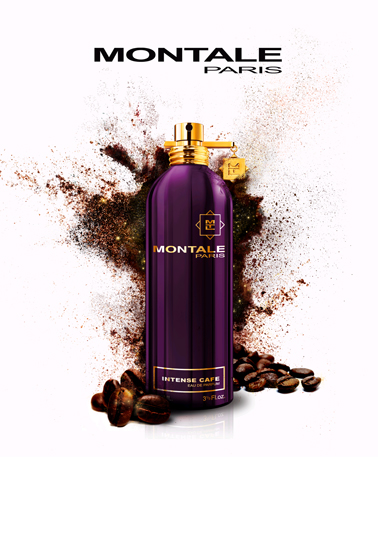
A perfume house known for its intense, extensive line up of potent ouds seems to be doing some lovely things with gourmands as well. Last month, the Paris niche house of Montale released a new fragrance called Intense Café (or, as my head always reads it “Café Intense”), and it seems to be a great hit with everyone who has tried it. So, I decided to try it along with another Montale that always caught my eye, Chocolate Greedy.

It turned out to be an apt choice, as Intense Café feels like a cocoa-dusted vanilla latte with rose, while Chocolate Greedy is a dark, bitter chocolate ganache cake sweetened by dark fruits and a jammy rose liqueur. The two faces of a chocolate-rose Janus, if you will. Neither scent is complex, both of them carry the Montale trademark of ISO E Super to the nth degree, and, yet, they’re both quite addictive fragrances that I actually liked. If they weren’t so ISO E Super intensive, I would enjoy wearing either one. Consider me pleasantly surprised!

INTENSE CAFÉ:

Cocoa roses, via Kew Gardens at Kew.org

Cocoa roses, via Kew Gardens at Kew.org

Source: Fragrantica

Source: Fragrantica

Montale puts Intense Café into the rose category, and describes the perfume as follows:

A truly enticing fragrance. Brillant Floral Notes reveal a surprising heart made of Delicate Rose and Sensual Coffee. This perfect duo leaves a very beautiful sillage of Vanilla, Amber and White Musk.

Fragrantica classifies the scent as an Oriental Vanilla, and lists the notes pyramid as:

Top note is floral notes; middle notes are coffee and rose; base notes are amber, vanila and white musk.

pink-roseIntense Café opens on my skin with a jammy rose and bucketfuls of ISO E Super, followed quickly by a café au lait aroma, and a creamy, warm, very rich vanilla. The ISO E Super dominates everything in its path for about 40 seconds before it retreats to skulk broodingly in the corner and around the edges of the rose. For all its name, Intense Café primarily focuses on a rose that is dark, rich, syrupy, and infused with vanilla bean concentrate.

Source: Saveur.com

Source: Saveur.com

Though the coffee nuance is not paramount, it’s definitely noticeable, especially after 5 minutes have passed. Actually the “coffee” might be more aptly described as “cocoa beans” processed into different things. I struggle to place the note with precision because it varies so widely from minute to minute. Sometimes, it seems like actual coffee or, to be precise, milky café au lait. Frequently, I’d swear that the aroma was actually that of a vanilla milkshake. At other times, it feels like a Chai or soy latte sprinkled with white cocoa powder. Whatever it is, it’s very pretty, but not particularly strong. What’s more interesting is how it fluctuates throughout the first two hours, almost like a wave that reaches a peak, crashes on the shore, ebbs, and then returns to do it all over again. At times, the cocoa variation feels very noticeable in its own right, but, at others, it ebbs away to become a more delicate nuance to the vanilla latte.

Source: Sivmui C. on Yelp.com

Source: Sivmui C. on Yelp.com

Either way, the primary aroma of Intense Café for the first hour is variegated shades of cocoa and coffee powder dustings on a vanilla latte or milkshake. The thick, creamy vanilla is the dominant note (besides the bloody ISO E Super), and its beautifully decadent lushness sits atop a thin layer of dainty roses. Visually,the colours are all pink roses, creamy vanilla, and pale, dusky cocoa. It’s very airy bouquet, though it has Montale’s trademark potency in terms of sillage and strength. As for the prodigious amounts of ISO E Super, Montale has always worshipped at its temple, but I will say that the amount in Intense Café seems far less than in many Montales and it didn’t give me a headache. The aromachemical sometimes takes on a rubbing alcohol, astringent facade, while at other times, it’s merely peppered and synthetic in feel. Either way, since few people seem to ever detect ISO E Super, I wouldn’t worry about it unless you know you’re one of those who always gets migraines from it.

Source: eBay.com

Source: eBay.com

If you smell Intense Café from afar, it’s truly delicious. At the start of the second hour, it’s a delicious cocoa-y vanilla, but soon, the rose starts to become much more prominent. At the 90 minute mark, Intense Café is cocoa-dusted rose with vanilla and it calls to mind an extremely similar note in Serge LutensSantal Majuscule. Of course, the Lutens is supposed to be primarily about the “sandalwood,” but the most beautiful part of that fragrance for me was the chocolate-dusted rose. It’s equally lovely here, in Intense Café, only it sits cocooned and embraced by the creamiest, richest vanilla essence. At the end of the second hour, Intense Café softens, fades a little, and loses a bit of its forcefulness. By the start of the fourth hour, the fragrance is a discreet, soft cloud of sweet, dusty cocoa-infused rose with vanilla with only the barest hint of coffee. It sits right on the skin, where it proceeds to get more muted, abstract and blurry. Finally, it fades away as a nebulous, amorphous blur of sweet but dusty rosiness.

All in all, Intense Café lasted under 9.75 hours in a really distinctive manner, and about 14.25 as a whole if one counts the fact that a tiny patch on my arm continued to emit a small burst of roses. Part of the problem is that ISO E Super can create a ghostly note that seems to vanish to one’s nose due to the large size of the molecules, before it reappears. Another thing is that I applied about 2.5 large smears. As a general rule, a perfume’s strength, longevity and potency are increased by spraying (and by synthetics), and given the normally prodigious longevity of some Montales, my numbers are obviously lower than what others may experience through aerisolization. Still, the numeric votes at Fragrantica indicate that Intense Café’s duration is generally “moderate” for most people with that category receiving the largest amount of votes (5) thus far, followed by 3 for “long lasting” and 4 for “very long lasting.” 

On Fragrantica, the commentators compare Intense Café to a few other fragrances. A handful of people bring up the new Mancera perfume, Rose Vanille. Others mention Rochas Man. I haven’t tried either fragrance, so I can’t comment, but I can discuss a third reference: Tom Ford‘s Noir de Noir. Quite a few Fragrantica commentators mention how the opening of Noir de Noir is very similar to that of Intense Café. I think it’s only the very jammy, beefy rose which the fragrances have in common, and not much else. On my skin, Noir de Noir opened with spices, in addition to that dark, baroque rose. There was saffron, the merest suggestion of oud, and the earthiness of black truffle. Absolutely none of that remotely resembles Intense Café!

What’s interesting to me about the Fragrantica comments is that a few people seem to think Intense Café has oud in it. It doesn’t, but almost all of Montale’s Aoud line has a blisteringly high quantity of ISO E Super in it, and I think people are so highly conditioned to that smell (or so unaware of the existence of ISO E Super) in the Aouds, that they’re confusing the two notes here. Another point that I found to be curious was the 3 or 4 references to musk in Intense Café. One chap even said that musk was the dominant note in the fragrance, and that Intense Café was not particularly distinctive from any other Montale musks. I blinked at that because, on my skin, there was no musk at all. Still, clean, white musk is listed as one of the notes, so it clearly depends on skin chemistry. 

As a whole, I liked Intense Café during in its first two hours when it was quite a rich, nuanced scent. The subsequent blur and haziness was still pretty, but a little too redolent of ISO E Super for me personally. The perfume is sweet, delicious, and obviously gourmand in nature, but it’s a lot drier than you’d expect thanks to the cocoa powder. If you’re expecting a pure coffee scent, however, you may be disappointed.

CHOCOLATE GREEDY:

Source: cakechooser.com

Source: cakechooser.com

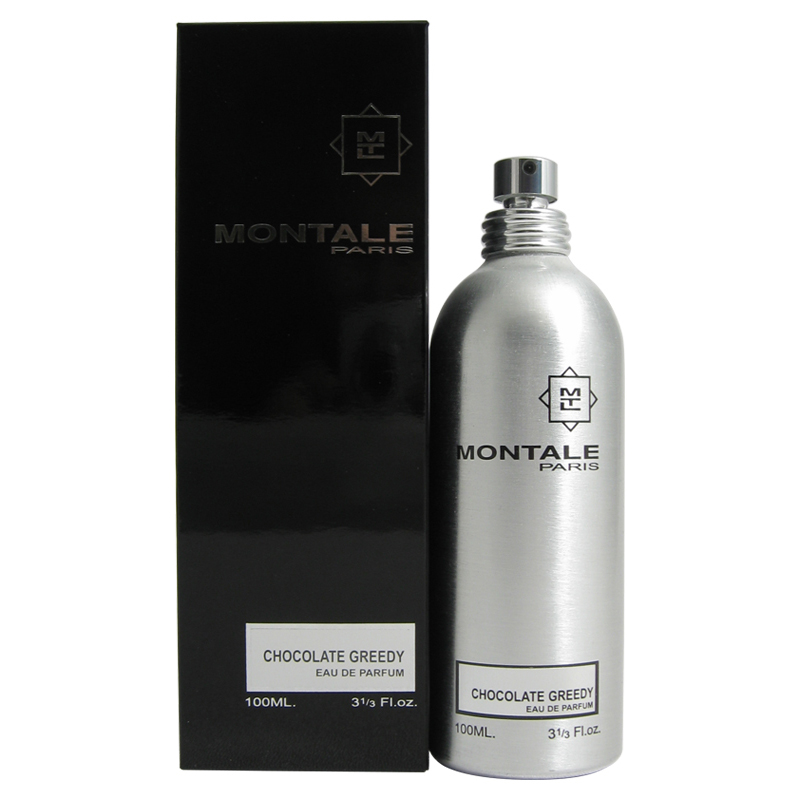
Montale Chocolate GreedyDespite being an utterly scrumptious, decadent chocolate dessert in a bottle, Montale puts Chocolate Greedy into the vanilla category, and describes it as follows:

The delicacy of the Tonka Bean lightly toasted and flavoured with dry fruits, Orange and Vanilla.

The full notes, as compiled from Luckyscent and Fragrantica, are:

mocha bean, coffee, bitter orange, cacao cream, vanilla from Madagascar, tonka bean and dried fruits.

Molten Lava Cake. Photo & Recipe: Spicie Foodie. (Website link embedded within photo. Just click.)

Molten Lava Cake. Photo & Recipe: Spicie Foodie. (Website link embedded within photo. Just click.)

Imagine the darkest chocolate lava cake or, as it is sometimes called in Britain, chocolate fondant pudding. Now imagine slicing into it, and seeing a gush of warm, rich, oozy, thick, heated warmth that is at once bitter and sweet. A mere hint of juicy, zesty orange lurks underneath. Sweet vanilla wafts all around, like the delicious crème anglaise sauce used to go with lava cake.

That’s the opening of Chocolate Greedy on my skin. It’s lovely, quite heady, and very appealing — even to someone like myself who doesn’t normally go for gourmand fragrances. Unfortunately, as always with Montale, there is also that massive dose of ISO E Super mixed into the delicious mix. Even more unfortunate, it has a nuance of bug spray that quietly lurks underneath. Thankfully, it’s subtle and leaves after about 15 minutes.

Black Forest Torte. Photo/Recipe by Mark F. Weber at Clean Me. http://tinyurl.com/mb2j6rh

Black Forest Torte. Photo/Recipe by Mark F. Weber at Clean Me. http://tinyurl.com/mb2j6rh

What fascinates me, however, is the orange element which takes on an interesting characteristic after a few minutes. It actually smells a lot like a very jammy, fruited, syrupy rose. With every passing minute, the dark fruits grow more noticeable, creating an impression of dried cherries in some instances, and of dark rose liqueur infused with zesty orange in others. When it’s the former, it calls to mind Black Forest Cake with its rich, dark chocolate, sweetness, and candied cherries. Either way, the overall result is quite delectable.

"Bleeding Rose" by April Koehler. Source: redbubble.com

“Bleeding Rose” by April Koehler. Source: redbubble.com

The cocoa in Chocolate Greedy is equally complex and layered. At first, it’s merely dark, molten chocolate, but, later, it varies between: mocha; dusty, dark cocoa nibs with its dry, slightly bitter aroma; something more like dark fudge syrup; and expresso infused with both dark chocolate and cherry syrup. It’s beautiful, especially when the very fruited, jammy, almost plummy, rose liqueur swirls into Chocolate Greedy’s dark bitter-sweetness. Not even the final, dying whispers of bug spray chemical (just before the 15-minute mark) can ruin the heady, potent, decadently rich, delicious bouquet of dark chocolate ganache with boozy rose liqueur, dark fruits, and vanilla crème anglaise. The aroma is especially intoxicating from afar where it’s a swirl of beautiful notes. For my nose with its sensitivity to ISO E Super, it’s better not to sniff Chocolate Greedy too closely due to the aromachemical’s powerfully peppered, rubbing alcohol, facial astringent characteristics.

Like all the Montales, Chocolate Greedy is a simple fragrance without much nuance, complexity or layers. It’s linear, and continues on the same trajectory for hours and hours. But it’s a lovely, compulsively sniffable linearity. Oddly, about 3.5 hours in, Chocolate Greedy turns primarily into a rich, beefy, meaty, dark, damask rose followed by chocolate in second place. The floral element isn’t syrupy or cloying, thanks to the effects of the dry, bitter chocolate, even though it’s more like dark chocolate powder now instead of molten ganache lava cake. The rose is still also flecked by a rich vanilla essence, but it is no longer the rich warmth of vanilla custard sauce. Instead, it’s merely a background note, third in line behind the rose and chocolate twin-ship, and it soon fades away entirely. Montale may classify this fragrance as a vanilla one on its website, while placing Intense Café into the rose category, but I think the fragrances should both be in the rose group.

Source: frederickschocolaterie.com

Source: frederickschocolaterie.com

As time passes, Chocolate Greedy becomes hazier around the edges, and the notes all blur into one another. Around the fifth hour, the perfume is a nebulous, hazy, soft cloud of chocolate powder tinged by rose. The chocolate has returned to far overtake the rose element, and I really like its dusty, dark quality with a smidgen of milk chocolate mixed in. Chocolate Greedy becomes a skin scent about 6.75 hours in, creating a delicate, discreet veil that caresses you with dusky cocoa powder and florals. Eventually, hours later, it fades away to nothing more than a whisper of dark, dusty cocoa powder. All in all, it lasted a whopping 12 hours on my skin in a very noticeable way. However, like the Intense Café, those synthetics and ISO E Super’s ghostly characteristic helped create small patches on my skin where Chocolate Greedy continued to linger. On those tiny, dime-sized areas, I could detect the faint traces of Chocolate Greedy well past the 14th hour. If I had actually sprayed the fragrance, and a large amount of it, I have no idea what longevity numbers I’d get, but they’d be huge. It’s one of the benefits of Montale’s signature touch.

Unlike the brand-new Intense Café, Chocolate Greedy has been around long enough to receive quite a few reviews. On Basenotes, a lot of people really love the fragrance, with one commenting excitedly that Willy Wonka must have made it. However, there are quite a few detractors, too, though they still rate Chocolate Greedy with three stars out of five. Their primary issue seems to be that the chocolate is too sweet, and that the “sticky/thick vibe can be cloying.” I think the latter is definitely a possibility if Chocolate Greedy were sprayed in a large quantity; this is one fragrance where less is more, especially given the Montale potency.

Amour de Cacao Eau de Toilette. Source: Luckyscent

Amour de Cacao Eau de Toilette. Source: Luckyscent

On Fragrantica, 64 people said that the fragrance was similar to Comptoir Sud Pacifique‘s Amour de Cacao. I haven’t tried the fragrance, but a number of people argue that there are quite a few differences, small though they may be. For one thing, they say that the CSP has a significantly stronger orange zest note at the beginning, while Chocolate Greedy focuses on the dark chocolate. Others find the CSP doesn’t last long and has little projection (undoubtedly because it is a weak eau de toilette), but such comments are rarely said about a Montale fragrance. A few think that the CSP is milder, more linear, and less complex, while some others argue that it is better value for the money. Luckyscent certainly sells it for much less than it does the Montale, but the reviews for the fragrance there seem highly mixed with talk about how Amour de Cacao smells synthetic, resembles “cocoa puffs,” doesn’t have a good vanilla note, or doesn’t emit a lot of dark chocolate.

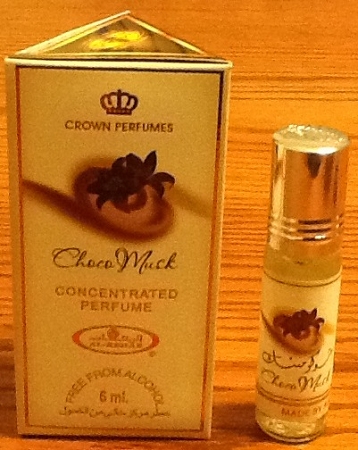
Choco Musk perfume oil. Source: Al-Rashad

Choco Musk perfume oil. Source: Al-Rashad

Another fragrance that is brought up by a number of people on Fragrantica is an Arab perfume oil called Choco Musk from Al-Rehab (Crown Perfumes). Apparently, it “not only smells better than this but you can find it for about $3-$5 online and in Arabic stores[.]” I’ve never tried it, but the cost issue did make me curious, so I looked it up. Yes, it really is that inexpensive. Choco Musk is sold through a supplier in Ohio and 6 ml (.2 oz) of the concentrated perfume oil costs $3.20. The three reviews on the company website are all positive, and talk about how long the fragrance lasts. As a further plus, the company also ships to Canada and worldwide, with all mailing costs dependent on weight (which can’t be much given the amount in question). In short, Choco Musk may be a definite option for those of you who are tempted by the Montale, but don’t want to spend a lot of money. I can’t vouch for the smell, and I find it hard to believe that it’s more than mere chocolate musk, just as the name states, whereas Chocolate Greedy’s nuances vary from the orange zest to the dark fruits and rose liqueur. Still, at that fabulously crazy price, the Al-Rehab is absolutely worth ordering to find out!

ALL IN ALL:

Given my prior experiences with Montale, I know it will surprise regular readers to the blog when I state that I truly enjoyed both Intense Café and Chocolate Greedy. And that actually brings me to another point. I’ve sometimes slammed Montale for having fragrances that smell extremely synthetic, and I know a few other perfume bloggers avoid the house like mad for the same reason (and, also, because the fire-extinguisher bottle). I will maintain until my death that Montale’s Aoud Lime is the perfume equivalent of Chernobyl, and should be used to exterminate cockroaches in a post-apocalyptic world. Actually, most of Montale’s Aoud line — which is how they made their name, after all — smells chemically artificial to me, and not solely due to the galloping bucketfuls of ISO E Super. Real, genuine agarwood is extremely rare these days, and a number of perfume houses use a synthetic, lab-made version of the wood to create the scent of “oud.” Guys seem to go absolutely nuts for Montale, but for me, there are better brands with more complexity and better quality ingredients.

Yet, despite all that, I think Intense Café and Chocolate Greedy are actually lovely and smell delicious. I mean it. Perhaps the inherent nature of a gourmand fragrance makes it easier to avoid the pitfalls of an Oud one. After all, how can you go wrong with chocolate and vanilla mixed with roses? Whatever the case, I think the synthetic Montale signature has been really minimized in each fragrances. (The exception is that blasted ISO E Super, but since most people can’t seem to detect it, the issue doesn’t apply.) Are Intense Café or Chocolate Greedy complex, edgy, revolutionary, or original? Of course not! How many gourmand perfumes are? Yet, if you’re looking for something very cozy, comforting, wholly unisex, and extremely versatile with a massive bang for your buck in terms of projection and duration, then you should consider Intense Café or Chocolate Greedy. The latter, in particular, has been around long enough to be offered at discounted prices on some online perfume sites as well.

Source: Cakechooser.com

Source: Cakechooser.com

For me, personally, I preferred Chocolate Greedy. The reasons are its greater layers, nuances, richness and depth. The chocolate is infinitely deeper, darker, and more interesting than the more café au lait cocoa in Intense Café. If the latter had a more noticeable, actual coffee note, as opposed to the light chocolate powder that dominated on my skin, the roles might be reversed. Or, perhaps not. I’m a sucker for dark molten chocolate, especially when mixed with dark fruits and a jammy liqueured, almost boozy rose. Chocolate Greedy was essentially like the best part of many desserts, only without the calories and weight gain. But if you’re one of those who lives at Starbucks and adores their soy lattes, then you may want to opt for the new Intense Café instead. Either way, you’ll smell delicious.


DETAILS:
INTENSE CAFÉ Cost & Availability: Intense Café is an eau de parfum and comes in two different sizes: 1.7 oz/50 ml for $110; or 3.4 oz/100 ml for $160 or €100. It is available on the Montale website where a 3.3 oz/100 ml bottle retails for €100. (They don’t offer the cost in other currency units.) There is no smaller size offered there than 100 ml, but Montale offers a free 20 ml mini-bottle of the fragrance at the time of purchase. Discount Prices: Unfortunately, the fragrance is too new for it to be available for less at the discount retailers. In the U.S.: Intense Café is available in both sizes at Luckyscent. It is offered only in the large 3.4 oz bottle at Parfums1 and MinNY (though they’re currently sold out at the time of this post). All the sites sell samples. Outside the U.S.: In Canada, Intense Café is available at The Perfume Shoppe‘s Vancouver site which sells the 3.4 oz/100 ml size for US $160. Since the site is originally a U.S. vendor, you may want to contact them about Canadian pricing. In the UK, I couldn’t find any sellers. Germany’s First in Fragrance sells Intense Café and ships all over the world. The price is €139, which is higher than through the Montale website. For all other locations from Italy to Bahrain, Poland, the Netherlands, even Uruguay and elsewhere, please check the Montale Distributor page. There are even more stores all over the world from Japan to Africa shown on Montale’s Store PageSamples: I obtained my sample of Intense Café from Surrender to Chance which sells 1ml vials starts at $4.49.

CHOCOLATE GREEDY Cost & Availability: Chocolate Greedy is an eau de parfum
and comes in two different sizes: 1.7 oz/50 ml for $110; or 3.4 oz/100 ml for $160 or €80. It is available directly through the Montale website, but only in a 3.3 oz/100 ml bottle that retails for €80. (They don’t offer the cost in other currency units.) There is no smaller size offered, but Montale tosses in a free 20 ml mini-bottle of Chocolate Greedy at the time of purchase. Discount Price: Chocolate Greedy is slightly discounted at Parfums Raffy which offers both sizes: the 50 ml/1.7 oz for $105, and the large bottle for $155. You may get a better deal for the latter from the Kuwaiti vendor, Universal Perfumes, which sells the same 100 ml bottle for $129.99, but shipping may take a little time. Chocolate Greedy is also discounted from LilyDirect which sells the large 100 ml bottle for $140.80 instead of $160. The site was planning to start shipping to Canada, so you may want to check to see if that has taken place. Rakuten sells the perfume for a similar price, $140.80, via LilyDirect. PennyLane has two bottles of Chocolate Greedy left for $140, with an additional 25% off taken for even greater savings. Chocolate Greedy is also discounted at Beauty Encounter which sells the large 3.4 oz size for $150. In the U.S.: Chocolate Greedy is available for normal retail price in both sizes at Luckyscent. It is also sold in the large 3.4 oz/100 ml bottle at MinNY and at Parfum1 for $160. Outside the U.S.: In Canda, Chocolate Greedy is available in the large 3.4 oz size from The Perfume Shoppe for US$160. The site is the Vancouver branch of an American company, so you may want to email for Canadian prices. In the UK, I couldn’t find any sellers. Germany’s First in Fragrance sells Chocolate Greedy and ships all over the world. The price is €94, which is higher than through the Montale website. Samples are also available for sale. In Russia, Chocolate Greedy is sold at Orental.ru in various sizes. For all other locations from Italy to Bahrain, Poland, the Netherlands, even Uruguay and elsewhere, please check the Montale Distributor page. There are even more stores selling Montale all over the world from Japan to Africa shown on Montale’s Store PageSamples: I obtained my sample of Chocolate Greedy from Surrender to Chance which sells 1 ml vials starts at $3.99.

Perfume Review – Grossmith Phul-Nana: Victorian Opulence

Evelyn Nesbit.

Evelyn Nesbit (1884-1967) in the early 1900s.

She was a dark-haired beauty with alabaster skin and a thick mane of hair worn like a Gibson Girl. Her dazzling smile would have merited attention, had it not been for the mounds of pillowy, white flesh that almost tumbled out of her tight bodice to the great appreciation of the aristocratic men around her. Her skin was scented with orange blossom neroli, as spicy, peppered and lush as her reputation, and with amber as darkly golden as the velvet curtains of the theatre box where she held court. Her patron and lover sniffed the aroma appreciatively. It was a marked contrast from the dainty, simple, very prim, floral scents of the other women in his lives, from his fiercely proper Victorian mother who was one of society’s leading matrons, to his retiring, shy wife, and even the young nannies in charge of their children. No, his mistress went for lush abandon and expensive opulence, as was her style, and she wore Grossmith‘s Phul-Nana.

The luxury, limited-edition Phul-Nana Baccarat flacon.

The luxury, limited-edition Phul-Nana Baccarat flacon.

Grossmith is a very old British perfume house. The Perfume Shrine explains that it was “originally established in 1835 in the coterie of influential perfumeries such as Penhaligon’s, Guerlain, Floris and Creed (who were following the footsteps of Houbigant and Lubin)[.]” The house flourished with royal and international acclaim, creating perfumes for royal bethrothals, and receiving royal warrants from various European royal families. As Senteurs d’Ailleurs puts it, Grossmith “rivalled many French houses around the turn of the century. [Then, it] lost its way after the Second World War, going down market and selling synthetic perfumes in the mass market.” By 1970, the house was in serious trouble, and, by 1980, it was sold out of the family’s hands.

Amanda and Simon Brooke. Source: The Perfume Magazine.

Amanda and Simon Brooke. Source: The Perfume Magazine.

Then, one day, around 2005, a man called Simon Brooke was researching his genealogical background, and discovered that he was the great, great grandson of Grossmith’s founder, John Grossmith. A fantastic newspaper article in the Telegraph, entitled “Grossmith: scent by descent” charts what happened next. In 2007, Mr. Brooke decided to buy back the company, return it to the family, and revive it with the help of the legendary Roja Dove, perhaps one of the most famous perfumers alive. “The original plan was to revive the perfume house using Dove as the nose, remastering the perfumes based on photochromatographic analysis of antique samples.” In 2008, however, Mr. Brooke met a distant Grossmith relative, and found that he had old ledgers containing 300 of Grossmith’s perfume formulae which he had rescued from Grossmith’s offices during the 1940s Blitz. It changed everything. As the Telegraph explains, Mr. Brooke and his wife followed Roja Dove’s suggestion to commission Robertet (a French fragrance house in Grasse who specializes in very high-quality natural materials) to replicate Grossmith’s three greatest classics, making every effort to hew as closely as possible to the original formula. Money was no object, no matter how great the personal burden and sacrifice:

‘We didnt give Robertet a budget, we just told them to produce it using the best materials.’ Brooke is tightlipped about exactly how much money he and Amanda have invested in the company, but it is a considerable sum. “We sold our holiday home and used our savings.” The resulting fragrances are expensive-smelling floral orientals that bear no resemblance to the bland massmarket concoctions that litter today’s perfume counters.

Source: Fragrantica.

The new Phul-Nana and its siblings in regular bottles. Source: Fragrantica.

In 2009, Grossmith re-released its three most famous, historical fragrances. One of those fragrances was Phul-Nana. Phul-Nana was originally released in 1891, and caused a storm, soon becoming one of Grossmith’s most beloved fragrances. As the Telegraph article explains, Phul-Nana “was “the Chanel No5 of its day.” Luckyscent puts it into historical context by saying that, when Phul-Nana was originally released, Jicky was brand new, and Jacques Guerlain was just barely out of grade school!

The Baccarat set of crystals as it looks today, £23,250. Photo: Grossmith via The Telegraph newspaper.

“The Baccarat set of crystals as it looks today, £23,250.” Photo: Grossmith via The Telegraph newspaper.

To celebrate Grossmith’s revival with true style, even two royal families stepped in to help. The Telegraph article says, “The royal families of Oman and Bahrain… invested in the new Baccarat crystal presentation sets of the three scents costing £23,250, made using the original Baccarat crystal moulds from 1919 (tracked down by Brooke when he noticed ledger entries detailing Baccarat orders) and etched with real gold.” I find them to be stunningly beautiful, but then they should be at that price.

The new 2009 Phul-Nana was created by Trevor Nicholl. Like its siblings, it was released in both eau de parfum and pure parfum (or extrait de parfum) concentrations. This review is for the Eau de ParfumGrossmith describes the fragrance as follows:

Hindi for lovely flower

“A Bouquet of India’s Choicest Flowers”

A fresh, sweet floral composition with aromatic fougere overtones on a soft warm, woody base. Originally created in 1891, this scent is a rare marriage of the herb garden with the flower garden, unusual in a feminine fragrance. It paved the way for the ‘oriental’ fragrances that were to follow.

According to Senteurs d’Ailleurs, the notes include:

bergamot, orange, neroli, geranium, tuberose, ylang ylang, patchouli, benzoin siam, cedarwood, sandalwood, opoponax [sweet myrrh], tonka bean, and vanilla bourbon.

nerolifruitandflowersbPhul-Nana opens on my skin as spicy, peppered, herbal flowers. There is geranium which smells fiery, dark, and slightly pungent, followed quickly by neroli. The latter smells exactly like orange blossoms turned spicy, bitter, sweet, slightly herbal, green, and masculine. I should probably explain something about neroli. Both neroli and orange blossoms come from the flowers of the same tree, but the method used to extract the materials differs and, thereby, leads to a slightly different aroma. Steam distillation is used to obtain neroli oil from the blossoms of the bitter Seville orange tree, while distillation with solvents is used to get orange blossom absolute. The latter has a fragrance that is more feminine, indolic, lush, sweet and purely floral than neroli which is more bitter, spicy, green and brisk. Yet, at the end of the day, both ingredients are merely a form of orange blossom, and that is the primary characteristic of Phul-Nana on my skin.

Source: Twitter.

Source: Twitter.

At this point, however, Phul-Nana is primarily herbal, peppered geranium followed by bitter, but sweet, neroli, trailed far behind by small flashes of other elements. There is a subtle whiff of lemony bergamot and juicy, blood-orange, both infused with a hint of dark, peppered patchouli. Lurking far below, in Phul-Nana’s depths, is something floral, herbal, and aromatic that almost resembles lavender. The whole fragrant bouquet is wrapped up with sweet, slightly honeyed opononax, or sweet myrrh. Everything feels peppered, bitter, sweet, herbal, floral, and resinous all at once.

Orange geraniumThe ensuing result is a very unusual fougère with oriental spiciness and resins. In fact, it seems to be quite rare to have an oriental fougère for women at all. On Fragrantica, as one commentator noted, that there are only five such perfumes listed in the Oriental Fougère database, as compared to 139 for men and 41 unisex fragrances for all. Yet, nothing about Phul-Nana feels as though it’s purely for women. The aromatic, herbal notes which give way to an oriental floral spiciness certainly seem very unisex to me.

Twenty minutes into Phul-Nana’s development, the “rare marriage of the herb garden with the flower garden” finally takes place, and the perfume starts to shift. The fragrance is still a highly peppered, spicy combination of geranium-neroli with a herbal facade and dark, bittersweet citrus fruits, but new elements start to appear around the edges that start the transition into a purely oriental scent. There is a tiny whisper of buttery, custardy ylang-ylang in Phul-Nana’s depths, and the amber begins to grow deeper. The bitter edges seem smoothed out, as the fragrance becomes sweeter and warmer. The opoponax seems richer but, also, drier. It has lost that tiny vestige of honeyed sweetness, and is now infused with cedar which adds yet another layer of pepperiness to the spicy mix. When combined with the feel of bitter, sweet, blood orange, the result is a strong visual of orange and black.

Shortly after the end of the first hour, Phul-Nana becomes softer and even warmer. The fragrance seems to fade a little in power, and the notes feel a little less pungent or forceful, but Phul-Nana still a potent, heady, dense bouquet. The neroli orange blossom has now far overtaken the herbal, spicy, peppered geranium, though the combination still remains atop its amber base. There are hints of cedar and patchouli, even occasionally a ghostly pop of ylang-ylang, but I don’t smell any tuberose and absolutely no sandalwood. The absence of both elements never changes, either. In fact, the fragrance seems to lose a lot of its existing nuances over the next few hours. The extremely muted, subtle, herbal hints soon fade away, as does the minuscule trace of ylang-ylang and patchouli. Even the geranium retreats from center stage, becoming a background player to the warmed, amber-infused, neroli orange blossom that takes over as the star of the show.

Evelyn Nesbit.

Evelyn Nesbit in 1902, photo by Gertrude Käsebier.

By the start of the third hour, Phul-Nana is an amber neroli fragrance with a muted, hidden flicker of geranium. If one wanted to be laudatory, one could call it warm, seductive, opulent, and very languid in feel. If one wanted to be critical, then one could say it was simple, and unoriginal. I’ll say that it’s both those things, but done in a manner that feels incredibly classique. Phul-Nana feels like a very expensively made fragrance with very rich ingredients done in the old tradition of classic perfumery to create a simple, elegant, very seductively opulent, spicy floral oriental. Oddly enough, it almost does feel like a fragrance that a Victorian or Edwardian beauty may wear. It may be the subconscious impact of Grossmith’s history and Phul-Nana’s description, but something about the classique nature of the fragrance does fit for me. There is no grandmotherly powder or floral daintiness to fit with the Victorian times, but then Phul-Nana was Grossmith’s attempt to bring the Orient to England.

Painting by Gyula Tornai (1861-1928): "In the Harem."

Painting by Gyula Tornai (1861-1928): “In the Harem.”

What’s interesting to me is just how full-blooded, thick, and lusty Phul-Nana feels, thanks to the headiness of its spicy neroli blossoms. Around the 2.5 hour mark, that full-bodied, fleshy, sultry languidness is supplemented by the arrival of Siam benzoin. It adds an incredibly plush, creamy, rich warmth to Phul-Nana. Though Siam benzoin is usually very vanillic in nature, here it is initially a very dark, slightly smoky, sweet, balsamic resin. It turns the neroli into something so deep and indolic, you almost imagine the bitter, spicy orange blossoms as an odalisque, lounging on a pile of jeweled, velvet cushions while being oiled to a bronzed goldeness. Phul-Nana has the most indolent, dense, spicy, thick neroli I’ve come across in a while and, yet, the perfume isn’t heavy at all in weight. It’s a soft, airy gauze that envelops you in a tiny cloud of golden, orange warmth and opulence.

Evelyn Nesbit.

Evelyn Nesbit in 1901.

The narcotic headiness of the flower really conjures up images of heated skin and seduction. If this version of Phul-Nana is anything close to the original one from 1891, then the only women who would have worn the perfume would be those whose clothes were ripped off their large, heaving, pillowy bosoms in a dark corner during a surreptitious rendezvous. I simply can’t imagine some prim, highly repressed, ferociously proper Victorian matron, or a sheltered, virginal debutante wearing this scent. For me, the neroli is simply too bawdy and blowsy, too full-blown with improper lushness and exotic, spicy Orientalism, to make Phul-Nana a “respectable” scent by the standards of 1891, a full 122 years ago.

My perceptions of the scent, however, are apparently not shared by Julian Fellowes, the creator of Downton Abbey. According to the article in the Telegraph newspaper about Grossmith’s revised fortunes, Downton Abbey’s Lady Edith bought a bottle of Phul-Nana for Lady Violet, the infinitely proper, regal Dowager Countess played by Dame Maggie Smith. All I can say is that Julian Fellowes knows his history, but he doesn’t know his perfume. I can’t imagine the Dowager Countess ever wearing Phul-Nana. Frankly, she’d be appalled by its overt sensuality and spicy ripeness.

Source: Stock photos.

Source: Stock photos.

Around the 3.5 hour mark, Phul-Nana starts its drydown which remains for many more hours to come. The geranium is just a faded whisper as the fragrance turns more ambered. Phul-Nana drops in sillage, as well, hovering now just above the skin. By the end of the fourth hour, a slight hint of vanilla makes its debut, but it never has a serious impact upon the fragrance. Soon, Phul-Nana is merely a blurry, warm swirl of neroli orange blossoms with balsamic, sweet, ambered Siam benzoin that has a slight hint of smokiness. In its final moments, Phul-Nana is a sheer, muted veil of warm amber. All in all, Phul-Nana lasted over 9.75 hours on my skin, with about 3.5 good smears. I suspect its longevity might exceed that amount if a large amount of the fragrance were sprayed on, instead of the dabbing method that I used.

There aren’t a ton of detailed reviews for Phul-Nana out there. Now Smell This assessed all three Grossmith releases, with Angela writing more about Phul-Nana’s feel than its scent. Part of that reason is that the fragrance seems to have manifested itself as a simple blur on her skin:

To me it smells like an earthy, ambery fougère. Most of the rest of the notes are lost on me. It’s fresh and heavy at the same time. Although Grossmith lists it as a feminine fragrance, men could wear it easily. […]

These perfumes smell old fashioned: dense and contracted, rather than expansive and bright. They smell expensive, but almost as if someone were playing with rare essential oils rather than with the magic chemicals perfumers use now.

For a visual comparison, the Grossmith fragrances each smell like an oil painting darkened by age. If you rub its surface with a soft cloth you see that one of them is a springtime landscape, and another is of a lady’s boudoir, but at a distance they are similar. Modern perfumes, on the other hand, can feel as distinct as an Ansel Adams photograph or an Andy Warhol portrait.

All of the Grossmith fragrances have moderate to low sillage, and they last for a solid eight hours.

Later, in comments to the review, Angela wrote that all three scents “almost smell pre-modern to me. Apres L’Ondee, by comparison, is super modern. The Grossmiths are almost like diluted blended oils–but really nice blended oils.” My experience is obviously quite different, so I don’t feel the same way, though I think “dense and contracted” does fit Phul-Nana in some ways. Still, what manifested itself on my skin was far more than a blurry, pre-modern, diluted blended oil. On me, Phul-Nana smells opulently full, lush, extremely expensive, and wholly baroque in a very classique way. It’s like a very full-bodied, spicy, peppered wine that mellows into a more simple, but still potent, blowsy, full-blown, lush ripeness before fading away as a warm, mellow, blur of ambered, floral sweetness.

Persolaise shares my enthusiasm, and had a slightly similar experience with Phul-Nana, though a few of the details differ:

The most enchanting of the new trio is without doubt Phul-Nana (1891/2009), an exquisite study in old-world refinement. With a trajectory that is a joy to behold, it starts with neroli (edgy-sweet citrus), which then attaches itself to geranium (edgy-sweet floral) before linking up to benzoin (edgy-sweet resin). Enriching the background is a wondrous mix of sandalwood, cedar and tonka bean which lends the whole an air of delectable hauteur. Wear it, hold your head high and walk through the world with the certainty that you’re as perfectly proportioned as the Discobolus.

Grain de Musc, however, was wholly disdainful, summing up all three fragrances as “ghosts” that should stay dead and whose “séance” she’d rather not attend. For her, the issue seems to be the dated feel of the scents and their richness:

The result is the olfactory equivalent of tight-lacing: a surfeit of rich notes which manages to be both as stifling as the corsets of the women who wore the perfumes back in the Belle Époque and as flaccid as their flesh when they removed it. Sensuous in an overbearing, costume-drama way that might appeal to tastes frustrated by today’s skinny juices the way a pastry cart will make a dieter drool…

The reason why she hates the fragrances is exactly why I enjoyed Phul-Nana so much! I would absolutely wear the fragrance if one of the “cheap,” regular bottles ever fell into my lap. The prices are steep, but I just love the spicy geranium-neroli opulence of the scent. There is nothing edgy, revolutionary, or even remotely complex about Phul-Nana, but it smells luxe and old-school, in the best way possible. In fact, it feels like some Guerlain classic from 100 years ago — perhaps, a more simple, uncomplicated, second cousin to something like the sensuous, heady Shalimar (in vintage form). Phul-Nana conjures up visions of buxom, heaving bosoms on women of minimal virtue, or reclined odalisques languidly sprawled on silk and velvet, bejewelled pillows as they’re being fanned, fed, and pampered. It doesn’t feel remotely British and, outside of a short window of time in the opening, it certainly isn’t an aromatic fougère on my skin.

Evelyn Nesbit. Source: nl.wikipedia.org

Evelyn Nesbit in 1901. Photo: Rudolf Eickemeyer, Jr. Source: nl.wikipedia.org

I think Phul-Nana would appeal to perfumistas of both genders who have more ornate, opulent tastes, and who are fed up with the diet of “today’s skinny juices[,]” as Grain de Musc put it. Men who love vintage Guerlain orientals could certainly wear Phul-Nana, and would probably enjoy the transition from an aromatic fougère opening to a bodice-ripping oriental amber. Women who love baroque florientals or neroli/orange blossom scents would be transported by its sensuality. If you like fragrances that have the luxurious feel of vintage Guerlains, or modern Puredistance, then I think you’ll enjoy the opulent richness of Phul-Nana. Those who are Amouage fiends will, too, though Phul-Nana lacks the thousand-layered complexity and true Orientalism of the Omani scents. However, I think young women used to more modern, mainstream offerings would find Phul-Nana’s indolic heaviness and denseness to scream “old lady” — and, as compared to many new, commercial fragrances with their focus on flirty fruity-florals like (the terrible) Petite Robe Noir, they’d be correct. Lastly, anyone expecting an edgy, complicated, morphing, unusual, modern scent will be completely disappointed with Phul-Nana. You can’t expect a perfume based on a 122-year old formula to smell fresh, bright, and different. It’s simply not possible.

Yet, I’m damned impressed by this Victorian old lady, and her heaving, bodice-ripping drama. Perhaps its my historical background, but I was definitely transported back to the golden age of perfumery, or before, to an era where chorus girls became famous mistresses, and exuded a lush, brazen sensuality that scandalized an otherwise proper world. Try Phul-Nana, and I think you’ll see.

1891, the famous Lillie Langtry, future mistress of King Edward VII, posing as Cleopatra. Source: Corbis images.

1891, the famous Lillie Langtry, future mistress of King Edward VII, posing as Cleopatra. Source: Corbis images. 

DETAILS:
Cost & Availability: The version of Phul-Nana being reviewed here is the Eau de Parfum which comes in two sizes: a 1.7 oz/50 ml bottle that costs $260, €175, or £125.00; or a 3.4 oz/100 ml bottle that costs €260 or £185. Phul-Nana is also available as a 10 ml pure parfum or extrait de parfum, and I think prices start at £150 for that. Fragrantica says Phul-Nana “is available in exclusive glass bottles as 10 and 100 ml perfume, as well as 50 and 100 ml EDP. You can also order the fragrance in the original shaped bottle from 1919, embellished with gold.” Finally, there is also a coffret of all three of the Grossmith classics available in 50 ml. In the U.S.: Luckyscent is the only U.S. distributor of Grossmith fragrances, and they have both the small 50 ml EDP being reviewed here and the 10 ml extrait version. Outside the U.S.: In Canada, Phul-Nana is available at The Perfume Shoppe which sells the 50 ml bottle for $105. In the UK, Grossmith fragrances are available at Roja Dove’s Harrod’s Haute Parfumerie, Bloom Parfumery, and Fortnum & Mason. However, the last two do not list Phul-Nanu on their website. You can find the fragrance in all sizes and concentrations at Les Senteurs which also sells samples of the fragrance. In Paris, Phul-Nana is carried at Jovoy. It is also sold at Belgium’s Senteurs d’Ailleurs, and Germany First in Fragrance. The Grossmith line is available at numerous other vendors from Italy to Dubai, Kuwait, Switzerland, Poland, Sweden, the Ukraine, Australia, and more. You can look for a vendor near you at Grossmith’s Stockist page. Samples: You can find samples at many of the sites linked above. I obtained mine from Luckyscent, but Phul-Nana is also available at Surrender to Chance which sells the eau de parfum starting at $5.99 for a 1/2 ml vial.

Perfume Review: Olivier Durbano Black Tourmaline

Black Tourmaline. Source: anobanini.net

Black tourmaline. Source: anobanini.net

Most perfumistas wear fragrances for themselves, for how it makes them feel, and for their own personal olfactory journey. Yet, we all like it when those around us sniff the air with delight or lean in closer, seduced by the glory of the fragrance wafting around us. Unfortunately, my experience with Olivier Durbano‘s Black Tourmaline led to wrinkled noses, pleas that I scrub off the fragrance, or, failing that, remove myself from the immediate vicinity. That’s not a good sign, even if I loved the fragrance. Thankfully for those who sought to have me exiled, I do not.

Black tourmaline. www.rainbowdoorways.com

Black tourmaline. Source: rainbowdoorways.com

Olivier Durbano is a French jewelry designer in Paris who specializes in creations using semi-precious stones. His line of fragrances now number eight in total, each one inspired by a different semi-precious stone. All the perfumes, however, are his own creation and without the assistance of a perfume “nose.” In 2007, Monsieur Durbano released Black Tourmaline which his website describes as follows:

Stone of protection in the former legends, the Black Tourmaline would protect against the pernicious influence[….] It look like bruned wood by her aspect, the oil of earth, the smell of blown flame. […]

Source: Luckyscent

Source: Luckyscent

Eau de Parfum inspired by legend and symbolize of black tourmaline:

Fragrance typewoody, spicy, smoky

Top notes: cardamom, coriander, cumin, frankincense, pepper

Middle notes: smoked wood, oud, leather, precious woods

Base notes: musk, amber, moss, patchouli  [Emphasis in the original.]

Source: Boston.com

Source: Boston.com

Black Tourmaline opens on my skin with a powerful duality of cold, churchy incense and pine notes. Within minutes, the eau de parfum becomes warmer and significantly spicier. Nutty, dusty cardamon merges with fiery pepper and smoky woods to quickly dispel the subtle, soapy, white, High Church-like incense. Myrrh (or olibanum) is not listed as one of the notes in Black Tourmaline, but it really feels as though it’s there. There has to be, especially given the almost licorice-like, salty, aniseed undertone to the bouquet. In the base, a subtle sweetness starts to grow, while, up top, the strength of the incense creates almost a burnt feel.

Something about that burnt, smoky blackness brings to mind birch tar. Like the myrrh, birch is not listed as part of Black Tourmaline’s notes, but I wouldn’t be surprised if it were a part of the fragrance as well. Here, the note is not mentholated at all, and it never feels electric or soldered as it is in Tauer‘s Lonestar Memories, but the burnt, black, viscous, thicky smoked aroma here definitely feel similar to that of the birch tree. I’m also reminded of a different scent. Something about the spiciness, the hints of sweetness underlying the scent, and that burnt, sharp, black smokiness all together makes me think of the “opium” accord in Profumum Roma‘s Fiore d’Ambra. Black Tourmaline is a wholly different fragrance, but the burnt, smoking opium character of both the incense and the burnt woods here feels similar.

Beijing's Hongluo Temple. Source: topbeijingtravel.com

Beijing’s Hongluo Temple. Source: topbeijingtravel.com

Five minutes in, Black Tourmaline turns deeper. Rich resins with a nutty, deeply balsamic, toffee character mix with the cardamom, smoky woods, incense, and burnt licorice note to create a very different fragrance from the cold, wintery, church feel of the opening. This is now a church incense fragrance only if the church in question were a very dusty, ancient Buddhist temple in Beijing or Kyoto. Black Tourmaline is increasingly dry, dusty, sweet, spicy, fiery, resinous, slightly piney, tarry, and hugely smoky — and it’s quite intriguing. As the perfume grows sweeter and richer, flecks of amber now join the mix, as does the merest hint of beeswax. At the fifteen minute mark, the coriander leaves start to become noticeable, adding a lemony nuance to the pine or fir-tree element.

Black Tourmaline shifts and morphs in its nuances quite a bit in the first hour. Notes come and go with increasing rapidity. First, it’s the beeswax which becomes quite pronounced, standing in equal measure with the pine-fir, the sharp frankincense, and the subtle touches of resin. A few minutes after that, there is a subtle leather nuance that pops up, but it quickly fades away. At times, there is a bouquet of amorphous, dry woods which lurks around the edges, adding further depth to the pine note, but they don’t last long either. The cardamon and licorice fade away equally quickly, retreating to the outskirts of Black Tourmaline where they have a subtle effect on the fragrance but are not distinguishable in any individual, concrete form.

Source: chaoswallpapers.com

Source: chaoswallpapers.com

In fact, the very fast revolving door of notes is one of my problems with Black Tourmaline. All these elements sound great, and would have added much-needed complexity or depth to the fragrance if they stayed. But they don’t. Instead, in the blink of an eye, Black Tourmaline starts to slowly devolve into scent that is primarily pine evergreens with sharp incense and tarry blackness atop a thin, small layer of sweetness. It doesn’t take 30 minutes for the fragrance to take on a nebulous, hazy feel, and for the pine to bulldoze over almost everything else in its path. By the end of the first hour, Black Tourmaline feels completely flat, and is largely just pine with burnt incense on my skin. Many of the other notes — from the cardamom to the amber, the beeswax, dust, and coriander lemon — have retreated to a blurry speck in the horizon. A few of them (the licorice and leather, in particular) seem to have vanished completely. Only the sweet resinous base with its subtle tinge of birch tar remains.

Source: picstopin.com

Source: picstopin.com

And this is where the real problem lies. As the pine top note increases in prominence on my skin and the other notes (except for the smoke) fade away, Black Tourmaline starts to smell somewhat unpleasant. Pine is always a very tricky note in perfumery; fragrances built primarily around it can easily tip into the “household cleaning product” category, or into something resembling car fresheners in terms of people’s mental associations. Serge Lutens circumvented that problem with his Fille en Aiguilles by making the fragrance as much about spiced plum molasses and frankincense smoke as it was about the evergreens. (For me, actually, more so.) Black Tourmaline, however, lacks the sweetness of the Lutens, and its focus isn’t so spread out between different accords. Instead, Black Tourmaline starts to become increasing myopic in vision, focused on just a barrage of pine with incense, and very little else else.

pine-solIt was a huge problem for those who were around me as I tested the fragrance. Initially, it was just a comment about “lemon.” Then, quickly, the comment turned into mutters about “Pine-Sol,” the piney-lemon household cleaning product. Less than three hours later, when Black Tourmaline was full-on, hardcore, smoky pine, there was an actual plea that I wash it off “now” or, failing that, “leave.” Though it was said with affection, my dinner companions simply couldn’t bear it any more. There was even a strangled moan about how I smelled like “toilet bowl cleaner.” (It was expressly suggested to me that I do a side-by-side comparison, because “I bet you they’re the same.”)

Green Shield Pine Toilet Bowl cleaner. Source: iHerb.com

Green Shield Pine Toilet Bowl cleaner. Source: iHerb.com

I hate to admit it, but they’re right. My skin simply doesn’t work well with Black Tourmaline for a good portion of its lifespan. In fact, the perfume’s flat, singular, pine-dominated nature somehow becomes worse by the end of the second hour. It lacks any major nuance or body, and the sillage has dropped, though apparently not enough for my dinner companions’ liking. (I was starting to get some glares at this point, and one person tried to move their chair further away.) Black Tourmaline now hovers just above the skin as a blur of incense-infused pine oil atop a thin, subtle, base layer of resinous, tarry sweetness. At the end of the third hour, a tiny whiff of soapy myrrh returns, but all that does is to create a slightly clean, room freshener impression. By the time the fifth hour rolls around, yes, I do, in fact, smell exactly like Pine-Sol “toilet bowl cleaner” mixed with black, smoky accords. Black Tourmaline sits right on the skin at this point, though the sharpness of the incense is still extremely potent when smelled up close. 

Relief is around the corner, however, when Black Tourmaline’s final drydown commences. You may not believe me when I say that Black Tourmaline turns into something truly lovely, but it does. Around the start of the seventh hour, the bloody pine note finally starts to retreat, and the other elements have a chance to compete. The birch tar and darkly sugared resins rise up from the base, and become much more noticeable. By the middle of the eighth hour, they fully join the other players on the main stage, turning Black Tourmaline into a very sweet, warm, richly smoked, resinous fragrance with dry woods and birch tar, and only a whisper of pine. There are also flickers of sweetened leather that pop up from time to time, too. Eventually, the remaining traces of pine fade away entirely, leaving only the base notes alongside the black incense. In its final moments, Black Tourmaline is merely abstract smoky, woody sweetness with a touch of tar. The whole thing was gorgeous; how I wish it had been that way from the start!

Source: spicewallpaper.blogspot.com

Source: spicewallpaper.blogspot.com

All in all, Black Tourmaline lasted just short of 11 hours on my skin. The sillage was initially very strong, and seriously forceful, but it turned much more moderate after a few hours. However, someone standing very close to you will (as I learnt) find the perfume’s projection to be quite potent and unbearably intense for the first five hours or so. Consequently, I would recommend using caution in application if you want to wear Black Tourmaline to work, and if you work in a conservative environment with perfume-sensitive co-workers. 

People’s reactions to Black Tourmaline generally tend to be enormously positive and hardly anyone seems to have had my experience with the fragrance. Take, for example, the review from Robin at Now Smell This:

The opening is a rush of spices, with plenty of pepper and cumin (other notes: cardamom, coriander, frankincense, smoked wood, oud, leather, precious woods, musk, amber, moss and patchouli). The dry down is dusty-smoky and dry, and smells like incense, smoldering logs and warm earth. There is a touch of leather, slightly scorched, and a touch of human sweat, and the slightest hint of something vaguely medicinal. Only a perfumista (or a crazy person), I suppose, could write those last two sentences and then follow with how absolutely wonderful Black Tourmaline smells?

I said Black Tourmaline was churchy, but it is a deeper and darker scent than Comme des Garçons Avignon (my own gold standard for church incense), in fact, it is more of everything than Avignon: more spice, more smoke, more wood; and while there is nothing feminine about Avignon, Black Tourmaline has a rougher, more obviously masculine slant. Black Tourmaline has a kind of swagger about it that is in stark contrast to Avignon’s austerity, and I wouldn’t be surprised if many people found it to be just too much. [¶] I love it, but I’m not sure it’s something I’d wear just anywhere.

The love fest continues on Fragrantica where there are repeated references to how the perfume is a “masterpiece” or a “piece of art.” As with the NST reviewer, it’s perhaps a little too much beautiful “art” for a couple of fans: they don’t feel they could wear Black Tourmaline all year round, or find it to be a very versatile, easy scent, no matter how much they love it. Some of the admirers get a “gothic” vibe from the fragrance, and one person thinks it conjures up images of an ancient pagan ceremony. However, a few are left a bit bewildered by such comparisons, stating that they don’t see it at all or that Black Tourmaline merely feels like a classic men’s fragrance. One commentator said he found its resemblance to Polo to be “quite discomforting.” (I don’t see the comparison to Polo at all!) A tiny handful find Black Tourmaline to be an okay scent but somewhat over-priced, especially when compared to other famously dark, smoky, black scents like Nasomatto‘s Black Afghano. Yet, as a whole, the reviews are extremely laudatory, and they’re multiplied even more so on Luckyscent where almost everyone gushes about the smoky campfire woods and incense.

Source: Wallsave.com

Source: Wallsave.com

Rare as it is, there are some vocal dissenters. On Fragrantica, only two people wholeheartedly hate Black Tourmaline, writing:

  • Oh man, I hate this, it smells like burnt rubber, or burnt wood that’s been peed on. No, no, a million times no.
  • Main thing that stands out is tar, wtf? [¶] Really why would anyone want to smell like you just got off a crew taring a roof at minimum wage?

There are only a handful of haters on Luckyscent as well. The most amusing comment comes from the woman who spent two hours trying to scrub Black Tourmaline off her skin and who loathed the fragrance so much that she thought of buying it for her ex-husband. “[I]t would be great for revenge.”

A few people on Luckyscent astutely note that you really have to have the right skin chemistry for Black Tourmaline, and I think that’s absolutely correct. My skin obviously brought out the pine, the smoke, and very little else for a good chunk of Black Tourmaline’s lifespan. I’m afraid I simply don’t like pine as a primary note, even when it is infused with incense. And, no matter how much I liked that gorgeous drydown phase, I would never spend a lot of money to smell like “toilet bowl cleaner” to people around me. However, it would probably be a different matter if I were one of the many people whose Black Tourmaline experience was almost all smoky incense mixed with some combination of dark woods, oud, leather, and spices.

Regardless of how the perfume manifested itself on my skin, you may want to test Black Tourmaline for yourself if you adore very dark, smoky, woody, somewhat masculine fragrances. Too many people have had an experience wholly different to mine, and your skin chemistry may turn Black Tourmaline into the fantastic, smoky, woody beauty that so many people adore. Black Tourmaline is not a fragrance to buy blindly, however, even if the perfume were easily available. As of this moment, it’s not — unless you buy Black Tourmaline directly from Olivier Durbano himself. In terms of retail vendors, I have the impression Luckyscent in Los Angeles is the only retailer (possibly worldwide) that carries the fragrance, but they’re not currently shipping any out until February 2014! Judging by a few of the comments on Luckyscent’s Black Tourmaline page, and my difficulty in finding any other retailers (anywhere) who sell the perfume, there seems to be something going on with both the pricing and vendor access to the fragrance. I’m afraid I have no idea of what or why.

Have you tried Black Tourmaline? If so, how was it on you?

DETAILS:
Cost & Availability: Black Tourmaline is an eau de parfum that comes only in a 100 ml/3.4 oz size and which costs €150. There seems to be an issue about its U.S. price which I’ve read was once increased from $125 to $200, but which seems to be down to $150 now on Luckyscent. Unfortunately, the latter site says it won’t or can’t ship bottles for another six months (!) until February 2014. I’ve also read in the comments there that Black Tourmaline is not available from any other retail vendor. I’m not sure if I can believe that, but I have not been able to find the perfume available for purchase anywhere else except directly through Olivier Durbano’s e-Store. It costs €150, and I believe he ships all over. Samples: I obtained my sample from Surrender to Chance where prices start at $4.99 for a 1 ml vial. Luckyscent also sells samples.