Hiram Green Perfumes Moon Bloom: Ophelia’s Tuberose

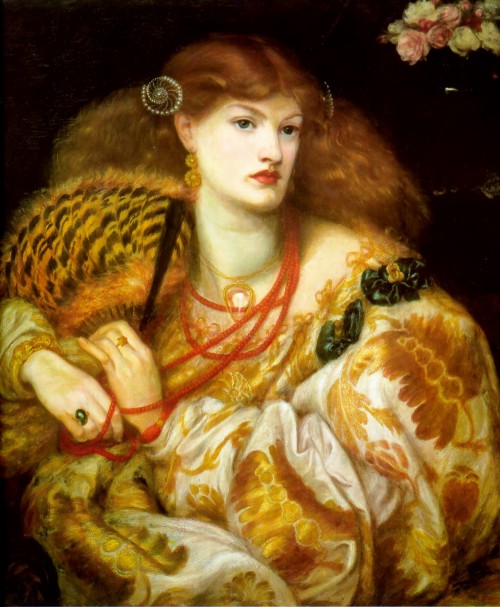
"Monna Vanna" by Dante Gabriel Rossetti.

“Monna Vanna” by Dante Gabriel Rossetti.

One of my favorite periods in art is the Pre-Raphaelite movement led by Dante Gabriel Rossetti. His exquisite beauties with almost translucent ivory skin and their manes of Titian-red flames stare at you with large, haunted eyes and seemingly quivering lips. Their graceful bodies are either garbed in ornate furs or velvets, or are the embodiment of simplicity against the lushness of nature. In all case, though, they always straddle the line between prim daintiness and richness, delicacy and sensuality, darkness and light.

The Pre-Raphaelite Brotherhood repeatedly came to mind when I wore Moon Bloom, a fragrance centered around the richness of white flowers, particularly tuberose. Yet, it wasn’t my favorite, Dante Gabriel Rossetti, with his ornate beauties who the perfume conjured up.

"Ophelia" by Arthur Hughes. Source: preraphaelitesisterhood.com

“Ophelia” by Arthur Hughes. Source: preraphaelitesisterhood.com

Instead, it was the various portrayals of Ophelia by other members of the brotherhood, from John William Waterhouse to Arthur Hughes. The key is the radiance of an Ophelia who glows white, embodying delicacy, gracefulness, warmth and femininity in the midst of very measured, very calibrated, careful lushness. For me, that is the essence of Moon Bloom.

Moon Bloom is an all-natural, handcrafted eau de parfum that released in 2013, the debut creation of Hiram Green Perfumes. The perfume house is based in the Netherlands, but was founded by a British gentleman, Hiram Green, who has quite a background with perfumery in general. His website explains further:

After founding Scent Systems, a perfumery located in central London, Hiram learnt that most perfumes, even the ‘best quality’ ones, are manufactured using synthetic materials. Wanting to offer a natural alternative to his customers, he was hard-pressed to find anything suitable.

After relocating to the Netherlands, Hiram spent several years researching and experimenting with natural fragrant materials. In his studio in Gouda he develops and produces his natural fragrances in small batches.

Moon Bloom via the Hiram Green website.
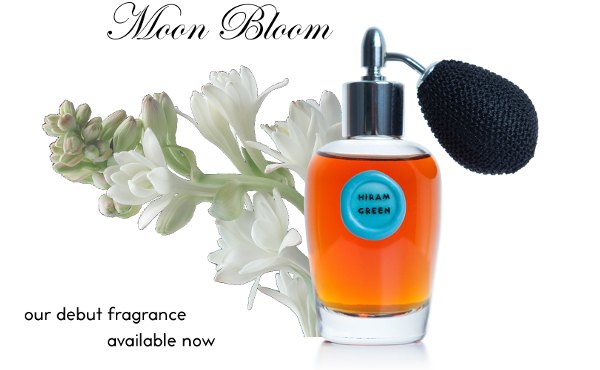
Moon Bloom via the Hiram Green website.

I love the look of Moon Bloom which comes is a glass bottle with an old-fashioned black atomizer “poofer” (as I call it) pump, dark ambered liquid, and a turquoise wax seal. The description for the fragrance may be even prettier, as it uses a phrase I’d never previously heard in connection with my favorite flower. “The mistress of the night.” I shan’t forget it. Even though I see tuberose as the exquisite embodiment of whiteness, enough people find its narcotic qualities to be overwhelming and utterly evil, thereby making “mistress of the night” quite an apt, very amusing moniker of darkness.
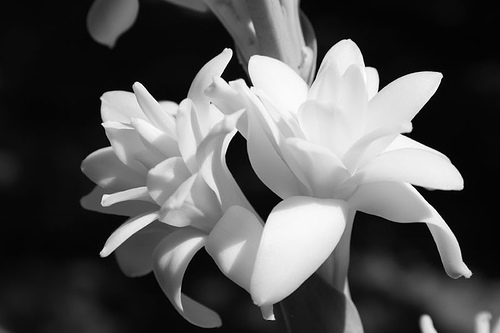
Source: Fragrantica

Source: Fragrantica

The perfume’s full description reads:

Moon Bloom is a lush and elegant tuberose themed eau de parfum. Tuberose is a tropical night blooming flower. Often referred to as ‘the mistress of the night’, tuberose is an admired theme in perfumery because of its soft and creamy but also powerful and narcotic aroma.

Moon Bloom includes generous amounts of tuberose absolute, jasmine absolute and ylang ylang. There are also notes of coconut, leafy greens and hints of tropical spices and resins.

Moon Bloom opens on my skin with green, fresh tuberose that has a very mentholated, chilly, rubbery note. I have to admit, I muttered to myself, “here we go again.” It’s undoubtedly unfair to have a bias against the eucalyptus-like, chilled metal opening of many modern tuberose scents. After all, the deconstructed essence of the flower and their indoles often has that precise profile. Still, I’m not a particular fan of it, especially when it takes on the merest whisper of mothballs, the tell-tale sign of truly concentrated or undiluted indoles. Thankfully for me, both the mothballs and the hardcore, rubbery, mentholated intensity fade away within mere minutes. Less than 4 actually, so it truly doesn’t last long on my skin, though a certain chilly coolness does linger for another hour.

tuberoseThe opening moments are a contrast of light and dark. The tuberose is followed almost immediately by a touch of sweet jasmine and by milkiness. Though the dark, rubbery mentholated camphor fades quickly, there remains a light greenness that lurks around the edges. At the same time, the tuberose feels lush, opulent and heady, with indoles that almost border on the dirty. The sweetness of the jasmine grows in strength, flitting all around the top notes, intertwined inextricably with the potent tuberose. The whole thing is warm and rich from the start, with a spicy quality that hints at the base elements.

While Moon Bloom’s opening minutes definitely shares the deconstructed tuberose element of Serge LutensTubéreuse Criminelle, I find definite differences between the two. It’s not merely the length of time that each note lasts. It’s also that the note never smells like diesel or gasoline. After the opening salvo, it feels more like a touch of smoky darkness that is replaced by icy menthol. At times, the latter almost feels fizzy, like the aerated champagne bubbles in YSL‘s vintage Champagne or Yvresse. The flood of sweet jasmine also ensures that the indoles don’t stay rubbery or too medicinal for long.
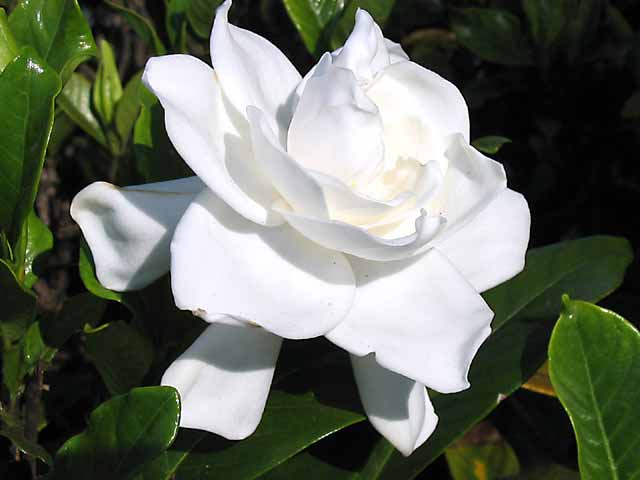
Source: crazy-frankenstein.com

Source: crazy-frankenstein.com

There is another great white flower that I smell, crazy as it sounds. On every occasion when I’ve worn Moon Bloom, there is a core note of what I would swear is gardenia. I thought I was completely mad, as there is no gardenia whatsoever in Moon Bloom. So I wrote to Mr. Green about it, and he replied: “I think of gardenia absolute as smelling between Jasmine and Tuberose. It would not surprise me then if you smelt gardenia in Moon Bloom.” Mr. Green is a very courteous gentleman, so he may have been trying to make me feel better, but I’m going with his explanation. From this point on, I’ll just write “gardenia” in quotes so that you know I’m referring to the oddity of my own nose.

As a whole, Moon Bloom quickly turns into a rich tuberose and jasmine duet with the lightest touch of both greenness and darkness. My favorite part may be the coconut. It’s actually more like vaguely coconut-y, floral milk, than actual heavy, gooey, Hawaiian Tropics butteriness. It’s a delicate, initially watery, soft note that is never cloying or unctuous, though it is quite muted and muffled. For most of Moon Bloom’s lifespan on my skin, the coconut works in the shadows, adding an indirect effect to the base notes and providing a textural quality more than an actual smell of milkiness.
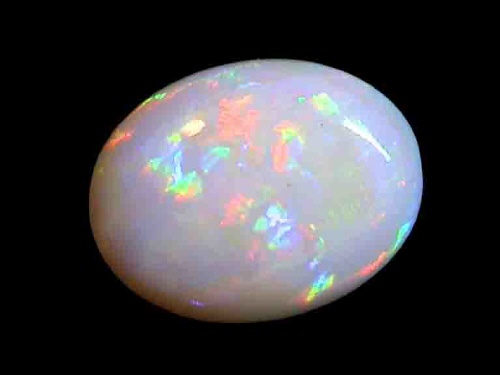
White opal via swissgemshop.ch

White opal via swissgemshop.ch

“Radiant” may be the best description for Moon Bloom, despite its initial potency and indolic quality. Contrary as it may sound, the perfume feels more radiant and delicate than carnal, fleshy, and over-ripe. It’s a dainty take on a floral powerhouse, and the soft, airy quality that takes over after 20 minutes underscores that impression. Instead of evoking pillowy, fleshy bosoms on languid courtesans, instead of the hot, almost opaque excesses of Fracas (which I love for precisely that reason), Moon Bloom makes me think of an opal stone with its touch of iridescence amidst a milky smoothness. Perhaps its the name of the fragrance with its imagery of flowers blooming in the silvery light of the moon, but I think it’s Moon Bloom’s radiant quality that feels like a perfectly calibrated mix of lushness and bright freshness.
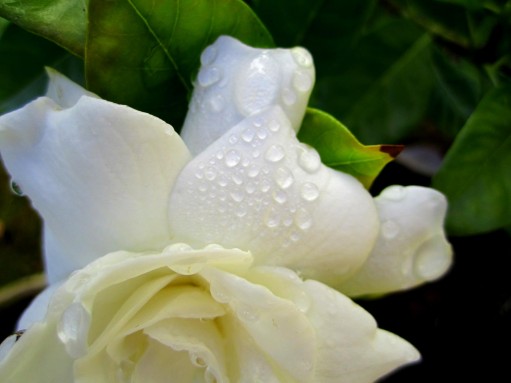
Photo: onewomanshands.blogspot.com

Photo: onewomanshands.blogspot.com

20 minutes in, Moon Bloom starts to shift. The “gardenia” note grows stronger. Here, it is simultaneously a very dewy, green “gardenia” like the version in Ineke‘s Hothouse Flower, and also a lusher, richer interpretation of it. I realise that it is probably the jasmine, but regardless of the actual source, I love the creaminess with its contradictory freshness. The tuberose-jasmine duo still dominate, but the “gardenia” definitely trails in third place. The flowers feel almost weightless, a little too much so for my personal tastes. On my skin, the jasmine is far meatier and richer than the tuberose which feels utterly translucent at this stage. Around the same time, Moon Bloom’s projection drops. It was initially extremely strong, but is now an airy cloud that hovers 2 inches above the skin with 3 spritzes from a little atomizer. 

The prominence and role of the individual flowers in Moon Bloom are really interesting. After wearing the fragrance a number of times in the last month, I’ve noticed what seems to be a trend in the perfume’s overall development. Moon Bloom always begins with tuberose, but it then goes through stages where other flowers seem to take over. It feels like a horse-race where the tuberose bursts out of the gate, but becomes neck-and-neck with the other flowers after thirty minutes. First, it is jasmine which surges ahead by a nose, and stays there for the first few hours. Then, its place is taken by the “gardenia” which is heavily intertwined with the tuberose for the next stage. In the end, though, the tuberose returns to overtake them both on the home stretch, and races past the finish line. For me, that’s unusual as most tuberose-centered fragrances that I’ve tried inevitably end up finishing as jasmine or something else. Not Moon Bloom, though the tuberose is definitely in second place for long stretches of time.

Ylang-Ylang. Source: Soapgoods.com

Ylang-Ylang. Source: Soapgoods.com

You may have noticed that I haven’t mentioned ylang-ylang in all this. Well, for the first thirty minutes, I can’t detect it at all. Then, almost on the dot, it appears, albeit in extremely muted form. It adds a velvety smooth texture, and, for a second, just the tiniest hint of something banana-like. At the same time, however, it is infused with an almost moss-like greenness at its edges that smells both leafy, and a wee bit reminiscent of Givenchy‘s vintage Ysatis, a ylang-ylang chypre. The greenness is quite separate from the lingering traces of menthol that remains at the edges, but the whole thing is extremely subtle, a bare flicker that only occasionally pops up.

45 minutes in, Moon Bloom is a seamless blend of jasmine, gardenia, tuberose, and ylang-ylang, in that order, with varying, subtle undertones of greenness that range from the leafy to the fizzy to the faintly mentholated. There is a quiet, muted spiciness that stirs in the base, tossing up a touch of gold to the very white, cream, and green coloured palette. The coconut milk has disappeared as an individual note, but it has a profound effect on the base when combined with the ylang-ylang. Thanks to the two elements, the plush, heady white flowers are nestled in a suede-like richness and warmth. I was going to say “custardy,” but that is not really accurate. Nothing about Moon Bloom feels heavy or thick. It’s too delicate to be like velvet, but too creamy to be an airy mousse.

Source: Fragrantica

Source: Fragrantica

Perhaps the best way to describe Moon Bloom’s perfectly calibrated, tight-rope act would be to describe the fragrance as “petal-soft.” It mimics the velvety softness that you feel when you stroke a gardenia’s petals and breath in its heady richness, but there is also the airy, fresh radiance of flowers that have not reached their peak or turned blowsy.
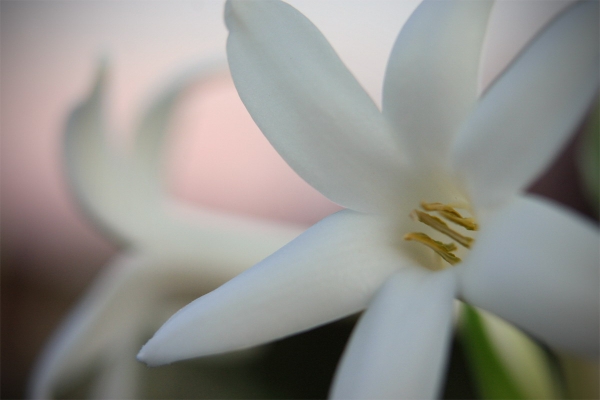
Photo: mypham.us

Photo: mypham.us

Moon Bloom turns more beautiful with time. Around the 2.5 hour mark, it’s a gorgeous “gardenia” and jasmine scent, infused with tuberose, upon the creamiest, velvety softness. It feels lush, but dainty, and I prefer all of it to Carnal Flower. Best of all, Moon Bloom lacks the Malle perfume’s synthetic base with that terrible, cheap white musk that always gives me a headache if I sniff Carnal Flower up close for too long. Instead, Moon Bloom’s base has an abstract (though muffled) spiciness to it which grows stronger, shedding a golden haze over the soft white flowers.

I find the balancing act that Mr. Green has achieved to be masterful, utterly masterful. He’s managed a refined, modern take on white flowers that never emasculates them or robs them of their true identity. He doesn’t reject their inherent lushness in favour of some ostensible, overbearing “freshness” done purely for the sake of appealing to current market trends. Moon Bloom has that modern vitality and lightness, for this is no Fracas or 1980s powerhouse after all. Yet, instead of aping Carnal Flower, he eschews pure greenness in favour of creaminess and yellowed warmth. (For me, visually, jasmine often skews a buttercup yellow on the colour spectrum, illogical as that may be.)
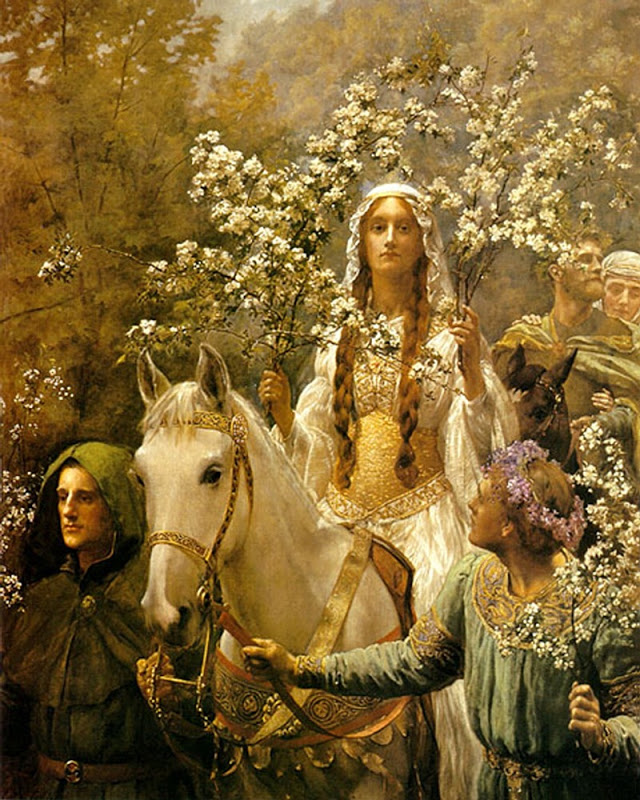
John Collier, "Queen Guinevere's Maying" (1900). Source: Wikipedia.

John Collier, “Queen Guinevere’s Maying” (1900). Source: Wikipedia.

Mr. Green has taken the best of both worlds — the old of Fracas and the new of Carnal Flower — and mixed them into a perfume that gleams like an opal. It has the subtle sensuality of Rossetti’s women, but at a sotto voce level, and countered by the delicate beauty of the Ophelia of his Pre-Raphaelite brethren. There is the luxurious feel of old-style, full-bodied, classique perfumes, but, also, the lightness, airiness, restrained discreetness and brightness of the modern style. Finally, Moon Bloom balances the cool aspects of a green freshness with the warmth of that creamy base, a base whose golden sunniness evokes the Queen of the May far more than “the mistress of the night.” Have I mentioned the word “masterful” yet?

At the end of the 4th hour, Moon Bloom hovers right above the skin, but the scent is so deep or rich that I’m amazed it’s all-natural. The perfume is a velvety-soft blur of white flowers led by the tuberose-gardenia-jasmine trio. The tuberose has finally overtaken its white cousins, as if the jasmine decided to give up the race. The “gardenia” impression continues, while the ylang-ylang is as muted as ever on my skin. The best part of the scent, apart from the return of the tuberose, is that surprisingly creamy base. After 5.25 hours, it feels smoother than ever with a plushness that is texturally very natural and more petal-like than ever. Carnal Flower, at a comparable point in its development, had nothing like it, and was merely a blur of musky jasmine. Moon Bloom has actual depth and body, yet its richness never feels overwhelming.
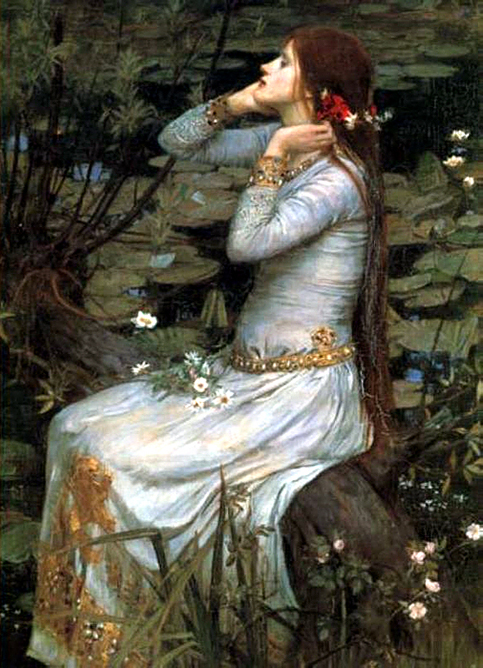
"Ophelia" by John William Waterhouse, 1910. Source: preraphaelitesisterhood.com

“Ophelia” by John William Waterhouse, 1910. Source: preraphaelitesisterhood.com

To the contrary, Moon Bloom’s drydown has a softness that borders on the soothing. It’s hard to explain, but there is something about that velvety, petal-like quality and Mr. Green’s perfect balancing act which creates an easiness about the scent. Moon Bloom is so much more comfortable than my beloved Fracas which is all about dressing up to the nines or to seduce. Moon Bloom has an accessible gentleness, but it’s an easiness that never once surrenders its creamy white soul or loses sight of what white flowers are really like. Nothing about the scent feels like a generic, banal, white flower cocktail that you could find at Sephora, but it’s also not a diva act. All of which bring us back to Ophelia. If Fracas is the iconic Maria Callas in diamonds and furs, then Moon Bloom is a Pre-Raphaelite Ophelia. Graceful femininity with seamless smoothness and an absence of rough edges (or synthetics) done in a way that makes the white flowers radiant and soft, but never showy or bold.

In its final hours, Moon Bloom is a velvety tuberose with occasional flashes of “gardenia.” It coats the skin like a whisper, but there is a richness to the tuberose if you put your nose right on your skin. I’m amazed at Moon Bloom’s longevity on my wonky skin. Three good squirts from the little atomizer, or the equivalent of 2 small sprays from a regular bottle, gave me 11.5 hours in duration. One big atomizer squirt gave me about 9 hours, though the sillage dropped much more rapidly and Moon Bloom became a skin scent after 2.5 hours. On Fragrantica, the few votes for longevity are evenly split between “long lasting,” “moderate,” and “weak,” while the sillage numbers are primarily for “moderate,” followed by 1 vote for “heavy.” I really think that the quantity you apply will impact both issues, as well as, obviously, your skin chemistry.

As you can tell, I loved Moon Bloom. It’s a lovely scent that falls midway on the spectrum between Carnal Flower‘s fresh greenness and subdued restraint, and the more indolic variations on tuberose. It’s a far, far cry from Fracas (or even the indolic jasmine powerhouse of La Via del Profumo’s Tawaf), but it’s also removed from Carnal Flower. It feels like a perfectly calibrated mix of both, with strong touches of its own character.

That said, I’m someone whose tastes skew strongly toward super opulent, bold, powerhouses when it comes to my florals, so you need to put my assessment into that definitional context. If you’re someone who finds Carnal Flower to be too intense a white flower explosion, then I do not recommend Moon Bloom. If you can’t stand tuberose or jasmine, then, quite obviously, you should stay far, far away. Moon Bloom is for those who find Carnal Flower to be too anemic or wispy, but who also think Fracas is taking lush richness too far to the other extreme.

My definitional standards and preferences might be firmly placed on the extreme side of the white flower scale, but I’m far from being alone in finding Moon Bloom to be lovely. The perfume has won over many bloggers, with a number of them placing it on their Best of 2013 list. Take, for example, the witty, lovely Victoria of EauMG who writes, in part:

Moon Bloom is a minty, green tuberose with a creamy banana ylang-ylang. It’s huge and luscious and dare I say glamorous! Indoles fall out of jasmine’s cleavage when she bends forward. Her glistening skin is subtly moisturized with coconut oil and this adds a warmth to the white florals. The florals become more “peachy” and lose some of their crisp greenness. Moon Bloom’s dry-down is acrid incense with “green” coconut.

Moon Bloom is glamorous and flawlessly put together. I realize that my description or even the note list may scare away some people that have white floral “issues”; however, please don’t let it. Moon Bloom is big but subtle. It’s one of the few tuberose perfumes that allows you to be the diva and doesn’t try to steal your spotlight. I really think this one will win over those timid of tuberose. And it will be loved by those that adore white florals. I can’t stop sniffing it when I wear it. It’s gorgeous and it makes me feel gorgeous. […]

Moon Bloom has average projection and longevity. In my opinion, it wears for much longer than other all-natural compositions. I get 6-8 hours. It does become more subtle after 2-3 hours but that’s fine with me. […]

Victoria’s Final EauPINION – Gorgeous, glamorous tuberose soliflore. I think Mr. Green just helped a lot of perfumistas find “their” tuberose. This is the easiest to wear straightforward tuberose soliflore that I’ve ever encountered.

Victoria loved it so much that she put it on her Best of 2013 list, but she’s not alone in appreciating Moon Bloom. The Perfume Shrine put the fragrance in a tie with Aftelier’s Cuir Gardenia for their Best Natural of 2013. And Olfactoria’s Travels thinks it’s great as well.

Olfactoria writes that she has a very cautious relationship with tuberose, though she no longer has outright hatred for the note. In Moon Bloom, she found the flower to be “perfectly balanced,” soft and with “no hint here of the hysterical, diva-esque antics” that many tuberose fragrances display. On her skin, the florals eventually “recede a bit and a base emerges that is warm, a tiny bit spicy (think carnation/clove) and cosy in an unsweet, ambery (vanilla/labdanum) way.” As a whole, Moon Bloom evoked a woman whom she found to be

extremely sympathetic. I feel myself drawn to her and her charmingly enticing ways. She is intelligent, calm, she knows who she is. She is beautiful and desirable, but she doesn’t use that as a weapon, it is merely a fact of her life, equal among many. She loves to smile and there is an air of mystery around her, but this doesn’t make her appear aloof or remote, but draws you in closer, wanting to find out more.

What stands out most about this woman though, is her smile: warm, loving, caring and infinitely sweet, it is hard to remain untouched when you find yourself in the radiant presence of that smile.

Warmth is a far cry for what one adoring blogger perceived in Moon Bloom. My favorite review of the fragrance comes from The Silver Fox, a blogger who admittedly loves white floral bombs, but who has tried enough of them to know that Moon Bloom is special. He begins his review with fantastic elucidation of why it can be so cool for men to wear fleshy white flowers:

For me, a man wearing white florals is the subversive writhing of indolic strangeness, the blush of purity degraded, underpinned by the all too sexual skin washes of tuberose, lilies, ylang, gardenia and orange blossom. It is the fleshy conflict between light and dark, beauty and decay, sex and chastity that fascinates me.

In many ways these are overtly female blooms, but I adore transgression as many of you know. Boys smell so decadent in florals, so Tennessee Williams, muscular, tense and ambiguous, afraid of inner desires yet reaching out to embrace them. […][¶]

Hiram Green’s luscious, alabaster Moon Bloom is probably one of the best tuberose soliflores I have tried in many years. This shocked me for several reasons. One, I thought I had probably tried as many permutations and plays on the blooms as were strictly speaking possible and two, Hiram’s delicious scent is made exclusively from natural ingredients, a notification that does not generally make my Foxy heart sing.

Moon Bloom is creamy, glittering perfection. The name is so alluring and romantic, exactly right for this narcotic formulation of floral wonder. It is a strangely intense perfume, inhaling it transports me to frozen streets pierced by milky shafts of moonlight in a silent city. Snow falls, marble glistens, time slows. My skin is waxen, radiating the ivory effulgence of tuberose and jasmine absolutes. A lick of distant tropics from an ice-cold coconut note, green and glacial at the same time.

I highly recommend reading the entirety of his long but absolutely stellar, beautifully evocative review. There, he talks about why Mr. Green’s technical balancing act with the essential absolutes is so masterful, as well as offering further details of how the tuberose appears, the “pearlescent” jasmine, and the key impact of the coconut milk in his version of Moon Bloom. For him, the latter reminded him “of the wonderful oozing ripe fig effect used in the Extrème version of Premier Figuier by L’Artisan Parfumer.”  He ends his fantastic analysis with these powerful images:

Moon Bloom is made for night skin, waxen and white-lit under bleak staring moons. A fragrance for skins in troubled love, in pain, lost perhaps. There is alchemy at work here and it smells like snow falling in the hush of night.

"Moon in the billowing mists" by Norroen-Stjarna on Deviantart.com

“Moon in the billowing mists” by Norroen-Stjarna. http://www.deviantart.com/art/Moon-in-the-billowing-mists-306095826

The Silver Fox seems to have experienced a lot more of the freezing, “iced metal” aspects of the menthol that either I or the other bloggers did, but it’s all a matter of skin chemistry. For me, Moon Bloom is not about “billowing snow,” and my skin did not bring out “a dazzling blindness to the carnal theme of Hiram’s whiteness, the kiss of frozen lips in a city paralysed by ice and the swirling rogue of winter flurries.” (What a spectacular piece of writing!) In fact, the concept of carnality never once crossed my mind with Moon Bloom, which just goes to show you how much one’s yardstick matters in assessing indolic florals. In fact, I’m starting to wonder just how much my childhood imprinting with Fracas and my subsequent love for Amouage-like Middle Eastern opulence has impacted my definitions, because I thought Tawaf was the embodiment of carnal voluptuousness, while Moon Bloom seems so lady-like and approachable.

To be clear, The Silver Fox does largely agree with that as well, writing extensively about how the tuberose is never lascivious or extreme. As he so amusingly puts it, the tuberose of Moon Bloom never screeches like a “drunken karaoke singer belting out gay anthems” who has to be tackled by his mates to shut up. For him, the tuberose is thankfully “far removed from this pitiful spectacle. It is strong-willed, full of drama, but intelligent and deeply charismatic, filling the room with brilliant, searching light.”

As you can see, the word “intelligent” keeps coming up in connection with Moon Bloom, along with “calm,” “approachable,” or “radiant” in descriptions that emphasize how the tuberose is not divaesque. And it’s true. This version is not the Ride of the Valkyries, and it’s not just my wonky, skewed perception. I love Fracas, but she’s not always the easiest thing to wear on a daily basis. Moon Bloom is.

Moon Bloom bottle and decant, via Hiram Green.

Moon Bloom bottle and decant, via Hiram Green.

Moon Bloom is available in two different sizes. There is an affordable 5 ml decant sold for roughly $27 (or €25 with the VAT), while the full bottle costs about $150 with a more affordable refill option being introduced later this year. The original bottle is gorgeous, though, with the perfect blend of classicism and clean-cut modernism.

All in all, if you’re a white flower lover, I strongly recommend that you try Moon Bloom. For those with a much more tenuous relationship to the florals, I think you have to like both the initial mentholated aspect and a touch of indoles to enjoy the scent. On the other hand, Olfactoria who is iffy on tuberose really liked Moon Bloom, so perhaps you will too. As a whole, I think Moon Bloom skews more feminine than unisex, but in all cases, its relatively moderate longevity and soft sillage make it suitable for the office.

I have to end this long review with a simple word about Hiram Green: talented. Enormously talented. His debut effort is an utterly masterful display of technical brilliance. Bravo.

Disclosure: My sample was courtesy of Hiram Green. That did not impact this review. I do not do paid reviews, my views are my own, and my first obligation is honesty to my readers.

DETAILS:
Cost & Availability: Moon Bloom is an eau de parfum that comes in a 50 ml bottle that costs €111.57 for non-European customers and €135 for European ones who have to pay VAT. It is available the Hiram Green website, which also sells a 5 ml decant for €20.66 without VAT, and €25 with the tax included. Later this year, a cheaper refill option should be available. I believe the current bottle and decant are also refillable at the current time. Whichever bottle you choose to get, the website will automatically subtract or add the VAT based on your delivery address. ships its scents world-wide. In the U.S.: There are no US retailers at this time. You have to order from Hiram Green, or from one of the European vendors which carries the line. [UPDATE 7/9/14: Moon Bloom has now come to the U.S. and is exclusive to Indigo Perfumery which sells the full bottle for $165, with the 5 ml travel spray for $40, and a sample for $4.]  Outside the U.S.: Moon Bloom is available at 7 European retailers. One is First in Fragrance which ships world-wide and which sells Moon Bloom at retail for €135, with a sample for €8. In the Netherlands, Amsterdam’s Annindriya Perfume Lounge sells both the 50 ml bottle and the 5 ml decant size. Other vendors are in Austria, Germany, and Sweden. They are listed on Hiram Green’s Stockist Page. Samples: I could not find Moon Bloom at this time on either Surrender to Chance or The Perfumed Court. I will try to update this section if the fragrance becomes available at either one.

Tableau de Parfums/Andy Tauer Ingrid: Antique Florals

Ingrid is a fragrance from Tableau de Parfums, the collaboration between the Swiss perfumer, Andy Tauer, and the American, Memphis-based, indie filmmaker, Brian Pera (who is also a perfume blogger at I Smell Therefore I Am).

Women's Picture. Source: Fragrantica.

Women’s Picture. Source: Fragrantica.

There are three Tableau fragrances (Miriam, Loretta, and Ingrid) and, as the Tableau Parfums website at Evelyn Avenue explains, each one is an olfactory representation of a particular female character in Brian Pera’s film series, Woman’s Picture. According to the website, “Woman’s Picture is an anthology film inspired by classic women’s films of the thirties, forties, and fifties. The story is divided into three sections, each of which presents a portrait of a specific female character.” I’d previously reviewed the tuberose Loretta, but couldn’t wait to try Ingrid given its oriental notes.

Source: Fragrantica

Source: Fragrantica

Ingrid was released late in 2013, and is an eau de parfum in concentration. Tableau de Parfums describes the scent as follows:

A fragrant floral gem in an elegant oriental casket, Ingrid is a rich woody floral inspired by classical scents of the fifties, full of contrasts. Draperies of citrus and spices open the stage for sensual frangipani and roses, with hints of lily of the valley adding softness to the flower heart. These rich feminine notes are anchored by a chord of precious woods and resins in the base. Vanilla, tolu and sandalwood add an exotic twist, and underline with the contrasting lines of dark cistus and smoky balsamic styrax the feminine melody. […]

Andy Tauer on Ingrid: “Ingrid is unique, a strong character, yet soft and feminine. She is a beautiful woman, who developed her style, found herself, she is present and demanding, with a past full of questions, unanswered. Her flower is frangipani. I have no doubt.”

Fragrantica and Luckyscent say the notes are:

Bergamot, orange, lemon, cinnamon, clove, Frangipani [or Plumeria], rose, lily of the valley [Muguet], sandalwood, tolu [balsam], cistus, vanilla, styrax

Source: apartmenttherapy.com

Source: apartmenttherapy.com

Ingrid opens on my skin with lily of the valley and dust, followed by an oddly stale, sharp, leathered, sweetness that smells like styrax resin that has gone a bit off or turned rancid. Seconds later, there is ISO E Super, more dust, a vanillic sweetness, and powdered rose. The lily of the valley tries to add some freshness but it is such a delicate aroma and cannot counter the other elements. My overall sense is of extremely musty, fusty, sweet dust with an odd edge. It’s hard to describe but, to me, it smells like the stale air in a dusty attic that hasn’t been opened in decades. The ISO E Super is a light touch, and isn’t responsible for any of this at all.

Yet, at the same time, there is an undercurrent that is sickly sweet. I suspect the latter stems from the frangipani or plumeria, a flower whose scent I find sickly and quite difficult in general unless it’s handled very lightly. Here, the plumeria isn’t individually distinct in Ingrid’s opening moments, but I’m pretty sure it’s responsible for that particular, nauseating, cloying touch. It injects its syrup from a distance into the faintly leathered, “off” dark notes and the arid dust, creating a combination that I find quite discordant and just plain odd.

Source: wallpaper.metalship.org

Source: wallpaper.metalship.org

Other elements are smoothly blended into the background. There are flickers of cloves with a touch of cinnamon. Much more pronounced is the old-fashioned floral soapiness that dances all around. A soft touch of sweetened citruses lurks in the shadows, alongside the rose. The primary bouquet, however, is of ancient, antique dust with lily of the valley, followed by a touch of fusty greenness and soapiness, all nestled within the strong embrace of stale, somewhat rancid, dark sweetness.

I’m finding it incredibly hard to convey precisely because I can’t explain why I’m smelling what I am, or the extent of the strange combination. It’s akin to the fustiest of mineralised oakmoss, infused with styrax resin gone rancid, cloying sweetness, prickly aromachemicals, vanilla, flowers that feel dried and pressed in an ancient book, soap, and some strange dark element, all doused with the dust of ages.

There is an oldness to the aroma that reminds me of an old lady’s clothes in a closet that she hasn’t opened in years, but the dusty fabrics still carry the lingering traces of her floral perfume and the soap on her skin. I almost never find fragrances to be “old lady,” and it is a pejorative term that I find offensive, but if ever I were to use it, it would be for Ingrid. Most people give that label to heavy orientals or powdery scents, like Shalimar or L’Heure Bleue. I’ve never agreed with that and if I’m using the term here, it’s for a very different reason: the fetid dustiness of accumulated years. I’ve tried Ingrid twice, and with different quantities each time, but on both occasions, I had enormous difficulty with the opening because of that one reason.

The famous, recently discovered Paris apartment, untouched and unopened for 70 years. Source: DailyMail.com http://tinyurl.com/cweo355

The famous, recently discovered Paris apartment, untouched and unopened for 70 years. Source: DailyMail.com http://tinyurl.com/cweo355

Twenty-five minutes in, Ingrid starts to change. The stale, sharp mustiness ceases to be the leading note, though it is still substantial and enormous. It now shares center stage with the soapiness and florals. The frangipani or plumeria makes its first appearance in a distinct way; the orange grows a whiff more noticeable; and the sweetened powder becomes more dominant. Then, the cloves rise up from the base, and… oh boy. I love cloves, passionately, but the note here takes on a medicinal undertone that strongly reminds me of American, clove-based, dentistry analgesics. At the same time, it’s pungent and, yes, dusty. In fact, it merely compounds Ingrid’s overall odd staleness, creating an aura of fusty antiques, florals with old-fashioned soap, strange sweetness, and spice.

Woman's dusty, antique dressing table and perfumes from the Paris time-capsule apartment. Source: Daily Mail.

Woman’s dusty, antique dressing table and perfumes from the Paris time-capsule apartment. Source: Daily Mail.

Ingrid finally softens about 45 minutes in, and the sillage drops. From a moderately strong opening, it now hovers two inches above the skin as a blur of powdered, sweet florals with medicinal, pungent cloves and a strong dash of vanilla powder over a slightly warm base. Nothing in the latter translates to my nose as richly ambered or darkly resinous. This is not the labdanum of Dior’s Mitzah or Serge Lutens’ Ambre Sultan. It’s not the smoky, leathered styrax resin that I’ve encountered in other perfumes either. In fact, Ingrid’s colour visuals would be powdered pastels with ribbons of brownness from the cloves, and greyness from the dust.

To my relief, the fusty staleness slowly diffuses and weakens, making Ingrid a touch easier to bear. At the 90-minute mark, Ingrid merely smells like old-fashioned, 1930s-style, feminine, powdered florals, instead of being dominated by dust from that same era. The perfume remains largely the same for several more hours to come, though the plumeria or frangipani takes the lead as the main flower, followed by the rose. The always subtle muguet has faded away completely, while the soapiness retreats to the sidelines. However, the cloves continue to blast away, though, thankfully, they’ve lost their medicinal undertone. Lurking all about is an amorphous, indistinct, dry woodiness that has the tiniest hint of something smoky about it. It’s hard to detect though, given the sweetened powder that now infuses Ingrid from top to bottom.

Plumeria or frangipani.

Plumeria or frangipani.

Ingrid’s notes slowly grow hazy and abstract, with only the plumeria and cloves really standing out. If you smell really hard and up close, the rose pops up once in a while in the background to add a very muted, muffled hint of Damask-like richness, but it’s usually indistinct on my skin. The plumeria feels unctuous, while the cloves now remind me of a Christmas baked ham. And the sweetened, vanillic powder infused them both. Yet, even those notes become blurry and nebulous around the end of the 4th hour. Soon, Ingrid turns into a soft, generalized, vaguely frangipani-like, floral powder with vanillic sweetness and cloves.

What is interesting, however, is the base which turns increasingly warm and ambered. It’s a largely abstract amber, to my nose. It doesn’t feel distinct or individual enough to separate out into labdanum amber at all, but just feels like a warm, spiced, slightly leathered, dry goldenness. Call me crazy, but the Tauerade signature seems to take on some Caronade similarities. Or perhaps the cloves in Ingrid are so dominant that, in conjunction with the growing amber, it makes parts of Ingrid resemble Caron‘s clove-based Poivre in its foundational elements. The big difference here is the plumeria with its nauseatingly sickly sweetness.

By the end of the 7th hour, Ingrid turns into a sweetened, powdery, floral oriental with plumeria nestled in a spiced ambered nest. It’s also a skin scent at this point. Oddly, the ISO E Super suddenly becomes much stronger, adding a prickly, peppered, jangling bit of dryness to the base, though it’s not enough to cut through the plumeria’s syrup. The cloves fold into the Tauer base which is actually quite nice, and well-balanced between the dry and warm elements. As a whole, though, the perfume is largely a nebulous blur of powdered, very sweet florals atop a warm base with some dryness and abstract spiciness. Ingrid remains largely unchanged until its end when, 11.25 hours from the start, it fades away as a blur of warm sweetness.

Skin chemistry is a funny thing, and I blame my own for whatever vagaries occurred with the dust, and the “off,” almost rancid, dark-sweet accord. I also need to repeat what regular readers know all too well: I don’t like scents that are either powdered florals, sweetened powder, or soapy. Having all five things together — at the same time — made Ingrid extremely difficult for me. I tried to like it, I really did, but my skin simply wouldn’t comply. The first time I wore it, with just a small amount, I came within inches of scrubbing it off after only 20 minutes, and it takes a lot for me to get to that level. To my surprise, the ISO E Super was very powerful at the lower dosage, but that wasn’t the problem at all. The difficulty was the dryness and fustiness which, in the opening 25 minutes, is excessive on my skin, regardless of the quantity used.

1930s Vancouver street photo by Foncie Pulice. Source:  chronicallyvintage.com (Link to website with a series of super cool 1930s street photos embedded within. Click on photo.)

1930s Vancouver street photo by Foncie Pulice. Source: chronicallyvintage.com (Link to website with a series of super cool 1930s street photos embedded within. Click on photo.)

In fact, the dry dustiness I experienced with Ingrid far surpassed anything in L’Air du Desert Marocain. Relatively speaking, that fragrance almost verges on the gourmand in comparison to Ingrid’s start on my skin. Plus, LDDM was never fusty or dated in feel. While Ingrid eventually loses its arid mustiness, it is simply replaced by old-fashioned floral powder and dusty cloves in a way that simply doesn’t work for my personal tastes. I kept imagining a woman from the 1930s or 1940s: older, relatively well-dressed, somewhat matronly in sensible clothing, and who had worn the same comfortingly powdered, floral scent since she was a young bride.

Others, however, seem to really like Ingrid, and had completely different perceptions or associations. The review on the blog, I Scent You A Day, reads, in part:

Ingrid is earthy and reminds me of birch or tar or dried bracken. There is winter spice too, but not in a chintzy Christmas way, you’ll be relieved to know. The Rose is prevalent, and as with other Tauer scents, no Rose is the same twice.  In this case, the Rose reminds me of dried petals in a pot pourri- they have gone paper thin and their colour has faded but their scent has gone faintly peppery. Nevertheless it can still be recognised as Rose.

Ingrid is rich and spicy, but dry rather than sweet. It left me thinking I could smell the deep dark scent of Myrrh, but it may have been the resinous Styrax which is used so beautifully.

On my skin, the base notes of Ingrid are Clove, dried Roses, Resin and Frangipani. It’s rich, dark and mysterious yet the ingredients have been used lightly enough not to overwhelm.

If further proof were ever needed for how skin chemistry makes everything different from person to person, consider the experience of WAFT… What a Fragrance Fanatic Thinks:

Andy Tauer has created a fragrance that is all  at once foody , pillowy , warm , comforting – in a word delicious . Ingrid just fits my mood and makes me want glue my nose to my wrist . Ingrid never frowns , never argues nor challenges .
This fragrance flows from sunshine and tart nectar and I loved it at first whiff . The frangipani note is so perfect…It lasts a good six hours on skin ( probably longer if you don’t cook or wash dishes – I do .) Ingrid reminds me of a fluffy whipped cream and rice confection called Glorified Rice , which has bits of tart mandarin slices in it .
If I had any complaint it would be the early drydown of Ingrid falls a little flat , but eventually smooths out .

On Fragrantica, there is only one review for Ingrid thus far:

The Cloves and Frangipani make this a great choice for Autumn and Winter. I didn’t get any Lily of The Valley: to me this is dark and full of shadows and mystery.

Ingrid wasn’t my cup of tea, but we’re all different and have different tastes, not to mention different skin chemistry. So, if Ingrid’s notes sound appealing to you, and if you enjoy either frangipani or some of Andy Tauer’s drier fragrances, then give her a sniff. 

DETAILS:
Cost & Availability: Ingrid is an eau de parfum that comes in a 50 ml/1.7 oz bottle that costs $160 or €135, and which comes with a free DVD and movie poster. Ingrid is also available in a small 7 ml travel spray that costs $40. In the U.S.: you can buy Ingrid in all sizes directly from Tableau de Parfums, along with Luckyscent. Tableau de Parfums only ships domestically. I’ve read that the line is also sold at Portland’s The Perfume House, but it is not listed on their website. Outside the U.S.: In Europe, you can find Ingrid at Germany’s First in Fragrance which sells the perfume for €135.00 and the travel size for €39. It too carries samples. In the UK, Scent & Sensibility carries Tableau de Parfums, and sells Ingrid for £110, with the purse spray for £25. In Italy, you can find the Tableau de Parfums line at Milan’s Profumi Import, but I’m not clear about price or if they have an e-store. Tableau de Parfums fragrances are also sold at a handful of other locations in Europe, from Marie-Antoinette in Paris, to Switzerland and Lithuania. You can find that information on the company’s websiteSamples: You can get a sample of Ingrid from Luckyscent for $4 for a 0.7 ml vial, or The Perfumed Court, where prices start at $6.99 for a 1/2 ml vial. Loretta is not sold at Surrender to Chance.

Caron Poivre – Modern Extrait Version

Vintage Caron ad for Poivre via The Perfume Shrine and originally, Bleekerstreet.com

Vintage Caron ad for Poivre via The Perfume Shrine and originally, Bleekerstreet.com

An explosion of fiery reds and peppery black, followed by muddy greens and dulled mahogany. Peppered meat, dentists, barber shops, and grandfathers, but also sleekly elegant women bundled in warm furs against the chill. The visuals and images evoked by Caron‘s Poivre are all over the place for me. And so are some of my responses to this famous, ostensibly “pepper” perfume.

Poivre was released in 1954, and was created by Michel Morsetti. It is one of Caron’s Haute Parfumerie “Urn Scents” which originated as extracts or pure parfums. I tested the parfum extrait version, but not the vintage version. I would like to, but, as with Tabac Blond, the vintage is not what most people have access to or can easily find, even on eBay. So, modern Poivre extrait is the focus of this review. 

A huge 2 oz bottle of Poivre which goes for over $2,000. Source: sidemirror.blogsome.com

A huge 2 oz bottle of Poivre which goes for over $2,000. Source: sidemirror.blogsome.com

Caron describes Poivre as an explosive pepper scent:

In 1954, Caron creates a stir with Poivre, whose explosive scent remains unparalleled on today’s market. It took particular daring to make this spicy, peppery departure, held together with an ultra-rich floral heart note, typical of Caron, and woody base notes.

1957 Caron ad via HDprints.com

1957 Caron ad via HDprints.com

I’m not clear on the precise notes in modern Poivre. The Caron website only mentions three elements: pepper, cloves, and sandalwood. Fragrantica has no list, and only mentions the pepper. In a review devoted primarily to the vintage Poivre parfum, Bois de Jasmin lists:

red pepper, black pepper, giroflore [clove], carnation, ylang ylang, opoponax [sweet myrrh], sandalwood, vetiver, and oakmoss.

However, Luckyscent — which is one of the handful of places that sells modern Poivre outside of a Caron boutique — has a very different set of notes:

Pepper, clove, geranium rose base, jasmine, tuberose, carnation bouquet.

The modern Poivre bottle in a small size at Luckyscent.

The modern Poivre bottle in a small size at Luckyscent.

What I smelled was some variation or combination of the two lists:

red pepper, black pepper, clove, carnation, geranium rose base, jasmine, opoponax [sweet myrrh], vetiver, and oakmoss.

Modern Poivre opens on my skin with an explosion of fiery notes: clove, red pepper that faintly resembles the bite of a chili pimento pepper, and black pepper. They are quickly trailed by spicy carnation and nutty, sweet myrrh. Then, seconds later, a very odd, earthy, musky, musty note with a strongly medicinal character suddenly appears. It smells like cloves infused with a hint of bad, almost rancid, patchouli. It has almost a chewy, leathered undertone, but also sourness. The sweet nuttiness of the opoponax softens some of its medicinal facade, but the odd accord definitely evokes the dentist’s office for me. I love cloves, passionately, and there is a heaping amount of the regular note as well, but this undertone is rather difficult, unpleasant, and pronounced as well.

Cloves, close up. Source: www.toothachesremedies.net

Cloves, close up. Source: www.toothachesremedies.net

Five minutes in, matters get a little worse when another subtle undertone appears as well. I feel quite crazy for writing this, but there is a meatiness to the medicinal note. It’s as if the usual Caronade signature base suddenly turned into a clove-covered, raw steak. I can’t explain it as I’ve never encountered anything quite like it, but something about Poivre initially smells both meaty and quite “off.” Thankfully, the raw, spiced steak impression fades away after about 15 minutes, but I’m telling you, the cloves are a multi-faceted thing of much weirdness in Poivre’s earliest moments.

Source: 123rf.com

Source: 123rf.com

Slowly, very slowly, a floral element grows stronger. From the very start, there was a touch of carnation, but it grows increasingly pronounced. It is spicy, peppered, piquant, and yes, very clove-like in its core. It is soon joined by an equally peppered geranium, only this time it smells like the fuzzy leaves with a touch of rose. A microscopic amount of pungent oakmoss follows suit, but it’s muted and largely indistinct. Perhaps it’s simply that nothing can compete with the cloves, which continue to overpower everything. To my relief, the various sour, meaty, and earthy undertones have faded.

Yet, the cloves are so intense that I noticed my lips tingling from contact with the skin of my arm. One reason for that is that cloves can be an analgesic or numbing agent, which is why it is often in dental products for tooth or gum pain. Another reason is that it is hard to smell a lot of the nuances in Poivre from a distance, and you have to put your nose close to the skin. The projection isn’t huge, even in the opening minutes, though the intensity of the clove note may fool you, especially if sniffed up close. At best, though, Poivre hovers about 2 inches above the skin, potent in its cloves, but difficult to separate out in terms of other notes.

15 minutes in, Poivre settles down in to a spicy clove fragrance, trailed by the various peppery florals. I rather enjoy it, though that is partially due to the novelty of having a clove-centric fragrance, and partially due to my own love for the note.

Andy Griffith. Source: Examiner.com

Andy Griffith. Source: Examiner.com

Something about Poivre at this point and for the next hour feels very much like a comforting, old-fashioned men’s cologne, only deeper, richer, and thicker. The clove onslaught makes it a little like a barber shop fragrance, and conjures up images in my mind of a grandfather in his Sunday suit, freshly shaved and ready for church in the 1950s. Poivre wouldn’t be Don Draper’s scent, but someone much older, less debonair, and more solid. Perhaps, Andy Griffith in the old “Mayberry television” show, or an old-world Neapolitan grandfather who likes more spicy fragrances than fresh, aromatic fougères

A muted, quiet touch of powder creeps in after 30 minutes, along with a dark, abstract woodiness. It smells like some odd combination of cedar, vetiver, oakmoss, and a tinge of the Caronade signature base. Poivre is now a warm, richly spiced clove scent, followed by clove-y carnation and that odd, dark, dry woodiness. The top notes are trailed further behind by pepperiness and a whisper of powder. The florals are increasingly muted, except for touches of carnation which generally just accentuate the clove bouquet.

I find myself baffled by it all, but I think I like Poivre now. The dispositive word is “think,” because I’m honestly not completely certain. Poivre is interesting and different, to say the least, and not like anything I’ve smelled before. That said, I know I’d have a pretty different (and probably entirely negative) view of things, if I loathed cloves or if I’d expected an actual pepper fragrance as the name suggests.

Poivre doesn’t change drastically or dramatically over the next few hours. At the start of the 3rd hour, a tiny trace of a velvety, white floral creeps in, but it’s extremely hard to separate or pull out from under the cloves. At best guess, it smells more like the jasmine in the Luckyscent description than the ylang-ylang of the original Poivre. I wouldn’t bet the house on it, though, as it’s barely noticeable, and Poivre continues to waft copious amounts of clove. Now, however, there is also more of that odd woodiness I talked about earlier, which is slightly more discernible as vetiver and oakmoss. It creates a dry green touch in the base.

At the same time, however, the fragrance seems warmer, better balanced, and smoother. For reasons I can’t explain, Poivre suddenly loses its barbershop, masculine impression, perhaps because the cloves feel softer, tamer, less sharp. The medicinal traces are long gone, and the cloves merely feel wonderful spicy, rich, and deep, albeit in a light form. Increasingly, Poivre evokes the image of a well-dressed woman from the past, bundled in thick furs on a chilly day. She looks old-fashioned and dated, but also very chic and strong. She stands out, and she uses the softened, spicy heat of Poivre to counter the chill in the air in the same way as she does her elegant coat that drapes itself close to her skin.

Source: collectorsweekly.com

Source: collectorsweekly.com

Poivre is now a visual blend of the darkest reds, and burnished clove-y umber, with a touch of muddy greens and dulled mahogany, though the scent itself feels increasingly murky and hazy. The notes are hard to separate, except for the spicy cloves, and the weak sillage doesn’t help. At the 2.25 hour mark, Poivre is almost a skin scent, with only the cloves standing out when sniffed up close. It remains that way largely until its end. About 4.75 hours in, an odd touch of soapiness joins the cloves, but it is fleeting and soon fades away. As a whole though, Poivre is almost entirely cloves on my skin for the rest of its lifespan. In its final moments, it’s merely a wisp of something spicy, brown, and dry. All in all, Poivre lasted 13 hours on my skin with a tiny 1/3 of the vial being dabbed on. Its sillage was extremely soft, but it was generally easy to detect up close for most of its life.

I think I would very much enjoy wearing Poivre if a bottle ever fell into my lap, but I say that as someone who loves cloves. I do hesitate, though, because it doesn’t feel like the easiest or most versatile fragrance. It would definitely be one of those mood or special occasion sort of things, for when I needed a lot of undiluted spice in my life and wanted to go retro.

Yet, despite my appreciation for the fragrance (at least after the opening 30 minutes), I would not recommend modern Poivre to the average person. You have to love cloves passionately — and most people don’t. Even those who like the note may not want such an unrelieved, undiluted form of it. Whatever Poivre may once have been, nowadays, the modern version is centered on almost nothing but cloves. Even the vague, mostly abstract carnation smells a lot like cloves, and floralacy isn’t a large part of the fragrance anyway.

That brings me to other people’s impressions of modern Poivre. There aren’t a lot of reviews for it out there, but Bois de Jasmin talked about it briefly in a post devoted mostly to vintage Poivre. She loves the vintage Extrait which she rates at 5-stars, but gave the modern fragrance a rare one-star. Her review of the 2011 Poivre reads:

On Reformulation (March 2011):

Wearing the original Poivre is an exhilarating experience that can only be compared to biting into a black peppercorn crust atop steak au poivre. The spicy rose underscoring the fiery pepper and woods lent the composition a certain dark vision of glamor. The current version is more pink than crimson, and as such, its beauty has been lost. The cinnamon, clove and pepper notes are quite attenuated, with the final result verging on bland.

On Fragrantica, reviews on the current version of Poivre are mixed, with a distinct tendency towards disapproval at the changes. The very first review sounds a bit like my experience, from the medicinal start, to the changes after 30 minutes, and how Poivre may work well for men:

This fragrance isn’t worthy of the Caron name. The first note was sharp pungent black pepper followed instantly by the medicinal scent of oil of cloves, the toothache medicine we used as kids and now contained in the OTC preparation Ora-Gel. Reminding me of toothache didn’t do much to impress me. The initial scent is very harsh, even although the pepper moves to the background quickly and the clove takes over. After it dried down a bit, I could smell a touch of sandalwood in the background, but no real carnation at all, and I love the spicy scent of carnation. There may be a tiny bit of floral there, but it is overpowered by the sharp and unpleasant clove scent. After about forty five minutes, I smelled a touch of baby powder and vanilla, but the vanilla is what makes most fragrances cloying and I don’t like it. Poivre kept the vanilla down to the minimum I can tolerate in a fragrance, so that was a plus. Spicy scents are my absolute favourite – Opium is one I have used for decades, and the only one so far that doesn’t turn sickly sweet and cloying on my skin after a half hour or so. But Caron’s Poivre smells heavily like oil of cloves and a concoction I made containing it when first experimenting with essential oils years ago, consisting of clove, pepper, sandalwood, jasmine and a drop of ylang ylang. Poivre also didn’t last long on my skin, but the scent was much better after about thirty minutes. But still, the clove overpowered. I’m glad I just bought a few samples. It would do better marketed to men. 

Her experience actually sounds more complex and detailed than my own, as I detected no sandalwood whatsoever in the scent, and the vanilla was akin to a tiny, temporary pimple on my skin, at best. Then again, I got sweet myrrh, vetiver and some oakmoss, so maybe it balances out. 

One man’s experience with modern Poivre offers an interesting comparison to another scent, as well as a cautionary tale about expecting actual pepper in a fragrance with that name. (Honestly, don’t you have to laugh at how much of a misnomer it now is?!) In his review, “Johngreenink” wrote:

I tried a sample today of the modern version and kept asking myself what it reminded me of. Then it came to me: Royall’s Bay Rhum – it is almost exactly the same, with perhaps just a bit more vanilla.

I have had visions of ‘Poivre’ being a kind of holy grail of perfumes – a classic, a hard-to-wear (which is fascinating to me), exceptionally rare. I love black and pink pepper scents, and I think I mistook the name of the perfume to actually mean that it smelled ‘like pepper’. Instead, it is (basically) a carnation/clove kind of scent… something like what you’d find in a gentleman’s cabinet. It has a very aftershave-y quality to it.

It’s linear, doesn’t last too long, and a bit ordinary. I was really hoping for a bit more. [Emphasis to the other perfume name added by me.]

Another commentator who is a hardcore Caron lover has a brutal (and, if truth be told, not inaccurate) description of modern Poivre:

Why this was reformulated I can’t say, but what I can say is that I could walk through the eye of a hurricane and stop to pick out a Caron, and this ain’t one of them.

When Poivre was reformulated someone simply opened their kitchen spice drawer, unscrewed the lids from the pepper and clove jars and mixed it with a little water.

I’d be less harsh with my review if this were an EDT, but as a parfum I have to keep it real.

Caron needs to be called to task on this one.

I don’t generally disagree, I really don’t, especially given the Extrait’s price per quantity issue, but, still, I thoroughly enjoyed parts of Poivre. I wasn’t plagued by memories of the past, which obviously matters in this case. Plus, I liked the masculine, retro feel, and I can take the endless amount of cloves, at least once the odd undertones disappeared after about 30 minutes. I am sure the vintage version is utterly spectacular, but I recall the one time I tried to blind buy an old bottle (a large one, perhaps from the 1970s or so) on eBay: it ended up going for an astronomical, nose-bleed of a price. Since I can’t get the vintage, I have to deal with the modern Extrait, and it really can be nice. If you love cloves. Really, really love them

That part cannot be stressed enough. As one person put it on Fragrantica, “Poivre is ideal for clove lovers or spicy carnation lovers — it is heavily laden with spices.” I would qualify it further to say that modern Poivre is perhaps best suited for men who enjoy vintage classics, or for those women who love more intense, spicy fragrances with an occasionally old-fashioned, masculine feel. And they both have to have a tolerance for discreet scents that don’t projection much. What should be self-evident from all this is that people who don’t love cloves passionately and fiercely should avoid modern Poivre like the bubonic plague. You’ll be utterly miserable.

On a parting note, I just wanted to add that writing this review made me quite sad. Sad for the things long gone, frustrated over the inability to find (or, rather, afford) the rare times vintage Poivre may pop up, nostalgic for how elegant things used to be in the past, and rather demoralized as a whole about changes to perfumery. There are so many things that have gone by the way of the dinosaur, and while many changes are positive, I mourn the diminution of so many iconic legends of the past. So few of us have the chance to even try the masterpieces in their original form, and to explore the history of this passion we call perfumery in concrete form. We have even less chance of doing something about it if we find a new love. It all feels bloody unfair.

DETAILS:
Cost & Availability: Poivre is only available as an Extrait or Pure Parfum, and its price starts at $100 for a 7.5 ml bottle, $265 for a 15 ml bottle, and more depending on size. Caron has a website, but no e-store from which you can buy the scents. In the U.S.: The $100, small 7.5 ml size is offered by Luckyscent, which is currently sold out, but they are taking back-orders with shipping to follow in 2 weeks. Poivre is available at Seattle’s Parfumerie Nasreen which sells that same 7.5 ml bottle for $150. The Perfume House in Portland has the 15 ml size for $265, with the 50 ml bottle priced at $330. In New York, you can find it at Caron’s boutique at 715 Lexington Avenue or can perhaps call to order (Ph: (212) 308-0270). There seems to be no other retail options. Outside the U.S.: In Paris, you can purchase Poivre from the 3 Caron boutiques. In France, you can order it from Atelier Parfumé in a variety of sizes, ranging from the 7.5 ml for €90, going up to €120 for 15 ml, €150 for 20 ml, and €250 for the 50 ml size. You can contact them to see where they ship. One place that says it ships worldwide is the Soleil d’Or Parfumerie which sells Poivre in the 50 ml bottle for €226. In the UK, I couldn’t find Poivre anywhere. Samples: I obtained my sample from Surrender to Chance which sells modern Poivre starting at $5.99 for a 1/2 ml vial. What I did instead was to order the Smaller Caron Gateway Pack which gives you Tabac Blond Pure Parfum, along with Poivre Parfum, and Parfum Sacré in EDP version in a set that starts at $9.99 for three 1/2 ml vials. With regard to the vintage Poivre, Surrender to Chance doesn’t have it, and neither does The Perfumed Court. However, MinNY has some off-the-books, secret stashes of vintage Carons that they sell in sample form. The lovely owner, Mindy, told me on Twitter that she has vintage Tabac Blond Extrait, and she has miniscule amounts of vintage Poivre Parfum too. In any event, you may want to check upon your next visit to the store, or call them at (212) 206 6366 if you’re interested about any vintage Carons.

Caron Tabac Blond Parfum – Modern Extrait Version

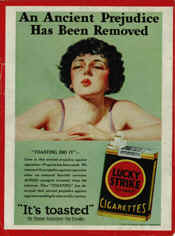
1920s or 1930s ad, via angryharry.com

1920s or 1930s ad, via angryharry.com

Androgyny, the dawn of the modern age, and the desire to blend masculinity with femininity are some of the inspirations behind Tabac Blond. It is one of the legendary leather and tobacco perfumes of the early 20th-century from the famous house of Caron.

Tabac Blond was released in 1919, the same year of another perfume giant, Guerlain’s Mitsouko. Tabac Blond was the creation of Caron’s founder and “nose,” Ernest Daltroff, who sought to create a scent for the new, modern woman. As Fragrantica puts it, it was a fragrance “for women who smoke cigarettes, since a cigarette was, at that time, the perfect symbol of freedom and chic of a Parisian woman.” Caron has a more evocative and vivid description:

To mark the dawn of feminine liberation, CARON made the bold move in 1919 of dedicating a deliberately provocative perfume to the beautiful androgynous women of the era, with their long ivory and mother-of-pearl cigarette-holders poised nonchalantly between their lips.

Tabac Blond: a subtly ambiguous fragrance that borrows the leathery head notes from the world of masculine fragrance, and combines them with Caron’s inimitable floral bouquet…

Source: topwalls.net

Source: topwalls.net

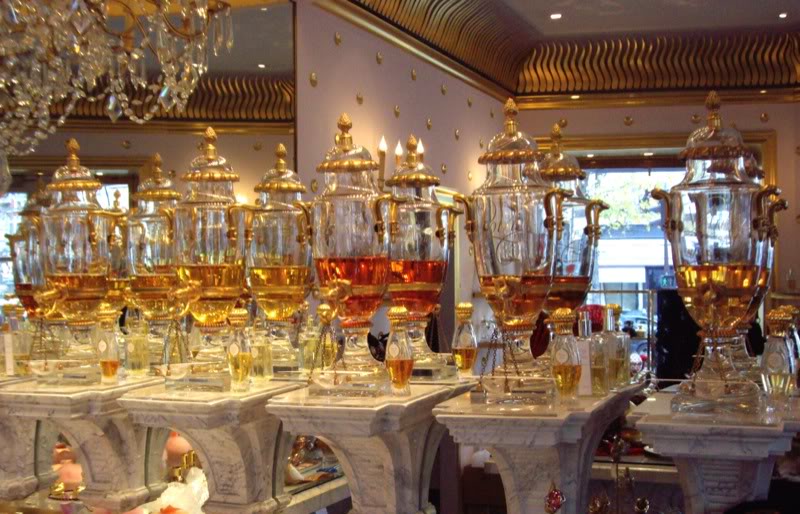
Tabac Blond is one of Caron’s Haute Parfumerie “Urn Scents” which originated as extracts or pure parfums. While Tabac Blond is now also available in eau de parfum concentration, what most people rave about is the vintage pure parfum. Now, I tried the parfum extrait version, but not the vintage version. I would like to, but, frankly, it’s not what most people have access to. So, modern Tabac Blond extrait is the focus of this review. You can find it at a handful of niche perfume sites, like Luckyscent, though I doubt anything would compare to the experience of buying it at a Caron boutique where the sales assistants will fill your bottle from their exquisite, famed Baccarat crystal urns into something a little more practical, portable, and pedestrian.

Caron Boutique and the famous urns. Photo via bloggang.com and Examiner.com

Caron Boutique and the famous urns. Photo via bloggang.com and Examiner.com

The Caron website lists only three things for Tabac Blond’s notes: Leather, iris, and cedar. Fragrantica has a much more complete list:

leather, carnation, lime blossom, iris, vetiver, ylang-ylang, cedar, patchouli, vanilla, ambergris, musk.

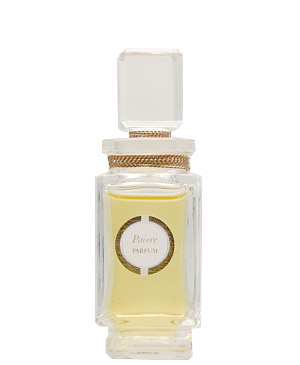
Tabac Blond Extrait via Luckyscent.

Tabac Blond Extrait via Luckyscent.

You will notice that tobacco is not mentioned anywhere. Yes, this perfume known for being the original tobacco, smoking scent does not actually include a single drop of the note. (Neither, for that matter, does Habanita which followed it two years later in 1921 from Molinard.)

I need to say something at the outset. I’m not really one for powdery scents, let alone powdery florals. My tastes run towards deep Orientals, heavily spiced ambers, smoky woody fragrances, or mossy Chypres, but I always appreciate something which is well-done and refined in nature. Tabac Blond certainly qualifies, even in its modern form.

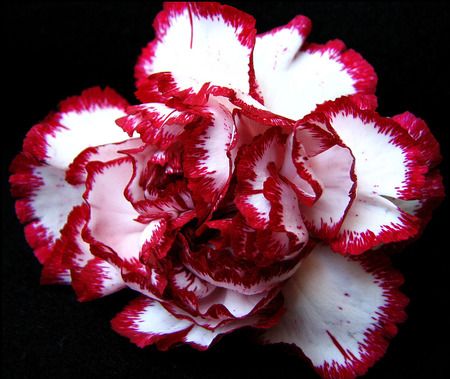
Source: nature.desktopnexus.com

Source: nature.desktopnexus.com

The parfum opens on my skin with a flood of carnation that is primarily spicy, peppered, and almost a bit clove-like in its aroma. There is a hint of something akin to rose in its sweetness, but the carnation’s piquant, spicy nature really dominates. It is followed by powder, then leather which has a definite animalic undertone, as if it had been lightly coated with castoreum. Flickers of lime and vanilla quietly trail behind, but the main bouquet is of powdered carnation, lightly infused with animalic leather. There is a sweetness to the powder, which definitely comes from iris, but it is not heavily vanillic.

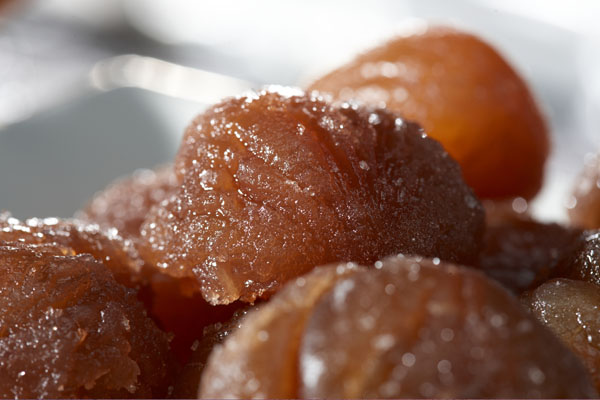
Marrons Glacés.

Marrons Glacés.

The Caron base which I’ve detected in a few of its other fragrances, like Nuit de Noel, is very evident here. “Caronade,” as it’s called, is very hard to describe if you haven’t smelled it, but it essentially consists of a bouquet that always makes me think of marrons glacée or glazed, iced chestnuts. It’s visually very brown, with a dark richness that is simultaneously dry, sweet, powdered, nutty, and a little bit vetiver-like in its dark, somewhat earthy woodiness. I realise that all sounds very odd, but marrons glacée or iced chestnuts are often mentioned by people when it comes to describing the Caronade, so try to imagine a slightly leathered, dry, faintly powdered, vetiver-ish, spicy, vanillic version of that, and you’ll be close.

Tabac Blond slowly starts to shift. About 5 minutes in, the iris becomes more prominent in its own right. It’s chilly, cool, and very much like scented, sweetened, makeup powder. The Caronade signature also becomes more visible, but the leather is surprisingly subtle on my skin. It drifts through the top notes as a dark spectre with an animalic undertone, but I would never sniff Tabac Blond and think, “ah, leather!” Carnation and powder, definitely, but the leather takes a distinct back-seat to the other two elements. Still, it’s really nice as it has both a warm richness and a refined smoothness that evokes kid-skin.

Habanita EDT bottle and box.

Habanita EDT bottle and box.

It’s hard for me to review Tabac Blond without bringing up Habanita, its younger sister. The two perfumes have a similar profile, share a number of notes in common, and are quite alike on my skin. For example, a subtle tinge of sourness. I don’t know if it is my skin or something about the lime blossom, but Tabac Blond has the faintest trace of sourness. It also popped up with Habanita which has bergamot instead of lime to go with all the florals, powder, and leather, but it was significantly stronger there. With Tabac Blond, it is much more subtle and fades away after about 30 minutes. Another difference is that Tabac Blond is much more leathered, dark, spicy, and smooth than Habanita on me. The latter was fruity, more synthetic in feel, and sweeter. Tabac Blond’s leather is much smoother, lacking Habanita’s rubbery or sharp edges. The Habanita is dominated primarily by rose, while Tabac Blond is all spicy carnation with a subtext of cloves. Finally, the Habanita lacks the very key Caronade signature, and is about ten times more powerful in terms of projection.

Source: Walltor.com

Source: Walltor.com

Yet, for all the subtle differences, the two fragrances are definitely related. Powdered florals, lightly flecked by leather, and carrying a trace of some vaguely abstract “tobacco.” The latter is much softer and more subtle in Tabac Blond than it is in Habanita, but the note is pretty much identical. It smells just like the powdered, scented paper in an empty pack of cigarettes. It’s never tobacco in the way of modern fragrances that have that note; this is not the tobacco of Tom Ford‘s Tobacco Vanille, or Serge LutensChergui. This is scented, powdered paper in something that once contained tobacco and whose lingering traces have merely carried over.

Source: Allposters.com

Source: Allposters.com

Tabac Blond continues to change as time goes by. The sillage was initially moderate, but starts to drop after 40 minutes. At the end of the 2nd hour, Tabac Blond is almost a skin scent, though it is very easy to detect up close. It coats the skin as a discrete, silken layer of carnation and powdered, lipstick-y iris, with a faint trace of leather and tobacco paper, all nestled within the warm embrace of the chestnut-y, dark Caronade. The lime is no longer there, and faded away about 30 minutes in; the animalic undertones soon followed. The tobacco paper impression is now almost imperceptible, requiring a lot of hard sniffs to detect it lurking in the lower layers. The vanilla is also quite muted, adding an indirect touch of sweetness to the carnation which is now much less spicy and clove-like. There is a faint touch of warmth growing in the base, though it is wholly abstract and can’t be singled out as amber in any distinct way.

Source: thevintagemoth.blogspot.com

Source: thevintagemoth.blogspot.com

Tabac Blond remains largely unchanged until its very end, with only subtle differences in the strength of certain notes. The one new thing to appear is the cedar which becomes a tiny bit prominent in the drydown, as does the vanilla, while the carnation becomes increasingly abstract. By the start of the sixth hour, Tabac Blond is a true skin scent that is primarily an abstract, powdered floral with cedar and vanilla. There is a trace of something dark lurking underneath that sometimes feels like very soft, muted leather, but, at other times, merely seems like the Caronade.

In its final moments, Tabac Blond is just a blur of something powdered, vaguely sweet, and with the faintest trace of Caronade. A small quantity lasted for quite a while on my skin: about 1/4 of a ml, gave me just under 11 hours in duration. A slightly larger amount increased the time-frame to about 13 hours. The longevity is just as well, because Tabac Blond in the extrait version isn’t cheap. It’s $265 for 15 ml, though Luckyscent offers a 7.5 ml bottle for $100. Unfortunately, they are sold out of it, with no indication of when they might get it in. Somehow, the fragrance is cheaper in Europe where the 15 ml bottle retails for €120 or about $153. (See the Details section at the end for more information.)

I have mixed feelings about Tabac Blond. As noted earlier, powdered florals are not really my thing, but there is something appealing about the Caron’s version in the opening hours. It’s definitely very pretty at times, especially with the spicy clove undertone, and I’m sure the vintage was even better, with added darkness, smokiness, and bundles of animalic leather. The current parfum version is sophisticated, powdered femininity, but it’s a lot less complicated or interesting than I thought it would be. To be fair, this is not the version everyone talks about, and I rarely find powder puff scents to be interesting in general. Very few of them appeal to me, but I certainly think Tabac Blond is more nuanced than the current Knize Ten, another powdery leather thanks to reformulation. I definitely prefer it to Habanita, which isn’t as luxurious, high-quality, rich or smooth.

I think Tabac Blond skews quite feminine by today’s standards, as I suspect it’s too powdered and makeup-like for most men. Yet, a ton of men love Knize Ten which has been also reformulated into a very powdery scent these days, so who knows. Tabac Blond is much richer, and sweeter than the original Knize Ten, and not as oriental as Knize Gold. Plus, its leather is extremely different, as there is not an iota of birch tar in the Tabac Blond parfum that I tried. The note is much smoother and more refined than the leather in the Knize fragrance; perhaps more akin to the drydown leather of Chanel‘s Cuir de Russie. It’s also sweeter than the leather in both those fragrances, thanks to the Caronade with its mix of dryness, sweetness, vanilla and chestnuts.

Tabac Blond extrait is generally a much adored fragrance in its vintage form. You can read any number of rave, positive reviews for it on the blogosphere, as it may be one of the most discussed fragrances out there, and everyone gets around to covering it eventually. Take, for example, Angela at Now Smell This who wrote, in part:

Although I can imagine a man wearing Tabac Blond well, on me the perfume feels luxuriously womanly. It’s top notes are leather, carnation, and linden, with heart notes of iris, vetiver, ylang ylang, and lime-tree leaf. Its base is cedar, patchouli, vanilla, amber, and musk, although a smoky, spicy vanilla is mostly what lingers on my skin.

Tabac Blond’s range isn’t huge. I don’t get the piquant top notes that many fragrances provide, but instead tobacco leaf, gently supported by spicy florals, starts right off the bat. Then the scent of raw leather appears for a while, and the effect is that of a buttery leather ashtray full of cigarette butts and snickerdoodles, or maybe a leather-vanilla soufflé in a smoky brasserie, if anything like that were ever cooked up. Imagine lipstick-stained wine glasses on marble-topped tables, a smeared golden haze on the mirror over the bar, and worn, red leather banquettes, and you start to get the idea. Tabac Blond has good staying power, and a dab on each wrist and behind the ears will last all day.

Marlene Dietrich via Pinterest.

Marlene Dietrich via Pinterest.

It sounds lovely but, if you look at the date of that review, it’s 2007 and I suspect she may have tested the older, vintage version. I’ve tried to stay away from the issue of vintage Tabac Blond because, frankly, the majority of us will never get the chance to try it. It is simply too expensive, and hard to obtain.

It’s also not easy to find reviews of the modern, current Tabac Blond, as everyone focuses on the reportedly glorious original which was Marlene Dietrich’s favorite scent. A lot of times, talk of the modern version usually comes in the form of a comment posted to a review about the vintage version, with people lamenting the changes, the loss of the leather, and the dominance of powdered florals. Well, they aren’t wrong about that last part, and it makes me feel a lot better for my ambivalence towards the scent.

One person who has written, albeit briefly, about the current version is Bois de Jasmin who did a comparative assessment of both. She loves the vintage parfum which she rates at 5-stars, but gave the modern fragrance a rare one-star. Her review of the 2011 Tabac Blond is wholly disapproving:

It is telling that every time I try to write “Tabac Blond,” I invariably end up with “Tabac Bland.” Indeed, the new version is just that, a bland carnation. The original Tabac Blond has a dark smoky leather note that in combination with rich tobacco and sandalwood create a haunting, smoldering effect. None of those elements are present in what passes for Tabac Blond today. There is a hint of clove and sheer moss, a whisper of something green, but overall, Tabac Blond in its current form is not even worth smelling.

Others have noted definite changes in the scent as well, but my friend, Suzanne, of Eiderdown Press didn’t think they were enormous back in 2009. Perhaps things have gone further down hill since then, but you may be interested in her comparative view of two bottles of the Extrait which she purchased at different times back around the reformulation date:

the big question circulating the blogs last year was, Has this fragrance been “watered down” during the course of its reformulations?  To which I can only say, I purchased two decants of the extrait de parfum back in 2007, and there were noticeable differences between them: the one purchased later in the year was distinctly less dense and full-bodied  than the first decant. Yes, it was a little disturbing; but that said, the Tabac Blonde extrait from either one of those decant bottles still smells as provocatively unique and unto-itself as any scent in my collection. The fragrance’s smoky, spicy, burnt-rubber-and- carnations opening reminds me of the first delicious drags of cigarette—the first one you’ve had in ages—and as it dries down, the tar-like quality dissolves into warm leather, with an amber-and-vanilla finish that does not diminish the smokiness of this scent, but makes for a smooth, fat-bottomed ride that seems to go on forever. Put it all together, and everything about Tabac Blond—from its invitation to enjoy a private, leisurely smoke to its leather panels to its cushiony amber seat—says, Get into my car, babe. Let’s drive.

Suzanne’s version sounds significantly more leathered, tobacco’ed, and ambered than the sample I ordered in 2013, which makes me wonder if the fragrance has been watered down even more since she bought her decant in 2007.

Still, on Fragrantica, the current version of Tabac Blond seems to be much appreciated, though primarily by women. Something that struck me as very odd is that 15 people have voted for a similarity between Tabac Blond and Karl Lagerfeld‘s cologne. Now, I love and own the vintage version, but not the new, reformulated fragrance which appears under the name “Karl Lagerfeld Classic.” I haven’t smelled the latter in a long, long time, but, to my memory, it’s not at all similar to Tabac Blond. It certainly lacks the Caronade signature, as well as the richness and the smoothness of Tabac Blond. I also remember the new, reformulated Lagerfeld “Classic” as being significantly sweeter, more synthetic, and with more actual tobacco, but without any of the carnation spice.

Clearly, vintage Tabac Blond Extrait was a masterpiece of leather, but the current version isn’t terrible. It’s definitely something more suited to those who love powdery carnation or floral scents, but it does have pretty aspects. The Caronade adds a very lovely, rich vein of dark sweetness, and the leather (when it appears) is wonderfully smooth. It may not last very long, but I enjoyed its subtle flickers in the earlier stages. Tabac Blond definitely skews feminine in my view, and I think most men would struggle with the powder aspect. Still, a lot of men adore Knize Ten which, in its modern formulation, is also very powdery, so there is a slim chance that Tabac Blond might appeal. However, don’t expect a ton of leather with modern Tabac Blond, and the same goes for the tobacco.

The main conclusion to draw from all this seems to be this: perhaps we should all scour eBay for the vintage version. Modern Tabac Blond is a great interpretation of a carnation powder puff, with the added benefit of some other subtle elements, brief as they might be, but it’s not really a leather scent any more.

DETAILS:
Cost & Availability: The version of Tabac Blond that I tested was the Extrait or Parfum which costs $100 for a 7.5 ml bottle, $265 for a 15 ml bottle, and up depending on size. There is also an Eau de Parfum that comes in two sizes. A 50 ml bottle that retails for $130, or a 100 ml bottle that costs $170. Caron has a website, but no e-store from which you can buy the perfumes. In the U.S.: Tabac Blond Extrait is carried at Seattle’s Parfumerie Nasreen which sells the Extrait for $265, but it doesn’t state the size of the bottle (which looks larger than 7.5 ml to me). The $100, small Parfum size is offered by Luckyscent, which also sells the EDP version, but all three are sold out. You can have them email you when they receive it. Tabac Blond Pure Parfum is offered by The Perfume House in Portland which sells the 15 ml bottle for $265, and a 50 ml bottle for $330. It also offers the EDP versions. In New York, you can find it at Caron’s boutique at 715 Lexington Avenue or can perhaps call to order (Ph: (212) 308-0270). There seems to be no other retail options. Nordstrom’s once carried the EDP, but no more. Outside the U.S.: In Paris, you can purchase the fragrance from the 3 Caron boutiques. In France, you can order Tabac Blond Extrait from Atelier Parfumé in a variety of sizes, ranging from the 7.5 ml for €90, going up to €120 for 15 ml, €150 for 20 ml, and €250 for the 50 ml size. You can contact them to see where they ship. One place that says it ships worldwide is the Soleil d’Or Parfumerie which sells Tabac Blond Extrait in the 50 ml bottle for €226. They are sold out of the 15 ml bottle. In the UK, I couldn’t find the Extrait version anywhere. I only found Tabac Blond EDP at Escentual which is briefly discounting the fragrances at £84 for the 50 ml instead of £105, while the 100 ml bottle of EDP is reduced to £134 instead of £167.50. The EDP is available for full price at London’s Les Senteurs, along with a sample for purchase. Samples: I obtained my sample from Surrender to Chance which sells the Extrait starting at $5.99 for a 1/2 ml vial. What I did instead was to order the Smaller Caron Gateway Pack which gives you Tabac Blond Pure Parfum, along with Poivre Parfum, and Parfum Sacré in EDP version in a set that starts at $9.99 for three 1/2 ml vials. The site also offers Vintage Tabac Blond Extrait starting at $19.99 for a 1/4 ml vial.