Re-Blogged: “The Making of a Celebrity Fragrance”

Utterly fantastic, incredibly insightful and just bloody funny at times. You really need to read this to understand the nature of the celebrity fragrances flooding your department stores: from the role of the marketing group; the almost non-existent role of the celebrity; the establishment of a price-point for the perfume as almost an initial starting point with people then working backwards; the recent perfume releases by Lady Gaga and Nicki Minaj; and the power of Coty. A few of the more amusing tidbits:
– “Just go to the fragrance counter of any department store. Most of the fragrances there fall into two categories: citrus-aquatic and spicy-oriental. On top of that, they all smell like each other.”
– An example of the sort of brief given to perfumers: “’A dark fragrance that expresses the mystery and drama enveloping Lady Gaga in her video Fame.’”
-“Often, along with the brief, perfumers are directed what the cost of the formula should be. Nevertheless, there is always an opportunity to make a cheap formula even cheaper. The easiest way to do this is to use only synthetics and this is exactly what most celebrity scent developers do.”
-Take the recent releases by Lady Gaga and Nicki Minaj. Both fragrances come in horrendous bottles that can easily turn into weapons. They do catch the attention of the 14-year-olds though, so we can give a check mark next to “successful packaging”.
-“staff hired by the fragrance company promotes the fragrance and creates awareness about it. These would usually be the friendly people pushing under your nose strips of stuff you don’t want to smell. They are also the ones who make you smell a spicy-oriental when you are really asking them to show you a citrus-aromatic.”

Read the full article. It’s hilarious, but also a sadly true reflection of the state of commercial, mass-market perfumery where celebrity scents are predominating by what seems to be a huge, massive amount.

“The People v. Amarige” – Prosecution & Defense

The People v. Amarige – Case # 13-92745B

The Bailiff: “Oyez, Oyez, the Court is now in session. The Honorable Judge Charles Highblossom presiding. On the docket, The People v. Amarige, Case # 13-92745B. The charge is olfactory assault and battery. State your name and business before the Court.”

[A small, balding man rises]: “I am the District Attorney, Luke Sneering.”

[A tiny, dark woman rises]: “I am the Public Defender, Grace Hopeless-Causes, representing the Defendant, Amarige de Givenchy.” [She points to the table where Amarige sits. She is enveloped in the most luxurious white furs, drips gleaming diamonds, and wears the largest, frothiest hat this side of a royal wedding. The defendant’s chin is raised defiantly, her eyes staring straight ahead, but she nervously fingers her diamond choker.]

[The white-wigged judge bangs his gavel]: “The Prosecution may proceed.”

THE PROSECUTION:

[The D.A., Mr. Sneering]: “Ladies and gentlemen of the jury. We are here to convict Amarige, from the house of Givenchy, with being the most heinous perfume in the world. Countless have fallen prey to her horrors. You will hear testimony from asthmatics whom we will wheel in from the Intensive Care Unit where they landed after a mere whiff of her olfactory napalm. You will hear of her ubiquity in the 1990s, Amarige 1990sassaulting you from every magazine perfume strip, invading your home through your mailbox, until there was no escape. You will hear from Luca Turin, the perfume expert, on how she is “truly loathsome,” a perfume he rated one-star, and which he hates the most in all the world. And, in the end, you will do the right thing: you will convict her of assault and battery, even though what we really should be charging her with are crimes against humanity!
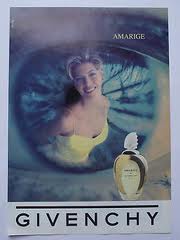
Let us start at the beginning. Amarige was let loose upon the unsuspecting public in 1991, a fruity-floral Frankenstein created by the legendary nose, Dominique Ropion, who really should have known better! Her parts, according to Fragrantica, consist of:

top notes are composed of fresh fruit: peach, plum, orange, mandarin, with the sweetness of rose wood and neroli. The floral bouquet, very intense and luscious, is created of mimosa, neroli, tuberose, gardenia and acacia with a gourmand hint of black currant. The warm woody base is composed of musk, sandalwood, vanilla, amber, Tonka bean and cedar.

In those long-ago days, as the perfume blogger The Non-Blonde states so well, there was no escape from her fumed tentacles. You didn’t have to buy it to wear it.

[You] didn’t have to: you could go into a public building, a friend’s home or get on a bus and emerge with your hair and clothes smelling of it. Amarige was so recognizable and obvious that even I, lover of assertive perfumes, couldn’t deal with it. Not to mention the fact that it’s so very peachy you could feel the juice dribble on your chin.

The Non-Blonde may have had a baffling change of heart on Amarige, but she was right when she said that “women who maintain the old habit of marinating themselves in Amarige should have their noses and sanity examined.” (Frankly, I think the Non-Blonde should have her sanity examined for her sudden appreciation of Amarige. No, time does not heal all olfactory wounds!)

I said at the start that what we should be charging Amarige with are crimes against humanity. The world agrees with me. I present as witnesses, some posters from Basenotes.

[The court security guards wheel in the witnesses that they have ferried over from the Intensive Care Unit. From their gurneys, they feebly lift their heads to take the vow to ‘tell the truth, the whole truth and nothing but the truth,’ so help them God. And then they testify.]

  • Tuberose’s reputation has been damaged almost irrepairably by this most horrid affair. If I were her I would sue.
  • Truly, truly awful. Radiates out to the orbit of Neptune. Causes asthma, retching and a stampede for the exit. Frightens children and pets, ruins dinner-parties, restaurant meals and plane journeys. Could be used to eradicate vermin from silos and warehouses. [..] Please people, stop buying this hideous juice so Givenchy will stop making it. It’s an abomination, a crime against humanity. I can’t understand why any woman would want to smell like this, or why her significant other would want to smell it on her. A chemical disaster of Chernobyl proportions.
  • this Perfume is a migraine in a bottle. […] The absolute worst fragrance I’ve ever smelled.
  • I own a bottle of it due to my initial attraction to its smell in small quantities. Wearing it, I feel nauseous and completely unable to eat anything. I tried to scrub it off in the shower but it won’t die. I haven’t eaten anything all day. I think this toxic odor could be useful as a diet aid.
  • Horrible, HORRIBLE soapy smell broadcasting out to the planet at gigawatt levels. I made the mistake of spraying this onto my wrist and I thought I’d never be able to remove it. This smell made me feel nauseous and headachey.

The final witness comes from Fragrantica:

If I had to describe this perfume in one word it would be ‘haunting’ because it’s unpleasant and, like the eerie warnings written in blood on the walls, impossible to scrub off.

‘Blood on the walls.’ Blood on the walls, people! The eerie warnings come, in part, from tuberose, one of the most indolic flowers around. What is an idole, you ask? I draw your attention to Exhibit 3, the Glossary of perfume terms. It is something found naturally in many heady, white flowers — like tuberose. In excessive amounts, it can lead to a feel of extreme full-blown, over-ripeness. In cases of fragrances like Amarige, it can turn to an aroma of sourness, even cat litter feces, plastic flowers, urine,  garbage heaps of rotting fruit, or all of the above. At best, Amarige is a fetid, rotting stinker that will turn from over-blown flowers to pure sourness and cat urine. At worst, it will choke up your airways, prevent all breathing and render you utterly unconscious. All in just 2 small whiffs.

You don’t believe me, I can see it in your eyes. Well, we shall prove it to you. Guards! Bring in the testers!”

[The guards set up two, tiny canisters at each end of the room. The jury shifts in their chairs nervously. A cordon of security blocks the doors. The District Attorney dramatically puts on a giant gas mask, akin to those used by soldiers in the first Persian Gulf War when there were fears of Saddam Hussein using chemical warfare — or Amarige — against American troops. Mr. Sneering points to the guards and nods.

Pfft. Pfft. Pfft.  

Three small whiffs of scent are released from each of the two canisters. White flower after white flower suddenly fills the room. They flit here, they flit there. They are omnipresent. There is a smell of orange, orange blossom, more orange blossom, and still more. It spreads its powerful molecules around the room like a carpet unfurling a wave. Little spectres of happy yellow mimosa flowers dance along the orange carpet. There is a shadow of some silken amber rising up, peeking its eyes above the wave of orange. Peach makes an appearance, adding to the orange haze filling the room and cocooning the white ghosts of tuberose and gardenia. The powerful ghosts dance merrily up to the District Attorney and punch him in his gas-masked nose. He falls back, but rises with a glare.

There is an audible gasp. A woman in the far back of the visitor’s gallery clutches her throat and gasps for air. Juror #4 faints completely. Jurors #6 and #9 have a look of rapt enchantment and glazed joy on their faces, much to the disgust of the District Attorney who sneers at them. In her seat, Amarige smiles faintly. With an almost imperceptible flick of her dainty chin, she tells the ever-growing, large white ghosts of tuberose and gardenia to move near Juror #5 who told of her upcoming wedding in Voir Dire. They move and the Juror suddenly sits up straighter in her chair, dreams of her wedding day and of Amarige trailing behind her in a billowing cloud of white.

The Jury Foreman has been watching these proceedings with unease. When Juror # 2 keels over beside him, begging for medical help and saying she is dying, he starts to back away. Quietly, he inches towards the door and then flees outright, only to head straight into a wall of security. The gas-masked police officers grimly shake their heads. He looks at them pleading. “I can’t take it any more. Get me out of here,” he whispers. “It’s in my nose, it’s burning my skin. There is so much fruit all of a sudden. I’m surrounded by peaches and a whiff of plum. It’s cloying, synthetic and artificial. And it’s covering every inch of me, like fruited animals devouring my skin. I need a shower. Please, have mercy.” They sympathetically shake their heads again and drag him, kicking and screaming, back to his chair.

The Judge has had enough of these theatrics. He orders medical attention for the gasping or collapsed bodies, lying crumpled like rag dolls throughout the room. He orders all the windows opened and the room to be fumigated before the court will reconvene the next day. He contemplates also ordering psychiatric evaluations for those jurors who had beatific, hypnotized, enraptured smiles on their faces, but decides he cannot seem biased.

The next day, the court reconvenes and the District Attorney resumes his case.]

“Ladies and gentlemen, I apologise for subjecting you yesterday to the horrors of Amarige. But, I had to give you the chance to decide for yourself. The People’s case will conclude with our expert, Mr. Luca Turin, the most famous perfume critic in the world. Before you is Exhibit 4, an excerpt from his book with Tania Sanchez, Perfumes: the A-Z Guide. Note the categorization of Amarige as ‘Killer tuberose.’ Killer. Not extreme but ‘killer.’ The one-star review reads as follows:

We nearly gave it four stars: the soapy-green tobacco-tuberose accord Dominique Ropion designed for Amarige is unmissable, unmistakeable, and unforgettable. However, it is also truly loathsome, perceptible even at parts-per-billion levels, and at all times incompatible with others’ enjoyment of food, music, sex, and travel. If you are reading this because it is your darling fragrance, please wear it at home exclusively, and tape the windows shut.

Ladies and gentlemen, the People rest their case.”

THE DEFENSE:

[The Public Defender, Grace Hopeless-Causes, rises and speaks]: “Ladies and gentlemen of the jury, I am here for one reason and one reason only. To represent the shamed, silent, closeted minority of women who adore Amarige and feel she has been most unjustly accused of crimes against perfumery! She has been vilified for far too long and it’s time for the Amarige lovers to defend her!

The weight and power of Luca Turin’s reputation has added the final, unjust nail in Amarige’s coffin. It is not tuberose who should sue Amarige, but Amarige who should sue Luca Turin for defamatory libel!

Don’t believe the District Attorney. He has presented only one, very slanted, side to the story. Did you note how he had only one witness from Fragrantica? Why is that, do you think? I’ll tell you why: because that was the sole, truly harsh review of Amarige. He didn’t tell you of all the others which spoke of the joy, the happy, dancing aura of Amarige, the image of beautiful wedding days, or posts writing of “sumptuous” finishes, of “sophistication” and “class.” There is no mention of how it is addictive, of how you can’t stop sniffing your wrists, of how intensely feminine it can make you feel.

And there is not a word about how it can drive men wild.

No, the District Attorney has presented a very lopsided, distorted picture of Amarige. Even when he quotes Luca Turin, he leaves out the words of his co-author, Tania Sanchez, who wrote in that same book:

Amarige is a genius work of perfumery, utterly recognizable, memorable, technically polished and spectacularly loud.

The D.A. quickly brushed over how they wanted to give it four stars. FOUR. And there is not a peep out of him over the fact that the very book he quotes as expert opinion actually lists Amarige in their top 10 BEST list at the back! It is in their 10 Best Loud Perfumes list, next to the 5-star Fracas, 5-star Angel, and the 5-star Lolita Lempicka perfumes. Strange for a perfume that Mr. Sneering and Luca Turin would have you believe is a crime against perfume humanity, no?

amarige1998Yes, Amarige is loud and a diva. Yes, one big squirt can blow your head off. But no-one ever said you should bathe in it, for heaven’s sake! Plus, don’t let the opening blast fool you. Amarige has average sillage and longevity. After the first ten minutes, it can fade to a much tamer level. If you don’t believe me, read Fragrantica, Basenotes or MakeupAlley, and see similar comments for yourself.

To all those who have had asthmatic attacks as a result of encounters with Amarige, I apologise. She apologises. Truly. But the same thing could happen from Lolita Lempicka, Angel or a whole host of perfumes. Why have they not been brought up on charges? Why does Luca Turin adore and worship the brilliance of Angel — a scent which many have compared to toxic nerve gas — but not the admittedly “genius,” “technically polished” masterpiece of Amarige? And, in all cases, isn’t it the fault of the wearers who spray on too much? Blaming Amarige for medical injuries triggered by over-use is akin to blaming a car manufacturer for accidents that may arise from someone texting while driving.

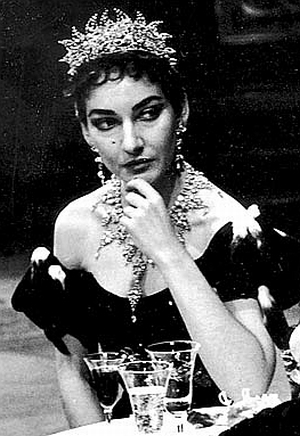
Where we concede and confess fully is the charge that Amarige is a diva. Yes. Yes, she is.Maria Callas Amarige is Maria Callas, the legendary opera singer, taking center stage under the bright white lights, and showered with diamonds by billionaires like Aristotle Onassis who loved her more than he ever did Jackie O. Amarige is not meant to be a simpering, quiet wallflower, sitting in the corner, awaiting a man to ask her to dance. She will push her way to the center of the floor and dance by herself, mesmerizing a room — public opinion be damned!
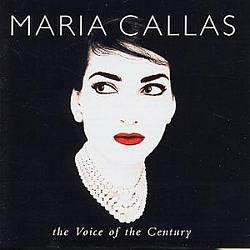
As for the charge that she is a cloying monster with some potentially synthetic undertones, we plead the Fifth. Even if true, and we are not saying that it is, many other perfumes are too. And, yet, do you see them in this courtroom? Speaking only for myself, I do not find Amarige to be synthetic. I think she is exactly what Givenchy and Dominique Ropion meant for her to be. As Fragrantica explains:

The name of the perfume ‘Amarige‘ is an anagram of the French word ‘Mariage.’ That is why this fragrance is as intensive as a strong feeling, merry, juicy and unforgettable as a moment of happy mariage. It is so opulent and floral that it seems like its composition includes all the beautiful flowers that exist in the world.

The Amarige woman is graceful, playful and charming, a real French woman in love. She radiates joy and gives a happy smile.
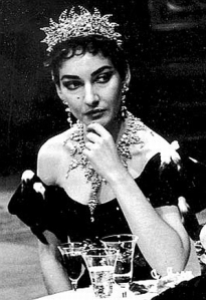
Maria Callas Tosca

Maria Callas in “Tosca.”

Despite her opulence and diva status, Amarige can be a cheap date. You can find a 1 oz bottle on Kohl‘s for $50 or on Sephora for $49. A 1.6 oz bottle costs $67 on Sephora, and much less on eBay. Compare those prices to more reputable white floral or tuberose scents: Robert Piguet‘s Fracas starts at $95; while Frederic Malle‘s Carnal Flower starts at $230 at Barneys.

Whatever she is, I realise this is the most hopeless of all lost causes. Amarige’s reputation has been destroyed beyond all measure. I can sit here and talk to you about her lovely white femininity, her peach exuberance, that dry-down of spice and amber, and it will make no difference at all. There is simply no hope of restoring her good name.

But I make this plea to you, ladies and gentlement of the jury: do not let the perfume world’s easy, facile dismissal of Amarige influence you. They are not objective and they have followed Luca Turin like sheep. After all, they proudly admit their love for Fracas, another white flowers explosion that make people gasp for air.

Admittedly, Fracas is a much more elegant creature than the brazen hussy, Amarige. And, yes, hard as it is to believe, Fracas almost seems like almost a quiet, shy child in comparison. But are they really so different as to warrant Fracas’s triumphant twirl in the spotlight as a cult favorite and legend, while Amarige wilts in the wilds of guilty obscurity? Again, Fracas may be of slightly better quality and there is not a hint of anything synthetic about it. But it too is an over-blown indolic scent that can turn sour or lead to thoughts of rotting fruit. Amarige is more fruity than Fracas, true, but there is luscious peach, orange and amber in Hermès‘ sophisticated 24 Faubourg, after all.

Unlike 24 Faubourg’s sophisticated woman, however, Amarige is like a happy child, all yellow, orange and white dancing flowers, full of exuberance and femininity. It is not a scent for those who like discreet, quiet, unobtrusive fragrances. It’s not for those who can’t stand heady, narcotically powerful ones, either. And it is most definitely not for those who can’t bear white flowers.

But if you love Amarige, I beg of you: do not go quietly into that good night, hiding your face in shame and covering your scarlet letter, that “A” which marks you as an A-marige lover. Rise up and defend her name. Admit your folly and sins. Admit she is glorious. Don’t wear her only in the privacy of your own room with the windows duct-taped shut. And find her not guilty of crimes against perfumery!”

[The Public Defender sits down and the jury leaves for its deliberations. There is no word from them for three days. Then, finally, they return.]

THE VERDICT:

Hung jury.

[Nine jurors wanted to convict.

Three held out, utterly in love, and on their way to buy a bottle for themselves.]

Perfume Review – Chanel Les Exclusifs Sycomore: Mighty Vetiver

Close your eyes and imagine you are in the heart of a forest at Yosemite National Park.

Source: Deby Dixon Photography

Source: Deby Dixon Photography

Cypress trees and evergreens intermingle and stretch far before you. The dark, dry earth is sprinkled with pine needles, and a wild boar is rooting at the tall grasses at the base of a tree, his endeavors lifting the smell of the earthy, chocolate-y roots into the air. Icicles hang from the branches where, nestled deep within, are purple juniper berries. In the heart of the forest, campfires burn thick logs of pine and cypress, and there is a smell of peppery smoke intermingling with the burning woods. Someone is cooking caramel, and burning it. You huddle deeper into your coat as the hint of frost brings a chill, but you can’t help but take a deeper breath of the vetiver surrounding you.

SycomoreGreen and brown, smoky and earthy, with a heart of cypress and wood — that is Chanel‘s Sycomore. It is an incredibly elegant smell, luxurious and leaving a smooth, trail of pure class oozing in its green-brown trail. It is richly masculine, with not a hint of florals, but this is silken masculinity in the most sophisticated, elegant of packages.

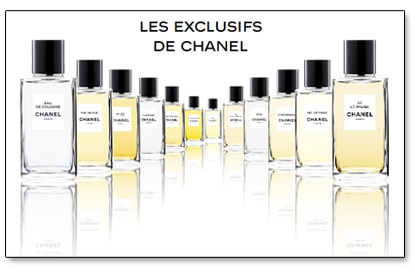
Sycomore was first introduced to the world in 1930, the creation of Chanel’s very famous, original perfumer, Ernst Beaux. From what I’ve read, it was all violet and tobacco with some support from soft aldehydes and balsamic wood. The original Sycomore vanished in the perfume mists, but it was re-envisioned and re-introduced in 2008 as an eau de toilette and as part of Chanel’s prestige collection called “Les Exclusifs.” It lesExclusifswas created by Chanel’s house perfumer, Jacques Polge, along with an equally famous “nose” in the industry, Christopher Sheldrake.

On its website, Chanel describes the new Sycomore as follows:

A rich-wood fragrance with a noble character — like the Sycomore tree that inspired it — created by CHANEL Master Perfumer Jacques Polge in 2008. At the heart of the scent: Vetiver, with an elegant Sandalwood note and dashes of Cypress, Juniper and Pink Pepper, for an earthy, warm and enveloping, yet subtle presence.

I think Chanel’s description nails it, unlike the Fragrantica‘s entry for Sycomore which seems completely incorrect in my opinion. Fragrantica puts Sycomore in the “Woody Floral Musk” category, and lists its notes as “vetiver, sandalwood, aldehydes, tobacco and violet.” I suspect both the categorization and the notes apply only to the 1930s version of Sycomore.

No, Chanel’s notes for Sycomore are the ones to follow and they are clearly listed by the Perfume Shrine as follows:

Vetiver, cypress, juniper, pink pepper, smoke, burning woods.

To get a true understanding of Sycomore, I think it’s important to elaborate a bit on the notes. For example, vetiver which not everyone is familiar with as an ingredient or as a smell, and which is the main part of Sycomore.  Chandler Burr, the former New York Times perfume critic, gave this extremely useful explanation to GQ:

vetiver-roots

Vetiver Roots.
Source: Herbariasoap.com

In the most basic sense, [vetiver is] a grass native to India that grows in bushes up to 4’x4′. It’s also related to lemon grass, as you can tell when you smell it. The stuff—it’s the grass’s long, thin roots that they distill—is infinitely more interesting though: deep, shadowed, astringent, earthy like newly tilled soil, and balsam-woody. It can be warm like tobacco leaves, it can have a crushed-green leaves freshness, or it can be cool like lemon verbena.

Haiti produces about 80% of the vetiver oil in the world, although sometimes you’ll be putting a bit of Indonesia or Brazil on your arm as well (Haiti’s is more floral, Java’s is smokier). There are folks producing it responsibly, too. When you buy a bottle of Terre d’Hermès, which is loaded with the stuff, you’re supporting around 2,000 Haitian farmers and distillers. […]

Like wine, the scent of vetiver oil improves as it ages: the best of it is made with roots that have been aged somewhere between 18-24 months; the oil costs around $200/kg when it hits the market. American scent maker IFF makes it three ways: with steam (resulting in vetiver essence, which is dryer and lighter), solvent (which produces an absolute and is darker, with the scent of rich dirt), and a new technology called “Molecular Distillation” that uses carbon dioxide to yield a scent that’s extraordinary—strongly grapefruit, fresher, zestier.

The Perfume Shrine says that the vetiver in Sycomore is said to be of the Haitian variety so, under Mr. Burr’s explanation, the more floral kind. I’m not an expert on any of the varieties, so I will take their word for it. All I know is that this vetiver smells exactly as Mr. Burr described: “deep, shadowed, astringent, earthy like newly tilled soil, and balsam-woody.”

Do you know how perfume can sometimes take on a colour aura before your eyes? WeaveSycomore opens on me all brown and green. Not khaki but some interwoven panel of dark green and green-brown. It calls to mind green roots and brown earth. Sycomore starts exactly like that, alongside pink peppercorns and an unexpected but definite note of chocolate. It’s almost like chocolate patchouli with vetiver. It’s so confusing that I go over the notes again and, still, I’m at a loss. So, I look up cypress wood which I’m not very familiar with, and that must be the explanation.

From my reading, it seems that cypress wood has a pungent, woody, spicy aroma that can also be sometimes resinous, coniferous, or cedar-like. Here, the combination of the cypress wood with the earthiness of the vetiver seems to have transformed the sum total into chocolate patchouli. You can smell each individual note, but you also have that strong overall impression.

It’s so striking that I looked to see if others had felt the same way. On Basenotes, one commentator also thought there was patchouli in Sycomore, though she concludes the cause was the combination of juniper and cypress. The Scent Critic blog and some on MakeupAlley also picked up on the chocolate edge. And finally, Victoria from Bois de Jasmin summed it up in her usual elegant succinctness: “The chocolate richness of the root is accented by the peppery and smoky notes. The composition possesses an alluring dark character, which in sensation alternates between the tannic dryness of red wine and the softly worn polish of aged woods.”

The chocolate and patchouli impression in Sycomore is so strong for the first hour that it evokes Serge LutensBorneo 1834 in its opening stages. So much so that I’m utterly bewildered by why people compare Chanel’s Coromandel (also from Les Exclusifs) with Borneo 1834, instead of Sycomore. Adding to the similarities between Borneo 1834 and Sycomore is the latter’s strong opening notes of tobacco and smoke. The tobacco note here is faintly bitter, and it is accompanied by a peppery, biting smoky note that is definitely woody.

I wonder about the “burning woods” note listed on many perfume reviews as an element (though not on Chanel’s website), and I keep thinking of guaiac wood. You can read the Glossary for more details but, in a nutshell, guaiac wood has an aroma that is earthy, smoky, tarry, peppery and similar to burning leaves. Tom Ford’s Amber Absolute is also said to have guaiac wood in it, though its official notes are equally vague and merely reference “rich woods” instead of “burning woods.” Both perfumes share a similarly woody, peppery, smoke note, so I have to wonder.

I do smell some sandalwood in Sycomore but, on me, it’s not strong at any point in the perfume’s development. Others have found it, but it’s just a whisper on me. I have to say, I doubt it is real Mysore sandalwood anyway. Anyone who has read Luca Turin and Tania Sanchez’s book, Perfumes: The A-Z Guide, will be struck by their repeated, insistent comments on just how few sandalwood fragrances actually have sandalwood in them at all these days. According to them, true sandalwood from Mysore, India is so scarce and so prohibitively expensive that most perfumers use Australian sandalwood which is an entirely different species of plant and with an entirely different scent. To the extent that Sycomore has sandalwood in it (of any kind), I think it is completely overshadowed and overpowered in the initial stages by the patchouli impression from the cypress and vetiver.

As Sycomore continues to unfurl, there is an impression of burnt caramel, black cocoa powder, incense and dry earth. This is like the black version of Coromandel, without the latter’s vanilla, benzoin and powder heart. The increasingly peppery and smoky nature of the perfume makes me wonder again if they used guaiac wood to fortify any “smoke” accord, not to mention the weak sandalwood. There are also flickering hints of evergreen from the juniper which add a coolness or chill that counters the smoky earthiness. It’s an incredibly sexy, darkly mysterious perfume.

There is a dryness to the rich, earthy smell that really calls to mind dirt — not rich, dank or loamy, but sweetly dry. I realise that non-perfumistas will recoil at the thought of smelling faintly like dirt, but there is really no other way to truly describe the undertones to the very smoked, rich, woody notes. The comparison to dirt also explains Luca Turin’s comments in his five-star review of Sycomore in Perfumes: The A-Z Guide. There, he wrote:

The dream team at Chanel seem to delight in applying superior skills to existing ideas they deem worthy of perfecting: Coromandel was a reorchestration of Lutens’s Borneo 1834…. Sycomore is, in my view, a magisterial gloss on Bertrand Duchaufour’s Timbuktu [for L’Artisan Parfumeur]. The later introduced an Altoids-like idea to perfumery, consisting of a minty-licorice coolness combined with a radiant crackling-wood-fire note. […] Vetiver has both an anisic aspect and a smoky one. Cleverly flank it with Timbuktu’s two companions, add a big slug of sandalwood, and vetiver finds itself in worthy company at last. […] Sycomore [is] … the freshest, most salubrious, yet most satisfyingly rich masculine in years. If putting it on does not make you shiver with pleasure, see a doctor.

I’m surprised that Mr. Turin deems Sycomore one of the few sandalwood fragrance reviews not to warrant his usual comments about how perfumes don’t have real sandalwood in them any more, and I certainly don’t find the same “big slug” as he does, but I agree with the rest of his review. (Minus, his choice of which Chanel perfume to compare to Borneo 1834). I particularly understand his reference to Timbuktu which has often been described as having a dry dirt foundation. Sycomore has both the dirt aspects of Timbuktu and that slightly chilled licorice note underlying the earthiness of the dark patchouli…. er.. vetiver and cypress.

Mogambo 2

Mogambo

Perhaps it’s all that dry dirt and rich green which make me constantly imagine those old movies that explored the heart of an African forest — everything is slightly dark and smoky, mysterious and Tshadowy, all amidst lush greenness and dry red-brown dirt. I keep thinking of Clark Gable with Grace Kelly and Ava Gardner in Mogambo, or Humphrey Bogart and Katherine Hepburn in African Queen. I could see either man wearing Sycomore, and Katherine Hepburn too (though never ever Grace Kelly or Ava Gardner).

As time passes, there is even greater depth to the impressions of burnt umber, burnt caramel, resins, saltiness, and earthiness — all under the forest’s canopy of green-brown vetiver and wood. The patchouli impression ceased being dominant a while ago; now it is the turn of the juniper. In general, juniper has an aroma that is fresh, sweet, and like pine trees, with a slightly balsam-like, resinous undertone. Here, they make I feel as though I’m walking through an icy forest at wintertime, my feet crunching on evergreen needles, the chilled smoke of winter in the air, as I walk towards campfires of burning pine logs where someone is cooking with dark chocolate and another person is accidentally burning the caramel. There is still the chocolate note, you see, though it is overshadowed by a more resinous, caramel element. There is also an undertone of anise and licorice.

In its drydown and final hours, all those things vanish, leaving mostly sweet, faintly lemony, grass. It is vaguely reminiscent of the lemongrass that Chandler Burr referenced. The sweetness of the grass may be one reason why a number of people smell marijuana or cannabis a few hours into Sycomore. I do not, but the occasional “ganja” comment is something worth noting if you’re tempted to try Sycomore. What I do smell, in addition to the sweet grass, is a sort of creaminess that I think comes from the sandalwood. As always, however, it is faint; even more of a shadow now than before.

There are two things which confused me about Sycomore. One, which I’ve already mentioned, is that it is Coromandel which is compared to Borneo 1834, when I think it should be this Polge and Sheldrake collaboration instead. (At least, for the opening hour. I don’t think Coromandel is remotely like Borneo 1834.) The second is a far more important issue: Chanel’s gender classification for this scent. Chanel has labeled Sycomore as a woman’s perfume and, to me, that is akin to saying M&Ms are only for women. It makes absolutely no sense at all.

Not only is Sycomore unisex, not only is it the furthest thing possible from “girly,” and not only do men adore this, but it is — I would argue — actually a masculine scent first and foremost. It may be a somewhat feminine masculine fragrance, but it is a masculine fragrance at its heart. In fact, women who have not explored niche scents and who are used to the more traditional, conventional or mass-market feminine fragrances — whether of the floral, “girly,” clean, sugary or gourmand variety — may find Sycomore to be overwhelmingly masculine and an utter shock if purchased blind. This is no Marc Jacob Lola, Guerlain Shalimar or Dior J’adore.

No, Sycomore has consistently been compared to men’s colognes. In fact, commentators on both Basenotes and Fragrantica find it to be an exact duplicate of Lalique‘s L’Encre Noire for Men (2006). A few people even bring up Hermès‘ men’s cologne, Terre d’Hermès — though most people on Basenotes find that much more citrus based and without anything close to the same degree of vetiver in it (no matter what Chandler Burr may think). I agree with that. I’ve got Terre d’Hermès and like it. But, like many on Basenotes, I find them to be very different perfumes and don’t think Terre d’Hermès is a predominantly vetiver scent. As a point of interest, in a Basenotes thread asking for people’s preference as between Sycomore and Terre d’Hermes, a monumental majority chose Sycomore as the better, more elegant, and truer vetiver fragrance.

All in all, Sycomore is an incredibly lovely fragrance and as smooth as silk. It is magnificently blended, such that everything folds into one rich layer upon another. There is a paradoxical coolness to its warmth, but it is never a chilly or aloof scent. It has too much earthiness in its beating heart, radiating its fire with every thump, thump, thump. It is never cloying, and there is not a single, synthetic, cheap note anywhere to be seen. It is truly as masterful and brilliant as so many thing. It is also a very approachable fragrance; it is not one of those edgy, discordant scents that can be worn only infrequently and are to be admired mostly on an intellectual basis as works of olfactory art. I can see men wearing this almost daily and some women frequently.

And, yet, it is not a fragrance for me. For the longest time, I could not pinpoint why. I like vetiver, I wear men’s cologne, and I like smoke and resinous scents. I find it an extremely elegant perfume and, really, it should push all my buttons. In fact, its opening led me to say “Wow” and I couldn’t stop sniffing my wrists for the first ten minutes. But, at the end of the day, it was simply too much vetiver and its dryness could well be described as bone-dry. Sahara dry. For my personal tastes, Sycomore simply veers too much into the masculine without any real sweetness to accompany it.

Nonetheless, if you are a fan of vetiver, woody and/or dry scents, I highly encourage you to test out Sycomore. If you’re not a fan of either of those three categories, then you may like the sweeter, softer Coromandel. (It is my favorite of the 3 Exclusifs that I’ve tried thus far). But if you’re not a fan of patchouli, benzoin or frankincense, then I fear you should skip that one too.

Have you tried Sycomore? If so, was it love at first sniff or simply not your cup of tea?

Details:
Sillage & Longevity: The sillage and longevity of Sycomore is impressive, particularly given that most of the Exclusifs line (with the exception of Coromandel) are said to be thin, sheer, and of short duration. On me, Sycomore had good projection for the first 3 hours, and only became close to the skin after 5 hours. As for longevity, it was above-average for my perfume-consuming skin. I could still smell faint traces of it after 9 hours. On others, I’ve read reports of it lasting almost an entire day.
Cost & Availability: Sycomore only comes in Eau de Toilette concentration and costs $130 for a 2.5 oz/75 ml bottle or $230 for a 6.8 oz/200 ml bottle.  The Exclusifs line is available only in Chanel stores or on their website. I have read numerous comments from people who have tried it at Selfridges in the UK, but did I not see a single Les Exclusifs fragrance on the Selfridges website. Nor have I found it on any U.S. department store websites. It’s not on Lucky Scent either. It is, however, available on Surrender to Chance which is where I obtained my sample. Prices for the smallest vial (1 ml) start at $3.

Perfume Review – Illuminum White Gardenia Petals: Kate Middleton’s Wedding Choice

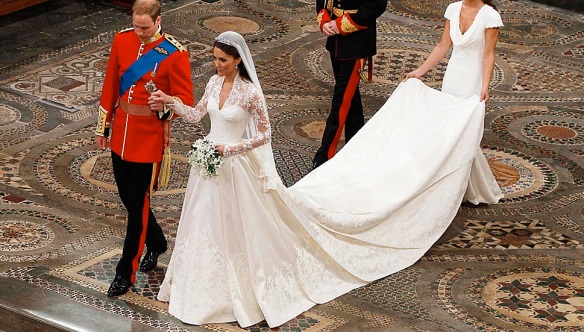
What perfume does a bride chose to wear on her special day? It’s often a difficult decision because you want something that makes you feel really special. But when a bride is going to marry the future King of England before approximately 3 billion people, it may be an even harder decision. In Kate Middleton’s case, she chose White Gardenia Petals (henceforth “WGP“) by the British boutique house, Illuminum.

Kate Middleton

Illuminum is a relatively new perfume house launched in 2011.  Its founder is Michael Boadi who also created the line’s sixteen perfumes, each of which falls into four main olfactory groups (citrus, floral, oud and musk). There are four perfumes within each of those four over-arching categories and, supposedly, none of the perfumes contains more than “eight carefully selected ingredients.” According to an interview he gave to Fragrantica, “[t]he Illuminum collection is for those days when you are in the mood for something exquisitely simple and stylish.” He answered some of Fragrantica’s questions about the scent and also explained his vision:

Creating a fragrance from merely eight ingredients was a real challenge, especially if we know that some fragrances include more than 500 ingredients. Finding the right eight ingredients that fit together perfectly, can even take a couple of years of careful planning. […]

Illuminum is the future of Fragrance due to its pared-down nature. If you are looking for minimalism at its purest, then look no further. If you want to smell ginger and pear, that is exactly what you will discover when you explore the Ginger Pear from Illuminum.

Kate Middleton’s decision to wear White Gardenia Petals on her wedding day was a huge coup for Illuminum. According to the Daily Mail, the perfume sold out within minutes of the news of her choice! To get a small idea of the scent (and the massive global obsession with the royal bride), yet another gushing Fragrantica article simpers:

White Gardenia Petals is a perfect choice that really suits the charming and feminine Kate, her beautiful wedding dress and her grace. The notes of this fragrance highlight the refined and very fresh breeze of gardenia, which is a guiding scent of the composition. Unpretentious gardenia is embellished in the heart with a fine trace of coconutylang-ylang, jasmine and lily of the valley, laid on the base of amber wood. The fragrance is available as 50 ml and 100 ml EDP.

Michael Boadi announces that White Gardenia Petals at the moment isn’t available anywhere in the world and that the waiting list for the purchase of this fragrance is three months!!!

The Illuminum website describes the perfume as follows:

White Gardenia Petals is as fragrant as a vase of white flowers, quivering in the breeze by an open window. This is a delicate and refined scent – the top note of lily evokes a summer ambiance, whilst heart notes of gardenia, ylang ylang, lily of the valley and jasmine breeze are sumptuous and feminine. Amber wood underscores this light bouquet.

Top notes: Bergamot, Cassis,

Heart: Jasmine, White Gardenia, Ylang Ylang,

Base notes: Precious Woods.

White Gardenia Petals

Fragrantica gives very different top notes — namely just coconut and nothing else — but it matters not one jot to the final impression which is: synthetic, floral, air freshener; soap; hair spray; and cheap shampoo. Given that Michael Boadi began as a hairdresser before making it big, I find it sadly coincidental that a man who left that world to create perfumes ended up making something that is a full-circle return to hair salons. And I’m far from alone in that sentiment. In fact, I’m being much kinder than some commentators. On the Fragrantica entry for White Gardenia Petals, one poster compared it to a “toilet cleaning product.”

I’m not sure I would go that far, but I found White Gardenia Petals to be utterly revolting. It’s not anywhere close to being as bad as Montale‘s Lime Aoud (honestly, I doubt anything ever will be) or the stomach-churning nausea induced by L’Artisan Parfumeur‘s Passage d’Enfer, but it was pretty godawful. As many of you know by now, the note that I abhor above all others is soapy and clean, particularly if the fragrance evokes laundry detergent or fabric softener and is expensive to boot. I simply cannot handle it. And, yet, a predominantly soapy scent may be (just barely) more tolerable than Illuminum’s WGP. (I shall have to ponder their relative ghastliness.)

The opening seconds of White Gardenia Petals on my skin was a sharp note of pure rubbing alcohol, only rendered floral. Then, there is an explosion of a thin, artificially airy — but simultaneously heady — shampoo note, with a heavy backdrop of Dove soap. The rubbing alcohol impression is tinged with a faint lemon note, making me wonder if we’re going from bathroom products to dish-washing liquid next. But no. It stays as a sharp burst of white flowers with shampoo and soap. I think Suave makes a white shampoo like this, and I know Dove’s soap is quite close for the soap notes here. The two things are separate “clean” scents in my mind, and they combine most unpleasantly with the very indolic, cheap gardenia and muguet (or lily-of-the-valley) notes. I think Bath & Body Works makes better versions of airy white florals which lack White Gardenia Petals’ strong similarity to hairspray. (It’s almost amusing to read the endless litany of “hair spray” comparisons in the comments on Lucky Scent.)

To be honest, it’s a bit hard to dissect some of the notes for the first hour because I’m overwhelmed by a screeeeeeeeeechingly loud, persistently plastic-y note that is often a dead give-away of something synthetic in a perfume. An even bigger give-away for me personally is the sensation I consistently get from very cheap additives: a feeling of tightness high up in the bridge of my nose, making me feel as though I have sinusitis, along with a faint burning sensation. I suddenly feel as though a headache is around the corner — and it’s been a while since a perfume made me feel that way.

The perfume continues its olfactory equivalent of assault and battery. I don’t smell ylang-ylang at this point, but I do get a strong impression of iris and/or violet. Perhaps my brain associates those notes with powdery fragrances, and White Gardenia Petals has got a definite powdery vibe. The powdery vibe is a bit different from the soap and shampoo/hairspray aspects. It stems more from the musk element which starts to make its presence known about 10 minutes in. It is cloying, and calls to mind Narcisco RodriguezFor Her — only on steroids and amplified by a thousand. For Her is one of the few “clean” perfumes that I would wear if I had a gun pointed to my head, but there is something distinctly unpleasant about White Gardenia Petals’ twist on musky clean. Perhaps because it is all just one cacophonous mishmash of white florals, rubbing alcohol, indoles, powder, musk, synthetics, soap, shampoo, and cotton.

Oh, did I not mention cotton? Because I also get a very strong note of fresh, clean cotton. It sharply calls to mind the Clean line of perfumes (no, I’m not joking) and of their Cotton T-Shirt fragrance in particular. (How I wish I were making all that up.) It is at this point that I write in my notes, “please God, kill me now,” and I go to find some aspirin.

I would have felt like a character in Jean-Paul Sarte’s No Exit if it were not for one thing: this discordant cocktail lessens the volume of its assault, sooner rather than later. After an hour, the sillage is very low, such that I have to sniff my arm (sometimes forcefully) to assess how the fragrance is transforming, if at all. And it does. Many of the clashing notes fade away as White Gardenia Petals turns into simple gardenia scent with a faint undertone of creamy, custard-y, banana-like ylang-ylang. Alas, the soap still remains, as do the hinting wafts of cheap hairspray.

Though its sillage may have become demure, White Gardenia Petals’ persistence is a source of deep misery. Ten hours in, I can still smell some form of cheap, floral soap on my wrist. They say perfumers love synthetic additives because they multiply the longevity of a perfume (I think it may be because of the shape of the molecules), in addition to being a cheap shortcut. It must be true since all the synthetic soapy smells last on me for an extraordinary amount of time.

White Gardenia Petals is meant to be “a vase of white flowers, quivering in the breeze by an open window,” and clearly meant to suit someone like a bride who doesn’t want to be overshadowed by her fragrance. All that is fine and dandy. If people want to wear light florals with a fresh, clean note and demure sillage, all the more power to them. But I find it rather outrageous to charge £70.00 or $125 (on Lucky Scent) for a small 1.7 oz/50 ml bottle of revoltingly synthetic notes combined with florals that Bath & Body Works, The Body Shop, and some others can do as well — if not better. And that’s totally ignoring the fact that you can smell like Dove soap for about $1.25!

As one Fragrantica commentator noted, “Illuminum feature themselves in the media as a brand of the royals, like Creed does.” I’m happy for them. But if Kate Middleton had not chosen to wear this scent on the day she turned into the Duchess of Cambridge, I highly doubt that anyone would queue to spend the kind of money that Illuminum is charging to smell like cheap hairspray. If you want something light, fresh, airy, floral and bridal, try Issey Miyake‘s L’Eau d’Issey Miyake. Try anything, but I wouldn’t recommend this.