Perfume Review: Nawab of Oudh by Ormonde Jayne (Four Corners of the Earth Collection)

The Nawab of Oudh is a nonpareil, an oriental perfume of such magnificent richness and beauty that it left my jaw agape. There is no chance that I shall be — as the famous writer, William Safire, once famously penned — a nattering nabob of negativity. No, Ormonde Jayne‘s latest creation is simply spectacular.

The Raja of Mysore. Source: Victoria & Albert Museum.

The Raja of Mysore. Source: Victoria & Albert Museum.

OJ NawabNawab of Oudh is one of the new Four Corners of the Earth collection which was released in late 2012 and which pays homage to the different parts of the world that have inspired Ormonde Jayne’s founder, Linda Pilkington. The collection is the result of collaboration between Ms. Pilkington and the perfumer, Geza Schoen, and consists of four fragrances: Tsarina, Qi, Montabaco and Nawab of Oudh. (I have samples of all four fragrances, provided courtesy of Ormonde Jayne, and am working my way through the collection. You can find my review for Tsarina here.)

A nawab (sometimes also spelled as “nabob”) can mean, alternatively, a ruler of an Indian province, or a European person who made a vast fortune in India or overseas. Ormonde Jayne was inspired by the first meaning for the term, describing the fragrance as follows :

Source: Shanti Barmecha blogspot

Source: Shanti Barmecha blogspot

Nawab (Ruler) of Oudh is a province of central India. The perfume is inspired by the Nawabs who once ruled over it.  It is a potent blend of amber and rose with a soft oudh edge. Yet surprisingly not one ingredient stands out from the others. It achieves a perfume synergy that defies traditional analysis, releasing a pulsating pungency, brooding and hauntingly beautiful, a rich tapestry of fascinating depths, a jewelled veil to conceal its emotional complexity and extravagance.

Every single part of that description applies to the magnificent richness of this stunning perfume. It is no doubt helped by the perfume’s long list of notes, seventeen in all:

top: green notes, bergamot, orange absolute, cardamom, aldehyde. 
heart: rose, magnolia, orchid, pimento, bay, cinnamon, hedione. 
base: ambergris, musk, vetiver, labdanum, oudh.

The Nawab of Oudh opens on my skin with a burst of bright, juicy, sweet green notes that have a distinctly tropical, fruited underpinning. There is something that feels very much like green mangoes, alongside the bright, fresh, plump, sun-sweetened lemons and oranges. There is also a heady rose note — sweet, fragrant, dark as the reddest damask, and almost beefy in its richness. Following closely in its footsteps is a spectacular element of velvety magnolia. The whole combination is beautiful beyond words, and I actually said “Wow” out loud as the symphony of notes wafted up to my nose.

The bright, fresh, sweetly floral and fruited tonalities quickly give way to something earthier and spicier. The bay leaf starts to appear, adding an unusual herbaceous and earthy aspect to the sweetness. Dark, rooty vetiver also helps undercut some of the richness, but it is the surprisingly fiery note of red chili peppers that really adds the perfect counterbalance. Together, they work to transform the scent into something much more than a mere floral with zesty citrus notes.

Further depth and complexity are added with the advent of ambergris, and I’m convinced this has to be the real stuff. It smells much richer, almost dirtier, and definitely slightly muskier than the usual amber accords, though the labdanum undoubtedly plays a role in that impression, too. Whatever the particulars, the ambery note has enormous depth but it’s never heavy, molten or gooey. Rather, it’s sheer and light. At the same time, the perfume itself is very strong and heady, encompassing me in a lovely cloud of scent that projects about two feet in distance in these opening moments.

Ten minutes later, the orange absolute is much more noticeable, as is the orchid flower. Both accords mix with the magnolia and rose to create a floral juxtaposition to the various herbaceous, woody, citrus, ambered and slightly musky notes. The final result is a beautifully balanced opening that is never singular nor too sweet. The sweetness is further undercut when the woody notes start to appear. Speaking of appearing, on my second test of the perfume, the bay leaf gained in intensity in opening moments of the scent; during the first test, however, to my surprise, it disappeared after ten minutes. So, too, did the fiery red chili pepper and the earthy vetiver. I point this out because I know some of you struggle with those notes, respectively, and I want to reassure you that (to my nose) they are not an enormous presence or particularly sharp.

Purple rose at Warwick Castle, England. Photo provided with permission by CC from "Slightly Out of Sync" blog.

Purple rose at Warwick Castle, England. Photo provided with permission by CC from “Slightly Out of Sync” blog.

In fact, nothing in this beautifully crafted, smooth as a well-buffed piece of amber, perfume is sharp or unmodulated. That applies to the agarwood (or oud) as well. It is simply perfect: never medicinal, astringently sharp, pungent or antiseptic. No camphorous elements or images of pink rubber bandages. Instead, you have a very smooth, incredibly rich, and highly sweetened oud note. It waxes and wanes in prominence in that first hour, never dominating but floating just under the flowers. The oud is perfectly interwoven with that rich, dark rose, but neither are the primary focus of the scent at this time.

Instead, Nawab of Oudh is in harmonious balance; this is a superbly well-blended perfume that throws off notes the way a chandelier throws off prisms in the light. I am strongly tempted to add the phrase “it’s beautiful” to the end of every paragraph, but I fear I will sound like a broken record before I’m halfway finished. Nonetheless, my God, is this perfume beautiful!

Magnolia. Source: Kathy Clark via FineArtAmerica.com

Magnolia. Source: Kathy Clark via FineArtAmerica.com

If any single note were perhaps to dominate in the first ninety minutes, it would be the magnolia. There are many global varieties of this velvety, opulent flower, but it is an incredibly popular and symbolic part of America’s Deep South, in particular. In fact, there is a Texas town called Magnolia that is just outside Houston. In addition, the flower has been the symbol of the state of Louisiana since 1900. (I won’t even get into the famous movie, Steel Magnolias, involving the state of Georgia.) Magnolias have a creamy, rich aroma with a slightly citrus-y nuance and a floral scent that is somewhat similar to gardenia at times and, at other times, closer to jasmine. Here, however, there is a definitely tropical feel to the flower’s velvety lushness and creaminess. It’s heady and strong, but never indolic or sour. Its combination with the orange absolute — and with what I am convinced must be green mangoes — adds a beautiful tropical aspect to the scent. And, yet, its citrus-y aspects also provide some freshness and lightness. The whole thing is simply an incredibly creamy, velvety floral composition of great complexity.
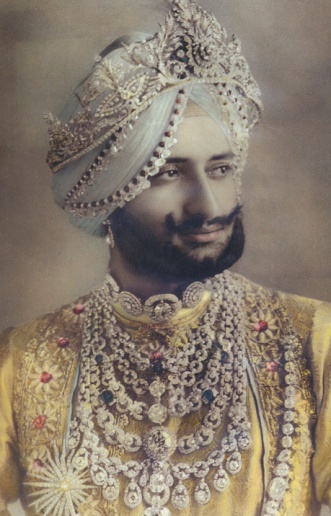
Sir Digvijaysinhji, Maharaja Jam Saheb of Nawanagar in 1935 wearing the emerald and diamond necklace created by Cartier London in 1926 for his uncle, Maharaja Jam Saheb Ranjitsinhji Vibhaji. Source: TheCultureConcept.com

Sir Digvijaysinhji, Maharaja Jam Saheb of Nawanagar in 1935 wearing the emerald and diamond necklace created by Cartier London in 1926 for his uncle, Maharaja Jam Saheb Ranjitsinhji Vibhaji. Source: TheCultureConcept.com

Two hours in, Nawab of Oudh changes. Now, it is oud with cardamom, what feels like cloves, red chili peppers, and the very first hint of labdanum. The magnolia is still present, but it has now receded much more to the background. For the next two hours, the perfume reflects different facets — much like jewels gleaming around a maharajah’s neck. There is: agarwood sweetened by sweet damask rose; dusty, dry spices (cardamom in particular); a touch of muskiness; a hint of jasmine; and rich ambergris. The red chilies pop up now and then, but the perfume is not fiery. It’s a perfectly modulated rosy, spiced, woody amber perfume that is endlessly luxurious, and made with what are, clearly, very expensive, top-quality ingredients.

From the fifth hour until the perfume’s end around 8.5 hour mark, Nawab of Oudh is labdanum heaven. Now, as some of you know, labdanum is one of my all-time favorite notes; I simply adore the more nutty, slightly leathery, dirty and masculine twist on a resin. Here, it’s treated beautifully — intertwined in a lover’s kiss with the heady red rose. It’s a bit too light for my personal, utterly biased tastes — and I would have preferred a more molten, opaque treatment — but nothing about this airy, lightweight (though strong) perfume is about molten heaviness. Instead, labdanum’s ambery note is light, warm, sweet, and infused by a subtle undertone of spices. Its interplay with the heady rose was so beautiful that I will make an embarassing confession: I spent a good chunk of 30 minutes simply lying on my sofa with my nose glued to my arm and inhaling the nutty, rose-strewn amber in ecstasy. It was, quite simply, the perfume equivalent of a food coma.

Nawab of Oudh has good sillage and longevity. The opening phase of the perfume had about 2 feet in projection for the first hour, before dropping considerably. However, it only became really close to the skin around the 4th hour. To be honest, for some of the remaining hours, I had to forcefully inhale at my arm to detect it — though, clearly, I found that no hardship whatsoever! As for longevity, as noted above, it lasted around 8.5 hours on my perfume-consuming skin. I should note, however, that the sillage and longevity drop even further if you don’t put on a lot; on my second test, the sillage became close to the skin at around 2.5 hours and the scent lasted only seven hours. As a whole, Nawab of Oudh a wee bit too airy for my personal liking, but not everyone shares my passion for the most opulently heavy, powerful scents. For those who prefer a less forceful, and more modulated, tempered fragrance, Nawab of Oudh will be ideal.

The only real problem with Nawab of Oudh is its cost. I winced and grimaced when converting the British pound sterling price of £335.00 to U.S. dollars; at the current exchange rate, that comes to approximately $506! The perfume only comes in Eau de Parfum concentration and in a large 100 ml/3.4 oz bottle, so there aren’t cheaper alternatives in a smaller size. If, however, it were more affordable, I would buy Nawab of Oudh in a heartbeat; without a doubt, it has shot up to replace Tolu as my favorite Ormonde Jayne fragrance.   

It is probably, therefore, a mixed blessing that Nawab of Oudh is not widely available at the moment. The perfume is not even listed yet on the company’s website (though it probably will be soon). It doesn’t seem available at other European retailers and, as always, Ormonde Jayne fragrances are not sold anywhere in America. However, Nawab of Oudh is available at Ormonde Jayne’s two boutiques in London and is also available online at Harrods. [UPDATE: My apologies but, reading the fine print, it seems that Harrods does not export this item. I assume it has something to do with the UK’s postal regulations on the shipment of perfume. I’m afraid that I have no other purchasing alternatives for you at this time if you live outside London or the UK.]

If you love spicy, rich, complex Orientals (as I do), then Nawab of Oudh will be your personal heaven. It makes me think of Klimt’s The Kiss with its initial start of green, turned into creamy, lush, almost tropical florals, then to sweet, spicy roses and woody, nutty, oriental ambered richness. Frankly, I can give no higher praise than The Kiss.

Klimt The Kiss

Disclosure: My sample of Nawab of Oudh was provided courtesy of Ormonde Jayne. However, that did not impact this review. My primary commitment is, and always will be, to be as honest as possible for my readers.
DETAILS:
Price & Availability: As noted, above, Nawab of Oudh is an Eau de Parfum which comes only in a large 100 ml/3.4 oz size and which costs £335.00 or, with today’s present exchange rate, $506. Although Nawab of Oudh and the Four Corner Collection are not presently up on the Ormonde Jayne website, you can find the entire collection in the Ormonde Jayne stores, as well as at Harrods which ships out internationally. Ormonde Jayne’s two London boutiques are at Old Bond Street and Sloane Square with the precise addresses listed on the website here. As for samples, none of the perfume decant sites in the US currently offer any of the Four Corners of the Earth collection. When places like Surrender to Chance start selling the collection, I will update this post accordingly.

Perfume Review: Tsarina by Ormonde Jayne (Four Corners of the Earth Collection)

The icy steppes of Russia, the opulence of a Romanov Tsarina, a mix of hauteur and passion, brocades and fur, sweeping dresses and fabulous jewels….

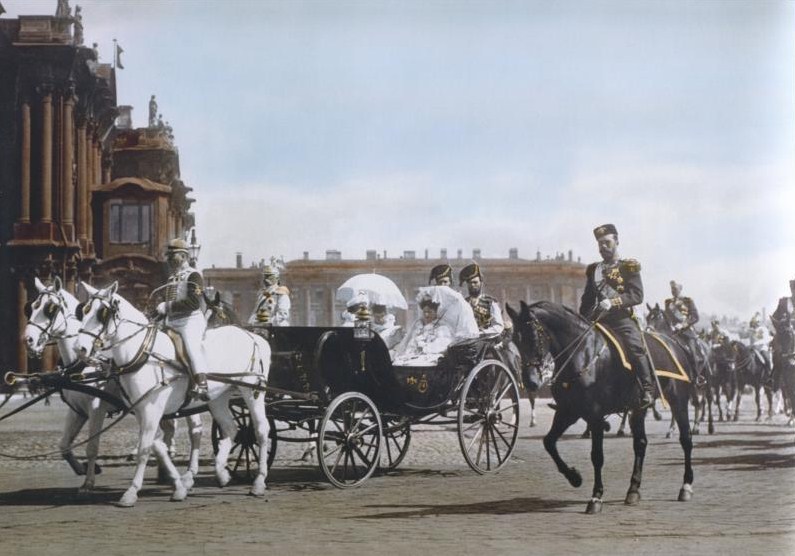
Photo of Tsar Nicholas II accompanying Tsarina Alexandra and Dowager Empress Maria Feodorovn, at the Winter Palace Photograph circa 1901 by Burton Holmes. Source: Angelfire.com

Photo of Tsar Nicholas II accompanying Tsarina Alexandra and Dowager Empress Maria Feodorovna, at the Winter Palace. Photograph circa 1901 by Burton Holmes. Source: Angelfire.com

Those images are the source of inspiration for Tsarina, the new fragrance from the London luxury perfume house, Ormonde Jayne. It is one of four fragrances in the new Four Corners of the Earth collection which was released in late 2012 and which pays homage to the different parts of the world that have inspired Ormonde Jayne’s founder, Linda Pilkington. The collection is the result of collaboration between Ms. Pilkington and the perfumer, Geza Schoen, and consists of four fragrances: Tsarina, Qi, Montabaco and Nawab of Oudh. I have samples of all four fragrances, provided courtesy of Ormonde Jayne, and will review each one in turn, starting now with Tsarina.

OJ TsarinaOrmonde Jayne describes Tsarina as follows:

Tsarina captures opulence and passion. It demands fur, leather, brocade, heavy silks in sweeping dresses and fabulous jewels to go with her haughty heritage. To call it a floral oriental is to misunderstand its rich complexity, it is more baroque. The perfume is profound, blending leather notes, rich Madagascan vanilla, amber and orris butter.’ This is a powerhouse perfume, ravishing and regal, distinctive and synonymous with the glamorous world of luxe.

Tsarina’s notes include:

top: mandarine, bergamot, coriander, cassis.
heart: hedione, freesia, jasmine sambac, iris, suede. 
base: sandalwood, cedar, vanilla bean base, labdanum, musk.
Alix Romanov, last Tsarina

Empress Alexandra Romanov, née Alix of Hesse.

The description of Tsarina, along my past historical writings on both royalty and the Russian Imperial Family, led me to anticipate either Catherine the Great or Alexandra Romanov, last Tsarina of that ill-fated family. I expected images of snowy St. Petersburg, furs, jeweled chains of opulence, and a heady, baroque oriental that epitomized hedonistic splendour and excess.

Grace-Kelly-handbag

Princess Grace of Monaco.

Instead, I found an incredibly elegant, soft iris and suede scent that — to my mind — consistently evoked the cool, restrained, pale beauty (and occasional hauteur) of Princess Grace. Tsarina is, at times, as fizzily fresh and crisp as the best champagne (if there were ever a citrus, lemon champagne), at other times icily cool, but always romantic with a plushly soft heart like the finest suede coat matched with dove-grey gloves.

Tsarina opened on my skin with the freshest burst of citrus imaginable. It was so zesty, it felt as though you’d just cut into a lemon and been squirted by its juices. Light and bright, it mixes with the sweet, airy scent of freesia, some subtle musk, and an underlying note of soft, white woods. There was also a very faintly soapy element that creeps around the edges, mixing with the citrus accord, to add to the impression of a very fresh, Spring-like scent. The woody note is subtle, but even more subtle was the orange tonality which flickered for a brief moment before vanishing entirely. I tested out Tsarina three times, and mandarin never appeared for me at all during the other two tests.

Everything feels green, fizzy and bright, thanks, in part, to the hedione which seems to be a very significant molecule in 20th century perfumery. (You can read Bois de Jasmin‘s discussion of its uses in everything from highlighting jasmine to its role in Eau Sauvage, Diorella, and Van Cleef & Arpel’s First.) The Perfume Shrine explains that hedione is an aromachemical that is often used as a substitute for jasmine absolute, “but also for the sake of its own fresh-citrusy and green tonality.” It is said to “give fizz to citrus notes much ‘like champagne’.” Here, with Tsarina, it does just that, lending a sparkling quality to the bergamot lemon, while also adding its own green touch.

Prss Grace via TumblrLess than ten minutes into the opening of the Tsarina, the perfume’s strong backbone of suede raises its head. Soft, buttery, white-dove grey is the colour that comes to mind, tinged with delicate iris, and the whole thing set against a backdrop of lemon. As time passes, the citrus note fades and the iris suede takes over completely. It smells exactly like the soft, light interior to a very expensive purse. There are growing peppery smoke notes from the cedarwood, combined with the light musk and those airy, pastel freesia blossoms. The merest hint of soap weaves its way around all those notes, joining another subtle thread in Tsarina’s tapestry: powder. Iris often has a very powdery characteristic, but it’s very light here. Instead, the much plusher orris butter creates a velvety soft image, accentuating the grey suede note. It’s very cool in tone; never quite icy but never effusively warm, either. It has a regal hauteur and quiet aloofness, if you will.

The perfume is surprisingly soft and lightweight in texture, though strong in its initial moments. However, after less than forty minutes, the sillage drops dramatically. It’s as gauzy and light as the softest pashmina scarf, resting just lightly on your skin with a grey-pastel touch of iris, suede, heaps of freesia and a touch of vanilla.

The wood and smoke notes flicker here and there, popping around like ghosts. Often, in other treatments, cedarwood can seem excessively peppery and smoking, verging sometimes on the mentholated. Here, however, the impression is of soft cashmere woods with something a bit unexpected. On two of my three tests of Tsarina, I picked up something that definitely smelled of anise. It’s as though the often mentholated aspect of cedar has been tamed or quietened to such a degree that there is just the merest hint of its chilly, smoky, licorice-y character, now diluted down to a faint soupçon of mere anise. It’s in perfect keeping with the restrained, elegant aspect of the perfume.

Three hours in, the base notes of Tsarina start to emerge. There are quiet elements of sandalwood, vanilla, and sweet notes from the jasmine, but the real end of Tsarina is labdanum. It is a rich, nutty, slighty leathery, minutely dirty and animalic resin that is one of my absolute favorite notes. Here, it’s light and sheer, far from opaquely thick or molten. The labdanum is subtly tinged by the other notes at times but, for the most part, Tsarina’s dry-down consists primarily of the ambery resin, some powder, and little else. It’s pretty but, for my tastes, too light, sheer and simple.

All in all, Tsarina lasted just under 6 hours during my first test and a bit under 5 hours on the subsequent tests when I applied a lesser quantity. I have perfume-consuming skin, but I was nonetheless surprised at the moderate-to-short longevity for an eau de parfum concentration. (My beloved Tolu which is also an Ormonde Jayne eau de parfum lasted 7 hours when I reviewed it and just over 8 hours on a recent wearing.) The softness of Tsarina and its delicate notes are, perhaps, one explanation. The sillage began by being relatively good for the first 20 minutes, then dropped down to moderate-to-low thereafter. It became extremely close to the skin by the second hour; by the fourth, I thought the scent had vanished completely but faint traces lingered on, here or there, for another one to two hours (depending on test run).

There aren’t a ton of reviews on Tsarina out there. One of the few is from the Candy Perfume Boy who seems to have a very different experience than I did:

Everything about it is evocative of the opulent jewellery, furs and textiles that the description mentions and the Russians are famous for. It opens diffusive and bitter, hinting at the animalics to come but what’s really noticeable is a warm plushness, tinged by a darkness that comes from a combination of the powder of iris and indole of jasmine.

The whole thing is, dare I say, rather Guerlainesque with its bergamot, sweet floral powder and balsamic funk. Tsarina is like Shalimar Parfum Initial but on a bigger budget (we’re talking a Tsars budget here people), cutting straight through the fruit and heading straight for the rooty iris and gorgeous, filthy base of proper Shalimar. It doesn’t mess around, to put it frankly.

Tsarina is an incredibly feline fragrance, like a beautifully sleek black cat come in from the cold, slinking and weaving itself between your legs. Like a cat it is incredibly precious but not afraid to use its claws to assert it’s authority. There’s glamour here of course, but there’s also a steely strength just beneath the surface that says; “I may be incredibly beautiful but I’m even more dangerous”.

I didn’t get any of that, I’m afraid. My experience evoked not just Grace Kelly, but the softness of an Impressionist painting of winter. Something by Claude Monet, in fact.

Claude Monet. "Winter on the Seine, Lavacourt."

Claude Monet. “Winter on the Seine, Lavacourt.”

All in all, I thought Tsarina was pretty and I liked it, though I expected to truly love it. Had I smelled the mandarin orange and leather — and had the labdanum been heavily resinous and opaque, thereby evoking furs, leather and baroque richness — I probably would have. Instead, Tsarina was predominantly velvety soft iris and suede on my skin. All three times I tried it! I should note that iris is not one of the notes which drives me wild with passion. In fact, it can be a note I struggle with, depending on what accompanies it. That said, I think this is one of the best treatments of iris that I have encountered in a while. In addition to my iris issues, however, Tsarina was also far too soft, gauzy and sheer for my personal tastes — both in terms of weight and in sillage. The longevity was also a problem, though the speed with which my skin can consume perfume is not the norm.

I’m afraid my heart still belongs to Tolu, though I have to admit that there is something about Tsarina’s plush, velvety softness that is quite alluring. Its cool elegance is comfortable and easy, like the best pashmina cashmere scarf or the richest suede caressing your skin. I know a number of my regular readers are complete fiends for soft, harmonious iris scents and, to them, I say, I think this will knock your socks off!

Unfortunately, Tsarina is not the easiest thing to get your hands on right now. It is not even listed yet on the company’s website (though it probably will be soon), and doesn’t seem available at other European retailers. As always, Ormonde Jayne fragrances are not sold in the U.S. At the moment, Tsarina is available at Ormonde Jayne’s two boutiques in London and is also available online at Harrods. That seems to be about it. Even worse, none of the perfume sample sites in the US currently offer any of the Four Corners of the Earth collection. So, you can’t even get the chance to sniff it! (When places like Surrender to Chance start selling samples of the collection, I will update this post accordingly.) Given the price, this is not something I would recommend buying blindly and unsniffed unless you know you love soft iris scents. The perfume comes only in one size — a large 100 ml/ 3.4 oz bottle — and costs £280.00. At the current exchange rate, that comes to approximately $422!

I think cost is all relative and subjective. It depends on the person and how much they adore something. So, for those who love harmonious, elegant. quietly restrained scents, especially of iris and suede, Tsarina is definitely one to try out.

Disclosure: My sample of Tsarina was provided courtesy of Ormonde Jayne. However, that did not impact this review. My primary commitment is, and always will be, to be as honest as possible for my readers.
DETAILS:
Price & Availability: As noted, above, Tsarina is an Eau de Parfum which comes only in a large 100 ml/3.4 oz size and which costs £280.00. Although Tsarina and the Four Corner Collection are not presently up on the Ormonde Jayne website, you can find the entire line at Harrods which ships out internationally. Ormonde Jayne’s two London boutiques are at Old Bond Street and Sloane Square with the precise addresses listed on the website here. When US perfume sample sites, like Surrender to Chance, start to offer Tsarina, I will update this post with the appropriate link.

Perfume Review – Tom Ford Private Blend Café Rose (The Jardin Noir Collection)

Subversive. Forbidden. IntoxicatingBewitching. Darkness that is so thrillingly beautiful it “could almost ruin you.”

That was Tom Ford’s goal for his 2012 Jardin Noir collection, a subset of his prestige “Private Blend” line of fragrances. His twist on traditionally innocent flowers encompassed roses, narcissus, hyacinths, and lilies with Café Rose, Jonquille de Nuit, Ombre de Hyacinth and Lys Fume. I have three of fragrances and have already reviewed Ombre de Hyacinth.

This review is focused solely on Café Rose, a scent that triggered a wide array of emotions, but which ultimately left me feeling cold. To be honest, it was quite overwhelming at times. By the end, I felt simply tired out and beaten over the head. I am admittedly not a huge worshipper of rose fragrances, but there is something almost bullying, cloying, and deeply exhausting about Café Rose.

We’re getting ahead of ourselves. According to Tom Ford’s full press release description for the Jardin Noir collection on Bergdorf Goodman’s site, his vision for the Jardin Noir collection is as follows:

Jardin Noir explores the forbidden sides of four of perfumery’s most treasured blooms: narcissus, hyancinth [sic], rose, and lily.

Convention is abandoned and unexpected ingredients converge with bewitching and intoxicating results. Iconic flowers fall open, dropping their innocent facades to reveal the subversive beauty and fierce elegance they normally keep hidden.

The specific description of Café Rose is quite beautiful:

Enticing. Exotic. Seductive. Cafe Rose descends into a hidden labyrinth, where roses’ fine breeding gives way to darker pleasures.

Café Rose was created by Antoine Liu and, according to Fragrantica, the notes are:

Top notes are saffron, black pepper and may rose; middle notes are turkish rose, bulgarian rose and coffee; base notes are incense, amber, sandalwood and patchouli.

Tom Ford fragrances are the oddest thing on my skin because how they smell can vary substantially with how much you put on. Café Rose is no exception. I tried it on three times, each with slightly varying results for the opening stage. On each occasion, I put on less of the perfume with the third time having the very smallest amount. That time, the perfume opened with a faintly soapy musk note that was sweet with an almost vanilla-like undertone to the roses. It was definitely a plethora of white musk, which I am not particularly keen on, I must say.

With that outcome being a slight exception, my overall first impression of Café Rose has always been fruited roses — with only the concentration or degree of the note varying. There is an explosively sweet impression of roses — blood-red and tea-rose pink — with jammy notes that definitely evoke fruit. There is a dark grape, almost like Welch’s, as well as something that smells surprisingly a little like canned peaches.

I suspect the patchouli is responsible for that very “purple patchouli” fruited note; those who dislike it may want to want to steer clear of Café Rose because there really is no escaping it. It’s there almost from start to finish. It also adds a very thick, almost gooey and unctuous feel to the roses which, at times, can feel spectacularly sweet. That sweetness almost verges on “tea rose” territory, and those of you who were around for the infamous ’80s Tea Rose fragrance from Perfumer’s Workshop may shudder in response.

Despite the headiness and painful sweetness of Café Rose, the perfume is never oppressively heavy. Ten minutes after applying it in even a concentrated dose (2 good sprays), it becomes a much lighter, sheerer scent. The sillage drops as well, though this is one very persistent perfume. I don’t detect any saffron in its own right but there is a vague sense of creamy sandalwood underneath all that jammy fruit.

Two hours in, Café Rose turns darker with the presence of black pepper and coffee. The black pepper adds a slightly fiery, peppery bite to the sweetness of the floral note, though at times it feels more like pink peppercorns in a combination that is all too familiar these days. The coffee note is far more interesting. If you’re expecting the aroma of Starbucks or roasted coffee beans, you will be disappointed. Here, it’s more like the wet, black coffee grounds that you empty out of your filter after you’ve brewed a cup. It adds a faintly bitter, nutty, earthy note to that heavily jammy, very fruited rose note.

The fiery pepper and the bitter coffee make a valiant (though not wholly successful) effort at diluting the jamminess of the roses. Thank God for small favours, because, by the two-hour benchmark, my nose was quite oppressed by just how sweet this perfume is. Plus, to be quite frank, there is almost an artificial, synthetic aspect to things where it doesn’t smell wholly natural but, rather, just…. painful. It’s hard to explain, but there is something in this perfume that — no matter how much or how little you put on — simply feels cloying. And, really, there seems to be no escape from it.

That overwhelmed feeling probably explains why I couldn’t detect a plethora of notes in Café Rose. Over the course of its development, the degree of the black pepper and black coffee grinds rose and waned in differing degrees, but the oppressive presence of that very purple patchouli note dulled everything else to a large degree. There was some creamy sandalwood and, I suppose, faint smoke from the incense, but did I mention purple patchouli?

It did fade away, eventually, leaving me gasping like a stranded seal on a beach. At that point, about seven hours later, all that remained was the rose note, accompanied simply by vanilla and powder. Then, in the eighth and final hour, there was merely some vague, amorphous sense of a powdery soapy musk.

Oddly, on the third test, when I wore very little of the fragrance, the painful purpleness was much less. Instead, now, there was just that soapy white musk accord which I cannot stand. It felt clean and fresh, I suppose. If that’s damning with faint praise, it’s because it’s meant to be. 

Café Rose does have its fans, many of whom seem to find it a purely rose and coffee fragrance. However, a good number of people on Fragrantica find it to be a substantially poorer cousin to Tom Ford‘s Noir de Noir. I agree with that assessment. I liked a good portion of Noir de Noir (which I reviewed here) and, though I didn’t like its powdered violet finish, I think it’s a much better, more complex treatment of roses.

On Fragrantica, a number of others keep talking about Café Rose having an oud note — which frankly leaves me utterly bewildered. If I didn’t have a manufacturer’s sample with the card and labeling on the vial, I’d wonder if I tried the wrong perfume. There is absolutely no agarwood in this cloying sweet, peppered aberration.

I’m sure there is more to say on Café Rose — more talk of sillage and longevity, or some positive reviews I could link to, as well as other negative ones. To be honest, I simply lack the energy for that. After living with this bloody thing for two days, and making every effort possible to be fair, I find myself just wanting to be rid of it. I’m tired of Café Rose — on every possible level. I want it gone from my life forever. In fact, since I cannot bear another moment thinking of, discussing, or even wearing this blasted thing, I’m ending this here and now.

DETAILS:
For some odd reason, none of the Jardin Noir fragrances are listed anywhere on Tom Ford’s website. They are, however, available at numerous high-end department stores where its price is just like that of other Tom Ford fragrances: $205 for a 50 ml/1.7 oz bottle, or $495 for a 200 ml/8.45 oz bottle. In UK pricing, they sell for £135.00 or £195.00, depending on size. In the US, you can find Café Rose at Nordstrom, Saks Fifth Avenue, Bergdorf Goodman, Neiman Marcus and many others. In the UK, you can find it at Harrods and Selfridges.
Samples: If you are intrigued, but are also sane enough not to want to spend such a large amount without testing it out first, I suggest stopping by one of the stores listed above for a free sniff. However, you can also find samples of Café Rose starting at $3 on Surrender to Chance, or on other decant/sample sites like The Perfumed Court. I think Surrender to Chance has the best shipping: $2.95 for any order, no matter the size, within the U.S., and $12.95 for most orders going overseas. (It’s a wee bit higher if your order is over $150.) International shipping has leaped up in price (from $5.95) due to the U.S. Postal Service’s recently increased prices.

Celebrating #100

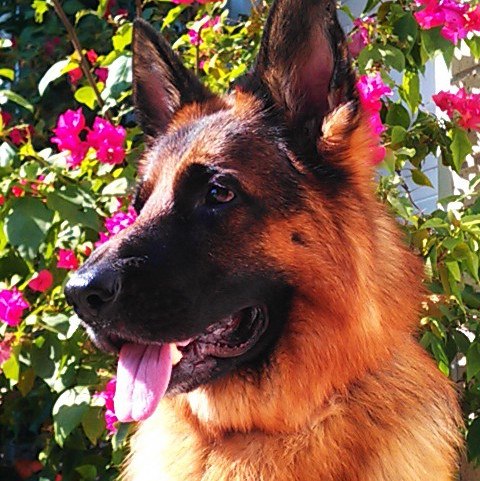
This is my 100th post for a blog that I started exactly 95 days ago. Out of those other 99 posts, 90 of them are about perfumes, with the rest being prior pieces that I’d written about royal history and food. So, I thought I’d use this 100th post to do something different. There will be some summaries and, probably, a lot of rambling. I’m also going to take this opportunity to inundate you with photos of my companion in all this: The Hairy German. He is my furry son, my great love, and more important to me than most of the humans I know. (Yes, I am one of those people.)

The Hairy German.

The Hairy German.

The very first thing I wanted to say is, thank you for reading. I realise that my reviews are about 2,000 to 2,500 words longer than most bloggers. Believe me, I know I’m verbose! I also know that I love details a little more than most. (Okay, a LOT more than most!) I’m trying to do something different with the blog though, so for all of you who have understood that, appreciated it, stuck through it all and come back, Thank You!

Random Conclusions:

  1. The most obvious thing first: cost is absolutely no guarantee of a good perfume. We all know that mass-market fragrances can be filled with synthetics as a cost-saving, profit-increasing measure, but very expensive brands are not immune from using really cheap-smelling, cloying, astringent, artificially powdery or vanillic synthetics either. It’s merely that the odds of avoiding such notes are a little better with a niche fragrance than with something on Macy’s perfume counter. Still, I was surprised by some of the expensive perfumes which had a heavily synthetic component; I felt like saying, “Shame on you!” 
  2. I never knew all the different ways in which soapy scents would come to haunt me.
  3. Who knew that the descriptor “aquatic” could hold such horrors? Ditto for the word “calone.”
  4. The phrase “fresh and clean” is one of the fastest ways to send shivers down my spine. Even more so when combined with the word “soap.”
  5. I really miss the days when I naively thought $70-$80 was expensive for a bottle of perfume.
  6. The prices for some perfumes really and truly leave me spluttering. And I’m not talking about the insane $865 Clive Christian scents, either.
  7. Speaking of cost, companies really need to offer smaller sized 1 oz/ 30 ml bottles. It would make a perfume addiction much more affordable! In the long run, surely it would help their financial bottom line, too, by having increased sales?
  8. I’ve concluded that, for the most part, I am not a Chanel girl. For my personal style and tastes, they are almost all too blandly restrained with too many aldehydes or wispy florals, too light and too….. boring.
  9. On the other hand, I’ve decided that I’m not edgy or tough enough for Robert Piguet’s Bandit. But I want to be friends with the girl who is!
  10. Modern Guerlain fragrances have, generally speaking and thus far, been a disappointment for me as they veer far too much into the gourmand and/or light categories for my liking. So, I’m apparently not a (modern) Guerlain girl, either.
  11. Jean-Claude Ellena and his pernicious, increasingly extreme minimalism are coming close to ruining the decades-long love I had for Hermès fragrances.
  12. I don’t like L’Artisan Parfumeur much at all.IMAG0010
  13. There is an absolutely lovely generosity in the perfume world amongst perfumistas. People truly want to share for the pure love of perfume. The degree of thoughtfulness, kindness and generosity — in concrete and less concrete ways — to a newcomer has astonished me and often leaves me quite awed. I wish I had the means to repay all those whose kindness and sweetness to me have meant so much. All I can really say is, thank you. It means more than you can know.

Surprising discoveries:

  1. I always knew which notes I had a big fondness for but, before I started this journey, I never knew that I loved labdanum. Apparently, I don’t just “love” it either; I luuuuuuuuurve it. It may possibly be my favorite note of all, and definitely the leader out of all the various sorts of resins out there.The Hairy German
  2. I like Jean-Claude Ellena’s creations a lot less than I used to. By a significant amount. If he gets any more minimalistic, I may have to strike him off my list of perfumers that I like entirely. In fact, he’s quite ruining Hermès for me, a house that was once my second favorite of them all.
  3. I’m also a lot less enthused about Bertrand Duchaufour’s perfumes than I once was. In fact, I hesitate quite a bit now when I see his name. The exceptions are the masterpieces that he created for Neela Vermeire, but otherwise, he’s dropped considerably in my estimation. Also, can someone send him a note saying that Black Currant Absolute is really not as fantastic a note as he thinks it is?

My Favorite Post:

Out of everything I’ve written, I think my favorite might always be the courtroom case I built, prosecuted and defended against Givenchy‘s poor, much-maligned Amarige. The People v. Amarige – Prosecution & Defense was just incredible fun and very effortless to write — which isn’t always the case.

Favorite Scents I’ve Reviewed:

Zola Dog ParkNeela Vermeire’s Trayee; Neela Vermeire’s Mohur; Téo Cabanel’s Alahine; and Ormonde Jayne’s Tolu.

Honourable Mentions: Neela Vermeire’s ebullient, bouncy, joyful Bombay Bling; Serge Lutens’ Chergui; Dior’s Mitzah; and Arquiste’s Anima Dulcis. 

Least Favorite Scents I’ve Reviewed:

  1. Hands down, no contest, the top spot goes to Montale’s Aoud Lime.
  2. Montale’s Aoud Blossom and Oriental Flowers.
  3. By Kilian’s Love (Don’t Be Shy).  (I’m almost tempted to put this as #2, above some of the Montales. That should tell you something….)

Dishonourable Mentions: Illuminum’s White Gardenia Petals; L’Artisan Parfumeur’s Passage d’Enfer (Enfer, indeed!) and Nuit de Tubereuse; By Kilian’s Straight To Heaven (White Cristal); Parfum d’Empire’s Azemour; Frederic Malle’s Lipstick Rose; and Bond No. 9’s I Love New York For All

I’ll Never Understand The Fuss AboutZola Day1

  1. The Enchanted Forest by the Vagabond Prince. Never. (Ever.)
  2. Ambre de Merveilles by Hermès.

Old vs. New:

Despite all the newer things I’ve reviewed, some of my favorites perfumes remain things that I owned before I started blogging. For example, YSL’s vintage Opium (my all-time favorite) and Champagne/Yvresse. The latter is my fizzy, bubbling, bouncy “joy in the bottle” scent. Others would be Robert Piguet’s Fracas or Hermès Elixir de Merveilles. I adore and hoard the last remnants of the late Robert Isabell‘s fragrances which have been long discontinued (Savannah is particularly stunning), and I love my vintage Soleil by Fragonard. I will also always have a huge passion for Claude Montana‘s chypre/leather Montana in vintage form (now renamed as Montana Parfum de Peau).

ZBirthday2Speaking of vintage, my all-time favorite comfort scent might be vintage Karl Lagerfeld for Men which is neither “for men” nor expensive, even in vintage version. I bought my bottle for around $25 on eBay and it will remain one of my absolute favorite things to wear for a cozy, comfort scent. I love it so much that my very first review for this blog was for that fragrance! I was in such a hurry to proclaim my passion for it to the world that the review is quite short and quite unworthy of the fabulousness that is this unbelievably hypnotic, delicious, sweet fragrance with honey, spices, leather, tobacco, vanilla, and slightly Guerlainade powder. (Apparently, Karl Lagerfeld’s love for Shalimar lead him to do a more “masculine” tribute to it in the form of Karl Lagerfeld for Men, though it is “masculine” only by the more strict, rigid, gender-bound conceptions of the 1980s.)

I may no longer be the diehard vintage fan that I used to be, but I still think they did it best in the old days. There is a richness and depth to many of those scents, perhaps because many of them had at least 20-22 ingredients, if not far more. A surprising number of today’s fragrances have 6-9 notes, with some having as few as three. How can they possibly compare? The answer is that — with a few exceptions — they can’t. (Do you hear that, Mr. Ellena? Some of us want you to back away from the minimalism before you start giving us rose water or, at the rate you’re going, air!)

If Money Were No Object, I Would Buy All The Following Right Away:

ZPuppyTéo Cabanel’s Alahine; Arquiste’s Anima Dulcis; Neela Vermeire’s Trayee, Mohur and Bombay Bling; Ormonde Jayne Tolu and Ormonde Woman; Serge Lutens’ Cuir Mauresque; Tom Ford’s Tobacco VanillePuredistance M; and Maison Francis Kurkdjian’s Absolue Pour Le Soir.

I have already succumbed to full bottles of Dior’s Mitzah and Serge Lutens’ Chergui from the list of those favorites which I’ve reviewed. A friend was also lovely enough to give me a decant of the Tom Ford Tobacco Vanille as a gift. So, Alahine will be next and, eventually, I hope to get around to the others. For most of these, I fear a mere decant won’t do. For the Neela Vermeire masterpieces, a decant definitely won’t do!

His Royal Puppiness’ Tastes:

Generally, His Royal Highness ignores most of whatever I wear. There are a few exceptions, however. He absolutely loved Puredistance M and tried to lick it off my arm the other night. He absolutely wouldn’t let go, and I had to finally push him away! He also gave a few sniffs to Amouage’s Jubilation 25 and, generally, lifts his head up from a nap to assess any extremely sweet aromas wafting his way.

His strongest reaction, however, was reserved for Parfum d’Empire’s Musc Tonkin. He kept sniffing in my direction, while looking utterly baffled and cocking his head to one side. Finally, he hesitantly drew near and almost head-butted me in his rush to smell my arm. After thinking about it, I realised that I used to do tracking with him using (fake) deer and duck scent, both of which are intentionally very musky. I suspect Parfum d’Empire might not think that was a huge compliment to their Musc Tonkin….

So, that’s Post #100. The Hairy German and I thank you for being on this journey with us, and we hope you will stick around for the rest of the ride. Well, I do, at least. He just wants you to kiss his paws, rub his chest, scratch his chin, plump up his pillows, and hand-feed him bananas and celery….