Perfume Review: Agonist The Infidels

Agonist is a Swedish perfume house launched in 2008 whose focus seems to be the close interplay of perfume and sculptured art within the context of Norse culture. As the company’s website explains:

AGONIST creates pure 100% natural fragrances inspired by the Nordic climate and culture. Raw materials and product give form to a Swedish but even more Nordic clarity, – fresh with a vigourous weight and beautiful low tones.

In close collaboration with prominent perfumers, unique Eau de Parfums are created according to the traditional art of fine perfumery. The fragrances are then artistically sculptured  in handcrafted Swedish glass created in collaboration with glassartist Āsa Jungnelius at Kosta Boda.

Agonist The Infidels Refill BottleIn the case of The Infidels, it seems to be the second in a series of perfumes that began with The Infidel, singular. (Fragrantica says The Infidels is the third, but doesn’t give the name of the second in the series.) The issue of The Infidel, singular, seems to be a confusing one since it is a perfume with fundamentally different elements. And, yet, many reviews of The Infidels, plural, bring up the notes (black current or cassis, green cumin, lavender, etc.) of its predecessor.

The Infidels, plural, is an oriental perfume which Agonist describes as follows:

The Infidels. A deep 100% natural perfume inspired by the exact moment when the bud is about to burst. The heart of the rose with a deep and sensual ambience.

Top Notes: Pink Pepper Corn, Sicilian Lemon, Cloves, Indian Davana and Elemi

Body Notes: May Rose, Turkish Rose, Sambac Jasmine, Egyptian Jasmine, Burmese Magnolia, Iris, Comoros Ylang Ylang, Somali Myrrh, Opoponax

Base Notes: Patchouli, Sandalwood, Vetiver, Cistus, Peruvian Balm, Lebanese Cedarwood, Virginia Cedarwood, Indian Amber, Bourbon Vanilla.

Between the notes and the perfume name which conjured up images of The Crusades and the Middle East, I was enormously excited to try The Infidels. I was certain I’d be taken to the desert, to Constantinople, to North Africa, to a land filled with molten resins and frankincense. Given that long list of heady notes, it was a sure bet it would be something deliciously ambered and oriental. Imagine my utter disbelief then when I was taken to a 7-11 filled with… Juicy Fruit. Yes, Juicy Fruit gum, only in solid syrup form. Hours and hours of Juicy Fruit syrup without end….

The Infidels opens on my skin with lemons and cloves, backed by pink peppercorns and apricot-infused florals. From what I’ve read, Davana is a flower native to India with an apricot aroma — and it is a heavy component of the Infidels. In the opening seconds, it is backed by some other fruity note that is tart, almost like green plums or cassis, but not quite. There is also some sweetly nutty smoke, elemi pepper, velvety magnolia, jasmine and rose. It’s an extremely unusual combination, and it sits atop a subtle booziness that feels almost like a melony-lemon liqueur. Not Midori, but some sort of odd, fruity cocktail liqueur that goes far beyond the usual rum-like nuance to many ambers.

As the minutes pass, some notes deepen while new ones join the party. The magnolia becomes significantly more pronounced: lovely, lush, smoothly buttered and rich, but never sour or over-ripe in an indolic way. There are soft, flickering touches of iris that add to the overall velvety creaminess of the florals. Sweet patchouli and lemon-nuanced vetiver lend a small voice in the background. And, at the base, the myrrh overshadows the frankincense with its nutty, sweet, almost vanillic warmth; its smoke tendrils are soft and muted. Then, suddenly, a strong banana aroma, undoubtedly from the ylang-ylang, comes barreling through, joining the dominant apricot-lemon-pink peppercorns fruity aspect of The Infidels.

Juicy Fruit gumWithin twenty minutes, all subtle nuances in the perfume disappear, and The Infidels becomes a solid wall of one thing and one thing only: Juicy Fruit chewing gum. Imagine the scent of the chewing gun, then concentrate it down by a thousand, put it above the faintest iota of sweetened vanillic amber, and that is The Infidels. The scent is thick and, in its nauseatingly cloying sweetness and richness, feels almost more like the sort of highly sweetened but artificial cough syrup that one gives children to lull them into thinking they’re not having actual medicine. It is one solid, immovable, unshakeable, unwavering wall. Nothing else flickers underneath it; nothing else has the remotest chance of competing against that barrage. And it never changes for the 10.75 hours that The Infidels lasted on my skin. It only becomes softer and, at the very end, a tiny bit musky but, no, it was Juicy Fruit until its dying breath.

The Infidels had very good longevity and moderate sillage. It was strong at first, wafting about 5 inches above the skin, before dropping around 40 minutes into the perfume’s development to hover an inch or two. Within that space, it was forceful. I actually felt my stomach churning at times wearing it. So much so that when I tried to make dinner, the sheer cloying strength of that Juicy Fruit syrup completely put me off eating.

In reading the reviews on Fragrantica, one thing is clear to me: a number of people are really writing about The Infidel, singular, perfume with its notes of black currant and green cumin. The rest…. well, the comments are all over the place from references to powder to a few who smelled cough syrup and general weirdness.

Even Now Smell This seems to have confused the two fragrances, writing:

The Infidels contains notes of blackcurrant, green cumin, bergamot, magnolia, tonka bean, lavender, patchouli, labdanum and amber.

The Infidels is a beautifully blended leather fragrance with spicy and floral accents. The Infidels goes on soft and smooth with lots of  “silky” labdanum; don’t expect a “shock” of blackcurrant or green cumin (each of these notes has been “blunted” in the composition — I think even cumin-haters won’t mind the sweet/powdery cumin in The Infidels).

The Infidels, plural, original bottle.

The Infidels, plural, original bottle.

Making matters more confusing, they even show the red bottle of The Infidels for a discussion of notes from The Infidel, singular, which has a blue bottle (with something resembling a bloodied hatchet). And, speaking of the bottles, that is all that a lot of people initially discussed when The Infidel (singular) and, then, The Infidels (plural) were released. You see, the bottles are somewhat of a big deal. As in a huge, ridiculously over-priced, artsy-fartsy deal.

The Infidel, singular, bottle.

The Infidel, singular, bottle. Original, non-refill version.

Initially, back in 2010, each perfume bottle seemed to cost almost $500 because they were only available in those hand-blown, sculpted shapes from the famous Swedish Kosta Boda glass works factory. Now Smell This’ review for The Infidels spends more discussing the bottle than it does the black currant and green cumin in the perfume. (It’s in the other one! The singular one!) The Infidels (plural) red bottle supposedly has steel pins which you use to apply the scent — which just makes me think of a grenade wielded by someone into agony and S&M. (Given the bloodied hatchet look of the Infidel bottle, I’m really starting to wonder about whomever chose “Agonist” for the brand’s name.) On Luckyscent, almost two-thirds of the comments focus on the cost of the bottle.

Well, Agonist must have heard the outcry because the perfume is now available in “refill” bottles which cost $195 for 1.7 oz/50 ml. That is the affordable, cheap version for poor people. The original, main bottle costs — now, today, in 2013 — almost $1500 at Aedes and over 20,000 rubles in Russia’s Lenoma. (See Details section below.) Yes, for a 50 ml/1.7 oz size. Agonist is clearly very, very serious about the whole concept of perfume as art….

Honestly, even if The Infidels cost the price of a pack of Juicy Fruit gum, I wouldn’t wear it. I’m not even sure how I managed to last almost 11 hours with it. Pun intended, it was an agonizing experience.

DETAILS:
Cost & Availability: The Infidels is an eau de parfum that comes in a 1.7oz/50 ml “refill” bottle for $195 or €125. Agonist’s website offers both the “refill” bottle and a handmade “sculpture” art bottle from the famous Kosta Boda glass works factory. It costs €980 or a crazy $1,470 from Aedes in New York. (It used to be over $500 from what I’ve read.) Agonist also sells a Sample Set of 6 perfumes, each in a 2ml vial, for €24. In the U.S.: The Infidels is available in the 1.7 oz bottle from Luckyscent for $195, along with samples. Other vendors are Aedes and HirschleifersThe Perfume Shoppe (which has a store in Canada) sells “1 Travel & Trial Size Spray Atomizer filled w/ Your Choice” of Agonist perfume, including The Infidels, for $65 but it seems a little high for a measly 4 ml spray bottle. Outside the U.S.: I’ve struggled to find websites that carry Agonist fragrances overseas. In the UK, The Infidels is available at Liberty London and The Conran Store for £125. The only other two online sites that I’ve found are First in Fragrance, and Essenza Nobile which sell the 1.7 oz bottle for €125. Elsewhere, and relying on Agonist’s Facebook page, it appears that Agonist is also carried by the Paris department store, Printemps, in its exclusive “Scent Room” and, in Sweden, by the NK Department store. In Australia, apparently Agonist is carried at the Assin concept and high-fashion store. In Kuwait, it is carried by Parfumerie d’Exception. In Russia, Lenoma has the art bottle for a huge price (over 20,000 rubles). Beyond that, I have no clue. The company has no store locator on its website. Samples: Surrender to Chance doesn’t carry Agonist. Your best bet is Luckyscent at the link above.

Perfume Review – Vintage M7 from YSL (Original Version): Refined Masculinity

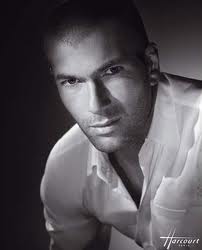
ZizouThere’s a man who comes to mind when I wear (vintage) M7, the groundbreaking oud eau de toilette from YSL. Each and every time, I see Zinedine Zidane (or “Zizou”), the legendary football/soccer player. He is dressed in the most beautifully tailored, sleek, expensive, dark suit as he sits in the shadows on the white marbled terrace of the Monte-Carlo’s Hermitage hotel one balmy summer’s night.

Zinedine ZidaneIt is the annual International Fireworks festival, and smoke filled the starry sky above, jostling with the aromatic scent of the Mediterranean. To his right, the vast yachts of the Monaco port lay down below; to his left, the dizzying array of the rare, unique, stratospherically expensive cars that are parked in front of the nearby Hotel de Paris, with the tinkling sounds of the glittering casino behind them. He sits, enjoying Spain’s fiery exhibition and the accompanying sounds of Ravel’s Bolero that play out somewhere from the darkened sea ahead of him. He is a sight, this man with his big hands lightly dusted with hair around a snifter of brandy, his long legs stretched out in front of him, his beautifully chiseled lips, his face so rawly sharp and contoured that it almost verges on the ugly were it not so fierce. There is a clattering of heels behind him; a beautiful woman approaches, leans down to whisper in his ear, and tries to sneak her room key into his jacket. He stops her with a gentle smile and a firm shake of his head, and she walks away with a sigh. One of many women who tried that night, entranced by the lure of the man, and the scent of M7.

Monte Carlo fireworks

ZindaneZinedine Zidane may be a forceful, brutal panther on the football field but, in a suit, he is the most perfect embodiment of raw, sharply-chiseled masculinity and muscular power sheathed in refinement. Tamed, he is sophisticated, jawdroppingly sexy, debonair and virile. He is exactly like M7 which is an oud fragrance that belongs in Monte-Carlo, my old home, and nowhere else.

Released in 2002, YSL’s M7 was far, far ahead of its time — and its brash arrival on the scene was not helped by print ads featuring a beautiful, hairy, male model in full frontal nudity. M7 was a total bomb and marketplace failure, but in its legacy and its huge effects on the now-endless oud perfume market, it may be one of the most influential perfumes of the past few decades.

M7

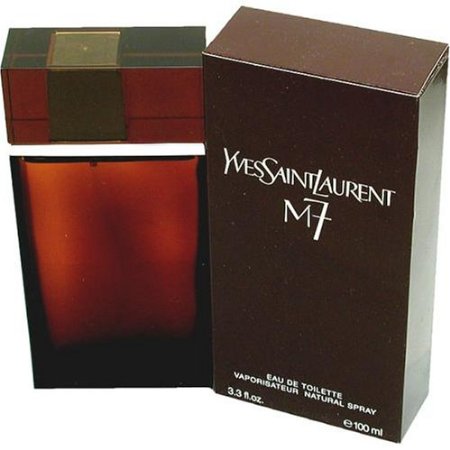
The vintage bottle and box for M7, original 2002 version.

M7 is an eau de toilette that was released by YSL in 2002 under the direction of Tom Ford. The actual noses were Jacques Cavalier and Alberto Morillas. M7’s huge failure led YSL to reformulate it in 2008 — undoubtedly at the order of YSL Beauté’s new overlord, L’Oreal. The reformulated version lasted two years until 2010 when the whole perfume was quietly taken off the market. In 2011, YSL launched M7 Oud Absolu, a de-fanged version of the original monster. (And, somewhere in between all these changes, they found the time to release M7 Fresh, too! Clearly, they were at a loss with what to do with M7 and were trying every possible avenue to fix the problem and their loss in anticipated revenue.) M7 itself faded away, only to become a prized commodity on eBay where it is still available and where it is snapped up with ferocious intensity. I was lucky to have a friend send me a small amount of his bottle (which he bought on eBay), and I think it’s beautiful.

The official notes in M7 are as follows:

Top: Bergamot, mandarin, rosemary.
Middle: Vetiver, agarwood.
Base: Amber, musk, mandrake root. 

I would bet my life that those notes aren’t even the half of it. I would bet you anything! I smell far, far more in M7, starting with walloping doses of labdanum, going through to spices like cardamom, florals and some sort of incense, before ending with vanilla. If there is no labdanum and incense in M7, I will eat my hat. (I will eat my hat, I tell you!) The amount of stuff I detect is so far in excess of those measly, abbreviated, 8 official notes that my personal list of what I smell would look something like this:

Top: Bergamot, mandarin, rosemary, cardamom, clary sage.
Middle: Vetiver, agarwood, Damascena rose, black coffee grinds, jasmine [perhaps Jasmine Sambac].
Base: Amber [probably something like Tolu Balsam], musk, mandrake root, labdanum, incense/frankincense, and something vanilla.

Vintage, original M7 opens on my skin with a beautiful burst of zesty, lemon-nuanced bergamot and rosemary. Within seconds, the citrus aromatic turned honeyed and warm, dusted by spices. There has to be cardamom in M7, I have no doubt. Subtle hints of oud flicker in the background, slow at first, and never medicinal or similar to rubbery pink Band-Aids. Instead, it feels warmly musked, slightly earthy, heavily infused with honey, and oddly floral in nature.

Labdanum compiled into a chunk. Source: Fragrantica

Labdanum compiled into a chunk. Source: Fragrantica

There are massive doses of labdanum under that wood. For one thing, that secondary burst of notes quickly turns into an aroma that can only be called “cherry cola.” For a number of people, “cherry cola” is a scent strongly and consistently evoked by labdanum with its nutty, masculine, dirty, sometimes leathery nuances. I don’t always get the note when I encounter labdanum, but the connection has arisen enough times that I can tell the source of the smell here. The combination of the earthy, slightly medicinal oud with labdanum’s very honeyed, faintly leathered, almost chocolate-y undertones turns the whole thing into something that not only evokes “cherry cola,” but even a little bit of “cherry cough syrup.” The medicinal tinge is so faint that it’s really more root-beer like in effect but, either way, I must admit, it’s not my favorite note in the world.

Clary Sage. Source: TreeFrogFarm.com

Clary Sage. Source: TreeFrogFarm.com

At the same time, and in contrast with those rich notes, there are fragrant aromatics and fruity nuances that cut through the spiciness. There are hints of oranges, feeling almost candied, accompanied by something extremely herbaceous in nature. It’s not just the rosemary; there is something that definitely feels like clary sage with its lavender-y but, also, floral quality that is underpinned by a light leather nuance. The lavender note adds to the fleeting fougère element of the opening, but it’s extremely subtle and muted. It feels like there are other herbal notes too, like bay. Possibly even something a bit papyrus-like in nature. As for the vetiver, it is definitely there, too — dry but, also, earthy. It flickers under the thrust of the main notes, the cherry cola and musky woods.

Source: eHow.com

Source: eHow.com

Ten minutes into M7’s development, I start to go a little mad with frustration. There are florals notes in M7 that far surpass that initial pop of something like lavender. I would swear that there is a minuscule drop of jasmine, accompanied by an even stronger, large amount of rose. It feels very much like a dark Damascena rose: fruity, jammy, dark, meaty and backed by some earthy, dark accords. It feels absolutely identical to the rose note in Tom Ford‘s Private Blend Café Rose. Absolutely identical, right down to the wet, black, coffee grinds in that perfume. The only difference is that, here, it is strongly intertwined with M7’s cherry-cola labdanum note.

Source: Tumblr

Source: Tumblr

Twenty minutes in, M7 softens — a lot. It is never a hugely powerful, thick, heavy fragrance to begin with but, even for an eau de toilette, I’m surprised by how quickly it becomes a gauzy, airy thing. But what a smell it is! M7 is quietly radiating: aromatic herbs with clary sage; labdanum cherry cola; spiced orange; a very honeyed oud with a tinge of medicinal earthiness; soft muskiness; heaping doses of a jammy, red, dark, coffee-infused rose backed by a touch of jasmine; and, now, sweet, warm incense. The incense smoke curls like tendrils that wrap around the other notes like a ribbon. It has the sharpness of frankincense, though I wouldn’t be surprised if the nuttier, slightly sweeter myrrh incense were also used. The smoke helps cut through a lot of the heavy syrupy sweetness of that cherry cola note (which I truly don’t like), and blossoms beautifully with the perfume’s development.

Forty minutes in, the perfume starts to shift. The oud becomes significantly more prominent, feeling creamy and smooth, while the cherry-cola labdanum and florals start to recede a little. The agarwood is accompanied by muskiness, an increased amount of incense smoke, and sweet, gauzy, light vanilla. All traces of citruses and rosemary have faded to a ghostly presence in the background, leaving behind primarily an oriental scent that is woody, creamy, slightly spiced, resinous, and earthy. Unfortunately, its sillage becomes absolutely terrible, requiring me to bring my arm right to my nose to detect it. (And it only gets worse.) By the end of the first hour, my skin has already cycled through most of M7’s top and middle notes, and the drydown begins right around the 90 minute mark. I’m shocked by the rapidity with which we’ve come to the end.

In its final stage, M7 turns from a labdanum-oud scent backed by incense, earthy notes, musk and vanilla into something considerably more abstract and ambered. The base smells beautifully nutty, spiced, creamy, supple, smooth and warm. There are flickers of that lovely incense sitting atop soft vanilla and a muted woodiness. Unfortunately, the whole thing so sheer and thin on my skin, so incredibly elusive, that I’m continuously preparing myself for it to end completely. It doesn’t, though. M7 lasts for another 2 hours in a state of miniscule, ghostly lightness; every time I think it’s finally gone, a iny, flickering note of amorphous, vague, spiced, woody, musky vanilla pops up. There are small patches of it on my skin that hang on tenaciously, making M7’s full duration on my skin clock in at almost exactly 3 hours. But, if we’re to be really candid, M7 really ended at 2.25 hours. I suppose that’s a lot better than what I got from the reformulated 2008 version which lasted a whole solitary hour on me — but I still feel a little cheated.

I really loved the 2008 version of M7, but I far prefer the original. Though the cherry-cola aspect to the labdanum is not my favorite, the very honeyed, spiced, earthily sweet oud is truly lovely. As I’ve said a few times recently, I’ve got oud fatigue but this is one of the most beautiful, refined, sophisticated and, yes, admittedly tamed, versions of agarwood that I’ve come across. There are obvious similarities between the two formulations, but the original vintage version seems like a much more amplified, concentrated version. (Well, relatively speaking, given just how sheer and light both eau de toilettes were on my skin in terms of weight and sillage.) With the 2008 version, I admired the lovely honeyed feel to the perfume, along with the spices which — in that instance — felt to me like cinnamon. However, I much prefer the richer, nuttier, duskier cardamom feel of the original M7, along with the significantly richer effect of the labdanum. (I no longer have the remnants of that sample to compare and see if there was labdanum in any serious quantity in the 2008 version.) I suspect there was a significantly lower quantity for two reasons: 1) I never once smelled “cherry cola” with the 2008 version and actually said so in my review back then; and 2) the oud had a far greater medicinal nuance there. It wasn’t huge and never felt antiseptic, but there was a clear tinge of pink rubber bandages that the original 2002 version lacks. My theory is that the lower levels of labdanum meant a lot less honey to soften, warm and tame the agarwood.

Zizou 2The whole scent is refined, sophisticated, elegant, and sensuous. This is not an Emir’s oud; it doesn’t evoke the Middle East and anything exotic. It’s not unctuously thick, screamingly aggressive, swaggeringly masculine or abrasive. There is some power underneath the notes, some very rugged, masculine qualities that linger, but it’s been refined, like a powerful Zinedine Zidane in an YSL suit. It’s smooth and flows like silk. The only part where Zidane doesn’t apply to this analogy is in who can wear this perfume: I think this is an incredibly unisex fragrance. Women who love rich, spicy Orientals with agarwood would absolutely adore this. The oud is so tamed, many may actually find it not to be enough. It is certainly nothing like a Montale oud — not even remotely! It’s also much smoother, richer, softer, spicier and deeper than many of the By Kilian Arabian Night oud fragrances. (There aren’t really any similarities between them, in my honest opinion.)

What we have with the original M7 is — without a doubt — the template for many of the fragrances that Tom Ford would go on to put out under his personal label. The closest and most obvious progeny is his Private Blend Oud Wood, but there are also traces of M7’s impact in Tobacco Vanille, Café Rose, and even to a minor extent, the new Sahara Noir fragrances. I have no doubt that M7 was a work of love for Tom Ford, even if he didn’t actually blend all the notes together himself. For this, his very first fragrance, he must have directed Jacques Cavalier and Alberto Morillas to include all his favorite notes or combinations: oud with cardamom; oud with labdanum; oud with frankincense; labdanum and frankincense; a jammy rose with bitter, earthy elements; woody notes with vanilla and vetiver; and more. M7 is a roadmap that branches out to all sorts of Private Blend fragrances, but, honestly, it is better than almost all of them with two exceptions: sillage and longevity. On my skin (which admittedly is wonky) M7 had maybe 0.01% of most Private Blends’ potency and duration. I’ve often said that Tom Ford’s Oud Wood was an attempt to remedy the mistakes he went through with M7 but, clearly, he also decided to make up for M7’s sheer body and lifespan as well. Is Oud Wood a better fragrance? That’s a personal, subjective matter. I think it’s a very different fragrance; and I much prefer M7.

As a general matter, M7 is not only a much adored fragrance but it is also one that seems to have a startling, seductive effect on those who smell it. Review after review on Fragrantica seems to imply that this is an absolute lady-killer. One of my closest friends had told me her boyfriend wears M7 and that it made her… well, I’ll spare you the blushes. But I thought her reaction was simply because he’s a bit of a hunk. Well, apparently, M7 turns everyone into a bit of a hunk! A small sampling of the comments:

  •  I received the best compliment ever from a sexy girl after she buried her face in my neck, ‘f**k me now, and again tomorrow, just so I can smell that again.’ nuff said.
  •  A woman at work commented the other day “You smell amazing you’re affecting my pheromones”
  • This is Hardcore Sex in a bottle!!! Its Sweaty, Its Dirty, Its Intoxicating…. Its so damn nasty…..I wouldn’t be surprised to know that this one has pheromones on it.
  • It smells like sex, just in a bottle. That’s all. Yes, there is so much more, but that’s all that you, dear reader, need to understand here. There’s nothing else quite like vintage M7, and it lasts for DAYS.
  • 1. Put a man in a blender. 2. squeeze. 3. add alcohol. M7 formula.
  • i like to wear even though i’m a girl. smells very dark, erotic, strong,wild …… it makes me think: “Take me!”
  • YOWZA! YOWZA! YOWZA!  [..] “M7” is unashamed of its sexy, primal, and animalistic bed-scent persona. Any man entering a room with a bunch of ladies better proceed with caution while donning this fragrance…..They won’t be able to keep their hands to themselves. I know I wouldn’t.

I don’t agree with all parts of the comments. For one thing, I honestly don’t think M7 smells dirty in the slightest. As for animalistic, I suppose it depends on your definition of the word. M7 is not “animalic” in the real perfume sense of raunchy, skanky, intimate, sweaty, or fetid. With regard to the claim of M7 lasting for “DAYS,” I know I’m not the only person who had terrible longevity with it (though there are very few of us out there). Other than that, however, yes, this is an incredibly sensuous smell and yes, I can see how it may lead to thoughts of sex.

As for other comments on Fragrantica, you may be interested to know that a large number of people write about the “cherry cola” opening to M7; a small amount mention that they smell lavender, florals or incense (which supports my argument that M7 has perhaps double the officially listed notes); and a handful talk about how it is fleeting in nature. Women love to wear it on themselves as much as they love to smell it on men. In fact, in a He Said/She Said assessment of vintage M7 on Now Smell This, the male reviewer thought it was simply too, too much, while the female one adored it:

He says: I first tested M7 on a warm spring day in Kyoto and immediately thought, “Well this isn’t the best time of year to launch this.” The scent was heavy and rich, masculine and earthy. The most prominent feature was the centerpiece of vetiver — and I’m not a huge fan of vetiver. Having had countless chances to re-visit it, and even more chances to purchase it (I haven’t), I still come to the same conclusion: this is simply too much of a good thing. As a candle, yes. As incense, yes. But as an Eau de Toilette, it’s just too much. If there was some way the fragrance could have been lightened, sweetened, smoked, anything, it could have helped… […]

She says:  […] on the right day, it is one of my very favorite fragrances for men. [¶] As with most fragrances containing agarwood, it starts with a bit of a medicinal edge, but that fades along with the short-lived citrus top notes. After that, it is dark, warm, and dry, with a mild spiciness and deep earthy woods. To my nose, it isn’t heavy in the least, but it does make a statement, and the intensity of the vetiver and agarwood are not likely to suit you unless you like both notes. [¶] It is rare that I find a scent too masculine to wear, but M7 probably qualifies on that score. I do wear it, but I rarely wear it out of the house. On a man, it is one of the sexiest fragrances I can think of.

I must really have wonky skin, because, damn, it was so sheer and light on me! If only it had been heavy, rich, and “too much of a good thing” — I would buy it immediately! And, obviously, I found it quite wonderfully, perfectly sweet in an ideal balance of smoke and woods. I’m also surprised that the male reviewer thought M7 was too much. Judging by the comments on Fragrantica, men are writing in screaming all-caps of euphoria about M7, with many stating that it is the King of Ouds, bar none. That last comment is repeated to such an extent, it too leaves me a bit baffled since, on my skin, there truly was not a huge quantity of agarwood during any of my repeated tests. It was far too refined in amount and feel. (Hence, the analogy to Monte Carlo.) I’m also confused by the repeated comparisons to Nasomatto‘s Black Afgano, though the commentators think M7 blows it out of the water and is infinitely superior. I haven’t tried that oud fragrance, but since it is famed for smelling just like marijuana, I truly can’t see the similarities.

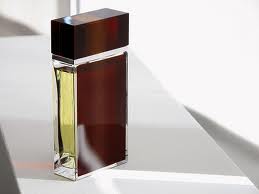
M7 Original in the solidly dark bottle.

M7 Original in the solidly dark bottle.

Regardless, I genuinely believe that M7 lives up to the hype, so if you are want to take the next step and try to find a bottle on eBay, I’ll tell you need to look for. I’ve previously written about how to find true, original M7, in the context of the 2008 reformulated version, so I hope you’ll forgive me for repeating a chunk of that information because, you see, the bottles and boxes are key.

M7 reformulated bottle.

Reformulated bottle. Note the clearness which is on both sides and, also, on the bottom.

The original M7 as shown above is packaged in a deep brown bottle that is solidly brown all around and has a silver band at the top. Its box lists four ingredients. In contrast, the reformulated version of M7 comes in a box that is really essentially clear with just a big solid sticker of brown on the front and back; you can tell it’s the reformulated version because the sides and bottom of the bottle are completely clear.

M7 boxes compared with the vintage original on the left and the reformulated version with its increased ingredient list on the right.  Source: Basenotes.

Its box is also different; it now lists 14 ingredients instead of 4. Despite the increase in ingredients, however, the reformulated version is substantially weaker than the original, emphasizes amber over faint oud, and lasts even less time (both on my skin and on others). That said, both versions have the same dry down.

In terms of pricing, almost anything goes. Like much to do with vintage fragrances on eBay, it’s a matter of luck, timing, and who else is bidding. I’ve seen almost full 1.7 oz/50 ml bottles go for $80; I’ve seen full 3.4 oz/100 ml bottles go for around $300 (especially on Amazon); and I’ve seen everything in-between. There is always someone selling samples of the vintage on eBay which is lucky because nowhere else carries it. Surrender to Chance’s listing for M7 is for the 2008 reformulated version; I know because I ordered it. But on eBay, right now and for a short while, there are listings like the one here where a seller has 10 mls of vintage M7 for $21.99 (only 1 decant left), or this British eBay listing for a tiny 1 ml vial for GBP 3.75. Or, you could get a large 3.4 oz slightly used tester of vintage M7 for about $110 here. (As a side note about M7 on eBay, “M7 Fresh” and “M7 Oud Absolu” are totally different things. The Oud Absolu is the very final, current formulation of M7 and nothing like the original! Also, I have no clue at all about the M7 after-shave that is often sold there too. Be careful and make sure your M7 Vintage is not M7 Vintage After Shave because the bottles do look alike.)

Obviously, these listings will soon end and the links will be of no use, but my point is to that you can absolutely find bottles of M7 out there without paying an arm, a leg and a house. Is it worth getting a slightly used bottle? That’s up to you. For vintage perfumes of any great renown, it’s not easy getting a sealed, full bottle at a truly low price, but I suppose it is possible if you’re very patient and very lucky. For me, personally, I think $110 for a 3.4 oz bottle of some famous perfume that is almost full is a great price, especially compared to the cost of some niche perfumes out there today.  

Man or woman, I think M7 is worth tracking down, even if it’s only a sample to begin with. It’s seductive, sensuous, creamy, sometimes utterly mesmerizing, and always incredibly refined. It is truly the Monte Carlo interpretation of oud fragrances. It’s also a little piece of perfume history, and a whole lot of glory.

Source: palaces.monaco-hotel.com

Source: palaces.monaco-hotel.com

Perfume Review – Amouage Ubar: The White (Floral) Stallion

Have you ever seen an Arabian horse running? It’s an object of awe and grandeur, from its tiny, delicately chiseled head with those vividly intelligent eyes, to its hugely curved, muscular neck, its perfect, lithe body, and its perpetual grace that puts all prima ballerinas to shame. My sister had a massive Arabian stallion called Sheytan, black as night, with a temper to match, and that half-wild, murderous devil was the terror of our stable boys (and many grown men). I had a Palomino, a handsome golden beauty of great age with a plodding nature. It was the only horse my parents would trust for a tiny four-year old and, though I loved him, I always wanted a black Arabian. I would console myself on sleepless nights by dreaming of riding a stallion like Sheytan in the desert, letting only the wind accompany the steady roar of his hoofbeats.

Arabian Horse tumblr_m7dtkdCrFl1rwt5gqo1_500

Source: dahabhorseridingclub.com

For some indescribable reason, I feel as though I’ve found a white Arabian in perfume form, and it’s Ubar from the royal perfume house of Amouage. Ubar isn’t a pure white steed but one flecked with yellow and gold, a larger-than-life, 3D, floral-oriental powerhouse whose mighty body also has a head of surprising delicacy. It is not a mere thoroughbred race horse; Ubar is too Oriental for that. It is definitely a mighty Arabian, and now I just need a desert in which to set it free. 

Source: Friendfeed.com

Source: Friendfeed.com

Ubar is an eau de parfum that was released in 1995 to celebrate Oman’s Silver Jubilee year, and which made for Oman’s royal perfume house by Créations Aromatics. As First in Fragrance explains, the inspiration was the eponymous legendary city:

Ubar, also known as The City of a Thousand Pillars, existed from ca. 2,800 B.C. to ca. 300 A.D. According to legend the city amassed fabulous wealth from trading between the coastal regions of the Arabian peninsular and the population centres of the Middle East and Europe. Modern historians regarded Ubar as a figment of mythical Arabian tales and never thought that it really existed.

Ubar is mentioned in the fabulous tales from One Thousand and One Nights. According to legend God, enraged by its decadence and profligacy, smote the city, driving it into the sands, never to be seen again.

Ubar.

Ubar.

For some inexplicable reason, Amouage discontinued Ubar, before suddenly deciding to bring it back in 2009. Now Smell This has the details, along with the fabulous historical tidbit that the legendary city of Ubar was re-discovered in 1992 with the aid of satellite imaging. (Yes, I really do love history, even more than perfumery!) 

Ubar has been relaunched this year (20091). It has new packaging (see image above), a new concentration (the original was an Eau de Toilette; now it’s an Eau de Parfum) and a new price (much higher). The notes (bergamot, lemon, lily of the valley, Damascena rose, Bulgarian rose, jasmine, sandalwood, synthetic civet and vanilla) are reportedly the same. […]

[H]ow does the new Ubar compare with the old? Well, first, I thought it was gorgeous in 2005, and it’s still gorgeous in 2009, but the change in concentration (and obviously, the reformulation) is significant: the new Ubar is a much heavier scent, with considerably more emphasis on the floral notes in the heart and correspondingly less emphasis on the base. The original Ubar was, to me, a sandalwood fragrance decorated with a few flowers; the new Ubar is a floral fragrance, first and foremost, with a woody oriental base[.]

The complete set of notes — as compiled from the official list on the Amouage website and from Fragrantica — are as follows:

top: lemon, bergamot, lily of the valley, tangerine, orange, litsea cubeba and violet leaf
heart: jasmine, damascene rose, orange blossom, ylang-ylang, tuberose, freesia, and palisander rosewood
base: civet, vanilla, sandalwood, patchouli, vetiver, copahu balm and black amber

According to my research on Fragrantica, Litsea Cubeba is an evergreen shrub native to China whose aroma is “lemon-like, sharp, tangy, with sweet undertone.” As for Black Amber, Fragrantica says it is the lowest, cheapest grade of ambergris. Copahu balm, for those who have never encountered it, is simply another type of very rich, spiced amber resin. Interestingly, if you examine that list of ingredients, the usual Amouage mainstay of frankincense is missing.

Damascena roseUbar opens on my skin with a burst of ruby-red, velvety, heavy, meaty rose. If this were meat, it would be a heaping slab of prime rib. It drips its hearty juices and jammy nectar atop a base of patchouli that almost feels infused with oakmoss. The mossy note feels midway between fresh and green, and dried, pungent and robust. Co-mingled with that rich damask rose is a subtle touch of orange blossom and big chunks of orange that feels both pulpy and infused with spice. The juicy flesh of the fruit adds another layer of richness to the jamminess of the rose, but any truly fruity aspects are alleviated by the lurking hints of delicate, dainty, sweet freesia and green, spring-like lily-of-the-valley.

In that opening blast, perhaps my favorite part are the subtle, spicy nuances in Ubar. It has to be the indirect effect of the Copahu resin which subtly adds a rich, thick, almost honeyed, but definitely spicy amber touch to the base. There is almost a boozy effect in those opening minutes — not like rum but, rather, like extremely expensive, aged cognac. There is a profoundly liqueur-like feel that smells wonderfully ostentatious, plush, hedonistically decadent and luxurious. At first, it is quite a separate, distinct note, but quickly, it melts into the perfume to become significantly muted, adding only an indirect touch of depth to that beefy, jammy, Damascus rose.

Lily of the ValleyTen minutes in, green notes rise to the surface. It is not precisely like lily-of-the-valley because there is a heavy milky aspect to the floral greenness. In fact, it actually smells like a dead-on replication of extremely concentrated green tea, infused by a huge amount of cream. After another five minutes, the lactonic (and green tea) element fades, replaced by the clear, unquestionable note of lily-of-the-valley. It is infused with lemon and has a miniscule amount of spiciness underneath, thereby preventing it from ever being heavily soapy in nature. I assume that spicy-lemon nuance comes from the litsea cubeba. (As a side note, no other perfume house so consistently uses ingredients that I have never, ever heard of in all my life. It’s always a voyage of discovery with Amouage, and I find that enormously appealing.)

The famous, "Sun Drop" yellow diamond.

The famous, “Sun Drop” yellow diamond.

While the lemony lily-of-the-valley quietly makes its presence known, so too does the jasmine and, my word, is it stunning. It has the feel of night-blooming jasmine in full narcotic headiness with a sensuous aroma that feels almost tactile, reaching its floral tendrils across a warm summer’s night as if the floral fingers were waving at you in the air. It is so rich and strong, the note almost seems visually solid. In conjunction with that beefy, meaty, prime-rib of a rose, the overall effect feels like the perfume has turned into a floral holograph right before your eyes, shimmering in 3D effect like a revolving yellow diamond. (Jasmine always feels “yellow” to me, if that makes any sense, and I always have to remind myself that it is, in fact, a white flower. But, dammit, its richness feels so yellow, especially here!)

Amidst that heady blast of jasmine-rose, touched by lemony lily-of-the-valley, the other notes become much less individually distinct. Ubar’s patchouli can always be felt in the background, but the ambery, boozy note from the copahu resin receded long ago. And there is almost no strong feel of smoke and frankincense which is the usual signature for an Amouage fragrance. There feels like there are some flickers of frankincense, muted and almost indecipherable, but every time I think I’ve got a hold of the note, it vanishes. And I’m not the only one who wonder about its presence in Ubar. Now Smell This also struggled to decide whether or not it was there. Honestly, I wouldn’t be surprised if the subtle traces of some amorphous smokiness stemmed from the Copahu resin instead.

Source: Mearas.net

Source: Mearas.net

Around the forty minute mark, Ubar settles into its paces like an Arabian once it is in a full, comfortable gallop that it can maintain for hours. It is a perfectly blended, harmonious, monstrously big sum-total of: heady, exuberant flowers; lemony lily-of-the-valley; muskiness tinged with smoke; velvety, mossy patchouli; and subtle, almost minute flickers of spiced, pulpy orange. Like an Arab stallion racing in the desert, its footsteps kick out small traces of other notes, like pebbles or dust in the wind. There is civet which comes out from time to time like a teasing ghost. It’s never urinous, skanky, dirty or raunchy on my skin, but just another layer of muskiness that is added to the narcotic flowers. There are also subtle suggestions of sandalwood lurking at the edges but, at in the early hours, it never feels like real Mysore sandalwood. I honestly think it’s either synthetic or a variant, because it lacks the truly spicy, deeply complex, rich, layered feel of Mysore sandalwood. Still, it’s creamy and adds a subtle depth to very strong patchouli base. Hints of amber are also apparent at times but, like the other tertiary notes, it’s muted in the face of those powerful florals. Lastly, about two hours in, a quiet touch of soapiness arrives, underlying that lily-of-the valley note, but it soon fades away.

In its middle phase, Ubar becomes, primarily, a musky rose-jasmine fragrance whose other notes sing very softly in the shadows. At times, the whole thing feels like one extremely powerful, abstract burst of flowers backed by musk and patchouli. Yes, there is still some lemon nuances, but the fresh, spring, green Lily of the Valley element (that was never huge to begin with) disappeared around the middle of the third hour. The civet is noticeable, though it isn’t a profoundly distinct note beyond general muskiness at this stage. The sandalwood still feels very synthetic, muted, and vague. And, finally, on my skin, the amber effect is extremely indirect.

However, starting around the sixth hour, Ubar starts to shift a little. The jasmine-rose duet is joined by stronger animalic civet, followed by a touch of vanilla. The civet never smells urinous to me or like “cat-butt” as some of its detractors call it, but the note is strong, more than just general “muskiness,” and even a little sharp at times. Since it’s a synthetic ingredient for animal cruelty reasons, I’m not surprised that it burns my nose. As time passes, that softens a little, as does Ubar itself. It’s finally less voluminous in feel and projection, finally a little closer to the skin, and much more softly golden. Vanilla becomes more significant around the 8th hour, creating a warm, musky sweetness on the skin that remains until the very end.

I truly can’t say that the amber in the base or drydown is very profound, and I certainly don’t detect ambergris with its almost grey, sweaty, richly heavy, salty feel. The ambergris used in Ubar is the lowest grade called “Black Amber”; reading the Fragrantica which I linked to above, it seems to be an extremely soft form and I get the sense that it smells far from the real, hardcore whale ambergris. Furthermore, I’ve never read any accounts of Ubar where the reviewer thought amber (never mind ambergris) was a huge part of Ubar. There is a golden feel to the base in Ubar’s final stage, but it stems more from the lingering effect of the Copahu resin, mixed with the musky civet and vanilla than anything that smells “ambery.” When Ubar finally starts to fade away, all that’s left is some vanilla musk.

All in all, Ubar feels almost exactly as Luca Turin describes it. Yes, for once, I actually agree with the famed, prickly critic. In his gushing five-star review of Ubar in Perfumes: The A-Z Guide, he wrote:

I remember years ago seeing an iMax movie at the Air and Space Museum in DC: it started out with a grainy black and white film of a biplane taking off, and just when you thought you were beginning to wonder why you’d shelled out twenty bucks, the screen turned to colour, widened to a huge hollow sphere and you were flying above a forest in turning-leaf colors above a Pitts S2 painted in shiny red and white. Even the sound was gorgeous. Everyone went “aaaah” and I shed 40 years of age in 10 milliseconds. After smelling several dozen pigeon-toed, rickety modern fragrances designed by depressive accountants, encountering Ubar is a similarly joyful experience. This thing is so huge, gleaming, overengineered and chock-full of counterrotating planetary gears that you feel all you can do is let it tower over you while you walk around it and kick the huge tires. Ubar is technically a floral-oriental but the flowers are 3XL in size and the Orient has been scaled accordingly. If the old Dioressence had an illegitimate child with the first Rush, it would smell like this: a huge, purple romantic rose in the manner of the lamented Nombre Noir, a ton of creamy lactones, a whale’s worth of animalic amber. Ubar joins the small club of nuclear-tipped fragrances: Poison, Giorgio, Angel, Amarige. Use it carefully, for once you spray it on there’s no going back.

I can’t believe it, I actually agree with “His Majesty” in almost every respect! I only quibble on the “whale’s worth of animalic amber” since, on my skin, it is quite a subtle, indirect background thing. Notwithstanding that minor difference of opinion, I think the rest of Mr. Turin’s assessment is absolutely perfect, right down to how the “oriental” aspect has been scaled down to a small size.

He’s certainly right about Ubar being “nuclear-tipped.” This is one extremely powerful fragrance. Do not spray it with reckless abandon! Two to three small, dabbed smears gave me monstrously strong sillage at first but, after the first hour, it drops by a little. It doesn’t radiate out across a room at that point, but it does create a small, soft cloud around you, wafting about a 6 inches above your skin for hours and hours on end. You can definitely smell it on yourself, though I don’t think you’d overwhelm a co-worker across the room. (As a general rule, I would not recommend Ubar for a conservative office, no matter what the quantity.) Ubar only becomes a skin scent about 6.5 hours into its development and it lasts about 11.5 hours on my perfume-consuming skin. None of that applies, however, if you spray on a lot. More than 2-3 small sprays all over (remember that spraying amplifies a perfume due to aerosolization), and those around you will definitely notice. From a distance.

Though there is a lot of love for Ubar out there (even amongst those for whom lily-of-the-valley becomes a scrubber note), not everyone can handle it. The opinions on Fragrantica range from outright love, to occasional horror (due to the civet note), to those who admire it but find it far too big to wear:

  • This is one of the ‘richest’, most luxurious perfumes I have ever tried. I don’t usually like civet, but in this composition, it was not unpleasant to me. It is an extremely smooth and long-lasting floral perfume.
  • The only Amouage I dislike. It is so strong it gives me instant nausea. I think I am getting that “Mongoose” strongly”.
  • Ubar is an extraordinary flowery fragrance, done on the Arab way. I smell something very close to agar wood note and some animal notes as well which I do not see listed here, but that is how it feels- untamed flowers, mostly violet leaves, greenish tuberose and jasmine.
  • Love the topnotes, REALLY LOVE the drydown. I struggled a bit with the heart…For about 30 minutes, this beautiful creation smelled like celery and urine, though I don’t know which notes listed above would lend to the urine-like smell.
  • Ubar by Amouage is all about flowers, it recalls many good big floral vintage perfumes I’ve already tried before, so if you love a good, bold and in your face floral you might want to give this a try. [¶] It opened with a big bucket of flowers, the smell itself is sharp, almost animalistic and very strong, it fills up a room and is not for pleasing a bus full with people :). [¶] The heart part on me is full with rich ylang-ylang, almost buttery, still going extremely strong and stays like this all trough the drydown – a rich, expensive smelling bomb of flowers – warm, elegant and inviting. [¶] Unfortunately like in many cases with Amouage – I find this to be too much, on the other hand – they do try to give what their customers paid for – a full and rich fragrance that simply screams “royal and expensive”.
  • [From a male commentator]: I knew this was supposed to be floral, but it’s way too floral for my taste. I think the main culprit is the lily-of-the-valley, which is so strong that it overpowers the roses and jasmine, which I generally find pleasant. I can smell a little rose in the mix, but it’s not strong enough to balance the sharper white florals. I cannot smell the base at all due to the LOTV, which dominates everything throughout the entire development of the scent. [¶] I was hoping that at some point the base would make its way through, but the next morning I can still smell LOTV on my wrists. I have to say that this is a wearable LOTV, not a scrubber as many of them are for me, and it’s one I might choose if, for some unknown reason, I wanted a LOTV scent. The perfume is well-made, so I think anyone who loves pure florals of this type would enjoy Ubar.

I didn’t experience a particularly strong Lily-of-the-Valley note and certainly no “mongoose”-like or urinous civet, but I do agree with the general feel of many of the comments. Ubar is a total flowerbomb explosion that does scream out wealth, luxury, and opulence. It is absolutely over-the-top. And I completely share the opinion about how Ubar feels like a lot of vintage floral fragrances.

Source: Wallpapersget.com

Source: Wallpapersget.com

In fact, in my notes, I wrote a long bit about Ubar’s retro and 1980s diva character because it is nothing short of a rearing, white Arab stallion. It is a perfume that feels incredibly classique, in a timeless, high-class, elegant, luxurious way. It’s so opulent, it’s retro, as if this were a 1970s or 1980s, big, diva perfume — only without the screeching element that some of those perfumes had. (Poison, I’m staring straight at you!) I think Ubar’s edges are softer, more well-rounded and creamy, but it’s all a very relative matter. Someone who likes “fresh, clean” fragrances would go into a coma with Ubar; those who can’t handle powerful, narcotically heady fragrances would probably pass out; and those who struggle with indolic, big, white florals would probably be completely overwhelmed. Ubar is stronger than (vintage) Fracas, and it reaches (vintage, 1970s) Opium levels of power.

I wouldn’t recommend Ubar to a lot of people. Those with the aforementioned perfume taste should stay far, far away. Those who are looking for an unobtrusive, versatile, office-friendly, and/or day fragrance — don’t even bother. Young women may also have problems with Ubar, as I’ve read a few people comment that it feels “old lady.” Yes, it definitely is for a more mature woman who wants something extremely sophisticated. And, lastly, in total honesty, I don’t think a lot of men would be comfortable wearing Ubar. It definitely tips heavily to the feminine side of things with all those powerful white florals. However, if you’re a man whose tastes aren’t limited to aromatic fougères, citrusy, gourmand, or oud-based fragrances, and if you enjoy big florals with powerful sillage and longevity, I would strongly urge you to sniff out Ubar.

As for me, I really enjoyed the heady splendour of Ubar with its enormous white beauty, but I prefer my Arabian horses to be Blacks, Bays, and Chestnuts with a little more of unisex smoke and spiciness in their nature. I would certainly wear Ubar if a bottle were ever to fall into my lap but, to my surprise, it is Amouage‘s Lyric that tempts me the most. It feels like a darker stallion with its spicy undertones, even though Lyric was primarily a ylang-ylang fragrance on my skin with hardly any rose. In fact, if I were to do a blind smell-test, based only on what I had heard of each fragrance, I’m sure I would have picked Ubar to be “Lyric” and Lyric to be “Ubar.” Ubar’s heavy, beefy, bloody, red rose presence is exactly what I had thought Lyric would be like (but wasn’t). On my skin, Lyric turned out to have very little rose but, instead, mostly bucketfuls of bewitchingly creamy, buttery, velvety ylang-ylang atop smoke, spices, and custardy vanilla. It just feels like it would fit better with Ubar’s golden bottle and image in my mind. Yet, even apart from the unexpected twist that it took on my skin, I much prefer Lyric because I think it has greater depth, complexity, and range than the primarily white floral aspects of Ubar.      

If you’re tempted by Ubar, but put off by the brand’s steep prices, please know that there are ways around that; Amouage fragrances are often found at a huge discount at various, reputable, discount perfume retailers like LilyDirect. Ubar, in specific, is currently available for around $156 for a large 3.4 oz/100 ml bottle. (See, Details section, below.) For an Amouage, for the size, and for such a powerful eau de parfum, it’s truly an excellent deal. That large bottle will last you decades, unless you plan on spraying on more than 2-3 small spritzes over your entire body each time — in which case, the astronauts on the space station may sit up and wonder.  

So give it a sniff if you’re looking for a sophisticated, seductive, diva, evening floral scent, and ride with the stallions to the ancient city of Ubar in the desert. 

DETAILS:
Cost, Availability, Sales & Sets: Ubar is an eau de parfum that comes in two sizes: a large 3.4 oz/100 ml eau de parfum that costs $285, £170.00 or €215, or a small 50 ml/1.7 oz bottle that retails for $250, €185 or £150.00. Very few retailers carry the small size. LilyDirect, a very reputable online perfume retailer that frequently gives large discounts on Amouage, is selling a large 3.4 oz bottle of Ubar for only $156.08 instead of $285!!! That is an unbelievable price, especially given the free domestic shipping on orders over $100. (For Canadian readers, I’ve heard that LilyDirect will begin shipping to your country in June, so you may want to check with them then.) Ubar in the small 1.7 oz size is also on sale at Beauty Encounter for $163.49 with free domestic shipping and international shipping for a fee. (Obviously, you get more for cheaper from LilyDirect.) I’ve ordered from BeautyEncounter in the past with no problem, as have many of my friends, and they too are a very reputable dealer. Amazon seems to be selling Ubar via PlentyCosas and via FragranceNet with discounted prices of $163.54 for the small and $221 for the large bottle. If you were to go directly to FragranceNet the price is higher, depending on whether you want it boxed or not, at $200.19 for the small or $227.19 for the large. Otherwise, your first stop for purchase might be the Amouage website which sells Ubar in the small 50 ml/1.7 oz size for $250 as well as the larger size.
In the U.S., the authorized Amouage dealer is Parfums Raffy which sells Ubar in both sizes, including the smaller $250 bottle. There is free domestic shipping, and free Amouage samples with any order. Luckyscent carries only the large 3.4 oz/100 ml bottle of Ubar for $285. Ubar in the 3.4 oz/100 ml bottle can also be purchased online at Parfum1MinNY, or the Four Seasons. Finally, Parfums Raffy sells a Mini Parfum Set of 6 Amouage fragrances (Ubar, Jubilation 25, Lyric, Gold, Dia, Reflection) in 7.5 ml crystal bottles for $280. MinNY sells the same Mini Set for $265.
Outside the US: OzCosmetics sells Ubar from Hong Kong (with free world shipping, it seems) and offers Ubar in the small 50 ml bottle for US$216.90 and in the large 3.4 oz bottle for US$246.90. In Canada, The Perfume Shoppe offers Ubar for USD$285 in the large 3.4 oz/100 ml bottle size. I think there is free worldwide shipping. Since CAD prices are usually higher, so you may want to drop them an email to inquire as to the Canadian rate. In the UK, Ubar is available at Les Senteurs where it costs £150.00 or £170.00, depending on size. Samples are available for purchase. There is also an Amouage boutique in London, and I’ve read that some people have purchased Ubar at Harrods (probably in the Roja Dove speciality boutique). In France, Ubar is sold at Jovoy Paris for €210 for the large 3.4 oz/100 ml bottle. For the rest of Europe, Premiere Avenue in France carries the full line of Amouage products, from perfumes to candles to body products. Like everything else it carries, Premiere Avenue will ship worldwide. (Send an email to info@eurl3.com for shipping costs.) In Germany, Ubar is available at First in Fragrance where it costs €190 or €270.00 (which is much higher than the €215 listed on the Amouage website) with free shipping within the EU and shipping elsewhere for a fee. In Australia, Au.StrawberryNet sells the small 1.7 oz/50 ml bottle of Ubar for AUD$223.50. For other countries, the Amouage website has a “Store Finder” which should, hopefully, help you find the perfume somewhere close to you.
Samples: Surrender to Chance sells Ubar at prices start at $3.99 for a 1/2 ml vial. Samples are also available at a few of the retailers listed above, where mentioned.

Perfume Review: Habanita by Molinard (Eau de Toilette)

Source: Sensibility.com

Source: Sensibility.com

By day, she was a delicate ingenué, tending to her charges in her job as a nanny in a Bohemian arrondissement of 1920s Paris. She would wear long, old-fashioned, frilly, white dresses up to her neck and dainty ankles, and she dusted her body in floral and raspberry-scented powder.

Source: Insfashion.com

Source: Insfashion.com

By night, she haunted the smoky nightclubs of Montmartre and La Pigalle, luring men with the subtle tease of a dominatrix’s black leather whip that she eccentrically carried as she danced away the night in a flapper dress as white as silvered snow. She still smelled of raspberry powder, but now, she was also imbued with the smoke from the long cigarettes she held in a leather holder between her vermillion-red lips. Men did not fall for that pale face of baby innocence and floral sweetness, but for the contrast between her angelic facade and the biting sharpness that issued from her lips. She was a powerhouse of forcefulness and paradoxical contradictions that awed even the wild Zelda Fitzgerald. Her name was Habanita.

Habanita is perhaps the most famous, influential, historical perfume that is never sold in stores. It is a legend amongst perfumistas — and not only for its long history, or for how it is a tobacco perfume that is made without a single drop of actual tobacco. Habanita comes from the Grasse perfume house of Molinard, first established in 1849 and still run as an entirely family-owned business to this day. In 1921, Molinard released Habanita as perfumed sachets to enable those newly emancipated, modern women who smoked to do so with a perfumed cover to hide their habit. As the perfume blog, Now Smell This, succinctly explains, Habanita was originally introduced:

not as a personal fragrance but as a product to scent cigarettes. It was available in scented sachets to slide into a pack of cigarettes, or in liquid form: “A glass rod dipped in this fragrance and drawn along a lighted cigarette will perfume the smoke with a delicious, lasting aroma” (quoted in The Book of Perfume, page 76).

Habanita EDT bottle and box.

Habanita EDT bottle and box.

The perfume version soon followed in 1924, housed in a beautiful, black Lalique bottle decorated with cavorting nymphs. As the Molinard website proudly announces, it became known as “the most tenacious perfume in the world.” I’m unclear if that description applies to the pure parfum, solid parfum, the eau de parfum or to the eau de toilette, but I’m pretty sure you can describe almost all Habanita concentrations, now and in the past, as pretty damn tenacious! In the 1980s, Molinard reformulated Habanita and this is the version that I’m writing about, in eau de toilette concentration. Finally, in 2012, Molinard issued a new (and, again, reformulated) Eau de Parfum concentration as well.

2012 was also the year that I bought a big bottle of Habanita Eau de Toilette, blindly, off eBay, and due solely to the force of the blogosphere adoration for the scent. My post-lady handed me a small leaking package, commenting, “Boy! That’s strong!” And it was. There wasn’t a huge quantity that had seeped out, but that moderate amount, even partially dried, left a mindbogglingly enormous trail of scent in my wake as I made the walk back to my house from the postboxes. Later, I sprayed some on me and was almost blown out of the water by its strength. I enjoyed every bit of it, back then, overcome by its power, its novelty, and its unusual nature.

Unfortunately, a few more wears (and a very bad experience later in the fall with the scent on clothing) quickly led to a radical change in thought. The simple truth is that I don’t like Habanita very much and, if I’m really, truly honest with myself, I know deep down that I never did, and that my first initial appreciation stemmed purely out of wishful thinking. (Plus, a huge desire to justify a blind buy.) I wanted to like it; I knew I should like it, especially given the history (and my total faiblesse or weakness when it comes to anything historical), but mostly, I wanted to like it. So, I convinced myself that I did. Now that I’m a perfume blogger, I put great thought and analysis into each review, I rip things apart in a way I never did, don’t engage in risky blind buys, and I’m candid with myself from the start. If that post-box trip were to happen now, I would admit right away that Habanita is most definitely not for me, though I’d still respect and admire it for its history. And, dammit, I still want to like it! I almost feel like a traitor to history.

Habanita is classified on Fragrantica as an “Oriental” perfume, but I personally consider it more of a chypre-leather. The notes — as compiled from both Now Smell This and Fragrantica — seem to be:

bergamot, raspberry, peach, orange blossom, galbanum, oakmoss, jasmine, rose, ylang ylang, lilac, orris root, heliotrope, patchouli, amber, leather, musk, vetiver, cedar, sandalwood, benzoin and vanilla.

Habanita is a complicated scent on some levels and a simple one on others. If you were solely to smell the bottle, you’d detect makeup powder with florals, citrus and chypre notes. Even when on the skin, unless you really looked at the notes while smelling the perfume, you may initially conclude that you’re dealing with an avalanche of makeup powder alongside powerful (but completely amorphous, abstract) floral notes backed by the feel of scented tobacco paper and tinges of leather.

Source: Amazon.fr

Source: Amazon.fr

The same thing happens when you put Habanita on the skin, though greater nuances are immediately noticeable, because it’s an incredibly elusive scent in terms of its layers. There are citrusy notes atop leather that has hints of something vaguely verging on animalic. The leather feels almost raw, at times, and there feels like whiffs of castoreum underneath it. The notes are sharp and, on some tests, can seem either medicinal or quite sour on the skin as well. I suspect it’s due to the galbanum which is never noticeable in an individual, distinct, separate way, but whose effects can be seen most indirectly in that leather. As a side note, galbanum’s sharpness was often used in leather fragrances — notably in Robert Piguet‘s Bandit — so I wouldn’t be surprised if that was the cause for the raw, sometimes sour nuance to the leather here.
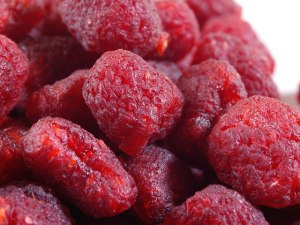
Dried raspberries via Nuts.com

Dried raspberries via Nuts.com

Habanita also contains a powerful whiff of something that is extremely hard to pinpoint if you don’t stare at the ingredient list, a note that is rarely used in high-end, niche, or classic perfumery: raspberry. Each and every time I put on Habanita, I struggle to place that one, odd, unusual, seemingly “off” element before I remember, “Oh, raspberry. Right.” I don’t know about you, but I actually can’t recall ever smelling raspberry in a significant way in perfumery. Making it all the more complicated for me is the fact that the raspberry in Habanita is not like the fresh, sweet, fruit of summer days. It feels simultaneously: desiccated, syrupy, sour, leathered, and highly powdered. Honestly, I’ve never smelled anything quite like it and, on my skin, it is always a heavy part of Habanita’s opening hours.
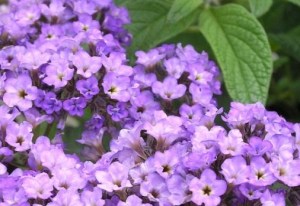
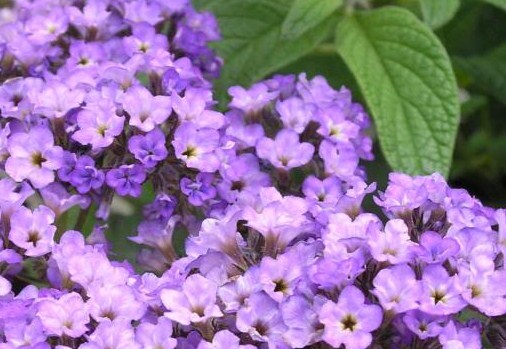
Heliotrope.

Heliotrope.

Nothing, however, can possibly detract from the powder note which is created by the iris, orris root, heliotrope and vanilla (perhaps, also benzoin) notes. It is not baby powder or talcum powder simply because this one is scented — and scented with a variety of things to boot. Thanks to the heliotrope, it has a subtext of almonds mixed with Play-Doh. The orris root — an ingredient long used in makeup and lipsticks as a fixative — gives it a makeup vibe, while the florals imbue it with rose, lilacs, and a whiff of jasmine. The vanilla adds its voice to the powder, too, perhaps solidifying some of the makeup associations.

There is something much more important underlying the powdered note, however, something that makes many people classify Habanita as a tobacco scent. The interplay of the powder elements with the other notes in Habanita create the overwhelming feel of powdered tobacco paper. Growing up in France, there were a number of cigarette boxes whose silver paper lining I recall being scented with a powdered note. I’ve never seen it in America, but I have seen similar sorts of boxes in India, the 1980s Soviet Union, Italy, and other parts of Europe. It’s a hard scent to describe if you’ve never encountered it because it doesn’t have the aroma of cigarette, nor stale ashtrays, but also not of paper or pure powder. It simply smells like talcum-powder tobacco paper.

I suspect the reason lies in the vetiver. It’s not like the sort of vetiver that most of us are used to; it doesn’t smell anything like the note in Chanel‘s Sycomore, for example, or Guerlain‘s Vetiver. It’s neither fresh and green, nor rooty, earthy, or woody. And, yet, when combined with the other elements, it creates “tobacco” in a powdered, papery form. Luca Turin categorizes Habanita as a “vetiver vanilla,” while CaFleureBon simply writes: “[a]lthough the perfume Molinard Habanita was originally produced to scent women’s cigarettes, it contained no tobacco and incorporated rose, vetiver, vanilla, and incense notes.” Whatever the exact alchemical reason for the note, “tobacco paper” is a profound part of Habanita’s character for much of the perfume’s development.

Habanita’s opening, as I’ve described it, can vary a little in its nuances. Sometimes, in the first minutes, the extremely sharp, almost pungently bracing, opening note of citrus-rose-leather softens a little, bringing out more of the powder. At other times, the note turns extremely sour on the skin, probably due to the arrival of copious amounts of raspberry which always turns into syrupy, raspberry leather dosed by talcum powder. Sometimes, the vanilla is much more immediately noticeable, while occasionally, the leather with its castoreum-like undertone doesn’t hang back quite as much. Every now and then, I get a fleeting flicker of lilacs in the florals tones, but generally, it is a rose note which rises to the surface.

Almost invariably, whatever the nuances, I get a headache. There are synthetics in the reformulated Habanita EDT, and it gives me that telltale burning sensation high up in the bridge of my nose. I’m not the only one who thinks the reformulated version is quite synthetic. The blogger, Brian, from “I Smell Therefore I” am wrote in a comment to his review of Habanita: “I think current Habanita is probably so synthetic that the pyramid is pure fantasy.” I fear that may be true. I do know that I’m not the only one who got a burning sensation from Habanita; I had a friend try it a while back, and they had a similar reaction.

Source: Allposters.com

Source: Allposters.com

Regardless, as Habanita opens up and develops, it turns into a scent that is primarily raspberry-vanillic powder with amorphous florals, Play-Doh undertones, and a whisper of raw, black leather in the background. It’s seriously extreme, a turbo-charged powder that feels like something from the vivid imagination of Willy Wonka.

Eventually, about five hours in, Habanita turns into something much more leathered in feel. It’s not like a cold, stony leather, exactly, but it’s definitely not like a richly buttered, oiled, soft, creamy leather. It feels like a rubbery, black leather jacket, imbued by a layer of sharp smoke. There is no incense listed on Habanita’s notes, but there certainly should be. At the same time, both the leather and the smoke are backed by the scented powder, fleeting flickers of rose, and a lingering sharpness that feels more dark green than ever before. Undoubtedly, it’s the galbanum which has risen to the surface alongside the leather. At times, wearing Habanita, I’ve also detected something that feels very much like the powerful black, smoky tea, Lapsang Souchong; only here, it’s imbued with some sharp, green, citrus elements. It’s all due to that endless black smokiness underlying Habanita. The whole thing evokes the image of a 1920s smoky club but, also, of that same 1920s flapper draped in a leather jacket atop a large Harley-Davidson, smoking as she flexes her whip. Whatever it is, it involves some sort of femme fatale domination and cigarettes. It’s… different.

Lara Stone, the dutch model, photographed by Mert & Marcus for Interview Magazine.

Lara Stone, the Dutch model, photographed by Mert & Marcus for Interview Magazine.

In its final hours, Habanita turns into a fruited-powder scent with rubbery leather. It usually lasts about 8.5 to 9 hours on my perfume-consuming skin, almost all of that time pulsating away with high-intensity projection. On someone with normal skin, I wouldn’t be surprised if two good sprays lasted 16 hours or more. Four sprays, and you may be smelled from New York to California for more than a few days. If you think I’m exaggerating, check the longevity votes on Fragrantica where 49 people chose “very long-lasting,” 37 chose “long-lasting,” and 1 person chose “poor.” Similar numbers apply to the sillage: 46 for “enormous,” 43 for “heavy,” with 5 for “soft.”

As for fabric, I can tell you that Habanita will last on it forever. In my last wearing of Habanita — the time that put me off it more or less for good — I quickly sprayed some on my neck and on my sweater in a rush out the door. It was Fall and the weather was generally cool, so I can’t chalk it up to the heat for what happened next: a blast of incredibly sourness hit my skin, followed by that avalanche of scented powder. I put up with it, mostly because I didn’t have a choice, when I started to detect an odd smell wafting up from my sweater. It was like sour, powdered cigarette smoke. And it just kept getting stronger and more sour until I felt actually quite embarrassed. When I got home, I hurriedly took off the sweater and didn’t give it a second thought, certain that the perfume would eventually go away. Four months later, during an unexpected cold burst, I took out the sweater to wear it only to detect a massive amount of sour, stale, powdered cigarettes, and that odd, sour, raspberry note. The sweater went off to the dry cleaner, and Habanita was permanently banished to the darkest recesses of my armoire. Basta!

It is impossible to write about Habanita without bringing up the well-known perfume blogger, Denyse Beaulieu of Grain de Musc. Even before she wrote her recent book, The Perfume Lover, Ms. Beaulieu was well-known to adore Habanita. It is one of her favorites, along with Robert Piguet‘s legendary black leather and galbanum fragrance, Bandit. But it was Habanita which was her signature scent for years and years. I suspect my tastes range far from those of Ms. Beaulieu who seems to adore the dominatrix-like, black leather fragrances. I liked Bandit when I tried it, but I had to force myself to really, really give it a chance, and it is a very difficult fragrance. At the end of the day, it is a little too brutal for me, a little too harsh, probably due to the galbanum (a note I struggle with) as much as that ferocious black leather. 

The new Habanita 2012 Eau de Parfum.

The new Habanita 2012 Eau de Parfum, Editions Privée.

Habanita is not Bandit — not by any stretch of the imagination, but it is an equally difficult perfume to wear, even if the reasons are different. I suspect that I would have a considerably better time of things with the vintage version, especially the vintage Eau de Parfum, as I’ve read that it’s lovely and apparently has quite a bit of sandalwood. But this review is for the current version of Habanita in eau de toilette, not the vintage Eau de Parfum or the new 2012 Eau de Parfum. If you’re interested in those concentrations, you can read some comparative assessments of the EDP from some readers of Grain de Musc. As a side note, the Eau de Toilette is no longer available or listed on the Molinard website, which leads some people and even the Perfume Posse to speculate that it has been discontinued and replaced by the IFRA-compliant 2012 Eau de Parfum version. According to one person on Fragrantica, Molinard confirmed it to her in an email. Despite that fact, however, the eau de toilette is still easily found and in plentiful quantities, especially on eBay.

I think the best assessment of the Three Faces of Habanita comes from the perfume blog, I Smell Therefore I Am. In it, Brian compares vintage Habanita (Version 1), the reformulated Eau de Toilette which is what I’m reviewing (Version 2), and the new Eau de Parfum released in 2012 (Version 3). A portion of his review for Vintage Habanita versus the current Habanita is as follows:

When I read on Fragrantica that a reader thought Habanita had, on first spritz, the “strongest blast of baby powder, EVER,” I felt pretty sure she was referring to Version 2.  No mistake, Version 1 is powdered as well, but not to the same degree.  I would argue there’s a lot more going on in Version 1, but the nose approaching Version 2 could easily mistake bombast for complexity.  I like Version 2 a lot, and it smells very rich.  It’s also incredibly powdered.  I say that in a good way.  Almost without fail, when someone talks about powder overload and Habanita I feel sure they’re referring to Version 2.  Version 1 is thick, too, but you feel its layers.  Version 2 is a sort of wall of scent; equal parts tobacco, vanilla, and oakmoss.  Fragrantica lists raspberry, peach, orange flower, Lilac, Ylang-Ylang, rose, bergamot.  I’d be lying if I told you I get anything remotely floral, and not getting any closer to the truth if I led you to believe this is because the fragrance is so “well-blended”.  I believe that Version 2 is a much cruder facsimile of Version 1, and that many people take this crudeness to be the source of its infamous reputation.  Again, I love this version.  I happen to like crude and bombastic.  But Version 2 resembles some of my favorite cheapo drugstore fragrances (Toujours Moi comes to mind) and relates to Version 1 the way they relate to their earlier formulations.  Many people get root beer or cola from this version.  I never really have.

I think his review is very interesting, and I agree on Habanita having a small similarity to the “cheapo drugstore fragrances.” But I don’t share his love for Habanita. In part, it’s because I dislike very powdery perfumes, but the powder isn’t, per se, my real problem. It is Habanita’s sharpness, the sourness that almost feels rancid at times, the sheer overbearing forcefulness of that powder, and the lingering cigarette effect which I find difficult to bear. A few people on Fragrantica have even written that the perfume has a morbid feel to it, with one talking about Habanita’s opening blast of dead florals evoked “a plague [death] mask.” Though I don’t agree, I can certainly understand it because, every time I start to think that, maybe, just maybe, I can handle the perfume, I quickly realise that I’ve really had enough. Habanita always starts out as an interesting novelty that, on some level, fascinates me with its uniqueness, its oddness, its almost niche-like complexity. But then it just becomes too damn much. The constant burning in my nose from the synthetics doesn’t help much, either. Undoubtedly, it would be a whole other matter if I tried vintage Habanita, let alone vintage Habanita Eau de Parfum with its slightly different notes and its sandalwood base. But I don’t have it, so I can only tell you about the current Eau de Toilette. And, in my opinion, it’s a stinker. It really is.

My favorite review for Habanita on Fragrantica amusingly sums up just a miniscule fraction of what I think about the scent. In it, “nikitajade” writes:

First initial spray I am hit full in the face with powder. Like an angry nanny has just slammed down the Johnsons&Johnsons again. ARGGGGHHHHH. Luckily, as it dries down the baby powder disappears and this smoky, leathery gorgeous fruit and spice appears. I’ll just say the nanny apparently moonlights as a dominatrix and leave it at that.

I’m significantly less appreciative of the fragrance than she is, but Habanita receives a LOT of love of Fragrantica, even from those who find it impossible to wear:

  • As others have said, yes it is leathery-dusty-powdery with just a touch of vanilla. Yes, at first it is so sharp it numbs your nostrills. But I love Habanita. The same way I love a classic houndstooth Chanel deux pieces, but would never wear it. If there was a perfume museum, Habanita would be on a pedestal in the main gallery.
  • What a masterpiece. I almost doomed it at the first sniff, for the sweet powder. But man, how i´m happy i didn´t. [¶] Just the history and idea of Habanita is stunning. […]  It´s like an old daguerreotype of mysterious young lady who´s beauty persists for centuries. [¶] Habanita smells velvety smooth and incendiary. Maybe it’s the balance of its main attributes – woman (lipstick, powder, rose) + man (tobacco, leather, motor oil).
  • Habanita is such a BIG TEASER, [¶] The most complicated smell I’ve ever come across. She introduced herself in sweet, fresh, delightful feminine manners…BUT it’s not too long before she stripped off of her light floral dress into the hidden dark & nasty clinging leather suit. She would captivate you, tortured you like a real dominatrix, and you just couldn’t help but yield to her eventually… After an hour, as the leather faded she might show some mercy and comforted you with the most beautiful ghost of heliotrope in rich smokey creamy powder. [..]

There are pages of similar reviews, with vast swathes of them using the word “femme fatale” and raving about how stunning Habanita is, about how she sends you back in time to the most elegant 1920s club filled with velvet and passion. Intermixed in those gushing accolades (most of which go on for far too many paragraphs for me to quote them) are a handful of solitary voices who talk about how sour the perfume was on their skin, how it smelled “rank and stank,” about the hot rubberiness of the leather, “burnt gasoline,” or about the impossibility of dealing with all that powder. More than a few said it made them think of an old lady locked in a room and chain-smoking, or the 1980s Love’s Baby Soft fragrance “covered with cigarettes.” One person — who says she loves leather fragrances — said it was absolutely the worst thing she’d smelled in years, akin to car cleaner and incredibly “dirty.” The dissenting voices are comparatively few and far between though, because, for the most part, Habanita is worshipped. We’re talking hardcore genuflection and obéissance here!

Vintage Habanita ad. Source: The Perfume Posse.

Vintage Habanita ad. Source: The Perfume Posse.

It’s even more loved on the blogosphere. I could link you to a gazillion reviews, but the most interesting one was this more balanced assessment from Anne-Marie at the Perfume Posse which sums up the feel of Habanita, along with its elusiveness:

What I love about Habanita is the elusiveness created by the powdery notes (orris and heliotrope). For me, powder suffuses the whole thing, but it shifts constantly. Suddenly I get a sharp bite of sticky fruit. The powder takes over again, but in the next whiff it clears and I get  … oh yes, vanilla! … and so on through all the major effects: flowers, vetiver, woods, leather, and so on. For me there is no real top-middle-base structure in Habanita, just a series of fascinating and deeply alluring fragrant moments, all glimpsed through that whispy veil of powder. The contrast of sweet/soft with bitter/acrid (almost Bandit-like) notes has me utterly enthralled.

Many people get tobacco and smoke, but I don’t. I do get a smoke-like effect created by vetiver and leather. Or okay, perhaps that would be a leather-like effect created by smoke and vetiver? I can’t tell. But look, if Habanita was produced firstly as a fragrance to add to cigarettes, why would it smell of cigarettes itself? Put like that, it doesn’t make sense, does it?  […]

Depending on your tastes and sensory experience, Habanita will seem absurdly old-fashioned or intriguingly niche-like and modern to you.

I think that last statement is very true, and I’ve heard it echoed a number of times by others. Habanita feels extremely old-fashioned while — simultaneously and oddly — seeming completely modern, and very much the sort of thing that a perfume house like Etat Libre d’Orange might put out. It isn’t really timeless so much as so odd, so off-kilter, and so old-fashioned that it could be a modern niche perfumer’s intentional, revolutionary riff on old perfumery. It’s a completely paradoxical fragrance.

I also find it to be an elusive one, not only in terms of assessing the notes and individual layers, but as a whole. Every now and then, something about it makes me lift up my head and go, “Hmm…. maybe.” But, each and every time, that thought is short-lived because, deep down, I really don’t like it. Not the deluge of powder, not the feel of cigarettes, not the synthetics that burn my nose, not the sour sharpness, not that odd raspberry note, not  the black rubbery undertones…. nothing. But I keep feeling as though I must love it, that I should love it. It’s the only perfume I know that leaves me so utterly torn between expectations and wishful thinking, versus the simple reality deep-down. It’s one reason why I’ve taken this long to review Habanita. Everything about it is just so damn complicated.

The honest truth, though, is that I really can’t bear it. In six months from now, a year from now, or even three, I will probably still be bullying myself over this fragrance and still be hating every moment of it on my skin, while still feeling incredibly guilty for being an utter philistine. So be it. I am a Philistine. Modern Habanita is not for me. You can start stoning me in…. three, two, one….

DETAILS:
Cost & Availability: The Habanita fragrance being reviewed here is the non-vintage, recently discontinued Eau de Toilette concentration which is easily available on eBay at prices ranging from around $25 to $50. The usual size of the black, Lalique bottle is 3.3 oz/100 ml, though I have very, very infrequently seen something in a totally different bottle which is neither black nor covered with the usual Lalique forms and which is 1 oz/ 30 ml. I have no idea if it’s genuine or not. Habanita is available from Sophia’s Beauty for $27.50 for a large 3.3 oz bottle of the EDT. It is also sold on Amazon via third-party sellers (usually the same ones who are selling on eBay). In terms of samples, Surrender to Chance carries both the EDP and the EDT. The EDT sample begins at $2.99 for a 1 ml vial. Habanita also comes in an Eau de Parfum form which is available in a variety of sizes from the Molinard website which are priced at €45 and €91, depending on size. Molinard also offers accompany body products and a candle. On eBay, the Eau de Parfum bottles are usually in a 2.5 oz/75 ml bottle size and go for around $45. As a final note, “Miss Habanita” is a totally different fragrance!