Perfume Review: Ambra Aurea by Profumum Roma

Source: the Mirror newpaper, Mirror.co.uk.

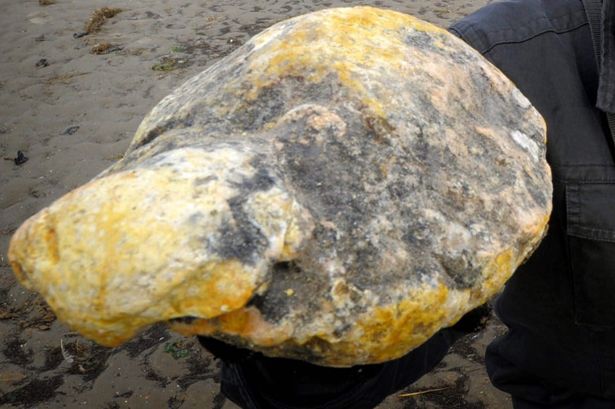
Ambergris found on a beach. Source: the Mirror newpaper, Mirror.co.uk.

One of the most prized, rare, expensive, luxury ingredients in perfumery is ambergris. True ambergris is hard to find nowadays, especially in any large quantity, but it is a scent adds incredible depth and body to a fragrance. It is also nothing like “amber” which usually comes from a combination of plant-based resins and/or synthetics. In contrast, ambergris comes, in an over-simplified nutshell, from whale vomit and has a unique salty, musky, sweet, almost marshy scent.

The Perfume Shrine has a great analysis of the difference between “amber” and ambergris which also helps explain the reason for the rather sweet character of most of the “amber” fragrances on the market. The explanation for the rather unique, special smell of ambergris (sometimes known as grey amber) is as follows:

It’s hard not to fall in love with ambergris … [which] smells, depending on the piece and whom you’re talking to, like musk, violets, fresh-hewn wood, tobacco, dirt, Brazil nut, fern-copse, damp woods, new-mown hay, seaweed in the sun, the wood of old churches, or pretty much any other sweet-but-earthy scent”. [Kemp Chris., Floating Gold: A Natural (and Unnatural) History of Ambergris]

Source: The Mirror, Mirror.co.uk

Source: The Mirror, Mirror.co.uk

The ingredient is rather sticky and gelatinous like, like a fat lump of grey color at first; while when it dries it becomes harder like a fragile but hard resin. […] [After some years, it] gains a beautiful patina that famously chemist Gunther Ohloff described as “humid, earthy, fecal, marine, algoid, tobacco-like, sandalwood-like, sweet, animal, musky and radiant”. Other people have dscribed it as having the scent of  wood in old churches or Brazil nuts.

[¶] Its greatest attribute is its capacity for rendering a composition rounder, especially in oriental perfumes or in floral compositions where it melds the notes into one and brings out their best qualities. It clings on to fabric too, through repeated washings even, becoming ever sweeter with time. Therefore it is prized for its fixative power: the ability to anchor more volatile notes and make them last. [¶] Most commercial perfumes today use a synthetic substitute, because the real thing is so expensive.
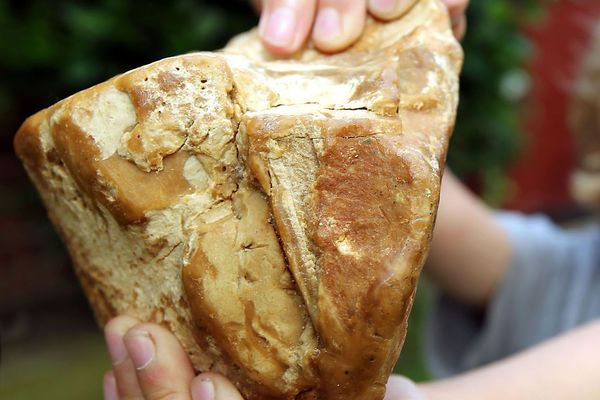
The reason for this long discussion of ambergris — synthetic or natural — is because its aroma is the heart and soul of Ambra Aurea, a luxurious, deep, beautiful, amber eau de parfum from Profumum Roma (sometimes called just “Profumum” or “Profvmvm,” but also written as “Pro Fvmvm” on the company’s website).

The Italian niche house is based in Rome and was founded by four siblings in 1996, but its history goes back to right after the end of WWII. The founders’ artisanal grandparents, Celestino and Lucia Durante, left the tiny Italian village of Sant’ Elena Sannita for Rome where they opened a tiny storefront, which over time grew into a chain of stores, featuring hand-made soaps, fragrances and beauty products. Their grandchildren decided in 1996 to start a line of exclusive fragrances which, as Luckyscent explains, were “crafted to evoke emotions, memories and a sense of their beloved Italy. These rich and layered fragrances are designed to work equally well on men and women, and, amazingly, they really do.”
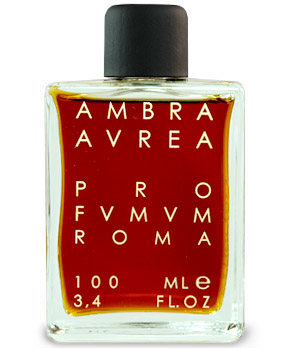
Ambra AureaI’d heard a lot about Profumum’s fragrances, especially Ambra Aurea which many consider to be one of the best amber perfumes around. And, you know, it’s pretty damn good! Profumum‘s website describes it very simply:

Scent of antique temptations:
scent of pleasure and warmth.

Grey amber, Incense, Myrrh

Ambra Aurea opens on my skin with a stunningly rich aroma that is simultaneously: salty, sweet, sticky, extremely nutty, slightly musky, beautifully golden and honeyed. It radiates smooth warmth, like a bath of salty caramel. It really smells of genuine ambergris, even though Ambra Aurea must surely use a synthetic version given the exorbitant cost of the real thing. But, honestly, wow! The beautiful depth of real ambergris is all here with its musky, salty, almost marshy, gooey, minutely sweaty feel. In fact, there is actually something a little vegetal in the undertones to the perfume that is hard to explain, yet very much feels like the real thing. But, while real ambergris can sometimes be a bit too raw, rough, and untamed, here, the edges are smooth as silk, layered with rich honey, and supplemented by other elements. For example, labdanum. There has to be a large dose of labdanum in the base with its nutty, subtly leathered feel, to go along with all the beautiful smoke from the myrrh that wafts delicately in the background.
Source: Twitter.

Source: Twitter.

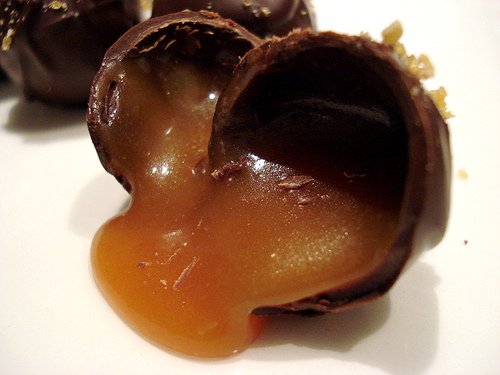
Ambra Aurea’s stunning, gorgeous, luxurious opening consistently brings two things to mind: caramel and candlelight. The perfume feels exactly like the darkest, goo-iest, richest caramel, the sort which oozes from the middle of an extremely expensive piece of chocolate. If you’ve ever bitten into a Maison du Chocolat, Teuscher or Godiva chocolate, you’ll know what I’m talking about: that thin, but incredibly rich, flow of brown caramel. At the same time, Ambra Aurea feels so golden, it’s like a room lit only by candles. There is a warm glow to the scent in its opening stage which just radiates coziness. I would wear this non-stop and, in truth, I couldn’t stop sniffing my arm. The real clincher for me is the ambergris feel with its salty notes. It’s absolutely nothing like the smell in most “amber” fragrances that one encounters with their labdanum-vanilla-benzoin bases. Ambra Aurea’s note isn’t hugely sweet, but more like salted, earthy, musky, almost wet, humid amber atop layers of deep, dark honey and nutty resins.
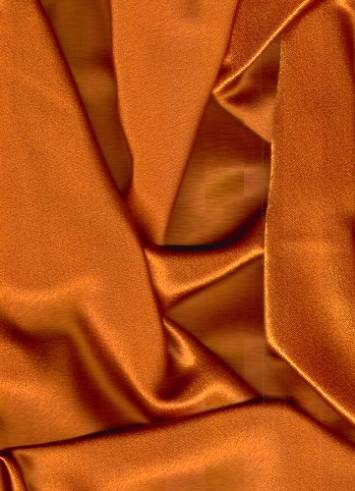
Amber SatinThe most fascinating, appealing aspect to the whole thing may be its smoothness. It truly feels like silk or, better yet, satin. There is a heavenly undulating smoothness that flows like a gentle wave in an incredibly sexy, sensuous manner. And, while the perfume is incredibly potent in those early moments, it never feels leaden or resinously thick. It’s not an airy, light scent by any means, but the weight of the perfume is absolutely perfect for such rich notes. It is truly what I had expected Tom Ford‘s Amber Absolute to be like, but which ultimately wasn’t.

Ten minutes in, Ambra Aurea shifts a little. The honey note becomes even richer but also takes on an undertone of beeswax. The musky element and the subtle smokiness also become more prominent, lessening and cutting through some of the feel of caramel-like nuttiness. God, it’s a beautiful amber scent. Unfortunately for me, a lot of that ambergris richness and honey element starts to recede, replaced by a heavy dose of labdanum. While I love labdanum, no-one can say it’s quite as unique, rare or special a note as compared to ambergris. Making it even less attractive to me here is the fact that the note has a strong undertone of “cherry Cola” at the start of the second hour. Personally, I prefer it when labdanum has a more honeyed, nutty, faintly leathery nuance. That said, Ambra Aurea is still very pretty. The labdanum has a light dusting of incense and a creamy amber finish that feels lightly infused with a custardy vanilla. In some odd way, the combination makes me think a little of “Tauerade,” the drydown base to many of Andy Tauer’s perfumes. The difference here is the ambergris note in the background with its musky, salty feel.

For the next ten hours (yes, ten!), Ambra Aurea remains primarily as a labdanum-amber-incense perfume with fluctuating levels of each element. The labdanum eventually loses much of its “Cherry Cola” nuance, the ambergris remains as a light component infused with saltiness and light incense, there are strong elements of beeswax lurking in the background, and the whole thing sits atop a generalized amber base that has a subtle vanillic element to it. By the thirteenth hour (!), Ambra Aurea is nothing more than a vague, generalized, musky ambery perfume with a faint suggestion of smoke and saltiness.

If your eyes are popping open at those longevity numbers on my voracious, perfume-consuming skin, you’re not alone. Ambra Aurea lasted at least 13 hours on my skin! In truth, I think I detected faint remnants of the perfume flickering here and there in small pockets around the 16th hour. It’s mind-boggling to me, especially as I did not apply very much at all. Which brings me to the sillage. Ambra Aurea is not a perfume with the sort of monstrous projection that emanates in tidal waves across a room. For the first thirty minutes, the projection was expansive but, after one hour, it dropped quite a bit to emanate only 2-3 inches above the skin. Yet, within its own little pocket, it is very noticeable and powerful. I think it became a skin scent only about 6.5 hours into its development, but you still didn’t need to inhale at your arm to detect it. I suspect all of these numbers would be massively higher if I not only applied a greater quantity but if I did so via a spray bottle. Aerosolization always adds far greater potency to a perfume than mere dabbing from a vial. And, God, what I would give to spray on a lot of Ambra Aurea for its opening stage! What an amber!
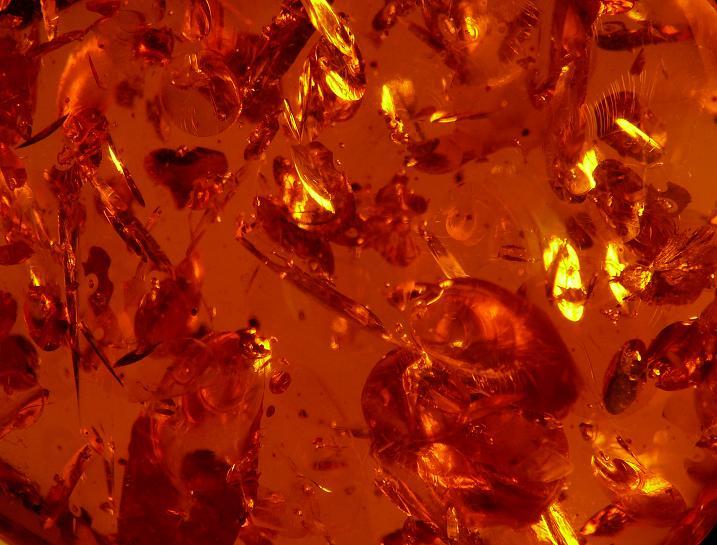
Source: Stock photos.

Source: Stock photos.

Ambra Aurea is intentionally and expressly intended to be an amber soliflore — meaning a perfume centered around one main note — so it is obviously going to be very linear and uncomplicated in nature. I frequently say that “linear” is a bad word only if you hate the scent in question. And I most definitely did not hate Amber Aurea. Nonetheless, I thought the opening phase was significantly better than its subsequent, less interesting, less special change into a predominantly labdanum-based amber. If the opening hour had remained for most of Ambra Aurea’s development, I would be contemplating how to buy a bottle right now. The notes were so sumptuously smooth, so satin-y rich and layered, I was in absolute heaven and I truly thought Ambra Aurea would become my go-to amber, cozy fragrance. I could just see myself after a long day, after a hot bath, spraying on the perfume and curling up for a cozy evening. The beauty of that start, its cocoon-like warmth, and the extent to which it was comforting, soothing, and relaxing… I can’t begin to convey it properly. But, to me, it didn’t remain that way and, while the subsequent development of the perfume was perfectly lovely and pretty, I’m not convinced that it’s special enough for the perfume’s price.

Which brings me to perhaps one of the biggest problems with not only Ambra Aurea, but with Profumum’s fragrances in general: cost. The perfume is only available in a large 3.4 oz/100 ml bottle that costs $240 or €179 (with some European vendors selling it for more). It’s a little steep for a perfume that is a linear soliflore whose second act doesn’t quite match its first one. If Ambra Aurea came in a smaller size, I think it would be much harder to resist but, as it is, I’m still weighing the pros and cons. I’m not the only one having problems with the cost issue. It’s a subject that is frequently and commonly raised when it comes to both Ambra Aurea and Profumum as a whole, though some seem to think it’s wholly justified. On Basenotes (where Ambra Aurea has a 100% positive rating from 8 reviews), I read a very interesting claim by a commentator, “sultan pasha,” who wrote, in part:

After Profumi Del Forte’s Ambra Mediterrana this has to be one of the greatest and most sublime and richest Ambergris driven amber fragrance I’ve ever smelt. A lot a of people complain about the price, but I’ve heard on good authority that Ambra Aurea is stronger than most normal perfume extraits. For the $240 you are getting 100ml of parfum with a staggering concentration of 46% which is higher than most extraits available in the market! So stop complaining and buy a bottle!

I have no idea where he got the 46% concentration number or if it’s true. I’ve found nothing on any site elsewhere to support that fact which, if true, would be utterly astounding and the highest thing I’ve ever seen. I did some investigation, and the only thing I can find to corroborate that number is a French perfume retailer called Soleil d’Or whose online purchase page for Ambra Aurea states: “Perfume very highly concentrated (43%).”

Outside of genuine curiosity at such a high number, I don’t ultimately care about the technicalities and, in truth, I actually wouldn’t be surprised if Ambra Aurea’s concentration were that insanely high. It smells like it! As “Sultan pasha” wrote in the rest of his review, this is a perfume where one spray will last overnight, and he’s probably right that it would last over a week on clothing. Ambra Aurea has spectacular longevity and its concentrated dosage certainly may warrant its high price. (On the other hand, that concentration would make a smaller bottle even more practical; a 100 ml of such potent juice may well last a person for the next 80 years!) At the end of the day, however, cost is wholly subjective, so I think people who love rich orientals or ambers with smoke absolutely should try Ambra Aurea — for a sniff at the very least. It’s shamefully under-appreciated and unknown.

There aren’t a lot of in-depth reviews for the perfume out there, probably because it isn’t a very complicated scent at the end of the day, but a few assessments from Basenotes may help you decide, especially in terms of comparisons to other amber fragrances out there like Serge LutensAmbre Sultan:

  • A dark, resinous, warm and sensual amber fragrance, probably one of my favourites because of its deep and obscure character, softened by some saline and rounding facets – surely due to its high percentage of ambergris that gives this fragrance its wonderful identity. As all other Profvmvm fragrances, its quite oily texture add a long-lasting but close-to-skin quality at the same time. Really addictive!
  • Ambra Aurea is a top of the line Amber along with Amber Sultan. However, I am not a fan of the sharp stink factor of really raw Amber. I love the other aspects of both of these, but what they were competing against in my samples was Fiore d’Ambra by Profumum Roma. To me, Fiore d’Ambra is the most heavenly, well balanced, and intoxicating Amber. Ambra Aurea is a little darker, mellower, with a touch of sharp Amber stank, while Fiore d’Ambra is refined enough to take the edge off, introduce a slight spice floral with a mere suggestion of powderiness and let the warm vanilla laced amber soar in majestic opulence. Ambra Aurea by contrast stays more grounded and less high flying. With quality this high between these 3, it really comes down to personal preference. […] In summary, this is one of the best Ambers ever, but it just isn’t as incredible as its sister.
  • First of all, l do not think this is at all similar to Ambre Sultan; the Sultan is much more herbal & medicinal than this one. This fragrance is most similar to Tom Ford’s Amber Absolute, & along with that one, it is one of the very best ambers that l’ve tried. l also find it much more satisfying than its’ sister fragrance, Fiore d’Ambra. This has the “wow” factor for me; a strong, raw, resinous amber that smells like it just dripped out of a pine tree. After 30 minutes it sweetens to a deep, rich, velvety amber that is not at all powdery. The sillage is great & the longevity even better. lf you’re looking for a raw amber fragrance with lots of depth that’s not TOO sweet, this one is definitely worth a try.

I haven’t tried Fiore since Ambra Aurea is my very first Profumum fragrance, but Patty at The Perfume Posse has a brief line about it in an Amber round-up. [UPDATE: here’s my Fiore d’Ambra review.] In the sub-category “The Mongol Hordes are Coming” (which is hilarious), she writes:

Profumum has two fairly fierce ambers – Fiore d’Ambre and Ambra Aurea.  You would have to go a long ways to find two ambers from one line that are quite good, and Profumum has done that.  Fiore is warmer.  Aurea is a little sweeter on the open, more honeyed.  If it weren’t for my annoyance with Profumum’s huge price tag with perfumes in such plain bottles, I’d be a huge fan.  I am a huge fan of these two and several of their perfumes, but I get stuck on thinking their price point is just not right.

As you see, we’re back to the price issue, but I agree with her. At a lower price point, I wouldn’t hesitate to buy Ambra Aurea, uncomplicated and simple though it may be. All I can do is to urge the rest of you to try it and see for yourself. Now, if you’ll excuse me, I have to go figure out how to get my hands on a decant of the perfume. It’s that good!

DETAILS:
Cost & Availability: Ambra Aurea is an Eau de Parfum that only comes in a large 3.4 oz/100 ml bottle which costs $240 or €179. In the U.S.: it is available at Luckyscent and OsswaldNYC. Outside the U.S.: In the UK, Profumum perfumes are sold at Roja Dove’s Haute Parfumerie in Harrods. Elsewhere, you can find Ambra Aurea at Paris’ Printemps store, Switzerland’s OsswaldPremiere Avenue in France (which also ships worldwide, I believe), Le Parfum et Le Chic (which sells it for €185), Soleil d’Or, and Germany’s Apropos Concept Store. According to the Profumum website, their fragrances are carried in a large number of small stores from Copenhagen to the Netherlands, Poland, France, the rest of Europe, and, of course, Italy. You can use the Profumum Store Locator located on the left of the page linked to above. Samples: Surrender to Chance carries samples of Ambra Aurea starting at $4.99 for a 1/2 ml vial. You can also order from Luckyscent.

Perfume Review – Atelier Cologne Orange Sanguine: Liquid Orange

Liquid sunshine. Summer citrus in a bottle. A holographic, 3D jewel of orange. A kaleidoscopic burst of every glorious citrus fruit you can imagine, taken from its stem to its green leaves to the very tree itself, bottled in its purest essence. That’s Orange Sanguine, a concentrated eau de cologne from Atelier Cologne and a glorious, affordable scent that will give you whiplash from disbelief at its utterly spectacular opening.

Source: wallpapermi.com

Source: wallpapermi.com

Atelier Cologne is an interesting perfume house. Started in 2010 by founders and romantic partners, Sylvie Ganter and Christophe Cervasel, Atelier is the first fragrance house entirely dedicated to fragrances in the classic cologne formulation. As many perfumistas know, eau de cologne is typically the mildest, weakest form of fragrance, so the creators decided to take it one step beyond. They created a whole new formulation of perfumery called the Cologne Absolue. As the Atelier website explains:

[c]ombining innovative constructions and extremely high concentrations, Cologne Absolue is a cologne of character exalting the magical freshness of cologne coupled with the lasting power of eau de parfum.

In an interesting (and rather sweet) Vanity Fair article on the couple, how they fell in love, and their unique perfume creation, Ms. Ganter explains:

the “cologne absolute” … marries the richness of an eau de parfum with the airy freshness of a citrus cologne.

The secret, Ganter will tell you, is about using a precise concentration of essential oils—each cologne absolute contains a range from 12 to 20 percent—and extracting the best ingredients from around the globe to preserve their intensity and beauty. “We blend familiar notes of vanilla, amber, rose … [but] with fresh citruses, to give them a new and unexpected personality,” Ganter says of her growing scent portfolio, which includes such hits as the bestselling Bois Blonds, a warm blend of Tunisian neroli, Haitian vetiver, and woods; and Orange Sanguine, a sparkling whiff of blood orange, jasmine, and tonka beans, which won a FiFi award (the Oscars of fragrance) last year. [Font emphasis added to the names.]

In 2012, the French FiFi awards gave Orange Sanguine their Experts Award for a fragrance sold in less than 100 stores. It’s quite an achievement for a house that had opened just two years before.

Orange Sanguine Atelier CologneOrange Sanguine was created by perfumer, Ralf Schweiger, who is perhaps best known for his Lipstick Rose for Frederic Malle. (It is an atrocious scent, in my opinion. One of the very few perfumes I had to actually scrub off — and I can put up with a lot!) But Orange Sanguine is a very different matter, indeed. In an interview with CaFleureBon, Mr. Schweiger talked about his inspiration and goal behind the fragrance which is centered more on blood oranges than on the regular variety:

What was your inspiration for Orange Sanguine?

RS: Blood oranges are my favorite citrus fruit! LOVE them! They have this tart green spiciness and their gorgeous bloody color is amazing, not a uniform red when you cut them but this red marble effect… I prefer their taste to regular oranges, especially squeezed for juice.

What does Orange Sanguine conjure up for you?

RS: It is quite literal, my idea of what a blood orange scent should smell like: slightly tart but a little sweet as well, green and a little scratchy… as I described earlier, I have in mind a cut orange with this gorgeous color and pattern to it…

Can you describe the key ingredients of Orange Sanguine and their properties/specificities?

RS: Orange Sanguine is more of a concept and not so ingredient driven. I prefer a combination of bitter orange peel oil amongst others and a choice of specific ingredients to present the sensation of full-bodied tartness. The ingredients used to give the heart and base notes were chosen to help prolongate the freshness over time.

What sets Orange Sanguine apart?

RS: It is an accord made only of orange-type citrus oils without bergamot with its distinct floral character; it is not a classic cologne structure but uses modern style perfumery notes.

Orange Sanguine as an eau de cologne absolue contains 15% concentrated perfume oils (which puts it at the level of some eau de parfums) and contains the following notes:

Top notes : blood orange from Italy, bitter orange from Spain, red mandarin from Italy

Heart notes : jasmine from Egypt, geranium from South Africa, black pepper from Madagascar

Base notes : tonka bean from Brazil, sandalwood from Indonesia, cedarwood from Texas

Blood Orange via Fragrantica

The very first time I tried Orange Sanguine, I was so stunned that I actually said “Oh My God” out loud. I wrote it in my notes, alongside “WOW! Liquid gold! Sunshine in a bottle!” Orange Sanguine opens with a positive canon-ball explosion of orange that is so zesty, fresh, tart, sour, sweet, zingy, and multi-faceted that you can get whiplash from sniffing your arm. Instead of being unctuously thick, gooey or syrupy, the scent is so fresh and aromatic that it’s almost more like concentrated citruses. But it’s never anything as completely banal as orange pulp. You truly smell the bitter, almost spicy blood orange at its core, along with tart notes that feel like tangerines, the bitterness of the twigs and stem, the greenness that feels like the leaves from the tree, and the pulpy meat of the fruit inside. There is a sharply pungent smell of concentrated citrus oil that feels as if you just took a knife and sliced through the rind of the fruit, squirting its oils in the air.

Source: Shutterstock.com

Source: Shutterstock.com

If you took 15 oranges, rendered them into pulpy juice and tossed in a cup of the grated rinds, you still wouldn’t have this smell. You really wouldn’t. Perhaps if you took a 100 citruses — of every possible variety — condensed into the purest concentrated nectar, then you might have the base. But, again, that alone still would not be enough to encapsulate Orange Sanguine. The slightly bitter woodiness of the twigs and stems, the aromatic fragrances of fresh, waxy green leaves, and the perfect balance between sweet and sour, tart and tangy would also have follow. Orange Sanguine manages all that, and more. As the moments pass, even further layers seem to be added. I could detect notes that smelled much like sour, tart white grapefruit and — in a throwback to my old home in Montecito which had tons of the trees — even the fragrant, tangy kumquats that I used to eat by the bucketful. Then, 15 minutes in, the geranium appears, adding even further to the visual of green leaves nestling a glowing, ruby and orange gold compilation of fruit. The geranium adds a light piquancy and spicy bitterness that feels much more like the fuzzy green of the leaves than just the aroma of the flower.

Source: uuhy.com

Source: uuhy.com

The whole thing is so photo-realistic, it feels like a hologram. A dazzling display of citruses that are so fresh, it simultaneously feels as though they’re hanging straight off the tree and warmed by the sun but, also, as if they’ve been chilled in the fridge, dappled with condensation. Cool and crisp, Orange Sanguine never feels leaden, thick, syrupy or heavy. It’s almost bewildering how Ralf Schweiger made something that feels so concentrated be so incredibly airy and almost aquatic in nature. Honestly, I can’t say it enough: Orange Sanguine’s opening is truly a masterpiece, an olfactory achievement of breathtaking magnitude in those early moments.

Source: Dreamstime.com Royalty Free stock photos

Source: Dreamstime.com Royalty Free stock photos

I tried Orange Sanguine three times and, on one of those occasions, the glorious opening shifted into something a little rockier. On my second test, in order to assess longevity issues, I put on a larger dose — the dabbed equivalent of two medium-to-large sprays. And, less than 20 minutes in Orange Sanguine’s development, I got a blast of soap that was so extreme, I felt as if I’d been doused in suds. I’m not a fan of soapiness, and this was a huge amount! Perhaps even worse was a similar large blast of something so synthetic that it burned my nose. I was not happy in the slightest, especially as the synthetic note lasted for over an hour, and the soapiness even longer still. In fact, the perfume turned into something very much like geranium soap over an amorphous, slightly synthetic, generalized “woody” base. It wasn’t sandalwood in any distinct form; instead, it was just some sort of vague creamy, beige base.

However, on my first and third test, I used much less of the fragrance and had a slightly different outcome. There was no synthetic burst or burning of the nose. Soapiness was still an issue, however, on each occasion starting between the 20 to 30 minute marks. It wasn’t as hugely overwhelming as that one time and, though I absolutely despise “soapy, clean” fragrances, it was significantly more manageable. Still, there is no doubt that Orange Sanguine’s glorious opening does eventually turn in every instance into something very reminiscent of the most expensive, luxury French soaps. It’s geranium-citrus soap to my nose with, sadly, much of that photo-realistic, concentrated citrus nectar fading from its spectacular, dizzying heights and turning into something much more amorphous, vague and generalized. There is also a creamy base to the notes that starts to become more apparent with time. It’s never anything distinct like jasmine, vanilla or sandalwood, but, rather, something just can only be (poorly) described as “creamy.” The edges of the perfume have become softer, the scent feels richer and fuller, though it’s still an airy fragrance in terms of weight.

Pink geranium and its leaf. Source: alajnabiya.blogspot.com

Pink geranium and its leaf. Source: alajnabiya.blogspot.com

Orange Sanguine continues as geranium-citrus soap for several hours. The base feels like some sort of vague impression of gauzy beigeness. Eventually, during its final stage, the perfume turns into some abstract notion of orange muskiness, and that’s about it. There really isn’t a whole lot to the perfume.

Some people have talked about how Orange Sanguine is an orange fragrance mired in a wonderful, creamy sandalwood base. Others think that the base is ambered. I don’t think so — for either note. I truly don’t. At best, perhaps you can say that Orange Sanguine has “sandalwood” in its most synthetic, abstract, amorphous, artificial form. But, honestly, to my nose, there is no sandalwood, even in a synthetic form. And the same goes for the amber or any vanilla note. Whatever the synthetic base, the impression to me is just of vague, indefinite, indistinct, creamy, beige… something. In its very final moments, Orange Sanguine is simply some abstract orange muskiness. In fairness, it’s not supposed to be much more than an orange fragrance from start to finish — the interview with the perfumer, Ralf Schweiger, underscores that point. Nonetheless, Orange Sanguine isn’t a complicated, morphing, heavily nuanced scent beyond the citruses (geranium and soap).

There is massive, gushing, overwhelming love for Orange Sanguine — by men and women alike — but there are some minor dissenters, too. In a nutshell, the few complaints on sites like Fragrantica, MakeupAlley, or Luckyscent can be summed up as follows: 1) it’s an orange bomb; 2) it’s overly sweet (with one person finding it too bitter); and 3) it’s synthetic (someone on Luckyscent wrote: “smells more like my orange-glo spray cleaners after 20-mins. Too synthetic.”). On Fragrantica, those people who noted the soapy aspect or the synthetic element in the first hour didn’t seem particularly bothered by it. On Luckyscent, the issue of sweetness seemed to be a far greater problem, while on MakeupAlley, there were some minor comments about both soapiness and longevity.

Source: Twitter.

Source: Twitter.

Honestly, I think all of those points are valid and worth consideration. Orange Sanguine is not a fragrance for those who prefer their orange notes mixed with a variety of different elements; it is an orange bomb and it is largely linear. It also has soapiness — a great deal of it, in fact, if you spray on a large quantity — and that will be a deal-breaker for some, while others may adore the “clean” aspect that the soap imparts. Orange Sanguine may also be far too sweet for some, while too bitter for those who don’t like blood oranges (this was actually raised as an issue by one or two people who seem to hate that variety of orange). And, it does have a synthetic aspect that becomes more noticeable if you spray on a lot of it.

It’s also a fragrance that may have problematic longevity for a number of people. I’ve read a number of comments about how Orange Sanguine only lasts a short time (between 3-5 hours). On me, with my voracious, perfume-consuming skin, I was actually surprised to get between 6 and 7.5 hours, consistently, depending on quantity and amount. I know one blogger who initially thought Orange Sanguine’s longevity to be its only defect but who subsequently noted that the perfume did, in fact, stay on for a surprising length of time.

Yet, despite all those issues, I found myself fascinated by Orange Sanguine and it is a fragrance that I would wholeheartedly recommend for a test sniff at the very least. For one thing, that opening is truly stunning. If ever you’ve struggled to get out of bed on a Monday morning, I think Orange Sanguine would be the answer. For another thing, my God, is it affordable for niche perfumery! The perfume comes in three sizes: from the very practical 1 oz/30 ml, to a large 3.3 oz/100 ml, to a super-sized, monstrously huge 6.7 oz/200 ml bottle. The prices are, respectively: $60, $95 or $155; €39 for the 30 ml small; or €90 or £75.00 for the large 100 ml. (Orange Sanguine is also widely available and is even sold at Sephora!) If you have longevity issues, you can buy the gigantic 200 ml bottle for $155 or £95.00 which comes to very little per ounce and can therefore splash away with reckless abandon. (In U.S. currency, the 6.7 oz bottle breaks down to approximately $23 an ounce, while the 3.3 oz bottle ends up being $47 an ounce — both are better deals, per ounce, than the $60 bottle which is 1 oz/30 ml.) Plus, if you order the large 6.7 oz bottle from the Atelier website, they will throw in the 1 oz/30 ml “travel” bottle for free, along with a leather pouch engraved with your initials. Granted, I know few people could possibly go through a 6.7 oz bottle of any perfume, but Orange Sanguine does engender incredible passion in some. In fact, one of my best friends in Denmark has worn Orange Sanguine obsessively every day for months and can’t stop raving about it. He had contemplated buying Frederic Malle‘s Bigarade Concentrée, but opted instead for Orange Sanguine. It has now become his signature scent, and I have no doubt that he could easily finish one of the mammoth bottles in a year or two.

All of that brings me to a few other points. Yesterday, I reviewed another well-known orange-citrus fragrance: Malle’s Bigarade Concentrée. It was a scent which engendered incredible apathy; I didn’t even find it interesting enough to hate it — despite reeking of cumin-inspired stale sweat and armpits on me, and despite having utterly atrocious sillage (with barely better longevity). But I want to explicitly state that the two perfumes have nothing in common beyond the use of an orange note. They are fundamentally different, with the Malle being a drier, orange-woody-cumin fragrance and Orange Sanguine being a photo-realistic citrus with geranium and soap. Also, whatever my problems with Orange Sanguine’s synthetic element and soapiness, I still would take it over the Malle — any day, hands down. In fact, it is a testament to Orange Sanguine that I actually pondered the extent to which I hate soapy scents, if I could get over it, and if the low cost would make it worth considering a bottle. The opening is really that fantastic!

Lastly, Orange Sanguine is an incredibly easy, uncomplicated, versatile fragrance that both men and women could wear. It’s also one of those things that would work well for the office as well, as its sillage is far from monstrous. In fact, I found the fragrance to drop in projection after the first hour and it stayed just an inch or two above the skin. It certainly won’t be something that perfume-phobes should object to; as one person on Fragrantica wrote, “[i]t’s the sort of thing that causes people who profess to dislike perfume to perk up and say, ‘Something smells good!'”

In short, if you like citrus scents or are looking for something fresh, zingy and zesty for summer, then you should give Orange Sanguine a sniff. Perhaps it will be too much for you, due to some of the problems I’ve noted, but it is a perfume that is truly worth exploring. And, if you fall in love with it, I have no doubt Orange Sanguine will become a summer mainstay. What an opening. What a truly spectacular opening!

DETAILS:
Orange Sanguine full lineCost & Availability: Orange Sanguine is a concentrated cologne that comes in 3 sizes: 1 oz/30 ml, 3.3 oz/100 ml; and a giant 6.7 oz/200 ml. You can find it sold at a number of places, starting with the Atelier Cologne website where the prices are, respectively, $60, $95 and $155 depending on bottle size. In terms of freebies, if you buy the massive 6.7 oz bottle, the company says it will give you: “a travel spray refilled with the Cologne Absolue of your choice in its leather pouch engraved with your name or initials.” The travel spray is, in fact, the 30 ml/1 oz bottle! The company also sells various Gift and Travel Sets that you may want to check out, such as a refillable 1 oz/30 ml travel size in a box with soap, postcards, leather pouch, etc. starting at $80, or a travel box of 7 travel minis that are each 7.5 ml for prices starting at $95. The company sells samples (in a set of all their 11 perfumes in small vials for $15), candles and more. I can’t find shipping information or costs. As a side note, Atelier has a few shops: at least one in Paris, and also one in New York. Other Vendors: You can also find Orange Sanguine at SephoraLuckyscentNeiman MarcusBeautyBarBirchbox, and Bergdorf Goodman (which also carries soap and candle forms). Outside the U.S.: In Canada, you can find it on Sephora.Canada at prices starting at CAD$70 for the small 1 oz bottle, CAD$100 for the large 3.3 oz bottle, and CAD$165 for the massive 6.7 oz bottle. In France, you can find Orange Sanguine at Sephora.Fr for €39 for the small 1 oz/30 ml bottle and €90 for the 3.3 oz/100 ml bottle. Other Sephoras may also carry it, though I didn’t see it on some like Sephora Mexico or Singapore. You can use the International Sephora site to look up the branch near you, from Greece to Spain. In the UK, you can find Atelier perfumes at Selfridges or Les Senteurs where prices start at £75.00 for the 100 ml/3.3 oz size bottle. Both carry the soaps and candles, but Les Senteurs also sells samples. In addition, I’ve read that Atelier is carried at Liberty London and Fortnum & Mason, but I don’t see Atelier Colognes listed on either of their websites. For all other countries, you can use the Store Vendor locator on the Atelier company website to find retailers near you. Atelier Colognes is sold by vendors from Etiket in Canada and Skin Cosmetics in the Netherlands, to Italy, Russia and Romania. However, I couldn’t find any vendors in Australia or the Middle East listed via the company website. For samples: you can turn to a number of the vendors listed above, or you can order from Surrender to Chance which is where I obtained my vial at prices starting at $3 for 1 ml.

Perfume Review: Frederic Malle Bigarade Concentrée

The heat is on, summer has arrived in most parts of the world, and the search for something cool, refreshing and bright has begun. In the perfume world, one fragrance that may come to mind is the orange-based Bigarade Concentrée from Frederic Malle. Another option might be Orange Sanguine from Atelier Cologne.Though I’d initially planned to review both fragrances together, the length was becoming a bit ludicrous and a split review seemed best. So, first up, is Bigarade Concentrée, and then, tomorrow, Atelier’s Orange Sanguine.

Frederic Malle. Source: Paris.com

Frederic Malle. Source: Paris.com

The luxury fragrance house Editions de Parfums Frederic Malle is one of the most respected niche perfume lines in the world. It was founded in 2000 by Frederic Malle, a man who has luxury perfume in his blood. His grandfather founded Christian Dior Perfumes, and his mother later worked as an Art Director for the same perfume house. In 2002, Malle teamed up with famed perfumer, Jean-Claude Ellena, to create Bigarade Concentrée. “Bigarade” refers to the bitter orange tree and its fruit, like the kind from Seville that is used in marmalade, though the term is also sometimes used as shorthand for neroli, the blossom from the tree. Malle’s fragrance is a citrus aromatic eau de parfum which the company’s website describes as follows:

Based on a new bitter orange essence developed especially for Jean-Claude Ellena and obtained by molecular distillation, Bigarade Concentrée imparts a bitter freshness. Its overdose of hesperidic notes combined with a touch of rose expresses a unique natural transparency. A woody base of hay and cedar adds lusty warmth. Bigarade Concentrée: A lasting natural freshness.

Bigarade Concentree - small bottleFragrantica lists its notes as follows:

Top note is bitter orange; middle note is rose; base notes are cedar, grass and hay.

Bigarade Concentrée opened on my skin with crisp citruses. At first, it was actually a lemon-scented aroma, followed moments later with orange. The fruit feels like fresh, sweet, concentrated orange pulp but, also, like something a little more bitter.

Source: Mancouch.com

Source: Mancouch.com

Then, the confusion set in. I smelled cumin. Without a doubt, it was the sweaty, slightly skanky, stale scent of body aroma triggered by cumin. I was so bewildered, I re-checked the Malle website description and then Fragrantica. Not a mention of cumin anywhere. I examined my vial more closely to see if there was a mistake on the name, but no. So, then, I applied the perfume to a different part of my arm and… cumin again. One rather frantic Google search later, it appears that almost everyone smells cumin in Bigarade Concentrée. Basenotes‘s thread for the fragrance is filled with comments about the note which led one poster to write about “overpowering body odor,” while another compared the scent to “a cab driver eats an orange.” A few adore it, with comments about how it is “ripe and sexy” in a “sweaty man” sort of way. Obviously, it’s a very subjective, personal matter. I, personally, am not a fan of spending a lot of money to smell like stale, unwashed sweat.

Source: Cepolina.com

Source: Cepolina.com

In fairness, there is much more to Bigarade Concentrée than citrus and body odor. Soon after that opening blast, notes of fresh, green grass set in, accompanied by dry hay and a light touch of abstract woods. Like most of Jean-Claude Ellena’s creations for Hermès, Bigarade Concentrée bears his signature minimalism: the whole thing is incredibly sheer, lightweight, low projecting, and fleeting in feel. It becomes a skin scent on me in as little as 3 minutes. It’s also extremely linear and never changes substantially, especially once the top notes burn off. At the 20 minute mark, the perfume feels a lot like tangerines over hay and grass with that constant touch of sweaty cumin and a touch of hay hovering in the background. I never smell the rose accord but, instead, there is something that feels like a geranium leaf, right down to its fuzzy, slightly pungent, green leaf. It’s a subtle note, and it’s probably the result of the bitter orange bigarade combining with the grass and hay.

Around the 40 minute mark, Bigarade Concentrée turns into stale cumin and hay with bursts of juicy orange lurking at the edges. It sits so close to the skin, you have to bring your nose right to your arm to detect it.  By the end of the second hour, I thought the perfume had gone completely but, no, it is still, in fact, lingering as a very abstract, creamy, soft, beige woods fragrance with orange notes. It is lightly infused with a dry spice that is not quite as prominently cumin-based but, like the rest of the drydown accords, it’s very generalized, vague and amorphous. And, that’s about it. Woods and oranges.

All in all, Bigarade Concentrée lasted about 4.5 hours on my skin — and I’m luckier than most. On Fragrantica, the perfume receives low marks for longevity and sillage, with one poster saying it vanished within 30 minutes from his skin. Another wrote, with undoubted hyperbole, that it lasted all of 30 seconds. I suspect that the perfume’s extremely low sillage and that trademark Jean-Claude Ellena minimalism creates the impression that Bigarade Concentrée has gone before it actually has. At various times — the 40 minute mark, the 90 minute one, and 2 hours in — I felt sure it was completely finished; the fragrance was so thin as to feel almost nonexistent. But, no, for some reason, the underlying base notes lingered on in the most ephemeral form for a few more hours.

There is a definite need in every perfume wardrobe for a light, sunny, citrus scent for summer and, if you like the twist of dry woods with animalic, sweaty cumin, then you should consider giving Bigarade Concentrée a sniff. It’s quite a popular fragrance in some quarters with many appreciating the non-sweetened orange note and that “austere” woody drydown. In others, however, it is greeted with disdain as much ado about nothing, especially given the high Frederic Malle price.

How you feel about Bigarade Concentrée may ultimately depend on how much you’re a fan of Jean-Claude Ellena and his minimalism. One Fragrantica reviewer considers him to be “kind of lazy perfumer that has learned to translate his laziness into a style which able to please and attract fans” — and, obviously, he wasn’t impressed with Bigarade Concentrée. And, as a whole, Fragrantica’s commentators seem underwhelmed to negative. (On Basenotes, however, reviews are much more enthusiastic, though many have significant problems with longevity and/or sillage.)

As a side note, I should mention that Jean-Claude Ellena’s creation for CartierDéclaration — seems to be extremely close to Bigarade Concentrée. I haven’t tried it, but the two perfumes are often compared to each other. From the comments and notes, Déclaration seems to be much spicier and woodier, but there are enough similarities to warrant a number of people bringing it up as a reference point, passing on Bigarade Concentrée, and/or feeling that Ellena is a lazy perfumer.

Interestingly, a number of bloggers and perfume critics seem to wholeheartedly gush over the fragrance. I’ll ignore the blogs and go straight to Chandler Burr, the former New York Times perfume critic, who gave it Four Stars in his 2006 review entitled “Dark Victory“:

Ellena’s Bigarade Concentrée … plays brilliantly with darkness. Bigarade smells like a person trapped in a complex weather system, the wonderful scent of a guy’s armpit and a woman’s humid skin washed in fresh rainwater and ozone (Malle doesn’t waste time gendering his scents, and Bigarade is for both women and men). It is a masterful juxtaposition, and smelling Bigarade is like looking down into a well of cool, black water. Your retinas expand from the strange pleasure of this scent.

“Cool, black water”? Ozone? I’m lost. The only part of his assessment that I agree with is the comparison to armpits. And I’m not a fan.

The famed perfume critic, Luca Turin, doesn’t mention armpits, but he too liked Bigarade Concentrée, though he doesn’t seem hugely overwhelmed. In his Three Star review for Perfumes: The A-Z Guide, he wrote:

[bigarade oil] has an interesting mixture of citrus friendliness and resinous austerity. Ellena’s composition emphasizes both aspects, at the expensive of what to my nose is a slightly rubbery top note. Very pleasant, deliberately simple, but somewhat lacking in mystery.

I think that may be too kind, but at least he isn’t gushing unfathomably about ozonic elements and dark pools of water. Personally, I’ll eschew the experts’ opinion and stick to the laymen’s general lack of enthusiasm for Bigarade Concentrée. In my opinion, it’s an okay scent that is hyped only because it comes from Jean-Claude Ellena and Frederic Malle. I certainly don’t think it warrants the Malle price tags, especially given its problematic longevity and nonexistent sillage. You can do better, starting with Orange Sanguine whose review will be up tomorrow.

DETAILS:
Cost & Availability: You can purchase Bigarade Concentrée in a variety of different forms and ways. On his website, Malle offers: a small 50 ml/1.7 oz bottle for $170; a large 100 ml/3.4 oz bottle for $250; or 3 travel-sized sprays in a 10 ml size for $115. There is also a shower gel of the fragrance. You can also find the perfume at Barneys , though it only carries the large $250 bottle and the 3 travel minis. According to the Malle website, it is also carried at Saks Fifth Avenue, though it is not listed on the Saks website. There are other U.S. retailers, too, which you can look up on the Malle website from Aedes to small boutiques across the country. Outside of the U.S., you can find Bigarade Concentrée at a variety of different places and department stores from London’s Liberty, the Malle boutiques in Paris, Skins in the Netherlands, Australia’s Mecca Cosmetica and Myers, Saudi Arabia’s DNA, Singapore’s Malmaison by the Hour Glass, to many others. You can use the Store Locator to find a location nearest you. If you want to try a sample, Surrender to Chance carries Bigarade Concentrée starting at $5.99 for a 1 ml vial.

Perfume Review: Parfumerie Générale Djhenné

PG22 DhjenneIn September 2012, the French niche perfume house, Parfumerie Générale, released its 22nd fragrance Djhenné (or PG22 Djhenné) in celebration of its 10th anniversary. Described as an “aromatic woody soft leather,” the eau de parfum is meant to evoke the most golden of sunny, desert, oasis-like experiences. Parfumerie Generale’s website states:

Surrendering to the sun.

Lush oasis, Djhenné is a warm shadow. A Leather sheath with gold Wheat and Myrrh, protecting from the burning sun’s shroud, the delicate spearmint leaves and the heady whiteness of Seringa Blossom…

Exploring the olfactory theme of the Oasis, Pierre Guillaume gives us an aromatic, woody orchestration of leather and warm sand, wavering between the floral freshness of an accord of grey lavender, spearmint and seringa and the warmth of a “blond leather” note made up of Blue Cedar, essence of Myrrh, Cocoa Beans and Wheat Absolute.

In an interview with FragranticaPierre Guillaume, the founder and nose behind Parfumerie Generale, explained the notes in Djhenné:

I wanted to recreate the fragrance of an oasis. […] It’s just a metaphor. I meant a fresh accord surrounded by hot sand. Oasis, a lazy hot atmosphere, and a little bit of freshness in a hot desert. I started my fresh accord with three kinds of lavender—Lavandine, Lavande Pays and Lavande Barreme, enhanced the freshness with orange and artemisia, and added more green notes by including mint and the Stemone molecule. Exactly this molecule is used to create an accord on the subject of fig leaves. That is why, I guess, Djhenne reminds you of Bois Naufrage.

[As for the scent of hot sand] I composed it of my favorite accord of white leather (you smell it in Cuir VenenumCuir d`IrisTubereuse Couture and other my perfumes), cocoa absolute, cedar from Morocco, myrrh, cumin and caraway. And also wheat absolute, a great but rare ingredient from Robertet—it possesses a rich balsamic scent with a hint of roasted wheat flakes. […]

There is no coconut in this perfume, I guess it’s a disguise born out of combinations of some notes. I would rather say that Djhenne is a mineral fougère with a leather accent.

The short summation of the notes is as follows:

Grey lavender, mint leaves, seringa blossom, cocoa beans, blue cedar, wheat absolute, myrrh, blond leather accord.

ISO E Super. Source: Fragrantica

ISO E Super. Source: Fragrantica

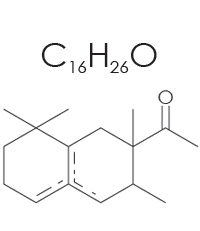
I would add another one to that list: ISO E Super. Djhenné opens on my skin with an immediate blast of antiseptic rubbing alcohol. It is the first and most obvious note, followed thereafter by creamy lavender, lush wheat, some abstract floral note, sweet myrrh and lightly peppered cedar. Soon, there is a sweet note of something that smells a lot like the lightly peppered, dried tobacco leaves along with cocoa and leather. There is a definite resemblance to parts of Serge Lutens‘ wonderful Chergui, but Djhenné has a considerably more woody, peppered elements, not to mention that blast of ISO E Super synthetic and the additions of lavender.

My favorite part of Djhenné’s opening has to be the cocoa note with its impression of lightly dusted, milk chocolate powder that calls to mind a faintly milky, cocoa-sprinkled Chai. The note is never thick, gooey, or viscous, but daintily dry and sweet. Underneath it is the sweet myrrh which creates a nutty, lightly caramelized undertone. There is also an initial whiff of mint, though it quickly recedes to the background. Equally subtle is the lavender which is sweet, instead of pungently dry or acrid, and that continuous note of dried, sweet tobacco. Flickering quietly is the leather accord which, actually, feels a lot more like a very beige woody-leather accord, thanks to the beautiful richness of the wheat absolute. The overall sum-total effect is very pretty and well-balanced, in large part thanks to the many dry notes that counter any feeling of huge sweetness. I never detected coconut or anything reminiscent of dry, granular, arid sand. Unfortunately for me, it’s hard to detect — let alone enjoy — the full nuances of Djhenné because the ISO E Super rubbing alcohol accord lies above it all like a heavy cloud. I feel like a dog, sniffing at a thick lawn of grass in hopes of detecting a few drops of scent lurking underneath.

Djhenné shifts slightly as time passes, though the ISO E clings on tenaciously as the main note. At  the 25 minute mark, the abstract floral note recedes, as does some of the lavender, while the cocoa powder becomes more prominent, leaving Djhenné as a combination of: ISO E Super, cocoa, sweetly nutty myrrh, a hint of mint and a heavy dollop of cedared woods. An hour in, the peppered ISO E woods and cedar take over, followed by the cocoa, then the wheat and myrrh. There are nuances of something that feels like leather at times but, on me, it’s always just a subtle element of the wood notes and never feels like pure, individually distinct leather, per se.  Like a wave that hits the shore and then falls back, the cedar and woody elements start to ebb after an hour, leaving ISO E Super and cocoa powder, with some other light elements like the wheat and myrrh. Like Chergui, there are lightly powdered elements and something that continues to feel like dried tobacco leaves flickering in the background.

Light, natural, cocoa powder

Light, natural, cocoa powder

At the middle of the third hour, Djhenné turns into a skin scent that is primarily dusty cocoa powder and vanilla, alongside that bloody endless ISO E Super, atop a base of creamy white woods. The perfume was airy and lightweight in feel from the start without huge projection, but now, it’s even softer, more muted, and sits right on the skin. In its final stages, Djhenné turns into a cocoa powder and vanilla scent. Only at the very end does the synthetic ISO E finally vanish. In terms of longevity, Djhenné lasted 6.75 hours on my skin, but tiny spots of vanilla-cocoa scent seemed to pop up here or there for another two hours.

It’s hard for me to truly and properly assess Djhenné without the impact of the ISO E Super. The synthetic was far too powerful on my skin, overshadowing everything else for most of the perfume’s duration on my skin. Only in its final hour or so was I spared of that perpetual note of disinfectant rubbing alcohol. It tainted everything, injecting its peppered antiseptic tones even into the cocoa powder that I loved so much. To those damn lucky few who can’t detect the full nuances of ISO E Super or whose nose reads it only as “extra pepperiness” or “velvety woods” — I envy you. And I’m sure you’ll adore Djhenné.

All in all, it’s a versatile, incredibly easy perfume that is neither truly gourmand nor a truly woody oriental or even a real aromatic fougère — but a lovely hybrid of all three. I think it is firmly unisex with the cocoa powder (and the occasional similarities to Chergui) making it something that would easily captivate women as much as men. Its very soft, light sillage would also make it appropriate for a lot of offices. Lastly, it’s also quite affordable at $100 for 1.7 oz/50 ml of eau de parfum.

Alas, for me, personally, I rue the day that perfumers fell so in love with ISO E Super that they decided to inject it into seemingly half the fragrances under the sun. And without warning, en plus! If ISO E Super were a person, I would have stabbed it to death already, and declared myself to be acting by reason of insanity.

DETAILS:
Cost & Availability: Djhenné comes in a 3 different sizes on the Parfumerie General website: 1 oz, 1.7 oz, and 3.4 oz. The prices in Euros are, respectively: €60, €90, and  €125. You can find a list of international retailers on the company’s website hereIn the U.S., it is available from Luckyscent for $100 for 1.7 oz/50 ml, along with a sample. I’m sure it’s available elsewhere, but I’m too fed up to bother listing my usual 15-20 links to retail websites around the world. Samples: I obtained my sample from Surrender to Chance which sells Djhenné starting at $5.99 for a 1 ml vial.