Perfume Review – Serge Lutens Bois de Violette

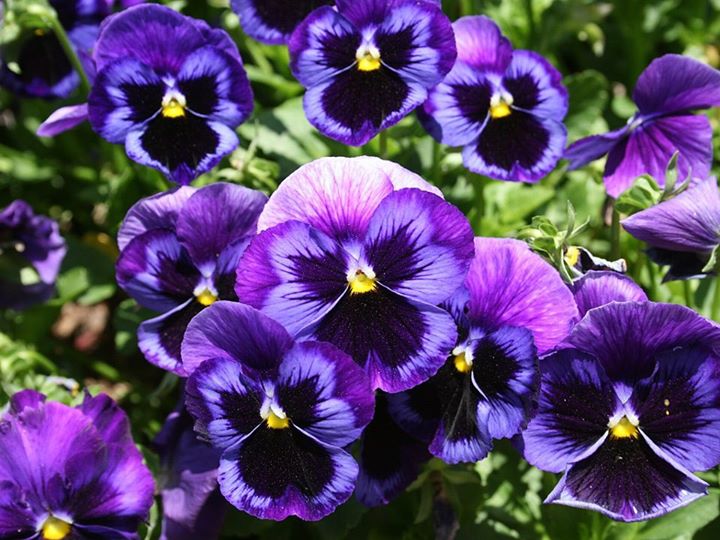
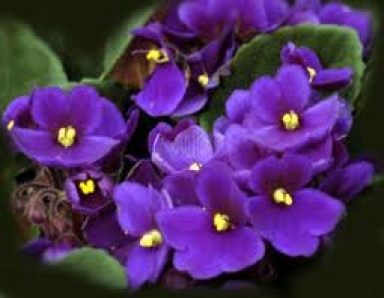
VioletsIn the heart of the cedar forest, one tree towered above all the rest. Its dark, dry bark was peppered, and sometimes spiced with cinnamon, with cardamom that was so rich, it almost verged on chocolate, and with sappy sweetness. The gnarled tangle of its ancient roots protectively surrounded the forest’s greatest treasure: a large bunch of African violets that cast a purple glow that shone like a beacon. Its fragrant smell took over the darkness, lending the forest its name amongst the villagers: “Bois de Violette,” the forest of violets.

The smell was powerful but dainty, delicately airy but dense, and filled with layers that danced in a play of light and dark. The purple petals were bedazzled by fat prisms of dew, creating a watery, purple sweetness. The leaves were dark green, and spicy with the crackling pepper that matched the aroma of the trees around it. And its heart was so sweet, it was fruited, honeyed, and syrupy. From the freshness of succulent, fleshy, ripe peaches hanging on the vine to the sweetness of dark, stewed, glazed fruit, the violet syrup ran like purple blood through the veins of both the flower and the trees. A delicate mist of powder fluttered around the edges, like a darting Tinkerbell who popped up here and there, but who ultimately decided her presence wasn’t needed in the festive play of dainty floral violets, violet syrup, dewy, green, watery, violet freshness, and dark, peppered woods.
Source: modavesen.com

Source: modavesen.com

That is Bois de Violette, an eau de parfum that was created by Serge Lutens‘ favorite perfumer, Christopher Sheldrake, and released in 1992. Though it is primarily an expensive Paris Bell Jar perfume that is exclusive to Serge Lutens’ Paris headquarters, Bois de Violette came out at some point in a regular, import-version, 1.7 oz/50 ml bottle that is easily available and sometimes discounted online.
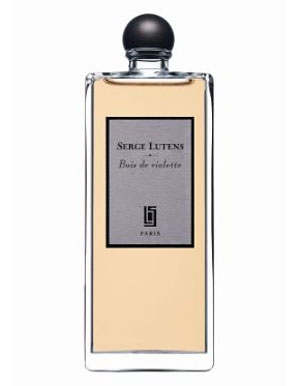
Serge Lutens Bois de VioletteSerge Lutens describes Bois de Violette on his website as follows:

Full of vim and vigor.

Once again – and I’m repeating myself – femininity worked its way into this composition, by way of its leaves and a few flowers, whose color – a charming discovery made in a secluded thicket – won me over. A vigorous fragrance, it never gives up!

There is a reason why Uncle Serge says he’s repeating himself, and it’s something that is an important context for the fragrance. Bois de Violette is one of a quartet of “Bois” or wood fragrances to follow from Lutens’ ground-breaking, debut perfume, Féminité du Bois for Shiseido. It is a highly admired, much-loved fragrance which essentially served as the mothership for all the Bois siblings which followed.

Luca Turin, the famous perfume critic, has a very useful explanation of the history of the Bois line, their perfume structure, and how Bois de Violette differs from the rest. In Perfumes: The A-Z Guide, he talks of how the “woody-fruity structure of Féminité du Bois was first devised by the perfumer Pierre Bourdon, … and then passed on to perfumer Christopher Sheldrake, who developed it with Lutens… to keep it as dark and transparent as possible.” When Lutens decided to open his own perfume house, he needed more perfumes for his line, and decided to do variations on his uber-successful Féminité.

Enter the technique known as overdosage, widely propagated by Bourdon, in which a backstage component in one perfume is moved to the forefront in a new composition, a sort of rotation in perfume space. From Féminité du Bois came four variations, three of which create new effects by bold-typing one of the components of the original: musk (Bois et Musc), fruit (Bois et Fruits), amber (Bois Oriental).

[¶] The fourth, Bois de Violette, differs because the woody-fruity violet smell of methyl ionone recapitulates and intensifies the rest of the fragrance. Its rotation takes place around the center; the stained-glass mandala is perfected by a violet gem around which everything dances. [New paragraph spacing added.]

In the remainder of that Five-Star review, Luca Turin talks of the day he bought his bottle of Bois de Violette and how he felt as though he were “carrying the most precious object in the world.” He also adds how Bourdon’s fifth perfume sketch or proposal for the Féminité/Bois series accidentally wound up becoming Dior‘s Dolce Vita. But perhaps the truly intriguing part of the review is the sense one has of the usually acerbic, disdainful, haughty, and wholly unimpressionable Luca Turin — “His Majesty” as he is sometimes known — being completely humbled by Bois de Violette. It’s not something one sees very often in his summations, and it says quite a bit about the perfume.

Source: underthemagnifier.wordpress.com

Source: underthemagnifier.wordpress.com

Fragrantica classifies Bois de Violette as a Woody Floral Musk, and says that its notes consist of “violet, violet leaf and cedar.” I see that simple trio mentioned almost across the board in the note listings for Bois de Violette, but I also came across a few references to orange blossom. It intrigued me, especially as one never knows the full, official listing of ingredients in Serge Lutens’ fragrances. So, being a little OCD, I did some digging, and found a surprisingly lengthy list on a few sites. According to The Perfume House (which sells one of those rare, small 1.7 oz bottles of Bois de Violette), the perfume actually includes:

Cedarwood, violet leaf, candied plum, peach, orange blossom, rose, violet, cardamom, cinnamon, clove, musk, vanilla, honey.

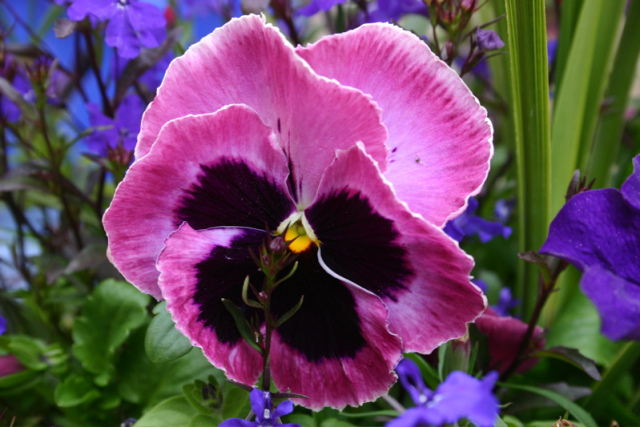
It’s a very different matter, wouldn’t you say? In the vial, Bois de Violette smells of violets, its green leaves, and something dewy. On the skin, however, the perfume opens as a rich, complex bouquet of dried fruit, violets, violet powder, wet violet petals, the green of the leaves, the wet, damp earth surrounding it, and violet syrup. In the background, there are subtle flickers of orange blossom, peach, sweet tea rose, musk, cinnamon, and a drizzle of honey. The perfume feels simultaneously light, dark, airy, sheer, and thick– all at once. Yet, its projection is so subtle, delicate and light that I actually had to double my usual dose (to about 4.5 large, dabbed smears) to get all the nuances.
Source: en.wikipedia.org

Source: en.wikipedia.org

The delicacy of the violets is stunning. Fragile, dainty, watery, airy, and, yet, that dark, dense, syrupy shadow lurks behind them. In a strange way, it feels almost ominous, this pretense of delicate fragility with a big, hulking, dark shadow looming broodingly from behind the thicket of equally dark trees. The forest that initially felt a little in the distance starts to inch closer as the opening minutes pass by. It’s cedar, but it’s more than just simply dry, peppered woods. The tree is dark from spices like cardamom, and the merest hint of fiery cloves. The two work in conjunction with the sweetness of the dark fruits, the syrupy violet, and the drizzled honey to create an unexpected impression of something like cardamom-patchouli-chocolate. It’s subtle, muted and short-lived, but cardamom chocolate definitely comes to mind in those opening moments.

Also lurking in the shadows, in a slightly bewildering juxtaposition to the rest of those notes, is a hint of delicately feminine violet powder. It’s as if Snow White’s compact and violet-orris lipstick had suddenly fallen on the wet, damp floor of a dark, peppered, cedar-cardamom forest, lying nestled amongst dark, haunting violets in an interplay of feminine and masculine, light and shadows. I’m not a huge fan of powdery notes, no matter how light and sheer, so my favorite part of Bois de Violette in the opening minutes may be the more delicate aspect of the flowers themselves. Both the violets and its leaves have a wet, earthy greenness that feels wonderfully fresh and natural. It’s as if they’ve been spackled by dew and by hints of sweetly dark, fresh, early morning soil.

Source: RebootwithJoe.com

Source: RebootwithJoe.com

Yet, there are flickers of fruit that start to stir in the background, and which soon add a different nuance to the notes. At first, it’s merely the usual Sheldrake/Lutens base of candied prunes and plums, but soon, less than fifteen minutes into the perfume’s development, there is the peach. It feels bright, sweet, succulent but, also, as fresh as if it were still hanging on the tree. It’s lovely, and reminds me of a note in a vintage classic, but I’m hard pressed to figure out which one. It’s not the peachy intensity or potent sweetness of YSL‘s Champagne/Yvresse, nor of Hèrmes24 Faubourg, and certainly not Guerlain‘s Mitsouko, but there is something frustratingly familiar about it. Whatever the similarity, the peach note is a perfect accompaniment to the violets, adding to their delicate sweetness in a way that sometimes fits better than the darker, candied, syrupy plums or prunes.

Cedar forest via British Columbia's Ministry of Forestry, for.gov.bc.ca.

Cedar forest via British Columbia’s Ministry of Forestry, for.gov.bc.ca.

Around this time, the honey begins its slow rise from Bois de Violette’s depths. It’s not heavy or dark, but, rather, sweet, fragrant, and almost floral in nature. Bois de Violette has suddenly turned incredibly fruited and sweet. In fact, the violets feel quite overshadowed in a distinct, individual way. No longer front and center, they lurk behind the honeyed fruits, both fresh and stewed, and the dark cedar trees infused with spices. The cedar is, to my slight regret, supplemented by ISO E Super and it’s initially strong enough to make my head throb a little. That said, it’s not too much as a whole, just enough to underscore the woodiness of the base and to amplify the note of pepper which begins to emerge. That subtle nuance of pepper is almost everywhere, from the delicate, green spiciness of the leaves to the cedar base, and it adds an interesting contrast to Bois de Violette’s floral, fruited, honeyed, wet, earthy and powdered tones.
Source: hdwallpapers4desktop.com

Source: hdwallpapers4desktop.com

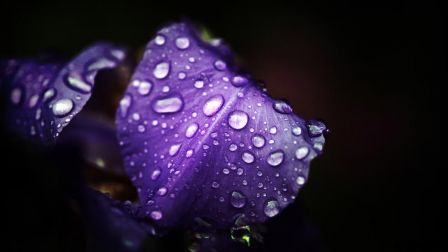
The perfume’s aquatic undertone is really pretty. It’s as though Bois de Violette’s violet syrup can’t dispel the early morning dew on the flower’s petals. The watery, pastel effect is almost a little discordant amidst the peaches, stewed fruits, honey, and peppered woods. As that combination grows stronger, the aquatic element starts to grow weaker, along with the violet powder. Both recede to the background where they will pop up from time to time like a Jack in the Box, but generally they are just subtle, indirect effects on the perfume’s main composition.

The same thing happens with the green leaves which give a really good fight to the stronger, sweeter notes. They refuse to vanish completely, appearing every now and then in a lovely touch of slightly pungent, very peppered freshness. It feels as if you’ve taken a violet’s actual leaves, and crushed them between your fingers to release their subtle oil. That aroma remains throughout much of Bois de Violette’s development, but it’s rarely front and center as it is in the opening 30 minutes. Instead, it lurks in the background, a mere supporting player to the flower and cedared woods.

As time progresses, the notes wax and wane, hitting certain peaks before ebbing away like the tide. First it is the spices which melt into the background forty minutes into Bois de Violette’s development, no longer noticeable in an individual, distinct manner. Instead, they simply add an indirect effect to the richness and complexity of the sweet base. Then, it’s the turn of the musk. Exactly one hour in, the musk appears, feeling neither white nor dark and animalic. Instead, it’s sweet, and strangely indolic in a way. It grows and grows in strength for the next two hours, imbuing everything it touches with a fine mist, until it, too, fades into an amorphous, nebulous, background effect.
Source: shamshyan.com

Source: shamshyan.com

At the 90-minute mark, Bois de Violet starts to change quite dramatically in feel. The perfume feels more subdued, not to mention muted. All the edges have blurred, making the fragrance feel like an out-of-focus swirl of violet sweetness, musk, and dry, spicy, sweetened, peppered woods. It’s hard to know where one note begins and another ends, as they overlap into each other. There are no longer any distinct fruity, peachy, aquatic, leafy, green, spicy, or powdery touches that can be pulled out. Not all those notes are dead, however. Exactly two hours into Bois de Violette’s development, the powder re-emerges. It’s as if it had to wait for the forceful top layer — the dark woods, the fruit, the violet syrup, and the spices — to retreat in prominence before it had a chance to unfurl. The overall result is a soft, slightly powdery, violet fragrance with a hint of fresh, green violet leaves and a lightly sprinkling of pepper (and ISO E Super), all atop a base of violet syrup and woody, peppered cedar.

The perfume turns gauzier and more abstract with every hour. Around the 3.75 hour mark, Bois de Violette is a nebulous, amorphous blend of violets, lightly dusted with a hint of powder and musk, and infused with a vague sense of something green. It’s a soft, muted, sheer, airy combination that floats like transparent purple gauze above the skin. A short time later, at the five-hour mark, Bois de Violette is nothing more than an abstract, sweet, floral musk.

The perfume remains that way until its very end, exactly 7 hours from its start. The sillage was initially moderate before fading to something very soft, discreet, and unobtrusive. And, remember, I had to apply double my usual amount with Bois de Violette (to almost 5 very large dabs in all) to get those numbers. On Fragrantica, there is a mixed assessment of both the projection and duration, with the most votes (10) ascribed to “moderate” longevity and soft sillage (10), followed by moderate (9). One commentator notes that Bois de Violette lasted a mere 2 hours on his skin, but 8 hours on his clothes, with sillage that dropped after 10 minutes to become extremely close to the skin. I suspect that Bois de Violette is a fragrance which will require a lot of sprays to really last, but which will always be extremely discreet and unobtrusive in projection.
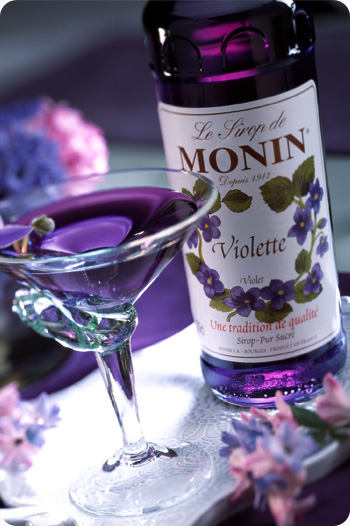
Monin Sirop de Violette. Source: us.monin.com

Monin Sirop de Violette. Source: us.monin.com

I like Bois de Violette, but something holds me back from being really impressed. I can’t pinpoint what the problem is. Perhaps it’s the way Bois de Violette went from being so incredibly sweet at first, to becoming a little too blurry, nebulous, and simple. Perhaps it’s because I felt as though the delicate, fresh, natural beauty of the violet flower was initially overshadowed and, then, later, felt so vague that it was like grasping at the wind. And, yet, none of those characterisations are the full story or, maybe, even fair. Bois de Violette is extremely pretty at times, deliciously mouth-watering at other times, and almost delicately…. something. Perhaps if the floral and green aspects to the violet were stronger, I could use the word “haunting,” but Bois de Violette never arises to that level for me. Maybe if it were less syrupy sweet for a good chunk of its development, it could feel like the stained glass window that Luca Turin references with such admiration. Perhaps it’s because the perfume seems like all things violet at once, and, yet, it’s not one single thing at all. It tries to be the full violet from petals to leaf to the earthy damp soil and the trees around it; but it’s also fruited and syrupy, peppered and woody. Maybe it should stick to one thing or the other? Or, maybe, I would have been happier with a more delicate, haunting, pure floral, a violet version of the flowers in the lyrical, stunning, moving and utterly poetic Lutens’ beauty, De Profundis. I don’t know what it is about Bois de Violette, because I certainly like it and would wear it, but I’m not swept off my feet.

I get the sense that many in the perfume community see Bois de Violette as the most perfectly balanced, beautiful violet fragrance around. Whether it’s the handful of bloggers who have reviewed the scent, or those on MakeupAlley who, by and large, adore the fragrance, Bois de Violette is much-loved. On MakeupAlley, for example, 72 people give the perfume an overall rating  of 4.2 out of 5, which is pretty high for such a large number of reviews. The general feeling is that the flowers are dark, sexy, sweet, and perfectly countered by the cedar woods. For example:

  • Sexy, dark violets, perfectly balanced – never cloying or candied and never so intense as to hit people over the head.
  • There’s a period of time in the beginning when the violets are just too much, but once that settles down, this is a beautiful violet-wood fragrance, perfectly balanced and blended.
  • My favorite Serge Lutens. Sweetened (but not overly sweet) violets and woods, mainly cedar. So smooth! It’s warm and snuggy, perfect for winter. Strong yet close to skin, just the type of scent I adore.
  • Candied violets and cedar. Starts out playful and nostalgic, babyish in a vintage way.The violets are effervescent and floating, just loosely tethered to the very grounded cedar. On me, the violets don’t settle down for hours, but when they finally nestle into the wood, it is revelatory, surprising, with perfectly balanced almost austere taste. The scent is romantic and old-fashioned, but not quite a grandmother scent. Instead, it’s like digging in the attic and finding an old wooden chest, filled with mementos of your grandmother’s secret wild life.
  • What a beauty this is! An exquisitely balanced composition of cedar and violet – neither too sweet nor too dry – Bois de Violette has a a wonderful mellow tone to it. The scent is clean, focussed and rounded; it is not a candy-sweet violet or over-green on me, and there is no powder – this violet is deep and true to life. The cedar, too, is warm and pure. Bois de Violette is a wonderfully elegant, tranquil scent[.]
  • A singlular and unique composition of cedar, violet leaves and violet flowers. Ethereal, vivacious and sparkling.
    I was stunned at the super intense cedar note that came through at first. It sure is a woody blast and in those first few seconds lacks any violet. The cedar note is at first so intense that it is almost body odorish but in a good way. Then the violet sweetness emerges and remains playful throughout the rest of the development. The fragrance becomes super sexy[….]

    Source: allthepages.org

    Source: allthepages.org

  • I don’t get a pronounced cedar note like others here. I smell REAL, fresh violet in all it’s glory. [¶] Not typically a lover of florals, I would have to say that this is the best violet scent that I’ve ever had the pleasure to sample. [¶] Full bottle worthy!

Over at Basenotes, Bois de Violette receives equally high numbers and, yet, I get  the sense that people are not quite as enamoured. Moreover, “well-balanced” does not seem to the majority consensus, by any means! Out of 24 reviews, 75% give it five stars, while 25% give it three stars. The fragrance is repeatedly compared to its mother, Féminité du Bois (which many find to be extremely similar), but also to some other violet perfumes. Yet, despite those five-star ratings, quite a few commentators seem to prefer the mothership perfume. As for the “candied” sweetness of the violets, a number of people find it to be “cloying” or excessive. (“Killer sweetness” was one description of it, and it was not said as a positive.) On occasion, there will be a handful who find the note to be fresh and natural, but they aren’t many. Obviously, how Bois de Violette manifests itself will all depend on your skin chemistry, and the extent to which it amplifies or mutes the sweet basenotes. Mine always opts for amplification, and, clearly, Bois de Violette with its syrup is no exception.

Though I wish the perfume were a little fresher, I do recommend Bois de Violette, especially for those who like somewhat sweet fragrances but not full-blown gourmand ones. The cedar, green, peppery, and watery elements provide some balance, depth, and complexity, ensuring that Bois de Violette is more than just candied, syrupy violets. And, it differs from many violet fragrances out there which are primarily powdery and, therefore, somewhat old-fashioned in feel. Bois de Violette can be worn by men and women alike, it’s versatile for day or night, and its low sillage makes it extremely office-appropriate. I’m somewhat dubious about the fragrance’s longevity, though the fact that you can buy it relatively cheaply in a regular bottle (as opposed to the exclusive, uber-expensive Bell Jars) means that you can spray on enough of the perfume to give it greater duration.

All in all, it’s definitely a fragrance worth looking into. If you’ve never tried Serge Lutens before, Bois de Violette is a surprisingly wearable fragrance that could be a good entry point into the line. And, for those who are experienced perfumistas, the range of the violet’s nuances — from petal to leaf, and all the things around it — may win your heart.

DETAILS:
General Cost & Discounted Sales Prices: Bois de Violette is an eau de parfum that Serge Lutens now offers only in the large 2.5 oz/75 ml bell jar version that costs $300, or €135. However, you can still find the smaller 1.7 oz/50 ml bottle (that is either a special edition bottle or something now discontinued) on some U.S. and European perfume websites. It retails at $200, but you can also find it on sale at a much lower price. Bois de Violette is currently on sale at Amazon which sells it directly, and not through third-party vendors, for $94.79. It is also on sale at FragranceNet where the 1.7 oz/50 ml bottle is priced at $97.19 with free domestic shipping and free international shipping for order over $100. The price is also reduced at Sears which sells Bois de Violette for $95.95 through a third-party vendor with $6.95 shipping. FragranceX sells the 1.7 oz bottle for $96.92. I don’t know how long these specials will last.
Serge Lutens: You can find Bois de Violette in the bell jar option on the U.S. and International Lutens website (with non-english language options also available). It’s priced at $300 or €135.
U.S. sellers: Bois de Violette is available at Barney’s in the bell jar format which costs $300. The site has a notice which states: “This product is only available for purchase at the Madison Avenue Store located at 660 Madison Avenue. The phone number for the Serge Lutens Boutique is (212) 833-2425.” However, you can find the special 1.7 oz/50 ml bottle for $200 at LuckyscentAedesBeautyhabit, the Perfume House, and Shop Rescue Spa.
Outside the U.S.: In Canada, you can find Bois de Violette at The Perfume Shoppe for what is US$200, since it is primarily an American business with a Vancouver branch. They also offer some interesting sample or travel options for Lutens perfumes. For Europe, it gets harder. I get the sense that the perfume is seen as “Limited Edition” for many European vendors, in the sense that Bois de Violette is now a Paris Bell Jar Exclusive and, thus, limited for sale elsewhere in Europe. However, I did find a few vendors which carry the old or special edition 1.5 oz/50 ml size. In the UK, Bois de Violette isn’t listed at Harrods, but the 50 ml bottle is available at Liberty and UK 5th Village, both of which sell Bois de Violette for £105. In France, Premiere Avenue sells it for €106, and I believe they ship world-wide, or at least through the Euro zone. In Belgium, Bois de Violette is exclusive to Senteurs d’Ailleurs which sells the 50 ml bottle for €110. In Australia, you can get Bois de Violette on sale from FragranceNet for AUD$105.99 with free shipping.
Samples: You can test out Bois de Violette by ordering a sample from Surrender to Chance where prices start at $3.99 for a 1/2 ml vial. It is also included as an option in a Lutens Sample Set for $18.99 where the vials are also 1/2 ml each, but you get your choice of 5 Lutens Non-Export fragrances (ie, those that are Paris exclusives).

Perfume Review- Serge Lutens Iris Silver Mist: Futuristic Iris

Otherworldly. Cold as icy vodka. Hard as steel. Silvered like mist from outer space. That is the hypnotically strange, fascinating and, yes, a little bizarre opening to the famous Iris Silver Mist from Serge Lutens. It’s perhaps the most famous of all the Lutens Bell Jar fragrances, an iris fragrance taken to such extremes that it feels very futuristic at the start. All I could think of in its opening moments is how Serge Lutens had created the perfect scent for a Star Wars stormtrooper or a Terminator cyborg. And, strange as that may sound, that’s my favorite part. A Terminator cyborg sipping vodka in outer space while wearing Iris Silver Mist. 

Source: freepspwallpapers.info

Source: freepspwallpapers.info

Continue reading

Perfume Review- Serge Lutens Cèdre

One of my favorite aspects to Serge Lutens‘ line of perfumes is the dramatic, complex flair shown by many of them. Love them or hate them, his perfumes almost always have character. Once in a blue moon, however, you stumble across one that is, quite simply, dull. It’s hard for me because I can easily write reviews for perfumes I hate and for perfumes I love. Those that leave me utterly apathetic and unmoved are a whole other story, however. It’s even harder when you can see that it’s a well-made fragrance, but it just sits there for you. Serge Lutens’ Rousse was one of them: a somewhat strange perfume which actually had some nice parts but which, ultimately, felt banal. Cèdre is another, but it lacks even the benefit of strangeness to keep me somewhat on my toes. I’m so utterly apathetic, I can barely summon up the energy to describe it. So, here goes nothing….

Cedre via Serge Lutens Facebook page.

Cedre via Serge Lutens Facebook page.

Cèdre is an Eau de Parfum Haute Concentration that was created with Lutens’ favorite perfumer, Christopher Sheldrake, and released in 2005. On his website, Lutens compares the fragrance to a sort of woody pastry

Like a pastry made of wood.

Another take on Féminité  for an alternate reality. True to its name, it contains cedar, to which honey is the key. But I have added tuberose, barely perceptible but of paramount importance.

Strangely, Serge Lutens’ press release for the perfume (as quoted by the Belgian store, Senteurs d’Ailleurs) is a whole other, disparate tale, describing the felinity of a wildcat with steps of steel and the tenseness of a criminal proceeding:

The wildcat glides along, cautious and rhythmic with supple, velvety steps of steel. The forest watches…
A heavy, restless silence, a tense moment, similar to those preceding the jury’s verdict to condemn the accused, guilty or even the innocent…
A rich, woody, animalistic, soft fragrance… harmonises in full splendour with arrogant tuberose.
A strong musk blended with amber, clove and cinnamon adds the final touch to the regalia.
An irrevocable verdict for this essential, profoundly original fragrance….

The perfume notes — as compiled from LuckyscentFragrantica and the two Lutens statements — thereby seem to be:

Cedar, Tuberose, Clove, Cinnamon, Honey, Musk, and Amber.

Source: Ronny Fein. (Website link embedded within photo.)

Source: Ronny Fein. (Website link embedded within photo.)

Cèdre opens on my skin as a boozy, rummy, ambered fragrance. It is a potent blast of cinnamon apple pie, raisins, and dried, purple, stewed fruits with subtle flickers of dark smokiness and a dash of cloves, atop a base of sugary brown syrup. The cedar note dances hazily in the background, muted and really minor in the overall scheme of things. It’s more like an amorphous woody element that never feels like peppery cedar but, rather, like something simply dry, spicy and lightly smoked. Moments later, a delicately floral tone creeps in, but it’s not immediately distinguishable. Like the cedar, it’s muted, hidden, indistinct, and strongly imbued by a heavy, dense sweetness that feels like honeyed molasses mixed with a slightly buttery, caramelized, brown sugar.

Source: Talk of Tomatoes (click on photo to go to website with its recipe for rum, plum, cardamom jam.)

Source: Talk of Tomatoes. (Click on photo to go to website with its recipe for rum, plum, cardamom jam.)

To me, Cèdre immediately calls to mind Jean-Claude Ellena‘s Ambre Narguilé with its strong rum raisin, stewed fruits, and smoky accord. The similarities are inescapable, though Cèdre is stronger, richer and denser in both feel and potency. It is so highly concentrated in its opening moments, in fact, that I initially wondered if I had applied too much as something about it made me head throb. It almost felt as though there were small touches of ISO E Super in the base, lurking around and adding to the velvety, creamy undertones of the fragrance.

Immortelle. Source: The Perfume Shrine.

Immortelle. Source: The Perfume Shrine.

The floral note in Cèdre really bewildered me at first. Nothing about it smells like tuberose to my nose. Actually, it smells a hell of a lot like immortelle! I tried Cèdre twice, and both times, I had the same impression. The note has the same dry, slightly woody, vaguely herbal feel of immortelle’s flower, along with that subtle maple syrup nuance that can characterize the flower. The aroma wafting off my skin is absolutely nothing like tuberose with its very indolic, ripe, voluptuously fleshy whiteness. It’s not even like a Lutens/Sheldrake take on tuberose with its sometimes chilly, metholated nuance. Nope, at no time do I smell tuberose in Cèdre. It’s my favorite flower and, if you put a gun to my head and demanded that I find tuberose in Cèdre, I still wouldn’t or couldn’t do it.  As you will soon see, others have a totally different experience.

Source: Diary of a Mad Hausfrau. (Website link embedded within photo.)

Source: Diary of a Mad Hausfrau. (Website link embedded within photo.)

Ten minutes into Cèdre’s development, it is a boozy, rummy, plummy, raisin fragrance with spices, flickers of incense smoke, sugary sap, muted woods, and hints of some dry, masculine floral. There is a growing sense of something creamy in the base, as well as something a little bit animalic. It’s not dirty, skanky, or raunchy, but there is a leathery, musky undertone that slinks around the background. Twenty minutes in, the perfume’s edges turn soft and blurry, becoming a well-blended mix of notes without any sharp delineation. The most individually distinct element that I can pull out of the mix is boozy rum raisin, but the rest seem to overlap and melt into each other.

As time passes, the creaminess and smoothness of the bouquet grows, as does its hazy feel. At the forty minute mark, the rum raisin accord in the foreground is replaced by an abstract, plummy, spiced sweetness. The perfume’s background notes are tinged with amber and with a subtle smokiness that feels nutty, sweet, warm and resinous. Wafting all around, like a subtle shadow, is that vague floral note with its herbal, woody, dry, syrupy feel. Ergo, immortelle.

Source: wallpapers.free-review.net

Source: wallpapers.free-review.net

Cèdre gets blurrier by the minute. At the end of two hours, it’s an abstract swirl of sweet, lightly spiced woodiness with amber, smoke, and some nebulous floral hints. There is a subtle feel of something honeyed, musky and faintly leathery in the base that makes me think that the “amber” must include some labdanum. The whole thing just barely hovers above the skin. Around 3.5 hours in, Cèdre is an abstract amber that feels veiled with honey and a touch of cinnamon. The muskiness grows more pronounced, such that, midway during the fifth hour, the perfume is merely sweet, ambered, labdanum musk with a leathery undertone and a hint of spices. Cèdre remains that way until its final moments, 7.25 hours from its start, when it is nothing more than a trace of musky amber.

Months from now, whenever I think of Cèdre, I have no doubt that the only description I shall be able to conjure up is “blurry Ambre Narguilé.” In fact, I shall be hard-pressed to recall its details in a few days from now, let alone in the weeks and months to come. That says something about a fragrance — and it’s not good. I suspect I shall recall far more how a vast number of people find Cèdre to be a tuberose fragrance. Because they really do. Tons of them, in fact!

Source: hdwallpaperspics.com

Source: hdwallpaperspics.com

My favorite review of Cèdre comes from One Thousand Scents whose opening paragraph made me laugh for a good ten minutes the other day. I think it’s the tone of indignant outrage that does it, along with the characterization of Serge Lutens himself:

If you are a normal person and you are going to make a perfume called Cèdre, which is the French word for cedar, then by god you are going to make a cedary scent, something that puts the spotlight on the wood. If, on the other hand, you are Serge Lutens, which is to say by definition you are not a normal person, then you are going to make a big, wild-eyed tuberose scent and confuse the hell out of everyone.

I’m laughing all over again. As for the perfume itself, he admires Cèdre on an intellectual basis, but he seems to truly hate the smell itself:

The opening is an explosive tuberose, kind of dirty, with a weird toothpasty quality–toothpaste without the mint in it. There is a faint burning spice in there, although really nothing could survive the onslaught of tuberose sweetness. The sweetness is key, because this doesn’t have that harsh, screechy edge that tuberose so often has for me, and that’s the only reason I could sample this and not desperately want to scrub it off. Even so, it’s kind of cloying; it keeps coming at you, demanding to be noticed.

Eventually the floralcy, though not the sugar, begins to die down a little, and the cedar finally sidles into view, with the faint ribbon of wood smoke that cedar so often carries. This is very nice, and it lasts a very long time. 

Cèdre for me works less as a scent than as an intellectual experiment, an essay in cognitive dissonance: what you read doesn’t match what you smell, and what you smell is two extremely disjunct things forced into harmony. I could never wear it, that’s for sure.

On Fragrantica, people’s impressions of Cèdre largely seem to fall into four categories: those who think it’s mostly just a cedar fragrance; those who think it’s almost all tuberose; those who think that the two notes are in a perpetual tug of war for hegemony; and those who think it’s actually an amber fragrance. The main note in the perfume, according to 92 people, is tuberose. Amber comes in next with 65 votes, while cedar is in third place with 58. One commentator said Cèdre began with “[a] very aggressive tuberose opening on me. It smelled very heavy, greasy, sexy, almost obscene!” The note left after 10 minutes on her skin, never to return, but, for another, Cèdre was almost all tuberose:

The name Cedre can be a little misleading. Surprisingly this is a soapy and elegant tuberose fragrance, with a spicy and woodsy drydown. The cedar note is barely evident in this fragrance’s composition, so don’t go expecting any masculine woodsiness while testing Cedre.

For many commentators, however, things are not so black and white, and Cèdre is a mix of things, sometimes dominated by amber. Two examples:

  • This was not what I had expected from a perfume named ‘Cedre’. The opening notes were a clash of cloves and cedar and for a few minutes it seemed these two were playing out some sort of war of attrition. I wasn’t sure who would win. This was a fleeting phase and shortly they both settled to allow the amber, cinnamon and tuberose rise from the battlefield. Oh wow. This is good stuff. It has the classic Lutens DNA but the tuberose gives this an ethereal quality that seems to give these rich notes a lighter touch. As I write this, the tuberose is developing a wonderful animalic note.
  • Cedre is a rich amber fragrance opening with cinnamon and labdanum. It contains that signature Lutens rich amber “hum”, though the intensely resinous cedar like the living tree, or freshly chopped firewood in the composition gives it clarity, preventing it from turning into a syrupy mess. It’s more like a wood-burning stove baking up fresh cinamon buns. [¶] Cedre has an effervescent quality like an artisan-crafted all-natural birch beer, and the labdanum makes the sweetness smooth, warm, and wearable. It is a basket of sweet and spicy offerings from the forest floor to the canopy. It is the sweetness found naturally in forest air, distilled. [¶][…] This may be my favorite gourmand to date.

Many bloggers seem to be divided into the camps listed above. For Robin at Now Smell This, Cèdre was an amber fragrance with an opening blast of tuberose that was initially mentholated (as in Tubereuse Criminelle), but whose floral nature was eventually muted by woodsy, honeyed amber notes that had a subtle animalic, leathery flicker in the base. She found the cedar itself to be “surprisingly subdued; it is a very woody fragrance but it has none of the sharp edges I commonly associate with cedar.” Yet, she could also see how a friend of hers would think Cèdre was all about spiced apple, which is what I got, too. As a whole, Robin was ambivalent about the fragrance since, the first few times she tried it, “it was too much sweet amber and too little cedar and tuberose,” but she could see it growing on her.

Tuberose, and Lutens’ Tubereuse Criminelle, were also on the mind of the PeredePierre whose review begins by saying that the release of Cèdre was a surprise because “[w]hat no one was expecting [was]… a tuberose-laden scent with only the slightest hint of anything woody.” Calling Cèdre “a challenging composition,” he writes:

Cedre starts off with a powerful, mentholated camphor note. Not nearly as shocking as Tubereuse Criminelle, but still quite the sucker-punch. Immediately evident are the spices – clove, cinnamon, and the usual suspects for a Lutens fragrance. Tuberose is clearly the main player in the scent from the beginning, although it softens somewhat as things progress. Cedar does makes its way in eventually, although not nearly enough to warrant a star-spot in the perfume’s title. Cedar’s typical raspy character is felt more than any obvious woody presence.

The drydown reveals something much more interesting though – a dirty musk! Up until that point, things are a bit cloying, a bit on the sweet side, and very much full of clove (not my favourite thing in the world), but the musk note is an intriguing touch. 

Over at Perfume-Smellin’ Things, Marina prefers Lutens’ Bois Oriental, finding Cèdre to fall short in comparison. She find it to be “pleasant,” in a review that essentially damns Cèdre with faint praise:

Sweet-ish woods, lovely almost imperceptible tuberose, a tiny dash of cinnamon. Every note is understated, muted, almost demure. Rich and animalistic? Absolutely not. Soft? Definitely. Also, I must say, rather unremarkable. Cèdre is one of those neutral, elegant, “politically correct” scents that are appropriate anywhere, anytime.

The Non-Blonde adores Cèdre, but she notes how many people find it to be far from the cedar fragrance that they had expected:

When Cedre came out in late 2005, many people were somewhat bewildered. They expected Uncle Serge to treat the cedar note in a similar way he stripped oak a year before when he created Chene. Instead of a glorious dry tree, they found themselves sampling a boozy, sweet, ambery oriental perfume with a creamy tuberose in the middle.

Which, of course, is exactly why I adore Cedre.

It radiates. From the sweet opening to the sweeter drydown, this is one weird scent. It takes you on a trip to places where otherworldly things grow. There’s apple-free cider, radioactive cinnamon, clove that doesn’t bite and wouldn’t remind you of the dentist, wood that glows in the dark, white flowers that disappear and pop out again and black honey. It’s a carnival and can get quite big and noisy, but on my skin it’s heaven.

All the bloggers seem to have experienced a fragrance that was profoundly more interesting than the muted, slightly abstract, boozy, rum raisin, spiced amber that manifested itself on my skin. I love those notes, but something about Cèdre’s composition was neither original nor dramatically edgy. I think it was the muffled, murky, blurry aspect to the notes. Had they been more sharply pronounced and distinct, I might have felt much less bored by the amorphous swirl of ambered stewed fruit. Or, perhaps not. It’s not as if there aren’t half a dozen rummy, boozy ambers already out there…..

I don’t know what to say to you in terms of recommendations. Those who hate tuberose — and Tubéreuse Criminelle, in specific — should probably stay away from Cèdre, but then, what happens if it’s all dense, rich, spicy amber without even a hint of tuberose? Or a pure cedar fragrance that evokes a “wood-burning stove baking up fresh cinamon buns” and whose base feels infused by a subtle gourmand sweetness? Perhaps you’d love it. The problem is, I have no idea what may show up on your skin.

If it’s any use or guidance, a number of people on Fragrantica compare Cèdre to Amouage‘s Memoir Woman, while on Basenotes, I’ve read a lot of comparisons to how Cèdre has the same vibe as Histoires de Parfums Tubéreuse 3 – Animale. I haven’t tried Memoir Woman yet, but my recollection of briefly testing Tubéreuse 3 is that it was a significantly more leathery, difficult, dry, immortelle-based fragrance at its start. Though it’s supposed to be a similar take on a masculine tuberose, I didn’t leave Tubereuse 3 on my skin long enough to get to that part. What I did smell was mostly an immortelle fragrance with leather, tobacco and pungent, dry hay. In short, something very different to the Ambre Narguilé vibe I get from Cèdre. (That said, it’s odd how the only floral that showed up for me in Cèdre is something that feels like a muted immortelle, but absolutely nothing that smells like tuberose.)

If my personal tastes or thoughts are of any help, I wouldn’t bother with Cèdre. It leaves me completely cold — and this comes from someone who loves both Lutens, and boozy, spicy amber fragrances in general. In fact, Cèdre triggers so much apathy and disdain that writing a long review about it has resulted in feelings that almost verge on the hostile for the poor fragrance. So, I shall end this review here and now.


DETAILS:
General Cost & Sales Prices: Cèdre is a concentrated eau de parfum that comes in a 1.7 oz/50 ml size, and whose retail price is $140, €99 or £83.00. However, Cèdre is currently discounted at Pricefalls where the 1.7 oz/50 ml bottle is priced at $82.03. LilyDirect sells Cèdre for $82.28. Canadian readers may want to check if the company has started shipping to Canada as planned some months back. FragranceNet sells Cèdre starting at $84.31 with a coupon, or for $99.19, with an additional 15% OFF with the coupon code RESFT5 (which probably comes to the same amount of $84.31). There is free domestic shipping. Rakuten (formerly Buy.com) sells it for $90. 
Serge Lutens: you can find Cèdre on the U.S. and International Lutens website, with other language options also available. 
U.S. sellers: Cèdre is available for $140 at Luckyscent, Barney’s, Aedes (though it is currently out of stock), and other high-end perfume retailers.
Outside the U.S.: In Canada, you can find Cèdre at The Perfume Shoppe for what may be US$135, but I’m never sure about their currency since it is primarily an American business with a Vancouver store. They also offer some interesting sample or travel options for Lutens perfumes. In the UK, you can find Cèdre at Harrods or Liberty where it costs £83.00 for a 1.7 oz/50 ml bottle. In France, Premiere Avenue sells it for €92 instead of €99, and I believe they ship world-wide, or at least through the Euro zone. In Belgium, it’s carried at Senteurs d’Ailleurs. In Italy, you can find Cèdre at Essenza Nobile for €98 and, in Germany, you can go through their German section which sells the perfume for the same price. In Australia, it is sold out on the Grays website where the 1.7 oz/50 ml bottle retails for AUD $127.50, but you can find it massively discounted at Australia’s Fragrance Net for prices starting as low as AUD$91.05 with a coupon. Cèdre is also sold at Perfumery for AUD$115 instead of AUD$200, at Australia’s StrawberryNet for AUD$143.50, and at CosmeticsNow for AUD$147.95. For other countries, you can use the Store Locator on the Lutens website.
Samples: You can test out Cèdre by ordering a sample from Surrender to Chance where prices start at $3.99 for a 1/2 ml vial. There is also a Four Lutens Sample Set for $18.99 where the vials are larger at 1 ml each, and you get your choice of 4 Lutens Export fragrances (ie, not those that are Paris exclusives).

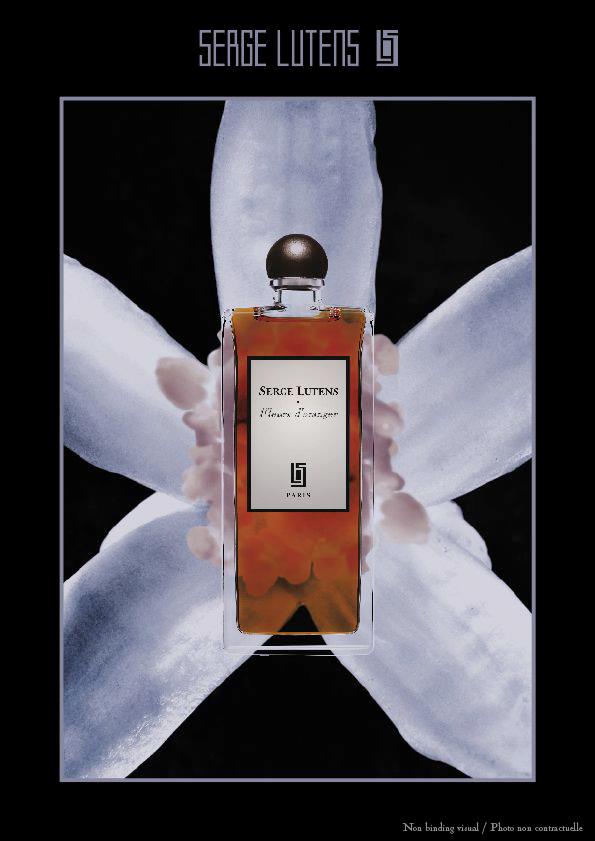
Perfume Review – Serge Lutens Fleurs d’Oranger

Fleurs d'Oranger. Source: Serge Lutens Facebook page.

Fleurs d’Oranger. Source: Serge Lutens Facebook page.

Ethereal, glittering, radiant, voluptuous clouds of white with a tiny sliver of a dark lining of funk. That’s Serge LutensFleurs d’Oranger, a powerful bouquet of white flowers headlined by orange blossoms and tuberose. It is an eau de parfum created by Lutens’ favorite perfumer, Christopher Sheldrake, and released in 2003.

Serge Lutens describes Fleurs d’Oranger in terms of emotional responses, which seems quite appropriate for such a sensuous fragrance: 

It’s within us.

A single whiff of this fragrance, drawn from the highly scented blossom of the bitter orange tree, augmented by a hint of civet, resonates within us.

The notes — as compiled from LuckyscentFragrantica and that statement — include:

Orange blossom, white jasmine, Indian tuberose, white rose, citrus peel, hibiscus seeds, cumin, nutmeg and civet.

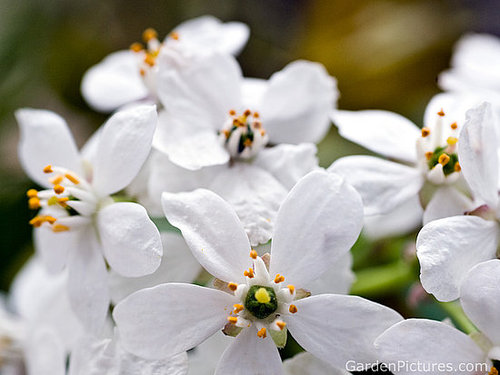
Orange Blossom. Photo: GardenPictures via Zuoda.net

Orange Blossom. Photo: GardenPictures via Zuoda.net

Fleurs d’Oranger opens on my skin with the most beautiful, concentrated, powerful, and completely narcotic burst of orange blossoms. They are quickly followed by tuberose with a slightly metholated, minty, just barely camphoraceous undertone, and by a powerful heaping of cumin. The latter is a discordant feature in the white mix, radiating a definite aroma of stale sweat body aroma that is quite strong at first. Thankfully, however, it softens, weakens and recedes in less than twenty seconds, retreating just to the periphery, and never returning to the same levels again.

tuberoseThe tuberose is quite the diva in Fleurs d’Oranger. It repeatedly tries to muscle aside the orange blossoms, and to take over the whole show. It’s brawny, potent, heady, narcotic, indolent, addictively sniffable for those who love tuberose, and the living nightmare of those who don’t. I happen to adore tuberose, and it’s one of my favorite flowers (if not my favorite), so I’m rather in heaven. It’s especially lovely here in Fleurs d’Oranger, as it is simultaneously a little bit green and airy, but, also, full-blown, lusciously languid, creamy, rich and completely voluptuous. It brings to mind what the legendary nose, Roja Dove, once said about tuberose (in the context of the famous, white floral powerhouse, Fracas):

tuberose is the most carnal of the floral notes. It smells like very, very hot flesh after you’ve had sex — that’s the bottom line. [via The Independent, 12/14/2002.] [Emphasis added.] 

That carnality is in full sway in Fleurs d’Oranger, where tuberose is joined by its similarly voluptuous siblings, orange blossom and jasmine. It’s all because of the indoles, which are present in the three flowers and which are the main reason for Fleurs d’Oranger’s headiness.

Bee on a tuberose. Photo: faixal_javaid via Flickr. http://www.flickr.com/photos/faixal_javaid/3360386339/

Bee on a tuberose. Photo: faixal_javaid via Flickr. http://www.flickr.com/photos/faixal_javaid/3360386339/

The scientific story about indoles, in simple terms, is that bees can’t see white flowers like tuberose, jasmine, orange blossom, gardenia, or the like. So the flowers have an extra-large amount of a natural organic substance called indoles that they put out to signal the bees to their presence. In their undiluted, purest, and most concentrated form in perfumery, indoles can smell like musty mothballs. However, when diluted to just a few drops, they create a radiant richness in floral perfumes that is sometimes described as narcotic, heady, meaty, dense, voluptuous or sensuous. For some, very indolic flowers can have an over-blown, ripe quality that smells sour, plastic-y, fecal, urinous, or reminiscent of a cat’s litter box. Its richness in classic, very opulent fragrances is probably why some people find indolic fragrances to smell “old lady-ish” (a term I hate, by the way, even apart from its ageist aspects). Those who prefer clean, fresh scents are likely to struggle with indolic fragrances as well, and not only because of their heavy feel.

Fleurs d’Oranger contains three of the most indolic flowers around — tuberose, jasmine, and orange blossoms. Here, however, the thickness of the notes is largely undercut by a very subtle, very quiet, green, chilly note underlying the tuberose. It’s all due to methyl salicylate, the revolutionary, transformative key to Lutens’ famously difficult, Tubéreuse Criminelle, and something which is present to a significantly lesser extent in Fleurs d’Oranger. Methyl salicylate is a natural organic compound found in tuberose (and in jasmine) which has a crisp, medicinal, almost mentholated, sometimes eucalyptus-like smell that evokes “Vicks Vapor Rub” for a few, but minty, spearmint mouth wash for others. It can also create varying impressions of gasoline/petrol, rubber, or leather.

Tuberose: Source: mostbeautifulflower.com

Tuberose: Source: mostbeautifulflower.com

The aroma is not a usual part of most tuberose perfumes, but Christopher Sheldrake like to deconstruct the flower to its scientific essence and core molecules in order to emphasize that metholated side. One reason, perhaps, is because it undercuts some of the richness of the flowers’ indoles, thereby assuring a greener, lighter, airier scent that isn’t so overwhelmingly buttery. That’s what happens in Fleurs d’Oranger where Sheldrake cleverly uses the smallest hints of chilly, cool freshness to cut through the heady fumes of the flowers, thereby reducing any potential cloying over-ripeness.

On my skin, Fleurs d’Oranger is primarily an orange blossom scent, always trailed very closely by the tuberose. In the opening moments, sitting in the background as quiet as a wallflower, are the supporting players. There are subtle flickers of zesty citrus peel, feeling more like the slightly bitter oil you get from grating the rind. There is also a barely animalic muskiness, though I never detect civet in its true form, let alone in any substantial degree. The cumin skulks around the corners, too, sometimes adding a quiet funk to the delicate, florals, sometimes feeling like an amorphous, dry, spicy note. Finally, there is a touch of sweet, dainty rose that does, indeed, feel very white and heady.

Source: Hdwallpaperes.com

Jasmine. Source: Hdwallpaperes.com

Nothing, however, has the remotest chance of competing against the tuberose. Sometimes, not even the titular, purported star of the show itself because there are brief moments when the tuberose completely pushes the orange blossoms aside. The jasmine doesn’t fare any better; it is habitually overshadowed in any concentrated, distinctive way. Instead, she is almost intertwined with the tuberose, having an indirect effect in adding to that drug-like, opulent headiness.

Despite the power of the three white sisters, I’m surprised by the lightweight feel of Fleurs d’Oranger. Don’t mistake my meaning — this is a strong scent, especially up close and in the opening hour. However, it lacks a dense, thick, opaque feel. I’ve read that Fleurs d’Oranger was reformulated, perhaps around 2008, in accordance with the start of the IFRA/EU fascistic regulation of perfume ingredients. One of the targeted notes on their hit list is orange blossom oil, which may explain why tuberose sometimes seems as much a focal point of Fleurs d’Oranger as the orange blossoms. According to one Basenotes thread, the perfume used to be almost syrupy in feel. I’ve never tried the original, vintage formulation, but that description fits with everything that I’ve heard: Fleurs d’Oranger was stronger, deeper, richer, heavier and, according to some, had more orange blossoms in it.

Nonetheless, ten minutes into its development, Fleurs d’Oranger is led by the orange blossoms, then followed by lightly mentholated tuberose atop a base of jasmine with a small touch of very heady rose that seems almost like a tea-rose in its sweetness. There is a strong hint of something else lurking about that I can’t quite place and that feels a little woody and dry. Perhaps the hibiscus seeds? And, taking its place in the rear of the line is the cumin with its nuance of earthy funk. Fleurs d’Oranger doesn’t change much from that primary bouquet, though the tuberose will occasionally take the lead for a few minutes until it falls back to trail behind the orange blossoms. Also fluctuating in strength is a subtle muskiness that infuses all the flowers, covering them with a fine veil of sensuousness. The combination would feel almost erotic in its voluptuous carnality, were it not for the subtle freshness and airiness created by the perfume’s green, chilly, menthol undertones.

Orange Blossom. Photo: GardenPictures via Zuoda.net

Orange Blossom. Photo: GardenPictures via Zuoda.net

Fleurs d’Oranger remains that way until its final drydown, when it smells solely of orange blossoms. There is the faintest flicker of some dry spice lurking underneath, though it’s not really distinguishable as cumin. All in all, Fleurs d’Oranger lasted a brief 3.5 hours in total, and I tested it twice. I never have any luck with the duration of Serge Lutens’ pure florals, and sadly, Fleurs d’Oranger is no exception. The perfume’s sillage starts to drop as quickly as the thirty-minute mark, though it is still so powerful up close that I suspect it will give a headache to those who suffer from the richness of indoles. It becomes a skin scent at the end of the second hour, and feels quite blurry around the edges. I have to admit, I’m hugely disappointed because I’ve always loved Fleurs d’Oranger. I first tested it last year, and quite fell in love with its sensuous, bright radiance. If its powerful projection at the start were matched by at least a moderate longevity on my skin, I’d want a full bottle.

Luckily for everyone else, the votes on Fragrantica indicate many people have considerably better times than I did. There, in the duration rankings, 17 people voted for “long lasting,” 11 for “moderate,” and 8 for “very long lasting.”  For the sillage, 20 found it to be “heavy,” 17 voted for “moderate” and 7 for “soft.” I think the potency of the opening hour may explain some of the projection numbers because Fleurs d’Oranger truly did not feel nuclear-tipped like some of the 80s powerhouse fragrances, especially after the first 60-90 minutes. My standards must be skewed, however, because Fragrantica commentators frequently bring up the word “powerhouse,” and talk about just how big it is.

In terms of the scent itself, the reactions on Fragrantica are interesting. A handful of people wonder where the orange blossoms are lurking, as they find Fleurs d’Oranger to be primarily a tuberose fragrance on their skin. On the other hand, one or two posters think Fleurs d’Oranger is the best jasmine fragrance around. For the vast majority, however, Fleurs d’Oranger almost amounts to an orange blossom soliflore with spicy, rich, luxurious depths that “sing of summer.” Clearly, it all depends on skin chemistry as to which flower may dominate. The same holds true for the issue of the cumin, and its strength. It is another reason why Fleurs d’Oranger can be far too much for some people. A lot of people can’t handle tuberose; and a number of people are cumin-phobes. Bring the two notes together, and you have a fragrance that is most definitely not for everyone. Yet, despite that, most people on Fragrantica adore Fleurs d’Oranger, using words like “masterpiece” or “the best orange blossom fragrance around.”

The same is true of the commentators on Luckyscent which, by the way, has perhaps my favorite description for the fragrance:

In a word: masterpiece. There is no other way to sum up Fleurs d’Oranger. This is truly a legend in the Lutens line, the fresh yet decadent scent of an orange grove in full bloom, blossoms falling like rain as a warm breeze swirls the petals in the air. The heady and sweet scents of orange blossom, white jasmine and tuberose are highlighted with a hint of citrus and enhanced with just the tiniest wisps of warm spice to create a perfume that is ever-changing and, once you live with it awhile, you begin to sense its ultra complex nature. Fleurs d’Oranger is a floral fantasy that is even more beautiful than any amount of flowery prose can hope to relay…it’s a rare fragrance that could be worn every day and you’d never tire of it. Gloriously feminine, Fleurs is not “cute” nor is it cloying or overpowering…it’s pure French elegance meets a wild romp in an orange grove, a dream of a perfume that will make you close your eyes, breathe deeply and just…smile.

I think that accurately sums up Fleurs d’Oranger. So, too, does this Luckyscent description from a commentator:

Delicately glittering, this bright scent is reminiscent of the orange grove at Versaille. There is something regal and elegant inherent in its light floral composition that is never overwhelming. I wish that it had more staying power though.

As a side note, two people bring up the L’Artisan Parfumeur orange blossom scent as a point of comparison, though I think they’re referring to the 2007 Limited Edition Fleur d’Oranger and not to Seville à L’Aube. Both posters prefer the Lutens version, adding that it is much longer-lasting as well. Speaking of Seville à L’Aube, I hated it. Passionately. I found nothing remotely appealing, seductive, or sensuous about it. It was revoltingly unpleasant and bracingly pungent at the start, before turning into something unbearably cloying and sickeningly sweet later on. Serge Lutens’ Fleurs d’Oranger is a whole other story. It truly is a beauty, to the point whereby I wonder if I should just suck up the dismal longevity and get a bottle anyway.

Nonetheless, I wouldn’t recommend the scent to everyone. If you despise tuberose or jasmine in even the smallest, most microscopic quantities, then stay away. If your skin chemistry consistently turns either flower into something sour or urinous, the same advice applies. And, if very heady, indolic, floral fragrances are not your cup of tea, then run away. But if you have some tolerance for either tuberose or jasmine, and if you love orange blossoms, then I would really give Fleurs d’Oranger a test shot. I think it’s incredibly wearable and versatile, suitable as much for everyday use as it would be for a romantic date night. However, I urge extreme caution in application if you work in a conservative office environment. Do not spray with reckless abandon, or you may have some sensitive coworkers up in arms. Finally, the fragrance is easily accessible and often massively discounted at a number of online retail sites, one of which offers it for the incredibly low price of $69 instead of the usual $120.

The one potential problem that I see with Fleurs d’Oranger is that the average man may find it to be too feminine in nature. I personally don’t believe in gender differentials, and I know a lot of men who wear both orange blossom and tuberose fragrances. In fact, one of my best friends rocks “Carnal Flora” (as he calls the Frederic Malle tuberose fragrance), and his husband finds it utterly irresistible on him. I’m going to strongly insist that he add Serge Lutens’ Fleurs d’Oranger to his collection; it’s a whole other sort of carnality that should be completely up his alley. So, if you’re a guy who is tempted by Fleurs d’Oranger or who likes heady floral scents, don’t get put off by the potential “feminine” categorization and try it. If you can wear Tom Ford‘s Neroli Portofino, Seville à L’Aube, or Vero Profumo‘s Rubj, you can certainly wear Fleurs d’Oranger!

In short, for those who fall in the narrow categories listed above, I definitely recommend this glitteringly bright, voluptuously sensuous, narcotic, white floral cocktail.


DETAILS:
General Cost & Sales Prices: Fleurs d’Oranger is an eau de parfum that usually comes in a 1.7 oz/50 ml size, though a larger 2.5 oz/75 ml bell jar version is also available from Serge Lutens. The retail price for the usual, common 1.7 oz size is $120, €82 or £69.00, with the bell jar going for $280 or €125. However, Fleurs d’Oranger is currently on sale at FragranceNet where the 1.7 oz/50 ml bottle is priced at $82.19, with an additional 15% OFF with the coupon code RESFT5 and free domestic shipping. There is also an even lower price of $69.86 if purchased with a separate one-time coupon (though it may be the same code and come to the same price. I’m not completely sure). FragranceNet ships internationally, and also has free Australia shipping after you spend a certain amount. Fleurs d’Oranger is on sale at LilyDirect which sells it for $71.91. Canadian readers may want to check if the company have started shipping to Canada as planned some months back. Fleurs d’Oranger is also discounted on Overstock.Com where it is priced at $82.99, and at StrawberryNet for $111. I don’t know how long these specials will last.
Serge Lutens: you can find Fleurs d’Oranger in both sizes on the U.S. and International Lutens website, with other language options also available. 
U.S. sellers: Fleurs d’Oranger is available in the 50 ml size for $120 at Luckyscent, Barney’s (which also sells the expensive bell jar version), Aedes, and other high-end perfume retailers.
Outside the U.S.: In Canada, you can find Fleurs d’Oranger at The Perfume Shoppe for what seems to be US$120, but I’m never sure about their currency since it is primarily an American business with a Vancouver store. They also offer some interesting sample or travel options for Lutens perfumes. In the UK, you can find Fleurs d’Oranger at Liberty where it costs £69.00 for a 1.7 oz/50 ml bottle. You can also find it at Les Senteurs where that same bottle costs more at £79.00. The site sells samples of Fleurs d’Oranger for £3.50. In France, Premiere Avenue sells it for €79 instead of €82, and I believe they ship world-wide, or at least through the Euro zone. You can also try French Sephora which sells it for more at €84. In Italy, you can find Fleurs d’Oranger at Essenza Nobile for €78 and, in Germany, you can go through their German section which sells the perfume for the same price. In Australia, it is sold out on the Grays website where the 1.7 oz/50 ml bottle retails for AUD $109.50, but you can find it massively discounted at Australia’s Fragrance Net for prices starting as low as AUD$75.44 with a coupon. It’s also sold at Australia’s StrawberryNet for AUD$123. For other countries, you can use the Store Locator on the Lutens website.
Samples: You can test out Fleurs d’Oranger by ordering a sample from Surrender to Chance where prices start at $3.99 for a 1/2 ml vial. There is also a Four Lutens Sample Set for $18.99 where the vials are larger at 1 ml each, and you get your choice of 4 Lutens Export fragrances (ie, not those that are Paris exclusives).