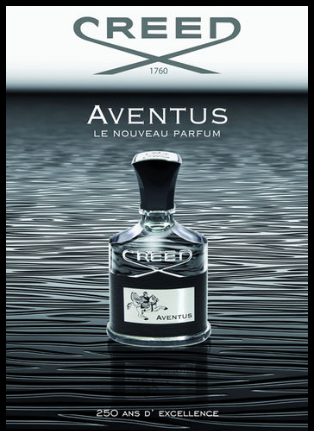
Creed Aventus Cologne

Source: Basenotes

Source: Basenotes

I fear I may have to go into perfume Witness Protection after this one. The power of Creed, and the worship of its fragrance, Aventus, in particular, is such that anything short of blind, unswerving, unqualified adoration seems to upset a few of its fans. Well, let’s get this over with then: I like Aventus and think it’s a perfectly pleasant — even occasionally pretty — fragrance that I would enjoy wearing. I also think it’s an over-hyped, simple, thin, linear scent that carries with it some frustrating issues, and which isn’t worth the high price.

There, I said it: I think Aventus is over-hyped. In fact, I firmly believe that, if Aventus were ever sniffed blindly in an unmarked, plain flacon located in Macy’s or some mall, some of its admirers may not be quite so uncritical. In my eyes, the hype and the reputation (“panty-dropper”) are as much a part of Aventus as its famous pineapple note. Furthermore, to be honest, I find the blind, cultish worship of some of its younger acolytes, and their aggressive response to those who don’t share their unqualified adoration, to be extremely off-putting. With that said, I shall henceforth walk and sleep with a Kevlar vest….

Creed is a fragrance house with a long and storied history, dating back to 1760. According to the biographical blurb quoted by Bergdorf Goodman, the house is unusual in a few different ways:

Olivier Creed with son, Erwin. Source: Vanity Fair.

Olivier Creed with son, Erwin. Source: Vanity Fair.

Founded in 1760 and passed from father to son, Creed is the world’s only privately held luxury fragrance dynasty. Based in Paris, the company today is led by Olivier Creed, a sixth-generation master perfumer.  […] Using the infusion technique (which has been abandoned by the modern industry), Creed weighs, mixes, macerates, and filters everything by hand. They also use the highest percentage of natural components in the prestigious French perfume industry..

For Aventus, Creed says it was inspired by “the dramatic life of a great, historic emperor, who waged war, peace and romance on terms he set, riding to power on horseback.” The fragrance seems to have been created primarily by Erwin Creed, the young, seventh-generation Creed perfumer, with input from his father, Olivier. The website states:

Royal but not imposing, CREED Aventus is made with ingredients hand selected worldwide by Erwin CREED, seventh generation of CREED and its future chief. Essences he chose were shipped to CREED’s French workshop, where father and son created Aventus using hand production methods that date to the founding of CREED in 1760.

According to Luckyscent, the fragrance is an eau de parfum, and its notes include:

black currant, bergamot, apple, pineapple, rose, birch, jasmine, patchouli, musk, oak moss, ambergris and vanilla.

Source: abstract.desktopnexus.com

Source: abstract.desktopnexus.com

Aventus opens on my skin with a burst of zesty, crisp, fresh bergamot, followed by the sweetness of pineapple and a hint of tart, green black currant. There is a quiet earthiness lurking about that feels like vetiver, but it is only a momentary impression. The primary bouquet is an incredibly pretty, airy, bright blend of bergamot’s crisp freshness infused with the succulent, pulpy, juiciness of pineapple. The fragrance feels very sheer and thin, though, so I added another huge smear (which almost emptied the rest of my vial) to the two large ones from my dab vial, for a total of 3 extremely large smears all up my forearm.

Dried oakmoss or tree moss.

Dried oakmoss or tree moss.

In just a few minutes, hints of oakmoss start to flitter about. It’s not fresh, springy, bright green moss, but rather something that feels like the real oakmoss absolute with its slightly mineralized, faintly salty, grey, musty characteristics. It smells a lot like tree bark and grey lichen. Quickly, it turns the citric, fruity freshness of Aventus into something drier and more layered. It almost feels akin to an aromatic fougère, minus its usual lavender underpinnings.

It also continues to feel very thin. I’ve read of men applying 10-12 big sprays of Aventus in one go and, at the time, I merely thought them to be extremely exuberant. Now, however, I understand it better. While aerosolisation definitely adds to a fragrance’s potency and longevity, Aventus seems like a scent that may well benefit from 10-12 sprays to give it some body and depth. I realise that I’m at a disadvantage in dabbing it, but I did put on quite a bit. Frankly, I’m keep struggling to believe that Aventus is ostensibly an eau de parfum, not a cologne (despite its name) or an eau de toilette.

Silver birch tree. My own photo. Fjällnäs, Sweden.

Silver birch tree. My own photo. Fjällnäs, Sweden.

Ten minutes in, Aventus is an extremely well-blended, elegant, refined blur of crisp, cologne-like citrus with dry, fusty, slightly mineralized oakmoss and hints of pineapple. There is a subtle woodiness in the base that reveals itself five minutes later as birch. It smells just like a smoky tree-bark with the faintest, tiniest nuance of ashiness. Birch can often have a tarry, phenolic character that makes it a common feature in leather fragrances, but not here. The note really calls to mind the delicate, silvery tree I saw in Sweden instead of anything dark, thick, and viscously tarry. Its advent turns the fragrance into a very mossy, woody scent with a subtle nuance of smokiness mixed with the crispness of citrus. The latter is quite muted now on my skin, and there are only subtle flickers of pineapple that occasionally pop up to add some countering sweetness. I wish there were more of the pineapple because it’s truly a beautiful touch and it adds an extremely interesting, original contrast to the woody-mossy accord. As a side note, the apple accord never appeared once on my skin, and the early hint of black-currant has faded away almost entirely.

Aventus remains largely unchanged for the next few hours. It’s a well-blended, airy, light swirl of birch and oakmoss, trailed by a crisp citrus note, pineapple, and a tinge of ashiness. To my happiness, the pineapple makes a more significant reappearance during the second hour for about thirty minutes before it sinks back into the overall bouquet. At the 2.5 hour point, the sillage drops and Aventus hovers about 2 inches above the skin. The notes no longer feel discrete, have started to overlap, and have lost all distinctive shape. Aventus, as a whole, feels wholly insubstantial in body, and is simply a nebulous haze of three primary notes: birch, oakmoss, and pineapple.

"Yellow jag" by Nancy Simmons Smith. http://simmonssmith.com/gallery/abstracts/

“Yellow jag” by Nancy Simmons Smith. http://simmonssmith.com/gallery/abstracts/

Despite the linearity of its core essence, there are a few, extremely subtle, changes in Aventus’ development. For a brief moment, at the start of the third hour, vanilla peeks its head around the curtain, but it’s pretty much a muted wallflower. For the most part, it serves only to have an indirect effect on the overall fragrance, adding some sweetness to the drier, woodier elements. It never screams “vanilla,” in any substantial, concrete way at all. But then, nothing about this fragrance feels substantial. At the end of the third hour, the jasmine makes a quiet appearance but, like the vanilla, it’s a mere suggestion more than a distinct, significant part of the fragrance. Around the same time, Aventus turns into a complete skin scent, calling to mind a balloon that has deflated.

Source: es.123rf.com

Source: es.123rf.com

From the 3.75 hour mark onwards, Aventus is a hazy, sheer, thin whisper of something vaguely mossy, woody, ashy, and fruity with a minuscule hint of sweet jasmine. I had to really inhale forcefully at my arm, with my nose right on the skin, to detect even that. Without such strenuous effort, I found it completely impossible to delineate any of the notes. Aventus remained a muted, flat blur until its very end when it was the merest suggestion of something vaguely fruity. All in all, it lasted just short of 5.5 hours on my skin, with extremely weak sillage after the first hour. I couldn’t detect any amber, musk, rose, or patchouli at any point in the fragrance’s development.

As a whole, my reactions are mixed: I thought Aventus was an extremely pretty scent at the beginning with an overall refined bent; I loved the evanescent pineapple bits; I wished the fragrance had more body, depth, and nuance; and I can see how it might be a wonderful scent for spring or in the hot, humid months of summer. I also thought Aventus to be extremely simple, linear, and faintly dull. Moreover, the longevity was a huge disappointment, and I really struggle with believing that Aventus is an eau de parfum and not a thin, weak cologne.

I’m not alone in terms of Aventus’ limited longevity on my skin. For a large number of people on Fragrantica, Aventus lasts between three and six hours. The precise breakdown of votes in the longevity department is as follows:

  • 29 for “poor” (30 min-1 hr)
  • 23 for “weak” (1-2 hrs)
  • 106 for “moderate” (3-6 hrs)
  • 228 for “long lasting” (7-12 hrs)
  • 80 for “very long lasting” (12+ hrs)

Clearly, this is a fragrance that requires spraying, not dabbing, and a hell of a lot of spraying at that, but do I want something that requires 5-10 applications (of any kind) to be detectable and to really last? More to the point, is it financially feasible? A tiny 1 oz/30 ml bottle of Aventus costs $165, and that won’t last very long if I need to use a large number of sprays each time for the scent to have some traction on my skin. Still, Aventus is available in a large 4 oz/120 ml bottle from one online retailer for $188 which is a much more practical, affordable price for such a light, airy, summer-perfect scent. But then another issue arises: can one trust that bottle? Not only are there apparently tons of fakes on the market, especially on eBay, but, apparently, the scent of Aventus can vary from batch to batch.

The issue of batch numbers and variations is something that comes up frequently when talking about Creed fragrances, and Aventus, in specific. My sample came from Surrender to Chance and was purchased a while ago, so I’m not sure which batch it came from. Surrender to Chance says that it buys most of its bottles directly from Creed, or, if not, then from Neiman Marcus or Bergdorf Goodman. I don’t know what to make of the batch issue or the way people pour over the numbers, with some being able to spout off the differences at the top of their head. The whole thing seems to be an incredible pain in the tush if true. How does one deal with such uncertainty? Plus, there seems to be the implication that one won’t even get an authentic Creed bottle if one buys it from anywhere else but the store itself or a few high-end stores. So that discounted bottle I mentioned earlier might as well not exist and, even if it’s authentic, who know what it will smell like? 

Making matters more complicated still are some commentators who argue that there is no such thing as batch variations. Take, for example, these two very interesting arguments from different Fragrantica commentators:

  • I don’t buy into batch variations I’ve smelled Z01 all the way up to the 2013 batches and its all the same.
  •  Forget about batch variations because that’s just a way for the fanboys to discredit your opinion.
Aventus batch numbers, via Basenotes.

An example of Aventus batch numbers, via the Basenotes thread.

If there really is no difference between batches, then why is there a 36-page discussion on Basenotes devoted solely to the different lots and how they smell? There seem to be too many firmly convinced people for the variations to be mere figments of their imagination. Either way, buying a Creed fragrance, but Aventus in particular, seems to entail a lot of work. As one person in that Basenotes thread joked, “[i]t’s almost like buying a car….” I can only shudder.

For me, the more interesting thing is the comment by the second Fragrantica poster quoted above regarding fanboys discrediting other people’s opinions. It supports something that has always really bothered me: I’ve seen some nasty behavior when it comes to Creed. Not by everyone, mind you, and not across the board, but enough to be truly noticeable as a small trend. In one group I occasionally read, a member was attacked as not knowing her stuff or being a real perfumista because she was underwhelmed by Creed as a brand. Elsewhere, I’ve seen chest-thumping braggadocio from some Creed fans about how Aventus is a total “panty-dropper” (a phrase that I find utterly revolting), or comments to the effect of “real men wear Aventus,” as if anyone who dislikes the fragrance isn’t a real man. The fans who display either type of cocky, superior, disparaging, or obsessive behavior tend to be on the younger side, but age is no excuse. As many of my usual readers know, I adore Serge Lutens fragrances, but I don’t like all of them, I had problems with a number of them, and have even given a few the ultimate, negative criticism: “boring.” Moreover, I’ve never attacked someone who dislikes a Serge Lutens fragrance that I love.

So, why does Aventus inspire such blind worship in some quarters? I think the hype has taken on a life all of its own, and has created a snowballing effect quite similar to that of Nasomatto‘s Black Afgano. Like Aventus, Black Afgano carries a certain sort of macho reputation that a few of its younger fanboys seem to use as a reflection of their own toughness or masculinity. It’s as if they think the fragrance’s reputation — “panty-dropper” in the case of Aventus, and super-macho edginess with the lure of the forbidden in the case of Black Afgano — will rub off on them, give them a sort of street cred, or enhance their own masculinity. Yet, one can question or dislike Black Afgano without some of its fans turning on you with pitchforks. Creed, however, seems to be in a class all its own.

In the case of Aventus, some have stated that the fragrance appeals to a younger crowd than Creed’s older, more traditional offerings, so perhaps age and immaturity have something to do with it, too. One blogger, The Scentrist, found Aventus to be very much Erwin Creed’s fragrance, more than his father’s, and that it “skewed toward a younger audience.” Either way, the hype is bad enough, without adding in the related, chest-thumping aggressiveness and defensiveness of what a friend of mine calls “a few bad apples.” Yet, there are enough of those bad apples to completely put him off trying any more Creed fragrances. I completely understand. I’ve had a sample of Aventus and Green Irish Tweed for over nine months, and it’s been hard to get motivated to go near either one.

On some levels, I know it’s not fair. As noted up above, Aventus is a really pretty scent at times, and I think its fresh, light, airy crispness would make it a nice choice in hot weather. In fact, I would probably wear Aventus if a bottle ever fell into my lap, especially if it were a bottle large enough for me to practically bathe in the scent as is clearly necessary for my skin. Nonetheless, to consider Aventus the Be-All, End-All, the Holy Grail, and the best fragrance ever made? I think that goes too far. To attack other perfumistas for not bowing at the altar of Aventus goes even farther still. In fact, I really have wonder if some of the fanboys would adore Aventus quite so unilaterally and unconditionally if they ever smelled it in an unmarked, unlabeled, plain bottle in the corner of Macy’s and priced at $50? I suspect a blind test would be quite revealing.

At the end of the day, however, fragrance is a wholly subjective issue. While I would normally link to a variety of different blog reviews or countering experiences to give you some sort of sense of what people think about Aventus, I won’t in this case. The fragrance is too well-known, there is too much of a polarity between those who worship it and those who think it’s over-hyped, and there is the added complication of possible batch variations. The bottom line is that you either love it, or you don’t. If you’re one of those people who thinks Aventus is the best thing to exist in every possible solar system, I’m very happy you’ve found something you love so much. We should all have fragrances like that! My opinion is different: I think it’s an extremely pleasant, elegant, refined fragrance that is also linear, simple, mundane, ultimately unexciting, and not worth the cost. Now, if you’ll excuse me, I need to put on my bulletproof vest, and go into hiding….

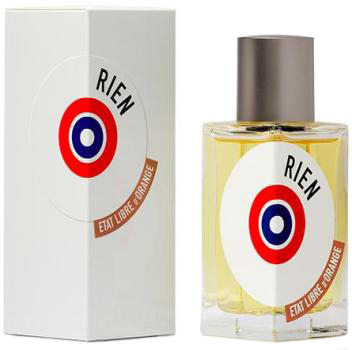
 

DETAILS:
Cost & Availability: Aventus is available in a variety of different sizes. It comes in: 1 oz/30 ml ($165);  2.5 oz/ 75 ml ($275); 4 oz/120 ml ($330); 8.4 oz/250 ml ($445); and 17 oz/500 ml ($675). Discount Retailers: You can purchase Aventus at a substantial discount in the 4 oz size directly from Amazon (US) which sells the 4 oz bottle for $188.30, instead of $320, or in the 2.5 oz size for $179.95 from a third-party vendor. You can find Aventus at a slightly less discounted price from FragranceNet which sells the bottle for $214.36 with a coupon. In the U.S.: You can buy Aventus directly from Creed (US) which offers free shipping and samples with any purchase. Aventus is also offered in 4 sizes from Bergdorf GoodmanNeiman Marcus, and Luckyscent, starting with the 1 oz bottle. Outside the U.S.: In Canada, Creed is carried at a number of different stores. You can find one near you using the Creed Store Locator. In the UK, you can purchase all Creed products directly from the company at its London boutique. Aventus is also available from Creed’s UK online website, or from Harrods. Other UK and Irish stockists are listed on the Creed UK Stockists website. Prices start at £95 for the smallest size. In France, Aventus is carried at Creed’s Paris boutique on the Champs-Elysée. For all other countries, I had difficulty finding stockists on either the US or UK Creed websites. Plus, both sites offer very limited shipping, geographically. The American site only ships to the US, its territories, and Canada; the UK one only to UK locations. I couldn’t find an International Creed version, or any way of finding official vendors in other countries. So, I suppose you can try FragranceNet which ships worldwide, and has a number of different country-specific sites. Just go to the link, click at the tiny flag icon at the very top right-hand side of the page, and choose your country. Samples: Aventus is available from Surrender to Chance starting at $3 for a 1/2 ml vial. They say that they obtain their bottles directly from the Madison Avenue Creed boutique, or from either Neiman Marcus or Bergdorf Goodman.

État Libre d’Orange Rien: Bondage Leather

Candice Swanepoel in "Strict" by Mert & Marcus for Interview Magazine September 2011.

Candice Swanepoel in “Strict” by Mert & Marcus for Interview Magazine September 2011.

A cool chick, dressed in fake leather that she’d bought at a cheap, second-hand store. By day, she worked in the industrial backrooms of a carpeting warehouse, trying to get the smell of dust and sanitized, synthetic cleaners out of her hair. With her torn fishnet stockings and combat boots, she exuded an air of toughness like the black whip she wielded at nights, in her other job, as a dominatrix at an exclusive BDSM club downtown. The clean scent of her slightly musky skin was coated with powder, the palest of pink roses, a touch of iris, and a sharp sweetness. The pale delicacy of it all contrasted with the feral meow of the raunchy cat smell that lingered under the fake leather, and with the incense that she loved to burn. On her evening breaks at the club, she would lounge nonchalantly against the wall, her long leg in its black patent, thigh-high stiletto boot crooked behind her as she restlessly flicked the whip to the side, and did her best James Dean with each long drag of her cigarette. When men asked her name, she would coldly reply, “Rien.”

Source: Lenoma.ru

Source: Lenoma.ru

Rien is a leather and aldehyde fragrance from the quirky, eccentric French niche house of État Libre d’Orange (hereinafter just “État Libre“). It is an eau de parfum created by Antoine Lie and released in 2006. The fragrance gives a nod at Robert Piguet‘s legendary Bandit, but without the latter’s famous green-black hues from galbanum. It also shares similarities to L’Artisan Parfumeur‘s Dzing! and Molinard‘s Habanita. Like all those fragrances, Rien is a love it-or-leave-it proposition. I hated it. Deeply.

État Libre describes Rien and its notes as follows:

RIEN, THE STORY…

Nothing is Everything. Do not believe what you first see… under the demureness of the name, there is the spicy savor of blackcurrant bays and the musky notes of blond suede. ‘Rien’ is a second skin perfume, a perfume that clings to the body and perseveres in the mind. Like venial sin on the verge of becoming mortal, it is irresistible and resolutely pervasive. As light as mohair and as precious as cashmere, the fragrance envelops skin with a powdered caress. It has the meticulous elegance and hypnotic beauty of a modern Dorian Gray, in a feminine/masculine version. An entrancing fragrance that leaves an unforgettable imprint. Utter charm, utterly charismatic. The vanilla/opium accord of the drydown reinforces the addiction. ‘Rien’ is an essential. A perfumer’s confession

Rien.

Incense, rose, leather, cistus [Labdanum], oakmoss, patchouli, amber, cumin, black pepper, aldehydes…

I’m a bit confused by the fact that some of the notes mentioned in État Libre’s story aren’t included in the notes. “Blackcurrant bays?” Apart from my ignorance as to what constitutes a berry’s “bay,” there is also the issue of Luckyscent listing a few additional or separate elements. For example, it lists mousse de chene (which is technically different from mere oakmoss), in addition to styrax (a vanillic resin) and iris. If Luckyscent is correct, then the complete list of notes would look more like this:

Incense, rose, leather, iris, labdanum, mousse de chene, styrax, oakmoss, patchouli, amber, cumin, black pepper, aldehydes.

Source: hdwallpapers.lt

Source: hdwallpapers.lt

Rien opens on my skin with aldehydes and a nuclear blast of black-green. For once, the aldehydes don’t translate on my skin as pure soap and foam, but rather as something fizzy, sweet, and with a wax candle undertone. They also have a salty, nose-tickling smell that is enormously similar to Alka-Seltzer tablets dropped in water.

Dried oakmoss or tree moss.

Dried oakmoss or tree moss.

The green note smells sharp — so much so that it almost resembles galbanum more than mere oakmoss. Yet, despite its pungent, bitter acridness, it clearly has the traditional musty, grey mineralized feel of lichen. It’s an extremely cold note that has a mineral and metallic clang to it, along with a salty quality that obviously carried over to impact the aldehydes. The grey-green moss is also infused by incense, though it is not the usual dark, black, smoky kind. This is more like the mentholated, medicinal, almost anise-like tonalities of myrrh, but without its cold, white, High Church feel. The overall combination feels as sharp as the crack of a black-and-green leather whip across raw flesh. Have you seen those old films like “Mutiny on the Bounty,” where mutineers or slaves were whipped as punishment across their backs? That’s the crack you feel here with Rien’s opening. 

Civet. Source: focusingonwildlife.com

Civet. Source: focusingonwildlife.com

Some other notes stir and whimper submissively under this aggressive barrage of sharpness. There are subtle flickers of a pale, pink rose and of a slightly powdered iris hiding fearfully in the base. More defiant is the feral meow of the civet, sounding like a cat in heat as it lets off a sharp, bitter, animalic note. I’m not one of those people who always thinks civet smells like a “cat’s anus,” but something about the note in Rien strongly conjured up that pejorative term. Civet is a note that cannot be naturally harvested any longer due to animal cruelty and abuse issues, so the aroma is commonly replicated by synthetic versions. In Rien, it might be some very cheap stuff, because the civet feels not just animalic, but so sharp that it could cut you. Then again, given the rest of the fragrance, it’s undoubtedly intentional….

Source: ellequebec.com

Source: ellequebec.com

The most interesting parts of the fragrance to me are the leather and the mousse de chene. Let’s start with the former. There is something very synthetic about the leather, almost intentionally so, because the material smells like new, unworn, black patent shoes mixed with the cheap, plastic-y smell of fake, plastic leather, or “pleather.” As a lawyer in San Francisco, one of my areas of speciality was sexual harassment defense, and I gained some working knowledge of BDSM and sex clubs, as well as every possible kinky twist that you might imagine in a city as sexually open as San Francisco. When I wore État Libre’s Rien, all I could think about was bondage leather, whips, and rubber outfits in San Francisco (and a truly bizarre case). Here, however, the material always has a slightly powdered, dusty, rubbery, plastic, industrial undertone to it. I wouldn’t be particularly fond of the aroma, in and of itself, on the best of days, but when combined with the waxy, fizzy, nose-tickling aldehydes, the acrid, black incense, and the crack of the oakmoss, it’s really is not my cup of tea.

"Evernia Prunastri" lichen moss. Source: via supermoss.com

“Evernia Prunastri” lichen moss. Source: supermoss.com

And let’s talk about that oakmoss. Mousse de chene is actually a specific type of oakmoss (Evernia prunastri) which is an oakmoss absolute according to The Aroma Connection blog, and, in some people’s eyes, seems to be considered the “true” oakmoss. It’s a grey lichen which grows on trees and has an intensely dank, pungent, fusty aroma that can also be salty and smell like tree bark. Still, the truth is that “real” oakmoss of any type is essentially banned out of perfume existence, so substitutes are used. There is a very interesting, detailed, and somewhat technical discussion of the different types of oakmoss on The Aroma Connection, including the various synthetic versions or additives thereto. The site also helpfully provides the following aroma description:

It should also be mentioned that a range of commercial oakmoss products exists, some offering a warm, leathery-mossy character, whilst others offer have woody, mossy – almost marine-like aspects.

Here, both types of aromas are present. The oakmoss has a sharp mossy, salty character that smells quite distinctly like the bark of a tree, but it also has a leathery quality to it. Later, it turns warmer, but the opening moments of Rien are really a whack on the head with its colder, sharper aspects that are further amplified by the black pleather and acrid smoke.

Thankfully, about forty minutes, Rien starts to soften its sharp edges, turning smoother, sweeter, and a hair less insolently hostile. There is a gentle warmth stirring deep in its depths, aided by the slow awakening of patchouli along with vanillic touches from the styrax. Unfortunately, these more positive aspects are off-set by a soft, sweet, musky smell that feels like the aroma of newly placed, industrial carpeting in an office, or rolled up carpet in a warehouse somewhere. It’s a smell that is sharp, musty, dusty, almost glue-like, but also sanitized clean. I blame it on the combination of the aldehydes with the oakmoss, along with some help perhaps from white musk. Atop this dusty, somewhat industrial, musty, clean bouquet is a sprinkling of sweet powder; it’s not quite vanillic, but it’s definitely not like iris or makeup powder either.

Source: ehow.com

Source: ehow.com

At the 75-minute point, Rien’s base is a mix of cloyingly sweetened, dusty oakmoss with bondage leather, rubber, that sanitized industrial aroma, and some patchouli. The whole thing is wrapped up with sharp myrrh-like incense smoke, and even sharper animalic civet. The syrupy brown sweetness now filling the oakmoss juxtaposes sharply with its more pungent, mossy, mineralized aspects. The juxtaposition grows even more contrary when you add in the synthetic, “office clean” vibe and the dominatrix’s rubbery, black leather. I can’t bear any of it.

Source: Thriftcore.com

Source: Thriftcore.com

I’m also having extremely pained flashbacks to L’Artisan‘s Dzing!, a fragrance that almost made me lose my mind with its extremely similar dusty scent mixed with synthetic, cloying sweetness. Dzing! reminded me of those cheap trinket, tourist shops you find in Tijuana where the smell of plastic toys and shoes from China mixes with dust, vanilla air freshener, clean notes, rubber, and sweetness. Both perfumes are intended to be leather fragrances but, to me, the “leather” in Dzing! smelled solely of cheap, industrial plastic accompanied by cloying, synthetic, vanillic sweetness. It’s nowhere near as bad in Rien — the aroma is more dusty pleather than hardcore, pink plastic with glue and chemical undertones — but the two fragrances share enough synthetic similarities to make me wince. 

At the end of the second hour, Rien’s combination of aldehydes with plastic leather remains the dominant feature, but the oakmoss recedes a little. Slowly rising to take its place is the patchouli, resulting in a discordant dusty-musty-soapy-patchouli combination. The amber also becomes more prominent, though it never once feels like labdanum with its wonderfully nutty, rich, sometimes dirty, resinous characteristics. Instead, the amber here is just a generic, vague, muted warm glow in the base, infused with myrrh smoke, styrax’s vanillic hues, the feral animalic skank of the civet, and those godawful industrial synthetics. Is there no end to this nightmare?

The perfume continues its subtle shifts. Slowly, Rien transforms into a bouquet of clean, musky, supposedly “skin” tonalities with aldehydic underpinnings, accompanied by fruited notes from the patchouli. There is powder that feels a little like that in makeup, thanks to the orris, but it also resembles powdered vanilla. The sharpness of the synthetic civet vies with the swirl of equally sharp dark smoke, which now feels more like frankincense than bitter myrrh. And the floral elements grow more prominent.

By the start of the fourth hour, Rien is a soft blur of clean, musky, aldehydic skin infused with muted floral notes of rose and iris, as well as a fruited elements that resembles dried raspberries. The smoke and plastic leather wrap it up like a bow, creating a bouquet that calls to mind the sharp, powdery, fruited, black leather, florals and smoke of Molinard‘s Habanita eau de toilette. (A combination that resulted in my struggling enormously with Habanita as well, by the way, and which ended in me disliking it immensely.)

Rien’s undercurrent of animalic, almost urinous civet remains unabated, as do the prickly, biting synthetics in the base, but Rien has (thankfully) lost its aura of freshly cleaned, commercial carpeting. The reason may lie in the growing warmth and amber in the fragrance’s foundation, which has finally managed to diffuse some of the oakmoss-aldehyde-pleather combination’s bite. At the same time, the sillage drops, and the whole bouquet hovers just an inch above the skin. Rien is still extremely potent when smelled up close, and I suspect the synthetics are the reason why.

So, to summarize, we’ve gone from Bandit to Dzing! to Habanita. No matter how much I may dislike the fragrance, I have to give Rien credit for pulling off so many clever referential nods in a row. Rien remains in its Habanita-like phase for a few hours before reaching its last stage near the end of the seventh hour.  At that point, Rien is really just powder on my skin with a slightly floral nuance and quite a bit of stale sourness. The bloody fragrance sets me free just after the tenth hour when it finally dies away. I rushed to put on some Puredistance M, so that a leather fragrance I actually enjoyed would wipe the bad taste away.   

Sons of Anarchy photo via wall321.com.

Sons of Anarchy photo via wall321.com.

As noted earlier, Rien is one of those difficult fragrances that people either love or hate. To balance out my perspective, I thought I’d share the views of The Non-Blonde who accurately describes the fragrance as “edgy” in a review which reads, in part, as follows:

It’s dirty, animalic, leathery, and smoky. There’s a hint of hot asphalt and burnt rubber, the kind you get when notes of black leather, cistus, and cumin come together. But Rien is also directly connected to Robert Piguet’s Bandit, not just in the smoke, leather and uncompromising oakmoss, but also in the softening that happens when the fragrance unfolds and gives a peek at its floral heart (more apparent in Bandit’s extrait concentration).

I used to think of Rien as very butch. I’m not so sure nowadays, though it is completely gender neutral. Rien is urban, has a distinct and deliberate synthetic twist– rubber, smoke, and some metallic parts, but also very human and warm. Wearing Rien is like taking a whiff of skin warmed under the biker’s leather jacket. […]

Rien can be downright dangerous in large amounts. I’ve noticed it the very first time I tried it and I maintain this view to this day. It’s one of my favorite perfumes from ELdO, but its non-perfuminess and the medicinal quality it takes when sprayed lavishly can be a major turn-off for those who don’t appreciate its style and heavy dusty leather boots.

I think we detect very much the same thing, particularly as Rien does have a whiff of warm skin under a biker’s leather jacket, in addition to ties with Bandit and the “deliberate synthetic twist” that she noted. I may have different terms and aroma sensations for the synthetic parts, since Rien was more sanitized, industrial office carpeting on my skin than asphalt, but the synthetic and urban feel is very much the same. Where we part ways is that she happens to think Rien is “daring and seductive,” while I simply hate it. Profoundly. And, no, I did not apply a lot. It doesn’t take much to be deluged by Rien’s abrasively acrid, synthetic, extremely sharp weirdness.

People’s assessment of Rien on Fragrantica is generally very consistent in terms of how the fragrance manifests itself on people’s skin, but there is a big split as to whether people actually like the final result. Some consider Rien to be a “masterpiece” precisely because of its difficult notes. Others found it to be utterly unbearable. Some examples of the range in perspective:

  • it’s suede and little else. Smells like a department store leather jacket area. Also has a nice hint of industrial carpet. Ever walk into a new office? Yep, that’s what I’m smelling. Not something I’d want to wear. I don’t smell anything animalic or balmy or like incense or wood. JUST ALDEHYDES.
  • Truly the bizarro spiritual successor of Magie Noire and Aromatics Elixir! It smells yellow, pissy, leathery, turpentine-like, but also like patchouli and clean earth. At times it smells like a corrupted Chanel No. 5, with muted and expensive-smelling florals. A masterpiece with unbeatable strength and longevity, great in hot or cold weather, and devastatingly sexy on men and women alike. If you want to project a certain fuck-off image then you must have it. Vastly superior to the more timid Bandit, I must say.
  • All I smell is brand-new snow tires in a garage. [¶] And I can’t scrub it off. Must be those 60,000+ mile steel-belted tire models. I just might have to wrap my wrist in a towel and duct tape it up…so that I might get to sleep tonight.
  • strong aldehydes, remining me of grandmas classical perfumes, and the heavy leather scent. There is also a strong animalistic note and the animalistic and oakmoss notes clash with something industrial, plasticky.
  • I’ve read quite a few of the reviews here and mostly I see negative remarks. All I have to say is – ARE YOU PEOPLE CRAZY? This is one of the most magnificent perfumes I have ever smelled! And believe me I have smelled (and owned) a lot of great perfumes. Chanel’s Cuir de Russie, Guerlain’s Mitsouko (which is my most favorite scent ever!), L’Heure Bleue ( some say old-fashioned, I say classic) -I could go on and on, but I won’t. [¶] Anyway, my point is I would put Rien in the same line up as any of the greats. It is a masterpiece of perfumery. And this is said by a 56 year old woman, who only a couple of years ago was afraid to go out of her Guerlain, Chanel, Dior comfort zone.

There is the same sharp split at Basenotes. The negative reviews talk about such things as how Rien is “mainly a piercing, industrial note like glue, solvent or hot light bulbs. A woody-spice note in an quirky mutant, sci-fi vein. Hot plastic, volatile glue… really not my scene.” The positive ones rave about how Rien is a challenging, strange beauty that has ties to everything from Habanita, Bandit, and Dzing!, to such famously skanky or urinous fragrances as Kouros and Bal à Versailles. On both sites, I get the impression that men generally seem to outnumber the women in terms of loving Rien, so I’d definitely not worry about the fragrance being very feminine in nature.

How you feel about Rien may depend on how you view certain notes. If you’re someone who is ambivalent about Bandit, please be aware that the leather here is much more intense, not as smooth, and is significantly more synthetic or industrial in feel. If you dislike aldehydes, industrial notes, black rubber, synthetic plastic aromas, incredibly sharp civet, urinous elements, and/or super mineralized, dusty, pungent oakmoss, then stay away. On the other hand, however, if you’re someone who loves oakmoss fragrances that are very animalic, skanky, aldehydic or dusty, then I’d definitely recommend you giving Rien a test sniff. (But do not blind buy!) If you go one step further and genuflect before the altar of Bandit, Habanita, or Kouros, then Rien should absolutely be your next stop. I’m sure you’ll enjoy cracking that whip to the feral yowls of the civet!


DETAILS:
Cost & Availability: Rien is an eau de parfum that is most commonly available in a 1.7 ml/50 ml size, but which can also be purchased directly from Etat Libre’s website in a large 3.4 oz/100 ml bottle as well. The prices listed there are in Euros: €69.00 for a 50 ml/1.7 oz bottle, and €119.00 for a 100 ml/3.4 oz bottle. Samples are also available for €3.00. Etat Libre offers worldwide shipping, and free delivery to or within France. In the U.S.: Rien can be purchased from LuckyScent for $80 for a 50 ml/1.7 oz bottle, with samples for $3, and from MinNY. You can also purchase it from Parfum1 in the large 3.4 oz/100 ml bottle for $149. The site offers free domestic shipping, with international shipping available for a fee. Outside the U.S.: You can purchase Rien from Etat Libre’s new London store at 61 Redchurch Street for £60, as well as from its Paris one located at 69, rue des Archives, 75003. Elsewhere in the UK, I found Rien on Amazon UK for £58.49 for the 1.7 oz/50 ml bottle through a third-party vendor . It is also sold at London’s Les Senteurs for £59.50, with samples also available for purchase. In Germany, Rien is available at First in Fragrance in the small size for €69. The site ships worldwide. In the Netherlands, I found it at ParfuMaria in the large 100 ml size for €119. In Italy, it’s available at ScentBar and in Spain, it’s sold at The Cosmeticoh. In Russia, Lenoma carries the full Etat Libre line. For all other locations or vendors from Canada to the Netherlands and Sweden, you can use the Store Locator listing on the company’s website. Samples: you can order a sample of Rien from Surrender to Chance where prices start at $4.75 for a 1 ml vial.

David Jourquin Cuir Tabac: Cozy Patchouli, or “Where’s Waldo?”

Source: womenworld.com.ua

Source: womenworld.com.ua

According to legend and stories swirled in the mist of history, patchouli was introduced to the West by traders who used the plant’s oil or its dark, green leaves to protecting their precious cargo of silk. The plant’s naturally medicinal, sometimes mentholated or antiseptic notes would ward off insects and other marauders. When the silk hit the streets of Europe, fine ladies were enchanted by the lingering sweet smell of patchouli and demanded more of it. One version of the tale credits Napoleon with the introduction of the scent, by way of shawls that he’d brought back from Egypt and which were redolent of the plant’s sweet, earthy aroma. Today, however, the smell of true, dark patchouli has fallen into disrepute as a result of negative associations with the 1970s and “filthy hippies,” and it’s not widely used in perfumery. Yet, patchouli happens to be one my favorite notes (in its dark, chewy incarnation), so when I heard that Cuir Tabac from David Jourquin contained five different types of it, I sat up and ordered a sample right away.

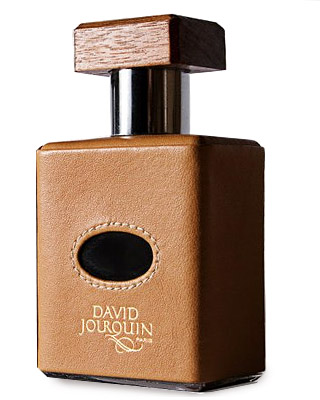
Cuir Tabac via Luckyscent.

Cuir Tabac via Luckyscent.

David Jourquin is a French perfumer, though I’m unclear on what his exact background may be or if he was in fashion before. He has two fragrances, both riffs on the same overall theme and with slightly similar notes, but one is intended to be a “day” scent and one is meant for “night.” Cuir Tabac is the “evening” scent, while Cuir Mandarine is the day one. Both fragrances were released in 2011, are eau de parfum in concentration, and are packaged quite solidly in leather, stitched with the David Jourquin signature. As First in Fragrance puts it, “[a] chiseled jewel, sealed with wood from the walnut tree, sheathed in finely sewn Spanish leather, with a window that reveals the rare, golden hewed liquid.”

The Jourquin fragrances are inspired, in part, by the olfactory memories of his mother with her leather jacket, his visits to Guadeloupe with his father, and the impact of trips to Morocco with his step-father. Luckyscent explains a little more about the specific inspiration and scent for Cuir Tabac:

For Cuir Tabac, the nighttime version of his pair of Cuir fragrances, David Jourquin drew heavily on his childhood memories of visiting the bustling marketplace of Pointe-à-Pitre, Guadeloupe with his father. By blending the sweet and pungent scents of the market with his powerfully evocative signature leather and tobacco notes, Jourquin has created something remarkable: an enveloping, warm, and edgeless fragrance that truly feels like a memory.

The Pointe-à-Pitre market. Source: guadeloupetraditions.free.fr

The Pointe-à-Pitre market. Source: guadeloupetraditions.free.fr

The David Jourquin website describes Cuir Tabac and its notes as follows:

The heady and insolent patchouli heightens the deep and profound tobacco, cigar and musk notes overturning the senses in a soft murmur of fine eternal lavenders.

Mixed with fine lavenders as top notes.
Brown tobacco, cigar and musk as middle notes.
Five patchoulis from five Indian regions as bottom notes.

"Black Widow v1" by *smokin-nucleus. Source: DeviantArt. (Website link embedded within photo.)

“Black Widow v1”
by *smokin-nucleus. Source: DeviantArt. (Website link embedded within photo.)

Cuir Tabac opens on my skin with every possible manifestation of patchouli imaginable. It’s dark, chewy, resinous, sweet, musky, earthy, and smoky. It’s black, but it’s also got green bits to it which result in a brief, 15-minute period of mentholated, slightly medicinal, bitter tonalities. At the same time, the patchouli is also extremely golden and pale, manifesting an incredibly creamy touch that smells a lot like milky café au lait. There are nutty undertones that are a little like roasted almonds, but there is also a faint whisper of chocolate lurking about. The whole thing is neatly wrapped up in a very quiet, subdued smokiness. It’s far from being as black as I’d like, and it lacks the weight or rich, baroque depths of the note in Profumum‘s Patchouly. Instead, it’s a lot closer to the patchouli in Serge LutensBorneo 1834 in the opening moments, mixed in with some of the creaminess of Chanel‘s Coromandel.

Artist: adrymeijer on DeviantArt. (Website link embedded within photo.)

Artist: adrymeijer on DeviantArt. (Website link embedded within photo.)

In less than a minute, other elements appear. First, and most prominent, is lavender which feels dry, pungent, herbaceous, and exactly like that in dried lavender sachets from Provence that I loathe so much. Thankfully, its abrasive sharpness is quickly mellowed out by the infusion of the patchouli, but it still has an edge to it that this lavender-phobe finds a little off-putting. Frankly, I’m not sure I can recall the last time I smelled a lavender-patchouli pairing, let alone one that is quite so singular and unadulterated in its focus. It’s an odd duo, and, yet, not wholly unappealing. What actually bothers me significantly more is the lurking, whip-sawing, crocodile’s tail of something synthetic that flickers around the dark waters of the base. I don’t know what it is, but it burns my nose with its razor sharpness, and continues to bother me throughout much of Cuir Tabac’s lifespan.

The third guest at the party is amber. Cuir Tabac’s perfume notes may not list amber, but there is a definite golden haze in the base that is sweet, musky, and resinous. Perhaps it’s merely another facet to the patchouli, but it seems much more resinous than just that. The whole fragrance sits atop a somewhat molten base that, at this point, is lightly tinged with a hint of creamy, almost vanillic, sweetness.

Source: www.hispanicallyspeakingnews.com -

Source: hispanicallyspeakingnews.com –

Five minutes in, the first glimmer of tobacco appears, smelling just like a fresh, unlit, Cuban cigar. If you’ve ever walked into a humidifier cigar room, you know the aroma here, though it’s very muted and subtle at first. The note also has sweet, golden, almost leathered, and floral underpinnings, and they don’t stem from the other accords so much as from the tobacco itself. Lurking about is a subtle smokiness that feels more like incense than tobacco smoke, but it may be a by-product of one of those five patchouli types.

If you’re wondering where is the leather in all this, you’re not alone. For a fragrance that is called Tobacco Leather, Cuir Tabac doesn’t actually feel like a leather fragrance at all. At no time do I ever get “leather” as a singularly dominant, individual, powerful force, at least not the leather that I’m used to. Instead, the fragrance sometimes carries the subtle feel of leather as a subset of the patchouli and resins, a manifestation of their characteristics, if you will. There are moments, much later on, when faint flickers of leather dance around the periphery, but if you’re expecting the sort of leather note that you’d find in Chanel‘s Cuir de Russie, Puredistance‘s M, Serge LutensCuir Mauresque, Parfum d’Empire‘s Cuir Ottoman, or Montale‘s Aoud Cuir d’Arabie, then you’ll be sorely disappointed. Cuir Tabac is not a true or hardcore leather fragrance by any means, no matter what the name may say. Given that the leather is mostly more of an implied suggestion, I think a more accurate name for the fragrance might be Patchouli Tabac….

Fifteen minutes in, Cuir Tabac starts to shift a little. The patchouli’s medicinal undertones have faded, while its other features have grown stronger. Now, the patchouli has a far greater whiff of something that is slightly green and herbaceousness. Even more noticeable is the dancing, wafting aroma of nuts and cream. The patchouli has a strong element of toasted nuts, and it’s no longer just a subtle impression of almonds, but toasted hazelnuts as well. There is also a growing creaminess to the patchouli that we’ll get to momentarily. The patchouli isn’t the only one to change, however. The lavender starts to turn sweeter; it feels creamy, fluffy, and a little like lavender ice-cream.

"Caramel Kaleidoscope" by Toni Jackson on Fineartamerica.com

“Caramel Kaleidoscope” by Toni Jackson on Fineartamerica.com

Near the close of the first hour, I’ve become convinced that Cuir Tabac’s list of notes is incomplete. The fragrance’s undertones are smoky at times, nutty at other times, and always resinous in feel. There is an increasingly vanillic aspect to the foundation, as if Siam Benzoin and/or Tonka Bean were used to add that creamy sweetness. It becomes more prominent as time goes on, especially once the lavender recedes in strength around the 50-minute mark. Cuir Tabac is now a lovely, multi-faced patchouli fragrance with nutty, creamy, sweet, musky, dark, and vanillic touches, followed by touches of lavender and the faintest hint of fresh cigars. Unfortunately, the base continues to have that synthetic note that feels as sharp as broken glass. I tested Cuir Tabac twice, just to be sure, and the aromachemical was there each time in differing degrees of prominence. At this point, I’m chalking it up to either an amber and/or musk synthetic accord.

I still don’t smell any dominant, hardcore leather, per se, but there is a growing impression of its feel flittering about the edges. At first, there was the subtle, muted whiff of something resembling new car seats in an extremely expensive vehicle, but the smell soon gave way to an impression of an old, comfy, sweetened leather, armchair.

St. James Hotel's Library Bar, Paris.  Source: Oyster.com

St. James Hotel’s Library Bar, Paris.
Source: Oyster.com

Honestly, I think it’s probably the power of suggestion due to the fragrance’s overall feel. Cuir Tabac has definitely started to evoke the reading room and library in an old Mayfair gentlemen’s club with its wall of books, its comfy, well-worn, dark leather armchairs, and a warm fire. There is a butler passing around cognac snifters, accompanied by the finest Belgian chocolates, and a humidor of the most expensive Monte-Cristo cigars from Havana. For those who don’t feel like drinking, there is creamy café au lait, dusted by white cocoa powder and toasted nuts. And, somewhere in the background, someone is burning a tiny, itsy-bitsy bit of black incense.

It’s all very lovely, but, alas, it’s also an increasingly soft scent. With the exception of that sharp synthetic accord, the rest of Cuir Tabac starts to feel like a very well-blended blur. Less than 75-minutes in, the notes lose a lot of their edges and shape, and the sillage drops. Cuir Tabac is a warm, slightly nebulous glow of patchouli that is creamy, sweet, a little bit smoky, slightly leathered, very nutty, and just barely infused with lavender atop a musky, ambered base. The tobacco pops up once in a while to make itself noticeable, but it generally hovers at the periphery. The “leather” impression is similarly muted. Everything feels so swirled into the patchouli that it’s really hard to pull the other notes from the cloud which hovers an inch or two above my skin.

"Coffee and cream" Art Print by Shalisa Photography/ Sharon Lisa Clarke on FineartAmerica.com

“Coffee and cream” Art Print by Shalisa Photography/ Sharon Lisa Clarke on FineartAmerica.com

As time passes, Cuir Tabac continues to change. At first, it’s turns into a creamy café au lait with patchouli fragrance that has a subtle whiff of lavender, synthetics, and tobacco. Then, at the start of the third hour, the tobacco returns to the fold and starts to tango with the patchouli. Now, it’s no longer uncut Cuban cigars, but sweetened pipe tobacco infused with patchouli. The latter is still simultaneously creamy and dark, but all the subtle leathered, nutty, and incense undertones have vanished.

The fragrance sits right on the skin, and feels increasingly thin, gauzy, and discreet. It’s frustrating trying to pull the notes out of the air, especially as some of them keep coming and going like ghosts. Just like the tobacco did earlier, it’s now the vanilla’s turn to play hide and go seek. The same story applies to the creamy and milky café au lait tonality. Clearly, the fragrance is very well-blended and reflects different facets on different occasions, but I wish it had more body, depth, and structure. Both times I wore it, the results were slightly different in terms of the small details, as well as in the order and prominence of all the notes except for the patchouli, but the nebulous feel of the fragrance was the same.

Source: de.123rf.com

Source: de.123rf.com

About 4 hours in Cuir Tabac’s development, the fragrance settles down for its final stage. It is now a creamy, vanilla patchouli fragrance with subtle whiffs of sweetened, unlit pipe tobacco, along with the tiniest speck of smoke and musk. It is also now a complete skin scent, as sheer as gauze. Cuir Tabac remains unchanged until its final moments, a little under 11 hours from its start.

In some ways, it seems that Cuir Tabac dissolves in on itself, but you can also argue that it’s meant to be a soft glow that discreetly envelops you before it turns into something more personal. The latter interpretation seems to be supported by David Jourquin’s somewhat abstract attempts at philosophical, poetic stylings on his website, both in the section about him and the one devoted to his philosophy. The references to dark shyness, “a secret wake like a promise,” and “firm determination enveloped in infinite softness and warmth” seem to be as much about his fragrances as they are about him. Then, too, there is the part about how “[h]e is like his fragrance, sensitive, secret, calm and yet bubbling over, motivated by an intense passion.”

So, if Cuir Tabac is intentionally meant to be this secret, quiet, shy whisper of softness and warmth, then I can hardly criticize the perfumer for achieving his goal. I know a number of people who prefer wispy, gauzy, soft scents that remain close to the skin and are just a private message to themselves. If they like dark patchouli, then Cuir Tabac is tailor-made for them. However, even they might not think the perfume was worth it for the price and accessibility issue. Cuir Tabac is an eau de parfum that costs $235 or €168 for a 100 ml/ 3.4 oz bottle, and has only limited distribution. In the U.S., only Luckyscent carries it. I couldn’t find any vendors in Canada, the U.K., Oceania, and vast swathes of Europe, though it is carried by Germany’s First in Fragrance, and there are plenty of vendors in France and Russia. My point is, would someone want to risk a wispy, unobtrusive blur of a scent that is quite expensive and, for many perfumistas in different parts of the world, not easy to test out first?

Judging by the handful of reviews for Cuir Tabac on Fragrantica, the answer would be “no.” In fact, almost all the reviews say the same thing: that the fragrance is too discreet, “puny,” and sheer for the price tag. To wit:

  • God bless the individual that’s willing to spend hundreds of dollars on this fragrance. The problem with Cuir Tabac isn’t the scent. The bigger issue is that you’re gonna be playing the olfactory version of “Where’s Waldo”. This is more like a thin scent rather than a skin scent. The tobacco smells like a walk-on instead of the star in this concoction. The rest of the notes are puny and shows no interest in fighting back the tyranny of fleetingness. Definitely not a fragrance built for the playoffs.
  • Starts out with almost only dry strong patchouli and a hint of pipe tobacco, soon to transform into more like the smell of a warm – unlit – cigarette and a more subtle spicy note. [¶] Two hours later what’s left is a discrete patchouli note and a warm very present, yet not aggressive, amber-like touch.  [¶] Beautiful scent but less isn’t always more and maybe this one would’ve been better off with more potency.
  • For the first hour, you get hints of sweet pipe tobacco, quickly overshadowed by a medicinal tone (probably the mix of lavender & patchouli). I typically enjoy both lav & patch, but something is awry with this particular mix. After the lav & patch fade, you get the sweet pipe tobacco that I remember my grand uncle (mother’s uncle) smoking, for hours to come. Is this stuff good? In a word, yes. Do I wanna smell like my 70+ year-old uncle? No. And I really don’t wanna pay $235 USD to 🙂
Where's Waldo, via The Telegraph.

Where’s Waldo, via The Telegraph.

The “Where’s Waldo?” comment is brilliant, and my hat is off to “Roge” who used it! I think the reference definitely applies not because of the scent itself, on my skin at least, but because of how many of its notes just vanish like a ghost, only to occasionally reappear later, or how hard they are to pull out of the nebulous patchouli cloud. Lord knows, if one expects a true leather fragrance, Cuir Tabac will be “Where’s Waldo” indeed! If you will note, not a single one of those comments (or the remaining few on Fragrantica) mentions leather at all. Odd for a purported “Cuir” fragrance, wouldn’t you say? I’m relieved that it’s not just me. As for the tobacco, judging by those comments, it seems to have played hide-and-go seek with a few other people as well, since the reports are quite split on its prominence.

One thing that needs some elaboration, however, is the issue of Cuir Tabac’s longevity. The thin, unobtrusive nature of the scent and its low sillage clearly was a problem for two of the commentators quoted up above. However, if you look at the votes on Fragrantica, the majority voted for “very long lasting” (12+ hrs), followed by “long lasting” (7-12 hrs) in second place. In short, don’t let the fragrance’s wispy nature and weak sillage fool you.

An unrelated topic brought up by Fragrantica is the issue of similar scents. One commentator found absolutely no difference between Cuir Tabac and its sibling for the day, Cuir Mandarine. Another thought Cuir Tabac was too similar to the more affordable Thierry Mugler fragrance, A* Men Pure Havane. I haven’t tried the latter, but I’ve read that it’s a very honey-dominated fragrance, not a patchouli one. Still, if the similarities are true, then it makes Cuir Tabac seem even more pricy.

Ultimately, I think that Cuir Tabac is a very mixed bag. The creamy bits are lovely, as is the café au lait undertone that sometimes vaguely mimics a similar nuance in Chanel‘s Coromandel, and I always enjoy dark patchouli, even when mixed with lavender. Unfortunately, I had enough problems with the scent that, at that price range, I would far prefer to get Profumum’s glorious, smoky Patchouly soliflore with its incredible concentration, baroque richness, salty ambergris, and lack of razor-sharp synthetics. Still, if money is no object, if you prefer your patchouli to be gauzy, lightweight, and discreet, and if you also enjoy lavender, but don’t like leather or dominant tobacco notes, then Cuir Tabac may be for you. It’s an extremely narrow category of perfumista, but I’m sure you’re out there!

DETAILS:
Cost & Availability: Cuir Tabac is an eau de parfum that is available only in a 100 ml bottle and which costs $235 or €168. David Jourquin: you can purchase Cuir Tabac directly from David Jourquin for €168. Samples are also available for €3,50. In the U.S.: Cuir Tabac is sold at Luckyscent, along with a sample. Luckyscent seems to be the only U.S. distributor or vendor for the Jourquin line. Outside the U.S.: I can’t find Canadian or UK vendors for David Jourquin. In France, there seem to be many, especially in Paris. There, Cuir Tabac is sold at Jovoy, the Ritz hotel, and The Different Company, among others. Germany’s First in Fragrance also sells the perfume and ships worldwide. In Belgium, David Jourquin is apparently carried at Brussel’s Absolut’ly, but I can’t find the line on the store’s website. For all other locations, you can turn to the David Jourquin Store Locator which lists vendors from Russia and Saudi Arabia to Spain and the Ukraine. As a side note, the brand has a lot of vendors in France and Russia, but it seems to have a very limited European presence and even less so elsewhere. Your best bet may be with companies like Luckyscent, Jovoy, or First in Fragrance who ship worldwide. Samples: I obtained my sample from Surrender to Chance which sells Cuir Tabac starting at $3.59 for a 1/2 ml vial. You can also order a sample from Luckyscent.

Serge Lutens Profile – Part II: Perfumes, His Inspiration & The Search for Identity

In Part I of this two-part series, we looked at the life of the visionary who is Serge Lutens, a lonely man, born in war, unwanted by many in his family from the time of his birth, whose very existence was considered to be “a problem,” but who went on to revolutionize the worlds of fashion, beauty, photography, and perfumery. Now, in Part II, we’ll talk about his philosophy and approach to perfumery, as well as the sources of his inspiration. We’ll address the issue of inaccessibility and exclusivity, and his views on such issues as whether perfumes are aphrodisiacs, what he thinks about fragrances being unisex, and how his creations are ultimately about the search for identity. (You can also turn to my exclusive interview with Serge Lutens himself if you are interested in learning more about the man.)

Photo: Marco Guerra, taken at Serge Lutens' Marrakesh villa. http://marcoguerrastudio.com/?projects=portraits

Photo: Marco Guerra, taken at Serge Lutens’ Marrakesh villa. http://marcoguerrastudio.com/?projects=portraits

SERGE LUTENS & PERFUMERY:

Like every artist, Serge Lutens reveals a little about himself in each of his creations. For example, Tubereuse Criminelle shows his love for Baudelaire (who is my favorite poet as well), while De Profundis reveals, depending on your interpretation, either a spiritual appreciation for the Psalms or his enjoyment of Oscar Wilde. Yet, Serge Lutens’ intellectualism is clearly drawn to the darker things in life. Baudelaire, after all, is known for Les Fleurs du Mal, a compilation of poems about death, sex, decay, hedonistic excess, and finding beauty in the darker parts of human existence.

Serge-Lutens ad

Serge Lutens photo and ad for Shiseido.

De Profundis is an extension of the same theme, finding beauty in death. In a telling bit of symbolism that would have Freud salivating, Serge Lutens’ strange backstory for the fragrance includes the line: “Clearly, Death is a Woman.” Oh dear. The rest of the story, as provided by Fragrantica, isn’t any cheerier:

When death steals into our midst, its breath flutters through the black crepe of mourning, nips at funeral wreaths and crucifixes, and ripples through the gladiola, chrysanthemums and dahlias.
If they end up in garlands in the Holy Land or the Galapagos Islands or on flower floats at the Annual Nice Carnival, so much the better!
What if the hearse were taking the deceased, surrounded by abundant flourish, to a final resting place in France, and leading altar boys, priest, undertaker, beadle and gravediggers to some sort of celebration where they could indulge gleefully in vice? Now that would be divine!

In French, the words beauty, war, religion, fear, life and death are all feminine, while challenge, combat, art, love, courage, suicide and vertigo remain within the realm of the masculine.

Clearly, Death is a Woman. Her absence imposes a strange state of widowhood. Yet beauty cannot reach fulfilment without crime.

Hard as it may be to believe, De Profundis’ backstory is (in my opinion) almost joyful, relatively speaking, as compared to that of La Fille de Berlin. Contrary to some people’s belief, that fragrance has nothing to do with Marlene Dietrich or the decadent excesses of Weimar Germany. When I was writing my review right before Valentine’s Day, and during my research, I stumbled upon a YouTube video in which Serge Lutens read the story behind the fragrance. I also found a brief interview he gave to the New York Times. The two things made abundantly clear that La Fille de Berlin was focused on the struggles of a German woman or women in Soviet-occupied, post-war Berlin. It is a story that is filled with implications of rape and, even, perhaps murder, to the point that I can’t really bear the perfume itself, even to this day.

At the time, I couldn’t help but wonder, “Who is this man?!” Baudelaire, Oscar Wilde, the bleak backstory about the beauty of Death for De Profundis, and now, rape by Soviet occupiers, the transformation “of murder into a masterpiece,” and a woman’s lips covered by “the blood of Siegfried”?

Now, however, with all the things which I have learnt and which are discussed in Part I of this series, now, I get it. It’s about survival through the very worst of human suffering, through the greatest of all pain, even through the most traumatic aspects of war. It’s about the triumph of survival. And, ultimately, it’s about his triumph, and that of his mother (with her own wartime experiences) as well.

This ability to take the wounds of the past and see them as something more positive is reflected in his comments to The Independent in the interview discussed in Part I:

In one breath Lutens states, “You have to create your own happiness, we are the key to our own happiness,” while in the next he says, “It’s very dangerous to believe in such a cliché”. What he means, of course, is that happiness should not be confused with material wealth, beauty or success. “Even if society thinks you’re a mistake, you need to come to terms with it,” he says without sadness. “Maybe be happy about it, rejoice. Sing it as a song, clothe it, perfume it and close it to yourself.”

Serge Lutens has certainly clothed his past in perfume, and used it as a source of happiness. Yet, you may be surprised to learn that he does not actually see himself as a perfumer at all. According to the FAQ section of his website, he sees himself merely as a storyteller whose fairytales or fables are expressed through flowers and wood.

It is a process that takes time, and one whose inspiration often lies at the junction of “scent and memory.” He elaborated on both issues for The Independent:

“Sometimes it takes 12-17 years [to create a new perfume],” he says. “Sometimes it takes one year – that is the minimum – and then I will say that’s it. Then I’m not interested any more, I’ve said what I had to say.”

Source: Serge Lutens website.

Source: Serge Lutens website.

Although the inspiration for each creation comes from a different source, Lutens believes that through his work he is “trying to determine an identity, find a new language”. He shares his philosophy of scent and memory that underpins all his work: “It is an exercise of the memory, of your sensitivity. By the time you turn seven, this is what we call in French the reasonable age, you are going to, so to speak, record 750,000 odours in a box. Your nose is not made by these fragrances, but is there to assess whether you like, or you love, or you hate. These odours are going to create an interlace of paths going in all directions. From these odours you’re going to smell millions more, and only say ‘I love’ when you recognise something, not discover something. What you can recognise is nothing else but yourself. So around this [identity] I am trying to make the perfume recognisable. If I am using wood I want the perfume to smell like wood.”

Indeed, wood marks the beginning of Lutens’ fragrance journey. In the past he has attributed his first trip to Marrakech in 1968 as his moment of epiphany. At a small wood-workers’ studio in the souk he found a piece of cedar, “a quite attractive and a captivating type of wood; tasty, very sweet but also musky”. So overwhelmed was he by the scent that Lutens knew he had to make a perfume from it.

The impact of Morocco on Lutens went far beyond the mere appreciation for cedar. The country, its history, and its culture have become the source of much of his perfume inspiration. A good chunk of the Lutens line is oriental, after all, with clear references to the Middle East. Yet, Morocco has also become something more. It’s become this very solitary, lonely man’s sanctuary, his peaceful haven, and the place where he purposefully goes into self-imposed exile for much of the year. In my research into Lutens’ life, I stumbled upon a detailed photo series of his stunning, elaborate villa in Marrakesh, and, honestly, if it were my home, I’d probably never leave either!

The site, Kontraplan, features a photo-series called Casbah Confidential that shows Serge Lutens’ hideaway. I was so completely staggered by the sight of various rooms, I decided to include a few of them below. In order to give full credit to the site, all photos have the Kontraplan link embedded within, so clicking on them will take you to their article:

It’s quite something, isn’t it? Can you blame me for straying from the issue of perfumery? And can you imagine living in such Oriental opulence?! (On a side note, I wouldn’t be surprised if that militaristic room played some inspirational role in his development of either Sarrasins or Cuir Mauresque!) But we should return to the topic of actual perfumery.

In the FAQ section of his website, Serge Lutens shares a few of his thoughts on everything from the question of whether perfume can be an aphrodisiac, the issue of “unisex” in perfumery, and the purpose of fragrance. Please accept my apologies in advance for the wonkiness in the formatting, as the Lutens code and WordPress’ system seemed to be at war for much of the time. (And HTML coding is not my thing!)

  • What is your current philosophy with regard to perfume?
    • Perfume resides at the very heart of us. It is a means of self-expression. It is the dot on our “I”, a way of contemplating ourselves and sensing who we really are. It is also, in some ways, a weapon which seduces more by consequence than design. Perfume exists in the first person.
  • Do you think that perfume can have an aphrodisiac effect on the people around us? What makes a perfume seductive?
    • To be precise, there’s no such thing as an aphrodisiac perfume only aphrodisiac people. Wearing perfume doesn’t make you seductive. Being seductive is the result of being alive; being loved for who we are is what is important and not trying to be someone else!
  • What is your opinion of unisex perfumes?
    • Ask the perfume what sex it is. Who knows if an oak is male or female, or whether a rose is a he or a she? A watch is made for telling the time, isn’t it? It doesn’t matter whether it’s large or small, so long as you can read the face clearly so that you’re on time for a date! Are there CDs for men and CDs for women?! Absurd! Perfume is a product aimed at the senses not a particular gender.
  • What are your favourite perfumes? Are they the most successful ones? 
    • The only favourite I have is the one I’m working on at any given time. It’s impossible to choose. Some of them marked the start of a new period, such as Féminité du bois which introduced the theme of “identity”, or Ambre sultan, which was the point of departure for my Arab period. Those two perfumes obviously made an impact but, as far as I’m concerned, they’re just as important in this respect as Serge noire or De profundis. They create short circuits and express emotions through fragrance. They serve as reference points or “repères” in French (notice how that word contains the word “père” or father). What interests me is going further, not into the perfume, but deeper into myself, exploring my innermost depths to extract darkness from light, and make it just as visible. [Emphasis added.]
  • What perfumes do you hate? What ones do you wear and why?
    • Serge Lutens Cuir MauresqueIf I hate a perfume, it is only because of the person wearing it, whom I either can’t stand or who makes me feel that we inhabit different worlds and that it would be impossible for us to find any common ground! I could love the most ordinary or revolting perfume if it were worn by someone I found attractive! Personally, I rarely wear perfume and, when I do – and I do so advisedly – I wear Cuir mauresque, applied liberally so you can tell what I’m wearing. I go for this one as much because of its name as because of its fragrance, which is a leathery scent, like Cordoba leather tanned over acacia. [Emphasis added.]
Serge Lutens by Cristian Barnett. (Website link embedded within photo.)

Serge Lutens by Cristian Barnett. (Website link embedded within photo.)

As a side note, I recall reading somewhere that his choice of perfume is not Cuir Mauresque, but Serge Noire. It is one of the more challenging perfumes from his export line, in my opinion, and a fragrance that reportedly took ten years to create. I can see the fragrance suiting him because, for me, Serge Noire is the story of a phoenix with a two-sided, almost Janus-like duality. And, as this peek into his history may show, Serge Lutens is definitely a phoenix in some ways. Still, if he wears Cuir Mauresque, I’m even more glad as it is one of my absolute favorite fragrances from his line. It is a scent that I think oozes classic sex appeal, a fragrance that would suit Ava Gardner, just as much as the man who began his career by celebrating female beauty at places like Vogue and Dior.

The contradiction in his personal perfume choices matches the contradiction within the man himself. The interview in The Independent emphasizes more than a few times that Lutens can be, as they put it, “contrary”:

On the one hand, he talks dispassionately, almost disparagingly, about people who declare their work a passion, but then declares that if he did not create he would die. To him, the message is important, the medium only secondary: “The passion of fragrance does not exist. You go inside something, you’re pulled to something you can’t resist despite yourself. But that’s not a passion for a fragrance; it would be ridiculous to call it that.”

Or take his view that perfume should be “inaccessible.” It is a philosophy that Lutens seems to have intentionally tried to render concrete in the most literal, geographic, physical sense possible: you can’t get to his Salons directly from the street, but, instead, you have to enter from the gardens of the Palais Royal. The Independent article has more on the issue of inaccessibility, the concomitant aspect of exclusivity, and the paradoxes within Lutens’ view:

[His store’s] inaccessible location was apparently chosen by Lutens to “attract a clientele of connoisseurs, not casual customers”. […][¶]

Originally sold only through the Palais du Royal, his creations are now slightly more widely available, with selected stockists including specialist perfumery Les Senteurs and Harvey Nichols. The complexity of the blends, the narrative behind each scent and the formulation of cosmetic means that this is a brand that appeals to aesthetes. “Perfume is just molecules,” he says in his contradictory way. “The best perfume-maker was the wind, rivers and pollens…”

Lutens does not believe perfume should be accessible, nor that it should be worn every day. To him, if you wear perfume, “you are giving yourself arms, weapons. Transforming a weakness into a strength, protecting yourself by making a stand. This is the main purpose of my perfumes – strengthening your inner self”. Indeed, he explains that he only wears his own fragrance of choice, Cuir Mauresque, very rarely: “I wear it because it makes me feel good on this particular day”.

His philosophy of “perfume as weaponry” differs vastly from my own views of the purpose or nature of perfumery, but I’m fascinated by the psychological layers behind it. And, ultimately, I’m even more fascinated than I originally was by the man himself.

In the past, I set out to systematically answer the question — “Who is this man?!” — by exploring the side of “Uncle Serge” that he’s shown in his olfactory creations. This new journey into his biographical past has been a further attempt to understand the man whom I admire and respect like few others in the perfume world. Nonetheless, I always knew one could determine only the tip of the iceberg, and little else, from second-hand accounts. Even so, this journey has left me simultaneously more perplexed, more awed, more confused, more illuminated, more impressed, and more at a loss of what to make of Monsieur Lutens than I was before.

Perhaps that is how it should be. Genius is complicated. Visionaries can be contradictory, and their core essence sometimes elusive. Serge Lutens is a quiet, complex, unbelievably talented, utterly brilliant man with a painful past, a vast range of interests, an enormously inquisitive intellectual mind, and a unique creative vision. One can’t neatly tie up such a man in a well-ordered package, and stick a bow on him. If his perfumes show anything, it is an infinite capacity for metamorphosis, and more layers than an onion. In that, and in their sophisticated, multi-faceted, sometimes difficult, contrary nature, they are the ultimate representation of the man behind their invention.

So, perhaps the best one can do in trying to decipher the enigma that is Serge Lutens is to remember that his olfactory art is really a search for identity, an identity he himself does not always understand:

“I don’t know what I am really, but by creating my own weapons and talking about them I provide them to you. Some people are going to recognise my fears. I do not want to be recognised or famous, I don’t really care about having my name in big letters, the point is to recognise who you are. All I’m talking about is identity – that is all I’ve been talking about my whole life.”    


[UPDATE: you can read my exclusive interview with Serge Lutens here in which he talks more about his intellectual interests, his artistic loves, his philosophy, and his aesthetic approach to perfumery.]