Perfume Review: Jovoy Paris La Liturgie des Heures

Photo: StormchaserMike Photograph via Flickr (link to website embedded within.)

Photo: StormchaserMike Photograph via Flickr (link to website embedded within.)

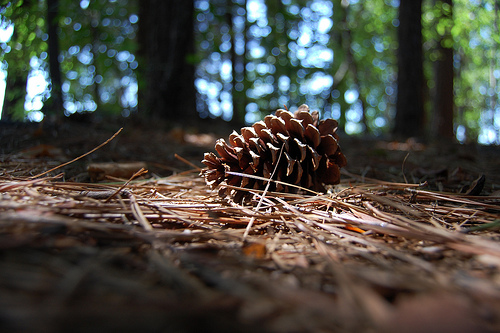
A sea of pine trees as far as the eye can see, half covered with snow, half green-grey and reflecting the cold winter light. Pine cones and needles blanket the forest floor, releasing their fresh, pungent, resinous oil with every crunching footstep. A thin stream of white smoke issues from a nearby church, its ancient stones protecting its darkened, dusty inner sanctum where priests are getting ready for Mass. They light the candles for Vespers and burn the myrrh. It’s time for the one of the oldest canonical rituals of the Catholic Church, the Liturgy of the Hours.

That is the vision which comes to mind when I wear Jovoy Paris‘ fragrance, La Liturgie des Heures (hereinafter “Liturgie des Heures” or just “Liturgie.”) Most hardcore perfumistas have heard of Jovoy, a Paris boutique that is a mecca for buying the most high-end, exclusive or rare fragrances, but what many people don’t know is that Jovoy was once a perfume house. As Luckyscent explains, Jovoy was founded in 1923 by Blanche Arvoy and “was known for selling perfumes for the ‘gentlemen’s nieces’, a polite way Parisian dandies described buying gifts for their mistresses[.]” Amusingly, Jovoy itself candidly admits to this twist in its past:

The perfumes of the early hours of Jovoy were made for the mistresses of the Paris of the Roaring Twenties. In other world, opulent fragrance for women who wanted to be seen, using in quantities prohibited by modern law, raw material now often missing.

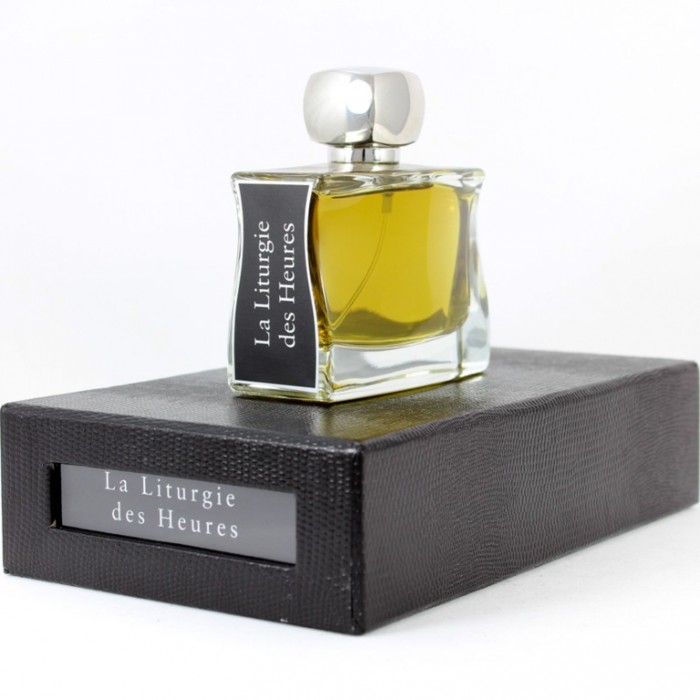
Jovoy Paris La Liturgie des Heures

Jovoy Paris La Liturgie des Heures

Though the house declined in the bleak years of the Depression and ended completely during WWII, it was resurrected in 2006 by Francois Hénin who launched a new range of fragrances. In 2011, La Liturgie des Heures joined their ranks. It is an eau de parfum that was created by Robertet perfumer, Jacques Flori, and which is described by Francois Hénin as evoking “the image of an old monastery where the scent of burning incense fills the air just like the chanting of daily prayers.” Fragrantica lists its notes as follows:

Top notes: fresh green notes, cypress
Heart notes: incense, olibanum [frankincense], cistus [labdanum], myrrh
Base notes: musk

Source: listofimages.com

Source: listofimages.com

pine-solLa Liturgie des Heures opens on my skin with a burst of pine trees, incense and green notes, followed by traces of a sweet, almost nutty myrrh, slightly leathered labdanum, and musk. One is transported to a cold, pine forest covered by crisp snow, but I have to admit, the notes are a little too reminiscent of pure pine oil and verge on a non-chemical version of Pine-Sol household cleaner. There is almost an oily feel to the pine, as if you had just mashed up the tree’s needles in your hands, leaving a strong, overly fragrant, concentrated oil behind. The aroma feels a little odd juxtaposed next to the leather undertones and the very cold, dry, vaguely dusty undertones of High Church incense. Yet, once you wrap your head around the combination, it almost feels pleasant.

As the minutes pass, the undertones of frankincense, myrrh and leather undulate, swaying from the foreground to the background. Sometimes, Liturgie smells like nothing more than a Christmas tree; at other times, the subtle touch of sweetness from the myrrh and churchy incense meet the pine notes head-on. Thirty minutes in, the base notes rise fully to the surface and the perfume becomes sweeter, more layered, and less like Pine-Sol oil. The myrrh turns the frankincense warmer, less dusty and arid, while the leather adds touches of a darker, almost leathery resin to the pine. A subtle, clean muskiness joins the trio and, flickering in the background, a subtle whiff of soapiness.

Photo: David Gunter Source: Flickr (website link embedded within photo.)

Photo: David Gunter Source: Flickr (website link embedded within photo.)

Liturgie continues on for another two hours as a warm, slightly sweetened, incense-infused, resinous pine tree scent with fluctuating levels of soapiness and musk. By the third hour, however, the clean white musk has grown in strength. Sharp and synthetic, it makes Liturgie feel a lot like Heeley‘s Cardinal, especially now that the pine note has receded to the background. I truly can’t stand synthetic white musk, let alone soapiness, and both elements form a strong backdrop to the scent. By the middle of the sixth hour, La Liturgie des Heures is primarily centered around nutty myrrh, ambered labdanum, and the sweet church incense — all infused with soap and clean, white musk.

The fragrance sticks on its linear course for another few hours, until it fades away to an amorphous, abstract, musky, clean sweetness. All in all, Liturgie lasted 8.25 hours on my skin and with moderate-to-low sillage. Others, however, have reported significantly less time, with one commentator on Basenotes writing that “[p]rojection is on the low side of average and longevity is well below average at 2-3 hours on skin.”

Liturgie wasn’t my cup of tea, and my feelings for it strongly parallel those of Freddie from Smelly Thoughts whose brief review reads as follows:

La Liturgie des Heures opens not too dissimilar to April Aromatics’ Calling All Angels, with its dry woods and incense, only this is a touch more peppery, and more “sticky”. Along with the overload of bitter resins and incense – bits of harsh greenery cut through it: pine and cypress mainly… a mix of sticky, sweet forest floor, and more herbal coniferous greens.

It pretty much stays this way throughout it’s life. It’s totally not my kind of perfume and not how I like to smell (also very bored of the overload of foresty/incense fragrances)… but still, this is a solid enough example for people who like that kind of thing :) Not bad!

I agree. It is a solid perfume that should please those who like churchy, incense fragrances — if they don’t mind either soapiness, white musk, or smelling just like a Christmas tree.

There are a number of High Church-type fragrances out there, but I’m only familiar with Heeley’s Cardinal. I think Liturgie has some similarities, but primarily in terms of the synthetic white musk. A Fragrantica commentator, “magic gingerbread,” who has far greater knowledge of this genre of fragrances has some interesting comparisons which may prove useful to a few of you:

Quite beautyful incense and coniferous fragrance reminding me somewhat Hinoki by CdG. Especially at the beginning when I smell raw olibanum resin and balmy, cold and fresh cypress note. This stage is unfortunately of rather weak sillage. Drydown is much stronger in projection, but no suprise in that, it is pure labdanum and that’s the way labdanum behaves – here it’s slightly sour, thick and oily, kind of like in Norma Kamali’s Incense. Nice, but I prefer olibanum stage.

The name “Liturgy of the hours” clearly suggests a churchy fragrance, but I don’t see it that way. Most certainly I don’t see any churchy association in corniferous olibanum note. However labdanum brings me some images of deep, old catacombs from the early age of christianity. Anyway, this is not catholic catherdal type of fragrance like Avignon or Cardinal.

Again, I’m not an expert on churchy fragrances, so I can’t comment on the comparisons. All I can say is that I love labdanum but didn’t enjoy its manifestation here, thanks to the impact of the terribly clean, soapy accord; and I found it hard to muster up much enthusiasm for La Liturgie des Heures as a whole. I think that stems, in part, because of some notes I really dislike, and, in part, because of Liturgie’s linearity. But it’s not a terrible fragrance and, if you’re really into churchy scents, then you may want to keep it in mind.

DETAILS:
Cost & Availability: La Liturgie des Heures is an eau de parfum that comes in a 100 ml/3.4 oz bottle that costs $180, €120, or  £100. It is available directly from Jovoy Paris which also offers a smaller 1.7 oz/50 ml bottle for €80. In the U.S.: it is available at Luckyscent, MinNY, Aedes, and Aaron’s Apothecary. Outside the U.S.: in the UK, La Liturgie des Heures is available in both sizes from Bloom Perfume, with the smaller 1.7 oz bottle retailing for £70. The larger size is also available at Roullier White in the 100 ml size for £100, with a sample also available for purchase, along with Harvey Nichols and Liberty London. In Italy, Liturgie is sold at Vittoria Profumi and Sacro Cuoro Profumi for €120. In France, you can also purchase it from Soleil d’Or. In Russia, it is sold at iPerfume. For Germany and the rest of Europe, you can purchase it from First in Fragrance in Germany (which also ships worldwide and sells samples) but the price is €5 higher at €125 a bottle. Same story with Germany’s MeinduftSamples: I obtained my sample from Surrender to Chance where prices start at $4.99 for a 1 ml vial. Many of the retailers listed above also sell samples of Liturgie.

Perfume Review – Amouage Fate (Woman)

Marion Cotillard photographed by Mert Alas and Marcus Piggott for the September 2010 issue of Vogue Paris. Source: Glamscheck.com

Marion Cotillard photographed by Mert Alas & Marcus Piggott for Paris Vogue, September 2010 issue. Source: Glamscheck.com

She stared at the rumpled bed which bore the traces of their scent. As the light streamed through the windows of their hotel room at the George V, she saw the trail of clothes leading to the scene of their final tryst. She recalled how crisp, aloof and controlled she had been at the start in her sleek, sculptured, black, couture dress, smelling of citruses, oakmoss and cool daffodils. The notes were as sparkling and cool as lemonade, or the champagne that chilled by the window nook, until he began kissing her neck…

She remembered how her limbs melted when he unzipped her dress, warming the daffodil scent until the roses and jasmine came out, infused by a musk that softly mimicked that of her own body. Flecks of rich, warm, smooth castoreum flickered like the flame of the candles that he had lit around their bed. Subtle touches of leather stirred like the trim on the expensive lingerie that he admired with a gleam in his eye — lingerie as black as the trails of sweetened incense that ran through her fragrance.

Marion Cotillard photographed by Mert Alas and Marcus Piggott for the September 2010 issue of Vogue Paris. Source: bkrw.com

Marion Cotillard photographed by Mert Alas and Marcus Piggott for the September 2010 issue of Vogue Paris. Source: bkrw.com

She thought of how he had gently placed soft, lush, velvety, pink roses around her body, framing her with their heady scent. He kissed her with all the spiciness of chili pepper and cinnamon, the scent of his soap mixing with their fire, with her musk, with the tendrils of incense and smoke, with the honey that he drizzled on her trembling stomach. She thought of their passion and how, when it was over, he had gently covered her body with the sheer, silky sheet that smelled of creamy vanilla and powder. She had been fated to meet him, she had been fated to succumb, she had been fated to have the affair end in the apex of passionate heat, and she was fated to forever remember him when she put on her fragrance. Fate.

Fate (Woman) is the latest release from the royal perfume house of Amouage and will be released worldwide in July. I received a sample thanks to one of my readers, “Dubaiscents,” who generously sent me a sample of both the men and women’s versions. Yesterday, I reviewed Fate for Men which is a very sophisticated, dry, woody fragrance centered on the immortelle flower. Fate for Women (hereinafter just “Fate” for the purposes of this review) is very different, but equally elegant and sophisticated. It is a chypre-oriental hybrid created by Dorothée Piot and which Amouage describes as follows: 

Amouage Fate Woman with BoxFate for Woman is a chypre oriental with a rich floral heart intensified by a dark and destructive accord resonating with the tumultuous unknown.

Top notes: bergamot, cinnamon, chilli, pepper.

Heart notes: rose, narcissus [daffodil], jasmine, frankincense, labdanum.

Base notes: vanilla bean, frankincense, benzoin, castoreum, patchouli, oakmoss, leather.

Field of NarcissusFate opens on my skin with a burst of yellow: fresh, crisp citrus notes, and the sunniest of daffodils. There is a momentary flicker of something sour that is soon replaced by spiciness, rose infused with patchouli, oakmoss, stirrings of a quiet, soft leather note, and a touch of musk. The oakmoss is a subtle swirl of nuances: fresh, green, slightly mineralized, and grey. The castoreum is smooth, warm, ever so slightly animalic, and sweet.

The true stars, however, are the yellow notes. The bergamot starts off crisply but, within minutes, turns softer, warmer and spicier, evoking the scent of lemonade that has been sweetened by the sun and by honey. At the same time, a subtle hint of vanillic powder at its base also makes me think of powdered lemonade crystals. Swirling all around it is the daffodil note that starts off being fresh and cool, but, like everything else in Fate, soon turns warmer, spicier, richer. In its footsteps is a delicate rose that is never as sweet as a tea rose, but also never as jammy, fruited, or liqueured as a dark damask rose. It feels like the headiest of pink roses, except it has the crisp, fresh zestiness of lemon. Both flowers are flecked by a mossy patchouli which works from the background to turn Fate into a very smooth, lush, velvety chypre fragrance.

Source: freehdwalls.net

Source: freehdwalls.net

Slowly, slowly, the base notes turn Fate into something warmer, richer, and spicier. As the rose note gains in strength, stepping on the center stage to share the spotlight with the daffodil, jasmine takes its place in the wings. Lurking further in the shadows is a subtle layer of soapiness. About twenty minutes in, like a brash understudy late to a rehearsal, chili stumbles in. Red, spicy, and adding a perfect touch of subtle heat, the red pepper bumps into the floral notes, warming them even further. In its wake is a shy incense note. It is far from the usual sharp, powerful frankincense so prevalent in many Amouage scents. Instead, the smoke is sweetened, soft, subtle, and verging on sunny.

Source: Kootation.com

Source: Kootation.com

Forty minutes in, Fate starts to slowly strip off its formal, crisp, citric-oakmoss, chypre veneer to bring out its oriental underwear. Like passionate kisses warming a lover’s body, the daffodil-rose bouquet turn more and more sensual, dancing on slightly musked skin. Infused by bergamot, trailed by jasmine, flecked by spicy chili pepper along with sweetened smoke and a shiver of vanilla, Fate is lushly heady, potent, incredibly elegant, and slightly haughty, but reeking of sensuous stirrings. The oakmoss and patchouli are still highly evident in the base, but the other notes feel alive with an oriental silkiness that evokes the most seductive of lingerie peeking out from underneath an elegant black dress. 

"Red Orange Rose Yellow Abstract" by LTPhotographs, Etsy Store. (Link to website embedded within, click on photo.)

“Red Orange Rose Yellow Abstract” by LTPhotographs, Etsy Store. (Link to website embedded within photo.)

At the two-hour mark, Fate shifts a little. The florals turn red with warmth and sweetness. Cinnamon replaces the chili on their velvety petals. But, to my slight disappointment, the underlying soapiness becomes much more pronounced. On a more positive note, Fate also begins to take on quite an ambered hue. The labdanum starts to rise to the surface, emitting a lightly honeyed aroma that mixes beautifully with the amber, the plushly sensuous castoreum, the musk, and the patchouli. The incense is still subtle, light and sweetened, and it still remains largely in the background.

Source: wallpaperswa.com

Source: wallpaperswa.com

Three and a half hours in, the base notes fully rise to the surface. Fate becomes a labdanum, oakmoss, and patchouli amber fragrance infused with rich, sweet, velvety, floral nuances, along with musk and a quiet tinge of soapiness. The labdanum’s honeyed characteristics have been largely replaced by a nutty, almost chestnut-like undertone that is a perfect counterpoint to the dry, but plush, oakmoss-patchouli.

Source: Superstock.com

Source: Superstock.com

Slowly, slowly, like a flower unfurling its petals over the span of hours in the sun, Fate turns softer, more ambered, more golden. The barely animalic musk underlying the scent melts even further into the skin, the labdanum glows like bronzed gold, and the vanillic benzoin adds a radiating shimmer to the now muted, very abstract, gauzy florals.  By the start of the ninth hour, the final stage has begun, and Fate is a sensuous skin veil of rich vanilla cream flecked with powder, golden amber, and a light, heated, sweetened muskiness.

All in all, Fate lasted an astronomical 13.25 hours on my perfume-consuming skin. The sillage was monstrous at first, wafting several feet across the room. It was heady, narcotic, sweet, but also very dry and crisp initially, before slowly turning more languorous, more sensuous, more oriental. Fate’s projection is powerful, even if it isn’t nuclear-tipped in the way of some Amouage floral scents (like Ubar, for example), but it did soften by the start of the third hour. My sample was a spray (and aerosolization adds to a fragrance’s power), but I think Fate would be forceful even if dabbed on. It didn’t become a skin scent on me until the start of the sixth hour, though it was still very noticeable when I brought my arm close to my nose. Fate only became hard to detect and somewhat abstract towards the end of the eighth hour, though it lingered on for almost another five hours in a very silken, muted, sheer form.

I think Fate Woman is an astoundingly beautiful, complex, refined fragrance — a sophisticated chypre-oriental which combines the best elements of both categories. It is perfectly balanced: never too sweet or too dry, never too indolent or spiced, never too charged by patchouli, musk, or castoreum. I was a little surprised by the softness of the frankincense smoke, especially as my skin normally tends to amplify the note, but I’m also glad that Amouage chose to mute its signature base accord. Fate doesn’t need it; the beauty of the fragrance lies, in part, in how pitch-perfect it is across the wide spectrum of its notes. (As a side note, the perfume stunned The Ultimate Perfume Snob, a.k.a my mother, who interrupted a conversation to ask “what is that smell?”, then shook her head and blinked in disbelief at Fate’s beauty, asked to smell it several more times, wanted to know where to buy it, and finally lost all reserved, British aloofness to become practically passionate in her raves. Trust me, it rarely happens.)

Something about Fate draws you in for another sniff, again and again, especially when its sensuous, warm heart starts to bloom. Yet, there is also a refined, cool sophistication in its opening which makes it very much one of those scents that feels like protective armor, if that makes any sense. Again and again, I have the vision of a cool, confident, wealthy woman, perfectly groomed and sophisticated in the elegantly cut, structured, designer black dress that is the uniform of choice for some Parisienne women. And I see her stripping off her armor to reveal the seductive satin and black lace lingerie below which she then peels off entirely to reveal her smooth, softly musked, lightly powdered, silky, amber skin. Control and abandon, French style.

Yet, for all that imagery and despite the gender classification in the perfume’s name, I happen to think Fate Woman is quite unisex in nature, and a scent which would be very seductive on a man as well. The same visual would apply to a man, only he’s cloaked in a dark Armani suit with a crisp white shirt, and looks a little like Hugh Jackman…. Regardless of gender, Fate is a very wearable fragrance, though I think its powerful projection may make it a little too much for the office unless you’re very careful with amount you spray. It would, however, be perfect to wear on a date or to seduce.

Lest any of this was even remotely ambiguous, let me put it plainly: you need to try Fate Woman. Like its male counterpart (Fate Man), it shows why Amouage is one of the leaders of the perfume pack. With its sophisticated, nuanced, complex, often innovative and intellectual, but always luxurious and opulent fragrances, Amouage is really one of the best perfume houses out there. And, under the deft, brilliant direction of Christopher Chong, I doubt that’s going to change any time soon. 


DETAILS:
Availability & Stores: Fate (Woman) is an eau de parfum and is available in two sizes: 1.7 oz/50 ml which costs $310 or €240; or 3.4 oz/100 ml eau de parfum which costs $375 or €290. As of the time of this post, the perfume is not yet officially released beyond the Amouage website and boutiques, but it will be widely available as of July 2013, according to CaFleureBon. At the present time, the perfume is unfortunately sold out on Amouage online, but I’m sure that will be remedied soon. I will update this post with retail links much later when the perfume is officially released and becomes widely available. 

Perfume Review – Amouage Fate (Man)

Corsica is usually associated with its rocky cliffs, Napoleon, and the Mediterranean sea, but I think Corsica has a special smell, especially inland: slightly dusty, dry, very woody, and sweetly floral. In parts (namely those where I was clambering up rocky mountains like a dying billy-goat), it smelled strongly of immortelle, a flower which is very common to the island, sweet woods, dried greens, and dustiness. So it is Corsica which comes to mind when I tried Fate (Man), the dry, woody, immortelle-based fragrance that is the latest release from the royal perfume house of Amouage.

Corsica. Photo by: Rolling Thunder. Source: Trailjournals.com http://www.trailjournals.com/entry.cfm?id=393192

Corsica. Photo by: Rolling Thunder. Source: Trailjournals.com
http://www.trailjournals.com/entry.cfm?id=393192

Fate — in a dual Men and Women’s versions — was launched just last week in Oman, and will be officially released worldwide in July. A reader of the blog, “Dubaiscents,” whose generosity is only surpassed by her thoughtfulness, sweetness and kindness sent me a sample of both fragrances. I thought I would start with Fate for Men (hereinafter just “Fate”) which was created by Karine Vinchon-Spehner, and which Amouage describes as follows: 

Fate for Man is a spicy and woody construction parodying the force and power of the inevitable.

Top notes: mandarin, saffron, absinth [wormwood], ginger, cumin.

Heart notes: everlasting flower [Immortelle], rose, frankincense, lavandin, cistus, copahu.

Base notes: labdanum, cedarwood, liquorice, tonka bean, sandalwood, musk.

Source: CaFleureBon

Source: CaFleureBon

There is a detailed backstory in the official description of the fragrance about how the “Book of Fate is opened by the mysterious puppetmaster and the carousel, symbolising the wheel of fortune, is set in motion.” There is also talk about how “’Fate’ for man and woman explores the uncertainty of the future and the universal principal [sic] by which the order of things is inescapably prescribed. In his latest conquest, Amouage Creative Director Christopher Chong proclaims a finale that parodies the force of the inevitable, veiled in the mysticism of the unknown.” It’s lovely prose, but it’s not what comes to mind when I wear the perfume. I simply see sunny Corsica.

I tested Fate twice and, while the openings were largely the same, the nuances were slightly different. The first time, Fate opened on my skin with a split second burst of citrus that was quickly replaces by loads of ginger and flickers of dry cumin powder. The scent was simultaneously sweet, pungent, sharp, and slightly dusty in a dried, herbal, powdered sort of way. Immortelle soon followed, and it was my favorite manifestation of the note: the dry, floral aspect where you can smell the flowers as well as the slightly herbal stem. Underlying the whole thing was an amorphous woody base that smelled sweet but dry. The focal point of the opening minutes, however, was the ginger which felt pungent, spicy, biting and a little sharp.

Immortelle, or Helichrysum in Corsica. Source: Wikicommons.

Immortelle, or Helichrysum in Corsica. Source: Wikicommons.

iStock photo via Wetpaint.com

Ginger. iStock photo via Wetpaint.com

The second time I tried Fate, it opened with that same fleeting citrus element, but the main thrust was immortelle. There were flickers of abstract woodiness, ginger, sweetness, and the same subtle hint of cumin powder, but it was the immortelle that really dominated the show. This time, it was beautifully infused with a honey nuance which I assume stemmed from the labdanum in the base. The ginger was much less powerful, and it had different undertones. It was simultaneously like sharp, fresh ginger, but also a little more like dry, ginger powder, and lightly sugared, crystallized ginger as well. This time, the herbal element was also different. Instead of some nebulous “dry green” note, I smelled something that was just like dried tarragon with its anise-like undertones. I know licorice is one of the elements in Fate, but, to me, that has the aroma of the chewy, black candy with its sharper, darker characteristics. What I smell in Fate in the opening hour is something much more like herbal anisic facets of dried tarragon.

Artemisia Absinthe or Wormwood. Source: Esacademic.com

Artemisia Absinthe or Wormwood. Source: Esacademic.com

Despite these subtle differences, the rest of the perfume’s development remained largely the same in both tests. Five minutes in, the wormwood (also known as absinthe or Artemisia absinthium) starts to rise to the surface. It’s sweet, but has a faintly medicinal nuance that smells a little rotten and that strongly evokes the “noble rot” of agarwood (oud). Flickering in the background is a light, muted incense. The cumin has completely vanished from sight — something that will undoubtedly be a relief to the many cumin-phobes out there. I’ve read a few accounts where people have said that they experienced quite a bit of cumin at the start, but the note seems to be a dry, powdered one on their skin, too, and nothing reminiscent of stale, fetid sweat or Indian curries.

As time passes, Fate settles down into its primary essence in this first stage: a dry floral arrangement of immortelle with ginger, sweetened but slightly medicinal wormwood, and frankincense. In the background, there are muted, ghostly flickers of a dry vanilla and warm, sweet muskiness that pop up every now and then. The interesting thing about the scent is the wormwood. It has a slightly oud-like nuance, but it is also sweetened and honeyed. The primary notes fluctuate in intensity, but the overall bouquet remains largely unchanged.

The odd thing about Fate was that the dominant facet seemed to depend largely on temperature. Given where I live, I have the air-conditioning set at very chilly temperatures, and the wormwood in Fate seemed to take on a slightly biting, sharp, bracing tone in the opening hours. However, whenever I went outside into the warm, humid air, the note immediately turned soft, rounded, smooth, almost creamy, and definitely sweet. All medicinal elements retreated, until I re-entered the house and was exposed again to the arctic air. I tried it a few times to see and, each and every time, Fate bloomed in the humid, night air to become significantly more floral and with a sweeter, less oud-like version of wormwood.  

Incense stick. Source: Stock footage and Shutterstock.com.

Incense stick. Source: Stock footage and Shutterstock.com.

Two hours into Fate’s development, the whole thing changes quite dramatically. Indoors or outdoors, Fate has suddenly become a very ambered, sandalwood fragrance that is smoother, warmer, and better rounded. The wormwood’s medicinal veneer has been replaced by a lovely coating of honey from the labdanum, while a lightly peppered cedar stirs in the base. My favorite part, however, is the sandalwood which is rich, creamy, and warmly spiced. It’s absolutely beautiful. Furthermore, to my surprise, the immortelle has remained as a floral element, and hasn’t turned into the maple syrup that I dread so much. The dried, green, anisic herbal note still lurks underneath, but now, it is also joined by black licorice that is lightly salted and sweet. A hint of creamy, slightly vanillic lavender wafts daintily about, while a sweet muskiness dances at the edges like a golden light. The entire thing is intertwined by tendrils of frankincense smoke which tie the elements together like a ribbon does a bouquet.

Fate remains that way for many more hours. The bouquet of notes softens and becomes a skin scent around the start of the fourth hour, but the scent lingers for much longer. Around the sixth hour, Fate turns quite abstract and nebulous: it’s now simply immortelle woodiness infused by a light, sweet muskiness. It’s so sheer, you may think it’s gone, but Fate hangs on tenaciously. In its dying moment, a little over 10.25 hours from its start, Fate is nothing more than a vague, sweet woodiness. Both the middle phase with its beautiful sandalwood amber and the abstract drydown stage are absolutely lovely. Fate’s longevity was good on my voracious skin, but the sillage was moderate to soft. I sprayed, not dabbed, so I actually expected something much more powerful from Fate (especially given Amouage’s usual full-throttled nature), but the furthest it projected was in its first hour when it wafted about 3 inches above the skin.

Fate is a phenomenally complex, extremely unusual, refined, sophisticated scent that initially takes a little adjustment, but which definitely grows on you. The first time, I was very intrigued, but not wowed. I have a tendency to prefer the Women’s versions of Amouage fragrances as they are generally sweeter and not as dry, but the second time I tried Fate, I definitely sat up a little straighter. There is something fascinating about the notes, and the heat definitely improved the scent, in my opinion, by smoothing out some of the more bracing elements of the opening. It also rendered the perfume slightly sweeter which is something you may want to consider when testing Fate.

I think men will go quite crazy for Fate (Man), but I think a number of women will, too. Even though women will have their own version of the scent, Fate (Man) has such perfectly balanced sweetness in its undertones that it renders the fragrance quite unisex, in my opinion. If you like dry, spiced, woody fragrances or oud ones, and if you’re intrigued by the thought of Amouage’s signature frankincense combined with an unusual floral like immortelle, then I think you should definitely seek out a sample.

Fate Man with box.

Fate Man with box.

With Fate, Amouage continues its distinction of being at the forefront of original fragrances that abound with depth, nuance, layers and complexity. Honestly, this is not a perfume that you may adore at first sniff, but it will keep you thinking, sniffing, and trying to pull apart all those beautifully crafted, well-blended layers. And the more you sniff it, the more it seems to sink its elegant, little floral-woody-smoky talons into you. By the time you’re finished, and you set eyes on that simply spectacular iridescent bottle, I fear you may be quite hooked. Even if, at the end, it turns out that you’re not fated for true love, I think you’ll concede that it’s a perfume worthy of huge respect. Try it, and see what your Fate will be.


DETAILS:
Availability & Stores: Fate (Man) is an eau de parfum and is available in two sizes: 1.7 oz/50 ml which costs $280 or €220; or 3.4 oz/100 ml eau de parfum which costs $340 or €270. As of the time of this post, the perfume is not yet officially released beyond the Amouage website and boutiques, but it will be widely available as of July 2013. Unfortunately, the perfume is currently sold out on Amouage online, but I’m sure that will be remedied soon. I will update this post with retail links much later when the perfume is officially released and becomes widely available. 

Perfume Review – Slumberhouse Jeke: Smoky Autumn

Sometimes, you come across a perfumer and you just admire them — even if you’ve only started to explore their line and even if things don’t work out perfectly for you. While it’s understandable to admire the legend that is Serge Lutens, it may seem more unusual to be incredibly impressed by an Indie perfumer after just one perfume. But that’s the case with me and Josh Lobb of Slumberhouse, a niche, indie perfume brand out of Portland, Oregon. I tried his Pear + Olive months ago, was incredibly awed by parts of it, and even more taken with the man behind it. It’s not about whether a particular fragrance works for me or not; it’s about the sheer thought, creativity, effort, and candour of the man himself. To me, Josh Lobb — a 31-year old, completely self-taught perfumer — seems like an American version of Andy Tauer, with all the same talent, approachability, originality, modesty, and honesty. 

Slumberhouse-300x154

Slumberhouse describes itself as follows:

Slumberhouse is a boutique cologne label in the heart of Portland, OR; created and inspired by urban and street culture, art, film and music – especially the new school of hiphop and graffiti artists. We are a group of young gents who march to our own beat, embracing an absolute disregard for other brands, trends and marketing cliches. Slumberhouse represents an unequivocal love for the art of fragrance making.

What’s captured my attention, however, is the fascinating genuineness of Josh Lobb. In his personal blog on the website, the talented Mr. Lobb reveals his personal struggle with keeping costs down while using the best, absolute ingredients; his realisation that he was barely breaking even with many scents; and his personal journey in making some of the Slumberhouse fragrances. And, from the start, I was intrigued by Jeke.

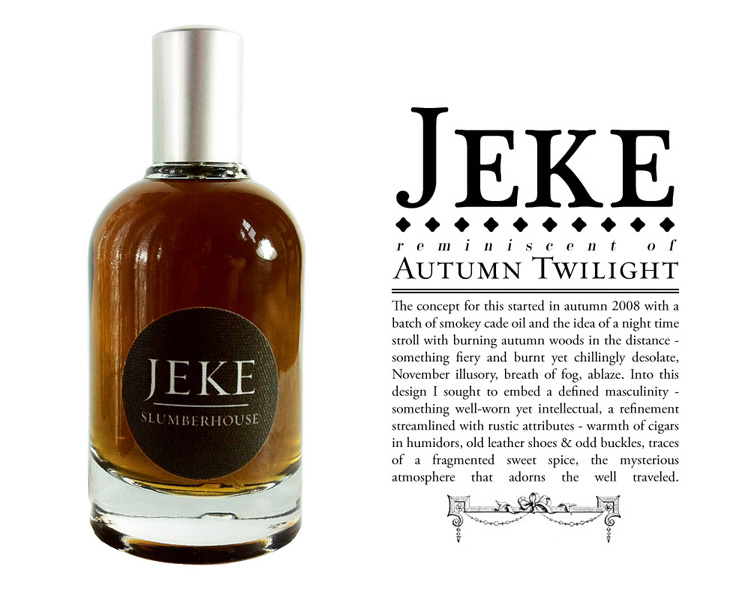
Jeke-Slumberhouse

Jeke is classified on Fragrantica as a “woody oriental” perfume. It was originally an Eau de Parfum but, just recently, that was discontinued and the perfume was made available solely as an Extrait de Parfum concentration. As I’ll explain later, CaFleureBon says that there are some minor alterations and difference with the new version which has significantly less smoke than the Eau de Parfum. Unfortunately, that is the version that I obtained from Surrender to Chance (which doesn’t carry the new extrait). However, the two versions seem sufficiently alike to make it worth a review of the EDP, though I’ll update it later if I ever obtain the pure parfum extrait.

Slumberhouse’s website description for Jeke is as follows:

A breath of fog in the autumnal humidor.

Benzoin, Patchouli, Tobacco, Lapsang Souchong, Vanilla, Clove

Fragrantica‘s notes are slightly different and would make the full list seem more like this:

Cade, Tobacco, Patchouli, Benzoin, Labdanum, Lapsang Souchong, Vanilla, Clove.

Source: Theatlantic.com

Source: Theatlantic.com

Cade is a very big part of Jeke, so it may be worth a brief summary of its aroma. It is an oil extracted from the juniper plant and has a very smoky, campfire, phenolic, tarry character (which explains why it is often paired with birch tar in leather fragrances). In Jeke, it dominates the opening which is an unusual mix of: burnt rubber, diesel, smoke, tobacco, patchouli, molasses, and leather. There is a slightly mentholated, eucalyptus undertone to the smoky campfire of the cade, as well as a dark, black, slightly rubbery, leather element. The tobacco smells just like the concentrated form in chewing tobacco and, at this stage, not like the sweet, fruited leaves used in pipe tobacco. Flickering all around the edges is a chewy, black, thick sweetness that is as dark as molasses and far heavier than that evoked by labdanum resin. The molasses note is infused with heavy, spicy cloves and dark, black patchouli.

Source: Bonfirehealth.com

Source: Bonfirehealth.com

Something about the opening minutes of Jeke evokes not only a very butch, hyper-masculinity but, also, Halloween. The perfume is far more than just the scent of fall; it really brings to mind Halloween night with its darkness and the feel of burning leaves in the slightly chilled air. Yet, that butch, rubbery, diesel-like nuance quickly softens from the extremely sharp, sometimes overpowering, raw beginning to something with smoother, more manageable smokiness.

Scene from Mad Max 2 via cinemasights.com

Scene from Mad Max 2 via cinemasights.com

Jeke’s tarry smokiness reminds me strongly of Serge LutensBoxeuses which I just recently reviewed, only Jeke takes the darkness, smokiness, tarry, molasses and leather character of Boxeuses and amplifies it by a hundred in a very Mad Max sort of way. For the opening minutes, at least, when Jeke lacks the smoothness and fruited softness of Boxeuses. Yet, despite its initial intensity, there is a very plummy undertone to Jeke which also reminds me of Boxeuses. In the latter, it was a much sweeter, much more multi-faceted, fruited molasses but, in Jeke, it feels very much like a dark plum purée. Stewed prunes in a light, sweet, syrup.
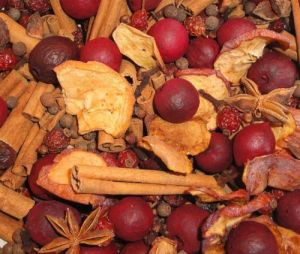
Source: CrownsNestPrimitiveShoppe.com (link embedded within, click on photo.)

Source: CrownsNestPrimitiveShoppe.com (link embedded within, click on photo.)

There is also something else going on, something I initially couldn’t put my finger on, but an incredibly familiar scent. It was driving me a little mad trying to pinpoint it, and then it came to me. Potpourri! Jeke has a massive element of potpourri underlying every part of its character. I actually have a bag of expensive red and purple potpourri with wood shavings and spiced fruited elements that I took out to compare — and it’s identical to Jeke! Spiced red apple with mulled wine potpourri. Once you make that mental association in your head, it’s impossible to shake off. Later, in a second test, I took my sample of Jeke, applied a hefty, double dose to my other arm, sniffed, and…. yes, spiced apple potpourri from the start.

Fifteen minutes into Jeke’s development, the perfume shifts a little. It’s even softer now, a lovely mélange of incense, smoke, prunes, spiced apple potpourri, tobacco and dark resins. There is a subtle tea note that truly does evoke the smoky nature of Lapsang Souchang tea. The clove element has relaxed, the rubber-diesel accord has receded, and the whole perfume feels significantly warmer and better-rounded. Yet, there is still a subtle singed element, along with the feel of burning leaves and campfires; Jeke still evokes Halloween; and it is still extremely potent. However, that rubbery, mentholated, diesel edge has gone, taking away the butch elements and ending my thoughts of Mad Max in the Thunderdome.

Instead, now, all I can really smell is potpourri with its mix of autumnal apples, dark fruits, smoke, and a slightly sharp, dried patchouli sweetness. Every fall, one of my neighbors would burn a particular scented candle from Slatkin, along with its scented oils, over every inch of her house — and the aroma is incredibly close to what wafted off my arm. Jeke is smokier, has a noticeable tobacco nuance and subtle flickers of black rubber, but the dominant note on me is always red apple potpourri. It’s cozy, but not quite what I had expected, if truth be told. The leather nuances vanish after the first hour, along with all traces of rubber, leaving Jeke with nothing more than that main accord, trailed by fruited tobacco and cade smoke. Then, to my surprise, Jeke becomes completely abstract at the start of the third hour: amorphous, muted, generalized spice and smoke notes. And it remains that way for the rest of its duration.

Source: Wallpaperswide.com

Source: Wallpaperswide.com

Another unexpected surprise is Jeke’s sillage. Slumberhouse perfumes are famous for being powerhouse scents of massive duration and strength, but that didn’t quite apply to Jeke’s projection on me. The perfume began with good projection that started dropping about 20 minutes into its development; Jeke became close to the skin just short of the 90 minute mark; and it became a skin scent after the second hour. It was so light on the skin that I thought it was close to dying after 3.5 hours. It didn’t, but every hour, it felt like Jeke was going to finally vanish, only to have the subtlest, faintest traces cling doggedly and stubbornly to the skin. (Votes on Fragrantica overwhelmingly put Jeke’s sillage at “moderate,” but I have to wonder if that’s for the Extrait version. Almost everyone, however, agrees that the longevity is enormous.) All in all, Jeke lasted 9 hours with a small dose and 10.25 hours with a large dose with most of that time passed as a skin scent that was primarily abstract sweetness, spice and smoke. The drydown — all 6 hours of it — was very pretty but not always easy to detect in its muted quality on my skin.
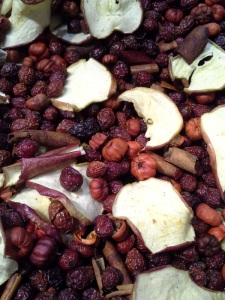
Potpourri from Scentualnature.com (Website link embedded within.)

Potpourri from Scentualnature.com
(Website link embedded within.)

Jeke ended up not being my personal style, but I think it’s a very good fragrance. My difficulty lies in the potpourri element. I didn’t see any references to it in the largely positive Fragrantica comments, but a search for Slumberhouse, Jeke and potpourri brought up a few Basenotes threads where a number of people detected “red apple potpourri” or “potpourri” in some other Slumberhouse fragrances. One example would be Rume, which a Basenotes commentator said was “a bit too literally potpourri-like for me to wear very much,” though he ended up buying a bottle because he was such a huge Slumberhouse fan. What really reassured me, however, and made me realize I wasn’t completely insane for detecting potpourri was a comment from Mr. Lobb himself. In another Basenotes thread, a commentator (“alfarom“) posted an excerpt of an email in which Mr. Lobb described Grev (another Slumberhouse fragrance) as “a kind of masculine potpourri with a slight tinge of red apple skin.” Honestly, that would be a pretty good description of Jeke Eau de Parfum, too, except I think there would be a dash of plum (or mulled wine) to go with that spiced red apple skin accord. The bottom line, however, is that “masculine potpourri” seems to be a sort of signature base for a number of Slumberhouse fragrances.

What seems to be the new Jeke in Extrait form. Source: Indiescents.com

What seems to be the new Jeke in Extrait form. Source: Indiescents.com

As noted earlier, Jeke is now available only in extrait de parfum concentration, and not in the Eau de Parfum which I’m reviewing and which is offered at decanting sites like Surrender to Chance. I once read Mr. Lobb’s explanation for the change and the differences between the two perfumes in his Slumberhouse blog, but the website is almost always down when I try to access it. So, instead, so I shall rely on CaFleureBon‘s comparison of the two fragrance formulations:

Jeke Extrait… [“seemed like a richer opulent version of the EDP”] for me as in its EDP form this is what I call a “smoke monster”. Sometimes it would eat me alive and other times it would surround me and fascinate me before leaving me unscathed. The core of Jeke in both forms is the combination of cade and tobacco over a resinous base. In the Extrait form the “smoke monster” is much more controlled and for the first time I noticed an amazingly beautiful patchouli lurking among the maelstrom. Once I had them side-by-side I really noticed the patchouli in the EDP but the whole composition seemed more balanced and when the labdanum and benzoin kick in this really feels decadent. The Extrait feels like a rough jewel which has now been cut and faceted into a brilliant gem.

It sounds to me like Mark Behnke’s experiences with Jeke EDP involved significantly more smoke than what I experienced. In fact, his comments about the patchouli in the Extrait form makes me wonder if the “potpourri” aspect is now even stronger than before. But it is the smoke issue which really leaves me feeling a bit bewildered, especially when I read the Fragrantica comments where some people find the smoke to be far too powerful. One person even compared Jeke to Andy Tauer‘s Incense Extreme, finding that the Jeke blew the Tauer out of the water. (“Tauer represents the violins. Jeke the symphony of churches.“) I have no idea if the comments about the overwhelming amount of smoke apply to the EDP or the Extrait, but judging by the dates, I would suspect they’re referring the Extrait with its milder quantity. In which case, I can only say that I didn’t find the supposedly “stronger” note in the EDP version to be overpowering at all. It certainly wasn’t a “smoke monster,” to me.

Out of all the reviews out there for Jeke, my favorite comes from a commentator, “42gr,” on Fragrantica who wrote, in part:

I’ve tested my way through, many fragrances.

This blows me away, away, away.
It resonates in my head. It repeats.

It is so good it feels illegal to feel this good about a fragrance.

I am drinking single malt Islay Scotch in my father’s Orthodox Church. The white bearded priest swings his silver censer of burning smoking resin. Incanting. 

It reminds me of burnt ashes from the campfire from the night before. Laphroaig, Peat, Church Resin, Medicine. And then a touch of sweet tobacco. […]

This is Etta James singing I’d rather go blind.

Jeke is completely and utterly an intoxicating fragrance.

I pay no other this homage.
Smoky, dirty, gorgeous.

I didn’t have the same experience (at all) and, yet, I can absolutely see his vision, what he felt, and why. I can especially see why he’s imagine drinking Laphroaig (my absolute favorite single malt) in an Orthodox church filled with incense. For the sake of completely accuracy, I should add that he later updated his review to add that, in time and with extensive wearing, the amount of smoke felt far, far too excessive, especially in an Australian summer. However, in all fairness to Jeke, I really don’t think it’s a fragrance to wear in 104 degree temperatures!

The bottom line is that, regardless of version, I think Jeke is a perfume that will appeal enormously to people with certain tastes. Men who adore smoky, tobacco fragrances will probably love it. And some women may greatly enjoy the smoky, campfire, fall aspects, if they don’t mind the more rubbery, diesel-like start. However, women who are used to more mainstream fragrances, or who prefer either fruity, clean, floral or gourmand offerings, will probably find Jeke to be far too masculine in nature. Those who love sweet, fruited florals with a strong gourmand undertone would probably prefer Pear + Olive. I think it all depends on what you’re used to.

As for me, I remain a huge fan and admirer of Mr. Lobb. I can’t believe he’s self-taught, and think that he’s incredibly talented. Slumberhouse is a house worth exploring, so I truly hope that more people will try out the line. 


DETAILS:
Cost & Availability:  Jeke is now an extrait de parfum and comes in a 1 oz/30 ml size which costs $125. It is available directly from Slumberhouse itself which also sells a Discovery Set of 4 of their perfumes in 2 ml vials for $20. (Again, the website often fails to load, so give it a few tries especially if you’re looking for samples as Slumberhouse has a great program for that and provides very generous sizes.) The perfume is also available from IndieScents, along with a sample for $5, and from Parfum1 which also sells with a 0.7 ml sample vial for $4.50. In addition, Parfum1 offers a Discovery Pack of 4 fragrances (including Jeke), each in a 0.7 ml vial for $16. Parfum1 offers free shipping for all domestic orders above $75, $5.95 for orders below $75, and international shipping for a (high) fee. I obtained my sample (of the now obsolete Eau de Parfum concentration) from Surrender to Chance which sells Jeke starting at $5.99 for a 1 ml vial. In terms of overseas availability, in an interview with Basenotes, Josh Lobb wrote “anyone who wants to order should feel free to send an email or contact Sundhaft in Germany.” You can find their website here.