Perfume Review: Le Labo Rose 31

The kingdom of Pepper was sometimes affectionately called by its old, Norse name: Pepper & Pink. It wasn’t a vast land, but every square inch seemed to be populated by various forms of pepper. From the biting burst of freshly ground Malabar nuggets to the cedar trees which swathed its flanks from North to South and the great lakes of ISO E Super which dotted the landscape. It was ruled by a king called Ginger who was a chef at heart, willy-nilly tossing in spices off the royal balcony to his people below. For the most part, his subjects were a homogeneous people, descended either from the tribe of Pepper or from the royal house of Ginger. A small minority hailed from the nomads called Pink Rose. They were a demure lot, always dainty and shy, reeking of the pinkest, lightest, most translucent rose that was to be found. They were so quiet at times that haughty critics like Luca Turin sneering called them “Not Rose,” while others though they were mere myths and didn’t even believe they existed. Certainly, they were far outnumbered by the Peppers, with their fiery bite, and by the more rambunctious royal Gingers, but all of them were all ruled by the vast plains of cedar trees and the large lakes of ISO E Super.
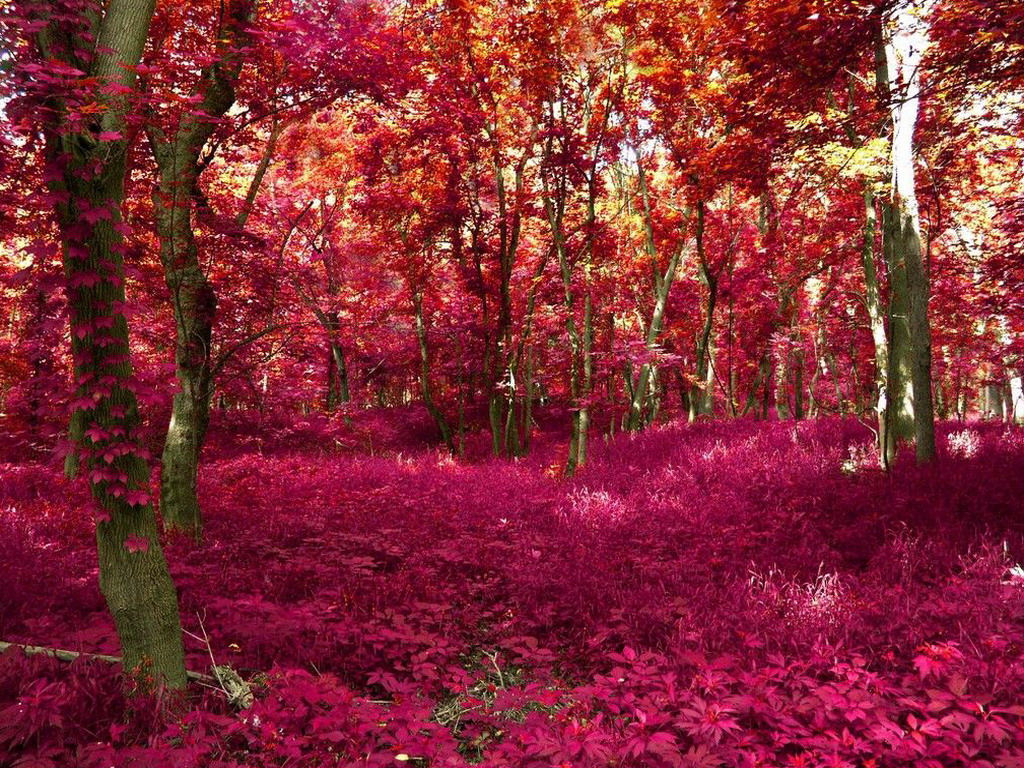
Source: hdwallpapers4desktop.com

Source: hdwallpapers4desktop.com

That is the kingdom of Rose 31, a creation from the niche perfume house, Le Labo. A much-loved fragrance, Rose 31 is an eau de parfum whose number — 31 — purportedly refers to the number of its ingredients. Now Smell This explains more:

[Le Labo was] established by Fabrice Penot and Eddie Roschi (both formerly of Giorgio Armani fragrances) in 2006. Le Labo started with 10 fragrances by well-known perfumers, and is known for blending the essential oils with alcohol and water at the time of purchase and providing customized labels for the bottles.

Initial releases in early 2006 were Fleur d’Oranger 27, Jasmin 17, Labdanum 18 (originally Ciste 18), Ambrette 9, Iris 39, Bergamote 22, Rose 31, Vetiver 46, Patchouli 24 and Neroli 36. In each case, the number in the fragrance name refers to the number of notes that make up the scent’s composition, and the name is taken from the ingredient in the highest concentration; to take one example, Jasmin 17 has 17 ingredients, with jasmine being in the highest concentration. The names are thus not necessarily related to what the fragrance is meant to smell like.

Le Labo Rose 31The issue of not smelling like what it is named is something that actually comes up quite a bit with regard to Rose 31. Fragrantica classifies Rose 31 as a “floral woody musk” and says it was created by Daphne Bugey. Some of its 31 notes — as compiled from both Fragrantica, Luckyscent, and my own nose — are as follows:

Grasse rose, caraway, cumin, pepper, clove, nutmeg, cedar, ISO E Super, frankincense, amber, labdanum, vetiver, guaiac wood, animalic notes, and agarwood (oud).

I tested Rose 31 twice, to slightly different outcomes in terms of the opening burst. The first time, the perfume opened with almost entirely peppered, woody and spiced notes, followed on only much later by a minute trace of rose. The second time, the rose was upfront, and present from the start. I’ll cover both beginnings.

During that first test, Le Labo’s opening consisted of galloping amounts of pepper, sharp and backed by peppery cedary woods, and what felt like a light dash of ISO E Super. For those unfamiliar with the aroma-chemical, you can read my full description of its pros and cons here, especially as I’ll be mentioning ISO E Super quite a bit in this review. In a nutshell, though, the synthetic is used most frequently for two reasons: 1) as a super-floralizer which is added to expand and magnify many floral notes, along with their longevity; and 2) to amplify woody notes and add a velvety touch to the base. It seems to be particularly used in fragrances that have vetiver or, to a lesser extent, other wood notes like cedar. ISO E Super always smells extremely peppery and, in large doses, has an undertone that is like that of rubbing alcohol, is medicinal, and/or astringent. To those unfamiliar with the synthetic, all they detect is “extra, extra pepperiness.” Some people are completely anosmic to the note, while others get extreme headaches from it. (Ormonde Jayne fragrances, and others like Lalique‘s Encre Noire or Terre d’Hermès are particularly egregious in that respect.) I don’t get headaches from ISO E Super, but I cannot stand it in large quantities and I can detect its peppered element with its rubbing alcohol base a mile away.

Caraway seeds.

Caraway seeds.

Thankfully for me, the ISO E Super is light at the start, outweighed fully by a glorious complement of spices that feel as though a mad chef went to town like a dervish. I really adore that first opening to Rose 31 that I experienced. There is the most miniscule dash of cumin — powdery, dusty, a wee bit animalic, and nothing like that used in Indian curries. Much more prominent, however, are the caraway seeds which feel nutty, a little anise-like in tone, and a bit woody. (Technically, there is a difference between caraway and cumin. The terms may be used interchangeably by many, but that would be a mistake as they are not the same thing and their aroma, to my nose at least, differs in undertone.)
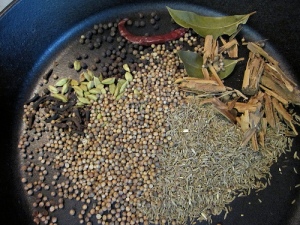
Source: Girl's Gone Child at Girlsgonechild.net . (Link embedded within. Click on photo.)

Source: Girl’s Gone Child at Girlsgonechild.net. (Link embedded within. Click on photo.)
http://www.girlsgonechild.net/2011/12/eat-well-gift-of-garam-masala.html

Both spices share equal space on Le Labo’s stage with heaping cups of ginger that is, simultaneously, both freshly pungent and spicy, and slightly crystallized and sweet. There are whiffs of nutmeg that subtly add a sharp, bitter edge to the perfume, along with the spicy, red-hot kick of cloves. The whole thing is covered by a heavy veil of pepper that feels as though a chef just emptied an entire bottle of Malabar peppercorns with the rest of the spices into a sauté pan to roast, bringing out their bite, their fire, and their subtle earthy woodiness. In the background, there are flickers of white smoke from frankincense.

The dominance of the cedar, underscored by the ISO E Super, and the pepper ensures a perfect balance between woods and spices. Rose 31 never feels like a dusty, spice shop, but nor does it feel like a purely woody fragrance either. Well, at this stage, anyway. The powerful ginger that threads its way throughout much of Rose 31’s tapestry also ensures a subtle freshness and zing to the scent. When you add in the beautiful frankincense smoke — never cold, musty, earthy or dank, but sweet and almost earthy — the result in those opening minutes is utterly fascinating.
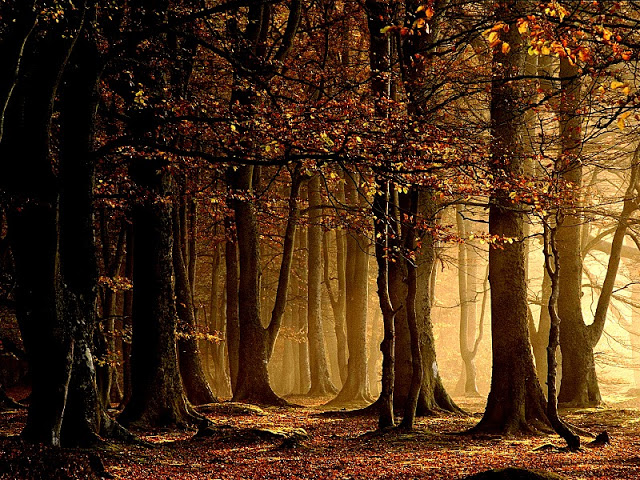
Source: HDwallpapers.

Source: HDwallpapers.

During that first test, I found myself agreeing a little with Luca Turin, the famous perfume critic, whose low, two-star review of Le Labo Rose 31 in Perfumes: The A-Z Guide is sneeringly entitled “Not Rose.” I hate agreeing with Luca Turin on anything; it almost offends my soul. Though I didn’t share his contemptuous views of the perfume as whole, I had to reluctantly admit that I couldn’t detect a trace of rose anywhere in that first hour. I even looked up some reviews for Rose 31 in which people wrote with utter bafflement about how completely nonexistent the rose was on their skin, no matter how many times they tested the perfume.

Then, I did the second test, and all the notes I wrote about earlier were backed from the start by the presence of the flower. It’s not huge, but the rose is definitely there, almost translucent in its pinkness and dainty freshness. Oddly, it never felt imbued by the heaping dollops of pepper; instead, to my nose, it almost stood apart, never tainted by the fiery, spicy notes, but remaining something dainty, sweet, and light. It was very pretty and well-meshed into the fragrance, but, unexpectedly, I found the non-rose opening in the first test to be much more interesting, and unusual. (The word “fascinating” appears more than a handful of times in my notes.)

Regardless of that small difference, the perfume’s development subsequently remained the same during both tests. Fifteen minutes in, the oud appears. It is not medicinal, astringent, or evocative of pink rubber bandages (my most hated form of oud). Instead, it is a bit more fiery and yet another source of pepper added to the mix. It also has a subtle, delicate undercurrent of honey which makes it quite lovely. As some of my regular readers know, I’ve got oud-fatigue, but this is an absolutely brilliant and fitting way to use the note, taking advantage of one of its intrinsic qualities to shore up the general peppered cocktail of notes. What helps with my enormous enthusiasm is the growing honeyed sweetness of Rose 31, the perfectly blended balance of notes, and the way in which each one mixes into a harmonious, greater whole. Truth be told, I was rather shocked by how much I initially liked this perfume, since I certainly didn’t expect it. Then again, I thought I’d be smelling yet another rose-wood-oud fragrance.

iStock photo via Wetpaint.com

iStock photo via Wetpaint.com

The oud is merely a muted backdrop player at this point, along side that other shadowing ghost, the ISO E Super, and all of them subsumed under the powerful ginger note. As time passes, the latter feels incredibly dominant, bringing back some memories of Versace‘s Crystal Noir in which pepper and ginger also perform a key duet. (Its top notes are pepper and ginger, with cardamom in lieu of the clove and nutmeg here.) Then, finally, at the end of the first hour, the rose makes its hesitant appearance. It’s slight, far from heavy in texture, and never feels jammy or fruited; instead, it’s almost watery and tea-rose like in nature.

Source: Wallsave.com

Source: Wallsave.com

Unfortunately for me and my joy at that wonderful opening, the 90 minute mark ushers in a strong wave of ISO E Super. Words cannot begin to describe my disappointment as that annoying subtext of rubbing alcohol begins its steady thrumming beat in the background. There is still heavy amounts of ginger, pepper and frankincense, but the growing force of the cedar woods and ISO E dominate. Even the oud and guaiac seem to have grown a little in strength — just two more sources of peppered woods that soon overtake the entire perfume. By the end of my second test, I felt almost browbeaten into submission but that constant, one-note, drumming beat.

The great nuances of the opening start, the complexity of the notes, the fascinating juxtapositions, and that perfect balancing act are all gone — thrown asunder by the top-heavy, unbalanced cedar-pepper-ginger-ISO E Super combination. Sure, there are flickers of other things that occasionally pop up: vetiver makes a late appearance with a darkly rooty, earthy accord; bitter nutmeg and honeyed labdanum dance around the far edges once in a blue moon; and subtle muskiness is a quiet vein underneath. But, they are tiny in nature and degree. Instead, for hours and hours and hours, it’s primarily just various sources of dark, peppered woods. The drydown doesn’t make me happier, either, because, five hours in, Rose 31 turns into an abstract, amorphous, generalized woody scent, with a hint of gingery rose and the start of soapiness. Eventually, that soapiness starts to take over until, in its final hours, Rose 31 is nothing more than a vague, musky, woody, soap scent. What a huge disappointment after that first glorious hour!

All in all, Rose 31 lasted just a wee bit over 9.5 hours on my perfume consuming skin. The sillage was initially excellent, though it quickly dropped after the first hour to become just a few inches above the skin. The perfume became a skin scent around the 5th hour, the same time when the drydown began and Rose 31 lost its shape entirely. On Fragrantica, the overwhelming majority of votes puts the sillage at “moderate” and the longevity at “long-lasting,” though there are a handful of votes for “poor” and “moderate” as well.

As noted earlier, Luca Turin is not a fan of Rose 31. In Perfumes: The A-Z Guide, his short, succinct assessment is incredibly harsh:

This aldehydic carrot juice was, unaccountably, composed by the brilliant Daphné Bugey, of Firmenich, who did Kenzo Amour and four sensational (and as yet unavailable) Coty reconstructions. Is Le Labo some sort of rehab where perfumers go when their noses are tired?

Ouch! Well, I rarely agree with Luca Turin, and I certainly won’t start now. I think the perfume is better than he believes, though I’m not sure that’s saying much. Clearly, Rose 31 is far from my personal cup of tea. As a side note about Daphné Bugey creating Kenzo Amour: that fragrance is listed as one of the perfumes with the most amount of ISO E Super, a whopping 48% according to the Perfume Shrine. As a result, it is often mentioned by people as a fragrance that gives them a searing headache. But ignoring the headache-inducing qualities of the ISO E Super, Rose 31’s eventual tidal wave of the synthetic — and the parallel way in which the pepper note is created by every possible source — suddenly makes a lot more sense. Perfumers who love ISO E Super just can’t seem to let go of it. (Geza Schoen, I’m staring straight at you!)

General reviews of Le Labo Rose 31 seem evenly split between those who find the cedar note to be unbalanced and overwhelming, and those who love the fragrance. A number of those in the latter category repeatedly comment on how the opening of Rose 31 reminds them of Caron‘s much beloved Poivre Sacré. I haven’t tried the latter, so I can’t help. But perhaps a sampling of Fragrantica opinions on the perfume will provide some light on whether you’d like the perfume or not:

  • Although I absolutely do not enjoy this fragrance, I need to give credit where credit is due. Immediately, the rose is detectable upon the initial spray/splash of the top notes and for me, that’s all I detect. It’s a very subdued yet masculine rose that exudes something very sensual but as the basenotes appear, that all changes. One thing, out of all the rose scents that I’ve encountered, this one has to be the most natural but when the cedar arrives, it ruins the whole aura of the scent. The cedar is too overpowering/cloying and masks everything the rose is trying to present. The two blended extremes almost seem to be competing with one another only the cedar always has the upper-hand. […] 
  • The top notes are very peppery in the same vibe of Caron’s Parfum Sacre, but then the cumin and cedar take top places, I find quite nice but I think suits a man better because of the cedar and have a very wood basenote.
  • Perfumes containing rose and spice are always dark, heavy, and complex. Rose 31 seems unnaturally crisp and ethereal. I think it contains a lot of Iso E Super, which usually smells so synthetic, but it seems to work so well here. [¶] The rose is a clean, magenta rose that reminds me of the Enchanted Rose in Beauty and the Beast that is protected under a crystal dome–perfect and sparkling in a way that only a fairy tale could be. [¶] I don’t smell cumin. Instead I smell a something like a translucent cinnamon hard candy. […]
  • there is hardly any rose in it, it is a very nice woody fragrance though
  • Dark prickly aldehydes and musk and woods. Like most Le Labos they seem to have forgotten to put the main ingredient in. […]
  • There’s no rose in this perfume. NO Rose. Period. [¶] What IS there? Well, there’s musk, woods, some kind of flower and some kind of vegetable, and more musk. Clean musk. Nothing spicy, nothing dirty. If one uses his imagination, it could be described as “dark”, I guess; but I wouldn’t.
  • smells like soap in bad way

Confused? Well, as I mentioned at the start, the main issue seems to be whether the rose note appears or not. And the bottom line seems to be that — even for those who do smell it — the cedar and woodsy notes eventually take over and, then, fully dominate. Whether you smell the ISO E Super (and yay for one Fragrantica poster who smelled loads of it!), the musk, the soap, or the other spices, the main thing you’re bound to take away from the fragrance is dark, peppered, cedary woods. You may have noticed  that the photos of the woods in this review have gone from: rosy, warm, and multi-faceted; to gold-tinged and autumnal; to dark sepia; finally ending with dark black with soapy white. That’s very intentional. It’s really how this perfume feels to me in large part.

Source: Wall321.com

Source: Wall321.com

If you love cedar, then you should definitely try Rose 31. All the other notes may just be an added bonus. If you’re not a fan of highly peppered woods — especially in perfumes that bang that main drumbeat for hours on end — then you won’t enjoy Rose 31. It’s really as simple as that.
 

DETAILS:
Cost & Availability: Le Labo Rose 31 is an eau de parfum (though it also comes in a perfume oil) and comes in two sizes: 1.7 oz/50 ml for $145; and 3.4 oz/100 ml for $220. Le Labo Website Options: Rose 31 is available directly from Le Labo which says that it will personally make up the bottle for each customer: “all Le Labo products are personalized with labels that bear the client’s name.” The company has a variety of different country options for the website, from North America to UK to France to International. On its North American website, Rose 31 comes in everything from the Eau de Parfum to body lotion, shower gel, massage oil, and more. The prices are the same as listed above: 1.7 oz/50 ml for $145; and 3.4 oz/100 ml for $220. They also offer a tiny 15 ml bottle for $58. I’m assuming they ship to Canada, too, given the website name. On the UK website, Rose 31 eau de parfum costs £95 for the small size and  £138 for the larger 100 ml bottle. Other sizes are also available, including a small 15 ml/0.5 fl. oz bottle for £40. On the International Labo website, Rose 31 costs €110 and €170 for the 1.7 and 3.4 oz bottles, respectively. Le Labo also offers perfumes in a Travel Refill Kit of 3 x 10 ml bottles (of your choice, and which you can mix or match) for $120. Lastly, Le Labo also has a Sample Program: “Our sampling program comes in two forms – a Discovery Set of 3 x 5 ml  (0.17 fl.oz.) glass rods with spray and cap and a personalized label with your name on it, ideal for hard core testing of 3 different scents before making up your mind, and a standard (yet beautiful) sample of 1.5 ml (0.05 fl.oz.), available for all scents and ideal for more cost conscious clients who fall in love at first whiff.” I think the individual samples cost $6. As for their shipping prices, I’m afraid I can’t find any pricing information. Le Labo World Boutiques: Le Labo has store locations from New York to London and Tokyo, as well as retailers in a ton of countries from Australia to Italy to Korea. You can find a full list of its locations and vendors hereIn the U.S., Le Labo Rose 31 is also available from Barneys (in the big $220 size) and from Luckyscent, who also sells samples for $6, along with the perfume oil and what seems to be Rose 31 detergent. (???!!). Additional bath and body versions of Rose 31 are available from the Fairmont hotel online store, along with its Canadian counterpart. Outside the US: In Canada, Le Labo is carried by Toronto’s 6 by Gee Beauty, but not on their online website for direct purchase. Call to order by phone. In the UK, Le Labo is carried at Harrods’s Designer Department on the First Floor, and at Liberty which offers Rose 31 in a variety of different sizes and forms. For the Eau de Parfum, prices are £95 or £138, depending on size. In the Netherlands, you can find Le Labo products and Rose 31 at Skins Cosmetics which sells the Eau de Parfum for €111.85 or €172.90, depending on size. It also carries other concentrations or versions of Rose 31. In Australia, Le Labo is carried at Mecca Cosmetics. Mecca’s full listing of Le Labo Products can be found here. Rose 31 ranges in price from AUD$198 to AUD$308, depending on size. Samples: I obtained my sample from Surrender to Chance which sells the Eau de Parfum starting at $3.99 for 1 ml vials.

Perfume Review- Dior Vetiver (La Collection Privée)

There are few things more terrifying to a perfumista than the word “discontinuation.” The threat of a perfume being discontinued is bad enough, but the actual thing? Ghastly. So, yesterday, when I heard that Dior was discontinuing Vetiver, I hurriedly dug up my sample to test it out. I found parts of it to be very elegant, but some of it to be less than my personal cup of tea.

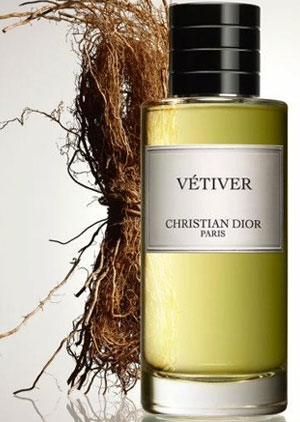
Dior Vetiver via FragranticaVetiver is (or was) part of Dior‘s prestige La Collection Privée line of perfumes (which is sometimes called La Collection Couturier on places like Fragrantica and Surrender to Chance). I will go with the name used by Dior itself on its website. The Privée line consists of fourteen perfumes that are exclusive to Dior boutiques (only one in the US, in Las Vegas) and to its website. Vetiver was added to the line in 2010 and, from what I’ve heard, is one of the biggest sellers in the Privée line. Like the rest of its siblings, Vetiver was intended to illustrate and celebrate the life of its founder, Christian Dior, and was created by François Demarchy, the artistic director and nose for Parfums Dior.

Dior describes Vetiver in the context of its founder’s personal style:

Mr. Dior had a particular sense of elegance and dandyism. Inspired by this sophisticated and timelessly chic style, François Demachy has created a powerful, intense and raw Vetiver fragrance. A masculine raw material par excellence, Vetiver makes up more than one third of the fragrance and is combined with Coffee, a round, slightly bitter, roasted note, creating an unusual aromatic blend.” The woody aromatic features notes of grapefruit, coffee and vetiver.

The notes for the fragrance, according to Dior, are simple:

Top: Sicilian Grapefruit.

Middle: South American Robusta Coffee.

Base: Haitian Vetiver.

Vetiver opens on my skin with sweet, slightly smoky, peppered vetiver and big wallops of ISO E Super. For those unfamiliar with the aroma-chemical, you can read my full description of its pros and cons here. In a nutshell, though, it is used most frequently for two reasons: 1) as a super-floralizer which is added to expand and magnify many floral notes, along with their longevity; and 2) to amplify woody notes and add a velvety touch to the base. It seems to be particularly used in fragrances that have vetiver, with Lalique‘s L’Encre Noire being just one of the many examples. ISO E Super always smells extremely peppery and, in large doses, has an undertone that is like that of rubbing alcohol, is medicinal, and/or astringent. Some people are completely anosmic to the synthetic, while a handful of people get extreme headaches from it. I’m not one of the latter, but I cannot stand the note in large quantities and I can detect that peppered element with its rubbing alcohol base a mile away.

GrapefruitIn the case of Vetiver, it’s hard to miss the ISO E Super because the synthetic is pronounced from the start and continues for much of the perfume’s lifespan. Hidden behind its solid wall are flickers of the grapefruit which feels zesty, fresh and light, but also yellow and sweet. Subtle whiffs of dark, wet coffee grinds underscore some of the vetiver’s earthy qualities. As a whole, however, this is not a smoky, dark, rooty vetiver fragrance. Instead, it feels much brighter, crisper and lighter than many of its compatriots out there.

Five minutes in, the rubbing alcohol base of the ISO E Super softens a little, leaving more peppery notes at the top. The coffee note fades almost completely, along with much of that initial dark twist to the notes. The perfume is sweet, lightly smoky, lightly citric, and sprinkled with huge amounts of that aromachemical’s pepper. At the base is a “woody hum” — as Luca Turin once characterized the synthetic and its constant presence in Ormonde Jayne perfumes — which continues for hours. To my surprise, Vetiver gave me a headache — and that rarely happens, even from ISO E Super.

The dapper Dior on the cover of the biography by Marie-France Pochna

The dapper Dior on the cover of the biography by Marie-France Pochna

There really isn’t much more to say about Vetiver’s evolution. It is primarily sweet, crisp vetiver with pepperiness and a lightly smoky touch that eventually turns woodier. About four hours in, the ISO E Super adds a velvety feel to the woody notes and Vetiver takes on a creamy smoothness that feels quite luxurious, despite its lightness. And, thanks to its mild sweetness, the perfume actually does evoke a little of Christian Dior’s dandyism, while always remaining sophisticated, assured, and elegant. It’s not a dark, earthy, rooty scent but more of a dapper, suave one, if that makes sense. It also feels more bright and green-yellow, than something dark and smoldering. In its final hours, Vetiver turns into a simple woody fragrance with a subtle touch of musk.

Throughout the perfume’s development, the sillage was generally moderate and the longevity excellent. Vetiver’s projection isn’t huge and loud, but rather, more discreet and well-mannered. The longevity is, however, surprised me. To my disbelief, this airy, seemingly light Vetiver lasted almost 10.5 hours on my perfume-consuming skin.

I am not hugely familiar with all the vetiver fragrances out there, so it won’t be easy for me to do a comparison. Based upon my memory of Guerlain‘s (vintage) Vetiver, the benchmark classic is significantly more complex, nuanced, spicy and … well, fabulous. It’s rich, layered, and deeper. Dior’s take seems intended to be a minimalistic treatment of the note, so one can hardly fault it for a job well done. It is also much lighter, in every way possible, especially in texture and feel. If it helps, you can read Bois de Jasmin‘s comparison of the two scent here. Her bottom line summation, however, is this:

If Vétiver de Guerlain did not exist, Dior Vétiver would have been close to my ideal vetiver fragrance. It is a very good quality vetiver, and I enjoy wearing it. However, there is no surprise in it, no novelty, especially when we have so many interesting and unusual woody fragrances available, both in the prestige and the niche lines. It is pleasant, but to me, nonessential. By contrast, I cannot imagine my perfume wardrobe without Vétiver de Guerlain.

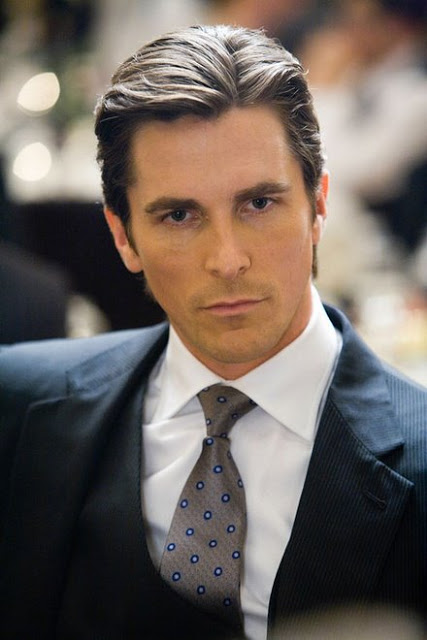
christian bale as bruce wayneIn terms of comparisons to Chanel‘s Sycomore, the two fragrances are nothing alike. Sycomore is a truly mighty, intense vetiver: all darkness with mysterious smoke, earthiness and serious woods that turn into creamy sandalwood. Complete polar opposites. Where Dior’s Vetiver evokes bright greens with a dapper touch, Sycomore evokes mysterious dark woods, earthy loamy soil, rootiness, and smoke. Dior feels like a scent that Roger Sterling from Mad Men would wear. Actually, no, Christian Bale’s “Bruce Wayne” would wear it with one of his perfect suits to a social luncheon. In contrast, the Dark Knight would wear Sycomore.

There is an enormous amount of love for Dior’s Vetiver out there. On Fragrantica, people rave about how it’s a minimalistic classic that is an essential staple for their perfume collection. One actually confesses, with some reluctance, that it may actually be superior to his beloved Guerlain Vetiver. The most interesting comment, to me, was from a commentator who said that the Dior was fantastic for layering under other scents. And, you know, I think he’s absolutely right. Dior’s Vetiver is sufficiently crisp, fresh, bright and green that it really would be the perfect vetiver base. I can’t see one using the super-complex Sycomore as a base layer, or the Guerlain, but Dior’s minimalism and purer vetiver essence would definitely work.

As a side note, I think Dior’s Vetiver could easily be worn by women who love the note. It is not a shriekingly masculine scent by any means, and seems quite unisex to me. I think it’s due to the subtle sweetness underlying the bright green vetiver. Thanks to the yellow grapefruit and the lack of spices or tobacco, the perfume also feels much brighter and fresher, less dry. In contrast, I think the Guerlain or Chanel fragrances are much more masculine in nature.

If you want to order Vetiver, there are still bottles available online and, for US readers, at the Dior boutique in Las Vegas. You can read about the exact number remaining at the Las Vegas boutique (as of 5/16/13) here. Generally, Dior’s bottles are super-sized, but the price is incredibly affordable per ounce. The smallest bottle clocks in at 4.25 fl oz/125 ml, and costs $155. Dior’s largest bottle is an enormous 8.5 fl. oz/450 ml which costs $230, which comes to approximately $27 an ounce. It’s a fantastic price per ounce (though it’s also enough ounces to practically bathe in).

All in all, I thought Dior’s Vetiver was very pleasant. I will be honest and say that I would have been far more enthusiastic had it not been for my hatred for ISO E Super in large amounts. But since the majority of people only read the note as a general impression of sharp “pepperiness,” I wouldn’t worry about it at all if I were you. I think Vetiver is incredibly elegant, versatile, and, perhaps more importantly, wearable on a daily basis. It has fantastic longevity and, though it may be minimalistic in nature, you can turn that to your advantage by layering it with other fragrances. If you’re a vetiver lover, I would definitely try to get your hands on it before it’s completely gone and the prices on eBay skyrocket through the roof.

DETAILS:
For a brief while, until it runs out, Vetiver is available exclusively at Dior boutiques or on Dior online. However, since it is soon being discontinued, those who want to get the few bottles that may remain should call any Dior boutique directly and buy it over the phone. In the US, it is sold only at Dior’s Las Vegas store [(702) 369-6072]. I would also try to call this Dior number — (702) 734-1102 — and ask for Karina Lake, the Dior Beauty Stylist at the Las Vegas store. She will be in special Dior training sessions until 5/20/13 but, if you can get a hold of her before then, she is an amazingly sweet lady who will give you a free 5 ml mini bottle of the Dior perfume of your choice, along with 3-4 small 1 ml dab vial sample bottles. Even better, you will get free shipping and pay no tax! Tell her Kafka sent you. As noted above, the perfume comes in two sizes: the 4.25 fl oz/125 ml costs $155, while the 8.5 fl oz/250 ml costs $230. Though New York’s Bergdorf Goodman and San Francisco’s Neiman Marcus carry some of the Dior Privée line collection of perfumes, they don’t carry all of them because I think they rotate 6 at a time. I highly doubt they have Vetiver, given the discontinuation issue.
Outside of the US: you can use the Points of Sale page on the Dior website to find a location for a Dior store near you. You can also navigate the Dior website’s International section to buy the perfume online. The problem is that the site is not very straight-forward. If you go to this page, look at the very far right to the bottom where it will say, in black, “International Version” and click on that. You should see options for Europe, Asia-Oceana, and South America. Within Europe, there are different sub-sites divided by country. The Dior boutique closest to you should have some Vetiver bottles still available for sale.
Samples: If you want to give Vetiver a sniff, samples are available at Surrender to Chance where prices start at $3.00 for a 1 ml vial. If you’re interested in trying the whole Privée line, Surrender to Chance sells all 13 fragrances (minus the new Gris Montaigne) in a sampler set for $35.99.

Reviews en Bref: Dzing! and Dzongkha by L’Artisan Parfumeur

As always, my Reviews en Bref are for perfumes that — for whatever reason — didn’t seem to warrant a full, exhaustive, detailed analysis.

DZING!

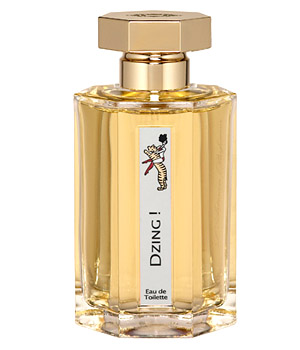
L'Artisan DzingDzing! is an eau de toilette fragrance from L’Artisan Parfumeur which seeks to evoke the circus. The woody scent was launched in 1999 and created by the highly respected perfumer, Olivia Giacobetti. The company describes it as follows:

This shockingly unique fragrance, created by Olivia Giacobetti, Dzing! is a magical evocation of a circus of dreams and imagination. Everything is soft hued and slow moving, sights and sounds rolling by in the Big Top. Everything is there, the scent of saddle leather as pretty girls on horses canter by, sawdust, the rosin on the acrobats’ hands as they arc through the air, black panther fur, fire-eaters and gasoline, the vintage canvas overhead, the caramel scent of candyfloss and toffee apples. The circus as conceived by L’Artisan Parfumeur, comforting but contrasted with the occasional roar tearing through the night.

The most complete list of notes for Dzing! (which I shall call “Dzing” for the sake of convenience) comes from Fragrantica which mentions:

leather, ginger, tonka bean, musk, white woods, caramel, saffron, toffee, candy apple and cotton candy.

Dzing opens on my skin as rubbing-alcohol, candy apple. Seconds later, it explodes into a sharply synthetic cloud of artificial notes: white cotton candy fluff; dry dust; cheap leather; cheap caramel; cloying, cheap vanilla; and amorphous, cheap, synthetic gourmand notes. I’ve smelled better things a 99 Cent Store. I cannot imagine a scenario outside of testing where I’d wear Dzing for longer than a minute without shrieking.

Surrealists' Circus. Painting by Hank Grebe, 1976

Surrealists’ Circus. Painting by Hank Grebe, 1976

The truly repellant aspect is in the revolting alcohol undertones and the cheap, pink, “Made in China” plastic aspect to all the artificial, laboratory-made notes. It’s as if the Mad Scientist infected the body of P.T. Barnum with a plan for world domination through olfactory torture. As the moments pass, the cheap Chinese, mass-produced, pink plastic note rises in prominence, as does the vanilla and the overall shrill cacophony of fakeness. This may be absolutely one of the worst things I’ve smelled in a while. I’m taken back to Tijuana, Mexico, and one of the cheap, tourist shops which sell tiny, plastic dolls, plastic shoes, and every possible hodge-podge of plastic tchotchkes. I wouldn’t object to a well-executed gourmand take on the smells of a circus, but the sheer deluge of cheap plastic and synthetics goes too far. Yes, I realise that almost every word out of my mouth includes the word “cheap” or “plastic,” but you have simply no idea how terrible Dzing smells. $145 for this? It would be easier to roll around naked on the industrial, synthetic carpeting in one of those 99 Cent stores that reek of fake vanilla, cheap apple-caramel candles, and, yes, PLASTIC.

Dzing must be a joke, right? Not a tongue-in-cheek, sweetly winking, happy, positive tease but, rather, a malicious, nefarious, completely sadistic joke created by an anti-social nihilist who intends to fumigate his victims while making a symbolic statement on the decline of Western civilisation, the corruption and decadence of capitalistic ventures like expensive perfumery, and the stupidity of those who think that the Emperor is wearing clothes. People, the Emperor is naked! NAKED! I’m not going to comment any further on this Ionesco-worthy, Absurdist, olfactory scheme to make me lose my mind.

DZONGKHA

Dzongkha is an eau de toilette fragrance created by Bertrand Duchaufour and inspired by the remote Buddhist mountain kingdom of Bhutan in the eastern Himalayas. L’Artisan describes it as follows:

Rich with aromatic influences: temple stones and incense, the sweet aroma of spiced chai tea, the heat of warm leather around fires, the heart of any temple or home in snowbound lands. Vetiver and green papyrus float through soft smoke with touches of peony, lychee and delicate iris. Dzongkha tells a special story on every skin: that of Dzongkha itself, the spiritual language of Bhutan.

l_artisan_dzongkha

On Fragrantica, Dzongkha is classified as a “woody spicy” fragrance and its notes are:

Top notes are peony, cardamom and litchi; middle notes are spices, white tea, vetiver, incense and cedar; base notes are leather, iris and papyrus.

Dzongkha opens with an unpleasant note of sharp incense. It’s not smooth, rich or soothing incense, but alcohol-like, bracing, and pungent. It is followed immediately by spices, predominantly cardamom, with what also feels like saffron, too. There are dry paper notes from the papyrus that evoke the feeling of an old book. Peony swirls in the background along with leather and tea notes.

The incense note is the key to much of Dzongkha’s early start. It is odd in its bracing bitterness and unbelievably desiccated. In combination with the papyrus, the overall effect is that of dust — whether a very old library or an abandoned church. Either way, it’s not enormously pleasant. Slowly, slowly, the cardamom heats up, warming the scent a little. Now, Dzongkha feels like cardamom-infused dust, atop a sharp, synthetic, incense note that burns a little. The whole thing is very airy, sheer and lightweight in feel, with low projection, and, yet, it is quite a strong scent in the beginning. I chalk it up to the synthetic undertone to the incense.

Thirty minutes in, Dzongkha has turned into cardamom dust with acrid incense, tea, spicy woods, and general earthy notes atop a growing base of leather. There is a light smattering of abstract florals flittering about in the background. The peony accord is muted and does little to alleviate the arid nature of the perfume. As time passes, the latter just gets worse and by the 90 minute mark, Dzongkha has turned into the most revoltingly bitter leather, vetiver and smoke fragrance. It is a veritable dust bowl of pungent, acrid dryness. At the same time, it also feels rancid and dark green — a bit like the moments in the legendary leather perfume, Bandit, from Robert Piguet with its deluge of sharply bitter, pungent galbanum and cold black leather. Yet, Dzongkha is a thousand times dryer, thanks to the incense note. I cannot believe how closely it replicates actual household dust, only in piles and heaps.

Dzongkha continues to change with time. By the start of the fourth hour, it is soapy, dark vetiver with bitter smoke, black leather and dust. It is still acrid and abrasively bitter — and I still can’t stand it. Midway into the fifth hour, the soapy element increases and takes on a sharply synthetic, dry, bitter incense accord. The combination smells extremely similar to that in another Bertrand Duchaufour incense creation for L’Artisan Parfumeur: Passage d’Enfer. I hated the latter, so I didn’t enjoy the overlap. In fact, my misery rose exponentially with every minute of Dzongkha’s sharply acrid, cloyingly soapy, painfully dust-like, and perpetually synthetic evolution. In its final moments, Dzongkha was just some amorphous soapy musk. All in all, it lasted 7 hours — all of them unpleasant, when they weren’t complete misery.

Testing Dzing and Dzongkha in the same day — even if the Dzing was only a few hours long — was an incredibly painful ordeal. For all that Dzing was mind-bogglingly terrible, it didn’t actually bring me down and make me feel low the way the incredibly unpleasant Dzongkha did. Really bad perfume experiences can feel almost oppressive, and Dzongkha certainly felt that way. I know it has its admirers, people who find its incense, spices and leather to be pleasant, even relaxing at times. All I can say is that I’m happy for you if it works. For myself, I’d like to forget this day entirely.


DETAILS:
Cost & Availability: Dzing and Dzongkha are both eau de toilette concentrations and cost $145, €95.00, or £78.00 for a 100 ml/ 3.4 oz bottle. Dzing is available on the L’Artisan website (where you can switch currency and sites from American to European) and Luckyscent. It should be available at Barneys, but I don’t see it listed on the website. In the UK, the L’Artisan line is carried at Harrods but I don’t see Dzing listed there. In Europe, it is available at First in Fragrance for €95. As for Dzongkha, it is available at the L’Artisan website, Luckyscent, and Barneys. In the UK, it is available at Harrods which also sells the smaller 50 ml size bottle. For the rest of Europe, it is available at First in Fragrance and other retailers. You can find a list of stores from Japan to Italy carrying L’Artisan products on the company’s Store Locator site. Samples are available at Surrender to Chance starting at $3.99 for a 1 ml vial for Dzing and Dzonghka.

Perfume Review – Santa Maria Novella: History & Ambra Eau de Cologne

As some of you know by now, one of my greatest passions in life is history. And perhaps few perfume houses have a greater history than Officina Profumo-Farmaceutica di Santa Maria Novella (or “Santa Maria Novella” for short). It is not very well-known, alas, so this review will be as much about the Santa Maria Novella’s impressive past as it will be about one of their colognes.

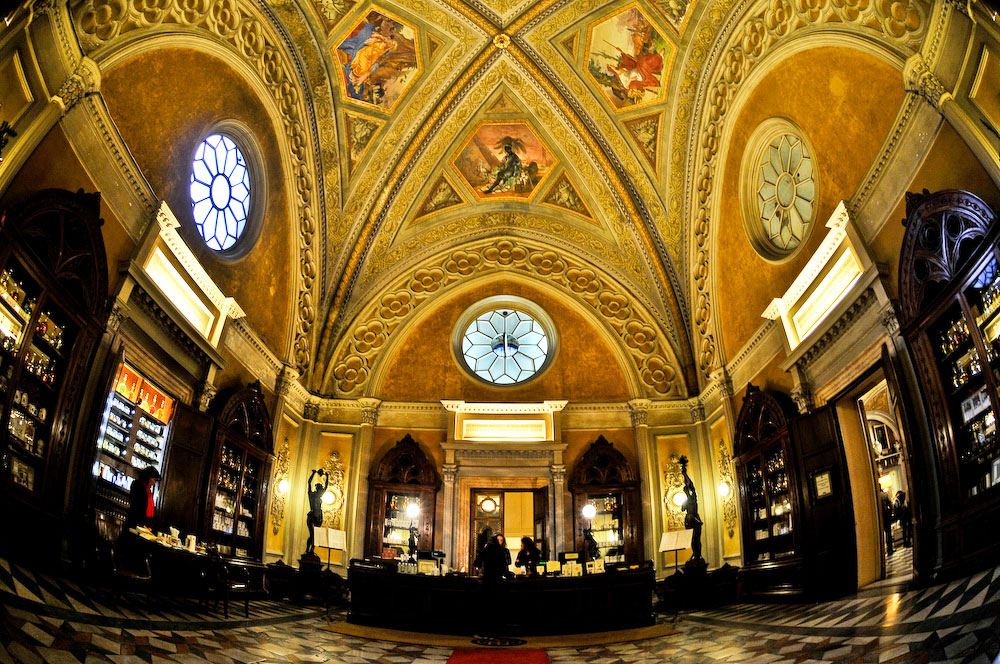
Santa Maria Novella. Pharmacy salesroom today. Source: MuseumsinFlorence.com

Santa Maria Novella. Pharmacy salesroom today. Source: MuseumsinFlorence.com

Frescoes on the wall of Santa Maria Novella Pharmacia. Source: Milay Mail newspaper at MMail.com.

Frescoes on the wall of Santa Maria Novella Pharmacia. Source: Milay Mail newspaper at MMail.com.

Santa Maria Novella is one of the oldest pharmacies in the world and, according to many accounts, the real, true source for the birth of cologne. A fully functioning pharmacy in Florence, it was founded in 1221 by Dominican friars. As the fame of their potions grew, the pharmacy was opened to the public in the 1400s and the Grand Duke of Tuscany conferred his patronage upon them, along with a gift of the Medici coat of arms.

In 1533, Santa Maria Novella’s fame exploded when they were commissioned to create a signature fragrance for the young, fourteen-year old Catherine de Medici upon her marriage to Henry II of France. As one magazine article explains:

Catherine de Medici, niece of Lorenzo the Magnificent (of Medici). Painting: Unknown artist in the Uffizi Gallery via Wikicommons.

Catherine de Medici, niece of Lorenzo the Magnificent (of Medici), in middle age. Artist: Unknown. Painting in the Uffizi Gallery, via Wikicommons.

Known as ‘Acqua della Regina’ or ‘Water of the Queen’, the resulting citrus-based cologne water of Calabrian bergamot could be interpreted as being the world’s first celebrity fragrance. It served to popularise the concept of perfume to the French royal court… The royal essence soon became a sweet smell of success wafting across the most fashionable courts – including England’s under Elizabeth I. The Officina’s original scent sensation helped lay the foundations for both the French and English perfume industry. In the West, the trend for scent was then maintained by other Italian perfume lovers, including Cosimo de’ Medici, Isabella and Alfonso d’Este, to Lucrezia Borgia.

The impact of “Water of the Queen” did not stop there. When a young perfumer, Giovanni Paolo Feminis, moved to Cologne, Germany in 1725, he took the scent with him and re-produced it to great acclaim. It was named Eau de Cologne in honour of the city, thus heralding the birth of the perfume concentration known today. The original Acqua della Regina scent is still made today by Santa Maria Novella and really deserves the true credit for creating “eau de cologne.”

The pharmacy is still in operation and still creating their perfumes based on formulae that are hundreds of years old, including their world-famous potpourri. The original workspaces and sales rooms are now part of a museum (which you can see in stunning photos here), and the perfumes are sold world-wide.

There is history in every fiber of Santa Maria Novella. An admiring article in the New York Times (written in 1986) talks about how little has changed at Santa Maria Novella since the 1400s:

In the pharmacy, one of several in Florence that dispense herbal potions, light filters through stained-glass windows onto the rows of essences: lime-colored heliotrope, myrtle like liquid sunshine and the nut-colored Marescialla. This last was named after the Marquise d’Aumont, wife of a French marshall, one of the last women ever to be burned at the stake as a witch. She used the essence to perfume her gloves.

Since the 1400’s, the Pharmacy of Santa Maria Novella has been making all kinds of perfumes, potions, powders and pomades, and nothing much seems to have changed in the intervening centuries except for the installation of a modern cash register; ”It’s hideous, isn’t it?” says Fiametta Stefani-Bernardini, one of the family of two sisters and a brother who run the pharmacy. ”But we have to have it, by law.”

Source: Italymag.co.uk

Source: Italymag.co.uk

The original monastery infirmary and pharmacy used to be in the rooms adjoining today’s shop, and you can ask to visit them, preferably when there are not too many customers in the pharmacy.

Santa Maria Novella bottlesHere in the Sala Verde, or Green Room, and in the blue-and-gilt pharmacy, the clock stopped 400 years ago and the glass retorts, pestles, scales and measures once used by the monks are still in their cabinets, as well as bottles designed by Leonardo da Vinci. The pharmacy opens onto what used to be the cloister, now the parade ground of the local carabinieri detachment.

Some of the products are as old as the pharmacy itself, such as the Aceto dei Sette Ladri, or Seven Thieves’ Vinegar, named for a band of seven looters who would strip the bodies of the dead during the plague and who protected themselves from infection by rubbing this so-called vinegar over themselves. Today the aceto is sold as smelling salts, for which there seems to be a thriving market.

Between the scent of a Maréchal’s aristocrat wife who was one of the last women burned at the stake (in Paris in 1617), and the Seven Thieves’ Vineger intended to protect against the Black Death, my jaw dropped. May I emphasize once more that all these products are still available and made in the exact same formulation?

Equally impressive to me is the fact that supposedly “none of its products are tested on animals.” In fact, not only are the products “never tested on animals” but Santa Maria Novella even has a large Cat and Dog Grooming line. Lastly, whether it’s soaps, candles, bath products, lotions, or cologne, each batch is still made by hand and primarily from natural products. As one article points out, the “vast majority of the medicinal herbs used in its products are grown locally on the hills around Florence” and the products consist mainly of natural oils or essence.

Ambra.

Ambra.

With all this history (I really should have gotten my PhD in the subject, instead of being shipped off to law school), I naturally had to try one of the fragrances. I opted for Ambra which was first made in 1828 and which is categorized as an Oriental. Fragrantica describes it as follows:

a slightly dry composition of amber and with birch wood accents. Top notes: bergamot, lemon, bitter orange [bigarade] and neroli. Heart: jasmine, lavender and rosemary. Base: amber, birch, sandalwood and benzoin.

Birch is really the key to Ambra, a most unexpected, unusual, and, frankly, perplexing fragrance which was absolutely nothing like what I expected. Usually, I can get at least a vague sense of a perfume by looking at its notes. Not here. Ambra is primarily a herbal, woody birch fragrance, and only tangentially anything ambery or oriental. And it’s largely due to the birch note which runs through the life of Ambra’s development. According to Fragrantica, the odor of birch

comes from the literally “cooked” wood, as in birch tar, a phenolic, tarry smelling ingredient mostly used in the production of leather scents, some chypres and some masculine fragrances.

Silver birch tree. My own photo. Fjällnäs, Sweden.

Silver birch tree. My own photo. Fjällnäs, Sweden.

On my skin, Ambra’s opening is birch, more birch, a little more birch, and then some neroli. Bitter orange with bitter birch. It’s a fascinating combination, and a little bit odd, because the tree note smells simultaneously woody, smoky, minty, and a little bit mentholated like eucalyptus. At times, it almost feels a little bit like shoe polish cream. At other times, there are fleeting hints of something like diesel gasoline.

Minutes later, the strong pungent combination of bitter orange bigarade with that unusual woody element is joined by bergamot, lemon and lavender. The latter is a very strong and herbaceous, feeling a little like a lavender absolute or oil. Now, I’m not a fan of lavender but, here, the birch injects it with smoke and a tarry element, transforming it to something quite different. In fact, the twist on neroli and lavender brought by that powerful birch tree accord is quite inventive. Christopher Sheldrake has mentholated, camphorous eucalyptus as his signature for Serge Lutens fragrances, infusing it in everything from tuberose to patchouli, but you have to remember that Ambra’s formula is almost 200-years old and far preceded Mr. Sheldrake!

The smoky, woody, tarry, mentholated lavender-bigarade (neroli) combination is… disconcerting to me. I’m honestly not completely sure what to make of it. Something about it fascinates me and keeps drawing me in, despite my general loathing of lavender. It’s that incredibly smoky, woody feel which transforms the pestilential purple plant, my nemesis, into something oddly mesmerizing.

Just when I think I’ve decided that the cologne is almost verging on the soothing, it suddenly morphs into something else. Ninety minutes into Ambra’s development, sandalwood shows up! It happened both times that I tested the perfume, almost on the dot. The sandalwood is light and subtle, but it’s there. More importantly, the pungent, smoky, mentholated birch drops in volume by a significant degree, as if someone has flipped a switch. The perfume is now primarily neroli orange, infused with lavender, on a base of light sandalwood, smoke, and mentholated birch. I never smelled any jasmine or rosemary. There is the start of a light musky, almost powdery, note, but it is extremely faint. Ambra remains that way for another 90 minutes, slowly becoming lighter and more faded, turning mostly into a quiet, sheer amber. It dies completely just after the start of the 5th hour.

As noted above, Ambra is an eau de cologne, but it was surprisingly rugged for such a minimal concentration. I ascribe it all to the birch and the very potent orange neroli. Yet, despite that, Ambra has low projection. It hovers only a few inches above the skin for the first hour, before becoming a skin scent around the second hour. It is always incredibly light and airy in feel, but it was much stronger than I had expected.

There are few reviews in the blogosphere for Ambra. One admirer is The Perfume Critic who described Ambra as “[a] surprisingly long-lasting amber eau de cologne with noticable birch notes.” He wrote:

Pros: I love the addition of the birch note which adds an almost leathery tone to the composition; beautiful packaging and bottle.

Cons: Make sure you also purchase the spray adapter for your bottle so that you don’t have to use it as a splash! This adapter does not come with the bottle. [… ¶]

Reminds me of: Andy Tauer’s Lonestar Memories; Kolnisch Juchten. [¶]

… Although SMN considers Ambra an eau de cologne, I felt that there might actually be a stronger concentration of perfume oils – perhaps it’s really an Eau de Parfum? Maybe it was because I sprayed myself 6 times, or maybe it was because of the heat in the room where I was sitting, but this morning I found myself wondering what that amazing smell was…only to realize that it was me!

Wearing Ambra, I felt as if I should be stepping down from a stallion, riding crop in hand, having just returned from the hunt. I’m on my way to the library where my fellow hunters are milling around smoking their sweet pipe tobacco while sipping Scotch in crystal goblets: Ambra definitely has a vintage, old world feel about it. What most sets it apart from other amber aromas is the lack of the sweet vanilla note so often added to amber scents. Additionally, the birch tar note lends the feeling that both leather and smoke notes are part of the composition. […]

You know, I can completely see his scenario of the horseman returning from the hunt, before retreating to a smoky room to sip scotch. Ambra really does have an outdoorsy character, along with an old world feel. Now, it didn’t last quite so long on my perfume-consuming skin as it did on his, but then I didn’t use anywhere close to 6 sprays! I suspect that Ambra might easily have lasted longer had I used a greater quantity.

I think those who love neroli, lavender, and woodsy notes should try Ambra. Don’t expect a true amber fragrance, because you’ll be disappointed; the birch and aromatics are too dominant in the perfume’s development. On the other hand, if you’re looking for an unusual neroli or lavender — something that is quite soothing and relaxing at times, but with a twist — and a very airy, lightweight perfume that is ideal for hot temperatures, you may be very pleased. Ultimately, Ambra wasn’t for me because I struggle too much with lavender (which makes Santa Maria Novella’s Imperial Lavender completely out of the question), but I definitely would like to try their Patchouli, Opoponax (frankincense), and Orange Blossom colognes.

Even if Ambra doesn’t sound like your kind of thing, I would urge you to at least check out Santa Maria Novella’s enormous range of cruelty-free products, from personal care items to bath and body products, candles, children’s shampoos, room accessories, potpourri, and, even, olive oil! Because, seriously, how cool is it to have products once made by Dominican friars almost 800 years ago and associated with everything from Catherine de Medici to marauding thieves who fought off the Black Plague?!


DETAILS
Cost & Availability: Ambra is an Eau de Cologne that comes in a 100 ml/ 3.3 oz splash bottle and which costs $125. In the U.S., it is available directly from Santa Maria Novella’s US website which offers free shipping for orders over $150. Remember, you may need to buy an atomizer spray to go with the bottle. Santa Maria Novella also has numerous other sections worth checking out. All items are cruelty-free and have not been tested on animals. The Pet Section includes everything from Lemongrass Anti-Mosquito repellant in lotion form to No Rinse Cleansing Foams, and more. Santa Maria Novella also has stores in 5 U.S. cities from L.A., to New York, Chevy Chase, Dallas and Bal Harbour, Fl, and you can find those addresses on the website. Also, Lafco, on Hudson St. in NYC, supposedly carries the entire line. I checked the LAFCO website, and I don’t see any Santa Maria Novella’s products on it, but I think they may carry them in-store. In terms of other retailers: Aedes seems to carry a good selection of some Santa Maria Novella products, from candles to soaps, along with Ambra for $125.  Luckyscent carries a very small selection of the company’s colognes, soaps, bath gels and shaving creams, but Ambra EDC is not part of them.
Outside, the U.S., you can turn to the Italian Santa Maria Novella website but I’m having a little trouble navigating it and somehow the photo of the perfume doesn’t look like the one I’m used to. There is also no pricing that I can find. The Farmacia  has a number of European off-shoots: stores in London and in Paris. I can’t find an address for the Paris store, but the official distributor for the company’s products is Amin Kader Paris which has two stores in the city. Again, I can’t find Euro pricing information for the fragrance. On a side note, on a Fodor’s site, I read that Santa Maria Novella has shops in the following cities: Roma, Venice, Lucca, Forte dei Marmi, Bologna, Castiglione della Pescaia, London, Paris, and Livorno.
As for samples, I obtained mine from Surrender to Chance which carries Ambra starting at $3.99 for a 1 ml vial.