Perfume Review- Serge Lutens Cèdre

One of my favorite aspects to Serge Lutens‘ line of perfumes is the dramatic, complex flair shown by many of them. Love them or hate them, his perfumes almost always have character. Once in a blue moon, however, you stumble across one that is, quite simply, dull. It’s hard for me because I can easily write reviews for perfumes I hate and for perfumes I love. Those that leave me utterly apathetic and unmoved are a whole other story, however. It’s even harder when you can see that it’s a well-made fragrance, but it just sits there for you. Serge Lutens’ Rousse was one of them: a somewhat strange perfume which actually had some nice parts but which, ultimately, felt banal. Cèdre is another, but it lacks even the benefit of strangeness to keep me somewhat on my toes. I’m so utterly apathetic, I can barely summon up the energy to describe it. So, here goes nothing….

Cedre via Serge Lutens Facebook page.

Cedre via Serge Lutens Facebook page.

Cèdre is an Eau de Parfum Haute Concentration that was created with Lutens’ favorite perfumer, Christopher Sheldrake, and released in 2005. On his website, Lutens compares the fragrance to a sort of woody pastry

Like a pastry made of wood.

Another take on Féminité  for an alternate reality. True to its name, it contains cedar, to which honey is the key. But I have added tuberose, barely perceptible but of paramount importance.

Strangely, Serge Lutens’ press release for the perfume (as quoted by the Belgian store, Senteurs d’Ailleurs) is a whole other, disparate tale, describing the felinity of a wildcat with steps of steel and the tenseness of a criminal proceeding:

The wildcat glides along, cautious and rhythmic with supple, velvety steps of steel. The forest watches…
A heavy, restless silence, a tense moment, similar to those preceding the jury’s verdict to condemn the accused, guilty or even the innocent…
A rich, woody, animalistic, soft fragrance… harmonises in full splendour with arrogant tuberose.
A strong musk blended with amber, clove and cinnamon adds the final touch to the regalia.
An irrevocable verdict for this essential, profoundly original fragrance….

The perfume notes — as compiled from LuckyscentFragrantica and the two Lutens statements — thereby seem to be:

Cedar, Tuberose, Clove, Cinnamon, Honey, Musk, and Amber.

Source: Ronny Fein. (Website link embedded within photo.)

Source: Ronny Fein. (Website link embedded within photo.)

Cèdre opens on my skin as a boozy, rummy, ambered fragrance. It is a potent blast of cinnamon apple pie, raisins, and dried, purple, stewed fruits with subtle flickers of dark smokiness and a dash of cloves, atop a base of sugary brown syrup. The cedar note dances hazily in the background, muted and really minor in the overall scheme of things. It’s more like an amorphous woody element that never feels like peppery cedar but, rather, like something simply dry, spicy and lightly smoked. Moments later, a delicately floral tone creeps in, but it’s not immediately distinguishable. Like the cedar, it’s muted, hidden, indistinct, and strongly imbued by a heavy, dense sweetness that feels like honeyed molasses mixed with a slightly buttery, caramelized, brown sugar.

Source: Talk of Tomatoes (click on photo to go to website with its recipe for rum, plum, cardamom jam.)

Source: Talk of Tomatoes. (Click on photo to go to website with its recipe for rum, plum, cardamom jam.)

To me, Cèdre immediately calls to mind Jean-Claude Ellena‘s Ambre Narguilé with its strong rum raisin, stewed fruits, and smoky accord. The similarities are inescapable, though Cèdre is stronger, richer and denser in both feel and potency. It is so highly concentrated in its opening moments, in fact, that I initially wondered if I had applied too much as something about it made me head throb. It almost felt as though there were small touches of ISO E Super in the base, lurking around and adding to the velvety, creamy undertones of the fragrance.

Immortelle. Source: The Perfume Shrine.

Immortelle. Source: The Perfume Shrine.

The floral note in Cèdre really bewildered me at first. Nothing about it smells like tuberose to my nose. Actually, it smells a hell of a lot like immortelle! I tried Cèdre twice, and both times, I had the same impression. The note has the same dry, slightly woody, vaguely herbal feel of immortelle’s flower, along with that subtle maple syrup nuance that can characterize the flower. The aroma wafting off my skin is absolutely nothing like tuberose with its very indolic, ripe, voluptuously fleshy whiteness. It’s not even like a Lutens/Sheldrake take on tuberose with its sometimes chilly, metholated nuance. Nope, at no time do I smell tuberose in Cèdre. It’s my favorite flower and, if you put a gun to my head and demanded that I find tuberose in Cèdre, I still wouldn’t or couldn’t do it.  As you will soon see, others have a totally different experience.

Source: Diary of a Mad Hausfrau. (Website link embedded within photo.)

Source: Diary of a Mad Hausfrau. (Website link embedded within photo.)

Ten minutes into Cèdre’s development, it is a boozy, rummy, plummy, raisin fragrance with spices, flickers of incense smoke, sugary sap, muted woods, and hints of some dry, masculine floral. There is a growing sense of something creamy in the base, as well as something a little bit animalic. It’s not dirty, skanky, or raunchy, but there is a leathery, musky undertone that slinks around the background. Twenty minutes in, the perfume’s edges turn soft and blurry, becoming a well-blended mix of notes without any sharp delineation. The most individually distinct element that I can pull out of the mix is boozy rum raisin, but the rest seem to overlap and melt into each other.

As time passes, the creaminess and smoothness of the bouquet grows, as does its hazy feel. At the forty minute mark, the rum raisin accord in the foreground is replaced by an abstract, plummy, spiced sweetness. The perfume’s background notes are tinged with amber and with a subtle smokiness that feels nutty, sweet, warm and resinous. Wafting all around, like a subtle shadow, is that vague floral note with its herbal, woody, dry, syrupy feel. Ergo, immortelle.

Source: wallpapers.free-review.net

Source: wallpapers.free-review.net

Cèdre gets blurrier by the minute. At the end of two hours, it’s an abstract swirl of sweet, lightly spiced woodiness with amber, smoke, and some nebulous floral hints. There is a subtle feel of something honeyed, musky and faintly leathery in the base that makes me think that the “amber” must include some labdanum. The whole thing just barely hovers above the skin. Around 3.5 hours in, Cèdre is an abstract amber that feels veiled with honey and a touch of cinnamon. The muskiness grows more pronounced, such that, midway during the fifth hour, the perfume is merely sweet, ambered, labdanum musk with a leathery undertone and a hint of spices. Cèdre remains that way until its final moments, 7.25 hours from its start, when it is nothing more than a trace of musky amber.

Months from now, whenever I think of Cèdre, I have no doubt that the only description I shall be able to conjure up is “blurry Ambre Narguilé.” In fact, I shall be hard-pressed to recall its details in a few days from now, let alone in the weeks and months to come. That says something about a fragrance — and it’s not good. I suspect I shall recall far more how a vast number of people find Cèdre to be a tuberose fragrance. Because they really do. Tons of them, in fact!

Source: hdwallpaperspics.com

Source: hdwallpaperspics.com

My favorite review of Cèdre comes from One Thousand Scents whose opening paragraph made me laugh for a good ten minutes the other day. I think it’s the tone of indignant outrage that does it, along with the characterization of Serge Lutens himself:

If you are a normal person and you are going to make a perfume called Cèdre, which is the French word for cedar, then by god you are going to make a cedary scent, something that puts the spotlight on the wood. If, on the other hand, you are Serge Lutens, which is to say by definition you are not a normal person, then you are going to make a big, wild-eyed tuberose scent and confuse the hell out of everyone.

I’m laughing all over again. As for the perfume itself, he admires Cèdre on an intellectual basis, but he seems to truly hate the smell itself:

The opening is an explosive tuberose, kind of dirty, with a weird toothpasty quality–toothpaste without the mint in it. There is a faint burning spice in there, although really nothing could survive the onslaught of tuberose sweetness. The sweetness is key, because this doesn’t have that harsh, screechy edge that tuberose so often has for me, and that’s the only reason I could sample this and not desperately want to scrub it off. Even so, it’s kind of cloying; it keeps coming at you, demanding to be noticed.

Eventually the floralcy, though not the sugar, begins to die down a little, and the cedar finally sidles into view, with the faint ribbon of wood smoke that cedar so often carries. This is very nice, and it lasts a very long time. 

Cèdre for me works less as a scent than as an intellectual experiment, an essay in cognitive dissonance: what you read doesn’t match what you smell, and what you smell is two extremely disjunct things forced into harmony. I could never wear it, that’s for sure.

On Fragrantica, people’s impressions of Cèdre largely seem to fall into four categories: those who think it’s mostly just a cedar fragrance; those who think it’s almost all tuberose; those who think that the two notes are in a perpetual tug of war for hegemony; and those who think it’s actually an amber fragrance. The main note in the perfume, according to 92 people, is tuberose. Amber comes in next with 65 votes, while cedar is in third place with 58. One commentator said Cèdre began with “[a] very aggressive tuberose opening on me. It smelled very heavy, greasy, sexy, almost obscene!” The note left after 10 minutes on her skin, never to return, but, for another, Cèdre was almost all tuberose:

The name Cedre can be a little misleading. Surprisingly this is a soapy and elegant tuberose fragrance, with a spicy and woodsy drydown. The cedar note is barely evident in this fragrance’s composition, so don’t go expecting any masculine woodsiness while testing Cedre.

For many commentators, however, things are not so black and white, and Cèdre is a mix of things, sometimes dominated by amber. Two examples:

  • This was not what I had expected from a perfume named ‘Cedre’. The opening notes were a clash of cloves and cedar and for a few minutes it seemed these two were playing out some sort of war of attrition. I wasn’t sure who would win. This was a fleeting phase and shortly they both settled to allow the amber, cinnamon and tuberose rise from the battlefield. Oh wow. This is good stuff. It has the classic Lutens DNA but the tuberose gives this an ethereal quality that seems to give these rich notes a lighter touch. As I write this, the tuberose is developing a wonderful animalic note.
  • Cedre is a rich amber fragrance opening with cinnamon and labdanum. It contains that signature Lutens rich amber “hum”, though the intensely resinous cedar like the living tree, or freshly chopped firewood in the composition gives it clarity, preventing it from turning into a syrupy mess. It’s more like a wood-burning stove baking up fresh cinamon buns. [¶] Cedre has an effervescent quality like an artisan-crafted all-natural birch beer, and the labdanum makes the sweetness smooth, warm, and wearable. It is a basket of sweet and spicy offerings from the forest floor to the canopy. It is the sweetness found naturally in forest air, distilled. [¶][…] This may be my favorite gourmand to date.

Many bloggers seem to be divided into the camps listed above. For Robin at Now Smell This, Cèdre was an amber fragrance with an opening blast of tuberose that was initially mentholated (as in Tubereuse Criminelle), but whose floral nature was eventually muted by woodsy, honeyed amber notes that had a subtle animalic, leathery flicker in the base. She found the cedar itself to be “surprisingly subdued; it is a very woody fragrance but it has none of the sharp edges I commonly associate with cedar.” Yet, she could also see how a friend of hers would think Cèdre was all about spiced apple, which is what I got, too. As a whole, Robin was ambivalent about the fragrance since, the first few times she tried it, “it was too much sweet amber and too little cedar and tuberose,” but she could see it growing on her.

Tuberose, and Lutens’ Tubereuse Criminelle, were also on the mind of the PeredePierre whose review begins by saying that the release of Cèdre was a surprise because “[w]hat no one was expecting [was]… a tuberose-laden scent with only the slightest hint of anything woody.” Calling Cèdre “a challenging composition,” he writes:

Cedre starts off with a powerful, mentholated camphor note. Not nearly as shocking as Tubereuse Criminelle, but still quite the sucker-punch. Immediately evident are the spices – clove, cinnamon, and the usual suspects for a Lutens fragrance. Tuberose is clearly the main player in the scent from the beginning, although it softens somewhat as things progress. Cedar does makes its way in eventually, although not nearly enough to warrant a star-spot in the perfume’s title. Cedar’s typical raspy character is felt more than any obvious woody presence.

The drydown reveals something much more interesting though – a dirty musk! Up until that point, things are a bit cloying, a bit on the sweet side, and very much full of clove (not my favourite thing in the world), but the musk note is an intriguing touch. 

Over at Perfume-Smellin’ Things, Marina prefers Lutens’ Bois Oriental, finding Cèdre to fall short in comparison. She find it to be “pleasant,” in a review that essentially damns Cèdre with faint praise:

Sweet-ish woods, lovely almost imperceptible tuberose, a tiny dash of cinnamon. Every note is understated, muted, almost demure. Rich and animalistic? Absolutely not. Soft? Definitely. Also, I must say, rather unremarkable. Cèdre is one of those neutral, elegant, “politically correct” scents that are appropriate anywhere, anytime.

The Non-Blonde adores Cèdre, but she notes how many people find it to be far from the cedar fragrance that they had expected:

When Cedre came out in late 2005, many people were somewhat bewildered. They expected Uncle Serge to treat the cedar note in a similar way he stripped oak a year before when he created Chene. Instead of a glorious dry tree, they found themselves sampling a boozy, sweet, ambery oriental perfume with a creamy tuberose in the middle.

Which, of course, is exactly why I adore Cedre.

It radiates. From the sweet opening to the sweeter drydown, this is one weird scent. It takes you on a trip to places where otherworldly things grow. There’s apple-free cider, radioactive cinnamon, clove that doesn’t bite and wouldn’t remind you of the dentist, wood that glows in the dark, white flowers that disappear and pop out again and black honey. It’s a carnival and can get quite big and noisy, but on my skin it’s heaven.

All the bloggers seem to have experienced a fragrance that was profoundly more interesting than the muted, slightly abstract, boozy, rum raisin, spiced amber that manifested itself on my skin. I love those notes, but something about Cèdre’s composition was neither original nor dramatically edgy. I think it was the muffled, murky, blurry aspect to the notes. Had they been more sharply pronounced and distinct, I might have felt much less bored by the amorphous swirl of ambered stewed fruit. Or, perhaps not. It’s not as if there aren’t half a dozen rummy, boozy ambers already out there…..

I don’t know what to say to you in terms of recommendations. Those who hate tuberose — and Tubéreuse Criminelle, in specific — should probably stay away from Cèdre, but then, what happens if it’s all dense, rich, spicy amber without even a hint of tuberose? Or a pure cedar fragrance that evokes a “wood-burning stove baking up fresh cinamon buns” and whose base feels infused by a subtle gourmand sweetness? Perhaps you’d love it. The problem is, I have no idea what may show up on your skin.

If it’s any use or guidance, a number of people on Fragrantica compare Cèdre to Amouage‘s Memoir Woman, while on Basenotes, I’ve read a lot of comparisons to how Cèdre has the same vibe as Histoires de Parfums Tubéreuse 3 – Animale. I haven’t tried Memoir Woman yet, but my recollection of briefly testing Tubéreuse 3 is that it was a significantly more leathery, difficult, dry, immortelle-based fragrance at its start. Though it’s supposed to be a similar take on a masculine tuberose, I didn’t leave Tubereuse 3 on my skin long enough to get to that part. What I did smell was mostly an immortelle fragrance with leather, tobacco and pungent, dry hay. In short, something very different to the Ambre Narguilé vibe I get from Cèdre. (That said, it’s odd how the only floral that showed up for me in Cèdre is something that feels like a muted immortelle, but absolutely nothing that smells like tuberose.)

If my personal tastes or thoughts are of any help, I wouldn’t bother with Cèdre. It leaves me completely cold — and this comes from someone who loves both Lutens, and boozy, spicy amber fragrances in general. In fact, Cèdre triggers so much apathy and disdain that writing a long review about it has resulted in feelings that almost verge on the hostile for the poor fragrance. So, I shall end this review here and now.


DETAILS:
General Cost & Sales Prices: Cèdre is a concentrated eau de parfum that comes in a 1.7 oz/50 ml size, and whose retail price is $140, €99 or £83.00. However, Cèdre is currently discounted at Pricefalls where the 1.7 oz/50 ml bottle is priced at $82.03. LilyDirect sells Cèdre for $82.28. Canadian readers may want to check if the company has started shipping to Canada as planned some months back. FragranceNet sells Cèdre starting at $84.31 with a coupon, or for $99.19, with an additional 15% OFF with the coupon code RESFT5 (which probably comes to the same amount of $84.31). There is free domestic shipping. Rakuten (formerly Buy.com) sells it for $90. 
Serge Lutens: you can find Cèdre on the U.S. and International Lutens website, with other language options also available. 
U.S. sellers: Cèdre is available for $140 at Luckyscent, Barney’s, Aedes (though it is currently out of stock), and other high-end perfume retailers.
Outside the U.S.: In Canada, you can find Cèdre at The Perfume Shoppe for what may be US$135, but I’m never sure about their currency since it is primarily an American business with a Vancouver store. They also offer some interesting sample or travel options for Lutens perfumes. In the UK, you can find Cèdre at Harrods or Liberty where it costs £83.00 for a 1.7 oz/50 ml bottle. In France, Premiere Avenue sells it for €92 instead of €99, and I believe they ship world-wide, or at least through the Euro zone. In Belgium, it’s carried at Senteurs d’Ailleurs. In Italy, you can find Cèdre at Essenza Nobile for €98 and, in Germany, you can go through their German section which sells the perfume for the same price. In Australia, it is sold out on the Grays website where the 1.7 oz/50 ml bottle retails for AUD $127.50, but you can find it massively discounted at Australia’s Fragrance Net for prices starting as low as AUD$91.05 with a coupon. Cèdre is also sold at Perfumery for AUD$115 instead of AUD$200, at Australia’s StrawberryNet for AUD$143.50, and at CosmeticsNow for AUD$147.95. For other countries, you can use the Store Locator on the Lutens website.
Samples: You can test out Cèdre by ordering a sample from Surrender to Chance where prices start at $3.99 for a 1/2 ml vial. There is also a Four Lutens Sample Set for $18.99 where the vials are larger at 1 ml each, and you get your choice of 4 Lutens Export fragrances (ie, not those that are Paris exclusives).

Perfume Review – Serge Lutens Fille En Aiguilles

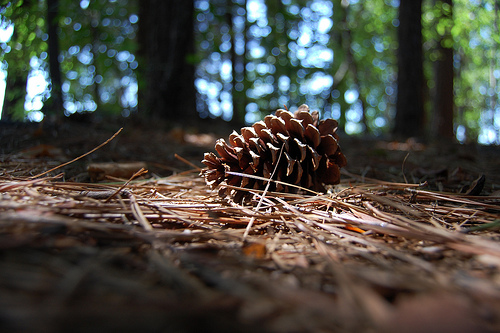
Pine Forest by Brandt Wemmer. Source: Fineartamerica.com

Pine Forest by Brandt Wemmer. Source: Fineartamerica.com

Imagine Santa Claus in a snowy pine forest. With the strains of Tchaikovsky’s Dance of the Sugar Plum Fairy playing loudly in the background, he decides to cook a gigantic pot of perfumed deliciousness. The elves line up with their ingredients that he, like a mad chef, throws into the pot with a heart laugh: 4 cups of the darkest of pine cone essence, reduced down to a syrup; 4 cups of the darkest brown sugar; 3 cups of dark candied sugar plums and dried fruits that he tosses in, in tune with the addictive rhythms of Tchaikovsky and with a nod to the Nutcracker; 3 cups of smoky frankincense; 1 cup of assorted spices from ginger to cloves and nutmeg; 2 tablespoons of earthy, rooty, dark, foresty vetiver; a dash of ISO E Super; and a hint of almost abstract apple cider. He sets the gigantic pot over a smoker filled with dried pine cones, incense, and perhaps a few cedar chips, then dances around the forest as he awaits for his perfumed distillation of the essence of Christmas.

Photo: Ross. Used with permission.

Photo: Ross. Used with permission.

That is Fille en Aiguilles, perhaps the best pine forest fragrance that I’ve ever smelled — and I’m not one who normally enjoys that note. But what an utterly joyful scent! The best of winter forests combined with the mysterious sweetness of Christmas treats, happy festivities, and excited anticipation. Pine is an extremely difficult scent to pull off in perfumery, as it can easily and quickly lend itself to the aroma of Pine-Sol household disinfectant, cheap car air-fresheners, or unpleasant medicine. I’ve dismissed more than a few extremely expensive, pine-centered fragrances for being over-priced air fresheners, or for evoking Glade plug-ins that I don’t want anywhere near my person. But Fille en Aiguilles is different, and it’s all thanks to the mad wizardry that is the inspired combination of Serge Lutens and the brilliant Christopher Sheldrake

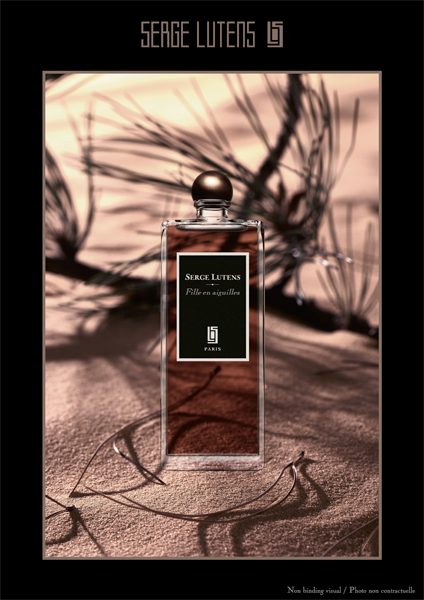
Fille en Aiguilles. Source: Serge Lutens' Facebook page.

Fille en Aiguilles. Source: Serge Lutens’ Facebook page.

Filles en Aiguilles is an Eau de Parfum Haute Concentration that was released in 2009. I’m not quite sure what Serge Lutens meant as the inspiration for this fragrance as his website description talks about pine forests and, oddly enough, the beach. (The beach?!) But it’s clearly intended to be a playful, joyful scent, either way, with a winking pun in the name. As Ozmoz explains:

The name of this perfume, for instance, is an inspired pun: ‘Fille en Aiguilles’ means both “Girl in High Heels” and “Girl in Needles” (as in pine needles, one of the ingredients), and it sounds a lot like “Needle & Thread” too. Despite the name, this woody-resinous oriental shaded with frankincense and fruity accents is not just for women: Fille en Aiguilles can easily be worn by men, too, an idea that tickles Serge Lutens’ fancy.

According to Fragrantica, Luckyscent, and Surrender to Chance, the notes in this very unisex perfume consist of:

Pine needles, vetiver, sugary sap, laurel bay leaf, fir balsam [resin], frankincense, candied fruit and spice.

Photo: David Gunter Source: Flickr (website link embedded within photo.)

Photo: David Gunter Source: Flickr. (Website link embedded within photo.)

Fille en Aiguilles opens on my skin exactly as described up in the introduction. It’s not a very complicated, morphing, changing scent — which makes it pretty unusual for “Le Grand Serge.” But, oh, does it bring a smile to one’s face. It’s beautifully dark, smoky, sweet, wintery, and so incredibly well-balanced that not a single note ever seems excessive. Even the normally hated ISO E Super seems to fit in, feel wholly appropriate, and actually helps the fragrance. (Yes, I can’t believe I’m saying that, either!)

Sugarplums. Photo: Phil Gyford, Flickr. (Link embedded within photo.)

Sugarplums. Photo: Phil Gyford, Flickr. (Link embedded within photo.)

Fille en Aiguilles is utterly joyous in an inexplicable way, not only because it sums up Christmas, but because it has some tantalizing mystery in that beautiful combination of notes. It radiates like a prism, throwing off different elements at different times. Sometimes, the deep forest rises up to greet you; sometimes, it’s the forest floor with the earthy vetiver mixed with pine cones; often, it’s that deliciously sweet, sticky, brown sugar syrup; and occasionally, it’s the ginger and dark, sweet fruits. At all times, however, the notes are wrapped up in the most gorgeous, dark tendrils of frankincense smoke, like a ribbon around a perfect, glowing, jewel of a Christmas box waiting to be unwrapped. 

Photo: StormchaserMike Photograph via Flickr (link to website embedded within.)

Photo: StormchaserMike Photograph via Flickr. (Link to website embedded within.)

Fille en Aiguilles never changes profoundly and remains in a consistent, linear line until the end. The only difference is in its strength, as the perfume softens less than an hour into its development and hovers just above the skin. Midway during the third hour, Fille en Aiguilles’ edges blur; it starts to turn almost abstract and amorphous as a sugared, beautifully smoked, spiced, woody scent. You can still detect the pine or fir note if you take a forceful, really big whiff of your arm, but it’s lurking below a general, resinous, sweet, woodiness infused by a spicy, lightly musked warmth. At the start of the sixth hour, Fille en Aiguilles is soft, muted, almost honeyed woodiness, lightly blended with rich, winter spices and imbued with a strong hint of frankincense. In its very end moments, Fille en Aiguilles is just the quietest trace of spiced sweetness. All in all, the fragrance lasted 8.25 on my perfume-consuming skin, with initially moderate sillage that quickly turned quite soft and unobtrusive.

There are a lot of raving, adoring reviews for Fille en Aiguilles out there, but perhaps my favorite comes from EauMG who writes as much about the feel of the fragrance as its lovely scent:

Fille en Aiguilles is the best pine fragrance ever made.

Fille en Aiguilles opens with spiced apple cider, snow on pine trees and a flickering fire. This is an atmosphere; Fille en Aiguilles is a place. It’s a picturesque chalet in the mountains and you’re by the fire looking out the window, watching water droplets roll down fir branches and icicles morph into longer, glistening shapes. You feel the steam of warm apple cider hit your cheeks before you take a sip. The feel of spices and warm liquid roll down the back of your tongue. Comfort in the cold. This is Fille en Aiguilles — spiced gingery cider, pine needles, balsamic sap and warm resins. A crackle from the fire with a little bit of smoke… and a base of warm, cozy musk.

EauMG notes that, on her, Fille en Aiguilles had above-average projection and longevity. And she ends her review by calling the fragrance “a masterpiece.”

Source: high-definition-wallpapers.info

Source: high-definition-wallpapers.info

Fragrantica has similar sort of comments, from women and men alike. A vast majority talk about: walks in winter forests, “Christmas in a bottle,” childhood memories, gorgeous dried and sweet fruits, smoky church incense, how it’s one of the best Serge Lutens creations, and/or how it was love at first sniff. A few share my issues with projection, finding Fille en Aiguilles to be so discreet that they eventually had to press their nose right onto their skin and, even then, the scent was extremely soft. A handful of others had problems with duration instead. A couple thought it was too intense, or that it had far too much incense. And about 15 people voted that Fille en Aiguilles bore a strong resemblance to Parfum d’Empire‘s Wazamba. I haven’t tried the latter yet, so I can’t comment, but I should note there are some who say Fille en Aiguilles is nothing like Wazamba.

In the middle of the love-fest, there are some who had a very different experience. Two people found Fille en Aiguilles to be quite harsh and unpleasant; one thought it was very masculine and cold, while the other thought it was astringent and just like Pine-Sol. In contrast, on Luckyscent, a few people explicitly say that Fille en Aiguilles is nothing like Pine-Sol, so clearly, it all depends on one’s skin chemistry, perceptions, and taste.

Photo: Federico Bebber. Source: MyModernMet.com

Photo: Federico Bebber. Source: MyModernMet.com

I think that anyone who loves woody, Christmas-y, wintery scents should try Fille en Aiguilles. So should those who love incense fragrances because, for me, the perfume is as much about the sweet, balsam-infused smoke as it is about the pine or fir trees. Fille en Aiguilles is also wholly unisex with an equal number of men as women loving it. It is very wearable, even to the office if one doesn’t spray on a lot. Even better, Fille en Aiguilles is often quite discounted at some online perfume retailers, making it relatively affordable for such a beautiful, high-quality, niche fragrance. It it an all-year round fragrance? Well, I would wear it in summer, but then I’m someone who goes purely by mood or feel in my perfume selection, and never by seasonality. For most, however, I imagine that Fille en Aiguilles would be limited solely to the winter. But, truly, what an incredibly lovely holiday fragrance it would be. Fille en Aiguilles is more than just cozy, though it is that as well. I think it’s actually quite mysteriously sexy with those dark smoky touches, and the sweet resins mixed with dark, sugared fruits. Try it, and you’ll see. I think the vast majority of you won’t be able to stop sniffing your arm!

DETAILS:
General Cost & Discounted Sales Prices: Fille en Aiguilles is a concentrated eau de parfum that comes in a 1.7 oz/50 ml size and which retails for $140, €99 or £83.00. However, Fille en Aiguilles is currently on sale at FragranceNet where the 1.7 oz/50 ml bottle is priced at $80.91, or $95.19, with an additional 15% OFF with the coupon code RESFT5 and free domestic shipping. Sears sells the perfume by way of a third-party vendor for $91.14 with $6.95 shipping. Fille en Aiguilles is also on sale at Beauty Encounter for $100, and you can Google to find discount codes, eBates codes, or first-time customer discounts for the site as well. Lastly, Parfum1 is selling it for $126 with a 10% discount coupon for first-time customers. I don’t know how long these specials will last.
Serge Lutens: you can find Fille en Aiguilles on the U.S. and International Lutens website, with non-English language options also available for the latter. 
U.S. sellers: Fille en Aiguilles is available for $140 at Luckyscent, Barney’s, and Aedes.
Outside the U.S.: In Canada, you can find Fille en Aiguilles at The Perfume Shoppe for what may be CAD$140, but I’m never sure about their currency since it is primarily an American business. They also offer some interesting sample or travel options for Lutens perfumes. In the UK, you can find Fille en Aiguilles at Harrods or Liberty where it costs £83.00 for a 1.7 oz/50 ml bottle. You can also find it at Les Senteurs where that same bottle costs more at £95.00. The site sells samples of Fille en Aiguilles for £3.50. In France, French Sephora sells Fille en Aiguilles for €101.50, while Premiere Avenue sells it for €95, and I believe they ship world-wide, or at least through the Euro zone. In Brussels, you can find Fille en Aiguilles at Senteurs D’Ailleurs. In Australia, it is on sale at the FragranceNet site (I think the Australian version?) for AUD $104.72, instead of what it says is the Australian retail price of AUD $154.02. It is also on sale on the Hot Cosmetics site for AUD $161, instead of supposedly AUD $218. It sold out on the Grays website where the 1.7 oz/50 ml bottle retails for AUD $145, but you can find it at Mecca Cosmetics for AUD $200. For other countries, you can use the Store Locator on the Lutens website.
Samples: You can test out Fille en Aiguilles by ordering a sample from Surrender to Chance where prices start at $3.99 for a 1/2 ml vial. There is also a Four Lutens Sample Set for $18.99 where the vials are larger at 1 ml each, and you get your choice of 4 Lutens Export fragrances (ie, not those that are Paris exclusives).

Perfume Review- Serge Lutens Santal Majuscule

There is a special beauty to sandalwood from Mysore, India. It’s incredibly rich, smoky, fiery, spicy, buttery, creamy, and undulating with sensuous depth. It’s a vision of red and bronze, and its incredibly smooth, luxurious aroma can’t be replicated by anything. Which is not only a damn shame but a huge problem as well, since the wood is so rare at this point that it might as well be extinct for the purposes of most commercial perfumery. Simply put, few perfumers can afford the real stuff, so they try for substitutes. The most common alternative is Mysore’s cousin, Australian sandalwood, whose creamy beigeness pretty much epitomizes its scent. It’s arid, endlessly beige, generic, and nothing spectacular.

Source: Mountain Rose Blog, sellers of Australian sandalwood essential oils. http://mountainroseblog.com/choose-australian-sandalwood-essential-oil/

Australian sandalwood. Source: Mountain Rose Blog, sellers of Australian sandalwood essential oils. http://mountainroseblog.com/choose-australian-sandalwood-essential-oil/

The same description applies to Santal Majuscule, the relatively new, sandalwood fragrance from Serge Lutens, and to its main problem in my eyes. Santal Majuscule is supposed to be sandalwood writ large, with even its name translating to “sandalwood with a CAPITAL letter!” But it’s not Mysore sandalwood, and the beige, chemical-laden, dry, generic woodiness that it does incorporate really isn’t very good at all.

Source: Serge Lutens via Facebook.

Source: Serge Lutens via Facebook.

Santal Majuscule was released late in 2012 as a sandalwood alternative for Serge Lutens’ export line, meaning it would be available worldwide. Created by Christopher Sheldrake, it is a scent that is supposed to be all about fairytales with a long video (read by Serge Lutens) about a little nine-year old boy in armour on his horse who brought life to gold, flowers and fire. On his website, Serge Lutens more succinctly describes the scent as

Sandalwood written in capital letters, full scale and life sized!

Oboedi silentiis meis non imperii: “Do not obey my orders, obey my silence”.
Turning powdery under the influence of bitter cacao, the sandalwood plunges deep into a velvety trap.

Serge Lutens Santal MajusculeThe perfume’s notes aren’t complicated and, according to both my nose and Luckyscent, seem to be:

Sandalwood, rose, cocoa, tonka bean and immortelle [my addition, and something also noted by a few other blog reviews].

The very first flicker of Santal Majuscule on my skin is of rose. Beautiful, sweet, tender and visually pink, it almost immediately turns a little dusky through a heaping dose of cocoa powder. The latter is glorious and, initially, so dark that it almost evokes a coffee bean or mocha. Quickly, the cocoa-laden rose is joined by immortelle which has a definite maple syrup undertone.

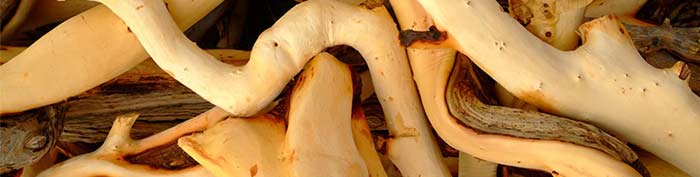
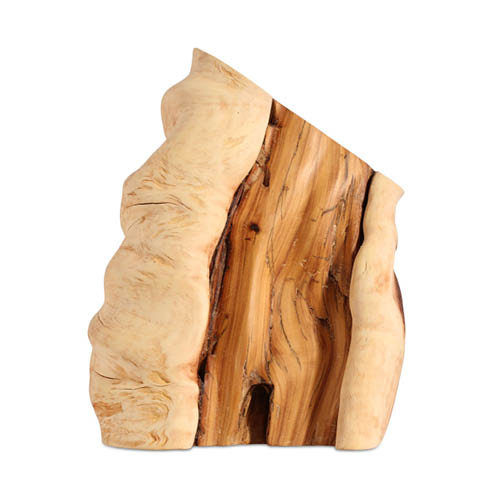
Pure Australian sandalwood timber. Source: tfscorporation169.en.ec21.com

Pure Australian sandalwood timber. Source: tfscorporation169.en.ec21.com

Then, a sharp, acrid, synthetic and very chemical-smelling starts to bully its way in. It comes from the wood, and is harsh, peppered, and ever so lightly touched by ISO E Super. That’s actually not the problem at all. Rather, it’s the damnably acrid, almost pungent, incredibly strange and weird nuance to the sandalwood. I have to wonder if Lutens and Sheldrake used something similar to the supposedly sustainable, new kind of Australian sandalwood that Frederic Malle featured in his Dries Van Noten, because the wood note feels very much the same here: creamily generic, artificial, and reeking of a faintly gourmand sweetness. Here, however, the wood is also infused with a sharply chemical edge. The blog, State of the [Car]nation, had a review very aptly (and amusingly) entitled: “Ceci n’est pas santal – Santal Majuscule by Serge Lutens” in which he wrote:

So this is a spicy woody floral, but the wood is just another conventional accord dominated by the soft textures of cashmeran, iso-e-super and the likes. There is nothing here close to an actual Mysore sandsalwood note.

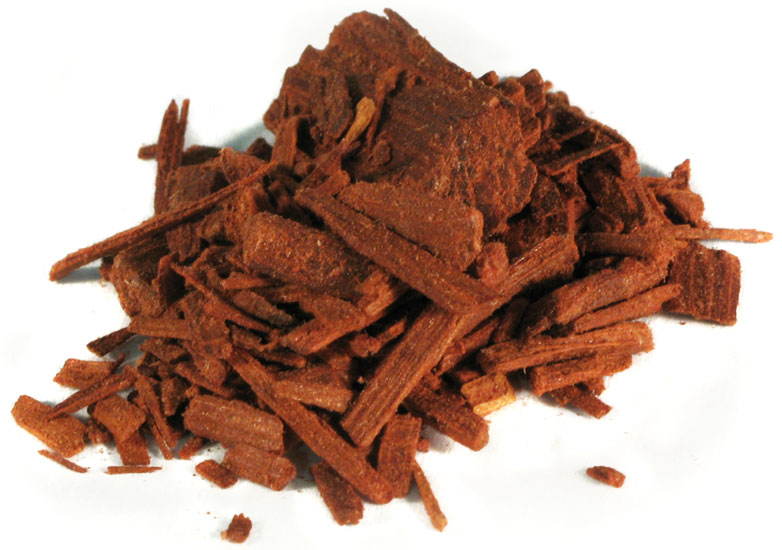
Real Mysore sandalwood in chips and slivers. Source: huile-essentielle-biologique.fr

Real Mysore sandalwood in chips and slivers. Source: huile-essentielle-biologique.fr

Now, I understand that real sandalwood is just a perfumista’s pipe-dream these days (unless you opt for Neela Vermeire‘s stunning creations which abound with gallons of the real thing), but the problem with Santal Majuscule is not the absence of Mysore sandalwood so much as it is the chemical underpinnings to the substitutes. I truly wouldn’t be surprised if Santal Majuscule’s Australian sandalwood was supported by cashmeran and similar wood synthetics, as detected by the other blog. Again, there is nothing wrong with seeking out alternatives, but why the hell do they have to smell so unpleasant here?

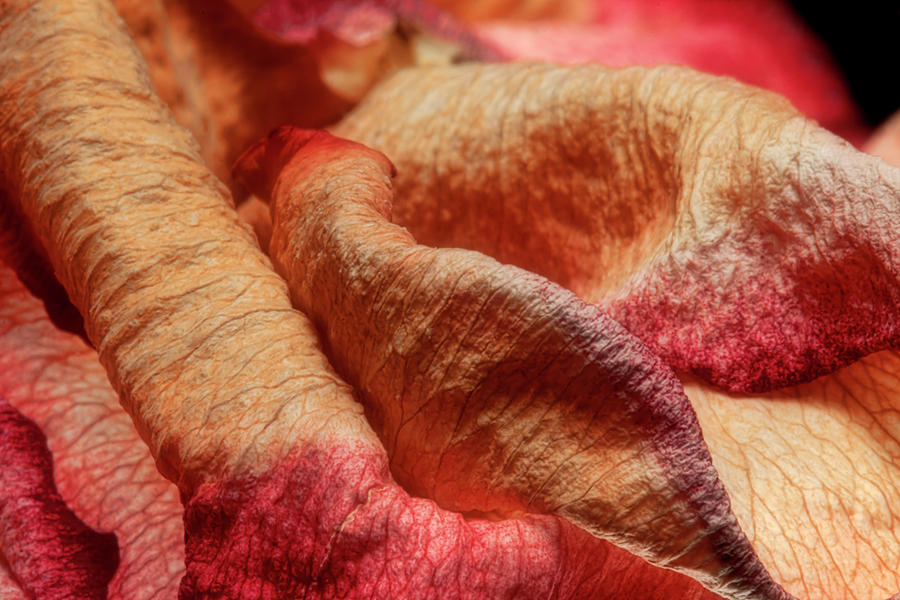
In those opening moments, the notes flit about like moths around a flame. The glowing light — and the best part of the perfume — is the cocoa powder which sits like a Buddha as the rose and immortelle dance around it. An odd, buttered note creeps in, smelling almost like an incredibly rich, buttered biscuit or cookie. The rose starts to change, feeling almost more like dried petals than anything syrupy or jammy. It has a peppery bent to it, thanks to the incredibly subtle tinges of ISO E Super at the base, and it starts to be a little less of a wallflower.

"Dried Rose Petals" by Tom Mc Nemar via Fineartamerica. http://fineartamerica.com/featured/dried-rose-petals-ii-tom-mc-nemar.html

“Dried Rose Petals” by Tom Mc Nemar via Fineartamerica.
http://fineartamerica.com/featured/dried-rose-petals-ii-tom-mc-nemar.html

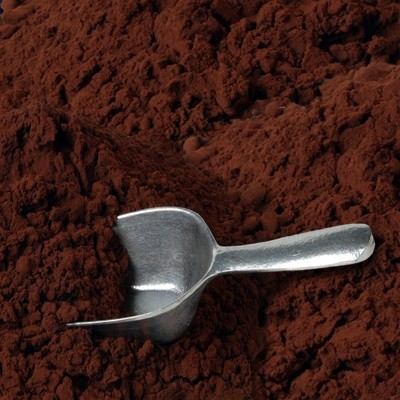
The most gorgeous part of the perfume, in my opinion, however, is the cocoa. Simply lovely! Though it started out feeling so dark that it almost had a coffee bean element to it, now, the powder is sweeter, richer, and verging on the most expensive milk chocolate. It doesn’t reach that level of sweetness, though — nothing about Santal Majuscule is really gourmand in nature thanks to the dryness — but the cocoa is much richer and creamier than it was at the start.

Unsweetened cocoa powder. Source: wellsphere.com

Unsweetened cocoa powder. Source: wellsphere.com

Twenty minutes in, Santal Majuscule changes a little in the underlying nuances. The wood loses a bit of its chemical pungency, turning sweeter and just barely less dry. Now, it feels like a blob of generic, beige woodiness with some sweet undertones. No, I’m not a fan, and no, it’s not because I’m a sandalwood snob. (Well, maybe just little….) It simply isn’t all that special, and it certainly doesn’t feel like the star of the perfume, let alone warranting the title “Sandalwood with a capital letter.” It’s more as if the sandalwood is a mere accessory to the real stunner in this fragrance: the cocoa powder. In the background, the immortelle loses its maple syrup undertone, changing into its more floral counterpart. The light, almost herbal, dry, woody elements to floral immortelle balances out that flittering butter cookie note, but neither one is very prominent, especially as compared to the sweet, dried roses.

What’s interesting is that the overall combination of notes creates a strong impression of something that almost verges on nutty, gingerbread cake. You know the sort of moist banana bread loaf? Here, it’s a bit like that, only there is a touch of ginger in it, creating an overall moist, just barely sweetened, nutty, bread note. Again, I’m reminded of Malle’s Dries van Noten with its odd, sustainable Australian sandalwood note that was dry, creamy, sweetened, and the foundation for a fragrance that smelled very much like snickerdoodles on my skin. While that perfume had a significantly more foodie, gourmand character to it, there something of the same feel to Santal Majuscule. I chalk it up to the ersatz sandalwood.

Santal Majuscule remains the same rose-cocoa-sandalwood accord for the next seven hours. Only at the end does it change a little, turning into amorphous, dry woodiness. All in all, it lasted just a little over 8 hours on my skin, with initially moderate sillage that turned into a skin scent midway towards the end of the third hour. At no time was I bowled over by any of it. Santal Majuscule isn’t a bad fragrance, but it’s nothing spectacular or very interesting. It’s simple, uncomplicated, and pleasant, I suppose, with a truly lovely cocoa powder element, but that ersatz sandalwood… ghastly. No, it’s definitely not my personal cup of tea.

There seems to be a split in opinion on Santal Majuscule with one half of the reports I’ve read loving it, and the rest dismissing it (for much the same reasons I have). The first thing everyone does is bring up Jeux de Peau, another Lutens fragrance which is supposed to have a few surface similarities. I haven’t tried it, so I can’t comment, but the consensus seems to be that the two perfumes are ultimately nothing alike and that Jeux de Peau is gourmand, richer, more bread-like, and heavier, while Santal Majuscule is drier and with different core elements. Others put Santal Majuscule in the context of Lutens’ other two sandalwood fragrances which are Santal Blanc and Santal de Mysore. I haven’t tried those either, so again I can’t comment, but the conclusion seems to be that Santal Blanc is significantly sweeter and whiter, while Santal de Mysore is more spicy, fiery, smoldering and dark. Perhaps that is why, over at CaFleureBon, Mark Behnke considers Santal Majuscule to be the case of Goldilocks’ sandalwood, fitting in as the perfect middle version. 

Other assessments are more ambivalent. There is an even split at Basenotes, where some adore it, while others shrug and say it’s pleasant but uninteresting. Damning with faint praise seems to be the order of the day, even at Now Smell This which asked where the hell is the sandalwood? In a review which finds Santal Majuscule to be perfectly pleasant, but not inspiring much ardent enthusiasm, Kevin astutely concludes:

Overall, Santal Majuscule presents a mix of ‘seasoned’ woods and rose. But, as with Santal de Mysore, I must ask: where’s the sandalwood? There does seem to be a “sandalwood-like” aroma simmering under the roasted woods, rose and gourmand notes, but it never gets a chance to shine (or shimmer). Santal Majuscule smells most like sandalwood two hours after application when the wood turns sweet with tonka bean. I personally like an open-faced sandalwood fragrance in my perfume ‘arsenal’ and Santal Majuscule doesn’t qualify. Still, I enjoyed wearing Santal Majuscule and recommend it to those who want an “ornamented” sandalwood fragrance…accent on the ornaments, not the santal.   

I think that the driving issue in how you will feel about Santal Majuscule will be your feelings on actual sandalwood. The people who seem less enthused by the fragrance seem to be those who really love true, real Mysore sandalwood. In the comments to the NST review, a few people didn’t like the “synthetic” or “jangly” edge to the woods used in Santal Majuscule, while others adored how it was softer, “cozy” and uncomplicated. It is indeed all those things, combined. And that’s why reviews on Fragrantica swerve from one end of the spectrum to another. On the one hand, we have comments (with which I fully agree) about the “wood alcohol scream of the sandalwood[,]” and how the “onset of loud, agressive and overall, not pleasant sandalwood ruins it for me.” On the other, there are raves about how Santal Majuscule is a “marvelous sandalwood perfume,” and how its “dryness and woodiness is simply breathtaking and the hint of powdery cacao makes this like a warm and cozy blanket.” There is similar adoring praise for the fragrance at MakeupAlley which rates it at an incredibly high 4.7 out of 5.

Personally, I found Santal Majuscule to be a massive disappointment, but I think the majority of people will love it, especially if you like sandalwood to be a mere side dish to other notes. If you enjoy the element when it’s soft and white, with just barely sweetened touches and some dryness, then you should definitely seek out Santal Majuscule. Those who prefer cozy fragrances with minimal sillage and light airiness that sits close to the skin will also probably find Santal Majuscule to be ideal. It’s a very versatile, wearable, office-appropriate, and unisex fragrance. It’s also an approachable, perfectly inoffensive fragrance that may be suitable for Lutens newbies as a way to start exploring the line, many of which are generally more nuanced, complicated, and complex. However, in my opinion, “perfectly inoffensive” doesn’t equal “fantastic.” If you’re a sandalwood fanatic, very passionate about the Mysore kind, and can also easily pick up the jangly undertones to more synthetic wood alternatives, then I don’t think you’ll be bowled over by Santal Majuscule. But try it, and who knows, maybe it will be your Goldilocks’ version of sandalwood.


Details:
Cost & Availability: Santal Majuscule is an eau de parfum that comes in a 1.7 oz/50 ml bottle that retails for $140, €99 or £83.00, but it is also available at a lower price through several reputable perfume discount sites. The lowest price comes from FragranceNet which sells it for $94.19 with an extra 15% off for first-time customers or with the coupon code RESFT5. I believe they ship all over the world. It is also available from Fragrance X for $113.95, and at a few other discounters for a higher price. For regular retail price, you can find it on the Serge Lutens website for $140 or on the Serge Lutens French site for €99. U.S. Vendors: In terms of other retailers, Luckyscent, Parfum1, Beautyhabit, and Aedes all offer Santal Majuscule for $140. It should be available at Barney’s too, but I don’t see it on their website. All those sites except for Aedes, I believe, ship worldwide and many, like Luckyscent, offer samples for purchase. Outside the U.S.: In Canada, Santal Majuscule is available at The Perfume Shoppe for CAD$135. In the UK, I found it listed at HarrodsHarvey Nichols, and House of Fraser for £83.00. In France, you can find it at Premiere Avenue for a minutely lower Euro price of €96 (instead of €99), or for a little more at Sephora France at €101.50. In Russia, I found Santal Majuscule at Ry7For the rest of Europe, I believe the Premiere Avenue site ships worldwide, but you may want to check via an email query. In Australia, Santal Majuscule is sold at Mecca Cosmetics, but I found it discounted on the Australia’s Hot Cosmetics website where the 1.7 oz/50 ml bottle seems to be on sale for AUD $135 instead of AUD $203. There are also other Australian discount sites, but I’m not familiar with them so you may want to check them out for yourself. For all other countries, you can use the Store Locator on the Lutens website. SamplesSample vials to test it out can be purchased at Surrender to Chance (where I bought mine) and start at $3.99 for a 1/2 ml vial. Many of the sites listed above also sell samples, as does The Perfumed Court. 

Perfume Reviews – Dior Leather Oud & Granville (La Collection Privée)

John Wayne riding through the arid desert canyons of New Mexico. Gary Cooper in a suit in the bracing, brisk air of Normandie. Two very different images of two very different men stemming from two very different fragrances in Dior‘s prestige La Collection Privée line of perfumes. (The line is sometimes called La Collection Couturier on places like Fragrantica and Surrender to Chance, but I will go with the name used by Dior itself on its website.) The fragrances are Leather Oud and Granville, and both were created by François Demarchy, the artistic director and nose for Parfums Dior, to reflect different aspects of the life of Christian Dior.

Continue reading