Perfume Review: Olivier Durbano Black Tourmaline

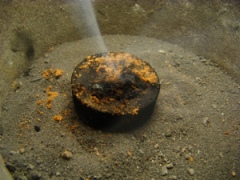
Black Tourmaline. Source: anobanini.net

Black tourmaline. Source: anobanini.net

Most perfumistas wear fragrances for themselves, for how it makes them feel, and for their own personal olfactory journey. Yet, we all like it when those around us sniff the air with delight or lean in closer, seduced by the glory of the fragrance wafting around us. Unfortunately, my experience with Olivier Durbano‘s Black Tourmaline led to wrinkled noses, pleas that I scrub off the fragrance, or, failing that, remove myself from the immediate vicinity. That’s not a good sign, even if I loved the fragrance. Thankfully for those who sought to have me exiled, I do not.

Black tourmaline. www.rainbowdoorways.com

Black tourmaline. Source: rainbowdoorways.com

Olivier Durbano is a French jewelry designer in Paris who specializes in creations using semi-precious stones. His line of fragrances now number eight in total, each one inspired by a different semi-precious stone. All the perfumes, however, are his own creation and without the assistance of a perfume “nose.” In 2007, Monsieur Durbano released Black Tourmaline which his website describes as follows:

Stone of protection in the former legends, the Black Tourmaline would protect against the pernicious influence[….] It look like bruned wood by her aspect, the oil of earth, the smell of blown flame. […]

Source: Luckyscent

Source: Luckyscent

Eau de Parfum inspired by legend and symbolize of black tourmaline:

Fragrance typewoody, spicy, smoky

Top notes: cardamom, coriander, cumin, frankincense, pepper

Middle notes: smoked wood, oud, leather, precious woods

Base notes: musk, amber, moss, patchouli  [Emphasis in the original.]

Source: Boston.com

Source: Boston.com

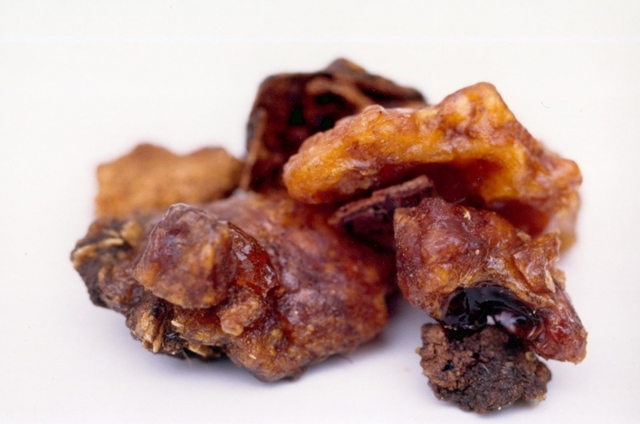
Black Tourmaline opens on my skin with a powerful duality of cold, churchy incense and pine notes. Within minutes, the eau de parfum becomes warmer and significantly spicier. Nutty, dusty cardamon merges with fiery pepper and smoky woods to quickly dispel the subtle, soapy, white, High Church-like incense. Myrrh (or olibanum) is not listed as one of the notes in Black Tourmaline, but it really feels as though it’s there. There has to be, especially given the almost licorice-like, salty, aniseed undertone to the bouquet. In the base, a subtle sweetness starts to grow, while, up top, the strength of the incense creates almost a burnt feel.

Something about that burnt, smoky blackness brings to mind birch tar. Like the myrrh, birch is not listed as part of Black Tourmaline’s notes, but I wouldn’t be surprised if it were a part of the fragrance as well. Here, the note is not mentholated at all, and it never feels electric or soldered as it is in Tauer‘s Lonestar Memories, but the burnt, black, viscous, thicky smoked aroma here definitely feel similar to that of the birch tree. I’m also reminded of a different scent. Something about the spiciness, the hints of sweetness underlying the scent, and that burnt, sharp, black smokiness all together makes me think of the “opium” accord in Profumum Roma‘s Fiore d’Ambra. Black Tourmaline is a wholly different fragrance, but the burnt, smoking opium character of both the incense and the burnt woods here feels similar.

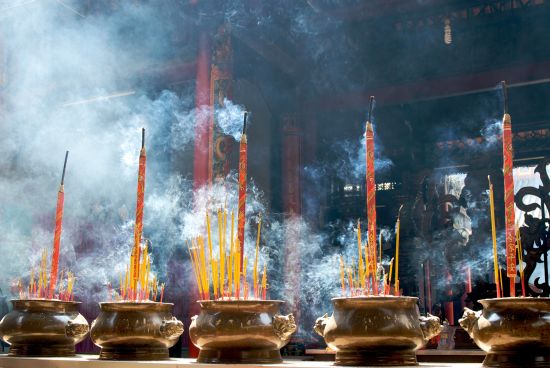
Beijing's Hongluo Temple. Source: topbeijingtravel.com

Beijing’s Hongluo Temple. Source: topbeijingtravel.com

Five minutes in, Black Tourmaline turns deeper. Rich resins with a nutty, deeply balsamic, toffee character mix with the cardamom, smoky woods, incense, and burnt licorice note to create a very different fragrance from the cold, wintery, church feel of the opening. This is now a church incense fragrance only if the church in question were a very dusty, ancient Buddhist temple in Beijing or Kyoto. Black Tourmaline is increasingly dry, dusty, sweet, spicy, fiery, resinous, slightly piney, tarry, and hugely smoky — and it’s quite intriguing. As the perfume grows sweeter and richer, flecks of amber now join the mix, as does the merest hint of beeswax. At the fifteen minute mark, the coriander leaves start to become noticeable, adding a lemony nuance to the pine or fir-tree element.

Black Tourmaline shifts and morphs in its nuances quite a bit in the first hour. Notes come and go with increasing rapidity. First, it’s the beeswax which becomes quite pronounced, standing in equal measure with the pine-fir, the sharp frankincense, and the subtle touches of resin. A few minutes after that, there is a subtle leather nuance that pops up, but it quickly fades away. At times, there is a bouquet of amorphous, dry woods which lurks around the edges, adding further depth to the pine note, but they don’t last long either. The cardamon and licorice fade away equally quickly, retreating to the outskirts of Black Tourmaline where they have a subtle effect on the fragrance but are not distinguishable in any individual, concrete form.

Source: chaoswallpapers.com

Source: chaoswallpapers.com

In fact, the very fast revolving door of notes is one of my problems with Black Tourmaline. All these elements sound great, and would have added much-needed complexity or depth to the fragrance if they stayed. But they don’t. Instead, in the blink of an eye, Black Tourmaline starts to slowly devolve into scent that is primarily pine evergreens with sharp incense and tarry blackness atop a thin, small layer of sweetness. It doesn’t take 30 minutes for the fragrance to take on a nebulous, hazy feel, and for the pine to bulldoze over almost everything else in its path. By the end of the first hour, Black Tourmaline feels completely flat, and is largely just pine with burnt incense on my skin. Many of the other notes — from the cardamom to the amber, the beeswax, dust, and coriander lemon — have retreated to a blurry speck in the horizon. A few of them (the licorice and leather, in particular) seem to have vanished completely. Only the sweet resinous base with its subtle tinge of birch tar remains.

Source: picstopin.com

Source: picstopin.com

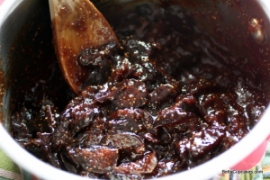
And this is where the real problem lies. As the pine top note increases in prominence on my skin and the other notes (except for the smoke) fade away, Black Tourmaline starts to smell somewhat unpleasant. Pine is always a very tricky note in perfumery; fragrances built primarily around it can easily tip into the “household cleaning product” category, or into something resembling car fresheners in terms of people’s mental associations. Serge Lutens circumvented that problem with his Fille en Aiguilles by making the fragrance as much about spiced plum molasses and frankincense smoke as it was about the evergreens. (For me, actually, more so.) Black Tourmaline, however, lacks the sweetness of the Lutens, and its focus isn’t so spread out between different accords. Instead, Black Tourmaline starts to become increasing myopic in vision, focused on just a barrage of pine with incense, and very little else else.
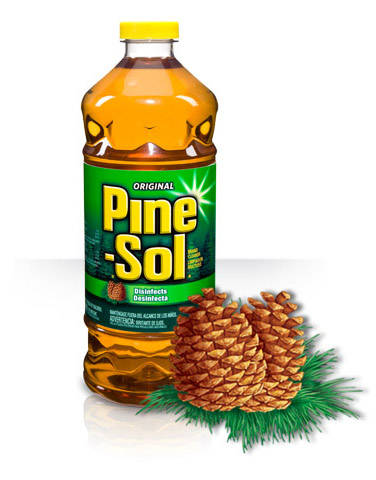
pine-solIt was a huge problem for those who were around me as I tested the fragrance. Initially, it was just a comment about “lemon.” Then, quickly, the comment turned into mutters about “Pine-Sol,” the piney-lemon household cleaning product. Less than three hours later, when Black Tourmaline was full-on, hardcore, smoky pine, there was an actual plea that I wash it off “now” or, failing that, “leave.” Though it was said with affection, my dinner companions simply couldn’t bear it any more. There was even a strangled moan about how I smelled like “toilet bowl cleaner.” (It was expressly suggested to me that I do a side-by-side comparison, because “I bet you they’re the same.”)

Green Shield Pine Toilet Bowl cleaner. Source: iHerb.com

Green Shield Pine Toilet Bowl cleaner. Source: iHerb.com

I hate to admit it, but they’re right. My skin simply doesn’t work well with Black Tourmaline for a good portion of its lifespan. In fact, the perfume’s flat, singular, pine-dominated nature somehow becomes worse by the end of the second hour. It lacks any major nuance or body, and the sillage has dropped, though apparently not enough for my dinner companions’ liking. (I was starting to get some glares at this point, and one person tried to move their chair further away.) Black Tourmaline now hovers just above the skin as a blur of incense-infused pine oil atop a thin, subtle, base layer of resinous, tarry sweetness. At the end of the third hour, a tiny whiff of soapy myrrh returns, but all that does is to create a slightly clean, room freshener impression. By the time the fifth hour rolls around, yes, I do, in fact, smell exactly like Pine-Sol “toilet bowl cleaner” mixed with black, smoky accords. Black Tourmaline sits right on the skin at this point, though the sharpness of the incense is still extremely potent when smelled up close. 

Relief is around the corner, however, when Black Tourmaline’s final drydown commences. You may not believe me when I say that Black Tourmaline turns into something truly lovely, but it does. Around the start of the seventh hour, the bloody pine note finally starts to retreat, and the other elements have a chance to compete. The birch tar and darkly sugared resins rise up from the base, and become much more noticeable. By the middle of the eighth hour, they fully join the other players on the main stage, turning Black Tourmaline into a very sweet, warm, richly smoked, resinous fragrance with dry woods and birch tar, and only a whisper of pine. There are also flickers of sweetened leather that pop up from time to time, too. Eventually, the remaining traces of pine fade away entirely, leaving only the base notes alongside the black incense. In its final moments, Black Tourmaline is merely abstract smoky, woody sweetness with a touch of tar. The whole thing was gorgeous; how I wish it had been that way from the start!

Source: spicewallpaper.blogspot.com

Source: spicewallpaper.blogspot.com

All in all, Black Tourmaline lasted just short of 11 hours on my skin. The sillage was initially very strong, and seriously forceful, but it turned much more moderate after a few hours. However, someone standing very close to you will (as I learnt) find the perfume’s projection to be quite potent and unbearably intense for the first five hours or so. Consequently, I would recommend using caution in application if you want to wear Black Tourmaline to work, and if you work in a conservative environment with perfume-sensitive co-workers. 

People’s reactions to Black Tourmaline generally tend to be enormously positive and hardly anyone seems to have had my experience with the fragrance. Take, for example, the review from Robin at Now Smell This:

The opening is a rush of spices, with plenty of pepper and cumin (other notes: cardamom, coriander, frankincense, smoked wood, oud, leather, precious woods, musk, amber, moss and patchouli). The dry down is dusty-smoky and dry, and smells like incense, smoldering logs and warm earth. There is a touch of leather, slightly scorched, and a touch of human sweat, and the slightest hint of something vaguely medicinal. Only a perfumista (or a crazy person), I suppose, could write those last two sentences and then follow with how absolutely wonderful Black Tourmaline smells?

I said Black Tourmaline was churchy, but it is a deeper and darker scent than Comme des Garçons Avignon (my own gold standard for church incense), in fact, it is more of everything than Avignon: more spice, more smoke, more wood; and while there is nothing feminine about Avignon, Black Tourmaline has a rougher, more obviously masculine slant. Black Tourmaline has a kind of swagger about it that is in stark contrast to Avignon’s austerity, and I wouldn’t be surprised if many people found it to be just too much. [¶] I love it, but I’m not sure it’s something I’d wear just anywhere.

The love fest continues on Fragrantica where there are repeated references to how the perfume is a “masterpiece” or a “piece of art.” As with the NST reviewer, it’s perhaps a little too much beautiful “art” for a couple of fans: they don’t feel they could wear Black Tourmaline all year round, or find it to be a very versatile, easy scent, no matter how much they love it. Some of the admirers get a “gothic” vibe from the fragrance, and one person thinks it conjures up images of an ancient pagan ceremony. However, a few are left a bit bewildered by such comparisons, stating that they don’t see it at all or that Black Tourmaline merely feels like a classic men’s fragrance. One commentator said he found its resemblance to Polo to be “quite discomforting.” (I don’t see the comparison to Polo at all!) A tiny handful find Black Tourmaline to be an okay scent but somewhat over-priced, especially when compared to other famously dark, smoky, black scents like Nasomatto‘s Black Afghano. Yet, as a whole, the reviews are extremely laudatory, and they’re multiplied even more so on Luckyscent where almost everyone gushes about the smoky campfire woods and incense.

Source: Wallsave.com

Source: Wallsave.com

Rare as it is, there are some vocal dissenters. On Fragrantica, only two people wholeheartedly hate Black Tourmaline, writing:

  • Oh man, I hate this, it smells like burnt rubber, or burnt wood that’s been peed on. No, no, a million times no.
  • Main thing that stands out is tar, wtf? [¶] Really why would anyone want to smell like you just got off a crew taring a roof at minimum wage?

There are only a handful of haters on Luckyscent as well. The most amusing comment comes from the woman who spent two hours trying to scrub Black Tourmaline off her skin and who loathed the fragrance so much that she thought of buying it for her ex-husband. “[I]t would be great for revenge.”

A few people on Luckyscent astutely note that you really have to have the right skin chemistry for Black Tourmaline, and I think that’s absolutely correct. My skin obviously brought out the pine, the smoke, and very little else for a good chunk of Black Tourmaline’s lifespan. I’m afraid I simply don’t like pine as a primary note, even when it is infused with incense. And, no matter how much I liked that gorgeous drydown phase, I would never spend a lot of money to smell like “toilet bowl cleaner” to people around me. However, it would probably be a different matter if I were one of the many people whose Black Tourmaline experience was almost all smoky incense mixed with some combination of dark woods, oud, leather, and spices.

Regardless of how the perfume manifested itself on my skin, you may want to test Black Tourmaline for yourself if you adore very dark, smoky, woody, somewhat masculine fragrances. Too many people have had an experience wholly different to mine, and your skin chemistry may turn Black Tourmaline into the fantastic, smoky, woody beauty that so many people adore. Black Tourmaline is not a fragrance to buy blindly, however, even if the perfume were easily available. As of this moment, it’s not — unless you buy Black Tourmaline directly from Olivier Durbano himself. In terms of retail vendors, I have the impression Luckyscent in Los Angeles is the only retailer (possibly worldwide) that carries the fragrance, but they’re not currently shipping any out until February 2014! Judging by a few of the comments on Luckyscent’s Black Tourmaline page, and my difficulty in finding any other retailers (anywhere) who sell the perfume, there seems to be something going on with both the pricing and vendor access to the fragrance. I’m afraid I have no idea of what or why.

Have you tried Black Tourmaline? If so, how was it on you?

DETAILS:
Cost & Availability: Black Tourmaline is an eau de parfum that comes only in a 100 ml/3.4 oz size and which costs €150. There seems to be an issue about its U.S. price which I’ve read was once increased from $125 to $200, but which seems to be down to $150 now on Luckyscent. Unfortunately, the latter site says it won’t or can’t ship bottles for another six months (!) until February 2014. I’ve also read in the comments there that Black Tourmaline is not available from any other retail vendor. I’m not sure if I can believe that, but I have not been able to find the perfume available for purchase anywhere else except directly through Olivier Durbano’s e-Store. It costs €150, and I believe he ships all over. Samples: I obtained my sample from Surrender to Chance where prices start at $4.99 for a 1 ml vial. Luckyscent also sells samples.

Perfume Review: Amouage Interlude (Man)

Source: Stock image. footage.shutterstock.com

Source: Stock image. footage.shutterstock.com

Imagine a kaleidoscope where, every time you turn the knob, the plates shift and change. Sometimes, it’s just in the colours and their order: red, yellow, green and black, turning into yellow, green, black and red. Sometimes, the shapes themselves change, creating a whole new vision. And, sometimes, it’s both things, with the overlapping plates changing in both formation and colour.

Source: Vogue.ru

Source: Vogue.ru

That was my experience with Interlude for Men (hereinafter just “Interlude“) from the royal Omani perfume house of Amouage. It’s a triumph of technical mastery with notes put together like the bricks in an Egyptian pyramid, in a vision of intricate, olfactory complexity. Yet, Interlude is also an incredibly changing fragrance that will throw off different colours and shapes like a kaleidoscope. The broad strokes occasionally remain the same, but the details differ each time. 

I tried Interlude twice with two different results, and am currently at the end of a third day, with still further variations in the nuances. Interlude is a perfume that I could test for 30 days in a row and I suspect that I’d have about 10 different, subtle variations, at the very least, during that time. That’s the sign of a spectacularly well-crafted, well-blended fragrance with more intricacies than a Swiss watch, a fragrance that will reveal different facets each time like a perfectly cut diamond. And some of those facets are simply stunning. In fact, I’m not sure what has left a greater impact on me: Interlude’s complex intricacy, or the intriguing, forceful, and often beautiful scent of some of its stages. Yet, for all that, I experienced some rough patches which make me a little uncertain that this brilliant creation is ultimately for me. All of that means that this is going to be a very long review, I’m afraid. Interlude is simply too complex a scent to avoid it.

Interlude Man is an eau de parfum that was created by Pierre Negrin and released in 2012. Fragrantica classifies it as a woody Oriental, and says that Interlude was intended “to evoke an air of disorder while maintaining a sense of balance and tranquility through the inventive use of incense and myrrh.” The Amouage website elaborates on that point a little:

Interlude for Man is a spicy and woody fragrance inspired by chaos and disorder masquerading an interlude moment of harmony in its heart.

Top Notes: Bergamot, Oregano, Pimento Berry Oil.

Heart Notes: Amber, Frankincense, Cistus [Labdanum], Opoponax.

Base Notes: Leather, Agarwood Smoke, Patchouli, Sandalwood.

Opoponax. Source: Basenotes.

Opoponax. Source: Basenotes.

For once, the PR and marketing descriptions are quite accurate. Interlude does have a rather chaotic, difficult, intense, and disordered opening which soon gives way to plush, comforting, gorgeously rich harmony. Part of it stems from the oregano on the list, and part of it has to do with the opoponax. Opoponax is another name for Sweet Myrrh, a resin which has a very honeyed, balsamic, sweet aroma. In that way, it differs from regular myrrh which can be more churchy, cold, soapy, or medicinal. Opoponax runs like an aorta through the heart of Interlude, combining first with the oregano, incense, and pimento in the opening, before later melting into the sandalwood and amber. 

I tested Interlude in full twice, and, for the most part, the openings were largely the same in their broad strokes. There is always an initial blast of sweetness from the honeyed opoponax, mixed with incense smoke and green herbs atop subtle hints of leather and amber. That’s where the similarities end, however, because the notes, their order, their strength, and their feel varied quite a bit in each tests.

FIRST TEST:

In my first test, Interlude opened with honey, caramel, nutty amber, and sweet incense followed quickly by mentholated green notes, touches of camphor, leather, and chili pepper pimento. There is a huge blast of dried green herbs but — thanks to the strength of the pimento berries and the powerfully sweet, balsamic, honeyed opoponax — it feels almost as if the dried leaves have been transformed into something sticky, spicy, and caramelized. In fact, the honeyed nuances of the opoponax are so rich, it really does have the nutty feel of caramel. Underneath, there are subtle leather tones, and an intense, dirty, slightly goaty labdanum.

The overall bouquet is of a very medicinal, dried, green, herbal concoction covered with honeyed caramel, sweet resins, sweet smoke, and dark, warmed, animalic, slightly dirty leather. There is a somewhat dusty feel to the combination, too. The fragrance strongly evokes one of the old, dusty, Asian, herbal, homeopathic medicine shops that I visited in China, mixed perhaps with the dusty parts of an ancient Moroccan souk. The aroma is exactly what I thought Serge LutensAmbre Sultan would be like with its reportedly strong, medicinal, herbal opening. That wasn’t my experience with Ambre Sultan, but it is very much how Interlude starts for me in my first test. Medicinal, herbal amber with sweetness, incense, and a hint of ancient dustiness. The golden amber is stunningly beautiful, though extremely sweet, and it creates a visual kaleidoscope whose shifting colours center on gold, dappled with specks of dark green and fiery, peppery red.

Model of an old Shanghai medicine shop. Source: arekusu.de http://www.arekusu.de/?p=292

Model of an old, 19th-century, Shanghai medicine shop. Source: arekusu.de http://www.arekusu.de/?p=292

As time passes, the herbal pungency of the oregano feels less dry and medicinal. The camphorated notes vanished within minutes, but even the pungency has been tamed by the honeyed caramel richness. The subtle flickers of ancient dust are similarly overtaken, only now it’s by the warm, slightly animalic musk seeping out of the labdanum. Throughout it all, however, is the gorgeous incense whose smokiness infuses all the other elements and ties them together like glue. It’s sweet from the opoponax, but it’s also dark like frankincense. Fifteen minutes into Interlude’s development, the oud smoke joins the festivities. It never feels like pure, actual oud, but, rather, more like the dry, woody aroma that would ensue if agarwood were burnt. It’s very subtle at first, and limited to a mere flickering, woody shadow in the background, but it’s very pretty. Together, the oud smoke and incense help cut through some of the opoponax’s caramel richness, ensuring that Interlude is perfectly balanced and never so sweet that it verges on the cloying.

In that first test, I applied 4 really big sprays of Interlude but, to my surprise, the sillage wasn’t monstrous. It created the perfect small cloud around me, as golden as a halo. The richness of the caramel-honey was so intense, it feels as though one were swimming in liquid gold flecked with herbs. Again, I’m reminded of how this is what I thought Ambre Sultan would be like, except the latter was sheer, thin and mild on my skin instead. Another perfume comes to mind as well. The way Interlude softens to a dreamy, billowing, intensely rich, golden cloud makes me think of Xerjoff‘s Mamluk. It has some of the same rich sweetness as Interlude, though Mamluk is primarily a gourmand caramel-honey-lemon bouquet, and not a dry caramel-honey-oregano-smoke one. Still, the degree of both perfumes’ opulence and that honeyed caramel accord makes them feel like distant cousins in the same wealthy clan. 

Source: layoutsparks.com

Source: layoutsparks.com

Forty-five minutes in, Interlude starts to shift a little. The leather, dust, and medicinal undertones have largely faded to a muted whisper. Only the sweet musk and the subtle fieriness of the pimento spice remain as supporting players on Interlude’s stage. They stand quietly on the sidelines, watching as, under the spotlights, like a giant Valkyrie out of Wagner’s Ring opus, the darkly green, dried, herbal, smoky, caramel amber sings her heart out. She ends her song around the 90-minute mark, at which time Interlude changes course fully and drastically. The perfume has suddenly become extremely dry and woody. It’s as though the oud smoke and woody notes have pushed the singing, caramel-opoponax Valkyrie off center stage, and taken its place next to the dried, green, herbal and spice mix.

Pimento berries. Source: spiceryshop.com.ua

Pimento berries. Source: spiceryshop.com.ua

Something new has also appeared. There is an unexpected fruitness swirling around Interlude, as if the red pepper pimentos were truly in berry form. Actually, the note feels distinctly like raspberries! It’s quite perplexing. It probably means the patchouli is at play and of the slightly fruited variety; when mixed with the pimento berries, the patchouli must have sweetened them to a fruited, almost syrupy degree. On occasion, the raspberry note balances Interlude’s new smoky aridness and woody flavour, but generally, it feels discordant and out-of-place. It doesn’t help that the musty dust specks have returned, adding yet another strange layer to Interlude’s background notes.

Source: healthysupplies.co.uk

Source: healthysupplies.co.uk

I’m not crazy about the overall combination, truth be told. And I become distinctly less enthused around the 3.75 hour mark when Interlude’s strange raspberry note takes on a somewhat powdered and vanillic feel. A sheer veil of oud lurks right behind it.The herbal notes are now distant figures in the horizon, something for which I’m quite thankful as it would simply be too odd of a combination. The honeyed caramel has similarly retreated. Now, Interlude is primarily a dry, woody, raspberry fragrance. It’s light in weight, gauzy and soft in feel, and hovers just an inch or so above the skin.

Interlude continues to change. By the middle of the fourth hour, the fragrance is primarily a powdered raspberry wood fragrance with oud and incense atop an abstract, vague sweetness. A new element starts to stir in the base: sandalwood. It doesn’t feel like Mysore sandalwood, but it’s extremely pretty with creamy richness that is delicately sweetened and warmed. It blooms with every passing minute until, at the start of the sixth hour, it really dominates the scent, turning Interlude into the harmonious, beautiful, comforting luxury that the PR ad copy talked about. The raspberries are still there to a small extent, but the sandalwood is at the heart of the drydown. It’s infinitely creamy, sweet, rich, and thick, with an almost nutty undertone. The latter may stem, in part, from the labdanum amber with its rich, sweet, honeyed nuances. The two new stars — the amber and the sandalwood — are both infused with oud smoke, creating a layered triptych of creamy woods, smoke, and sweetened amber.

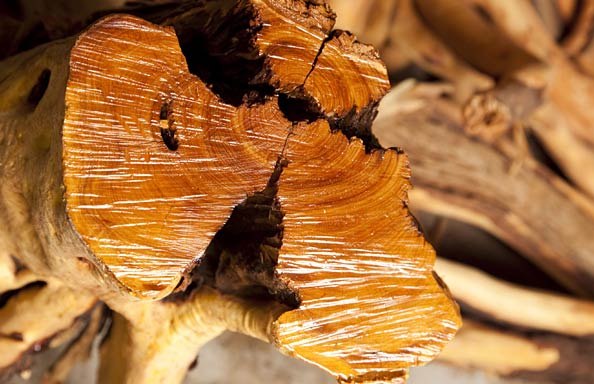
Sandalwood cross-section. Source: http://vk.com/wall172858112_51

Sandalwood cross-section. Source: http://vk.com/wall172858112_51

Interludes remains that way, in this first test, largely until its final moments. The oud smoke fluctuates in strength, sometimes seeming as though it’s about to take over, sometimes sharing the stage with the sandalwood and amber. The raspberry, alas, remains in place. At its very end, Interlude turns into an abstract, woody dryness mixed with a hint of fruity powder. All in all, with 4 large sprays, Interlude lasted a whopping, astronomical 14.75 hours on my voracious, perfume-consuming skin. The sillage was good, though it was less powerful in projection than what I had expected. Still, Interlude was a small, soft, billowing cloud around me for about 3 hours, then shrinking in size to hover just an inch above the skin for another few hours. It became a true skin scent around the end of the seventh hour. Excellent times, all in all, but I did apply a substantial amount.

SECOND AND THIRD TESTS:

Given the amount that I initially applied, and the characteristic complexity of Amouage’s fragrances, I decided to test Interlude a second time. This time I used half the amount, about 2 good sprays, and I was surprised to have a very different outcome. Now, Interlude was primarily a fruited, but dry, woody scent with a lot of incense smoke.

Photo: Nicole Resseguie-Snyder, "Cracked Moon," on Flickr. (Website link embedded within photo.)

Photo: Nicole Resseguie-Snyder, “Cracked Moon,” on Flickr. (Website link embedded within photo.)

In my second test, Interlude opened with honeyed herbs that had a harshly medicinal, camphorated edge mixed in with leather. The latter feels raw, uncured, rough, harsh, and very dirty. The oregano smells concentrated, and somewhat off-putting. It’s simultaneously like the dried variety, like a massive bunch of the fresh kind, and a third sort where both forms of oregano have been burnt to an acrid, smoky edge. Interlude evokes more than ever an old Chinese spice, herbalist medicine shop that is lightly covered by the dust of ages. This time, however, some of those herbs have been set on fire and mixed with sharp frankincense smoke. A sweet but animalic muskiness adds to the pugnacious mix which is joined, within a matter of mere minutes, by the raspberry note. It feels like both the concentrated, dried fruit, and the candied variety infused with sugar, but never like fresh raspberries. The honeyed myrrh is very subtle this time around, taking a back seat to the other notes, and adding just a hint of sweet caramel. Fifteen minutes in, the oud appears as well, feeling a little like agarwood as well as its smoke.

I’ll spare you the hour-by-hour fluctuations, but the bottom line this time around is that Interlude has an extremely different focus for its first 7 hours. The primary bouquet is of fruited, raspberry woods covered by a thick veil of sharp, black frankincense smoke with oud and some peppered spicy notes. The powerful oregano accord with its varied nuances remains for a good portion of the first two hours, until it eventually fades away. I don’t mind it, but I can’t stand it in conjunction with that fruited, raspberry note. Actually, to be precise, I can’t stand the raspberries. Not one bit, and especially not when they take on a vanillic, powdered characteristic.

Starting at the middle of the eighth hour, Interlude shifts into the gorgeous, glorious sandalwood stage that I loved so much the first time around. The infinitely creamy, slightly spiced woods are supplemented by cozy, comforting, rich amber, along with smoke and the merest hint of aged leather doused in a fine layer of caramel. It’s truly beautiful, and quite addictive to sniff. Flickers of dry oud smoke and, unfortunately, raspberries dance around the edges, but they are subtle. Nine and a half hours in, Interlude is all toasty, nutty, sweet, sandalwood with caramel and hints of smoke. By its very end, 12.5 hours from Interlude’s start with just 2 sprays, the perfume is nebulous, amorphous sweetness with a hint of some vague, lightly powdered fruitness mixed in.

I’m actually writing this review towards the end of my third test of the fragrance in as many days, and there is a third version of Interlude that has emerged. As you can tell, the layers in Interlude show themselves very differently upon each wearing. The overall brush strokes this time around are not wholly the same, though the fragrance begins with the same herbal notes as in all the other tests. The nature of the oregano falls somewhere between the opening of the first two times, but, unfortunately for me, the raspberry is as heavy from the start as it was during the second test.

Source: 123rf.com photos.

Source: 123rf.com photos.

This third time, however, the frankincense has truly dominated everything else, even the oregano, and it is incredibly powerful. Its sharpness and strength call to mind one of the Chinese Buddhist temples that I saw in Beijing during a religious festival, where incense smoke billowed out from seemingly every nook and cranny. In the third test, the leather seems significantly more noticeable, too, right from the start, but the oud is much more insubstantial than it was the second time around. And, as a whole, this 3rd version of Interlude bears very little resemblance to the first version. At best, you could say it’s like a combination of Test 1 and Test 2 (particularly since the bloody raspberry is there again), except that comparison wouldn’t be wholly accurate given the intensity of the incense.

OVERALL:

Source: footage.shutterstock.com

Source: footage.shutterstock.com

In short, Interlude is a bit of a kaleidoscope where all the gears shift and change depending on wearing. Both the strength and the order of Interlude’s notes vary in the perfume’s first seven or eight hours, such that the primary focus seems different each time. On me, depending on test, Interlude was primarily a herbal-caramel amber scent, then a dry fruited-woody-oud one, and finally, an incense smoke one subtly backed by leather. All the remaining, additional elements or nuances varied each time in terms of strength and when they appeared. Yet, in each test, the final stage was always that gorgeous “harmony” period of sandalwood, amber and sweetness. And it’s truly beautiful.

A few other things about Interlude. I personally think this is a fragrance that smells better from afar sometimes than sniffed up close, at least during the first stage. Some people loved the overall scent that was wafting from me one night from a distance but, when I gave them my arm to sniff Interlude up close, they wrinkled their nose. I suspect it’s the pungency of the oregano, or perhaps it’s the combination of the oregano with the incense. Another thing to pay heed to is the strength of the fragrance. On Fragrantica, commentator after commentator talks about how Interlude is positively “nuclear” in its forcefulness, both in terms of sillage and longevity. On a few people, the fragrance can last up to 24 hours; one person said they could detect the aroma wafting just from the bottle alone on the other side of the room.

As a whole, Interlude Man seems to be one of men’s favorite Amouage scents and a cult hit. The majority of reviews on Basenotes and Fragrantica are overwhelmingly positive. On Basenotes, out of 23 reviews, 48% (or 11 commentators) give it the full 5 stars, with 9% giving it 4 stars. However, 26% give it 3, and 17% (or 4 people) give it 1 star. Interestingly, one of those raving 5-star reviews comes from a person who was wholly unimpressed by Interlude when he dabbed it on, but who fell head over heels for the fragrance when it was sprayed. It makes sense to me because I think this is a very complicated scent, and both the act of spraying and the quantity can impact Interlude’s character. The 4 Basenotes posters who hated the fragrance and rated it one star seemed to have sharply different reasons for doing so. For one, Interlude had too much of a “kitchen spice” accord, while another found it to be extremely cloying. A third found Interlude to be all amber mixed with a synthetic oud, and, thus, to be “seriously over-priced.” In contrast, the fourth found Interlude to be mainly sour fruit in aroma:

SOUR! Not a slight animalic or medicinal note but sour like ramming tamarind paste up my nostrils. This continued for hours without the slightest of evolution. Definitely not dry woods or incense or leather or even astringent bergamot. It was soggy wet rotten fruit for hours.

Over on Fragrantica, the reviews are even more positive in number than they are at Basenotes. The majority view is best summed up by the chap who described Interlude as a “fantastic, in-your-face spice/incense MONSTER that grabs you by the neck and throws your face into it’s scent full-throttle.” To my relief, one person detected the raspberry note, another thought it was strawberry, and a third picked up the Ambre Sultan resemblance, writing “Reminds me Ambre Sultan by Lutens, but with less spicy notes and more incense.” Perhaps my favorite assessment came from “kochy7058” who found Interlude to be an initially harsh scent that was redeemed by its drydown, but whose overall  “testosterone” forcefulness made it suited only for bosses in upper management. To be specific, “Gordon Gecko,” Michael Douglas’ ruthless corporate raider from the movie Wall Street. It’s hilarious, but it really does fit. Interlude is like a battleship and a boss, steamrolling its way through most things with the arrogant confidence of supreme dominance.

However, I think the negative reviews of Interlude can be quite instructive on how that forcefulness, mixed with Interlude’s harsh opening, can make the fragrance go terribly wrong on some people. To wit:

  • This reeks of an old, dusty attic with an odd “something smells sweet and sticky in the corner” odor. [¶] I have a sample of this and have to say that it’s absolutely horrid. [¶] This stuff is like napalm. It sticks to you and tortures you and no matter what you do, you can’t wash it off or scrape it off your body.
  • I like it, but it cause dizziness seriously! maybe it is the insence.
  • I’m not really liking this as the “kitchen spice accord” really overwhelms everthing else. And it smells like something that should be on a pizza or put into a curry. And its something I do not want to smell like.
  •  it is a different story when it is sprayed out of a bottle. It dried down to a very harsh, herbal mess mixed with body odor and I literally had to convince myself that it smelled “good.” [¶] The final straw was when I had a friend over to my place. He sniffed the air a couple times and gave a repulsed look. “Something smells like fucking ass.” I blamed it on my dog farting, and excused myself to the bathroom and scrubbed it off. I sold the bottle 3 days later.

Oh dear. “Napalm,” dusty attics, pizza toppings, and herbal body aroma. Clearly, how Interlude manifests itself on your skin will depend not only on chemistry, but also, on how your brain processes the chaotic, odd, harsh, sometimes discordant opening. The oregano, in particular, seems to be an insurmountable obstacle for some. My own varied experiences with the fragrance should underscore the obvious fact that Interlude is a fragrance that you need to test a number of times. Quantity, method of application (i.e., spraying versus dabbing), and the perfume’s innate complexity mean you can have slightly different results each time.

For me, personally, Interlude is a lovely scent, but I’m not driven wild with madness for two reasons. First, I hated that damn raspberry note. Second, I don’t trust which version I will get from one day to the next. I didn’t mind the oregano opening, and I enjoyed it when combined with the opoponax’s honeyed caramel, especially once the more bitter, medicinal nuances faded away about twenty minutes in. The second time around, it was very different, and wasn’t so appealing. Plus, the raspberry — especially when powdered and vanillic — was far from my personal cup of tea. I wasn’t too crazy about the rawness of the leather in the opening moments of one test, either. At all times, however, I absolutely adored the sandalwood stage at the end. 

Despite the difficult bits, whenever I would catch wafts of Interlude in the air a few hours in, I always thought it to be truly lovely. There was something mysterious about its intriguingly different complexities when smelt from afar, and something smolderingly intoxicating about the overall bouquet. I would absolutely wear Interlude if a bottle accidentally fell into my lap, though I would probably make sure that I sprayed on enough to get the honeyed caramel/Ambre Sultan version, and I would try not to smell it up close until at least a few hours had passed. It is a scent that I think is really spectacular on a technical level, but I’m not sure I like — or trust — Interlude enough to ever contemplate spending so much money buying it.

At the end of the day, perhaps the best way to describe Interlude is, indeed, that original Amouage PR copy about chaos and disorder as a prelude to beautiful harmony. The issue for you will be how well you manage with that first stage…. 

DETAILS:
Cost, Availability, & Sales: Interlude Man in an eau de parfum that comes in two sizes: a 50 ml/1.7 oz bottle that retails for $240 or €180, or a 3.4 oz/100 ml eau de parfum that costs $290 or €220. You can buy Interlude in both sizes directly from Amouage. However, Interlude Man in discounted online at a few sites. The small 1.7 oz size is on sale at Beauty Encounter for a discounted price of $210 instead of $240. There is free domestic shipping (with international shipping for a fee). You can find Interlude Man discounted in both sizes at OnlineShoppingX for $216.60 and $261.73, depending on size, with free global shipping. I don’t know how long these special discount prices will last. I should add that I’ve ordered from BeautyEncounter in the past with no problem, as have many of my friends, and they are a very reputable dealer. Universal Perfumes, which I think is a Middle Eastern perfume retailer, sells the large 100 ml bottle of Interlude Man on sale for $249.99 instead of $290.
In the U.S.: the authorized Amouage dealer is Parfums Raffy which sells Interlude Man for a sale price right now of $225 or $275, depending on size. There is free domestic shipping and free Amouage samples with order. Luckyscent carries both sizes of Interlude Man. The larger size of Interlude Man can also be purchased online at MinNYAedes, or Parfum1.
Outside the US: In Canada, The Perfume Shoppe offers the 100 ml size of Interlude Man, along with sample sets and more. There is free worldwide shipping, I think. The perfume is priced below retail at $275 for 100 ml, despite the fact the CAD prices are usually higher, so you may want to drop them an email to inquire. In the UK, Harrods carries Amouage, but I don’t see Interlude Man listed on their website. It is, however, available at Les Senteurs where it costs £145 or £175, depending on size, along with samples for purchase. There is also an Amouage boutique in London. In France, Interlude Man is available in the large size for €196 from Premiere Avenue, or from Jovoy in Paris for €215. In Germany, Interlude Man is available at First in Fragrance where it costs €185 or €255 (depending on size) with free shipping within the EU and shipping elsewhere for a fee. In Italy, with worldwide shipping, Interlude Man is carried at Essenza Nobile for €185 or €255, along with a sample for sale. In Australia, Interlude Man is available at Libertine for AUD$326 for the large size. For other countries, the Amouage website has a “Store Finder” which should, hopefully, help you find the perfume somewhere close to you.
Samples: You can buy samples of Interlude Man from Surrender to Chance where prices start at $3.99 for a 1/2 ml vial. The site also sells a Sampler Set for 7 Amouage men’s fragrances, including Interlude Man, which starts at $22.99 for 1/2 ml vials.

Perfume Review: Tom Ford Private Blend Plum Japonais (Atelier d’Orient Collection)

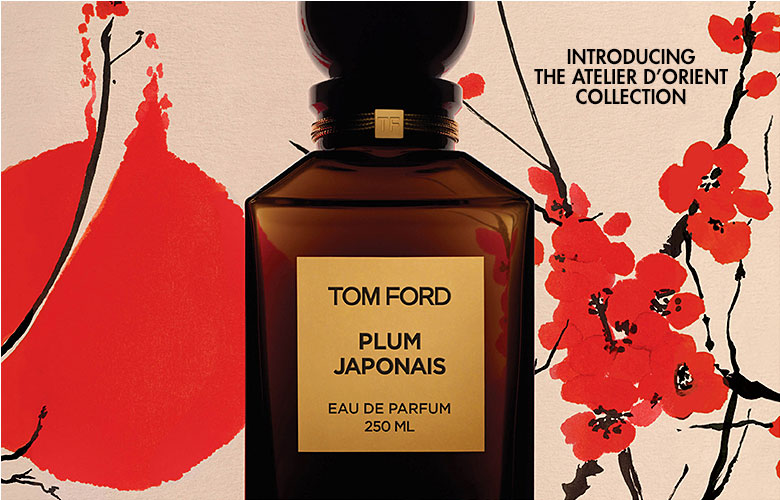
Tom Ford does Serge Lutens. Or, to be more precise, Tom Ford tries desperately to be Serge Lutens, but falls flat on his face. That is my grumpy analysis of Plum Japonais, the latest Private Blend fragrance from Tom Ford. It is part of a brand-new collection of fragrances within his Private Blend line, and was just released in July 2013. The collection is called Atelier d’Orient, and consists of four perfumes: Shanghai LilyPlum JaponaisFleur de Chine, and Rive d’Ambre. Today is Plum Japonais‘ turn.

Source: Neiman Marcus

Source: Neiman Marcus

According to the Moodie Report, Tom Ford’s inspiration for Plum Japonais was the ume fruit:

Plum Japanais, as its name suggests, was inspired by the ume plum. ‘I have always been fascinated by unusual ingredients from exotic cultures,’ Ford revealed. ‘The ume plum…has great meaning in Oriental culture; in Japan and China, it is a sacred symbol of Spring. I wanted to craft a fragrance around the ume, because it has a texture and aroma that is so luscious.’

Now, I have searched and searched for some official word on who is the actual perfumer responsible for the Atelier d’Orient collection, or for Plum Japonais in specific. I can’t find it anywhere, which is slightly unusual these days when a perfumer’s name is frequently mentioned in press releases or in articles about a new fragrance.

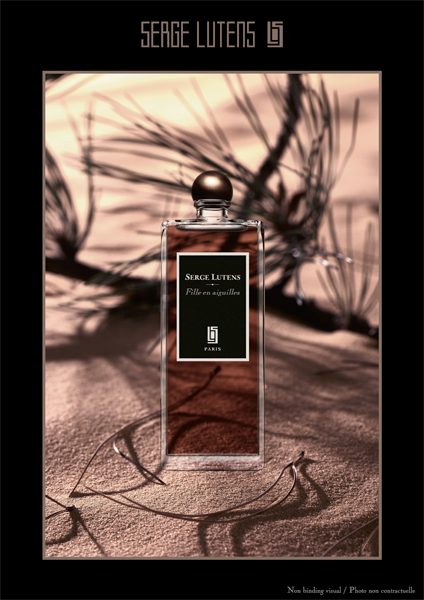
Fille en Aiguilles. Source: Serge Lutens' Facebook page.

Fille en Aiguilles. Source: Serge Lutens’ Facebook page.

Still, it wouldn’t be important or significant except for one thing: Plum Japonais is a total rip-off of Christopher Sheldrake‘s gorgeous, stunning Fille en Aiguilles for Serge Lutens. It is a fragrance that I love with a passion, and it may be my favorite Lutens that I’ve tried in recent memory. So, you can imagine my grumpiness and sour mood when I thought about how Tom Ford was so blatantly copying about 90% of the Lutens/Sheldrake masterpiece. Yes, there are differences, but they are so minor that I will stick with my numeric assessment that 90% of Plum Japonais is Fille en Aiguilles. It’s so close that much of the detailed break-down of Plum Japonais feels almost redundant (though I will do it shortly), but the main thing you should take away is this: Plum Japonais is Fille en Aiguilles done very, very badly.

Some perfumistas have compared Tom Ford’s style of perfumery to that of a frat boy with his fragrances’ over-the-top loudness and their hyper-sexualized marketing. I don’t always agree because I think Tom Ford is quite capable of producing more restrained, elegant pieces, though his marketing definitely verges on the bold and, sometimes, crass. But Plum Japonais definitely felt like a frat boy took a sledgehammer approach to Uncle Serge’s gorgeously refined, well-balanced, utterly beautiful masterpiece. Fille en Aiguilles may not rank among the best-known Lutens, but it is massively beloved amongst almost everyone who has tried it, some of whom rate it as their favorite Lutens perfume ever. And Plum Japonais simply cannot measure up. It’s as though One Direction attempted to cover John Lennon.

Christopher Sheldrake. Source: jonathanfrantini.com

Christopher Sheldrake. Source: jonathanfrantini.com

During my initial test of Plum Japonais, my irritation was becoming increasingly sharp and hostile, so I decided to make a more concerted effort to find out which perfumer was responsible for ripping off Christopher Sheldrake‘s creation for Uncle Serge. You cannot imagine my shock when I finally dug up the rumoured answer: Christopher Sheldrake himself! [Update: 8/4/13see the note at the end of this review for the information that a different nose seems to be responsible for the creation of Plum Japonais.]

According to the blog, Best Things in Beauty, “[t]he fragrance has been unofficially attributed to perfumer Christopher Sheldrake.” I haven’t seen that attribution mentioned anywhere else, so I have no idea if it’s true or not. But it probably is, given the enormous similarity between the two fragrances — and that just irritates me for a whole new set of reasons. It’s not the fact that Christopher Sheldrake is cheating on Uncle Serge (perfumers are allowed, after all, to work freely where they want, and not just for one client). Rather, it’s the fact that he’s taken his Lutens creation, and so barely tweaked it for Tom Ford that it feels almost insulting to Fille en Aiguilles. It’s damn lazy. And, making matters even worse, the result is a nondescript, utterly imbalanced, very flat, badly done, uninteresting version of Fille en Aiguilles. If Fille en Aiguilles were a person, it should sue for defamation and copyright violation. So, let’s get to Sheldrake’s One Direction-like olfactory copy of the Fille en Aiguilles.

Fragrantica classifies Plum Japonais as “Floral Fruity,” and the notes, as compiled from both that site and Premiere Avenue, include:

Japanese ume plum, saffron, Cinnamon Bark Orpur, immortelle, plum blossom, camellia, agarwood (oud), amber, benzoin, fir and vanilla.

Ume plums or Umeboshi. Source: Hudson Valley Magazine, hvmag.com

Ume plums or Umeboshi. Source: Hudson Valley Magazine, hvmag.com

Plum Japonais opens on my skin with plum liqueur, plum molasses, brown sugar syrup, lots of ginger, strong frankincense smoke, and a subtle woodiness. It’s totally Fille en Aiguilles. Flittering around Plum Japonais’ edges are saffron, muted traces of fir resin, and candied immortelle. The latter shows off both its sides here: its herbal floral face, and its slightly maple syrup one. Once in a blue moon, the oud will pop up in the minutest trace, feeling as muted as the fir resin. 

Cinnamon tree bark. Source: indiamart.com

Cinnamon tree bark. Source: indiamart.com

Within minutes, Plum Japonais’ syrupy plum sweetness turns darker and significantly woodier. There is almost a burnt undertone to the combination which probably stems from the cinnamon tree bark, which is a whole, different animal than mere cinnamon powder. Amusingly, it’s an ingredient that Sheldrake featured front and center in another Lutens’ creation, the woody cinnamon oriental, La Rousse. The bark has an aroma that is spiced, but more akin to very dry, somewhat bitter, acrid, smoky wood. I wasn’t crazy about its odd nuances in Rousse, and I’m not crazy about it here. Still, it’s very subtle at this point, adding just an indirect effect to the overall woodiness running like a vein through all of Plum Japonais’ sticky, fruity sweetness and smoke.

Ten minutes in, something else rises to the surface. An odd floral note that I assume is the camellia. It’s a very creamy, velvety, white, languid scent with a strange but subtle lemony undertone, and it feels quite out-of-place amidst the increasingly dry, smoky, woody bouquet. The spices feel more noticeable, too. The saffron adds a definite kick of fieriness to the fragrance, though the note is not very distinct in its own right. For a few minutes, it adds such a bite to to the fragrance that it almost seems as though a red-hot chili pepper were thrown into the mix, but that impression quickly fades. By the 15-minute mark, Plum Japonais actually feels a little off-kilter. The lemony, creamy floral camellia attempts to balance out the increasingly harsh smoky-woodiness set amidst all that plum molasses and liqueur, but it can’t pull it off. The note is too muted. And, I still think it feels totally out of place.

Fruit Jam. Source: Bettycupcakes.com (For recipe or website, click on photo. Link is imbedded within.)

Fruit Jam. Source: Bettycupcakes.com (For recipe or website, click on photo. Link is imbedded within.)

Nonetheless, Plum Japonais is still almost entirely Fille en Aiguilles, only with minor differences. The very piney, evergreen forest hues of the Lutens beauty are practically non-existent in Plum Japonais, the inclusion of “fir” or “fir resin” in the notes notwithstanding. Sheldrake (if it is indeed he who is behind Plum Japonais) has substituted instead a different sort of woodiness to the scent. Yet, woody dryness is hardly the main, dispositive characteristic of Fille en Aiguilles. It’s the bloody spiced plum liqueur infused with frankincense smoke, that trademark Lutens’ signature of stewed fruit made more concentrated and plummy, with brown sugar sap, and heaping, walloping, hefty doses of sharp, black incense. And Plum Japonais has that in spades, from start to finish.

The problem is that Plum Japonais is like a knock-off of an expensive designer suit, only all the proportions are wrong. Lutens’ Fille en Aiguilles is stunningly balanced, whereas Plum Japonais is not. It feels significantly more acrid, more unbalanced in the sharpness of the smoke and the dryness of the woods. And nothing in the first two hours changes my impression, even though some of the other notes wax and wane in prominence. The immortelle occasionally rises to the surface, feeling like the herbal-floral version now, and not the maple syrup one, but it is muted and vague as a whole. The spices feel a little punchier than they did in the opening minutes, and I continue to think that there is ginger mixed in the blend. The camellia, in contrast, has now retreated to the background where it adds just a quiet, shy, creaminess and muted floral whisper to the overall bouquet.

The more interesting thing is the oud. It was just a whisper in the opening, hiding in the shadows behind all that plum liqueur. Now, however, the agarwood is more a wave that surges, ebbs, and then repeats the process. Sometimes, it feels muted, but it becomes increasingly significant at the start of the second hour, turning Plum Japonais into a fragrance where the dry woods almost compete with the incense-infused plum molasses. Unfortunately, I don’t particularly like these dry woods as compared to the richer, deeper, and significantly more interesting pine ones in Fille en Aiguilles.

As for the smoke, it varies as well. On certain parts of my arm, it feels quite bitter, pungent, and harsh, while, elsewhere, it’s more blended into the fruit. I think the cinnamon tree bark is behind some of the differences. Its smokiness in Serge Lutens’ Rousse felt quite acrid and bitter at times, and I think the note here has combined with the frankincense to create a combination that feels quite harsh at times. It’s never the smooth, almost sweetened incense that you’d expect, or, indeed, the gorgeous smoke in Fille en Aiguilles. This is much sharper and drier in nature, with a slightly bitter undertone.

Japanese Plum Liqueur, Yamazaki. Source: tokyowhiskyhub.blogspot.com

Japanese Plum Liqueur, Yamazaki. Source: tokyowhiskyhub.blogspot.com

It takes 50 minutes for Plum Japonais to soften and lose some of its harsh edges. The plum top notes start to feel flatter, while the smoky oud and the woods in the base seem smoother and less sharp. There is still a bitter, slightly burnt, pungent nuance to the woods, but the perfume as a whole feels a bit less askew and out of balance. Unfortunately, Plum Japonais also starts to feel a little murky and muddy at this time, both texturally and in terms of the distinctness of its notes. It’s starting to blur into a pretty smoky-woody-fruity fragrance just barely dominated by plum. By the end of the second hour, Plum Japonais is starting to fizzle out with notes that feel increasingly amorphous. The sillage has changed too, as the perfume just barely hovers an inch above the skin, if that. Plum Japonais is now just flat, stewed, sweet plummy jam with vague smoke and dry woody notes. In short, the Serge Lutens signature of dried, sweetened, dark fruits with oriental touches, but without the Lutens oomph and drama. At the 3.5 hour mark, Plum Japonais is a total skin scent, and has devolved to mere plummy sweetness barely flecked by some amorphous dryness and smoke. It remains that way until the very end, growing even more hazy, until its dying moments when it’s just vague sweetness.

All in all, Plum Japonais lasted a little over of 6.75 hours on my perfume-consuming skin, with incredibly restrained, soft sillage after the first hour. I applied quite a hefty portion too, as I had a very large sample from Neiman Marcus, so I basically wetted a long patch on my forearm with the equivalent of about 5 huge smears. If I’d applied my normal amount, I suspect the numbers would be significantly lower.

I have to admit, given the strength of Plum Japonais at first, and the power of Tom Ford’s Private Blends in general, I’m a little surprised at the shortness of time, as well as the restrained nature of the fragrance when taken as a whole. However, the fact that the perfume is ultimately quite subdued makes a lot more sense if you put it into context and in conjunction with the similar characteristics of Shanghai Lily. Both Atelier d’Orient fragrances seem intentionally designed to be more quiet, restrained takes on a spicy Oriental. I suspect that Tom Ford is aiming this collection at wealthy buyers in Asia, buyers who may not appreciate his usual, brash style, or a truly hardcore, intense Oriental in the style of something like Amouage. Plum Japonais is an attempt to give them a more subdued take on a masculine, woody, fruity oriental, with Shanghai Lily attempting to do the same for the more feminine, floral oriental version. That said, I want to emphasize that Plum Japonais is not a masculine scent at all. It’s wholly unisex for everyone except those whose perfume preferences lean towards the fragrances that are either fresh, clean, soapy, dainty, powdery, aldehydic, or some combination thereof.

Plum Japonais is too new for there to be many reviews available for comparison. My sense of how people generally see the Atelier collection as a whole is that they think it’s nondescript and uninteresting, with Plum Japonais being the best of the lot. That does not mean that they think it’s a great perfume, however. The Basenotes review section for the fragrance has only three reviews up at this time. One of them, “kende,” seemed to share my views about Plum Japonais’ development:

The problem is how short lived this wondrous moment is. Within 15 minutes the scent begins to feel more and more flat. The complexities start to vanish and what suddenly remains is a puny, underwhelming “perfumey” base that smells like a very commonplace generic perfume type of scent. This doesn’t take hours, mind you. It takes no greater the length of 45 minutes to unravel from that rich, opulent opening. […]

This perfume could’ve really been something special, that opening is something every perfumista should experience, but there is no backbone to hold Plum Japonais up over the hours. It goes on like a work of art and but feels more and more like a cheap photocopy as the minutes turn to hours. […]

The scent is 4 stars.

The longevity is embarrassing for a Tom Ford private blend. 0 stars.

Kende doesn’t know it, but Plum Japonais absolutely is a “cheap photocopy[,]” and he or she needs to go try Fille en Aiguilles. Over in a separate Basenotes board thread, the common consensus for Plum Japonais is, and I quote, “meh.” As one poster put it, “I’m honestly not impressed with any of the new Atelier scents. I guess this would be the stand out, but thats not saying much.”

No-one talks about Fille en Aiguilles because, as I noted up above, it’s not one of the better-known Lutens fragrances. But the perfume blows Plum Japonais out of the water! It is also significantly cheaper than Tom Ford’s ersatz, wanna-be copy which costs $210 for the smallest version. Fille en Aiguilles retails for $140, but can easily be found discounted at a number of online perfume retailers, with the lowest price I’ve seen being $80. (See the Lutens review for full retail links.) Honestly, writing out that price differential just offends me even more. Plum Japonais is such a total waste of money. It’s one thing to take a great perfume and use it as a source of inspiration for another; lots of perfumers create scents that have some overlap or a common signature. But Plum Japonais is such a completely out-of-whack, wholly unbalanced, fizzling, flat, totally lazy, “cheap photocopy” of such a supremely stunning, refined, mysteriously seductive, incredibly evocative, utterly mesmerizing scent that it’s positively insulting. The irrational side of me feels like shaking Christopher Sheldrake — who may be my favorite perfumer ever — and asking him, “Why? Why??!!”

In fact, I think I’m too irate to continue this review.

[UPDATE: 8/4/2013– According to one commentator to the blog, “Mike,” who left an answer below, Christopher Sheldrake did not mutilate his creation because Yann Vasnier of Givaudan is the actual nose behind Plum Japonais. Mike cites as sources two unnamed bloggers who contacted Tom Ford. He later directed me to a review at CaFleureBon which states that Yann Vasnier is the creator of Plum Japonais. That review was posted just yesterday, a few days after my own, so the information wasn’t available to me at the time, but I’m very grateful to Mike for telling me about it. I would like to extend to Christopher Sheldrake my heartiest apologies for thinking he had plagiarised himself with a bad copy, and for wanting to shake him like a rag doll.]

DETAILS:
Cost & Availability: Private Blend Plum Japonais is an eau de parfum which comes in three sizes that retail for: $210, €180, or £140.00 for a 50 ml/1.7 oz bottle; $280 or £320.00 for a 100 ml/3.4 oz bottle; or $520 for a 200 ml/8.45 oz bottle. The line is not yet listed on the Tom Ford websiteIn the U.S.: you can find Plum Japonais at Neiman Marcus and Bergdorf Goodman. I don’t believe Nordstrom or Saks has the new collection yet. Outside the U.S.: In Canada, I believe Tom Ford is carried at Holt Renfrew, but they only list 2 of the old fragrances on their online website. In the UK, you can find Plum Japonais at Harrods (which only has the small size), Selfridges (which carries both sizes), or House of Frasier (both sizes). The small size is also carried by Harvey Nichols. All the stores sell the small 1.7 oz/50 ml size for £140.00, while the super-large 250 ml bottle costs £320.00. In France, Plum Japonais is available at Premiere Avenue which sells the 50 ml bottle for €180. For other all other countries, you can use the store locator on the Tom Ford website to find a retailer near you. Samples: You can buy samples of Plum Japonais at Surrender to Chance starting at $3.99 for a 1/2 ml vial.

Perfume Review – Serge Lutens Fumerie Turque

I had high hopes for this one. Very high hopes. Smoke, tobacco, leather, vanilla, and spice. The famous, beloved Chergui supposedly ratcheted up a notch. Turkish rose, smoke, and honeyed pipe tobacco in a sensuous, opulent, oriental fragrance done by Uncle Serge and that mad wizard, Christopher Sheldrake. Well, not on my skin…. 

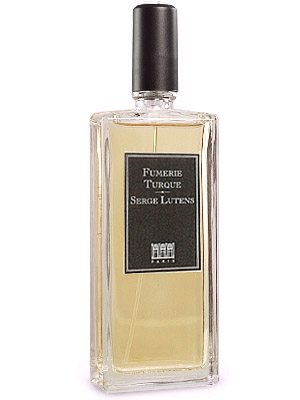
The old, discontinued, vintage 1.7 oz/50 ml version of Fumerie Turque.

The old, discontinued, vintage 1.7 oz/50 ml version of Fumerie Turque.

Fumerie Turque is an eau de parfum that was created by Serge Lutens‘ favorite perfumer, Christopher Sheldrake, and released in 2003. Though it is primarily an expensive Paris Bell Jar perfume that is exclusive to Serge Lutens’ Paris headquarters, Fumerie Turque came out at some point in a regular, cheaper, import-version, 1.7 oz/50 ml bottle that is still sometimes available online. And, somewhere along the line, the fragrance was reformulated — quite drastically, according to some — to become a softer, less tobacco-centered, more vanillic, sweet fragrance. My sample is of the current version, and it leads me to wonder what on earth it must have been like before.

The Bell Jar of Fumerie Turque that is now the only version sold by Serge Lutens.

The Bell Jar of Fumerie Turque that is now the only version sold by Serge Lutens.

Serge Lutens describes Fumerie Turque on his website as follows:

Smoking can kill you.

That’s one reason why I like using leafy blond tobacco as a raw material together with honey, underpinned with a few, slightly obscured hints of rose petal.

For some reason, Fragrantica has two entries for Fumerie Turque. There is no indication of which is the entry for the current version, and each lists slightly different notes. I haven’t seen that before, even for reformulated fragrances. Whatever the explanation, if one compiles both versions, the notes in Fumerie Turque would seem to include:

white honey, candied Turkish rose, juniper berries, chamomile, Egyptian jasmine, smoked leather, beeswax, Balkan tobacco, red currants, Peru balsam, patchouli, tonka, styrax, suede, and vanilla.

Styrax resin via themysticcorner.com

Styrax resin via themysticcorner.com. (Website link embedded within photo.)

Fumerie Turque opens on my skin with smoke, vanilla, leather and spices. The fragrance is dominated by styrax, a resin which has a very dry, smoky, spicy, leathery nuance. It infuses everything it touches, including the rose note which starts out being sweet, but which quickly turns dry and smoky. Alongside are tobacco curls, nestled amidst sweet vanilla and a light touch of vanillic powder. In the background is the faintest chilly touch of a woody, pine note that feels syrupy and resinous, almost as if it were juniper resin instead of juniper berries. Wafts of a floral, slightly tea-like note flit about, as if the chamomile has been infused with the same, spicy, chewy, dense styrax as everything else.

There is something a little bitter and sour about the blend, despite the sweet, smoky, somewhat leathery notes underneath. It must be the honey with its slightly sulphurous undertones. Honey is an extremely tricky note for some people, as their skin chemistry can turn it sour, urinous, skanky, animalic, raunchy, or some combination thereof. I happen to be generally lucky with the element, which I adore, even on those rare occasions when it can feel almost sulphurous as it does here. But, I must say, I am not at all keen about its sour nuances in Fumerie Turque. I’m even less enthused as it gets worse, quickly turning into a smell that is simultaneously stale, sour, bitter, sharp, acrid, and, eventually, almost rancid in feel. The beautiful, sweet, freshness of the rose has receded along with the vanilla, its powder, the juniper berries, and the dark, tea-like chamomile, leaving the harsher, animalic notes utterly untamed. Rank bitterness is what comes to mind, and I imagine that people who traditionally have always had problems with honey might fare even worse.

Leather Tanning in Morocco. Photo by Burrard-Lucas via http://www.burrard-lucas.com/photo/morocco/leather_tanning.html

Leather Tanning in Morocco. Photo by Burrard-Lucas via http://www.burrard-lucas.com/photo/morocco/leather_tanning.html

Ten minutes into Fumerie Turque’s development, those harsher notes become extremely prominent. The leather feels almost raw, like tannery hides left to cure in the sun. There is a tarry, animalic, phenolic, musky sharpness to the smell. And the rank sourness of the honey now feels quite rancid. Making matters worse is the tobacco, a note I normally love. Here, it feels neither like dried tobacco leaves, nor like sweet, fruited, honeyed pipe tobacco. Instead, it smells like a stale, dirty ashtray with the remnants of a few, old cigars.

Source: skylighter.com

Source: skylighter.com

To be honest, I’m somewhat appalled by the overall combination: urinous, sulphurous, rancid honey with raw leather and stale ashtray smoke is really not my cup of tea. Not even the occasional flickers of rose and vanilla which pop up and down, going back and forth from the background to the foreground, can fix the stale, sour, bitter, animalic pungency emanating from my arm. And, have I mentioned the word “rancid” yet? I once had the misfortune of cleaning a friend’s fridge which had been left untouched for over a year; the smell of the rotten eggs had a similar sulphurous, smoky rancidness. Only here, they’re mixed in with a disconcerting stale sweetness. I know the horrible bouquet is due purely and solely to my skin’s chemistry — just as I know that others may (and do) have a wholly different, extremely positive scent sensation with this much admired fragrance — but I can only recount my own experiences and, thus far, it’s revolting. I’ve never, ever had honey go south on me… until now!

Source: 123rf.com

Source: 123rf.com

Fumerie Turque continues in that painful vein for a while. The vanilla makes every valiant attempt to come to the foreground to soften things, and once in a while, it actually succeeds. It’s short-lived, however, as the rancid sourness marches on like a Turkish army hell-bent on whipping me into submission. Thirty minutes into Fumerie Turque’s progression, beeswax joins the Devil’s Brigade, mocking me with yet another, additional layer of sourness. The animalic, almost dirty, raw leather, and the stale tobacco ashtray aromas join in, cackling gleefully at the faint whimpers that are starting to emanate from my miserable little self. I look at the Fumerie Turque’s longevity rankings on Fragrantica (“very long lasting” say the majority), mutter some expletives, and contemplate sending dear Uncle Serge a “Dear John” letter. I also wonder if it’s too early to start drinking.

Red Currants via onlyfoods.netClose to the end of the second hour, Fumerie Turque decides to take some pity on me. It starts to soften, becoming milder, less feral and brutal. The leather, ashtray and honey elements take on a rounder, less intentionally hostile and aggressive edge, though their undertones retain that rancid stench that is still too bloody sharp and acrid for my tastes. Thankfully, the sillage has dropped from its previously potent levels, making me hope that Fumerie Turque has decided to engage in an olfactory cessation of hostilities. Er… not quite. We are now launching into a whole new sort of merciless madness. At the 2.5 hour mark, Fumerie Turque turns into a strange mélange of vaguely sour, vanillic baby powder infused with the odd tartness of red currants berries, atop a base of light, sweet smoke and somewhat treacly rose. I sighed so deeply, you have no idea, and wonder what Uncle Serge would think of a blotchy, tear-splattered letter.

Vanilla powder and essence. Source: food.ninemsn.com.au

Vanilla powder and essence. Source: food.ninemsn.com.au

Fumerie Turque continues its descent into powdery, smoke-tinged sweetness. It’s quite a relief, given what came before. Close to the end of the fourth hour, there is more vanillic baby powder, tart fruit notes, whispers of smoke, and a definite subtext of honeyed sourness. The new addition, however, is beeswax — and it’s the only part of the somewhat muted, faded combination that I find pleasant. Around the middle of the fifth hour, Fumerie Turque fades into abstract, powdery vanilla with honey and a whisper of beeswax, and remains that way until the end. All in all, Fumerie Turque lasted just short of 6.75 hours, which is much less than the enormous longevity that I had braced myself for. On average, the sillage was moderate: very forceful in terms of projection for a brief period at the start, but then, significantly softer while still being noticeable within the tiny bubble that wafted an inch above my skin.

Normally, with fragrances that take such a terrible turn on my skin, I would give the perfume two tests. Sometimes, maybe even three. I couldn’t do it with Fumerie Turque. I simply couldn’t. It wasn’t only that extremely difficult opening but, rather, how exhausting the progression was in its forcefulness and in the unalleviated monotony. Fumerie Turque isn’t linear from start to finish but, within its two distinct stages, it certainly feels a little singular. I always say that there is nothing wrong with linear fragrances if you love the notes in question but, obviously, that was not the case here. 

Chergui.

Chergui.

There are a few reasons why I’m so incredibly disappointed with the manner in which Fumerie Turque manifested itself on my skin, beyond the really obvious ones, that is. First, many people consider the fragrance to be the more advanced, complex, sophisticated brother to Serge Lutens’ Chergui. Fumerie Turque is supposed to be richer, smokier, less vanillic or powdery (in both its original and reformulated version, presumably) than the fragrance that I own and love. It seemed indubitable that Fumerie Turque would be even more up my alley.

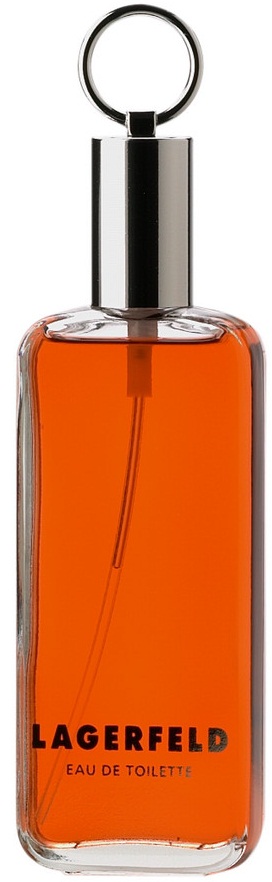
Karl Lagerfeld Cologne. The non "Classic" but vintage bottle.

Karl Lagerfeld Cologne. Not the current “Classic” bottle, but the vintage one.

Second, Fumerie Turque seemed very familiar upon first sniff of the fragrance in the vial. It instantly and immediately brought to mind one of my favorite comfort scents, the superb Karl Lagerfeld Cologne in vintage formulation. Karl Lagerfeld’s 1980s beauty is actually the sole reason I started this blog. I needed a place to properly express my love for this fragrance when I reacquired a bottle on eBay, and I couldn’t do it in a Facebook status post, though I certainly spent a good few paragraphs trying. My very first perfume review was, in fact, a rushed, hurried, rather short affair on the joys of Karl Lagerfeld’s interpretation of and homage to Shalimar. A few parts of that review:

Imagine your boyfriend’s leather jacket, covered with honey, and in an old Russian or Greek Orthodox church filled with smoky incense and the whiff of a passerby in rose and jasmine…. this is better. If there were a honey seller in a stall sandwiched between a musky spice vendor of nutmeg, tarragon and anise, and one who sold sweetly fragrant tobacco that your uncle put in his pipe — all in a giant leather store filled with the finest British leather saddles, which was in a Turkish bazaar… this is better.

[…] Some say that it’s like a male-version of Shalimar and I suppose it’s the faint touch of powder in it. But if Meryl Streep wears Shalimar (and she does), then Tina Turner would wear this. If Shalimar is a Rolls Royce, this is James Bond’s Aston Martin or perhaps a BEAST of a muscle car driven by a Russian Orthodox monk in a leather jacket. That’s it! This is the smell for Rasputin, though one commentator elsewhere said that they thought Robert Redford in the Great Gatsby would wear this. I disagree. This is pure leather smoke covered with honey.

And….. it’s sex on a stick. […] Just be warned, it’s not for the faint of heart and that, depending on your body chemistry, powder may predominate over leather, tobacco or honey. Also, if you’re not into powerful scents, do not put on more than one spray.

Not a week goes by that I don’t regret the brevity of that article (relative to my usual verboseness). Not a week passes that I don’t vow to do the perfume proper justice with a revisit. Karl Lagerfeld Cologne has been a favorite fragrance of mine for over two decades — and Kafkaesque exists purely and solely because of it.

That fragrance is what I immediately came to mind when I took a gandering sniff of Fumerie Turque in the vial: a richer, smokier, drier, less powdery, less sweet Karl Lagerfeld. I couldn’t believe it. My jaw dropped, and I couldn’t wait to try it on the skin. Later, much later, after the bloody, leathery, stale, rancid chum in Fumerie Turque’s shark-infested waters had faded away, I was surprised to discover that I wasn’t the only one who thought there were similarities between the two fragrances. A passing, brief comment on a Basenotes thread devoted to Fumerie Turque said: “When I read these threads, I wonder how many who enjoy FT have tried the original Lagerfeld Cologne (before it became “Classic”).” I have no idea who the poster, “Bigsly,” is, but I want to give him a hearty Bravo for unknowingly reassuring me that I’m not insane (and, also, for his excellent taste). Because, yes, when I read positive descriptions of Fumerie Turque on Fragrantica, they sounds a bit like what I experience with Karl Lagerfeld.

Source: turkishculture.blogspot.com

Source: turkishculture.blogspot.com

There are significant differences, however. The Karl Lagerfeld is much sweeter, more vanillic, and more powdery than the largely acrid Fumerie Turque. It has a bergamot, citric, and subtle, vaguely herbal element to its beginning. More importantly, the leather is very different in Karl Lagerfeld; it lacks the raw, animalic outbursts in Fumerie Turque, while being significantly stronger and richer than it is in Chergui. Also, the tobacco smoke is sweeter than the more acrid, stale, dirty version in Fumerie Turque, more akin to pipe tobacco, and is additionally supplemented by incense. If the Lagerfeld didn’t precede both Lutens fragrances by almost 20 years, I would call it a lovechild of Chergui and Fumerie Turque, combining the best parts of both in a much stronger, more potent, intense, powerful blast. But Karl did it first. There is also another big difference: the Lagerfeld is available in vintage form for a mere pittance on eBay. You can buy a 2 oz bottle for between $20-$30, depending on times, vendors and competing bidders. Sometimes, they can go up to $45, but I bought my bottle for about $18! The key — and this is really important — is to AVOID anything that has the word “Classic” on the bottle because that is the reformulated rubbish version! (I beg of you, don’t do it. It’s not the same at all.)

I realise that my review of Fumerie Turque has descended into an ode to Karl Lagerfeld Cologne, so let’s return to that Basenotes thread. It’s interesting because the chap had an equally brutal start to Fumerie Turque, which he bought blindly based on the positive praise for the fragrance. Though he subsequently fell in love with Fumerie Turque, I think his experience is illuminating, in part because it also references some other well-known fragrances:

I sprayed some on my bicep. OH NO!!! I REALLY SCREWED UP BUYING THIS STUFF!!! Immediately, I got this sickly powdery feminine stale urine porta-potty smell that some of the negative reviews had mentioned. Totally, totally unwearable. […]  five minutes later I noticed that tobacco note– and it was actually a very nice specimen of tobacco. If only that other “pissy, honey, rose” stuff wasn’t going on…

Yet, he gave it a second shot, mostly due to the many, many raves for Fumerie Turque from people he respected. And, this time, he noticed some differences. First, there was a strong similarity between Fumerie Turque’s “beeswax and the emerging red currants/fruit” and the smell of Chanel‘s Antaeus, a fragrance that he had initially hated but then grown to love. Second, with a little time, Fumerie Turque developed into something lovely on his skin:

… the pipe tobacco was starting to come out very noticeably. I’ve truly NEVER experienced a fragrance that did such a 180 in the wearing and bloomed into something so cool. It still had a bit of that Habanita powdery quality and that dense honeybun beeswax in the base, but the tobacco was starting to steal the show in a big way. Some people call this scent “smokey” but thankfully, it’s not smokey to my nose– at least not in a negative manner. The first time I smelled it, it did conjure the back room of a bar where there had probably been a lot of second hand smoke, but once it started to blossom, it was smooth and ethereal. Again the beeswax is right there in the beginning and it almost makes you nauseous, but it only takes about two minutes for the composition begin unfolding into what it will become. As time goes on, the scent becomes more “blonde” as in blonde tobacco, and begins to feel lighter, but not lesser.

To compare this to a tobacco scent like Pure Havane almost makes me laugh now. I like Pure Havane a hell of a lot, don’t get me wrong– but this stuff is on a whole different level. This is adult, it’s grown up seduction in a bottle. Pure Havane is the most playful, fun tobacco scent I’ve tried, but Fumerie Turque is not for children. […]

What Fumerie Turque is, is an ACTUAL PERFUME.  […] Christopher Sheldrake has created a real masterpiece here. Top to bottom. Something that relies on a little necessary chaos out of the bottle to get on its feet, but once it does, and starts walking upright, god it’s beautiful. [Emphasis in bold added by me to the perfume names.]

There are numerous gushing, quite poetic raves about Fumerie Turque on Fragrantica (where it is enormously loved in both of the perfume’s listings), but I chose that particular Basenotes review for a reason. It highlights how some people can have a very positive experience with Fumerie Turque at the end, despite the sour, “pissy” start.

It also shows that, as many Basenotes commentators agree, Fumerie Turque is a perfume that can sometimes take a few tries. A number of Lutens fragrances require patience but, given the trickiness of honey as a note, Fumerie Turque may require more patience than most. In all candour, if I didn’t already have my beloved Karl Lagerfeld and Chergui, I probably would have given Fumerie Turque the necessary second chance that so many people say it requires, especially as I found some of the vintage bottles (which are supposed to be far better than the current version) available online for a significantly cheaper price than the current Bell Jar formulation. But I do have Lagerfeld and Chergui, so I’m not hugely motivated. Plus, there is also the simple reality that some honey fragrances never work out on a person’s skin, no matter how many chances you give them.

Would I recommend that you give Fumerie Turque a shot? Well, never as a blind buy, no. However, if you love Chergui, then yes, by all means, give Fumerie Turque an exploratory sniff. Get a sample, see if it works for you, and, if you love it, then you can get the more affordable vintage version that I’ve found on some of the online retailers below. (Actually, I would highly recommend the Karl Lagerfeld above all else, especially if powder notes don’t go south on your skin.) On the other hand, if you don’t love Chergui, or if you already know for a fact that honey is always one of your fatal notes, then I would advise that you stay clear of Fumerie Turque entirely. If it didn’t work on my honey-loving skin, I can’t imagine how badly it might turn out for those who never have any luck with the note. I suspect you’d end up in a foetal position, crying for a Silkwood shower….

DETAILS:
General Cost & Discounted Sales Prices: Fumerie Turque is an eau de parfum that Serge Lutens now offers only in the large 2.5 oz/75 ml bell jar version that costs $290, or €135. However, you can still find the smaller 1.7 oz/50 ml bottle (that is now considered “vintage” or discontinued) on some U.S. and European perfume websites. About seven of the usual, big, online perfume sites (Amazon, FragranceNet, etc.) have Fumerie Turque listed, but the fine print shows it as “Sold Out.” However, I found the perfume at several smaller vendors. Buy Beauty Deals sells the 1.7 oz/50 ml bottle of Fumerie Turque for $108.50, A Matter of Fax for $117.11, Perfume Mart for $121.50, Fragrance Zoo for $127.49, Planet Aroma sells Fumerie Turque for $130.63, Islander Mall for $132.92, and SurfAvenueMall for $140. I have no idea how reputable any of these vendors may be.
Serge Lutens: You can find Fumerie Turque in the bell jar option on the U.S. and International Lutens website (with non-english language options also available). It’s priced at $300 or €135.
U.S. sellers: Fumerie Turque is exclusively available at Barney’s in the bell jar format for $290. The site has a notice which states: “This product is only available for purchase at the Madison Avenue Store located at 660 Madison Avenue. The phone number for the Serge Lutens Boutique is (212) 833-2425.” I did not find Fumerie Turque listed at Luckyscent or any of the big, niche perfume vendors.
Outside the U.S.: In Canada, I think you can find “Fumerie Turque – Retired” at The Perfume Shoppe for what is US$120, since it is primarily an American business with a Vancouver branch, but I’m not sure what they mean by “retired” and if the perfume is actually in stock. For Europe, I couldn’t find the 50 ml bottle sold at a single online vendor. It’s the expensive bell-jar, or nothing. In Australia, you can get Fumerie Turque on sale in the discontinued 50 ml bottle from Brand Shopping for AUD$199.65 with free shipping. In the Middle East, I saw the “vintage” Fumerie Turque listed on the Universal Perfume‘s site. However, there is something weird going on where there is no pricing, and it won’t let you put it in your cart until you give one. Elsewhere on the site, the perfume is priced as $189.99.
Samples: You can test out Fumerie Turque by ordering a sample from Surrender to Chance where prices start at $3.99 for a 1/2 ml vial. There is also a Serge Lutens Sample Set of 3 Paris Exclusives (Fumerie Turque, along with Borneo 1834 and Chergui), which starts at $11.50 for a 1/2 ml vial of each. Fumerie Turque is also included as an option in a Lutens Sample Set for $18.99 where the vials are also 1/2 ml each, but you get your choice of 5 Lutens Non-Export fragrances (ie, those that are Paris exclusives).